

The DOI matches its Crossref record; 50 of the 50 references it cites were found in a registry or an index.
Big data in digital healthcare: lessons learnt and recommendations for general practice
Open accessAbstract
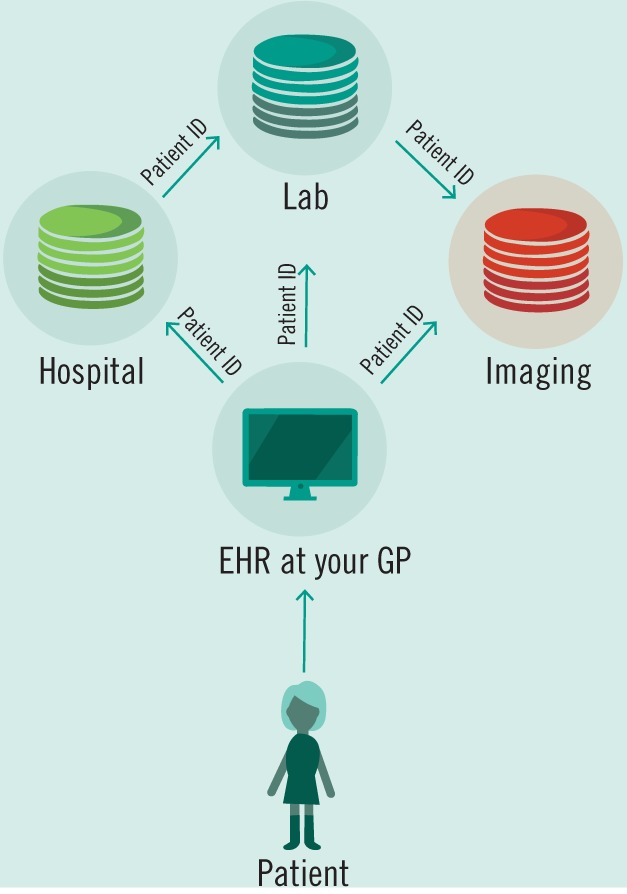
Big Data will be an integral part of the next generation of technological developments—allowing us to gain new insights from the vast quantities of data being produced by modern life. There is significant potential for the application of Big Data to healthcare, but there are still some impediments to overcome, such as fragmentation, high costs, and questions around data ownership. Envisioning a future role for Big Data within the digital healthcare context means balancing the benefits of improving patient outcomes with the potential pitfalls of increasing physician burnout due to poor implementation leading to added complexity. Oncology, the field where Big Data collection and utilization got a heard start with programs like TCGA and the Cancer Moon Shot, provides an instructive example as we see different perspectives provided by the United States (US), the United Kingdom (UK) and other nations in the implementation of Big Data in patient care with regards to their centralization and regulatory approach to data. By drawing upon global approaches, we propose recommendations for guidelines and regulations of data use in healthcare centering on the creation of a unique global patient ID that can integrate data from a variety of healthcare providers. In addition, we expand upon the topic by discussing potential pitfalls to Big Data such as the lack of diversity in Big Data research, and the security and transparency risks posed by machine learning algorithms.
Overview
The claims and statistics of this paper haven’t been checked yet.
Run the check — free, no account needed. It reads the open-access text and checks the sources it cites.
Integrity signals
Registry
Cites
Statistics
Figures
Verification
Claims the paper makes
The claims and statistics of this paper haven’t been checked yet.
Run the check — free, no account needed. It reads the open-access text and checks the sources it cites.
Claims other papers make about this one
Each is checked against this paper’s own text: does it say what the citing paper says it does?
In the citing paper
“Besides therapeutic interventions, digital technologies may support clinical management of depression by: (a) capturing longitudinal, temporally dense, and multimodal mental health data for use in diagnosis and monitoring; (b) analyzing data using ML paradigms to generate personalized and clinically actionable insights and predictions; and (c) supporting integrated care by facilitating connections”
From Digital health technologies and major depressive disorder (2023) · cites this paper as [70]
Self-check
Percentages, sums and reported differences re-computed from the paper’s own numbers.
The self-check needs the paper’s full text.
Citations
Cites
High-performance medicine: the convergence of human and artificial intelligence
Topol, E. J. (2019) · Nature Medicine · doi:10.1038/s41591-018-0300-7 · Cited by 10,450
A guide to deep learning in healthcare
Esteva, A., Robicquet, A., Ramsundar, B., Kuleshov, V., DePristo, M., Chou, K., Cui, C., Corrado, G., Thrun, S., & Dean, J. (2019) · Nature Medicine · doi:10.1038/s41591-018-0316-z · Cited by 5,312
Next-generation DNA sequencing
Shendure, J., & Ji, H. (2008) · Nature Biotechnology · doi:10.1038/nbt1486 · Cited by 4,509
Genetic effects on gene expression across human tissues
GTEx Consortium (2017) · Nature · doi:10.1038/nature24277 · Cited by 4,036
Review The Cancer Genome Atlas (TCGA): an immeasurable source of knowledge
Tomczak, K. J., Czerwińska, P., & Wiznerowicz, M. (2015) · Współczesna Onkologia · doi:10.5114/wo.2014.47136 · Cited by 3,624
Pan-cancer analysis of whole genomes
The ICGC/TCGA Pan-Cancer Analysis of Whole Genomes Consortium, Aaltonen, L. A., Abascal, F., Abeshouse, A., Aburatani, H., Adams, D. J., Agrawal, N., Ahn, K. S., Ahn, S.-M., Aikata, H., et al. (2020) · Nature · doi:10.1038/s41586-020-1969-6 · Cited by 3,064 · cited 1×
“We see this global leadership already in oncology (The Cancer Genome Atlas (TCGA), Pan-Cancer Analysis of Whole Genomes (PCAWG)) and neuropsychiatric diseases (PsychENCODE) (Tomczak et al. 2015; Akbarian et al. 2015; Campbell et al. 2020).”
BackgroundBig data analytics in healthcare: promise and potential
Raghupathi, W., & Raghupathi, V. (2014) · Health Information Science and Systems · doi:10.1186/2047-2501-2-3 · Cited by 3,034
Multi-omics approaches to disease
Hasin, Y., Seldin, M., & Lusis, A. (2017) · Genome Biology · doi:10.1186/s13059-017-1215-1 · Cited by 2,953
The “All of Us” Research Program
The All of Us Research Program Investigators (2019) · New England Journal of Medicine · doi:10.1056/nejmsr1809937 · Cited by 2,440
Implementing Machine Learning in Health Care — Addressing Ethical Challenges
Char, D. S., Shah, N. H., & Magnus, D. (2018) · New England Journal of Medicine · doi:10.1056/nejmp1714229 · Cited by 1,857
Cited by
Sorted by citations
Items 101–200 of 218
Li, L. (2023) · Computer-Aided Design and Applications · doi:10.14733/cadaps.2023.s14.102-117 · Cited by 5
Factors influencing the use of big data within healthcare services: a systematic review
Khosravi, M., Mojtabaeian, S. M., & Zare, Z. (2024) · Health Information Management Journal · doi:10.1177/18333583241270484 · Cited by 7
Bhattarai, S., Kumar, R., Nag, S., & Namasivayam, V. (2022) · Springer eBooks · doi:10.1007/978-981-16-5993-5_2 · Cited by 5
Centralized healthcare database for ensuring better healthcare: Are we lagging behind?
Tariq, S., Tariq, S., & Shoukat, A. A. (2023) · Pakistan Journal of Medical Sciences · doi:10.12669/pjms.40.3.9084 · Cited by 5
Ma, X. (2023) · Computer-Aided Design and Applications · doi:10.14733/cadaps.2023.s14.168-178 · Cited by 4
A Big Data Stream-Driven Risk Recognition Approach for Hospital Accounting Management Systems
Wang, Y., Liang, B., Wang, T., & Liu, Z. (2023) · IEEE Access · doi:10.1109/access.2023.3334145 · Cited by 4
Bojnordi, A. J. J., Nezhad, M. Z., Bagheri, R., Bazrafshan, M., & Sohrabi, B. (2025) · Discover Health Systems · doi:10.1007/s44250-025-00204-y · Cited by 8
Hagen, B. (2021) · Journal of European CME · doi:10.1080/21614083.2021.2014038 · Cited by 4
Alvandi, A. O., Burstein, F., & Bain, C. (2022) · Informatics for Health and Social Care · doi:10.1080/17538157.2022.2049273 · Cited by 4
Biomass Burning in Southeast Asia and Influences on Atmospheric Nanoparticles
Dejchanchaiwong, R., Tekasakul, P., Morris, J. M., Ingviya, T., Latif, M. T., Amil, N., Hata, M., Furuuchi, M., Dominick, D., & Malinee, R. (2022) · Royal Society of Chemistry eBooks · doi:10.1039/9781839166570-00049 · Cited by 4
Using real world data to advance the provision of supportive cancer care: mucositis as a case study
Wardill, H., Sonis, S., & Blijlevens, N. (2022) · Current Opinion in Supportive and Palliative Care · doi:10.1097/spc.0000000000000600 · Cited by 4
A systematic evaluation of big data-driven colorectal cancer studies
Mohammad, E. B., & Ahmad, M. M. (2023) · Medicinski Glasnik · doi:10.17392/1684-23 · Cited by 4
Performance drift is a major barrier to the safe use of machine learning in cardiac surgeryPreprint
Dong, T., Sinha, S., Zhai, B., Fudulu, D. P., Chan, J., Narayan, P., Judge, A., Caputo, M., Dimagli, A., Benedetto, U., et al. (2023) · medRxiv · doi:10.1101/2023.01.21.23284795 · Cited by 4
Makarichev, V. O., Лукин, В. В., & Brysina, I. V. (2024) · Computation · doi:10.3390/computation12090176 · Cited by 3
ARSLANTAŞ, S. (2024) · Journal of Health Organization and Management · doi:10.1108/jhom-06-2024-0241 · Cited by 4
Researching public health datasets in the era of deep learning: a systematic literature review
Obeidat, R., Alsmadi, I. M., Baker, Q. B., Al-Njadat, A., Srinivasan, S., Ashong, G., & Osigwe, I. (2025) · Health Informatics Journal · doi:10.1177/14604582241307839 · Cited by 5
Cummerow, J., Wienecke, C., Engler, N., Marahrens, P., Grüning, P., & Steinhäuser, J. (2023) · Journal of Medical Internet Research · doi:10.2196/46929 · Cited by 3
Introduction to medical data and big data exploitation in research: Errors, solutions and trends
Alsuliman, T., Humaidan, D., Sliman, L., & Duléry, R. (2021) · Current Research in Translational Medicine · doi:10.1016/j.retram.2021.103310 · Cited by 2
Penteado, B. E., Fornazin, M., Castro, L., Rachid, R., Gonçalves, L. H. D. N., & Falcão, M. Z. (2025) · Health and Technology · doi:10.1007/s12553-025-01015-0 · Cited by 4
Federated Agentic Learning with Adaptive Privacy for Cardiovascular Anomaly Detection at the Edge
Isong, J. A., Kanu, V. I., Ajakwe, S. O., & Kim, D. (2025) · International Conference on Information and Communication Technology Convergence (ICTC) · doi:10.1109/ictc66702.2025.11388278 · Cited by 2
A Review of Dementia Management Act in Korea: Focusing on Data Governance and Ethical Issues
Kang, T.-W., Yang, J., Lee, I. Y., & Jeong, S.-J. (2026) · AJOB Neuroscience · doi:10.1080/21507740.2026.2629387 · Cited by 2
Moradkasani, S., Amiri, F. B., & Esmaeili, S. (2026) · Bacteria · doi:10.3390/bacteria5020034 · Cited by 3
Virtual Simulation Stamping Forming Analysis and Experiment of Battery Pack Top Cover
Shui-gen, N., Hao, F., Wenke, T., & Hongkunn, L. (2023) · Computer-Aided Design and Applications · doi:10.14733/cadaps.2023.s14.93-101 · Cited by 2
Lv, J. (2023) · Computer-Aided Design and Applications · doi:10.14733/cadaps.2023.s14.72-82 · Cited by 2
Transforming Healthcare Informatics Through Big Data Analytics
Kaur, P., & Sharma, M. (2023) · Advances in healthcare information systems and administration book series · doi:10.4018/978-1-6684-8913-0.ch017 · Cited by 2
Contemporary Strategy and Approaches in Healthcare Policy, Innovation and Digitalization
Özen, H., & Çetin, E. (2023) · Accounting, finance, sustainability, governance & fraud · doi:10.1007/978-981-99-5964-8_1 · Cited by 2
Navigating the Transformative Impact of Artificial Intelligence in Health Services Research
Wu, G., & Yang, F. (2025) · Health Science Reports · doi:10.1002/hsr2.70793 · Cited by 3
Artificial intelligence and big data analysis implementation in electronic medical records
Sardjono, W., Retnowardhani, A., Kaburuan, E. R., & Rahmasari, A. (2021) · International Conference on Information Technology: IoT and Smart City (ICIT) · doi:10.1145/3512576.3512618 · Cited by 2
Yağcı, M., Olpak, Y. Z., GÜL, K., & OLPAK, S. S. (2022) · Bilgi ve İletişim Teknolojileri Dergisi · doi:10.53694/bited.1118025 · Cited by 2
Predictive Analytic Healthcare Sector Using Classification Machine Learning Algorithm
Sinaga, A. S., & Putra, R. E. (2022) · International Symposium on Information Technology and Digital Innovation (ISITDI) · doi:10.1109/isitdi55734.2022.9944492 · Cited by 2
Exploring the Potential of Virtual Reality in Table Tennis Training through Hybrid Motion Capture
Shen, H. (2023) · Computer-Aided Design and Applications · doi:10.14733/cadaps.2023.s14.179-191 · Cited by 2
Benani, A., Ohayon, S., Laleye, F., Bauvin, P., Messas, E., Bodard, S., & Tannier, X. (2025) · medRxiv · doi:10.1101/2025.03.12.25322656 · Cited by 2
Li, G., & Shu, L. (2023) · Computer-Aided Design and Applications · doi:10.14733/cadaps.2023.s14.50-71 · Cited by 1
Wu, Q., & Khalid, N. A. (2024) · Journal of Information Systems Engineering & Management · doi:10.55267/iadt.07.14509 · Cited by 2
A Detailed Investigation on Digital Technology and AI in Social Sectors
Shepherd, B. T. L. S., & Jacob, A. A. (2024) · Advances in computational intelligence and robotics book series · doi:10.4018/979-8-3693-5533-6.ch002 · Cited by 1
Green, H., Fabrianesi, B., Carolan, L., Beilby, J., Clarke, A., Laba, T., & Braunack‐Mayer, A. (2025) · BMC Family Practice · doi:10.1186/s12875-025-03148-7 · Cited by 1
Legal and regulatory compliance in digital twin-enabled healthcare
Chaudhary, A., & Malik, K. (2026) · Elsevier eBooks · doi:10.1016/b978-0-443-45282-6.00008-2 · Cited by 1
Ervina, E., & Jeriatin, V. (2021) · Eduvest - Journal Of Universal Studies · doi:10.59188/eduvest.v1i9.199 · Cited by 1
He, S. (2022) · International Conference on Trends in Electronics and Informatics (ICOEI) · doi:10.1109/icoei53556.2022.9776808 · Cited by 1
A review on cancer data management using blockchain: Progress and challenges
Ray, P. P., & Majumder, P. (2023) · Advances in computers · doi:10.1016/bs.adcom.2023.04.002 · Cited by 1
Zhai, H. (2023) · Computer-Aided Design and Applications · doi:10.14733/cadaps.2023.s14.150-167 · Cited by 1
Yijun, Q. (2023) · Computer-Aided Design and Applications · doi:10.14733/cadaps.2023.s14.208-2015 · Cited by 1
A Neighborhood-Similarity-Based Imputation Algorithm for Healthcare Data Sets: A Comparative Study
Wilcox, C., Giagos, V., & Djahel, S. (2023) · Electronics · doi:10.3390/electronics12234809 · Cited by 1
Implementing Electronic Medical Records Through Big Data in Healthcare Facilities
Min, Y. P. S., Christiansi, W. Y., Mau-Buti, D., & Prambudi, A. (2024) · Journal of Scientific Research Education and Technology (JSRET) · doi:10.58526/jsret.v3i1.311 · Cited by 1
Rubeis, G. (2024) · The International library of ethics, law and technology · doi:10.1007/978-3-031-55744-6_1 · Cited by 1
Building Hospital Brands through Smart Technologies
Aguerrebere, P. M., Medina, E., & Pacanowski, T. G. (2024) · Questiones Publicitarias · doi:10.5565/rev/qp.398 · Cited by 1
Challenges in medical record documentation: Insights from nurses and physicians
Almuqati, L. F. S., Alyamani, A. M. A., Alsulami, A. N. M., Raea, S. M., Albather, M. H., Alsanad, I. S., Aljohani, M. A., Alhejaili, M. A. M., Alarfi, M. D. M., Albalawi, M. F., et al. (2021) · International Journal of Health Sciences · doi:10.53730/ijhs.v5ns1.15419 · Cited by 3
SAĞLIK SEKTÖRÜNDE BÜYÜK VERİ ÜZERİNE BİBLİYOMETRİK ANALİZ VE SİSTEMATİK LİTERATÜR TARAMASI
Mumcu, İ., & Ömürgönülşen, M. (2025) · Hacettepe sağlık idaresi dergisi · doi:10.61859/hacettepesid.1595652 · Cited by 1
Big Data in Healthcare: COVID-19, EHRs, Uses and Challenges
Yangam, S. H., & Lakshmi, B. (2020) · Scholars Journal of Economics Business and Management · doi:10.36347/sjebm.2020.v07i12.001 · Cited by 1
Zeng, H. (2023) · Computer-Aided Design and Applications · doi:10.14733/cadaps.2023.s14.33-49 · Cited by 1
Long, W., & Xu, S. (2023) · Computer-Aided Design and Applications · doi:10.14733/cadaps.2023.s14.192-207 · Cited by 1
Peer Review #1 of "Open-source data management system for Parkinson’s disease follow-up (v0.1)"
(2021) · PeerJ Computer Science · doi:10.7287/peerj-cs.396v0.1/reviews/1
Data Science for Healthcare: A Brighter Clinical Future
Jajin, E. A. (2021) · Precision Medicine and Clinical OMICS · doi:10.5812/pmco.114871
TRAINING IN BIG DATA TECHNOLOGIES OF MEDICAL UNIVERSITY STUDENTS
Сергеевна, И. К. (2021) · AZIMUTH OF SCIENTIFIC RESEARCH PEDAGOGY AND PSYCHOLOGY · doi:10.26140/anip-2021-1003-0031
Big Data Analytics Services in Health Care: An Extensive Review
Vamsi, B., Doppala, B. P., & Rao, N. T. (2022) · Advances in intelligent systems and computing · doi:10.1007/978-981-16-8364-0_21
Peer Review #3 of "Open-source data management system for Parkinson’s disease follow-up (v0.2)"
(2021) · PeerJ Computer Science · doi:10.7287/peerj-cs.396v0.2/reviews/3
Peer Review #2 of "Open-source data management system for Parkinson’s disease follow-up (v0.1)"
(2021) · PeerJ Computer Science · doi:10.7287/peerj-cs.396v0.1/reviews/2
Peer Review #2 of "Open-source data management system for Parkinson’s disease follow-up (v0.2)"
(2021) · PeerJ Computer Science · doi:10.7287/peerj-cs.396v0.2/reviews/2
Smart Healthcare and Digitalization
Mahajan, N., Garg, S., Pandita, S., & Sehgal, G. (2022) · Advances in information security, privacy, and ethics book series · doi:10.4018/978-1-6684-3448-2.ch007
State of Mental Health and Social Media: Analysis, Challenges, Advancements
Patil, A. P., Jain, K. L., Mohapatra, S., & Singh, S. (2022) · doi:10.1002/9781119771982.ch12
Chinese Electronic Medical Record Retrieval Method Using Fine-Tuned RoBERTa and Hybrid Features
Yu, Y., Li, J., Zhu, Z., Pei, Y., Cheng, Z., Zeng, K., & Zhang, F. (2022) · Lecture notes in electrical engineering · doi:10.1007/978-981-19-4132-0_7
Kovalenko, O. S., KOZAK, L., Romanyuk, O. A., & Kryvova, O. (2022) · Control Systems and Computers · doi:10.15407/csc.2022.04.064
Digital Identity Powered Health Ecosystems
Vasiliu-Feltes, I. (2022) · Advances in healthcare information systems and administration book series · doi:10.4018/978-1-7998-8966-3.ch004
Díez, J. J., & Benavent, M. (2023) · Endocrinología Diabetes y Nutrición · doi:10.1016/j.endinu.2023.02.006
3D Environment Modelling of Mobile Robot based on Virtual Reality and Point Cloud Technology
Wang, Q., Xiong, A., & Zhu, H. (2023) · Computer-Aided Design and Applications · doi:10.14733/cadaps.2023.s14.216-230
Ye, C., & Kuang, C. (2023) · Computer-Aided Design and Applications · doi:10.14733/cadaps.2023.s14.16-32
Hiu, L. (2023) · Computer-Aided Design and Applications · doi:10.14733/cadaps.2023.s14.1-15
Research on Photography Art based on VR Technology and Machine Vision
Geng, Y. (2023) · Computer-Aided Design and Applications · doi:10.14733/cadaps.2023.s14.118-134
Zhao, Y. (2023) · Computer-Aided Design and Applications · doi:10.14733/cadaps.2023.s14.249-263
Sun, X., Yang, G., Liu, X., & Gao, K. (2023) · Computer-Aided Design and Applications · doi:10.14733/cadaps.2023.s14.83-92
Díez, J. J., & Benavent, M. (2023) · Endocrinología Diabetes y Nutrición (English ed ) · doi:10.1016/j.endien.2023.06.002
Conceptual framework of recommendation system with hybrid method
Panyatip, T., Kaenampornpan, M., & Chomphuwiset, P. (2023) · Indonesian Journal of Electrical Engineering and Computer Science · doi:10.11591/ijeecs.v31.i3.pp1696-1704
Zesting the internet of pharma things
Aungst, T. D. (2023) · Elsevier eBooks · doi:10.1016/b978-0-443-13360-2.00001-0
Application of Big Data Fusion Model in the Architecture Design of Smart Departure Service Platform
Li, D., Huang, X. Y., Zhuang, Y., Yu, G., & Cai, G. (2023) · International Conference on Artificial Intelligence and Autonomous Robot Systems (AIARS) · doi:10.1109/aiars59518.2023.00069
Seo, S. (2023) · Journal of the Korean Society of Cosmetology · doi:10.52660/jksc.2023.29.5.1259 · Cited by 1
Henkin, R., Remfry, E., Reynolds, D. J., Clinch, M., & Barnes, M. R. (2026) · PLoS ONE · doi:10.1371/journal.pone.0354358 · Cited by 3
(2022) · ACCENTS Transactions on Information Security · doi:10.19101/tis.2022.725015
Blockchain Implementation for Decentralized Real-World Research
Mehta, R., Díaz‐Mitoma, F., & Diaz, C. (2023) · Future of business and finance · doi:10.1007/978-3-031-45339-7_8
Sára, S. (2023) · Eötvös Loránd Tudományegyetem · doi:10.15476/elte.2023.080
MAI: A Very Short History and the State of the Art
Rubeis, G. (2024) · The International library of ethics, law and technology · doi:10.1007/978-3-031-55744-6_3 · Cited by 1
Research on Named Entity Recognition for Chinese Medical Case Reports
Wang, Y., & Zhang, X. (2023) · International Symposium on Artificial Intelligence for Medicine Sciences (ISAIMS) · doi:10.1145/3644116.3644314
Wang, D., Xie, L., Jiantao, W., Hanni, Z., Jun-ying, L., Li, Z., Qing, Y., & Li, Y. (2024) · Research Square · doi:10.21203/rs.3.rs-4390069/v1
Guo, J., Kiryluk, K., & Wang, S. (2024) · JAMIA Open · doi:10.1093/jamiaopen/ooae084
Enhanced Healthcare Solutions: Leveraging Big Data and Cloud Computing
Singh, R. R., Gehlot, A., & Joshi, K. K. (2024) · BENTHAM SCIENCE PUBLISHERS eBooks · doi:10.2174/9789815256680124010014
Metadata
- Authors
- Agrawal, R., & Prabakaran, S.
- Affiliations
- University of Cambridge (GB)
- Indian Institute of Science Education and Research Pune (IN)
- Corresponding author
- Prabakaran, Sudhakaran
- Venue
- Heredity
- Published
- 2020-03-05
- Volume
- 124
- Issue
- 4
- Pages
- 525-534
- ISSN
- 0018-067X (ISSN-L)
- 1365-2540
- PMC
- PMC7080757
- OpenAlex
- W3010611814
- Cited by
- 218
- References
- 50
- Citations by year
- 2026: 14 · 2025: 27 · 2024: 34 · 2023: 68 · 2022: 35 · 2021: 35 · 2020: 5
- FWCI
- 2.73
- Type
- journal article
- Language
- en
- Open access
- hybrid
- doi.org
- Locations
- Heredity (publishedVersion, cc-by)
- Europe PMC (PubMed Central) (publishedVersion, cc-by)
- PubMed Central (publishedVersion, cc-by)
- PubMed (publishedVersion)
- Apollo (University of Cambridge) (submittedVersion, cc-by)
- Apollo (cc-by)
- Topics
- Health Sciences › Medicine › Health Informatics › Artificial Intelligence in Healthcare and Education
- Health Sciences › Health Professions › Health Information Management › Electronic Health Records Systems
- Social Sciences › Decision Sciences › Information Systems and Management › Big Data Technologies and Applications
- Keywords
- big data, digital healthcare, general practice, data ownership, data fragmentation, physician burnout, TCGA, data regulation, data integration, diversity in research, machine learning security, transparency
- MeSH terms
- Machine Learning, Big Data, Delivery of Health Care, United Kingdom, Humans, United States, General Practice
About these checks
Registry, retraction, Cites and statistics results are computed, not judged, with one exception: a printed reference that no index lists is read once by a model before it counts as a citation error. Claims are extracted by a model and kept only when their quote appears verbatim in the text; each cited source is then checked, with a model’s help, for whether it says what the claim relies on. Those verdicts can be wrong — read the claim’s quote and the cited source before relying on one.
Statistics and arithmetic are recomputed, not judged.
Confidence bands are shown only for fields calibrated on our annotated test set. None is calibrated yet, so no band is shown.
What counts as a claim ›How we measure confidence ›How we check this ›
Are you an author, or do you see a problem with this page? Request a review
