

The DOI matches its Crossref record; 50 of the 50 references it cites were found in a registry or an index.
Big data in digital healthcare: lessons learnt and recommendations for general practice
Open accessAbstract
Big Data will be an integral part of the next generation of technological developments—allowing us to gain new insights from the vast quantities of data being produced by modern life. There is significant potential for the application of Big Data to healthcare, but there are still some impediments to overcome, such as fragmentation, high costs, and questions around data ownership. Envisioning a future role for Big Data within the digital healthcare context means balancing the benefits of improving patient outcomes with the potential pitfalls of increasing physician burnout due to poor implementation leading to added complexity. Oncology, the field where Big Data collection and utilization got a heard start with programs like TCGA and the Cancer Moon Shot, provides an instructive example as we see different perspectives provided by the United States (US), the United Kingdom (UK) and other nations in the implementation of Big Data in patient care with regards to their centralization and regulatory approach to data. By drawing upon global approaches, we propose recommendations for guidelines and regulations of data use in healthcare centering on the creation of a unique global patient ID that can integrate data from a variety of healthcare providers. In addition, we expand upon the topic by discussing potential pitfalls to Big Data such as the lack of diversity in Big Data research, and the security and transparency risks posed by machine learning algorithms.
Overview
The claims and statistics of this paper haven’t been checked yet.
Run the check — free, no account needed. It reads the open-access text and checks the sources it cites.
Integrity signals
Registry
Cites
Statistics
Figures
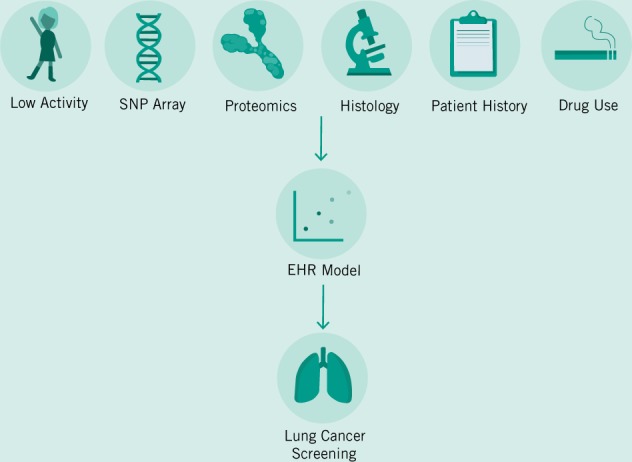
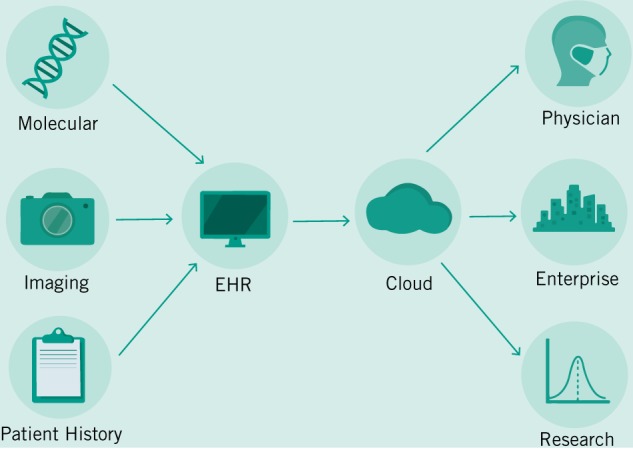
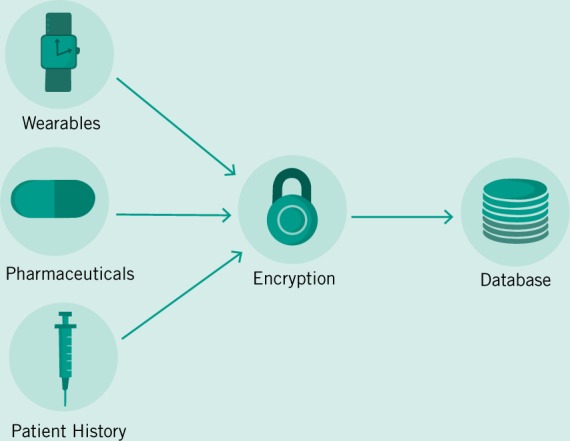
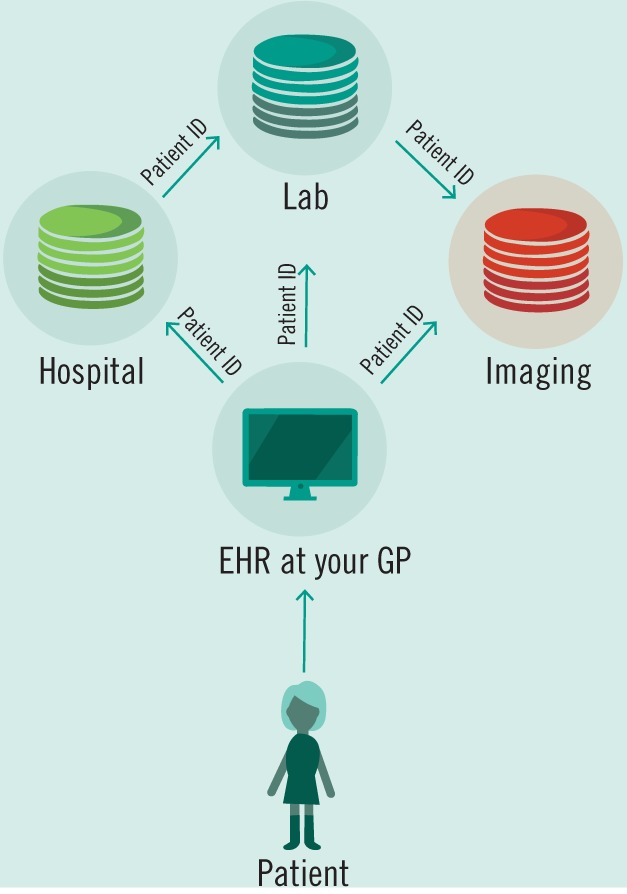
Verification
Claims the paper makes
The claims and statistics of this paper haven’t been checked yet.
Run the check — free, no account needed. It reads the open-access text and checks the sources it cites.
Claims other papers make about this one
Each is checked against this paper’s own text: does it say what the citing paper says it does?
In the citing paper
“Besides therapeutic interventions, digital technologies may support clinical management of depression by: (a) capturing longitudinal, temporally dense, and multimodal mental health data for use in diagnosis and monitoring; (b) analyzing data using ML paradigms to generate personalized and clinically actionable insights and predictions; and (c) supporting integrated care by facilitating connections”
From Digital health technologies and major depressive disorder (2023) · cites this paper as [70]
Self-check
Percentages, sums and reported differences re-computed from the paper’s own numbers.
The self-check needs the paper’s full text.
Citations
Cites
High-performance medicine: the convergence of human and artificial intelligence
Topol, E. J. (2019) · Nature Medicine · doi:10.1038/s41591-018-0300-7 · Cited by 10,450
A guide to deep learning in healthcare
Esteva, A., Robicquet, A., Ramsundar, B., Kuleshov, V., DePristo, M., Chou, K., Cui, C., Corrado, G., Thrun, S., & Dean, J. (2019) · Nature Medicine · doi:10.1038/s41591-018-0316-z · Cited by 5,312
Next-generation DNA sequencing
Shendure, J., & Ji, H. (2008) · Nature Biotechnology · doi:10.1038/nbt1486 · Cited by 4,509
Genetic effects on gene expression across human tissues
GTEx Consortium (2017) · Nature · doi:10.1038/nature24277 · Cited by 4,036
Review The Cancer Genome Atlas (TCGA): an immeasurable source of knowledge
Tomczak, K. J., Czerwińska, P., & Wiznerowicz, M. (2015) · Współczesna Onkologia · doi:10.5114/wo.2014.47136 · Cited by 3,624
Pan-cancer analysis of whole genomes
The ICGC/TCGA Pan-Cancer Analysis of Whole Genomes Consortium, Aaltonen, L. A., Abascal, F., Abeshouse, A., Aburatani, H., Adams, D. J., Agrawal, N., Ahn, K. S., Ahn, S.-M., Aikata, H., et al. (2020) · Nature · doi:10.1038/s41586-020-1969-6 · Cited by 3,064 · cited 1×
“We see this global leadership already in oncology (The Cancer Genome Atlas (TCGA), Pan-Cancer Analysis of Whole Genomes (PCAWG)) and neuropsychiatric diseases (PsychENCODE) (Tomczak et al. 2015; Akbarian et al. 2015; Campbell et al. 2020).”
BackgroundBig data analytics in healthcare: promise and potential
Raghupathi, W., & Raghupathi, V. (2014) · Health Information Science and Systems · doi:10.1186/2047-2501-2-3 · Cited by 3,034
Multi-omics approaches to disease
Hasin, Y., Seldin, M., & Lusis, A. (2017) · Genome Biology · doi:10.1186/s13059-017-1215-1 · Cited by 2,953
The “All of Us” Research Program
The All of Us Research Program Investigators (2019) · New England Journal of Medicine · doi:10.1056/nejmsr1809937 · Cited by 2,440
Implementing Machine Learning in Health Care — Addressing Ethical Challenges
Char, D. S., Shah, N. H., & Magnus, D. (2018) · New England Journal of Medicine · doi:10.1056/nejmp1714229 · Cited by 1,857
Cited by
Sorted by citations
Items 201–218 of 218
The impact of electronic health records on communication between nurses and doctors
Alqahtani, . M., Alshareef, . A., Alshammari, . G., Alquwaidi, M. K., Aldawsari, A. H. A., Alshaghroud, . M., Altwaijri, S. A., Bokhamsin, . H., Alzahrani, . S., Al–Dahamashi, ., et al. (2022) · International Journal of Health Sciences · doi:10.53730/ijhs.v6ns10.15420
The Role of Big Data and Blockchain in Decentralized Decision-Making: A Comprehensive Review
Kostopoulos, N., & Antonopoulou, H. (2024) · Technium Business and Management · doi:10.47577/business.v10i.11998
Cheran, R. (2024) · University of North Texas Digital Library (University of North Texas) · doi:10.12794/metadc2415895
Opportunities arising from the tech revolution
Čepukaitytė, G., & Chan, D. (2025) · Elsevier eBooks · doi:10.1016/b978-0-12-822240-9.00006-5
Hariyati, R. T. S., Handiyani, H., Amiruddin, M., Wildani, A. A., Afriani, T., & Min Huei, H. S. U. (2025) · Research Square · doi:10.21203/rs.3.rs-5394530/v1
Arora, A., George, L. M., Kaur, R., Arora, N., Tomer, N., Gupta, A. K., Soni, V., & Vats, P. (2025) · Lecture notes in networks and systems · doi:10.1007/978-981-96-4139-0_35
Ljepava, N., Tarabasz, A., & Skibinska, E. (2025) · Advances in Science, Technology & Innovation/Advances in science, technology & innovation · doi:10.1007/978-3-031-92135-3_9 · Cited by 1
Clinical trial demographics extractor
Tubbs, A., & Vazquez, E. A. (2026) · SoftwareX · doi:10.1016/j.softx.2026.102678
Deriving Big Insights from Big Data: The Next Era-in Data-driven Management
Satpathy, I., Nayak, A., & Jain, V. (2025) · Emerald Group Publishing Limited eBooks · doi:10.1108/978-1-83708-460-920251001
On the purpose of artificial intelligence in critical care medicine
Drudi, C., Matta, S. C., Lee, H., O’Donoghue, S. C., D’Couto, H. T., Hamza, A., Gutiérrez, C. A., Nakasi, R., Byers, J. T., Tumukunde, M., et al. (2026) · Journal of Translational Critical Care Medicine · doi:10.1097/jtccm-d-25-00021
Blockchain for Healthcare Data Security
Kolli, Y. K., Kushala, K., Induru, V., Radhakrishnan, P., Ramar, V. A., & Premalatha, R. (2026) · Advances in computational intelligence and robotics book series · doi:10.4018/979-8-2600-0981-9.ch010
Rubeis, G. (2026) · Springer eBooks · doi:10.1007/978-3-032-14301-3_1
MAI: Eine sehr kurze Geschichte und der aktuelle Stand der Technik
Rubeis, G. (2026) · Springer eBooks · doi:10.1007/978-3-032-14301-3_3
Zhu, Y., Wang, K., Zhang, Y., Xie, C., Jiang, T., Ye, Z., Wu, X., Tang, H., Sun, X., Zhu, T., et al. (2026) · Journal of Materials Chemistry C · doi:10.1039/d6tc00379f
Kumar, R., Sharma, N., Deshmukh, A., Nair, A., & Pillai, M. (2022) · Journal of Artificial Intelligence for Healthcare Systems · doi:10.68159/l244649356
Guo, H., Gerli, P., Koay, A. C. C., Chong, H. G., & Williams, A. J. (2026) · doi:10.2196/preprints.111605
Mayuri, Bhattacharya, B., Kar, K., Pawar, P. K., Singh, I., Sangnim, T., & Huanbutta, K. (2026) · Journal of Obesity · doi:10.1155/jobe/9482093
Sreenivasan, M., & Chacko, A. M. (2026) · IEEE International Conference on Recent Advances in Electronics, Communication, Computing, Automation and Power (RECCAP) · doi:10.1109/reccap69368.2026.11723565
Metadata
- Authors
- Agrawal, R., & Prabakaran, S.
- Affiliations
- University of Cambridge (GB)
- Indian Institute of Science Education and Research Pune (IN)
- Corresponding author
- Prabakaran, Sudhakaran
- Venue
- Heredity
- Published
- 2020-03-05
- Volume
- 124
- Issue
- 4
- Pages
- 525-534
- ISSN
- 0018-067X (ISSN-L)
- 1365-2540
- PMC
- PMC7080757
- OpenAlex
- W3010611814
- Cited by
- 218
- References
- 50
- Citations by year
- 2026: 14 · 2025: 27 · 2024: 34 · 2023: 68 · 2022: 35 · 2021: 35 · 2020: 5
- FWCI
- 2.73
- Type
- journal article
- Language
- en
- Open access
- hybrid
- doi.org
- Locations
- Heredity (publishedVersion, cc-by)
- Europe PMC (PubMed Central) (publishedVersion, cc-by)
- PubMed Central (publishedVersion, cc-by)
- PubMed (publishedVersion)
- Apollo (University of Cambridge) (submittedVersion, cc-by)
- Apollo (cc-by)
- Topics
- Health Sciences › Medicine › Health Informatics › Artificial Intelligence in Healthcare and Education
- Health Sciences › Health Professions › Health Information Management › Electronic Health Records Systems
- Social Sciences › Decision Sciences › Information Systems and Management › Big Data Technologies and Applications
- Keywords
- big data, digital healthcare, general practice, data ownership, data fragmentation, physician burnout, TCGA, data regulation, data integration, diversity in research, machine learning security, transparency
- MeSH terms
- Machine Learning, Big Data, Delivery of Health Care, United Kingdom, Humans, United States, General Practice
About these checks
Registry, retraction, Cites and statistics results are computed, not judged, with one exception: a printed reference that no index lists is read once by a model before it counts as a citation error. Claims are extracted by a model and kept only when their quote appears verbatim in the text; each cited source is then checked, with a model’s help, for whether it says what the claim relies on. Those verdicts can be wrong — read the claim’s quote and the cited source before relying on one.
Statistics and arithmetic are recomputed, not judged.
Confidence bands are shown only for fields calibrated on our annotated test set. None is calibrated yet, so no band is shown.
What counts as a claim ›How we measure confidence ›How we check this ›
Are you an author, or do you see a problem with this page? Request a review
