

The WHO Global report 2023 on hypertension warning the emerging hypertension burden in globe and its treatment strategy
Open accessThe DOI matches its Crossref record; 14 of the 14 references it cites were found in a registry or an index; 6 of the 21 sources its claims cite were checked for support.
Abstract
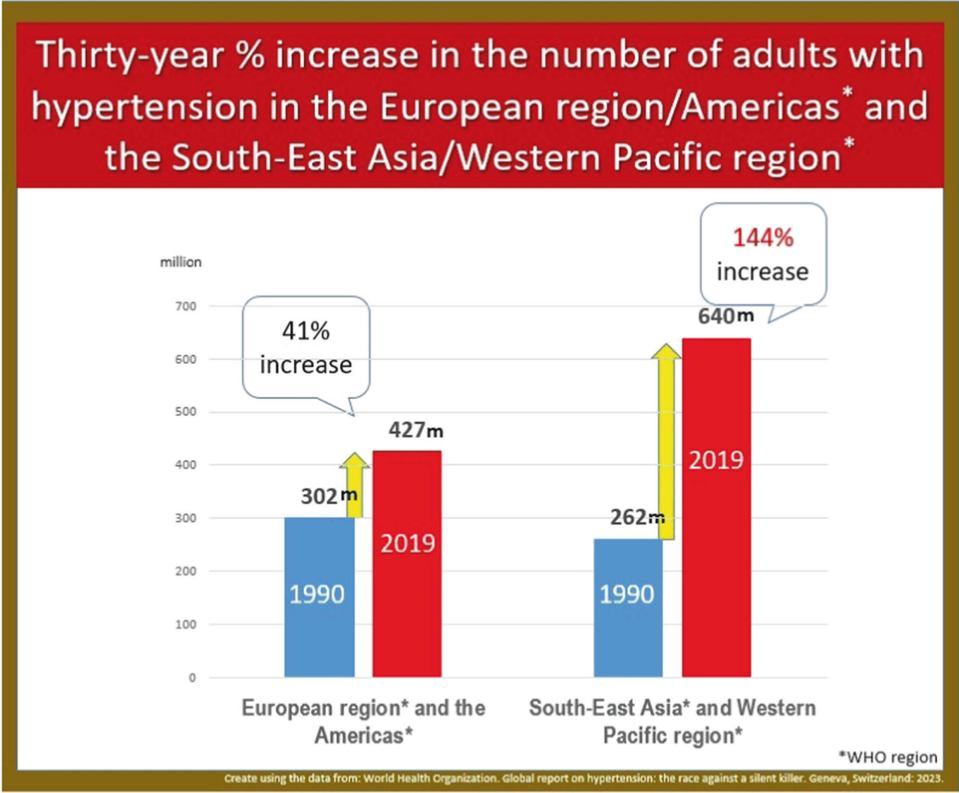
Thirty-year % increase of adults with hypertension in the European/ Americas and South-East Asia/ Western Pacific (WHO region). Create using the data from: World Health Organization. Global report on hypertension: the race against a silent killer. Geneva, Switzerland: 2023.
Overview
CoChat Summary
TL;DR
This commentary summarizes the WHO 2023 Global report on hypertension, highlighting the global and especially Asian burden of uncontrolled hypertension and the report's recommended strategies. It advocates a home blood pressure-centered approach, salt reduction, and multidisciplinary team care via the HEARTS technical package.
Key findings
- Only 54% of adults with hypertension are diagnosed, 42% receive treatment, and just 21% have their hypertension controlled; global uncontrolled hypertension prevalence fell slightly to 26% in 2019 (down 3 percentage points from 2010), still above the voluntary global target of 21%.
- Regional burden is shifting: hypertensive adults in the WHO Western Pacific region rose from 144 million (1990) to 346 million (2019), and prevalence increased in the Western Pacific (24% to 28%) and Southeast Asia (29% to 32%), while it decreased in the WHO European region.
- Over 30 years, adult hypertension patients increased 41% in the WHO European/Americas regions versus 144% in the WHO South-East Asia/Western Pacific regions.
- Excessive salt intake (≥5 g/day) contributed to 2 million cardiovascular deaths in 2019 (GBD 2019); each 1-g increment in estimated sodium excretion was associated with a 2.11 mm Hg systolic BP increase. A Japanese nutritionist-guided salt-restriction study reduced salt intake by an additional 1.8 g/day versus conventional education.
Methods
- Design: narrative commentary/opinion piece ("Graphical Opinion") synthesizing the WHO 2023 Global report on hypertension and related literature; no primary data collection.
- Data: cited statistics from the WHO report, GBD 2019, NCD Risk Factor Collaboration, and referenced trials (STEP, SPRINT, BPLTTC) and studies (e.g., Finn-Home, Mente et al., Nakano et al.).
- Analysis: descriptive synthesis of report findings and cited evidence; no formal statistical analysis performed.
Limitations
- Not stated in the paper: the authors declare no competing interests but do not list study limitations.
- Evident from the text: this is a short commentary rather than an original study, so it relies entirely on secondary sources and provides no new empirical data or systematic review methodology; several figures are reprinted from other sources (Kario et al. [3], [9]).
Model-written summary. Check it against the paper before relying on it.
Integrity signals
Registry
Cites
Statistics
Figures
Verification
Claims the paper makes
6 Valid · 0 Not valid · 13 Not checked · 6 Own results and interpretations
The cited sources support only part of this claim — read each source’s verdict below.
In the paper
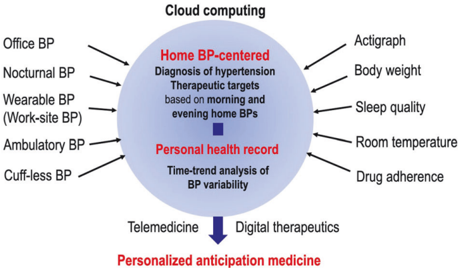
“For strict management of hypertension control, home BP measurement has increasingly emerged as a key metric, supported by research findings that show a stronger association with cardiovascular risk factors compared to office BP [4,5].”
§ The WHO Global report 2023 on hypertension warning the emerging hypertension burden in globe and its treatment strategy > Home BP centered approach for eradicating uncontrolled hypertension
What the sources say
- Partly supportedcites [4] 4. Niiranen TJ, Hanninen MR, Johansson J, Reunanen A, Jula AM. Home-measured blood pressure is a stronger predictor of cardio- vascular risk than office blood pressure: the Finn-Home study. Hypertension. 2010;55:1346-51. sourceExperimental — accuracy not yet measured
The Abstract and “BP and CV Risk” section report that home BP predicted cardiovascular events more strongly than office BP, supporting the comparison. But the study treated other cardiovascular risk factors as adjustment variables; it did not establish a stronger association between home BP and those risk factors. (LLM, conf=0.85)
- Not checked — no full text of the sourcecites [5] 5. Bobrie G, Chatellier G, Genes N, Clerson P, Vaur L, Vaisse B, et al. Cardiovascular prognosis of "masked hypertension" detected by blood pressure self-measurement in elderly treated hyperten- sive patients. JAMA. 2004;291:1342-9. source
plainstates an association- Asserted: passes — The authors put it forward as true.
- Checkable: passes — It can be checked against evidence.
- Load-bearing: passes — The paper’s conclusions depend on it.
- Based: passes — The paper gives a reason why it holds.
- Partly supported
Every source the paper cites for this claim was checked and supports it.
In the paper
“A large prospective, epidemiologic study found a systolic blood pressure increase of 2.11 mm Hg for each 1-g increment in estimated sodium excretion [11].”
§ The WHO Global report 2023 on hypertension warning the emerging hypertension burden in globe and its treatment strategy > Tackling high salt intake
What the sources say
- Supportedcites [11] 11. Mente A, O'Donnell MJ, Rangarajan S, McQueen MJ, Poirier P, Wielgosz A, et al. Association of urinary sodium and potassium excretion with blood pressure. N Engl J Med. 2014;371:601-11. source
The Results (p. 1) report a regression-estimated 2.11 mm Hg increment in systolic blood pressure for each 1-g increment in estimated sodium excretion. The Methods (p. 1) describe a study of 102,216 adults from 18 countries. (LLM, conf=0.95)
plainstates a cause- Asserted: passes — The authors put it forward as true.
- Checkable: passes — It can be checked against evidence.
- Load-bearing: passes — The paper’s conclusions depend on it.
- Based: passes — The paper gives a reason why it holds.
- Supported
The sources with a verdict support this claim; the rest weren’t checked yet, have no full text we could read, or their verdicts aren’t rated yet.
In the paper
“It gains endorsement more and more from recent guidelines and consensus documents [6,7].”
§ The WHO Global report 2023 on hypertension warning the emerging hypertension burden in globe and its treatment strategy > Home BP centered approach for eradicating uncontrolled hypertension
What the sources say
- Not checked — no full text of the sourcecites [6] 6. Mancia Chairperson G, Kreutz Co-Chair R, Brunstrom M, Burnier M, Grassi G, Januszewicz A, et al. 2023 ESH Guidelines for the management of arterial hypertension The Task Force for the management of arterial hypertension of the European Society of Hypertension Endorsed by the European Renal Association (ERA) and the International Society of Hypertension (ISH). J Hypertens. 2023;41:1874-2071. source
- Supportedcites [7] 7. Kario K, Park S, Chia YC, Sukonthasarn A, Turana Y, Shin J, et al. 2020 Consensus summary on the management of hyper- tension in Asia from the HOPE Asia Network. J Clin Hypertens. 2020;22:351-62. source
The cited 2020 HOPE Asia Network consensus (Section 3, 'HBPM is an essential component of any hypertension management plan because home BP has been shown to provide better prognostic information than office BP measurements') is itself a recent consensus document that endorses home blood pressure measurement, with Class I/IIa recommendations for its use in diagnosis, treatment targeting (<135/85 mm Hg) and risk stratification (Table 3, Section 3). It therefore exemplifies the endorsement the citing sentence attributes to 'recent guidelines and consensus documents'. The document does not itself assert an increasing temporal trend, and its item 7 only says HBPM 'may be incorporated into local clinical hypertension guidelines' (Class IIa, level C), but the overall stance is clear endorsement. (LLM, conf=0.85)
plain- Asserted: passes — The authors put it forward as true.
- Checkable: passes — It can be checked against evidence.
- Load-bearing: passes — The paper’s conclusions depend on it.
- Based: passes — The paper gives a reason why it holds.
The cited sources support only part of this claim — read each source’s verdict below.
In the paper
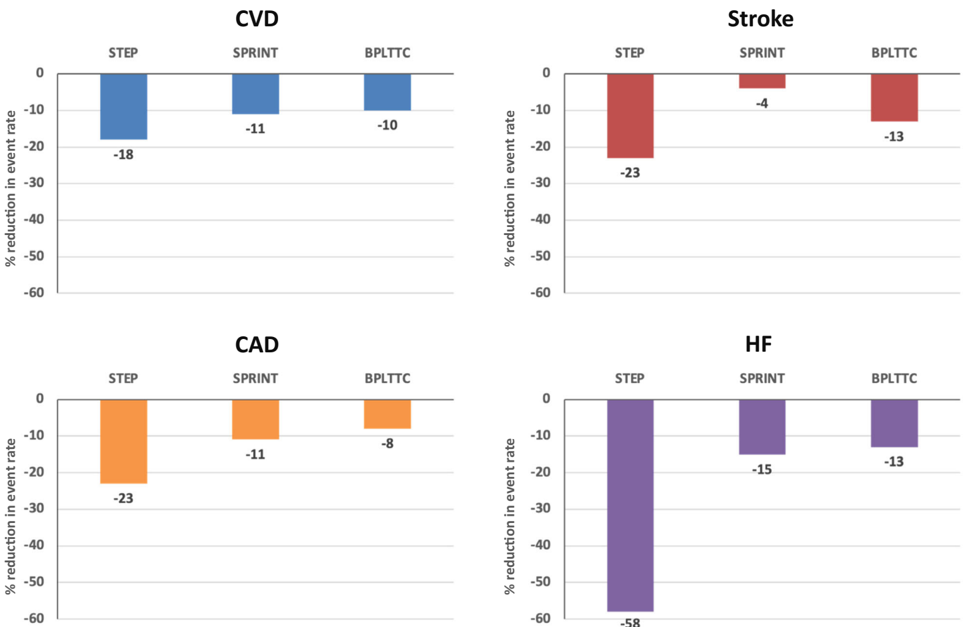
“It's important to highlight that Asians generally seems to experience greater benefits (reduced the onset of cardiovascular disease, stroke, coronary artery disease and heart failure) from strict BP control compared to Western populations (Fig. 1) [3].”
§ The WHO Global report 2023 on hypertension warning the emerging hypertension burden in globe and its treatment strategy > Home BP centered approach for eradicating uncontrolled hypertension
What the sources say
- Partly supportedcites [3] 3. Kario K, Mogi M, Hoshide S. Latest hypertension research to inform clinical practice in Asia. Hypertens Res. 2022;45:555-72. sourceExperimental — accuracy not yet measured
The STEP study section reports greater cardiovascular risk reduction with intensive blood-pressure lowering in older Chinese patients than in the Western comparator studies. It says this may indicate greater benefits in elderly Asian populations, but calls for further study; it does not establish the claim for Asians generally. (LLM, conf=0.88)
hedgedstates a cause- Asserted: passes — The authors put it forward as true.
- Checkable: passes — It can be checked against evidence.
- Load-bearing: unclear — It is unclear whether the paper’s conclusions depend on it.
- Based: passes — The paper gives a reason why it holds.
- Partly supported
In the paper
“The report emphasizes potassium-enriched salt substitutes as an affordable strategy [1].”
§ The WHO Global report 2023 on hypertension warning the emerging hypertension burden in globe and its treatment strategy > Tackling high salt intake
What the sources say
- Not matchedcites [1] 1. World Health Organization. Global report on hypertension: the race against a silent killer. Geneva, Switzerland: World Health Organization; 2023, p. 1-276.
Its entry has no title and year that we can search by.
plain- Asserted: passes — The authors put it forward as true.
- Checkable: passes — It can be checked against evidence.
- Load-bearing: unclear — It is unclear whether the paper’s conclusions depend on it.
- Based: passes — The paper gives a reason why it holds.
- Not matched
1 more claim
Create a free account to see all 25 claims and to verify the 1 reference still open.
- Borderline: one of the tests for a substantial claim is unclear. 1
- Probably not a substantial claim. 12
- It may state two separate claims as one. 8
Citations
Cites
Murray, C. J. L., Aravkin, A. Y., Zheng, P., Abbafati, C., Abbas, K. M., Abbasi-Kangevari, M., Abd-Allah, F., Abdelalim, A., Abdollahi, M., Abdollahpour, I., et al. (2020) · The Lancet · doi:10.1016/s0140-6736(20)30752-2 · Cited by 9,854
Zhou, B., Carrillo-Larco, R. M., Danaei, G., Riley, L. M., Paciorek, C. J., Stevens, G. A., Gregg, E. W., Bennett, J. E., Solomon, B., Singleton, R. K., et al. (2021) · The Lancet · doi:10.1016/s0140-6736(21)01330-1 · Cited by 3,902
Mancia, G., Kreutz, R., Brunström, M., Burnier, M., Grassi, G., Januszewicz, A., Muiesan, M. L., Tsioufis, K., Agabiti-Rosei, E., Algharably, E. A. E., et al. (2023) · Journal of Hypertension · doi:10.1097/hjh.0000000000003480 · Cited by 3,473
Association of Urinary Sodium and Potassium Excretion with Blood Pressure
Mente, A., O'Donnell, M. J., Rangarajan, S., McQueen, M. J., Poirier, P., Wielgosz, A., Morrison, H., Li, W., Wang, X., Di, C., et al. (2014) · New England Journal of Medicine · doi:10.1056/nejmoa1311989 · Cited by 858
Bobrie, G. (2004) · JAMA · doi:10.1001/jama.291.11.1342 · Cited by 842
Niiranen, T. J., Hänninen, M.-R., Johansson, J., Reunanen, A., & Jula, A. M. (2010) · Hypertension · doi:10.1161/hypertensionaha.109.149336 · Cited by 390
(2022) · PubMed Central · doi:10.6515/acs.202205_38(3).20220321a · Cited by 117
2020 Consensus summary on the management of hypertension in Asia from the HOPE Asia Network
Kario, K., Park, S., Chia, Y., Sukonthasarn, A., Turana, Y., Shin, J., Chen, C., Buranakitjaroen, P., Divinagracia, R., Nailes, J., et al. (2020) · The Journal of Clinical Hypertension · doi:10.1111/jch.13751 · Cited by 76
Self-citationNiiranen, T., Hänninen, M.-R. A., Johansson, J. K., Reunanen, A., & Jula, A. (2009) · International Journal of Cardiology · doi:10.1016/j.ijcard.2009.09.041 · Cited by 57
Bobrie, G., Châtellier, G., & Genès, N. (2004) · ACC Current Journal Review · doi:10.1016/j.accreview.2004.04.039 · Cited by 42
Cited by
Items 201–300 of 410
Jaiswal, V., Chowdhury, F., Mashkoor, Y., NASIR, Y. M., Garimella, V., den Eynde, J. V., Huang, H. Y. R., Hanif, M., Kalra, K., Aronow, W. S., et al. (2025) · The American Journal of Cardiology · doi:10.1016/j.amjcard.2025.09.025 · Cited by 5
Epidemiology of ischemic heart disease
Vujcic, I. S., Maksimovic, J. M., & Grujičić, S. Š. (2025) · Medicinska istrazivanja · doi:10.5937/medi0-58650 · Cited by 1
Dietary modulation for the hypertension risk group in Koreans: a cross-sectional study
Han, Y., Ryun, H. U. H., Jung, K. J., Kimm, H., & Jee, S. H. (2025) · Nutrition & Metabolism · doi:10.1186/s12986-025-00921-4 · Cited by 2
Sodium Balance and Quality of Life in People with Chronic Kidney Disease—A Cross-Sectional Study
Martin, K., Tan, S., Hewitson, T. D., & Toussaint, N. D. (2025) · Nutrients · doi:10.3390/nu17162634 · Cited by 2
Putilina, M. V. (2024) · Meditsinskiy sovet = Medical Council · doi:10.21518/ms2024-278 · Cited by 1
Yan, C., Zhou, Y., Wang, H., Fu, J., & Xu, Q. (2025) · PLoS ONE · doi:10.1371/journal.pone.0325620 · Cited by 3
The role of anxiety in the development of arterial hypertension
Putilina, M. V. (2025) · Meditsinskiy sovet = Medical Council · doi:10.21518/ms2024-543 · Cited by 1
Wang, Q., Liang, Y., Zuo, Q., He, L., Zhang, T., Wang, Z., Zhai, J., Cao, B., Ma, S., Zhang, G., et al. (2025) · Molecular and Cellular Biochemistry · doi:10.1007/s11010-025-05321-z · Cited by 3
Eldeeb, R., Ismail, M. K., Jallo, M. K. I., Ellao, J. A., & Kamal, T. F. (2025) · Biomedical & Pharmacology Journal · doi:10.13005/bpj/3331 · Cited by 2
ReBP: Short-Term Blood Pressure Estimation by Reconstructing PPG Signals Based on mmWave Radar
Ma, J., Wang, Y., Bai, W., Han, C., & Sheng, B. (2025) · IEEE Sensors Journal · doi:10.1109/jsen.2025.3576133 · Cited by 1
Das, S., Karmakar, P., & Sarkar, A. (2026) · Journal of environmental chemical engineering · doi:10.1016/j.jece.2026.125102
Renal denervation for hypertension management: past, current evidence, and future directions
Hassan, S., Rendon, I. H., Spilias, N., Bredel, L., Chatzizisis, Y. S., & Delgado-Lelievre, M. C. (2026) · American Journal of Hypertension · doi:10.1093/ajh/hpag112
Antihypertensive Activity Prediction of Physalis angulata L. Through Computational Analysis
Gondokesumo, M. E., Rasyak, M. R., & Ibrahim, M. (2025) · Tropical Journal of Natural Product Research · doi:10.26538/tjnpr/v9i12.22
Chang, J.-T., & Yao, Z. (2025) · Scientific Reports · doi:10.1038/s41598-025-31072-4
Three‐Year Durability of Radiofrequency Renal Denervation: SPYRAL HTN‐ON MED
Kandzari, D. E., Mahfoud, F., Townsend, R. R., Kario, K., Weber, M. A., Schmieder, R. E., Tsioufis, K. P., Pocock, S., Yang, G., Brar, S. K., et al. (2026) · Journal of the American Heart Association · doi:10.1161/jaha.126.049081 · Cited by 3
Self-citationBudiati, R. E., Santoso, I., Hestiana, M. M., Umamah, A., Triwiyanti, E., & Sari, N. N. (2026) · Proceeding Cendekia International Conference Health and Technology · doi:10.31596/pcicht.v4i.255
Gu, Y., Li, Q., Cao, L., & Huabing, Y. (2026) · International Journal of Molecular Sciences · doi:10.3390/ijms27020709 · Cited by 2
Kang, S. Y., & Kim, Y. (2025) · Biomedicines · doi:10.3390/biomedicines13061475
Cortez-Gómez, C. A., Flores-Barrada, M. A., González-Garrido, J. A., Castillo-Ávila, R. G., López–Victorio, C. J., Vázquez, P. I. A., Tejas-Juárez, J. G., la Cruz-Cano, E. D., & Díaz‐Gandarilla, J. A. (2025) · Blood Pressure · doi:10.1080/08037051.2025.2600736 · Cited by 3
Digital pharmacoepidemiology of angiotensin-converting enzyme inhibitors in Russia
Kotlyarov, S. N., & Котлярова, А. А. (2026) · Frontiers in Pharmacology · doi:10.3389/fphar.2026.1881727
Causal Relationship Between Hypertension and Schizophrenia: A Mendelian Randomization Study
Xue, C., Sun, Y., & He, W. (2025) · International Heart Journal · doi:10.1536/ihj.24-768
Interconnected challenges of hypertension and diabetes mellitus in cardiovascular and kidney health
Khan, S. U., Alam, O., Alam, S., Hussain, T., & Lodhi, F. S. (2026) · Journal of Diabetes & Metabolic Disorders · doi:10.1007/s40200-026-01904-9 · Cited by 2
Martins, E. D., Tavares, C. A. M., Favaro, L., Monfardini, F., Mourad, J., Khunti, K., Savarese, G., Berwanger, O., & Santo, K. (2026) · American Heart Journal · doi:10.1016/j.ahj.2026.107380
Subclinical Cardiac Remodeling in Borderline Hypertension: The Role of Advanced Imaging
Gaprindashvili, T., Agladze, R., Botchorishvili, I., & Pagava, Z. (2026) · Cureus · doi:10.7759/cureus.112935
Yin, J., Zhuang, Y., Qin, R., Wang, Z., Geng, S., & Ding, Y. (2026) · Frontiers in Nutrition · doi:10.3389/fnut.2026.1841432
IoT-Enabled Wearable Device for Stroke Rehabilitation at Home
Uddin, M. S. (2025) · IGI Global eBooks · doi:10.4018/979-8-3373-5447-7.ch011
Gopinath, V., Anethyar, Y., Basavegowda, M., Vageesh, V. Y., Manivasagan, M. S., Mallaiah, C., Uday Babu, J., & Srinivas, V. S. (2026) · The Indian Journal of Medical Research · doi:10.25259/ijmr_697_2026
Statin Use Patterns among hypertensive Patients in a population-based study
Azarboo, A., Farzi, Y., Mirzad, M., Golestani, A., Khosravi, S., Tabatabaei‐Malazy, O., & Sani, M. P. (2026) · Journal of Diabetes & Metabolic Disorders · doi:10.1007/s40200-026-02018-y
Asmar, I., Almahmoud, O. H., & Jaghama, M. (2025) · Journal of Hypertension · doi:10.1097/hjh.0000000000004089
Nguyen, T. T., Tran, A. V., Huynh, A. T., Nguyen, Q. T., Pham, L. G. L., & Nguyen, B. T. (2026) · PeerJ · doi:10.7717/peerj.20489 · Cited by 1
Kim, S. J., Yun, J. M., Cho, S. H., Kim, S., Kang, Y., Kim, H.-J., & Park, J. (2026) · Environmental Pollution · doi:10.1016/j.envpol.2026.127935 · Cited by 1
Yin, W.-J., Wang, S., Qu, Y., Ren, J., Zhang, P., Abuduxukuer, R., Yang, Y., & Guo, Z. (2025) · EClinicalMedicine · doi:10.1016/j.eclinm.2025.103562 · Cited by 2
May Measurement Month 2022: an analysis of blood pressure screening results from Kenya
Mbau, L. K., Samia, B., Nguchu, H., et al. (2025) · European Heart Journal Supplements · doi:10.1093/eurheartjsupp/suaf045
Izwan., S., Othman, N. N., & Rahim, N. D. A. (2026) · Data in Brief · doi:10.1016/j.dib.2026.113300 · Cited by 1
Wang, Y., Dai, Z., Hou, L., Yue, Y., Ma, K., Guo, Q., KC, R., Liu, Q., Li, J., Ren, Y. L., et al. (2026) · Frontiers in Neuroscience · doi:10.3389/fnins.2026.1776680
Bitar, A. N., Rosairie, N. Z., Azri, N. M., Alshehade, S. A., & Akkaif, M. A. (2026) · Studies in big data · doi:10.1007/978-3-032-18881-6_13
Yuan, J., Guo, B., Li, F., Yi, Q.-C., 涂利宽, Tang¹, B., & Li, Z. (2026) · International Journal of Public Health · doi:10.3389/ijph.2026.1610164
Liu, K., Meng, F., & Zhao, X. (2025) · Archives of Physiology and Biochemistry · doi:10.1080/13813455.2025.2593441
Mohith, M., & Bujji, K. (2026) · Cureus · doi:10.7759/cureus.102676
de Oliveira, R. O., SOUSA, C. C. D., Inuzuka, S., Feitosa, A., Brandão, A. A., Gomes, M. M., Guimarães, V. D. S., Cestário, E. D. E. S., Barbosa, E. C. D., Bezerra, R., et al. (2026) · International Journal of Cardiovascular Sciences · doi:10.36660/ijcs.20260025
Impact of Rapid Emergency Medical Services Response Times on Patient Outcomes in Saudi Arabia
Ahmed, M., Hassan Abdulrahman, T., Kishi, A. A. A., Alamer, A. A. H., Alali, H. S., Alhajji, A. A., Alabdullah, A., Aloqili, M. A. A., Alnahawi, R. M. A., & Albattat, S. M. (2025) · International Journal of Computational and Experimental Science and Engineering · doi:10.22399/ijcesen.4049
Kerna, N. A., Flores, J. V., Zhao, X., Taha, W. T. M., Pruitt, K. D., Carsrud, N. D. V., Ngwu, D. C., Holets, H. M., Azi, C. I., Jomsky, B. M., et al. (2024) · European Journal of Medical and Health Research · doi:10.59324/ejmhr.2024.2(4).02 · Cited by 1
Candeloro, B. M., OLIVEIRA, N., Franchi, A. C., Chagas, A. D. S., Gonzaga, L. A., Raimundo, R. D., Barbalho, S. M., Porto, A. A., Garner, D. M., & Valenti, V. E. (2025) · Revista Brasileira de Farmacognosia · doi:10.1007/s43450-025-00680-6 · Cited by 4
Ansari, S. F., Saifan, N. A. A., Alneyadi, R. K., Hassan, A., Liu, Y., Ashok, S., Nauman, J., Ahmed, L. A., Sheryani, R. A., & Rahma, A. T. (2026) · Frontiers in Digital Health · doi:10.3389/fdgth.2026.1911937
Ashenef, B., Yimenu, B. W., Osman, E. E., Sinamaw, D., Baye, G., Teffera, Z. H., Adugna, A., Mengistu, E. F., Baylie, T., & Jemal, M. (2025) · BMC Cardiovascular Disorders · doi:10.1186/s12872-025-05253-y
Pal, A., Dalui, R., Manna, S., & Dua, P. (2026) · Annals of the National Academy of Medical Sciences (India) · doi:10.25259/anams_89_2024
Cho, S. B. (2026) · Journal of Clinical Medicine · doi:10.3390/jcm15020643
Chen, L., & Yin, L. (2025) · American Journal of Hypertension · doi:10.1093/ajh/hpaf146 · Cited by 3
Мищенко, Л. А., & Matova, O. O. (2025) · HYPERTENSION · doi:10.22141/2224-1485.18.1.2025.375
Myloslavsky, D. K. (2025) · Shidnoevropejskij zurnal vnutrisnoi ta simejnoi medicini · doi:10.15407/internalmed2025.02.054
Park, S., Park, E. J., Park, M.-H., Chu, W., Lee, D. I., Roh, S., Choi, C. U., & Kang, D. O. (2025) · Clinical Therapeutics · doi:10.1016/j.clinthera.2025.07.023
Special Issue “Exercise Training on Cardiovascular Risk Factors in Primary and Secondary Prevention”
Caminiti, G. (2026) · Journal of Functional Morphology and Kinesiology · doi:10.3390/jfmk11030331
Li, F., Li, M., Guo, S., Cao, Y., Zhang, Q., Cheng, T., & Li, Y. (2026) · Frontiers in Public Health · doi:10.3389/fpubh.2026.1743254
Association of cooking fuel type with hypertension risk: a systematic review and meta-analysis
Li, J., Su, P., Zhao, H., Chen, L., Li, X. F., & Jiang, H. (2026) · BMC Public Health · doi:10.1186/s12889-025-26168-5
Hematological inflammatory indices and their relationship to the risk of hypertension
Jung, J. Y., Oh, C., Ryoo, J., & Park, S. K. (2026) · Epidemiology and Health · doi:10.4178/epih.e2026008 · Cited by 2
Khalid, M., Majzoub, W. M., Ibrahim, Y. M., Makki, H., Ibrahim, E., Amin, M. M., Ahmed, K. O., & Yousef, B. A. (2026) · BMC Cardiovascular Disorders · doi:10.1186/s12872-026-06043-w
Dagnew, S. B., Zerihun, T. E., Mussie, D. A., Moges, T. A., Wondm, S. A., Tamene, F. B., Tarekegn, G. Y., Zewdu, W. S., & Kassaw, A. T. (2026) · Sage Open Chronic Disease · doi:10.1177/27558428261452289
Hanphitakphong, P., Poomsalood, S., Klakankhai, A., Jinglaew, S., Yana, B., & Suangun, T. (2026) · Biomedical Human Kinetics · doi:10.2478/bhk-2026-0005 · Cited by 2
Antihypertensive Effects of Quercetin-Rich Marchin-13 in a Dexamethasone-Induced Rat Model
Altangerel, A., Chimedtseren, C., Urtnasan, M., Buyantogtokh, D., Begzsuren, D., & Dandii, Z. (2024) · Biomedical & Pharmacology Journal · doi:10.13005/bpj/3048
Aligaz, E. M., Ayalew, S. B., Zegeye, S. T., Dejen, E. T., Nega, M. H., Markos, Z., Mequanint, A., Mamo, T., & Lorato, S. S. (2026) · Perioperative Medicine · doi:10.1186/s13741-026-00681-6 · Cited by 1
Factors associated with lost to follow-up (LTFU) among patients with hypertension: A scoping review
Kamath, R., Stanley, W., Hazarika, P. P., et al. (2026) · PLOS Global Public Health · doi:10.1371/journal.pgph.0006240
Xie, D., Sun, X., Guo, J., Liu, P., Yang, J., & Zhong, P. (2026) · Frontiers in Public Health · doi:10.3389/fpubh.2026.1926948
Ratna, A., Kumar, R., Khera, S., Vishwambhar, S. M., & Gitte, S. V. (2026) · International Journal of Community Medicine and Public Health · doi:10.18203/2394-6040.ijcmph20263191
อินทรวง, น. (2024) · วิทยาศาสตร์และเทคโนโลยีสู่ชุมชน · doi:10.57260/stc.2024.827 · Cited by 1
Suprayitno, E., Hannan, M., Hidayat, S., Permatasari, D., & Huzaimah, N. (2025) · Journal of Applied Nursing and Health · doi:10.55018/janh.v7i3.392
THE IMPACT OF PHYSICAL ACTIVITY ON FEMALE FERTILITY- A REVIEW OF CURRENT LITERATURE
Zając, K., Oder, B., Pietrzyk, D., Furtak, G., Łagódka, M., Pogoda, M., Daniszewski, W., Knobelsdorf, W., Karchut, W., & Ćmil, M. (2025) · International Journal of Innovative Technologies in Social Science · doi:10.31435/ijitss.3(47).2025.3815
Persistent Organic Pollutants: Dual Threats to Environmental Integrity and Human Health
Salaah, S. M. (2025) · Environmental sciences · doi:10.5772/intechopen.1013805 · Cited by 1
Bergman, K., Shaha, S. K., Morrison, J., Ahmed, N., Kuddus, A., Pires, M., Nahar, T., Haghparast‐Bidgoli, H., Khan, A. A., Azad, K., et al. (2026) · BMJ Public Health · doi:10.1136/bmjph-2025-004574
Contreras-Zapata, K. E., Cruz-Hidalgo, N. X., González, N. C. V., Rubio-Zarapuz, A., Clemente‐Suárez, V. J., Pérez, I. M. M., & Pérez, S. E. M. (2026) · Therapeutics · doi:10.3390/therapeutics3020010
Meng, J., Yuan, C., Cheng, A., Zhang, W., Du, Y., Xiao-chao, L., Li, S., Yang, K., & Chu, Y. (2026) · Computational Biology and Chemistry · doi:10.1016/j.compbiolchem.2026.109378
Multispecialty Consensus Statement on Hypertension in Women in India
Rao, S., Jyotsna, M., Vipperla, S., Chhabra, S. T., & WINCARS Hypertension Working Group (2025) · Indian Journal of Cardiovascular Disease in Women · doi:10.25259/ijcdw_69_2025 · Cited by 1
Ibrahim, M. O. (2026) · In Silico Research in Biomedicine · doi:10.1016/j.insi.2026.100505
Liu, H., Chang, X., Wang, L., Lu, W., Yu, C., Du, D., & Guo, W. (2026) · Clinical and Experimental Hypertension · doi:10.1080/10641963.2026.2726549
Topcu, M., & Aygün, Ö. (2025) · BMC Health Services Research · doi:10.1186/s12913-025-13800-8
Zhang, Y., Wei, J., Chen, S., Benmarhnia, T., Zhang, K., Wang, X., Deng, X., Gu, H., Lin, Z., Qu, Y., et al. (2025) · Sustainable Cities and Society · doi:10.1016/j.scs.2025.106293 · Cited by 1
Fermín‐Martínez, C. A., Núñez-Luna, A., Guerra, E. C., Ramírez‐García, D., Perezalonso-Espinosa, J., Zarco-Morales, K. P., León-Álvarez, M., Ponce-Acosta, C., la Maza-Bustindui, N. S. D., Vargas‐Vázquez, A., et al. (2025) · medRxiv · doi:10.1101/2025.08.04.25333004
Mossu, Y., Anegagregn, A., Wubeshet, K., SEMERE, A., Abera, E., Markos, E., & Geremew, T. T. (2026) · Health Science Reports · doi:10.1002/hsr2.72287
Tsuyuki, R. T., Boivin, M., & Liu, S. (2026) · Canadian Pharmacists Journal / Revue des Pharmaciens du Canada · doi:10.3138/cpj-25-0130
The Impact of Nighttime Sleep Quality on the Risk of Hypertension in the Rural Adult Population
Rahmadianto, R. C., Masturo, N. F., Devin, H., Azkarida, L., Adimasto, T., Zaqinah, V. A., Putri, N. M., Dillacocyta, A., & Shafira, M. (2026) · ЗДОРОВЬЕ НАСЕЛЕНИЯ И СРЕДА ОБИТАНИЯ - ЗНиСО / PUBLIC HEALTH AND LIFE ENVIRONMENT · doi:10.35627/2219-5238/2026-34-3-14-20
Metadata
- Authors
- Kario, K., Okura, A., Hoshide, S., & Mogi, M.
- Affiliations
- Jichi Medical University (JP)
- Ehime University (JP)
- Corresponding author
- Kario, Kazuomi
- Venue
- Hypertension Research
- Published
- 2024-03-05
- Volume
- 47
- Issue
- 5
- Pages
- 1099-1102
- ISSN
- 0916-9636 (ISSN-L)
- 1348-4214
- OpenAlex
- W4392469446
- Cited by
- 425
- References
- 13
- Citations by year
- 2026: 181 · 2025: 196 · 2024: 47
- Type
- journal article
- Language
- en
- Open access
- hybrid
- doi.org
- Licence
- cc-by-nc-sa
- www.springernature.com/gp/researchers/text-and-data-mining (tdm)
- www.springernature.com/gp/researchers/text-and-data-mining (vor)
- Locations
- Hypertension Research (publishedVersion, cc-by-nc-sa)
- PubMed (publishedVersion)
- Topics
- Health Sciences › Medicine › Cardiology and Cardiovascular Medicine › Blood Pressure and Hypertension Studies
- Health Sciences › Nursing › Nutrition and Dietetics › Sodium Intake and Health
- Health Sciences › Medicine › Cardiology and Cardiovascular Medicine › Cardiovascular Health and Disease Prevention
- Keywords
- hypertension, hypertension prevalence, global burden of disease, adults
- MeSH terms
- Antihypertensive Agents, Humans, Hypertension, Global Health, World Health Organization
About these checks
Registry, retraction, Cites and statistics results are computed, not judged, with one exception: a printed reference that no index lists is read once by a model before it counts as a citation error. Claims are extracted by a model and kept only when their quote appears verbatim in the text; each cited source is then checked, with a model’s help, for whether it says what the claim relies on. Those verdicts can be wrong — read the claim’s quote and the cited source before relying on one.
The claim verdicts this report counts are experimental: their accuracy is not yet measured.
A language model drew the claims from the paper on 2026-10-10, under version 3 of the claim definition (model deepseek-v4.1-flash, prompt extract-v3).
A second model labelled each claim on 2026-10-10 (model jev-1.13-20260917, definition revision gold-guideline-v0.2).
Cited sources are checked with a language model’s help (gpt-6-sol and qwen3.8-omni-flash).
Statistics and arithmetic are recomputed, not judged.
Confidence bands are shown only for fields calibrated on our annotated test set. None is calibrated yet, so no band is shown.
What counts as a claim ›How we measure confidence ›How we check this ›
Are you an author, or do you see a problem with this page? Request a review
Data sources
Bibliographic data: Semantic Scholar, OpenAlex, Crossref.
Contains information from the Semantic Scholar Academic Graph Datasets, made available under the ODC Attribution License (ODC-BY 1.0).
Semantic Scholar’s data is described in: Kinney, R., et al. (2023). The Semantic Scholar Open Data Platform. arXiv:2301.10140.
