

Soft material for soft actuators
Open accessThe DOI matches its Crossref record; 37 of the 38 references it cites were found in a registry or an index.
Abstract
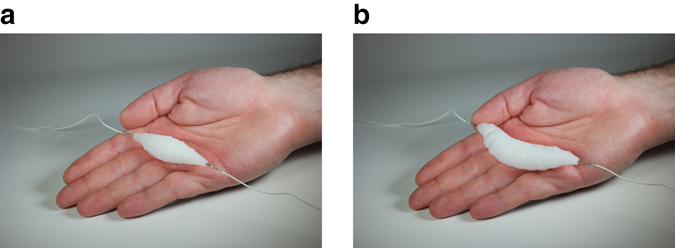
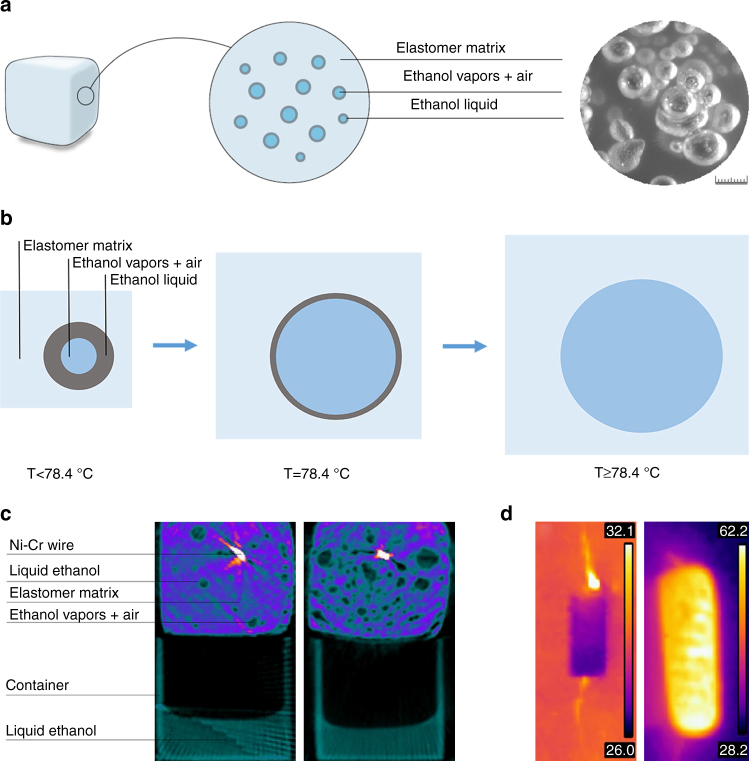
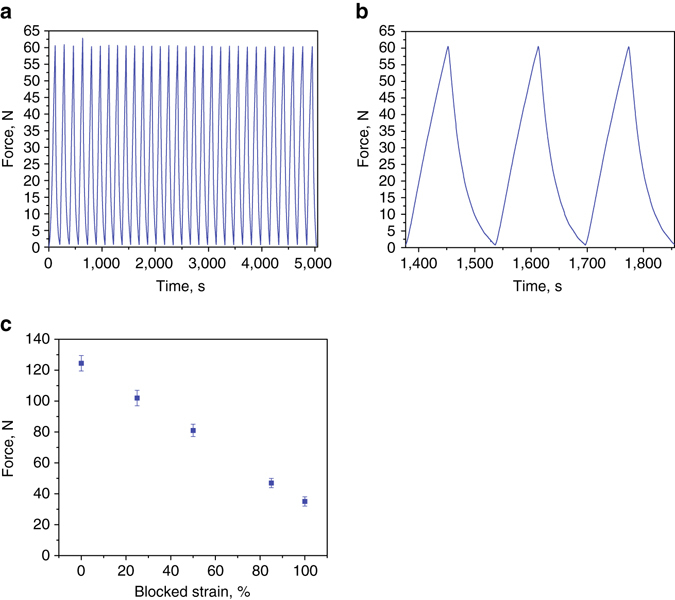
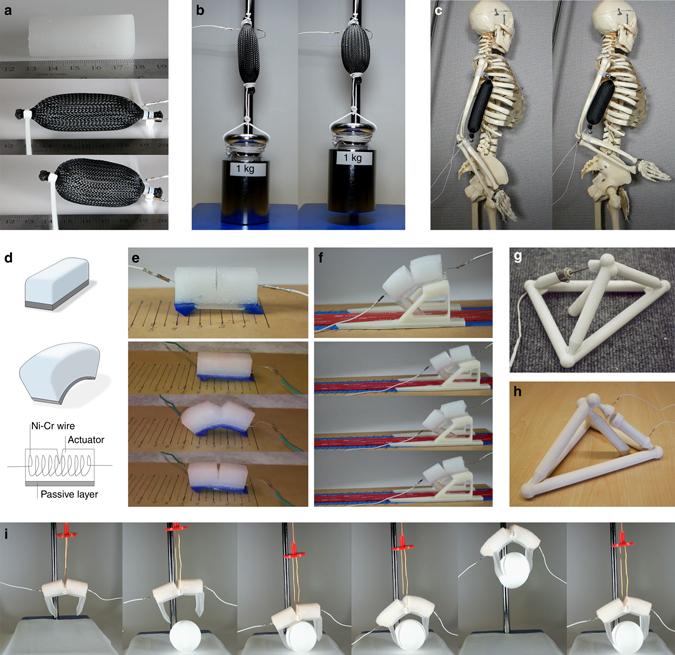
Inspired by natural muscle, a key challenge in soft robotics is to develop self-contained electrically driven soft actuators with high strain density. Various characteristics of existing technologies, such as the high voltages required to trigger electroactive polymers ( > 1KV), low strain ( < 10%) of shape memory alloys and the need for external compressors and pressure-regulating components for hydraulic or pneumatic fluidicelastomer actuators, limit their practicality for untethered applications. Here we show a single self-contained soft robust composite material that combines the elastic properties of a polymeric matrix and the extreme volume change accompanying liquid–vapor transition. The material combines a high strain (up to 900%) and correspondingly high stress (up to 1.3 MPa) with low density (0.84 g cm −3 ). Along with its extremely low cost (about 3 cent per gram), simplicity of fabrication and environment-friendliness, these properties could enable new kinds of electrically driven entirely soft robots.
Overview
The claims and statistics of this paper haven’t been checked yet.
Free: it reads the open-access text and checks the first 5 claims that cite a source we can check. Create a free account to check every claim.
Integrity signals
Registry
Cites
Statistics
Figures
Verification
Claims the paper makes
The claims and statistics of this paper haven’t been checked yet.
Free: it reads the open-access text and checks the first 5 claims that cite a source we can check. Create a free account to check every claim.
Claims other papers make about this one
Each is checked against this paper’s own text: does it say what the citing paper says it does?
The source backs part of the claim, not all of it — or backs it for a different population, condition or comparison.
In the citing paper
“as the structural design of a pneumatic chamber will achieve the pre-defined actuating motion (Figure 2I and 2J).[64–66]”
From Flexible Electronics and Devices as Human–Machine Interfaces for Medical Robotics (2022) · cites this paper as [65]
Experimental — accuracy not yet measured
Self-check
Percentages, sums and reported differences re-computed from the paper’s own numbers.
The self-check needs the paper’s full text.
Citations
Cites
Design, fabrication and control of soft robots
Rus, D., & Tolley, M. T. (2015) · Nature · doi:10.1038/nature14543 · Cited by 5,825
Shepherd, R. F., Ilievski, F., Choi, W., Morin, S. A., Stokes, A. A., Mazzeo, A. D., Chen, X., Wang, M., & Whitesides, G. M. (2011) · Proceedings of the National Academy of Sciences · doi:10.1073/pnas.1116564108 · Cited by 2,111
Soft robotics: a bioinspired evolution in robotics
Kim, S., Laschi, C., & Trimmer, B. (2013) · Trends in Biotechnology · doi:10.1016/j.tibtech.2013.03.002 · Cited by 2,092
Soft Robotics: Biological Inspiration, State of the Art, and Future Research
Trivedi, D., Rahn, C. D., Kier, W. M., & Walker, I. D. (2008) · Applied Bionics and Biomechanics · doi:10.1080/11762320802557865 · Cited by 1,708
Soft robotic glove for combined assistance and at-home rehabilitation
Polygerinos, P., Wang, Z., Galloway, K. C., Wood, R. J., & Walsh, C. J. (2015) · Robotics and Autonomous Systems · doi:10.1016/j.robot.2014.08.014 · Cited by 1,617
Measurement and modeling of McKibben pneumatic artificial muscles
Chou, C.-P., & Hannaford, B. (1996) · IEEE Transactions on Robotics and Automation · doi:10.1109/70.481753 · Cited by 1,589
Ionic polymer-metal composites: I. Fundamentals
Shahinpoor, M., & Kim, K. J. (2001) · Smart Materials and Structures · doi:10.1088/0964-1726/10/4/327 · Cited by 1,126
A Resilient, Untethered Soft Robot
Tolley, M. T., Shepherd, R. F., Mosadegh, B., Galloway, K. C., Wehner, M., Karpelson, M., Wood, R. J., & Whitesides, G. M. (2014) · Soft Robotics · doi:10.1089/soro.2014.0008 · Cited by 1,089
A 3D-printed, functionally graded soft robot powered by combustion
Bartlett, N. W., Tolley, M. T., Overvelde, J. T. B., Weaver, J. C., Mosadegh, B., Bertoldi, K., Whitesides, G. M., & Wood, R. J. (2015) · Science · doi:10.1126/science.aab0129 · Cited by 1,052
Soft Robot Arm Inspired by the Octopus
Laschi, C., Cianchetti, M., Mazzolai, B., Margheri, L., Follador, M., & Dario, P. (2012) · Advanced Robotics · doi:10.1163/156855312x626343 · Cited by 978
Cited by
Items 401–500 of 890
A Legged Soft Robot Platform for Dynamic Locomotion
Xia, B., Fu, J., Zhu, H., Song, Z., Jiang, Y., & Lipson, H. (2021) · Proceedings - IEEE International Conference on Robotics and Automation/Proceedings · doi:10.1109/icra48506.2021.9561018 · Cited by 24
“Other soft actuation methods such as thermally driven[16] and light actuated [17] have limited speed or power density and may not be suitable for highly dynamic soft robots.”
Self-citationMXene-based stimuli-responsive and autonomous intelligent materials
Adhami, A., Mozafari, M., & Soroush, M. (2026) · Communications Materials · doi:10.1038/s43246-026-01074-4 · Cited by 18
Calais, T., & y Alvarado, P. V. (2019) · Multifunctional Materials · doi:10.1088/2399-7532/ab4f9d · Cited by 18
AziziHariri, P., Ebrahimi, A. H., Zamyad, H., & Sahebian, S. (2023) · Materials Chemistry and Physics · doi:10.1016/j.matchemphys.2023.128435 · Cited by 17
An Untethered Soft Robotic Dog Standing and Fast Trotting with Jointless and Resilient Soft Legs
Li, Y., Li, Y., Ren, T., Xia, J., Liu, H., Wu, C., Lin, S., & Chen, Y. (2023) · Biomimetics · doi:10.3390/biomimetics8080596 · Cited by 17
“Developing untethered soft robots for terrestrial locomotion is still a major challenge because a great force or stiffness of the soft legs is required to transport mass [11].”
BackgroundSoft alchemy: a comprehensive guide to chemical reactions for pneumatic soft actuation
Villeda-Hernandez, M., Baker, B. C., Romero, C., Rossiter, J. M., & Faul, C. F. J. (2024) · Soft Science · doi:10.20517/ss.2023.52 · Cited by 18
Sun, Z., Li, F., Zhang, D., & Song, W. (2018) · Journal of The Electrochemical Society · doi:10.1149/2.0441813jes · Cited by 17
A Thin Film Viscoplastic Theory for Calving Glaciers: Toward a Bound on the Calving Rate of Glaciers
Bassis, J. N., & Ultee, L. (2019) · Journal of Geophysical Research Earth Surface · doi:10.1029/2019jf005160 · Cited by 17
Decroly, G., Raffoul, R., Deslypere, C., Leroy, P., Hove, L. V., Delchambre, A., & Lambert, P. (2021) · Frontiers in Robotics and AI · doi:10.3389/frobt.2021.672934 · Cited by 18
“1 Materials and Method In previous work, Noguchi and Tsumori fabricated PCMECs with water and surfactant, and with fluorine-based fluid Novec (Sigma-Aldrich NovecTM 7,000 Engineered Fluid), with boiling points of, respectively, 100 and 34°C (Noguchi and Tsumori, 2020). Alternatively, other studies used the vaporizatio…”
BackgroundMethodInfluentialCheng, J., Zhang, L., Zhao, K., Wang, Y., Cao, X., Zhang, S., & Niu, W. (2021) · Industrial & Engineering Chemistry Research · doi:10.1021/acs.iecr.1c01153 · Cited by 17
Choi, A., Han, H., & Kim, D. S. (2021) · Journal of Materials Chemistry A · doi:10.1039/d1ta02566j · Cited by 19
Performance enhancement of cellulose-based biocomposite ionic actuator by doping with MWCNT
Yang, L. L., Sun, Z., Li, F., Du, S., & Song, W. (2019) · Applied Physics A · doi:10.1007/s00339-019-2812-5 · Cited by 17
Trant, C., Hwang, S., Bae, C., & Lee, S. (2020) · Macromolecules · doi:10.1021/acs.macromol.0c01761 · Cited by 19
The evolution of lower gastrointestinal endoscopy: where are we now?
Sivananthan, A., Glover, B., Ayaru, L., Patel, K., Darzi, A. W., & Patel, N. (2020) · Therapeutic Advances in Gastrointestinal Endoscopy · doi:10.1177/2631774520979591 · Cited by 19
Shape memory polymers and composites in 4D printing: techniques and applications
Chitte, P. K., Namathoti, S., & Vakkalagadda, M. R. K. (2025) · Progress in Additive Manufacturing · doi:10.1007/s40964-025-01099-0 · Cited by 20
Enhancing fracture toughness of polydimethylsiloxane with cyclosiloxane hybrid polymer microspheres
Tao, Y., Mei, S., Yi, H., Pan, X., Zhang, R., & Li, Z. (2023) · Composites Science and Technology · doi:10.1016/j.compscitech.2023.110314 · Cited by 16
Singh, P. P., De, A., Mondal, A., Maity, P., & Khatua, B. B. (2023) · Chemical Engineering Journal Advances · doi:10.1016/j.ceja.2023.100568 · Cited by 16
Xiao, W., Hu, D., Hu, G., & Xiao, Y. (2023) · Science China Technological Sciences · doi:10.1007/s11431-023-2518-x · Cited by 16
“To date, many soft robots with various actuation methods, such as external motors [5,6], thermal actuation [7,8], photostimulation [9], and highly compressed fluids [10–12].”
BackgroundFully flexible liquid-to-gas phase change actuators with integrated liquid metal heaters
Usui, T., Ishizuka, H., Hiraki, T., Kawahara, Y., Ikeda, S., & Oshiro, O. (2021) · Japanese Journal of Applied Physics · doi:10.35848/1347-4065/abec8d · Cited by 16
Shape-Memory Composites Based on Ionic Elastomers
González-Jiménez, A., Bernal-Ortega, P., Salamanca, F. M., & Valentin, J. L. (2022) · Polymers · doi:10.3390/polym14061230 · Cited by 16
Xiong, Y., Yan, X., Li, T., Jin, H., Chen, Z., Xu, X., Ji, X., & Ge, X. (2022) · Chemical Engineering Journal · doi:10.1016/j.cej.2022.138913 · Cited by 17
Electroactive Thermo-Pneumatic Soft Actuator with Self-Healing Features: A Critical Evaluation
Orozco, F., Horvat, D. P., Miola, M., Moreno‐Villoslada, I., Picchioni, F., & Bose, R. K. (2023) · Soft Robotics · doi:10.1089/soro.2022.0170 · Cited by 16
“1,5,14,15 15–17 Therefore, these thermo-pneumatic devices can actuate via convection or resistive heating (as well as drastic atmospheric temperature changes), which streamlines the design of the soft robotic system.”
Fe3O4–Silicone Mixture as Flexible Actuator
Song, K., & Cha, Y. (2018) · Materials · doi:10.3390/ma11050753 · Cited by 16
AI-Based Soft Module for Safe Human–Robot Interaction towards 4D Printing
Zolfagharian, A., Khosravani, M. R., Vu, H. D., Nguyen, M. K., Kouzani, A. Z., & Bodaghi, M. (2022) · Polymers · doi:10.3390/polym14163302 · Cited by 15
Integrated and Intelligent Soft Robots
Hao, T., Xiao, H., Ji, M., Liu, Y., & Liu, S. (2023) · IEEE Access · doi:10.1109/access.2023.3314513 · Cited by 17
“Finger-like grippers and muscle-like actuators are able to bend, elongate, shrink and twist with large deformation [18], [19], [20].”
BackgroundCustomized Multimodal Cellular Elastomer Foams through Presetting Cells before CO2 Foaming
Zheng, H., Guo, G., Pei, X., Huang, P., Liu, X., & Zheng, W. (2024) · ACS Applied Polymer Materials · doi:10.1021/acsapm.4c00063 · Cited by 15
A Review of Somatic Design for Soft Robotic Grippers: From Parts Integration to Functional Synergy
Xu, Z., Shi, P., Yan, J., & Zhao, J. (2024) · Advanced Intelligent Systems · doi:10.1002/aisy.202300788 · Cited by 17
Xiao, W., Wang, Z., Xie, C., Xiao, Y., Hu, G., Hu, D., & Yang, M. (2026) · Acta Mechanica Sinica · doi:10.1007/s10409-025-24871-x · Cited by 40
“Soft materials have become essential research objects and application materials due to their unique mechanical, physical, and chemical properties [1-3].”
Zhao, S., Ye, C., Jing, L., Gong, Z., Liu, J., Chen, J., Chan, C. C., & Ruan, S. (2020) · IEEE Sensors Journal · doi:10.1109/jsen.2020.3002227 · Cited by 17
“[17].”
Untethered Soft Millirobot with Magnetic Actuation
Bhattacharjee, A., Rogowski, L. W., Zhang, X., & Kim, M. J. (2020) · Proceedings - IEEE International Conference on Robotics and Automation/Proceedings · doi:10.1109/icra40945.2020.9197202 · Cited by 16
“external compressors for pneumatic and hydraulic actuators also limit miniaturized and untethered practical applications [6].”
BackgroundRI-IGABEM based on generalized-α method in 2D and 3D elastodynamic problems
Xu, C., Dai, R., Dong, C., & Yang, H. (2021) · Computer Methods in Applied Mechanics and Engineering · doi:10.1016/j.cma.2021.113890 · Cited by 15
Zakeri, R., & Zakeri, R. (2022) · Scientific Reports · doi:10.1038/s41598-022-07799-9 · Cited by 16
Ali, H. F. M., & Kim, Y. (2022) · Microsystem Technologies · doi:10.1007/s00542-022-05304-w · Cited by 15
“Several functional materials are studied to build such actuators that are not only flexible and but also, can achieve large forces (Lee et al. 2017; Miriyev et al. 2017).”
BackgroundFour‐Step Spin Crossover in a New Cyano‐Bridged Iron‐Silver Coordination Polymer
Kucheriv, O. I., Shylin, S. I., Sirenko, V. Y., Ksenofontov, V., Tremel, W., Dascălu, I., Shova, S. G., & Gural’skiy, I. A. (2022) · Chemistry - A European Journal · doi:10.1002/chem.202200924 · Cited by 15
Localized Photoactuation of Polymer Pens for Nanolithography
Huang, Z., Li, S., Zhang, J., Pang, H., Ivankin, A., & Wang, Y. (2023) · Molecules · doi:10.3390/molecules28031171 · Cited by 15
Soft actuator with large volumetric change using vapor–liquid phase transition
Noguchi, T., & Tsumori, F. (2020) · Japanese Journal of Applied Physics · doi:10.35848/1347-4065/ab85ae · Cited by 15
Zhu, W., Zhou, S. F., Wang, J., Sun, W., Chen, J., & He, M. Y. (2021) · ACS Applied Polymer Materials · doi:10.1021/acsapm.1c01643 · Cited by 15
Bio-Inspired Tensegrity Building Block With Anisotropic Stiffness for Soft Robots
Zhang, J., Shi, J., Zhao, Y., Yang, J., Rajabi, H., Peng, H., & Wu, J. (2025) · IEEE/ASME Transactions on Mechatronics · doi:10.1109/tmech.2025.3532491 · Cited by 14
“By contrast, the significance of stiffness anisotropy for softrobotslackssufficientattention[22],[23].”
Biomolecular Actuators for Soft Robots
Quan, M. C., & Mai, D. J. (2025) · Chemical Reviews · doi:10.1021/acs.chemrev.4c00811 · Cited by 17
Viscoelastic tribopairs in dry and lubricated sliding friction
Kim, A., Cholewinski, A., Mitra, S. K., & Zhao, B. (2020) · Soft Matter · doi:10.1039/d0sm00516a · Cited by 14
High‐Output Force Electrohydraulic Actuator Powered by Induced Interfacial Charges
Kim, H., Ma, J., Kim, M., Nam, J., & Kyung, K. (2021) · Advanced Intelligent Systems · doi:10.1002/aisy.202100006 · Cited by 14
Expanding the Design Space for Electrically-Driven Soft Robots Through Handed Shearing Auxetics
Good, I., Brown-Moore, T., Patil, A., Revier, D. L., & Lipton, J. I. (2022) · Proceedings - IEEE International Conference on Robotics and Automation/Proceedings · doi:10.1109/icra46639.2022.9812156 · Cited by 17
Hashem, M. S., Joolee, J. B., Hassan, W., & Jeon, S. (2021) · Applied Sciences · doi:10.3390/app12010175 · Cited by 15
“Furthermore, it offers various functional advantages, which include lightweightness, flexibility, high strain density, and ease of fabrication as per the desired shape [10,11].”
BackgroundModeling of Fiber-Constrained Planar PVC Gel Actuators
Li, Y., Feng, X., Zhu, L., Zhang, Z., Guo, M., Li, Z., Li, Y., & Hashimoto, M. (2023) · Nanomaterials · doi:10.3390/nano13091483 · Cited by 14
Design of Soft Origami Mechanisms with Targeted Symmetries
Gillman, A. S., Wilson, G., Fuchi, K., Hartl, D. J., Pankonien, A. M., & Buskohl, P. R. (2018) · Actuators · doi:10.3390/act8010003 · Cited by 14
Light-driven artificial muscles based on electrospun microfiber yarns
Meng, J., Hou, C., Zhang, Q., Li, Y., & Wang, H. (2019) · Science China Technological Sciences · doi:10.1007/s11431-018-9413-4 · Cited by 14
Zhou, J., Chen, J., Deng, H., & Qiao, H. (2019) · Frontiers in Neurorobotics · doi:10.3389/fnbot.2019.00061 · Cited by 15
“For instance, liquid-vapor transition has been used on a soft composite material (Miriyev et al., 2017) for implementation as an actuator in a variety of robotic applications.”
MethodMaximal Performance of an Antagonistically Coupled Dielectric Elastomer Actuator System
Vo, T. V. K., Ang, M. H., & Koh, S. J. A. (2020) · Soft Robotics · doi:10.1089/soro.2019.0176 · Cited by 14
Modern concepts and application of soft robotics in 4D printing
Kumar, S. B., Sekar, S., Sivakumar, G., Srinivas, J., Lavanya, R., & Suresh, G. (2021) · Journal of Physics Conference Series · doi:10.1088/1742-6596/2054/1/012056 · Cited by 16
Zhou, W., Li, Y., Zheng, T., & Wang, C. (2022) · Journal of Applied Physics · doi:10.1063/5.0083441 · Cited by 13
Zheng, H., Pei, X., Huang, P., Zheng, J., Guo, G., Shen, B., Wu, F., Liu, X., & Zheng, W. (2025) · Chemical Engineering Journal · doi:10.1016/j.cej.2025.161088 · Cited by 13
Optomechanical-coupled tristable oscillations in a nonlinear light-driven system
Fang, X., Chen, Y., Ma, T., Lou, J., Wang, J., Carrera, E., Chuang, K., Wu, H., & Huang, Z. (2025) · International Journal of Mechanical Sciences · doi:10.1016/j.ijmecsci.2025.110424 · Cited by 13
Ebrahimi, N., Guda, T., Alamaniotis, M., Miserlis, D., & Jafari, A. (2020) · IEEE Access · doi:10.1109/access.2020.3005877 · Cited by 13
“Liquid-gas transiting actuators [16], [17] are another type”
BackgroundTactile Sensing Using Magnetic Foam
Diguet, G., Froemel, J., Muroyama, M., & Ohtaka, K. (2022) · Polymers · doi:10.3390/polym14040834 · Cited by 14
Choe, G., Tang, X., Wang, R., Wu, K., Jeong, Y. J., An, T. K., Kim, S. H., & Mi, L. (2022) · Journal of Industrial and Engineering Chemistry · doi:10.1016/j.jiec.2022.09.005 · Cited by 13
Fabric Inflatable Soft Actuators for Soft Wearable Devices: The MOSAR Case
Dávila-Vilchis, J.-M., Ávila-Vilchis, J. C., Vilchis-González, A. H., Avilés, L. A. Z., & Jacinto‐Villegas, J. M. (2022) · Machines · doi:10.3390/machines10100871 · Cited by 13
Human-Powered Master Controllers for Reconfigurable Fluidic Soft Robots
Zhang, Y., Wang, T., He, W., & Zhu, S. (2023) · Soft Robotics · doi:10.1089/soro.2022.0077 · Cited by 14
Goncharova, I. K., Tukhvatshin, R. S., Kholodkov, D. N., Новиков, Р. А., Solodilov, V. I., & Arzumanyan, A. V. (2020) · Macromolecular Rapid Communications · doi:10.1002/marc.202000645 · Cited by 13
Wei, Y., Huang, P., Li, Z., Wang, P., & Feng, X. (2021) · Smart Materials and Structures · doi:10.1088/1361-665x/ac13b3 · Cited by 13
“Various stimuli are used to drive active materials, such as temperature [6, 7], pH [8], humidity [9], magnetic fields [10, 11], and electric fields [12].”
Liu, X., Liu, H., & Tan, J. (2019) · IEEE Transactions on Medical Robotics and Bionics · doi:10.1109/tmrb.2019.2930752 · Cited by 13
“However, the high voltages (>1 kV) are required to activate EAP actuators for obtaining such performance [22].”
BackgroundRana, D. K., Banerjee, P. S., & Banerjee, S. S. (2023) · Journal of Materials Science · doi:10.1007/s10853-023-08402-w · Cited by 12
Electro‐Driven, Predefined Carbon Nanotube‐Based Phase Change Composite as a Lifting‐Jack
Wang, Q., Han, L., Ye, Z., Chen, K. L., Xia, Z., Li, M., Shang, Y., & Cao, A. (2023) · Advanced Functional Materials · doi:10.1002/adfm.202308677 · Cited by 12
Xie, T., Oltra, M. R., & Le, H. (2020) · Conference proceedings/Conference proceedings - IEEE Applied Power Electronics Conference and Exposition · doi:10.1109/apec39645.2020.9124193 · Cited by 12
“In these two groups, soft robots have recently received a lot of attention from academic research and industry because of their promise for fundamentally new and transformative methods for humans to interact with machines; for example, drastically different lines of soft prostheses, medical devices, and autonomous rob…”
BackgroundAllahyari, E., & Asgari, M. (2021) · Journal of Intelligent Material Systems and Structures · doi:10.1177/1045389x21995879 · Cited by 12
Ethanol Phase Change Actuator Based on Thermally Conductive Material for Fast Cycle Actuation
Liu, Z., Sun, B., Hu, J., Zhang, Y., Lin, Z., & Liang, Y. (2021) · Polymers · doi:10.3390/polym13234095 · Cited by 13
Soft robotic systems for endoscopic interventions
Abad, S.-A., Arezzo, A., Homer‐Vanniasinkam, S., & Wurdemann, H. A. (2022) · Elsevier eBooks · doi:10.1016/b978-0-12-821750-4.00004-9 · Cited by 14
“For instance, silicone elastomers (NuSil Technology, CA, US) are safe to work inside the body for a limited period of time [83, 84].”
BackgroundPlanar Modeling and Sim-to-Real of a Tethered Multimaterial Soft Swimmer Driven by Peano-HASELs
Gravert, S.-D., Michelis, M. Y., Rogler, S., Tscholl, D., Buchner, T., & Katzschmann, R. K. (2022) · IEEE/RSJ International Conference on Intelligent Robots and Systems (IROS) · doi:10.1109/iros47612.2022.9981192 · Cited by 16
“Indeed, technologies enabling robotic movement based on pneumatic, magnetic, thermal, and electrostatic actuation mechanisms [6], [7], [8] have been investigated with the aim of creating soft robots with the ability to move, adapt,”
BackgroundHigh Performance Soft Electrochemical Actuators Based on Hierarchical Conductive Polymer Ionogels
Hu, H., Zhang, S., Li, Y., Hu, X., Xu, L., Feng, A., Cheng, G., & Ding, J. (2023) · Journal of Bionic Engineering · doi:10.1007/s42235-023-00401-6 · Cited by 12
Current State and Trends on Bioinspired Actuators for Aerial Manipulation
Gomez-Tamm, A. E., Soria, P. R., Arrue, B. C., & Ollero, A. (2019) · Workshop on Research, Education and Development of Unmanned Aerial Systems (RED-UAS) · doi:10.1109/reduas47371.2019.8999715 · Cited by 12
Design procedure and control of a small-scale knee exoskeleton using shape memory alloy springs
Ali, H. F. M., & Kim, Y. (2023) · Microsystem Technologies · doi:10.1007/s00542-023-05499-6 · Cited by 12
“Many functional materials are under research to build such actuators that should not only achieve the desired forces and strokes but also it should be flexible and light enough (Lee et al. 2017; Miriyev et al. 2017).”
BackgroundSoft Robot Workspace Estimation via Finite Element Analysis and Machine Learning
Ambaye, G. A., Boldsaikhan, E., & Krishnan, K. (2025) · Actuators · doi:10.3390/act14030110 · Cited by 11
Innovative materials that behave like robots to combat plastic pollution
Ali, S., Khan, M. H., Zuhra, Z., & Wang, J. (2025) · Materials Horizons · doi:10.1039/d4mh01772b · Cited by 13
High dielectric permittivity sulfonyl-modified polysiloxanes as a dielectric for soft actuators
Karaman, C. Z., Venkatesan, T. R., von Szczepanski, J., Nüesch, F. A., & Opris, D. M. (2025) · Journal of Materials Chemistry C · doi:10.1039/d5tc01539a · Cited by 11
Advanced silicone materials for soft actuator applications
Mondal, K., Kaur, G., & Advíncula, R. C. (2026) · RSC Applied Polymers · doi:10.1039/d5lp00290g · Cited by 11
Wang, L., Feng, P., Wu, Y., & Liu, Z. (2020) · Materials · doi:10.3390/ma13143116 · Cited by 11
“, biocompatibility, pseudo-elasticity, and shape-memory effect), have been utilized in various fields over the last three decades, such as automotive engineering [5,6], the aerospace industry [7], robotics [8,9], medical implants [10,11], intelligent control engineering [12,13], structural reinforcement [14], and virt…”
BackgroundEnergy‐Based Abstraction for Soft Robotic System Development
Chun, H.-T. D., Taylor, N. K., & Stokes, A. A. (2021) · Advanced Intelligent Systems · doi:10.1002/aisy.202000264 · Cited by 11
Capillary pressure mediated long-term dynamics of thin soft films
Kim, A.-R., Mitra, S. K., & Zhao, B. (2022) · Journal of Colloid and Interface Science · doi:10.1016/j.jcis.2022.08.075 · Cited by 11
Thermomechanical Energy Converters for Harvesting Thermal Energy: A Review
Dimitriev, O. P. (2022) · JOURNAL OF RENEWABLE MATERIALS · doi:10.32604/jrm.2023.024772 · Cited by 13
Robotic Locomotion and Piezo1 Activity Controlled with Novel Liquid Marble‐based Soft Actuators
Gomez, J. C., Vishnosky, N. S., Kim, S. T., Dinca, S., Finkelstein, E. B., & Steinhardt, R. C. (2023) · Advanced Functional Materials · doi:10.1002/adfm.202214893 · Cited by 11
Utilizing the Peltier effect for actuation of thermo-active soft robots
Exley, T., Johnson, D., & Jafari, A. (2023) · Smart Materials and Structures · doi:10.1088/1361-665x/ace225 · Cited by 11
“Previous studies utilizing resistive heating [29, 42] experience this problem on a smaller level, as the soft body is built around the axis of an inner coil, and the heating/expansion occurs radially.”
InfluentialDuanmu, D., Li, X., Huang, W., & Hu, Y. S. (2023) · Biomimetics · doi:10.3390/biomimetics8080614 · Cited by 11
“Traditional rigid robots drive structural motion through methods such as linkage motors, while soft robots employ soft actuators composed of gases, liquids, or soft solids to drive structural motion [1].”
BackgroundMohammadi, V., Ghalehney, S. M., Tajdani, M., Lee, S., & Behboodi, A. (2024) · Actuators · doi:10.3390/act13100381 · Cited by 11
Using force-displacement relations to obtain actuation parameters from artificial muscles
Spinks, G. M., Bakarich, S. E., Aziz, S., Salahuddin, B., & Xin, H. (2019) · Sensors and Actuators A Physical · doi:10.1016/j.sna.2019.03.012 · Cited by 11
A numerical framework for the design of Joule-heating circuits to thermally activate smart materials
Zhang, Y., & Ge, Q. (2019) · Smart Materials and Structures · doi:10.1088/1361-665x/ab47e4 · Cited by 11
“In recent years, thermally responsive materials which change properties such as stiffness [1–5], volume [6, 7] and color [8, 9] upon thermal stimulus have attracted considerable”
BackgroundShape Memory Silicone Using Phase-Changing Inclusions
Buckner, T. L., Yuen, M. C., & Kramer-Bottiglio, R. K. (2020) · IEEE International Conference on Soft Robotics (RoboSoft) · doi:10.1109/robosoft48309.2020.9116008 · Cited by 13
“To achieve actuation using a silicone-based composite, magnetic fillers have been mixed into elastomers and programmed to respond to external magnetic fields [12], [13], and ethanol has been mixed into silicone to serve as a thermallyresponsive volumetrically-expanding actuator [14].”
MethodKang, B., Lim, S., Kim, H., & Wang, W. (2023) · IEEE Robotics and Automation Letters · doi:10.1109/lra.2023.3246394 · Cited by 11
“[18], [19], shape memory alloys [20], [21], [22], [23], [24], [25], ionic polymer-metal composite [26], [27], [28], liquid crystal materials [29], [30], magnetic composite elastomers [31], and liquid-vapor phase transition [32], [33], [34], [35].”
BackgroundCai, L., Marthelot, J., Falcón, C., Reis, P. M., & Brun, P. ‐. (2020) · Soft Matter · doi:10.1039/c9sm02452b · Cited by 12
Zhao, S., Lei, Y., Wang, Z., Zhang, J., Liu, J., Zheng, P., Gong, Z., & Sun, Y. R. (2021) · Micromachines · doi:10.3390/mi12121593 · Cited by 11
Multifunctional Untethered Soft Machines Driven by 4D Printed Electrically Responsive Actuators
Xia, Y., Mu, T., Guo, J., Liu, Y., & Leng, J. (2025) · ACS Applied Materials & Interfaces · doi:10.1021/acsami.5c06159 · Cited by 10
Climate change, global population growth, and humanoid robots
McBride, J. (2021) · Journal of Future Robot Life · doi:10.3233/frl-200016 · Cited by 10
“Likewise, Columbia Engineering has developed “self-contained electrically driven soft actuators with high strain density” (Miriyev, Stack, and Lipson, 2017, p. 1; He et al., 2019), in effect, synthetic muscle tissue (Shah, 2017).”
Design and Characterisation of a Muscle-Mimetic Dielectrophoretic Ratcheting Actuator
Garrad, M., Zadeh, M. N., Romero, C., Scarpa, F. L., Conn, A. T., & Rossiter, J. M. (2022) · IEEE Robotics and Automation Letters · doi:10.1109/lra.2022.3149039 · Cited by 10
“Recent developments in this area include an ethanol-silicone foam [7], a plant inspired osmotic actuator [8], pouch motors driven by the evaporation of low-boiling point fluids [9], [10]”
BackgroundSolvent‐Driven Biomimetic Soft Sensors and Actuators
Sun, Q., Ayela, C., & Thuau, D. (2022) · Advanced Materials Interfaces · doi:10.1002/admi.202201349 · Cited by 10
Revolutionizing Healthcare with 3D/ 4D Printing and Smart Materials
Ibanga, I. J., Bamidele, O., Romero, C. B., Mastul, A.-R. H., Solomon, Y., & Jayme, C. B. (2023) · Engineering Science Letter · doi:10.56741/esl.v2i01.291 · Cited by 10
Ding, X., Unruh, D. K., Ma, L., van Aalst, E. J., Reinheimer, E. W., Wylie, B. J., & Hutchins, K. M. (2023) · Angewandte Chemie International Edition · doi:10.1002/anie.202306198 · Cited by 10
Origami-Enhanced Mechanical Properties for Worm-Like Robot
Liu, Z., He, Z., Xiao, H., Sun, Z., Ge, Q., Xu, J., & Fang, H. (2024) · Soft Robotics · doi:10.1089/soro.2023.0246 · Cited by 10
“One involves using soft materials like hydrogels and silicone elastomers 1 to create solid block-like structures that mimic the deformations of biological worms.”
Stimuli-responsive AIEgens with an ultra acidochromic scope for self-reporting soft actuators
Wang, J., Wang, X., Li, M., Wang, H., Gao, H., Zheng, X., Liu, G., Niu, C., Liu, Q., Hu, Z., et al. (2024) · Biosensors and Bioelectronics · doi:10.1016/j.bios.2024.116582 · Cited by 10
Universal optimal design in the vertebrate limb pattern and lessons for bioinspired design
Burgess, S. C. (2024) · Bioinspiration & Biomimetics · doi:10.1088/1748-3190/ad66a3 · Cited by 10
“However, in recent times there has been significant progress in developing such actuators [113–116].”
Zhao, S., Liu, R., Wu, X., Ye, C., & Zia, A. W. (2020) · Sensors and Actuators A Physical · doi:10.1016/j.sna.2020.112285 · Cited by 12
Rapid Soft Material Actuation Through Droplet Evaporation
Lee, H., Prachaseree, P., & Loh, K. J. (2020) · Soft Robotics · doi:10.1089/soro.2020.0055 · Cited by 10
Site‐Specific Selective Bending of Actuators using Radio Frequency Heating
Oh, J. H., Anas, M., Barnes, E., Moores, L. C., & Green, M. J. (2021) · Advanced Engineering Materials · doi:10.1002/adem.202000873 · Cited by 10
Metadata
- Authors
- Miriyev, A., Stack, K., & Lipson, H.
- Affiliations
- Columbia University (US)
- Corresponding author
- Lipson, Hod
- Venue
- Nature Communications
- Published
- 2017-09-19
- Volume
- 8
- Issue
- 1
- Pages
- 596-596
- ISSN
- 2041-1723 (ISSN-L)
- PMC
- PMC5605691
- OpenAlex
- W2755921665
- Semantic Scholar
- 1fe4a8e7cc13b3128d1ce125dae7bf4d965ed151
- Cited by
- 861
- References
- 38
- Citations by year
- 2026: 61 · 2025: 110 · 2024: 86 · 2023: 103 · 2022: 101 · 2021: 126 · 2020: 124 · 2019: 93 · 2018: 51 · 2017: 5
- FWCI
- 33.62
- Type
- journal article
- Language
- en
- Open access
- gold
- doi.org
- Licence
- cc-by
- creativecommons.org/licenses/by/4.0 (tdm)
- creativecommons.org/licenses/by/4.0 (vor)
- Locations
- Nature Communications (publishedVersion, cc-by)
- PubMed Central (publishedVersion, cc-by)
- PubMed (publishedVersion)
- RePEc: Research Papers in Economics (submittedVersion)
- DOAJ (DOAJ: Directory of Open Access Journals) (submittedVersion)
- DOAJ (DOAJ: Directory of Open Access Journals) (submittedVersion, cc-by-sa)
- Topics
- Physical Sciences › Engineering › Biomedical Engineering › Soft Robotics and Applications
- Physical Sciences › Engineering › Mechanical Engineering › Advanced Materials and Mechanics
- Physical Sciences › Materials Science › Electronic, Optical and Magnetic Materials › Dielectric materials and actuators
- Keywords
- soft actuators, soft robotics, liquid-vapor transition, composite materials, polymer matrix, untethered robots, bio-inspired actuators, shape memory alloys, electroactive polymers
About these checks
Registry, retraction, Cites and statistics results are computed, not judged, with one exception: a printed reference that no index lists is read once by a model before it counts as a citation error. Claims are extracted by a model and kept only when their quote appears verbatim in the text; each cited source is then checked, with a model’s help, for whether it says what the claim relies on. Those verdicts can be wrong — read the claim’s quote and the cited source before relying on one.
Statistics and arithmetic are recomputed, not judged.
Confidence bands are shown only for fields calibrated on our annotated test set. None is calibrated yet, so no band is shown.
What counts as a claim ›How we measure confidence ›How we check this ›
Are you an author, or do you see a problem with this page? Request a review
Data sources
Bibliographic data: Semantic Scholar, OpenAlex, Crossref.
Contains information from the Semantic Scholar Academic Graph Datasets, made available under the ODC Attribution License (ODC-BY 1.0).
Semantic Scholar’s data is described in: Kinney, R., et al. (2023). The Semantic Scholar Open Data Platform. arXiv:2301.10140.
