

The DOI matches its Crossref record; 59 of the 59 references it cites were found in a registry or an index.
Tumor induces muscle wasting in mice through releasing extracellular Hsp70 and Hsp90
Open accessAbstract
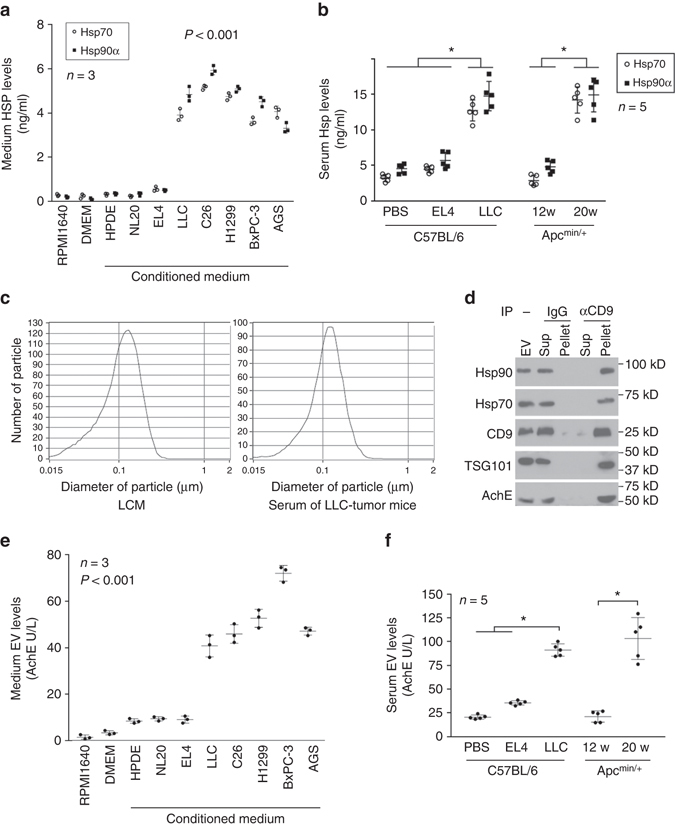
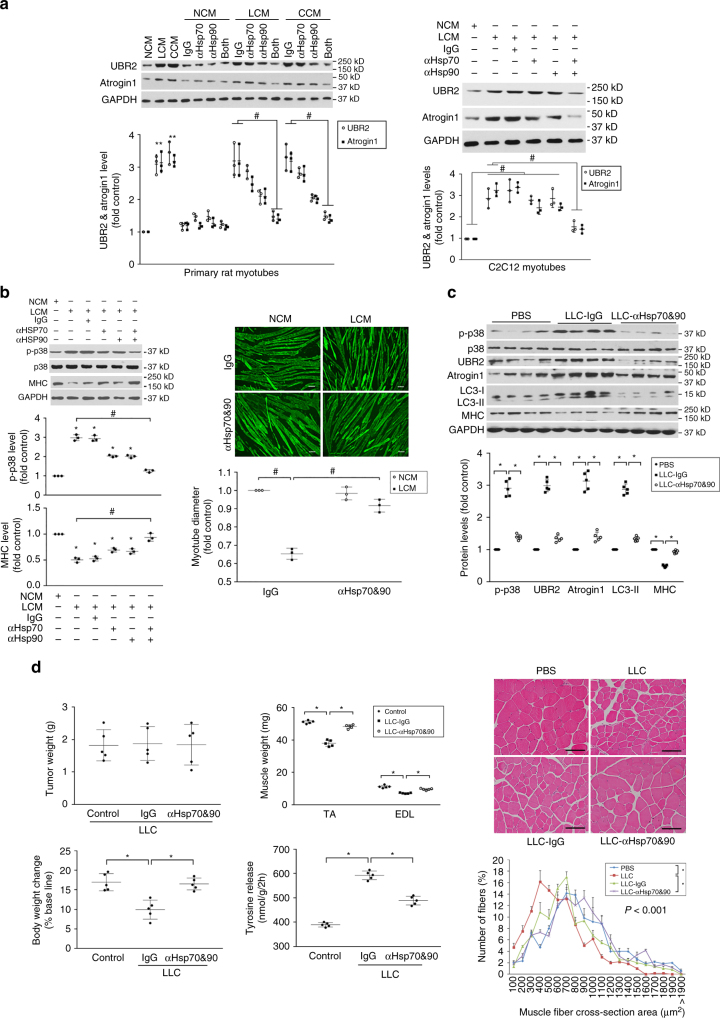
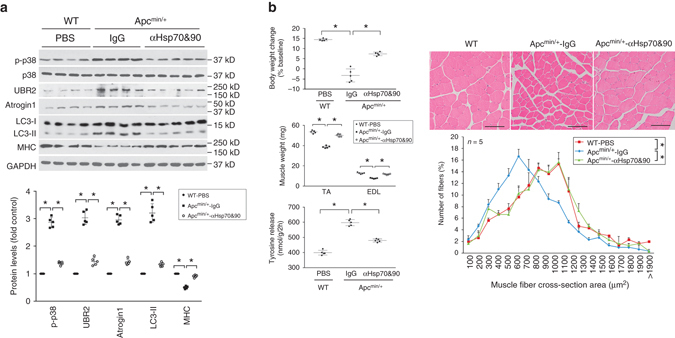
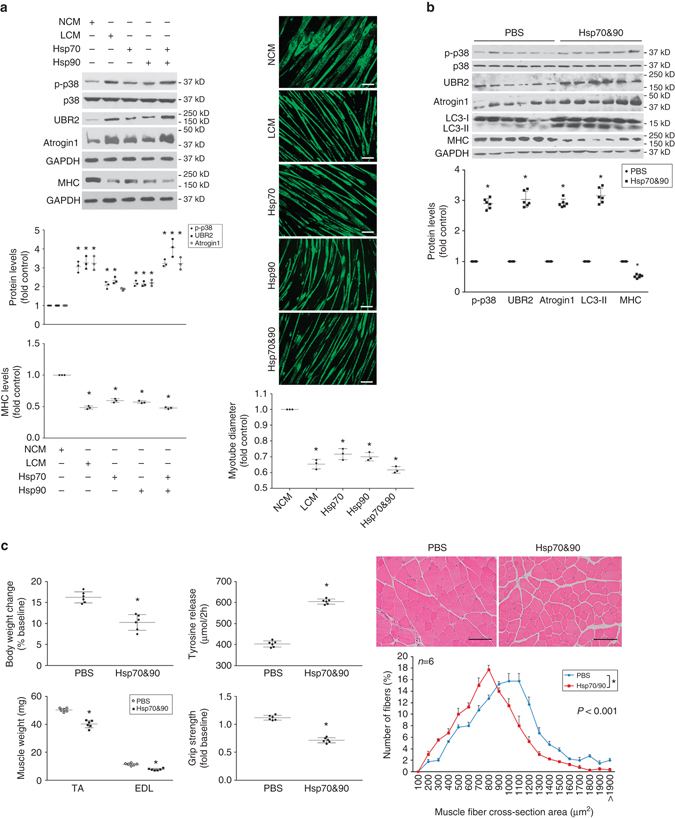
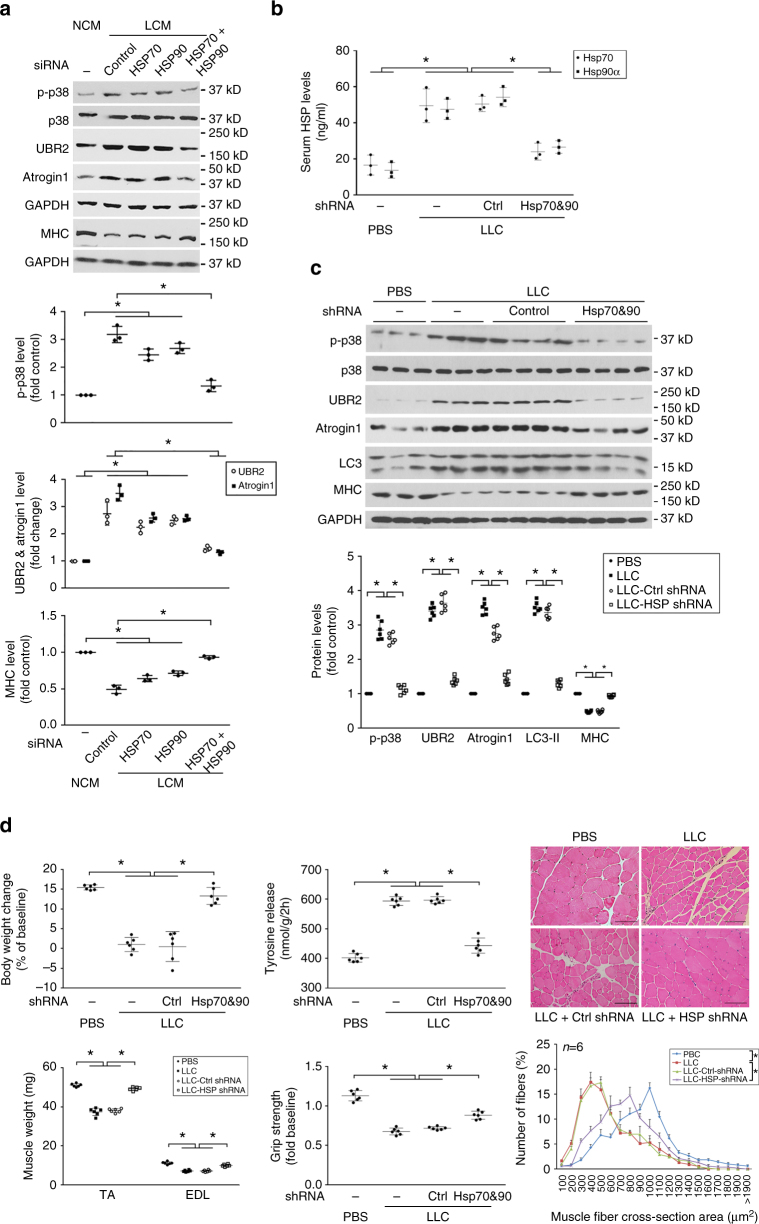
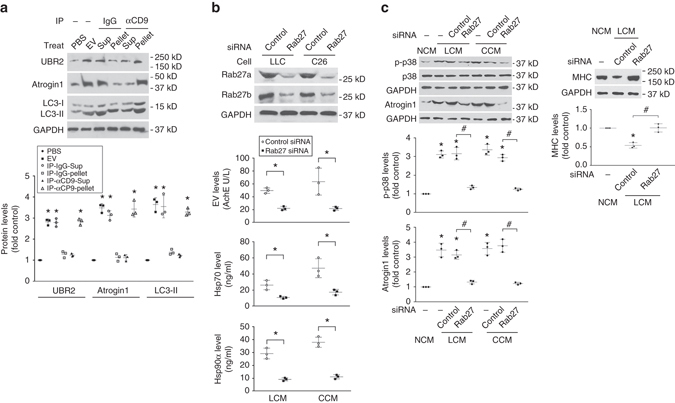
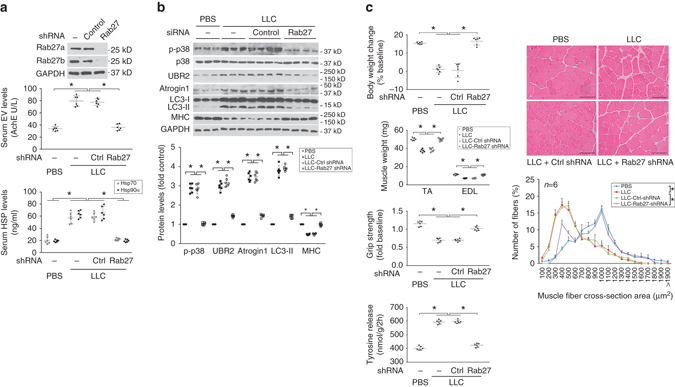
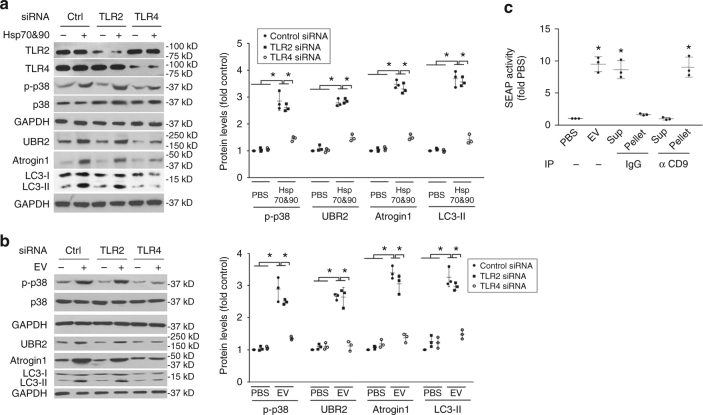
Cachexia, characterized by muscle wasting, is a major contributor to cancer-related mortality. However, the key cachexins that mediate cancer-induced muscle wasting remain elusive. Here, we show that tumor-released extracellular Hsp70 and Hsp90 are responsible for tumor’s capacity to induce muscle wasting. We detected high-level constitutive release of Hsp70 and Hsp90 associated with extracellular vesicles (EVs) from diverse cachexia-inducing tumor cells, resulting in elevated serum levels in mice. Neutralizing extracellular Hsp70/90 or silencing Hsp70/90 expression in tumor cells abrogates tumor-induced muscle catabolism and wasting in cultured myotubes and in mice. Conversely, administration of recombinant Hsp70 and Hsp90 recapitulates the catabolic effects of tumor. In addition, tumor-released Hsp70/90-expressing EVs are necessary and sufficient for tumor-induced muscle wasting. Further, Hsp70 and Hsp90 induce muscle catabolism by activating TLR4, and are responsible for elevation of circulating cytokines. These findings identify tumor-released circulating Hsp70 and Hsp90 as key cachexins causing muscle wasting in mice.
Overview
The claims and statistics of this paper haven’t been checked yet.
Run the check — free, no account needed. It reads the open-access text and checks the sources it cites.
Integrity signals
Registry
Cites
Statistics
Figures
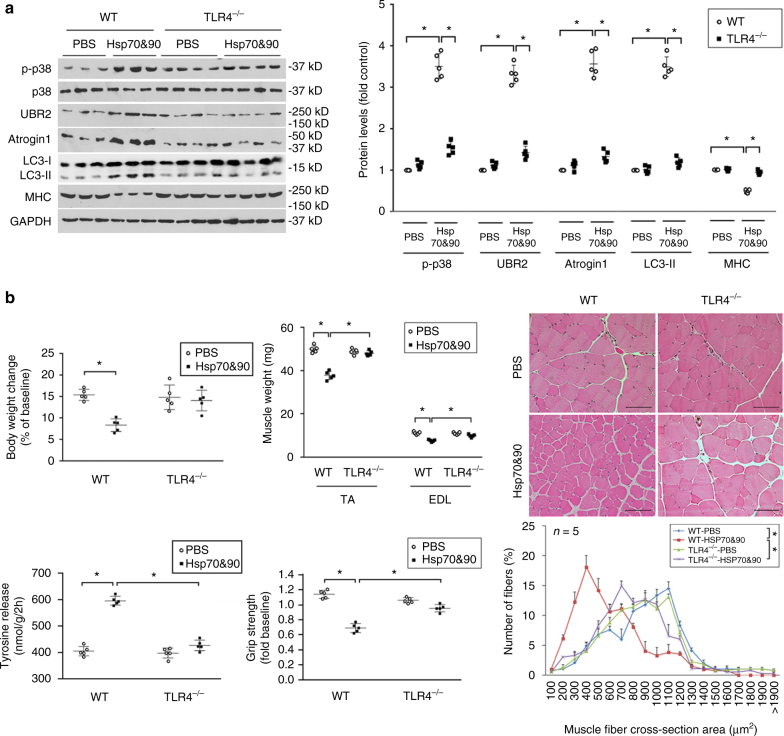
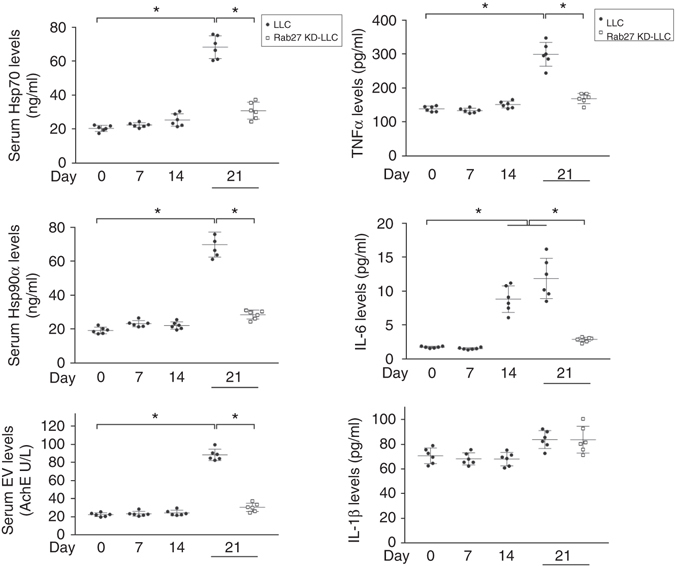
Verification
Claims the paper makes
The claims and statistics of this paper haven’t been checked yet.
Run the check — free, no account needed. It reads the open-access text and checks the sources it cites.
Claims other papers make about this one
Each is checked against this paper’s own text: does it say what the citing paper says it does?
In the citing paper
“Recently, tumor-derived EVs deliver HSP70 and HSP90 to myofibers, where they activate Toll-like receptor 4 (TLR4) and muscle catabolism88 (Fig. 5).”
From Mechanisms of muscle atrophy and hypertrophy: implications in health and disease (2021) · cites this paper as [88]
Self-check
Percentages, sums and reported differences re-computed from the paper’s own numbers.
The self-check needs the paper’s full text.
Citations
Cites
Definition and classification of cancer cachexia: an international consensus
Fearon, K., Strasser, F., Anker, S. D., Bosaeus, I. G., Bruera, E. D., Fainsinger, R. L., Jatoi, A., Loprinzi, C. L., Macdonald, N., Mantovani, G., et al. (2011) · The Lancet Oncology · doi:10.1016/s1470-2045(10)70218-7 · Cited by 6,020
Hoshino, K., Takeuchi, O., Kawai, T., Sanjo, H., Ogawa, T., Takeda, Y., Takeda, K., & Akira, S. (1999) · The Journal of Immunology · doi:10.4049/jimmunol.162.7.3749 · Cited by 3,374
Toll-like receptors in innate immunity
Takeda, K. (2004) · International Immunology · doi:10.1093/intimm/dxh186 · Cited by 3,328
Yang, Y., Li, S., Yang, Q., Shi, Y., Zheng, M., Liu, Y., Chen, F., Song, G., Xu, H., Wan, T., et al. (2014) · Cellular Physiology and Biochemistry · doi:10.1159/000358696 · Cited by 3,263
DAMPs, PAMPs and alarmins: all we need to know about danger
Bianchi, M. E. (2007) · Journal of Leukocyte Biology · doi:10.1189/jlb.0306164 · Cited by 2,794
Rab27a and Rab27b control different steps of the exosome secretion pathway
Ostrowski, M., Carmo, N., Krumeich, S., Fanget, I., Raposo, G., Savina, A., Moita, C. F., Schauer, K., Hume, A. N., Freitas, R. P., et al. (2009) · Nature Cell Biology · doi:10.1038/ncb2000 · Cited by 2,761
Lötvall, J., Hill, A. F., Hochberg, F., Buzás, E. I., Di Vizio, D., Gardiner, C., Gho, Y. S., Kurochkin, I. V., Mathivanan, S., Quesenberry, P., et al. (2014) · Journal of Extracellular Vesicles · doi:10.3402/jev.v3.26913 · Cited by 2,451
Prognostic effect of weight loss prior tochemotherapy in cancer patients
DeWys, W. D., Begg, C. B., Lavin, P. T., Band, P. R., Bennett, J. M., Bertino, J. R., Cohen, M. H., Douglass, H. O., Engstrom, P. F., Ezdinli, E. Z., et al. (1980) · The American Journal of Medicine · doi:10.1016/s0149-2918(05)80001-3 · Cited by 2,350
Exosomal MicroRNA: A Diagnostic Marker for Lung Cancer
Rabinowits, G., Gerçel-Taylor, Ç., Day, J. M., Taylor, D. D., & Kloecker, G. H. (2009) · Clinical Lung Cancer · doi:10.3816/clc.2009.n.006 · Cited by 1,290
Cancer Cachexia: Mediators, Signaling, and Metabolic Pathways
Fearon, K. C. H., Glass, D. J., & Guttridge, D. C. (2012) · Cell Metabolism · doi:10.1016/j.cmet.2012.06.011 · Cited by 1,244
Cited by
Sorted by citations
The biology , function , and biomedical applications of exosomes
Kalluri, R., & LeBleu, V. S. (2020) · Science · doi:10.1126/science.aau6977 · Cited by 10,770
Baracos, V. E., Martin, L., Korc, M., Guttridge, D. C., & Fearon, K. C. H. (2018) · Nature Reviews Disease Primers · doi:10.1038/nrdp.2017.105 · Cited by 1,738
Mechanisms of muscle atrophy and hypertrophy: implications in health and disease
Sartori, R., Romanello, V., & Sandri, M. (2021) · Nature Communications · doi:10.1038/s41467-020-20123-1 · Cited by 940
Release mechanisms of major DAMPs
Murao, A., Aziz, M., Wang, H., Brenner, M., & Wang, P. (2021) · APOPTOSIS · doi:10.1007/s10495-021-01663-3 · Cited by 590
Metal Drugs and the Anticancer Immune Response
Englinger, B., Pirker, C., Heffeter, P., Terenzi, A., Kowol, C. R., Keppler, B. K., & Berger, W. (2019) · Chemical Reviews · doi:10.1021/acs.chemrev.8b00396 · Cited by 355
Metadata
- Authors
- Zhang, G., Liu, Z., Ding, H., Zhou, Y., Doan, H. A., Sin, K. W. T., Zhu, Z. J., Flores, R., Wen, Y., Gong, X., Liu, Q., & Li, Y.-P.
- Affiliations
- The University of Texas Health Science Center at Houston (US)
- Tongji Hospital (CN)
- Jiangsu University (CN)
- Brown Foundation (US)
- Corresponding author
- Li, Yi-Ping
- Venue
- Nature Communications
- Published
- 2017-09-19
- Volume
- 8
- Issue
- 1
- Pages
- 589-589
- ISSN
- 2041-1723 (ISSN-L)
- PMC
- PMC5605540
- OpenAlex
- W2754168513
- Cited by
- 248
- References
- 59
- Citations by year
- 2026: 17 · 2025: 25 · 2024: 28 · 2023: 28 · 2022: 35 · 2021: 41 · 2020: 28 · 2019: 26 · 2018: 20
- FWCI
- 8.27
- Type
- journal article
- Language
- en
- Open access
- gold
- doi.org
- Locations
- Nature Communications (publishedVersion, cc-by)
- PubMed Central (publishedVersion, cc-by)
- PubMed (publishedVersion)
- RePEc: Research Papers in Economics (submittedVersion)
- DOAJ (DOAJ: Directory of Open Access Journals) (submittedVersion)
- DOAJ (DOAJ: Directory of Open Access Journals) (submittedVersion, cc-by-sa)
- Funders
- University of Texas Health Science Center at Houston
- National Cancer Institute
- National Institute of Arthritis and Musculoskeletal and Skin Diseases (R01AR063786)
- Topics
- Life Sciences › Biochemistry, Genetics and Molecular Biology › Molecular Biology › Muscle Physiology and Disorders
- Health Sciences › Medicine › Physiology (medical) › Nutrition and Health in Aging
- Life Sciences › Biochemistry, Genetics and Molecular Biology › Molecular Biology › Heat shock proteins research
- Keywords
- cancer cachexia, muscle atrophy, extracellular Hsp70, extracellular vesicles, exosomes, TLR4 signaling, serum cytokines, myotubes
- MeSH terms
- Extracellular Vesicles, Animals, Cachexia, Humans, Male, Mice, Inbred C57BL, Neoplasms, Muscle, Skeletal, HSP70 Heat-Shock Proteins, HSP90 Heat-Shock Proteins, Myoblasts, Cell Line, Tumor, Toll-Like Receptor 4, Mice
About these checks
Registry, retraction, Cites and statistics results are computed, not judged, with one exception: a printed reference that no index lists is read once by a model before it counts as a citation error. Claims are extracted by a model and kept only when their quote appears verbatim in the text; each cited source is then checked, with a model’s help, for whether it says what the claim relies on. Those verdicts can be wrong — read the claim’s quote and the cited source before relying on one.
Statistics and arithmetic are recomputed, not judged.
Confidence bands are shown only for fields calibrated on our annotated test set. None is calibrated yet, so no band is shown.
What counts as a claim ›How we measure confidence ›How we check this ›
Are you an author, or do you see a problem with this page? Request a review
