

Fructose-1,6-bisphosphate couples glycolytic flux to activation of Ras
Open accessThe DOI matches its Crossref record; 63 of the 63 references it cites were found in a registry or an index.
Abstract
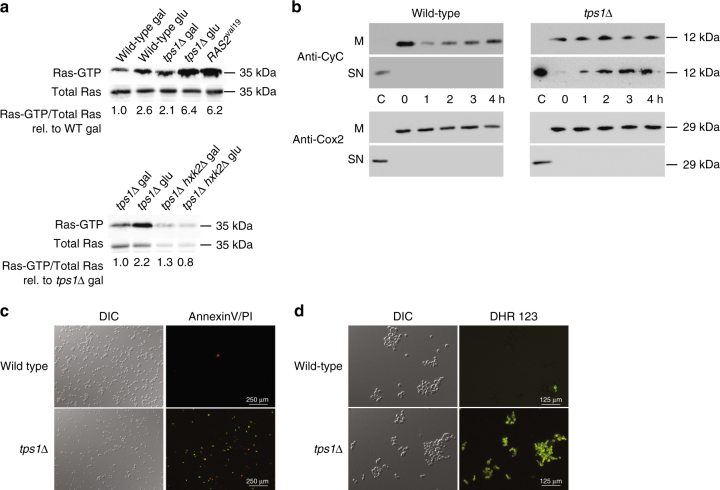
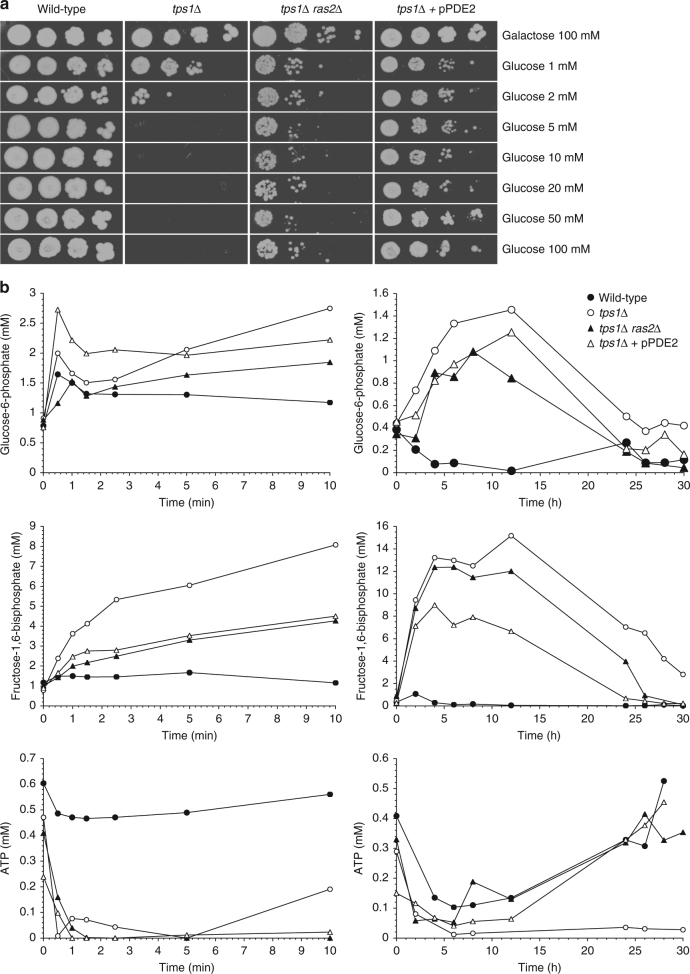
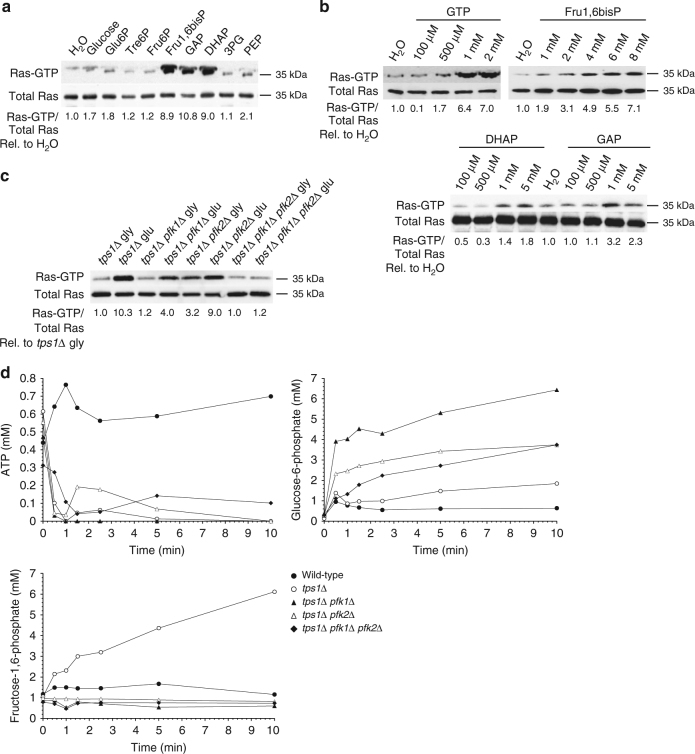
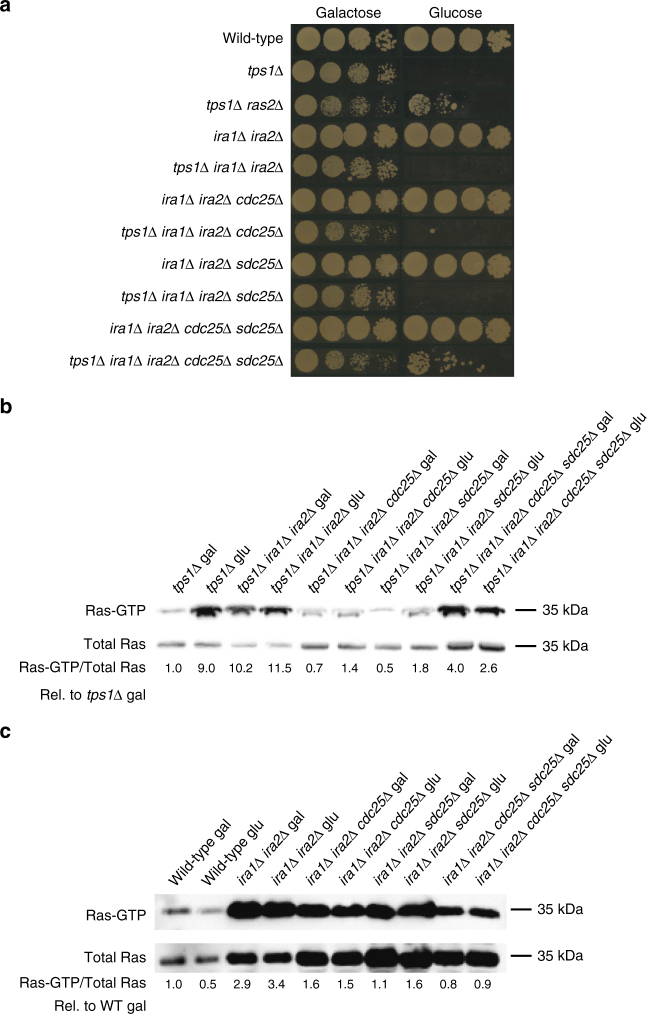
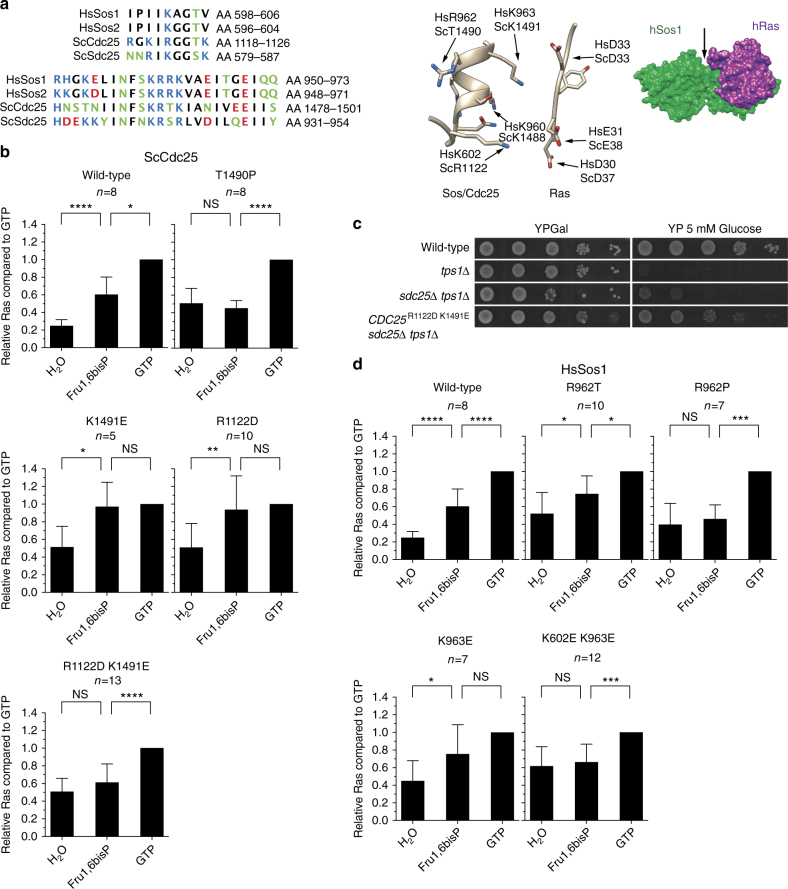
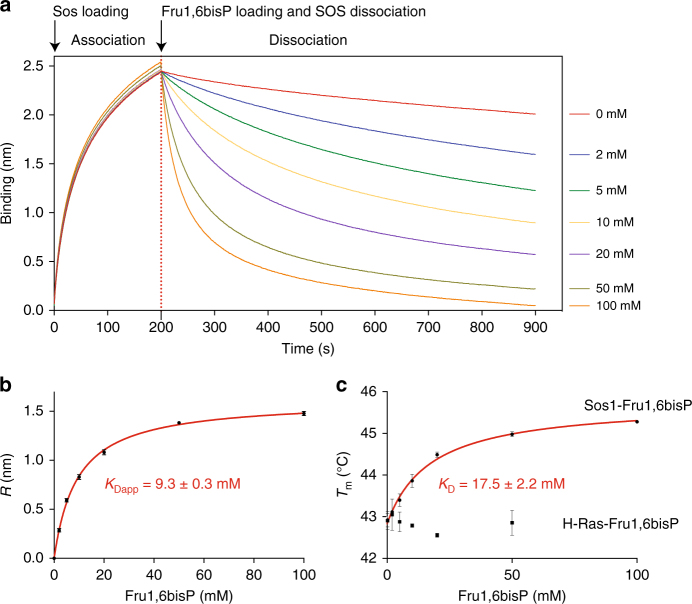
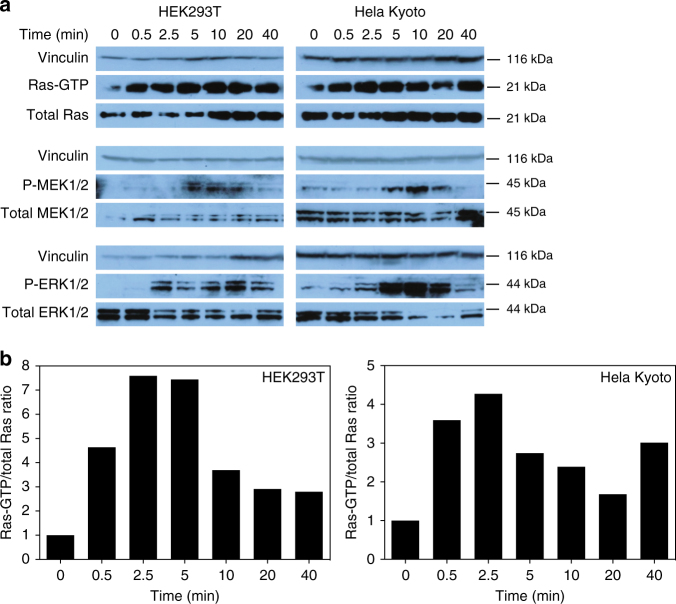
Yeast and cancer cells share the unusual characteristic of favoring fermentation of sugar over respiration. We now reveal an evolutionary conserved mechanism linking fermentation to activation of Ras, a major regulator of cell proliferation in yeast and mammalian cells, and prime proto-oncogene product. A yeast mutant ( tps1∆ ) with overactive influx of glucose into glycolysis and hyperaccumulation of Fru1,6bisP, shows hyperactivation of Ras, which causes its glucose growth defect by triggering apoptosis. Fru1,6bisP is a potent activator of Ras in permeabilized yeast cells, likely acting through Cdc25. As in yeast, glucose triggers activation of Ras and its downstream targets MEK and ERK in mammalian cells. Biolayer interferometry measurements show that physiological concentrations of Fru1,6bisP stimulate dissociation of the pure Sos1/H-Ras complex. Thermal shift assay confirms direct binding to Sos1, the mammalian ortholog of Cdc25. Our results suggest that the Warburg effect creates a vicious cycle through Fru1,6bisP activation of Ras, by which enhanced fermentation stimulates oncogenic potency.
Overview
The claims and statistics of this paper haven’t been checked yet.
Free: it reads the open-access text and checks the first 5 claims that cite a source we can check. Create a free account to check every claim.
Integrity signals
Registry
Cites
Statistics
Figures
Verification
Claims the paper makes
The claims and statistics of this paper haven’t been checked yet.
Free: it reads the open-access text and checks the first 5 claims that cite a source we can check. Create a free account to check every claim.
Claims other papers make about this one
Each is checked against this paper’s own text: does it say what the citing paper says it does?
The source backs part of the claim, not all of it — or backs it for a different population, condition or comparison.
In the citing paper
“This conclusion is consistent with previous work34 showing that human FBP activates Ras by binding directly to Sos1 and dissociating the Ras/Sos1 complex.”
From The δ subunit of F1Fo-ATP synthase is required for pathogenicity of Candida albicans (2021) · cites this paper as [34]
Experimental — accuracy not yet measured
Self-check
Percentages, sums and reported differences re-computed from the paper’s own numbers.
The self-check needs the paper’s full text.
Citations
Cites
1 retracted
Petitjean, M., Teste, M.-A., Léger‐Silvestre, I., François, J., & Parrou, J. (2016) · Mechanisms of Ageing and Development · doi:10.1016/j.mad.2016.07.011 · Cited by 20
RetractedWarburg, O. (1956) · Science · doi:10.1126/science.123.3191.309 · Cited by 13,425
Barbacid, M. (1987) · Annual Review of Biochemistry · doi:10.1146/annurev.bi.56.070187.004023 · Cited by 3,885
Niesen, F. H., Berglund, H., & Vedadi, M. (2007) · Nature Protocols · doi:10.1038/nprot.2007.321 · Cited by 2,408
Isozymes of mammalian hexokinase: structure, subcellular localization and metabolic function
Wilson, J. E. (2003) · Journal of Experimental Biology · doi:10.1242/jeb.00241 · Cited by 1,085
Vitamin C selectively kills KRAS and BRAF mutant colorectal cancer cells by targeting GAPDH
Yun, J., Mullarky, E., Lu, C., Bosch, K. N., Kavalier, A., Rivera, K., Roper, J., Chio, I. I. C., Giannopoulou, E. G., Rago, C., et al. (2015) · Science · doi:10.1126/science.aaa5004 · Cited by 913
The structural basis of the activation of Ras by Sos
Boriack-Sjodin, P. A., Margarit, S. M., Bar-Sagi, D., & Kuriyan, J. (1998) · Nature · doi:10.1038/28548 · Cited by 799
A Yeast Mutant Showing Diagnostic Markers of Early and Late Apoptosis
Madeo, F., Fröhlich, E., & Fröhlich, K.-U. (1997) · The Journal of Cell Biology · doi:10.1083/jcb.139.3.729 · Cited by 793
Thevelein, J. M., & De Winde, J. H. (1999) · Molecular Microbiology · doi:10.1046/j.1365-2958.1999.01538.x · Cited by 677
Self-citationWang, M., Herrmann, C. J., Simonovic, M., Szklarczyk, D., & von Mering, C. (2015) · PROTEOMICS · doi:10.1002/pmic.201400441 · Cited by 537
Cited by
How the Warburg effect supports aggressiveness and drug resistance of cancer cells?
Icard, P., Shulman, S., Farhat, D., Steyaert, J.-M., Alifano, M., & Lincet, H. (2018) · Drug Resistance Updates · doi:10.1016/j.drup.2018.03.001 · Cited by 643
Four Key Steps Control Glycolytic Flux in Mammalian Cells
Tanner, L. B., Goglia, A. G., Wei, M. H., Sehgal, T., Parsons, L. R., Park, J. O., White, E., Toettcher, J. E., & Rabinowitz, J. D. (2018) · Cell Systems · doi:10.1016/j.cels.2018.06.003 · Cited by 378
“Consistent with prior literature in both microbes and mammalian cells (Kochanowski et al., 2013; Kotte et al., 2010; Peeters et al., 2017; Zhang et al., 2017), among the glycolytic intermediates FBP and DHAP concentrations correlated most strongly with glycolytic flux (Figure 2B).”
Interconnection between Metabolism and Cell Cycle in Cancer
Icard, P., Fournel, L., Wu, Z., Alifano, M., & Lincet, H. (2019) · Trends in Biochemical Sciences · doi:10.1016/j.tibs.2018.12.007 · Cited by 327
Jia, D., Park, J., Jung, K., Levine, H., & Kaipparettu, B. (2018) · Cells · doi:10.3390/cells7030021 · Cited by 270
“High glycolytic activity can further activate RAS through fructose-1,6-bisphosphate and reciprocally RAS can simulate glycolysis, thus forming a positive feedback loop [61].”
BackgroundATP citrate lyase: A central metabolic enzyme in cancer
Icard, P., Wu, Z., Fournel, L., Coquerel, A., Lincet, H., & Alifano, M. (2020) · Cancer Letters · doi:10.1016/j.canlet.2019.12.010 · Cited by 244
Ras and Rap1: A tale of two GTPases
Shah, S., Brock, E. J., Ji, K., & Mattingly, R. R. (2019) · Seminars in Cancer Biology · doi:10.1016/j.semcancer.2018.03.005 · Cited by 211
Revisiting the role of metabolism during development
Miyazawa, H., & Aulehla, A. (2018) · Development · doi:10.1242/dev.131110 · Cited by 199
“Another glycolytic intermediate, fructose 1,6-bisphosphate (FBP), has also been suggested to exert moonlighting functions (Feng et al., 2014; Peeters et al., 2017; Zhang et al., 2017).”
BackgroundGuidelines and recommendations on yeast cell death nomenclature
Carmona-Gutierrez, D., Bauer, M. A., Zimmermann, A., Aguilera, A., Austriaco, N., Ayscough, K., Balzan, R., Bar-Nun, S., Barrientos, A., Belenky, P., et al. (2018) · Microbial Cell · doi:10.15698/mic2018.01.607 · Cited by 188
Self-citationUnderstanding the Central Role of Citrate in the Metabolism of Cancer Cells and Tumors: An Update
Icard, P., Coquerel, A., Wu, Z., Gligorov, J., Fuks, D., Fournel, L., Lincet, H., & Simula, L. (2021) · International Journal of Molecular Sciences · doi:10.3390/ijms22126587 · Cited by 151
“Indeed, F-1,6-BP can bind to Son-of-Sevenless-homolog-1 (SoS1) [67], which catalyses Ras activation [68].”
BackgroundFungal persister cells: The basis for recalcitrant infections?
Wuyts, J., Van Dijck, P., & Holtappels, M. (2018) · PLOS Pathogens · doi:10.1371/journal.ppat.1007301 · Cited by 136
Shi, L., Tian, H., Wang, P., Li, L., Zhang, Z., Zhang, J., & Zhao, Y. X. (2020) · Cellular and Molecular Immunology · doi:10.1038/s41423-019-0346-6 · Cited by 120
Sheppard, S., Santosa, E. K., Lau, C. M., Violante, S. N., Giovanelli, P., Kim, H., Cross, J. R., Li, M. O., & Sun, J. C.-Y. (2021) · Cell Reports · doi:10.1016/j.celrep.2021.109210 · Cited by 116
“A potential candidate is the reduced expression of members of the Ras and p38 mitogen-activated protein kinase (MAPK) pathways highlighted by our RNA sequencing (RNA-seq) analysis.”
InfluentialCaza, M., & Kronstad, J. W. (2019) · Frontiers in Cellular and Infection Microbiology · doi:10.3389/fcimb.2019.00212 · Cited by 107
“Glycolysis generates fructose-1,6-bis-phosphate which activates the Ras nucleotide exchange factor Cdc25 which in turn activates the GTPases Ras1 and Ras2.”
BackgroundThe Warburg Effect, Lactate, and Nearly a Century of Trying to Cure Cancer
Spencer, N. Y., & Stanton, R. C. (2019) · Seminars in Nephrology · doi:10.1016/j.semnephrol.2019.04.007 · Cited by 122
Sugar Sensing and Signaling in Candida albicans and Candida glabrata
Van Ende, M., Wijnants, S., & Van Dijck, P. (2019) · Frontiers in Microbiology · doi:10.3389/fmicb.2019.00099 · Cited by 103
“This increase depends on the CaCdc25 and CaRas2 protein (Maidan et al., 2005a).”
BackgroundInfluentialde Alteriis, E., Cartenì, F., Parascandola, P., Serpa, J., & Mazzoleni, S. (2018) · Cell Cycle · doi:10.1080/15384101.2018.1442622 · Cited by 80
“yeast and cancer cells pointed out how high levels of F1,6BP couple the glycolytic flux to the activation of Ras regulating cell proliferation [112].”
BackgroundPreiss, R., Tyrawa, C., Krogerus, K., Garshol, L. M., & van der Merwe, G. K. (2018) · Frontiers in Microbiology · doi:10.3389/fmicb.2018.02137 · Cited by 92
“Similarly, we identify SNPs in: CDC25, IRA1, and IRA2, which are genes that regulate the RAS/cAMP/PKA pathway; RPI1 and LRG1, which impacts cell wall integrity; and KEX1 and SWP82 (Puria et al., 2009; Wallace-Salinas et al., 2015; Peeters et al., 2017; Huang et al., 2018).”
BackgroundThe Expanding Role of MT1-MMP in Cancer Progression
Knapinska, A. M., & Fields, G. B. (2019) · Pharmaceuticals · doi:10.3390/ph12020077 · Cited by 79
“A second, and perhaps more significant, result, would be enhanced Ras activation, as F1,6BP can activate Ras by acting through Cdc25 (Figure 2) [111].”
BackgroundInfluentialSuppression of PDHX by microRNA-27b deregulates cell metabolism and promotes growth in breast cancer
Eastlack, S. C., Dong, S., Ivan, C., & Alahari, S. K. (2018) · Molecular Cancer · doi:10.1186/s12943-018-0851-8 · Cited by 71
Reversible amyloids of pyruvate kinase couple cell metabolism and stress granule disassembly
Cereghetti, G., Wilson-Zbinden, C., Kissling, V. M., Diether, M., Arm, A., Yoo, H., Piazza, I., Saad, S., Picotti, P., Drummond, D. A., et al. (2021) · Nature Cell Biology · doi:10.1038/s41556-021-00760-4 · Cited by 66
Small Molecule KRAS Agonist for Mutant KRAS Cancer Therapy
Xu, K., Park, D., Magis, A. T., Zhang, J., Zhou, W., Sica, G., Ramalingam, S. S., Curran, W. J., & Deng, X. (2019) · Molecular Cancer · doi:10.1186/s12943-019-1012-4 · Cited by 75
Icard, P., Simula, L., Fournel, L., Leroy, K., Mansuet‐Lupo, A., Damotte, D., Charpentier, M.-C., Durdux, C., Loi, M., Schussler, O., et al. (2022) · Drug Resistance Updates · doi:10.1016/j.drup.2022.100852 · Cited by 68
A single Gal4-like transcription factor activates the Crabtree effect in Komagataella phaffii
Ata, Ö., Rebnegger, C., Tatto, N. E., Valli, M., Mairinger, T., Hann, S., Steiger, M. G., Çalık, P., & Mattanovich, D. (2018) · Nature Communications · doi:10.1038/s41467-018-07430-4 · Cited by 61
Computerized neurocognitive training for improving dietary health and facilitating weight loss
Forman, E. M., Manasse, S. M., Dallal, D. H., Crochiere, R. J., Loyka, C. M., Butryn, M. L., Juarascio, A. S., & Houben, K. (2019) · Journal of Behavioral Medicine · doi:10.1007/s10865-019-00024-5 · Cited by 57
“Of note, sugar consumption is also associated with other health concerns such as systemic inflammation, heart disease, metabolic disturbances and cancer (De Koning et al., 2012; Peeters et al., 2017; Schulze et al., 2004).”
Measuring glycolytic flux in single yeast cells with an orthogonal synthetic biosensor
Monteiro, F., Hubmann, G., Takhaveev, V., Vedelaar, S. R., Norder, J., Hekelaar, J., Saldida, J., Litsios, A., Wijma, H. J., Schmidt, A., et al. (2019) · Molecular Systems Biology · doi:10.15252/msb.20199071 · Cited by 55
A guide to ERK dynamics, part 1: mechanisms and models
Ram, A. R., Murphy, D. A., DeCuzzi, N. L., Patankar, M., Hu, J., Pargett, M., & Albeck, J. G. (2023) · Biochemical Journal · doi:10.1042/bcj20230276 · Cited by 61
The Tricarboxylic Acid Cycle Metabolites for Cancer: Friend or Enemy
Wu, J., Liu, N., Chen, J., Tao, Q., Li, Q., Li, J., Chen, X., & Peng, C. (2024) · Research · doi:10.34133/research.0351 · Cited by 72
“Moreover, metabolic by-products like lactate generated [32] Suppressing glycolysis by inhibiting PFK1/2, F1,6BP, and LDHA [30,33,35] Inducing apoptosis via activating caspase-2/3/8, the cleavage of ADP-ribose polymerase, the release of cytochrome c, and inhibiting Mcl-1 [38,39] Activating autophagy…”
BackgroundReciprocal Regulation of V-ATPase and Glycolytic Pathway Elements in Health and Disease
Hayek, S. R., Rane, H. S., & Parra, K. J. (2019) · Frontiers in Physiology · doi:10.3389/fphys.2019.00127 · Cited by 62
Berthelot, G., Johnson, S., Noirez, P., Antero, J., Marck, A., Desgorces, F.-D., Pifferi, F., Carter, P. A., Spedding, M., Singh‐Manoux, A., et al. (2019) · Archives of Public Health · doi:10.1186/s13690-019-0375-8 · Cited by 61
“Several types of diets can increase chronic inflammation further escalating the risk of degenerative diseases such as type 2 diabetes, stroke, coronary heart disease [91] or increasing size and speed of tumor growth [92].”
BackgroundThe Regulatory Role of Key Metabolites in the Control of Cell Signaling
Milanesi, R., Coccetti, P., & Tripodi, F. (2020) · Biomolecules · doi:10.3390/biom10060862 · Cited by 55
“fructose-1,6-biphosphate (F1,6bP) is the glycolytic metabolite that actually controls Ras activity (Figure 1) [9,39].”
BackgroundInfluentialIcard, P., Simula, L., Wu, Z., Berzan, D., Sogni, P., Dohan, A. J. J., Dautry, R., Coquerel, A., Lincet, H., Loi, M., et al. (2021) · Drug Resistance Updates · doi:10.1016/j.drup.2021.100790 · Cited by 52
The immunoproteasome disturbs neuronal metabolism and drives neurodegeneration in multiple sclerosis
Woo, M. S., Brand, J., Bal, L. C., Moritz, M., Walkenhorst, M., Vieira, V., Ipenberg, I., Rothammer, N., Wang, M., Dogan, B., et al. (2025) · Cell · doi:10.1016/j.cell.2025.05.029 · Cited by 55
Steyfkens, F., Zhang, Z., Zeebroeck, G. V., & Thevelein, J. M. (2018) · Frontiers in Pharmacology · doi:10.3389/fphar.2018.00191 · Cited by 52
“Remarkably, the latter stimulation requires transport of glucose into the cell as well as its partial breakdown in glycolysis to generate fructose-1,6bisphosphate, which activates Ras through direct stimulation of its guanine nucleotide exchange factor, Cdc25 (Peeters et al., 2017).”
BackgroundInfluentialSelf-citationThe deubiquitinase JOSD2 is a positive regulator of glucose metabolism
Krassikova, L., Zhang, B., Nagarajan, D., Queiroz, A. L., Kacal, M., Samakidis, E., Vakifahmetoglu-Norberg, H., & Norberg, E. (2020) · Cell Death and Differentiation · doi:10.1038/s41418-020-00639-1 · Cited by 50
ONC212 is a Novel Mitocan Acting Synergistically with Glycolysis Inhibition in Pancreatic Cancer
Ferrarini, I., Louie, A. D., Zhou, L., & El‐Deiry, W. S. (2021) · Molecular Cancer Therapeutics · doi:10.1158/1535-7163.mct-20-0962 · Cited by 53
“While KRAS activation drives glycolysis (38), glucose catabolism enhances MAPK signaling, likely supplying ATP and intermediate metabolites fueling the oncogenic cascade (39).”
Brink, D. P., Borgström, C., Persson, V. C., Osiro, K. O., & Gorwa‐Grauslund, M. F. (2021) · International Journal of Molecular Sciences · doi:10.3390/ijms222212410 · Cited by 48
Shin, M., Kim, J.-W., Ye, S., Kim, S., Jeong, D., Lee, D. Y., Kim, J. N., Jin, Y., Kim, K. H., & Kim, S. R. (2019) · Applied Microbiology and Biotechnology · doi:10.1007/s00253-019-09829-5 · Cited by 45
Yeast Chronological Lifespan: Longevity Regulatory Genes and Mechanisms
Mirisola, M. G., & Longo, V. D. (2022) · Cells · doi:10.3390/cells11101714 · Cited by 49
“Glucose restriction is a key regulator of Ras/PKA pathway activity in yeast and mammals, possibly through fructose 1,6 biphosphate, an intermediate product of glycolysis, which activates CDC25, the yeast orthologue of the mammalian SOS, stimulating the nucleotide exchange of Ras proteins [76] (Figure 1).”
BackgroundGlycolytic flux-signaling controls mouse embryo mesoderm development
Miyazawa, H., Snaebjornsson, M. T., Prior, N., Kafkia, E., Hammarén, H. M., Tsuchida-Straeten, N., Patil, K. R., Beck, M., & Aulehla, A. (2022) · eLife · doi:10.7554/elife.83299 · Cited by 43
Trejo‐Solís, C., Silva‐Adaya, D., Serrano-García, N., Magaña-Maldonado, R., Jiménez‐Farfán, D., Ferreira-Guerrero, E., Cruz-Salgado, A., & Castillo‐Rodríguez, R. A. (2023) · International Journal of Molecular Sciences · doi:10.3390/ijms242417633 · Cited by 50
“…increases the Warburg effect by inhibiting the activities of the III and IV complexes of the electron transport chain (ETC) [23] and activating the Ras/PI3K/AKT signaling pathway due to its direct binding to Son-of-Sevenless-homolog-1 (SOS1) and EGFR [24,25], both activators of Ras pathway [25,26].”
BackgroundRoger, F., Picazo, C., Reiter, W., Libiad, M., Asami, C., Hanzén, S., Gao, C., Lagniel, G., Welkenhuysen, N., Labarre, J., et al. (2020) · eLife · doi:10.7554/elife.60346 · Cited by 37
Metabolic Strategies for Inhibiting Cancer Development
Icard, P., Loi, M., Wu, Z., Ginguay, A., Lincet, H., Robin, E., Coquerel, A., Berzan, D., Fournel, L., & Alifano, M. (2020) · Advances in Nutrition · doi:10.1093/advances/nmaa174 · Cited by 41
The polyol pathway is an evolutionarily conserved system for sensing glucose uptake
Sano, H., Nakamura, A., Yamane, M., Niwa, H., Nishimura, T., Araki, K., Takemoto, K., Ishiguro, K., Aoki, H., Kato, Y., et al. (2022) · PLoS Biology · doi:10.1371/journal.pbio.3001678 · Cited by 40
“The adjustments to different nutritional states maintain constant glucose-6-phosphate levels, thereby aiding the stability of glycolysis and PPP regardless of the availability of glucose (Peeters et al., 2017).”
BackgroundKim, B., Lee, Y., Choi, H., & Huh, W. (2020) · Autophagy · doi:10.1080/15548627.2020.1746592 · Cited by 38
“Because galactose is metabolized by galactokinase rather than hexokinase for production of glucose-6-phosphate, which is an entry point of carbohydrates in glycolysis, tps1Δ cells show normal glycolysis in galactose-containing medium [38].”
BackgroundInfluentialNutrient‐dependent signaling pathways that control autophagy in yeast
Metur, S. P., & Klionsky, D. J. (2023) · FEBS Letters · doi:10.1002/1873-3468.14741 · Cited by 39
The Complex Genetic Basis and Multilayered Regulatory Control of Yeast Pseudohyphal Growth
Kumar, A. (2021) · Annual Review of Genetics · doi:10.1146/annurev-genet-071719-020249 · Cited by 42
Eukaryotic cell size regulation and its implications for cellular function and dysfunction
Chadha, Y., Khurana, A., & Schmoller, K. M. (2024) · Physiological Reviews · doi:10.1152/physrev.00046.2023 · Cited by 44
A synthetic RNA-based biosensor for fructose-1,6-bisphosphate that reports glycolytic flux
Ortega, A. D., Takhaveev, V., Vedelaar, S. R., Long, Y., Mestre-Farràs, N., Incarnato, D., Ersoy, F., Olsen, L. F., Mayer, G., & Heinemann, M. (2021) · Cell chemical biology · doi:10.1016/j.chembiol.2021.04.006 · Cited by 37
An Improved ATP FRET Sensor For Yeast Shows Heterogeneity During Nutrient Transitions
Botman, D., van Heerden, J. H., & Teusink, B. (2020) · ACS Sensors · doi:10.1021/acssensors.9b02475 · Cited by 37
Guerra, P., Vuillemenot, L.-A., van Oppen, Y. B., Been, M., & Milias‐Argeitis, A. (2022) · Journal of Cell Science · doi:10.1242/jcs.260378 · Cited by 35
Steenbergen, R., Oti, M., ter Horst, R., Tat, W., Neufeldt, C. J., Belovodskiy, A., Chua, T. T., Cho, W. J., Joyce, M., Dutilh, B. E., et al. (2018) · Scientific Reports · doi:10.1038/s41598-018-29763-2 · Cited by 35
PFKP Activation Ameliorates Foot Process Fusion in Podocytes in Diabetic Kidney Disease
Zhang, Z., Liang, W., Luo, Q., Hu, H., Yang, K., Hu, J., Chen, Z., Zhu, J., Feng, J., Zhu, Z., et al. (2022) · Frontiers in Endocrinology · doi:10.3389/fendo.2021.797025 · Cited by 31
“Moreover, it can regulate the activationofRas,which is amajor regulator of cell proliferation (27).”
BackgroundTowards Visible Soliton Microcomb Generation
Oh, D. Y., Yang, Q., Lee, S. H., Wang, H., Shen, B., Yang, K. Y., Lai, Y.-H., Yi, X., & Vahala, K. J. (2017) · Nonlinear Optics · doi:10.1364/nlo.2017.nth3a.3 · Cited by 34
Fructose-1,6-bisphosphate promotes PI3K and glycolysis in T cells?
Icard, P., Alifano, M., Donnadieu, E., & Simula, L. (2021) · Trends in Endocrinology and Metabolism · doi:10.1016/j.tem.2021.04.013 · Cited by 27
Yu, Q., Gong, X., Yue, T., Wang, M., Duan, K., Zhang, X., Ge, F., Yu, X., & Li, S. (2022) · Nature Communications · doi:10.1038/s41467-022-33423-5 · Cited by 29
“The peptides used are the following: Unmodi fi ed H3 (1-23): ARTKQTARKSTGGKAPRKQIASK; H3K4me3 (1-23): ARTK(me3)QTARKSTGGKAPRKQIASK; H3K14ac (1-23): ARTKQTARKSTGGK(ac)APRKQIASK.”
InfluentialMaf1 phenotypes and cell physiology
Willis, I. M. (2017) · Biochimica et Biophysica Acta (BBA) - Gene Regulatory Mechanisms · doi:10.1016/j.bbagrm.2017.11.009 · Cited by 29
In Vitro Tracking of Intracellular Metabolism-Derived Cancer Volatiles via Isotope Labeling
Lee, D., Na, E., Park, S., Park, J. H., Lim, J., & Kwon, S. W. (2018) · ACS Central Science · doi:10.1021/acscentsci.8b00296 · Cited by 31
Zeebroeck, G. V., Demuyser, L., Zhang, Z., Cottignie, I., & Thevelein, J. M. (2021) · Microbial Cell · doi:10.15698/mic2021.01.740 · Cited by 24
“Addition of glucose or sucrose to these cells activates Protein Kinase A (PKA) through stimulation of cAMP (cyclic adenosine monophosphate) synthesis, mediated by the G-protein coupled receptor (GPCR), Gpr1, and fructose-1,6-bisphosphate activation of Cdc25/Ras, triggering activation of adenylate cyclase [2, 3].”
Self-citationAutocrine INSL5 promotes tumor progression and glycolysis via activation of STAT5 signaling
Li, S., Liu, Y., Li, Y., Ji, M., Zhang, A., Li, H., Tang, L., Fang, S., Zhang, H., Xing, S., et al. (2020) · EMBO Molecular Medicine · doi:10.15252/emmm.202012050 · Cited by 24
“…of key glycolytic genes, including the glucose transporters Glut1 and Glut3 (Ha et al, 2012; Kuang et al, 2017), hexokinase (HK2) (Patra et al, 2013; Yang et al, 2018), lactate dehydrogenase (LDH; Faubert et al, 2017), and phosphofructokinase-1 (PFK1; Krall & Christofk, 2017; Peeters et al, 2017).”
BackgroundÖsterberg, L., Domenzain, I., Munch, J., Nielsen, J., Hohmann, S., & Cvijovic, M. (2020) · bioRxiv · doi:10.1371/journal.pcbi.1008891 · Cited by 23
Pan, B., Hsu, C.-C., Wu, H., Chen, Y.-R., Zhou, X., Wang, S., Li, C., & Lin, H.-K. (2025) · Journal of Biomedical Science · doi:10.1186/s12929-025-01167-1 · Cited by 35
“In yeast, FBP binds to the H-RAS/ SOS1 complex, a guanine nucleotide exchange factor (GEF), promoting RAS-GTP activation and enhancing oncogenic signaling, which suggests that increased glycolytic flux may amplify tumor-promoting pathways [113].”
Genome-wide base editor screen identifies regulators of protein abundance in yeast
Schubert, O. T., Bloom, J. S., Sadhu, M. J., & Kruglyak, L. (2022) · eLife · doi:10.7554/elife.79525 · Cited by 23
McGrail, K., Granado‐Martínez, P., Esteve‐Puig, R., García-Ortega, S., Ding, Y., Sánchez‐Redondo, S., Fábrega, B. F., Hernández‐Losa, J., Canals, F., Manzano, À., et al. (2022) · Nature Communications · doi:10.1038/s41467-022-34907-0 · Cited by 31
The dual role of citrate in cancer
Icard, P., Simula, L., Zahn, G., Alifano, M., & Mycielska, M. E. (2023) · Biochimica et Biophysica Acta (BBA) - Reviews on Cancer · doi:10.1016/j.bbcan.2023.188987 · Cited by 29
The δ subunit of F1Fo-ATP synthase is required for pathogenicity of Candida albicans
Li, S., Zhao, Y., Zhang, Y., Zhang, Y., Zhang, Z., Tang, C., Weng, L., Chen, X., Zhang, G., & Zhang, H. (2021) · Nature Communications · doi:10.1038/s41467-021-26313-9 · Cited by 21
How Phosphofructokinase-1 Promotes PI3K and YAP/TAZ in Cancer: Therapeutic Perspectives
Simula, L., Alifano, M., & Icard, P. (2022) · Cancers · doi:10.3390/cancers14102478 · Cited by 26
“In this paragraph, we will examine several mechanisms by which PFK1 and F-1,6-BP can activate or modulate the PI3K/AKT and YAP/TAZ signaling pathways (Figure 1): (1) F-1,6-BP promotes the activation of PI3K/AKT signaling by binding to SOS1, the key guanine nucleotide exchange factor that promotes strong activation of…”
BackgroundInfluentialTian, L., Wang, A., Zhang, Y., Chen, W., Guo, Y., Yuan, X., Liu, Y., & Geng, Y. (2024) · Journal of the American Chemical Society · doi:10.1021/jacs.4c01335 · Cited by 23
Stokes, W. A., Eguchi, M., Amini, A., Hararah, M. K., Ding, D., McDermott, J. D., Bradley, C. J., & Karam, S. D. (2018) · Oral Oncology · doi:10.1016/j.oraloncology.2018.06.022 · Cited by 21
“Building on a hypothesis initially formulated half a century ago [10], recent preclinical data have implicated dysregulation of glucose metabolism in stimulating tumor growth and proliferation [11].”
BackgroundWang, J., Wu, Q., & Qiu, J. (2019) · Laboratory Investigation · doi:10.1038/s41374-019-0203-3 · Cited by 36
Specific regulation of epigenome landscape by metabolic enzymes and metabolites
Yu, X., & Li, S. (2024) · Biological reviews/Biological reviews of the Cambridge Philosophical Society · doi:10.1111/brv.13049 · Cited by 28
Sirtuin-dependent metabolic and epigenetic regulation of macrophages during tuberculosis
Zhang, K., Sowers, M. L., Cherryhomes, E., Singh, V. K., Mishra, A., Restrepo, B. I., Khan, A., & Jagannath, C. (2023) · Frontiers in Immunology · doi:10.3389/fimmu.2023.1121495 · Cited by 27
“FBP was then found to couple with glycolytic flux to activate Ras and its downstream targets MEK and ERK driving autophagy (136); in contrast, G6P inhibited autophagy during glucose depletion (101, 102, 137).”
BackgroundThe synthesis, degradation and biological function of trehalose- 6-phosphate
Liu, Y., Li, B., Chen, T., Tian, S., & Zhang, Z. (2025) · Stress Biology · doi:10.1007/s44154-025-00235-8 · Cited by 20
“The activation of Ras ultimately triggers cell apoptosis (Peeters et al. 2017).”
A yeast FRET biosensor enlightens cAMP signaling
Botman, D., O’Toole, T. G., Goedhart, J., Bruggeman, F. J., van Heerden, J. H., & Teusink, B. (2021) · Molecular Biology of the Cell · doi:10.1091/mbc.e20-05-0319 · Cited by 27
Chi, J., Lin, P., Tolstikov, V., Howard, L. E., Chen, E. Y.-S., Bussberg, V., Greenwood, B. P., Narain, N. R., Kiebish, M. A., & Freedland, S. J. (2022) · Prostate Cancer and Prostatic Diseases · doi:10.1038/s41391-022-00525-6 · Cited by 19
Zhang, Y., Cao, Y., Wu, X., Chen, Z., Chen, B., Wang, A., Guo, Y., Chen, W., Xue, R., Liu, Z., et al. (2024) · Nature Communications · doi:10.1038/s41467-024-53238-w · Cited by 25
Schrijnders, D., Hendriks, S. H., Kleefstra, N., Vissers, P. A. J., Johnson, J. A., de Bock, G. H., Bilo, H. J. G., & Landman, G. W. D. (2018) · PLoS ONE · doi:10.1371/journal.pone.0190870 · Cited by 20
Exploring metal ion metabolisms to improve xylose fermentation in Saccharomyces cerevisiae
Palermo, G. C. D. L., Coutouné, N., Bueno, J. G. R., Maciel, L. F., & dos Santos, L. V. (2021) · Microbial Biotechnology · doi:10.1111/1751-7915.13887 · Cited by 21
“ROS were measured using DHR (Sigma-Aldrich) with a protocol adapted from previously described reports (Madeo et al., 1999; Peeters et al., 2017).”
MethodGenetic effects on molecular network states explain complex traits
Weith, M., Großbach, J., Clément‐Ziza, M., Gillet, L. C. J., Rodríguez‐López, M., Marguerat, S., Workman, C. T., Picotti, P., Bähler, J., Aebersold, R. H., et al. (2023) · Molecular Systems Biology · doi:10.15252/msb.202211493 · Cited by 18
Leemputte, F. V., Vanthienen, W., Wijnants, S., Zeebroeck, G. V., & Thevelein, J. M. (2020) · mBio · doi:10.1128/mbio.02199-20 · Cited by 21
“Ras-cAMP-protein kinase A (PKA) pathway therefore provides an alternative explanation for the suppression of tps1Δ by stimulation of glycerol production (12).”
BackgroundMethodSelf-citationGlucose metabolism and endometrium decidualization
Huang, Y., Zhu, Q., & Sun, Y. W. (2025) · Frontiers in Endocrinology · doi:10.3389/fendo.2025.1546335 · Cited by 27
Koyratty, N., McCann, S. E., Millen, A. E., Nie, J., Trevisan, M., & Freudenheim, J. L. (2021) · Cancer Epidemiology Biomarkers & Prevention · doi:10.1158/1055-9965.epi-20-1242 · Cited by 18
“Most sugar-sweetened soda contain large amounts of fructose from the sweetening agent, HFCS, which can produce advanced glycation end-products, found to contribute to the development and progression of cancers in nonhuman studies (28, 59).”
BackgroundChen, A., Smith, J. R., Tapia, H., & Gibney, P. A. (2022) · G3 Genes Genomes Genetics · doi:10.1093/g3journal/jkac196 · Cited by 21
The impact of metabolism on the adaptation of organisms to environmental change
Rothman, D. L., Moore, P. B., & Shulman, R. G. (2023) · Frontiers in Cell and Developmental Biology · doi:10.3389/fcell.2023.1197226 · Cited by 23
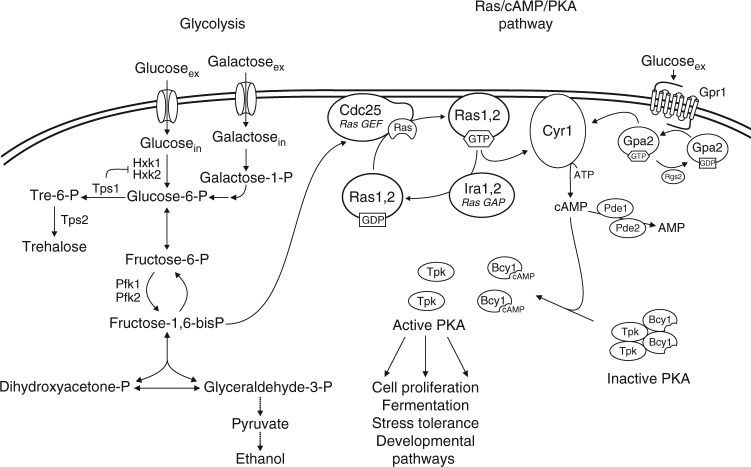
“Glucose binding to the Gpr1 receptor, and activation of the RAS signaling pathway in response to increased levels of glycolytic intermediates (red dotted arrows) activates the conversion of AMP to cyclic AMP, which in turn activates PKA as well as other signaling pathways.”
BackgroundInfluentialWu, H., Liu, F., Shangguan, Y., Yang, Y., Shi, W., Hu, W., Zeng, Z., Hu, N., Zhang, X., Hocher, B., et al. (2022) · Cell & Bioscience · doi:10.1186/s13578-022-00801-x · Cited by 20
“Gene set enrichment analyses (GSEA) showed that variable genes highly expressed in the medullary region were involved predominantly in the biological processes of the nicotinamide adenine dinucleotide (NADH) respiratory chain electron transport, oxidative phosphorylation (OXPHOS) (NDUFB, NDUFA, UQCRB, CYCS, COX7B, COX…”
BackgroundGluconeogenesis of Cancer Cells Is Disrupted by Citrate
Icard, P., Wu, Z., Alifano, M., & Fournel, L. (2019) · Trends in cancer · doi:10.1016/j.trecan.2019.03.002 · Cited by 17
Li, Y., Fu, Y., Zhang, Y., Duan, B., Zhao, Y., Shang, M., Cheng, Y., Zhang, K., Yu, Q., & Wang, T. (2023) · Advanced Science · doi:10.1002/advs.202203528 · Cited by 21
Martín‐Vicente, A., Souza, A. C. O., Abdallah, Q. A., Ge, W., & Fortwendel, J. R. (2019) · Cellular Microbiology · doi:10.1111/cmi.13013 · Cited by 18
“However, recent findings in the budding yeast Saccharomyces cerevisiae have revealed that the RasGEF, Cdc25p, is activated by fructose‐1,6‐bisphosate produced through glucose metabolism, linking Ras pathway activity to glycolytic flux in yeast (Peeters et al., 2017).”
BackgroundVerhagen, K. J. A., Pardijs, I. H., van Klaveren, H. M., & Wahl, A. (2025) · Biotechnology and Bioengineering · doi:10.1002/bit.28935 · Cited by 19
“Notably, the system exhibits a higher affinity for sucrose compared to glucose, while it is far less sensitive to fructose, that mainly activates PKA activity via the Ras1/Ras2 branch instead (Lemaire et al. 2004; Peeters et al. 2017).”
Tritz, R., Benson, T. W., Harris, V. K., Hudson, F. Z., MINTZ, J. D., Zhang, H., Kennard, S., Chen, W., Stepp, D. W., Csányi, G., et al. (2020) · Translational research · doi:10.1016/j.trsl.2020.08.001 · Cited by 15
“Recent work suggests a feedforward loop wherein increased glycolysis and accumulation of fructose 1,6bisphosphate directly activates Ras-Erk signaling via enhanced binding of SOS with at least 2 Ras isoforms(40, 41).”
Backgroundvan Tatenhove‐Pel, R. J., Zwering, E., Boreel, D. F., Falk, M., van Heerden, J. H., Kes, M. B. M. J., Kranenburg, C. I., Botman, D., Teusink, B., & Bachmann, H. (2021) · Metabolic Engineering · doi:10.1016/j.ymben.2020.12.005 · Cited by 16
The return of metabolism: biochemistry and physiology of glycolysis
Grüning, N., Agostini, F., Caldana, C., Hartl, J., Heinemann, M., Keller, M. A., Krüsemann, J. L., Lamperti, C., Linster, C. L., Lindner, S. N., et al. (2025) · Biological reviews/Biological reviews of the Cambridge Philosophical Society · doi:10.1111/brv.70104 · Cited by 23
pH dependencies of glycolytic enzymes of yeast under in vivo ‐like assay conditions
Luzia, L., Lao‐Martil, D., Savakis, P., van Heerden, J. H., van Riel, N. A. W., & Teusink, B. (2022) · FEBS Journal · doi:10.1111/febs.16459 · Cited by 18
Wagner, E. R., & Gasch, A. P. (2023) · Journal of Fungi · doi:10.3390/jof9080786 · Cited by 16
Multi-Omics Analysis of Multiple Glucose-Sensing Receptor Systems in Yeast
Li, S., Li, Y., Rushing, B. R., Harris, S. E., McRitchie, S., Dominguez, D., Sumner, S., & Dohlman, H. G. (2022) · Biomolecules · doi:10.3390/biom12020175 · Cited by 16
“Recent findings indicate that fructose-1,6-bisphosphate is an activator of the Ras proteins through the guanine nucleotide exchange factors [83].”
BackgroundNishimura, A., Ichikawa, K., Nakazawa, H., Tanahashi, R., Morita, F., Sitepu, I. R., Boundy‐Mills, K., Fox, G. P., & Takagi, H. (2022) · Bioscience Biotechnology and Biochemistry · doi:10.1093/bbb/zbac100 · Cited by 17
The characterisation of a galactokinase from Streptomyces coelicolor
Keenan, T., Mills, R., Pocock, E. E., Budhadev, D., Parmeggiani, F., Flitsch, S. L., & Fascione, M. A. (2018) · Carbohydrate Research · doi:10.1016/j.carres.2018.12.005 · Cited by 14
Szatkowska, R., Albornoz, M. G., Roszkowska, K. A., Holman, S. W., Furmanek, E., Hubbard, S. J., Beynon, R. J., & Adamczyk, M. (2019) · Biochemical Journal · doi:10.1042/bcj20180701 · Cited by 14
Why and how citrate may sensitize malignant tumors to immunotherapy
Icard, P., Prieto, M., Coquerel, A., Fournel, L., Gligorov, J., Noel, J., Mouren, A., Dohan, A. J. J., Alifano, M., & Simula, L. (2024) · Drug Resistance Updates · doi:10.1016/j.drup.2024.101177 · Cited by 16
Low-cost media statistical design for laccase rPOXA 1B production in P. pastoris
Ardila-Leal, L. D., Alvarado-Ramírez, M. F., Gutiérrez-Rojas, I. S., Poutou‐Piñales, R. A., Quevedo-Hidalgo, B. E., Pérez-Flórez, A., & Pedroza-Rodríguez, A. M. (2020) · Heliyon · doi:10.1016/j.heliyon.2020.e03852 · Cited by 16
“Protein kinase A acts as a central regulator of metabolism of the cell's transcriptional state, carbohydrate storage, factors regulators of stress and ribosomal biogenesis [56, 57].”
BackgroundLu, G., Tandang‐Silvas, M. R., Dawson, A., Dawson, T. J., & Groppe, J. C. (2018) · Bone · doi:10.1016/j.bone.2018.03.027 · Cited by 15
Metadata
- Authors
- Peeters, K., Van Leemputte, F., Fischer, B., Bonini, B. M., Quezada, H., Tsytlonok, M., Haesen, D., Vanthienen, W., Bernardes, N., Gonzalez-Blas, C. B., Janssens, V., Tompa, P., Versées, W., & Thevelein, J. M.
- Affiliations
- VIB-KU Leuven Center for Microbiology (BE)
- Vrije Universiteit Brussel (BE)
- KU Leuven (BE)
- Vlaams Instituut voor Biotechnologie (BE)
- Corresponding author
- Thevelein, Johan M.
- ORCID
- Venue
- Nature Communications
- Published
- 2017-10-13
- Volume
- 8
- Issue
- 1
- Pages
- 922-922
- ISSN
- 2041-1723 (ISSN-L)
- PMC
- PMC5640605
- OpenAlex
- W2762723870
- Semantic Scholar
- c1e674b782d4f5e764c42515cac5ab5e99aa96ed
- Cited by
- 203
- References
- 63
- Citations by year
- 2026: 14 · 2025: 28 · 2024: 19 · 2023: 22 · 2022: 29 · 2021: 21 · 2020: 21 · 2019: 24 · 2018: 22 · 2017: 3
- FWCI
- 7.82
- Type
- journal article
- Language
- en
- Open access
- gold
- doi.org
- Licence
- cc-by
- creativecommons.org/licenses/by/4.0 (tdm)
- creativecommons.org/licenses/by/4.0 (vor)
- Locations
- Nature Communications (publishedVersion, cc-by)
- PubMed Central (publishedVersion, cc-by)
- PubMed (publishedVersion)
- Repository of the Academy's Library (Library of the Hungarian Academy of Sciences) (acceptedVersion)
- Lirias (KU Leuven) (submittedVersion, other-oa)
- RePEc: Research Papers in Economics (submittedVersion)
- DOAJ (DOAJ: Directory of Open Access Journals) (submittedVersion)
- DOAJ (DOAJ: Directory of Open Access Journals) (submittedVersion, cc-by-sa)
- VUBIR (Vrije Universiteit Brussel) (submittedVersion)
- Funders
- KU Leuven
- Vlaamse regering
- Fondation contre le Cancer
- Topics
- Life Sciences › Biochemistry, Genetics and Molecular Biology › Molecular Biology › Protein Kinase Regulation and GTPase Signaling
- Life Sciences › Biochemistry, Genetics and Molecular Biology › Molecular Biology › Fungal and yeast genetics research
- Life Sciences › Biochemistry, Genetics and Molecular Biology › Cancer Research › Cancer, Hypoxia, and Metabolism
- Keywords
- fructose-1,6-bisphosphate, Ras activation, glycolytic flux, Cdc25, SOS1, Warburg effect, aerobic glycolysis, fermentation, apoptosis, glucose uptake, MEK/ERK signaling, carcinogenesis, yeast, cancer cells
- MeSH terms
- Animals, Fermentation, Fructosephosphates, Glucose, Glucosyltransferases, Glycolysis, Saccharomyces cerevisiae, ras Proteins, ras-GRF1, SOS1 Protein, Saccharomyces cerevisiae Proteins
About these checks
Registry, retraction, Cites and statistics results are computed, not judged, with one exception: a printed reference that no index lists is read once by a model before it counts as a citation error. Claims are extracted by a model and kept only when their quote appears verbatim in the text; each cited source is then checked, with a model’s help, for whether it says what the claim relies on. Those verdicts can be wrong — read the claim’s quote and the cited source before relying on one.
Statistics and arithmetic are recomputed, not judged.
Confidence bands are shown only for fields calibrated on our annotated test set. None is calibrated yet, so no band is shown.
What counts as a claim ›How we measure confidence ›How we check this ›
Are you an author, or do you see a problem with this page? Request a review
Data sources
Bibliographic data: Semantic Scholar, OpenAlex, Crossref.
Contains information from the Semantic Scholar Academic Graph Datasets, made available under the ODC Attribution License (ODC-BY 1.0).
Semantic Scholar’s data is described in: Kinney, R., et al. (2023). The Semantic Scholar Open Data Platform. arXiv:2301.10140.
