

Fructose-1,6-bisphosphate couples glycolytic flux to activation of Ras
Open accessThe DOI matches its Crossref record; 63 of the 63 references it cites were found in a registry or an index.
Abstract
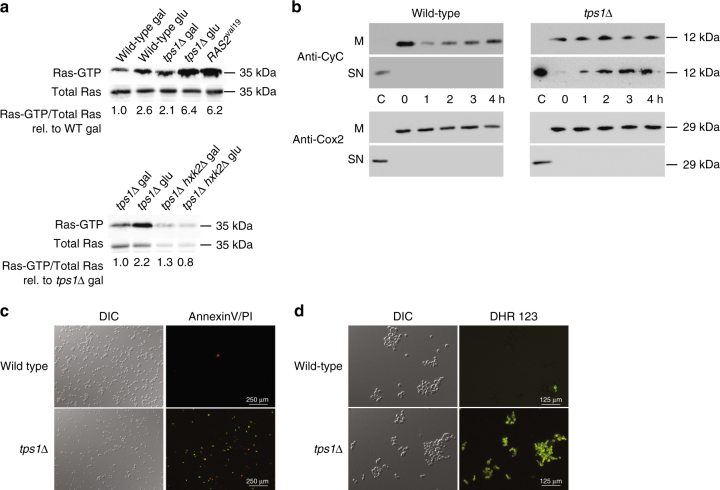
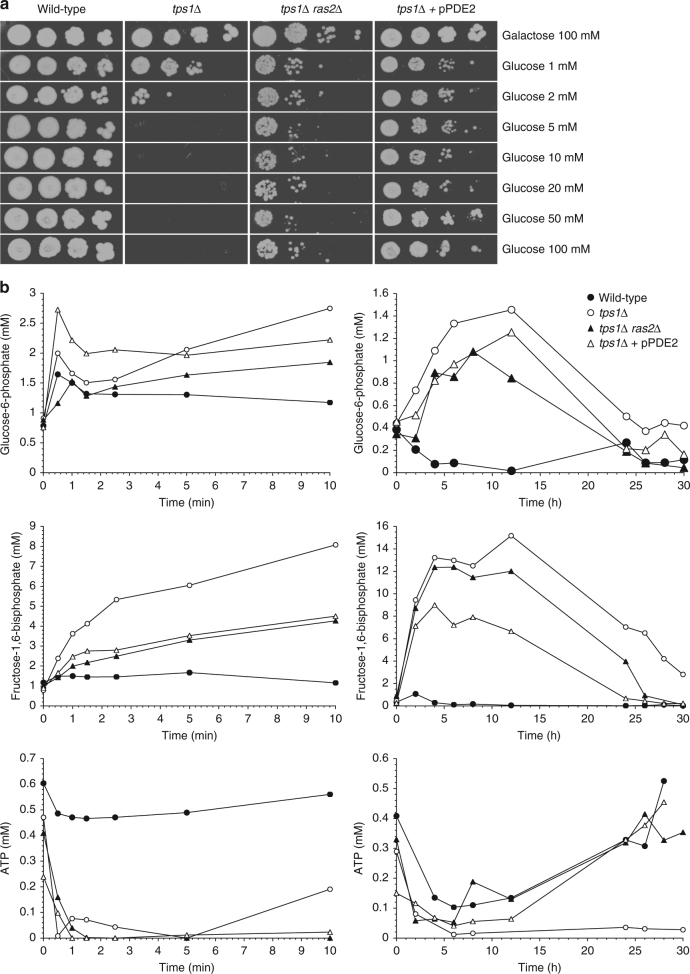
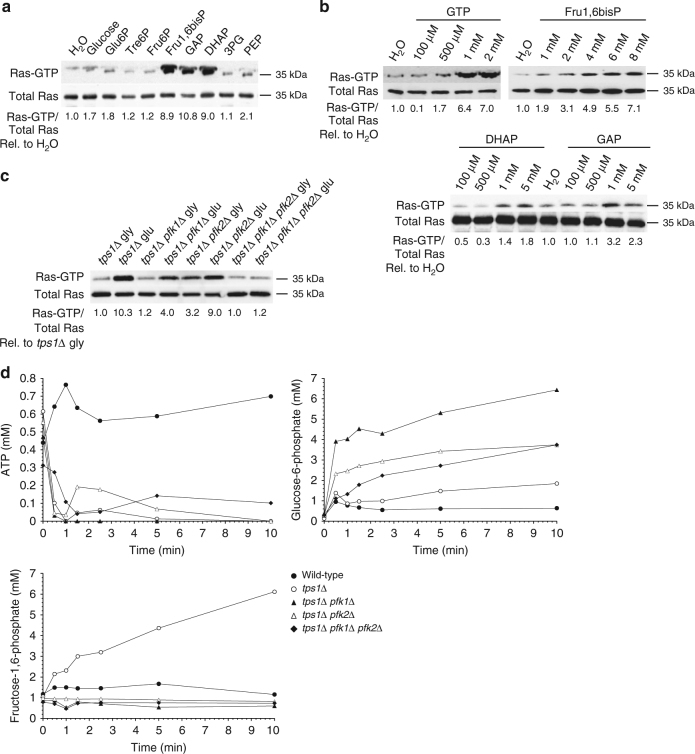
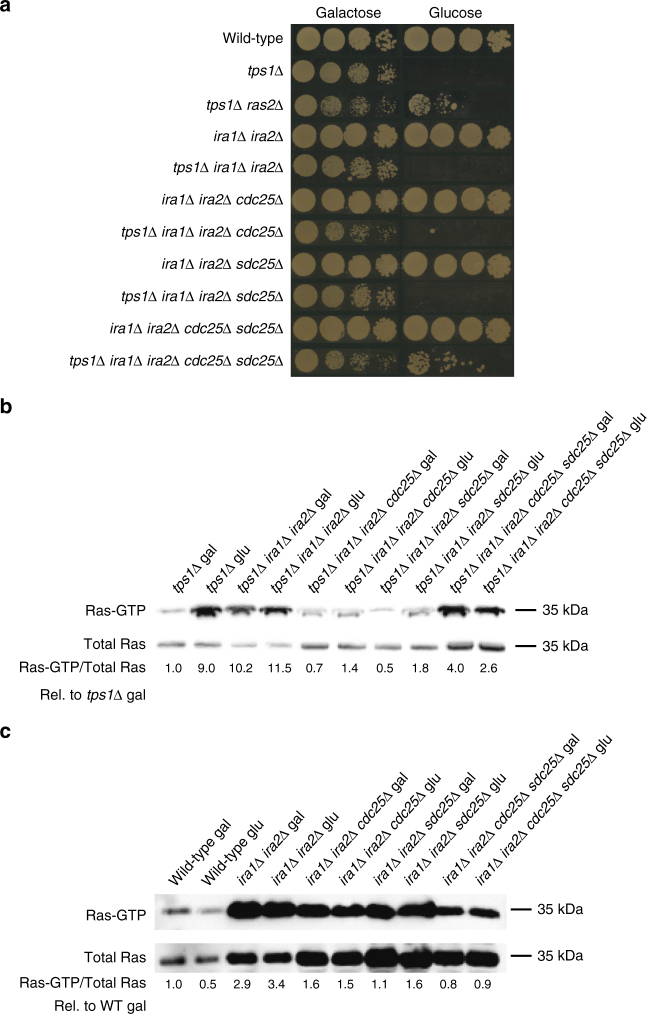
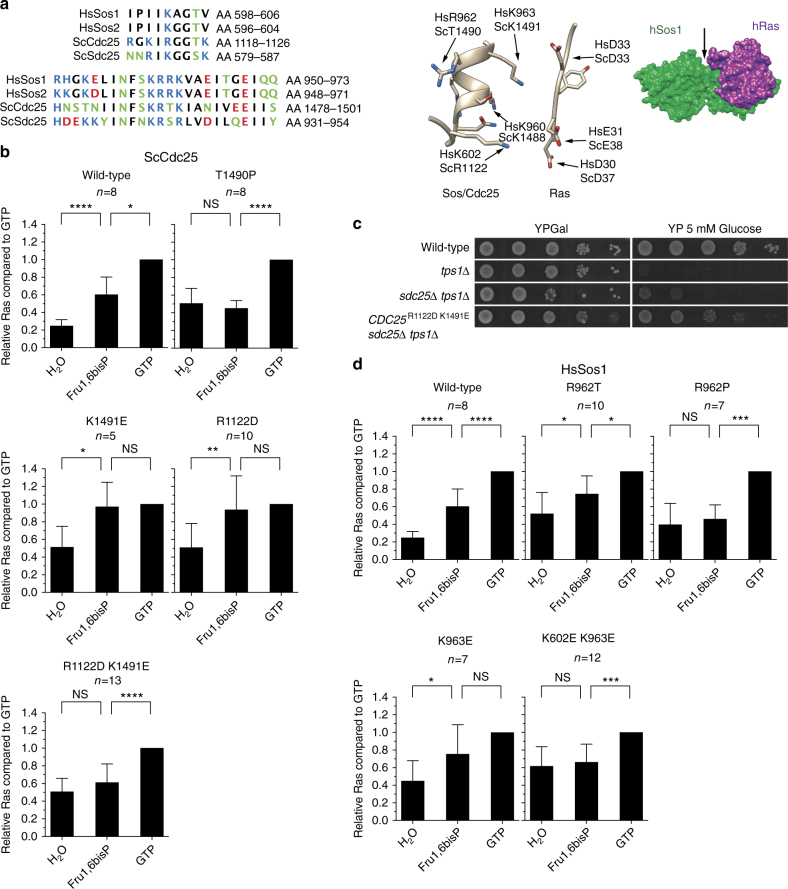
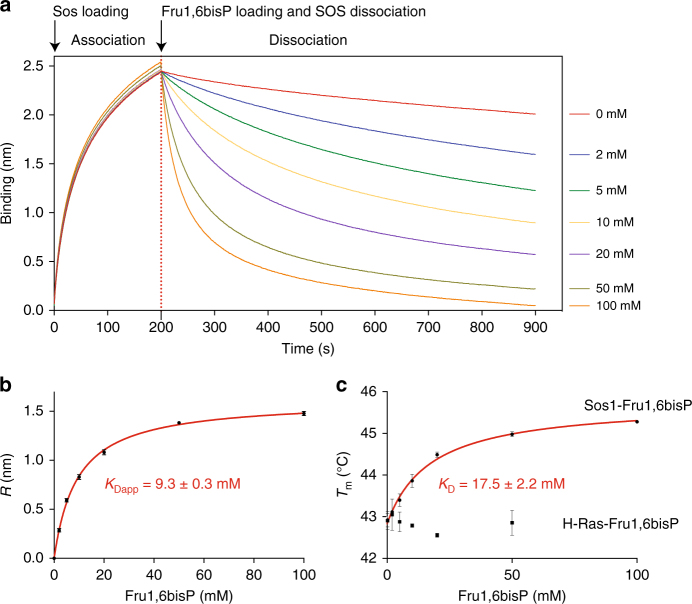
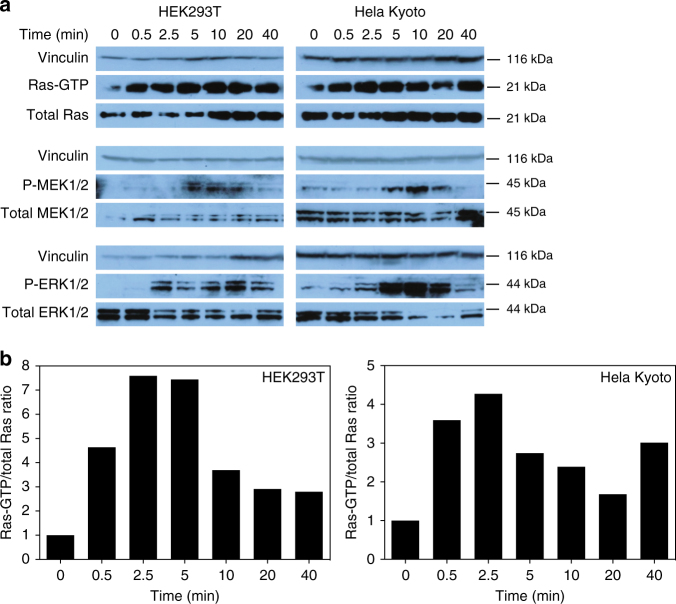
Yeast and cancer cells share the unusual characteristic of favoring fermentation of sugar over respiration. We now reveal an evolutionary conserved mechanism linking fermentation to activation of Ras, a major regulator of cell proliferation in yeast and mammalian cells, and prime proto-oncogene product. A yeast mutant ( tps1∆ ) with overactive influx of glucose into glycolysis and hyperaccumulation of Fru1,6bisP, shows hyperactivation of Ras, which causes its glucose growth defect by triggering apoptosis. Fru1,6bisP is a potent activator of Ras in permeabilized yeast cells, likely acting through Cdc25. As in yeast, glucose triggers activation of Ras and its downstream targets MEK and ERK in mammalian cells. Biolayer interferometry measurements show that physiological concentrations of Fru1,6bisP stimulate dissociation of the pure Sos1/H-Ras complex. Thermal shift assay confirms direct binding to Sos1, the mammalian ortholog of Cdc25. Our results suggest that the Warburg effect creates a vicious cycle through Fru1,6bisP activation of Ras, by which enhanced fermentation stimulates oncogenic potency.
Overview
The claims and statistics of this paper haven’t been checked yet.
Free: it reads the open-access text and checks the first 5 claims that cite a source we can check. Create a free account to check every claim.
Integrity signals
Registry
Cites
Statistics
Figures
Verification
Claims the paper makes
The claims and statistics of this paper haven’t been checked yet.
Free: it reads the open-access text and checks the first 5 claims that cite a source we can check. Create a free account to check every claim.
Claims other papers make about this one
Each is checked against this paper’s own text: does it say what the citing paper says it does?
The source backs part of the claim, not all of it — or backs it for a different population, condition or comparison.
In the citing paper
“This conclusion is consistent with previous work34 showing that human FBP activates Ras by binding directly to Sos1 and dissociating the Ras/Sos1 complex.”
From The δ subunit of F1Fo-ATP synthase is required for pathogenicity of Candida albicans (2021) · cites this paper as [34]
Experimental — accuracy not yet measured
Self-check
Percentages, sums and reported differences re-computed from the paper’s own numbers.
The self-check needs the paper’s full text.
Citations
Cites
1 retracted
Petitjean, M., Teste, M.-A., Léger‐Silvestre, I., François, J., & Parrou, J. (2016) · Mechanisms of Ageing and Development · doi:10.1016/j.mad.2016.07.011 · Cited by 20
RetractedWarburg, O. (1956) · Science · doi:10.1126/science.123.3191.309 · Cited by 13,425
Barbacid, M. (1987) · Annual Review of Biochemistry · doi:10.1146/annurev.bi.56.070187.004023 · Cited by 3,885
Niesen, F. H., Berglund, H., & Vedadi, M. (2007) · Nature Protocols · doi:10.1038/nprot.2007.321 · Cited by 2,408
Isozymes of mammalian hexokinase: structure, subcellular localization and metabolic function
Wilson, J. E. (2003) · Journal of Experimental Biology · doi:10.1242/jeb.00241 · Cited by 1,085
Vitamin C selectively kills KRAS and BRAF mutant colorectal cancer cells by targeting GAPDH
Yun, J., Mullarky, E., Lu, C., Bosch, K. N., Kavalier, A., Rivera, K., Roper, J., Chio, I. I. C., Giannopoulou, E. G., Rago, C., et al. (2015) · Science · doi:10.1126/science.aaa5004 · Cited by 913
The structural basis of the activation of Ras by Sos
Boriack-Sjodin, P. A., Margarit, S. M., Bar-Sagi, D., & Kuriyan, J. (1998) · Nature · doi:10.1038/28548 · Cited by 799
A Yeast Mutant Showing Diagnostic Markers of Early and Late Apoptosis
Madeo, F., Fröhlich, E., & Fröhlich, K.-U. (1997) · The Journal of Cell Biology · doi:10.1083/jcb.139.3.729 · Cited by 793
Thevelein, J. M., & De Winde, J. H. (1999) · Molecular Microbiology · doi:10.1046/j.1365-2958.1999.01538.x · Cited by 677
Self-citationWang, M., Herrmann, C. J., Simonovic, M., Szklarczyk, D., & von Mering, C. (2015) · PROTEOMICS · doi:10.1002/pmic.201400441 · Cited by 537
Cited by
Items 101–200 of 206
Yeung, C. L. S., Ng, T. H., Lai, C. J., Xue, T., Mao, X., Tey, S. K., Lo, R. C., Sin, C., Ng, K. M., Wong, D. K.-H., et al. (2025) · Journal of Extracellular Vesicles · doi:10.1002/jev2.70071 · Cited by 14
“In the early stages of glycolysis, glucose is phosphorylated to glucose-6-phosphate (Glu-6-P) by hexokinase and subsequently converted to fructose-6-phosphate (Fru-6-P) (Peeters et al. 2017).”
Gao, X., Wang, Z., Xu, Y., Feng, S., Fu, S., Luo, Z., & Miao, J. (2023) · The Journal of Infectious Diseases · doi:10.1093/infdis/jiad339 · Cited by 14
Citrate targets FBPase and constitutes an emerging novel approach for cancer therapy
Icard, P., Fournel, L., Coquerel, A., Gligorov, J., Alifano, M., & Lincet, H. (2018) · Cancer Cell International · doi:10.1186/s12935-018-0676-y · Cited by 12
Rojas, S., Schmidl, S., Boles, E., & Oreb, M. (2021) · FEMS Yeast Research · doi:10.1093/femsyr/foab019 · Cited by 12
Glycolysis–Wnt signaling axis tunes developmental timing of embryo segmentationPreprint
Miyazawa, H., Rada, J., Sanchez, P. G. L., Esposito, E., Bunina, D., Girardot, C., Zaugg, J. B., & Aulehla, A. (2024) · bioRxiv (Cold Spring Harbor Laboratory) · doi:10.1101/2024.01.22.576629 · Cited by 12
Ma, C., Gu, G., Chen, S., Shi, X., Li, Z., Li‐Byarlay, H., & Bai, L. (2023) · Environmental Research · doi:10.1016/j.envres.2024.118509 · Cited by 12
AMPK Phosphorylation Is Controlled by Glucose Transport Rate in a PKA-Independent Manner
Milanesi, R., Tripodi, F., Vertemara, J., Tisi, R., & Coccetti, P. (2021) · International Journal of Molecular Sciences · doi:10.3390/ijms22179483 · Cited by 15
da Silva, J. M., Teles, G. H., Parente, D. C., Leite, F. C. B., Silva, C. S., Valente, P., Ganga, M. A., Simões, D. A., & de Morais, M. A. (2019) · FEMS Yeast Research · doi:10.1093/femsyr/foz022 · Cited by 13
A noncanonical role of glycolytic metabolites controlling the timing of mouse embryo segmentation
Miyazawa, H., Rada, J., Prior, N., Sanchez, P. G. L., Esposito, E., Bunina, D., Girardot, C., Zaugg, J. B., & Aulehla, A. (2025) · Science Advances · doi:10.1126/sciadv.adz9606 · Cited by 22
Muñoz-Miranda, L. A., Pereira‐Santana, A., Gómez-Angulo, J. H., Gschaedler, A., Amaya-Delgado, L., Figueroa-Yáñez, L. J., & Arrizón, J. (2022) · FEMS Yeast Research · doi:10.1093/femsyr/foac005 · Cited by 10
Lu, J., Zhang, Y., Wang, D., Xu, X., Xu, J., Yang, X., Qian, H., & Zhang, H. (2023) · Stem Cells · doi:10.1093/stmcls/sxad024 · Cited by 11
Eshaghian, N., Zare, M., Mohammadian, M. K., Gozidehkar, Z., Afsaneh, A., Askari, G., Asadi, M., Milajerdi, A., & Sadeghi, O. (2023) · Frontiers in Nutrition · doi:10.3389/fnut.2023.1301335 · Cited by 13
Glucose Sensing and Regulation in Yeasts
Stasyk, O. G., & Stasyk, O. V. (2019) · Springer eBooks · doi:10.1007/978-3-030-21110-3_14 · Cited by 13
Emergence of Orchestrated and Dynamic Metabolism of Saccharomyces cerevisiae
Nguyen, V., Li, Y., & Lu, T. (2024) · ACS Synthetic Biology · doi:10.1021/acssynbio.3c00542 · Cited by 10
A tps1Δ persister-like state in Saccharomyces cerevisiae is regulated by MKT1
Gibney, P. A., Chen, A., Schieler, A., Chen, J. C., Xu, Y., Hendrickson, D. G., McIsaac, R. S., Rabinowitz, J. D., & Botstein, D. (2020) · PLoS ONE · doi:10.1371/journal.pone.0233779 · Cited by 11
Baroni, M. D., Colombo, S., Libens, O., Pallavi, R., Giorgio, M., & Martegani, E. (2020) · APOPTOSIS · doi:10.1007/s10495-020-01625-1 · Cited by 11
Xu, P. H., Li, S., Tian, R., Han, L., Mao, W., Li, L., Li, C., Wang, Y., Luo, G., & Yang, N. (2019) · Frontiers in Pharmacology · doi:10.3389/fphar.2019.00704 · Cited by 9
Dai, W., Yu, Q., Ma, R., Zheng, Z., Hong, L., Qi, Y., He, F., Wang, M., Ge, F., Yu, X., et al. (2025) · Nature Communications · doi:10.1038/s41467-025-59064-y · Cited by 9
Biological Processes Highlighted in Saccharomyces cerevisiae during the Sparkling Wines Elaboration
González-Jiménez, M. D. C., García‐Martínez, T., Puig‐Pujol, A., Capdevila, F., Moreno‐García, J., Moreno, J. J., & Mauricio, J. C. (2020) · Microorganisms · doi:10.3390/microorganisms8081216 · Cited by 8
Xie, T., Chen, M., Nielsen, J., & Xia, J. (2022) · FEMS Yeast Research · doi:10.1093/femsyr/foac030 · Cited by 11
Lu, B., Zhao, Q., Cai, Z., Qian, S., Mao, J., Zhang, L., Mao, X., Sun, X., Cui, W., & Zhang, Y. (2023) · Small · doi:10.1002/smll.202309060 · Cited by 12
Maślanka, R., Bednarska, S., & Zadrąg‐Tęcza, R. (2024) · Archives of Biochemistry and Biophysics · doi:10.1016/j.abb.2024.110021 · Cited by 10
Myeloid-Specific Pyruvate-Kinase-Type-M2-Deficient Mice Are Resistant to Acute Lung Injury
Sun, X., Shi, F., Wang, W., Wu, Y., Qu, S., Li, J., Liang, H., & Zen, K. (2022) · Biomedicines · doi:10.3390/biomedicines10051193 · Cited by 8
“To assay PMN degranulation after chemoattractant stimulation, after treatment with aerobic glycolysis inhibitors and activators for 30 min, including 2-deoxyglucose (2 mM, Sigma, D8375, Kawasaki, Japan), shikonin (1 µM, Sigma, S7576), oleanic acid (OA) (10 µM, Sigma, O5504), serine (5 mM, Sigma, S4500), and FBP (500 µ…”
BackgroundSawai, A., Taniguchi, T., Noguchi, K., Seike, T., Okahashi, N., Takaine, M., & Matsuda, F. (2025) · Metabolites · doi:10.3390/metabo15070461 · Cited by 9
“FBP binds to Cdc25/Sos1 and activates the EMP pathway via the cAMP/PKA pathways [40].”
Controlling circuitry underlies the growth optimization of Saccharomyces cerevisiae
Nguyen, V., Xue, P., Li, Y., Zhao, H., & Lu, T. (2023) · Metabolic Engineering · doi:10.1016/j.ymben.2023.09.013 · Cited by 12
Restricted glycolysis is a primary cause of the reduced growth rate of zinc-deficient yeast cells
MacDiarmid, C. W., Taggart, J., Kubisiak, M., & Eide, D. J. (2024) · Journal of Biological Chemistry · doi:10.1016/j.jbc.2024.107147 · Cited by 8
The stress-protectant molecule trehalose mediates fluconazole tolerance in Candida glabrata
Zhu, Q., Wijnants, S., Feil, R., Genechten, W. V., Vergauwen, R., Goethem, O. V., Lunn, J. E., Ende, M. V., & Dijck, P. V. (2025) · Antimicrobial Agents and Chemotherapy · doi:10.1128/aac.01349-24 · Cited by 9
“In consequence, oxidative phosphorylation is limited by the low availability of orthophosphate, leading to low ATP levels and cell death (22, 29, 51).”
Microplastics in the marine environment: Impacts, identification and treatments
Fernandes, M. C., Leite, L. M. D. F., da Costa, M. R. F., Fregolente, L. V., & Nogueira, G. P. (2025) · Bioresource Technology Reports · doi:10.1016/j.biteb.2025.102073 · Cited by 13
Metabolic targeting of malignant tumors: a need for systemic approach
Margetis, A. T. (2022) · Journal of Cancer Research and Clinical Oncology · doi:10.1007/s00432-022-04212-w · Cited by 7
“2012) and, conversely, glycolysis intermediate fructose-1,6-bisphosphate activated RAS, creating a vicious cycle of oncogenic signaling (Peeters et al. 2017).”
BackgroundBorgström, C., Persson, V. C., Rogova, O., Osiro, K. O., Lundberg, E., Spégel, P., & Gorwa‐Grauslund, M. F. (2022) · Microbial Cell Factories · doi:10.1186/s12934-022-01978-z · Cited by 7
“Interestingly, increased levels of F1,6bP have been shown to enhance PKA activity [19].”
BackgroundA yeast FRET biosensor enlightens cAMP signallingPreprint
Botman, D., O’Toole, T. G., Goedhart, J., Bruggeman, F. J., van Heerden, J. H., & Teusink, B. (2019) · bioRxiv (Cold Spring Harbor Laboratory) · doi:10.1101/831354 · Cited by 6
Bonomelli, B., Busti, S., Martegani, E., & Colombo, S. (2022) · FEBS Letters · doi:10.1002/1873-3468.14567 · Cited by 7
Zhou, Q., Xiao, S.-L., Lin, R., Li, C., Chen, Z., Chen, Y., Luo, C., Mo, Z., & Lin, Y. (2023) · Chinese Journal of Integrative Medicine · doi:10.1007/s11655-023-3700-6 · Cited by 6
“(9) Treatment strategies have been developed to kill tumor cells by taking advantage of their addiction to glucose.”
Khan, Z., Nisar, M. A., Muzammil, S., Zafar, S., Zerr, I., & Rehman, A. (2019) · Environmental Monitoring and Assessment · doi:10.1007/s10661-019-7631-9 · Cited by 7
Baechle, J. J., Smith, P. M., Tan, M., Solórzano, C. C., Lopez‐Aguiar, A. G., Dillhoff, M. E., Beal, E. W., Poultsides, G. A., Makris, E. A., Rocha, F. G., et al. (2020) · Annals of Surgical Oncology · doi:10.1245/s10434-020-08497-4 · Cited by 5
Hansen, H. L., & Webb, B. A. (2025) · Journal of Cell Science · doi:10.1242/jcs.264251 · Cited by 7
“…signaling cascades by promoting the formation of glycolytic intermediates such as dihydroxyacetone phosphate (DHAP) or F-1,6-bP, which have been shown to act as second messengers in cell signaling (Icard et al., 2021; Li et al., 2024; Lim et al., 2016; Orozco et al., 2020; Peeters et al., 2017).”
An mTurquoise2-Based Glucose Biosensor
Botman, D., Tielman, A., Goedhart, J., & Teusink, B. (2026) · ACS Sensors · doi:10.1021/acssensors.5c03325 · Cited by 4
On the design principles of metabolic flux sensing
Euler, C., & Mahadevan, R. (2021) · Biophysical Journal · doi:10.1016/j.bpj.2021.12.022 · Cited by 8
Specific Disruption of Ras2 CAAX Proteolysis Alters Its Localization and Function
Ravishankar, R., Hildebrandt, E. R., Greenway, G., Asad, N., Gore, S., Dore, T. M., & Schmidt, W. K. (2023) · Microbiology Spectrum · doi:10.1128/spectrum.02692-22 · Cited by 4
Real-Time Assessment of Intracellular Metabolites in Single Cells through RNA-Based Sensors
Ortega, A. D. (2023) · Biomolecules · doi:10.3390/biom13050765 · Cited by 6
“In yeast, high FBP concentration favors fermentative over oxidative metabolism by activating the HRas homolog Ras2 [23,24].”
BackgroundPangestu, R., Kahar, P., Ogino, C., & Kondo, A. (2023) · Yeast · doi:10.1002/yea.3917 · Cited by 6
“The upregulation of RAS2 , on the other hand, may be attributed to the increased accumulation of fructose ‐ 1,6 ‐ bisphosphate (Peeters et al., 2017) and the response to nutrient ‐ limited conditions (Bhattacharya et al., 1995; Pothoulakis & Ellis, 2018) caused by the high cell ‐ density…”
BackgroundLipophilic Cations Rescue the Growth of Yeast under the Conditions of Glycolysis Overflow
Соколов, С. С., Smirnova, E. A., Маркова, О. В., Kireeva, N. A., Kirsanov, R. S., Khailova, L. S., Кнорре, Д. А., & Severin, F. F. (2020) · Biomolecules · doi:10.3390/biom10091345 · Cited by 5
“Besides, an excess of fructose-1,6-bisphosphate (FBP) hyperactivates Ras signaling, which eventually leads to cell death [10].”
BackgroundInfluentialTang, M., Yuan, R., Huang, G., Long, Z., Liang, X., Meng, H., & Long, X. (2025) · Food Bioscience · doi:10.1016/j.fbio.2025.107770 · Cited by 4
PFKM governs metabolic shifts throughout skeletal muscle differentiation
Campos, M., Nguyen, S. T., Kong, X., Yang, Y., Watson, R. L., Gromova, A., Livelo, C. R., Franco, C. N., Cabral, J. E., Seabrook, L. J., et al. (2026) · Nature Metabolism · doi:10.1038/s42255-026-01457-4 · Cited by 6
“Notably, F6P and FBP, the metabolites impacted by differential PFKM compartmentation, have moonlighting functions outside of metabolism and could also contribute to the downstream cellular responses 27,50 .”
The Imidazolium Ionic Liquids Toxicity is Due to Their Effect on the Plasma Membrane
Соколов, С. С., Smirnova, E. A., Rokitskaya, T. I., & Severin, F. F. (2024) · Biochemistry (Moscow) · doi:10.1134/s0006297924030064 · Cited by 4
“In addition, the accumulation of sugar phosphates in the cytoplasm can be toxic to cells [41, 42].”
Komath, S. S. (2024) · Journal of Biological Chemistry · doi:10.1016/j.jbc.2024.107444 · Cited by 4
Citrate oscillations during cell cycle are a targetable vulnerability in cancer cells
Icard, P., Alifano, M., & Simula, L. (2025) · Biochimica et Biophysica Acta (BBA) - Reviews on Cancer · doi:10.1016/j.bbcan.2025.189313 · Cited by 4
Modeling and Simulation of Batch Sugarcane Alcoholic Fermentation Using the Metabolic Model
Acorsi, R. L., Giovanni, M. Y. G. D., Olivo, J. E., & Andrade, C. M. G. (2022) · Fermentation · doi:10.3390/fermentation8020082 · Cited by 5
Fructose-1,6-bisphosphate couples glycolytic activity to cell adhesion
Hoffmann, L., Duchmann, M., Lazarow, K., Huang, Y.-H., Lukas, F., Lo, W., Feil, R., Schmied, C., Lehmann, M., Lunn, J. E., et al. (2026) · Nature Cell Biology · doi:10.1038/s41556-026-01911-1 · Cited by 5
Glycolytic flux controls retinal progenitor cell differentiation via regulating Wnt signaling
Hanna, J., Touahri, Y., Pak, A., Belfiore, L., van Oosten, E., David, L. A., Han, S., Ilnytskyy, Y., Kovalchuk, I., Kurrasch, D. M., et al. (2025) · eLife · doi:10.7554/elife.100604.3 · Cited by 5
Sárkány, O., Szőke, A., Pettkó‐Szandtner, A., Kálmán, E. É., Brunner, M., Gyöngyösi, N., & Káldi, K. (2025) · FEBS Journal · doi:10.1111/febs.70122 · Cited by 3
Vanthienen, W., Fernández-García, J., Baietti, M. F., Claeys, E., Leemputte, F. V., Nguyen, L., Goossens, V., Deparis, Q., Broekaert, D., Vlayen, S., et al. (2024) · Frontiers in Oncology · doi:10.3389/fonc.2024.1411983 · Cited by 3
Self-citationLiu, J., Yang, J., Yuan, L., Wu, C., Jiang, Y., Zhuang, W., Ying, H., & Yang, S. (2023) · Journal of Agricultural and Food Chemistry · doi:10.1021/acs.jafc.3c04386 · Cited by 4
Protein–Metabolite Interactions Shape Cellular Metabolism and Physiology
Muralidhara, P., & Ewald, J. C. (2022) · Methods in molecular biology · doi:10.1007/978-1-0716-2624-5_1 · Cited by 2
Trehalose biosynthetic pathway regulates filamentation response in Saccharomyces cerevisiae
Iyer, R. S., & Bhat, P. J. (2022) · Molecular Biology Reports · doi:10.1007/s11033-022-07792-5 · Cited by 1
“Contrary to earlier reports in the haploid tps1 mutant where RAS2 is activated in glucose causing the growth defect [34], we observed that Ras2p expression was reduced in the diploid tps1 mutant in YPD medium (Fig.”
BackgroundMethodResultInfluentialVelastegui, E., Quezada, J., Ponce, B., Adrián, C., Offei, B., Wolfe, K. H., Berríos, J., & Braun‐Galleani, S. (2025) · Fermentation · doi:10.3390/fermentation11110634 · Cited by 1
Mechanism by which a linoleic acid metabolite suppresses cancer cell growth by inhibiting mTOR
Park, S. J., Kim, S., Kwon, H., Choi, J., Kim, J. K., Jung, I., Lim, S.-W., Kim, Y. R., Yang, A., Lee, B., et al. (2026) · Cell chemical biology · doi:10.1016/j.chembiol.2026.04.004 · Cited by 4
Wang, S., Tian, L., Li, F., Wang, Q., Tan, Y., Ning, Y., Cao, X., Liu, Y., Shangguan, J., Li, H., et al. (2026) · Food Research International · doi:10.1016/j.foodres.2026.119570 · Cited by 1
Vreys, J., Schraepen, E., Peterson, T., Wijnants, S., & Dijck, P. V. (2026) · Fungal Biology and Biotechnology · doi:10.1186/s40694-026-00216-0 · Cited by 1
“Uncontrolled sugar phosphorylation leads to hyperactivation of glycolytic flux, resulting in accumulation of metabolites in the upper part of glycolysis, depletion of ATP and inorganic phosphate and can ultimately trigger apoptosis [82, 83].”
Phatak, P. S., Mathivathanan, S., Shah, D., Suresh, I., Shejo, M., Das, S. K., & Varahan, S. (2026) · Genetics · doi:10.1093/genetics/iyag211 · Cited by 1
THE SAGA COMPLEX IS ESSENTIAL FOR THE REGULATION OF GENES INVOLVED IN YEAST TREHALOSE METABOLISM
GENÇ, T. T. (2022) · Trakya University Journal of Natural Sciences · doi:10.23902/trkjnat.1131400 · Cited by 3
Roger, F., Picazo, C., Reiter, W., Libiad, M., Asami, C., Hanzén, S., Gao, C., Lagniel, G., Welkenhuysen, N., Labarre, J., et al. (2019) · bioRxiv (Cold Spring Harbor Laboratory) · doi:10.1101/676270 · Cited by 1
“Glutathione-S-Transferase-Raf1-Binding-Domain (GSTRBD) This study, (Peeters et al., 2017)”
InfluentialSchrijnders, D. (2019) · University of Groningen research database (University of Groningen / Centre for Information Technology) · doi:10.33612/diss.103517830 · Cited by 1
Large-scale changes of molecular network states explain complex traitsPreprint
Weith, M., Großbach, J., Clément‐Ziza, M., Gillet, L. C. J., Rodríguez‐López, M., Marguerat, S., Workman, C. T., Picotti, P., Bähler, J., Aebersold, R. H., et al. (2022) · bioRxiv (Cold Spring Harbor Laboratory) · doi:10.1101/2022.12.05.519111 · Cited by 1
Glycolytic flux controls retinal progenitor cell differentiation via regulating Wnt signalingPreprint
Hanna, J., Touahri, Y., Pak, A., Belfiore, L., van Oosten, E., David, L. A., Han, S., Ilnytskyy, Y., Kovalchuk, I., Kurrasch, D. M., et al. (2024) · eLife · doi:10.7554/elife.100604 · Cited by 1
Park, S. J., Kwon, H., Yang, A. Y., Lee, B., Lee, H., Park, S. E., Lee, S., Park, B. B., Kim, Y., Lee, J. W., et al. (2025) · bioRxiv (Cold Spring Harbor Laboratory) · doi:10.1101/2025.04.02.646927 · Cited by 1
Glycolysis-dependent Sulfur Metabolism Orchestrates Morphological Plasticity and Virulence in FungiPreprint
Shah, D., Rewatkar, N., Adishree, M., Gupta, S., Mathivathanan, S., Biswas, S., & Varahan, S. (2025) · eLife · doi:10.7554/elife.109075.1 · Cited by 2
Glycolysis-dependent sulfur metabolism orchestrates morphological plasticity and virulence in fungiPreprint
Shah, D., Rewatkar, N., Adishree, M., Gupta, S., Mathivathanan, S., Biswas, S., & Varahan, S. (2026) · eLife · doi:10.7554/elife.109075 · Cited by 3
“Additionally, a key glycolytic intermediate, fructose-1,6-bisphosphate (FBP), is also known to activate the cAMP-PKA pathway via activation of Ras proteins, further linking glucose metabolism to this crucial signalling cascade ( Peeters et al., 2017 ; Figure 1I ).”
Arowolo, O. A., Olasehinde, O. O., Oyekunle, A. A., Adisa, A., Alatise, O. I., & Adesunkanmi, A. R. K. (2018) · Journal of Cancer Research and Experimental Oncology · doi:10.5897/jcreo2017.0150
“We used quasi “cluster analysis” Peeters et al. (2017) of dietary pattern, in which consumed items of nutrition were grouped according to their nutritional content, and re-named “Total-variable”.”
MethodResultSkopec, R. (2018) · Progressing Aspects in Pediatrics and Neonatology · doi:10.32474/papn.2018.01.000107
Redhu, A. K., & Bhat, J. P. (2019) · bioRxiv (Cold Spring Harbor Laboratory) · doi:10.1101/746412
The polyol pathway is a crucial glucose sensor in DrosophilaPreprint
Sano, H., Nakamura, A., Yamane, M., Niwa, H., Nishimura, T., & Kojima, M. (2020) · bioRxiv (Cold Spring Harbor Laboratory) · doi:10.1101/2020.03.16.993170 · Cited by 1
“However, this scenario is undermined by observations that the levels of metabolites in these pathways remain mostly constant after glucose uptake under normal nutritional conditions in which storage sugars accumulate in the cell (Peeters et al., 2017).”
BackgroundThermodynamic constraints are sufficient for the emergence of flux sensors in metabolismPreprint
Euler, C., & Mahadevan, R. (2020) · bioRxiv (Cold Spring Harbor Laboratory) · doi:10.1101/2020.09.04.283010
“FBP also plays roles in signalling glycolytic flux to signal transduction systems associated with proliferation in S cerevisiae (Peeters et al., 2017).”
BackgroundYeast and Cancer: Common Mechanism Underlying Activation of Ras by Glycolytic Flux
Peeters, K., Leemputte, F. V., Fischer, B., Haesen, D., Vanthienen, W., Bonini, B. M., Quezada, H., Bravo, C., Versées, W., Janssens, V., et al. (2018) · The FASEB Journal · doi:10.1096/fasebj.2018.32.1_supplement.lb143
Self-citationAutophagy Stimulus-Dependent Role of the Small GTPase Ras2 in Peroxisome Degradation
Boutouja, F., & Platta, H. W. (2020) · Biomolecules · doi:10.3390/biom10111553
“It is not clear how Ras2 is mechanistically linked to these factors, but it is known that phosphorylated glucose and fructose-1,6-bisphosphate can activate Ras2, possibly via its guanine nucleotide exchange factor Cdc25 [29,30].”
Bonomelli, B., Martegani, E., & Colombo, S. (2021) · bioRxiv (Cold Spring Harbor Laboratory) · doi:10.1101/2021.10.13.464237
Trehalose pathway regulates filamentation response in Saccharomyces cerevisiaePreprint
Iyer, R. S., & Bhat, P. J. (2021) · Research Square · doi:10.21203/rs.3.rs-1056391/v1
Faculty Opinions recommendation of Four key steps control glycolytic flux in mammalian cells.
Kuroda, S., & Ohno, S. (2018) · Faculty Opinions – Post-Publication Peer Review of the Biomedical Literature · doi:10.3410/f.733562817.793549184
Faculty Opinions recommendation of Four key steps control glycolytic flux in mammalian cells.
Olson, A. L. (2020) · Faculty Opinions – Post-Publication Peer Review of the Biomedical Literature · doi:10.3410/f.733562817.793575560
Guerra, P. (2022) · University of Groningen research database (University of Groningen / Centre for Information Technology) · doi:10.33612/diss.217083871
Macronutrients and Lung carcinoma: a Bidirectional Mendelian Randomization StudyPreprint
Yang, L.-T., Chen, Z., Wang, X., Li, C., He, S., & Liu, J. (2023) · Research Square · doi:10.21203/rs.3.rs-2800752/v1
Pangestu, R., Kahar, P., Ogino, C., & Kondo, A. (2023) · doi:10.22541/au.168912366.67826585/v1
Ma, C., Gu, G., Chen, S., Shi, X., Li, Z., Li‐Byarlay, H., & Bai, L. (2023) · SSRN Electronic Journal · doi:10.2139/ssrn.4655448
Wu, H., Liu, F., Shangguan, Y., Yang, Y., Shi, W. F., Hu, W., Zeng, Z., Hu, N., Zhang, X., Hocher, B., et al. (2022) · Figshare · doi:10.6084/m9.figshare.20000474
Wu, H., Liu, F., Shangguan, Y., Yang, Y., Shi, W. F., Hu, W., Zeng, Z., Hu, N., Zhang, X., Hocher, B., et al. (2022) · Figshare · doi:10.6084/m9.figshare.20000477
Wu, H., Liu, F., Shangguan, Y., Yang, Y., Shi, W. F., Hu, W., Zeng, Z., Hu, N., Zhang, X., Hocher, B., et al. (2022) · Figshare · doi:10.6084/m9.figshare.20000471
Establishment of single-cell readouts for the study of TORC1 signaling dynamics in budding yeast
Vuillemenot, L.-A. (2024) · University of Groningen research database (University of Groningen / Centre for Information Technology) · doi:10.33612/diss.1085533225 · Cited by 1
The Imidazolium Ionic Liquids Toxicity Is Due to Their Effect on the Plasma Membrane
Соколов, С. С., Смирнова, Е. А., Rokitskaya, T. I., & Severin, F. F. (2024) · Biochemistry (Moscow) · doi:10.31857/s0320972524030031
Glycolytic flux controls retinal progenitor cell differentiation via regulating Wnt signalingPreprint
Hanna, J., Touahri, Y., Pak, A., Belfiore, L., van Oosten, E., David, L. A., Han, S., Ilnytskyy, Y., Kovalchuk, I., Kurrasch, D. M., et al. (2024) · eLife · doi:10.7554/elife.100604.1 · Cited by 1
Sawai, A., Taniguchi, T., Noguchi, K., Seike, T., Okahashi, N., Takaine, M., & Matsuda, F. (2025) · bioRxiv (Cold Spring Harbor Laboratory) · doi:10.1101/2025.02.16.637991
Development of Yeast Saccharomyces Platform for the Production of Biofuels and Bio-based Products
Songdech, P., & Soontorngun, N. (2025) · Grand challenges in biology and biotechnology · doi:10.1007/978-3-031-74726-7_3
Koelsch, S. (2025) · Cambridge University Press eBooks · doi:10.1017/9781009366755.022
Koelsch, S. (2025) · Cambridge University Press eBooks · doi:10.1017/9781009366755.016
Metabolic enzymes co-opted in oncogenic signalling
Nance, B., Simon, M. C., & Keith, B. (2025) · Elsevier eBooks · doi:10.1016/b978-0-443-15719-6.00004-0
Glycolytic flux controls retinal progenitor cell differentiation via regulating Wnt signalingPreprint
Hanna, J., Touahri, Y., Pak, A., Belfiore, L., van Oosten, E., David, L. A., Han, S., Ilnytskyy, Y., Kovalchuk, I., Kurrasch, D. M., et al. (2025) · eLife · doi:10.7554/elife.100604.2 · Cited by 1
Glycolysis-dependent sulfur metabolism orchestrates morphological plasticity and virulence in fungi
Shah, D., Rewatkar, N., Adishree, M., Gupta, S., Mathivathanan, S., Biswas, S., & Varahan, S. (2026) · eLife · doi:10.7554/elife.109075.3
Wu, H., Liu, F., Shangguan, Y., Yang, Y., Shi, W., Hu, W., Zeng, Z., Hu, N., Zhang, X., Hocher, B., et al. (2022) · Figshare · doi:10.6084/m9.figshare.20000468
Insulin‐Dependence and Survival in Pancreatic Neuroendocrine Tumors: Results From the US‐NTSG Group
Mirza, M. B., Baechle, J. J., Smith, P. M., Ali, D., Dillhoff, M., Poultsides, G. A., Rocha, F., Cho, C. S., Winslow, E. R., Fields, R. C., et al. (2026) · Journal of Surgical Oncology · doi:10.1002/jso.70174
Glycolysis-dependent Sulfur Metabolism Orchestrates Morphological Plasticity and Virulence in FungiPreprint
Shah, D., Rewatkar, N., Adishree, M., Gupta, S., Mathivathanan, S., Biswas, S., & Varahan, S. (2026) · eLife · doi:10.7554/elife.109075.2 · Cited by 2
Loss of PTPRK in hepatocytes reduces steatosis and carcinogen-induced tumour development in obesityPreprint
Li, A., St‐Pierre‐Wijckmans, W., Hovhannisyan, G., Lai, T., Buss, C. E., Arroba, E. N., Dahili, R., Hosseinzadeh, L., Singh, S. P., Yu, L., et al. (2026) · bioRxiv (Cold Spring Harbor Laboratory) · doi:10.64898/2026.01.17.697695
“11,13 Context-dependent functions were reported for PTPRK across different tissues.”
Metadata
- Authors
- Peeters, K., Van Leemputte, F., Fischer, B., Bonini, B. M., Quezada, H., Tsytlonok, M., Haesen, D., Vanthienen, W., Bernardes, N., Gonzalez-Blas, C. B., Janssens, V., Tompa, P., Versées, W., & Thevelein, J. M.
- Affiliations
- VIB-KU Leuven Center for Microbiology (BE)
- Vrije Universiteit Brussel (BE)
- KU Leuven (BE)
- Vlaams Instituut voor Biotechnologie (BE)
- Corresponding author
- Thevelein, Johan M.
- ORCID
- Venue
- Nature Communications
- Published
- 2017-10-13
- Volume
- 8
- Issue
- 1
- Pages
- 922-922
- ISSN
- 2041-1723 (ISSN-L)
- PMC
- PMC5640605
- OpenAlex
- W2762723870
- Semantic Scholar
- c1e674b782d4f5e764c42515cac5ab5e99aa96ed
- Cited by
- 203
- References
- 63
- Citations by year
- 2026: 14 · 2025: 28 · 2024: 19 · 2023: 22 · 2022: 29 · 2021: 21 · 2020: 21 · 2019: 24 · 2018: 22 · 2017: 3
- FWCI
- 7.82
- Type
- journal article
- Language
- en
- Open access
- gold
- doi.org
- Licence
- cc-by
- creativecommons.org/licenses/by/4.0 (tdm)
- creativecommons.org/licenses/by/4.0 (vor)
- Locations
- Nature Communications (publishedVersion, cc-by)
- PubMed Central (publishedVersion, cc-by)
- PubMed (publishedVersion)
- Repository of the Academy's Library (Library of the Hungarian Academy of Sciences) (acceptedVersion)
- Lirias (KU Leuven) (submittedVersion, other-oa)
- RePEc: Research Papers in Economics (submittedVersion)
- DOAJ (DOAJ: Directory of Open Access Journals) (submittedVersion)
- DOAJ (DOAJ: Directory of Open Access Journals) (submittedVersion, cc-by-sa)
- VUBIR (Vrije Universiteit Brussel) (submittedVersion)
- Funders
- KU Leuven
- Vlaamse regering
- Fondation contre le Cancer
- Topics
- Life Sciences › Biochemistry, Genetics and Molecular Biology › Molecular Biology › Protein Kinase Regulation and GTPase Signaling
- Life Sciences › Biochemistry, Genetics and Molecular Biology › Molecular Biology › Fungal and yeast genetics research
- Life Sciences › Biochemistry, Genetics and Molecular Biology › Cancer Research › Cancer, Hypoxia, and Metabolism
- Keywords
- fructose-1,6-bisphosphate, Ras activation, glycolytic flux, Cdc25, SOS1, Warburg effect, aerobic glycolysis, fermentation, apoptosis, glucose uptake, MEK/ERK signaling, carcinogenesis, yeast, cancer cells
- MeSH terms
- Animals, Fermentation, Fructosephosphates, Glucose, Glucosyltransferases, Glycolysis, Saccharomyces cerevisiae, ras Proteins, ras-GRF1, SOS1 Protein, Saccharomyces cerevisiae Proteins
About these checks
Registry, retraction, Cites and statistics results are computed, not judged, with one exception: a printed reference that no index lists is read once by a model before it counts as a citation error. Claims are extracted by a model and kept only when their quote appears verbatim in the text; each cited source is then checked, with a model’s help, for whether it says what the claim relies on. Those verdicts can be wrong — read the claim’s quote and the cited source before relying on one.
Statistics and arithmetic are recomputed, not judged.
Confidence bands are shown only for fields calibrated on our annotated test set. None is calibrated yet, so no band is shown.
What counts as a claim ›How we measure confidence ›How we check this ›
Are you an author, or do you see a problem with this page? Request a review
Data sources
Bibliographic data: Semantic Scholar, OpenAlex, Crossref.
Contains information from the Semantic Scholar Academic Graph Datasets, made available under the ODC Attribution License (ODC-BY 1.0).
Semantic Scholar’s data is described in: Kinney, R., et al. (2023). The Semantic Scholar Open Data Platform. arXiv:2301.10140.
