

Stem cell senescence drives age-attenuated induction of pituitary tumours in mouse models of paediatric craniopharyngioma
Open accessThe DOI matches its Crossref record; 70 of the 70 references it cites were found in a registry or an index.
Abstract
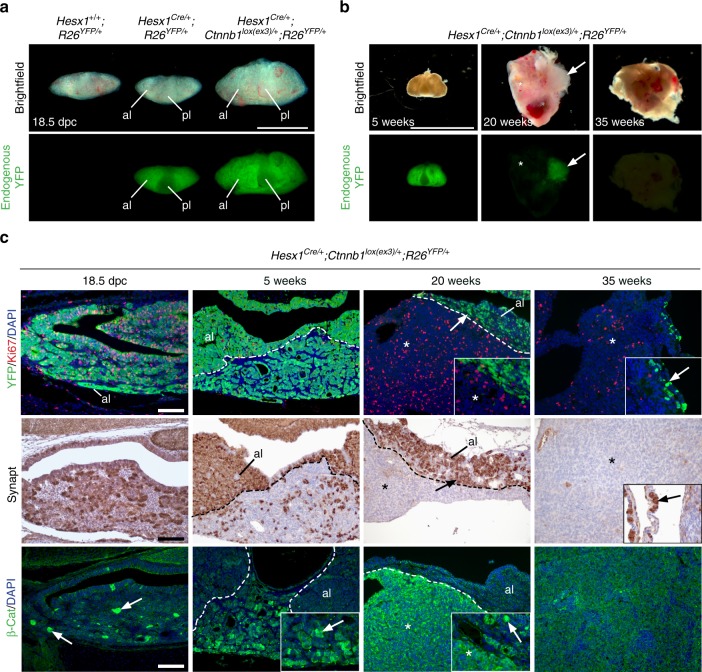
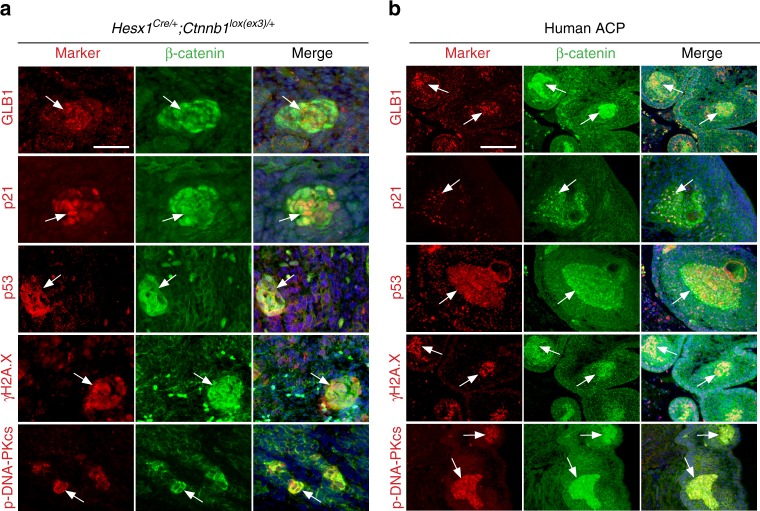
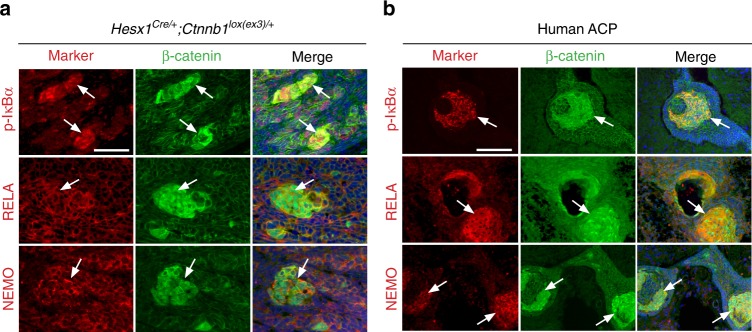
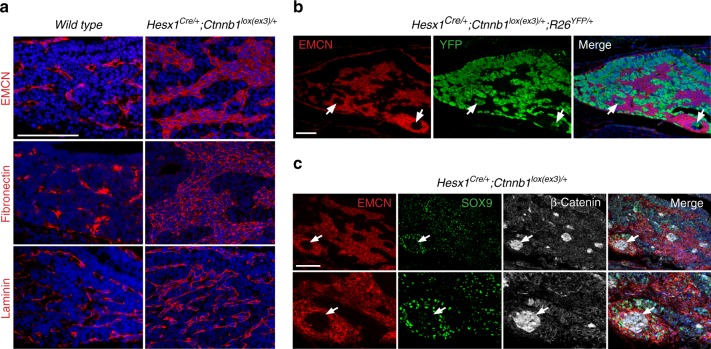
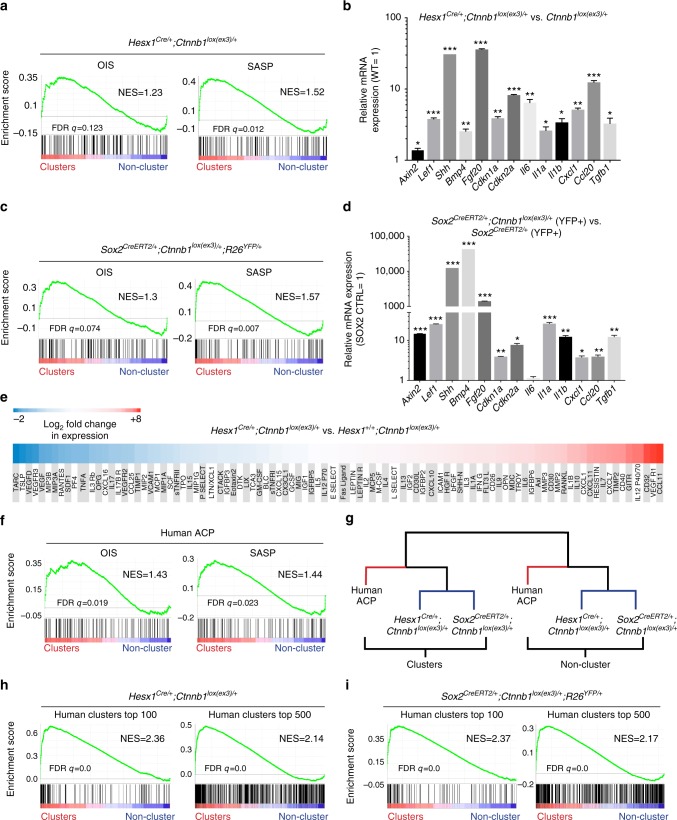
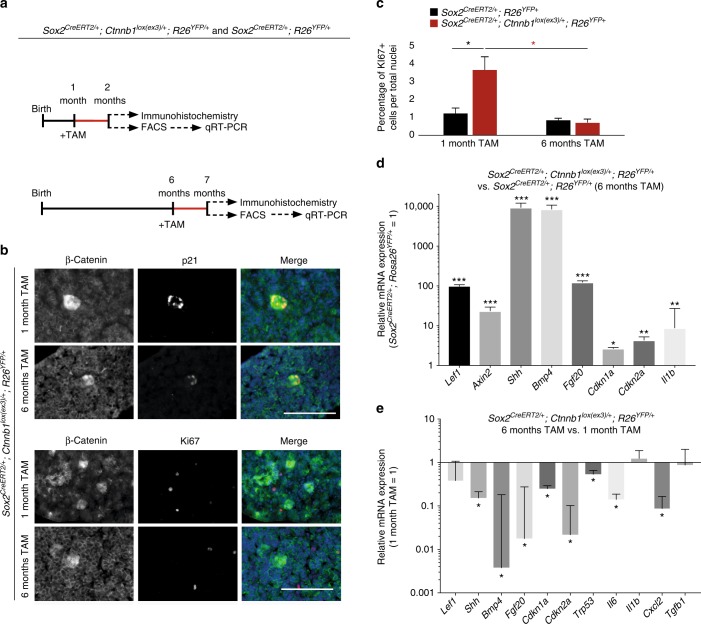
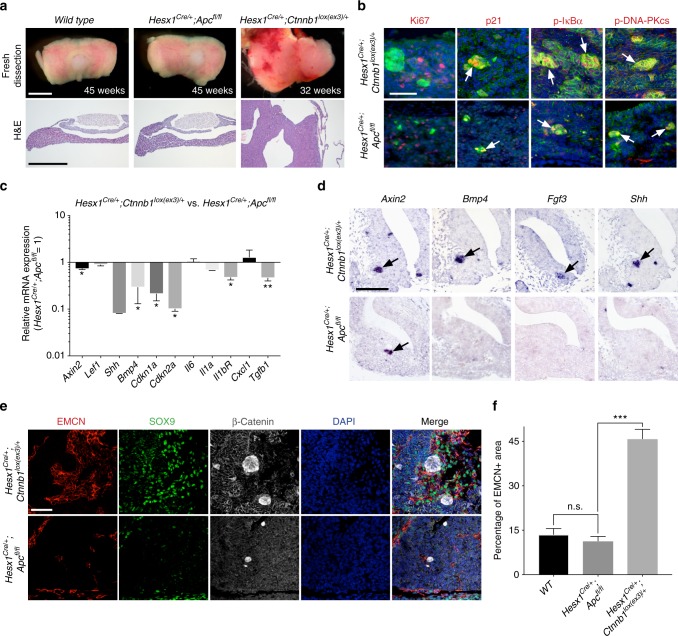
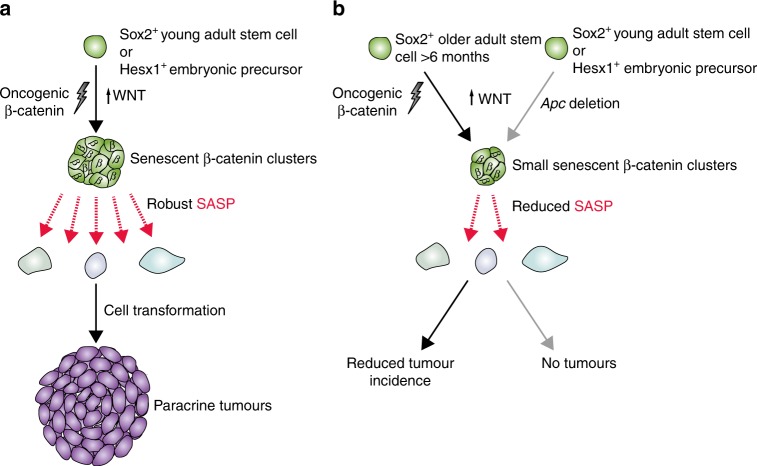
Senescent cells may promote tumour progression through the activation of a senescence-associated secretory phenotype (SASP), whether these cells are capable of initiating tumourigenesis in vivo is not known. Expression of oncogenic β-catenin in Sox2+ young adult pituitary stem cells leads to formation of clusters of stem cells and induction of tumours resembling human adamantinomatous craniopharyngioma (ACP), derived from Sox2− cells in a paracrine manner. Here, we uncover the mechanisms underlying this paracrine tumourigenesis. We show that expression of oncogenic β-catenin in Hesx1+ embryonic precursors also results in stem cell clusters and paracrine tumours. We reveal that human and mouse clusters are analogous and share a common signature of senescence and SASP. Finally, we show that mice with reduced senescence and SASP responses exhibit decreased tumour-inducing potential. Together, we provide evidence that senescence and a stem cell-associated SASP drive cell transformation and tumour initiation in vivo in an age-dependent fashion.
Overview
The claims and statistics of this paper haven’t been checked yet.
Free: it reads the open-access text and checks the first 5 claims that cite a source we can check. Create a free account to check every claim.
Integrity signals
Registry
Cites
Statistics
Figures
Verification
Claims the paper makes
The claims and statistics of this paper haven’t been checked yet.
Free: it reads the open-access text and checks the first 5 claims that cite a source we can check. Create a free account to check every claim.
Claims other papers make about this one
Each is checked against this paper’s own text: does it say what the citing paper says it does?
The source backs part of the claim, not all of it — or backs it for a different population, condition or comparison.
In the citing paper
“Similarly, pediatric craniopharyngiomas depend on the SASP of a cluster of senescent stem cells expressing oncogenic β-catenin (González-Meljem et al. 2017).”
From Senescence and the SASP: many therapeutic avenues (2020) · cites this paper as González-Meljem et al. 2017
Experimental — accuracy not yet measuredThe cited source says what the claim attributes to it.
In the citing paper
“In addition, through SASP, senescent cells contribute to cancer development162,163 and metastasis164, treatment failure and increased risk of recurrence165.”
From Cellular senescence in ageing: from mechanisms to therapeutic opportunities (2021) · cites this paper as [163]
In the citing paper
“confirmed, as previously shown 38, that preneoplastic clusters of β-catenin positive cells were senescent: they were arrested (ki67 -) and enriched for markers of senescent such as p21CIP1 or Glb1”
From Cardiac glycosides are broad-spectrum senolytics (2019) · cites this paper as [38]
Self-check
Percentages, sums and reported differences re-computed from the paper’s own numbers.
The self-check needs the paper’s full text.
Citations
Cites
Moderated estimation of fold change and dispersion for RNA-seq data with DESeq2
Love, M. I., Huber, W., & Anders, S. (2014) · Genome Biology · doi:10.1186/s13059-014-0550-8 · Cited by 95,106
Subramanian, A., Tamayo, P., Mootha, V. K., Mukherjee, S., Ebert, B. L., Gillette, M. A., Paulovich, A., Pomeroy, S. L., Golub, T. R., Lander, E. S., et al. (2005) · Proceedings of the National Academy of Sciences · doi:10.1073/pnas.0506580102 · Cited by 53,625
Oncogenic ras provokes premature cell senescence associated with accumulation of p53 and p16INK4a
Serrano, M., Lin, A. W., McCurrach, M. E., Beach, D., & Lowe, S. W. (1997) · Cell · doi:10.1016/s0092-8674(00)81902-9 · Cited by 5,218 · cited 1×
“Prominent or persistent SASP activation has been shown to: (1) disrupt cell–cell adhesion and induce epithelial-tomesenchymal transition and invasiveness14, 15; (2) cause local inflammation12, 16; (3) modify tissue architecture17, 18; (4) facilitate development of hepatic cancer after carcinogen exposure19, 20; (5) st…”
BackgroundThe senescence-associated secretory phenotype: the dark side of tumor suppression
Coppé, J.-P., Desprez, P.-Y., Krtolica, A., & Campisi, J. (2010) · Annual Review of Pathology: Mechanisms of Disease · doi:10.1146/annurev-pathol-121808-102144 · Cited by 5,206
A global double-fluorescent Cre reporter mouse
Muzumdar, M. D., Tasic, B., Miyamichi, K., Li, L., & Luo, L. (2007) · genesis · doi:10.1002/dvg.20335 · Cited by 3,491
Aging, Cellular Senescence, and Cancer
Campisi, J. (2013) · Annual Review of Physiology · doi:10.1146/annurev-physiol-030212-183653 · Cited by 2,954 · cited 1×
“Prominent or persistent SASP activation has been shown to: (1) disrupt cell–cell adhesion and induce epithelial-tomesenchymal transition and invasiveness14, 15; (2) cause local inflammation12, 16; (3) modify tissue architecture17, 18; (4) facilitate development of hepatic cancer after carcinogen exposure19, 20; (5) st…”
BackgroundNaturally occurring p16Ink4a-positive cells shorten healthy lifespan
Baker, D. J., Childs, B. G., Durik, M., Wijers, M. E., Sieben, C. J., Zhong, J., A. Saltness, R., Jeganathan, K. B., Verzosa, G. C., Pezeshki, A., et al. (2016) · Nature · doi:10.1038/nature16932 · Cited by 2,876
A complex secretory program orchestrated by the inflammasome controls paracrine senescence
Acosta, J. C., Banito, A., Wuestefeld, T., Georgilis, A., Janich, P., Morton, J. P., Athineos, D., Kang, T.-W., Lasitschka, F., Andrulis, M., et al. (2013) · Nature Cell Biology · doi:10.1038/ncb2784 · Cited by 2,278
Self-citationPersistent DNA damage signalling triggers senescence-associated inflammatory cytokine secretion
Rodier, F., Coppé, J.-P., Patil, C. K., Hoeijmakers, W. A. M., Muñoz, D. P., Raza, S. R., Freund, A., Campeau, E., Davalos, A. R., & Campisi, J. (2009) · Nature Cell Biology · doi:10.1038/ncb1909 · Cited by 2,232
Obesity-induced gut microbial metabolite promotes liver cancer through senescence secretome
Yoshimoto, S., Loo, T. M., Atarashi, K., Kanda, H., Sato, S., Oyadomari, S., Iwakura, Y., Oshima, K., Morita, H., Hattori, M., et al. (2013) · Nature · doi:10.1038/nature12347 · Cited by 2,219
Cited by
Cellular senescence in ageing: from mechanisms to therapeutic opportunities
Di Micco, R., Krizhanovsky, V., Baker, D., & d’Adda di Fagagna, F. (2021) · Nature Reviews Molecular Cell Biology · doi:10.1038/s41580-020-00314-w · Cited by 2,277
Senescence and the SASP: many therapeutic avenues
Birch, J., & Gil, J. (2020) · Genes & Development · doi:10.1101/gad.343129.120 · Cited by 1,177
“Similarly, pediatric craniopharyngiomas depend on the SASP of a cluster of senescent stem cells expressing oncogenic β-catenin (González-Meljem et al. 2017).”
BackgroundSelf-citationExploiting senescence for the treatment of cancer
Wang, L., Lankhorst, L., & Bernards, R. (2022) · Nature Reviews Cancer · doi:10.1038/s41568-022-00450-9 · Cited by 867
Müller, H. L., Merchant, T. E., Warmuth-Metz, M., Martinez-Barbera, J.-P., & Puget, S. (2019) · Nature Reviews Disease Primers · doi:10.1038/s41572-019-0125-9 · Cited by 515
Meta-hallmarks of aging and cancer
López-Otín, C., Pietrocola, F., Roiz-Valle, D., Galluzzi, L., & Kroemer, G. (2023) · Cell Metabolism · doi:10.1016/j.cmet.2022.11.001 · Cited by 529
Cardiac glycosides are broad-spectrum senolytics
Guerrero, A., Herranz, N., Sun, B., Wagner, V., Gallage, S., Guiho, R., Wolter, K., Pombo, J., Irvine, E. E., Innes, A. J., et al. (2019) · Nature Metabolism · doi:10.1038/s42255-019-0122-z · Cited by 359
Self-citationCellular senescence in development, regeneration and disease
Rhinn, M., Ritschka, B., & Keyes, W. M. (2019) · Development · doi:10.1242/dev.151837 · Cited by 279
“It is interesting to speculate that such an induction of aberrant plasticity by senescent cells in their neighbors could lead to increased populations of tumor-initiating stem cells at risk of transformation (Gonzalez-Meljem et al., 2017).”
BackgroundTwo-Step Senescence-Focused Cancer Therapies
Sieben, C. J., Sturmlechner, I., van de Sluis, B., & van Deursen, J. M. (2018) · Trends in Cell Biology · doi:10.1016/j.tcb.2018.04.006 · Cited by 222
Cellular senescence: the sought or the unwanted?
Sun, Y., Coppé, J.-P., & Lam, E. W.-F. (2018) · Trends in Molecular Medicine · doi:10.1016/j.molmed.2018.08.002 · Cited by 208
Cellular senescence in cancer: from mechanisms to detection
Ou, H., Hoffmann, R., González‐López, C., Doherty, G. J., Korkola, J. E., & Muñoz‐Espín, D. (2021) · Molecular Oncology · doi:10.1002/1878-0261.12807 · Cited by 190
Senescence as a therapeutic target in cancer and age-related diseases
McHugh, D., Durán, I., & Gil, J. (2025) · Nature Reviews Drug Discovery · doi:10.1038/s41573-024-01074-4 · Cited by 197
“The SASP is a key factor in promoting cancer progression as it can directly promote tumour growth 43 , enhance epithelial–mesenchymal transition 44 or increase metastasis formation 42 .”
Self-citationApps, J. R., Carreno, G., Gonzalez-Meljem, J. M., Haston, S., Guiho, R., Cooper, J. E., Manshaei, S., Jani, N., Hölsken, A., Pettorini, B., et al. (2018) · Acta Neuropathologica · doi:10.1007/s00401-018-1830-2 · Cited by 189
“Mouse ACP also contains β-catenin-accumulating cell clusters, and we have previously characterised their expression profiles in both the Hesx1Cre/+/Ctnnb1lox(ex3)/+ embryonic and the Sox2CreERT2/+/Ctnnb1lox(ex3)/+ inducible mouse models of ACP [1, 17].”
BackgroundMethodInfluentialSelf-citationParacrine roles of cellular senescence in promoting tumourigenesis
Gonzalez-Meljem, J. M., Apps, J. R., Fraser, H. C., & Martinez-Barbera, J. P. (2018) · British Journal of Cancer · doi:10.1038/s41416-018-0066-1 · Cited by 183
“Moreover, it is possible that these activities may also be involved in the initial steps of oncogenic transformation of normal cells and tumour initiation, as recently suggested in a mouse model of a human brain tumour.(78) Promising translational opportunities have emerged in the use of molecules that selectively tar…”
Self-citationGalactose‐modified duocarmycin prodrugs as senolytics
Guerrero, A., Guiho, R., Herranz, N., Uren, A., Withers, D. J., Martínez‐Barbera, J. P., Tietze, L. F., & Gil, J. (2020) · Aging Cell · doi:10.1111/acel.13133 · Cited by 172
Self-citationSenescence and senotherapeutics: a new field in cancer therapy
Myrianthopoulos, V., Evangelou, K., Vasileiou, P. V. S., Cooks, T., Vassilakopoulos, T. P., Pangalis, G. A., Kouloukoussa, M., Kittas, C., Georgakilas, A. G., & Gorgoulis, V. G. (2019) · Pharmacology & Therapeutics · doi:10.1016/j.pharmthera.2018.08.006 · Cited by 160
Müller, H. L., Tauber, M., Lawson, E. A., Özyurt, J., Bison, B., Martinez-Barbera, J.-P., Puget, S., Merchant, T. E., & van Santen, H. M. (2022) · Nature Reviews Disease Primers · doi:10.1038/s41572-022-00351-z · Cited by 144
Colucci, M., Sarill, M., Maddalena, M., Valdata, A., Troiani, M., Massarotti, M., Bolis, M., Bressan, S., Kohl, A., Robesti, D., et al. (2025) · Cancer Cell · doi:10.1016/j.ccell.2025.05.015 · Cited by 164
Fan, G., Yu, B., Tang, L., Zhu, R., Chen, J., Zhu, Y., Huang, H., Zhou, L., Liu, J., Wang, W., et al. (2024) · Science Translational Medicine · doi:10.1126/scitranslmed.adj5705 · Cited by 128
“Conversely, the senescence of CAFs is more related to their activation and functional transformation, leading to changes in TME and subsequent effects, such as the secretion of regulatory factors ( 29 – 31 ).”
BackgroundReshaping of the tumor microenvironment by cellular senescence: An opportunity for senotherapies
D’Ambrosio, M., & Gil, J. (2023) · Developmental Cell · doi:10.1016/j.devcel.2023.05.010 · Cited by 119
Self-citationTargeting senescence as an anticancer therapy
Bousset, L., & Gil, J. (2022) · Molecular Oncology · doi:10.1002/1878-0261.13312 · Cited by 105
Self-citationBeyond Tumor Suppression: Senescence in Cancer Stemness and Tumor Dormancy
Triana-Martínez, F., Loza, M. I., & Domínguez, E. (2020) · Cells · doi:10.3390/cells9020346 · Cited by 95
“Other putative mechanisms inducing senescence in primary and cancer stem cells include DNA damage by chemotherapeutics [37], hypoxia [58], oncogene activation (oncogenic β-catenin) [36], and the dysregulation of microenvironmental growth factors such as TGF-β (transforming growth factor beta) or BMP7 (bone morphogenet…”
BackgroundCellular senescence in cancer: clinical detection and prognostic implications
Domen, A., Deben, C., Verswyvel, J., Flieswasser, T., Prenen, H., Peeters, M., Lardon, F., & Wouters, A. (2022) · Journal of Experimental & Clinical Cancer Research · doi:10.1186/s13046-022-02555-3 · Cited by 94
“The SASP of senescent cells can also direct neighboring cells and drive cell transformation and tumor initiation [231, 232] and mediate collective invasion and metastasis [219], as evidenced in adamantinomatous craniopharyngioma and papillary thyroid cancer.”
BackgroundThe role of senescence in cancer development
Mavrogonatou, E., Pratsinis, H., & Kletsas, D. (2019) · Seminars in Cancer Biology · doi:10.1016/j.semcancer.2019.06.018 · Cited by 106
Contemporary Biological Insights and Clinical Management of Craniopharyngioma
Apps, J. R., Muller, H. L., Hankinson, T. C., Yock, T. I., & Martinez-Barbera, J. P. (2023) · Endocrine Reviews · doi:10.1210/endrev/bnac035 · Cited by 83
Self-citationTargeting Cell Senescence and Senolytics: Novel Interventions for Age-Related Endocrine Dysfunction
Suda, M., Paul, K. H., Tripathi, U., Minamino, T., Tchkonia, T., & Kirkland, J. L. (2024) · Endocrine Reviews · doi:10.1210/endrev/bnae010 · Cited by 100
Cell senescence in neuropathology: A focus on neurodegeneration and tumours
Carreno, G., Guiho, R., & Martinez‐Barbera, J. P. (2021) · Neuropathology and Applied Neurobiology · doi:10.1111/nan.12689 · Cited by 74
Self-citationZhao, B., Wu, B. C., Feng, N., Zhang, X., Zhang, X., Wei, Y., & Zhang, W. (2023) · Journal of Hematology & Oncology · doi:10.1186/s13045-023-01426-4 · Cited by 81
“Importantly, mice with a decreased senescent cell burden and an attenuated SASP response exhibited decreased tumorigenic potential, indicating that the SASP may promote tumor induction [82].”
BackgroundCellular Senescence and Senotherapies in the Kidney: Current Evidence and Future Directions
Docherty, M. H., Baird, D., Hughes, J., & Ferenbach, D. A. (2020) · Frontiers in Pharmacology · doi:10.3389/fphar.2020.00755 · Cited by 69
The Inflammatory Milieu of Adamantinomatous Craniopharyngioma and Its Implications for Treatment
Whelan, R., Prince, E. W., Gilani, A., & Hankinson, T. C. (2020) · Journal of Clinical Medicine · doi:10.3390/jcm9020519 · Cited by 65
“[55] demonstrated that the SASP plays a prominent role in both genetically engineered mouse models of ACP and human ACP.”
BackgroundMethodInfluentialCOPI vesicle formation and N-myristoylation are targetable vulnerabilities of senescent cells
McHugh, D., Sun, B., Gutierrez-Muñoz, C., Hernández-González, F., Mellone, M., Guiho, R., Duran, I., Pombo, J., Pietrocola, F., Birch, J., et al. (2023) · Nature Cell Biology · doi:10.1038/s41556-023-01287-6 · Cited by 59
“…context, we used a model of ada-mantinomatous craniopharyngioma (ACP), a Wingless-related integration site (WNT) pathway-driven clinically relevant pituitary paediatric tumour in which clusters of β-catenin-positive preneo-plastic senescent cells promote tumourigenesis in a paracrine manner 53 .”
MethodSelf-citationRussell, J. P., Lim, X., Santambrogio, A., Yianni, V., Kemkem, Y., Wang, B., Fish, M., Haston, S., Grabek, A., Hallang, S., et al. (2021) · eLife · doi:10.7554/elife.59142 · Cited by 57
Self-citationJiang, Y., Yang, J., Liang, R., Zan, X., Fan, R., Shan, B., Liu, H., Li, L., Wang, Y., Wu, M. C., et al. (2023) · Science Advances · doi:10.1126/sciadv.adc8933 · Cited by 59
González-Meljem, J. M., & Martínez-Barberá, J. P. (2021) · Cellular and Molecular Life Sciences · doi:10.1007/s00018-021-03798-7 · Cited by 54
“In ACP models, initial experiments have shown that the genetic attenuation of the senescence/SASP response is able to reduce significantly the tumour-inducing potential of the senescent cell clusters [42].”
BackgroundInfluentialMu, W., Li, S., Xu, J., Guo, X., Wu, H., Chen, Z., Qiao, L., Helfer, G., Lu, F., Liu, C., et al. (2021) · Nature Communications · doi:10.1038/s41467-021-22640-z · Cited by 50
Biological Behaviour of Craniopharyngiomas
Martinez-Barbera, J. P., & Andoniadou, C. L. (2020) · Neuroendocrinology · doi:10.1159/000506904 · Cited by 38
Self-citationChen, Z., Zhou, J., Wu, Y., Chen, F., Li, J., Tao, L., Tian, Y., Wang, H., Li, Z., Li, Z., et al. (2024) · Oncogene · doi:10.1038/s41388-024-02956-y · Cited by 47
Zhao, R., Jin, X., Li, A., Xu, B., Shen, Y., Wang, W., Huang, J., Zhang, Y., & Li, X. (2021) · Advanced Science · doi:10.1002/advs.202104128 · Cited by 51
Activatable senoprobes and senolytics: Novel strategies to detect and target senescent cells
Morsli, S., Doherty, G. J., & Muñoz-Espín, D. (2022) · Mechanisms of Ageing and Development · doi:10.1016/j.mad.2021.111618 · Cited by 42
Lodge, E. J., Santambrogio, A., Russell, J. P., Xekouki, P., Jacques, T. S., Johnson, R. L., Thavaraj, S., Bornstein, S. R., & Andoniadou, C. L. (2019) · eLife · doi:10.7554/elife.43996 · Cited by 42
Self-citationSHH pathway inhibition is protumourigenic in adamantinomatous craniopharyngioma
Carreno, G., Boult, J. K. R., Apps, J. R., González-Meljem, J. M., Haston, S., Guiho, R., Stache, C., Danielson, L. S., Koers, A., Smith, L. M., et al. (2019) · Endocrine Related Cancer · doi:10.1530/erc-18-0538 · Cited by 44
Self-citationPrince, E. W., Apps, J. R., Jeang, J., Chee, K., Medlin, S., Jackson, E. M., Dudley, R., Limbrick, D. D., Naftel, R. P., Johnston, J. M., et al. (2024) · Neuro-Oncology · doi:10.1093/neuonc/noae015 · Cited by 48
Self-citationTargeting senescent cells to reshape the tumor microenvironment and improve anticancer efficacy
Jiang, B., Zhang, W., Zhang, X., & Sun, Y. (2024) · Seminars in Cancer Biology · doi:10.1016/j.semcancer.2024.05.002 · Cited by 39
CTNNB1 mutations are clonal in adamantinomatous craniopharyngioma
Apps, J. R., Stache, C., González-Meljem, J. M., Gutteridge, A., Chalker, J., Jacques, T. S., Forshew, T., Hölsken, A., & Martı́nez-Barberá, J. P. (2020) · Neuropathology and Applied Neurobiology · doi:10.1111/nan.12613 · Cited by 34
Self-citationMaciel-Barón, L. Á., Morales-Rosales, S. L., Silva‐Palacios, A., Rodríguez‐Barrera, R., García, J. A., Luna‐López, A., Pérez, V., Torres, C. A., & Königsberg, M. (2018) · Biogerontology · doi:10.1007/s10522-018-9767-3 · Cited by 36
Sun, R., Feng, J., & Wang, J. (2023) · Aging and Disease · doi:10.14336/ad.2023.0621 · Cited by 28
“In contrast, quercetin upregulates SIRT1 activity to enhance the anti-inflammatory activity of NF-κB acetylation in nerve and glial cells and reduce neuronal death [241].”
BackgroundMikuła‐Pietrasik, J., Rutecki, S., & Książek, K. (2022) · Cellular and Molecular Life Sciences · doi:10.1007/s00018-022-04236-y · Cited by 29
“For example, pituitary stem cells whose senescence is triggered by oncogenic β-catenin display SASP, the inhibition of which translates to reduced tumorigenesis in mouse models of pediatric craniopharyngioma [112].”
BackgroundSenotherapeutics in Cancer and HIV
Sánchez-Díaz, L., Espinosa-Sánchez, A., Blanco, J. R., & Carnero, A. (2022) · Cells · doi:10.3390/cells11071222 · Cited by 29
Wang, X., Chuan, Z., Lin, J., Liu, H., Zeng, Q., Chen, H., Wang, Y., Xu, D., Chen, W., Xu, M., et al. (2023) · Chinese Medical Journal · doi:10.1097/cm9.0000000000002774 · Cited by 31
“[42] Notably, CD38+ cells were widespread in the ImA and ImB subgroups.”
BackgroundWang, C., Zhang, H., Fan, J., Li, Q., Guo, R., Pan, J., Liu, Y., Peng, J., Zhu, Q., Feng, Y., et al. (2022) · Neuro-Oncology · doi:10.1093/neuonc/noac261 · Cited by 26
Mechanisms of cancer stem cell senescence: Current understanding and future perspectives
Zhang, D., Monteiro, M. J., Liu, J., & Gu, W. (2021) · Clinical and Experimental Pharmacology and Physiology · doi:10.1111/1440-1681.13528 · Cited by 27
Pathogenesis of non-functioning pituitary adenomas
Zatelli, M. C. (2018) · Pituitary · doi:10.1007/s11102-018-0874-6 · Cited by 27
Pituitary stem cells: past, present and future perspectives
Millan, M. I. P., Cheung, L., Mercogliano, M. F., Camilletti, M. A., Felker, G. T. C., Moro, L. N., Miriuka, S., Brinkmeier, M. L., & Camper, S. A. (2023) · Nature Reviews Endocrinology · doi:10.1038/s41574-023-00922-4 · Cited by 29
“Here, overactivation of the WNT–β-catenin pathway acts on neighbouring cells in a paracrine manner through the senescence-activated secretory phenotype pathway 100 .”
Whelan, R., Hengartner, A. C., Folzenlogen, Z. A., Prince, E. W., & Hankinson, T. C. (2020) · Child s Nervous System · doi:10.1007/s00381-020-04677-5 · Cited by 24
Saleh, T., Khasawneh, A. I., Himsawi, N. M., Abu-Raideh, J. A., Ejeilat, V., Elshazly, A. M., & Gewirtz, D. A. (2022) · International Journal of Molecular Sciences · doi:10.3390/ijms232415512 · Cited by 24
Rathke’s cleft-like cysts arise from Isl1 deletion in murine pituitary progenitors
Brinkmeier, M. L., Bando, H., Camarano, A. C., Fujio, S., Yoshimoto, K., de Souza, F. S. J., & Camper, S. A. (2020) · Journal of Clinical Investigation · doi:10.1172/jci136745 · Cited by 24
“CDKN1A expression has been detected in craniopharyngiomas (57, 77, 78), and immunostaining for CDKN1A provides a quality control for the integrity of the tumor samples.”
BackgroundApps, J. R., González-Meljem, J. M., Guiho, R., Pickles, J. C., Prince, E., Schwalbe, E. C., Joshi, N., Stone, T. J., Ogunbiyi, O. K., Chalker, J., et al. (2024) · Acta Neuropathologica Communications · doi:10.1186/s40478-024-01838-4 · Cited by 21
“Immunofluorescence staining was performed as previously described [36].”
BackgroundMethodSelf-citationExploring stem cell biology in pituitary tumors and derived organoids
Nys, C., Lee, Y.-L., Roose, H., Mertens, F., Pauw, E. D., Kobayashi, H., Sciot, R., Bex, M., Versyck, G., Vleeschouwer, S. D., et al. (2022) · Endocrine Related Cancer · doi:10.1530/erc-21-0374 · Cited by 24
Molecular subtypes of adamantinomatous craniopharyngiomas
An, W., Li, S., An, Y., & Lin, Z. (2025) · Neuro-Oncology · doi:10.1093/neuonc/noaf030 · Cited by 19
“63,66 Single-cell and single-nucleus gene expression analyses further confirmed the presence of senescent cells with active SASP in ACPs, revealing their complex relationship with tumor progression.”
Phosphate and Cellular Senescence
Hu, M. C., & Moe, O. W. (2022) · Advances in experimental medicine and biology · doi:10.1007/978-3-030-91623-7_7 · Cited by 22
Cellular interactions in the pituitary stem cell niche
Willis, T. L., Lodge, E. J., Andoniadou, C. L., & Yianni, V. (2022) · Cellular and Molecular Life Sciences · doi:10.1007/s00018-022-04612-8 · Cited by 19
“Research also showed that tumourigenesis was reduced in older mice, which showed decreased senescence and SASP response [101].”
BackgroundSelf-citationPotential Use of Senolytics for Pharmacological Targeting of Precancerous Lesions
Saleh, T., & Carpenter, V. J. (2021) · Molecular Pharmacology · doi:10.1124/molpharm.121.000361 · Cited by 17
“…robust paracrine activity that drives the development of adamantinomatous craniopharyngioma supporting the pro-tumorigenic contribution of the SASP (Gonzalez-Meljem et al., 2017). b -catenin – positive Hesx1 1 embryonic precursor cell clusters were dissected, extracted, and cultured ex vivo , and…”
InfluentialPivotal role of NF-κB in cellular senescence of experimental pituitary tumours
Mongi‐Bragato, B., Grondona, E., Sosa, L. D. V., Zlocowski, N., Venier, A. C., Torres, A. I., Latini, A., Leal, R. B., Gutiérrez, S., & Paul, A. L. D. (2020) · Journal of Endocrinology · doi:10.1530/joe-19-0506 · Cited by 17
Chen, Y., Liu, X., Ainiwan, Y., Li, M., Pan, J., Chen, Y., Xiao, Z., Wang, Z., Xiao, X., Tang, J., et al. (2024) · Cancer Letters · doi:10.1016/j.canlet.2024.216905 · Cited by 17
Organoid models of the pituitary gland in health and disease
Laporte, E., & Vankelecom, H. E. J. (2023) · Frontiers in Endocrinology · doi:10.3389/fendo.2023.1233714 · Cited by 17
Medical Therapy for Craniopharyngiomas
Alexandraki, K. I., & Xekouki, P. (2021) · touchREVIEWS in Endocrinology · doi:10.17925/ee.2021.17.2.121 · Cited by 17
“One study has shown that mouse and human ACP oncogenic β-catenin clusters contain senescent cells with an activated SASP, and that attenuating the senescent/SASP response in murine cluster cells, either genetically or in aged mice, significantly reduces tumour-inducing potential.(46) This study was the first to point…”
BackgroundSenescence drives non-cell autonomous tumorigenesis in the pituitary gland
González-Meljem, J. M., & Martínez-Barberá, J. P. (2018) · Molecular & Cellular Oncology · doi:10.1080/23723556.2018.1435180 · Cited by 18
“We recently demonstrated that the oncogenic b-catenin clusters undergo senescence in both murine ACP models, as well in human tumors.(7) Due to the known complexity of the senescent phenotype, we evaluated numerous stress-related biological processes shared by all senescent cells, such as: loss of proliferative capaci…”
BackgroundWeis, K. E., & Raetzman, L. T. (2019) · Toxicology · doi:10.1016/j.tox.2019.152306 · Cited by 18
Senotherapeutics: An emerging approach to the treatment of viral infectious diseases in the elderly
Li, Z., Tian, M., Wang, G., Cui, X., Ma, J., Liu, S., Shen, B., Liu, F., Wu, K., Xiao, X., et al. (2023) · Frontiers in Cellular and Infection Microbiology · doi:10.3389/fcimb.2023.1098712 · Cited by 15
“Excessive SASP can also recruit immature myeloid cells to favor tumorigenesis and tumor progression in a paracrine manner and affect tissue regeneration by limiting the proliferative potential of stem and progenitor cells (Yoshimoto et al., 2013; Di Mitri et al., 2014; Eggert et al., 2016; Gonzalez-Meljem et al., 2017…”
BackgroundBasic Research Advances on Pituitary Stem Cell Function and Regulation
Russell, J. P., Lodge, E. J., & Andoniadou, C. L. (2018) · Neuroendocrinology · doi:10.1159/000488393 · Cited by 12
“In mouse models where the SASP response is low (e.g., through induction of a different mutation elevating the WNT pathway through the Apc gene, or mutating Ctnnb1 in ageing pituitary stem cells), tumours do not form.”
BackgroundSelf-citationSenescence- and Immunity-Related Changes in the Central Nervous System: A Comprehensive Review
Feng, H., Li, J., Wang, H., Wei, Z., & Feng, S. (2024) · Aging and Disease · doi:10.14336/ad.2024.0755 · Cited by 11
Xu, C., Wu, J., Ye, J., Si, Y., Zhang, J., Wu, B., Pan, L., Fu, J., Quan, R., Xie, S., et al. (2024) · Cell Death and Disease · doi:10.1038/s41419-024-06840-1 · Cited by 13
“We identi fi ed it by a high level of CDKN2A, but Gonzalez-Meljem et al had found the positive CDKN2A staining in WC [50].”
BackgroundDecoding craniopharyngioma: From mechanisms to therapy
González-Meljem, J. M., Cao, L., Apps, J. R., & Martínez-Barberá, J. P. (2025) · Best Practice & Research Clinical Endocrinology & Metabolism · doi:10.1016/j.beem.2025.102051 · Cited by 11
Self-citationThe molecular pathogenesis of craniopharyngiomas
Campanini, M. L., Almeida, J. P., Martins, C. S., & de Castro, M. (2023) · Archives of Endocrinology and Metabolism · doi:10.20945/2359-3997000000600 · Cited by 10
“Thus, senescent cell clusters activate a secretory phenotype that results in changes in the cellular microenvironment, characterized by inflammatory changes and immune response, which have a critical role in the pathogenesis of ACPs (74,82,87).”
BackgroundImplications of cellular senescence in paediatric pituitary tumours
González-Meljem, J. M., & Martínez-Barberá, J. P. (2023) · EBioMedicine · doi:10.1016/j.ebiom.2023.104905 · Cited by 9
“Additionally, β -catenin cell clusters were shown to possess a SASP comprised mostly of developmental factors of the WNT, FGF, BMP and SHH families, 64,66,67 along with some canon SASP members including: IL6, IL1, CXCL1, CXCL2 and CCL20 67 (Fig.”
Current clinical trials for craniopharyngiomas: what’s on the horizon?
Joshi, N., Mueller, S., & Kline, C. (2025) · Journal of Neuro-Oncology · doi:10.1007/s11060-024-04899-6 · Cited by 8
“In the setting of ACP and PCP, recent find - ings through large single-cell characterizations of patient-derived tissue and preclinical models have provided further insight into cutting edge targets for ACP and PCP clinical trials (Table 2) [13, 14, 47].”
Ren, Q., Fu, J., Wu, B., Xie, S., Tang, B., Hong, T., & Wu, J. (2025) · Neurosurgical Review · doi:10.1007/s10143-025-03412-5 · Cited by 8
“Moreover, β-catenin accumulating cells with stemness and senescence-associated secretory phenotypes play a key role in the tumorigenesis of ACP and are predominantly localized within FPs [1–3, 10, 14, 15].”
Liu, H., Mei, M., Lin, S., Luo, J., Huang, S., & Zhou, J. (2025) · Journal of Ethnopharmacology · doi:10.1016/j.jep.2025.119679 · Cited by 7
Telomere length and Wnt/β-catenin pathway in adamantinomatous craniopharyngiomas
Mota, J. Í. S., da Silva-Júnior, R. M. P., Martins, C. S., Bueno, A. C., Wildemberg, L. E., Antunes, X. L. D. S., Ozaki, J. G. O., Coeli‐Lacchini, F. B., García-Peral, C., Oliveira, A. E. R., et al. (2022) · European Journal of Endocrinology · doi:10.1530/eje-21-1269 · Cited by 7
Pituitary disease and recovery: How are stem cells involved?
Nys, C., & Vankelecom, H. E. J. (2021) · Molecular and Cellular Endocrinology · doi:10.1016/j.mce.2021.111176 · Cited by 7
Cancer Stem Cells in Tumours of the Central Nervous System in Children: A Comprehensive Review
Han, Y., Lin, H., & Li, H. (2023) · Cancers · doi:10.3390/cancers15123154 · Cited by 10
(2025) · Advances in Cancer Research · doi:10.1016/bs.acr.2025.09.005 · Cited by 5
Epigenetic Control of Adamantinomatous Craniopharyngiomas
Marrero-Gutiérrez, J., Bueno, A. C., Martins, C. S., Coeli‐Lacchini, F. B., da Silva-Júnior, R. M. P., Gonçalves, G. H. M., Ozaki, J. G. O., Almeida-e-Silva, D. C., Wildemberg, L. E., Antunes, X. L. D. S., et al. (2024) · The Journal of Clinical Endocrinology & Metabolism · doi:10.1210/clinem/dgae006 · Cited by 5
Shatara, M., & Abdelbaki, M. S. (2024) · Pediatric Neurology · doi:10.1016/j.pediatrneurol.2024.10.016 · Cited by 6
Pathophysiology and genetics in craniopharyngioma
Apps, J. R., & Martínez-Barberá, J. P. (2021) · Elsevier eBooks · doi:10.1016/b978-0-12-819949-7.00020-2 · Cited by 7
Self-citationDietary restriction in senolysis and prevention and treatment of disease
Aminzadeh-Gohari, S., Kofler, B., & Herzog, C. M. S. (2022) · Critical Reviews in Food Science and Nutrition · doi:10.1080/10408398.2022.2153355 · Cited by 6
“…al. 2006), contribute to expansion of preneoplastic cells (Krtolica et al. 2001; Ohanna et al. 2011; Lasry and Ben-Neriah 2015; Coppé et al. 2008; Gonzalez-Meljem et al. 2017), drive tumorigenesis (Gonzalez-Meljem et al. 2018; Ruhland et al. 2016), and increase cancer invasiveness (Ghosh et al.…”
Zhang, P., Wang, C., Fan, J., Peng, J., Pan, J., Qi, S., & Liu, Y. (2020) · Oncology Letters · doi:10.3892/ol.2020.11309 · Cited by 4
“The use of transgenic mouse models has resulted in breakthroughs in craniopharyngioma research (10,25).”
BackgroundJin, L., Cai, K., Wu, W., Xiao, Y., Qiao, N., Liu, F., Ru, S., Cao, L., Zhu, H., Bai, J., et al. (2023) · Frontiers in Endocrinology · doi:10.3389/fendo.2023.1167776 · Cited by 4
Alcaide, C., Pérez‐Rodríguez, F. J., Esteban, F., & Muñoz, M. (2024) · Pituitary · doi:10.1007/s11102-024-01490-0 · Cited by 4
Braud, L., Bernabe, M., Vernerey, J., Miranda, A. M. A., Dominguez, A., Churikov, D., Richaud, M., Jourquin, F., McAllan, L., Lachaud, C., et al. (2025) · Molecular Metabolism · doi:10.1016/j.molmet.2025.102262 · Cited by 5
“We and others have previously measured the expression of NF-κ B subunits as a surrogate of the SASP [47].”
Self-citationPituitary tumours without distinct lineage differentiation express stem cell marker SOX2
Lenders, N. F., Thompson, T. J., Chui, J. J. Y., Low, J. P., Inder, W. J., Earls, P., & McCormack, A. I. (2024) · Pituitary · doi:10.1007/s11102-024-01385-0 · Cited by 4
Adamantinomatous Craniopharyngioma: Genomics, Radiologic Findings, Clinical, and Prognosis
Muller, H. L., & Martínez-Barberá, J. P. (2019) · Contemporary Endocrinology · doi:10.1007/978-3-030-11339-1_3 · Cited by 4
New insights in cellular senescence: The pituitary model
Herbstein, F., Rosmino, J., Guitelman, M. A., Cagliero, J., Gonilski‐Pacin, D., del Giudice, N. C., Fiz, M., Fuertes, M., & ARZT, E. S. (2025) · Journal of Neuroendocrinology · doi:10.1111/jne.70008 · Cited by 4
“87 These senescent cells are also responsive to senolytic agents, rendering these tumors suitable models for testing senolytic compounds both in vitro and in vivo.”
Zhang, B., Zhang, J., Li, Z., Sheng, H., Li, H., Lu, Y., Liu, X., Xu, Z., Huang, Y., Zhu, C., et al. (2025) · Neuro-Oncology · doi:10.1093/neuonc/noaf249 · Cited by 4
Vardon, A., Haston, S., Hamdi, H., Cooksley, G., Guiho, R., Carvalho, D. M., Carter, R., Boult, J. K. R., Gharai, D., Cloete, I., et al. (2025) · Scientific Reports · doi:10.1038/s41598-025-32676-6 · Cited by 4
“Immunofluorescence staining was carried in 96 well plate at desired timepoints (usually 5 days following radiation unless otherwise stated) using previously described protocols 26,27 .”
Self-citationChen, Y., Wang, Z., Huang, Q., Wang, Y., Yan, F., Xiang, S., Xu, L., Chen, Y., Liu, X., Chen, G., et al. (2024) · Molecular Biology Reports · doi:10.1007/s11033-024-10073-y · Cited by 3
Applications of CRISPR-Cas in Ageing Research
Haston, S., Pozzi, S., & González-Meljem, J. M. (2020) · Springer eBooks · doi:10.1007/978-3-030-40955-5_11 · Cited by 5
Self-citationWang, C., Zhang, H., Guo, R., Cao, Y., Pan, J., Yu, H., Qiu, X., Shi, J., Fan, J., Qi, S., et al. (2024) · Neuropathology and Applied Neurobiology · doi:10.1111/nan.12958 · Cited by 3
“…in Rathke ’ s pouch, the embryonic primordium of the anterior pituitary gland ( Hesx1 Cre/ + ; Ctnnb1 lox(ex3)/ + ; R26 YFP/ + mice) or in Sox2 + adult pituitary stem cells ( Sox2 CreERT2/ + ; Ctnnb1 lox(ex3)/ + ; R26 YFP/ + mice) leads to the formation of tumours that resemble human ACP [51].”
BackgroundInfluentialBiomaterial-Assisted Senescence-Targeting Treatment Strategy for Central Nervous System Injury
Zhao, Y., Luo, Y., Yang, J., Wu, J. C., & Wang, X. (2025) · Tissue Engineering Part B Reviews · doi:10.1177/19373341251359272 · Cited by 4
Pharmacological Treatment for Adamantinomatous Craniopharyngioma
Zhao, C., Zhang, B., An, W., Lin, Y., Zhang, J., Lau, C., Cheng, Q., & Lin, Z. (2025) · Current Oncology Reports · doi:10.1007/s11912-025-01731-w · Cited by 2
Epigenetic dynamics of cellular senescence: From mechanistic insights to precision senotherapy
Hu, X., Lai, W., Liu, M., & Wang, B. (2026) · Chinese Medical Journal · doi:10.1097/cm9.0000000000004042 · Cited by 2
“[60] Therefore, senescence functions as a critical determinant of cellular outcome rather than a static terminal endpoint.”
Metadata
- Authors
- Gonzalez-Meljem, J. M., Haston, S., Carreno, G., Apps, J. R., Pozzi, S., Stache, C., Kaushal, G., Virasami, A., Panousopoulos, L., Mousavy-Gharavy, S. N., Guerrero, A., Rashid, M., Jani, N., Goding, C. R., Jacques, T. S., Adams, D. J., Gil, J., Andoniadou, C. L., & Martinez-Barbera, J. P.
- Affiliations
- University College London (GB)
- Great Ormond Street Hospital (GB)
- Imperial College London (GB)
- Wellcome Sanger Institute (GB)
- University of Oxford (GB)
- Guy's Hospital (GB)
- ORCID
- Venue
- Nature Communications
- Published
- 2017-11-28
- Volume
- 8
- Issue
- 1
- Pages
- 1819-1819
- ISSN
- 2041-1723 (ISSN-L)
- PMC
- PMC5703905
- OpenAlex
- W2768478289
- Cited by
- 130
- References
- 70
- Citations by year
- 2026: 9 · 2025: 17 · 2024: 26 · 2023: 16 · 2022: 16 · 2021: 11 · 2020: 17 · 2019: 9 · 2018: 9
- FWCI
- 7.08
- Type
- journal article
- Language
- en
- Open access
- gold
- doi.org
- Licence
- cc-by
- creativecommons.org/licenses/by/4.0 (tdm)
- creativecommons.org/licenses/by/4.0 (vor)
- Locations
- Nature Communications (publishedVersion, cc-by)
- Europe PMC (PubMed Central) (publishedVersion, cc-by)
- PubMed Central (publishedVersion, cc-by)
- PubMed (publishedVersion)
- Research Portal (King's College London) (submittedVersion, cc-by)
- RePEc: Research Papers in Economics (submittedVersion)
- DOAJ (DOAJ: Directory of Open Access Journals) (submittedVersion, cc-by-sa)
- DOAJ (DOAJ: Directory of Open Access Journals) (submittedVersion)
- UCL Discovery (University College London) (submittedVersion)
- Spiral (Imperial College London) (submittedVersion, cc-by)
- Funders
- Wellcome Trust
- NIHR Biomedical Research Centre, Royal Marsden NHS Foundation Trust/Institute of Cancer Research
- Cancer Research UK (13031, S_1731)
- National Institute for Health and Care Research
- University College London
- CHILDREN with CANCER UK (15/190, W1055)
- Consejo Nacional de Ciencia y Tecnología
- Great Ormond Street Hospital for Children
- University of California, Los Angeles
- Medical Research Council (MR/M000125/1, MR/L016729/1)
- National Cancer Institute (P01CA128814)
- Topics
- Life Sciences › Biochemistry, Genetics and Molecular Biology › Cell Biology › Telomeres, Telomerase, and Senescence
- Health Sciences › Medicine › Endocrinology, Diabetes and Metabolism › Pituitary Gland Disorders and Treatments
- Life Sciences › Biochemistry, Genetics and Molecular Biology › Aging › Genetics, Aging, and Longevity in Model Organisms
- Keywords
- stem cell senescence, senescence-associated secretory phenotype, pituitary tumors, adamantinomatous craniopharyngioma, β-catenin, HESX1, cell transformation
- MeSH terms
- Exome Sequencing, Aniline Compounds, Animals, Biphenyl Compounds, Cell Transformation, Neoplastic, Child, Craniopharyngioma, Disease Models, Animal, Humans, Nitrophenols, Oncogenes, Piperazines, Pituitary Gland, Pituitary Neoplasms, Repressor Proteins, Sulfonamides, Neoplastic Stem Cells, Cellular Senescence, Homeodomain Proteins, beta Catenin, Mice, SOXB1 Transcription Factors, Young Adult
About these checks
Registry, retraction, Cites and statistics results are computed, not judged, with one exception: a printed reference that no index lists is read once by a model before it counts as a citation error. Claims are extracted by a model and kept only when their quote appears verbatim in the text; each cited source is then checked, with a model’s help, for whether it says what the claim relies on. Those verdicts can be wrong — read the claim’s quote and the cited source before relying on one.
Statistics and arithmetic are recomputed, not judged.
Confidence bands are shown only for fields calibrated on our annotated test set. None is calibrated yet, so no band is shown.
What counts as a claim ›How we measure confidence ›How we check this ›
Are you an author, or do you see a problem with this page? Request a review
Data sources
Bibliographic data: Semantic Scholar, OpenAlex, Crossref.
Contains information from the Semantic Scholar Academic Graph Datasets, made available under the ODC Attribution License (ODC-BY 1.0).
Semantic Scholar’s data is described in: Kinney, R., et al. (2023). The Semantic Scholar Open Data Platform. arXiv:2301.10140.
