

Linked cycles of oxidative decarboxylation of glyoxylate as protometabolic analogs of the citric acid cycle
Open accessThe DOI matches its Crossref record; 40 of the 40 references it cites were found in a registry or an index.
Abstract
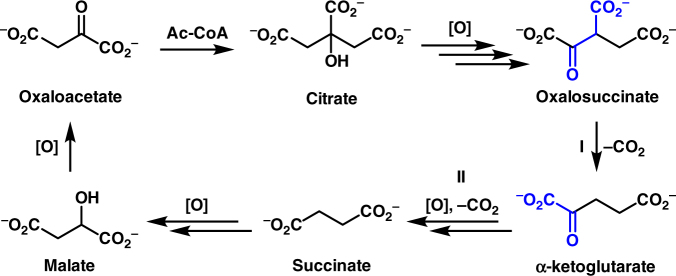
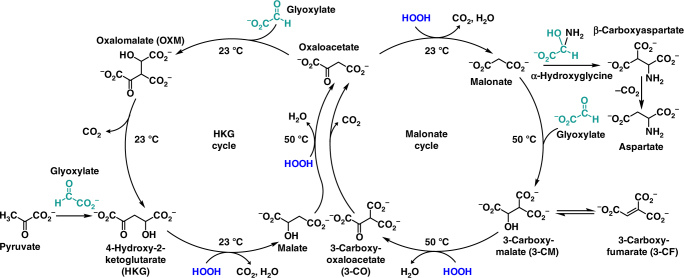
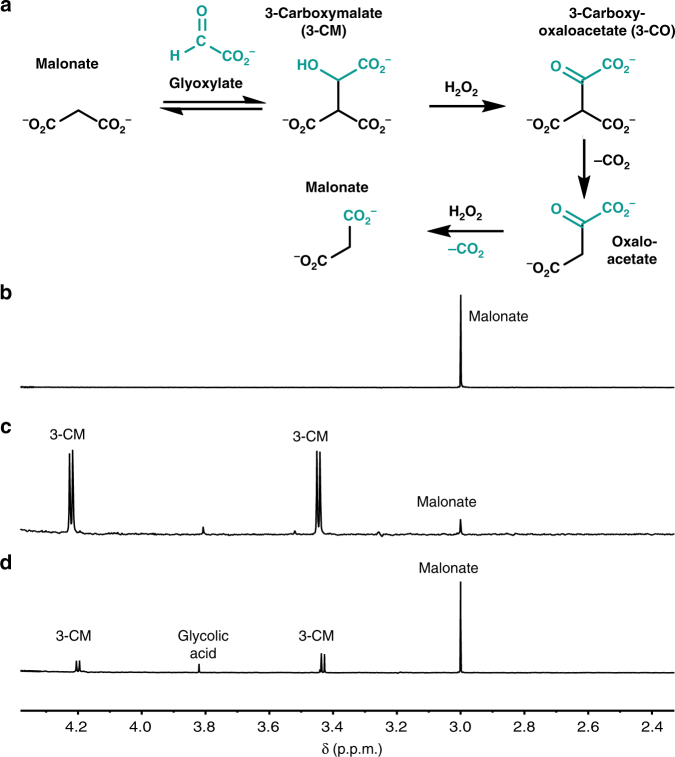
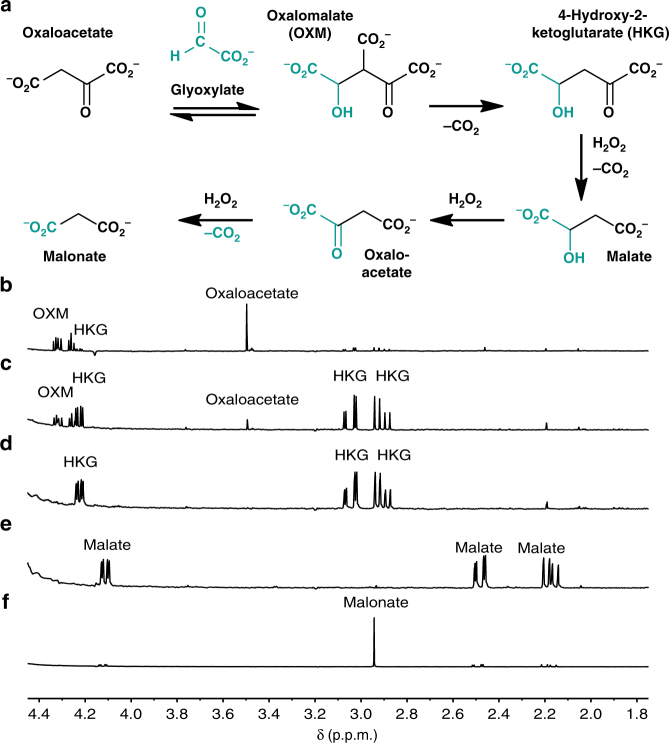
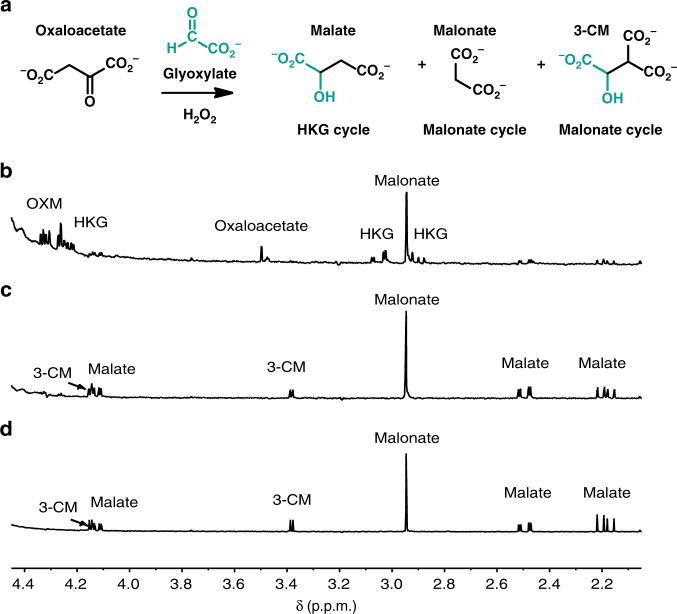
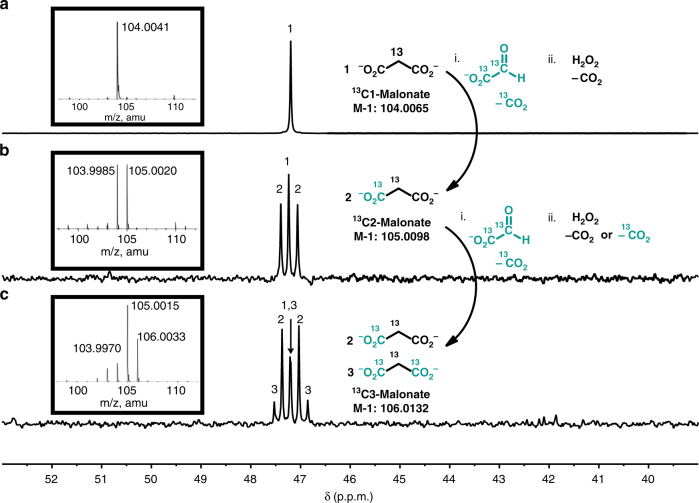
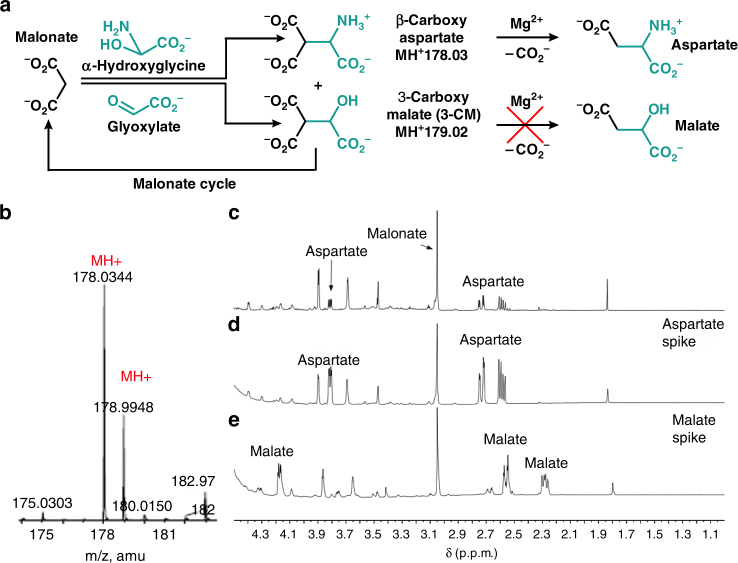
The development of metabolic approaches towards understanding the origins of life, which have focused mainly on the citric acid (TCA) cycle, have languished—primarily due to a lack of experimentally demonstrable and sustainable cycle(s) of reactions. We show here the existence of a protometabolic analog of the TCA involving two linked cycles, which convert glyoxylate into CO 2 and produce aspartic acid in the presence of ammonia. The reactions proceed from either pyruvate, oxaloacetate or malonate in the presence of glyoxylate as the carbon source and hydrogen peroxide as the oxidant under neutral aqueous conditions and at mild temperatures. The reaction pathway demonstrates turnover under controlled conditions. These results indicate that simpler versions of metabolic cycles could have emerged under potential prebiotic conditions, laying the foundation for the appearance of more sophisticated metabolic pathways once control by (polymeric) catalysts became available.
Overview
The claims and statistics of this paper haven’t been checked yet.
Free: it reads the open-access text and checks the first 5 claims that cite a source we can check. Create a free account to check every claim.
Integrity signals
Registry
Cites
Statistics
Figures
Verification
Claims the paper makes
The claims and statistics of this paper haven’t been checked yet.
Free: it reads the open-access text and checks the first 5 claims that cite a source we can check. Create a free account to check every claim.
Claims other papers make about this one
Each is checked against this paper’s own text: does it say what the citing paper says it does?
The cited source says what the claim attributes to it.
In the citing paper
“Using isotopically labelled substrates, the authors demonstrated the high turnover potential of the malonate cycle”
From Prebiotic Reaction Networks in Water (2020) · cites this paper as [22]
The cited source says what the claim attributes to it.
In the citing paper
“Another important feature for protometabolic reaction networks is their ability for sustained cycle turnover [22].”
From Prebiotic Reaction Networks in Water (2020) · cites this paper as [22]
The cited source says what the claim attributes to it.
In the citing paper
“The bicyclic reaction network, linked by their common intermediate oxaloacetate 49, can be initiated via the aldol addition of glyoxylate 38 with oxaloacetate, malonate 52 or pyruvate 39.”
From Prebiotic Reaction Networks in Water (2020) · cites this paper as [22]
The cited source says what the claim attributes to it.
In the citing paper
“In addition to the above approaches, there is an important body of work that proposes synthetic routes towards di- and tricarboxylic acids, which constitute core metabolites of the tricarboxylic acids (TCA/rTCA) cycle, also called the (reductive) Krebs cycle (e in Scheme 1).49,50”
From The protometabolic nature of prebiotic chemistry (2023) · cites this paper as [50]
The cited source says what the claim attributes to it.
In the citing paper
“The group of Krishnamurthy has reported, in turn, on two similar abiotic cycles, the HKG and malonate cycles, which are connected through a common intermediate, oxaloacetate, and together constitute the glyoxylate scenario.50”
From The protometabolic nature of prebiotic chemistry (2023) · cites this paper as [50]
5 more claims about this paper
Create a free account to see every claim other papers make about this one.
Self-check
Percentages, sums and reported differences re-computed from the paper’s own numbers.
The self-check needs the paper’s full text.
Citations
Cites
Before enzymes and templates: theory of surface metabolism
Wächtershäuser, G. (1988) · Microbiological Reviews · doi:10.1128/mmbr.52.4.452-484.1988 · Cited by 1,242
Primordial Carbonylated Iron-Sulfur Compounds and the Synthesis of Pyruvate
Cody, G. D., Boctor, N. Z., Filley, T. R., Hazen, R. M., Scott, J. H., Sharma, A., & Yoder, H. S. (2000) · Science · doi:10.1126/science.289.5483.1337 · Cited by 441
The origin of intermediary metabolism
Morowitz, H. J., Kostelnik, J. D., Yang, J., & Cody, G. D. (2000) · Proceedings of the National Academy of Sciences · doi:10.1073/pnas.110153997 · Cited by 339
Hydrogen Peroxide on the Surface of Europa
Carlson, R. W., Anderson, M. S., Johnson, R. E., Smythe, W. D., Hendrix, A. R., Barth, C. A., Soderblom, L. A., Hansen, G. B., McCord, T. B., Dalton, J. B., et al. (1999) · Science · doi:10.1126/science.283.5410.2062 · Cited by 316
The search for the chemistry of life's origin
Eschenmoser, A. (2007) · Tetrahedron · doi:10.1016/j.tet.2007.10.012 · Cited by 292
The Implausibility of Metabolic Cycles on the Prebiotic Earth
Orgel, L. E. (2008) · PLoS Biology · doi:10.1371/journal.pbio.0060018 · Cited by 271
Non-Enzymatic Glycolysis and Pentose Phosphate Pathway-Like Reactions in a Plausible Archean Ocean
Keller, M. A., Turchyn, A. V., & Ralser, M. (2014) · Molecular Systems Biology · doi:10.1002/msb.20145228 · Cited by 242
Self-organizing biochemical cycles
Orgel, L. E. (2000) · Proceedings of the National Academy of Sciences · doi:10.1073/pnas.220406697 · Cited by 236
Metals promote sequences of the reverse Krebs cycle
Muchowska, K. B., Varma, S. J., Chevallot-Beroux, E., Lethuillier-Karl, L., Li, G., & Moran, J. (2017) · Nature Ecology & Evolution · doi:10.1038/s41559-017-0311-7 · Cited by 228
Dyson, F. (1999) · doi:10.1017/cbo9780511546303 · Cited by 219
Research works printed but not linked: 2
- Copley SD Smith E Morowitz HJ How life began: the emergence of sparse metabolic networks J. Cosmol. 2010 10 3345 3361
- Zubay G The glyoxylate cycle, a possible evolutionary precursor of the TCA cycle Chemtracts 2003 16 783 788
Cited by
Regulation and function of the mammalian tricarboxylic acid cycle
Arnold, P. K., & Finley, L. W. S. (2023) · Journal of Biological Chemistry · doi:10.1016/j.jbc.2022.102838 · Cited by 535
Synthesis and breakdown of universal metabolic precursors promoted by iron
Muchowska, K. B., Varma, S. J., & Moran, J. (2019) · Nature · doi:10.1038/s41586-019-1151-1 · Cited by 365
A short peptide synthon for liquid–liquid phase separation
Abbas, M., Lipiński, W. P., Nakashima, K. K., Huck, W. T. S., & Spruijt, E. (2021) · Nature Chemistry · doi:10.1038/s41557-021-00788-x · Cited by 355
Nonenzymatic Metabolic Reactions and Life’s Origins
Muchowska, K. B., Varma, S. J., & Moran, J. (2020) · Chemical Reviews · doi:10.1021/acs.chemrev.0c00191 · Cited by 317
“Based on this study and the one from Springsteen and Krishnamurthy, 156 it seems plausible that both the (r)TCA and glyoxylate cycles may have had a common precursor that originated as prebiotic chemistry.”
Evolutionary History of Plant Metabolism
Maeda, H. A., & Fernie, A. R. (2021) · Annual Review of Plant Biology · doi:10.1146/annurev-arplant-080620-031054 · Cited by 156
Insights into Ammonia Adaptation and Methanogenic Precursor Oxidation by Genome-Centric Analysis
Yan, M., Treu, L., Zhu, X., Tian, H., Basile, A., Fotidis, I. A., Campanaro, S., & Angelidaki, İ. (2020) · Environmental Science & Technology · doi:10.1021/acs.est.0c01945 · Cited by 133
An appeal to magic? The discovery of a non-enzymatic metabolism and its role in the origins of life
Ralser, M. (2018) · Biochemical Journal · doi:10.1042/bcj20160866 · Cited by 117
A plausible metal-free ancestral analogue of the Krebs cycle composed entirely of α-ketoacids
Stubbs, R. T., Yadav, M., Krishnamurthy, R., & Springsteen, G. (2020) · Nature Chemistry · doi:10.1038/s41557-020-00560-7 · Cited by 117
“28 In this previously-reported work, malate and oxaloacetate were the only TCA intermediates that were produced.”
InfluentialSelf-citationRobinson, W. E., Daines, E., van Duppen, P., de Jong, T., & Huck, W. T. S. (2022) · Nature Chemistry · doi:10.1038/s41557-022-00956-7 · Cited by 98
Contrasting theories of life: Historical context, current theories. In search of an ideal theory
Cornish-Bowden, A. J., & Cárdenas, M. L. (2019) · Biosystems · doi:10.1016/j.biosystems.2019.104063 · Cited by 103
Searching for biosignatures in sedimentary rocks from early Earth and Mars
Bosak, T., Moore, K. R., Gong, J., & Grotzinger, J. P. (2021) · Nature Reviews Earth & Environment · doi:10.1038/s43017-021-00169-5 · Cited by 108
Pulletikurti, S., Yadav, M., Springsteen, G., & Krishnamurthy, R. (2022) · Nature Chemistry · doi:10.1038/s41557-022-00999-w · Cited by 78
“…formate Fumaroyl formate α-Ketoglutarate 9 CN Glyoxylate 19 – H2O Glyoxylate 19 CO2 O O2C O2C Glyoxylate 19 – H2O Pyruvate 1 CO2 O – CO2 CO2 NH2 Glycine 22 Springsteen et al. 18 Reductive glyoxylate pathway Yadav et al. 19 α-Keto analogue of rTCA Stubbs et al. 17 HN NH O O 5-Carboxyethyl…”
Self-citationLife’s Biological Chemistry: A Destiny or Destination Starting from Prebiotic Chemistry?
Krishnamurthy, R. (2018) · Chemistry – A European Journal · doi:10.1002/chem.201801847 · Cited by 76
Self-citationLi, Y., Li, L., Zhang, X., Mu, Q., Tian, J., Yan, J., Guo, L., Wang, Y., Song, L., & Yu, X. (2023) · LWT · doi:10.1016/j.lwt.2023.114586 · Cited by 75
The protometabolic nature of prebiotic chemistry
Nogal, N., Sanz-Sánchez, M., Vela-Gallego, S., Ruiz-Mirazo, K., & de la Escosura, A. (2023) · Chemical Society Reviews · doi:10.1039/d3cs00594a · Cited by 61
Progress in synthesizing protocells
Toparlak, O. D., & Mansy, S. S. (2019) · Experimental Biology and Medicine · doi:10.1177/1535370218816657 · Cited by 58
Formation of Glyoxylic Acid in Interstellar Ices: A Key Entry Point for Prebiotic Chemistry
Eckhardt, A. K., Bergantini, A., Singh, S. K., Schreiner, P. R., & Kaiser, R. I. (2019) · Angewandte Chemie International Edition · doi:10.1002/anie.201901059 · Cited by 62
Complex Coacervation and Compartmentalized Conversion of Prebiotically Relevant Metabolites**
Smokers, I. B. A., van Haren, M. H. I., Lu, T., & Spruijt, E. (2022) · ChemSystemsChem · doi:10.1002/syst.202200004 · Cited by 61
Modern views of ancient metabolic networks
Goldford, J. E., & Segrè, D. (2018) · Current Opinion in Systems Biology · doi:10.1016/j.coisb.2018.01.004 · Cited by 56
Prebiotic Origin of Pre‐RNA Building Blocks in a Urea “Warm Little Pond” Scenario
Menor-Salván, C. A., Bouza, M., Fialho, D. M., Burcar, B. T., Fernández, F. M., & Hud, N. V. (2020) · ChemBioChem · doi:10.1002/cbic.202000510 · Cited by 62
Ju, Y., Zhang, H., Jiang, Y., Wang, W., Kan, G., Yu, K., Wang, X., Liu, J., & Jiang, J. (2023) · Nature Ecology & Evolution · doi:10.1038/s41559-023-02193-8 · Cited by 53
“27).”
MethodZhang, Y., Chu, M., Zhang, J., Duan, J., Hu, D., Zhang, W., Yang, X., Xu, J., Deng, F., & Sun, Z. (2019) · Environment International · doi:10.1016/j.envint.2019.104920 · Cited by 52
Cyanide as a primordial reductant enables a protometabolic reductive glyoxylate pathway
Yadav, M., Pulletikurti, S., Yerabolu, J. R., & Krishnamurthy, R. (2022) · Nature Chemistry · doi:10.1038/s41557-021-00878-w · Cited by 48
Self-citationTectonically-driven oxidant production in the hot biosphere
Stone, J., Edgar, J. O., Gould, J. A., & Telling, J. P. (2022) · Nature Communications · doi:10.1038/s41467-022-32129-y · Cited by 51
Dynamic Environmental Conditions Affect the Composition of a Model Prebiotic Reaction Network
van Duppen, P., Daines, E., Robinson, W. E., & Huck, W. T. S. (2023) · Journal of the American Chemical Society · doi:10.1021/jacs.3c00908 · Cited by 46
Seven Amino Acid Types Suffice to Create the Core Fold of RNA Polymerase
Yagi, S., Padhi, A. K., Vučinić, J., Barbe, S., Schiex, T., Nakagawa, R., Simoncini, D., Zhang, K. Y. J., & Tagami, S. (2021) · Journal of the American Chemical Society · doi:10.1021/jacs.1c05367 · Cited by 45
Recreating ancient metabolic pathways before enzymes
Muchowska, K. B., Chevallot-Beroux, E., & Moran, J. (2019) · Bioorganic & Medicinal Chemistry · doi:10.1016/j.bmc.2019.03.012 · Cited by 42
Gu, J., Su, F., Hong, P.-P., Zhang, Q., & Zhao, M. (2019) · The Science of The Total Environment · doi:10.1016/j.scitotenv.2019.02.055 · Cited by 43
Ślesak, I., Kula-Maximenko, M., Ślesak, H., Miszalski, Z., & Strzałka, K. (2019) · Free Radical Biology and Medicine · doi:10.1016/j.freeradbiomed.2019.03.004 · Cited by 45
Algal toxicity, accumulation and metabolic pathways of galaxolide
Ding, T., Li, W., Cai, M., Jia, X., Yang, M., Yang, B., & Li, J. (2019) · Journal of Hazardous Materials · doi:10.1016/j.jhazmat.2019.121360 · Cited by 37
Prebiotic Reaction Networks in Water
Tran, Q. P., Adam, Z. R., & Fahrenbach, A. C. (2020) · Life · doi:10.3390/life10120352 · Cited by 32
“inke cycles analgous to the hich rely on alternating a ditions of glyoxylate and 2 de onstrated by Springsteen, rishna urthy and co-workers [22].”
BackgroundMethodInfluentialWang, Z., Gao, S., Xie, J., & Li, R. (2018) · Chemosphere · doi:10.1016/j.chemosphere.2018.12.092 · Cited by 35
How Small Heterocycles Make a Reaction Network of Amino Acids and Nucleotides Efficient in Water
Tremmel, P., Griesser, H., Steiner, U. E., & Richert, C. (2019) · Angewandte Chemie International Edition · doi:10.1002/anie.201905427 · Cited by 33
Metal/ADP Complexes Promote Phosphorylation of Ribonucleotides
Werner, E., Pinna, S., Mayer, R. J., & Moran, J. (2023) · Journal of the American Chemical Society · doi:10.1021/jacs.3c08047 · Cited by 34
Cyclophospholipids Enable a Protocellular Life Cycle
Toparlak, Ö. D., Sebastianelli, L., Egas Ortuno, V., Karki, M., Xing, Y., Szostak, J. W., Krishnamurthy, R., & Mansy, S. S. (2023) · ACS Nano · doi:10.1021/acsnano.3c07706 · Cited by 26
Self-citationLei, C., Ding, Z., Tao, M., Lu, Y., Xu, L., Cheng, B., Wang, C., & Wang, Z. (2024) · Journal of Agricultural and Food Chemistry · doi:10.1021/acs.jafc.4c06672 · Cited by 25
Protometabolic Reduction of NAD+ with α-Keto Acids
Basak, S., Nader, S., & Mansy, S. S. (2021) · JACS Au · doi:10.1021/jacsau.0c00124 · Cited by 28
“Minimal metabolism”: A key concept to investigate the origins and nature of biological systems
Lauber, N., Flamm, C., & Ruiz‐Mirazo, K. (2021) · BioEssays · doi:10.1002/bies.202100103 · Cited by 25
Legnani, L., Darù, A., Jones, A. X., & Blackmond, D. G. (2021) · Journal of the American Chemical Society · doi:10.1021/jacs.1c03552 · Cited by 25
Zhao, W., Zhong, B., Zheng, L., Tan, P., Wang, Y., Leng, H., de Souza, N. R., Liu, Z., Hong, L., & Xiao, X. (2022) · Nature Communications · doi:10.1038/s41467-022-35523-8 · Cited by 25
Tran, Q. P., Yi, R., & Fahrenbach, A. C. (2023) · Chemical Science · doi:10.1039/d3sc03185c · Cited by 25
Sui, Q., Di, F., Zhong, H., Chen, M., & Wei, Y. (2024) · The Science of The Total Environment · doi:10.1016/j.scitotenv.2024.173302 · Cited by 28
The Power Without the Glory: Multiple Roles of Hydrogen Peroxide in Mediating the Origin of Life
Ball, R. V., & Brindley, J. (2019) · Astrobiology · doi:10.1089/ast.2018.1886 · Cited by 24
“The potential importance of hydrogen peroxide in pre-and protocellular evolution is illustrated in a recent work by Springsteen et al. (2018).”
InfluentialKrishnamurthy, R., & Liotta, C. L. (2023) · Chem · doi:10.1016/j.chempr.2023.03.007 · Cited by 23
Self-citationClay, A. P., Cooke, R. E., Kumar, R., Yadav, M., Krishnamurthy, R., & Springsteen, G. (2022) · Angewandte Chemie International Edition · doi:10.1002/anie.202112572 · Cited by 19
Self-citationPrebiotic access to enantioenriched amino acids via peptide-mediated transamination reactions
Yu, J., Darù, A., Deng, M., & Blackmond, D. G. (2024) · Proceedings of the National Academy of Sciences · doi:10.1073/pnas.2315447121 · Cited by 19
“…- free conditions have been demonstrated for the achiral transformation between glyoxylate and α-keto acids as an ancient analog to the Krebs cycle (28), and an analogy to prebiotic transam-ination was suggested under conditions that obviate the need for metal - catalyzed abiotic reductive…”
BackgroundOrsi, E., Schulz-Mirbach, H., Cotton, C. A. R., Satanowski, A., Petri, H. M., Arnold, S. L., Grabarczyk, N., Verbakel, R., Jensen, K. S., Donati, S., et al. (2025) · Nature Communications · doi:10.1038/s41467-025-57407-3 · Cited by 23
“Sinceglyoxylate isdescribed asa key intermediate ofsome protometabolic pathways 15 – 18 , we believe our sensor strains could create new possibilities for explorative studies within this fi eld of research.”
An ancestral fold reveals the evolutionary link between RNA polymerase and ribosomal proteins
Yagi, S., & Tagami, S. (2024) · Nature Communications · doi:10.1038/s41467-024-50013-9 · Cited by 23
Gashu, K., Kaste, J. A. M., Roje, S., & Walker, B. J. (2025) · Nature Plants · doi:10.1038/s41477-025-02091-w · Cited by 16
“Model A also included additional NED reactions that have been characterized recently in the 4-hydroxy-2-ketoglutarate and malonate cycles, in which glyoxylate serves as a carbon source 59 .”
Testing Abiotic Reduction of NAD + Directly Mediated by Iron/Sulfur Minerals
Weber, J. M., Henderson, B. L., LaRowe, D. E., Goldman, A. D., Perl, S. M., Billings, K. J., & Barge, L. M. (2021) · Astrobiology · doi:10.1089/ast.2021.0035 · Cited by 17
“However, in some cases, it is believed that metals are not required for such reactivity (Springsteen et al. , 2018; Stubbs et al. , 2020).”
Yue, R., An, C., Ye, Z., Chen, X., Lee, K., Zhang, K., Wan, S., & Qu, Z. (2022) · Journal of Hazardous Materials · doi:10.1016/j.jhazmat.2022.129447 · Cited by 16
BRAGA, M. G. A. D. M., Ferreira, P. M., & de Almeida, J. R. M. (2020) · Biofuels Bioproducts and Biorefining · doi:10.1002/bbb.2156 · Cited by 21
Ramachanderan, R., & Schaefer, B. (2019) · ChemTexts · doi:10.1007/s40828-019-0091-6 · Cited by 16
A single phosphorylation mechanism in early metabolism – the case of phosphoenolpyruvate
Zimmermann, J., Mayer, R. J., & Moran, J. (2023) · Chemical Science · doi:10.1039/d3sc04116f · Cited by 16
Prebiotic Synthesis of Microdroplets from Formate over a Bimetallic Cobalt–Nickel Nanomotif
Zhu, P., Wang, C., Lang, J., He, D., & Jin, F. (2024) · Journal of the American Chemical Society · doi:10.1021/jacs.4c06989 · Cited by 14
Rovnyak, D., & Shields, G. C. (2018) · ACS symposium series · doi:10.1021/bk-2018-1291.ch011 · Cited by 13
Protometabolism as out-of-equilibrium chemistry
Nader, S., Sebastianelli, L., & Mansy, S. S. (2022) · Philosophical Transactions of the Royal Society A Mathematical Physical and Engineering Sciences · doi:10.1098/rsta.2020.0423 · Cited by 23
Primitive purine biosynthesis connects ancient geochemistry to modern metabolism
Goldford, J. E., Smith, H. B., Longo, L. M., Wing, B. A., & McGlynn, S. E. (2024) · Nature Ecology & Evolution · doi:10.1038/s41559-024-02361-4 · Cited by 14
Reactivity of Metabolic Intermediates and Cofactor Stability under Model Early Earth Conditions
Maltais, T. R., VanderVelde, D. G., LaRowe, D. E., Goldman, A. D., & Barge, L. M. (2020) · Origins of Life and Evolution of Biospheres · doi:10.1007/s11084-019-09590-9 · Cited by 12
“Related reaction cycles have also been proposed that may have constituted protometabolic TCA cycle analogs (Sagi et al. 2012; Butch et al. 2013; Zubarev et al. 2015; Springsteen et al. 2018) or precursors.”
BackgroundHan, X., Xiao, H., Chen, J., Xu, W., & Dou, D. (2020) · The FASEB Journal · doi:10.1096/fj.202000984r · Cited by 11
Kont, R., Pihlajaniemi, V., Niemelä, K., Kuusk, S., Marjamaa, K., & Väljamäe, P. (2021) · ACS Sustainable Chemistry & Engineering · doi:10.1021/acssuschemeng.1c05491 · Cited by 11
Making the Onset of Semiosis Comprehensible with Use of Quantum Physics
Matsuno, K. (2020) · Biosemiotics · doi:10.1007/s12304-020-09377-w · Cited by 11
Liu, Z., Jiang, A., Lv, X., Zhou, C., & Tan, Z. (2024) · Animals · doi:10.3390/ani14030407 · Cited by 10
“Also, as a variant of energy metabolism, glyoxylate and dicarboxylic acid metabolism use intermediates such as isocitrate and α -ketoglutarate that participate in the TCA cycle to regulate amino acid metabolism [56].”
BackgroundZimmermann, J., Basar, A. B., & Moran, J. (2024) · Angewandte Chemie International Edition · doi:10.1002/anie.202410698 · Cited by 11
A way to thioacetate esters compatible with non-oxidative prebiotic conditions
Leqraa, N., Nicolet, Y., Milet, A., & Vallée, Y. (2020) · Scientific Reports · doi:10.1038/s41598-020-71524-7 · Cited by 10
Dong, X., Yao, S., Wu, W., Cao, J., Sun, L., Li, H., Ren, H., & Ren, W. (2020) · Human & Experimental Toxicology · doi:10.1177/0960327120960761 · Cited by 11
“The first step in the TCA is the conversion of glucose or fatty acids to acetyl-CoA, followed by the condensation of acetyl-CoA with oxaloacetic acid to citric acid.(19,20) Aconitic acid and Citric acid are both derived from the TCA and are integral components of energy production.”
BackgroundHow Small Heterocycles Make a Reaction Network of Amino Acids and Nucleotides Efficient in Water
Tremmel, P., Griesser, H., Steiner, U. E., & Richert, C. (2019) · Angewandte Chemie · doi:10.1002/ange.201905427 · Cited by 11
Hahn, D., Kumar, R. A., RYAN, T. E., & Ferreira, L. F. (2019) · American Journal of Physiology-Cell Physiology · doi:10.1152/ajpcell.00184.2019 · Cited by 11
Baek, G., Lee, H., Ko, J., & Choi, H. (2022) · BMC Plant Biology · doi:10.1186/s12870-022-03941-x · Cited by 9
“Nitrogen absorbed from roots is converted to aspartic acid in the presence of oxaloacetate [42].”
BackgroundPrebiotic chemistry in neutral/reduced-alkaline gas-liquid interfaces
Mompeán, C., Marín‐Yaseli, M. R., Espigares, P., González‐Toril, E., Zorzano, M., & Ruiz‐Bermejo, M. (2019) · Scientific Reports · doi:10.1038/s41598-018-36579-7 · Cited by 14
Phosphorylation and acylation transfer reactions: Clues to a dual origin of metabolism
Freire, M. Á. (2020) · Biosystems · doi:10.1016/j.biosystems.2020.104260 · Cited by 9
Aleksandrova, M. I., & Bonfio, C. (2022) · EMBO Reports · doi:10.15252/embr.202255679 · Cited by 8
“…the fact that metabolic pathways often share substrates and intermediates inspired Springsteen and Krishnamurthy to design interconnected non-biological cycles, analogues of the tricarboxylic acid cycle, based on simple molecules that were likely present on early Earth (Springsteen et al , 2018).”
InfluentialRadicals in Prebiotic Chemistry
Lim, R. W. J., & Fahrenbach, A. C. (2020) · Pure and Applied Chemistry · doi:10.1515/pac-2020-0805 · Cited by 8
Before LUCA: unearthing the chemical roots of metabolism
Carbonell, P., & Peretó, J. G. (2025) · Philosophical Transactions of the Royal Society B Biological Sciences · doi:10.1098/rstb.2024.0292 · Cited by 10
THE ROLE OF SMALL MOLECULES IN METABOLISM REGULATION (REVIEW OF LITERATURE)
Kolotyeva, N. A., & Gilmiyarova, F. N. (2019) · Russian Clinical Laboratory Diagnostics · doi:10.18821/0869-2084-2019-64-12-716-722 · Cited by 8
Jiang, T., Jiao, J., Shang, J., Bi, L., Wang, H., Zhang, C., Wu, H., Cui, Y., Wang, P., & Liu, X. (2022) · Evidence-based Complementary and Alternative Medicine · doi:10.1155/2022/9465095 · Cited by 7
“e chain cycle of glyoxylate oxidative decarboxylation can be used as the protometabolic cycles analogue of the TCA cycle, converting glyoxylate intoCO2 and producing aspartic acid in the presence of ammonia [33].”
RetractedKong, X., Luo, H., Chen, Y., Shen, H., Shi, P., Yang, F., Li, H., & Yu, L. (2023) · Horticulturae · doi:10.3390/horticulturae9111210 · Cited by 7
“Studies have shown that ABA treatment can promote the expression of softening-related genes such as extensor protein, thus speeding up the ripening and softening process of strawberry fruit [54].”
BackgroundOn the Evolutionary Development of Biological Organization from Complex Prebiotic Chemistry
Ruiz‐Mirazo, K., & Moreno, Á. (2023) · History, philosophy and theory of the life sciences · doi:10.1007/978-3-031-38968-9_9 · Cited by 13
Abiotic origin of the citric acid cycle intermediates
McAnally, M., Bocková, J., Turner, A. M., Hara, N., Mikhnova, D., Meinert, C., & Kaiser, R. I. (2025) · Proceedings of the National Academy of Sciences · doi:10.1073/pnas.2501839122 · Cited by 8
“…of the Krebs cycle have been a focus of attention for the last decades ( 3 – 8 ), the proposed pathways are plagued with exceptionally specific reaction conditions such as elevated temperatures (323 to 343 K) ( 3 , 4 , 8 ) or require strong oxidizing agents (peroxydisulfate, S 2 O 8 2− ) ( 3 ).”
The Impact of Krebs Cycle Intermediates on the Endocrine System and Immune System: A Comparison
Arneth, B. M. (2023) · Endocrines · doi:10.3390/endocrines4010016 · Cited by 6
“During the metabolism of glucose molecules, vital variables such as heartbeat, respiratory rate, and temperature must be kept stable [12,13,71]; hormones,”
BackgroundClay, A. P., Cooke, R. E., Kumar, R., Yadav, M., Krishnamurthy, R., & Springsteen, G. (2022) · Angewandte Chemie · doi:10.1002/ange.202112572 · Cited by 6
Self-citationMagmatic immiscibility provides phosphate for prebiotic chemistry
Weller, D., Matreux, T., Smokers, I. B. A., Schmid, A., Mast, C. B., Dingwell, D. B., Braun, D., & Scheu, B. (2025) · Science Advances · doi:10.1126/sciadv.adz2567 · Cited by 6
Guo, D., Chen, S., Zhang, W., & Fan, J. Y. (2023) · Pesticide Biochemistry and Physiology · doi:10.1016/j.pestbp.2023.105499 · Cited by 6
Liu, C., Zhou, S., Li, Y., Yin, X., & Li, P. (2024) · Frontiers in Endocrinology · doi:10.3389/fendo.2024.1481364 · Cited by 6
Keller, M. A., Driscoll, P. C., Messner, C. B., & Ralser, M. (2018) · Wellcome Open Research · doi:10.12688/wellcomeopenres.12103.2 · Cited by 5
Anomalous thermal fluctuation distribution sustains proto-metabolic cycles and biomolecule synthesis
Ball, R. V., & Brindley, J. (2020) · Physical Chemistry Chemical Physics · doi:10.1039/c9cp05756k · Cited by 5
Yaman, T., & Harvey, J. N. (2021) · Life · doi:10.3390/life11121343 · Cited by 7
Kim, G., Lee, W., & Park, T. (2025) · Scientific Reports · doi:10.1038/s41598-025-10599-6 · Cited by 7
“Despite its connection to the TCA cycle 71 the enrichment of the RA of genes associated with the ko00630 (Glyoxylate and dicarboxylate metabolism) pathway in the TB group rather than the EAB group might be related to the higher abundance of Prevotella ruminicola in the TB group 72 .”
Yáñez, O., Cabrera, R., Pino‐Rios, R., Sepúlveda, C., López-Cortés, X. A., González-Nilo, F. D., & Ravanal, M. C. (2024) · Journal of Molecular Structure · doi:10.1016/j.molstruc.2024.141105 · Cited by 5
Jin, S., Ye, Z.-N., Fu, H., Xiong, Y., Qiao, H., Zhang, W., & Jiang, S. (2025) · Animals · doi:10.3390/ani15152319 · Cited by 6
“…aerobic organisms, generating ATP through oxidative phosphorylation [88], modulating immune responses through metabolic intermediates [89,90], and supplying critical biosynthetic precursors (acetyl-CoA, pyruvate, oxaloacetate (OAA), succinate, and α -ketoglutarate) for cellular metabolism [91–93].”
Anwar, A., Fu, X., Tang, S. L., Liu, W., Wang, Y., Zhao, W., & Wu, C. (2025) · BMC Genomics · doi:10.1186/s12864-025-12008-8 · Cited by 4
“Glyoxylic acid and Oxalacetic acid are important organic acids in the citric acid cycle, and their metabolic status may influence cellular energy production and acid-base balance [36].”
Retrocausal regulation for the onset of a reaction cycle
Matsuno, K. (2019) · Biosystems · doi:10.1016/j.biosystems.2019.01.006 · Cited by 4
Formation of Glyoxylic Acid in Interstellar Ices: A Key Entry Point for Prebiotic Chemistry
Eckhardt, A. K., Bergantini, A., Singh, S. K., Schreiner, P. R., & Kaiser, R. I. (2019) · Angewandte Chemie · doi:10.1002/ange.201901059 · Cited by 4
Nonenzymatic Carboxylate Phosphorylation in Water
Chen, W., Zimmermann, J., Dechent, J., & Moran, J. (2025) · European Journal of Organic Chemistry · doi:10.1002/ejoc.202500179 · Cited by 6
Zhang, L., Tang, H., Zheng, J., Yu, Q., Wang, H., Li, D., Zhang, Z., & Tang, Z. (2026) · Food Research International · doi:10.1016/j.foodres.2026.118721 · Cited by 3
Jin, C., Zhang, Y.-Z., Song, W., Wang, P., Wu, C., Liang, L.-M., Feng, W., Sun, X.-T., Liu, X.-Q., & Fang, G.-Y. (2026) · Food Research International · doi:10.1016/j.foodres.2026.119472 · Cited by 3
Dash, S. R., Pandya, R., Singh, G., Sharma, H., Das, T., Haldar, H., Hotha, S., & Vanka, K. (2024) · Chemical Communications · doi:10.1039/d4cc03074e · Cited by 4
Zhang, K., Zhou, Z., Wang, J., Li, J., Lin, X., Li, L., Wu, X., You, Y., & Lin, S. (2020) · bioRxiv (Cold Spring Harbor Laboratory) · doi:10.1101/2020.05.20.107318 · Cited by 4
Peretó, J. G. (2023) · Wiley eBooks · doi:10.1002/9781394264155.ch4 · Cited by 4
Thermodynamic Constraints on the Citric Acid Cycle and Related Reactions in Ocean World Interiors
Işık, S., Daswani, M. M., Işık, E., Weber, J. M., & Olgun, N. (2025) · ACS Earth and Space Chemistry · doi:10.1021/acsearthspacechem.4c00371 · Cited by 3
“…this network is not dependent on glucose: experimental work has identified multiple routes to key intermediates and reactions within the cycle, 2,11,14,27 Our analysis considers both reference biological concentrations and the more realistic trace levels detailed in Section 3.2.2, allowing us…”
Influential
Metadata
- Authors
- Springsteen, G., Yerabolu, J. R., Nelson, J., Rhea, C. J., & Krishnamurthy, R.
- Affiliations
- Furman University (US)
- Scripps Research Institute (US)
- Corresponding author
- Krishnamurthy, Ramanarayanan
- Venue
- Nature Communications
- Published
- 2018-01-08
- Volume
- 9
- Issue
- 1
- Pages
- 91-91
- ISSN
- 2041-1723 (ISSN-L)
- PMC
- PMC5758577
- OpenAlex
- W2782125837
- Semantic Scholar
- dc9abb478d6c1921a0c62b90849f4968a7dd1eac
- Cited by
- 132
- References
- 40
- Citations by year
- 2026: 9 · 2025: 19 · 2024: 15 · 2023: 17 · 2022: 20 · 2021: 12 · 2020: 14 · 2019: 18 · 2018: 7
- FWCI
- 6.86
- Type
- journal article
- Language
- en
- Open access
- gold
- doi.org
- Licence
- cc-by
- creativecommons.org/licenses/by/4.0 (tdm)
- creativecommons.org/licenses/by/4.0 (vor)
- Locations
- Nature Communications (publishedVersion, cc-by)
- Europe PMC (PubMed Central) (publishedVersion, cc-by)
- PubMed Central (publishedVersion, cc-by)
- PubMed (publishedVersion)
- RePEc: Research Papers in Economics (submittedVersion)
- DOAJ (DOAJ: Directory of Open Access Journals) (submittedVersion, cc-by-sa)
- DOAJ (DOAJ: Directory of Open Access Journals) (submittedVersion)
- Furman University Scholar Exchange (Furman University) (submittedVersion)
- Furman University Scholar Exchange (Furman University) (submittedVersion, cc-by)
- Funders
- National Science Foundation (1504217)
- National Aeronautics and Space Administration (CHE-1504217)
- Division of Chemistry (CHE-1504217, 1504217)
- Topics
- Physical Sciences › Physics and Astronomy › Astronomy and Astrophysics › Origins and Evolution of Life
- Physical Sciences › Chemistry › Organic Chemistry › Physical Organic Chemistry and Reaction Kinetics
- Life Sciences › Biochemistry, Genetics and Molecular Biology › Molecular Biology › Enzyme Catalysis and Immobilization
- Keywords
- glyoxylic acid, oxidative decarboxylation, protometabolism, origin of life, hydrogen peroxide oxidation, prebiotic metabolism, pyruvate, oxaloacetate, malonate, ammonia, metabolic cycles
- MeSH terms
- Origin of Life, Ammonia, Aspartic Acid, Carbon Dioxide, Decarboxylation, Glyoxylates, Hydrogen Peroxide, Hydrogen-Ion Concentration, Kinetics, Malonates, Models, Chemical, Oxidation-Reduction, Pyruvic Acid, Metabolic Networks and Pathways, Oxaloacetic Acid
About these checks
Registry, retraction, Cites and statistics results are computed, not judged, with one exception: a printed reference that no index lists is read once by a model before it counts as a citation error. Claims are extracted by a model and kept only when their quote appears verbatim in the text; each cited source is then checked, with a model’s help, for whether it says what the claim relies on. Those verdicts can be wrong — read the claim’s quote and the cited source before relying on one.
Statistics and arithmetic are recomputed, not judged.
Confidence bands are shown only for fields calibrated on our annotated test set. None is calibrated yet, so no band is shown.
What counts as a claim ›How we measure confidence ›How we check this ›
Are you an author, or do you see a problem with this page? Request a review
Data sources
Bibliographic data: Semantic Scholar, OpenAlex, Crossref.
Contains information from the Semantic Scholar Academic Graph Datasets, made available under the ODC Attribution License (ODC-BY 1.0).
Semantic Scholar’s data is described in: Kinney, R., et al. (2023). The Semantic Scholar Open Data Platform. arXiv:2301.10140.
