

Linked cycles of oxidative decarboxylation of glyoxylate as protometabolic analogs of the citric acid cycle
Open accessThe DOI matches its Crossref record; 40 of the 40 references it cites were found in a registry or an index.
Abstract
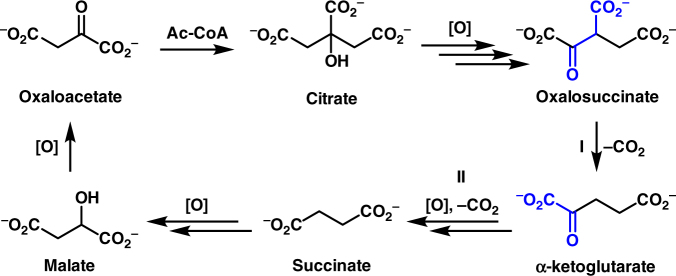
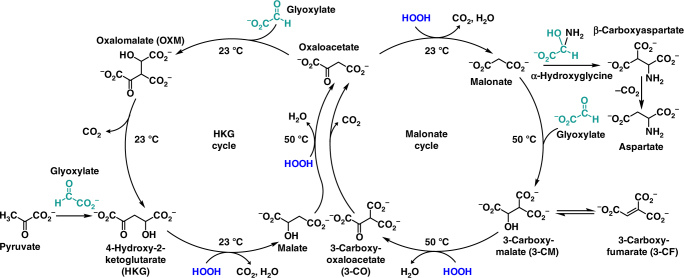
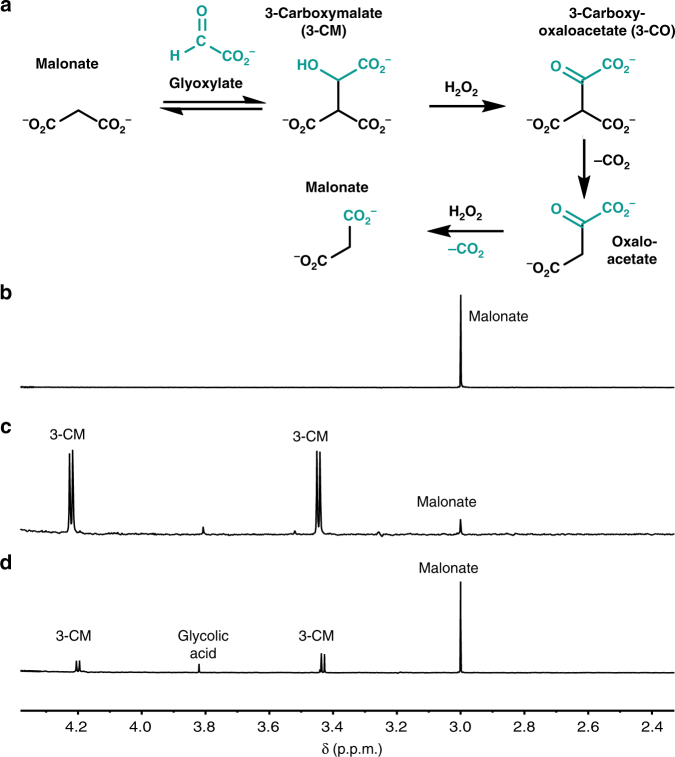
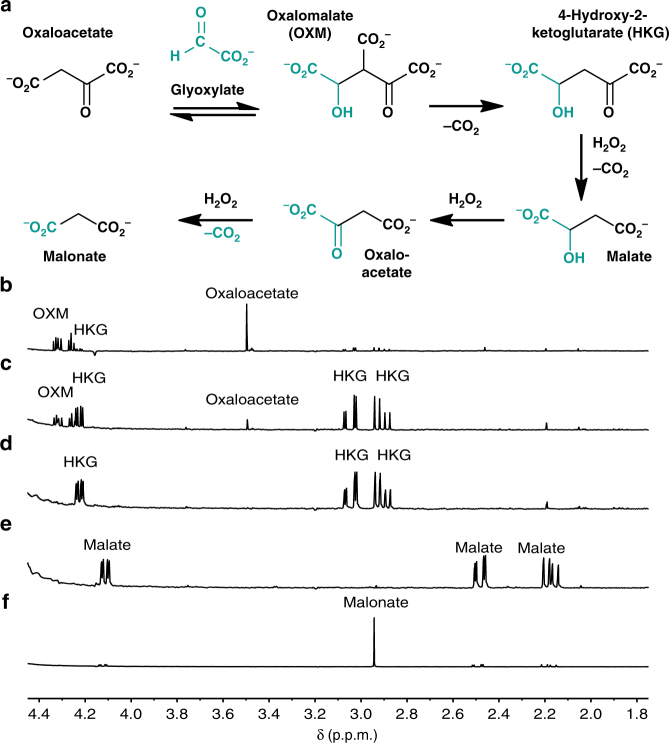
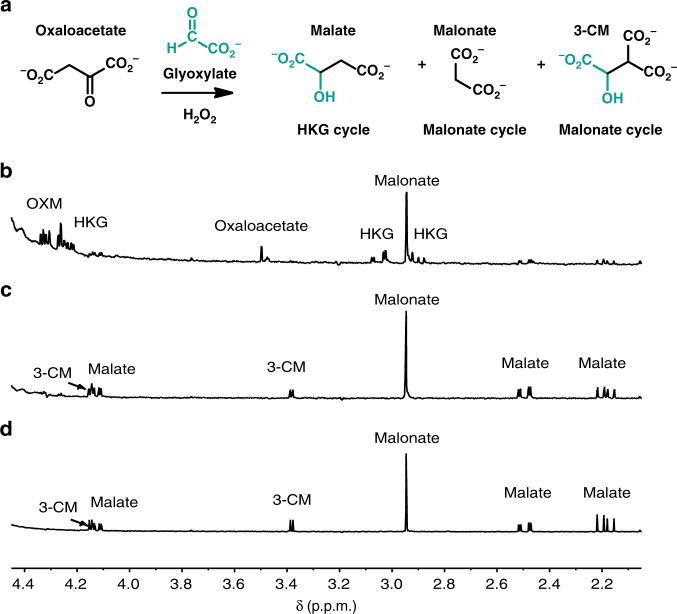
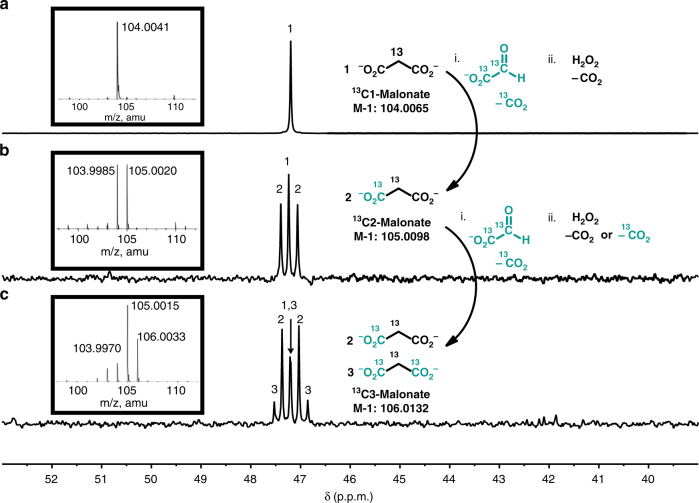
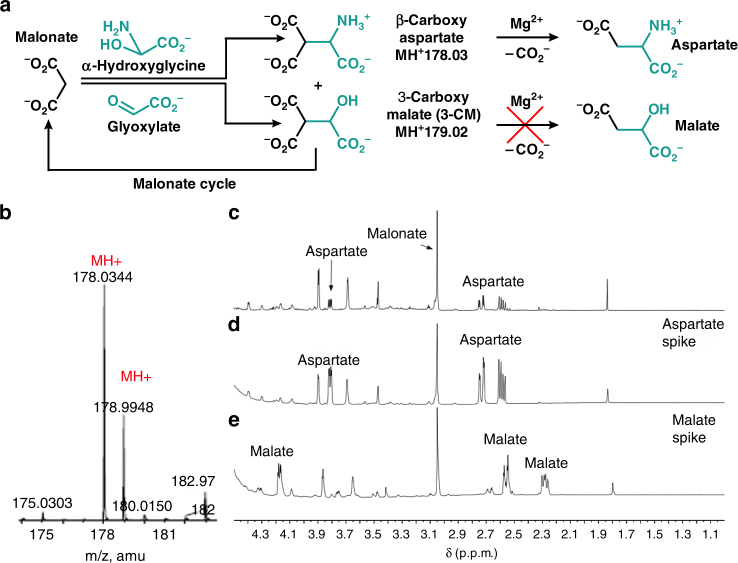
The development of metabolic approaches towards understanding the origins of life, which have focused mainly on the citric acid (TCA) cycle, have languished—primarily due to a lack of experimentally demonstrable and sustainable cycle(s) of reactions. We show here the existence of a protometabolic analog of the TCA involving two linked cycles, which convert glyoxylate into CO 2 and produce aspartic acid in the presence of ammonia. The reactions proceed from either pyruvate, oxaloacetate or malonate in the presence of glyoxylate as the carbon source and hydrogen peroxide as the oxidant under neutral aqueous conditions and at mild temperatures. The reaction pathway demonstrates turnover under controlled conditions. These results indicate that simpler versions of metabolic cycles could have emerged under potential prebiotic conditions, laying the foundation for the appearance of more sophisticated metabolic pathways once control by (polymeric) catalysts became available.
Overview
The claims and statistics of this paper haven’t been checked yet.
Free: it reads the open-access text and checks the first 5 claims that cite a source we can check. Create a free account to check every claim.
Integrity signals
Registry
Cites
Statistics
Figures
Verification
Claims the paper makes
The claims and statistics of this paper haven’t been checked yet.
Free: it reads the open-access text and checks the first 5 claims that cite a source we can check. Create a free account to check every claim.
Claims other papers make about this one
Each is checked against this paper’s own text: does it say what the citing paper says it does?
The cited source says what the claim attributes to it.
In the citing paper
“Using isotopically labelled substrates, the authors demonstrated the high turnover potential of the malonate cycle”
From Prebiotic Reaction Networks in Water (2020) · cites this paper as [22]
The cited source says what the claim attributes to it.
In the citing paper
“Another important feature for protometabolic reaction networks is their ability for sustained cycle turnover [22].”
From Prebiotic Reaction Networks in Water (2020) · cites this paper as [22]
The cited source says what the claim attributes to it.
In the citing paper
“The bicyclic reaction network, linked by their common intermediate oxaloacetate 49, can be initiated via the aldol addition of glyoxylate 38 with oxaloacetate, malonate 52 or pyruvate 39.”
From Prebiotic Reaction Networks in Water (2020) · cites this paper as [22]
The cited source says what the claim attributes to it.
In the citing paper
“In addition to the above approaches, there is an important body of work that proposes synthetic routes towards di- and tricarboxylic acids, which constitute core metabolites of the tricarboxylic acids (TCA/rTCA) cycle, also called the (reductive) Krebs cycle (e in Scheme 1).49,50”
From The protometabolic nature of prebiotic chemistry (2023) · cites this paper as [50]
The cited source says what the claim attributes to it.
In the citing paper
“The group of Krishnamurthy has reported, in turn, on two similar abiotic cycles, the HKG and malonate cycles, which are connected through a common intermediate, oxaloacetate, and together constitute the glyoxylate scenario.50”
From The protometabolic nature of prebiotic chemistry (2023) · cites this paper as [50]
5 more claims about this paper
Create a free account to see every claim other papers make about this one.
Self-check
Percentages, sums and reported differences re-computed from the paper’s own numbers.
The self-check needs the paper’s full text.
Citations
Cites
Before enzymes and templates: theory of surface metabolism
Wächtershäuser, G. (1988) · Microbiological Reviews · doi:10.1128/mmbr.52.4.452-484.1988 · Cited by 1,242
Primordial Carbonylated Iron-Sulfur Compounds and the Synthesis of Pyruvate
Cody, G. D., Boctor, N. Z., Filley, T. R., Hazen, R. M., Scott, J. H., Sharma, A., & Yoder, H. S. (2000) · Science · doi:10.1126/science.289.5483.1337 · Cited by 441
The origin of intermediary metabolism
Morowitz, H. J., Kostelnik, J. D., Yang, J., & Cody, G. D. (2000) · Proceedings of the National Academy of Sciences · doi:10.1073/pnas.110153997 · Cited by 339
Hydrogen Peroxide on the Surface of Europa
Carlson, R. W., Anderson, M. S., Johnson, R. E., Smythe, W. D., Hendrix, A. R., Barth, C. A., Soderblom, L. A., Hansen, G. B., McCord, T. B., Dalton, J. B., et al. (1999) · Science · doi:10.1126/science.283.5410.2062 · Cited by 316
The search for the chemistry of life's origin
Eschenmoser, A. (2007) · Tetrahedron · doi:10.1016/j.tet.2007.10.012 · Cited by 292
The Implausibility of Metabolic Cycles on the Prebiotic Earth
Orgel, L. E. (2008) · PLoS Biology · doi:10.1371/journal.pbio.0060018 · Cited by 271
Non-Enzymatic Glycolysis and Pentose Phosphate Pathway-Like Reactions in a Plausible Archean Ocean
Keller, M. A., Turchyn, A. V., & Ralser, M. (2014) · Molecular Systems Biology · doi:10.1002/msb.20145228 · Cited by 242
Self-organizing biochemical cycles
Orgel, L. E. (2000) · Proceedings of the National Academy of Sciences · doi:10.1073/pnas.220406697 · Cited by 236
Metals promote sequences of the reverse Krebs cycle
Muchowska, K. B., Varma, S. J., Chevallot-Beroux, E., Lethuillier-Karl, L., Li, G., & Moran, J. (2017) · Nature Ecology & Evolution · doi:10.1038/s41559-017-0311-7 · Cited by 228
Dyson, F. (1999) · doi:10.1017/cbo9780511546303 · Cited by 219
Research works printed but not linked: 2
- Copley SD Smith E Morowitz HJ How life began: the emergence of sparse metabolic networks J. Cosmol. 2010 10 3345 3361
- Zubay G The glyoxylate cycle, a possible evolutionary precursor of the TCA cycle Chemtracts 2003 16 783 788
Cited by
Items 101–132 of 132
Emergent Chemical Reactivity and Complexity of RNA Condensates
Hauf, S., Nakamura, R., Cellini, B., Yokobayashi, Y., & Dindo, M. (2025) · Angewandte Chemie International Edition · doi:10.1002/anie.202511332 · Cited by 6
“The improved reactivity correlates closely with the observed 6–7 fold higher concentration of 2,4-DNPH within the condensates (Figure S12d), providing quantitative evidence that molecular partitioning is the primary driver of the catalytic effect in this case (concentration effect).”
Prebiotic Chemistry of Nucleobases and Nucleotides
Burcar, B. T., & Menor-Salván, C. A. (2022) · Royal Society of Chemistry eBooks · doi:10.1039/9781839164798-00215 · Cited by 2
Liu, R., Cao, S., Cai, Y., Zhou, M., Gou, X., & Huang, Y. (2023) · Frontiers in Endocrinology · doi:10.3389/fendo.2023.1289558 · Cited by 2
Ter‐Ovanessian, L. M. P., Ryan, K. L., Shaarda, J., Stubbs, R. T., Krishnamurthy, R., & Springsteen, G. (2025) · Angewandte Chemie International Edition · doi:10.1002/anie.202507248 · Cited by 3
Self-citationSmith, E., & Kubica, A. (2025) · Philosophical Transactions of the Royal Society B Biological Sciences · doi:10.1098/rstb.2024.0282 · Cited by 2
Expanding the biotechnological scope of metabolic sensors through computation-aided designsPreprint
Orsi, E., Schulz-Mirbach, H., Cotton, C. A. R., Satanowski, A., Petri, H. M., Arnold, S. L., Grabarczyk, N., Verbakel, R., Jensen, K. S., Donati, S., et al. (2024) · bioRxiv (Cold Spring Harbor Laboratory) · doi:10.1101/2024.08.23.609350 · Cited by 2
“Since glyoxylate is described as a key intermediate of some protometabolic pathways (Krishnamurthy & Liotta, 2023; Pulletikurti et al., 2022; Springsteen et al., 2018; Yadav et al., 2022), we believe our sensor strains could create new possibilities for explorative studies within this field of…”
BackgroundLee, Y.-B., Cho, J.-Y., Jeong, Y., Park, S., & Choi, H. (2025) · BMC Plant Biology · doi:10.1186/s12870-025-07103-7 · Cited by 1
“In plants, aspartate and glutamate are synthesized from oxaloacetic acid and α-ketoglutaric acid, which are intermediates in the TCA cycle [69].”
Liu, Y., Jiang, J., Ju, Y., He, J. F., Zhang, H., Zhao, J., & Qiao, L. (2025) · Colloids and Surfaces A Physicochemical and Engineering Aspects · doi:10.1016/j.colsurfa.2025.138671 · Cited by 3
Zhao, M., Zhang, C., Xu, M., Chen, Y., Li, Y., Zhang, J., Li, C., & Zou, G. (2026) · Carbon Research · doi:10.1007/s44246-026-00286-0 · Cited by 4
“…acid mainly participates in the citric acid cycle by condensing with acetyl coenzyme A to form citric acid, thereby driving energy production (Springsteen et al. 2018); simultaneously, in the cytoplasm, it provides a carbon skeleton for glucose synthesis, participates in gluconeogenesis,…”
Lin, M., Yi, R., Fahrenbach, A. C., Cleaves, H. J., & Xu, Y. (2026) · Fundamental Research · doi:10.1016/j.fmre.2026.07.007 · Cited by 1
“1 , Protometabolism), H 2 O 2 has been shown to function as a chemical oxidant for glyoxy-late [ 19 ], facilitating key steps in a nonenzymatic analogue of the citric acid cycle, a crucial part of core metabolism widely suggested to have prebiotic origins.”
Fioroni, M. (2021) · Advances in astrobiology and biogeophysics · doi:10.1007/978-3-030-81039-9_1 · Cited by 2
Prebiotic chemistry: From dust to molecules and beyond
Camprubí, E., Markovitch, O., Muchowska, K. B., Otto, S., & ten Kate, I. L. (2022) · Elsevier eBooks · doi:10.1016/b978-0-12-824162-2.00005-1 · Cited by 1
HCN-Derived Polymers: From Prebiotic Chemistry to Materials Science
Ruiz‐Bermejo, M., de la Fuente, J. L., Pérez-Fernández, C., & Mateo‐Martí, E. (2024) · Advances in material research and technology · doi:10.1007/978-3-031-62186-4_3 · Cited by 1
Zimmermann, J., Basar, A. B., & Moran, J. (2024) · Angewandte Chemie · doi:10.1002/ange.202410698 · Cited by 1
Multilayered substructures of a non-enzymatic chemical reaction network for synthesizing sugars
Chikatani, G., Nishijima, H., Ito, Y., Ikuta, T., Nagita, K., Tabata, H., Harada, T., Miyake, R., Nakanishi, S., & Hase, Y. M. (2025) · Communications Chemistry · doi:10.1038/s42004-025-01560-9 · Cited by 2
“Numerous recent studies of nonbiological CRNs have also examined as a means of devising methods for the synthesis of valuable organic compounds 6 – 10 .”
Opportunities for interfacing organometallic catalysts with cellular metabolism
Rubini, R., & Mayer, C. (2021) · Elsevier eBooks · doi:10.1016/b978-0-12-820206-7.00072-x · Cited by 1
The Miller–Urey Experiment's Impact on Modern Approaches to Prebiotic Chemistry
Cleaves, H. J. (2022) · Royal Society of Chemistry eBooks · doi:10.1039/9781839164798-00165 · Cited by 1
El Museu de la Música: del Palauet Albéniz a l'Auditori.
Calonge, N. (2007) · Serra d'Or
Kolotyeva, N. A., Gilmiyarova, F. N., Gusyakova, O. A., & Sharafutdinova, I. A. (2022) · Kazan medical journal · doi:10.17816/kmj2022-484
“Есть данные о функционировании данного пути и в клетках печени человека [28].”
Trajectory-dependent Compositional Outcomes in a Prebiotic Reaction NetworkPreprint
van Duppen, P., Robinson, W., Daines, E., & Huck, W. T. S. (2022) · Research Square · doi:10.21203/rs.3.rs-1964275/v1
Processing Catalytic Information in Bacteria
Rubini, R. (2023) · University of Groningen research database (University of Groningen / Centre for Information Technology) · doi:10.33612/diss.658678997
Missing-link fold reveals the evolutionary pathway between RNA polymerase and ribosomal proteinsPreprint
Yagi, S., & Tagami, S. (2023) · bioRxiv (Cold Spring Harbor Laboratory) · doi:10.1101/2023.07.05.547881
Sui, Q., Fei, D., Zhong, H., Chen, M., & Wei, Y. (2024) · SSRN Electronic Journal · doi:10.2139/ssrn.4777298
Ter‐Ovanessian, L. M. P., Ryan, K. L., Shaarda, J., Stubbs, R. T., Krishnamurthy, R., & Springsteen, G. (2025) · Angewandte Chemie · doi:10.1002/ange.202507248 · Cited by 1
Self-citationEmergent Chemical Reactivity and Complexity of RNA Condensates
Hauf, S., Nakamura, R., Cellini, B., Yokobayashi, Y., & Dindo, M. (2025) · Angewandte Chemie · doi:10.1002/ange.202511332
Baek, G., Lee, H., Ko, J., & Choi, H.-K. (2022) · Figshare · doi:10.6084/m9.figshare.21629142
Gregory, L. M., Scott, K. F., Twinamanni, F., Strand, D. D., Bao, H., Weber, A. P. M., & Walker, B. J. (2025) · bioRxiv (Cold Spring Harbor Laboratory) · doi:10.64898/2025.12.06.692765
Progress toward a Nonenzymatic Gluconeogenesis: One-Pot Reactions and Model Systems
Zimmermann, J., Dherbassy, Q., Nogal, N., Yahaya, S., & Moran, J. (2026) · JACS Au · doi:10.1021/jacsau.6c00312 · Cited by 1
Shi, D., Zhang, X., Li, G., Liu, H., Shi, Z., Luo, J., Jin, X., Wu, S., Huang, N., Zhao, Z., et al. (2026) · BMC Plant Biology · doi:10.1186/s12870-026-09101-9
“At the same time, the TCA cycle may become partially constrained under thermal or dehydration stress, leading to a relative enhancement of glycolytic flux [34, 40].”
Gao, H., Chen, Y., Liao, P., Chai, H., 钟立, Cui, Y., Li, H., & Zhang, Z. (2026) · PeerJ · doi:10.7717/peerj.21628
“It involves the oxidation and decarboxylation of glyoxylic acid ( Springsteen et al., 2018 ).”
InfluentialPulletikurti, S. (2026) · EPJ Web of Conferences · doi:10.1051/epjconf/202638203006
Wang, Y., Li, H., Song, Y., Zeng, X., & Wang, J. (2026) · LWT · doi:10.1016/j.lwt.2026.120149
Metadata
- Authors
- Springsteen, G., Yerabolu, J. R., Nelson, J., Rhea, C. J., & Krishnamurthy, R.
- Affiliations
- Furman University (US)
- Scripps Research Institute (US)
- Corresponding author
- Krishnamurthy, Ramanarayanan
- Venue
- Nature Communications
- Published
- 2018-01-08
- Volume
- 9
- Issue
- 1
- Pages
- 91-91
- ISSN
- 2041-1723 (ISSN-L)
- PMC
- PMC5758577
- OpenAlex
- W2782125837
- Semantic Scholar
- dc9abb478d6c1921a0c62b90849f4968a7dd1eac
- Cited by
- 132
- References
- 40
- Citations by year
- 2026: 9 · 2025: 19 · 2024: 15 · 2023: 17 · 2022: 20 · 2021: 12 · 2020: 14 · 2019: 18 · 2018: 7
- FWCI
- 6.86
- Type
- journal article
- Language
- en
- Open access
- gold
- doi.org
- Licence
- cc-by
- creativecommons.org/licenses/by/4.0 (tdm)
- creativecommons.org/licenses/by/4.0 (vor)
- Locations
- Nature Communications (publishedVersion, cc-by)
- Europe PMC (PubMed Central) (publishedVersion, cc-by)
- PubMed Central (publishedVersion, cc-by)
- PubMed (publishedVersion)
- RePEc: Research Papers in Economics (submittedVersion)
- DOAJ (DOAJ: Directory of Open Access Journals) (submittedVersion, cc-by-sa)
- DOAJ (DOAJ: Directory of Open Access Journals) (submittedVersion)
- Furman University Scholar Exchange (Furman University) (submittedVersion)
- Furman University Scholar Exchange (Furman University) (submittedVersion, cc-by)
- Funders
- National Science Foundation (1504217)
- National Aeronautics and Space Administration (CHE-1504217)
- Division of Chemistry (CHE-1504217, 1504217)
- Topics
- Physical Sciences › Physics and Astronomy › Astronomy and Astrophysics › Origins and Evolution of Life
- Physical Sciences › Chemistry › Organic Chemistry › Physical Organic Chemistry and Reaction Kinetics
- Life Sciences › Biochemistry, Genetics and Molecular Biology › Molecular Biology › Enzyme Catalysis and Immobilization
- Keywords
- glyoxylic acid, oxidative decarboxylation, protometabolism, origin of life, hydrogen peroxide oxidation, prebiotic metabolism, pyruvate, oxaloacetate, malonate, ammonia, metabolic cycles
- MeSH terms
- Origin of Life, Ammonia, Aspartic Acid, Carbon Dioxide, Decarboxylation, Glyoxylates, Hydrogen Peroxide, Hydrogen-Ion Concentration, Kinetics, Malonates, Models, Chemical, Oxidation-Reduction, Pyruvic Acid, Metabolic Networks and Pathways, Oxaloacetic Acid
About these checks
Registry, retraction, Cites and statistics results are computed, not judged, with one exception: a printed reference that no index lists is read once by a model before it counts as a citation error. Claims are extracted by a model and kept only when their quote appears verbatim in the text; each cited source is then checked, with a model’s help, for whether it says what the claim relies on. Those verdicts can be wrong — read the claim’s quote and the cited source before relying on one.
Statistics and arithmetic are recomputed, not judged.
Confidence bands are shown only for fields calibrated on our annotated test set. None is calibrated yet, so no band is shown.
What counts as a claim ›How we measure confidence ›How we check this ›
Are you an author, or do you see a problem with this page? Request a review
Data sources
Bibliographic data: Semantic Scholar, OpenAlex, Crossref.
Contains information from the Semantic Scholar Academic Graph Datasets, made available under the ODC Attribution License (ODC-BY 1.0).
Semantic Scholar’s data is described in: Kinney, R., et al. (2023). The Semantic Scholar Open Data Platform. arXiv:2301.10140.
