

The DOI matches its Crossref record; 64 of the 64 references it cites were found in a registry or an index.
Regulatory T cells trigger effector T cell DNA damage and senescence caused by metabolic competition
Open accessAbstract
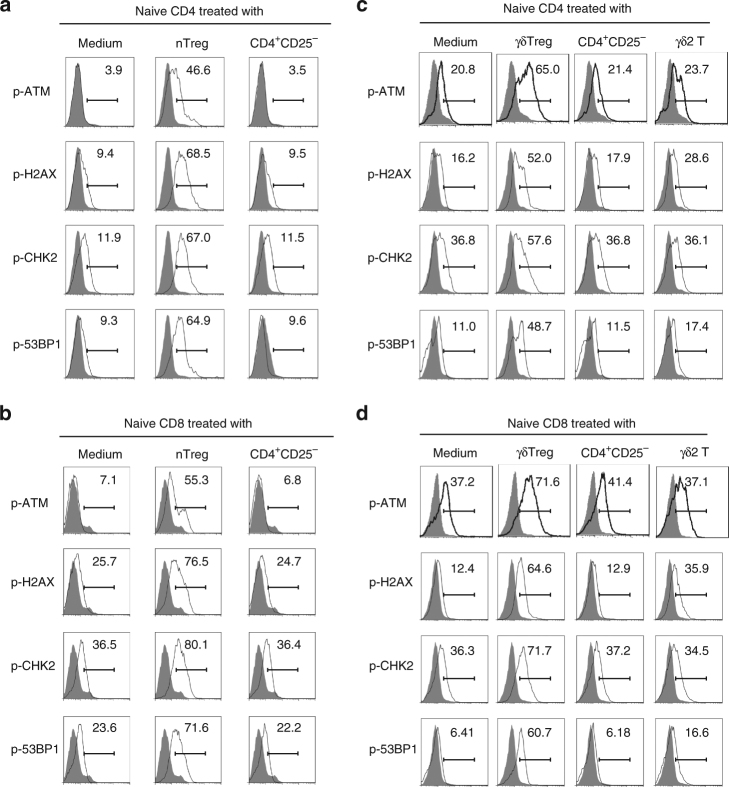
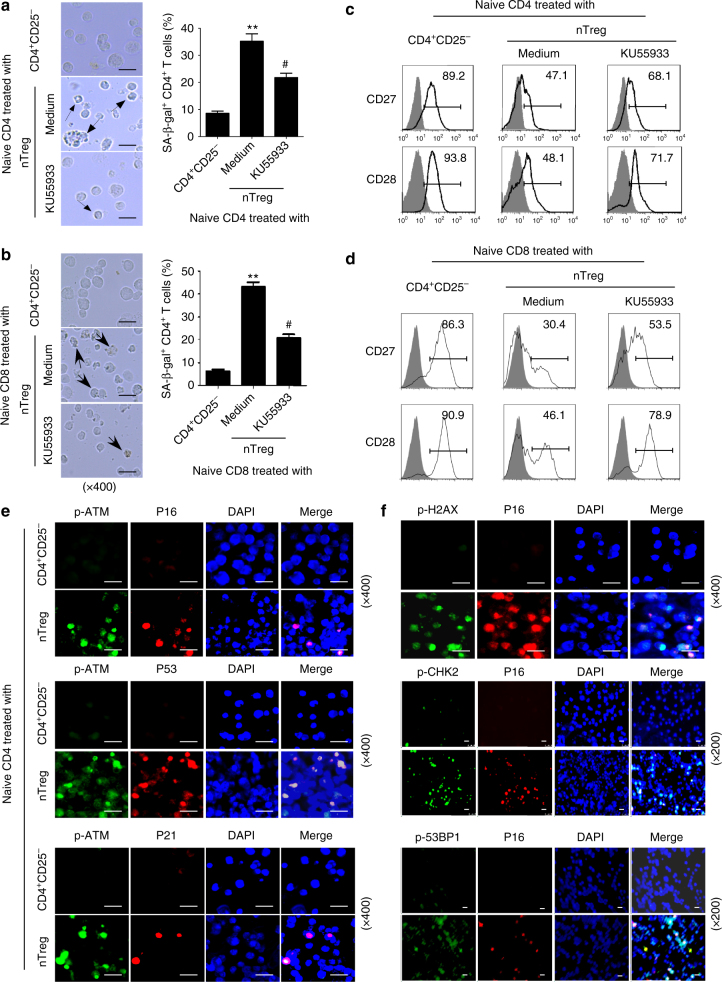
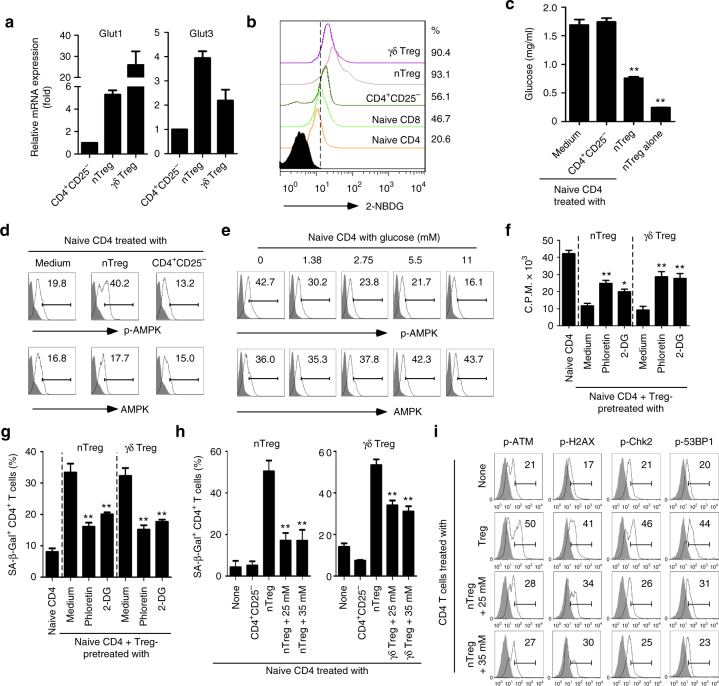
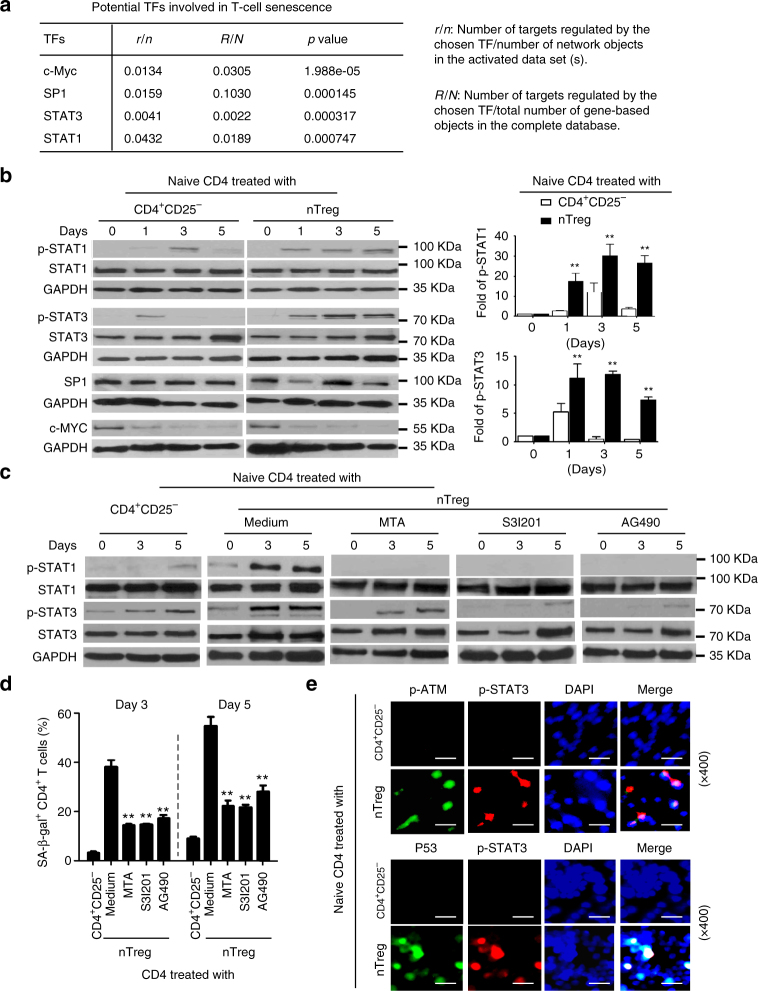
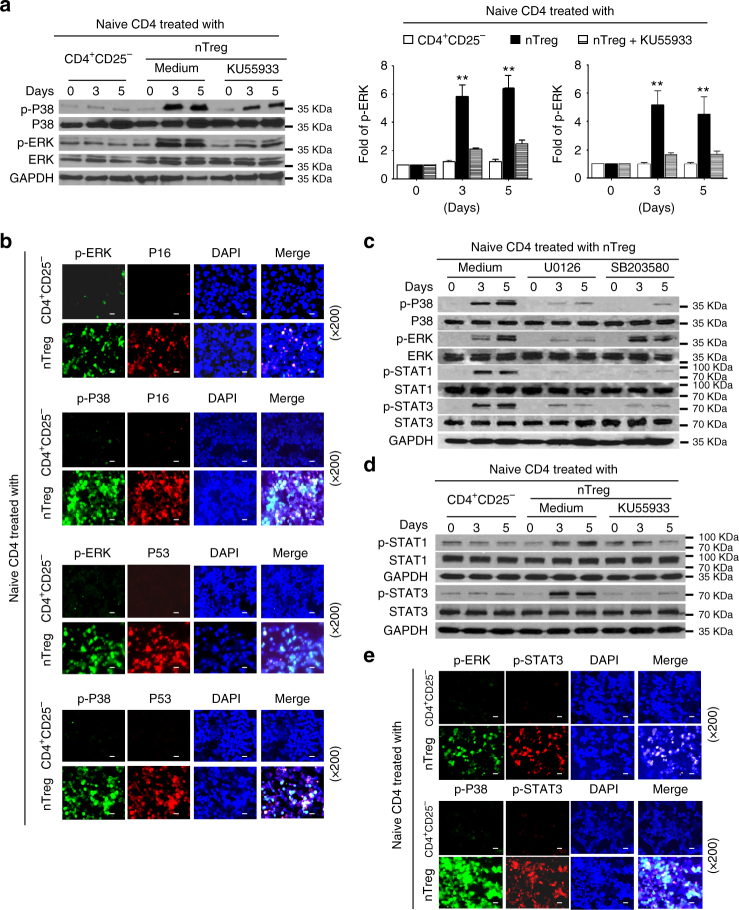
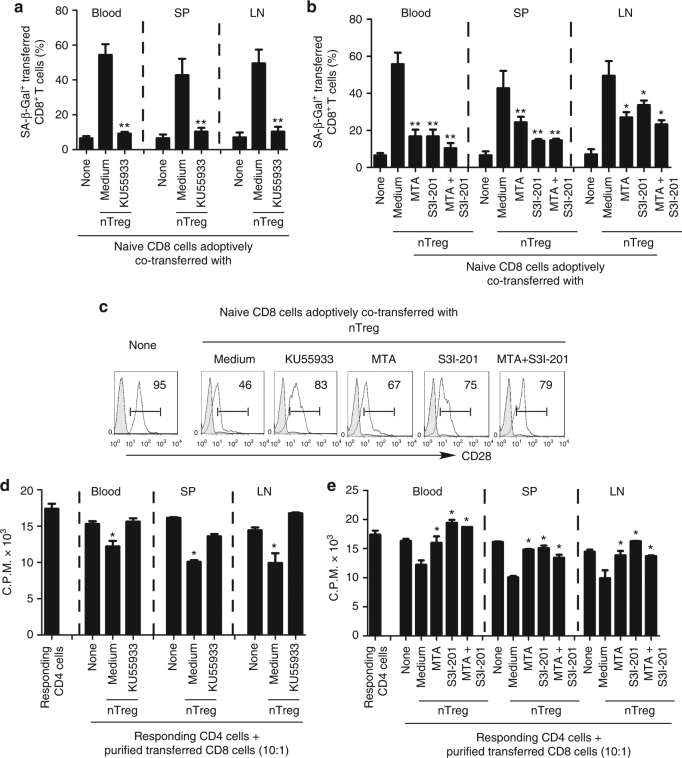
Defining the suppressive mechanisms used by regulatory T (Treg) cells is critical for the development of effective strategies for treating tumors and chronic infections. The molecular processes that occur in responder T cells that are suppressed by Treg cells are unclear. Here we show that human Treg cells initiate DNA damage in effector T cells caused by metabolic competition during cross-talk, resulting in senescence and functional changes that are molecularly distinct from anergy and exhaustion. ERK1/2 and p38 signaling cooperate with STAT1 and STAT3 to control Treg-induced effector T-cell senescence. Human Treg-induced T-cell senescence can be prevented via inhibition of the DNA damage response and/or STAT signaling in T-cell adoptive transfer mouse models. These studies identify molecular mechanisms of human Treg cell suppression and indicate that targeting Treg-induced T-cell senescence is a checkpoint for immunotherapy against cancer and other diseases associated with Treg cells.
Overview
The claims and statistics of this paper haven’t been checked yet.
Run the check — free, no account needed. It reads the open-access text and checks the sources it cites.
Integrity signals
Registry
Cites
Statistics
Figures
Verification
Claims the paper makes
The claims and statistics of this paper haven’t been checked yet.
Run the check — free, no account needed. It reads the open-access text and checks the sources it cites.
Claims other papers make about this one
Each is checked against this paper’s own text: does it say what the citing paper says it does?
In the citing paper
“The role of immunosenescence in tumors is sophisticated: the many factors involved include cAMP, glucose competition, and oncogenic stress in the tumor microenvironment, which can induce the senescence of T cells, macrophages, natural killer cells, and dendritic cells.”
From Immunosenescence: a key player in cancer development (2020) · cites this paper as [53]
In the citing paper
“In addition, tumor cells activate the PKA-CREB and P38 pathways by producing cAMP, thereby causing DNA damage and senescence of T cells [51, 53, 58–63].”
From Immunosenescence: a key player in cancer development (2020) · cites this paper as [53]
Self-check
Percentages, sums and reported differences re-computed from the paper’s own numbers.
The self-check needs the paper’s full text.
Citations
Cites
PD-1 and PD-L1 Immune Checkpoint Blockade to Treat Breast Cancer
Hartkopf, A. D., Taran, F., Wallwiener, M., Walter, C. B., Krämer, B., Grischke, E., & Brucker, S. Y. (2016) · Breast Care · doi:10.1159/000453569 · Cited by 30,989
The blockade of immune checkpoints in cancer immunotherapy
Pardoll, D. M. (2012) · Nature Reviews Cancer · doi:10.1038/nrc3239 · Cited by 13,838
Molecular and cellular insights into T cell exhaustion
Wherry, E. J., & Kurachi, M. (2015) · Nature Reviews Immunology · doi:10.1038/nri3862 · Cited by 4,652
Cellular senescence: when bad things happen to good cells
Campisi, J., & d'Adda di Fagagna, F. (2007) · Nature Reviews Molecular Cell Biology · doi:10.1038/nrm2233 · Cited by 4,441
Vignali, D. A. A., Collison, L. W., & Workman, C. J. (2008) · Nature Reviews Immunology · doi:10.1038/nri2343 · Cited by 3,463
Watterson, K. R., Bestow, D., Gallagher, J. R., Hamilton, D. L., Ashford, F. B., Meakin, P. J., & Ashford, M. L. J. (2012) · Neurosignals · doi:10.1159/000334144 · Cited by 3,395
Metabolic Competition in the Tumor Microenvironment Is a Driver of Cancer Progression
Chang, C.-H., Qiu, J., O’Sullivan, D., Buck, M. D., Noguchi, T., Curtis, J. D., Chen, Q., Gindin, M., Gubin, M. M., van der Windt, G. J. W., et al. (2015) · Cell · doi:10.1016/j.cell.2015.08.016 · Cited by 3,331
Sakaguchi, S. (2003) · Annual Review of Immunology · doi:10.1146/annurev.immunol.21.120601.141122 · Cited by 3,315
Persistent DNA damage signalling triggers senescence-associated inflammatory cytokine secretion
Rodier, F., Coppé, J.-P., Patil, C. K., Hoeijmakers, W. A. M., Muñoz, D. P., Raza, S. R., Freund, A., Campeau, E., Davalos, A. R., & Campisi, J. (2009) · Nature Cell Biology · doi:10.1038/ncb1909 · Cited by 2,232
Molecular Signature of CD8+ T Cell Exhaustion during Chronic Viral Infection
Wherry, E. J., Ha, S.-J., Kaech, S. M., Haining, W. N., Sarkar, S., Kalia, V., Subramaniam, S., Blattman, J. N., Barber, D. L., & Ahmed, R. (2007) · Immunity · doi:10.1016/j.immuni.2007.09.006 · Cited by 2,103
CD4+CD25+ suppressor T cells: more questions than answers
Shevach, E. M. (2002) · Nature reviews. Immunology · doi:10.1038/nri821 · Cited by 2,097
Oncogene-Induced Senescence Relayed by an Interleukin-Dependent Inflammatory Network
Kuilman, T., Michaloglou, C., Vredeveld, L. C. W., Douma, S., van Doorn, R., Desmet, C. J., Aarden, L. A., Mooi, W. J., & Peeper, D. S. (2008) · Cell · doi:10.1016/j.cell.2008.03.039 · Cited by 2,086
Blackburn, S. D., Shin, H., Haining, W. N., Zou, T., Workman, C. J., Polley, A., Betts, M. R., Freeman, G. J., Vignali, D. A. A., & Wherry, E. J. (2009) · Nature Immunology · doi:10.1038/ni.1679 · Cited by 2,062
Mechanisms of Foxp3+ T Regulatory Cell-Mediated Suppression
Shevach, E. M. (2009) · Immunity · doi:10.1016/j.immuni.2009.04.010 · Cited by 1,787
Molecular Signature of CD8+ T Cell Exhaustion during Chronic Viral Infection
Wherry, E. J., Ha, S., Kaech, S. M., Haining, W. N., Sarkar, S., Kalia, V., Subramaniam, S., Blattman, J. N., Barber, D. L., & Ahmed, R. (2007) · Immunity · doi:10.1016/j.immuni.2007.11.006 · Cited by 1,355
Fourcade, J., Sun, Z., Benallaoua, M., Guillaume, P., Luescher, I. F., Sander, C., Kirkwood, J. M., Kuchroo, V., & Zarour, H. M. (2010) · Journal of Experimental Medicine · doi:10.1084/jem.20100637 · Cited by 1,307
Macintyre, A. N., Gerriets, V. A., Nichols, A., Michalek, R. D., Rudolph, M. C., Deoliveira, D., Anderson, S. M., Abel, E. D., Chen, B. J., Hale, L. P., et al. (2014) · Cell Metabolism · doi:10.1016/j.cmet.2014.05.004 · Cited by 1,169
Brenchley, J. M., Karandikar, N. J., Betts, M. R., Ambrozak, D. R., Hill, B. J., Crotty, L. E., Casazza, J. P., Kuruppu, J., Migueles, S. A., Connors, M., et al. (2003) · Blood · doi:10.1182/blood-2002-07-2103 · Cited by 1,073
Ras-induced interleukin-8 expression plays a critical role in tumor growth and angiogenesis
Sparmann, A., & Bar‐Sagi, D. (2004) · Cancer Cell · doi:10.1016/j.ccr.2004.09.028 · Cited by 880
Jacobs, S. R., Herman, C. E., MacIver, N. J., Wofford, J. A., Wieman, H. L., Hammen, J. J., & Rathmell, J. C. (2008) · The Journal of Immunology · doi:10.4049/jimmunol.180.7.4476 · Cited by 853
Exhaustion of tumor-specific CD8+ T cells in metastases from melanoma patients
Baitsch, L., Baumgaertner, P., Devêvre, E., Raghav, S. K., Legat, A., Barba, L., Wieckowski, S., Bouzourene, H., Deplancke, B., Romero, P., et al. (2011) · Journal of Clinical Investigation · doi:10.1172/jci46102 · Cited by 845
Use of Cells Expressing γ Subunit Variants to Identify Diverse Mechanisms of AMPK Activation
Hawley, S. A., Ross, F. A., Chevtzoff, C., Green, K. A., Evans, A., Fogarty, S., Towler, M. C., Brown, L. J., Ogunbayo, O. A., Evans, A. M., et al. (2010) · Cell Metabolism · doi:10.1016/j.cmet.2010.04.001 · Cited by 773
Toll-Like Receptor 8-Mediated Reversal of CD4 + Regulatory T Cell Function
Peng, G., Guo, Z., Kiniwa, Y., Voo, K. S., Peng, W., Fu, T., Wang, D. Y., Li, Y., Wang, H. Y., & Wang, R. (2005) · Science · doi:10.1126/science.1113401 · Cited by 756
Self-citationT cell anergy, exhaustion, senescence, and stemness in the tumor microenvironment
Crespo, J., Sun, H., Welling, T. H., Tian, Z., & Zou, W. (2013) · Current Opinion in Immunology · doi:10.1016/j.coi.2012.12.003 · Cited by 752
Regulatory T cells and infection: a dangerous necessity
Belkaid, Y. (2007) · Nature reviews. Immunology · doi:10.1038/nri2189 · Cited by 746
Ebert, P. J. R., Cheung, J., Yang, Y., McNamara, E., Hong, R., Moskalenko, M., Gould, S. E., Maecker, H., Irving, B. A., Kim, J. M., et al. (2016) · Immunity · doi:10.1016/j.immuni.2016.01.024 · Cited by 713
Quezada, S. A. (2006) · Journal of Clinical Investigation · doi:10.1172/jci27745 · Cited by 700
Transcriptional Mechanisms Underlying Lymphocyte Tolerance
Macián, F., Garcia-Cozar, F. J., Im, S., Horton, H. F., Byrne, M. C., & Rao, A. (2002) · Cell · doi:10.1016/s0092-8674(02)00767-5 · Cited by 687
Zhou, Q., Munger, M. E., Veenstra, R. G., Weigel, B. J., Hirashima, M., Munn, D. H., Murphy, W. J., Azuma, M., Anderson, A. C., Kuchroo, V. K., et al. (2011) · Blood · doi:10.1182/blood-2010-10-310425 · Cited by 675
Cyclic adenosine monophosphate is a key component of regulatory T cell–mediated suppression
Bopp, T., Becker, C., Klein, M., Klein‐Hessling, S., Palmetshofer, A., Serfling, E., Heib, V., Becker, M., Kubach, J., Schmitt, S., et al. (2007) · The Journal of Experimental Medicine · doi:10.1084/jem.20062129 · Cited by 659
Metabolic control of type 1 regulatory T cell differentiation by AHR and HIF1-α
Mascanfroni, I. D., Takenaka, M. C., Yeste, A., Patel, B., Wu, Y., Kenison, J. E., Siddiqui, S., Basso, A. S., Otterbein, L. E., Pardoll, D. M., et al. (2015) · Nature Medicine · doi:10.1038/nm.3868 · Cited by 457
CD28 extinction in human T cells: altered functions and the program of T‐cell senescence
Vallejo, A. N. (2005) · Immunological Reviews · doi:10.1111/j.0105-2896.2005.00256.x · Cited by 446
Wofford, J. A., Wieman, H. L., Jacobs, S. R., Zhao, Y., & Rathmell, J. C. (2007) · Blood · doi:10.1182/blood-2007-06-096297 · Cited by 424
Oncogenic Ras-induced secretion of IL6 is required for tumorigenesis
Ancrile, B., Lim, K.-H., & Counter, C. M. (2007) · Genes & Development · doi:10.1101/gad.1549407 · Cited by 422
Peng, G., Wang, H. Y., Peng, W., Kiniwa, Y., Seo, K. H., & Wang, R. (2007) · Immunity · doi:10.1016/j.immuni.2007.05.020 · Cited by 419
Self-citationRegulatory T-cell inhibition versus depletion: the right choice in cancer immunotherapy
Colombo, M. P., & Piconese, S. (2007) · Nature reviews. Cancer · doi:10.1038/nrc2250 · Cited by 414
Maintenance of Human T Cell Anergy: Blocking of IL-2 Gene Transcription by Activated Rap1
Boussiotis, V. A., Freeman, G. J., Berezovskaya, A., Barber, D. L., & Nadler, L. M. (1997) · Science · doi:10.1126/science.278.5335.124 · Cited by 408
Wang, W., Chen, J. X., Liao, R., Deng, Q., Zhou, J. J., Huang, S., & Sun, P. (2002) · Molecular and Cellular Biology · doi:10.1128/mcb.22.10.3389-3403.2002 · Cited by 376
Lanna, A., Henson, S. M., Escors, D., & Akbar, A. N. (2014) · Nature Immunology · doi:10.1038/ni.2981 · Cited by 328
Anandasabapathy (2003) · doi:10.1016/s1074-7613(03)00084-0 · Cited by 285
Regulatory T cells and treatment of cancer
Curiel, T. J. (2008) · Current Opinion in Immunology · doi:10.1016/j.coi.2008.04.008 · Cited by 268
Kavanagh, B., O'Brien, S., Lee, D., Hou, Y., Weinberg, V., Rini, B., Allison, J. P., Small, E. J., & Fong, L. (2008) · Blood · doi:10.1182/blood-2007-11-125435 · Cited by 256
Tumor-Infiltrating γδ T Lymphocytes Predict Clinical Outcome in Human Breast Cancer
Ma, C., Zhang, Q., Ye, J., Wang, F., Zhang, Y., Wevers, E., Schwartz, T. L., Hunborg, P., Varvares, M. A., Hoft, D. F., et al. (2012) · The Journal of Immunology · doi:10.4049/jimmunol.1201892 · Cited by 221
Self-citationYe, J., Ma, C., Hsueh, E. C., Eickhoff, C. S., Zhang, Y., Varvares, M. A., Hoft, D. F., & Peng, G. (2013) · The Journal of Immunology · doi:10.4049/jimmunol.1202369 · Cited by 203
Self-citationHuman regulatory T cells induce T-lymphocyte senescence
Ye, J., Huang, X., Hsueh, E. C., Zhang, Q., Ma, C., Zhang, Y., Varvares, M. A., Hoft, D. F., & Peng, G. (2012) · Blood · doi:10.1182/blood-2012-03-416040 · Cited by 198
Self-citationEtoposide Induces ATM-Dependent Mitochondrial Biogenesis through AMPK Activation
Fu, X., Wan, S., Lyu, Y. L., Liu, L. F., & Qi, H. (2008) · PLoS ONE · doi:10.1371/journal.pone.0002009 · Cited by 183
Powell, D. J., Felipe-Silva, A., Merino, M. J., Ahmadzadeh, M., Allen, T., Levy, C. L., White, D. E., Mavroukakis, S. A., Kreitman, R. J., Rosenberg, S. A., et al. (2007) · The Journal of Immunology · doi:10.4049/jimmunol.179.7.4919 · Cited by 169
TLR8 signaling enhances tumor immunity by preventing tumor‐induced T‐cell senescence
Ye, J., Ma, C., Hsueh, E. C., Dou, J., Mo, W., Liu, S., Han, B., Huang, Y., Zhang, Y., Varvares, M. A., et al. (2014) · EMBO Molecular Medicine · doi:10.15252/emmm.201403918 · Cited by 161
Self-citationInflammatory signaling and cellular senescence
Ren, J., Pan, J., Lu, Y.-P., Sun, P., & Han, J. (2008) · Cellular Signalling · doi:10.1016/j.cellsig.2008.10.011 · Cited by 153
Nutrient Competition: A New Axis of Tumor Immunosuppression
Sukumar, M., Roychoudhuri, R., & Restifo, N. P. (2015) · Cell · doi:10.1016/j.cell.2015.08.064 · Cited by 142
Molecular profiling to identify relevant immune resistance mechanisms in the tumor microenvironment
Gajewski, T. F., Fuertes, M. B., Spaapen, R. M., Zheng, Y., & Kline, J. P. (2010) · Current Opinion in Immunology · doi:10.1016/j.coi.2010.11.013 · Cited by 138
Zheng, Y., Zha, Y., Driessens, G., Locke, F. L., & Gajewski, T. F. (2012) · The Journal of Experimental Medicine · doi:10.1084/jem.20120342 · Cited by 106
Effros, R. B. (1998) · The American Journal of Human Genetics · doi:10.1086/301845 · Cited by 105
Specific Recruitment of γδ Regulatory T Cells in Human Breast Cancer
Ye, J., Ma, C., Wang, F., Hsueh, E. C., Tóth, K., Huang, Y., Mo, W., Liu, S., Han, B., Varvares, M. A., et al. (2013) · Cancer Research · doi:10.1158/0008-5472.can-13-0348 · Cited by 105
Self-citationLoss of T cell receptor-induced Bmi-1 in the KLRG1 + senescent CD8 + T lymphocyte
Heffner, M., & Fearon, D. T. (2007) · Proceedings of the National Academy of Sciences · doi:10.1073/pnas.0706040104 · Cited by 92
Ye, J., Su, X., Hsueh, E. C., Zhang, Y., Koenig, J. M., Hoft, D. F., & Peng, G. (2011) · European Journal of Immunology · doi:10.1002/eji.201040682 · Cited by 89
Self-citationp38α and p38γ Mediate Oncogenic ras-induced Senescence through Differential Mechanisms
Kwong, J., Hong, L., Liao, R., Deng, Q., Han, J., & Sun, P. (2009) · Journal of Biological Chemistry · doi:10.1074/jbc.m808327200 · Cited by 85
Controlling T cell senescence in the tumor microenvironment for tumor immunotherapy
Ye, J., & Peng, G. (2015) · OncoImmunology · doi:10.4161/2162402x.2014.994398 · Cited by 78
Self-citationYu, Y.-C., Yang, P., Chuah, Q.-Y., Huang, Y.-H., Peng, C.-W., Lee, Y., & Chiu, S.-J. (2013) · Scientific Reports · doi:10.1038/srep01675 · Cited by 72
DNA damage-induced cellular senescence is sufficient to suppress tumorigenesis: a mouse model
Van Nguyen, T., Puebla-Osorio, N., Pang, H., Dujka, M. E., & Zhu, C. (2007) · The Journal of Experimental Medicine · doi:10.1084/jem.20062453 · Cited by 72
GRAIL: a unique mediator of CD4 T‐lymphocyte unresponsiveness
Whiting, C. C., Su, L., Lin, J. T., & Fathman, C. G. (2010) · FEBS Journal · doi:10.1111/j.1742-4658.2010.07922.x · Cited by 60
Powell, D. J., de Vries, C. R., Allen, T., Ahmadzadeh, M., & Rosenberg, S. A. (2007) · Journal of Immunotherapy · doi:10.1097/cji.0b013e3180600ff9 · Cited by 59
Jiao, S., Meng, F., Zhang, J. C., Yang, X. W., Zheng, X., & Wang, L. (2011) · Molecular and Cellular Biochemistry · doi:10.1007/s11010-011-1197-3 · Cited by 34
Distinct Molecular Program Imposed on CD4+ T Cell Targets by CD4+CD25+ Regulatory T Cells
Sukiennicki, T. L., & Fowell, D. J. (2006) · The Journal of Immunology · doi:10.4049/jimmunol.177.10.6952 · Cited by 33
Cited by
Sorted by citations
Cellular Senescence: Aging, Cancer, and Injury
Calcinotto, A., Kohli, J., Zagato, E., Pellegrini, L., Demaria, M., & Alimonti, A. (2019) · Physiological Reviews · doi:10.1152/physrev.00020.2018 · Cited by 1,270
Immunosenescence: molecular mechanisms and diseases
Liu, Z., Liang, Q., Ren, Y., Guo, C., Ge, X., Wang, L., Cheng, Q., Luo, P., Zhang, Y., & Han, X. (2023) · Signal Transduction and Targeted Therapy · doi:10.1038/s41392-023-01451-2 · Cited by 1,082
Self-citationThe senescence-associated secretory phenotype and its physiological and pathological implications
Wang, B., Han, J., Elisseeff, J. H., & Demaria, M. (2024) · Nature Reviews Molecular Cell Biology · doi:10.1038/s41580-024-00727-x · Cited by 948
Li, C., Jiang, P., Wei, S., Xu, X., & Wang, J. (2020) · Molecular Cancer · doi:10.1186/s12943-020-01234-1 · Cited by 972
Immunosenescence: a key player in cancer development
Lian, J., Yue, Y., Yu, W., & Zhang, Y. (2020) · Journal of Hematology & Oncology · doi:10.1186/s13045-020-00986-z · Cited by 510
Self-citation
Metadata
- Authors
- Liu, X., Mo, W., Ye, J., Li, L., Zhang, Y., Hsueh, E. C., Hoft, D. F., & Peng, G.
- Affiliations
- Saint Louis University (US)
- Corresponding author
- Peng, Guangyong
- Venue
- Nature Communications
- Published
- 2018-01-16
- Volume
- 9
- Issue
- 1
- Pages
- 249-249
- ISSN
- 2041-1723 (ISSN-L)
- PMC
- PMC5770447
- OpenAlex
- W2782893319
- Cited by
- 224
- References
- 64
- Citations by year
- 2026: 17 · 2025: 40 · 2024: 39 · 2023: 16 · 2022: 30 · 2021: 32 · 2020: 28 · 2019: 13 · 2018: 9
- FWCI
- 8.81
- Type
- journal article
- Language
- en
- Open access
- gold
- doi.org
- Locations
- Nature Communications (publishedVersion, cc-by)
- Europe PMC (PubMed Central) (publishedVersion, cc-by)
- PubMed Central (publishedVersion, cc-by)
- PubMed (publishedVersion)
- RePEc: Research Papers in Economics (submittedVersion)
- DOAJ (DOAJ: Directory of Open Access Journals) (submittedVersion)
- DOAJ (DOAJ: Directory of Open Access Journals) (submittedVersion, cc-by-sa)
- Funders
- American Cancer Society (RSG‐10‐160‐01‐LIB)
- Melanoma Research Alliance
- Washington University in St. Louis
- National Institutes of Health (AI097852)
- National Cancer Institute (R01CA184379)
- National Institute of Allergy and Infectious Diseases (R21AI094478, R21AI097852)
- Topics
- Life Sciences › Immunology and Microbiology › Immunology › T-cell and B-cell Immunology
- Life Sciences › Biochemistry, Genetics and Molecular Biology › Cell Biology › Telomeres, Telomerase, and Senescence
- Health Sciences › Medicine › Oncology › Cancer Immunotherapy and Biomarkers
- Keywords
- regulatory T cells, effector T cells, metabolic competition, DNA damage, ERK signaling, p38 MAPK signaling, STAT1, STAT3, DNA damage response, T cell exhaustion, anergy, adoptive T cell therapy, cancer immunotherapy, chronic infection
- MeSH terms
- DNA Damage, Glucose, Humans, Immunotherapy, Cellular Senescence, MAP Kinase Signaling System, T-Lymphocytes, Regulatory, STAT1 Transcription Factor, STAT3 Transcription Factor
About these checks
Registry, retraction, Cites and statistics results are computed, not judged, with one exception: a printed reference that no index lists is read once by a model before it counts as a citation error. Claims are extracted by a model and kept only when their quote appears verbatim in the text; each cited source is then checked, with a model’s help, for whether it says what the claim relies on. Those verdicts can be wrong — read the claim’s quote and the cited source before relying on one.
Statistics and arithmetic are recomputed, not judged.
Confidence bands are shown only for fields calibrated on our annotated test set. None is calibrated yet, so no band is shown.
What counts as a claim ›How we measure confidence ›How we check this ›
Are you an author, or do you see a problem with this page? Request a review
