

Epigenetic modulation of inflammation and synaptic plasticity promotes resilience against stress in mice
Open accessThe DOI matches its Crossref record; 70 of the 70 references it cites were found in a registry or an index.
Abstract
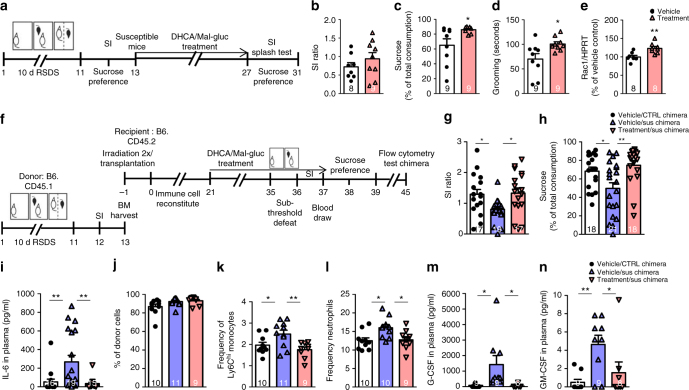
Major depressive disorder is associated with abnormalities in the brain and the immune system. Chronic stress in animals showed that epigenetic and inflammatory mechanisms play important roles in mediating resilience and susceptibility to depression. Here, through a high-throughput screening, we identify two phytochemicals, dihydrocaffeic acid (DHCA) and malvidin-3′-O-glucoside (Mal-gluc) that are effective in promoting resilience against stress by modulating brain synaptic plasticity and peripheral inflammation. DHCA/Mal-gluc also significantly reduces depression-like phenotypes in a mouse model of increased systemic inflammation induced by transplantation of hematopoietic progenitor cells from stress-susceptible mice. DHCA reduces pro-inflammatory interleukin 6 (IL-6) generations by inhibiting DNA methylation at the CpG-rich IL-6 sequences introns 1 and 3, while Mal-gluc modulates synaptic plasticity by increasing histone acetylation of the regulatory sequences of the Rac1 gene. Peripheral inflammation and synaptic maladaptation are in line with newly hypothesized clinical intervention targets for depression that are not addressed by currently available antidepressants.
Overview
The claims and statistics of this paper haven’t been checked yet.
Free: it reads the open-access text and checks the first 5 claims that cite a source we can check. Create a free account to check every claim.
Integrity signals
Registry
Cites
Statistics
Figures
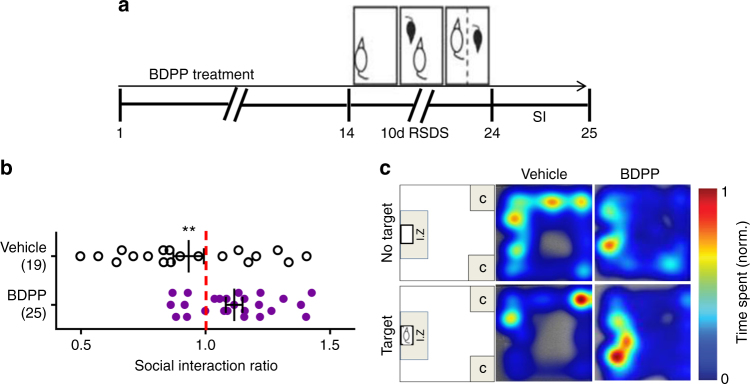
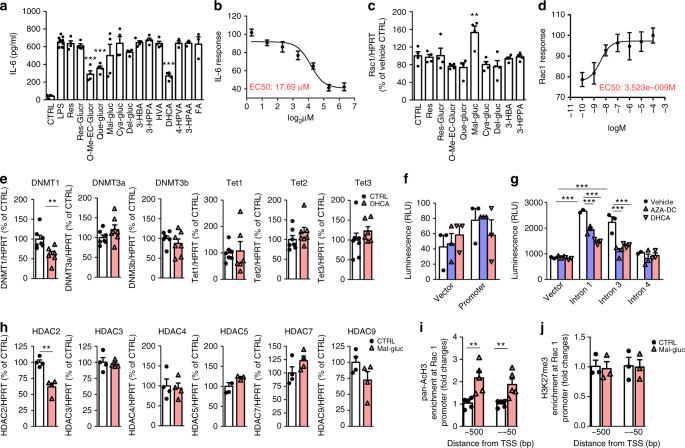
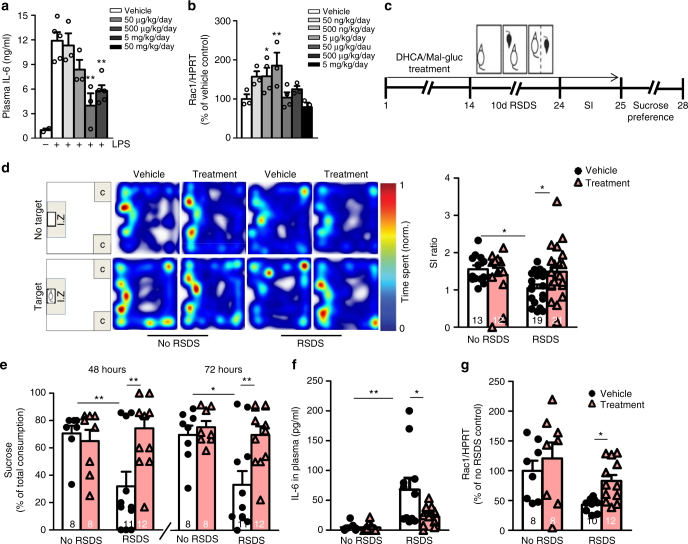
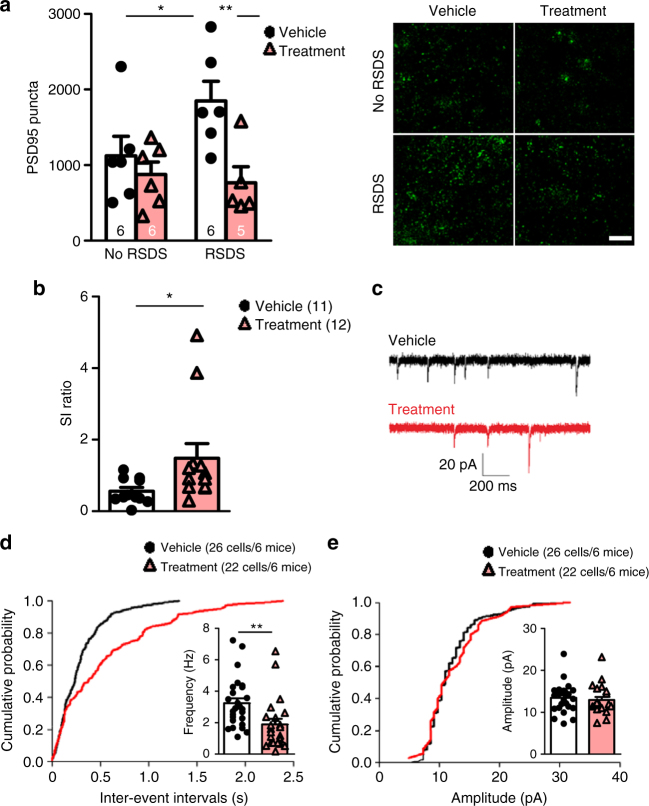
Verification
Claims the paper makes
The claims and statistics of this paper haven’t been checked yet.
Free: it reads the open-access text and checks the first 5 claims that cite a source we can check. Create a free account to check every claim.
Claims other papers make about this one
Each is checked against this paper’s own text: does it say what the citing paper says it does?
The cited source says what the claim attributes to it.
In the citing paper
“Similarly, individual dietary components, such as dietary phytochemicals, have been found to reduce depressive-like behaviours through epigenetic mechanisms targeting systemic inflammation and neuronal plasticity in mice.60”
From The role of epigenetics in psychological resilience (2021) · cites this paper as [60]
Self-check
Percentages, sums and reported differences re-computed from the paper’s own numbers.
The self-check needs the paper’s full text.
Citations
Cites
Analysis of Relative Gene Expression Data Using Real-Time Quantitative PCR and the 2−ΔΔCT Method
Livak, K. J., & Schmittgen, T. D. (2001) · Methods · doi:10.1006/meth.2001.1262 · Cited by 180,860
Molecular Mechanisms of Depression: Perspectives on New Treatment Strategies
Lang, U. E., & Borgwardt, S. (2013) · Cellular Physiology and Biochemistry · doi:10.1159/000350094 · Cited by 8,475
Natural products as sources of new drugs over the last 25 years
Newman, D. J., & Cragg, G. M. (2007) · Journal of Natural Products · doi:10.1021/np068054v · Cited by 5,517
A Meta-Analysis of Cytokines in Major Depression
Dowlati, Y., Herrmann, N., Swardfager, W., Liu, H., Sham, L., Reim, E. K., & Lanctôt, K. L. (2010) · Biological Psychiatry · doi:10.1016/j.biopsych.2009.09.033 · Cited by 4,729
Mutation of the mouse klotho gene leads to a syndrome resembling ageing
Kuro-o, M., Matsumura, Y., Aizawa, H., Kawaguchi, H., Suga, T., Utsugi, T., Ohyama, Y., Kurabayashi, M., Kaname, T., Kume, E., et al. (1997) · Nature · doi:10.1038/36285 · Cited by 3,837
The Neuroendocrinology of Stress: A Never Ending Story
Lightman, S. L. (2008) · Journal of Neuroendocrinology · doi:10.1111/j.1365-2826.2008.01711.x · Cited by 3,566
Nestler, E. J., Barrot, M., DiLeone, R. J., Eisch, A. J., Gold, S. J., & Monteggia, L. M. (2002) · Neuron · doi:10.1016/s0896-6273(02)00653-0 · Cited by 3,217
Associations of depression with C-reactive protein, IL-1, and IL-6: a meta-analysis.
Howren, M. B., Lamkin, D. M., & Suls, J. (2009) · Psychosomatic Medicine · doi:10.1097/psy.0b013e3181907c1b · Cited by 2,766
Krishnan, V., Han, M.-H., Graham, D. L., Berton, O., Renthal, W., Russo, S. J., LaPlant, Q., Graham, A., Lutter, M., Lagace, D. C., et al. (2007) · Cell · doi:10.1016/j.cell.2007.09.018 · Cited by 2,307
Self-citationA molecular and cellular theory of depression
Duman, R. S. (1997) · Archives of General Psychiatry · doi:10.1001/archpsyc.1997.01830190015002 · Cited by 2,129
Cited by
Items 201–273 of 273
Precise Nutrition and Functional Foods
Ivanović, N., Hippe, B., Lilja, S., & Haslberger, A. G. (2022) · Springer eBooks · doi:10.1007/978-3-031-10153-3_10 · Cited by 4
Lin, Y., Chen, K. C., Yang, Y. K., & Hsiao, Y. (2021) · Molecular Neurobiology · doi:10.1007/s12035-021-02336-7 · Cited by 3
Potential of Probiotics as an Adjunct for Patients with Major Depressive Disorder
Cang, W., Wu, J., Ding, R., Wang, W., Li, N., Shi, H., Shi, L. S., Lee, Y. K., & Wu, R. (2022) · Molecular Nutrition & Food Research · doi:10.1002/mnfr.202101057 · Cited by 7
Obrenovich, M. E., Jaskiw, G. E., Zhang, R., Willard, B. B., & Donskey, C. J. (2019) · Pathogens and Immunity · doi:10.20411/pai.v4i1.284 · Cited by 3
“Second, 3,4-DHHCA has been identified in rodent brain [59] where it can promote brain plasticity and attenuate some depression-like phenotypes [60].”
BackgroundDietary antioxidants, epigenetics, and brain aging: A focus on resveratrol
Griñán‐Ferré, C., Izquierdo, V., & Pallàs, M. (2020) · Elsevier eBooks · doi:10.1016/b978-0-12-817780-8.00022-0 · Cited by 4
Lifestyle and preventive medical epigenetics
Sanusi, K. O., Uthman, Y. A., Ooi, D. J., Ismail, M., & Imam, M. U. (2021) · Elsevier eBooks · doi:10.1016/b978-0-12-823928-5.00024-4 · Cited by 3
From Gut Microbiomes to Infectious Pathogens: Neurological Disease Game Changers
Muhasina, K. M., Ghosh, P., Nagappan, K., Palaniswamy, D. S., Begum, R., Islam, M. R., Tagde, P., Shaikh, N. K., Farahim, F., & Mondal, T. K. (2024) · Molecular Neurobiology · doi:10.1007/s12035-024-04323-0 · Cited by 6
“Metabolites including malvidin-3-O-glucoside and querce-tin-3-O-glucuronide [126] reduced inflammation and regulated synaptic plasticity.”
Marzo, C. M., Bianconi, M., Commisso, M., Gambini, S., Chiamulera, C., Avesani, L., Negri, S., & Guzzo, F. (2025) · PLoS ONE · doi:10.1371/journal.pone.0326134 · Cited by 2
“…the investigation of compound bioavailability recently led to the identification of active molecules (and their metabolic products in mice) in a brain-bioactive dietary polyphenol preparation composed of different grape ingredients, revealing their molecular targets and mechanisms of action [30].”
Immunity in Rodent Models of Stress
Hachenberg, S., Russo, S. J., & Cathomas, F. (2025) · Biological Psychiatry · doi:10.1016/j.biopsych.2025.11.007 · Cited by 5
Self-citationWilliams, O. O. F., Coppolino, M., Manduca, J. D., Demers, T. C., Henry-Duru, P. T., Mueller, T. C., Soubeyrand, E., Perrin, C. J., Akhtar, T. A., & Perreault, M. L. (2026) · Biomedicine & Pharmacotherapy · doi:10.1016/j.biopha.2025.118949 · Cited by 3
Stress, Immune System and the Brain
Bourgognon, J.-M., McColl, A., Suessmilch, M., Krishnadas, R., & Cavanagh, J. (2021) · Cambridge University Press eBooks · doi:10.1017/9781108539623.004 · Cited by 3
Garay, Y. C., Cejas, R. B., Perondi, M. C., Gutiérrez, M. C., Parodi, P., Ferrero, F. A., Lardone, R. D., Valdomero, A., Cuadra, G. R., & Irazoqui, F. J. (2023) · Journal of Nutrition · doi:10.1016/j.tjnut.2023.02.036 · Cited by 2
Sun, T., Chen, Q., Mei, J., & Li, Y. (2023) · BMC Psychiatry · doi:10.1186/s12888-023-05248-z · Cited by 6
Functional foods and neuroinflammation: Focus on autism spectrum disorder and schizophrenia
Matrisciano, F. (2024) · Elsevier eBooks · doi:10.1016/b978-0-323-91747-6.00012-3 · Cited by 2
Li, Y., Liu, L., Zhang, Y., Bai, S., Jiang, Y., Lai, C., Li, X., & Bai, W. (2025) · Reproductive Sciences · doi:10.1007/s43032-024-01780-9 · Cited by 2
“Recent studies have highlighted their regulatory role in various epigenetic modification mechanisms, including DNA methylation [55], histone modification [56], and non-coding RNA regulation [57].”
The YEATS domain is a selective reader of histone methacrylation
Becht, D. C., Song, J., Selvam, K., Yin, K., Bai, W., Zhao, Y., Wu, R., Zheng, Y. G., & Kutateladze, T. G. (2025) · Structure · doi:10.1016/j.str.2025.04.010 · Cited by 2
Role of epigenetics in the brain
Matt, S. M., Roth, E. D., & Roth, T. L. (2021) · Elsevier eBooks · doi:10.1016/b978-0-12-823577-5.00007-6 · Cited by 2
Ganesan, A., Đermadi, D., Kalesinskas, L., Donato, M., Sowers, R., Utz, P. J., & Khatri, P. (2022) · iScience · doi:10.1016/j.isci.2022.105756 · Cited by 2
Discovery of drug lead compounds for Anti-Alzheimer's disease on the basis of synaptic plasticity
Wang, H., Tang, Q., Xue, Y., Gao, X., & Zhang, Y. (2023) · Heliyon · doi:10.1016/j.heliyon.2023.e18396 · Cited by 4
“4 Huperzine A 854,026 Huperzia serrata [24] 5 Curcumin 969,516 Curcuma longa [25] 6 Dihydromyricetin 161,557 Ampelopsis megalophylla [26] 7 Malvidin 3-O-glucoside 443,652 Vitis vinifera [27] 8 Andrographolide 5,318,517 Andrographis paniculata [28] 9 Puerarin 5,281,807 Pueraria montana [29] 10 Pratensein 5,281,803 Trif…”
BackgroundProbiotics, Gut Microbiota, and Epigenomics: A Review of Pre-Clinical and Clinical Investigations
Bhat, M. I., & Rashid, S. (2023) · Advances in medical diagnosis, treatment, and care (AMDTC) book series · doi:10.4018/978-1-7998-4120-3.ch008 · Cited by 1
Shao, Y., Zheng, Z., Chen, C., Zhou, J., Fang, X., Gong, X., & Xia, T. (2025) · Journal of Anesthesia and Translational Medicine · doi:10.1016/j.jatmed.2025.04.003 · Cited by 1
“Aggressive CD-1 mice were prepared for the experiments, 25 with the social defeat cages being separated by a clear and perforated acrylic board.”
Mechanism of antidepressant action of ketamine and differences between its two enantiomers
Zhan, J., Zhang, Y., Tian, H., Zhu, X., Guo, M., Qiu, Z., & Xia, Z. (2025) · Journal of Anesthesia and Translational Medicine · doi:10.1016/j.jatmed.2025.06.001 · Cited by 1
“137 Ketamine attenuates lipopolysaccharide (LPS)-induced depressive-like effects and LPS-induced depression by blocking NMDAR rather than activating AMPAR.”
Jaimes, M. S. V., Chaimano, S., Lin, S., Chang, Y., Yang, C.-T., Hsieh, S., Goh, J. O. S., Chu, Y.-W., & Tsai, M. (2025) · Psychoneuroendocrinology · doi:10.1016/j.psyneuen.2025.107624 · Cited by 1
Yuan, C., Li, L., Lin, H., Aubry, A., Parise, L. F., Morel, C., Chen, F., Wong, J., Russo, S. J., & Wang, J. (2025) · Neurobiology of Aging · doi:10.1016/j.neurobiolaging.2025.10.006 · Cited by 1
Self-citationMitra, S., Kumar, A., Pandey, M., Gill, A., Sharma, M., Pundir, S., Jangir, M., & Chawla, G. (2025) · iScience · doi:10.1016/j.isci.2025.114296 · Cited by 7
“99,100 Converging evidence has also revealed that oxidative stress is a key player in the pathogenesis of MDD. 101,102 Oxidative stress leads to the oxidation of ascorbic acid, resulting in the generation of dehydroascorbic acid and an increased turnover of ascorbic acid.”
Bioactive lipids and their impacts on epigenetics
Duttaroy, A. K. (2021) · Elsevier eBooks · doi:10.1016/b978-0-12-822405-2.00026-8 · Cited by 1
Veleri, S. (2021) · Elsevier eBooks · doi:10.1016/b978-0-323-85652-2.00015-4 · Cited by 2
Molecular Markers and Genomics for Food and Beverages Characterization
Vignani, R., Scali, M., & Lió, P. (2021) · Springer eBooks · doi:10.1007/978-981-15-9364-2_43-1 · Cited by 1
Obrenovich, M. E., Tackie‐Yarboi, E., Schiefer, I. T., Donskey, C. J., & Jaskiw, G. E. (2024) · Journal of Liquid Chromatography & Related Technologies · doi:10.1080/10826076.2024.2363308 · Cited by 1
“So far, at least 3,3 ′ - HPHPA [1] and 3 ′ ,4 ′ -DHHCA [29] are believed to be neuro-active.”
Skarke, C. (2020) · Circulation Genomic and Precision Medicine · doi:10.1161/circgen.120.003129 · Cited by 1
Litke, R. R., Vicari, J. M., Huang, B. T., Shapiro, L. R., Roh, K.-H., Silver, A. E., Talreja, P., Palacios, N., Yoon, Y., Kellner, C. P., et al. (2023) · bioRxiv (Cold Spring Harbor Laboratory) · doi:10.1101/2023.06.12.544352 · Cited by 2
“An interesting further implication of these observations is that the antipsychotic and antipsychotic effects of tricyclic compounds could be mediated by their anti-inflammatory effects, since these psychiatric conditions disorders are associated with increased inflammatory responses [86, 284].”
BackgroundOral Administration of Boldine Reduces Spare Nerve Injury-Induced Neuropathic PainPreprint
Pan, J., Toro, C. A., Chow, C., Duarte, Y., Sáez, J. C., Cardozo, C. P., & Zhao, W. (2024) · bioRxiv (Cold Spring Harbor Laboratory) · doi:10.1101/2024.11.05.622128 · Cited by 1
Self-citationAubry, A. (2018) · CUNY Academic Works (City University of New York)
Shepherd, R. (2019) · Journal of Underrepresented & Minority Progress · doi:10.32674/jump.v3i2.1809
SUSTAINABILITY OF ANIMALS IN SUSTAINABILITY OF ECOSYSTEMS (REVIEW)
Полоз, С. В., & Strelchenya, I. I. (2021) · Ecology and Animal World · doi:10.47612/2224-1647-2021-1-8-15
Léglise, M. (1992) · Nature et progrès
Osman, A., Hofford, R. S., Meckel, K. R., Dave, Y. A., Zeldin, S. M., Shipman, A. L., Lucerne, K. E., Trageser, K. J., Oguchi, T., Pasinetti, G. M., et al. (2022) · bioRxiv (Cold Spring Harbor Laboratory) · doi:10.1101/2022.06.14.496180
“Similar effects have been found in models of neurodegenerative diseases [12,17].”
ResultSelf-citationGanesan, A., Đermadi, D., Kalesinskas, L., Donato, M., Sowers, R., Utz, P. J., & Khatri, P. (2022) · bioRxiv (Cold Spring Harbor Laboratory) · doi:10.1101/2022.07.21.501033
“Dysregulation of HPTMs has been implicated in human diseases 34 such as cancer[2, 3], infectious diseases[4], mental illnesses[5] , and autoimmune disorders[6, 7].”
BackgroundDietary and Metabolic Compounds Affecting Covalent Histone Modifications
Davison, G. W. (2022) · Elsevier eBooks · doi:10.1016/b978-0-323-91909-8.00024-4
Mistura, E. L. (2023) · PNEI REVIEW · doi:10.3280/pnei2023-001003
Narain, P., Petković, A., Šušić, M., Haniffa, S., Drou, N., Arnoux, M., Anwar, M., & Chaudhury, D. (2023) · bioRxiv · doi:10.1101/2023.09.05.556324
“Upregulation of plasticity-related genes may be a part of a larger homeostatic response associated with stress resiliency (117,118).”
BackgroundMultiomics analysis reveals gut profiles in patients with different brain tumorsPreprint
Wang, H., Zhou, Y., Zhao, M., Li, S., Wen, Y., Wang, K., Wang, M., Tian, J., Xiang, W., Chen, C., et al. (2023) · Research Square · doi:10.21203/rs.3.rs-3383550/v1 · Cited by 1
Structural Analysis of 3,5-Bistrifluoromethylhydrocinnamic Acid
Lipiński, P. F. J., & Łyczko, K. (2024) · Crystals · doi:10.3390/cryst14040342
Bariweni, M. W., Kamenebali, I., & Denyefa, J. B. (2024) · Medical and Pharmaceutical Journal · doi:10.55940/medphar202474 · Cited by 2
Diet-Induced Histone Modifications: Implications for Human Health and Diseases
Mir, U. S., Mushtaq, A., Saqib, N., Tantray, W. W., & Altaf, M. (2024) · Epigenetics and human health · doi:10.1007/978-3-031-54215-2_2
Yang, X., Park, K., Kong, C. H., Cho, Y., Kim, D. Y., Kim, J. Y., Min, J. W., Jung, S. Y., & Ryu, J. H. (2024) · Natural Product Sciences · doi:10.20307/nps.2024.30.2.93
Anisman, H., Hayley, S. P., & Kusnecov, A. W. (2024) · Elsevier eBooks · doi:10.1016/b978-0-443-23565-8.00006-5
(2024) · Elsevier eBooks · doi:10.1016/b978-0-443-23565-8.09996-8
Prenatal and Early Postnatal Influences on Health
Anisman, H., Hayley, S. P., & Kusnecov, A. W. (2024) · Elsevier eBooks · doi:10.1016/b978-0-443-23565-8.00008-9
Rethinking mental health: The body’s impact on the brain
Hodes, G. E. (2025) · The Transmitter · doi:10.53053/gijw4741
Self-citation(2025) · Elsevier eBooks · doi:10.1016/b978-3-437-21835-4.00116-5
Kaur, P., Buttar, H. S., Wilson, D. W., Télessy, I. G., & Garg, V. K. (2025) · Elsevier eBooks · doi:10.1016/b978-0-443-22300-6.00036-x · Cited by 1
Marchidan, M., Rizk, M., Karpman, E., Lizzano, A., Fremont, R., Dobbs, M. F., Lee, J. H., Irizar, H., Lyu, W., Yin, Z., et al. (2026) · Contemporary Clinical Trials · doi:10.1016/j.cct.2026.108382
Self-citationLan, T., Li, Y., Fan, C., Wang, L., Wang, W., Chen, S., & Yu, S. Y. (2021) · Figshare · doi:10.6084/m9.figshare.16851441
Lin, Y., Lin, A., Cai, L., Huang, W., Yan, S., Wei, Y., Ruan, X., Fang, W., Dai, X., Cheng, J., et al. (2024) · Figshare · doi:10.6084/m9.figshare.26603815
Lan, T., Li, Y., Fan, C., Wang, L., Wang, W., Chen, S., & Yu, S. Y. (2021) · Figshare · doi:10.6084/m9.figshare.16851444
Lin, Y., Lin, A., Cai, L., Huang, W., Yan, S., Wei, Y., Ruan, X., Fang, W., Dai, X., Cheng, J., et al. (2024) · Figshare · doi:10.6084/m9.figshare.26603812
Lin, Y., Lin, A., Cai, L., Huang, W., Yan, S., Wei, Y., Ruan, X., Fang, W., Dai, X., Cheng, J., et al. (2024) · Figshare · doi:10.6084/m9.figshare.26603818
Lan, T., Li, Y., Fan, C., Wang, L., Wang, W., Chen, S., & Yu, S. Y. (2021) · Figshare · doi:10.6084/m9.figshare.16851453
Lan, T., Li, Y., Fan, C., Wang, L., Wang, W., Chen, S., & Yu, S. Y. (2021) · Figshare · doi:10.6084/m9.figshare.16851447
Lin, Y., Lin, A., Cai, L., Huang, W., Yan, S., Wei, Y., Ruan, X., Fang, W., Dai, X., Cheng, J., et al. (2024) · Figshare · doi:10.6084/m9.figshare.26603821
Qin, Z., Shi, D.-D., Li, W., Cheng, D., Zhang, Y.-D., Zhang, S., Tsoi, B., Zhao, J., Wang, Z., & Zhang, Z.-J. (2024) · Figshare · doi:10.6084/m9.figshare.26572114
Self-citationLin, Y., Lin, A., Cai, L., Huang, W., Yan, S., Wei, Y., Ruan, X., Fang, W., Dai, X., Cheng, J., et al. (2024) · Figshare · doi:10.6084/m9.figshare.26603824
Lan, T., Li, Y., Fan, C., Wang, L., Wang, W., Chen, S., & Yu, S. Y. (2021) · Figshare · doi:10.6084/m9.figshare.16851459
Wu, X., Tang, Y., He, Z., Yang, F., Liu, Y., Zhang, Q., Chen, A., Chen, Y., & Lin, C. K. S. (2026) · Molecular Pain · doi:10.1177/17448069261430202
“48,49 In our study, although microglia were activated and secreted pro-inflammatory cytokines, excitatory synaptic proteins and neurotransmitters showed no significant changes.”
Mini review on antidiabetic botanicals: molecular insights and future prospects
Selvi, G. S. A., Rani, T. P. K. P., Döss, A., Aranganayaki, J., Kabir, N. A., Pole, R. P. P., & Satheesh, S. (2026) · Oriental Pharmacy and Experimental Medicine · doi:10.1007/s13596-026-00893-7
Chemical Epigenetics: Small Molecules Targeting Chromatin Modifiers in Disease Modulation
Alum, B. N., Echegu, D. A., & Alum, E. U. (2026) · Cell Biochemistry and Biophysics · doi:10.1007/s12013-026-02049-5
Xia, X., Fan, L., Deng, F., Dong, B., Chen, X., Pu, Z., Peng, Y., & Li, X. (2026) · Journal of Ethnopharmacology · doi:10.1016/j.jep.2026.121701
Maraviroc alleviates neuropathic pain symptoms in a mouse model of spared nerve injury
Zhao, W., Bayrak, Ç. S., Chen, F., Lin, H., Zhang, B., & Wang, J. (2026) · Molecular Pharmacology · doi:10.1016/j.molpha.2026.100126
Self-citationEpigenetic regulation of inflammation by dopamine in primary human macrophages
Agarwal, Y., Ramani, M. D., Manikandan, S., Bonar, K. A., Montilla, J., Gaskill, P. J., & Matt, S. M. (2026) · Frontiers in Immunology · doi:10.3389/fimmu.2026.1779072
Yang, E., Lin, H., Alvarez, J., Russo, S. J., Toro-Chacon, C., & Pasinetti, G. M. (2026) · Research Square · doi:10.21203/rs.3.rs-10425197/v1
Self-citationWu, Z., Wang, B., Lin, H., Liu, L., & Li, D. (2026) · Therapeutic Advances in Respiratory Disease · doi:10.1177/17534666261488597 · Cited by 1
“70 However, direct evidence linking ILD-related hypoxia to neuroinflammation and psychiatric manifestations in human ILD populations remains unclear.”
Zheng, Y., Han, L., Zou, M., Wang, J., Yu, M., Cui, N., Lu, X., Lei, W., & Chen, G. (2026) · Progress in Neuro-Psychopharmacology and Biological Psychiatry · doi:10.1016/j.pnpbp.2026.111977
Self-citation
Metadata
- Authors
- Wang, J., Hodes, G. E., Zhang, H., Zhang, S., Zhao, W., Golden, S. A., Bi, W., Menard, C., Kana, V., Leboeuf, M., Xie, M., Bregman, D., Pfau, M. L., Flanigan, M. E., Esteban-Fernández, A., Yemul, S., Sharma, A., Ho, L., Dixon, R., Merad, M., Han, M.-H., Russo, S. J., & Pasinetti, G. M.
- Affiliations
- James J. Peters VA Medical Center (US)
- Icahn School of Medicine at Mount Sinai (US)
- Tisch Cancer Institute (US)
- University of North Texas (US)
- Corresponding author
- Pasinetti, Giulio M.
- ORCID
- Venue
- Nature Communications
- Published
- 2018-02-02
- Volume
- 9
- Issue
- 1
- Pages
- 477-477
- ISSN
- 2041-1723 (ISSN-L)
- PMC
- PMC5797143
- OpenAlex
- W2794098750
- Semantic Scholar
- 2e0eac2b13700710804b0bc10c92bce6765034c2
- Cited by
- 274
- References
- 70
- Citations by year
- 2026: 12 · 2025: 26 · 2024: 40 · 2023: 46 · 2022: 31 · 2021: 39 · 2020: 32 · 2019: 28 · 2018: 18
- FWCI
- 9.31
- Type
- journal article
- Language
- en
- Open access
- gold
- doi.org
- Licence
- cc-by
- creativecommons.org/licenses/by/4.0 (tdm)
- creativecommons.org/licenses/by/4.0 (vor)
- Locations
- Nature Communications (publishedVersion, cc-by)
- PubMed Central (publishedVersion, cc-by)
- PubMed (publishedVersion)
- University of North Texas Digital Library (University of North Texas) (submittedVersion)
- RePEc: Research Papers in Economics (submittedVersion)
- DOAJ (DOAJ: Directory of Open Access Journals) (submittedVersion, cc-by-sa)
- DOAJ (DOAJ: Directory of Open Access Journals) (submittedVersion)
- Minerva Access (University of Melbourne) (submittedVersion, cc-by)
- VTechWorks (Virginia Tech) (submittedVersion)
- Funders
- National Science Foundation (P50 AT008661-01)
- Office of Dietary Supplements (AT008661-01, P50 AT008661-01)
- U.S. Department of Veterans Affairs (IK6 BX003785)
- National Institutes of Health (NSF81200862, NIH-R01, MH104559)
- Geriatric Research Education and Clinical Center
- National Institute of Mental Health (R01MH090264, R21MH112081, P50MH096890, R01MH104559)
- National Center for Complementary and Integrative Health (P50AT008661, AT008661-01, AT008661)
- Topics
- Life Sciences › Neuroscience › Biological Psychiatry › Tryptophan and brain disorders
- Health Sciences › Medicine › Pharmacology (medical) › Treatment of Major Depression
- Life Sciences › Neuroscience › Behavioral Neuroscience › Stress Responses and Cortisol
- Keywords
- major depressive disorder, stress resilience, chronic stress, epigenetics, synaptic plasticity, peripheral inflammation, dihydrocaffeic acid, malvidin-3-glucoside, phytochemicals, interleukin-6, DNA methylation, histone acetylation, Rac1, hematopoietic progenitor cell transplantation, depression-like behavior, antidepressant targets
- MeSH terms
- Interleukin-6 Inhibitors, Animals, Anthocyanins, Caffeic Acids, Depression, Drug Evaluation, Preclinical, Glucosides, Inflammation, Male, Mice, Inbred C57BL, Neuronal Plasticity, Neuropeptides, Social Behavior, Stress, Psychological, Interleukin-6, Leukocyte Common Antigens, CpG Islands, rac1 GTP-Binding Protein, Epigenesis, Genetic, Polyphenols
About these checks
Registry, retraction, Cites and statistics results are computed, not judged, with one exception: a printed reference that no index lists is read once by a model before it counts as a citation error. Claims are extracted by a model and kept only when their quote appears verbatim in the text; each cited source is then checked, with a model’s help, for whether it says what the claim relies on. Those verdicts can be wrong — read the claim’s quote and the cited source before relying on one.
Statistics and arithmetic are recomputed, not judged.
Confidence bands are shown only for fields calibrated on our annotated test set. None is calibrated yet, so no band is shown.
What counts as a claim ›How we measure confidence ›How we check this ›
Are you an author, or do you see a problem with this page? Request a review
Data sources
Bibliographic data: Semantic Scholar, OpenAlex, Crossref.
Contains information from the Semantic Scholar Academic Graph Datasets, made available under the ODC Attribution License (ODC-BY 1.0).
Semantic Scholar’s data is described in: Kinney, R., et al. (2023). The Semantic Scholar Open Data Platform. arXiv:2301.10140.
