

Epigenetic modulation of inflammation and synaptic plasticity promotes resilience against stress in mice
Open accessThe DOI matches its Crossref record; 70 of the 70 references it cites were found in a registry or an index.
Abstract
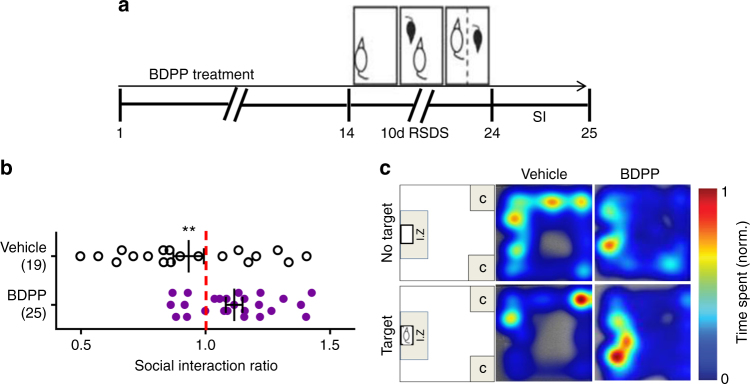
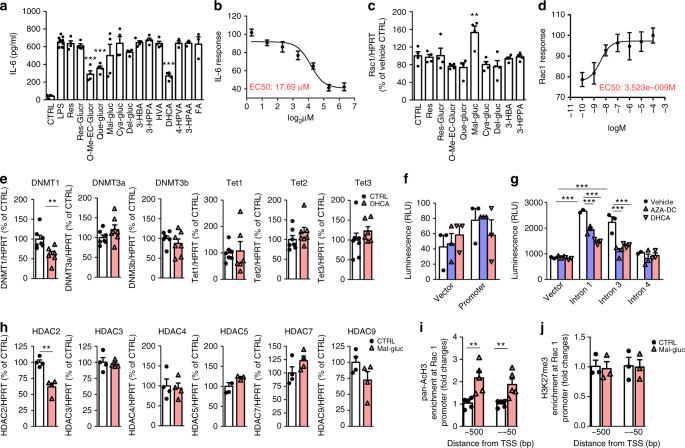
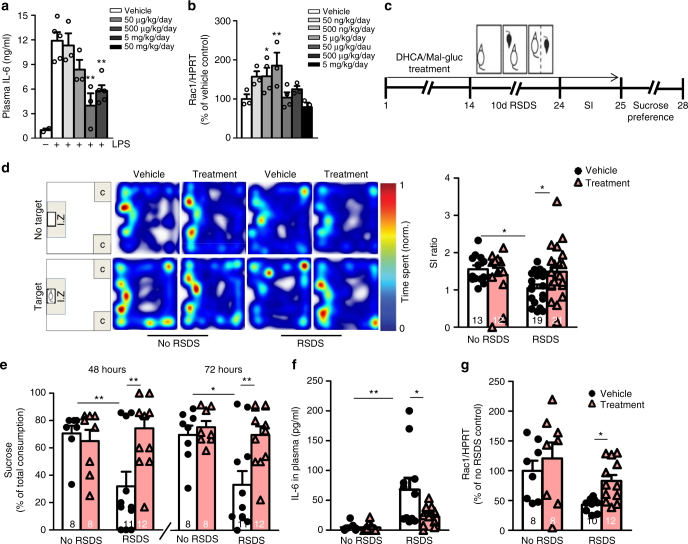
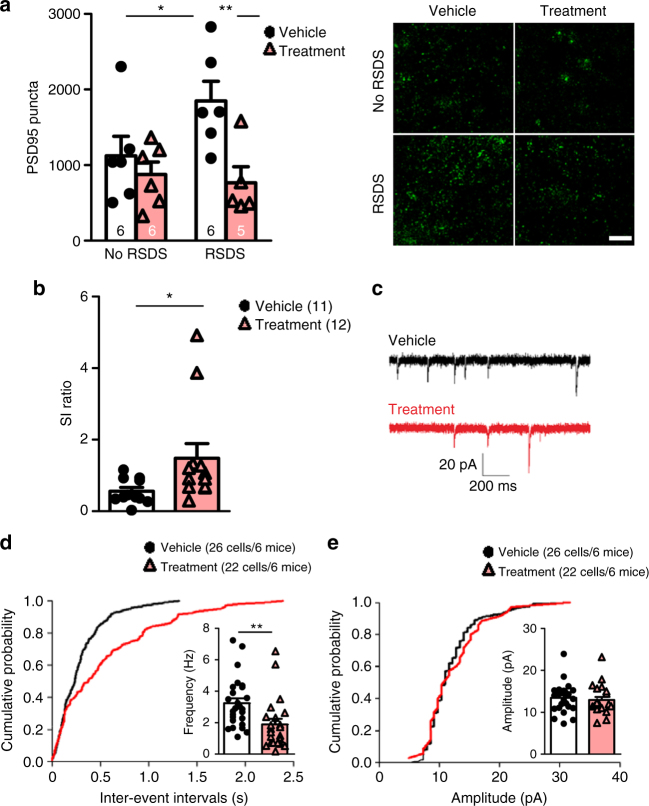
Major depressive disorder is associated with abnormalities in the brain and the immune system. Chronic stress in animals showed that epigenetic and inflammatory mechanisms play important roles in mediating resilience and susceptibility to depression. Here, through a high-throughput screening, we identify two phytochemicals, dihydrocaffeic acid (DHCA) and malvidin-3′-O-glucoside (Mal-gluc) that are effective in promoting resilience against stress by modulating brain synaptic plasticity and peripheral inflammation. DHCA/Mal-gluc also significantly reduces depression-like phenotypes in a mouse model of increased systemic inflammation induced by transplantation of hematopoietic progenitor cells from stress-susceptible mice. DHCA reduces pro-inflammatory interleukin 6 (IL-6) generations by inhibiting DNA methylation at the CpG-rich IL-6 sequences introns 1 and 3, while Mal-gluc modulates synaptic plasticity by increasing histone acetylation of the regulatory sequences of the Rac1 gene. Peripheral inflammation and synaptic maladaptation are in line with newly hypothesized clinical intervention targets for depression that are not addressed by currently available antidepressants.
Overview
The claims and statistics of this paper haven’t been checked yet.
Free: it reads the open-access text and checks the first 5 claims that cite a source we can check. Create a free account to check every claim.
Integrity signals
Registry
Cites
Statistics
Figures
Verification
Claims the paper makes
The claims and statistics of this paper haven’t been checked yet.
Free: it reads the open-access text and checks the first 5 claims that cite a source we can check. Create a free account to check every claim.
Claims other papers make about this one
Each is checked against this paper’s own text: does it say what the citing paper says it does?
The cited source says what the claim attributes to it.
In the citing paper
“Similarly, individual dietary components, such as dietary phytochemicals, have been found to reduce depressive-like behaviours through epigenetic mechanisms targeting systemic inflammation and neuronal plasticity in mice.60”
From The role of epigenetics in psychological resilience (2021) · cites this paper as [60]
Self-check
Percentages, sums and reported differences re-computed from the paper’s own numbers.
The self-check needs the paper’s full text.
Citations
Cites
Analysis of Relative Gene Expression Data Using Real-Time Quantitative PCR and the 2−ΔΔCT Method
Livak, K. J., & Schmittgen, T. D. (2001) · Methods · doi:10.1006/meth.2001.1262 · Cited by 180,860
Molecular Mechanisms of Depression: Perspectives on New Treatment Strategies
Lang, U. E., & Borgwardt, S. (2013) · Cellular Physiology and Biochemistry · doi:10.1159/000350094 · Cited by 8,475
Natural products as sources of new drugs over the last 25 years
Newman, D. J., & Cragg, G. M. (2007) · Journal of Natural Products · doi:10.1021/np068054v · Cited by 5,517
A Meta-Analysis of Cytokines in Major Depression
Dowlati, Y., Herrmann, N., Swardfager, W., Liu, H., Sham, L., Reim, E. K., & Lanctôt, K. L. (2010) · Biological Psychiatry · doi:10.1016/j.biopsych.2009.09.033 · Cited by 4,729
Mutation of the mouse klotho gene leads to a syndrome resembling ageing
Kuro-o, M., Matsumura, Y., Aizawa, H., Kawaguchi, H., Suga, T., Utsugi, T., Ohyama, Y., Kurabayashi, M., Kaname, T., Kume, E., et al. (1997) · Nature · doi:10.1038/36285 · Cited by 3,837
The Neuroendocrinology of Stress: A Never Ending Story
Lightman, S. L. (2008) · Journal of Neuroendocrinology · doi:10.1111/j.1365-2826.2008.01711.x · Cited by 3,566
Nestler, E. J., Barrot, M., DiLeone, R. J., Eisch, A. J., Gold, S. J., & Monteggia, L. M. (2002) · Neuron · doi:10.1016/s0896-6273(02)00653-0 · Cited by 3,217
Associations of depression with C-reactive protein, IL-1, and IL-6: a meta-analysis.
Howren, M. B., Lamkin, D. M., & Suls, J. (2009) · Psychosomatic Medicine · doi:10.1097/psy.0b013e3181907c1b · Cited by 2,766
Krishnan, V., Han, M.-H., Graham, D. L., Berton, O., Renthal, W., Russo, S. J., LaPlant, Q., Graham, A., Lutter, M., Lagace, D. C., et al. (2007) · Cell · doi:10.1016/j.cell.2007.09.018 · Cited by 2,307
Self-citationA molecular and cellular theory of depression
Duman, R. S. (1997) · Archives of General Psychiatry · doi:10.1001/archpsyc.1997.01830190015002 · Cited by 2,129
Cited by
Microbiota-derived metabolites as drivers of gut–brain communication
Ahmed, H., Leyrolle, Q., Koistinen, V., Kärkkäinen, O., Layé, S., Delzenne, N., & Hanhineva, K. (2022) · Gut Microbes · doi:10.1080/19490976.2022.2102878 · Cited by 462
“Dihydrocaffeic acid was identified as a potential suppressor of peripheral IL-6 in a mice model of stress-induced depression.(88) This compound with antioxidant properties is a polyphenol derivative from caffeic acid and requires the biotransformation of the gut bacteria.”
BackgroundImmunoneuropsychiatry — novel perspectives on brain disorders
Pape, K., Tamouza, R., Leboyer, M., & Zipp, F. (2019) · Nature Reviews Neurology · doi:10.1038/s41582-019-0174-4 · Cited by 458
Vaou, N., Stavropoulou, E., Voidarou, C. (., Tsakris, Z., Rozos, G., Tsigalou, C., & Bezirtzoglou, E. (2022) · Antibiotics · doi:10.3390/antibiotics11081014 · Cited by 406
Gut microbial molecules in behavioural and neurodegenerative conditions
Needham, B. D., Kaddurah-Daouk, R., & Mazmanian, S. K. (2020) · Nature Reviews Neuroscience · doi:10.1038/s41583-020-00381-0 · Cited by 379
Mitochondria and Mood: Mitochondrial Dysfunction as a Key Player in the Manifestation of Depression
Allen, J., Romay-Tallon, R., Brymer, K. J., Caruncho, H. J., & Kalynchuk, L. E. (2018) · Frontiers in Neuroscience · doi:10.3389/fnins.2018.00386 · Cited by 347
“, 2016) and increased inflammation is known to play a role in the development of depressive symptoms (e.g., Brymer et al., 2018; Wang et al., 2018).”
BackgroundNeurobiology of Resilience: Interface Between Mind and Body
Cathomas, F., Murrough, J. W., Nestler, E. J., Han, M.-H., & Russo, S. J. (2019) · Biological Psychiatry · doi:10.1016/j.biopsych.2019.04.011 · Cited by 296
Self-citationDantzer, R., Cohen, S., Russo, S. J., & Dinan, T. G. (2018) · Brain, Behavior, and Immunity · doi:10.1016/j.bbi.2018.08.010 · Cited by 309
Self-citationDNA methylation and regulation of gene expression: Guardian of our health
Dhar, G. A., Saha, S., Mitra, P., & Nag Chaudhuri, R. (2021) · The Nucleus · doi:10.1007/s13237-021-00367-y · Cited by 242
Qin, Z., Shi, D.-D., Li, W., Cheng, D., Zhang, Y.-D., Zhang, S., Tsoi, B., Zhao, J., Wang, Z., & Zhang, Z.-J. (2023) · Journal of Neuroinflammation · doi:10.1186/s12974-023-02744-7 · Cited by 162
Self-citationWestfall, S., Caracci, F., Zhao, D., Wu, Q.-L., Frolinger, T., Simon, J., & Pasinetti, G. M. (2021) · Brain, Behavior, and Immunity · doi:10.1016/j.bbi.2020.10.013 · Cited by 161
“One group reported that chronic stress could be prevented by blocking TLR4 activity in the prefrontal cortex (Wang et al., 2018); however, the TLR4 inhibitor was injected interperitoneally indicating”
Self-citationExtracellular vesicle‐mediated delivery of circDYM alleviates CUS‐induced depressive‐like behaviours
Yu, X., Bai, Y., Han, B., Ju, M., Tang, T., Shen, L., Li, M., Yang, L., Zhang, Z., Hu, G., et al. (2022) · Journal of Extracellular Vesicles · doi:10.1002/jev2.12185 · Cited by 162
“Central nervous system (CNS) inflammation is considered one of the main triggers of depression (Miller & Raison, 2016; Wang et al., 2018) with IL-6, IL-1β, MCP-1, and TNF-α being major proinflammatory cytokines produced in the CNS.”
BackgroundNeurobiology of resilience in depression: immune and vascular insights from human and animal studies
Dudek, K. A., Dion‐Albert, L., Kaufmann, F. N., Tuck, E., Lebel, M., & Menard, C. (2021) · European Journal of Neuroscience · doi:10.1111/ejn.14547 · Cited by 151
“Recent data have shown extensive sex differences in transcriptional profiles of chronically stressed mice as well as in MDD patients when compared to healthy controls (Hodes, Pfau, Leboeuf, Golden & Christoffel, 2014; Labonté, Engmann, Purushothaman, Menard & Wang, 2018).”
BackgroundTao, W., Hu, Y., Chen, Z., Dai, Y., Hu, Y., & Qi, M. (2021) · Phytomedicine · doi:10.1016/j.phymed.2021.153692 · Cited by 165
Chronic Stress-Induced Depression and Anxiety Priming Modulated by Gut-Brain-Axis Immunity
Westfall, S., Caracci, F., Estill, M., Frolinger, T., Shen, L., & Pasinetti, G. M. (2021) · Frontiers in Immunology · doi:10.3389/fimmu.2021.670500 · Cited by 139
“Indeed,wepreviously showed that epigenetic modifications driven by gut microbiota derived metabolites, especially methylation patterns in the IL-6 promoter, promoted resilience to stress-induced depression (80).”
BackgroundSelf-citationStress, epigenetics, and aging: Unraveling the intricate crosstalk
Wu, Z., Qu, J., Zhang, W., & Liu, G.-H. (2024) · Molecular Cell · doi:10.1016/j.molcel.2023.10.006 · Cited by 134
Zhang, Y., & Kutateladze, T. G. (2018) · Nature Communications · doi:10.1038/s41467-018-05778-1 · Cited by 137
The molecular pathophysiology of depression and the new therapeutics
Tian, H., Hu, Z., Xu, J., & Wang, C. (2022) · MedComm · doi:10.1002/mco2.156 · Cited by 122
“(5) Inhibition of NMDAR-dependent burst firing of neurons in the LHb.”
BackgroundFrom Stress to Anhedonia: Molecular Processes through Functional Circuits
Stanton, C. H., Holmes, A. J., Chang, S. W. C., & Joormann, J. (2018) · Trends in Neurosciences · doi:10.1016/j.tins.2018.09.008 · Cited by 135
“These studies suggest that stress-induced IL-6 infiltration, in conjunction with synaptic remodeling in NAc (see [96]), contributes to the development of anhedonic-like behavior [94–96].”
The role of the gut microbiota in the metabolism of polyphenols as characterized by gnotobiotic mice
Pasinetti, G. M., Singh, R., Westfall, S., Herman, F., Faith, J., & Ho, L. (2018) · Journal of Alzheimer s Disease · doi:10.3233/jad-171151 · Cited by 112
Self-citationThe role of epigenetics in psychological resilience
Smeeth, D., Beck, S., Karam, E. G., & Pluess, M. (2021) · The Lancet Psychiatry · doi:10.1016/s2215-0366(20)30515-0 · Cited by 108
The Gut Microbiota Links Dietary Polyphenols With Management of Psychiatric Mood Disorders
Westfall, S., & Pasinetti, G. M. (2019) · Frontiers in Neuroscience · doi:10.3389/fnins.2019.01196 · Cited by 113
Self-citationInflaming sex differences in mood disorders
Rainville, J. R., & Hodes, G. E. (2018) · Neuropsychopharmacology · doi:10.1038/s41386-018-0124-7 · Cited by 123
Self-citationImproving natural product research translation: From source to clinical trial
Sorkin, B. C., Kuszak, A. J., Bloss, G., Fukagawa, N. K., Hoffman, F. A., Jafari, M., Barrett, B. P., Brown, P. N., Bushman, F. D., Casper, S. J., et al. (2019) · The FASEB Journal · doi:10.1096/fj.201902143r · Cited by 121
Chen, C., Wang, G., Li, D., & Zhang, F. (2025) · Molecular Biomedicine · doi:10.1186/s43556-025-00307-1 · Cited by 148
Cichoń, N., Saluk, J., Gorniak, L., Przysło, Ł., & Bijak, M. (2020) · Antioxidants · doi:10.3390/antiox9111035 · Cited by 114
“5 μg/kg) regulates synaptic plasticity by increasing histone acetylation in Rac1 gene regulatory sequences [96].”
BackgroundInfluentialA critical review on grape polyphenols for neuroprotection: Strategies to enhance bioefficacy
Zhao, D., Simon, J. E., & Wu, Q. (2020) · Critical Reviews in Food Science and Nutrition · doi:10.1080/10408398.2018.1546668 · Cited by 96
“…of humanized gnotobiotic mice following flavanol treatments, 3-HPPA and 3-HBA were able to inhibit the misfolding of Ab peptides into neurotoxic aggregates (Wang et al. 2015), while 3-(3,4-hydroxyphenyl)propionic acid (3,4- diHPPA) could relieve peripheral inflammatory symptoms (Wang et al. 2018).”
BackgroundMethodInfluentialRecent Advances in Research on Polyphenols: Effects on Microbiota, Metabolism, and Health
Rajha, H. N., Paule, A., Aragonès, G., Barbosa, M., Caddeo, C., Debs, E., Dinkova, R., Eckert, G. P., Fontana, A., Gebrayel, P., et al. (2021) · Molecular Nutrition & Food Research · doi:10.1002/mnfr.202100670 · Cited by 115
Self-citationNovel insights into prebiotic properties on human health: A review
Neri-Numa, I. A., & Pastore, G. M. (2020) · Food Research International · doi:10.1016/j.foodres.2019.108973 · Cited by 97
Dietary flavanols improve cerebral cortical oxygenation and cognition in healthy adults
Gratton, G., Weaver, S. R., Burley, C. V., Low, K. A., Maclin, E. L., Johns, P. W., Pham, Q. S., Lucas, S. J. E., Fabiani, M., & Rendeiro, C. (2020) · Scientific Reports · doi:10.1038/s41598-020-76160-9 · Cited by 91
Sex Differences in Stress Response: Classical Mechanisms and Beyond
Hodes, G. E., Bangasser, D. A., Sotiropoulos, I., Kokras, N., & Dalla, C. (2023) · Current Neuropharmacology · doi:10.2174/1570159x22666231005090134 · Cited by 113
“In both male and female mice exposed to social defeat stress or variable stress, DHCA/Mal-gluc blocks the effects of stress on behavior, but through different mechanisms resulting in different transcriptional changes and alterations of different peripheral cytokines [153, 154].”
BackgroundSelf-citationACSS2-dependent histone acetylation improves cognition in mouse model of Alzheimer’s disease
Lin, Y., Lin, A., Cai, L., Huang, W., Yan, S., Wei, Y., Ruan, X., Fang, W., Dai, X., Cheng, J., et al. (2023) · Molecular Neurodegeneration · doi:10.1186/s13024-023-00625-4 · Cited by 102
Frolinger, T., Sims, S. L., Smith, C., Wang, J., Cheng, H. M., Faith, J. J., Ho, L., Hao, K., & Pasinetti, G. M. (2019) · Scientific Reports · doi:10.1038/s41598-019-39994-6 · Cited by 93
Self-citationVTA-projecting cerebellar neurons mediate stress-dependent depression-like behaviors
Baek, S. J., Park, J., Kim, J., Yamamoto, Y., & Tanaka, K. (2022) · eLife · doi:10.7554/elife.72981 · Cited by 102
Sun, H., He, X., Tao, X., Hou, T., Chen, M., He, M., & Liao, H. (2020) · Journal of Neuroinflammation · doi:10.1186/s12974-020-01845-x · Cited by 76
Quero, J., Mármol, I., Cerrada, E., & Rodríguez-Yoldi, M. J. (2020) · Food & Function · doi:10.1039/d0fo00216j · Cited by 75
Chemobrain: A review on mechanistic insight, targets and treatments
Rao, V., Bhushan, R., Kumari, P., Cheruku, S. P., Ravichandiran, V., & Kumar, N. (2022) · Advances in cancer research · doi:10.1016/bs.acr.2022.04.001 · Cited by 87
Ho, L., Zhao, D., Ono, K., Ruan, K., Mogno, I., Tsuji, M., Carry, E., Brathwaite, J. S., Sims, S. L., Frolinger, T., et al. (2018) · The Journal of Nutritional Biochemistry · doi:10.1016/j.jnutbio.2018.10.019 · Cited by 75
“We have previously shown that DHCA is capable of modulating inflammatory responses [1].”
BackgroundInfluentialSelf-citationLi, R., Xie, L. X., Li, L., Chen, X., Tong, Y., Tian, Y., Li, Q., Wang, K., Huang, C., Cui, L., et al. (2021) · Acta Pharmaceutica Sinica B · doi:10.1016/j.apsb.2021.05.029 · Cited by 75
Connecting Dots between Mitochondrial Dysfunction and Depression
Khan, M., Baussan, Y., & Hébert-Chatelain, É. (2023) · Biomolecules · doi:10.3390/biom13040695 · Cited by 84
Westfall, S., Carracci, F., Estill, M., Zhao, D., Wu, Q.-L., Shen, L., Simon, J., & Pasinetti, G. M. (2021) · Scientific Reports · doi:10.1038/s41598-020-79947-y · Cited by 70
Self-citationOrtega, M. A., Fraile‐Μartinez, O., Montero, C. G., Álvarez-Mon, M. Á., Lahera, G., Monserrat, J., Llavero-Valero, M., Gutiérrez-Rojas, L., Molina, R., Rodríguez–Jiménez, R., et al. (2022) · Nutrients · doi:10.3390/nu14153099 · Cited by 90
Cecil, C. A. M., & Nigg, J. T. (2022) · Molecular Diagnosis & Therapy · doi:10.1007/s40291-022-00609-y · Cited by 88
The inflammatory underpinning of depression: An historical perspective
Yirmiya, R. (2024) · Brain Behavior and Immunity · doi:10.1016/j.bbi.2024.08.048 · Cited by 87
Bao, H., Li, H., Jia, Y., Xiao, Y., Luo, S., Zhang, D., Han, L., Dai, L., Xiao, C., Feng, L., et al. (2021) · Biochemical Pharmacology · doi:10.1016/j.bcp.2021.114561 · Cited by 67
Gu, Y., Ye, T., Tan, P., Tong, L., Jian-lin, J., Gu, Y., Shen, Z., Shen, X., Lu, X., & Huang, C. (2020) · Brain Behavior and Immunity · doi:10.1016/j.bbi.2020.11.002 · Cited by 64
Predictable chronic mild stress promotes recovery from LPS-induced depression
Dang, R., Guo, Y., Zhang, K., Jiang, P., & Zhao, M. (2019) · Molecular Brain · doi:10.1186/s13041-019-0463-2 · Cited by 66
Resilience: Safety in the Aftermath of Traumatic Stressor Experiences
Matheson, K., Asokumar, A., & Anisman, H. (2020) · Frontiers in Behavioral Neuroscience · doi:10.3389/fnbeh.2020.596919 · Cited by 88
Kong, X., Zhang, Z., Fu, T., Ji, J., Yang, J., & Gu, Z. (2018) · International Journal of Biological Macromolecules · doi:10.1016/j.ijbiomac.2018.12.146 · Cited by 66
Epigenetic Targeting of Histone Deacetylases in Diagnostics and Treatment of Depression
Park, H., Kim, J., Ahn, S. H., & Ryu, H. (2021) · International Journal of Molecular Sciences · doi:10.3390/ijms22105398 · Cited by 58
Relationship between Wine Consumption, Diet and Microbiome Modulation in Alzheimer’s Disease
Moreno-Arribas, M. V., Bartolomé, B., Peñalvo, J. L., Pérez‐Matute, P., & Motilva, M. (2020) · Nutrients · doi:10.3390/nu12103082 · Cited by 53
Role of Monocyte-Derived MicroRNA106b∼25 in Resilience to Social Stress
Pfau, M. L., Menard, C., Cathomas, F., Desland, F., Kana, V., Chan, K. L., Shimo, Y., LeClair, K., Flanigan, M. E., Aleyasin, H., et al. (2019) · Biological Psychiatry · doi:10.1016/j.biopsych.2019.02.023 · Cited by 46
“indicate that susceptible mice exhibit elevated serum IL-6 levels compared to both control and resilient mice 48 hrs after RSDS (16, 18, 19).”
Self-citationWu, Z., Xiao, L., Wang, H., & Wang, G. (2021) · International Immunopharmacology · doi:10.1016/j.intimp.2021.107653 · Cited by 53
Ijinu, T. P., Lellis, L. F. D., Shanmugarama, S., Pérez-Gregório, R., Sasikumar, P., Ullah, H., Buccato, D. G., Minno, A. D., Baldi, A., & Daglia, M. (2023) · Nutrients · doi:10.3390/nu15194152 · Cited by 52
“This reduction is achieved by enhancing the histone acetylation of the regulatory sequences of the Rac1 gene, thereby modulating synaptic plasticity [95].”
BackgroundFabbri, C., & Serretti, A. (2020) · Neuroscience Letters · doi:10.1016/j.neulet.2018.06.020 · Cited by 42
A new perspective on depression and neuroinflammation: Non-coding RNA
Zhou, S., Chen, R., She, Y., Liu, X., Zhao, H., Li, C., & Jia, Y. (2022) · Journal of Psychiatric Research · doi:10.1016/j.jpsychires.2022.02.007 · Cited by 45
Sex differences in depression: An immunological perspective
Kropp, D. R., & Hodes, G. E. (2023) · Brain Research Bulletin · doi:10.1016/j.brainresbull.2023.02.016 · Cited by 48
Self-citationCao, K., Xiang, J., Dong, Y., Xu, Y., Li, Y., Song, H., Zeng, X.-X., Ran, L., Hong, W., & Guan, Z.-Z. (2019) · Alzheimer s Research & Therapy · doi:10.1186/s13195-019-0490-3 · Cited by 40
Westfall, S., Iqbal, U., Sebastian, M., & Pasinetti, G. M. (2019) · Progress in Molecular Biology and Translational Science · doi:10.1016/bs.pmbts.2019.06.013 · Cited by 41
Self-citationRaval, U., Harary, J. M., Zeng, E., & Pasinetti, G. M. (2020) · Expert Review of Neurotherapeutics · doi:10.1080/14737175.2020.1775585 · Cited by 45
“[153] Vanillic acid Reduces neuroinflammation and oxidative damage.”
BackgroundInfluentialSelf-citationAnxiolytic effects of NLRP3 inflammasome inhibition in a model of chronic sleep deprivation
Smith, C., Trageser, K. J., Wu, H., Herman, F. J., Iqbal, U. H., Sebastian-Valverde, M., Frolinger, T., Zeng, E., & Pasinetti, G. M. (2021) · Translational Psychiatry · doi:10.1038/s41398-020-01189-3 · Cited by 43
Self-citationBae, M., Le, C., Mehta, R. S., Dong, X., Pieper, L. M., Ramirez, L., Alexander, M., Kiamehr, S., Turnbaugh, P. J., Huttenhower, C., et al. (2024) · Cell Host & Microbe · doi:10.1016/j.chom.2024.10.002 · Cited by 43
Li, J., Zhao, Q., Zhang, N., Wu, L., Wang, Q., Li, J., Pan, Q., Pu, Y., Luo, K., Gu, Z., et al. (2024) · ACS Nano · doi:10.1021/acsnano.4c02337 · Cited by 43
Interplay between Phytochemicals and the Colonic Microbiota
Kwon, C., Ediriweera, M. K., & Cho, S. K. (2023) · Nutrients · doi:10.3390/nu15081989 · Cited by 48
Ji, Y., Luo, J., Zeng, J., Fang, Y., Liu, R., Luan, F., & Zeng, N. (2021) · Frontiers in Pharmacology · doi:10.3389/fphar.2021.643456 · Cited by 42
Lan, T., Li, Y., Fan, C., Wang, L., Wang, W., Chen, S., & Yu, S. Y. (2021) · Journal of Neuroinflammation · doi:10.1186/s12974-021-02299-5 · Cited by 38
Ross, F. C., Mayer, D. E., Horn, J. V., Cryan, J. F., Rio, D. D., Randolph, E., Gill, C. I. R., Gupta, A., Ross, R. P., Stanton, C., et al. (2024) · Nutritional Neuroscience · doi:10.1080/1028415x.2023.2298098 · Cited by 42
Yoon, S., Iqbal, H., Kim, S. M., & Jin, M. (2023) · Biomolecules & Therapeutics · doi:10.4062/biomolther.2022.116 · Cited by 38
“…D, and silibinin have been found to regulate the BDNF/TrkB/CREB pathways in rodent models (Li et al., 2013, 2016; Song et al., 2016; Li et al., 2017; Wang et al., 2017; Chen et al., 2018; Wang et al., 2018a; Fang et al., 2019; Fu et al., 2019; Hu et al., 2019; Zhu et al., 2019; Ko et al., 2021).”
BackgroundYu, S., Yin, Z., Ling, M., Chen, Z., Zhang, Y., Pan, Y., Zhang, Y., Cai, X., Chen, Z., Hao, H., et al. (2024) · Phytomedicine · doi:10.1016/j.phymed.2024.156186 · Cited by 41
Biology of cyclooxygenase-2: An application in depression therapeutics
He, Y., Han, Y., Liao, X., Zou, M., & Wang, Y. (2022) · Frontiers in Psychiatry · doi:10.3389/fpsyt.2022.1037588 · Cited by 45
“, IL-6 reduces neuronal synaptic plasticity and accelerates depression (109).”
BackgroundOmics Insights into Animal Resilience and Stress Factors
Basile, F., Capaccia, C., Zampini, D., Biagetti, T., Diverio, S., & Guelfi, G. (2020) · Animals · doi:10.3390/ani11010047 · Cited by 41
Inhibition of IL-6 methylation by Saikosaponin C regulates neuroinflammation to alleviate depression
Bai, Z., Gao, T., Zhang, R., Lu, Y., Tian, J., Wang, T., Zhao, K., & Wang, H. (2023) · International Immunopharmacology · doi:10.1016/j.intimp.2023.110043 · Cited by 37
Alberti, A., Coelho, D. R. A., Vieira, W. F., Iser, B. P. M., Lampert, R., Traebert, E., da Silva, B. B., de Oliveira, B. H., Leão, G. M., de Souza, G., et al. (2024) · Biomedicines · doi:10.3390/biomedicines12091994 · Cited by 56
Romero, P., Ordaz, P. B., del Amor, F. M., Gil‐Muñoz, R., Flores, P., & Navarro, J. M. (2019) · Agricultural Water Management · doi:10.1016/j.agwat.2019.105733 · Cited by 34
Zhou, C., Wu, Y., Ding, X., Shi, N., Cai, Y., & Pan, Z. Z. (2020) · Journal of Neuroscience · doi:10.1523/jneurosci.1259-19.2020 · Cited by 40
The Influence of Feed and Drinking Water on Terrestrial Animal Research and Study Replicability
Kurtz, D. M., & Feeney, W. P. (2019) · ILAR Journal · doi:10.1093/ilar/ilaa012 · Cited by 37
Ironside, M., Admon, R., Maddox, S. A., Mehta, M., Douglas, S., Olson, D. P., & Pizzagalli, D. A. (2019) · Psychological Medicine · doi:10.1017/s0033291719002940 · Cited by 34
“Despite preclinical evidence of detrimental effects of inflammation on neurogenesis (Koo and Duman, 2008; Zunszain et al., 2012; Dinel et al., 2014; Borsini et al., 2017), we acknowledge that the causal relationship between reduced gray matter volume and increased inflammation may work in the…”
BackgroundMajhi, S., Kumar, S., & Singh, L. (2022) · CNS & Neurological Disorders - Drug Targets · doi:10.2174/1871527321666220428134802 · Cited by 41
Neurobiological mechanisms of mood disorders: Stress vulnerability and resilience
Pereira, C. M., Castro, F. C. D. A. Q., Barcelos, R. M., Chiepe, K. C. M. B., Rossoni, J. V., Ambrósio, R. P., Chiarelli-Neto, O., & Pesarico, A. P. (2022) · Frontiers in Behavioral Neuroscience · doi:10.3389/fnbeh.2022.1006836 · Cited by 43
“Synaptic plasticity (Wang et al., 2018), immunity (Dantzer et al.”
Obrenovich, M. E., Donskey, C. J., Schiefer, I. T., Bongiovanni, R., Li, L., & Jaskiw, G. E. (2018) · Bioanalysis · doi:10.4155/bio-2018-0140 · Cited by 34
Ferroptosis: a new antidepressant pharmacological mechanism
Zhang, G., Lv, S., Zhong, X., Li, X., Yi, Y., Lu, Y., Yan, W., Li, J., & Jing, T. (2024) · Frontiers in Pharmacology · doi:10.3389/fphar.2023.1339057 · Cited by 36
Boyanapalli, S. S. S., Huang, Y. S., Su, Z., Cheng, D., Zhang, C., Guo, Y., Rao, R., Androulakis, I. P., & Kong, A. T. (2018) · Biopharmaceutics & Drug Disposition · doi:10.1002/bdd.2136 · Cited by 31
Epigenetic mechanisms underlying stress-induced depression
de Carvalho, L. M., Chen, W.-Y., & Lasek, A. W. (2020) · International review of neurobiology · doi:10.1016/bs.irn.2020.08.001 · Cited by 35
Metabolic Fuel for Epigenetic: Nuclear Production Meets Local Consumption
Boon, R. (2021) · Frontiers in Genetics · doi:10.3389/fgene.2021.768996 · Cited by 38
“Diet is therefore increasingly appreciated as an additional way to target the epigenome to influence inflammation (Wang et al., 2018), metabolic disease (Yuan et al., 2018), and neurogenesis defects (Benjamin et al., 2017).”
BackgroundFlavonoids against depression: a comprehensive review of literature
Alizadeh, A., Pourfallah-Taft, Y., Khoshnazar, M., Safdari, A., Komari, S. V., Zanganeh, M., Sami, N., Valizadeh, M., Faridzadeh, A., Alijanzadeh, D., et al. (2024) · Frontiers in Pharmacology · doi:10.3389/fphar.2024.1411168 · Cited by 41
“Various natural chemical agents have been shown to alleviate depression (Wang et al., 2018), one of which is fl avonoids.”
BackgroundStress-Sensitive Protein Rac1 and Its Involvement in Neurodevelopmental Disorders
Wang, X., Liu, D., Wei, F., Li, Y., Wang, X., Li, L., Wang, G., Zhang, S., & Zhang, L. (2020) · Neural Plasticity · doi:10.1155/2020/8894372 · Cited by 36
Self-citationParise, E. M., Parise, L. F., Sial, O. K., Cardona-Acosta, A. M., Gyles, T. M., Juarez, B., Chaudhury, D., Han, M., Nestler, E. J., & Bolaños‐Guzmán, C. A. (2021) · Biological Psychiatry · doi:10.1016/j.biopsych.2021.05.002 · Cited by 34
Self-citationSex and region-specific effects of variable stress on microglia morphology
Tsyglakova, M., Huskey, A., Hurst, E. H., Telep, N. M., Wilding, M. C., Babington, M. E., Rainville, J. R., & Hodes, G. E. (2021) · Brain Behavior & Immunity - Health · doi:10.1016/j.bbih.2021.100378 · Cited by 35
Self-citationEpidrugs in the Therapy of Central Nervous System Disorders: A Way to Drive on?
Gladkova, M. G., Leidmaa, E., & Anderzhanova, E. A. (2023) · Cells · doi:10.3390/cells12111464 · Cited by 36
“The direct [163] and indirect [154] reduction in global methylation leads to an antidepressant effect [164].”
BackgroundZheng, L., Jiao, Y., Zhong, H., Tan, Y., Yin, Y., Liu, Y., Liu, D., Wu, M., Wang, G., Huang, J., et al. (2024) · mSystems · doi:10.1128/msystems.00257-24 · Cited by 34
“…(tetradecanedioic acid) (65, 66), anti-inflammation (stearidonic acid) (67), neuroprotection ( N-acetyl-tryptophan) (68), dihydrocaffeic acid (69), human cannabinoid type 1 (CB1) receptor-mediated memory, and neurohormone regulation (70, 71) (2-linoleoyl glycerol, or 2-LG, partial agonist of…”
Cell Clearing Systems Bridging Neuro-Immunity and Synaptic Plasticity
Limanaqi, F., Biagioni, F., Busceti, C. L., Ryskalin, L., Soldani, P., Frati, A., & Fornai, F. (2019) · International Journal of Molecular Sciences · doi:10.3390/ijms20092197 · Cited by 29
Influence of gut microbiota on resilience and its possible mechanisms
Wang, J., Zhou, T., Liu, F., Huang, Y., Xiao, Z., Qian, Y., & Zhou, W. (2023) · International Journal of Biological Sciences · doi:10.7150/ijbs.82362 · Cited by 30
“Chemicals that could prevent cytokine releases, such as dihydrocaffeic acid (DHCA) and malvidin3′-O-glucoside (Mal-gluc), were proved effective in resilience development [94] (Figure 2C).”
BackgroundSelf-citationThe Emerging Spectrum of Early Life Exposure-Related Inflammation and Epigenetic Therapy
Yang, Q., Ali, M. K., Andaloussi, A. E., & Al-Hendy, A. A. (2018) · Cancer Studies and Molecular Medicine - Open Journal · doi:10.17140/csmmoj-4-125 · Cited by 37
Seiler, A., Milliken, A. B., Leiter, R. E., Blum, D., & Slavich, G. M. (2024) · Comprehensive Psychoneuroendocrinology · doi:10.1016/j.cpnec.2024.100226 · Cited by 39
“…promising avenues to counterbalance the negative effects of stress while building resilience through behavioral, psychosocial, pharmacological, or phytochemical modulation of several factors implicated in HPA-axis function, the immune system, DNA methylation, and neuronal plasticity [223 – 226].”
BackgroundNogueira, J. G., Lopes‐Lima, M., Varandas, S. D. G. P., Teixeira, A., & Sousa, R. (2019) · Hydrobiologia · doi:10.1007/s10750-019-04103-1 · Cited by 29
Histone deacetylase in neuropathology
Gupta, R. V., Ambasta, R. K., & Kumar, P. (2020) · Advances in clinical chemistry · doi:10.1016/bs.acc.2020.09.004 · Cited by 33
Grape-Derived Polyphenols Ameliorate Stress-Induced Depression by Regulating Synaptic Plasticity
Caracci, F., Harary, J. M., Simkovic, S. J., & Pasinetti, G. M. (2019) · Journal of Agricultural and Food Chemistry · doi:10.1021/acs.jafc.9b01970 · Cited by 31
Self-citationSocial experiences switch states of memory engrams through regulating hippocampal Rac1 activity
Lei, B., Lv, L., Hu, S., Tang, Y., & Zhong, Y. (2022) · Proceedings of the National Academy of Sciences · doi:10.1073/pnas.2116844119 · Cited by 40
“Supportively, previous studies have reported that Rac1 activity responses to social stress and mediates the regulation of related behaviors (36, 37).”
BackgroundGodara, M., Silveira, S., Matthaeus, H., & Singer, T. (2022) · Adversity and Resilience Science · doi:10.1007/s42844-022-00069-7 · Cited by 32
The potential of psychedelics for the treatment of Alzheimer's disease and related dementias
Winkelman, M., Szabó, A., & Frecska, E. (2023) · European Neuropsychopharmacology · doi:10.1016/j.euroneuro.2023.07.003 · Cited by 36
“The epigenetic control of neuroplasticity-related genes has global effects on brain functions, neural networks, structural and functional recovery following acute injury and in chronic conditions like AD ( Wang et al., 2018 ).”
BackgroundEpigenetic Aberrations in Major Psychiatric Diseases Related to Diet and Gut Microbiome Alterations
Nohesara, S., Abdolmaleky, H. M., & Thiagalingam, S. (2023) · Genes · doi:10.3390/genes14071506 · Cited by 35
“…et al. examined the efficacy of two novel phytochemicals (dihydrocaffeic acid (DHCA) and malvidin-3 (cid:48) -O-glucoside (Mal-gluc)) derived from post-absorptive and microbiome metabolism of bioactive dietary polyphenol preparation (BDPP) in reducing depression via epigenetic modulation [166].”
Metadata
- Authors
- Wang, J., Hodes, G. E., Zhang, H., Zhang, S., Zhao, W., Golden, S. A., Bi, W., Menard, C., Kana, V., Leboeuf, M., Xie, M., Bregman, D., Pfau, M. L., Flanigan, M. E., Esteban-Fernández, A., Yemul, S., Sharma, A., Ho, L., Dixon, R., Merad, M., Han, M.-H., Russo, S. J., & Pasinetti, G. M.
- Affiliations
- James J. Peters VA Medical Center (US)
- Icahn School of Medicine at Mount Sinai (US)
- Tisch Cancer Institute (US)
- University of North Texas (US)
- Corresponding author
- Pasinetti, Giulio M.
- ORCID
- Venue
- Nature Communications
- Published
- 2018-02-02
- Volume
- 9
- Issue
- 1
- Pages
- 477-477
- ISSN
- 2041-1723 (ISSN-L)
- PMC
- PMC5797143
- OpenAlex
- W2794098750
- Cited by
- 274
- References
- 70
- Citations by year
- 2026: 12 · 2025: 26 · 2024: 40 · 2023: 46 · 2022: 31 · 2021: 39 · 2020: 32 · 2019: 28 · 2018: 18
- FWCI
- 9.31
- Type
- journal article
- Language
- en
- Open access
- gold
- doi.org
- Licence
- cc-by
- creativecommons.org/licenses/by/4.0 (tdm)
- creativecommons.org/licenses/by/4.0 (vor)
- Locations
- Nature Communications (publishedVersion, cc-by)
- PubMed Central (publishedVersion, cc-by)
- PubMed (publishedVersion)
- University of North Texas Digital Library (University of North Texas) (submittedVersion)
- RePEc: Research Papers in Economics (submittedVersion)
- DOAJ (DOAJ: Directory of Open Access Journals) (submittedVersion, cc-by-sa)
- DOAJ (DOAJ: Directory of Open Access Journals) (submittedVersion)
- Minerva Access (University of Melbourne) (submittedVersion, cc-by)
- VTechWorks (Virginia Tech) (submittedVersion)
- Funders
- National Science Foundation (P50 AT008661-01)
- Office of Dietary Supplements (AT008661-01, P50 AT008661-01)
- U.S. Department of Veterans Affairs (IK6 BX003785)
- National Institutes of Health (NSF81200862, NIH-R01, MH104559)
- Geriatric Research Education and Clinical Center
- National Institute of Mental Health (R01MH090264, R21MH112081, P50MH096890, R01MH104559)
- National Center for Complementary and Integrative Health (P50AT008661, AT008661-01, AT008661)
- Topics
- Life Sciences › Neuroscience › Biological Psychiatry › Tryptophan and brain disorders
- Health Sciences › Medicine › Pharmacology (medical) › Treatment of Major Depression
- Life Sciences › Neuroscience › Behavioral Neuroscience › Stress Responses and Cortisol
- Keywords
- major depressive disorder, stress resilience, chronic stress, epigenetics, synaptic plasticity, peripheral inflammation, dihydrocaffeic acid, malvidin-3-glucoside, phytochemicals, interleukin-6, DNA methylation, histone acetylation, Rac1, hematopoietic progenitor cell transplantation, depression-like behavior, antidepressant targets
- MeSH terms
- Interleukin-6 Inhibitors, Animals, Anthocyanins, Caffeic Acids, Depression, Drug Evaluation, Preclinical, Glucosides, Inflammation, Male, Mice, Inbred C57BL, Neuronal Plasticity, Neuropeptides, Social Behavior, Stress, Psychological, Interleukin-6, Leukocyte Common Antigens, CpG Islands, rac1 GTP-Binding Protein, Epigenesis, Genetic, Polyphenols
About these checks
Registry, retraction, Cites and statistics results are computed, not judged, with one exception: a printed reference that no index lists is read once by a model before it counts as a citation error. Claims are extracted by a model and kept only when their quote appears verbatim in the text; each cited source is then checked, with a model’s help, for whether it says what the claim relies on. Those verdicts can be wrong — read the claim’s quote and the cited source before relying on one.
Statistics and arithmetic are recomputed, not judged.
Confidence bands are shown only for fields calibrated on our annotated test set. None is calibrated yet, so no band is shown.
What counts as a claim ›How we measure confidence ›How we check this ›
Are you an author, or do you see a problem with this page? Request a review
Data sources
Bibliographic data: Semantic Scholar, OpenAlex, Crossref.
Contains information from the Semantic Scholar Academic Graph Datasets, made available under the ODC Attribution License (ODC-BY 1.0).
Semantic Scholar’s data is described in: Kinney, R., et al. (2023). The Semantic Scholar Open Data Platform. arXiv:2301.10140.
