

3D microfluidic liver cultures as a physiological preclinical tool for hepatitis B virus infection
Open accessThe DOI matches its Crossref record; 56 of the 56 references it cites were found in a registry or an index.
Abstract
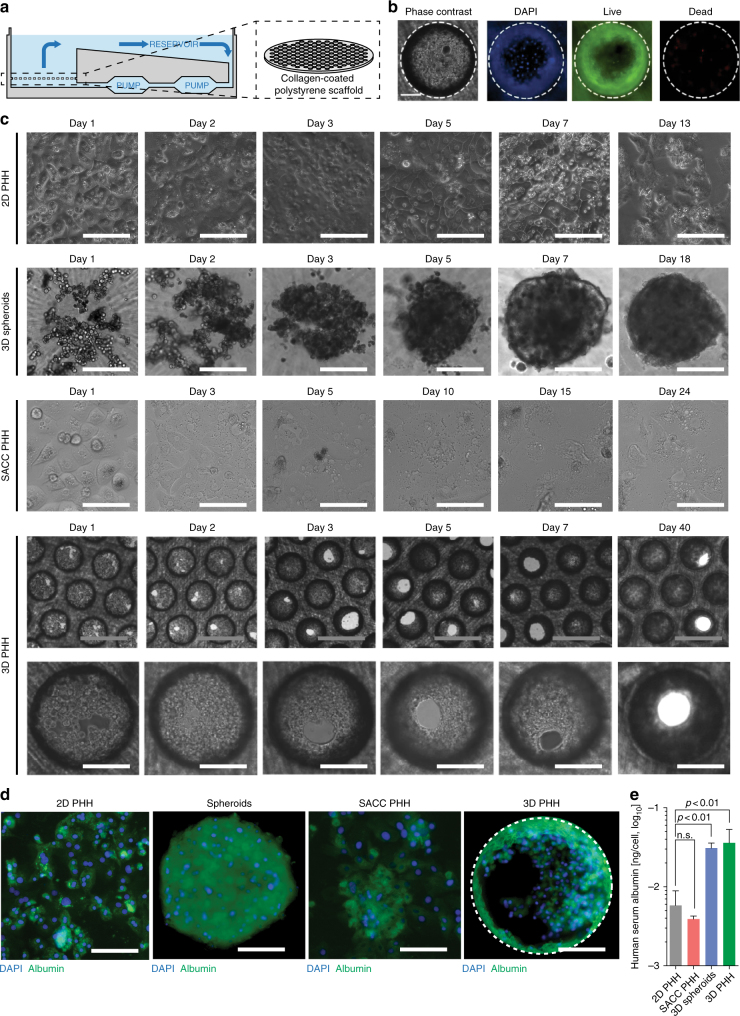
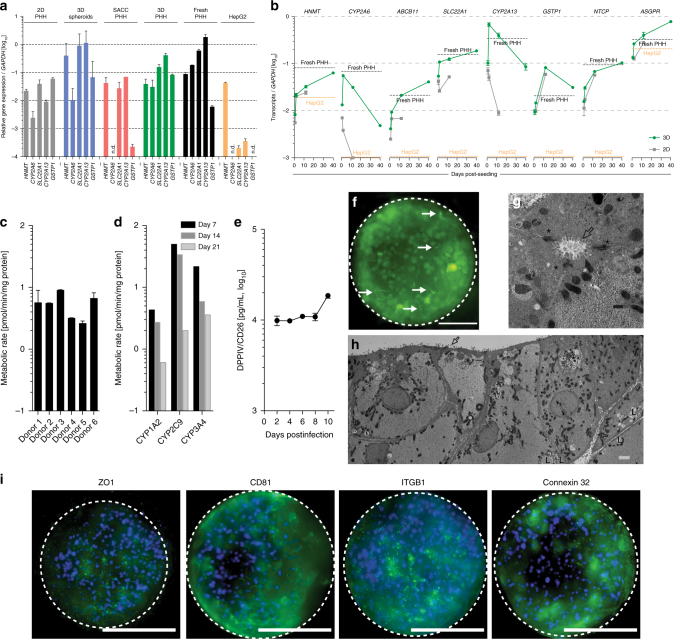
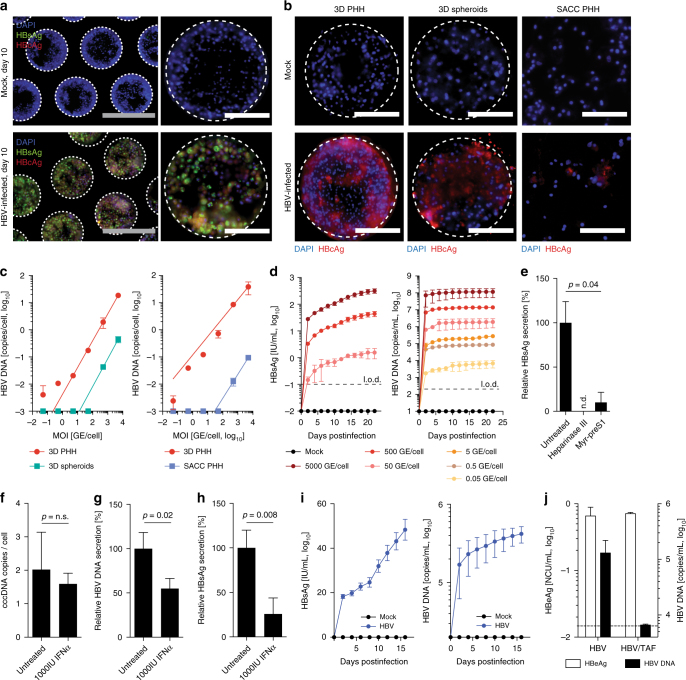
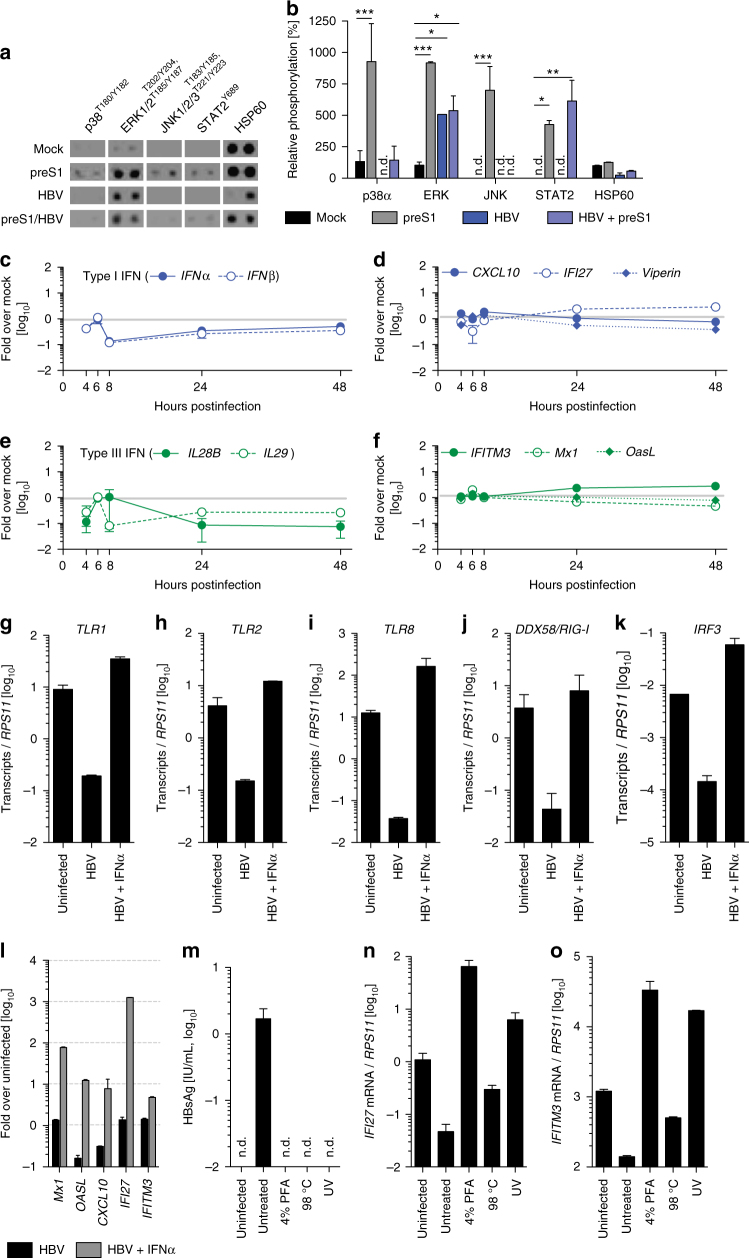
With more than 240 million people infected, hepatitis B virus (HBV) is a major health concern. The inability to mimic the complexity of the liver using cell lines and regular primary human hepatocyte (PHH) cultures pose significant limitations for studying host/pathogen interactions. Here, we describe a 3D microfluidic PHH system permissive to HBV infection, which can be maintained for at least 40 days. This system enables the recapitulation of all steps of the HBV life cycle, including the replication of patient-derived HBV and the maintenance of HBV cccDNA. We show that innate immune and cytokine responses following infection with HBV mimic those observed in HBV-infected patients, thus allowing the dissection of pathways important for immune evasion and validation of biomarkers. Additionally, we demonstrate that the co-culture of PHH with other non-parenchymal cells enables the identification of the cellular origin of immune effectors, thus providing a valuable preclinical platform for HBV research.
Overview
The claims and statistics of this paper haven’t been checked yet.
Free: it reads the open-access text and checks the first 5 claims that cite a source we can check. Create a free account to check every claim.
Integrity signals
Registry
Cites
Statistics
Figures
Verification
Claims the paper makes
The claims and statistics of this paper haven’t been checked yet.
Free: it reads the open-access text and checks the first 5 claims that cite a source we can check. Create a free account to check every claim.
Claims other papers make about this one
Each is checked against this paper’s own text: does it say what the citing paper says it does?
In the citing paper
“The platform faithfully reconstitutes all phases of the viral life cycle and thereby affords mechanistic dissection of HBV immune evasion strategies that confound clinical intervention.”
From Constructing biomimetic microenvironments for liver regeneration (2025) · doi:10.1186/s12951-025-03729-9 · cites this paper as [67]
In the citing paper
“Prieto et al. employed a single-channel chip seeded with primary rat hepatocytes and demonstrated efficient infection by adenovirus-delivered HBV genomes, with subsequent release of viral DNA into the medium [67].”
From Constructing biomimetic microenvironments for liver regeneration (2025) · doi:10.1186/s12951-025-03729-9 · cites this paper as [67]
Self-check
Percentages, sums and reported differences re-computed from the paper’s own numbers.
The self-check needs the paper’s full text.
Citations
Cites
C-reactive protein: a critical update
Pepys, M. B., & Hirschfield, G. M. (2003) · Journal of Clinical Investigation · doi:10.1172/jci18921 · Cited by 3,503
C-reactive protein: a critical update
Pepys, M. B., & Hirschfield, G. M. (2003) · Journal of Clinical Investigation · doi:10.1172/jci200318921 · Cited by 3,436
Schweitzer, A., Horn, J., Mikolajczyk, R. T., Krause, G., & Ott, J. J. (2015) · The Lancet · doi:10.1016/s0140-6736(15)61412-x · Cited by 2,742
Yan, H., Zhong, G., Xu, G., He, W., Jing, Z., Gao, Z., Huang, Y., Qi, Y., Peng, B., Wang, H., et al. (2012) · eLife · doi:10.7554/elife.00049 · Cited by 2,115
Genomic analysis of the host response to hepatitis C virus infection
Su, A. I., Pezacki, J. P., Wodicka, L., Brideau, A. D., Supekova, L., Thimme, R., Wieland, S., Bukh, J., Purcell, R. H., Schultz, P. G., et al. (2002) · Proceedings of the National Academy of Sciences · doi:10.1073/pnas.202608199 · Cited by 1,161
Molecular biology of hepatitis B virus infection
Seeger, C., & Mason, W. S. (2015) · Virology · doi:10.1016/j.virol.2015.02.031 · Cited by 866
Bell, C. C., Hendriks, D. F. G., Moro, S. M. L., Ellis, E., Walsh, J., Renblom, A., Fredriksson Puigvert, L., Dankers, A. C. A., Jacobs, F., Snoeys, J., et al. (2016) · Scientific Reports · doi:10.1038/srep25187 · Cited by 739
Genomic analysis of the host response to hepatitis B virus infection
Wieland, S., Thimme, R., Purcell, R. H., & Chisari, F. V. (2004) · Proceedings of the National Academy of Sciences · doi:10.1073/pnas.0401771101 · Cited by 652
Belloni, L., Allweiss, L., Guerrieri, F., Pediconi, N., Volz, T., Pollicino, T., Petersen, J., Raimondo, G., Dandri, M., & Levrero, M. (2012) · Journal of Clinical Investigation · doi:10.1172/jci58847 · Cited by 577
Bertoletti, A., & Ferrari, C. (2012) · Gut · doi:10.1136/gutjnl-2011-301073 · Cited by 477
Cited by
Items 201–235 of 235
Mostafa, A., Khalil, S. M., Shaheraldin, A. A., Alahmadi, H. A., Mattar, Y., El-Bahrawy, N. R., Issa, I. K., El-fiki, R. A., Elazim, N. M. A., Attia, A. M., et al. (2026) · Stem cell biology and regenerative medicine · doi:10.1007/978-3-032-12705-1_4 · Cited by 1
Pham, A. M., Ortiz, L. E., Chen, H., Christensen, N. D., & Kwun, H. J. (2026) · PLoS Pathogens · doi:10.1371/journal.ppat.1014360 · Cited by 1
“Long-term 3D culture of hepatitis B virus (HBV) fully recapitulated the viral lifecycle and innate immune response observed in HBV patients [16].”
Organ-on-chip-based disease models
Fernández‐Costa, J. M., Chiara, F. D., & Ramón‐Azcón, J. (2024) · Elsevier eBooks · doi:10.1016/b978-0-443-15384-6.00005-7 · Cited by 1
Natural Biomaterials: An Essential Element for in vitro Disease Modeling
Gayan, S., Chitnis, M. S., Kshirsagar, D., & Dey, T. (2024) · BENTHAM SCIENCE PUBLISHERS eBooks · doi:10.2174/9789815136869124010007 · Cited by 1
Advances in virus-host interaction research based on microfluidic platforms
Wang, C., Wang, J., Liu, D., & Zhang, Z. (2024) · Chinese Chemical Letters · doi:10.1016/j.cclet.2024.110302 · Cited by 1
El‐Tayeb, M. A. (2025) · Current Microbiology · doi:10.1007/s00284-025-04306-x · Cited by 1
“3D bioprinting relies on standardized bioinks (e.g., cervical cancer models with HPV) [80], while organ-on-a-chip systems standardize microfluidic designs (e.g., liver-on-a-chip for HBV) [128].”
Unmet Needs in Basic Research of Hepatitis B Virus Infection: In Vitro and In Vivo Models
Hayes, C. N., & Chayama, K. (2021) · Springer eBooks · doi:10.1007/978-981-16-3615-8_2 · Cited by 1
Rahman, M., Alam, K., Beg, S., Chauhan, D., Kumar, V., Hafeez, A., Sahoo, A., Almalki, W. H., & Ansari, M. J. (2022) · Elsevier eBooks · doi:10.1016/b978-0-12-823686-4.00007-0 · Cited by 2
Casas, B., Vilén, L. K., Bauer, S., Kanebratt, K. P., Huldt, C. W., Magnusson, L. U., Marx, U., Andersson, T. B., Gennemark, P., & Cedersund, G. (2021) · bioRxiv (Cold Spring Harbor Laboratory) · doi:10.1101/2021.08.18.456693 · Cited by 1
“…technology have led to the development of single organ-MPS for both liver (Lee et al., 2007; Materne et al., 2013; Banaeiyan et al., 2017; Du et al., 2017; Ortega-Prieto et al., 2018) and pancreas (Wu Jin et al., 2021), which are two major organs involved in the maintenance of glucose homeostasis.”
Sphabmixay, P. (2020) · DSpace@MIT (Massachusetts Institute of Technology)
da Cruz, C. R., Lopes, R., Santana, M. D. S., & da Costa, P. I. (2020) · Revista de ciencias farmaceuticas · doi:10.4322/2179-443x.0671
“Additionally, these systems are not susceptible to HBV isolates derived from patients, only supporting low levels of infection or require immunomodulation to replicate HBV (Ortega-Prieto et al., 2018).”
BackgroundUse of liver cells to discover novel peptides for anti-Zika strategies
Khazali, A. S., & Yusof, R. (2021) · Elsevier eBooks · doi:10.1016/b978-0-12-820267-8.00042-x
Swinney, D. C. (2020) · Faculty Opinions – Post-Publication Peer Review of the Biomedical Literature · doi:10.3410/f.737198406.793576929
Kulkeaw, K. (2023) · Springer eBooks · doi:10.1007/978-981-99-0691-8_5
Verma, N., Kanojia, N., Thapa, K., Chandel, P., & Dua, K. (2024) · Elsevier eBooks · doi:10.1016/b978-0-443-27345-2.00008-4
Tissue-on-chip, organ-on-chip, and organism-on-chip
Filiz, Y., & Yeşil-Çeliktaş, Ö. (2024) · Elsevier eBooks · doi:10.1016/b978-0-323-95533-1.00004-7
Goel, M., Gupta, K., Srivastava, I., & Gabrani, R. (2025) · Advances in Science, Technology & Innovation/Advances in science, technology & innovation · doi:10.1007/978-3-031-80189-1_15
Smart Bio-Inspired Structures: Organ-on-Chip
Barzegar, S., Zare, M. R., Rajabi, S., & Ahadian, S. (2025) · Springer eBooks · doi:10.1007/978-3-031-87744-5_10
Multidimensional liquid patterning for 3D microtissue engineering
Abira, R., Gokarn, S., & Parveen, S. (2025) · Elsevier eBooks · doi:10.1016/b978-0-443-26518-1.00005-7
In Vitro Models for Emerging Infectious Disease Detection and Host–Pathogen Interaction Studies
Ezrari, S., Ikken, A., Grari, O., Ouzine, M., Lahmer, M., Saddari, A., & Maleb, A. (2026) · Applied Microbiology · doi:10.3390/applmicrobiol6010010 · Cited by 1
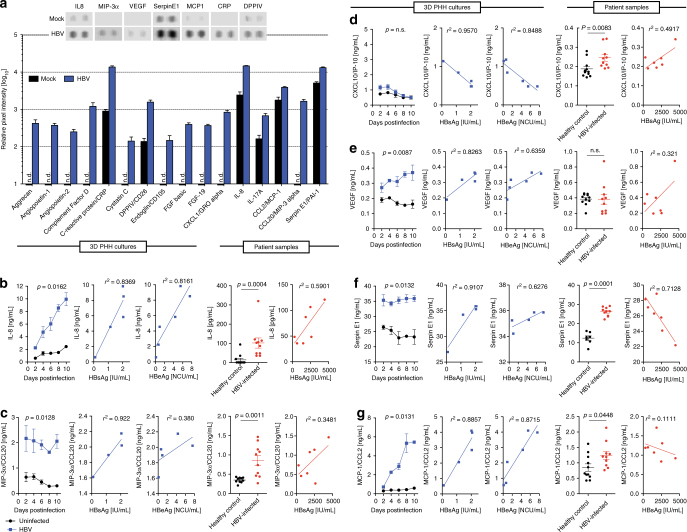
“Later, a human liver-on-chip model replicated HBV infection and accurately mirrored patient host responses, including albumin secretion and Cyp450 enzyme activity, and elevated levels of IL-8, MIP-3 α , SerpinE1 and MCP-A [126].”
Liver-on-a-Chip: Searching for a Balance Between Biomimetics and Functionality
Murashko, A. V., Golubchikov, D. O., Smirnova, O. A., Oleynichenko, K., Nesterova, A., Vosough, M., Svistunov, A., Shpichka, A. I., & Timashev, P. (2026) · Biosensors · doi:10.3390/bios16040191
Silva, F. D. (2018) · theses.fr (ABES) · doi:10.70675/a1ef7558z4d24z4e76zb646zb00718717192
Turon‐Lagot, V. (2020) · theses.fr (ABES) · doi:10.70675/16003efbze1bdz457azbf3bza20690c3a3d5
Formes circulantes du virus de l’hépatite B et nouveaux marqueurs viraux
Pronier, C. (2020) · theses.fr (ABES) · doi:10.70675/913878f3zc5c3z493fz9c77ze2e4e974cb56
Farhad, T., Neves, K., Arbuthnot, P. B., Naidoo, K., & Maepa, M. B. (2026) · Virology · doi:10.1016/j.virol.2026.110977
Zhang, F., Zhou, Y., Ding, D., Zhang, F., Xiao, R., & Ai, X. (2026) · bioRxiv (Cold Spring Harbor Laboratory) · doi:10.64898/2026.06.15.732231
“…microphysiological systems, including recent human liver organoid and liver-on-chip platforms, improve this to AUROC ∼ 0.75 [5, 7, 27, 35, 39, 43, 49, 51, 78] but at an order of magnitude higher per compound cost in reagents, procurement, and assay time, and a single 72-hour cellular endpoint…”
InfluentialBeadell, B., Yi, S., Roberts, M., Mun, K. S., & Wong‐Beringer, A. (2026) · Antimicrobial Agents and Chemotherapy · doi:10.1128/aac.00254-26
In Vitro Three-Dimensional Human Liver Model for Drug-Induced Liver and Bile Duct Injury Prediction
Fu, X., Hu, J., Jiang, X., Sun, Y., Xiang, W., Kuang, R., Kang, H., He, L., & Sang, J. (2026) · Toxics · doi:10.3390/toxics14080724
“GAPDH was selected as a reference gene based on previous literature reports [3,17,18].”
Makkar, S. K., Bhatia, S., Nguyen, N., & Wei, G. (2026) · Frontiers in Pharmacology · doi:10.3389/fphar.2026.1927806
Jalil, A. T., Mohammed, M. K., & Hindi, N. K. K. (2026) · In vitro models · doi:10.1007/s44164-026-00155-5
Use of microphysiological models to study human antiviral responses
Agudelo, C. G., Ornelles, D. A., & McNutt, P. M. (2026) · Elsevier eBooks · doi:10.1016/b978-0-443-16110-0.00003-0
Metadata
- Authors
- Ortega-Prieto, A. M., Skelton, J. K., Wai, S. N., Large, E., Lussignol, M., Vizcay-Barrena, G., Hughes, D., Fleck, R. A., Thursz, M., Catanese, M. T., & Dorner, M.
- Affiliations
- Imperial College London (GB)
- CN Bio Innovations (United Kingdom) (GB)
- King's College London (GB)
- Corresponding author
- Dorner, M.
- Venue
- Nature Communications
- Published
- 2018-02-14
- Volume
- 9
- Issue
- 1
- Pages
- 682-682
- ISSN
- 2041-1723 (ISSN-L)
- PMC
- PMC5813240
- OpenAlex
- W2782129578
- Semantic Scholar
- 5df646cccdbdc9d1271a0d8d4481353b66749d52
- Cited by
- 236
- References
- 56
- Citations by year
- 2026: 12 · 2025: 15 · 2024: 30 · 2023: 26 · 2022: 29 · 2021: 51 · 2020: 35 · 2019: 27 · 2018: 11
- FWCI
- 24.21
- Type
- journal article
- Language
- en
- Open access
- gold
- doi.org
- Licence
- cc-by
- creativecommons.org/licenses/by/4.0 (tdm)
- creativecommons.org/licenses/by/4.0 (vor)
- Locations
- Nature Communications (publishedVersion, cc-by)
- Europe PMC (PubMed Central) (publishedVersion, cc-by)
- PubMed Central (publishedVersion, cc-by)
- PubMed (publishedVersion)
- RePEc: Research Papers in Economics (submittedVersion)
- DOAJ (DOAJ: Directory of Open Access Journals) (submittedVersion)
- DOAJ (DOAJ: Directory of Open Access Journals) (submittedVersion, cc-by-sa)
- Research Portal (King's College London) (submittedVersion, cc-by)
- Repositorio Institucional de la Universidad de Málaga (University of Málaga) (submittedVersion, cc-by)
- Spiral (Imperial College London) (submittedVersion, cc-by)
- Funders
- Wellcome Trust (104771, 104771/Z/14/Z)
- National Institute for Health and Care Research
- NIHR Imperial Biomedical Research Centre
- H2020 European Research Council (637304)
- Topics
- Health Sciences › Medicine › Epidemiology › Hepatitis B Virus Studies
- Health Sciences › Medicine › Hepatology › Liver physiology and pathology
- Physical Sciences › Engineering › Biomedical Engineering › 3D Printing in Biomedical Research
- Keywords
- hepatitis B virus, primary human hepatocytes, HBV life cycle, HBV cccDNA, innate immune response, cytokine response, immune evasion, biomarkers, non-parenchymal cells, co-culture, host-pathogen interaction, preclinical models
- MeSH terms
- Adult, Aged, Animals, Cells, Cultured, Female, Hepatitis B, Hepatitis B virus, Humans, Infant, Kupffer Cells, Liver, Male, Middle Aged, Virus Replication, Reproducibility of Results, Coculture Techniques, Hepatocytes, NIH 3T3 Cells, Microfluidics, Cell Line, Tumor, Mice, Host-Pathogen Interactions, Hep G2 Cells
About these checks
Registry, retraction, Cites and statistics results are computed, not judged, with one exception: a printed reference that no index lists is read once by a model before it counts as a citation error. Claims are extracted by a model and kept only when their quote appears verbatim in the text; each cited source is then checked, with a model’s help, for whether it says what the claim relies on. Those verdicts can be wrong — read the claim’s quote and the cited source before relying on one.
Statistics and arithmetic are recomputed, not judged.
Confidence bands are shown only for fields calibrated on our annotated test set. None is calibrated yet, so no band is shown.
What counts as a claim ›How we measure confidence ›How we check this ›
Are you an author, or do you see a problem with this page? Request a review
Data sources
Bibliographic data: Semantic Scholar, OpenAlex, Crossref.
Contains information from the Semantic Scholar Academic Graph Datasets, made available under the ODC Attribution License (ODC-BY 1.0).
Semantic Scholar’s data is described in: Kinney, R., et al. (2023). The Semantic Scholar Open Data Platform. arXiv:2301.10140.
