

The DOI matches its Crossref record; 50 of the 50 references it cites were found in a registry or an index.
Incorporation of bridged nucleic acids into CRISPR RNAs improves Cas9 endonuclease specificity
Open accessAbstract
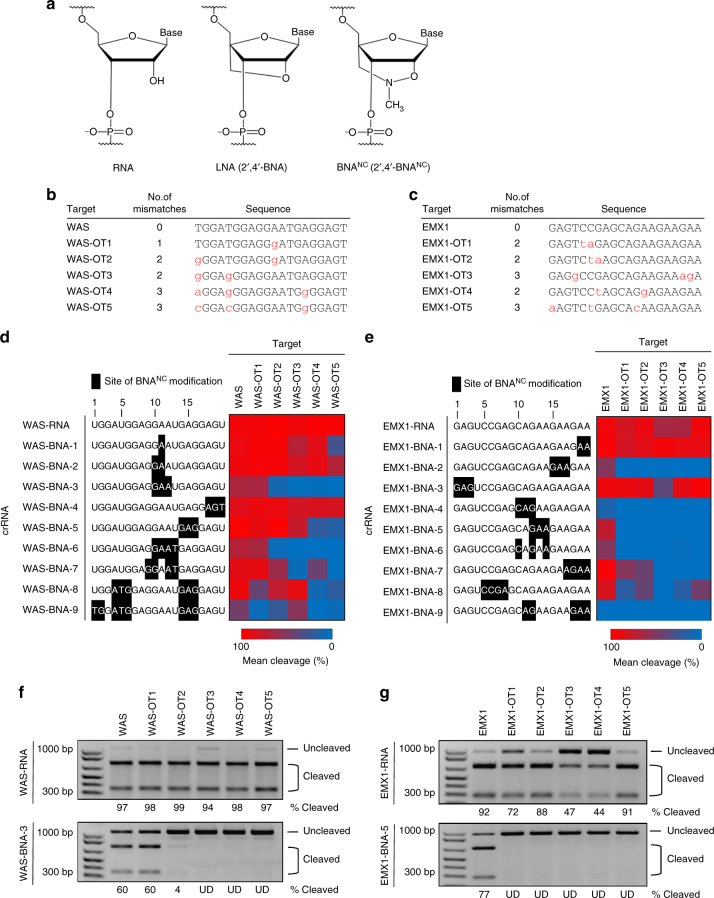
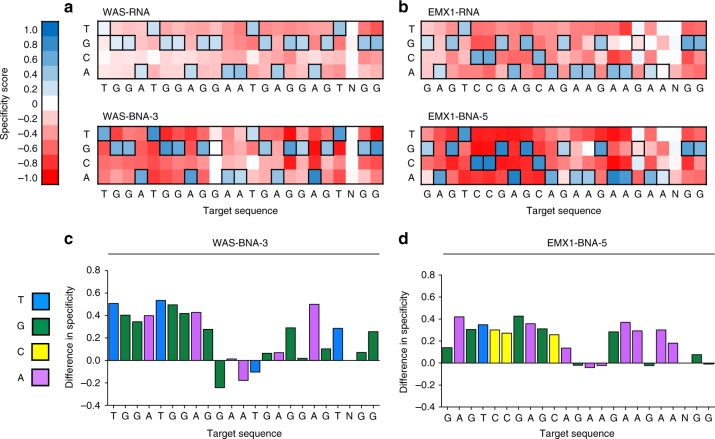
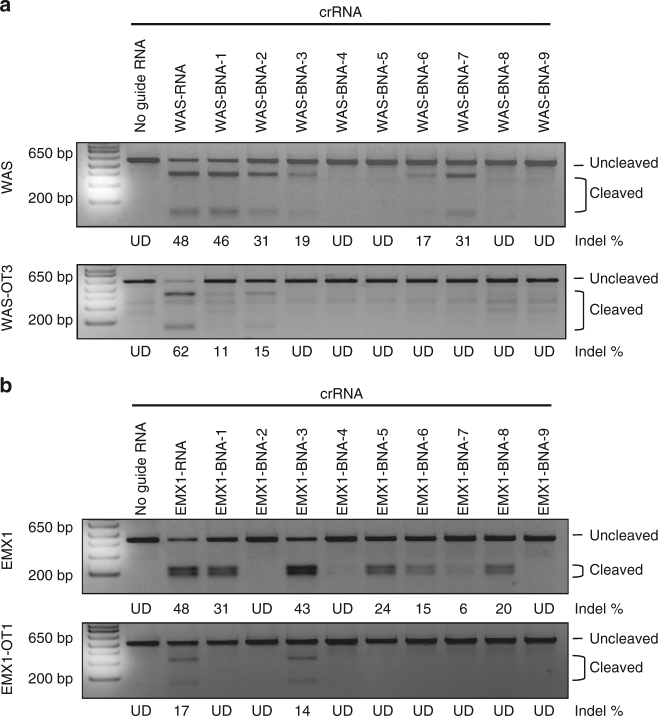
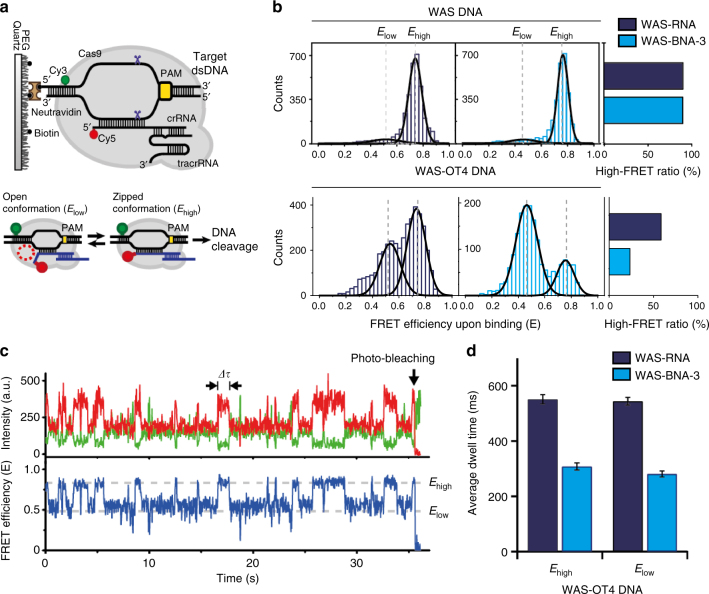
Abstract Off-target DNA cleavage is a paramount concern when applying CRISPR-Cas9 gene-editing technology to functional genetics and human therapeutic applications. Here, we show that incorporation of next-generation bridged nucleic acids (2′,4′-BNA NC [N-Me]) as well as locked nucleic acids (LNA) at specific locations in CRISPR-RNAs (crRNAs) broadly reduces off-target DNA cleavage by Cas9 in vitro and in cells by several orders of magnitude. Using single-molecule FRET experiments we show that BNA NC incorporation slows Cas9 kinetics and improves specificity by inducing a highly dynamic crRNA–DNA duplex for off-target sequences, which shortens dwell time in the cleavage-competent, “zipped” conformation. In addition to describing a robust technique for improving the precision of CRISPR/Cas9-based gene editing, this study illuminates an application of synthetic nucleic acids.
Overview
The claims and statistics of this paper haven’t been checked yet.
Run the check — free, no account needed. It reads the open-access text and checks the sources it cites.
Integrity signals
Registry
Cites
Statistics
Figures
Verification
Claims the paper makes
The claims and statistics of this paper haven’t been checked yet.
Run the check — free, no account needed. It reads the open-access text and checks the sources it cites.
Claims other papers make about this one
Each is checked against this paper’s own text: does it say what the citing paper says it does?
The source backs part of the claim, not all of it — or backs it for a different population, condition or comparison.
In the citing paper
“Incorporation of bridged nucleic acids (2’,4’-BNANC [N-Me]) or locked nucleic acids (LNA) into the sgRNAs also reduces the kinetics of Cas9 nuclease reactivity, thereby improving the specificity of genome editing”
From Off-target effects in CRISPR/Cas9 gene editing (2023) · cites this paper as Cromwell et al., 2018
Experimental — accuracy not yet measuredThe cited source says what the claim attributes to it.
In the citing paper
“Apart from sgRNA length adjustment, chemical modifications on sgRNAs can also influence their off-target effect.”
From Off-target effects in CRISPR/Cas9 gene editing (2023) · cites this paper as Cromwell et al., 2018
Self-check
Percentages, sums and reported differences re-computed from the paper’s own numbers.
The self-check needs the paper’s full text.
Citations
Cites
A Programmable Dual-RNA–Guided DNA Endonuclease in Adaptive Bacterial Immunity
Jinek, M., Chylinski, K., Fonfara, I., Hauer, M., Doudna, J. A., & Charpentier, E. (2012) · Science · doi:10.1126/science.1225829 · Cited by 17,116
Multiplex Genome Engineering Using CRISPR/Cas Systems
Cong, L., Ran, F. A., Cox, D., Lin, S., Barretto, R., Habib, N., Hsu, P. D., Wu, X., Jiang, W., Marraffini, L. A., et al. (2013) · Science · doi:10.1126/science.1231143 · Cited by 15,339
Programmable editing of a target base in genomic DNA without double-stranded DNA cleavage
Komor, A. C., Kim, Y. B., Packer, M. S., Zuris, J. A., & Liu, D. R. (2016) · Nature · doi:10.1038/nature17946 · Cited by 5,437
CRISPR-Cas systems for editing, regulating and targeting genomes
Sander, J. D., & Joung, J. K. (2014) · Nature Biotechnology · doi:10.1038/nbt.2842 · Cited by 3,153
Gasiunas, G., Barrangou, R., Horvath, P., & Siksnys, V. (2012) · Proceedings of the National Academy of Sciences · doi:10.1073/pnas.1208507109 · Cited by 2,769
High-fidelity CRISPR-Cas9 nucleases with no detectable genome-wide off-target effects
Kleinstiver, B. P., Pattanayak, V., Prew, M. S., Tsai, S. Q., Nguyen, N. T., Zheng, Z., & Joung, J. K. (2016) · Nature · doi:10.1038/nature16526 · Cited by 2,673
CRISPR/Cas, the Immune System of Bacteria and Archaea
Horvath, P., & Barrangou, R. (2010) · Science · doi:10.1126/science.1179555 · Cited by 2,471
RNA-guided editing of bacterial genomes using CRISPR-Cas systems
Jiang, W., Bikard, D., Cox, D., Zhang, F., & Marraffini, L. A. (2013) · Nature Biotechnology · doi:10.1038/nbt.2508 · Cited by 2,429
Rationally engineered Cas9 nucleases with improved specificity
Slaymaker, I. M., Gao, L., Zetsche, B., Scott, D. A., Yan, W. X., & Zhang, F. (2016) · Science · doi:10.1126/science.aad5227 · Cited by 2,414
Crystal structure of Cas9 in complex with guide RNA and target DNA
Nishimasu, H., Ran, F. A., Hsu, P. D., Konermann, S., Shehata, S. I., Dohmae, N., Ishitani, R., Zhang, F., & Nureki, O. (2014) · Cell · doi:10.1016/j.cell.2014.02.001 · Cited by 2,306
Cited by
Sorted by citations
Items 101–190 of 190
Identification of Drug Resistance Genes Using a Pooled Lentiviral CRISPR/Cas9 Screening Approach
Kerek, E. M., Cromwell, C. R., & Hubbard, B. P. (2021) · Methods in molecular biology · doi:10.1007/978-1-0716-1740-3_13 · Cited by 15
Self-citationVisualizing enzyme catalytic process using single-molecule techniques
Wang, H., Zhu, C., & Li, D. (2023) · TrAC Trends in Analytical Chemistry · doi:10.1016/j.trac.2023.117083 · Cited by 15
Gao, S., Guan, H., Bloomer, H., Wich, D., Song, D., Khirallah, J., Ye, Z., Zhao, Y., Chen, M., Xu, C., et al. (2023) · Proceedings of the National Academy of Sciences · doi:10.1073/pnas.2308415120 · Cited by 16
Napoletano, S., Battista, E., Netti, P. A., & Causa, F. (2024) · Biosensors and Bioelectronics · doi:10.1016/j.bios.2024.116406 · Cited by 14
Zhang, Y., Wang, Q., Wang, J., & Tang, X. (2021) · ChemPlusChem · doi:10.1002/cplu.202000785 · Cited by 14
Sun, Y., Chen, W., Liu, J., Li, J., Zhang, Y., Cai, W., Liu, L., Tang, X., Hou, J., Wang, M., et al. (2022) · Angewandte Chemie · doi:10.1002/ange.202212413 · Cited by 13
Kotikam, V., Gajula, P. K., Coyle, L., & Rozners, E. (2022) · ACS Chemical Biology · doi:10.1021/acschembio.1c00900 · Cited by 13
Beauchamp, E., Gamma, J. M., Cromwell, C. R., Moussa, E. W., Pain, R., Kostiuk, M. A., Acevedo-Morantes, C., Iyer, A., Yap, M. C., Vincent, K. M., et al. (2024) · Journal of Translational Medicine · doi:10.1186/s12967-024-05150-6 · Cited by 13
Self-citationRational design of minimum CRISPR guide RNA by site-specific Cas9–RNA conjugation
Ling, X., Gao, X., Chang, L., Chen, H., Shi, X., & Liu, T. (2020) · Chemical Communications · doi:10.1039/d0cc01432j · Cited by 13
Non-viral delivery of RNA for therapeutic T cell engineering
Berdecka, D., Smedt, S. C. D., Vos, W. H. D., & Braeckmans, K. (2024) · Advanced Drug Delivery Reviews · doi:10.1016/j.addr.2024.115215 · Cited by 14
Boukouris, A. E., Zhang, Y., Saleme, B., Kinnaird, A. S., Zhao, Y., Liu, Y., Zervopoulos, S. D., Das, S. K., Mittal, R., Haromy, A., et al. (2022) · Cell Reports · doi:10.1016/j.celrep.2022.110511 · Cited by 12
Self-citationFujisaka, A., Hari, Y., Takuma, H., Rahman, S. M. A., Yoshikawa, H., Pang, J., Imanishi, T., & Obika, S. (2019) · Bioorganic & Medicinal Chemistry · doi:10.1016/j.bmc.2019.02.034 · Cited by 12
CRISPR‐Cas system: A promising tool for rapid detection of SARS‐CoV‐2 variants
Li, J., Zhang, K., Lin, G., & Li, J. (2024) · Journal of Medical Virology · doi:10.1002/jmv.29356 · Cited by 11
A Visual Compendium of Principal Modifications within the Nucleic Acid Sugar Phosphate Backbone
Novikova, D., Sagaidak, A. V., Владимировна, В. С., & Tribulovich, V. G. (2024) · Molecules · doi:10.3390/molecules29133025 · Cited by 11
Hu, K., Yin, E. T. S., Hu, Y., & Huang, H. (2021) · Current Medical Science · doi:10.1007/s11596-021-2391-5 · Cited by 11
Li, X., Hu, H., Wang, H., Liu, J., Jiang, W., Zhou, F., & Zhang, J. (2024) · Materials Horizons · doi:10.1039/d4mh01158a · Cited by 12
Tetrazine-Ligated CRISPR sgRNAs for Efficient Genome Editing
Chen, Z., Devi, G., Arif, A., Zamore, P. D., Sontheimer, E. J., & Watts, J. K. (2022) · ACS Chemical Biology · doi:10.1021/acschembio.2c00116 · Cited by 8
CRISPR/Cas genome editing in triple negative breast cancer: Current situation and future directions
Fu, L., Li, Z., Ren, Y., Yu, H., Liu, B., & Qiu, Y. (2023) · Biochemical Pharmacology · doi:10.1016/j.bcp.2023.115449 · Cited by 9
Mechanisms of the Specificity of the CRISPR/Cas9 System in Genome Editing
Kulishova, L. M., Vokhtantsev, I. P., Kim, D. V., & Zharkov, D. O. (2023) · Molecular Biology · doi:10.1134/s0026893323020139 · Cited by 10
Small Molecules for Enhancing the Precision and Safety of Genome Editing
Shin, S., Jang, S., & Lim, D. (2022) · Molecules · doi:10.3390/molecules27196266 · Cited by 9
Biolistic DNA Delivery and Its Applications in Sorghum bicolor
Liu, G., Massel, K., Tabet, B., & Godwin, I. D. (2020) · Methods in molecular biology · doi:10.1007/978-1-0716-0356-7_10 · Cited by 8
Selection of extended CRISPR RNAs with enhanced targeting and specificity
Herring‐Nicholas, A., Dimig, H., Roesing, M., & Josephs, E. A. (2024) · Communications Biology · doi:10.1038/s42003-024-05776-8 · Cited by 9
In Vitro Assays for Comparing the Specificity of First- and Next-Generation CRISPR/Cas9 Systems
Cromwell, C. R., & Hubbard, B. P. (2020) · Methods in molecular biology · doi:10.1007/978-1-0716-0687-2_12 · Cited by 7
Self-citationChemical Modifications in Nucleic Acid Therapeutics
Lennox, K. A., Young, R. C., & Behlke, M. A. (2025) · Methods in molecular biology · doi:10.1007/978-1-0716-4742-4_3 · Cited by 8
DNA shape features improve prediction of CRISPR/Cas9 activity
Vora, D. S., Bhandari, S. M., & Sundar, D. (2024) · Methods · doi:10.1016/j.ymeth.2024.04.012 · Cited by 7
Prokhorova, D. V., Kupryushkin, M. S., Zhukov, S. A., Zharkov, T. D., Dovydenko, I. S., Yakovleva, K. I., Pereverzev, I. M., Matveeva, A. M., Pyshnyi, D. V., & Stepanov, G. A. (2024) · ACS Chemical Biology · doi:10.1021/acschembio.4c00147 · Cited by 7
Roy, R. K., Debashree, I., Srivastava, S., Rishi, N., & Srivastava, A. (2021) · Current Bioinformatics · doi:10.2174/1574893616666210708150439 · Cited by 7
RNA‐Based Therapeutics: Cutting‐Edge Advances in Clinical Research
Ferreira, D., & Rodrigues, L. R. (2025) · Advanced Therapeutics · doi:10.1002/adtp.202500082 · Cited by 7
Thevendran, R., & Solayappan, M. (2023) · Biotechnology Journal · doi:10.1002/biot.202300077 · Cited by 6
He, Y., Li, H., Ju, X., & Gong, B. (2024) · Biochimica et Biophysica Acta (BBA) - Reviews on Cancer · doi:10.1016/j.bbcan.2024.189212 · Cited by 6
Wang, G., Wang, C., Chu, T., Wu, X., Anderson, C. M., Huang, D., & Li, J. (2023) · Journal of Biotechnology · doi:10.1016/j.jbiotec.2023.04.008 · Cited by 7
Methods for Measuring CRISPR/Cas9 DNA Cleavage in Cells
Cromwell, C. R., Jovel, J., & Hubbard, B. P. (2020) · Methods in molecular biology · doi:10.1007/978-1-0716-0687-2_11 · Cited by 5
Self-citationGet ready for the CRISPR/Cas system: A beginner's guide to the engineering and design of guide RNAs
Ma, S., Lv, J., Feng, Z., Rong, Z., & Lin, Y. (2021) · The Journal of Gene Medicine · doi:10.1002/jgm.3377 · Cited by 8
The Synergy between CRISPR and Chemical Engineering
Lau, C., & Tin, C. (2019) · Current Gene Therapy · doi:10.2174/1566523219666190701100556 · Cited by 5
Artificial genetic polymers against human pathologies
Ivanov, G. S., Tribulovich, V. G., Pestov, N. B., David, T. I., Amoah, A.-S., Korneenko, T. V., & Barlev, N. A. (2022) · Biology Direct · doi:10.1186/s13062-022-00353-7 · Cited by 5
Novelty in improvement of CAR T cell-based immunotherapy with the aid of CRISPR system
Hajifathali, A., Lasemi, M. V., Mehravar, M., Moshari, M. R., Alizadeh, A. M., & Roshandel, E. (2023) · Hematology Transfusion and Cell Therapy · doi:10.1016/j.htct.2023.05.009 · Cited by 5
Khamissi, N., Korfmann, C., Chaudhry, A., & Hili, R. (2025) · Chemical Science · doi:10.1039/d5sc00834d · Cited by 4
CRISPR libraries: A powerful screening tool for function and mechanism study of cancer
Jia, C., Liang, Z., Yao, X., Lin, Q., & Zhang⋆, Y. (2025) · Cell investigation. · doi:10.1016/j.clnves.2025.100044 · Cited by 6
A kinetic approach for mapping seed regions of CRISPR ribonucleoprotein and improving specificity
Feng, W., Hu, J., Zhang, H., & Le, X. C. (2026) · Nucleic Acids Research · doi:10.1093/nar/gkag413 · Cited by 4
Taemaitree, L., Shivalingam, A., El-Sagheer, A. H., & Brown, T. P. (2020) · Methods in molecular biology · doi:10.1007/978-1-0716-0687-2_5 · Cited by 3
Cas9-mediated DNA cleavage guided by enzymatically prepared 4′-thio-modified RNA
Saito–Tarashima, N., Ueno, M., Murai, A., Matsuo, A., & Minakawa, N. (2022) · Organic & Biomolecular Chemistry · doi:10.1039/d2ob00742h · Cited by 4
Phospholipase C epsilon 1 as a therapeutic target in cardiovascular diseases
Wang, J., Gao, T., Zhang, D., Tang, Y., & Gu, J. (2025) · Journal of Advanced Research · doi:10.1016/j.jare.2025.01.032 · Cited by 4
Reshaping the Landscape of the Genome: Toolkits for Precise DNA Methylation Manipulation and Beyond
Zhu, C., Hao, Z., & Liu, D. (2023) · JACS Au · doi:10.1021/jacsau.3c00671 · Cited by 5
CRISPR-Click Enables Dual-Gene Editing with Modular Synthetic sgRNAs
Park, H., Osman, E. A., Cromwell, C. R., Laurent, C. D. S., Liu, Y., Kitova, E. N., Klassen, J. S., Hubbard, B. P., Macauley, M. S., & Gibbs, J. M. (2022) · Bioconjugate Chemistry · doi:10.1021/acs.bioconjchem.2c00106 · Cited by 4
Self-citationMohammadnejad, A., Ma, L., Goldys, E. M., & Deng, F. (2026) · TrAC Trends in Analytical Chemistry · doi:10.1016/j.trac.2026.118808 · Cited by 3
Engineering Guide RNAs for CRISPR-Based Biosensors
Liu, X., Chen, T., Li, X. M., Li, Q., Zou, G., Fan, W., & Liu, C. (2026) · ACS Sensors · doi:10.1021/acssensors.6c01763 · Cited by 3
Off-target effects in genome editing
Kovalchuk, I. (2021) · Elsevier eBooks · doi:10.1016/b978-0-323-85679-9.00038-6 · Cited by 3
Wang, Y., Wang, H., Jian, Y.-Z., Luo, Z., Shao, H., & Zhang, W. (2021) · Human Gene Therapy · doi:10.1089/hum.2021.283 · Cited by 3
Genome Editing advances in Soybean Improvement against Biotic and Abiotic Stresses
Aslam, S., Munir, A., Aslam, H. M. U., Khan, S. H., & Ahmad, A. (2022) · Springer eBooks · doi:10.1007/978-3-031-12232-3_13 · Cited by 3
Mechanism of the CRISPR/Cas9 System Specificity in Genome Editing
Kulishova, L. M., Vokhtantsev, I. P., Kim, D. V., & Zharkov, D. O. (2023) · Molecular Biology · doi:10.31857/s0026898423020155 · Cited by 3
Shahid, N., Cromwell, C. R., Hubbard, B. P., & Hammond, J. R. (2024) · Drug Metabolism and Disposition · doi:10.1124/dmd.124.001814 · Cited by 3
Self-citationPark, J., Sung, K., Bak, S. Y., Koh, H. R., & Kim, S. K. (2019) · The Journal of Physical Chemistry Letters · doi:10.1021/acs.jpclett.9b01913 · Cited by 3
Self-citationOptical control of CRISPR-Cas editing with cyclically caged guide RNAsPreprint
Sun, Y.-J., Liu, J., Li, J., Zhang, Y., Chen, W., Cai, W., Liu, L., Tang, X., Hou, J., Wang, M., et al. (2022) · bioRxiv (Cold Spring Harbor Laboratory) · doi:10.1101/2022.03.04.482981 · Cited by 3
Shahid, N., & Hammond, J. R. (2025) · Drug Metabolism and Disposition · doi:10.1016/j.dmd.2025.100203 · Cited by 2
Abasic CRISPR RNAs inherently harness fidelity of SpCas9 for genome editing
Gu, D., Kim, G.-W. D., Park, M., Park, A. D., Lee, H.-S., Eom, S., Weon, H., Park, J., Lee, J., Ahn, S. H., et al. (2026) · Nature Chemical Biology · doi:10.1038/s41589-026-02139-8 · Cited by 2
Self-citationEnhanced CRISPR‐cas systems for genome editing and molecular diagnostics
Li, S., Li, H., Chen, B., Jiang, L., Long, K., Lang, J., Pu, X., & Xiong, E. (2026) · Interdisciplinary medicine · doi:10.1002/inmd.70162 · Cited by 2
Yao, Y., Cao, J., Wang, W., Liu, B., Pei, X., Zhang, L., & Rao, S. (2022) · The CRISPR Journal · doi:10.1089/crispr.2022.0046 · Cited by 2
Wen, Y., Wei, H., You, H., Liu, J. J., Wu, H., & Liu, Y. (2025) · Analysis & Sensing · doi:10.1002/anse.202500064 · Cited by 2
Enrichment Reporter System of Genome Editing Positive Cells
ZHANG, L.-X., Wang, Q., Cao, Y., Ye, C., Chen, Z., Xu, Q.-J., Zou, B., Song, Q., & Zhou, G. (2020) · Chinese Journal of Analytical Chemistry · doi:10.1016/s1872-2040(19)61206-5 · Cited by 2
Induced Mutagenesis in Date Palm (Phoenix dactylifera L.) Breeding
Sattar, M. N., Iqbal, Z., Naqqash, M. N., Jain, S. M., & Al-Khayri, J. M. (2021) · Compendium of plant genomes · doi:10.1007/978-3-030-73750-4_7 · Cited by 2
Newton, M. D., Taylor, B., Cuomo, M. E., & Rueda, D. (2022) · Methods in molecular biology · doi:10.1007/978-1-0716-2229-2_13 · Cited by 2
The future of pediatric gene therapy: CRISPR-Cas9, AI, and personalized medicine
Pan, Y., Ding, J., Wang, W., Xu, D., Fan, J., & Zhang, W. (2026) · Pediatric Research · doi:10.1038/s41390-026-05270-3 · Cited by 2
Maradiaga, O. D. H., Mok, P. L., Gothai, S., Samrot, A. V., Khan, M. S. A., Farhana, A., Alzahrani, B., Tong, J., Thilakavathy, K., Joseph, N. M. S., et al. (2021) · Medicina · doi:10.3390/medicina57070710 · Cited by 1
Photocleavable Guide crRNAs for a Light-Controllable CRISPR/Cas9 System
Sakovina, L., Vokhtantsev, I. P., Ахметова, Е. А., Vorobyeva, M., Vorobjev, P., Zharkov, D. O., & Новопашина, Д. С. (2024) · International Journal of Molecular Sciences · doi:10.3390/ijms252212392 · Cited by 2
Fard, G. B., Ahmadi, M. H., Gholamin, M., & Bafghi, M. H. (2025) · Current Research in Translational Medicine · doi:10.1016/j.retram.2025.103531 · Cited by 3
Locked Nucleic Acid Stabilized Liquid Crystalline Phases
Kodikara, S. G., Sprunt, S., & Balci, H. (2025) · Langmuir · doi:10.1021/acs.langmuir.5c04170 · Cited by 1
Geny, S., Hosseini, E. S., Concordet, J., & Giovannangeli, C. (2019) · Royal Society of Chemistry eBooks · doi:10.1039/9781788015714-00400 · Cited by 1
CRISPR and Chromothripsis: Proceed with Caution
Mack, S., & Russell, I. A. (2021) · The CRISPR Journal · doi:10.1089/crispr.2021.29128.sma · Cited by 1
Implementation of single molecule FRET for visualizing intramolecular movement in CRISPR-Cas9Preprint
Narita, H., Ebata, H., Sakai, K., Minami, K., Uemura, S., & Shima, T. (2020) · bioRxiv (Cold Spring Harbor Laboratory) · doi:10.1101/2020.04.13.039537 · Cited by 1
Specificity of CRISPR‐Cas9 Gene Editing
Selfjord, N., Madsen, A., & Akçakaya, P. (2022) · Wiley eBooks · doi:10.1002/9781119671404.ch20 · Cited by 2
Genome Editing in Cancer Research and Cure
Aslam, S., & Mehmood, S. (2020) · Springer eBooks · doi:10.1007/978-981-15-1067-0_4
Genetic Engineering and Genome Editing for the Improvement of Fabaceae for Abiotic Stress Tolerance
Valiollahi, E., Paiva, J. A. P., & Duque, A. S. (2020) · Springer eBooks · doi:10.1007/978-981-15-4752-2_5
CRISPR-based tools for microbial cell factories
Liu, R., Liang, L., Stettner, S., Freed, E. F., & Eckert, C. A. (2021) · Elsevier eBooks · doi:10.1016/b978-0-12-821477-0.00001-5
Applications and Improvements of CRISPR/Cas9 and Cas12a Gene Editing Technologies
Krysler, A. R. (2020) · ERA: Education and Research Archive (University of Alberta) · doi:10.7939/r3-vkv3-e516
Self-citationModelling and genetic correction of liver genetic diseases
Zabulica, M. (2021) · Figshare
CRISPR-Click Enables Multi-Gene Editing with Modular Synthetic sgRNAsPreprint
Park, H., Osman, E. A., Cromwell, C. R., Laurent, C. S., Liu, Y., Kitova, E. N., Klassen, J. S., Hubbard, B. P., Macauley, M. S., & Gibbs, J. M. (2021) · doi:10.33774/chemrxiv-2021-7pdz9
Self-citationGenetic causes and stem-cell-based therapeutic strategies in neuromuscular diseases
Guo, L. (2021) · Research Publications (Maastricht University) · doi:10.26481/dis.20210623lg
Karyotype diversification in colorectal cancer
Bollen, Y. (2022) · doi:10.3990/1.9789036553506
CRISPR/Cas rendszerek és kis RNS-eik expressziójára alkalmazott promóterek vizsgálata
Weinhardt, N. (2021) · SZTE Repository of Dissertations (University of Szeged) · doi:10.14232/phd.10687
Understanding genetic heterogeneity in gene-edited hematopoietic stem cell products
Becker, H., & Yamazaki, S. (2023) · Experimental Hematology · doi:10.1016/j.exphem.2023.11.007 · Cited by 1
CRISPR/Cas Genome Editing in Fruit Crops: Recent Advances, Challenges, and Future Prospects
Halka, J., Vidya, N., Gurusaravanan, P., Sivaranjini, A., Anand, A. V., & Arun, M. (2024) · Interdisciplinary biotechnological advances · doi:10.1007/978-981-99-9338-3_10
CRISPR/Cas9-based genetic engineering for translational research in neurological disorders
Megagiannis, P., Rouleau, G. A., & Zhou, Y. (2024) · Elsevier eBooks · doi:10.1016/b978-0-443-19041-4.00021-2
Optimization of Somatic Embryogenesis and FAE1 Gene Silencing via CRISPR-Cas9 in Camelina sativa L.
Hamideh, B., Tarinejad, A., Pazhouhandeh, M., & Mahna, N. (2025) · Plant Molecular Biology Reporter · doi:10.1007/s11105-025-01619-w
Performance enhancement of CRISPR-Cas system based on improved guide RNA: a review
Zhang, X., Tian, C., Wang, M., Jia, H., Li, X., & Tian, G. (2026) · Analytica Chimica Acta · doi:10.1016/j.aca.2026.345472
BNANC clamp PCR for simple and sensitive detection of KRAS and EGFR mutations
Ban, I., Orita, A., Yoshikawa, H., Ito, K. R., Obika, S., & Imanishi, T. (2026) · Bioorganic & Medicinal Chemistry · doi:10.1016/j.bmc.2026.118656
Multiplex genome engineering: Methodologies and applications
Peng, S., Xie, W., Zhu, J., & Bao, Z. (2026) · Cell Systems · doi:10.1016/j.cels.2026.101614 · Cited by 1
Fully Modified SpyCas9 Guide RNAs Enable Robust Genome Editing In Cells and In VivoPreprint
Vu, K. A., Zhang, H., Amrani, N., Devi, G., Gaston, N., Lee, J., Maitland, S. A., Chen, Z., Echeverria, D., Liu, P., et al. (2026) · bioRxiv (Cold Spring Harbor Laboratory) · doi:10.64898/2026.05.28.725424
Pan, Y., Mao, H., Hu, X., Cao, Y., & Zhao, J. T. (2026) · TrAC Trends in Analytical Chemistry · doi:10.1016/j.trac.2026.118968
Nidhar, M., Alam, P., Alqarni, M. H., Foudah, A. I., Aljarba, T. M., Rekha, A., Kalra, A., Ahmad, A., Gupta, G., & Hussain, M. S. (2026) · European Journal of Medicinal Chemistry · doi:10.1016/j.ejmech.2026.119262
Deader, F. A., Alazzam, A., Alnaqbi, H., & Rezeq, M. (2026) · Nanoscale Advances · doi:10.1039/d6na00687f
Metadata
- Authors
- Cromwell, C. R., Sung, K., Park, J., Krysler, A. R., Jovel, J., Kim, S. K., & Hubbard, B. P.
- Affiliations
- University of Alberta (CA)
- Seoul National University (KR)
- Corresponding author
- Hubbard, Basil P.
- ORCID
- Venue
- Nature Communications
- Published
- 2018-04-13
- Volume
- 9
- Issue
- 1
- Pages
- 1448-1448
- ISSN
- 2041-1723 (ISSN-L)
- PMC
- PMC5899152
- OpenAlex
- W2796961959
- Cited by
- 190
- References
- 50
- Citations by year
- 2026: 13 · 2025: 15 · 2024: 29 · 2023: 19 · 2022: 30 · 2021: 33 · 2020: 26 · 2019: 17 · 2018: 8
- FWCI
- 7.47
- Type
- journal article
- Language
- en
- Open access
- gold
- doi.org
- Locations
- Nature Communications (publishedVersion, cc-by)
- Europe PMC (PubMed Central) (publishedVersion, other-oa)
- PubMed Central (publishedVersion, cc-by)
- PubMed (publishedVersion)
- RePEc: Research Papers in Economics (submittedVersion)
- DOAJ (DOAJ: Directory of Open Access Journals) (submittedVersion)
- DOAJ (DOAJ: Directory of Open Access Journals) (submittedVersion, cc-by-sa)
- Funders
- Universities Space Research Association
- National Research Foundation
- National Research Foundation of Korea (2018R1A2B2001422)
- Natural Sciences and Engineering Research Council of Canada (rgpin-2016-06381, RGPIN-2016)
- Topics
- Life Sciences › Biochemistry, Genetics and Molecular Biology › Molecular Biology › CRISPR and Genetic Engineering
- Life Sciences › Biochemistry, Genetics and Molecular Biology › Molecular Biology › DNA and Nucleic Acid Chemistry
- Life Sciences › Biochemistry, Genetics and Molecular Biology › Molecular Biology › Advanced biosensing and bioanalysis techniques
- Keywords
- CRISPR/Cas9, bridged nucleic acids, locked nucleic acid, single-molecule FRET, dwell time, synthetic nucleic acids
- MeSH terms
- RNA, Guide, CRISPR-Cas Systems, DNA, Endonucleases, Escherichia coli, HeLa Cells, Humans, RNA, Sensitivity and Specificity, Streptococcus pyogenes, RNA, Guide, Kinetoplastida, Polymorphism, Single Nucleotide, Fluorescence Resonance Energy Transfer, Cell Line, Tumor, DNA Cleavage, Clustered Regularly Interspaced Short Palindromic Repeats, CRISPR-Cas Systems
About these checks
Registry, retraction, Cites and statistics results are computed, not judged, with one exception: a printed reference that no index lists is read once by a model before it counts as a citation error. Claims are extracted by a model and kept only when their quote appears verbatim in the text; each cited source is then checked, with a model’s help, for whether it says what the claim relies on. Those verdicts can be wrong — read the claim’s quote and the cited source before relying on one.
Statistics and arithmetic are recomputed, not judged.
Confidence bands are shown only for fields calibrated on our annotated test set. None is calibrated yet, so no band is shown.
What counts as a claim ›How we measure confidence ›How we check this ›
Are you an author, or do you see a problem with this page? Request a review
