

The DOI matches its Crossref record; 50 of the 50 references it cites were found in a registry or an index.
Incorporation of bridged nucleic acids into CRISPR RNAs improves Cas9 endonuclease specificity
Open accessAbstract
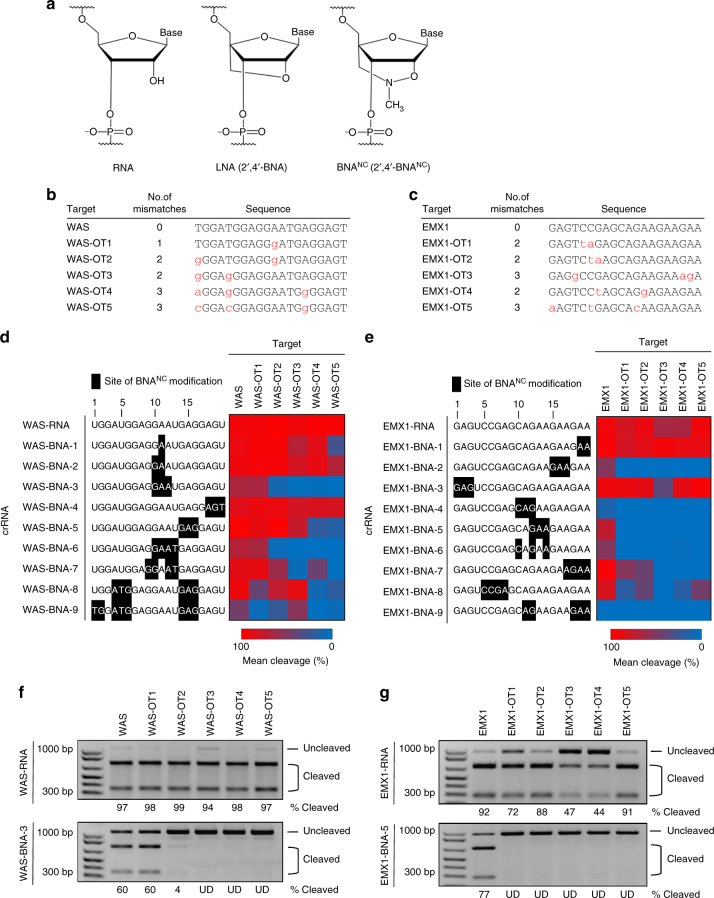
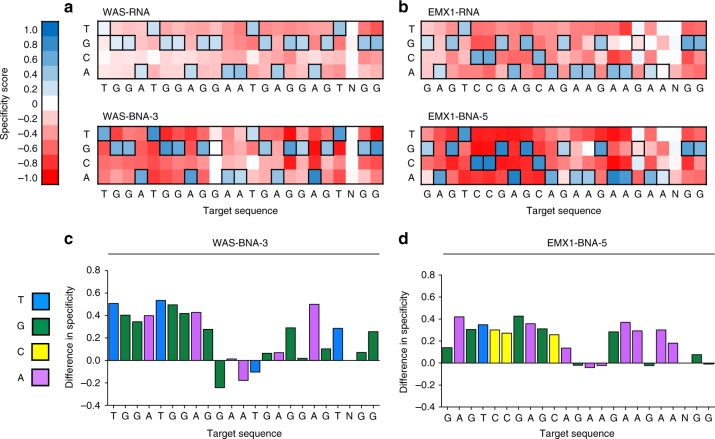
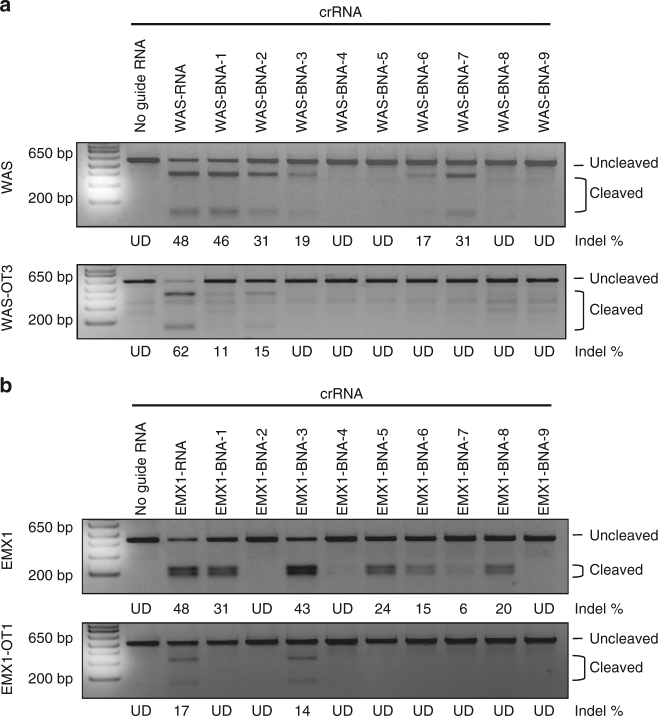
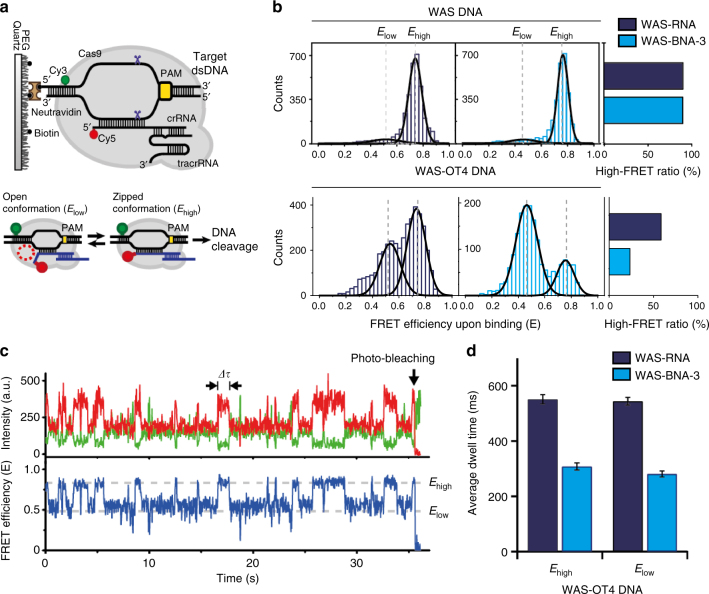
Abstract Off-target DNA cleavage is a paramount concern when applying CRISPR-Cas9 gene-editing technology to functional genetics and human therapeutic applications. Here, we show that incorporation of next-generation bridged nucleic acids (2′,4′-BNA NC [N-Me]) as well as locked nucleic acids (LNA) at specific locations in CRISPR-RNAs (crRNAs) broadly reduces off-target DNA cleavage by Cas9 in vitro and in cells by several orders of magnitude. Using single-molecule FRET experiments we show that BNA NC incorporation slows Cas9 kinetics and improves specificity by inducing a highly dynamic crRNA–DNA duplex for off-target sequences, which shortens dwell time in the cleavage-competent, “zipped” conformation. In addition to describing a robust technique for improving the precision of CRISPR/Cas9-based gene editing, this study illuminates an application of synthetic nucleic acids.
Overview
The claims and statistics of this paper haven’t been checked yet.
Run the check — free, no account needed. It reads the open-access text and checks the sources it cites.
Integrity signals
Registry
Cites
Statistics
Figures
Verification
Claims the paper makes
The claims and statistics of this paper haven’t been checked yet.
Run the check — free, no account needed. It reads the open-access text and checks the sources it cites.
Claims other papers make about this one
Each is checked against this paper’s own text: does it say what the citing paper says it does?
The source backs part of the claim, not all of it — or backs it for a different population, condition or comparison.
In the citing paper
“Incorporation of bridged nucleic acids (2’,4’-BNANC [N-Me]) or locked nucleic acids (LNA) into the sgRNAs also reduces the kinetics of Cas9 nuclease reactivity, thereby improving the specificity of genome editing”
From Off-target effects in CRISPR/Cas9 gene editing (2023) · cites this paper as Cromwell et al., 2018
Experimental — accuracy not yet measuredThe cited source says what the claim attributes to it.
In the citing paper
“Apart from sgRNA length adjustment, chemical modifications on sgRNAs can also influence their off-target effect.”
From Off-target effects in CRISPR/Cas9 gene editing (2023) · cites this paper as Cromwell et al., 2018
Self-check
Percentages, sums and reported differences re-computed from the paper’s own numbers.
The self-check needs the paper’s full text.
Citations
Cites
A Programmable Dual-RNA–Guided DNA Endonuclease in Adaptive Bacterial Immunity
Jinek, M., Chylinski, K., Fonfara, I., Hauer, M., Doudna, J. A., & Charpentier, E. (2012) · Science · doi:10.1126/science.1225829 · Cited by 17,116
Multiplex Genome Engineering Using CRISPR/Cas Systems
Cong, L., Ran, F. A., Cox, D., Lin, S., Barretto, R., Habib, N., Hsu, P. D., Wu, X., Jiang, W., Marraffini, L. A., et al. (2013) · Science · doi:10.1126/science.1231143 · Cited by 15,339
Programmable editing of a target base in genomic DNA without double-stranded DNA cleavage
Komor, A. C., Kim, Y. B., Packer, M. S., Zuris, J. A., & Liu, D. R. (2016) · Nature · doi:10.1038/nature17946 · Cited by 5,437
CRISPR-Cas systems for editing, regulating and targeting genomes
Sander, J. D., & Joung, J. K. (2014) · Nature Biotechnology · doi:10.1038/nbt.2842 · Cited by 3,153
Gasiunas, G., Barrangou, R., Horvath, P., & Siksnys, V. (2012) · Proceedings of the National Academy of Sciences · doi:10.1073/pnas.1208507109 · Cited by 2,769
High-fidelity CRISPR-Cas9 nucleases with no detectable genome-wide off-target effects
Kleinstiver, B. P., Pattanayak, V., Prew, M. S., Tsai, S. Q., Nguyen, N. T., Zheng, Z., & Joung, J. K. (2016) · Nature · doi:10.1038/nature16526 · Cited by 2,673
CRISPR/Cas, the Immune System of Bacteria and Archaea
Horvath, P., & Barrangou, R. (2010) · Science · doi:10.1126/science.1179555 · Cited by 2,471
RNA-guided editing of bacterial genomes using CRISPR-Cas systems
Jiang, W., Bikard, D., Cox, D., Zhang, F., & Marraffini, L. A. (2013) · Nature Biotechnology · doi:10.1038/nbt.2508 · Cited by 2,429
Rationally engineered Cas9 nucleases with improved specificity
Slaymaker, I. M., Gao, L., Zetsche, B., Scott, D. A., Yan, W. X., & Zhang, F. (2016) · Science · doi:10.1126/science.aad5227 · Cited by 2,414
Crystal structure of Cas9 in complex with guide RNA and target DNA
Nishimasu, H., Ran, F. A., Hsu, P. D., Konermann, S., Shehata, S. I., Dohmae, N., Ishitani, R., Zhang, F., & Nureki, O. (2014) · Cell · doi:10.1016/j.cell.2014.02.001 · Cited by 2,306
Cited by
Sorted by citations
RNA-based therapeutics: an overview and prospectus
Zhu, Y., Zhu, L., Wang, X., & Jin, H. (2022) · Cell Death and Disease · doi:10.1038/s41419-022-05075-2 · Cited by 683
Off-target effects in CRISPR/Cas9 gene editing
Guo, C., Ma, X., Gao, F., & Guo, Y. (2023) · Frontiers in Bioengineering and Biotechnology · doi:10.3389/fbioe.2023.1143157 · Cited by 704
“[N-Me]) or locked nucleic acids (LNA) into the sgRNAs also reduces the kinetics of Cas9 nuclease reactivity, thereby improving the specificity of genome editing (Cromwell et al., 2018).”
BackgroundCRISPR-Based Therapeutic Genome Editing: Strategies and In Vivo Delivery by AAV Vectors
Wang, D., Zhang, F., & Gao, G. (2020) · Cell · doi:10.1016/j.cell.2020.03.023 · Cited by 539
Latest Developed Strategies to Minimize the Off-Target Effects in CRISPR-Cas-Mediated Genome Editing
Naeem, M., Majeed, S., Hoque, M. Z., & Ahmad, I. (2020) · Cells · doi:10.3390/cells9071608 · Cited by 457
Recent progress in non-native nucleic acid modifications
McKenzie, L. K., El-Khoury, R., Thorpe, J. D., Damha, M. J., & Hollenstein, M. (2021) · Chemical Society Reviews · doi:10.1039/d0cs01430c · Cited by 306
Assessing and advancing the safety of CRISPR-Cas tools: from DNA to RNA editing
Tao, J., Bauer, D. E., & Chiarle, R. (2023) · Nature Communications · doi:10.1038/s41467-023-35886-6 · Cited by 232
Structural basis for Cas9 off-target activity
Pacesa, M., Lin, C.-H., Cléry, A., Saha, A., Arantes, P. R., Bargsten, K., Irby, M. J., Allain, F. H.-T., Palermo, G., Cameron, P., et al. (2022) · Cell · doi:10.1016/j.cell.2022.09.026 · Cited by 198
Development of CRISPR-Cas systems for genome editing and beyond
Zhang, F. (2019) · Quarterly Reviews of Biophysics · doi:10.1017/s0033583519000052 · Cited by 188
Chemically Modified Platforms for Better RNA Therapeutics
Shi, Y., Zhen, X., Zhang, Y., Li, Y., Koo, S., Saiding, Q., Kong, N., Liu, G., Chen, W., & Tao, W. (2024) · Chemical Reviews · doi:10.1021/acs.chemrev.3c00611 · Cited by 189
Evaluating and enhancing target specificity of gene-editing nucleases and deaminases
Kim, D., Luk, K., Wolfe, S. A., & Kim, J.-S. (2019) · Annual Review of Biochemistry · doi:10.1146/annurev-biochem-013118-111730 · Cited by 171
CRISPR-Cas9-mediated homology-directed repair for precise gene editing
Liao, H., Wu, J., VanDusen, N. J., Li, Y., & Zheng, Y. (2024) · Molecular Therapy — Nucleic Acids · doi:10.1016/j.omtn.2024.102344 · Cited by 197
Mitigating off-target effects in CRISPR/Cas9-mediated in vivo gene editing
Han, H. A., Pang, J. K. S., & Soh, B.-S. (2020) · Journal of Molecular Medicine · doi:10.1007/s00109-020-01893-z · Cited by 134
CRISPR/dCas9-Based Systems: Mechanisms and Applications in Plant Sciences
Karlson, C. K. S., Noor, S. N. M., Nolte, N., & Tan, B. C. (2021) · Plants · doi:10.3390/plants10102055 · Cited by 139
CRISPR Modeling and Correction of Cardiovascular Disease
Liu, N., & Olson, E. N. (2022) · Circulation Research · doi:10.1161/circresaha.122.320496 · Cited by 120
Improving CRISPR Genome Editing by Engineering Guide RNAs
Moon, S. B., Kim, D. Y., Kim, J., Kim, J., & Kim, Y.-S. (2019) · Trends in biotechnology · doi:10.1016/j.tibtech.2019.01.009 · Cited by 106
Comparison of the Feasibility, Efficiency, and Safety of Genome Editing Technologies
Castro, N. G. G., Bjelic, J., Malhotra, G., Huang, C., & Alsaffar, S. H. (2021) · International Journal of Molecular Sciences · doi:10.3390/ijms221910355 · Cited by 110
Haghighi, E., Abolmaali, S. S., Dehshahri, A., Shaegh, S. A. M., Azarpira, N., & Tamaddon, A. M. (2024) · Journal of Nanobiotechnology · doi:10.1186/s12951-024-02972-w · Cited by 125
Kimberland, M. L., Hou, W., Alfonso-Pecchio, A. R., Wilson, S. P., Rao, Y., Zhang, S., & Lu, Q. (2018) · Journal of Biotechnology · doi:10.1016/j.jbiotec.2018.08.007 · Cited by 99
Guide RNA modification as a way to improve CRISPR/Cas9-based genome-editing systems
Filippova, J. A., Matveeva, A. M., Zhuravlev, E. S., & Stepanov, G. A. (2019) · Biochimie · doi:10.1016/j.biochi.2019.09.003 · Cited by 98
Conditional control of RNA-guided nucleic acid cleavage and gene editing
Wang, S., Wu, L., Huang, H., Xiong, W., Liu, J., Wei, L., Yin, P., Tian, T., & Zhou, X. (2020) · Nature Communications · doi:10.1038/s41467-019-13765-3 · Cited by 97
Chen, Q., Zhang, Y., & Yin, H. (2020) · Advanced Drug Delivery Reviews · doi:10.1016/j.addr.2020.10.014 · Cited by 99
Chemical Synthesis and Biological Application of Modified Oligonucleotides
Glazier, D. A., Liao, J., Roberts, B. L., Li, X., Yang, K., Stevens, C. M., & Tang, W. (2020) · Bioconjugate Chemistry · doi:10.1021/acs.bioconjchem.0c00060 · Cited by 94
RNA chemistry and therapeutics
Wang, S., Weissman, D., & Dong, Y. (2025) · Nature Reviews Drug Discovery · doi:10.1038/s41573-025-01237-x · Cited by 109
CRISPR/Cas9 Landscape: Current State and Future Perspectives
Tyumentsev, A. I., Tyumentsev, A. I., & Акимкин, В. Г. (2023) · International Journal of Molecular Sciences · doi:10.3390/ijms242216077 · Cited by 98
Chemical Modifications of CRISPR RNAs to Improve Gene-Editing Activity and Specificity
Rozners, E. (2022) · Journal of the American Chemical Society · doi:10.1021/jacs.2c02633 · Cited by 89
Allen, D. G., Rosenberg, M., & Hendel, A. (2021) · Frontiers in Genome Editing · doi:10.3389/fgeed.2020.617910 · Cited by 89
Lopes, R., & Prasad, M. K. (2024) · Frontiers in Bioengineering and Biotechnology · doi:10.3389/fbioe.2023.1339189 · Cited by 82
Ke, Y., Ghalandari, B., Huang, S., Li, S., Huang, C., Zhi, X., Cui, D., & Ding, X. (2022) · Chemical Science · doi:10.1039/d1sc06832f · Cited by 79
CRISPR/Cas: From Tumor Gene Editing to T Cell-Based Immunotherapy of Cancer
Azangou‐Khyavy, M., Ghasemi, M., Khanali, J., Boroomand-Saboor, M., Jamalkhah, M., Soleimani, M., & Kiani, J. (2020) · Frontiers in Immunology · doi:10.3389/fimmu.2020.02062 · Cited by 80
Precise genome-editing in human diseases: mechanisms, strategies and applications
Zheng, Y., Li, Y., Zhou, K., Li, T., VanDusen, N. J., & Hua, Y. (2024) · Signal Transduction and Targeted Therapy · doi:10.1038/s41392-024-01750-2 · Cited by 91
Advances in CRISPR-Cas technology and its applications: revolutionising precision medicine
Azeez, S. S., Hamad, R. S., Hamad, B., Shekha, M. S., & Bergsten, P. (2024) · Frontiers in Genome Editing · doi:10.3389/fgeed.2024.1509924 · Cited by 88
Donohoue, P. D., Pacesa, M., Lau, E., Vidal, B., Irby, M. J., Nyer, D. B., Rotstein, T., Banh, L., Toh, M. S., Gibson, J., et al. (2021) · Molecular Cell · doi:10.1016/j.molcel.2021.07.035 · Cited by 69
Chemically modified guide RNAs enhance CRISPR-Cas13 knockdown in human cells
Méndez-Mancilla, A., Wessels, H.-H., Legut, M., Kadina, A., Mabuchi, M., Walker, J., Robb, G. B., Holden, K., & Sanjana, N. E. (2022) · Cell Chemical Biology · doi:10.1016/j.chembiol.2021.07.011 · Cited by 68
Optical Control of a CRISPR/Cas9 System for Gene Editing by Using Photolabile crRNA
Zhang, Y., Ling, X., Su, X., Zhang, S., 王, J. 璟. W., Zhang, P., Feng, W., Zhu, Y. Y., Liu, T., & Tang, X. (2020) · Angewandte Chemie International Edition · doi:10.1002/anie.202009890 · Cited by 67
CRISPR/Cas9 for Sickle Cell Disease: Applications, Future Possibilities, and Challenges
Demirci, S., Leonard, A., Haro-Mora, J. J., Uchida, N., & Tisdale, J. F. (2019) · Advances in Experimental Medicine and Biology · doi:10.1007/5584_2018_331 · Cited by 50
Recent Advances in Improving Gene-Editing Specificity through CRISPR–Cas9 Nuclease Engineering
Huang, X., Yang, D., Zhang, J., Xu, J., & Chen, Y. E. (2022) · Cells · doi:10.3390/cells11142186 · Cited by 68
Advances in detecting and reducing off-target effects generated by CRISPR-mediated genome editing
Li, J., Hong, S., Chen, W., Zuo, E., & Yang, H. (2019) · Journal of genetics and genomics/Journal of Genetics and Genomics · doi:10.1016/j.jgg.2019.11.002 · Cited by 66
Taemaitree, L., Shivalingam, A., El-Sagheer, A. H., & Brown, T. P. (2019) · Nature Communications · doi:10.1038/s41467-019-09600-4 · Cited by 61
O’Reilly, D., Kartje, Z. J., Ageely, E. A., Malek-Adamian, E., Habibian, M., Schofield, A., Barkau, C. L., Rohilla, K. J., DeRossett, L. B., Weigle, A. T., et al. (2018) · Nucleic Acids Research · doi:10.1093/nar/gky1214 · Cited by 62
Cas9 deactivation with photocleavable guide RNAs
Zou, R. S., Liu, Y., Wu, B., & Ha, T. (2021) · Molecular Cell · doi:10.1016/j.molcel.2021.02.007 · Cited by 61
Molecular mechanisms, off‐target activities, and clinical potentials of genome editing systems
Zheng, N., Li, L., & Wang, X. (2020) · Clinical and Translational Medicine · doi:10.1002/ctm2.34 · Cited by 59
Directed Evolution of CRISPR/Cas Systems for Precise Gene Editing
Liu, R., Liang, L., Freed, E. F., & Gill, R. T. (2020) · Trends in biotechnology · doi:10.1016/j.tibtech.2020.07.005 · Cited by 58
Sun, Y., Chen, W., Liu, J., Li, J., Zhang, Y., Cai, W., Liu, L., Tang, X., Hou, J., Wang, M., et al. (2022) · Angewandte Chemie International Edition · doi:10.1002/anie.202212413 · Cited by 55
Regulation of the CRISPR-Cas12a system by methylation and demethylation of guide RNA
Hu, Z., Sun, A., Yang, J., Naz, G., Sun, G., Li, Z., Liu, J., Zhang, S., & Zhang, X. (2023) · Chemical Science · doi:10.1039/d3sc00629h · Cited by 55
Chemical engineering of CRISPR–Cas systems for therapeutic application
Barber, H. M., Pater, A. A., Gagnon, K. T., Damha, M. J., & O’Reilly, D. (2024) · Nature Reviews Drug Discovery · doi:10.1038/s41573-024-01086-0 · Cited by 57
Bollen, Y., Post, J. B., Koo, B., & Snippert, H. J. G. (2018) · Nucleic Acids Research · doi:10.1093/nar/gky571 · Cited by 53
Guide RNAs containing universal bases enable Cas9/Cas12a recognition of polymorphic sequences
Krysler, A. R., Cromwell, C. R., Tu, T., Jovel, J., & Hubbard, B. P. (2022) · Nature Communications · doi:10.1038/s41467-022-29202-x · Cited by 49
Self-citationSpecificity of oligonucleotide gene therapy (OGT) agents
Nedorezova, D. D., Dubovichenko, M. V., Belyaeva, E. P., Grigorieva, E. D., Peresadina, A. V., & Kolpashchikov, D. M. (2022) · Theranostics · doi:10.7150/thno.77830 · Cited by 50
CRISPR/Cas9 System: A Bacterial Tailor for Genomic Engineering
Lone, B. A., Karna, S. K. L., Ahmad, F., Shahi, N., & Pokharel, Y. R. (2018) · Genetics Research International · doi:10.1155/2018/3797214 · Cited by 48
Allosteric regulation of CRISPR-Cas9 for DNA-targeting and cleavage
Zuo, Z., & Liu, J. (2020) · Current Opinion in Structural Biology · doi:10.1016/j.sbi.2020.01.013 · Cited by 51
Okafor, I. C., Singh, D., Wang, Y., Jung, M., Wang, H., Mallon, J. P., Bailey, S., Lee, J. K., & Ha, T. (2019) · Nucleic Acids Research · doi:10.1093/nar/gkz1058 · Cited by 45
Natural, modified and conjugated carbohydrates in nucleic acids
Dhara, D., Mulard, L. A., & Hollenstein, M. (2025) · Chemical Society Reviews · doi:10.1039/d4cs00799a · Cited by 46
Regulating CRISPR/Cas9 Function through Conditional Guide RNA Control
Brown, W., Zhou, W., & Deiters, A. (2020) · ChemBioChem · doi:10.1002/cbic.202000423 · Cited by 42
Target Specificity of Cas9 Nuclease via DNA Rearrangement Regulated by the REC2 Domain
Sung, K., Park, J., Kim, Y.-G., Lee, N. K., & Kim, S. K. (2018) · Journal of the American Chemical Society · doi:10.1021/jacs.8b03102 · Cited by 39
Self-citationCRISPR RNA-guided autonomous delivery of Cas9
Wilkinson, R. A., Martin, C. D., Nemudryi, A. A., & Wiedenheft, B. (2018) · Nature Structural & Molecular Biology · doi:10.1038/s41594-018-0173-y · Cited by 43
Gene editing with CRISPR-Cas12a guides possessing ribose-modified pseudoknot handles
Ageely, E. A., Chilamkurthy, R., Jana, S. K., Abdullahu, L., O’Reilly, D., Jensik, P. J., Damha, M. J., & Gagnon, K. T. (2021) · Nature Communications · doi:10.1038/s41467-021-26989-z · Cited by 40
Paving the way towards precise and safe CRISPR genome editing
Śledziński, P., Dabrowska, M., Nowaczyk, M., & Olejniczak, M. (2021) · Biotechnology Advances · doi:10.1016/j.biotechadv.2021.107737 · Cited by 43
CRISPR/Cas9 as a therapeutic tool for triple negative breast cancer: from bench to clinics
Tiwari, P. K., Ko, T.-H., Dubey, R., Chouhan, M., Tsai, L.-W., Singh, H. N., Chaubey, K. K., Dayal, D., Chiang, C., & Kumar, S. (2023) · Frontiers in Molecular Biosciences · doi:10.3389/fmolb.2023.1214489 · Cited by 42
Xiao, H., Hu, J., Huang, C., Feng, W., Liu, Y., Kumblathan, T., Tao, J., Xu, J., Le, X. C., & Zhang, H. (2023) · TrAC Trends in Analytical Chemistry · doi:10.1016/j.trac.2023.117000 · Cited by 39
CRISPR/Cas9 gene editing therapies for cystic fibrosis
Graham, C., & Hart, S. L. (2021) · Expert Opinion on Biological Therapy · doi:10.1080/14712598.2021.1869208 · Cited by 39
Exploring Parkinson-associated kinases for CRISPR/Cas9-based gene editing: beyond alpha-synuclein
Mansour, H. M., & El-Khatib, A. S. (2023) · Ageing Research Reviews · doi:10.1016/j.arr.2023.102114 · Cited by 36
Matrix metalloproteinase‐2 mediates ribosomal RNA transcription by cleaving nucleolar histones
Ali, M. A., Garcia‐Vilas, J. A., Cromwell, C. R., Hubbard, B. P., Hendzel, M. J., & Schulz, R. (2021) · FEBS Journal · doi:10.1111/febs.16061 · Cited by 36
Self-citationMerlin, J. P. J., & Abrahamse, H. (2024) · Biomedicine & Pharmacotherapy · doi:10.1016/j.biopha.2024.117516 · Cited by 35
Recent advances in CRISPR-based single-nucleotide fidelity diagnostics
Kohabir, K. A. V., Sistermans, E. A., & Wolthuis, R. M. F. (2025) · Communications Medicine · doi:10.1038/s43856-025-00933-4 · Cited by 39
Emerging Gene Therapeutics for Epidermolysis Bullosa under Development
Bischof, J., Hierl, M., & Koller, U. (2024) · International Journal of Molecular Sciences · doi:10.3390/ijms25042243 · Cited by 36
Mao, X., Xu, J., Jiang, J., Li, Q., Yao, P., Jiang, J., Gong, L., Dong, Y., Tu, B., Wang, R., et al. (2024) · Communications Biology · doi:10.1038/s42003-024-07173-7 · Cited by 33
van de Vrugt, H. J., Harmsen, T., Riepsaame, J., Alexantya, G., van Mil, S. E., de Vries, Y., Ali, R. B., Huijbers, I. J., Dorsman, J. C., Wolthuis, R. M. F., et al. (2019) · Scientific Reports · doi:10.1038/s41598-018-36506-w · Cited by 33
Ma, Z., Ma, L., & Zhou, J. (2023) · Molecular Horticulture · doi:10.1186/s43897-023-00049-0 · Cited by 37
Development of aptamer-based inhibitors for CRISPR/Cas system
Zhao, J. C., Inomata, R., Kato, Y., & Miyagishi, M. (2020) · Nucleic Acids Research · doi:10.1093/nar/gkaa865 · Cited by 31
Current advances in overcoming obstacles of CRISPR/Cas9 off-target genome editing
Aquino‐Jarquín, G. (2021) · Molecular Genetics and Metabolism · doi:10.1016/j.ymgme.2021.08.002 · Cited by 34
Bridged Nucleic Acids Reloaded
Soler‐Bistué, A., Zorreguieta, Á., & Tolmasky, M. E. (2019) · Molecules · doi:10.3390/molecules24122297 · Cited by 33
Harnessing noncanonical crRNA for highly efficient genome editing
Xun, G., Zhu, Z., Singh, N., Lu, J., Jain, P., & Zhao, H. (2024) · Nature Communications · doi:10.1038/s41467-024-48012-x · Cited by 33
Controlling CRISPR‐Cas9 by guide RNA engineering
Hu, L., Li, Y., Wang, J., Zhao, Y., & Wang, Y. (2022) · Wiley Interdisciplinary Reviews - RNA · doi:10.1002/wrna.1731 · Cited by 31
Sakovina, L., Vokhtantsev, I. P., Vorobyeva, M., Vorobjev, P., & Новопашина, Д. С. (2022) · International Journal of Molecular Sciences · doi:10.3390/ijms232113460 · Cited by 29
Engineering guide RNA to reduce the off-target effects of CRISPR
Wu, J., & Yin, H. (2019) · Journal of genetics and genomics/Journal of Genetics and Genomics · doi:10.1016/j.jgg.2019.11.003 · Cited by 28
Li, Y., Hu, Q., Bai, M., Qing, M., & Bai, L. (2025) · Analytical Chemistry · doi:10.1021/acs.analchem.4c06107 · Cited by 29
Fu, S., Li, J., Chen, J., Zhang, L., Liu, J., Liu, H., & Su, X. (2024) · Nature Biotechnology · doi:10.1038/s41587-024-02388-9 · Cited by 25
CRISPR/Cas technologies for cancer drug discovery and treatment
Wang, K. C., Zheng, T., & Hubbard, B. P. (2025) · Trends in Pharmacological Sciences · doi:10.1016/j.tips.2025.02.009 · Cited by 26
Self-citationAllen, D. G., Weiss, L. E., Saguy, A., Rosenberg, M., Iancu, O., Matalon, O., Lee, C. M., Beider, K., Nagler, A., Shechtman, Y., et al. (2022) · The CRISPR Journal · doi:10.1089/crispr.2021.0128 · Cited by 25
Lipid phosphate phosphatase-2 promotes tumor growth through increased c-Myc expression
Tang, X., Cromwell, C. R., Liu, R., Godbout, R., Hubbard, B. P., McMullen, T. P. W., & Brindley, D. N. (2022) · Theranostics · doi:10.7150/thno.66230 · Cited by 23
Self-citationThe advancements, challenges, and future implications of the CRISPR/Cas9 system in swine research
Zhang, J., Khazalwa, E. M., Abkallo, H. M., Zhou, Y., Nie, X., Ruan, J., Zhao, C., Wang, J., Xu, J., Li, X., et al. (2021) · Journal of genetics and genomics/Journal of Genetics and Genomics · doi:10.1016/j.jgg.2021.03.015 · Cited by 28
From DNA break repair pathways to CRISPR/Cas-mediated gene knock-in methods
Bazaz, M. R., & Dehghani, H. (2022) · Life Sciences · doi:10.1016/j.lfs.2022.120409 · Cited by 23
Acceleration of cancer science with genome editing and related technologies
Sakuma, T., & Yamamoto, T. (2018) · Cancer Science · doi:10.1111/cas.13832 · Cited by 24
CRISPR‐Cas9: A cornerstone for the evolution of precision medicine
Razzouk, S. (2018) · Annals of Human Genetics · doi:10.1111/ahg.12271 · Cited by 22
Ha, D.-I., Lee, J. M., Lee, N., Kim, D., Ko, J., & Kim, Y.-S. (2020) · Experimental & Molecular Medicine · doi:10.1038/s12276-020-00521-7 · Cited by 23
Review, analysis, and optimization of the CRISPR Streptococcus pyogenes Cas9 system
Wang, G., & Li, J. (2021) · Medicine in Drug Discovery · doi:10.1016/j.medidd.2021.100080 · Cited by 22
Engineering nucleic acid chemistry for precise and controllable CRISPR/Cas9 genome editing
Cai, W., & Wang, M. (2019) · 中国科学通报:英文版 · doi:10.1016/j.scib.2019.07.035 · Cited by 21
Expanding the Potential of Mammalian Genome Engineering via Targeted DNA Integration
Zhang, M., Yang, C., Tasan, I., & Zhao, H. (2021) · ACS Synthetic Biology · doi:10.1021/acssynbio.0c00576 · Cited by 20
Optical Control of a CRISPR/Cas9 System for Gene Editing by Using Photolabile crRNA
Zhang, Y., Ling, X., Su, X., Zhang, S., Wang, J., Zhang, P., Feng, W., Zhu, Y. Y., Liu, T., & Tang, X. (2020) · Angewandte Chemie · doi:10.1002/ange.202009890 · Cited by 21
Unlocking the Potential of Chemically Modified Nucleic Acid Therapeutics
Gao, J., Nutan, B., Gargouri, D., Pisal, N. D., Do, V., Zubair, M., Alanzi, H., Wang, H., Lee, D., Joshi, N., et al. (2024) · Advanced Therapeutics · doi:10.1002/adtp.202400231 · Cited by 20
Therapeutic gene editing strategies using CRISPR-Cas9 for the β-hemoglobinopathies
Papizan, J. B., Porter, S. N., Sharma, A., & Pruett‐Miller, S. M. (2020) · Journal of Biomedical Research · doi:10.7555/jbr.34.20200096 · Cited by 21
Tripeptide IRW Upregulates NAMPT Protein Levels in Cells and Obese C57BL/6J Mice
Bhullar, K. S., Son, M., Kerek, E. M., Cromwell, C. R., Wingert, B. M., Wu, K., Jovel, J., Camacho, C. J., Hubbard, B. P., & Wu, J. (2021) · Journal of Agricultural and Food Chemistry · doi:10.1021/acs.jafc.0c07831 · Cited by 18
Self-citationThermophilic Nucleic Acid Polymerases and Their Application in Xenobiology
Wang, G., Du, Y., Ma, X., Ye, F., Qin, Y., Wang, Y., Xiang, Y., Tao, R. X., & Chen, T. (2022) · International Journal of Molecular Sciences · doi:10.3390/ijms232314969 · Cited by 20
Self-delivering, chemically modified CRISPR RNAs for AAV co-delivery and genome editing in vivo
Zhang, H., Kelly, K. L., Lee, J. L. C., Echeverria, D., Cooper, D., Panwala, R., Amrani, N., Chen, Z., Gaston, N., Wagh, A. A., et al. (2023) · Nucleic Acids Research · doi:10.1093/nar/gkad1125 · Cited by 19
Reducing CRISPR-Cas9 off-target effects by optically controlled chemical modifications of guide RNA
Qi, Q., Liu, X., Xiong, W., Zhang, K., Shen, W., Zhang, Y., Xu, X., Zhong, C., Zhang, Y., Tian, T., et al. (2024) · Cell chemical biology · doi:10.1016/j.chembiol.2024.09.006 · Cited by 18
Introduction and History of the Chemistry of Nucleic Acids Therapeutics
Gait, M. J., & Agrawal, S. (2022) · Methods in molecular biology · doi:10.1007/978-1-0716-2010-6_1 · Cited by 18
Thorpe, C., Epple, S., Woods, B., El-Sagheer, A. H., & Brown, T. P. (2019) · Organic & Biomolecular Chemistry · doi:10.1039/c9ob00691e · Cited by 17
CRISPR, animals, and FDA oversight: Building a path to success
Epstein, L. R., Lee, S. S., Miller, M. F., & Lombardi, H. A. (2021) · Proceedings of the National Academy of Sciences · doi:10.1073/pnas.2004831117 · Cited by 17
Bak, S. Y., Jung, Y., Park, J., Sung, K., Jang, H., Bae, S., & Kim, S. K. (2021) · Nucleic Acids Research · doi:10.1093/nar/gkab858 · Cited by 17
Self-citationViral and nonviral nanocarriers for in vivo CRISPR-based gene editing
Guo, Z., Zhu, A. T., Fang, R. H., & Zhang, L. (2024) · Nano Research · doi:10.1007/s12274-024-6748-5 · Cited by 18
Metadata
- Authors
- Cromwell, C. R., Sung, K., Park, J., Krysler, A. R., Jovel, J., Kim, S. K., & Hubbard, B. P.
- Affiliations
- University of Alberta (CA)
- Seoul National University (KR)
- Corresponding author
- Hubbard, Basil P.
- ORCID
- Venue
- Nature Communications
- Published
- 2018-04-13
- Volume
- 9
- Issue
- 1
- Pages
- 1448-1448
- ISSN
- 2041-1723 (ISSN-L)
- PMC
- PMC5899152
- OpenAlex
- W2796961959
- Cited by
- 190
- References
- 50
- Citations by year
- 2026: 13 · 2025: 15 · 2024: 29 · 2023: 19 · 2022: 30 · 2021: 33 · 2020: 26 · 2019: 17 · 2018: 8
- FWCI
- 7.47
- Type
- journal article
- Language
- en
- Open access
- gold
- doi.org
- Locations
- Nature Communications (publishedVersion, cc-by)
- Europe PMC (PubMed Central) (publishedVersion, other-oa)
- PubMed Central (publishedVersion, cc-by)
- PubMed (publishedVersion)
- RePEc: Research Papers in Economics (submittedVersion)
- DOAJ (DOAJ: Directory of Open Access Journals) (submittedVersion)
- DOAJ (DOAJ: Directory of Open Access Journals) (submittedVersion, cc-by-sa)
- Funders
- Universities Space Research Association
- National Research Foundation
- National Research Foundation of Korea (2018R1A2B2001422)
- Natural Sciences and Engineering Research Council of Canada (rgpin-2016-06381, RGPIN-2016)
- Topics
- Life Sciences › Biochemistry, Genetics and Molecular Biology › Molecular Biology › CRISPR and Genetic Engineering
- Life Sciences › Biochemistry, Genetics and Molecular Biology › Molecular Biology › DNA and Nucleic Acid Chemistry
- Life Sciences › Biochemistry, Genetics and Molecular Biology › Molecular Biology › Advanced biosensing and bioanalysis techniques
- Keywords
- CRISPR/Cas9, bridged nucleic acids, locked nucleic acid, single-molecule FRET, dwell time, synthetic nucleic acids
- MeSH terms
- RNA, Guide, CRISPR-Cas Systems, DNA, Endonucleases, Escherichia coli, HeLa Cells, Humans, RNA, Sensitivity and Specificity, Streptococcus pyogenes, RNA, Guide, Kinetoplastida, Polymorphism, Single Nucleotide, Fluorescence Resonance Energy Transfer, Cell Line, Tumor, DNA Cleavage, Clustered Regularly Interspaced Short Palindromic Repeats, CRISPR-Cas Systems
About these checks
Registry, retraction, Cites and statistics results are computed, not judged, with one exception: a printed reference that no index lists is read once by a model before it counts as a citation error. Claims are extracted by a model and kept only when their quote appears verbatim in the text; each cited source is then checked, with a model’s help, for whether it says what the claim relies on. Those verdicts can be wrong — read the claim’s quote and the cited source before relying on one.
Statistics and arithmetic are recomputed, not judged.
Confidence bands are shown only for fields calibrated on our annotated test set. None is calibrated yet, so no band is shown.
What counts as a claim ›How we measure confidence ›How we check this ›
Are you an author, or do you see a problem with this page? Request a review
