

Nicotine aversion is mediated by GABAergic interpeduncular nucleus inputs to laterodorsal tegmentum
Open accessThe DOI matches its Crossref record; 70 of the 70 references it cites were found in a registry or an index.
Abstract
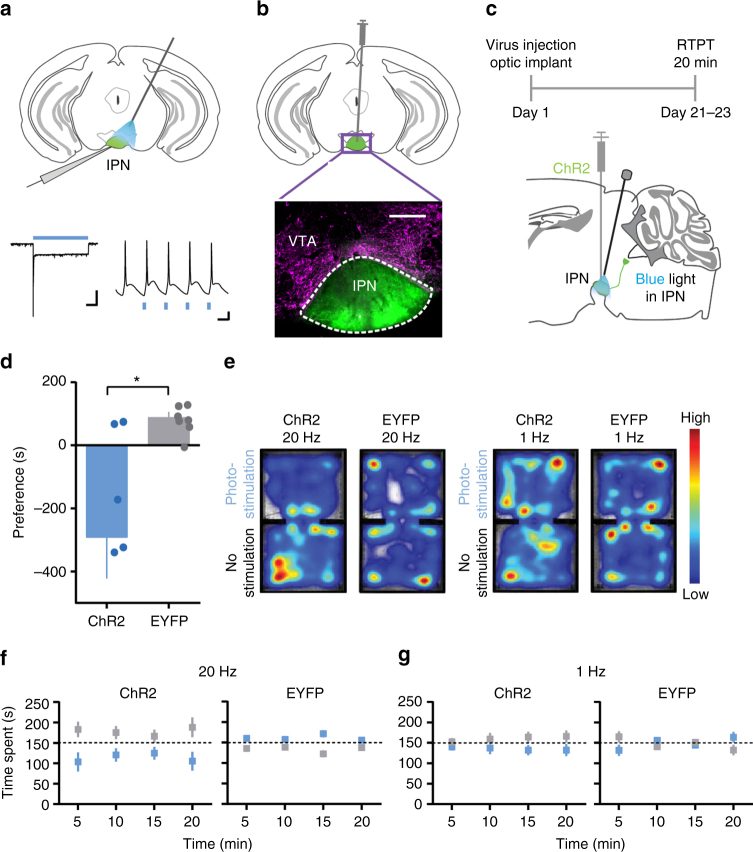
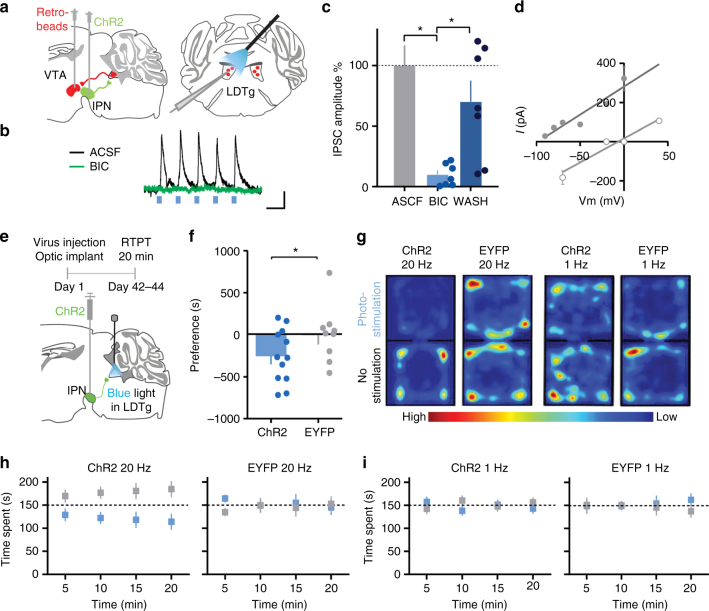
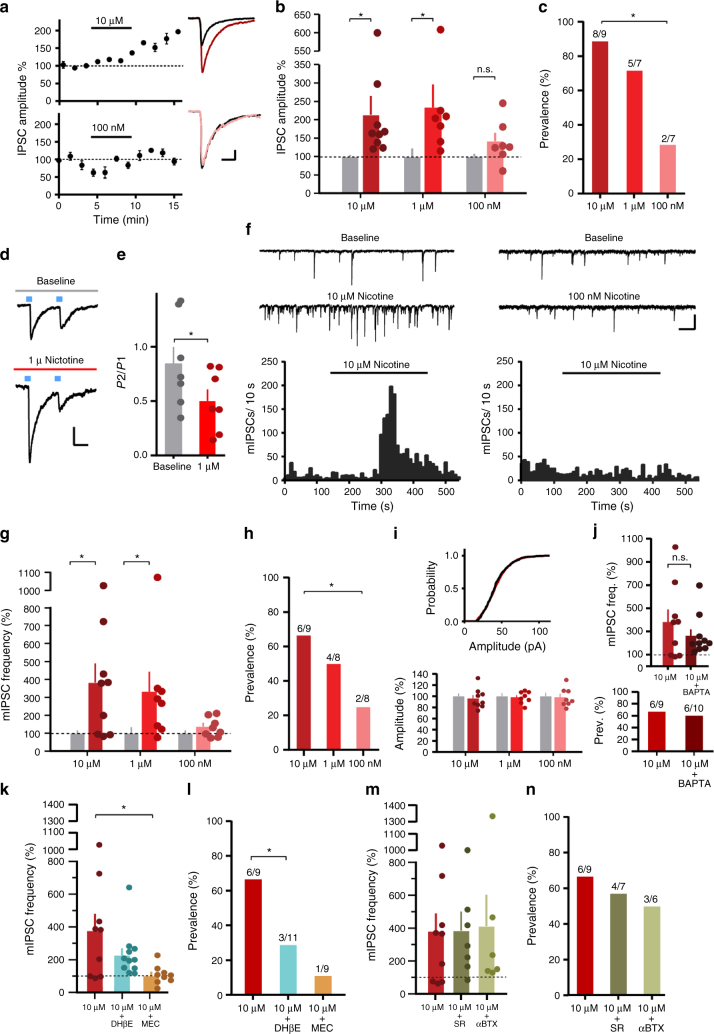
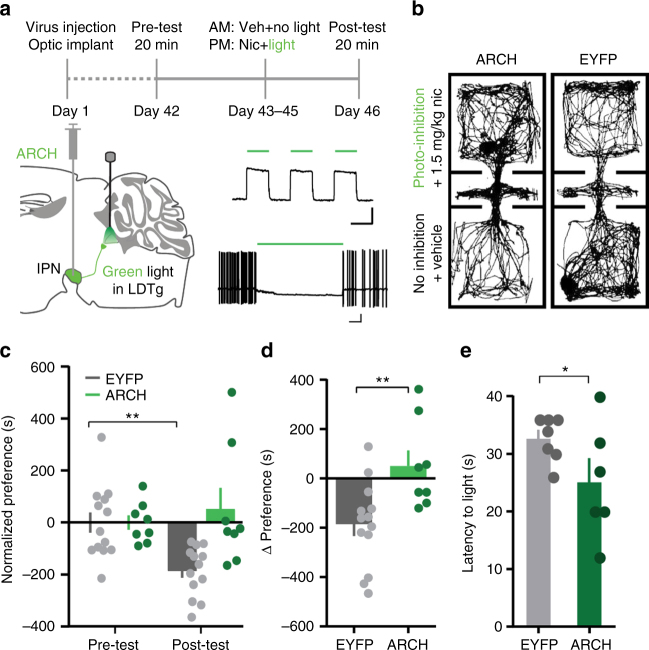
Nicotine use can lead to dependence through complex processes that are regulated by both its rewarding and aversive effects. Recent studies show that aversive nicotine doses activate excitatory inputs to the interpeduncular nucleus (IPN) from the medial habenula (MHb), but the downstream targets of the IPN that mediate aversion are unknown. Here we show that IPN projections to the laterodorsal tegmentum (LDTg) are GABAergic using optogenetics in tissue slices from mouse brain. Selective stimulation of these IPN axon terminals in LDTg in vivo elicits avoidance behavior, suggesting that these projections contribute to aversion. Nicotine modulates these synapses in a concentration-dependent manner, with strong enhancement only seen at higher concentrations that elicit aversive responses in behavioral tests. Optogenetic inhibition of the IPN–LDTg connection blocks nicotine conditioned place aversion, suggesting that the IPN–LDTg connection is a critical part of the circuitry that mediates the aversive effects of nicotine.
Overview
The claims and statistics of this paper haven’t been checked yet.
Free: it reads the open-access text and checks the first 5 claims that cite a source we can check. Create a free account to check every claim.
Integrity signals
Registry
Cites
Statistics
Figures
Verification
Claims the paper makes
The claims and statistics of this paper haven’t been checked yet.
Free: it reads the open-access text and checks the first 5 claims that cite a source we can check. Create a free account to check every claim.
Claims other papers make about this one
Each is checked against this paper’s own text: does it say what the citing paper says it does?
The cited source says what the claim attributes to it.
In the citing paper
“This may reflect late maturation of the medial habenula to lateral dorsal tegmental pathway that underlies nicotine aversion (Wolfman et al., 2018).”
From Unique, long-term effects of nicotine on adolescent brain. (2020) · cites this paper as Wolfman et al., 2018
Self-check
Percentages, sums and reported differences re-computed from the paper’s own numbers.
The self-check needs the paper’s full text.
Citations
Cites
Mammalian nicotinic acetylcholine receptors: from structure to function
Albuquerque, E. X., Pereira, E. F. R., Alkondon, M., & Rogers, S. W. (2009) · Physiological Reviews · doi:10.1152/physrev.00015.2008 · Cited by 1,724
Motulsky, H. J., & Brown, R. E. (2006) · BMC Bioinformatics · doi:10.1186/1471-2105-7-123 · Cited by 1,616
Input-specific control of reward and aversion in the ventral tegmental area
Lammel, S., Lim, B. K., Ran, C., Huang, K. W., Betley, M. J., Tye, K. M., Deisseroth, K., & Malenka, R. C. (2012) · Nature · doi:10.1038/nature11527 · Cited by 1,300
Guidelines on nicotine dose selection for in vivo research
Matta, S. G., Balfour, D. J., Benowitz, N. L., Boyd, R. T., Buccafusco, J. J., Caggiula, A. R., Craig, C. R., Collins, A. C., Damaj, M. I., Donny, E. C., et al. (2007) · Psychopharmacology · doi:10.1007/s00213-006-0441-0 · Cited by 824
Projection-specific modulation of dopamine neuron synapses by aversive and rewarding stimuli
Lammel, S., Ion, D. I., Roeper, J., & Malenka, R. C. (2011) · Neuron · doi:10.1016/j.neuron.2011.03.025 · Cited by 766
Long-term potentiation of excitatory inputs to brain reward areas by nicotine
Mansvelder, H. D., & McGehee, D. S. (2000) · Neuron · doi:10.1016/s0896-6273(00)00042-8 · Cited by 720
Self-citationSynaptic mechanisms underlie nicotine-induced excitability of brain reward areas
Mansvelder, H. D., Keath, J. R., & McGehee, D. S. (2002) · Neuron · doi:10.1016/s0896-6273(02)00625-6 · Cited by 701
Self-citationCRH Engagement of the Locus Coeruleus Noradrenergic System Mediates Stress-Induced Anxiety
McCall, J. G., Al-Hasani, R., Siuda, E. R., Hong, D. Y., Norris, A. J., Ford, C. P., & Bruchas, M. R. (2015) · Neuron · doi:10.1016/j.neuron.2015.07.002 · Cited by 666
Self-citationHabenular α5 nicotinic receptor subunit signalling controls nicotine intake
Fowler, C. D., Lu, Q., Johnson, P. M., Marks, M. J., & Kenny, P. J. (2011) · Nature · doi:10.1038/nature09797 · Cited by 663
Zhao, S., Ting, J. T., Atallah, H. E., Qiu, L., Tan, J., Gloss, B., Augustine, G. J., Deisseroth, K., Luo, M., Graybiel, A. M., et al. (2011) · Nature Methods · doi:10.1038/nmeth.1668 · Cited by 653
Research works printed but not linked: 2
- 53. Antolin-Fontes, B., Ables, J. L., Görlich, A. & Ibañez-Tallon, I. The habenulo- interpeduncular pathway in nicotine aversion and withdrawal. Neuropharmacology 96, 213-222 (2014). · DOI · Paper page
- 63. Paxinos, G. & Franklin, K. B. J. The Mouse Brain in Stereotaxic Coordinates (Academic Press, Amsterdam, London, 2008).
Cited by
Nicotinic acetylcholine receptors and nicotine addiction: A brief introduction
Wittenberg, R. E., Wolfman, S. L., De Biasi, M., & Dani, J. A. (2020) · Neuropharmacology · doi:10.1016/j.neuropharm.2020.108256 · Cited by 193
“Furthermore, many of the nAChR subtypes that are important for withdrawal-related behaviors are also expressed in the mesolimbic circuit, and a variety of studies have shown direct and indirect anatomical connections between these aversive and rewarding pathways (Quina et al., 2017; Wolfman et al., 2018; Zhao-Shea et…”
BackgroundSelf-citationUnique, long-term effects of nicotine on adolescent brain.
Leslie, F. M. (2020) · Pharmacology, Biochemistry, and Behavior · doi:10.1016/j.pbb.2020.173010 · Cited by 178
Neurobiological Mechanisms of Nicotine Reward and Aversion
Wills, L., Ables, J. L., Braunscheidel, K. M., Caligiuri, S. P. B., Elayouby, K. S., Fillinger, C., Ishikawa, M., Moen, J. K., & Kenny, P. J. (2022) · Pharmacological Reviews · doi:10.1124/pharmrev.121.000299 · Cited by 121
“…circuit may influence mesoaccumbens dopamine transmission through an indirect mechanism that involves IPn projections to the LDTg. Consistent with this possibility, nicotine stimulates b2* nAChRs on IPn neurons to increase inhibitory GABAergic transmission in LDTg neurons (Wolfman et al., 2018).”
BackgroundNicotine inhibits the VTA-to-amygdala dopamine pathway to promote anxiety
Nguyen, C., Mondoloni, S., Le Borgne, T., Centeno, I., Come, M., Jehl, J., Solié, C., Reynolds, L. M., Durand-de Cuttoli, R., Tolu, S., et al. (2021) · Neuron · doi:10.1016/j.neuron.2021.06.013 · Cited by 136
DeGroot, S. R., Zhao-Shea, R., Chung, L., Klenowski, P. M., Sun, F., Molas, S., Gardner, P. D., Li, Y., & Tapper, A. R. (2020) · Biological Psychiatry · doi:10.1016/j.biopsych.2020.06.018 · Cited by 87
Metzger, M., Souza, R., Lima, L. B., Bueno, D., Gonçalves, L., Sego, C., Donato, J., & Shammah‐Lagnado, S. J. (2019) · European Journal of Neuroscience · doi:10.1111/ejn.14647 · Cited by 86
“…fulfilled in interplay with major IP downstream targets, such as the MnR and laterodorsal tegmental nucleus (LDTg), which have been identified to contribute to fear and anxiety-like behaviors (Amo et al., 2014; Andrade et al., 2013; Teissier et al., 2015; Wolfman et al., 2018; Yang et al., 2016).”
BackgroundThe Role of the Medial Habenula Cholinergic System in Addiction and Emotion-Associated Behaviors
Lee, H. W., Yang, S. H., Kim, J. Y., & Kim, H. (2019) · Frontiers in Psychiatry · doi:10.3389/fpsyt.2019.00100 · Cited by 82
Midbrain circuits of novelty processing
Tapper, A. R., & Molas, S. (2020) · Neurobiology of Learning and Memory · doi:10.1016/j.nlm.2020.107323 · Cited by 78
Kawai, H., Bouchekioua, Y., Nishitani, N., Niitani, K., Izumi, S., Morishita, H., Andoh, C., Nagai, Y., Koda, M., Hagiwara, M., et al. (2022) · Nature Communications · doi:10.1038/s41467-022-35346-7 · Cited by 68
An inhibitory brainstem input to dopamine neurons encodes nicotine aversion
Liu, C. J., Tose, A. J., Verharen, J. P. H., Zhu, Y., Tang, L. W., de Jong, J. W., Du, J. X., Beier, K. T., & Lammel, S. (2022) · Neuron · doi:10.1016/j.neuron.2022.07.003 · Cited by 64
Elayouby, K. S., Ishikawa, M., Dukes, A. J., Smith, A. C. W., Lu, Q., Fowler, C. D., & Kenny, P. J. (2021) · The Journal of Neuroscience · doi:10.1523/jneurosci.0127-19.2020 · Cited by 52
Targeting GLP-1 receptors to reduce nicotine use disorder: Preclinical and clinical evidence
Herman, R. J., & Schmidt, H. D. (2024) · Physiology & Behavior · doi:10.1016/j.physbeh.2024.114565 · Cited by 62
Connections of the laterodorsal tegmental nucleus with the habenular‐interpeduncular‐raphe system
Bueno, D., Lima, L. B., Souza, R., Gonçalves, L., Leite, F., Souza, S., Furigo, I. C., Donato, J., & Metzger, M. (2019) · The Journal of Comparative Neurology · doi:10.1002/cne.24729 · Cited by 57
The habenular G-protein–coupled receptor 151 regulates synaptic plasticity and nicotine intake
Antolin-Fontes, B., Li, K., Ables, J. L., Riad, M. H., Görlich, A., Williams, M., Wang, C., Lipford, S. M., Dao, M., Liu, J., et al. (2020) · Proceedings of the National Academy of Sciences · doi:10.1073/pnas.1916132117 · Cited by 44
“This stimulation paradigm measurement is commonly used to evaluate the effects of nicotine, which acts presynaptically to increase release probability at several synapses (27).”
MethodRate of flow of aqueous humor determined from measurements of aqueous flare.
McLaren, J. W., Trocmé, S. D., Relf, S. J., & Brubaker, R. F. (1990) · PubMed · Cited by 54
Nicotine addiction: More than just dopamine
Kim, K. K. O., & Picciotto, M. R. (2023) · Current Opinion in Neurobiology · doi:10.1016/j.conb.2023.102797 · Cited by 50
Klenowski, P. M., Zhao-Shea, R., Freels, T. G., Molas, S., & Tapper, A. R. (2021) · Neuropsychopharmacology · doi:10.1038/s41386-021-01107-1 · Cited by 44
Chronic Nicotine Exposure Alters the Neurophysiology of Habenulo-Interpeduncular Circuitry
Arvin, M. C., Jin, X.-T., Yan, Y., Wang, Y., Ramsey, M. D., Kim, V. J., Beckley, N. A., Henry, B. A., & Drenan, R. M. (2019) · The Journal of Neuroscience · doi:10.1523/jneurosci.2816-18.2019 · Cited by 42
“The IPN-to-LDTg circuit, which impinges on the VTA, was recently shown to play an important role in nicotine aversion (Wolfman et al., 2018).”
BackgroundA neuronal coping mechanism linking stress-induced anxiety to motivation for reward
Klenowski, P. M., Zhao-Shea, R., Freels, T. G., Molas, S., Zinter, M., M'angale, P. G., Xiao, C., Martínez‐Núñez, L., Thomson, T., & Tapper, A. R. (2023) · Science Advances · doi:10.1126/sciadv.adh9620 · Cited by 39
“Moreover, GABAergic neurons within the IPN are activated by nicotine withdrawal ( 38 , 43 ), a known stressor in mice ( 44 – 46 ), leading to increased somatic and affective withdrawal behavior ( 38 , 42 , 47 , 48 ).”
BackgroundThe Interpeduncular-Ventral Hippocampus Pathway Mediates Active Stress Coping and Natural Reward
Sherafat, Y., Bautista, M. R., Fowler, J. P., Chen, E., Ahmed, A., & Fowler, C. D. (2020) · eNeuro · doi:10.1523/eneuro.0191-20.2020 · Cited by 36
“…including nicotine reinforcement, aversion and withdrawal, sleep regulation and pain sensitivity (Mészáros et al., 1985; Haun et al., 1992; Fowler et al., 2011; ZhaoShea et al., 2013; Ables et al., 2017; Tuesta et al., 2017; Wolfman et al., 2018; Arvin et al., 2019; Antolin-Fontes et al., 2020).”
BackgroundDopamine control of social novelty preference is constrained by an interpeduncular-tegmentum circuit
Molas, S., Freels, T. G., Zhao-Shea, R., Lee, T., Giménez‐Gómez, P., Barbini, M., Martin, G. E., & Tapper, A. R. (2024) · Nature Communications · doi:10.1038/s41467-024-47255-y · Cited by 32
“Although the habenulo-interpeduncular axis can regulate reward-related information 37,38 and emotional drives such as anxiety or fear-related behaviors 21,39,40 , it is generally assumed that overall activation of the IPN promotes avoidance states 41 .”
Jiang, J. W., Li, X., Hu, A., Zhou, G., Gao, Y.-H., Xu, C., Wu, X., & Wang, H. (2025) · Frontiers in Neuroscience · doi:10.3389/fnins.2025.1670883 · Cited by 207
“…demonstrate that specific activation of the IPN → LDTg GABAergic pathway induces robust place avoidance behavior, while inhibition of this pathway completely abolishes the aversive eects of high-dose nicotine (Wolfman et al., 2018; Alderson et al., 2005; Ishibashi et al., 2009; Maskos, 2008).”
A brainstem circuit amplifies aversion
Liang, J., Zhou, Y., Feng, Q., Zhou, Y., Jia, X., Ren, M., Jia, X., Gong, H., Di, R., Jiao, P., et al. (2024) · Neuron · doi:10.1016/j.neuron.2024.08.010 · Cited by 30
Husson, M., Harrington, L., Tochon, L., Cho, Y. H., Ibáñez-Tallon, I., Maskos, U., & David, V. (2020) · Journal of Neuroscience · doi:10.1523/jneurosci.0356-19.2020 · Cited by 29
“These results are in agreement with previous studies reporting decreased anxiety-related responses and EPM-induced and heart rate in b4KO mice (Picciotto et al., 2002; Salas et al., 2003; Semenova et al., 2012; Ables et al., 2017; Wolfman et al., 2018).”
BackgroundResultSouter, E. A., Chen, Y.-C., Zell, V., Lallai, V., Steinkellner, T., Conrad, W. S., Wisden, W., Harris, K. D., Fowler, C. D., & Hnasko, T. S. (2021) · eNeuro · doi:10.1523/eneuro.0481-21.2021 · Cited by 29
Multidimensional Intersection of Nicotine, Gene Expression, and Behavior
Sherafat, Y., Bautista, M. R., & Fowler, C. D. (2021) · Frontiers in Behavioral Neuroscience · doi:10.3389/fnbeh.2021.649129 · Cited by 28
“Finally, inhibition of these IPN GABAergic projections to the laterodorsal tegmentum has been shown to attenuate nicotine-conditioned place aversion (Wolfman et al., 2018).”
BackgroundCasarrubea, M., Pierucci, M., Aiello, S., Cassar, D., Deidda, G., Crescimanno, G., & Giovanni, G. D. (2019) · Progress in Neuro-Psychopharmacology and Biological Psychiatry · doi:10.1016/j.pnpbp.2019.109731 · Cited by 25
Nicotine Self-Administration Induces Plastic Changes to Nicotinic Receptors in Medial Habenula
Jin, X., Tucker, B. R., & Drenan, R. M. (2020) · eNeuro · doi:10.1523/eneuro.0197-20.2020 · Cited by 24
“, septal nuclei) with midbrain/hindbrain limbic centers such as the median raphe, the pons, and possibly the ventral tegmental area (Qin and Luo, 2009; Hsu et al., 2013; Gardon et al., 2014; Zhao-Shea et al., 2015; Quina et al., 2017; Morton et al., 2018; Wolfman et al., 2018).”
BackgroundMondoloni, S., Nguyen, C., Vicq, É., Ciscato, M., Jehl, J., Cuttoli, R. D.-D., Torquet, N., Tolu, S., Pons, S., Maskos, U., et al. (2023) · eLife · doi:10.7554/elife.80767 · Cited by 23
Xu, X., Li, N., Wen, J., Yang, P., Lu, X., Wang, Z., He, T., Fan, Y., Xu, B., Ge, F., et al. (2022) · Journal of Neuroscience · doi:10.1523/jneurosci.1767-22.2022 · Cited by 19
Tapia, M. A., Jin, X., Tucker, B. R., Thomas, L. N., Walker, N. B., Kim, V. J., Albertson, S. E., Damuka, N., Krizan, I. M., Edassery, S. L., et al. (2022) · Neuropharmacology · doi:10.1016/j.neuropharm.2022.109066 · Cited by 19
TA-GAN: transformer-driven addiction-perception generative adversarial network
Jing, C., Gong, C., Chen, Z., Lei, B., & Wang, S. (2022) · Neural Computing and Applications · doi:10.1007/s00521-022-08187-0 · Cited by 19
“The majority of existing approaches for examining nicotine addiction rely on classic statistical analysis techniques [7, 43].”
BackgroundCholinergic Modulation of General Anesthesia
Leung, L.-W. S., & Luo, T. (2021) · Current Neuropharmacology · doi:10.2174/1570159x19666210421095504 · Cited by 19
“Genetic ablation of the medial habenular neurons in mice results in a large decline in ACh in the IPN, accompanied by hyperactive and compulsive/impulsive behaviors [48].”
BackgroundInfluentialHanda, T., Sugiyama, T., Islam, T., Johansen, J. P., Yanagawa, Y., McHugh, T. J., & Okamoto, H. (2025) · Molecular Psychiatry · doi:10.1038/s41380-025-02964-8 · Cited by 15
Kohlmeier, K. A., & Polli, F. S. (2020) · Frontiers in Synaptic Neuroscience · doi:10.3389/fnsyn.2020.00003 · Cited by 14
Yang, K., McLaughlin, I., Shaw, J. K., Cardé, N. A. Q., Dani, J. A., & Biasi, M. D. (2023) · Neuropharmacology · doi:10.1016/j.neuropharm.2023.109547 · Cited by 13
Nicotine Increases Spontaneous Glutamate Release in the Rostromedial Tegmental Nucleus
Castillo-Rolón, D., Ramírez-Sánchez, E., Arenas-López, G., Garduño, J., Hernández-González, O., Mihailescu, S., & Hernández‐López, S. (2021) · Frontiers in Neuroscience · doi:10.3389/fnins.2020.604583 · Cited by 13
Dumiaty, Y., Underwood, B. M., Phy‐Lim, J., & Chee, M. J. S. (2024) · Neuropeptides · doi:10.1016/j.npep.2024.102427 · Cited by 13
“Moreover, in addition to promoting aversion or avoidance (Wolfman et al., 2018), upregulation of nACh receptors (Hilario et al., 2012) at somatostatin IPN cells can also drive anxiety-like behaviors during nicotine withdrawal (Zhao-Shea et al., 2013).”
BackgroundLinking the CHRNA5 SNP to drug abuse liability: From circuitry to cellular mechanisms
Brynildsen, J. K., & Blendy, J. A. (2021) · Neuropharmacology · doi:10.1016/j.neuropharm.2021.108480 · Cited by 12
“α5containing nAChRs are located primarily within the rostral subnucleus of the IPN, on GABAergic neurons that project to the mesopontine raphe and dorsal tegmental area (Hsu et al., 2013; Morton et al., 2018; Quina et al., 2017; Wolfman et al., 2018) (Figure 1).”
BackgroundThe incentive amplifying effects of nicotine: Roles in alcohol seeking and consumption
King, C. P., & Meyer, P. (2022) · Advances in pharmacology · doi:10.1016/bs.apha.2021.10.008 · Cited by 12
The interpeduncular nucleus blunts the rewarding effect of nicotine
Jehl, J., Ciscato, M., Vicq, É., Guyon, N., de la Bâtie, G. D., Mondoloni, S., Frangieh, J., Mohayyaei, M., Nguyen, C., Pons, S., et al. (2023) · Neuron · doi:10.1016/j.neuron.2025.03.035 · Cited by 12
Nasirova, N., Quina, L. A., Novik, S., & Turner, E. E. (2021) · eNeuro · doi:10.1523/eneuro.0127-21.2021 · Cited by 12
“…Hsu et al., 2013; Frahm et al., 2015), the effect of nicotine on signaling in and between the MHbV and IP (Ables et al., 2017; Morton et al., 2018; Wolfman et al., 2018; Arvin et al., 2019), and its possible relevance to the balance of nicotine reward and aversion that regulates smoking (Fowler…”
BackgroundOlszewski, N. A., Tetteh-Quarshie, S., & Henderson, B. J. (2024) · eNeuro · doi:10.1523/eneuro.0380-23.2024 · Cited by 11
“Further, the IPN → LDTg → VTA circuit has also been documented as facilitating nicotine aversion and avoidance through GABAergic projections from the IPN to the LDTg (Wolfman et al., 2018).”
BackgroundDopamine Release in the Midbrain Promotes Anxiety
Calipari, E. S. (2020) · Biological Psychiatry · doi:10.1016/j.biopsych.2020.08.016 · Cited by 11
“While VTA projections to reward-related brain regions such as the ventral striatum have been associated with valence processing and motivation, the IPN has been linked to opposing actions such as reduced motivation, aversion, and negative affective states (5,6).”
BackgroundIdentification of the subventricular tegmental nucleus as brainstem reward center
Zichó, K., Balog, B. Z., Sebestény, R. Z., Brunner, J., Takács, V. T., Barth, A. M., Seng, C., Orosz, Á., Aliczki, M., Sebők, H., et al. (2025) · Science · doi:10.1126/science.adr2191 · Cited by 10
Monical, A., & McGehee, D. S. (2025) · Journal of Neuroscience · doi:10.1523/jneurosci.2405-24.2025 · Cited by 10
Self-citationFunctional α7 nicotinic acetylcholine receptors in GABAergic neurons of the interpeduncular nucleus
Jin, X., & Drenan, R. M. (2022) · Neuropharmacology · doi:10.1016/j.neuropharm.2022.108987 · Cited by 10
Song, L., Ge, T., Cui, M., Zhang, M., Wu, M., Li, Q., Zhou, X., Sha, S., Yang, X., Yang, J., et al. (2025) · Cell Reports · doi:10.1016/j.celrep.2025.116719 · Cited by 8
The mesopontine tegmentum in reward and aversion: From cellular heterogeneity to behaviour
Bastos-Gonçalves, R., Coimbra, B., & Rodrigues, A. J. (2024) · Neuroscience & Biobehavioral Reviews · doi:10.1016/j.neubiorev.2024.105702 · Cited by 8
“Others have shown that optogenetic modulation of the LDT strongly regulates not only rewarding behaviours (Coimbra et al., 2019, 2021; Lammel et al., 2012) but also aversion-related behaviours (Broussot et al., 2022; Liu et al., 2022; Wolfman et al., 2018).”
Ciscato, M., Chouvaeff, M., & Mourot, A. (2025) · European Journal of Neuroscience · doi:10.1111/ejn.70352 · Cited by 6
Anatomical and functional organization of the interpeduncular nucleus in larval zebrafishPreprint
Wu, Y. K., Petrucco, L., & Portugues, R. (2024) · bioRxiv (Cold Spring Harbor Laboratory) · doi:10.1101/2024.10.09.617353 · Cited by 6
Chittajallu, R., Vlachos, A., Caccavano, A., Yuan, X., Hunt, S., Abebe, D., London, E., Pelkey, K. A., & McBain, C. J. (2025) · eLife · doi:10.7554/elife.106062 · Cited by 6
“…neurons precipitates varied emotion, reward, and addiction phenotypes ( Ables et al., 2023 ; McLaughlin et al., 2017 ; Ables et al., 2017 ; Molas et al., 2017 ; Klenowski et al., 2022 ; Tuesta et al., 2017 ; Zhao-Shea et al., 2013 ; Wolfman et al., 2018 ; Souter et al., 2022 ; Liang et al., 2024 ).”
Williams, E., Snively, L., O'Meara, B. R., Jacobs, H., Kolb, M., Zhao-Shea, R., Pavchinskiy, R. G., Keppler, E., Baratta, M. V., Tapper, A. R., et al. (2025) · Molecular Psychiatry · doi:10.1038/s41380-025-03131-9 · Cited by 5
Brain regions controlling courtship behavior in the bluehead wrasse
Luong, K., Bernardo, M. F., Lindstrom, M., Alluri, R. K., & Rose, G. J. (2023) · Current Biology · doi:10.1016/j.cub.2023.10.003 · Cited by 5
Cai, Y.-Q., Hou, X.-Y., Wang, G., Chang, Y., Zhang, Z.-Z., Shi, T.-L., Liu, B., & Zhang, Y. (2026) · Neuron · doi:10.1016/j.neuron.2026.05.012 · Cited by 3
Chittajallu, R., Vlachos, A., Yuan, X. Q., Hunt, S., Abebe, D. T., London, E., Pelkey, K. A., & McBain, C. J. (2025) · eLife · doi:10.7554/elife.106062.1 · Cited by 3
Liu, Y., Li, R., Cheng, H., Wang, Y., Sun, J., & Zhang, M. (2025) · Pharmaceuticals · doi:10.3390/ph18101456 · Cited by 2
“Emerging evidence [12,33–35] has demonstrated that anxiety-like behaviors induced by withdrawal increase the c-Fos expression in the IPN, enhancing the GABAergic neuronal activity and spontaneous firing frequency, but not glutamatergic neurons.”
Liu, Y., Huang, L., Wang, R., Qi, F., Liu, Y., Chen, Q., Mialon, M., Chen, L., Pinan‐Lucarré, B., & Gao, S. (2025) · PLoS Biology · doi:10.1371/journal.pbio.3003423 · Cited by 2
Review: “The Disappointment Dilemma: Short‐ and Long‐Term Learning From Negative Outcomes”
Ibáñez-Tallon, I., Molas, S., Proulx, C. D., Piriz, J., & Gómez, E. S. (2026) · European Journal of Neuroscience · doi:10.1111/ejn.70522 · Cited by 2
“The IPN–LDTg circuit represents a key mechanism by which the MHb–IPN axis modulates mesolimbic dopamine transmission and motivational states (Wolfman et al. 2018; Monical and McGehee 2025).”
Herman, R. J., Caffrey, A., Pothikamjorn, A., Zhang, X., Fortuna, R. P., & Schmidt, H. D. (2026) · Biological Psychiatry · doi:10.1016/j.biopsych.2026.05.002 · Cited by 2
Goutal, S., Tran, T., Leroy, C., Benhamouda, N., Leterrier, S., Saba, W., Lafont, B., Tartour, É., Roelens, M., & Tournier, N. (2024) · ACS Chemical Neuroscience · doi:10.1021/acschemneuro.4c00204 · Cited by 2
Morishita, H., Hori, H., Kawai, H., Shirakawa, H., Hashimoto, H., & Nagayasu, K. (2025) · Journal of Pharmacological Sciences · doi:10.1016/j.jphs.2025.12.003 · Cited by 2
Clarifying the Role of the Rostral Interpeduncular Nucleus in Aversion to Nicotine
Brynildsen, J. K. (2019) · Journal of Neuroscience · doi:10.1523/jneurosci.2282-18.2018 · Cited by 2
“…model in which stimulation of the IPN by excitatory glutamatergic MHb projections signals nicotine satiety (Fowler et al., 2011; Tuesta et al., 2017), and stimulation of IPN projections to the LDTg and mesopontine raphe is critical for nicotine aversion (Morton et al., 2018; Wolfman et al., 2018).”
BackgroundInfluentialKhatami, L., Safari, V., & Motamedi, F. (2019) · Behavioural Brain Research · doi:10.1016/j.bbr.2019.112212 · Cited by 2
Protein profiling in the habenula after chronic (–)‐menthol exposure in mice
Mulcahy, M. J., Huard, S. M., Paulo, J. A., Wang, J. H., McKinney, S. L., Marks, M. J., Henderson, B. J., & Lester, H. A. (2021) · Journal of Neurochemistry · doi:10.1111/jnc.15495 · Cited by 2
Chittajallu, R., Vlachos, A., Caccavano, A., Yuan, X. Q., Hunt, S., Abebe, D. T., London, E., Pelkey, K. A., & McBain, C. J. (2025) · eLife · doi:10.7554/elife.106062.2 · Cited by 2
Rezaee, D., Alipourfard, I., & Noori-Zadeh, A. (2026) · BioNanoScience · doi:10.1007/s12668-026-02833-w · Cited by 1
Chen, R. Y.-T., Hosseini, H., Hall, S., Zhang, S. Q., & Evans, R. C. (2026) · Neuropharmacology · doi:10.1016/j.neuropharm.2026.111219 · Cited by 1
Elisevich, L., Ascenzi, B. M., & Elisevich, K. V. (2024) · Elsevier eBooks · doi:10.1016/b978-0-12-822404-5.00002-4 · Cited by 1
Slowing the drive: A new regulatory break for nicotine reward-related behaviors
Henderson, B. J. (2025) · Neuron · doi:10.1016/j.neuron.2025.05.012 · Cited by 1
Bueno, D. N. M. (2019) · Digital Library of Theses and Dissertations (Universidade de São Paulo) · doi:10.11606/t.42.2019.tde-25032019-094428
Stereotaxic Surgery in Rodents for Stimulation of the Brain Reward System
Geiger, B. M., Irene, M., & Pothos, E. N. (2020) · Neuromethods · doi:10.1007/978-1-0716-1146-3_2
Influence of Chrna5 on Habenulopeduncular Neurotransmission
Sivakumaran, S. (2020) · TSpace (University of Toronto)
Evans, C. J., & O’Neill, P. (2021) · Faculty Opinions – Post-Publication Peer Review of the Biomedical Literature · doi:10.3410/f.737428043.793579867
Chittajallu, R., Vlachos, A., Caccavano, A. P., Yuan, X. Q., Hunt, S., Abebe, D. T., London, E., Pelkey, K. A., & McBain, C. J. (2025) · eLife · doi:10.7554/elife.106062.3
‘Understudied secret’ in brain dampens nicotine drive in mice
Schenkman, L. (2025) · The Transmitter · doi:10.53053/fjuu2700
Xu, X., Liu, H., Yu, M., Liu, Q., Li, Y., Deng, Y., Yang, Y., Cheng, J., Liu, Y., Wang, M., et al. (2025) · Cell & Bioscience · doi:10.1186/s13578-025-01473-z
“According to existing knowledge, the dosage of nicotine that induces euphoria is close to the dosage that causes nausea [20–22].”
Ionotropic Glutamate Receptor Function in Interpeduncular Nucleus Is Modulated by Nicotine Exposure
Yan, Y., Tucker, B. R., Tapp, A. E., Thomas, L. N., Drenan, D. R., & Drenan, R. M. (2025) · eNeuro · doi:10.1523/eneuro.0052-25.2025
Gill, D. (2019) · Knowledge@UChicago (University of Chicago) · doi:10.6082/axxz8-5ms38
Self-citationInputs to midbrain dopamine neurons control nicotine aversion and motivated feeding
Tose, A. J. (2022) · eScholarship (California Digital Library)
Investigating the neuronal ensembles encoding valence in the Laterodorsal Tegmentum
Gonçalves, R. F. B. (2023) · Portuguese National Funding Agency for Science, Research and Technology (RCAAP Project by FCT)
Simard, A.-S. (2024) · Papyrus : Institutional Repository (Université de Montréal) · doi:10.71781/30428
Implication of the laterodorsal tegmentum in adaptive and maladaptive stress responses
Broussot, L. (2020) · theses.fr (ABES) · doi:10.70675/39fe4c40z3f00z4570zb7b3ze438a205279c
Diversité des effets de la nicotine sur les neurones dopaminergiques de l’aire tegmentale ventrale
Nguyen, C. (2020) · theses.fr (ABES) · doi:10.70675/57dc4740z36f1z4ee7z87e7z960af8c4a43e
Action des drogues sur les sous-réseaux dopaminergiques de la VTA dans les processus d'addiction
Borgne, T. L. (2023) · theses.fr (ABES) · doi:10.70675/0607d6d3z07ecz4009z86e4z371e4304b7e0
Modulation nicotinique de l'activité dopaminergique et des comportements motivés
Vicq, É. (2024) · theses.fr (ABES) · doi:10.70675/698bf885zadc0z4354z8aeczed7d688ec6e8
O'Meara, B. R. (2024) · CU Scholar (University of Colorado Boulder)
Sanchez-Navarro, M. J., Zhang, C., Fortin, S. M., & Hayes, M. R. (2026) · Diabetes Obesity and Metabolism · doi:10.1111/dom.71415
Focal drug uncaging for the precise control of endogenous nicotinic receptors in behaving micePreprint
Guyon, N., Mohayyaei, M., Bergel, A., Grellier, G., Jehl, J., Pietrancosta, N., Rebola, N., François, A., Fauré, P., Ellis‐Davies, G. C. R., et al. (2026) · bioRxiv (Cold Spring Harbor Laboratory) · doi:10.64898/2026.10.02.755724
Metadata
- Authors
- Wolfman, S. L., Gill, D. F., Bogdanic, F., Long, K., Al-Hasani, R., McCall, J. G., Bruchas, M. R., & McGehee, D. S.
- Affiliations
- University of Chicago (US)
- University of Health Sciences and Pharmacy (US)
- Washington University in St. Louis (US)
- Corresponding author
- McGehee, Daniel S.
- ORCID
- Venue
- Nature Communications
- Published
- 2018-07-13
- Volume
- 9
- Issue
- 1
- Pages
- 2710-2710
- ISSN
- 2041-1723 (ISSN-L)
- PMC
- PMC6045623
- OpenAlex
- W2831267268
- Cited by
- 81
- References
- 70
- Citations by year
- 2026: 7 · 2025: 17 · 2024: 10 · 2023: 6 · 2022: 8 · 2021: 9 · 2020: 15 · 2019: 8
- FWCI
- 2.84
- Type
- journal article
- Language
- en
- Open access
- gold
- doi.org
- Licence
- cc-by
- creativecommons.org/licenses/by/4.0 (tdm)
- creativecommons.org/licenses/by/4.0 (vor)
- Locations
- Nature Communications (publishedVersion, cc-by)
- Europe PMC (PubMed Central) (publishedVersion, other-oa)
- PubMed Central (publishedVersion, cc-by)
- PubMed (publishedVersion)
- Digital Commons@Becker (Washington University School of Medicine) (submittedVersion, cc-by)
- RePEc: Research Papers in Economics (submittedVersion)
- DOAJ (DOAJ: Directory of Open Access Journals) (submittedVersion)
- DOAJ (DOAJ: Directory of Open Access Journals) (submittedVersion, cc-by-sa)
- Funders
- National Institutes of Health (DA033396)
- National Institute on Drug Abuse (R01DA036978, R01DA033396, K99DA038725, R00DA038725, R37DA033396)
- Topics
- Life Sciences › Biochemistry, Genetics and Molecular Biology › Molecular Biology › Nicotinic Acetylcholine Receptors Study
- Life Sciences › Neuroscience › Cellular and Molecular Neuroscience › Neurotransmitter Receptor Influence on Behavior
- Life Sciences › Neuroscience › Cellular and Molecular Neuroscience › Neuroscience and Neuropharmacology Research
- Keywords
- nicotine aversion, interpeduncular nucleus, laterodorsal tegmentum, GABAergic projections, nicotine dependence, conditioned place aversion, avoidance behavior, medial habenula
- MeSH terms
- Channelrhodopsins, Animals, Avoidance Learning, Electrodes, Implanted, Male, Mice, Inbred C57BL, Neural Pathways, Nicotine, Reward, Stereotaxic Techniques, Synapses, Tegmentum Mesencephali, Gene Expression, Transgenes, Habenula, Mice, GABAergic Neurons, Optogenetics, Interpeduncular Nucleus
About these checks
Registry, retraction, Cites and statistics results are computed, not judged, with one exception: a printed reference that no index lists is read once by a model before it counts as a citation error. Claims are extracted by a model and kept only when their quote appears verbatim in the text; each cited source is then checked, with a model’s help, for whether it says what the claim relies on. Those verdicts can be wrong — read the claim’s quote and the cited source before relying on one.
Statistics and arithmetic are recomputed, not judged.
Confidence bands are shown only for fields calibrated on our annotated test set. None is calibrated yet, so no band is shown.
What counts as a claim ›How we measure confidence ›How we check this ›
Are you an author, or do you see a problem with this page? Request a review
Data sources
Bibliographic data: Semantic Scholar, OpenAlex, Crossref.
Contains information from the Semantic Scholar Academic Graph Datasets, made available under the ODC Attribution License (ODC-BY 1.0).
Semantic Scholar’s data is described in: Kinney, R., et al. (2023). The Semantic Scholar Open Data Platform. arXiv:2301.10140.
