

Sustained SREBP-1-dependent lipogenesis as a key mediator of resistance to BRAF-targeted therapy
Open accessThe DOI matches its Crossref record; 67 of the 67 references it cites were found in a registry or an index.
Abstract
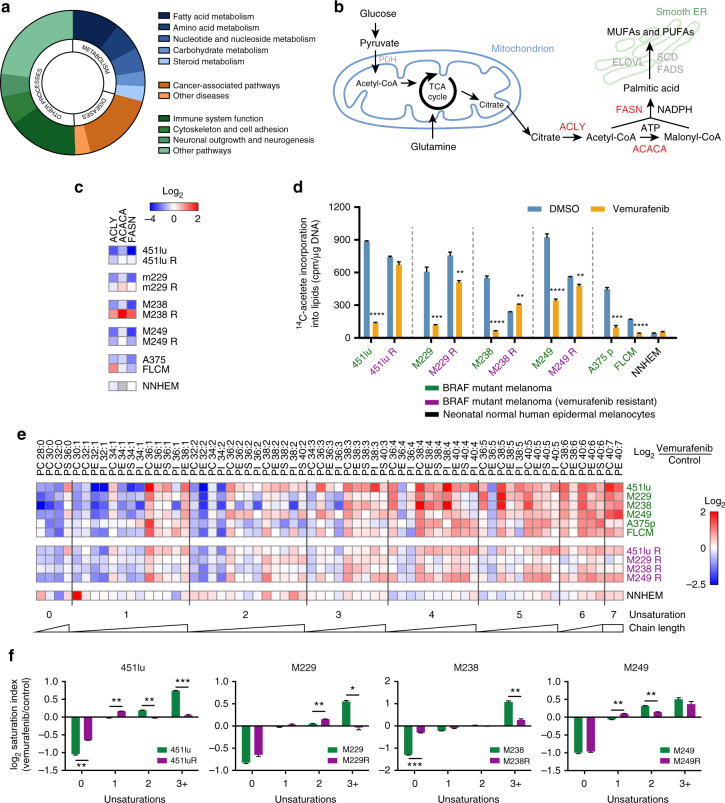
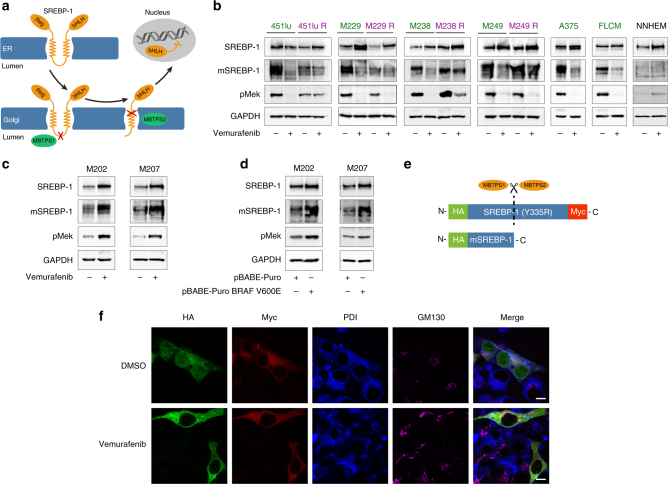
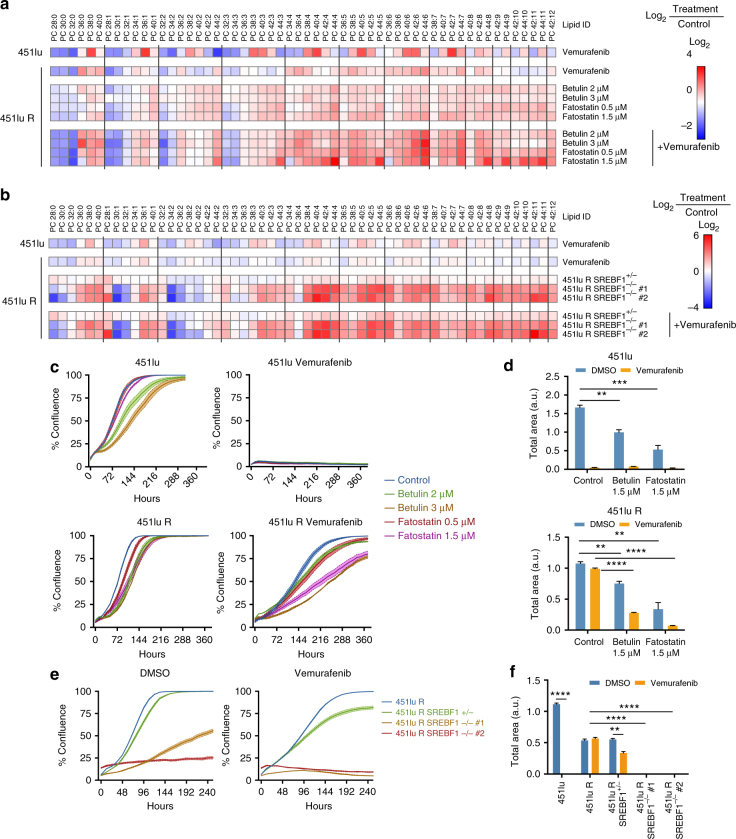
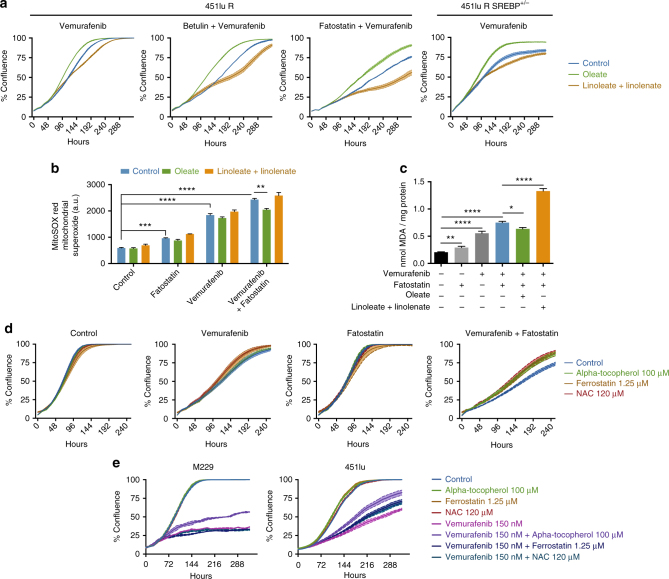
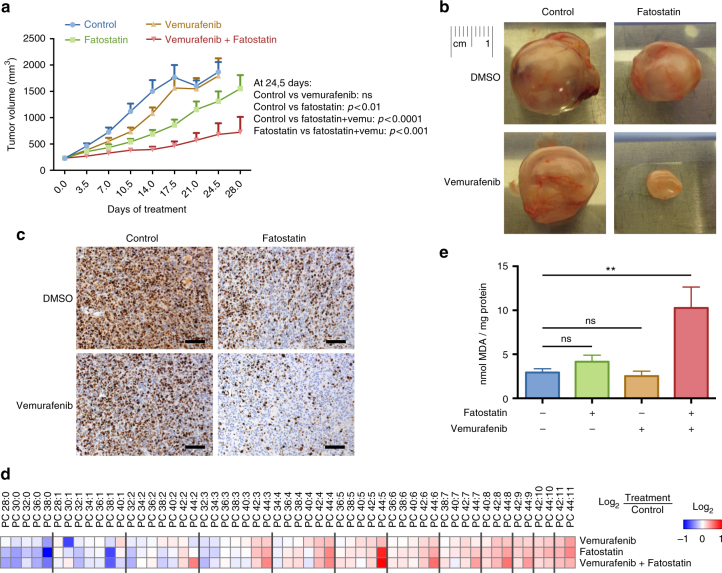
Whereas significant anti-tumor responses are observed in most BRAF V600E -mutant melanoma patients exposed to MAPK-targeting agents, resistance almost invariably develops. Here, we show that in therapy-responsive cells BRAF inhibition induces downregulation of the processing of Sterol Regulator Element Binding (SREBP-1) and thereby lipogenesis. Irrespective of the escape mechanism, therapy-resistant cells invariably restore this process to promote lipid saturation and protect melanoma from ROS-induced damage and lipid peroxidation. Importantly, pharmacological SREBP-1 inhibition sensitizes BRAF V600E -mutant therapy-resistant melanoma to BRAF V600E inhibitors both in vitro and in a pre-clinical PDX in vivo model. Together, these data indicate that targeting SREBP-1-induced lipogenesis may offer a new avenue to overcome acquisition of resistance to BRAF-targeted therapy. This work also provides evidence that targeting vulnerabilities downstream of oncogenic signaling offers new possibilities in overcoming resistance to targeted therapies.
Overview
The claims and statistics of this paper haven’t been checked yet.
Free: it reads the open-access text and checks the first 5 claims that cite a source we can check. Create a free account to check every claim.
Integrity signals
Registry
Cites
Statistics
Figures
Verification
Claims the paper makes
The claims and statistics of this paper haven’t been checked yet.
Free: it reads the open-access text and checks the first 5 claims that cite a source we can check. Create a free account to check every claim.
Claims other papers make about this one
Each is checked against this paper’s own text: does it say what the citing paper says it does?
The cited source doesn’t support the claim as written.
In the citing paper
“Additionally, proteomic analyses indicate that CRC cell lines treated with BRAF inhibitors, alone or in combination with EGFR inhibitors, exhibit upregulation of fatty acid metabolism [14].”
From Inhibition of fatty acid synthase enhances therapeutic efficacy and delays acquired resistance to BRAF-targeted therapy in colorectal cancer (2026) · cites this paper as [14]
Checked by a reasoning model — may be wrong.
Experimental — accuracy not yet measuredThe cited source says what the claim attributes to it.
In the citing paper
“Talebi et al. showed that sustained SREBP-1-dependent lipogenesis is a key mediator of resistance to BRAF-targeted therapy in melanoma [14]”
From Inhibition of fatty acid synthase enhances therapeutic efficacy and delays acquired resistance to BRAF-targeted therapy in colorectal cancer (2026) · cites this paper as [14]
Self-check
Percentages, sums and reported differences re-computed from the paper’s own numbers.
The self-check needs the paper’s full text.
Citations
Cites
Ayala, A., Muñoz, M. F., & Argüelles, S. (2014) · Oxidative Medicine and Cellular Longevity · doi:10.1155/2014/360438 · Cited by 6,349
SREBPs: activators of the complete program of cholesterol and fatty acid synthesis in the liver
Horton, J. D., Goldstein, J. L., & Brown, M. S. (2002) · Journal of Clinical Investigation · doi:10.1172/jci15593 · Cited by 4,794
Clonogenic assay of cells in vitro
Franken, N. A. P., Rodermond, H. M., Stap, J., Haveman, J., & van Bree, C. (2006) · Nature Protocols · doi:10.1038/nprot.2006.339 · Cited by 4,188
SREBPs: activators of the complete program of cholesterol and fatty acid synthesis in the liver
Horton, J. D., Goldstein, J. L., & Brown, M. S. (2002) · Journal of Clinical Investigation · doi:10.1172/jci0215593 · Cited by 4,092
The Biology of Cancer: Metabolic Reprogramming Fuels Cell Growth and Proliferation
DeBerardinis, R. J., Lum, J. J., Hatzivassiliou, G., & Thompson, C. B. (2008) · Cell Metabolism · doi:10.1016/j.cmet.2007.10.002 · Cited by 4,088
Inhibition of Mutated, Activated BRAF in Metastatic Melanoma
Flaherty, K. T., Puzanov, I., Kim, K. B., Ribas, A., McArthur, G. A., Sosman, J. A., O'Dwyer, P. J., Lee, R. J., Grippo, J. F., Nolop, K., et al. (2010) · New England Journal of Medicine · doi:10.1056/nejmoa1002011 · Cited by 3,103
Fatty acid synthase and the lipogenic phenotype in cancer pathogenesis
Menendez, J. A., & Lupu, R. (2007) · Nature Reviews Cancer · doi:10.1038/nrc2222 · Cited by 2,941
The causes and consequences of genetic heterogeneity in cancer evolution
Burrell, R. A., McGranahan, N., Bartek, J., & Swanton, C. (2013) · Nature · doi:10.1038/nature12625 · Cited by 2,262
Melanomas acquire resistance to B-RAF(V600E) inhibition by RTK or N-RAS upregulation
Nazarian, R., Shi, H., Wang, Q., Kong, X., Koya, R. C., Lee, H., Chen, Z., Lee, M.-K., Attar, N., Sazegar, H., et al. (2010) · Nature · doi:10.1038/nature09626 · Cited by 2,192
Cellular Fatty Acid Metabolism and Cancer
Currie, E., Schulze, A., Zechner, R., Walther, T. C., & Farese, R. V. (2013) · Cell Metabolism · doi:10.1016/j.cmet.2013.05.017 · Cited by 2,123
Cited by
Ferroptosis at the crossroads of cancer-acquired drug resistance and immune evasion
Friedmann Angeli, J. P., Krysko, D. V., & Conrad, M. (2019) · Nature Reviews Cancer · doi:10.1038/s41568-019-0149-1 · Cited by 1,259
Greasing the Wheels of the Cancer Machine: The Role of Lipid Metabolism in Cancer
Snaebjornsson, M. T., Janaki-Raman, S., & Schulze, A. (2020) · Cell Metabolism · doi:10.1016/j.cmet.2019.11.010 · Cited by 1,097
Lipid metabolism in cancer: New perspectives and emerging mechanisms
Broadfield, L. A., Pane, A. A., Talebi, A., Swinnen, J. V., & Fendt, S.-M. (2021) · Developmental Cell · doi:10.1016/j.devcel.2021.04.013 · Cited by 758
Self-citationThe interaction between ferroptosis and lipid metabolism in cancer
Li, D., & Li, Y. (2020) · Signal Transduction and Targeted Therapy · doi:10.1038/s41392-020-00216-5 · Cited by 703
“Moreover, vemurafenib, a small molecule targeting mutant BRAF, can induce melanomas dedifferentiation that increases sensitivity to ferroptosis with marked lipidomic changes, including the accumulation of PUFAs.(87) In addition, a systematic study of cellular responses to ferroptosis inducer revealed that high mesench…”
BackgroundLipids and cancer: Emerging roles in pathogenesis, diagnosis and therapeutic intervention
Butler, L. M., Perone, Y., Dehairs, J., Lupien, L. E., de Laat, V., Talebi, A., Loda, M., Kinlaw, W. B., & Swinnen, J. V. (2020) · Advanced Drug Delivery Reviews · doi:10.1016/j.addr.2020.07.013 · Cited by 589
Self-citationLipid metabolic reprogramming in tumor microenvironment: from mechanisms to therapeutics
Jin, H.-R., Wang, J., Wang, Z.-J., Xi, M.-J., Xia, B.-H., Deng, K., & Yang, J.-L. (2023) · Journal of Hematology & Oncology · doi:10.1186/s13045-023-01498-2 · Cited by 481
“Combining an SREBP inhibitor (fatostatin) with vemurafenib therapy enhances the therapy response in melanoma-bearing mice models, increasing membrane lipid polyunsaturation and lipid peroxidation [266].”
BackgroundApplications of patient-derived tumor xenograft models and tumor organoids
Yoshida, G. J. (2020) · Journal of Hematology & Oncology · doi:10.1186/s13045-019-0829-z · Cited by 471
“Notably, SREBP-1 inhibition enhances the sensitivity to BRAF inhibitors in a pre-clinical PDX model of melanoma [71].”
BackgroundInfluentialSignal pathways of melanoma and targeted therapy
Guo, W., Wang, H., & Li, C. (2021) · Signal Transduction and Targeted Therapy · doi:10.1038/s41392-021-00827-6 · Cited by 379
Precision Medicine: Disease Subtyping and Tailored Treatment
Wang, R. C., & Wang, Z. (2023) · Cancers · doi:10.3390/cancers15153837 · Cited by 315
“The PDX has been used for many different cancers, including colon adenocarcinoma [1,131], pancreatic cancer [132,133], cholangiocarcinoma [134], glioblastoma [135], glioma [136], medulloblastoma [137], breast carcinoma [130,138,139], lung cancer [140], malignant melanoma [141], head and neck squamous cell carcinoma (H…”
MethodAcetyl-CoA metabolism in cancer
Guertin, D. A., & Wellen, K. E. (2023) · Nature Reviews Cancer · doi:10.1038/s41568-022-00543-5 · Cited by 303
Zhang, X., Sui, S., Wang, L., Li, H., Zhang, L., Xu, S., & Zheng, X. (2020) · Journal of Cellular Physiology · doi:10.1002/jcp.29232 · Cited by 293
“, 2018), and the level of lipid peroxidation (Talebi et al., 2018), maybe we can regulate the level of ferroptosis via these factors.”
BackgroundHong, X., Roh, W., Sullivan, R. J., Wong, K. H. K., Wittner, B. S., Guo, H., Dubash, T. D., Sade-Feldman, M., Wesley, B., Horwitz, E., et al. (2021) · Cancer Discovery · doi:10.1158/2159-8290.cd-19-1500 · Cited by 234
BRAF Mutations in Melanoma: Biological Aspects, Therapeutic Implications, and Circulating Biomarkers
Castellani, G., Buccarelli, M., Arasi, M. B., Rossi, S., Pisanu, M. E., Bellenghi, M., Lintas, C., & Tabolacci, C. (2023) · Cancers · doi:10.3390/cancers15164026 · Cited by 186
“In addition, several studies have extensively demonstrated the driving role of the NAMPT/NAD axis or serine–glycine metabolism and glutamine metabolism (glutaminase, GLS) in the acquisition of resistance to BRAFi [176].”
BackgroundGabitova-Cornell, L., Surumbayeva, A., Peri, S., Franco-Barraza, J., Restifo, D., Weitz, N., Ogier, C., Goldman, A. R., Hartman, T. R., Francescone, R., et al. (2020) · Cancer Cell · doi:10.1016/j.ccell.2020.08.015 · Cited by 203
Cancer drug-tolerant persister cells: from biological questions to clinical opportunities
Russo, M., Chen, M., Mariella, E., Peng, H., Rehman, S. K., Sancho, E., Sogari, A., Toh, T. S., Balaban, N. Q., Batlle, E., et al. (2024) · Nature Reviews Cancer · doi:10.1038/s41568-024-00737-z · Cited by 210
“Pharmacological inhibition of sterol regulatory element-binding protein 1 restores sensitivity of resistant melanoma cells to BRAF inhibitors both in vitro and in a PDX model 223 .”
Self-citationFat and Furious: Lipid Metabolism in Antitumoral Therapy Response and Resistance
Bacci, M., Lorito, N., Smiriglia, A., & Morandi, A. (2021) · Trends in Cancer · doi:10.1016/j.trecan.2020.10.004 · Cited by 194
Chen, H., Qi, Q., Wu, N., Wang, Y., Feng, Q., Jin, R., & Jiang, L. (2022) · Redox Biology · doi:10.1016/j.redox.2022.102426 · Cited by 163
Raman-guided subcellular pharmaco-metabolomics for metastatic melanoma cells
Du, J., Su, Y., Qian, C., Yuan, D., Miao, K., Lee, D., Ng, A. H. C., Wijker, R. S., Ribas, A., Levine, R. D., et al. (2020) · Nature Communications · doi:10.1038/s41467-020-18376-x · Cited by 171
Exploring receptor tyrosine kinases-inhibitors in Cancer treatments
Metibemu, D. S., Akinloye, O. A., Akamo, A. J., Ojo, D. A., Okeowo, T. O., & Omotuyi, O. I. (2019) · Egyptian Journal of Medical Human Genetics · doi:10.1186/s43042-019-0035-0 · Cited by 176
“SREBP-1 inhibitors together with BRAF inhibitors should be adopted to defeat resistance to BRAFV600E-targeted therapy [171].”
BackgroundInfluentialFerroptosis: mechanisms and implications for cancer development and therapy response
dos Santos, A. F., Fazeli, G., da Silva, T. N. X., & Angeli, J. P. F. (2023) · Trends in Cell Biology · doi:10.1016/j.tcb.2023.04.005 · Cited by 170
Mechanisms of Acquired BRAF Inhibitor Resistance in Melanoma: A Systematic Review
Proietti, I., Skroza, N., Bernardini, N., Tolino, E., Balduzzi, V., Marchesiello, A., Michelini, S., Volpe, S., Mambrin, A., Mangino, G., et al. (2020) · Cancers · doi:10.3390/cancers12102801 · Cited by 145
Alicea, G. M., Rebecca, V. W., Goldman, A. R., Fane, M. E., Douglass, S. M., Behera, R., Webster, M. R., Kugel, C. H., Ecker, B. L., Caino, M. C., et al. (2020) · Cancer Discovery · doi:10.1158/2159-8290.cd-20-0329 · Cited by 159
Targeting SREBP-1-Mediated Lipogenesis as Potential Strategies for Cancer
Zhao, Q., Lin, X., & Wang, G. (2022) · Frontiers in Oncology · doi:10.3389/fonc.2022.952371 · Cited by 168
Wu, X., Geng, F., Cheng, X., Guo, Q., Zhong, Y., Cloughesy, T. F., Yong, W. H., Chakravarti, A., & Guo, D. (2020) · iScience · doi:10.1016/j.isci.2020.101569 · Cited by 131
The Lipid Metabolic Landscape of Cancers and New Therapeutic Perspectives
Wang, W., Bai, L., Li, W., & Cui, J. (2020) · Frontiers in Oncology · doi:10.3389/fonc.2020.605154 · Cited by 127
“LXR GW3965; LXR623 Melanoma and glioblastoma LXR agonists which suppress mitochondrial respiration and decrease cholesterol levels by enhancing the excretion and decreasing the resorption of cholesterol Preclinical (121) ApoA-I ApoA-I mimetic peptides — Mimetic peptides which is synthesized on the basis of aamphipathi…”
BackgroundInfluentialLee, G., Kim, Y. Y., Jang, H., Han, J. S., Nahmgoong, H., Park, Y. J., Han, S. M., Cho, C., Lim, S., Noh, J.-R., et al. (2022) · Cell Metabolism · doi:10.1016/j.cmet.2022.03.010 · Cited by 111
Nanomaterial-enabled metabolic reprogramming strategies for boosting antitumor immunity
Ma, M., Zhang, Y., Pu, K., & Tang, W. (2025) · Chemical Society Reviews · doi:10.1039/d4cs00679h · Cited by 107
Adaptive redox homeostasis in cutaneous melanoma
Arslanbaeva, L. R., & Santoro, M. M. (2020) · Redox Biology · doi:10.1016/j.redox.2020.101753 · Cited by 90
“This can be achieved by melanoma cells through different mechanisms that involve metabolic pathways such as pentose phosphate pathway [24], serine biosynthesis [25], 1-carbon metabolism [26], mitochondrial metabolism [11,27] and lipogenesis [28].”
BackgroundThe pathogenesis and therapeutic implications of metabolic reprogramming in renal cell carcinoma
Zhang, Y., Zhang, S., Sun, H., & Xu, L. (2025) · Cell Death Discovery · doi:10.1038/s41420-025-02479-9 · Cited by 87
“Flavonoids like quercetin inhibit GLUT1-mediated glucose uptake while suppressing SREBP-1-dependent lipogenesis, synergizing with anti-PD-1 to reverse T cell exhaustion in melanoma models [85].”
Najafi, M., Ahmadi, A., & Mortezaee, K. (2019) · Cell Biology International · doi:10.1002/cbin.11187 · Cited by 91
Novel Insights on Lipid Metabolism Alterations in Drug Resistance in Cancer
Yang, R., Yi, M., & Xiang, B. (2022) · Frontiers in Cell and Developmental Biology · doi:10.3389/fcell.2022.875318 · Cited by 87
“In vemurafenib-resistant BRAF-mutant melanoma, active SREBP-1, the downstream target of BRAF signaling, was the characteristic to sustain lipogenesis and up-regulate the expression of FASN (Talebi et al., 2018).”
BackgroundNon-Apoptotic Cell Death Signaling Pathways in Melanoma
Hartman, M. L. (2020) · International Journal of Molecular Sciences · doi:10.3390/ijms21082980 · Cited by 75
“Others have identified changes of the lipid metabolism, such as accumulation of PUFAs, in melanoma cells exposed to vemurafenib [191].”
BackgroundPERK recruits E-Syt1 at ER–mitochondria contacts for mitochondrial lipid transport and respiration
Sassano, M. L., van Vliet, A. R., Vervoort, E., Eygen, S. V., den Haute, C. V., Pavie, B., Roels, J., Swinnen, J. V., Spinazzi, M., Moens, L., et al. (2023) · The Journal of Cell Biology · doi:10.1083/jcb.202206008 · Cited by 72
Self-citationToo complex to fail? Targeting fatty acid metabolism for cancer therapy
Munir, R., Lisec, J., Swinnen, J. V., & Zaidi, N. (2021) · Progress in Lipid Research · doi:10.1016/j.plipres.2021.101143 · Cited by 65
Self-citationVaidyanathan, S., Salmi, T. M., Sathiqu, R. M., McConville, M. J., Cox, A. G., & Brown, K. (2022) · Developmental Cell · doi:10.1016/j.devcel.2022.02.004 · Cited by 60
The Transfer of Sphingomyelinase Contributes to Drug Resistance in Multiple Myeloma
Faict, S., Oudaert, I., D’Auria, L., Dehairs, J., Maes, K., Vlummens, P., De Veirman, K., De Bruyne, E., Fostier, K., Vande Broek, I., et al. (2019) · Cancers · doi:10.3390/cancers11121823 · Cited by 54
Self-citationDludla, P. V., Mazibuko-Mbeje, S. E., Nyambuya, T. M., Mxinwa, V., Tiano, L., Marcheggiani, F., Cirilli, I., Louw, J., & Nkambule, B. B. (2019) · Pharmacological Research · doi:10.1016/j.phrs.2019.104332 · Cited by 60
Huang, C.-M., Huang, C.-S., Hsu, T.-N., Huang, M.-S., Fong, I.-H., Lee, W., & Liu, S. (2019) · Cells · doi:10.3390/cells9010007 · Cited by 58
“Previous reports have shown that fatostatin inhibits proliferation and induces apoptosis in ER+ breast cancer cells via the activation of endoplasmic reticulum (ER) stress and lipid accumulation, under lipid-sufficient conditions [47]; this could be attributed to the fact that fatostatin directly and negatively impact…”
BackgroundZhou, S., Xu, H., Tang, Q., Xia, H., & Bi, F. (2020) · Molecular Cancer Therapeutics · doi:10.1158/1535-7163.mct-19-0413 · Cited by 53
“The above results were consistent with those reported by Ali Talebi1 (48).”
ResultHuang, F., Cai, F., Dahabieh, M. S., Gunawardena, K., Talebi, A., Dehairs, J., El-Turk, F., Park, J. Y., Li, M., Gonçalves, C., et al. (2023) · Journal of Clinical Investigation · doi:10.1172/jci166644 · Cited by 55
“We next interrogated lipidomic data from a human melanoma PDX (MEL006) and cell line model (451Lu) of acquired MAPKi resistance (19, 39) to understand whether they showed lipid profiles indicative of heightened peroxisome and/or UGCG activity.”
Self-citationWu, S., & Näär, A. M. (2019) · Scientific Reports · doi:10.1038/s41598-019-46594-x · Cited by 50
FATP2-targeted therapies — A role beyond fatty liver disease
Qiu, P., Wang, H., Zhang, M., Zhang, M., Peng, R., Zhao, Q., & Liu, J. (2020) · Pharmacological Research · doi:10.1016/j.phrs.2020.105228 · Cited by 54
Theoretical framework and emerging challenges of lipid metabolism in cancer
Gu, Q., Wang, Y., Yi, P., & Cheng, C. (2024) · Seminars in Cancer Biology · doi:10.1016/j.semcancer.2024.12.002 · Cited by 52
Unraveling the intricate relationship between lipid metabolism and oncogenic signaling pathways
Khan, F., Elsori, D. H., Verma, M., Pandey, S., Rab, S. O., Siddiqui, S., Alabdallah, N. M., Saeed, M., & Pandey, P. (2024) · Frontiers in Cell and Developmental Biology · doi:10.3389/fcell.2024.1399065 · Cited by 53
Radaszkiewicz, T. W., Nosková, M., Gömöryová, K., Blanářová, O. V., Radaszkiewicz, K. A., Pícková, M., Víchová, R., Gybeľ, T., Kaiser, K., Demková, L., et al. (2021) · eLife · doi:10.7554/elife.65759 · Cited by 53
Xu, C., Zhang, L., Wang, D., Jiang, S., Cao, D., Zhao, Z., Huang, M., & Jin, J. (2021) · Cell Death Discovery · doi:10.1038/s41420-021-00744-1 · Cited by 51
“However, in gefitinibresistant EGFR mutant cells, lipid synthesis sustained, which was similar to the situation in BRAF targeted drug-resistant cells [12].”
BackgroundResultNyen, T. V., Planque, M., van Wagensveld, L., Duarte, J. A. G., Zaal, E. A., Talebi, A., Rossi, M., Körner, P.-R., Rizzotto, L., Moens, S., et al. (2022) · Nature Communications · doi:10.1038/s41467-022-32272-6 · Cited by 48
Self-citationTargeting of the Lipid Metabolism Impairs Resistance to BRAF Kinase Inhibitor in Melanoma
Vergani, E., Beretta, G. L., Aloisi, M., Costantino, M., Corno, C., Frigerio, S., Tinelli, S., Dugo, M., Accattatis, F. M., Granata, A., et al. (2022) · Frontiers in Cell and Developmental Biology · doi:10.3389/fcell.2022.927118 · Cited by 46
“lipogenic pathway, and de novo FA biosynthesis, which have been associated to drug resistance in cellular models (Pisanu et al., 2018; Talebi et al., 2018; Garandeau et al., 2019; Delgado-Goni et al., 2020).”
BackgroundInfluentialBHLHE40 Inhibits Ferroptosis in Pancreatic Cancer Cells via Upregulating SREBF1
Cao, Y., Wang, X., Liu, Y., Liu, P., Qin, J., Zhu, Y., Zhai, S., Jiang, Y., Liu, Y., Han, L., et al. (2023) · Advanced Science · doi:10.1002/advs.202306298 · Cited by 43
Richiardone, E., Roumi, R. A., Lardinois, F., Giolito, M. V., Ambroise, J., Boidot, R., Drotleff, B., Ghesquière, B., Bellahcène, A., Bardelli, A., et al. (2024) · Cancer Letters · doi:10.1016/j.canlet.2024.217091 · Cited by 43
Ferroptosis as a promising therapeutic strategy for melanoma
Ta, N., Jiang, X., Zhang, Y., & Wang, H. (2023) · Frontiers in Pharmacology · doi:10.3389/fphar.2023.1252567 · Cited by 41
“LPO of PL-PUFAs is primarily catalyzed by iron-mediated Fenton reaction-driven non-enzymatic autoxidation (Gaschler and Stockwell, 2017; Shah et al., 2018; Conrad and Pratt, 2019).”
BackgroundInfluentialDelgado-Goñi, T., Galobart, T. C., Wantuch, S., Normantaite, D., Leach, M. O., Whittaker, S. R., & Beloueche-Babari, M. (2020) · British Journal of Cancer · doi:10.1038/s41416-019-0628-x · Cited by 39
Najem, A., Soumoy, L., Sabbah, M., Krayem, M., Awada, A. H., Journé, F., & Ghanem, G. (2022) · Cells · doi:10.3390/cells11071157 · Cited by 40
Lipid-mediated regulation of the cancer-immune crosstalk
Ma, Y., Zhang, S., Jin, Z., & Shi, M. (2020) · Pharmacological Research · doi:10.1016/j.phrs.2020.105131 · Cited by 38
UBIAD1 and CoQ10 protect melanoma cells from lipid peroxidation-mediated cell death
Arslanbaeva, L. R., Tosi, G., Ravazzolo, M., Simonato, M., Tucci, F. A., Pece, S., Cogo, P. E., & Santoro, M. M. (2022) · Redox Biology · doi:10.1016/j.redox.2022.102272 · Cited by 36
Kawagoe, F., Mendoza, A. D. L., Hayata, Y., Asano, L., Kotake, K., Mototani, S., Kawamura, S., Kurosaki, S., Akagi, Y., Takemoto, Y., et al. (2021) · Journal of Medicinal Chemistry · doi:10.1021/acs.jmedchem.0c02179 · Cited by 34
CRISPR screens identify tumor‐promoting genes conferring melanoma cell plasticity and resistance
Gautron, A., Bachelot, L., Aubry, M., Leclerc, D., Quéméner, A. M., Corre, S., Rambow, F., Paris, A., Tardif, N., Leclair, H. M., et al. (2021) · EMBO Molecular Medicine · doi:10.15252/emmm.202013466 · Cited by 37
“In addition, there is increased evidence that non-genetic reprogramming may confer drug-tolerant and/or resistant phenotypes to melanoma cells (Rambow et al, 2018; Corre et al, 2018; Tsoi et al, 2018; Hugo et al, 2015a; Talebi et al, 2018; Rapino et al, 2018; preprint: Marin-Bejar et al, 2020).”
BackgroundSelf-citationMa, D., Liu, X., Jia, H., Zhang, Y., Jiang, Q., Sun, H., Li, X., Sun, F., Chai, Y., Feng, F., et al. (2022) · Frontiers in Pharmacology · doi:10.3389/fphar.2022.895744 · Cited by 38
The roles of patient‐derived xenograft models and artificial intelligence toward precision medicine
Babu, J. V., ArulJothi, K. N., Mythili, V. M. R., Singh, S. K., Prasher, P., Gupta, G., Dua, K., Rakshith, H. S., Kaliappan, K., & Anand, K. (2024) · MedComm · doi:10.1002/mco2.745 · Cited by 32
Lipid Biomarkers in Liquid Biopsies: Novel Opportunities for Cancer Diagnosis
Sagini, K., Urbanelli, L., Buratta, S., Emiliani, C., & Llorente, A. (2023) · Pharmaceutics · doi:10.3390/pharmaceutics15020437 · Cited by 32
Talebi, A., de Laat, V., Spotbeen, X., Dehairs, J., Rambow, F., Rogiers, A., Vanderhoydonc, F., Rizzotto, L., Planque, M., Doglioni, G., et al. (2023) · Journal of Experimental & Clinical Cancer Research · doi:10.1186/s13046-023-02664-7 · Cited by 30
Self-citationJog, E., Jainarayanan, A., Ferlita, A. L., Chakraborty, A., Dalwai, A., Yahya, S., Shivashankar, A., Choudhary, B. S., Chandramouli, A., Kazi, M. K., et al. (2024) · Redox Biology · doi:10.1016/j.redox.2024.103458 · Cited by 31
“Inhibiting DNL enhances the chemosensitivity of breast and prostate cancer cells, BRAF-mutant melanoma [16], NSCLC [17] and ovarian cancer [18,19] respectively.”
Zhang, L., Qiao, X., Chen, M., Li, P., Wen, X., Sun, M., Ma, X., Hou, Y., & Yang, J. (2019) · Phytomedicine · doi:10.1016/j.phymed.2019.153011 · Cited by 28
Membrane Lipid Remodeling Takes Center Stage in Growth Factor Receptor-Driven Cancer Development
Swinnen, J. V., Dehairs, J., & Talebi, A. (2019) · Cell Metabolism · doi:10.1016/j.cmet.2019.08.016 · Cited by 33
Self-citationPereira, M., Matuszewska, K., Glogova, A., & Petrik, J. (2022) · Cancers · doi:10.3390/cancers14143500 · Cited by 29
“Likewise, inhibiting BRAF signaling in therapy-responsive melanoma patients led to downregulated SREBP-1 expression and subsequent hinderance of lipogenesis [85].”
BackgroundInfluentialMetabolic adaptations in cancer progression
Peng‐Winkler, Y., & Fendt, S. (2025) · Physiological Reviews · doi:10.1152/physrev.00037.2024 · Cited by 30
Self-citationLiang, J., Yu, D., Luo, C., Bennett, C. F., Jedrychowski, M. P., Gygi, S. P., Widlund, H. R., & Puigserver, P. (2023) · Nature Communications · doi:10.1038/s41467-023-38968-7 · Cited by 33
“For treatment of melanoma with targeted BRAF inhibitors, adaptive mechanisms have been suggested to involve metabolic changes, such as increased dependency on lipid metabolism 43,44 .”
Motamedi, S., Ravoet, N., Dehairs, J., Vanderhoydonc, F., Escamilla‐Ayala, A., Śliwińska, M. A., Wang, S., Idkowiak, J., Soenen, S. J., Agostinis, P., et al. (2025) · Nature Communications · doi:10.1038/s41467-025-66113-z · Cited by 26
Self-citationGRP94 Is Involved in the Lipid Phenotype of Brain Metastatic Cells
Santana-Codina, N., Marcé‐Grau, A., Muixí, L., Nieva, C., Marro, M., Sebastián, D., Muñoz, J. P., Zorzano, A., & Sierra, À. (2019) · International Journal of Molecular Sciences · doi:10.3390/ijms20163883 · Cited by 25
Gupta, A., Efthymiou, V., Kodani, S. D., Shamsi, F., Patti, M., Tseng, Y., & Streets, A. (2023) · Molecular Metabolism · doi:10.1016/j.molmet.2023.101746 · Cited by 26
Stamatakos, S., Beretta, G. L., Vergani, E., Dugo, M., Corno, C., Corna, E., Tinelli, S., Frigerio, S., Ciusani, E., Rodolfo, M., et al. (2021) · Cancers · doi:10.3390/cancers13092284 · Cited by 25
“Recent studies showed that altered lipid metabolism driven by oncogenic BRAF signaling contributed to targeted therapy resistance, which is mediated by SREBP1 activation [13] and by the upregulation of the S1 P-dependent signaling pathway [14].”
BackgroundTargeting ferroptosis in cancer therapy: Mechanisms, strategies, and clinical applications
Dai, Z., Liu, J., Zeng, L., Shi, K., Peng, X., Jin, Z., Zheng, R., & Zeng, C. (2025) · Cell investigation. · doi:10.1016/j.clnves.2025.100049 · Cited by 26
Pang, B., Zhang, J., Zhang, X., Yuan, J., Shi, Y., & Qiao, L. (2021) · Acta Biochimica et Biophysica Sinica · doi:10.1093/abbs/gmab002 · Cited by 25
BRAF Modulates Lipid Use and Accumulation
Turner, J. A., Paton, E. L., Gulick, R. J. V., Stefanoni, D., Cendali, F. I., Reisz, J. A., Tobin, R. P., McCarter, M. D., D’Alessandro, A., Torres, R. M., et al. (2022) · Cancers · doi:10.3390/cancers14092110 · Cited by 28
de Laat, V., Topal, H., Spotbeen, X., Talebi, A., Dehairs, J., Idkowiak, J., Vanderhoydonc, F., Ostyn, T., Zhao, P., Jacquemyn, M., et al. (2024) · Nature Communications · doi:10.1038/s41467-024-52978-z · Cited by 24
“Based on our earlier fi ndings in other tumor types that therapy resistance is associated with lipidomic alterations and concomitant sensitivity to lipid peroxidation 11,12 , we next examined whether a lipid peroxidation-mediated form of cell death is involved in the response to gemcitabine.”
Self-citationMetabolic rewiring directs melanoma immunology
Sun, N., Tian, Y., Chen, Y., Guo, W., & Li, C. (2022) · Frontiers in Immunology · doi:10.3389/fimmu.2022.909580 · Cited by 25
“Frontiers in Immunology 06 sensitivity to targeted therapy (85).”
BackgroundMicrosomal glutathione transferase 1 controls metastasis and therapeutic response in melanoma
Zhang, J., Ye, Z., Chakraborty, P., Luo, Z., Culpepper, J., Aslam, M., Zhang, L., Johansson, K., Haeggström, J. Z., Xu, J., et al. (2023) · Pharmacological Research · doi:10.1016/j.phrs.2023.106899 · Cited by 23
“SREBP-1 inhibition sensitizes melanoma cells to BRAFi, at least partly through inducing ferroptosis [33].”
BackgroundLipids and adipocytes involvement in tumor progression with a focus on obesity and diet
Calabrese, C., Miserocchi, G., Vita, A. D., Spadazzi, C., Cocchi, C., Vanni, S., Gabellone, S., Martinelli, G., Ranallo, N., Bongiovanni, A., et al. (2024) · Obesity Reviews · doi:10.1111/obr.13833 · Cited by 24
“13 Further research revealed that the molecule erastin could induce ferroptosis and, consequently, the death of cancer cells.”
Targeting the p300/NONO axis sensitizes melanoma cells to BRAF inhibitors
Zhang, F., Tang, X., Fan, S., Liu, X., Sun, J., Ju, C., Liang, Y., Liu, R., Zhou, R., Yu, B., et al. (2021) · Oncogene · doi:10.1038/s41388-021-01834-1 · Cited by 23
Galai, G., Ben-David, H., Levin, L., Orth, M. F., Grünewald, T. G. P., Pilosof, S., Bershtein, S., & Rotblat, B. (2020) · Cancers · doi:10.3390/cancers12040825 · Cited by 22
Ferroptosis: A Targetable Vulnerability for Melanoma Treatment
Yu, M., Zhou, Q., Dian, Y., Zeng, F., Deng, G., & Chen, X. (2025) · Journal of Investigative Dermatology · doi:10.1016/j.jid.2024.11.007 · Cited by 19
Daum, A.-K., Schlicker, L., Schneider, M. A., Muley, T., Klingmüller, U., Schulze, A., Thomas, M., Christopoulos, P., & Sültmann, H. (2025) · Cancer & Metabolism · doi:10.1186/s40170-025-00400-7 · Cited by 18
“…de novo synthesis of endogenous lipids has become increasingly apparent in many drug-resistant cancer cells [39], and sustained lipogenesis has been shown to be a key mediator of acquired resistance toward molecularly directed drugs in oncogene-driven melanoma [32] and NSCLC [33, 78].”
Mutuku, S. M., Trim, P. J., Prabhala, B. K., Irani, S., Bremert, K. L., Logan, J. M., Brooks, D. A., Stahl, J., Centenera, M. M., Snel, M. F., et al. (2019) · Scientific Reports · doi:10.1038/s41598-019-51549-3 · Cited by 18
Shi, J., Shen, Y. H., & Zhang, J. (2024) · Cancer Drug Resistance · doi:10.20517/cdr.2024.81 · Cited by 20
Irie, N., Mizoguchi, K., Warita, T., Nakano, M., Sasaki, K., Tashiro, J., Osaki, T., Ishikawa, T., Oltvai, Z. N., & Warita, K. (2024) · Biomedicines · doi:10.3390/biomedicines12030698 · Cited by 16
“Author Contributions: Conceptualization, T.W. and K.W.; Data curation, T.W., Z.N.O. and K.W Formal analysis, K.M., T.W. and K.W.; Funding acquisition, T.W. and K.W.; Investigation, N.I., T.W M.N., K.S. and K.W.; Project administration, K.W.; Resources, T.”
Machine learning approach informs biology of cancer drug response
Zhu, E. Y., & Dupuy, A. J. (2022) · BMC Bioinformatics · doi:10.1186/s12859-022-04720-z · Cited by 17
“Finally, it is known that some cell lines can protect themselves from lipid ROS by upregulating the lipid saturation pathway [43].”
BackgroundPerez‐Valle, A., Abad‐García, B., Fresnedo, O., Barreda‐Gómez, G., Aspichueta, P., Asumendi, A., Astigarraga, E., Fernández, J. A., Boyano, M. D., & Ochoa, B. (2021) · International Journal of Molecular Sciences · doi:10.3390/ijms222112061 · Cited by 16
“, C16:0), which are rapidly incorporated into neutral lipids and phospholipids, therapy-resistant cells exhibit an increase in membrane saturation [23].”
Pan, Z., Wang, K., Chen, Q., Zheng, X., Song, Z., & Ding, X. (2019) · Journal of Cancer · doi:10.7150/jca.32989 · Cited by 16
“The signal transduction pathways, such as MAPK pathway, have been identified to regulate SREBP1 expression in cancer cells [13, 14].”
BackgroundJiang, X., Huang, Y., Hong, X., Wu, W., Lin, Y., Lin, L., Xue, Y., & Lin, D. (2024) · Translational Oncology · doi:10.1016/j.tranon.2024.102227 · Cited by 14
Tu, D., Peng, R., Jin, S., Su, B., Fan, S.-S., Zhang, J., Wang, S., Miao, Y.-Y., Jiang, G., Zhang, C., et al. (2025) · Cell Death and Disease · doi:10.1038/s41419-025-07707-9 · Cited by 14
“This hypothesis needs further elaboration.”
Role of ubiquitination-driven metabolisms in oncogenesis and cancer therapy
Yang, D., Yang, C., Huang, L., Guan, M. Y., & Song, C. (2025) · Seminars in Cancer Biology · doi:10.1016/j.semcancer.2025.02.004 · Cited by 13
Growth Signaling Networks Orchestrate Cancer Metabolic Networks
Manning, B. D., & Dibble, C. C. (2024) · Cold Spring Harbor Perspectives in Medicine · doi:10.1101/cshperspect.a041543 · Cited by 12
Lipchick, B. C., Guterres, A. N., Chen, H.-Y., Zundell, D. M., Aguila, S. W. D., Reyes-Uribe, P. I., Tirado, Y., Basu, S., Yin, X., Kossenkov, A. V., et al. (2025) · Science Translational Medicine · doi:10.1126/scitranslmed.adp8913 · Cited by 11
Jiang, S., Jiang, T., Huang, H., Chen, X., Li, L., Wang, Z., Fei, J.-F., Liu, C., Liu, Z., & Cheng, Y. (2021) · Chemico-Biological Interactions · doi:10.1016/j.cbi.2021.109747 · Cited by 12
Decoding the Role of Lipid Metabolism and Membrane Dynamics in Melanoma
Pisanu, M. E., Iorio, E., Facchiano, F., Chirico, M., Scattoni, M. L., & Tabolacci, C. (2026) · International Journal of Molecular Sciences · doi:10.3390/ijms27041715 · Cited by 10
“Similarly, other lipidogenetic mechanisms related to SREBP transcription factors were shown to mediate the resistance to BRAF-targeted therapy [183] as well as another study that demonstrated that SREBP1-regulated de novo fatty acid biosynthesis plays a key role in melanoma cells survival pathways…”
RYK is a GPNMB receptor that drives MASH
Xi, Y., Zeng, W., Luo, J., Zhou, J., Wang, L., Sun, J., He, Z., Li, W., Zhu, S., Qi, W., et al. (2026) · Nature · doi:10.1038/s41586-026-10160-z · Cited by 10
BRAF inhibitor resistance in melanoma: from resistance mechanisms to therapeutic innovations
Shang, Y., Cao, T., Li, J., Li, J., ZHANG, L., Ma, Q., Feng, L., & Zhao, H. (2026) · Molecular Biomedicine · doi:10.1186/s43556-026-00425-4 · Cited by 13
“This results in enhanced therapeutic resistance of tumor cells to targeted agents, conferring acquired resistance to these therapies [275–277].”
Intestinal stearoyl-coenzyme A desaturase-inhibition improves obesity-associated metabolic disorders
Xia, Y., Zhang, Y., Zhang, Z., Yan, N., Sawaswong, V., Sun, L., Guo, W., Wang, P., Krausz, K. W., Gavrilova, O., et al. (2024) · Acta Pharmaceutica Sinica B · doi:10.1016/j.apsb.2024.11.022 · Cited by 11
“…-acetylcysteine (NAC), an antioxidant listed as an essential drug by the World Health Organization, has shown therapeutic potential in treating obesity-associated complications by decreasing the intracellular antioxidant levels of adipocytes, leading to reduced inflammation and oxidative damage 14 .”
BF175 inhibits endometrial carcinoma through SREBP-regulated metabolic pathways in vitro
Wang, Q., Hu, R., Li, W., Tai, Y., Gu, W., Das, B. C., Yang, F., Ji, J., Wang, C., & Zhou, J. (2020) · Molecular and Cellular Endocrinology · doi:10.1016/j.mce.2020.111135 · Cited by 10
Resistance mechanisms in BRAFV600E paediatric high-grade glioma and current therapeutic approaches
Lehmann, R. J., Rayner, B. S., & Ziegler, D. S. (2022) · Frontiers in Oncology · doi:10.3389/fonc.2022.1031378 · Cited by 9
“Additionally, upregulated Wnt signalling, Mcl-1 overexpression (35, 36), as well as Sterol Regulatory Element-Binding Protein (SREBP1) activation and subsequent lipogenesis have been implicated in BRAF inhibitor resistance (37, 38).”
Background
Metadata
- Authors
- Talebi, A., Dehairs, J., Rambow, F., Rogiers, A., Nittner, D., Derua, R., Vanderhoydonc, F., Duarte, J. A. G., Bosisio, F., Van den Eynde, K., Nys, K., Pérez, M. V., Agostinis, P., Waelkens, E., Van den Oord, J., Fendt, S.-M., Marine, J.-C., & Swinnen, J. V.
- Affiliations
- KU Leuven (BE)
- VIB-KU Leuven Center for Cancer Biology (BE)
- Universitair Ziekenhuis Leuven (BE)
- Corresponding author
- Swinnen, Johannes V.
- ORCID
- Venue
- Nature Communications
- Published
- 2018-06-27
- Volume
- 9
- Issue
- 1
- Pages
- 2500-2500
- ISSN
- 2041-1723 (ISSN-L)
- PMC
- PMC6021375
- OpenAlex
- W2808863372
- Cited by
- 155
- References
- 67
- Citations by year
- 2026: 13 · 2025: 21 · 2024: 22 · 2023: 21 · 2022: 24 · 2021: 13 · 2020: 20 · 2019: 20 · 2018: 1
- FWCI
- 4.80
- Type
- journal article
- Language
- en
- Open access
- gold
- doi.org
- Licence
- cc-by
- creativecommons.org/licenses/by/4.0 (tdm)
- creativecommons.org/licenses/by/4.0 (vor)
- Locations
- Nature Communications (publishedVersion, cc-by)
- Europe PMC (PubMed Central) (publishedVersion, cc-by)
- PubMed Central (publishedVersion, cc-by)
- PubMed (publishedVersion)
- Lirias (submittedVersion, cc-by)
- RePEc: Research Papers in Economics (submittedVersion)
- DOAJ (DOAJ: Directory of Open Access Journals) (submittedVersion)
- DOAJ (DOAJ: Directory of Open Access Journals) (submittedVersion, cc-by-sa)
- Funders
- KU Leuven (C16/15/073)
- Fonds Wetenschappelijk Onderzoek (G0E0817N)
- Topics
- Life Sciences › Biochemistry, Genetics and Molecular Biology › Molecular Biology › Melanoma and MAPK Pathways
- Life Sciences › Biochemistry, Genetics and Molecular Biology › Cancer Research › Cancer, Lipids, and Metabolism
- Health Sciences › Medicine › Oncology › Cancer Immunotherapy and Biomarkers
- Keywords
- SREBP1, lipogenesis, BRAF V600E mutation, melanoma, BRAF inhibitor resistance, MAPK signaling, lipid saturation, lipid peroxidation, reactive oxygen species, targeted therapy resistance, drug repurposing
- MeSH terms
- Vemurafenib, Animals, Antineoplastic Agents, Female, Humans, Male, Melanocytes, Melanoma, Mice, Nude, Mutation, Pyridines, Thiazoles, Signal Transduction, Down-Regulation, Gene Expression Regulation, Neoplastic, Mice, SCID, Drug Resistance, Neoplasm, Xenograft Model Antitumor Assays, Cell Line, Tumor, Protein Kinase Inhibitors, Proto-Oncogene Proteins B-raf, Lipogenesis, Mice, Sterol Regulatory Element Binding Protein 1, Gene Knockout Techniques
About these checks
Registry, retraction, Cites and statistics results are computed, not judged, with one exception: a printed reference that no index lists is read once by a model before it counts as a citation error. Claims are extracted by a model and kept only when their quote appears verbatim in the text; each cited source is then checked, with a model’s help, for whether it says what the claim relies on. Those verdicts can be wrong — read the claim’s quote and the cited source before relying on one.
Statistics and arithmetic are recomputed, not judged.
Confidence bands are shown only for fields calibrated on our annotated test set. None is calibrated yet, so no band is shown.
What counts as a claim ›How we measure confidence ›How we check this ›
Are you an author, or do you see a problem with this page? Request a review
Data sources
Bibliographic data: Semantic Scholar, OpenAlex, Crossref.
Contains information from the Semantic Scholar Academic Graph Datasets, made available under the ODC Attribution License (ODC-BY 1.0).
Semantic Scholar’s data is described in: Kinney, R., et al. (2023). The Semantic Scholar Open Data Platform. arXiv:2301.10140.
