

Antifungal tolerance is a subpopulation effect distinct from resistance and is associated with persistent candidemia
Open accessPublished version of a preprint
The DOI matches its Crossref record; 134 of the 134 references it cites were found in a registry or an index; 34 of the 56 sources its claims cite were checked for support.
Abstract
Tolerance to antifungal drug concentrations above the minimal inhibitory concentration (MIC) is rarely quantified, and current clinical recommendations suggest it should be ignored. Here, we quantify antifungal tolerance in Candida albicans isolates as the fraction of growth above the MIC, and find that it is distinct from susceptibility/resistance. Instead, tolerance is due to the slow growth of subpopulations of cells that overcome drug stress more efficiently than the rest of the population, and correlates inversely with intracellular drug accumulation. Many adjuvant drugs used in combination with fluconazole, a widely used fungistatic drug, reduce tolerance without affecting resistance. Accordingly, in an invertebrate infection model, adjuvant combination therapy is more effective than fluconazole in treating infections with highly tolerant isolates and does not affect infections with low tolerance isolates. Furthermore, isolates recovered from immunocompetent patients with persistent candidemia display higher tolerance than isolates readily cleared by fluconazole. Thus, tolerance correlates with, and may help predict, patient responses to fluconazole therapy.
Overview
CoChat Summary
TL;DR
Antifungal tolerance in *Candida albicans*, quantified as fraction of growth above the MIC (FoG) or supra-MIC growth (SMG), is a stable subpopulation phenotype distinct from resistance and inversely correlates with intracellular fluconazole accumulation. High tolerance is associated with persistent candidemia, and adjuvant combinations reduce tolerance and improve outcomes in a *Galleria mellonella* infection model for high-tolerance isolates.
Key findings
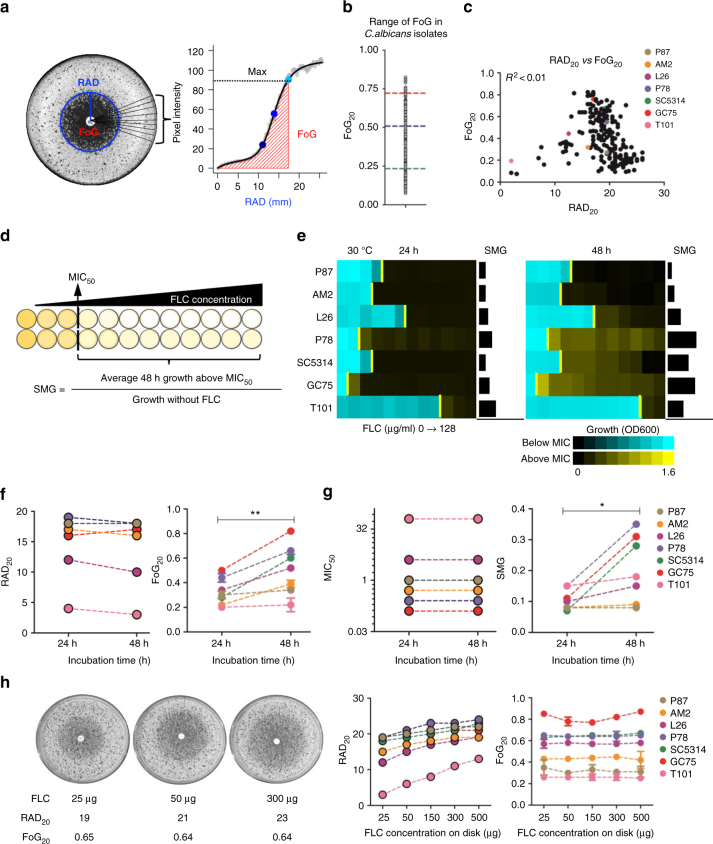
- In 219 clinical *C. albicans* isolates, FoG ranged from 0.10 to 0.85 and did not correlate with the zone-of-inhibition radius RAD (R² < 0.01); FoG and SMG correlated with each other (R² = 0.82, P < 0.01), while FoG and RAD did not. Tolerance was concentration-independent, unlike RAD/MIC.
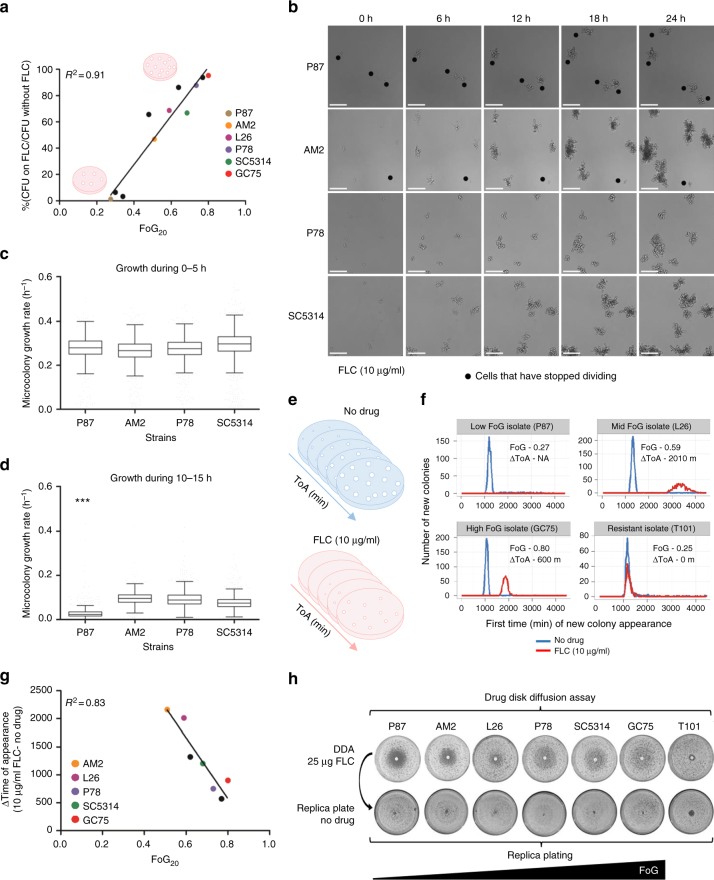
- Tolerance reflected a growing subpopulation: CFUs on supra-MIC fluconazole ranged from 2% to 98% of the no-drug population and correlated with FoG (R² = 0.91, P < 0.01). High-FoG strains had shorter delay in colony appearance on drug and faster recovery, without being explained by faster drug-free growth.
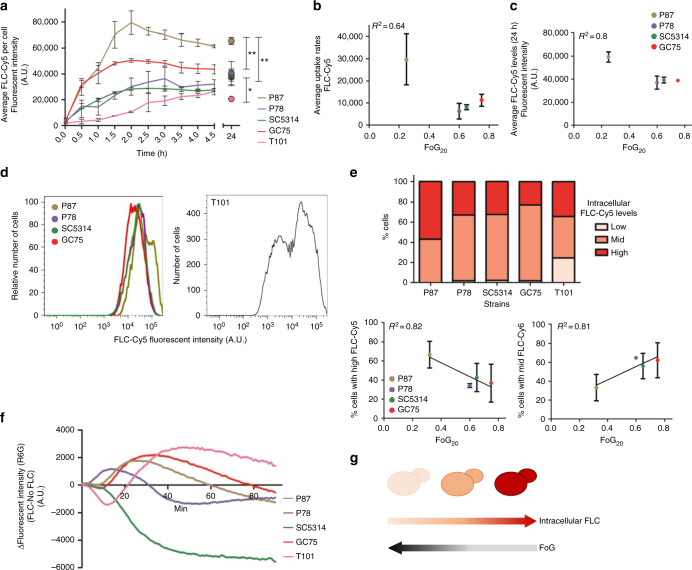
- Steady-state intracellular FLC-Cy5 at 24 h correlated inversely with FoG (R² = 0.8, P < 0.01); the proportion of cells with high FLC-Cy5 inversely correlated with FoG (R² = 0.82, P = 0.04), and mid FLC-Cy5 positively correlated (R² = 0.81, P = 0.05). R6G efflux did not correlate with FoG (R² < 0.2).
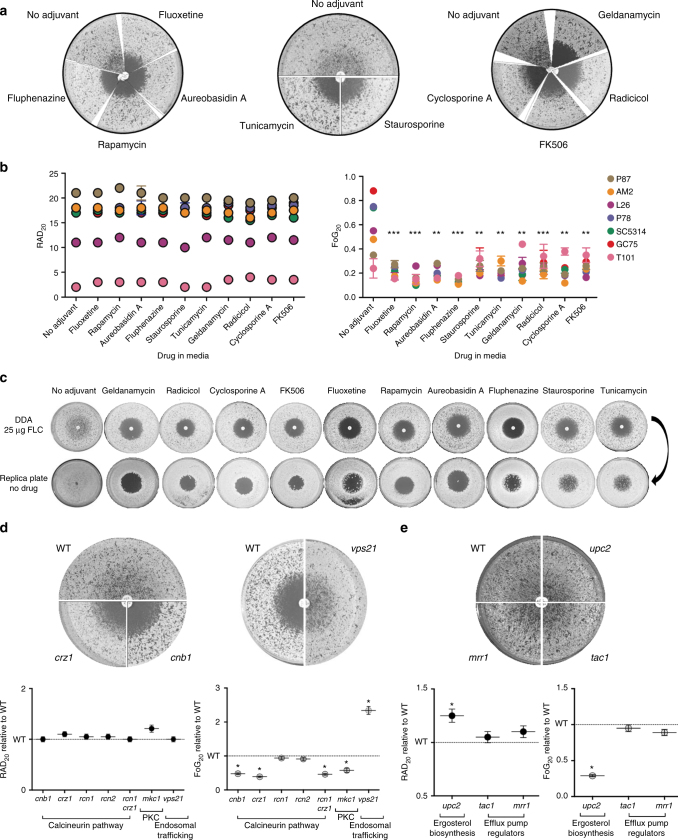
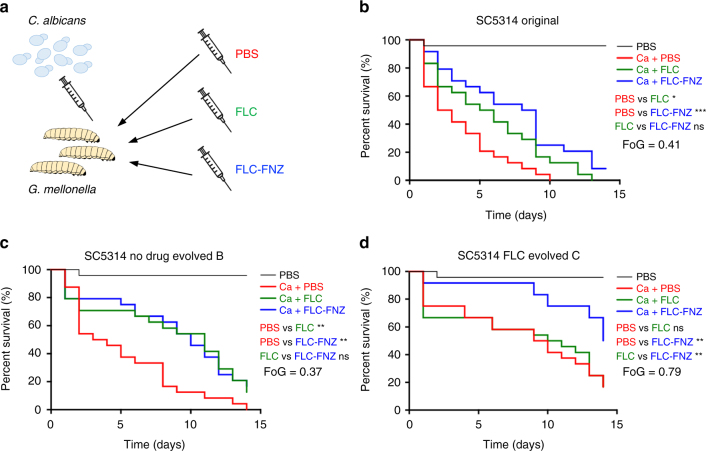
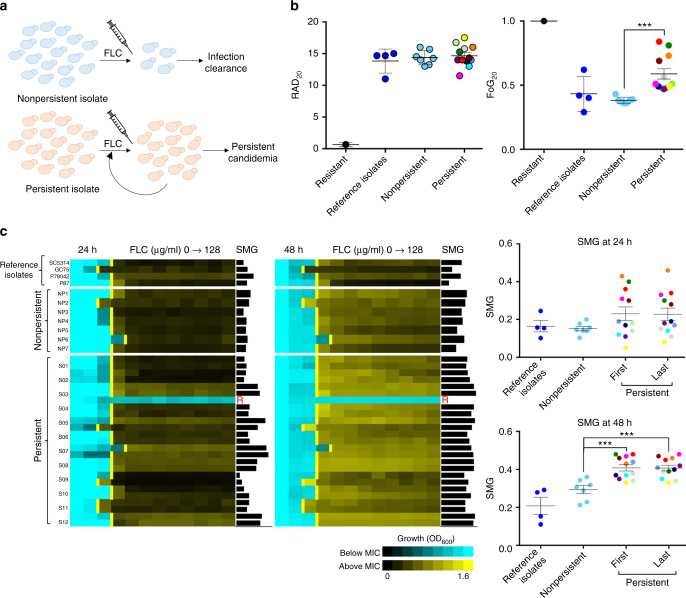
- Adjuvants reduced FoG without altering RAD/MIC and rendered fluconazole cidal. In *G. mellonella*, FLC + fluphenazine rescued up to 50% of larvae infected with high-FoG strains, whereas high-FoG strains did not respond to FLC alone. Persistent candidemia isolates had higher FoG/SMG than non-persistent isolates, with many persistent isolates having FoG > 0.5, despite similar MICs (0.25–1 µg/ml).
Methods
- Drug responses were quantified in *C. albicans* clinical isolates and lab strains using disk diffusion assays analyzed with diskImageR (RAD and FoG at 20% inhibition) and broth microdilution assays (MIC₅₀ at 24 h; SMG at 48 h). A screen included 219 clinical isolates; standard assays used a 25 µg FLC disk, 30 °C, and 48 h incubation.
- Mechanistic assays included CFU plating, microcolony time-lapse microscopy, ScanLag colony-growth analysis, viability replica plating, growth-rate measurements, FLC-Cy5 uptake by flow cytometry, Rhodamine 6G efflux, Hsp90 ELISA, and mutant strain analysis.
- In vivo testing used *Galleria mellonella* larvae infected with *C. albicans* and treated with PBS, FLC, or FLC + fluphenazine. Clinical isolates came from patients with candidemia either cleared by FLC (non-persistent) or persistent despite FLC therapy; statistical tests included t tests, ANOVA/Tukey, and log-rank tests.
Limitations
- Stated in the paper: aneuploidy could contribute to tolerance in some strains, though the authors argue it is unlikely to be the main mechanism; factors other than uptake and efflux that determine intracellular FLC levels remain to be determined; how TOR, unfolded protein response, PKC signaling, sphingolipid synthesis, iron homeostasis, fluoxetine, and fluphenazine affect drug responses remains to be determined; causality between infection and death could not be determined; and for highly resistant strains such as T101, the small zone of inhibition makes FoG measurements less accurate than SMG.
- Stated in the paper: previous work suggested trailing growth was not important for virulence or human infection outcomes, but those studies analyzed short-term responses rather than persistence/recurrence; the authors call for retrospective and prospective clinical studies measuring tolerance.
- Evident from the text: the in vivo model is an invertebrate (*G. mellonella*) rather than a mammalian model; the clinical association is correlational with limited isolate sets (7 non-persistent isolates and 12 persistent series); and tolerance assays are sensitive to pH, temperature, and growth media, requiring consistent conditions for reproducibility.
Model-written summary. Check it against the paper before relying on it.
Integrity signals
Registry
Cites
Statistics
Figures
Verification
Claims the paper makes
22 Valid · 2 Not valid · 6 Not checked · 136 Own results and interpretations
The cited sources support only part of this claim — read each source’s verdict below.
In the paper
“Persistent candidemia, defined as the failure to clear a bloodstream infection caused by a susceptible organism 7,16 , is associated with increased mortality.”
§ Antifungal tolerance is a subpopulation effect distinct from resistance and is associated with persistent candidemia > Abstract
What the sources say
- Partly supportedcites [7] 7. Da Matta, D. A. et al. Multilocus sequence typing of sequential Candida albicans isolates from patients with persistent or recurrent fungemia. Med. Mycol. 48, 757-762 (2010). sourceExperimental — accuracy not yet measured
The Introduction (p. 1) says Candida bloodstream infections are associated with significant mortality. The paper studies persistent candidemia, but the passages do not say that persistence is associated with increased mortality compared with nonpersistent infection. (LLM, conf=0.83)
- Could not verifycites [16] 16. Pfaller, M. A. & Diekema, D. J. Epidemiology of invasive candidiasis: a persistent public health problem. Clin. Microbiol. Rev. 20, 133-163 (2007). sourceExperimental — accuracy not yet measured
The Burden of Disease section reports deaths associated with candidemia generally, but does not compare mortality in persistent versus cleared candidemia. Searches for persistent candidemia, prolonged fungemia, and failure to clear infection found no passage establishing the claimed association; the copy is truncated, so a relevant passage may be missing. (LLM, conf=0.72)
plainstates an association- Asserted: passes — The authors put it forward as true.
- Checkable: passes — It can be checked against evidence.
- Load-bearing: passes — The paper’s conclusions depend on it.
- Based: passes — The paper gives a reason why it holds.
- Partly supported
The sources with a verdict support this claim; the rest weren’t checked yet, have no full text we could read, or their verdicts aren’t rated yet.
In the paper
“This implies that infection outcomes are influenced by host factors as well as features of the pathogen that are not reflected by the MIC 5,6 .”
§ Antifungal tolerance is a subpopulation effect distinct from resistance and is associated with persistent candidemia > Abstract
What the sources say
- Supportedcites [5] 5. Delarze, E. & Sanglard, D. Defining the frontiers between antifungal resistance, tolerance and the concept of persistence. Drug Resist. Updat. 23, 12-19 (2015). source
The Introduction says opportunistic fungi can become deadly in immunocompromised patients, identifying a host factor affecting infection outcomes. Section 8 reports that Candida isolates with the same MIC had different treatment responses depending on their resistance mechanism, showing a pathogen feature not captured by MIC. Page numbers are unavailable in our copy. (LLM, conf=0.89)
- Not checked — no full text of the sourcecites [6] 6. Balaban, N. Q., Gerdes, K., Lewis, K. & McKinney, J. D. A problem of persistence: still more questions than answers? Nat. Rev. Microbiol. 11, 587-591 (2013). source
plainstates a cause- Asserted: passes — The authors put it forward as true.
- Checkable: passes — It can be checked against evidence.
- Load-bearing: passes — The paper’s conclusions depend on it.
- Based: passes — The paper gives a reason why it holds.
- Supported
The cited sources support only part of this claim — read each source’s verdict below.
In the paper
“In effect, organisms that cause persistent infections, defined as those that are not cleared by a course of antifungal treatment, have similar susceptibilities to organisms that are readily cleared by a course of antifungal treatment 7 .”
§ Antifungal tolerance is a subpopulation effect distinct from resistance and is associated with persistent candidemia > Abstract
What the sources say
- Partly supportedcites [7] 7. Da Matta, D. A. et al. Multilocus sequence typing of sequential Candida albicans isolates from patients with persistent or recurrent fungemia. Med. Mycol. 48, 757-762 (2010). sourceExperimental — accuracy not yet measured
The Results (p. 4) report that C. albicans isolates from patients with persistent or recurrent candidemia remained susceptible to the three antifungals tested. The paper does not compare those isolates with organisms readily cleared by treatment; it also defines persistent candidemia by repeated positive blood cultures, not by failure to clear after a course of treatment (p. 1). (LLM, conf=0.88)
plain- Asserted: passes — The authors put it forward as true.
- Checkable: passes — It can be checked against evidence.
- Load-bearing: passes — The paper’s conclusions depend on it.
- Based: passes — The paper gives a reason why it holds.
- Partly supported
The cited sources that could be checked couldn’t confirm or dispute this claim.
In the paper
“It is therefore unlikely that aneuploidy represents the main mechanism underlying tolerance.”
§ Antifungal tolerance is a subpopulation effect distinct from resistance and is associated with persistent candidemia > Discussion
What the sources say
- Could not verifycites [63] 63. Hirakawa, M. P. et al. Genetic and phenotypic intra-species variation in Candida albicans. Genome Res. 25, 413-425 (2015). sourceExperimental — accuracy not yet measured
The Results section on aneuploid isolates reports slower growth in several media and no correlation with other measured strain attributes, including virulence. The Discussion section on aneuploidy says some extra chromosomes may themselves be well tolerated, but does not assess whether aneuploidy is a main mechanism of tolerance. Searches for tolerance and aneuploidy did not locate a passage addressing that claim. (LLM, conf=0.72)
- Could not verifycites [64] 64. Abbey, D. A. et al. YMAP: a pipeline for visualization of copy number variation and loss of heterozygosity in eukaryotic pathogens. Genome Med. 6, 100 (2014). sourceExperimental — accuracy not yet measured
The Background (page unavailable) says that some aneuploidies are associated with acquired drug resistance, but it does not assess whether aneuploidy is the main mechanism of tolerance. Searches for “tolerance” and “aneuploidy drug tolerance resistance mechanism” found no passage addressing that conclusion. (LLM, conf=0.76)
hedged- Asserted: passes — The authors put it forward as true.
- Checkable: passes — It can be checked against evidence.
- Load-bearing: passes — The paper’s conclusions depend on it.
- Based: passes — The paper gives a reason why it holds.
- Could not verify
The cited sources support only part of this claim — read each source’s verdict below.
In the paper
“Consistent with the adjuvant drug responses, genes involved in several pathways, including calcineurin 53 and PKC signaling 44 , primarily affected FoG and not RAD (Fig. 4d, Supplementary Fig. 8, detailed information on genes tested in Supplementary Notes 2-4 and Supplementary Tables 2 and 3).”
§ Antifungal tolerance is a subpopulation effect distinct from resistance and is associated with persistent candidemia > Decreased intracellular drug levels underlie increased tolerance.
What the sources say
- Supportedcites [53] 53. Reedy, J. L., Filler, S. G. & Heitman, J. Elucidating the Candida albicans calcineurin signaling cascade controlling stress response and virulence. Fungal Genet. Biol. 47, 107-116 (2010). sourceExperimental — accuracy not yet measured
The Results section (page unavailable) identifies calcineurin-pathway genes and reports that their mutants differ in fluconazole susceptibility. Citation 53 supports the identification of the calcineurin pathway; the FoG-versus-RAD comparison is presented as the citing authors’ own finding, with a reference to their Fig. 4d. (LLM, conf=0.85)
- Partly supportedcites [44] 44. LaFayette, S. L. et al. PKC signaling regulates drug resistance of the fungal pathogen Candida albicans via circuitry comprised of Mkc1, calcineurin, and Hsp90. PLoS Pathog. 6, e1001069 (2010). sourceExperimental — accuracy not yet measured
The Results section on PKC signaling and calcineurin reports that both regulate antifungal tolerance, supporting the tolerance aspect of the claim. But the Results section on clinical isolates also reports that inhibiting Pkc1 reduced azole resistance. The paper does not compare effects on FoG and RAD, so it does not support the claim that PKC signaling primarily affected FoG and not RAD. (LLM, conf=0.85)
plainstates a cause- Asserted: passes — The authors put it forward as true.
- Checkable: passes — It can be checked against evidence.
- Load-bearing: unclear — It is unclear whether the paper’s conclusions depend on it.
- Based: passes — The paper gives a reason why it holds.
- Supported
90 more claims · 4 with their cited sources checked
Create a free account to see all 166 claims and to verify the 2 references still open.
- It may state two separate claims as one. 52
- Probably not a substantial claim. 33
Claims other papers make about this one
Each is checked against this paper’s own text: does it say what the citing paper says it does?
The cited source doesn’t support the claim as written.
In the citing paper
“In addition to affecting resistance, drug uptake and efflux appears to contribute, at least partially, to tolerance9, based on studies with fluorescent azole probes and strains with similar MIC levels but different tolerance levels (measured as FoG and SMG, see Box ##)89,90”
From Drug resistance and tolerance in fungi. (2020) · cites this paper as [9]
Checked by a reasoning model — may be wrong.
Experimental — accuracy not yet measuredThe source backs part of the claim, not all of it — or backs it for a different population, condition or comparison.
In the citing paper
“A recent quantitative study9 identified four characteristics of fluconazole-tolerant cells across a set of seven diverse C. albicans isolates.”
From Drug resistance and tolerance in fungi. (2020) · cites this paper as [9]
Experimental — accuracy not yet measuredThe source backs part of the claim, not all of it — or backs it for a different population, condition or comparison.
In the citing paper
“Second, within a given isolate, tolerant cells (those that do grow slowly in the presence of the drug, while the remaining cells do not grow) represent a subpopulation (generally 5%-90% of the cells, depending on the isolate) (Fig. 1B).”
From Drug resistance and tolerance in fungi. (2020) · cites this paper as [9]
Experimental — accuracy not yet measuredThe source backs part of the claim, not all of it — or backs it for a different population, condition or comparison.
In the citing paper
“Fourth, the time required for cells to appear as visible colonies on a petri plate containing drug is shorter for isolates with high tolerance levels than for isolates with lower tolerance levels (Fig. 1C).”
From Drug resistance and tolerance in fungi. (2020) · cites this paper as [9]
Experimental — accuracy not yet measuredThe source backs part of the claim, not all of it — or backs it for a different population, condition or comparison.
In the citing paper
“Furthermore, higher tolerance in bacterial isolates is associated with longer lag phase length, whereas fungal isolates with higher tolerance levels have shorter lag phase length (measured as time required for colonies to become visible13) relative to those with lower tolerance levels9.”
From Drug resistance and tolerance in fungi. (2020) · cites this paper as [9]
Experimental — accuracy not yet measured
38 more claims about this paper
Create a free account to see every claim other papers make about this one.
Self-check
Percentages, sums and reported differences re-computed from the paper’s own numbers.
Each contradiction between two passages listed here was confirmed by an independent check.
Rated minor: it would not touch a result — a value no result rests on, a p-value that stays on the same side of the significance level, or a conflict that is clerical, resolved elsewhere in the paper, or outside its own findings.
In the paper
“only partially with RAD (R 2 = -0.61,Supplementary Fig. 7f)”
§ Antifungal tolerance is a subpopulation effect distinct from resistance and is associated with persistent candidemia > Decreased intracellular drug levels underlie increased tolerance.
Reported -0.61 · recomputed 0.3721
Rated minor: it would not touch a result — a value no result rests on, a p-value that stays on the same side of the significance level, or a conflict that is clerical, resolved elsewhere in the paper, or outside its own findings.
In the paper
§ Antifungal tolerance is a subpopulation effect distinct from resistance and is associated with persistent candidemia > ScanLag assay.
“followed by a second injection with either PBS, FLC alone, or FLC and FNZ within 90 min of the first injection.”
§ Antifungal tolerance is a subpopulation effect distinct from resistance and is associated with persistent candidemia > ScanLag assay.
“A second injection with either FLC (1 mg/kg), FLC + FNZ (FNZ, 10 mg/kg), or sterile PBS was done via the last right pro-leg 1.5-2 h post infection.”
Citations
Cites
Epidemiology of Invasive Candidiasis: a Persistent Public Health Problem
Pfaller, M. A., & Diekema, D. J. (2007) · Clinical Microbiology Reviews · doi:10.1128/cmr.00029-06 · Cited by 4,174
Bacterial Persistence as a Phenotypic Switch
Balaban, N. Q., Merrin, J., Chait, R., Kowalik, L., & Leibler, S. (2004) · Science · doi:10.1126/science.1099390 · Cited by 2,952
Distinguishing between resistance, tolerance and persistence to antibiotic treatment
Brauner, A., Fridman, O., Gefen, O., & Balaban, N. Q. (2016) · Nature Reviews Microbiology · doi:10.1038/nrmicro.2016.34 · Cited by 1,612 · cited 2×
“Studying growth dynamics and quantifying tolerance revealed that it is: (1) a subpopulation effect and the size of the subpopulation is stable; (2) due to slow growth in drug stress; (3) correlates with intracellular drug levels; (4) dependent upon stress response pathways, and (5) mechanistically distinct from resist…”
BackgroundAzole Antifungal Resistance in Candida albicans and Emerging Non-albicans Candida Species
Whaley, S. G., Berkow, E. L., Rybak, J. M., Nishimoto, A. T., Barker, K. S., & Rogers, P. D. (2017) · Frontiers in Microbiology · doi:10.3389/fmicb.2016.02173 · Cited by 900
Anidulafungin versus Fluconazole for Invasive Candidiasis
Reboli, A. C., Rotstein, C., Pappas, P. G., Chapman, S. W., Kett, D. H., Kumar, D., Betts, R., Wible, M., Goldstein, B. P., Schranz, J., et al. (2007) · New England Journal of Medicine · doi:10.1056/nejmoa066906 · Cited by 894
Tkacz, J. S., & Lampen, J. O. (1975) · Biochemical and Biophysical Research Communications · doi:10.1016/s0006-291x(75)80086-6 · Cited by 843
Andes, D. R., Safdar, N., Baddley, J. W., Playford, G., Reboli, A. C., Rex, J. H., Sobel, J. D., Pappas, P. G., Kullberg, B. J., & for the Mycoses Study Group (2012) · Clinical Infectious Diseases · doi:10.1093/cid/cis021 · Cited by 793
Alexander, B. D., Johnson, M. D., Pfeiffer, C. D., Jiménez-Ortigosa, C., Catania, J., Booker, R., Castanheira, M., Messer, S. A., Perlin, D. S., & Pfaller, M. A. (2013) · Clinical Infectious Diseases · doi:10.1093/cid/cit136 · Cited by 778
Hsp90 Potentiates the Rapid Evolution of New Traits: Drug Resistance in Diverse Fungi
Cowen, L. E., & Lindquist, S. (2005) · Science · doi:10.1126/science.1118370 · Cited by 698
Mechanisms of Antifungal Drug Resistance
Cowen, L. E., Sanglard, D., Howard, S. J., Rogers, P. D., & Perlin, D. S. (2015) · Cold Spring Harbor Perspectives in Medicine · doi:10.1101/cshperspect.a019752 · Cited by 647
Cited by
Items 201–270 of 270
Xi, B., & Wu, Y. (2026) · Antimicrobial Agents and Chemotherapy · doi:10.1128/aac.01662-25 · Cited by 2
“Recent studies have revealed that antifungal tolerance, which is characterized by reduced in vitro susceptibility without an increase in minimum inhibitory concentration (MIC), contributes to persistent candidemia during azole therapy (16, 17).”
Das, S., Baradarbarjastehbaf, F., Szokolics, A. S., Campos, G. K. D., Gazdag, Z., Széchenyi, A., Miseta, A., Kovács, G. L., & Kőszegi, T. (2026) · Pharmaceutics · doi:10.3390/pharmaceutics18040508 · Cited by 2
“Second, Candida species differ in susceptibility thresholds and phase plasticity, and these baseline differences contribute to species-enriched tolerance-like response patterns under specific EO or RAMEB–EO exposures [4–6, 8,24].”
InfluentialReddy, S., Paul, S., Rudramurthy, S. M., Kaur, H., & Ghosh, A. K. (2026) · Mycopathologia · doi:10.1007/s11046-026-01074-5 · Cited by 1
“…challenge is the frequent discordance between in vitro susceptibility, as determined by standardized antifungal susceptibility testing (AFST), and clinical outcomes, that are predicted by the “90/60” rule, where ~ 90% of susceptible isolates and ~ 60% of resistant isolates respond to therapy [9].”
InfluentialThammasit, P., Amsri, A., Suwannaphong, P., Teng, Y. M., Wei, H., & Youngchim, S. (2026) · Frontiers in Microbiology · doi:10.3389/fmicb.2026.1807232 · Cited by 1
“…a first-line antifungal agent for OPC; however, increasing clinical failure has been associated with antifungal tolerance, a reversible phenotype characterized by survival at supra-MIC drug concentrations and distinct from stable genetic resistance (Rosenberg et al., 2018; Yang et al., 2023).”
Microbiomes in Medicine and Agriculture
ROSENBERG, E. B. (2021) · The microbiomes of humans, animals, plants, and the environment · doi:10.1007/978-3-030-65317-0_10 · Cited by 2
The Development of Photo-activated Antimicrobial Dyes Against Opportunistic Infections
Jalab, M. (2020) · CLOK (University of Central Lancashire) · Cited by 1
Rizzo, J., Trottier, A., Moyrand, F., et al. (2023) · bioRxiv (Cold Spring Harbor Laboratory) · doi:10.1101/2023.01.30.526212 · Cited by 1
Self-citationValero, C., Mcmanus, M., Durai, A. R. A., Tindale, J., Gago, S., & Bromley, M. (2023) · bioRxiv (Cold Spring Harbor Laboratory) · doi:10.1101/2023.05.20.539046 · Cited by 1
mSphere of Influence: Diagnosis of antifungal tolerance and persistence
Chen, L. (2025) · mSphere · doi:10.1128/msphere.00029-25 · Cited by 1
“After exposure to fluconazole, all fungal cells in a population undergo a few rounds of division before growth arrest, but tolerant cells resume proliferation hours later, while non-tolerant cells take much longer or are unable to resume division (10).”
InfluentialLobo-Vega, R., Megı́as, D., Rio-Ropero, A., Mato-López, Á., Ashraph, K., Manosalva, J., Alcázar‐Fuoli, L., Alastruey‐Izquierdo, A., Mellado, E., & Amich, J. (2025) · bioRxiv (Cold Spring Harbor Laboratory) · doi:10.64898/2025.12.26.693403 · Cited by 1
Gifford, H., Pradhan, A., Caswall, B. A., Murphy, S., Leaves, I., Edmondson, M. B., Chakraborty, T., Wilson, D., Taori, S. K., Gow, N. A. R., et al. (2026) · bioRxiv (Cold Spring Harbor Laboratory) · doi:10.64898/2026.01.17.700071 · Cited by 1
Loksztejn, A., Upadhya, R., Caro, E. A., Gooden, D. M., Yona, A., Ellis, P. K., Fridman, M., Schumacher, M. A., Brennan, R. G., Donlin, M. J., et al. (2026) · bioRxiv (Cold Spring Harbor Laboratory) · doi:10.64898/2026.01.20.700633 · Cited by 2
合作化之路 推动奶牛业快速发展——关于平原县旺源奶牛合作社的调查
李安勇 (2011) · 中国畜牧业
Small Molecules Restore Azole Activity Against Drug-Tolerant and Drug-Resistant Candida IsolatesPreprint
Alabi, P. E., Gautier, C., Murphy, T. P., et al. (2022) · bioRxiv (Cold Spring Harbor Laboratory) · doi:10.1101/2022.03.31.486631
Self-citationArastehfar, A. A., Daneshnia, F., Cabrera, N., Penalva-Lopez, S., Sarathy, J. P., Zimmerman, M., Shor, E., & Perlin, D. S. (2022) · bioRxiv (Cold Spring Harbor Laboratory) · doi:10.1101/2022.10.21.513290
Li, Y., Gu, C., Yang, Y., Ding, Y., Ye, C., Liu, J., & Zeng, Z. (2022) · Research Square · doi:10.21203/rs.3.rs-2217465/v1
Li, Y., Gu, C., Yang, Y., Ding, Y., Ye, C., Tang, M., Liu, J., & Zeng, Z. (2022) · Research Square · doi:10.21203/rs.3.rs-2217465/v2
Yang, B., Vaisvil, B., Schmitt, D. P., et al. (2023) · bioRxiv (Cold Spring Harbor Laboratory) · doi:10.1101/2023.04.07.536049
Constraint on boric acid resistance and tolerance evolvability in Candida albicansPreprint
Syvolos, Y., Salama, O. E., & Gerstein, A. C. (2024) · bioRxiv (Cold Spring Harbor Laboratory) · doi:10.1101/2024.01.04.574193
Zande, P. V., Gautier, C., Kawar, N., Maufrais, C., Metzner, K., Wash, E., Beach, A., Bracken, R., Maciel, E. I., Fernandes, C. M., et al. (2024) · bioRxiv (Cold Spring Harbor Laboratory) · doi:10.1101/2024.03.05.583528
Self-citationObermeier, M., Esparza-Mora, M. A., Heese, O., Cohen, N., Varma, S. J., Tober‐Lau, P., Hartl, J., Kurth, F., Berman, J. G., & Ralser, M. (2024) · bioRxiv (Cold Spring Harbor Laboratory) · doi:10.1101/2024.11.09.622705
Self-citationAcharjee, S., & Hyland, E. M. (2025) · bioRxiv (Cold Spring Harbor Laboratory) · doi:10.1101/2025.07.02.662741
Antifungal exposure can enhance Candida glabrata pathogenesisPreprint
Ribeiro, G. F., Danecka, W., Tomlinson, L., Wallace, E. W. J., & Childers, D. S. (2025) · bioRxiv (Cold Spring Harbor Laboratory) · doi:10.1101/2025.07.31.667834 · Cited by 1
“However, other adaptive mechanisms, like tolerance and heteroresistance, have proven more difficult to characterize due to their transience within the population and lack of a clear, causal link to genetic modifications (Berman & Krysan, 2020; Rosenberg et al., 2018; Yang & Berman, 2024).”
Diffusion-mediated quantification of dose-dependent antifungal drug tolerance
Koohi, S. R., Galon, C. M., & Charlebois, D. A. (2026) · Biophysical Reports · doi:10.1101/2025.09.05.674536
“…how drug diffusion influences antifungal tolerance in vivo may improve clinical outcomes by in-forming dosing and drug combination strategies [26, 27] to avoid tolerance windows before irreversible and life-threatening antifungal resistance evolves. i denotes an initial, calculated diffusion…”
InfluentialSphingolipid Homeostasis, Mitochondrial Activity, and PKA Signaling Drive an Azole-Tolerant StatePreprint
Gautier, C., Maciel, E. I., Maufrais, C., Lyons, N., Kawar, N., Bibi, C., Eickmann, C., Rosenberg, A., Dasilva, D., De, N., et al. (2025) · bioRxiv (Cold Spring Harbor Laboratory) · doi:10.1101/2025.09.12.675915 · Cited by 1
Self-citationFeng, Y., Zhen, C., Li, W., Whiteway, M. S., Fang, X., Shen, X., Jiang, Y., & Lu, H. (2025) · bioRxiv (Cold Spring Harbor Laboratory) · doi:10.1101/2025.09.15.676225
Fleres, G., Cheng, S., Badrane, H., Dupont, C. L., Espinoza, J. L., Abbey, D., Driscoll, E., Newbrough, A., Hao, B., Mansour, A., et al. (2025) · The Journal of Infectious Diseases · doi:10.1093/infdis/jiaf495 · Cited by 3
Scott, N. E., Zhou, X., Wash, E., Zajac, C., Kline, S. E., Erayil, S. E., & Selmecki, A. M. (2025) · bioRxiv (Cold Spring Harbor Laboratory) · doi:10.1101/2025.10.27.684856
“Tolerance has been associated with persistent infections and treatment failure in otherwise drug-susceptible isolates (36).”
Current scenario of antifungal resistance and the drugs in the pipeline
Sengar, D., Burade, D. K., Chaudhari, B. P., & Gajbhiye, V. (2025) · Elsevier eBooks · doi:10.1016/b978-0-443-29273-6.00014-x · Cited by 1
Tolerance to the antifungal drug fluconazole is mediated by tuning cytoplasmic fluidityPreprint
Plumb, E., Serrano, A., Chevalier, L., Elferich, J., Sinn, L. R., Grigorieff, N., Ralser, M., Berman, J. G., Bassilana, M., & Arkowitz, R. A. (2025) · bioRxiv (Cold Spring Harbor Laboratory) · doi:10.64898/2025.12.03.691994
“Fluconazole tolerance is characterized by heterogeneity with respect to cell growth and transcriptional patterns 4,24 .”
InfluentialSelf-citationLi, Y., Gu, C., Yang, Y., Ding, Y., Ye, C., Tang, M., Liu, J., & Zeng, Z. (2023) · Figshare · doi:10.6084/m9.figshare.23281114
Li, Y., Gu, C., Yang, Y., Ding, Y., Ye, C., Tang, M., Liu, J., & Zeng, Z. (2023) · Figshare · doi:10.6084/m9.figshare.23281117
Uddin, W., Dhabalia, D., Prakash, S. M. U., & Kabir, M. A. (2021) · Figshare · doi:10.6084/m9.figshare.14821154
Li, Y., Gu, C., Yang, Y., Ding, Y., Ye, C., Tang, M., Liu, J., & Zeng, Z. (2023) · Figshare · doi:10.6084/m9.figshare.23281108
Li, Y., Gu, C., Yang, Y., Ding, Y., Ye, C., Tang, M., Liu, J., & Zeng, Z. (2023) · Figshare · doi:10.6084/m9.figshare.23281111
Tuan, D. A., & Masák, J. (2026) · Journal of Applied Microbiology · doi:10.1093/jambio/lxag015 · Cited by 1
Deng, Y., Beahm, D. R., Maurais, H. E., Etheridge, K., Schultz, D., & Sarpeshkar, R. (2026) · bioRxiv (Cold Spring Harbor Laboratory) · doi:10.64898/2026.01.30.702957
“This challenge extends beyond bacterial systems to drug-persistent yeasts and drug-tolerant persister cancer cells, where surviving populations may include both pre-existing persisters and cells that actively transition into tolerance during treatment 24–27 .”
Scott, N. E., Zhou, X., Wash, E., Zajac, C., Kline, S. E., Erayil, S. E., & Selmecki, A. M. (2026) · Microbial Genomics · doi:10.1099/mgen.0.001659 · Cited by 5
García-Hernández, J., Gómez‐García, O., Villa‐Tanaca, L., & Andrade-Pavón, D. (2026) · Journal of Fungi · doi:10.3390/jof12030179 · Cited by 2
Sarpeshkar, R., Deng, Y., Beahm, D. R., Maurais, H. E., Etheridge, K., & Schultz, D. (2026) · Research Square · doi:10.21203/rs.3.rs-9022969/v1
Vellanki, S., DeMichaelis, N., Liao, C., et al. (2026) · bioRxiv (Cold Spring Harbor Laboratory) · doi:10.64898/2026.03.16.712083
Invasive growth in a human fungal pathogen : mechanical forces and cellular reorganization
Puerner, C. T. S. (2020) · theses.fr (ABES) · doi:10.70675/1186056bz53ebz48ecz9c29z9cdd6eb6dde1
Heterogeneous carbapenem resistance among carbapenemase-producing Klebsiella pneumoniae
Chiarelli, A. (2021) · theses.fr (ABES) · doi:10.70675/fcc43b7ez6befz4ec3za411z032663f73d20 · Cited by 1
Invasive plants of France and Indonesia : a solution against C. albicans biofilms?
Desrini, S. (2023) · theses.fr (ABES) · doi:10.70675/c34fe8a1zd810z4358z952czadabb21dea2e
Genechten, W. V., Holtappels, M., Jonge, M. D., Vergauwen, R., Cornips, G., & Dijck, P. V. (2026) · mBio · doi:10.1128/mbio.00416-26 · Cited by 2
“In fact, most strains of C. albicans can grow slowly in the presence of supra-minimal inhibitory concentrations (MIC) of FLC, termed tolerance or fraction of growth (8, 9).”
Mantilla, M. J., Tebbji, F., Vincent, A. T., Villeneuve, L. R., Chatr‐aryamontri, A., & Sellam, A. (2026) · bioRxiv (Cold Spring Harbor Laboratory) · doi:10.64898/2026.04.21.719916
Sahin, K., AKTURA, S. Ş., Bahçeci, İ., Altuntaş, D. B., & Otegeceli, M. M. (2026) · International Journal of Molecular Sciences · doi:10.3390/ijms27094127
“Notably, the use of adjuvant compounds, including inhibitors of stress response pathways, has been shown to enhance the cidal activity of fluconazole and reduce tolerance, thereby more effectively eliminating tolerant cell populations [16].”
Barone, S., Mateu, B., Piccolo, M., Guadagni, A., Irace, C., Lembo, F., Summa, V., Buommino, E., & Brindisi, M. (2026) · ACS Infectious Diseases · doi:10.1021/acsinfecdis.6c00195 · Cited by 2
Nouraei, H., Yousefi, Z., Zareshahrabadi, Z., Amirzadeh, N., Rajabi, S. Z., & Pakshir, K. (2026) · BMC Microbiology · doi:10.1186/s12866-026-05214-1 · Cited by 2
“Without fluconazole, reversion to a susceptible phenotype through downregulation of these energetically expensive mechanisms provides a fitness advantage, leading to outgrowth of susceptible subpopulations [9, 30, 31].”
Brito, V. D., Achimón, F., Zunino, M. P., & Pizzolitto, R. P. (2026) · Agronomy · doi:10.3390/agronomy16111117
Galon, C. M., & Charlebois, D. A. (2026) · bioRxiv (Cold Spring Harbor Laboratory) · doi:10.64898/2026.06.04.730223
“Tolerance occurs when fungi emerge slowly during drug treatment above the minimum inhibitory concentration (MIC) of an antifungal drug [12, 13, 14].”
InfluentialVellanki, S., DeMichaelis, N., Liao, C., Stajich, J., & Cramer, R. A. (2026) · mBio · doi:10.1128/mbio.00661-26
“Tolerance mecha nisms are far less well understood than resistance mechanisms in human pathogenic fungi, with seminal studies largely focused on the pathogenic yeast (11–14).”
Cong, L., Lin, Z., Li, Q., Wang, W., & Zhang, S. (2026) · mBio · doi:10.1128/mbio.00896-26
“Antifungal tolerance has been increasingly recognized in pathogenic yeasts (29–32).”
Hartl, J., Lehmann, A. D., Wahl, F., & Ralser, M. (2026) · bioRxiv (Cold Spring Harbor Laboratory) · doi:10.64898/2026.06.12.731662
“Further, divergent drug responses and efficacy may arise due to differences in pharmaco-kinetics and -dynamics [17,18], as well as differential drug responses in cell sub-populations, leading to fungal drug tolerance [9,19–21].”
Feng, Y., Zhen, C., Li, W., Whiteway, M. S., Fang, X., Shen, X., Jiang, Y., & Lu, H. (2026) · Microbiological Research · doi:10.1016/j.micres.2026.128595 · Cited by 4
Short chain fatty acids potentiate azoles by reprogramming fungal acetyl-CoA metabolismPreprint
McCrory, C., Rabinovich, S., Weerasinghe, H., Lo, T. L., Swaminathan, A., Kraupner-Taylor, C. A., Beilharz, T. H., Judith, B., & Traven, A. (2026) · bioRxiv (Cold Spring Harbor Laboratory) · doi:10.64898/2026.06.29.735392
Pimenta, G. R., Gualque, M. W. D. L., Siqueto, M. J., Silva, S. D. M., Regasini, L. O., Mendes‐Giannini, M. J. S., & Fusco‐Almeida, A. M. (2026) · Microbiology Spectrum · doi:10.1128/spectrum.00203-26
“The development of AMB resistance is rare, confirming that surviving colonies represent genuine persister cells (75, 76).”
A multiplex droplet digital PCR assay for chromosome copy-number determination in Candida albicans
Maciel, E. I., Ursuegui, S., Ahmed‐Seghir, S., Maufrais, C., Roy, S., Gautier, C., Brandt, P., Jovelet, C., Pitayu-Nugroho, L., & Ene, I. V. (2026) · G3 Genes Genomes Genetics · doi:10.1093/g3journal/jkag201
“To further evaluate the genetic stability of the probe-binding regions, we performed a sequence-diversity screen across 565 C. albicans isolates representing all major clades from multiple published datasets (Ford et al. 2015; Ropars et al. 2018; Rosenberg et al. 2018; Schutz et al. 2025).”
Self-citationEvolutionary adaptation proceeds through a small number of phenotypic modules
Donyavi, M. H., Ghelich, R., Schmidlin, K., Kinsler, G., & Geiler‐Samerotte, K. (2026) · Molecular Biology and Evolution · doi:10.1093/molbev/msag183 · Cited by 1
Pagáč, T., Víglaš, J., & Olejníková, P. (2026) · Antibiotics · doi:10.3390/antibiotics15080811
Kawar, N., & Berman, J. G. (2026) · Microbiology Spectrum · doi:10.1128/spectrum.01390-26
Self-citationLin, S., Huang, Y., Huang, H., Hung, W., Tseng, Y.-T., & Lu, P. (2026) · Mycoses · doi:10.1111/myc.70217 · Cited by 1
“FoG 20 , defined as the FoG within a zone of 20% growth inhibition, was used as the primary tolerance metric [6, 7].”
InfluentialHe, J., Wang, Q., Sun, B., Velkov, T., Shen, J., Jiang, H., & Dai, C. (2026) · ACS Omega · doi:10.1021/acsomega.6c05321
Taş, E., Çetin, B., Yılmazer, A. N., & Işık, T. (2026) · Molecular Biology Reports · doi:10.1007/s11033-026-12737-3
“Therefore, recognition of this adaptive phenotype is important for understanding fungal survival during antifungal therapy and for improving the interpretation of antifungal susceptibility testing [30, 31].”
Clinical profile and outcomes of persistent candidemia: A matched case-control study
Bayless, D. R., Saleh, O. A., Challener, D. W., Vergidis, P. I., & McHugh, J. (2026) · Medical Mycology · doi:10.1093/mmy/myag090
Yan, Z., Cui, Y., Li, Y., Xiao, X., Liao, M., Liu, X., Zhou, W., Kuang, L., & Jiang, Y. (2026) · Frontiers in Microbiology · doi:10.3389/fmicb.2026.1944046 · Cited by 1
Yang, F., Sun, L., Li, H., Fang, T., Guo, Q., Chen, N., & Jiang, Y. (2026) · Frontiers in Microbiology · doi:10.3389/fmicb.2026.1845986
Wu, Y. (2026) · Clinical Microbiology and Infection · doi:10.1016/j.cmi.2026.09.033
Lass‐Flörl, C., & Vahedi‐Shahandashti, R. (2026) · The Lancet Infectious Diseases · doi:10.1016/s1473-3099(26)00424-x
Metadata
- Authors
- Rosenberg, A., Ene, I. V., Bibi, M., Zakin, S., Segal, E. S., Ziv, N., Dahan, A. M., Colombo, A. L., Bennett, R. J., & Berman, J.
- Affiliations
- Tel Aviv University (IL)
- Brown University (US)
- University of California, San Francisco (US)
- Universidade Federal de São Paulo (BR)
- Corresponding author
- Berman, Judith
- ORCID
- Venue
- Nature Communications
- Published
- 2018-06-25
- Volume
- 9
- Issue
- 1
- Pages
- 2470-2470
- ISSN
- 2041-1723 (ISSN-L)
- PMC
- PMC6018213
- OpenAlex
- W2809480880
- Semantic Scholar
- 79cb6f21d502f8b1209082328cdfb2bcf2bce7e2
- Cited by
- 270
- References
- 133
- Citations by year
- 2026: 51 · 2025: 39 · 2024: 32 · 2023: 36 · 2022: 26 · 2021: 30 · 2020: 27 · 2019: 19 · 2018: 9
- FWCI
- 16.25
- Type
- journal article
- Language
- en
- Open access
- gold
- doi.org
- Licence
- cc-by
- creativecommons.org/licenses/by/4.0 (tdm)
- creativecommons.org/licenses/by/4.0 (vor)
- Locations
- Nature Communications (publishedVersion, cc-by)
- bioRxiv (Cold Spring Harbor Laboratory) (acceptedVersion)
- Europe PMC (PubMed Central) (publishedVersion, other-oa)
- PubMed Central (publishedVersion, cc-by)
- PubMed (publishedVersion)
- RePEc: Research Papers in Economics (submittedVersion)
- DOAJ (DOAJ: Directory of Open Access Journals) (submittedVersion)
- DOAJ (DOAJ: Directory of Open Access Journals) (submittedVersion, cc-by-sa)
- Funders
- U.S. Department of Health and Human Services (AI081704)
- Fundação de Amparo à Pesquisa do Estado de São Paulo (17/02203-7)
- National Institutes of Health (5r01ai081704-13, AI081704)
- National Institute of Allergy and Infectious Diseases (R01-AI081704, R21AI139592)
- FP7 Ideas: European Research Council (340087)
- Topics
- Health Sciences › Medicine › Infectious Diseases › Antifungal resistance and susceptibility
- Life Sciences › Biochemistry, Genetics and Molecular Biology › Molecular Biology › Fungal and yeast genetics research
- Life Sciences › Agricultural and Biological Sciences › Plant Science › Fungal Plant Pathogen Control
- Keywords
- antifungal tolerance, Candida albicans, persistent candidemia, fluconazole, antifungal resistance, subpopulations, intracellular drug accumulation, invertebrate infection model, immunocompetent patient, treatment response prediction
- MeSH terms
- Antifungal Agents, Candida albicans, Drug Tolerance, Humans, Microbial Sensitivity Tests, Fluconazole, Drug Resistance, Fungal, Candidemia
About these checks
Registry, retraction, Cites and statistics results are computed, not judged, with one exception: a printed reference that no index lists is read once by a model before it counts as a citation error. Claims are extracted by a model and kept only when their quote appears verbatim in the text; each cited source is then checked, with a model’s help, for whether it says what the claim relies on. Those verdicts can be wrong — read the claim’s quote and the cited source before relying on one.
The claim verdicts this report counts are experimental: their accuracy is not yet measured.
A language model drew the claims from the paper on 2026-09-30, under version 3 of the claim definition (model deepseek-v4.1-flash, prompt extract-v3).
A second model labelled each claim on 2026-09-30 (model jev-1.13-20260917, definition revision gold-guideline-v0.2).
Cited sources are checked with a language model’s help (gpt-6-sol).
Statistics and arithmetic are recomputed, not judged.
Confidence bands are shown only for fields calibrated on our annotated test set. None is calibrated yet, so no band is shown.
What counts as a claim ›How we measure confidence ›How we check this ›
Are you an author, or do you see a problem with this page? Request a review
Data sources
Bibliographic data: Semantic Scholar, OpenAlex, Crossref.
Contains information from the Semantic Scholar Academic Graph Datasets, made available under the ODC Attribution License (ODC-BY 1.0).
Semantic Scholar’s data is described in: Kinney, R., et al. (2023). The Semantic Scholar Open Data Platform. arXiv:2301.10140.
