

Antifungal tolerance is a subpopulation effect distinct from resistance and is associated with persistent candidemia
Open accessPublished version of a preprint
The DOI matches its Crossref record; 134 of the 134 references it cites were found in a registry or an index; 34 of the 56 sources its claims cite were checked for support.
Abstract
Tolerance to antifungal drug concentrations above the minimal inhibitory concentration (MIC) is rarely quantified, and current clinical recommendations suggest it should be ignored. Here, we quantify antifungal tolerance in Candida albicans isolates as the fraction of growth above the MIC, and find that it is distinct from susceptibility/resistance. Instead, tolerance is due to the slow growth of subpopulations of cells that overcome drug stress more efficiently than the rest of the population, and correlates inversely with intracellular drug accumulation. Many adjuvant drugs used in combination with fluconazole, a widely used fungistatic drug, reduce tolerance without affecting resistance. Accordingly, in an invertebrate infection model, adjuvant combination therapy is more effective than fluconazole in treating infections with highly tolerant isolates and does not affect infections with low tolerance isolates. Furthermore, isolates recovered from immunocompetent patients with persistent candidemia display higher tolerance than isolates readily cleared by fluconazole. Thus, tolerance correlates with, and may help predict, patient responses to fluconazole therapy.
Overview
CoChat Summary
TL;DR
Antifungal tolerance in *Candida albicans*, quantified as fraction of growth above the MIC (FoG) or supra-MIC growth (SMG), is a stable subpopulation phenotype distinct from resistance and inversely correlates with intracellular fluconazole accumulation. High tolerance is associated with persistent candidemia, and adjuvant combinations reduce tolerance and improve outcomes in a *Galleria mellonella* infection model for high-tolerance isolates.
Key findings
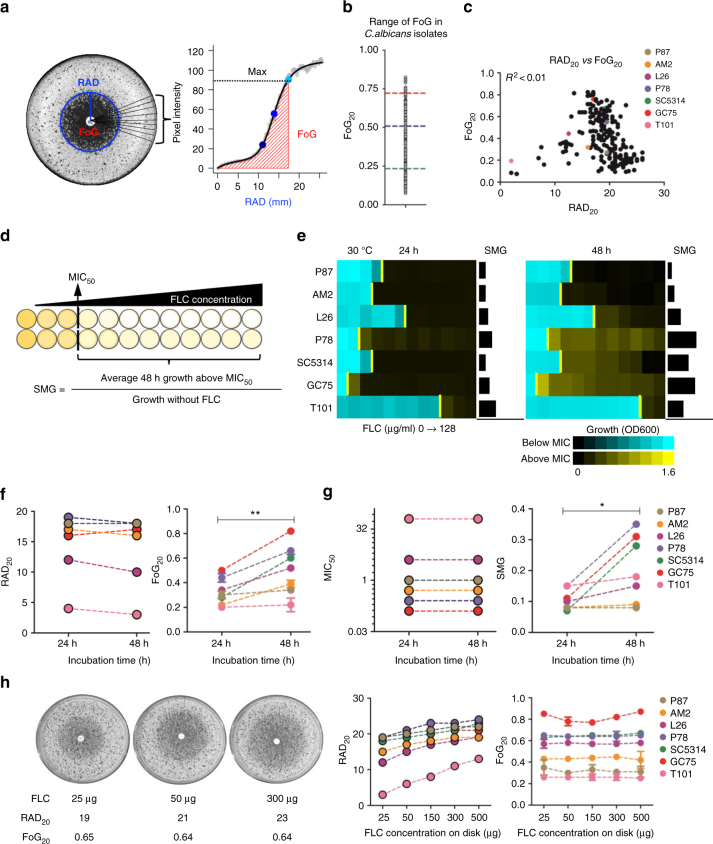
- In 219 clinical *C. albicans* isolates, FoG ranged from 0.10 to 0.85 and did not correlate with the zone-of-inhibition radius RAD (R² < 0.01); FoG and SMG correlated with each other (R² = 0.82, P < 0.01), while FoG and RAD did not. Tolerance was concentration-independent, unlike RAD/MIC.
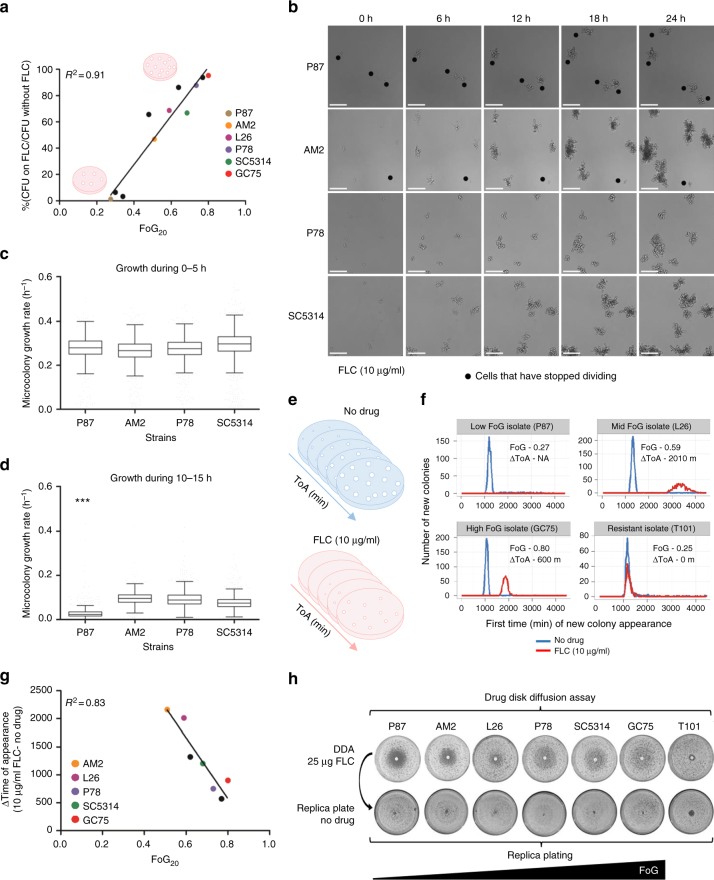
- Tolerance reflected a growing subpopulation: CFUs on supra-MIC fluconazole ranged from 2% to 98% of the no-drug population and correlated with FoG (R² = 0.91, P < 0.01). High-FoG strains had shorter delay in colony appearance on drug and faster recovery, without being explained by faster drug-free growth.
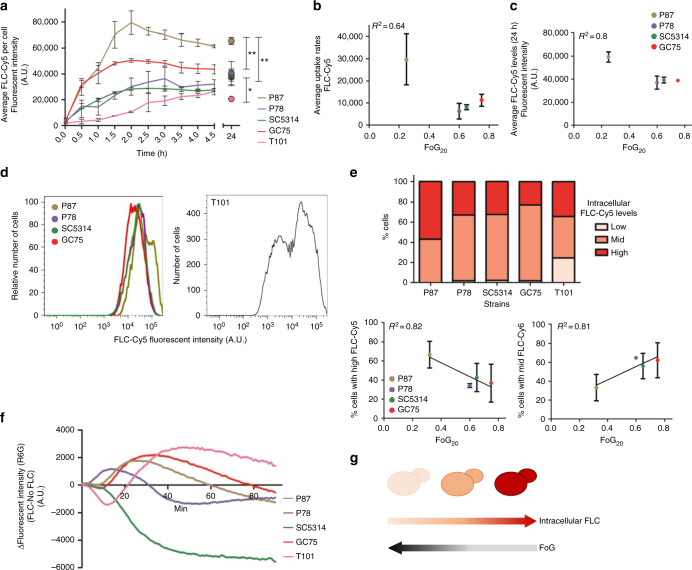
- Steady-state intracellular FLC-Cy5 at 24 h correlated inversely with FoG (R² = 0.8, P < 0.01); the proportion of cells with high FLC-Cy5 inversely correlated with FoG (R² = 0.82, P = 0.04), and mid FLC-Cy5 positively correlated (R² = 0.81, P = 0.05). R6G efflux did not correlate with FoG (R² < 0.2).
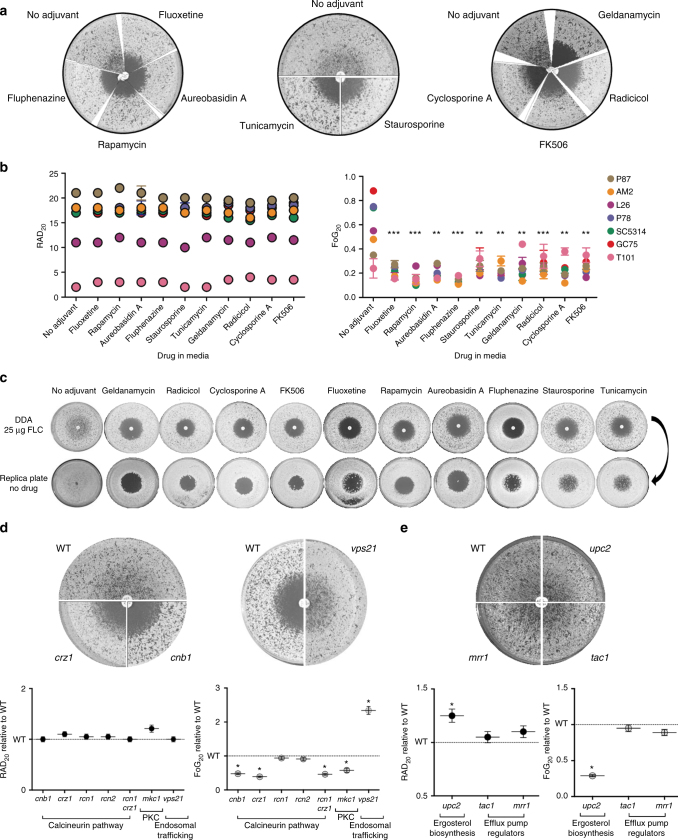
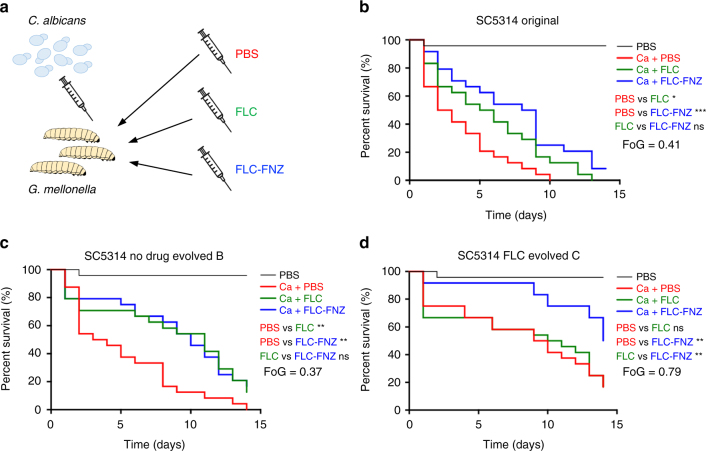
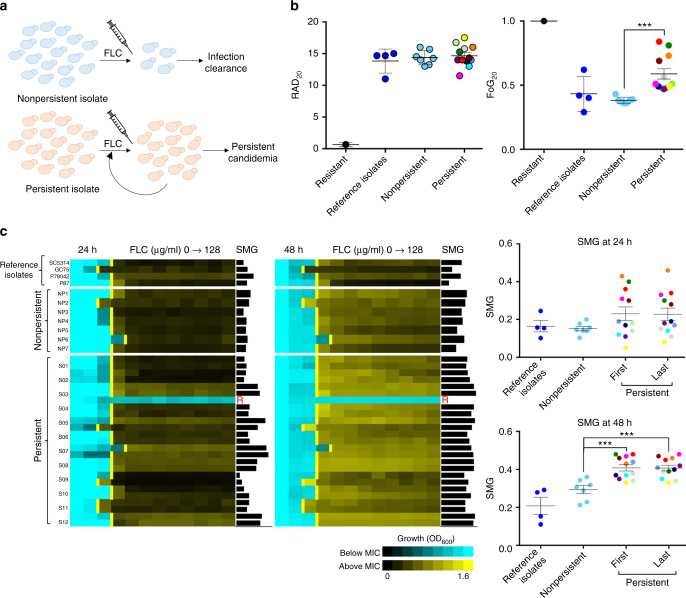
- Adjuvants reduced FoG without altering RAD/MIC and rendered fluconazole cidal. In *G. mellonella*, FLC + fluphenazine rescued up to 50% of larvae infected with high-FoG strains, whereas high-FoG strains did not respond to FLC alone. Persistent candidemia isolates had higher FoG/SMG than non-persistent isolates, with many persistent isolates having FoG > 0.5, despite similar MICs (0.25–1 µg/ml).
Methods
- Drug responses were quantified in *C. albicans* clinical isolates and lab strains using disk diffusion assays analyzed with diskImageR (RAD and FoG at 20% inhibition) and broth microdilution assays (MIC₅₀ at 24 h; SMG at 48 h). A screen included 219 clinical isolates; standard assays used a 25 µg FLC disk, 30 °C, and 48 h incubation.
- Mechanistic assays included CFU plating, microcolony time-lapse microscopy, ScanLag colony-growth analysis, viability replica plating, growth-rate measurements, FLC-Cy5 uptake by flow cytometry, Rhodamine 6G efflux, Hsp90 ELISA, and mutant strain analysis.
- In vivo testing used *Galleria mellonella* larvae infected with *C. albicans* and treated with PBS, FLC, or FLC + fluphenazine. Clinical isolates came from patients with candidemia either cleared by FLC (non-persistent) or persistent despite FLC therapy; statistical tests included t tests, ANOVA/Tukey, and log-rank tests.
Limitations
- Stated in the paper: aneuploidy could contribute to tolerance in some strains, though the authors argue it is unlikely to be the main mechanism; factors other than uptake and efflux that determine intracellular FLC levels remain to be determined; how TOR, unfolded protein response, PKC signaling, sphingolipid synthesis, iron homeostasis, fluoxetine, and fluphenazine affect drug responses remains to be determined; causality between infection and death could not be determined; and for highly resistant strains such as T101, the small zone of inhibition makes FoG measurements less accurate than SMG.
- Stated in the paper: previous work suggested trailing growth was not important for virulence or human infection outcomes, but those studies analyzed short-term responses rather than persistence/recurrence; the authors call for retrospective and prospective clinical studies measuring tolerance.
- Evident from the text: the in vivo model is an invertebrate (*G. mellonella*) rather than a mammalian model; the clinical association is correlational with limited isolate sets (7 non-persistent isolates and 12 persistent series); and tolerance assays are sensitive to pH, temperature, and growth media, requiring consistent conditions for reproducibility.
Model-written summary. Check it against the paper before relying on it.
Integrity signals
Registry
Cites
Statistics
Figures
Verification
Claims the paper makes
22 Valid · 2 Not valid · 6 Not checked · 136 Own results and interpretations
The cited sources support only part of this claim — read each source’s verdict below.
In the paper
“Persistent candidemia, defined as the failure to clear a bloodstream infection caused by a susceptible organism 7,16 , is associated with increased mortality.”
§ Antifungal tolerance is a subpopulation effect distinct from resistance and is associated with persistent candidemia > Abstract
What the sources say
- Partly supportedcites [7] 7. Da Matta, D. A. et al. Multilocus sequence typing of sequential Candida albicans isolates from patients with persistent or recurrent fungemia. Med. Mycol. 48, 757-762 (2010). sourceExperimental — accuracy not yet measured
The Introduction (p. 1) says Candida bloodstream infections are associated with significant mortality. The paper studies persistent candidemia, but the passages do not say that persistence is associated with increased mortality compared with nonpersistent infection. (LLM, conf=0.83)
- Could not verifycites [16] 16. Pfaller, M. A. & Diekema, D. J. Epidemiology of invasive candidiasis: a persistent public health problem. Clin. Microbiol. Rev. 20, 133-163 (2007). sourceExperimental — accuracy not yet measured
The Burden of Disease section reports deaths associated with candidemia generally, but does not compare mortality in persistent versus cleared candidemia. Searches for persistent candidemia, prolonged fungemia, and failure to clear infection found no passage establishing the claimed association; the copy is truncated, so a relevant passage may be missing. (LLM, conf=0.72)
plainstates an association- Asserted: passes — The authors put it forward as true.
- Checkable: passes — It can be checked against evidence.
- Load-bearing: passes — The paper’s conclusions depend on it.
- Based: passes — The paper gives a reason why it holds.
- Partly supported
The sources with a verdict support this claim; the rest weren’t checked yet, have no full text we could read, or their verdicts aren’t rated yet.
In the paper
“This implies that infection outcomes are influenced by host factors as well as features of the pathogen that are not reflected by the MIC 5,6 .”
§ Antifungal tolerance is a subpopulation effect distinct from resistance and is associated with persistent candidemia > Abstract
What the sources say
- Supportedcites [5] 5. Delarze, E. & Sanglard, D. Defining the frontiers between antifungal resistance, tolerance and the concept of persistence. Drug Resist. Updat. 23, 12-19 (2015). source
The Introduction says opportunistic fungi can become deadly in immunocompromised patients, identifying a host factor affecting infection outcomes. Section 8 reports that Candida isolates with the same MIC had different treatment responses depending on their resistance mechanism, showing a pathogen feature not captured by MIC. Page numbers are unavailable in our copy. (LLM, conf=0.89)
- Not checked — no full text of the sourcecites [6] 6. Balaban, N. Q., Gerdes, K., Lewis, K. & McKinney, J. D. A problem of persistence: still more questions than answers? Nat. Rev. Microbiol. 11, 587-591 (2013). source
plainstates a cause- Asserted: passes — The authors put it forward as true.
- Checkable: passes — It can be checked against evidence.
- Load-bearing: passes — The paper’s conclusions depend on it.
- Based: passes — The paper gives a reason why it holds.
- Supported
The cited sources support only part of this claim — read each source’s verdict below.
In the paper
“In effect, organisms that cause persistent infections, defined as those that are not cleared by a course of antifungal treatment, have similar susceptibilities to organisms that are readily cleared by a course of antifungal treatment 7 .”
§ Antifungal tolerance is a subpopulation effect distinct from resistance and is associated with persistent candidemia > Abstract
What the sources say
- Partly supportedcites [7] 7. Da Matta, D. A. et al. Multilocus sequence typing of sequential Candida albicans isolates from patients with persistent or recurrent fungemia. Med. Mycol. 48, 757-762 (2010). sourceExperimental — accuracy not yet measured
The Results (p. 4) report that C. albicans isolates from patients with persistent or recurrent candidemia remained susceptible to the three antifungals tested. The paper does not compare those isolates with organisms readily cleared by treatment; it also defines persistent candidemia by repeated positive blood cultures, not by failure to clear after a course of treatment (p. 1). (LLM, conf=0.88)
plain- Asserted: passes — The authors put it forward as true.
- Checkable: passes — It can be checked against evidence.
- Load-bearing: passes — The paper’s conclusions depend on it.
- Based: passes — The paper gives a reason why it holds.
- Partly supported
The cited sources that could be checked couldn’t confirm or dispute this claim.
In the paper
“It is therefore unlikely that aneuploidy represents the main mechanism underlying tolerance.”
§ Antifungal tolerance is a subpopulation effect distinct from resistance and is associated with persistent candidemia > Discussion
What the sources say
- Could not verifycites [63] 63. Hirakawa, M. P. et al. Genetic and phenotypic intra-species variation in Candida albicans. Genome Res. 25, 413-425 (2015). sourceExperimental — accuracy not yet measured
The Results section on aneuploid isolates reports slower growth in several media and no correlation with other measured strain attributes, including virulence. The Discussion section on aneuploidy says some extra chromosomes may themselves be well tolerated, but does not assess whether aneuploidy is a main mechanism of tolerance. Searches for tolerance and aneuploidy did not locate a passage addressing that claim. (LLM, conf=0.72)
- Could not verifycites [64] 64. Abbey, D. A. et al. YMAP: a pipeline for visualization of copy number variation and loss of heterozygosity in eukaryotic pathogens. Genome Med. 6, 100 (2014). sourceExperimental — accuracy not yet measured
The Background (page unavailable) says that some aneuploidies are associated with acquired drug resistance, but it does not assess whether aneuploidy is the main mechanism of tolerance. Searches for “tolerance” and “aneuploidy drug tolerance resistance mechanism” found no passage addressing that conclusion. (LLM, conf=0.76)
hedged- Asserted: passes — The authors put it forward as true.
- Checkable: passes — It can be checked against evidence.
- Load-bearing: passes — The paper’s conclusions depend on it.
- Based: passes — The paper gives a reason why it holds.
- Could not verify
The cited sources support only part of this claim — read each source’s verdict below.
In the paper
“Consistent with the adjuvant drug responses, genes involved in several pathways, including calcineurin 53 and PKC signaling 44 , primarily affected FoG and not RAD (Fig. 4d, Supplementary Fig. 8, detailed information on genes tested in Supplementary Notes 2-4 and Supplementary Tables 2 and 3).”
§ Antifungal tolerance is a subpopulation effect distinct from resistance and is associated with persistent candidemia > Decreased intracellular drug levels underlie increased tolerance.
What the sources say
- Supportedcites [53] 53. Reedy, J. L., Filler, S. G. & Heitman, J. Elucidating the Candida albicans calcineurin signaling cascade controlling stress response and virulence. Fungal Genet. Biol. 47, 107-116 (2010). sourceExperimental — accuracy not yet measured
The Results section (page unavailable) identifies calcineurin-pathway genes and reports that their mutants differ in fluconazole susceptibility. Citation 53 supports the identification of the calcineurin pathway; the FoG-versus-RAD comparison is presented as the citing authors’ own finding, with a reference to their Fig. 4d. (LLM, conf=0.85)
- Partly supportedcites [44] 44. LaFayette, S. L. et al. PKC signaling regulates drug resistance of the fungal pathogen Candida albicans via circuitry comprised of Mkc1, calcineurin, and Hsp90. PLoS Pathog. 6, e1001069 (2010). sourceExperimental — accuracy not yet measured
The Results section on PKC signaling and calcineurin reports that both regulate antifungal tolerance, supporting the tolerance aspect of the claim. But the Results section on clinical isolates also reports that inhibiting Pkc1 reduced azole resistance. The paper does not compare effects on FoG and RAD, so it does not support the claim that PKC signaling primarily affected FoG and not RAD. (LLM, conf=0.85)
plainstates a cause- Asserted: passes — The authors put it forward as true.
- Checkable: passes — It can be checked against evidence.
- Load-bearing: unclear — It is unclear whether the paper’s conclusions depend on it.
- Based: passes — The paper gives a reason why it holds.
- Supported
90 more claims · 4 with their cited sources checked
Create a free account to see all 166 claims and to verify the 2 references still open.
- It may state two separate claims as one. 52
- Probably not a substantial claim. 33
Claims other papers make about this one
Each is checked against this paper’s own text: does it say what the citing paper says it does?
The cited source doesn’t support the claim as written.
In the citing paper
“In addition to affecting resistance, drug uptake and efflux appears to contribute, at least partially, to tolerance9, based on studies with fluorescent azole probes and strains with similar MIC levels but different tolerance levels (measured as FoG and SMG, see Box ##)89,90”
From Drug resistance and tolerance in fungi. (2020) · cites this paper as [9]
Checked by a reasoning model — may be wrong.
Experimental — accuracy not yet measuredThe source backs part of the claim, not all of it — or backs it for a different population, condition or comparison.
In the citing paper
“A recent quantitative study9 identified four characteristics of fluconazole-tolerant cells across a set of seven diverse C. albicans isolates.”
From Drug resistance and tolerance in fungi. (2020) · cites this paper as [9]
Experimental — accuracy not yet measuredThe source backs part of the claim, not all of it — or backs it for a different population, condition or comparison.
In the citing paper
“Second, within a given isolate, tolerant cells (those that do grow slowly in the presence of the drug, while the remaining cells do not grow) represent a subpopulation (generally 5%-90% of the cells, depending on the isolate) (Fig. 1B).”
From Drug resistance and tolerance in fungi. (2020) · cites this paper as [9]
Experimental — accuracy not yet measuredThe source backs part of the claim, not all of it — or backs it for a different population, condition or comparison.
In the citing paper
“Fourth, the time required for cells to appear as visible colonies on a petri plate containing drug is shorter for isolates with high tolerance levels than for isolates with lower tolerance levels (Fig. 1C).”
From Drug resistance and tolerance in fungi. (2020) · cites this paper as [9]
Experimental — accuracy not yet measuredThe source backs part of the claim, not all of it — or backs it for a different population, condition or comparison.
In the citing paper
“Furthermore, higher tolerance in bacterial isolates is associated with longer lag phase length, whereas fungal isolates with higher tolerance levels have shorter lag phase length (measured as time required for colonies to become visible13) relative to those with lower tolerance levels9.”
From Drug resistance and tolerance in fungi. (2020) · cites this paper as [9]
Experimental — accuracy not yet measured
38 more claims about this paper
Create a free account to see every claim other papers make about this one.
Self-check
Percentages, sums and reported differences re-computed from the paper’s own numbers.
Each contradiction between two passages listed here was confirmed by an independent check.
Rated minor: it would not touch a result — a value no result rests on, a p-value that stays on the same side of the significance level, or a conflict that is clerical, resolved elsewhere in the paper, or outside its own findings.
In the paper
“only partially with RAD (R 2 = -0.61,Supplementary Fig. 7f)”
§ Antifungal tolerance is a subpopulation effect distinct from resistance and is associated with persistent candidemia > Decreased intracellular drug levels underlie increased tolerance.
Reported -0.61 · recomputed 0.3721
Rated minor: it would not touch a result — a value no result rests on, a p-value that stays on the same side of the significance level, or a conflict that is clerical, resolved elsewhere in the paper, or outside its own findings.
In the paper
§ Antifungal tolerance is a subpopulation effect distinct from resistance and is associated with persistent candidemia > ScanLag assay.
“followed by a second injection with either PBS, FLC alone, or FLC and FNZ within 90 min of the first injection.”
§ Antifungal tolerance is a subpopulation effect distinct from resistance and is associated with persistent candidemia > ScanLag assay.
“A second injection with either FLC (1 mg/kg), FLC + FNZ (FNZ, 10 mg/kg), or sterile PBS was done via the last right pro-leg 1.5-2 h post infection.”
Citations
Cites
Epidemiology of Invasive Candidiasis: a Persistent Public Health Problem
Pfaller, M. A., & Diekema, D. J. (2007) · Clinical Microbiology Reviews · doi:10.1128/cmr.00029-06 · Cited by 4,174
Bacterial Persistence as a Phenotypic Switch
Balaban, N. Q., Merrin, J., Chait, R., Kowalik, L., & Leibler, S. (2004) · Science · doi:10.1126/science.1099390 · Cited by 2,952
Distinguishing between resistance, tolerance and persistence to antibiotic treatment
Brauner, A., Fridman, O., Gefen, O., & Balaban, N. Q. (2016) · Nature Reviews Microbiology · doi:10.1038/nrmicro.2016.34 · Cited by 1,612 · cited 2×
“Studying growth dynamics and quantifying tolerance revealed that it is: (1) a subpopulation effect and the size of the subpopulation is stable; (2) due to slow growth in drug stress; (3) correlates with intracellular drug levels; (4) dependent upon stress response pathways, and (5) mechanistically distinct from resist…”
BackgroundAzole Antifungal Resistance in Candida albicans and Emerging Non-albicans Candida Species
Whaley, S. G., Berkow, E. L., Rybak, J. M., Nishimoto, A. T., Barker, K. S., & Rogers, P. D. (2017) · Frontiers in Microbiology · doi:10.3389/fmicb.2016.02173 · Cited by 900
Anidulafungin versus Fluconazole for Invasive Candidiasis
Reboli, A. C., Rotstein, C., Pappas, P. G., Chapman, S. W., Kett, D. H., Kumar, D., Betts, R., Wible, M., Goldstein, B. P., Schranz, J., et al. (2007) · New England Journal of Medicine · doi:10.1056/nejmoa066906 · Cited by 894
Tkacz, J. S., & Lampen, J. O. (1975) · Biochemical and Biophysical Research Communications · doi:10.1016/s0006-291x(75)80086-6 · Cited by 843
Andes, D. R., Safdar, N., Baddley, J. W., Playford, G., Reboli, A. C., Rex, J. H., Sobel, J. D., Pappas, P. G., Kullberg, B. J., & for the Mycoses Study Group (2012) · Clinical Infectious Diseases · doi:10.1093/cid/cis021 · Cited by 793
Alexander, B. D., Johnson, M. D., Pfeiffer, C. D., Jiménez-Ortigosa, C., Catania, J., Booker, R., Castanheira, M., Messer, S. A., Perlin, D. S., & Pfaller, M. A. (2013) · Clinical Infectious Diseases · doi:10.1093/cid/cit136 · Cited by 778
Hsp90 Potentiates the Rapid Evolution of New Traits: Drug Resistance in Diverse Fungi
Cowen, L. E., & Lindquist, S. (2005) · Science · doi:10.1126/science.1118370 · Cited by 698
Mechanisms of Antifungal Drug Resistance
Cowen, L. E., Sanglard, D., Howard, S. J., Rogers, P. D., & Perlin, D. S. (2015) · Cold Spring Harbor Perspectives in Medicine · doi:10.1101/cshperspect.a019752 · Cited by 647
Cited by
Items 101–200 of 270
Proa-Coronado, S., Séverac, C., Martínez-Rivas, A., & Dague, É. (2019) · Nanoscale Horizons · doi:10.1039/c9nh00438f · Cited by 19
Randhawa, A., Pasari, N., Sinha, T., Gupta, M., Nair, A. M., Ogunyewo, O. A., Verma, S., Verma, P. K., & Yazdani, S. S. (2021) · Biotechnology for Biofuels · doi:10.1186/s13068-021-01883-4 · Cited by 22
“In case of hygromycin and zeocin, > 75% of the spores were able to form CFU after 5 days of incubation at drug concentration below MIC (i.e. at 50 µg/ml), whereas more than 50% of the spores could form colonies at MIC (i.e. at 75 µg/ml).”
BackgroundInfluentialMechanisms of Azole Potentiation: Insights from Drug Repurposing Approaches
Xiong, J., Lu, H., & Jiang, Y. (2025) · ACS Infectious Diseases · doi:10.1021/acsinfecdis.4c00657 · Cited by 20
Identification and Elimination of Antifungal Tolerance in Candida auris
Rasouli Koohi, S., Shankarnarayan, S. A., Galon, C. M., & Charlebois, D. A. (2023) · Biomedicines · doi:10.3390/biomedicines11030898 · Cited by 20
“28), as expected based on previous work that established the FoG and RAD measure 303 different drug responses [28,29].”
BackgroundMethodResultInfluentialOverexpression approaches to advance understanding of Candida albicans
Rai, L. S., van Wijlick, L., Chauvel, M., d’Enfert, C., Legrand, M., & Bachellier‐Bassi, S. (2021) · Molecular Microbiology · doi:10.1111/mmi.14818 · Cited by 20
“…in S. cerevisiae negatively regulates nitrogen catabolic gene expression (Soussi- Boudekou et al., 1997), and interestingly, overexpression of GZF3 resulted in slower vegetative growth rates (Sopko et al., 2006), which, in turn, could lead to increased drug tolerance (Rosenberg et al., 2018).”
BackgroundUsher, J., Ribeiro, G. F., & Childers, D. S. (2023) · Microbiology Spectrum · doi:10.1128/spectrum.03724-22 · Cited by 17
“albicans antifungal tolerance to fluconazole (8).”
Zande, P. V., Gautier, C., Kawar, N., Maufrais, C., Metzner, K., Wash, E., Beach, A. K., Bracken, R., Maciel, E. I., de Sá, N. P., et al. (2024) · PLoS Pathogens · doi:10.1371/journal.ppat.1012497 · Cited by 23
Self-citationArastehfar, A., Daneshnia, F., Floyd, D. J., Jeffries, N. E., Salehi, M., Perlin, D. S., Ilkit, M., Lass-Flöerl, C., & Mansour, M. K. (2024) · mBio · doi:10.1128/mbio.00072-24 · Cited by 19
Zajac, C., Scott, N. E., Kline, S., Erayil, S. E., & Selmecki, A. M. (2025) · npj Antimicrobials and Resistance · doi:10.1038/s44259-025-00102-6 · Cited by 22
“Antifungal tolerance is de fi ned in the laboratory as the ability of fungal cells to grow above their MIC in a drug concentration-independent manner, and is associated withaninabilitytoclearapersistentinfectionwithantifungaltherapy 42,43 .”
Antifungal resistance: Emerging mechanisms and implications (Review)
Kadariswantiningsih, I. N., Empitu, M. A., Santosa, T., & Alimu, Y. (2025) · Molecular Medicine Reports · doi:10.3892/mmr.2025.13612 · Cited by 30
“…to antifungal agents over time, and viability is assessed at intervals. a characteristic of tolerance is that cells may initially survive at high drug concentrations but eventually succumb to treatment, whereas resistant strains continue to proliferate despite the presence of the drug (12,38).”
Aneuploidy Mediates Rapid Adaptation to a Subinhibitory Amount of Fluconazole in Candida albicans
Sun, L.-L., Li, H., Yan, T.-H., Fang, T., Wu, H., Cao, Y.-B., Lu, H., Jiang, Y.-Y., & Yang, F. (2023) · Microbiology Spectrum · doi:10.1128/spectrum.03016-22 · Cited by 17
“Usually, 20% drug inhibition (RAD20 and FoG20) is used to measure resistance and tolerance, respectively (15, 18).”
BackgroundMethodInfluentialDiscovery of Novel Sertraline Derivatives as Potent Anti-Cryptococcus Agents
Li, W., Yun, Z., Ji, C., Tu, J., Yang, W., Li, J., Liu, N., & Sheng, C. (2022) · Journal of Medicinal Chemistry · doi:10.1021/acs.jmedchem.1c01845 · Cited by 19
Eukaryotic Adaptation to Years-Long Starvation Resembles that of Bacteria
Aouizerat, T., Gelman, D., Szitenberg, A., Gutman, I., Coppenhagen‐Glazer, S., Reich, E., Schoemann, M., Kaplan, R., Saragovi, A., Hazan, R., et al. (2019) · iScience · doi:10.1016/j.isci.2019.08.002 · Cited by 18
“, 2017) (Rosenberg et al., 2018), this result constitutes a novel and interesting angle to adaptation under stress.”
BackgroundThe intricate link between iron, mitochondria and azoles in Candida species
Genechten, W. V., Vergauwen, R., & Dijck, P. V. (2023) · FEBS Journal · doi:10.1111/febs.16977 · Cited by 26
Chromatin Structure and Drug Resistance in Candida spp.
O’Kane, C. J., Weild, R., & M. Hyland, E. (2020) · Journal of Fungi · doi:10.3390/jof6030121 · Cited by 18
“Similar to other phenotypic resistant states, evidence suggests that Candida tolerance is mediated by the up-regulation of efflux pumps in tolerant cells [143], or potentially an increase in cell wall chitin in tolerant cells, which limits drug uptake [146].”
BackgroundPseudomonas Synergizes with Fluconazole against Candida during Treatment of Polymicrobial Infection
Hattab, S., Dagher, A.-M., & Wheeler, R. T. (2022) · Infection and Immunity · doi:10.1128/iai.00626-21 · Cited by 22
Tits, J., Berman, J. G., Cammue, B. P. A., & Thevissen, K. (2021) · Frontiers in Cell and Developmental Biology · doi:10.3389/fcell.2020.617214 · Cited by 21
“, 2016) to decrease tolerance more dramatically than resistance (Rosenberg et al., 2018).”
BackgroundSelf-citationCarlson, T., Lupinacci, E., Moseley, K., & Chandrasekaran, S. (2021) · FEMS Microbiology Letters · doi:10.1093/femsle/fnab040 · Cited by 19
Yau, K. P. S., Weerasinghe, H., Olivier, F. A. B., Lo, T. L., Powell, D., Koch, B., Beilharz, T. H., & Traven, A. (2023) · PLoS Pathogens · doi:10.1371/journal.ppat.1011338 · Cited by 18
“Consistent with an important role for the proteasome in fluconazole responses, MG132 impaired both resistance and tolerance to fluconazole, as shown by increased RAD and reduced FoG in fluconazole disk diffusion assays (Fig 5C and 5D).”
BackgroundMethodInfluentialZhou, X., Hilk, A. L., Solis, N. V., de Sá, N. P., Hogan, B. M., Bierbaum, T. A., Poeta, M. D., Filler, S. G., Burrack, L. S., & Selmecki, A. M. (2024) · PLoS Pathogens · doi:10.1371/journal.ppat.1012389 · Cited by 20
Insight into the Mechanisms and Clinical Relevance of Antifungal Heteroresistance
Su, Y., Li, Y., Yi, Q., Xu, Y., Sun, T., & Li, Y. (2025) · Journal of Fungi · doi:10.3390/jof11020143 · Cited by 18
“The reversibility of this property has been con fi rmed for several fungi species [107,108].”
Fungal cell death: The beginning of the end
Rico-Ramírez, A. M., Gonçalves, A. P., & Glass, N. L. (2022) · Fungal Genetics and Biology · doi:10.1016/j.fgb.2022.103671 · Cited by 19
Luna-Tapia, A., Butts, A., & Palmer, G. E. (2019) · Antimicrobial Agents and Chemotherapy · doi:10.1128/aac.01337-18 · Cited by 14
“However, a recent study suggested that the trailing phenotype results from the slow growth of subpopulations of cells that are able to endure the deleterious effects of drug treatment, which may have implications in clinical settings (29).”
BackgroundAmich, J., Bromley, M., Goldman, G. H., & Valero, C. (2025) · mBio · doi:10.1128/mbio.03475-24 · Cited by 14
“In yeasts, however, the term tolerance is used to describe the ability of cells to grow at slow rates at supra-MIC concentrations of both fungistatic (10–14) and fungicidal drugs (10, 15).”
Xiong, J., Wang, L., Feng, Y., Zhen, C., Hang, S., Yu, J., Lu, H., & Jiang, Y. (2024) · Life Sciences · doi:10.1016/j.lfs.2024.122699 · Cited by 15
Fang, T., Xiong, J., Huang, X., Fang, X., Shen, X., Jiang, Y., & Lu, H. (2024) · Microbiological Research · doi:10.1016/j.micres.2024.127964 · Cited by 17
Ayadi, R., Sitterlé, E., d’Enfert, C., Dannaoui, É., & Bougnoux, M. (2020) · Frontiers in Microbiology · doi:10.3389/fmicb.2020.01286 · Cited by 16
“, 2018) and may have a clinical impact (Rosenberg et al., 2018).”
BackgroundLi, W., Whiteway, M., Hang, S., Yu, J., Lu, H., & Jiang, Y. (2025) · Nature Communications · doi:10.1038/s41467-025-62131-z · Cited by 13
“Tunicamycin enhances C. albicans ’ susceptibility to FLC by inhibiting protein N-glycosylation and inducing ER stress 3 .”
Li, W., Feng, Y., Feng, Z., Wang, L., Whiteway, M., Lu, H., & Jiang, Y. (2024) · Antioxidants · doi:10.3390/antiox13060667 · Cited by 14
“However, recent studies have suggested high FLC tolerance levels contribute to persistent candidemia [11,12].”
BackgroundMethodInfluentialResearch advances and public health strategies in China on WHO priority fungal pathogens
Wang, Y., Han, L., Gong, J., Liu, L., Miao, B., & Xu, J. (2025) · Mycology: An International Journal on Fungal Biology · doi:10.1080/21501203.2025.2561612 · Cited by 15
“Antifungal tolerance can be induced by multiple mechanisms including stress pathway responses (Berman and Krysan 2020), epigenetic alterations (Rosenberg et al. 2018), biofilm protection (Kean and Ramage 2019), and aneuploidy (Yang et al. 2021).”
Telzrow, C. L., Esher, S. K., Cathey, J. M., Granek, J. A., & Alspaugh, J. A. (2023) · Frontiers in Physiology · doi:10.3389/fphys.2023.1150272 · Cited by 14
“Fungal pathogens can also develop antifungal tolerance, or the ability of a subpopulation of drug-susceptible cells to survive and grow slowly in the presence of the drug (Rosenberg et al., 2018; Berman and Krysan, 2020).”
BackgroundInfluentialNitrogen concentration affects amphotericin B and fluconazole tolerance of pathogenic cryptococci
Bosch, C., Toplis, B., Vreulink, J.-M., Volschenk, H., & Botha, A. (2020) · FEMS Yeast Research · doi:10.1093/femsyr/foaa010 · Cited by 12
Overcoming Global Antifungal Challenges: Medical and Agricultural Aspects
Galgóczy, L. (2025) · ACS Bio & Med Chem Au · doi:10.1021/acsbiomedchemau.5c00103 · Cited by 17
Zheng, L., Xu, Y., Wang, C., & Guo, L. (2024) · Frontiers in Microbiology · doi:10.3389/fmicb.2024.1450557 · Cited by 14
Parallel evolution of fluconazole resistance and tolerance in Candida glabrata
Zheng, L., Xu, Y., Wang, C., Dong, Y., & Guo, L. (2024) · Frontiers in Cellular and Infection Microbiology · doi:10.3389/fcimb.2024.1456907 · Cited by 14
The impact of phenotypic heterogeneity on fungal pathogenicity and drug resistance
Kozubowski, L., & Berman, J. G. (2025) · FEMS Microbiology Reviews · doi:10.1093/femsre/fuaf001 · Cited by 14
“Indeed, a range of adjuvant drugs can reduce tolerance and render fluconazole fungicidal, rather than fungistatic (Rosenberg et al. 2018 ).”
InfluentialSelf-citationDuxbury, S. J. N., Bates, S., Beardmore, R., & Gudelj, I. (2020) · Proceedings of the Royal Society B Biological Sciences · doi:10.1098/rspb.2020.0761 · Cited by 16
Zada, S. L., Jaber, Q. Z., & Fridman, M. (2019) · Angewandte Chemie · doi:10.1002/ange.201906284 · Cited by 11
An Update on the Global Treatment of Invasive Fungal Infections
Munzen, M. E., Garcia, A. D. G., & Martinez, L. R. (2023) · Future Microbiology · doi:10.2217/fmb-2022-0269 · Cited by 18
Bugs on Drugs: A Drosophila melanogaster Gut Model to Study In Vivo Antibiotic Tolerance of E. coli
den Bergh, B. V. (2022) · Microorganisms · doi:10.3390/microorganisms10010119 · Cited by 14
“mellonella studies, microbial persisters were found relevant [82,83] and some antipersister compounds have been validated or screened for [84,85].”
BackgroundWu, Y., Zou, Y., Dai, Y., Lu, H., Zhang, W., Chang, W., Wang, Y., Nie, Z., Wang, Y., & Jiang, X. (2025) · PLOS Pathogens · doi:10.1371/journal.ppat.1013220 · Cited by 10
“It has been confirmed that the tolerance of C. albicans to fluconazole is an independent predictor of persistent candidemia [19,20].”
Guo, L., Zheng, L., Dong, Y., Wang, C., Deng, H., Wang, Z., & Xu, Y. (2024) · Frontiers in Cellular and Infection Microbiology · doi:10.3389/fcimb.2024.1392564 · Cited by 10
Candida albicans Recovered From Persistent Candidemia Exhibits Enhanced Virulence Traits
Ribeiro, F. D. C., Kemmerich, K. K., Gonçale, J. C., Junqueira, J. C., Mannan, M. A., Nabeela, S., Colombo, A. L., & Uppuluri, P. (2024) · The Journal of Infectious Diseases · doi:10.1093/infdis/jiae631 · Cited by 14
“In patients with recurrent and persistent infections, the infecting strain is also known to evolve to become more drug tolerant [37] or better adapted to be more fit in the host [38].”
Self-citationWhat ‘Omics can tell us about antifungal adaptation
Ribeiro, G. F., Denes, E., Heaney, H., & Childers, D. S. (2021) · FEMS Yeast Research · doi:10.1093/femsyr/foab070 · Cited by 11
“Tolerant sub-populations can proliferate slowly at high azole MICs and survive lethal echinocandin challenge without acquiring adaptive genetic mutations or altering the MIC of the population (Robbins, Caplan and Cowen 2017; Healey and Perlin 2018; Rosenberg et al. 2018).”
BackgroundAdvancing Antimicrobial Resistance Research Through Quantitative Modeling and Synthetic Biology
Farquhar, K. S., Flohr, H., & Charlebois, D. A. (2020) · Frontiers in Bioengineering and Biotechnology · doi:10.3389/fbioe.2020.583415 · Cited by 9
de la Rasilla, T. P.-G., Mato-López, Á., Pablos-Puertas, C. E., González‐Huerta, A. J., Gómez‐López, A., Mellado, E., & Amich, J. (2023) · Journal of Fungi · doi:10.3390/jof9080805 · Cited by 10
“Finally, antimicrobial tolerance and persistence have been implicated in treatment failure in bacterial infections [26–28] and fluconazole tolerance has already been suggested to correlate with treatment failure in candidemia [29,30].”
BackgroundLuna-Tapia, A., Parker, J. E., Kelly, S. L., & Palmer, G. E. (2021) · Antimicrobial Agents and Chemotherapy · doi:10.1128/aac.01044-21 · Cited by 14
Spettel, K., Galazka, S., Kriz, R., Camp, I., & Willinger, B. (2021) · Journal of Fungi · doi:10.3390/jof7020093 · Cited by 9
Hunsaker, E. W., McAuliffe, K. J., & Franz, K. J. (2020) · JBIC Journal of Biological Inorganic Chemistry · doi:10.1007/s00775-020-01796-x · Cited by 13
Protocols for Measuring Tolerant and Heteroresistant Drug Responses of Pathogenic Yeasts
Lyons, N., & Berman, J. (2023) · Methods in Molecular Biology · doi:10.1007/978-1-0716-3155-3_6 · Cited by 8
Self-citationAntifungal persistence: Clinical relevance and mechanisms
Wang, R., Lv, J., Chen, L., Zhao, Y., & Du, H. (2025) · PLoS pathogens · doi:10.1371/journal.ppat.1013456 · Cited by 12
Lin, S., Huang, H., Chang, L., Wang, Y., Chen, T., Chang, K., Tu, H., & Lu, P. (2024) · Clinical Microbiology and Infection · doi:10.1016/j.cmi.2024.03.023 · Cited by 9
Yang, B., Vaisvil, B., Schmitt, D. P., Collins, J., Young, E. M., Kapatral, V., & Rao, R. P. (2024) · Infection and Immunity · doi:10.1128/iai.00103-24 · Cited by 9
“Tolerance is shown by colonies within the zone of growth inhibition (or halo), which indicates slow growth at concentrations above the MIC, and is measured as a fraction of growth (FoG) (35, 36).”
BackgroundInfluentialShor, E., Perlin, D. S., & Kontoyiannis, D. P. (2025) · mSphere · doi:10.1128/msphere.00161-25 · Cited by 11
“Thus far, the role of fluconazole tolerance in therapeutic failures has been implied in C. albicans and C. glabrata (25, 27, 39), but no correlation between tolerance to echinocandins and their in vivo (36) efficacy has yet been reported.”
Heterogeneity of Candida bloodstream isolates in an academic medical center and affiliated hospitals
Scott, N. E., Wash, E., Zajac, C., Erayil, S. E., Kline, S. E., & Selmecki, A. M. (2025) · Microbiology Spectrum · doi:10.1128/spectrum.00464-25 · Cited by 7
“Paul (Twin Cities) metro area.”
Candida auris vacuolar calcium pump mediates fluconazole efflux and resistance evolution
Song, Y., Chen, J., Wan, J., Zhang, J., Liu, Q., Sun, F., Zhang, H., Guo, Y., Chow, E. W. L., Chen, Y., et al. (2026) · Nature Microbiology · doi:10.1038/s41564-026-02270-1 · Cited by 8
Wang, M., Zhang, C., Li, Z., Ji, B., Man, S., Yi, M., Li, R., Hao, M., & Wang, S. (2023) · Indian Journal of Medical Microbiology · doi:10.1016/j.ijmmb.2023.100518 · Cited by 7
Post-transcriptional control of antifungal resistance in human fungal pathogens
Sharma, C., & Kadosh, D. (2023) · Critical Reviews in Microbiology · doi:10.1080/1040841x.2022.2080527 · Cited by 6
“The degree of tolerance varies depending on the intrinsic allele diversity of each isolate, phenotypic heterogeneity, the size of the subpopulation of cells that can grow above the MIC, and the rate at which colonies become visible at supra-MIC concentrations (Rosenberg et al. 2018).”
BackgroundHyperdCas12a-based multiplexed genetic regulation in Candida albicans
Gervais, N. C., Rogers, R. K. J., Robin, M., & Shapiro, R. S. (2025) · Nucleic Acids Research · doi:10.1093/nar/gkaf1402 · Cited by 8
“SMG values were calculated as has been previously described with some minor modifications [ 67 ].”
Parker, J. E., & Kelly, S. L. (2021) · Cronfa (Swansea University) · Cited by 6
Extracellular fungal Hsp90 represents a promising therapeutic target for combating fungal infections
Fang, T., Lu, H., & Jiang, Y. (2025) · European Journal of Pharmaceutical Sciences · doi:10.1016/j.ejps.2025.107041 · Cited by 8
Wegner, T., Elias, R., Roling, L., Raj, N., Gerke, V., Fridman, M., & Glorius, F. (2022) · ACS Infectious Diseases · doi:10.1021/acsinfecdis.2c00164 · Cited by 10
Cosio, T., Pedretti, N., Spaggiari, L., Ruda, L. T., Kenno, S., Sabbatini, S., Pistoia, E. S., Comar, M., Monari, C., Ardizzoni, A., et al. (2025) · Journal of Fungi · doi:10.3390/jof11090625 · Cited by 7
“Antifungal is often associated with metabolic dormancy, a reversible low-activity state that reduces drugs efficacy [51–53].”
Druseikis, M. E., Mottola, A., & Berman, J. G. (2023) · Current Clinical Microbiology Reports · doi:10.1007/s40588-023-00189-3 · Cited by 6
“Inhibition of Pho84 indirectly inhibits TORC1 (target of rapamycin complex I) [101], a central regulator of translation, amino acid metabolism, antifungal drug tolerance, and drug resistance [13, 103, 104].”
BackgroundResultInfluentialSelf-citationConstraint on boric acid resistance and tolerance evolvability in Candida albicans
Syvolos, Y., Salama, O. E., & Gerstein, A. C. (2024) · Canadian Journal of Microbiology · doi:10.1139/cjm-2023-0225 · Cited by 8
Regan, J., DeJarnette, C. A., Luna-Tapia, A., Parker, J. E., Reitler, P., Barnett, S., Tucker, K. M., Kelly, S. L., & Palmer, G. E. (2022) · mBio · doi:10.1128/mbio.00115-22 · Cited by 5
“cleared from infected tissues following azole therapy than nontrailing isolates (27, 28).”
BackgroundInfluentialUnlocking the enigma of phenotypic drug tolerance: Mechanisms and emerging therapeutic strategies
Mishra, A. K., Thakare, R., Santani, B. G., Yabaji, S. M., Dixit, S. K., & Srivastava, K. K. (2023) · Biochimie · doi:10.1016/j.biochi.2023.12.009 · Cited by 5
O’Connor-Moneley, J., Fletcher, J., Bean, C., Parker, J. E., Kelly, S. L., Moran, G. P., & Sullivan, D. J. (2024) · PLoS ONE · doi:10.1371/journal.pone.0308665 · Cited by 6
Systematic truncations of chromosome 4 and their responses to antifungals in Candida albicans
Uddin, W., Dhabalia, D., Prakash, S. M. U., & Kabir, M. A. (2021) · Journal of Genetic Engineering and Biotechnology · doi:10.1186/s43141-021-00197-0 · Cited by 5
“This extended growth is often associated with persistent candidemia [45].”
BackgroundZhou, X., Hilk, A. L., Solis, N. V., Hogan, B. M., Bierbaum, T. A., Filler, S. G., Burrack, L. S., & Selmecki, A. M. (2024) · bioRxiv (Cold Spring Harbor Laboratory) · doi:10.1101/2024.03.06.583770 · Cited by 5
de Sousa, D. S. M., Monari, G. P. D. M., da Rosa, C. F., Meis, J. F. G. M., Pereira, A. F. M., Zapata, T. B., dos Santos, C. B. T., Aal, M. C. E., Delella, F. K., Bosco, S. M. G., et al. (2025) · Journal of Applied Microbiology · doi:10.1093/jambio/lxaf197 · Cited by 4
Lukumay, N. R., Li, Y., Wang, H., & Wei, W. (2025) · Virulence · doi:10.1080/21505594.2025.2569624 · Cited by 8
“Another limitation is the fungistatic nature of azole drugs rather than their fungicidal nature, which likely contributes to resistance in immunocompromised patients [96,97].”
Obermeier, M., Esparza-Mora, M. A., Heese, O., Cohen, N., Varma, S. J., Tober‐Lau, P., Hartl, J., Kurth, F., Berman, J. G., & Ralser, M. (2025) · Journal of Medical Microbiology · doi:10.1099/jmm.0.002046 · Cited by 4
“Tolerance is particularly frequently observed against azole antifungals [34] at body temperature [37] and may underpin antifungal treatment failure [5, 36].”
Self-citationZheng, L., Dong, Y., Wang, J., Jia, Y., Wang, W., Xu, Y., & Guo, L. (2025) · Frontiers in Cellular and Infection Microbiology · doi:10.3389/fcimb.2025.1519323 · Cited by 7
“…studies have revealed that wild-type C. albicans isolates exhibit intrinsic azole tolerance, which varies depending on strain characteristics and environmental factors such as temperature, medium composition, and pH (Rosenberg et al., 2018; Delarze et al., 2020; Xu et al., 2021; Yang et al., 2023).”
InfluentialBiçer, M. (2023) · Archives of Microbiology · doi:10.1007/s00203-023-03744-0 · Cited by 6
“Extensive research has been dedicated to the study of bacterial persister cells, yet the investigation into fungal persister cells and the potential therapeutic avenues remains limited (Balaban et al. 2004; Fisher et al. 2017; Rosenberg et al. 2018).”
BackgroundAspergillus fumigatus can display persistence to the fungicidal drug voriconazolePreprint
Scott, J., Valero, C., Mato-López, Á., Donaldson, I. J., Roldán, A., Chown, H., van Rhijn, N., Lobo-Vega, R., Gago, S., Furukawa, T., et al. (2022) · bioRxiv (Cold Spring Harbor Laboratory) · doi:10.1101/2022.05.16.491816 · Cited by 4
“albicans 265 [21], we found that most environmental conditions did not influence persistence in A.”
BackgroundInfluentialHang, S., Wang, L., Ji, Z., Shen, X., Fang, X., Li, W., Jiang, Y., & Lu, H. (2025) · Antibiotics · doi:10.3390/antibiotics14080799 · Cited by 6
“Additionally, super-MIC growth (SMG) values, calculated as the average growth per well above the MIC divided by the growth level in the absence of a azole, were used to assess the impact on azole tolerance [37,42].”
Suwannaphong, P., Thammasit, P., Amsri, A., Ueangphairot, W., Muangwong, P., Kittidachanan, K., Chitapanarux, I., Kantapan, J., Dechsupa, N., & Youngchim, S. (2025) · Journal of Oral Microbiology · doi:10.1080/20002297.2025.2559024 · Cited by 3
“Isolates were classified as moderately tolerant (MT, 50–80% SMG) or highly tolerant (HT, > 80% SMG) [8].”
Huang, Y., Song, N., Jing, D., Liu, W., Li, D., Zhou, X., & Li, X. (2025) · Microbiology Spectrum · doi:10.1128/spectrum.00810-25 · Cited by 4
“…ancy between clinical efficacy and low resistance levels might result from antifungal drug tolerance, which has been defined as the ability of drug-susceptible fungal strains to grow in the presence of antifungal drugs at concentrations above the minimum inhibitory concentration (MIC) (5, 6).”
Teacoe, D. A., Cormoș, R. C., Toma, D. A., Ștef, L., Cucerea, M., Muțiu, I., Chicea, R., Popescu, D., Chicea, E. D., Boicean, A., et al. (2024) · Microorganisms · doi:10.3390/microorganisms12091869 · Cited by 5
Hong, S., Kim, S.-K., Chung, C. H., Yun, C., Lee, J., Cho, C.-S., & Huh, W. (2024) · Microbiology Spectrum · doi:10.1128/spectrum.01048-24 · Cited by 3
Ganesh, S. K., & Devi, C. S. (2025) · Journal of Cancer Research and Clinical Oncology · doi:10.1007/s00432-024-06072-y · Cited by 4
“Figure 1 represents the zone of inhibition against C. albicans (Rosenberg et al. 2018 ). to compare the binding affinities of rapamycin with other receptors.”
Candida tolerates and persists
Hofer, U. (2018) · Nature Reviews Microbiology · doi:10.1038/s41579-018-0056-6 · Cited by 3
Multiple Stochastic Parameters Influence Genome Dynamics in a Heterozygous Diploid Eukaryotic Model
Marton, T., d’Enfert, C., & Legrand, M. (2022) · Journal of Fungi · doi:10.3390/jof8070650 · Cited by 3
“albicans in fluconazole, where population subsets display contrasting phenotypes within the same genetic background [30].”
BackgroundBettauer, V., Massahi, S., Khurdia, S. S., Costa, A., Omran, R., Khosravi, N., Simpson, S., Harb, M., Dumeaux, V., Whiteway, M. S., et al. (2020) · bioRxiv (Cold Spring Harbor Laboratory) · doi:10.1101/2020.01.21.914549 · Cited by 4
Arastehfar, A. A., Daneshnia, F., Hovhannisyan, H., et al. (2023) · bioRxiv (Cold Spring Harbor Laboratory) · doi:10.1101/2023.06.15.545195 · Cited by 3
Polygenetic Determinants of Azole Resistance, Tolerance, and Heteroresistance in Candida albicansPreprint
Schutz, K., Gautier, C., Maufrais, C., Sertour, N., Bougnoux, M., d’Enfert, C., Evans, L. M., Smith, S. D., & Ene, I. V. (2025) · bioRxiv (Cold Spring Harbor Laboratory) · doi:10.1101/2025.06.29.662174 · Cited by 5
“Consistent with this, inhibition of stress response pathways can reduce tolerance to fluconazole, thereby enhancing drug efficacy without altering susceptibility (6, 7).”
InfluentialSelf-citationZheng, L., Dong, Y., Wang, J., Zhang, M., Xu, Y., Ma, L., & Guo, L. (2025) · Frontiers in Microbiology · doi:10.3389/fmicb.2025.1528341 · Cited by 2
Zhou, X., Hilk, A. L., Solis, N. V., Scott, N. E., Zajac, C., Filler, S. G., & Selmecki, A. M. (2026) · PLoS Biology · doi:10.1371/journal.pbio.3003631 · Cited by 2
“Antifungal drug susceptibilities were determined using a microwell broth dilution assay [60].”
Delbaje, E., Pontes, L., Savoldi, M., Sedik, S., Dichtl, K., Hoenigl, M., Lass‐Flörl, C., Pereira, C. S., Schreiber, A. Z., Rokas, A., et al. (2026) · Microbiology Spectrum · doi:10.1128/spectrum.04021-25 · Cited by 2
“In yeast-like fungi, persis tence is frequently observed to occur in subpopulations described as a “fraction of growth” (16–18).”
Peng, L., Xu, Y., Chen, X., Li, W., & Guo, L. (2026) · Frontiers in Cellular and Infection Microbiology · doi:10.3389/fcimb.2026.1860421 · Cited by 2
Fleres, G., Cheng, S., Badrane, H., Dupont, C. L., Espinoza, J. L., Abbey, D., Driscoll, E., Newbrough, A., Hao, B., Mansour, A., et al. (2024) · bioRxiv (Cold Spring Harbor Laboratory) · doi:10.1101/2024.10.16.618724 · Cited by 2
Stress-driven emergence of heritable non-genetic drug resistancePreprint
Xie, J. L., Yin, S., Yang, T. S., Chandrasekher, K. A., Hanson, L., Kim, S. H., Esqueda, L., Hogan, C. A., Banaei, N., Round, J. L., et al. (2024) · Research Square · doi:10.1101/2024.12.20.629823 · Cited by 6
Self-citationCytochrome bc1 Catalytic Subunit Rip1 Modulates Antifungal Tolerance in Candida auris
Phan-Canh, T., Lackner, M., Chauhan, M., Zenz, L.-M., Chauhan, N., & Kuchler, K. (2026) · ACS Infectious Diseases · doi:10.1021/acsinfecdis.5c01058 · Cited by 1
Yu, J., Jiang, B., Xiong, J., Xu, X., Xu, L., Jiang, Y., & Lu, H. (2026) · Pathogens · doi:10.3390/pathogens15060629 · Cited by 2
Metabolic sensing tips the balance of drug tolerance in fungal meningitis
Mottola, A., Hartl, J., Ralser, M., & Berman, J. G. (2024) · Nature Microbiology · doi:10.1038/s41564-023-01595-5 · Cited by 1
Self-citationAbduljalil, H., Alshanta, O. A., Chougule, S., Butcher, M. C., Short, B., McLean, W., Parry, N., O'Keeffe, J., & Ramage, G. (2025) · Apmis · doi:10.1111/apm.13510 · Cited by 1
“This demonstrates that tolerant microbial populations have the ability to regrow following the initial treatment with these disinfectants, which may contribute to infections recurrence [40, 41].”
Cytrynbaum, E. G., & McClean, M. N. (2025) · Advanced Drug Delivery Reviews · doi:10.1016/j.addr.2025.115740 · Cited by 1
Gim3 buffers and potentiates de novo mutations that affect fluconazole susceptibility in yeast
Tawfeeq, M. T., Konstantinidis, D., Iraizos, A. L. R., Genechten, W. V., Vreys, J., Vermeersch, L., Voordeckers, K., Dijck, P. V., & Verstrepen, K. J. (2026) · EMBO Reports · doi:10.1038/s44319-026-00702-x · Cited by 1
“Drug tolerance refers to the ability of a subpopulation of fungal cells to survive and slowly grow in the presence of antifungal concentrations that exceed the MIC, without a corresponding increase in MIC values (Rosenberg et al, 2018; Delarze and Sanglard, 2015).”
Exporter Mdr1 as an importer is an achilles’ heel for combating drug-resistant Candida
Chen, J., Zhang, M., Wang, Y., Xie, Z., Yang, F., Yu, H., Zhang, D., Fang, M., Luan, X., Jin, X., et al. (2026) · Cell chemical biology · doi:10.1016/j.chembiol.2026.01.009 · Cited by 1
Metadata
- Authors
- Rosenberg, A., Ene, I. V., Bibi, M., Zakin, S., Segal, E. S., Ziv, N., Dahan, A. M., Colombo, A. L., Bennett, R. J., & Berman, J.
- Affiliations
- Tel Aviv University (IL)
- Brown University (US)
- University of California, San Francisco (US)
- Universidade Federal de São Paulo (BR)
- Corresponding author
- Berman, Judith
- ORCID
- Venue
- Nature Communications
- Published
- 2018-06-25
- Volume
- 9
- Issue
- 1
- Pages
- 2470-2470
- ISSN
- 2041-1723 (ISSN-L)
- PMC
- PMC6018213
- OpenAlex
- W2809480880
- Semantic Scholar
- 79cb6f21d502f8b1209082328cdfb2bcf2bce7e2
- Cited by
- 270
- References
- 133
- Citations by year
- 2026: 51 · 2025: 39 · 2024: 32 · 2023: 36 · 2022: 26 · 2021: 30 · 2020: 27 · 2019: 19 · 2018: 9
- FWCI
- 16.25
- Type
- journal article
- Language
- en
- Open access
- gold
- doi.org
- Licence
- cc-by
- creativecommons.org/licenses/by/4.0 (tdm)
- creativecommons.org/licenses/by/4.0 (vor)
- Locations
- Nature Communications (publishedVersion, cc-by)
- bioRxiv (Cold Spring Harbor Laboratory) (acceptedVersion)
- Europe PMC (PubMed Central) (publishedVersion, other-oa)
- PubMed Central (publishedVersion, cc-by)
- PubMed (publishedVersion)
- RePEc: Research Papers in Economics (submittedVersion)
- DOAJ (DOAJ: Directory of Open Access Journals) (submittedVersion)
- DOAJ (DOAJ: Directory of Open Access Journals) (submittedVersion, cc-by-sa)
- Funders
- U.S. Department of Health and Human Services (AI081704)
- Fundação de Amparo à Pesquisa do Estado de São Paulo (17/02203-7)
- National Institutes of Health (5r01ai081704-13, AI081704)
- National Institute of Allergy and Infectious Diseases (R01-AI081704, R21AI139592)
- FP7 Ideas: European Research Council (340087)
- Topics
- Health Sciences › Medicine › Infectious Diseases › Antifungal resistance and susceptibility
- Life Sciences › Biochemistry, Genetics and Molecular Biology › Molecular Biology › Fungal and yeast genetics research
- Life Sciences › Agricultural and Biological Sciences › Plant Science › Fungal Plant Pathogen Control
- Keywords
- antifungal tolerance, Candida albicans, persistent candidemia, fluconazole, antifungal resistance, subpopulations, intracellular drug accumulation, invertebrate infection model, immunocompetent patient, treatment response prediction
- MeSH terms
- Antifungal Agents, Candida albicans, Drug Tolerance, Humans, Microbial Sensitivity Tests, Fluconazole, Drug Resistance, Fungal, Candidemia
About these checks
Registry, retraction, Cites and statistics results are computed, not judged, with one exception: a printed reference that no index lists is read once by a model before it counts as a citation error. Claims are extracted by a model and kept only when their quote appears verbatim in the text; each cited source is then checked, with a model’s help, for whether it says what the claim relies on. Those verdicts can be wrong — read the claim’s quote and the cited source before relying on one.
The claim verdicts this report counts are experimental: their accuracy is not yet measured.
A language model drew the claims from the paper on 2026-09-30, under version 3 of the claim definition (model deepseek-v4.1-flash, prompt extract-v3).
A second model labelled each claim on 2026-09-30 (model jev-1.13-20260917, definition revision gold-guideline-v0.2).
Cited sources are checked with a language model’s help (gpt-6-sol).
Statistics and arithmetic are recomputed, not judged.
Confidence bands are shown only for fields calibrated on our annotated test set. None is calibrated yet, so no band is shown.
What counts as a claim ›How we measure confidence ›How we check this ›
Are you an author, or do you see a problem with this page? Request a review
Data sources
Bibliographic data: Semantic Scholar, OpenAlex, Crossref.
Contains information from the Semantic Scholar Academic Graph Datasets, made available under the ODC Attribution License (ODC-BY 1.0).
Semantic Scholar’s data is described in: Kinney, R., et al. (2023). The Semantic Scholar Open Data Platform. arXiv:2301.10140.
