

Land-use emissions play a critical role in land-based mitigation for Paris climate targets
Open accessThe DOI matches its Crossref record; 75 of the 75 references it cites were found in a registry or an index.
Abstract
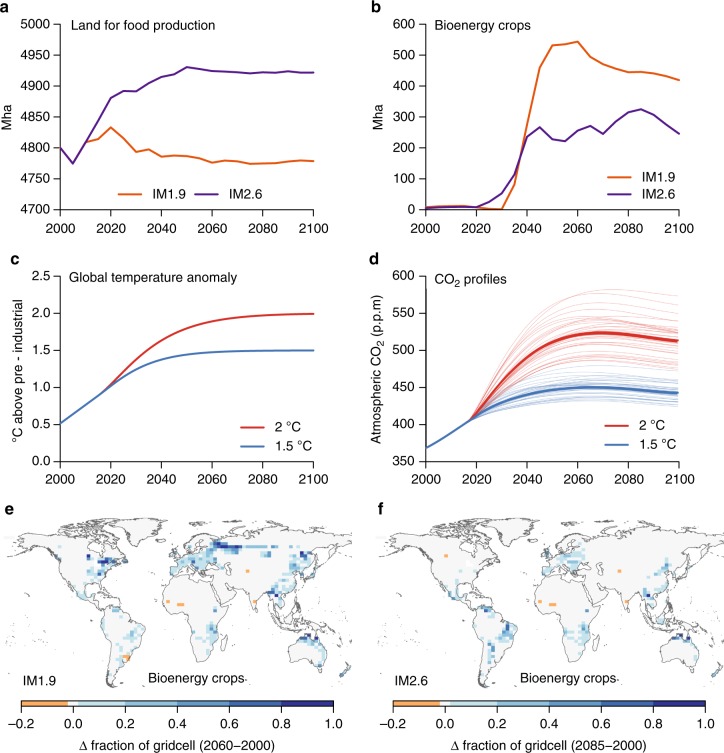
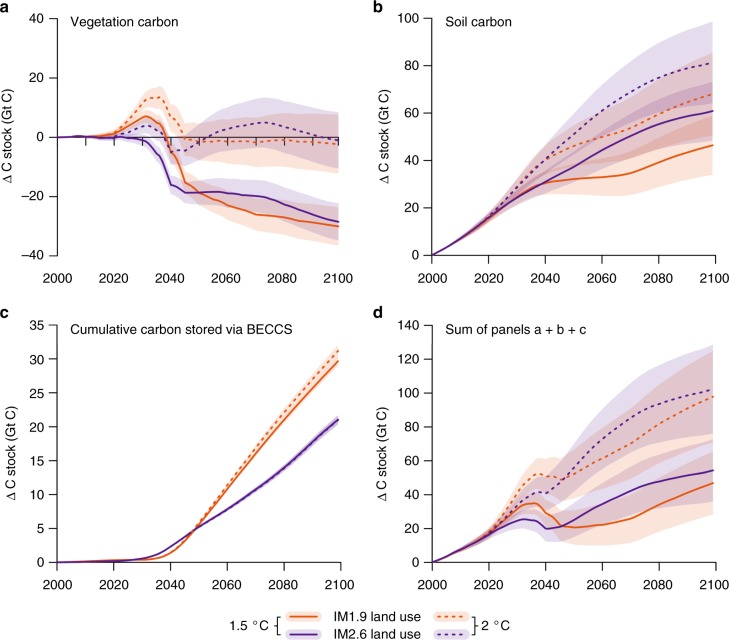
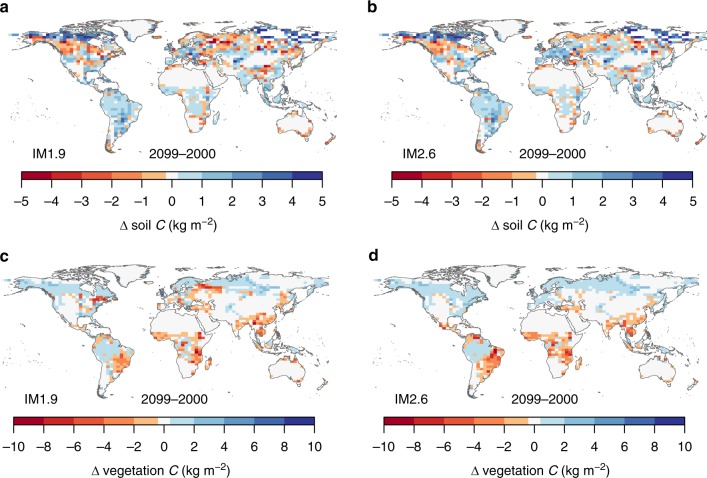
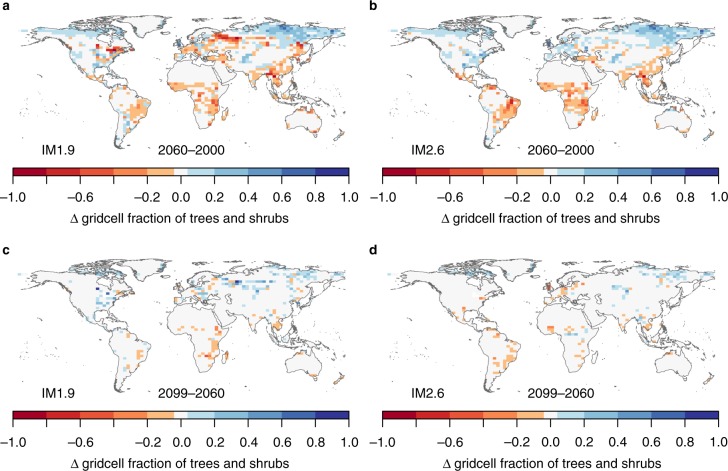
Scenarios that limit global warming to below 2 °C by 2100 assume significant land-use change to support large-scale carbon dioxide (CO 2 ) removal from the atmosphere by afforestation/reforestation, avoided deforestation, and Biomass Energy with Carbon Capture and Storage (BECCS). The more ambitious mitigation scenarios require even greater land area for mitigation and/or earlier adoption of CO 2 removal strategies. Here we show that additional land-use change to meet a 1.5 °C climate change target could result in net losses of carbon from the land. The effectiveness of BECCS strongly depends on several assumptions related to the choice of biomass, the fate of initial above ground biomass, and the fossil-fuel emissions offset in the energy system. Depending on these factors, carbon removed from the atmosphere through BECCS could easily be offset by losses due to land-use change. If BECCS involves replacing high-carbon content ecosystems with crops, then forest-based mitigation could be more efficient for atmospheric CO 2 removal than BECCS.
Overview
The claims and statistics of this paper haven’t been checked yet.
Free: it reads the open-access text and checks the first 5 claims that cite a source we can check. Create a free account to check every claim.
Integrity signals
Registry
Cites
Statistics
Figures
Verification
Claims the paper makes
The claims and statistics of this paper haven’t been checked yet.
Free: it reads the open-access text and checks the first 5 claims that cite a source we can check. Create a free account to check every claim.
Claims other papers make about this one
Each is checked against this paper’s own text: does it say what the citing paper says it does?
The cited source says what the claim attributes to it.
In the citing paper
“For instance, perverse indirect effects-such as land-use change resulting from BECCS 14 -could increase net atmospheric CO 2 concentrations.”
From The technological and economic prospects for CO2 utilization and removal (2019) · cites this paper as [14]
In the citing paper
“Harper et al. discuss several advantages and co-benefits that are associated with forest-based mitigation which include biodiversity, flood control as well as quality improvement for soil, water and air (Harper et al. 2018).”
From Strategies for mitigation of climate change: a review (2020) · cites this paper as Harper et al. 2018
In the citing paper
“Harper et al. argue that the effectiveness of this technology in achieving negative emissions is based on several factors which include previous land cover, the initial carbon gain or loss due to land-use change, bioenergy crop yields, and the amount of harvested carbon that is ultimately sequestered.”
From Strategies for mitigation of climate change: a review (2020) · cites this paper as Harper et al. 2018
In the citing paper
“Their empirical investigation highlights the negative impact of bioenergy carbon capture and storage when dedicated plantations replace carbon-dense ecosystems (Harper et al. 2018).”
From Strategies for mitigation of climate change: a review (2020) · cites this paper as Harper et al. 2018
Self-check
Percentages, sums and reported differences re-computed from the paper’s own numbers.
The self-check needs the paper’s full text.
Citations
Cites
An Overview of CMIP5 and the Experiment Design
Taylor, K. E., Stouffer, R. J., & Meehl, G. A. (2012) · Bulletin of the American Meteorological Society · doi:10.1175/bams-d-11-00094.1 · Cited by 14,052
A large and persistent carbon sink in the world’s forests
Pan, Y., Birdsey, R. A., Fang, J., Houghton, R., Kauppi, P. E., Kurz, W. A., Phillips, O. L., Shvidenko, A., Lewis, S. L., Canadell, J. G., et al. (2011) · Science · doi:10.1126/science.1201609 · Cited by 8,458 · cited 1×
“Globally, forests store 861 ± 66 GtC, with 44% in the top 1 m of soils 31 .”
Self-citationRiahi, K., van Vuuren, D. P., Kriegler, E., Edmonds, J., O’Neill, B. C., Fujimori, S., Bauer, N., Calvin, K., Dellink, R., Fricko, O., et al. (2017) · Global Environmental Change · doi:10.1016/j.gloenvcha.2016.05.009 · Cited by 6,607 · cited 1×
“To date there have been few studies with scenarios that directly evaluate land-based climate mitigation for a pathway targeting eventual temperature rise of only 1.5 °C, and those that do tend to focus on contributions from the energy 12,14 and agriculture 15 – 17 sectors.”
InfluentialSelf-citationGriscom, B. W., Adams, J., Ellis, P. W., Houghton, R. A., Lomax, G., Miteva, D. A., Schlesinger, W. H., Shoch, D., Siikamäki, J. V., Smith, P., et al. (2017) · Proceedings of the National Academy of Sciences · doi:10.1073/pnas.1710465114 · Cited by 3,481 · cited 3×
“More recent studies also fi nd a key role for land-based mitigation in contributing to a 2 °C target 4,5 .”
InfluentialSitch, S., Smith, B., Prentice, I. C., Arneth, A., Bondeau, A., Cramer, W., Kaplan, J. O., Levis, S., Lucht, W., Sykes, M. T., et al. (2003) · Global Change Biology · doi:10.1046/j.1365-2486.2003.00569.x · Cited by 3,238
Self-citationDrought-Induced Reduction in Global Terrestrial Net Primary Production from 2000 Through 2009
Zhao, M., & Running, S. W. (2010) · Science · doi:10.1126/science.1192666 · Cited by 2,674
Improvements of the MODIS terrestrial gross and net primary production global data set
Zhao, M., Heinsch, F. A., Nemani, R. R., & Running, S. W. (2005) · Remote Sensing of Environment · doi:10.1016/j.rse.2004.12.011 · Cited by 1,682 · cited 1×
“The relevant observations are above/below-ground biomass carbon 54 , NPP from MODIS 55,56 , and a global dataset of soil carbon 57 (Table 2).”
The Joint UK Land Environment Simulator (JULES), model description – Part 1: Energy and water fluxes
Best, M. J., Pryor, M., Clark, D. B., Rooney, G. G., Essery, R. L. H., Ménard, C. B., Edwards, J. M., Hendry, M. A., Porson, A., Gedney, N., et al. (2011) · Geoscientific Model Development · doi:10.5194/gmd-4-677-2011 · Cited by 1,545 · cited 1×
“JULES (the Joint UK Land Environment Simulator) is a land surface model that calculates the turbulent exchange of CO 2 , heat, water, and momentum between the land and atmosphere 46,47 .”
BackgroundSelf-citationBiophysical and economic limits to negative CO2 emissions
Smith, P., Davis, S. J., Creutzig, F., Fuss, S., Minx, J., Gabrielle, B., Kato, E., Jackson, R. B., Cowie, A., Kriegler, E., et al. (2016) · Nature Climate Change · doi:10.1038/nclimate2870 · Cited by 1,440 · cited 5×
“There is high agreement from previous literature that 100 EJ yr − 1 of bioenergy could be produced sustainably, and moderate agreement that this can increase to 100 – 300 EJ yr − 19,10 (bioe-nergy currently supplies ~44.5 EJ yr − 1 , but only 3% of that comes from dedicated bioenergy crops 7,10 ).”
BackgroundMethodInfluentialSelf-citationA roadmap for rapid decarbonization
Rockström, J., Gaffney, O., Rogelj, J., Meinshausen, M., Nakicenovic, N., & Schellnhuber, H. J. (2017) · Science · doi:10.1126/science.aah3443 · Cited by 1,225 · cited 1×
“To date there have been few studies with scenarios that directly evaluate land-based climate mitigation for a pathway targeting eventual temperature rise of only 1.5 °C, and those that do tend to focus on contributions from the energy 12,14 and agriculture 15 – 17 sectors.”
Influential
Cited by
The technological and economic prospects for CO2 utilization and removal
Hepburn, C., Adlen, E., Beddington, J., Carter, E. A., Fuss, S., Mac Dowell, N., Minx, J. C., Smith, P., & Williams, C. K. (2019) · Nature · doi:10.1038/s41586-019-1681-6 · Cited by 2,523
Strategies for mitigation of climate change: a review
Fawzy, S., Osman, A. I., Doran, J., & Rooney, D. W. (2020) · Environmental Chemistry Letters · doi:10.1007/s10311-020-01059-w · Cited by 1,522
The human imperative of stabilizing global climate change at 1.5°C
Hoegh-Guldberg, O., Jacob, D., Taylor, M., Guillén Bolaños, T., Bindi, M., Brown, S., Camilloni, I. A., Diedhiou, A., Djalante, R., Ebi, K., et al. (2019) · Science · doi:10.1126/science.aaw6974 · Cited by 1,061
“The current set of national voluntary emission reduction pledges [nationally determined contributions (NDCs)], however,will not achieve the goals of the Paris Agreement (2, 61), particularly when considering the land-use sector (62).”
BackgroundRestoring natural forests is the best way to remove atmospheric carbon
Lewis, S. L., Wheeler, C. E., Mitchard, E. T. A., & Koch, A. (2019) · Nature · doi:10.1038/d41586-019-01026-8 · Cited by 946
Potential and risks of hydrogen-based e-fuels in climate change mitigation
Ueckerdt, F., Bauer, C., Dirnaichner, A., Everall, J., Sacchi, R., & Luderer, G. (2021) · Nature Climate Change · doi:10.1038/s41558-021-01032-7 · Cited by 709
Terrestrial carbon sinks in China and around the world and their contribution to carbon neutrality
Yang, Y., Shi, Y., Sun, W., Chang, J., Zhu, J., Chen, L., Wang, X., Guo, Y., Zhang, H., Yu, L., et al. (2022) · Science China Life Sciences · doi:10.1007/s11427-021-2045-5 · Cited by 447
“…would continue to be a C sink, with the projected values varying from 0.47 to 1.96 Pg C yr−1 under different climate change scenarios and socio-economic pathways from present to the end of this century (Friedlingstein et al., 2014; Green et al., 2019; Harper et al., 2018; Shao et al., 2013).”
BackgroundInfluentialZhou, Y., Chen, M., Tang, Z., & Mei, Z. (2021) · Sustainable Cities and Society · doi:10.1016/j.scs.2020.102701 · Cited by 450
Human impacts on planetary boundaries amplified by Earth system interactions
Lade, S. J., Steffen, W., de Vries, W., Carpenter, S. R., Donges, J. F., Gerten, D., Hoff, H., Newbold, T., Richardson, K., & Rockström, J. (2019) · Nature Sustainability · doi:10.1038/s41893-019-0454-4 · Cited by 431
Post-2020 biodiversity targets need to embrace climate change
Arneth, A., Shin, Y.-J., Leadley, P., Rondinini, C., Bukvareva, E., Kolb, M., Midgley, G. F., Oberdorff, T., Palomo, I., & Saito, O. (2020) · Proceedings of the National Academy of Sciences · doi:10.1073/pnas.2009584117 · Cited by 316
Energy requirements and carbon emissions for a low-carbon energy transition
Slameršak, A., Kallis, G., & O’Neill, D. W. (2022) · Nature Communications · doi:10.1038/s41467-022-33976-5 · Cited by 297
The climate change mitigation potential of bioenergy with carbon capture and storage
Hanssen, S. V., Daioglou, V., Steinmann, Z. J. N., Doelman, J. C., Van Vuuren, D. P., & Huijbregts, M. A. J. (2020) · Nature Climate Change · doi:10.1038/s41558-020-0885-y · Cited by 301
Self-citationAgriculture, Forestry and Other Land Uses (AFOLU)
(2023) · Climate Change 2022 - Mitigation of Climate Change · doi:10.1017/9781009157926.009 · Cited by 249
Tanneberger, F., Appulo, L., Ewert, S., Lakner, S., Ó Brolcháin, N., Peters, J., & Wichtmann, W. (2021) · Advanced Sustainable Systems · doi:10.1002/adsu.202000146 · Cited by 225
Babin, A., Vaneeckhaute, C., & Iliuta, M. C. (2021) · Biomass and Bioenergy · doi:10.1016/j.biombioe.2021.105968 · Cited by 192
The potential of emerging bio-based products to reduce environmental impacts
Zuiderveen, E. A. R., Kuipers, K. J. J., Caldeira, C., Hanssen, S. V., van der Hulst, M. K., de Jonge, M. M. J., Vlysidis, A., van Zelm, R., Sala, S., & Huijbregts, M. A. J. (2023) · Nature Communications · doi:10.1038/s41467-023-43797-9 · Cited by 185
“GHG emissions from land use change (LUC) can typically contribute a large share of the overall GHG footprint of bio-based products 30 and biofuels 30 – 32 .”
BackgroundRobust paths to net greenhouse gas mitigation and negative emissions via advanced biofuels
Field, J. L., Richard, T. L., Smithwick, E. A. H., Cai, H., Laser, M. S., LeBauer, D. S., Long, S. P., Paustian, K., Qin, Z., Sheehan, J. J., et al. (2020) · Proceedings of the National Academy of Sciences · doi:10.1073/pnas.1920877117 · Cited by 173
“In response, a variety of studies (26–28) have called for explicit accounting of ecosystem carbon fluxes as an alternative to the carbon neutrality assumption and for comparison with alternative land uses in order to better understand the true biophysical mitigation potential of bioenergy systems (19, 22, 23, 42, 52).”
Breyer, C., Fasihi, M., & Aghahosseini, A. (2020) · Mitigation and Adaptation Strategies for Global Change · doi:10.1007/s11027-019-9847-y · Cited by 167
Shifting from fossil-based economy to bio-based economy: Status quo, challenges, and prospects
Yang, L., Wang, X.-C., Dai, M., Chen, B., Qiao, Y., Deng, H., Zhang, D., Zhang, Y., Villas Bôas de Almeida, C. M., Chiu, A. S. F., et al. (2021) · Energy · doi:10.1016/j.energy.2021.120533 · Cited by 164
(2022) · Climate Change and Land · doi:10.1017/9781009157988.007 · Cited by 163
The Ecology of Tropical East Asia
Corlett, R. T. (2019) · doi:10.1093/oso/9780198817017.001.0001 · Cited by 164
The water footprint of carbon capture and storage technologies
Rosa, L., Sanchez, D. L., Realmonte, G., Baldocchi, D., & D’Odorico, P. (2020) · Renewable and Sustainable Energy Reviews · doi:10.1016/j.rser.2020.110511 · Cited by 177
“Irrigation will likely be deployed to increase yields in biomass plantations [97] and therefore reduce the large land footprint that would be needed to meet climate targets through BECCS [98].”
BackgroundSolar, wind and logistic substitution in global energy supply to 2050 – Barriers and implications
Lowe, R., & Drummond, P. (2021) · Renewable and Sustainable Energy Reviews · doi:10.1016/j.rser.2021.111720 · Cited by 167
“But this technology comes with a range of potential and hard-to-quantify environmental and social consequences [90], and extracts an energy penalty from the system at successive stages of provision (from the biomass supply chain to the energy required to capture CO 2 ) [91].”
Davin, É. L., Rechid, D., Breil, M., Cardoso, R. M., Coppola, E., Hoffmann, P., Jach, L., Katragkou, E., de Noblet‐Ducoudré, N., Radtke, K., et al. (2020) · Earth System Dynamics · doi:10.5194/esd-11-183-2020 · Cited by 166
Bioenergy for climate change mitigation: Scale and sustainability
Calvin, K., Cowie, A., Berndes, G., Arneth, A., Cherubini, F., Portugal‐Pereira, J., Grassi, G., House, J. I., Johnson, F. X., Popp, A., et al. (2021) · GCB Bioenergy · doi:10.1111/gcbb.12863 · Cited by 185
“Land use for biomass production and for carbon storage have thus been modelled as mutually exclusive mitigation options in IAMs, though some sectoral models have evaluated these practices simultaneously (Baker et al., 2019; Doelman et al., 2020; Harper et al., 2018).”
BackgroundSelf-citationCarton, W. (2019) · Antipode · doi:10.1111/anti.12532 · Cited by 138
“…pertaining to the safe and long-term underground storage of carbon (Fuss et al. 2014), the level of emissions associated with land-use change (Harper et al. 2018), the economics of rapidly scaling up an as yet commercially unviable technology (Smith et al. 2016; Turner et al. 2018), and…”
Potential implications of carbon dioxide removal for the sustainable development goals
Honegger, M., Michaelowa, A., & Roy, J. (2020) · Climate Policy · doi:10.1080/14693062.2020.1843388 · Cited by 156
“Effective rates of reaction under real-world conditions are not fully understood (Hartmann et al., 2013; Strefler et al., 2018).”
BackgroundFajardy, M., Morris, J., Gurgel, A., Herzog, H. J., Dowell, N. M., & Paltsev, S. (2021) · Global Environmental Change · doi:10.1016/j.gloenvcha.2021.102262 · Cited by 425
Land use for bioenergy: Synergies and trade-offs between sustainable development goals
Vera, I., Wicke, B., Lamers, P., Cowie, A., Repo, A., Heukels, B., Zumpf, C. R., Styles, D., Parish, E. S., Cherubini, F., et al. (2022) · Renewable and Sustainable Energy Reviews · doi:10.1016/j.rser.2022.112409 · Cited by 157
Self-citationHow do we best synergize climate mitigation actions to co‐benefit biodiversity?
Smith, P., Arneth, A., Barnes, D. K. A., Ichii, K., Marquet, P. A., Popp, A., Pörtner, H., Rogers, A. D., Scholes, R. J., Strassburg, B., et al. (2022) · Global Change Biology · doi:10.1111/gcb.16056 · Cited by 129
“These results are particularly pertinent in the light of studies that have raised doubts on whether the projected cumulative carbon uptake on land at the massive scales proposed could, in fact, be achieved (Harper et al., 2018; Krause et al., 2017).”
BackgroundWithey, P., Johnston, C. M. T., & Guo, J. (2019) · Renewable and Sustainable Energy Reviews · doi:10.1016/j.rser.2019.109408 · Cited by 122
Temporary nature-based carbon removal can lower peak warming in a well-below 2 °C scenario
Matthews, H. D., Zickfeld, K., Dickau, M., MacIsaac, A., Mathesius, S., Nzotungicimpaye, C.-M., & Luers, A. L. (2022) · Communications Earth & Environment · doi:10.1038/s43247-022-00391-z · Cited by 154
Carbon accounting for negative emissions technologies
Brander, M., Ascui, F., Scott, V., & Tett, S. F. B. (2021) · Climate Policy · doi:10.1080/14693062.2021.1878009 · Cited by 125
Crop models and their use in assessing crop production and food security: A review
Rita, Y. L., Papalexiou, S. M., Li, Y., ELSHORBAGY, A. A., Li, Z., & Schuster‐Wallace, C. J. (2023) · Food and Energy Security · doi:10.1002/fes3.503 · Cited by 136
“Researchers have applied JULES globally and regionally (Table 6) to analyze the impacts of altering land use to expand crop production for food under varied future climatic scenarios, to project the terrestrial carbon cycle of natural landscapes, crops, and grassland, and to simulate yield under seasonal and regional…”
BackgroundInforming Nature‐based Climate Solutions for the United States with the best‐available science
Novick, K. A., Metzger, S., Anderegg, W. R. L., Barnes, M., Cala, D. S., Guan, K., Hemes, K. S., Hollinger, D. Y., Kumar, J., Litvak, M., et al. (2022) · Global Change Biology · doi:10.1111/gcb.16156 · Cited by 100
“Substantial opportunity also exists to fuse flux tower data with complementary biometric observations (e.g. Harris et al., 2021; Smith et al., 2020) which can improve the BCR. Specifically, the development of comprehensive physical “Carbon Observing and Data Analysis Systems” (CODAS, see Figure 7)…”
BackgroundLand-based climate change mitigation potentials within the agenda for sustainable development
Frank, S., Gusti, M. I., Havlík, P., Lauri, P., Fulvio, F. D., Forsell, N., Hasegawa, T., Krisztin, T., Palazzo, A., & Valin, H. (2021) · Environmental Research Letters · doi:10.1088/1748-9326/abc58a · Cited by 119
“Aside the importance of the land use sector for successful climate changemitigation (SDG13) (Grassi et al 2017, Harper et al, 2018, Roe et al 2019), developments in the sector are also closely tied to the achievement of many SDGs (IPCC 2019, IUFRO 2019), in particular SDG2 Zero Hunger, SDG6 Clean…”
BackgroundGeological Net Zero and the need for disaggregated accounting for carbon sinks
Allen, M. R., Frame, D. J., Friedlingstein, P., Gillett, N. P., Grassi, G., Gregory, J. M., Hare, B., House, J. I., Huntingford, C., Jenkins, S., et al. (2024) · Nature · doi:10.1038/s41586-024-08326-8 · Cited by 141
“74) rely more on negative net AFOLU emissions but this reliance may be inconsistent with assumed bioenergy use 75 , other sustainable development goals 76,77 and even international law 78 .”
Self-citationWorkman, M. H. W., Dooley, K., Lomax, G., Maltby, J., & Darch, G. J. C. (2019) · Environmental Science & Policy · doi:10.1016/j.envsci.2019.10.002 · Cited by 97
“The net emissions from such extensive land-use change, soil preparation, and fertilizer required for energy crops could be substantial, potentially resulting in a net increase of emissions from the use of BECCS (Wiltshire and Davies-Barnard, 2015; Harper et al., 2018).”
Deep CCS: Moving Beyond 90% Carbon Dioxide Capture
Dods, M. N., Kim, E. J., Long, J. R., & Weston, S. C. (2021) · Environmental Science & Technology · doi:10.1021/acs.est.0c07390 · Cited by 89
Junginger, M., Mai-Moulin, T., Daioglou, V., Fritsche, U. R., Guisson, R., Hennig, C., Thrän, D., Heinimö, J., Hess, J. R., Lamers, P., et al. (2019) · Biofuels Bioproducts and Biorefining · doi:10.1002/bbb.1993 · Cited by 98
Self-citationLi, J., Jia, K., Wei, X., Xia, M., Chen, Z., Yao, Y., Zhang, X., Jiang, H., Yuan, B., Tao, G., et al. (2022) · International Journal of Applied Earth Observation and Geoinformation · doi:10.1016/j.jag.2022.102743 · Cited by 96
Enhanced food system efficiency is the key to China’s 2060 carbon neutrality target
Ren, M., Huang, C., Wu, Y., Депперманн, А., Frank, S., Havlík, P., Zhu, Y., Fang, C., Ma, X., Liu, Y., et al. (2023) · Nature Food · doi:10.1038/s43016-023-00790-1 · Cited by 93
Adun, H. H., Ampah, J. D., Bamisile, O., & Hu, Y. (2024) · Sustainable Production and Consumption · doi:10.1016/j.spc.2024.01.004 · Cited by 95
Increasing the broad-leaved tree fraction in European forests mitigates hot temperature extremes
Schwaab, J., Davin, É. L., Bebi, P., Duguay-Tetzlaff, A., Waser, L. T., Haeni, M., & Meier, R. (2020) · Scientific Reports · doi:10.1038/s41598-020-71055-1 · Cited by 88
Sampedro, J., Smith, S. J., Arto, I., González‐Eguino, M., Markandya, A., Mulvaney, K. M., Pizarro-Irizar, C., & Dingenen, R. V. (2020) · Environment International · doi:10.1016/j.envint.2020.105513 · Cited by 91
Change, I. P. O. C. (2022) · Cambridge University Press eBooks · doi:10.1017/9781009157988.008 · Cited by 84
Accounting for the climate benefit of temporary carbon storage in nature
Matthews, H. D., Zickfeld, K., Koch, A., & Luers, A. L. (2023) · Nature Communications · doi:10.1038/s41467-023-41242-5 · Cited by 91
“Furthermore, anthropogenic activities could also lead to the loss of carbon that was previously sequestered 15 , for example if deforestation activities are only delayed rather than being avoided in perpetuity or if previous land management practices are reversed.”
Cost-optimal pathways towards net-zero chemicals and plastics based on a circular carbon economy
Zibunas, C., Meys, R., Kätelhön, A., & Bardow, A. (2022) · Computers & Chemical Engineering · doi:10.1016/j.compchemeng.2022.107798 · Cited by 83
Ecosystem restoration programs challenges under climate and land use change
Yang, Q., Liu, G., Casazza, M., Dumontet, S., & Yang, Z. (2021) · The Science of The Total Environment · doi:10.1016/j.scitotenv.2021.150527 · Cited by 77
Effects of global climate mitigation on regional air quality and health
Huang, X., Srikrishnan, V., Lamontagne, J., Keller, K. M., & Peng, W. (2023) · Nature Sustainability · doi:10.1038/s41893-023-01133-5 · Cited by 78
“In addition, the health co-harms identified in our analysis may also be mitigated by imposing land-conservation policies along with a carbon price on energy-sector emissions 48 .”
Assessing SDG Synergies and Trade-Offs of Diverging Paris-Compliant Mitigation Strategies
Moreno, J., de Ven, D.-J. V., Sampedro, J., Gambhir, A., Woods, J., & González‐Eguino, M. (2021) · Global Environmental Change · doi:10.1016/j.gloenvcha.2022.102624 · Cited by 81
Cao, M., Tian, Y., Wu, K., Chen, M., Chen, Y., Hu, X., Sun, Z., Zuo, L., Lin, J., Luo, L., et al. (2023) · Science Bulletin · doi:10.1016/j.scib.2023.03.012 · Cited by 67
Xin, Y., Ning, H., Wang, D., Li, X., Fan, W., Ju, X., Wang, H., Zhang, Y., Yang, Z., Yao, D., et al. (2023) · Nano Research · doi:10.1007/s12274-023-5516-2 · Cited by 68
Shi, K., Shen, J., Wang, L., Ma, M., & Cui, Y. (2020) · Building and Environment · doi:10.1016/j.buildenv.2020.106778 · Cited by 66
The quest for sustainable forest bioenergy: win-win solutions for climate and biodiversity
Giuntoli, J., Barredo, J. I., Avitabile, V., Camia, A., Cazzaniga, N. E., Grassi, G., Jasinevičius, G., Jonsson, R., Luisa, M., Robert, N., et al. (2022) · Renewable and Sustainable Energy Reviews · doi:10.1016/j.rser.2022.112180 · Cited by 77
Negative Emissions: Priorities for Research and Policy Design
Fajardy, M., Patrizio, P., Daggash, H. A., & Dowell, N. M. (2019) · Frontiers in Climate · doi:10.3389/fclim.2019.00006 · Cited by 71
“, 2019; Tanzer and Ramirez, 2019) including land use change emissions in particular (Searchinger et al., 2008; Harper et al., 2018)—are key metrics that need to be carefully assessed.”
BackgroundAfforesting arid land with renewable electricity and desalination to mitigate climate change
Caldera, U., & Breyer, C. (2023) · Nature Sustainability · doi:10.1038/s41893-022-01056-7 · Cited by 64
Quantifying the impacts of land cover change on gross primary productivity globally
Krause, A., Papastefanou, P., Gregor, K., Layritz, L. S., Zang, C., Buras, A., Li, X., Xiao, J., & Rammig, A. (2022) · Scientific Reports · doi:10.1038/s41598-022-23120-0 · Cited by 69
Self-citationMitigation and Development Pathways in the Near to Mid-term
(IPCC), I. P. O. C. C. (2023) · Cambridge University Press eBooks · doi:10.1017/9781009157926.006 · Cited by 80
Sovacool, B. K., Baum, C. M., & Low, S. (2022) · Political Geography · doi:10.1016/j.polgeo.2022.102702 · Cited by 65
Sustainable scale-up of negative emissions technologies and practices: where to focus
Cobo, S., Negri, V., Valente, A., Reiner, D. M., Hamelin, L., Dowell, N. M., & Guillén‐Gosálbez, G. (2023) · Environmental Research Letters · doi:10.1088/1748-9326/acacb3 · Cited by 58
Biochar as multi-purpose sustainable technology: experiences from projects in Tanzania
Hansson, A., Haikola, S., Fridahl, M., Yanda, P. Z., Mabhuye, E. B., & Pauline, N. M. (2020) · Environment Development and Sustainability · doi:10.1007/s10668-020-00809-8 · Cited by 66
High exposure of global tree diversity to human pressure
Guo, W., Serra-Diaz, J. M., Schrodt, F., Eiserhardt, W. L., Maitner, B., Merow, C., Violle, C., Anand, M., Belluau, M., Bruun, H. H., et al. (2022) · Proceedings of the National Academy of Sciences · doi:10.1073/pnas.2026733119 · Cited by 60
What determines the sign of the evapotranspiration response to afforestation in European summer?
Breil, M., Davin, É. L., & Rechid, D. (2021) · Biogeosciences · doi:10.5194/bg-18-1499-2021 · Cited by 52
Ganzenmüller, R., Bultan, S., Winkler, K., Fuchs, R., Zabel, F., & Pongratz, J. (2022) · Environmental Research Letters · doi:10.1088/1748-9326/ac70d8 · Cited by 65
Tang, Z., Wang, Y., Fu, M., & Xue, J. (2023) · Ecological Indicators · doi:10.1016/j.ecolind.2023.111176 · Cited by 57
Cunliffe, A. M., Anderson, K., Boschetti, F., Brazier, R. E., Graham, H. A., Myers‐Smith, I. H., Astor, T., Boer, M. M., Calvo, L., Clark, P. E., et al. (2021) · Remote Sensing in Ecology and Conservation · doi:10.1002/rse2.228 · Cited by 68
“Understanding the roles these ecosystems play in climate change mitigation and sustainable food production requires information on biomass dynamics (Bartsch et al., 2020; Griscom et al., 2017; Harper et al., 2018).”
Self-citationHanssen, S. V., Steinmann, Z. J. N., Daioglou, V., Čengić, M., van Vuuren, D. P., & Huijbregts, M. A. J. (2021) · GCB Bioenergy · doi:10.1111/gcbb.12911 · Cited by 62
Self-citationTrade-offs in land-based carbon removal measures under 1.5 °C and 2 °C futures
Zhao, X., Mignone, B. K., Wise, M., & McJeon, H. C. (2024) · Nature Communications · doi:10.1038/s41467-024-46575-3 · Cited by 78
Human and planetary health implications of negative emissions technologies
Cobo, S., Galán‐Martín, Á., Tulus, V., Huijbregts, M. A. J., & Guillén‐Gosálbez, G. (2022) · Nature Communications · doi:10.1038/s41467-022-30136-7 · Cited by 57
Application of marine microalgae in biodesalination and CO2 biofixation: A review
Esmaeili, A., Moghadam, H. A., & Golzary, A. (2023) · Desalination · doi:10.1016/j.desal.2023.116958 · Cited by 54
“…as below: a. Afforestation and reforestation: Planting trees or replacing lost forests can capture significant amounts of CO 2 from the atmosphere [89]. b. Carbon farming: Certain agricultural practices, such as cover cropping and no-till farming can enhance soil carbon sequestration and…”
Wu, F., & Pfenninger, S. (2023) · Bioresource Technology Reports · doi:10.1016/j.biteb.2023.101430 · Cited by 74
Little evidence of management change in California’s forest offset program
Stapp, J. R., Nolte, C., Potts, M. D., Baumann, M., Haya, B. K., & Butsic, V. (2023) · Communications Earth & Environment · doi:10.1038/s43247-023-00984-2 · Cited by 54
Carbon‐dioxide Removal and Biodiversity: A Threat Identification Framework
Dooley, K., Harrould‐Kolieb, E., & Talberg, A. (2020) · Global Policy · doi:10.1111/1758-5899.12828 · Cited by 61
Impact of bioenergy crop expansion on climate–carbon cycle feedbacks in overshoot scenarios
Melnikova, I., Boucher, O., Cadule, P., Tanaka, K., Gasser, T., Hajima, T., Quilcaille, Y., Shiogama, H., Séférian, R., Tachiiri, K., et al. (2022) · Earth System Dynamics · doi:10.5194/esd-13-779-2022 · Cited by 52
“…may lead to a large amount of carbon emissions from land-use change (LUC), when bioenergy crops are grown over high-carbon content ecosystems such as grassland and forest (Clair et al., 2008; Gibbs et al., 2008; Schueler et al., 2013; Smith et al., 2016; Harper et al., 2018; Whitaker et al., 2018).”
BackgroundSelf-citationThe role of bioenergy for global deep decarbonization: CO2 removal or low‐carbon energy?
Butnar, I., Broad, O., Rodríguez, B. S., & Dodds, P. E. (2019) · GCB Bioenergy · doi:10.1111/gcbb.12666 · Cited by 54
“This is important as these adverse practices could lead to loss of carbon from soil (not considered here) and from the change in overground vegetation which could easily offset the carbon removed by BECCS (Harper et al., 2018), and reduce the mitigation potential of bioenergy replacing fossil fuels.”
BackgroundResultDefining Targets for Adsorbent Material Performance to Enable Viable BECCS Processes
Holmes, H. E., Lively, R. P., & Realff, M. J. (2021) · JACS Au · doi:10.1021/jacsau.0c00127 · Cited by 43
Anthropogenic, Carbon-Reinforced Soil as a Living Engineered Material
Yang, F., Fu, Q., & Antonietti, M. (2023) · Chemical Reviews · doi:10.1021/acs.chemrev.2c00399 · Cited by 51
ElSayed, M., Aghahosseini, A., Caldera, U., & Breyer, C. (2023) · Applied Energy · doi:10.1016/j.apenergy.2023.121216 · Cited by 51
a, Y. C., & a, C. X. (2021) · Journal of Cleaner Production · doi:10.1016/j.jclepro.2020.124448 · Cited by 42
Simmonds, M., Vittorio, A. D., Jahns, C., Johnston, E., Jones, A. D., & Nico, P. (2021) · Environmental Research Letters · doi:10.1088/1748-9326/abcc8d · Cited by 43
Cheng, Y., Huang, M., Lawrence, D. M., Calvin, K., Lombardozzi, D., Sinha, E., Pan, M., & He, X. (2022) · Science Advances · doi:10.1126/sciadv.abm8237 · Cited by 46
Toward quantification of the feasible potential of land-based carbon dioxide removal
Perkins, O., Alexander, P., Arneth, A., Brown, C., Millington, J. D. A., & Rounsevell, M. (2023) · One Earth · doi:10.1016/j.oneear.2023.11.011 · Cited by 45
Assessment of carbon sequestration potential of tropical tree species for urban forestry in India
Behera, S. K., Mishra, S. K., Sahu, N., Manika, N., Singh, S. N., Anto, S., Kumar, R., Husain, R., Verma, A. K., & Pandey, N. (2022) · Ecological Engineering · doi:10.1016/j.ecoleng.2022.106692 · Cited by 53
Projected water usage and land-use-change emissions from biomass production (2015–2050)
Drews, M., Larsen, M. A. D., & Balderrama, J. G. P. (2020) · Energy Strategy Reviews · doi:10.1016/j.esr.2020.100487 · Cited by 42
Wang, J., Zheng, Y., He, S., Yan, J., Zeng, X., Li, S., Tian, Z., Lei, L., Chen, Y., & Deng, S. (2023) · Journal of Cleaner Production · doi:10.1016/j.jclepro.2023.139839 · Cited by 50
Below the canopy: global trends in forest vertebrate populations and their drivers
Green, E. J., McRae, L., Freeman, R., Harfoot, M., Hill, S. L. L., Baldwin-Cantello, W., & Simonson, W. D. (2020) · Proceedings of the Royal Society B Biological Sciences · doi:10.1098/rspb.2020.0533 · Cited by 43
Hansson, A., Fridahl, M., Haikola, S., Yanda, P., Pauline, N., & Mabhuye, E. (2020) · Environment, Development and Sustainability · doi:10.1007/s10668-019-00517-y · Cited by 35
Freshwater requirements of large-scale bioenergy plantations for limiting global warming to 1.5 °C
Stenzel, F., Gerten, D., Werner, C., & Jägermeyr, J. (2019) · Environmental Research Letters · doi:10.1088/1748-9326/ab2b4b · Cited by 42
Peng, Y., Wang, Q., & Bai, L. (2020) · Ecological Indicators · doi:10.1016/j.ecolind.2020.106066 · Cited by 35
Shan, W., Jin, X., Yang, X., Gu, Z., Han, B., Li, H., & Zhou, Y. (2020) · Journal of Environmental Management · doi:10.1016/j.jenvman.2020.110557 · Cited by 36
Bayer, A. D., Fuchs, R., Mey, R., Krause, A., Verburg, P. H., Anthoni, P. M., & Arneth, A. (2021) · Earth System Dynamics · doi:10.5194/esd-12-327-2021 · Cited by 38
Self-citationPlanting trees to combat global warming
Osman, A. I., Fawzy, S., Lichtfouse, É., & Rooney, D. W. (2023) · Environmental Chemistry Letters · doi:10.1007/s10311-023-01598-y · Cited by 43
Comber, A., & Harris, P. (2022) · Land · doi:10.3390/land11030399 · Cited by 34
“Yet MAUP’s implications for any landscape or land use evaluation framework are profound: it results in divergent evaluations [7], mis-specification of ES trade-offs and synergies [17] and the mislocation of hot spots [19] compounding an already difficult task of identifying locally appropriate land use scenarios [20].”
BackgroundGlobal cooling induced by biophysical effects of bioenergy crop cultivation
Wang, J., Li, W., Ciais, P., Li, L., Chang, J., Goll, D. S., Gasser, T., Huang, X., Devaraju, N., & Boucher, O. (2021) · Nature Communications · doi:10.1038/s41467-021-27520-0 · Cited by 38
Self-citationThe March of the Human FootprintPreprint
Sanderson, E. W., Fisher, K., Robinson, N., Sampson, D., Duncan, A., & Royte, L. (2022) · EcoEvoRxiv · doi:10.32942/osf.io/d7rh6 · Cited by 50
Assessment of technologies and economics for carbon dioxide removal from a portfolio perspective
Mühlbauer, A., Keiner, D., Gerhards, C., Caldera, U., Sterner, M., & Breyer, C. (2025) · International journal of greenhouse gas control · doi:10.1016/j.ijggc.2024.104297 · Cited by 39
Littleton, E. W., Harper, A., Vaughan, N. E., Oliver, R. J., Rojas, M. C. D., & Lenton, T. M. (2020) · Geoscientific model development · doi:10.5194/gmd-13-1123-2020 · Cited by 35
Self-citationKrause, A., Knoke, T., & Rammig, A. (2020) · GCB Bioenergy · doi:10.1111/gcbb.12675 · Cited by 41
“…that CCS contributes most to the overall carbon mitigation of BECCS (emphasizing the importance of the technology and the assumed capture efficiency), energy substitution is also important but was neglected in previous studies (Harper et al., 2018; Humpenoder et al., 2014; Krause et al., 2018).”
BackgroundInfluentialSelf-citation3 Carbon Unicorns and Fossil Futures: Whose Emission Reduction Pathways Is the IPCC Performing?
Carton, W. (2020) · Rutgers University Press eBooks · doi:10.36019/9781978809390-003 · Cited by 44
Land Use and Agriculture: Pitfalls and Precautions on the Road to Net Zero
Reay, D. (2020) · Frontiers in Climate · doi:10.3389/fclim.2020.00004 · Cited by 40
Metadata
- Authors
- Harper, A. B., Powell, T., Cox, P. M., House, J., Huntingford, C., Lenton, T. M., Sitch, S., Burke, E., Chadburn, S. E., Collins, W. J., Comyn-Platt, E., Daioglou, V., Doelman, J. C., Hayman, G., Robertson, E., van Vuuren, D., Wiltshire, A., Webber, C. P., Bastos, A., Boysen, L., Ciais, P., Devaraju, N., Jain, A. K., Krause, A., Poulter, B., & Shu, S.
- Affiliations
- University of Exeter (GB)
- University of Bristol (GB)
- UK Centre for Ecology & Hydrology (GB)
- Met Office (GB)
- University of Leeds (GB)
- University of Reading (GB)
- Netherlands Environmental Assessment Agency (NL)
- Centre National de la Recherche Scientifique (FR)
- Max Planck Institute for Meteorology (DE)
- University of Illinois Urbana-Champaign (US)
- Karlsruhe Institute of Technology (DE)
- Corresponding author
- Harper, Anna B.
- ORCID
- Harper, Anna B.
- Powell, Tom
- Cox, Peter M.
- House, Joanna
- Huntingford, Chris
- Lenton, Timothy M.
- Sitch, Stephen
- Burke, Eleanor
- Chadburn, Sarah E.
- Collins, William J.
- Comyn-Platt, Edward
- Daioglou, Vassilis
- Doelman, Jonathan C.
- Hayman, Garry
- Robertson, Eddy
- van Vuuren, Detlef
- Wiltshire, Andy
- Webber, Christopher P.
- Bastos, Ana
- Boysen, Lena
- Ciais, Philippe
- Devaraju, Narayanappa
- Jain, Atul K.
- Krause, Andreas
- Poulter, Ben
- Shu, Shijie
- Venue
- Nature Communications
- Published
- 2018-08-07
- Volume
- 9
- Issue
- 1
- Pages
- 2938-2938
- ISSN
- 2041-1723 (ISSN-L)
- PMC
- PMC6081380
- OpenAlex
- W2883729084
- Semantic Scholar
- f72e2489fb5f859e2056ba7c1041a07a7de5363f
- Cited by
- 335
- References
- 72
- Citations by year
- 2026: 13 · 2025: 42 · 2024: 48 · 2023: 63 · 2022: 58 · 2021: 38 · 2020: 40 · 2019: 32 · 2018: 1
- FWCI
- 42.19
- Type
- journal article
- Language
- en
- Open access
- gold
- doi.org
- Licence
- cc-by
- creativecommons.org/licenses/by/4.0 (tdm)
- creativecommons.org/licenses/by/4.0 (vor)
- Locations
- Nature Communications (publishedVersion, cc-by)
- Europe PMC (PubMed Central) (publishedVersion, cc-by)
- PubMed Central (publishedVersion, cc-by)
- PubMed (publishedVersion)
- NERC Open Research Archive (Natural Environment Research Council) (acceptedVersion)
- Repository KITopen (Karlsruhe Institute of Technology) (submittedVersion, cc-by)
- CentAUR (University of Reading) (submittedVersion)
- HAL (submittedVersion, other-oa)
- RePEc: Research Papers in Economics (submittedVersion)
- DOAJ (DOAJ: Directory of Open Access Journals) (submittedVersion)
- DOAJ (DOAJ: Directory of Open Access Journals) (submittedVersion, cc-by-sa)
- Utrecht University Repository (Utrecht University) (submittedVersion, other-oa)
- Open access LMU (Ludwid Maxmilian's Universitat Munchen) (submittedVersion)
- eScholarship (California Digital Library) (submittedVersion)
- Max Planck Digital Library (submittedVersion)
- Open Research Exeter (University of Exeter) (submittedVersion, cc-by)
- MPG.PuRe (Max Planck Society) (submittedVersion, other-oa)
- Bristol Research (University of Bristol) (submittedVersion, cc-by)
- Explore Bristol Research (submittedVersion, cc-by)
- KITopen (cc-by)
- Funders
- Engineering and Physical Sciences Research Council (EP/N030141/1)
- Natural Environment Research Council (NE/P014941/1, NE/P019951/1, NE/P015050/1, NE/P014909/1)
- EC | Seventh Framework Programme (GA603542)
- EC | Horizon 2020 (641816)
- National Science Foundation (NSF-AGS-12-43071)
- Topics
- Social Sciences › Economics, Econometrics and Finance › Economics and Econometrics › Climate Change Policy and Economics
- Life Sciences › Agricultural and Biological Sciences › Forestry › Forest Management and Policy
- Physical Sciences › Environmental Science › Global and Planetary Change › Land Use and Ecosystem Services
- Keywords
- land use emissions, land-based climate mitigation, bioenergy with carbon capture and storage, afforestation and reforestation, avoided deforestation, carbon dioxide removal, 1.5°C target, Paris Agreement, biomass energy
About these checks
Registry, retraction, Cites and statistics results are computed, not judged, with one exception: a printed reference that no index lists is read once by a model before it counts as a citation error. Claims are extracted by a model and kept only when their quote appears verbatim in the text; each cited source is then checked, with a model’s help, for whether it says what the claim relies on. Those verdicts can be wrong — read the claim’s quote and the cited source before relying on one.
Statistics and arithmetic are recomputed, not judged.
Confidence bands are shown only for fields calibrated on our annotated test set. None is calibrated yet, so no band is shown.
What counts as a claim ›How we measure confidence ›How we check this ›
Are you an author, or do you see a problem with this page? Request a review
Data sources
Bibliographic data: Semantic Scholar, OpenAlex, Crossref.
Contains information from the Semantic Scholar Academic Graph Datasets, made available under the ODC Attribution License (ODC-BY 1.0).
Semantic Scholar’s data is described in: Kinney, R., et al. (2023). The Semantic Scholar Open Data Platform. arXiv:2301.10140.
