

A critical view on transgenerational epigenetic inheritance in humans
Open accessThe DOI matches its Crossref record; 23 of the 23 references it cites were found in a registry or an index; 18 of the 41 sources its claims cite were checked for support.
Abstract
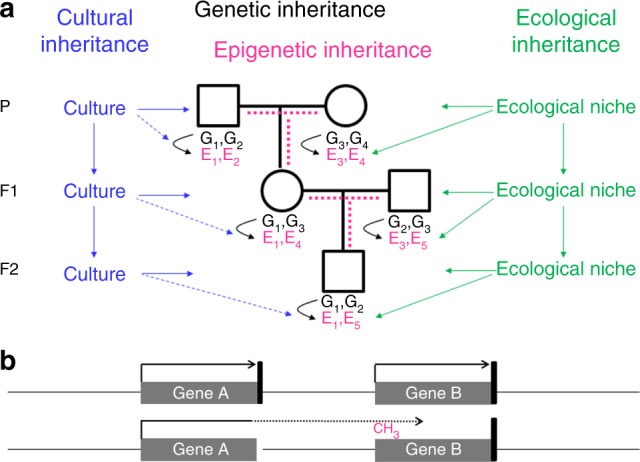
Transgenerational epigenetic inheritance refers to the transmission of epigenetic information through the germline. While it has been observed in plants, nematodes and fruit flies, its occurrence in mammals—and humans in particular—is the matter of controversial debate, mostly because the study of transgenerational epigenetic inheritance is confounded by genetic, ecological and cultural inheritance. In this comment, I discuss the phenomenon of transgenerational epigenetic inheritance and the difficulty of providing conclusive proof for it in experimental and observational studies.
Overview
CoChat Summary
TL;DR
Transgenerational epigenetic inheritance is well documented in plants, nematodes and fruit flies, but in mammals—and humans especially—claims are confounded by genetic, ecological and cultural inheritance. Horsthemke argues that apparent cases of inherited epimutations are usually secondary epimutations caused by nearby genetic variants, and that conclusive proof in humans is not yet available.
Key findings
- Reported co-segregation of abnormal DNA methylation ("epimutations") with rare disease across generations is typically a *secondary* epimutation: a mutation in a neighbouring gene removes a transcription termination signal, causing read-through transcription that methylates and silences the gene under investigation; if the mutated gene is expressed in the germline, the epimutation also appears in germ cells and can be mistaken for transgenerational inheritance.
- Most mouse and rat studies of transgenerational responses (endocrine disruptors, high fat diet, obesity, diabetes, undernourishment, trauma) are technically sound but "the majority still await independent confirmation"; work on endocrine disruptors and high fat diet effects on the sperm methylome has been challenged by others.
- Human epidemiological links between grandparental food supply and grandchild health, and an indirect study of Prader–Willi syndrome imprinting defects, await independent replication; most familial segregation of abnormal methylation has turned out to be caused by an underlying genetic variant.
- The Dutch hunger winter increase in cardiovascular and metabolic disease in F1 adults is attributed to direct in utero exposure ("fetal programming"/intergenerational inheritance), not germline epigenetic transmission.
- Almost all experimental mouse models and human observations concern deleterious traits (congenital malformations, anxiety, glucose intolerance, obesity, cardiovascular disease, cancer, premature death), with hepatic wound healing as an exception—suggesting possible reporting bias and casting doubt on an adaptive role.
Methods
- This is a comment/perspective piece, not an empirical study: the author states "In this comment, I discuss the phenomenon of transgenerational epigenetic inheritance and the difficulty of providing conclusive proof for it in experimental and observational studies."
- It synthesizes published experimental (mouse/rat) and human epidemiological and molecular literature, and proposes a "roadmap" for proving transgenerational epigenetic inheritance: rule out genetic, ecological and cultural inheritance (inbred strains, controlled environments, F3 or F2 generations, IVF, embryo transfer, foster mothers); identify the responsible epigenetic factor in purified germ cells; and demonstrate causality by removing or adding the factor.
- No new data, sample, or statistical analysis is reported.
Limitations
- Stated by the paper: in humans it is impossible to rule out ecological and cultural inheritance, though genetic effects "should and can be excluded"; even after whole-genome sequencing, "if you don't find anything, you still cannot be 100% sure that a genetic variant does not exist."
- Stated by the paper: germ cell preparations may be contaminated with somatic cells or somatic DNA, and female germ cells are scarce or unavailable; manipulating DNA methylation and histone modifications is difficult, and such experiments "can hardly be done in humans"—so the proposed proof may currently be "too much to ask for."
- Evident from the text: the argument is explicitly an opinion piece ("in my opinion," "For now, I remain skeptical") without primary data, and its conclusions rest on the author's reading of a literature that the paper itself notes is largely unreplicated.
Model-written summary. Check it against the paper before relying on it.
Integrity signals
Registry
Cites
Statistics
Figures
Verification
Claims the paper makes
14 Valid · 1 Not valid · 9 Not checked · 22 Own results and interpretations
The cited sources support only part of this claim — read each source’s verdict below.
In the paper
“While most of published studies are technically sound, the majority still await independent confirmation; studies on transgenerational effects of endocrine disruptors and of high fat diet on the DNA methylome have recently been challenged by others10,11.”
§ A critical view on transgenerational epigenetic inheritance in humans > Evidence for transgenerational epigenetic inheritance
What the sources say
- Supportedcites [10] Iqbal K Deleterious effects of endocrine disruptors are corrected in the mammalian germline by epigenome reprogramming Genome Biol. 2015 16 59 10.1186/s13059-015-0619-z 25853433 PMC4376074 source
The Results section (‘Testing for transgenerational inheritance of aberrant imprinting’; page unavailable) says the authors’ findings do not support transgenerational inheritance of endocrine-disruptor-triggered epigenetic aberrations. The Conclusions likewise report that DNA-methylation changes in exposed germ cells were not found in the next generation. This supports the endocrine-disruptor part attributed to this paper; the high-fat-diet part is associated with the sentence’s other citation. (LLM, conf=0.91)
- Partly supportedcites [11] Shea JM Genetic and epigenetic variation, but not diet, shape the sperm methylome Dev. Cell 2015 35 750 758 10.1016/j.devcel.2015.11.024 26702833 PMC4691283 sourceExperimental — accuracy not yet measured
The Discussion (page unavailable) reports no consistent effect of high-fat diet on the mouse sperm methylome, supporting the claim that dietary methylation effects have been challenged. Our copy does not address endocrine disruptors, and the Results caution that differences in strain and regimen mean its findings do not necessarily dispute a prior dietary report. (LLM, conf=0.88)
plain- Asserted: passes — The authors put it forward as true.
- Checkable: passes — It can be checked against evidence.
- Load-bearing: passes — The paper’s conclusions depend on it.
- Based: passes — The paper gives a reason why it holds.
- Supported
Every source the paper cites for this claim was checked and supports it.
In the paper
“Wei et al.8, for example, found that streptozotocin-induced prediabetes in male mice affected DNA methylation patterns in sperm as well as pancreatic islets of F1 and F2 offspring.”
§ A critical view on transgenerational epigenetic inheritance in humans > Evidence for transgenerational epigenetic inheritance
What the sources say
- Supportedcites [8] Wei Y Paternally induced transgenerational inheritance of susceptibility to diabetes in mammals Proc. Natl. Acad. Sci. USA 2014 111 1873 1878 10.1073/pnas.1321195111 24449870 PMC3918818 source
The Significance/Results section 'Paternal Prediabetes Alters Overall Methylation Patterns in Sperm' states that global cytosine methylation profiles were altered in sperm of prediabetic males (thousands of differentially methylated genes overlapping with islets), and 'Paternal Prediabetes Affects Overall Methylation Patterns in Pancreatic Islets of Offspring' reports MeDIP-Seq changes in F1 islets (Pik3r1, Pik3ca, Ptpn1). The F2 section (p. Fig. 5 B,C) shows the same islet regions and genes methylated in F2 offspring, so both F1 and F2 islet methylation are covered. One wording nuance: the prediabetes model (Methods) was HFD-fed males given a subdiabetogenic dose of STZ (100 mg/kg), and Fig. 6 shows STZ alone did not alter sperm methylation, so the effect is attributed to the prediabetic physiology rather than STZ itself. (LLM, conf=0.86)
plainstates a cause- Asserted: passes — The authors put it forward as true.
- Checkable: passes — It can be checked against evidence.
- Load-bearing: unclear — It is unclear whether the paper’s conclusions depend on it.
- Based: passes — The paper gives a reason why it holds.
- Supported
Every source the paper cites for this claim was checked and supports it.
In the paper
“Gapp et al.9 found that traumatic stress in early life altered behavioral and metabolic processes in the progeny and that injection of sperm RNAs from traumatized males into fertilized wild-type oocytes reproduced the alterations in the resulting offspring.”
§ A critical view on transgenerational epigenetic inheritance in humans > Evidence for transgenerational epigenetic inheritance
What the sources say
- Supportedcites [9] Gapp K Implication of sperm RNAs in transgenerational inheritance of the effects of early trauma in mice Nat. Neurosci. 2014 17 667 669 10.1038/nn.3695 24728267 PMC4333222 source
The Abstract states that sperm RNAs from males exposed to early-life traumatic stress were injected into fertilized wild-type oocytes and reproduced behavioral and metabolic alterations in the resulting offspring. The Methods section, “RNAs injection in fertilized oocytes,” describes the injection procedure. (LLM, conf=0.95)
plainstates a cause- Asserted: passes — The authors put it forward as true.
- Checkable: passes — It can be checked against evidence.
- Load-bearing: unclear — It is unclear whether the paper’s conclusions depend on it.
- Based: passes — The paper gives a reason why it holds.
- Supported
Every source the paper cites for this claim was checked and supports it.
In the paper
“Further, the chromatin is extensively reshaped during germ cell differentiation as well as during the development of totipotent cells after fertilization, even though some loci appear to escape epigenetic reprogramming in the germline3.”
§ A critical view on transgenerational epigenetic inheritance in humans > Defining transgenerational epigenetic inheritance
What the sources say
- Supportedcites [3] Tang WW A unique gene regulatory network resets the human germline epigenome for development Cell 2015 161 1453 1467 10.1016/j.cell.2015.04.053 26046444 PMC4459712 source
The section “DNA Demethylation Escapees as Candidates for Transgenerational Epigenetic Inheritance” (p. 12) identifies regions that evade genome-wide DNA demethylation in human primordial germ cells. The Discussion (p. 14) likewise reports loci that remain methylated despite extensive germline reprogramming. (LLM, conf=0.94)
hedged- Asserted: passes — The authors put it forward as true.
- Checkable: passes — It can be checked against evidence.
- Load-bearing: unclear — It is unclear whether the paper’s conclusions depend on it.
- Based: passes — The paper gives a reason why it holds.
- Supported
The sources with a verdict support this claim; the rest weren’t checked yet, have no full text we could read, or their verdicts aren’t rated yet.
In the paper
“In the past 10 years, numerous reports on transgenerational responses to environmental or metabolic factors in mice and rats have been published (for a comprehensive review, see refs. 4–7).”
§ A critical view on transgenerational epigenetic inheritance in humans > Evidence for transgenerational epigenetic inheritance
What the sources say
- Supportedcites [4] Chen Q Yan W Duan E Epigenetic inheritance of acquired traits through sperm RNAs and sperm RNA modifications Nat. Rev. Genet. 2016 17 733 743 10.1038/nrg.2016.106 27694809 PMC5441558 source
The 'Acquired inheritance through sperm' section describes findings from independent laboratories on inherited responses to diet, stress and other environmental exposures, including examples in mice and rats. Its references list numerous relevant reports from 2010–2016, supporting the citing sentence's broad description of the preceding decade. (LLM, conf=0.90)
- Supportedcites [5] Heard E Martienssen RA Transgenerational epigenetic inheritance: myths and mechanisms Cell 2014 157 95 109 10.1016/j.cell.2014.02.045 24679529 PMC4020004 source
The review’s “Implications for human health” section describes numerous recent rodent studies of inherited responses to dietary and metabolic conditions. Its “Epigenetic variation and the adaptive inheritance of acquired traits” section also discusses a 2005 report of multigenerational effects after fungicide exposure in rats. The review cautions that reported effects are not necessarily evidence of true transgenerational epigenetic inheritance, but the citing sentence claims only that such reports were published. (LLM, conf=0.91)
- Not checked — no full text of the sourcecites [6] Miska EA Ferguson-Smith AC Transgenerational inheritance: models and mechanisms of non-DNA sequence-based inheritance Science 2016 354 59 63 10.1126/science.aaf4945 27846492 source
- Supportedcites [7] Illum LRH Bak ST Lund S Nielsen AL DNA methylation in epigenetic inheritance of metabolic diseases through the male germ line J. Mol. Endocrinol. 2018 60 R39 R56 10.1530/JME-17-0189 29203518 source
The section on rodent studies (page not provided) describes several studies of inherited responses to dietary and metabolic exposures in rats and mice, including reports from 2010, 2011 and 2016. It also discusses transmission across multiple generations, supporting the citing sentence’s broad description of recent reports. (LLM, conf=0.90)
plain- Asserted: passes — The authors put it forward as true.
- Checkable: passes — It can be checked against evidence.
- Load-bearing: unclear — It is unclear whether the paper’s conclusions depend on it.
- Based: passes — The paper gives a reason why it holds.
- Supported
20 more claims · 4 with their cited sources checked
Create a free account to see all 46 claims and to verify the 3 references still open.
- Probably not a substantial claim. 14
- It may state two separate claims as one. 11
Claims other papers make about this one
Each is checked against this paper’s own text: does it say what the citing paper says it does?
The cited source says what the claim attributes to it.
In the citing paper
“Although a controversial subject in mammalian biology, studies indicate that this direct epigenetic inheritance occurs in some animal models.41,42”
From The role of epigenetics in psychological resilience (2021) · cites this paper as [42]
The check wasn’t confident either way, so it gives no verdict — never disputed.
In the citing paper
“Historically, these terms have been ambiguously defined (247, 251, 252).”
From Epigenetic Modifications in Stress Response Genes Associated With Childhood Trauma (2019) · cites this paper as [252]
Experimental — accuracy not yet measured
Citations
Cites
Landon, M., Saam, J., Brown, K. L., Moyes, K., Evans, B., & Wenstrup, R. (2015) · Oncology · doi:10.1159/000430097 · Cited by 1,939
Transgenerational epigenetic inheritance: myths and mechanisms
Heard, E., & Martienssen, R. A. (2014) · Cell · doi:10.1016/j.cell.2014.02.045 · Cited by 1,864
Implication of sperm RNAs in transgenerational inheritance of the effects of early trauma in mice
Gapp, K., Jawaid, A., Sarkies, P., Bohacek, J., Pelczar, P., Prados, J., Farinelli, L., Miska, E., & Mansuy, I. M. (2014) · Nature Neuroscience · doi:10.1038/nn.3695 · Cited by 1,306
Editing DNA Methylation in the Mammalian Genome
Liu, X. S., Wu, H., Ji, X., Stelzer, Y., Wu, X., Czauderna, S., Shu, J., Dadon, D., Young, R. A., & Jaenisch, R. (2016) · Cell · doi:10.1016/j.cell.2016.08.056 · Cited by 1,224
Beyond DNA: integrating inclusive inheritance into an extended theory of evolution
Danchin, É., Charmantier, A., Champagne, F. A., Mesoudi, A., Pujol, B., & Blanchet, S. (2011) · Nature Reviews Genetics · doi:10.1038/nrg3028 · Cited by 860
Ligtenberg, M. J. L., Kuiper, R. P., Chan, T. L., Goossens, M., Hebeda, K. M., Voorendt, M., Lee, T. Y. H., Bodmer, D., Hoenselaar, E., Hendriks-Cornelissen, S. J. B., et al. (2009) · Nature Genetics · doi:10.1038/ng.283 · Cited by 818
A Unique Gene Regulatory Network Resets the Human Germline Epigenome for Development
Tang, W. W. C., Dietmann, S., Irie, N., Leitch, H. G., Floros, V. I., Bradshaw, C. R., Hackett, J. A., Chinnery, P. F., & Surani, M. A. (2015) · Cell · doi:10.1016/j.cell.2015.04.053 · Cited by 670
Epigenetic inheritance of acquired traits through sperm RNAs and sperm RNA modifications
Chen, Q., Yan, W., & Duan, E. (2016) · Nature Reviews Genetics · doi:10.1038/nrg.2016.106 · Cited by 576
Tufarelli, C., Stanley, J. A. S., Garrick, D., Sharpe, J. A., Ayyub, H., Wood, W. G., & Higgs, D. R. (2003) · Nature Genetics · doi:10.1038/ng1157 · Cited by 547
Transgenerational response to nutrition, early life circumstances and longevity
Kaati, G., Bygren, L. O., Pembrey, M., & Sjöström, M. (2007) · European Journal of Human Genetics · doi:10.1038/sj.ejhg.5201832 · Cited by 500
Cited by
Items 101–200 of 343
Polycomb protein SCML2 mediates paternal epigenetic inheritance through sperm chromatin
Sakashita, A., Ooga, M., Otsuka, K., Maezawa, S., Takeuchi, C., Wakayama, S., Wakayama, T., & Namekawa, S. H. (2023) · Nucleic Acids Research · doi:10.1093/nar/gkad479 · Cited by 22
Transgenerational epigenetic inheritance increases trait variation but is not adaptive
Shahmohamadloo, R. S., Fryxell, J. M., & Rudman, S. M. (2025) · Evolution · doi:10.1093/evolut/qpaf050 · Cited by 19
Evolving Role of RING1 and YY1 Binding Protein in the Regulation of Germ-Cell-Specific Transcription
Bajusz, I., Henry, S., Sutus, E., Kovács, G. E., & Pirity, M. K. (2019) · Genes · doi:10.3390/genes10110941 · Cited by 22
Exploring the Conceptual Challenges of Integrating Epigenetics in Secondary-Level Science Teaching
Zudaire, I., & Fraile, M. N. (2020) · Research in Science Education · doi:10.1007/s11165-019-09899-5 · Cited by 23
van Calker, D., & Serchov, T. (2021) · Neuroscience & Biobehavioral Reviews · doi:10.1016/j.neubiorev.2021.03.019 · Cited by 23
Richardson, T. G., Richmond, R. C., North, T.-L., Hemani, G., Smith, G. D., Sharp, G. C., & Relton, C. L. (2019) · International Journal of Epidemiology · doi:10.1093/ije/dyz119 · Cited by 17
Laine, V. N., Verschuuren, M., van Oers, K., Espín, S., Sánchez‐Virosta, P., Eeva, T., & Ruuskanen, S. (2021) · Environmental Science & Technology · doi:10.1021/acs.est.0c08621 · Cited by 22
Saito, T., Whatmore, P., Taylor, J. F., Fernandes, J. M. O., Adam, A., Tocher, D. R., Espe, M., & Skjærven, K. H. (2022) · BMC Genomics · doi:10.1186/s12864-022-08348-4 · Cited by 20
Calling the question: what is mammalian transgenerational epigenetic inheritance?
Khatib, H., Townsend, J. A., Konkel, M. A., Conidi, G., & Hasselkus, J. A. (2024) · Epigenetics · doi:10.1080/15592294.2024.2333586 · Cited by 25
Epigenetic Therapies in Triple-Negative Breast Cancer: Concepts, Visions, and Challenges
Lehmann, U. (2024) · Cancers · doi:10.3390/cancers16122164 · Cited by 19
Epigenetic variation in light of population genetic practice
Mueller, S. A., Meröndun, J., Lečić, S., & Wolf, J. B. W. (2025) · Nature Communications · doi:10.1038/s41467-025-55989-6 · Cited by 27
Robles, P., Turner, A., Zuco, G., Adams, S., Paganopolou, P., Winton, M., Hill, B., Kache, V., Bateson, C., & Pires‐daSilva, A. (2021) · BMC Biology · doi:10.1186/s12915-021-01032-1 · Cited by 16
“Omics” in traumatic brain injury: novel approaches to a complex disease
Hamdeh, S. A., Tenovuo, O. S., Peul, W. C., & Marklund, N. (2021) · Acta Neurochirurgica · doi:10.1007/s00701-021-04928-7 · Cited by 22
Epigenetic Aspects and Prospects in Autoimmune Hepatitis
Czaja, A. J. (2022) · Frontiers in Immunology · doi:10.3389/fimmu.2022.921765 · Cited by 18
Metzger, D. C. H., Earhart, M. L., & Schulte, P. M. (2024) · Integrative and Comparative Biology · doi:10.1093/icb/icae019 · Cited by 20
Making headway towards understanding how epigenetic mechanisms contribute to early-life effects
Vukić, M., Wu, H., & Daxinger, L. (2019) · Philosophical Transactions of the Royal Society B Biological Sciences · doi:10.1098/rstb.2018.0126 · Cited by 16
Serrano, A. R. D., Hughes, K. A., & Rodd, F. H. (2021) · Scientific Reports · doi:10.1038/s41598-021-83448-x · Cited by 21
de la Rocha, C., Rodríguez‐Ríos, D., Ramírez-Chávez, E., Molina‐Torres, J., Flores-Sierra, J. D. J., Castellanos, L. M. O., Galván-Chía, J. P., Vázquez-Sánchez, A., Zaina, S., & Lund, G. (2022) · Cells · doi:10.3390/cells11061057 · Cited by 17
Allendorf, F. W., Funk, W. C., Aitken, S. N., Byrne, M. M., & Luikart, G. (2022) · Oxford University Press eBooks · doi:10.1093/oso/9780198856566.003.0001 · Cited by 19
The Rise of Autism: Risk and Resistance in the Age of Diagnosis
Russell, G. (2020) · Routledge eBooks · doi:10.4324/9780429285912 · Cited by 34
Schafte, K., & Bruna, S. P. (2023) · Epigenetics · doi:10.1080/15592294.2023.2260218 · Cited by 24
Exploring the impact of environmental factors on male reproductive health through epigenetics
Zhang, Y., Song, J., & Sun, Z. (2025) · Reproductive Toxicology · doi:10.1016/j.reprotox.2025.108832 · Cited by 18
The expanding repertoire of hereditary information carriers
Zhang, Y., & Chen, Q. (2019) · Development · doi:10.1242/dev.170902 · Cited by 16
García‐Domínguez, X., Diretto, G., Peñaranda, D. S., Frusciante, S., García‐Carpintero, V., Cañizares, J., Vicente, J. S., & Marco‐Jiménez, F. (2021) · International Journal of Molecular Sciences · doi:10.3390/ijms22189716 · Cited by 17
Transgenerational inheritance and its modulation by environmental cues
Verdikt, R., Armstrong, A. A., & Allard, P. (2022) · Current topics in developmental biology/Current Topics in Developmental Biology · doi:10.1016/bs.ctdb.2022.10.002 · Cited by 15
Transgenerational Epigenetic and Phenotypic Inheritance Across Five Generations in Sheep
Kızılaslan, M., Braz, C. U., Townsend, J. A., Taylor, T., Crenshaw, T. D., & Khatib, H. (2025) · International Journal of Molecular Sciences · doi:10.3390/ijms26136412 · Cited by 16
Transgenerational epigenetic inheritance in farm animals: How substantial is the evidence?
Khatib, H. (2021) · Livestock Science · doi:10.1016/j.livsci.2021.104557 · Cited by 16
Heritable epigenetic variation facilitates long-term maintenance of epigenetic and genetic variation
Webster, A. K., & Phillips, P. C. (2023) · G3 Genes Genomes Genetics · doi:10.1093/g3journal/jkad287 · Cited by 16
Exposure to childhood maltreatment is associated with specific epigenetic patterns in sperm
Tuulari, J. J., Bourgery, M., Iversen, J. F., Koefoed, T. G., Ahonen, A., Ahmedani, A., Kataja, E.-L., Karlsson, L., Barrès, R., Karlsson, H., et al. (2025) · Molecular Psychiatry · doi:10.1038/s41380-024-02872-3 · Cited by 27
Environmental enrichment: an experiment in biosocial intervention
Chiapperino, L. (2019) · BioSocieties · doi:10.1057/s41292-019-00181-5 · Cited by 17
“…which are often specific to particular species or genomic loci” (Burgess 2019, p. 3; see also Bošković and Rando 2018 and Perez and Lehner 2019). spurred much controversy by postulating the possibility of a transgenerational transmission of epigenetic changes (Champagne 2010; Horsthemke 2018).”
Role of Epigenetics in Type 2 Diabetes and Obesity
Capparelli, R., & Iannelli, D. (2021) · Biomedicines · doi:10.3390/biomedicines9080977 · Cited by 15
Nutrition and DNA Methylation: How Dietary Methyl Donors Affect Reproduction and Aging
Dusa, F. C., Vellai, T., & Sipos, M. (2025) · Dietetics · doi:10.3390/dietetics4030030 · Cited by 15
Assessing the epigenetic risks of assisted reproductive technologies: a way forward
Zacchini, F., Sampino, S., Stankiewicz, A. M., Haaf, T., & Ptak, G. (2019) · The International Journal of Developmental Biology · doi:10.1387/ijdb.180402gp · Cited by 12
Loss of CpG island immunity to DNA methylation induced by mutation
Horsthemke, B., & Bird, A. P. (2023) · Epigenetics & Chromatin · doi:10.1186/s13072-023-00488-5 · Cited by 12
Self-citationTeltumbade, M. R., Bhalla, A., & Sharma, A. (2019) · Genomics · doi:10.1016/j.ygeno.2019.04.008 · Cited by 15
Smith, D. A., Jheeta, S., Fuentes, H. V., & Palacios-Pérez, M. (2022) · Life · doi:10.3390/life12081197 · Cited by 15
Epigenetic inheritance mediates phenotypic diversity in natural populationsPreprint
Shahzad, Z., Moore, J. D., Choi, J., Cassin-Ross, G., Rouached, H., & Zilberman, D. (2021) · bioRxiv (Cold Spring Harbor Laboratory) · doi:10.1101/2021.03.15.435374 · Cited by 12
Zhu, J., Guo, S., Cao, J., Zhao, H., Ma, Y., Zou, H., Ju, H., Liu, Z., & Li, J. (2024) · International Journal of Molecular Sciences · doi:10.3390/ijms252010996 · Cited by 16
Kukla‐Bartoszek, M., & Głombik, K. (2024) · International Journal of Molecular Sciences · doi:10.3390/ijms252212043 · Cited by 18
The Epigenome in Atherosclerosis
Costantino, S., & Paneni, F. (2020) · Handbook of experimental pharmacology · doi:10.1007/164_2020_422 · Cited by 16
Epigenetic impact of endocrine-disrupting chemicals on atherosclerosis
Lin, T.-A., & Zhou, C. (2025) · Essays in Biochemistry · doi:10.1042/ebc20253022 · Cited by 14
An evolutionary perspective of lifespan and epigenetic inheritance
Auley, M. T. M. (2023) · Experimental Gerontology · doi:10.1016/j.exger.2023.112256 · Cited by 13
Drosophila melanogaster: a promising model system for epigenetic research
Saravanan, K. A., Kumar, H., Chhotaray, S., Preethi, A. L., Talokar, A. J., Natarajan, A., Parida, S., Bhushan, B., & Panigrahi, M. (2019) · Biological Rhythm Research · doi:10.1080/09291016.2019.1685216 · Cited by 11
Small Populations and Genetic Drift
Allendorf, F. W., Funk, W. C., Aitken, S. N., Byrne, M. M., & Luikart, G. (2022) · Oxford University Press eBooks · doi:10.1093/oso/9780198856566.003.0006 · Cited by 15
Offspring performance is well buffered against stress experienced by ancestors
Pei, Y., Forstmeier, W., & Kempenaers, B. (2020) · Evolution · doi:10.1111/evo.14026 · Cited by 10
The Future of Epigenetics: Emerging Technologies and Clinical Applications
Iyer, K. A., Tenchov, R., Sasso, J. M., Thite, T., Deng, Y., & Zhou, Q. A. (2026) · ACS Pharmacology & Translational Science · doi:10.1021/acsptsci.5c00729 · Cited by 15
Bellingham, M., Evans, N. P., Lea, R. G., Padmanabhan, V., & Sinclair, K. D. (2024) · Annual Review of Animal Biosciences · doi:10.1146/annurev-animal-111523-102259 · Cited by 14
Neurodegeneration as Ecosystem Failure: A New Paradigm for Prevention and Treatment
Velikic, G. S., Šupić, G., Marić, D., Puletić, M., Kos, M. O., Vojvodić, D., & Maric, D. M. (2025) · International Journal of Molecular Sciences · doi:10.3390/ijms262211207 · Cited by 14
Increased CpG methylation at the CDH1 locus in inflamed ileal mucosa of patients with Crohn disease
de Ponthaud, C., Abdalla, S., Belot, M., Shao, X., Penna, C., Brouquet, A., & Bougneres, P. F. (2024) · Clinical Epigenetics · doi:10.1186/s13148-024-01631-z · Cited by 12
Transgenerational Epigenetic Inheritance of Cardiovascular Diseases: A Network Medicine Perspective
Benincasa, G., Napoli, C., & DeMeo, D. L. (2024) · Maternal and Child Health Journal · doi:10.1007/s10995-023-03886-z · Cited by 11
Vegan parents and children: zero parental compromise
Alvaro, C. (2020) · Ethics and Education · doi:10.1080/17449642.2020.1822610 · Cited by 12
Pastore, A., Badolati, N., Manfrevola, F., Sagliocchi, S., Laurenzi, V., Musto, G., Porreca, V., Murolo, M., Chioccarelli, T., Ciampaglia, R., et al. (2024) · npj Metabolic Health and Disease · doi:10.1038/s44324-024-00011-8 · Cited by 10
Nerlich, B., Stelmach, A., & Ennis, C. A. (2019) · Social Science Information · doi:10.1177/0539018419887110 · Cited by 9
Caputo, V., Strafella, C., Termine, A., Fabrizio, C., Ruffo, P., Cusumano, A., Giardina, E., Ricci, F., & Cascella, R. (2021) · European Journal of Ophthalmology · doi:10.1177/11206721211028054 · Cited by 8
Zhang, J., Kay, M., Park, M. H., Meruvu, S., Powell, C. A., & Choudhury, M. (2022) · International Journal of Obesity · doi:10.1038/s41366-022-01075-6 · Cited by 12
Smith, D. A., Palacios-Pérez, M., & Jheeta, S. (2022) · Life · doi:10.3390/life12020287 · Cited by 9
Role of Chromatin Modifying Complexes and Therapeutic Opportunities in Bladder Cancer
Meghani, K. A., Cooley, L. F., Piunti, A., & Meeks, J. J. (2022) · Bladder Cancer · doi:10.3233/blc-211609 · Cited by 9
Ciliate research: From myth to trendsetting science
Plattner, H. (2022) · Journal of Eukaryotic Microbiology · doi:10.1111/jeu.12926 · Cited by 9
Transgenerational Epigenetic DNA Methylation Editing and Human Disease
Tompkins, J. D. (2023) · Biomolecules · doi:10.3390/biom13121684 · Cited by 15
Inheritance of Stress Responses via Small Non-Coding RNAs in Invertebrates and Mammals
Ow, M. C., & Hall, S. E. (2023) · Epigenomes · doi:10.3390/epigenomes8010001 · Cited by 10
Auswirkungen und Folgen von Kindesmisshandlung und Vernachlässigung
Brüning, T., Mohr, C., Clauß, D., Ramsauer, T., & Simon-Stolz, L. (2019) · Monatsschrift Kinderheilkunde · doi:10.1007/s00112-019-0762-9 · Cited by 9
Molecular and Behavioral Effects of Infant Maltreatment across Generations in Rhesus MonkeysPreprint
Klengel, T., Morin, E. L., Howell, B., Bramlett, S. N., Guzman, D., Meyer, J. S., Ressler, K. J., & Sánchez, M. M. (2019) · bioRxiv (Cold Spring Harbor Laboratory) · doi:10.1101/791152 · Cited by 8
Kok, J. (2022) · The History of the Family · doi:10.1080/1081602x.2022.2067579 · Cited by 10
The Small Non-Coding RNA Profile of Human and Mouse Sperm
Yap, Y. S., Patrizio, P., Cimmino, L., Sdrimas, K., & Telonis, A. G. (2025) · Non-Coding RNA · doi:10.3390/ncrna11010015 · Cited by 10
DNA Methylation Reflects Cis‐Genetic Differentiation Across the European Crow Hybrid Zone
Meröndun, J., & Wolf, J. B. W. (2025) · Molecular Ecology · doi:10.1111/mec.70026 · Cited by 11
Brain care bundles applied over each and successive generations
Scher, M. S., Ludington, S. M., Smith, V. A., Klemming, S., & Pilon, B. (2024) · Seminars in Fetal and Neonatal Medicine · doi:10.1016/j.siny.2024.101558 · Cited by 9
The (not so) Controversial Role of DNA Methylation in Epigenetic Inheritance Across Generations
Irmler, M., Kaspar, D., de Angelis, M. H., & Beckers, J. (2020) · Springer eBooks · doi:10.1007/978-3-030-35213-4_10 · Cited by 7
Díez-Villanueva, A., Martín, B., Moratalla-Navarro, F., Morón-Duran, F. D., Galván‐Femenía, I., Obón‐Santacana, M., Carreras, A., de Cid, R., Peinado, M. A., & Moreno, V. R. (2023) · Scientific Reports · doi:10.1038/s41598-023-48517-3 · Cited by 8
Jiang, C., Lai, P.-H., Yang, P.-C., Lien, C.-J., Chu, H.-P. C., Lin, J.-D., Lin, S., Yu, I., & Lin, F. (2025) · Nature Metabolism · doi:10.1038/s42255-025-01378-8 · Cited by 7
Evolutionary Implications of Environmental Toxicant Exposure
Bolognesi, G., Bacalini, M. G., Pirazzini, C., Garagnani, P., & Giuliani, C. (2022) · Biomedicines · doi:10.3390/biomedicines10123090 · Cited by 9
A Cross-Generational Methylomic Signature of Infant Maltreatment in Newborn Rhesus Macaques
Lardenoije, R., Smulders, M. N. C. A., Morin, E. L., Howell, B., Guzman, D., Meyer, J. S., Ressler, K. J., Sánchez, M., & Klengel, T. (2025) · Biological Psychiatry · doi:10.1016/j.biopsych.2025.02.901 · Cited by 6
Microbiome–Gut Dissociation: Investigating the Origins of Obesity
Smith, D. G., & Jheeta, S. (2021) · Gastrointestinal Disorders · doi:10.3390/gidisord3040017 · Cited by 7
Orton, S. M., Millis, K., & Choate, P. W. (2023) · International Journal of Environmental Research and Public Health · doi:10.3390/ijerph20176706 · Cited by 8
Bunnik, E. M., & Bolt, I. L. (2021) · Epigenetics Insights · doi:10.1177/25168657211063618 · Cited by 6
Missing Causality and Heritability of Autoimmune Hepatitis
Czaja, A. J. (2022) · Digestive Diseases and Sciences · doi:10.1007/s10620-022-07728-w · Cited by 7
Pastore, A., Badolati, N., Manfrevola, F., Sagliocchi, S., Laurenzi, V., Musto, G., Porreca, V., Murolo, M., Chioccarelli, T., Ciampaglia, R., et al. (2024) · Frontiers in Cell and Developmental Biology · doi:10.3389/fcell.2024.1450580 · Cited by 5
Svendsen, A. J., Mengel‐From, J., Junker, P., Dalgård, C., Smith, G. D., Relton, C. L., Elliott, H. R., Kyvik, K. O., Lindegaard, H., Christensen, A. F., et al. (2025) · Frontiers in Immunology · doi:10.3389/fimmu.2025.1488161 · Cited by 8
Reynolds, V. L., Butler, P., Abernathy, M. M., Aschenbrenner, L. M., Best, D. D., Blank, J., Crosby, M. E., Custer, L. L., Escobar, P. A., Kolaja, K. L., et al. (2020) · Regulatory Toxicology and Pharmacology · doi:10.1016/j.yrtph.2020.104746 · Cited by 7
Lessons for aging from Werner syndrome epigenetics
Martin, G. M., Poot, M., & Haaf, T. (2020) · Aging · doi:10.18632/aging.102829 · Cited by 6
Intricacies of aetiology in intrafamilial degenerative disease
Lowry, J., Ryan, É. B., Esengul, Y. T., Siddique, N., & Siddique, T. (2020) · Brain Communications · doi:10.1093/braincomms/fcaa120 · Cited by 5
Soley, F. G. (2021) · Proceedings of the National Academy of Sciences · doi:10.1073/pnas.2108608118 · Cited by 5
Burgio, E., Porru, A., Pettini, C., Pettini, M., Vaglini, I., Gemignani, A., Fratini, F., & Lucangeli, D. (2026) · Current Issues in Molecular Biology · doi:10.3390/cimb48020163 · Cited by 5
Allendorf, F. W., Funk, W. C., Aitken, S. N., Byrne, M. M., & Luikart, G. (2022) · Oxford University Press eBooks · doi:10.1093/oso/9780198856566.003.0019 · Cited by 6
Auboeuf, D. (2021) · Progress in Biophysics and Molecular Biology · doi:10.1016/j.pbiomolbio.2021.05.008 · Cited by 5
Allendorf, F. W., Funk, W. C., Aitken, S. N., Byrne, M. M., & Luikart, G. (2022) · Oxford University Press eBooks · doi:10.1093/oso/9780198856566.003.0020 · Cited by 9
Klepinowski, T., Pala, B., Pettersson, S. D., Łątka, K., Taterra, D., Ogilvy, C. S., & Sagan, L. M. (2024) · Neurosurgical Review · doi:10.1007/s10143-024-02381-5 · Cited by 4
Nutrition and Epigenetic Modifications During Pregnancy
Maugeri, A., Barchitta, M., Lio, R. M. S., Favara, G., & Agodi, A. (2024) · Epigenetics and human health · doi:10.1007/978-3-031-54215-2_5 · Cited by 6
The problem of evolutionary directionality 50 years following the works of Sergei Meyen
Melkikh, A. V. (2024) · Biosystems · doi:10.1016/j.biosystems.2024.105383 · Cited by 5
Epigenetic and transgenerational transmission of polycystic ovary syndrome
Stener‐Victorin, E. (2020) · Current Opinion in Endocrine and Metabolic Research · doi:10.1016/j.coemr.2020.03.005 · Cited by 6
Jazayeri, M., Alizadeh, A., Gilani, M. A. S., Eftekhari‐Yazdi, P., Sharafi, M., & Shahverdi, A. (2022) · PubMed Central · doi:10.22074/ijfs.2021.534003.1158 · Cited by 4
Environmental Influence on Epigenetics
Resendiz, M., Watkins, D. S., Öztürk, N. C., & Zhou, F. (2022) · Elsevier eBooks · doi:10.1016/b978-0-323-91909-8.00036-0 · Cited by 7
Genetics and epigenetics of food addiction
Davis, C. A., & Bonder, R. (2019) · Elsevier eBooks · doi:10.1016/b978-0-12-816207-1.00010-x · Cited by 5
Atakan, H. B., Hof, K. S., Cornaglia, M., Auwerx, J. H., & Gijs, M. A. M. (2019) · Scientific Reports · doi:10.1038/s41598-019-55979-x · Cited by 4
Aging, DNA Information, and Authorship: Medawar, Schrödinger, and Samuel Butler
Forsdyke, D. R. (2020) · Biological Theory · doi:10.1007/s13752-019-00340-8 · Cited by 4
Female Body Language: Cutting, Scarring, and Becoming in HBO’s Sharp Objects
Harper, M. P. (2020) · Springer eBooks · doi:10.1007/978-3-030-56100-0_9 · Cited by 4
Epigenetic Resources: Gaps in Aquatic Animal Germplasm Research
Li, F., Zhang, J., Cheng, X., Cui, X., Sun, J., & Liu, Q. (2024) · Reviews in Aquaculture · doi:10.1111/raq.12994 · Cited by 3
The Myth of Ethnicity: Understanding the Relationship Between Genotype, Phenotype, and Ethnotype
Schmotter, C. H. (2025) · Ethnopolitics · doi:10.1080/17449057.2025.2464506 · Cited by 4
Priming enhances tolerance of Fusarium graminearum to triazole
Wang, L., Wang, H., Liu, Z., Chen, Y., & Ma, Z. (2025) · Pesticide Biochemistry and Physiology · doi:10.1016/j.pestbp.2025.106333 · Cited by 6
Epigenetics of neural networks in neurocognitive conditions: A review
Stolberg, V. B. (2025) · Brain Network Disorders · doi:10.1016/j.bnd.2025.08.001 · Cited by 3
Male obesity causes adipose mitochondrial dysfunction in F1 mouse progeny via a let-7-DICER axis
Huang, C. H., Park, J.-H., Altıntaş, A., Stanić, N., de Leon, K. K., Skog, S., Kalogeropoulos, P., Topel, H., Madsen, T., Zanner, S., et al. (2026) · Nature Communications · doi:10.1038/s41467-026-69686-5 · Cited by 5
Metadata
- Authors
- Horsthemke, B.
- Affiliations
- Essen University Hospital (DE)
- Corresponding author
- Horsthemke, Bernhard
- ORCID
- Horsthemke, Bernhard
- Venue
- Nature Communications
- Published
- 2018-07-30
- Volume
- 9
- Issue
- 1
- Pages
- 2973-2973
- ISSN
- 2041-1723 (ISSN-L)
- PMC
- PMC6065375
- OpenAlex
- W2884974825
- Semantic Scholar
- f8abde990a4267705895c337b70baf7b96c6d374
- Cited by
- 349
- References
- 23
- Citations by year
- 2026: 30 · 2025: 38 · 2024: 40 · 2023: 29 · 2022: 76 · 2021: 45 · 2020: 49 · 2019: 38 · 2018: 4
- FWCI
- 12.09
- Type
- journal article
- Language
- en
- Open access
- gold
- doi.org
- Licence
- cc-by
- creativecommons.org/licenses/by/4.0 (tdm)
- creativecommons.org/licenses/by/4.0 (vor)
- Locations
- Nature Communications (publishedVersion, cc-by)
- Europe PMC (PubMed Central) (publishedVersion, other-oa)
- PubMed Central (publishedVersion, cc-by)
- PubMed (publishedVersion)
- RePEc: Research Papers in Economics (submittedVersion)
- DOAJ (DOAJ: Directory of Open Access Journals) (submittedVersion)
- DOAJ (DOAJ: Directory of Open Access Journals) (submittedVersion, cc-by-sa)
- Funders
- Deutsche Forschungsgemeinschaft
- Topics
- Life Sciences › Biochemistry, Genetics and Molecular Biology › Molecular Biology › Epigenetics and DNA Methylation
- Health Sciences › Medicine › Pediatrics, Perinatology and Child Health › Birth, Development, and Health
- Life Sciences › Biochemistry, Genetics and Molecular Biology › Genetics › Genetic Syndromes and Imprinting
- Keywords
- transgenerational epigenetic inheritance, germline transmission, epigenetic information, ecological inheritance, cultural transmission
- MeSH terms
- Animals, Culture, Drosophila, Ecology, Biological Evolution, Germ Cells, Humans, Models, Genetic, Mutation, Nematoda, Phenotype, Plants, DNA Methylation, Proteome, Databases, Genetic, Inheritance Patterns, Proteomics, Epigenesis, Genetic, Gene-Environment Interaction
About these checks
Registry, retraction, Cites and statistics results are computed, not judged, with one exception: a printed reference that no index lists is read once by a model before it counts as a citation error. Claims are extracted by a model and kept only when their quote appears verbatim in the text; each cited source is then checked, with a model’s help, for whether it says what the claim relies on. Those verdicts can be wrong — read the claim’s quote and the cited source before relying on one.
The claim verdicts this report counts are experimental: their accuracy is not yet measured.
A language model drew the claims from the paper on 2026-10-10, under version 3 of the claim definition (model deepseek-v4.1-flash, prompt extract-v3).
A second model labelled each claim on 2026-10-10 (model jev-1.13-20260917, definition revision gold-guideline-v0.2).
Cited sources are checked with a language model’s help (gpt-6-sol and qwen3.8-omni-flash).
Statistics and arithmetic are recomputed, not judged.
Confidence bands are shown only for fields calibrated on our annotated test set. None is calibrated yet, so no band is shown.
What counts as a claim ›How we measure confidence ›How we check this ›
Are you an author, or do you see a problem with this page? Request a review
Data sources
Bibliographic data: Semantic Scholar, OpenAlex, Crossref.
Contains information from the Semantic Scholar Academic Graph Datasets, made available under the ODC Attribution License (ODC-BY 1.0).
Semantic Scholar’s data is described in: Kinney, R., et al. (2023). The Semantic Scholar Open Data Platform. arXiv:2301.10140.
