

Regulation of striatal cells and goal-directed behavior by cerebellar outputs
Open accessThe DOI matches its Crossref record; 62 of the 62 references it cites were found in a registry or an index.
Abstract
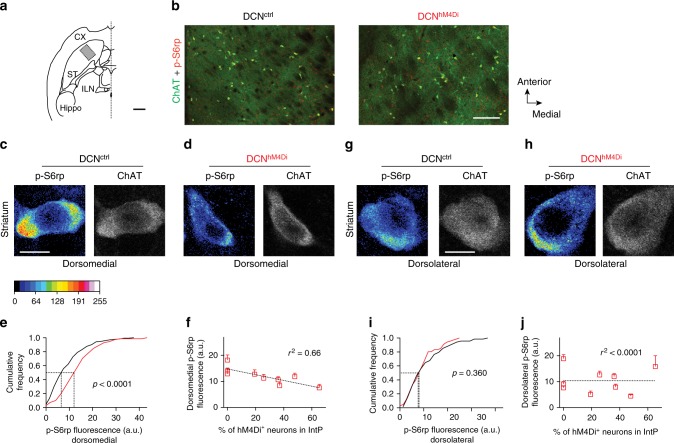
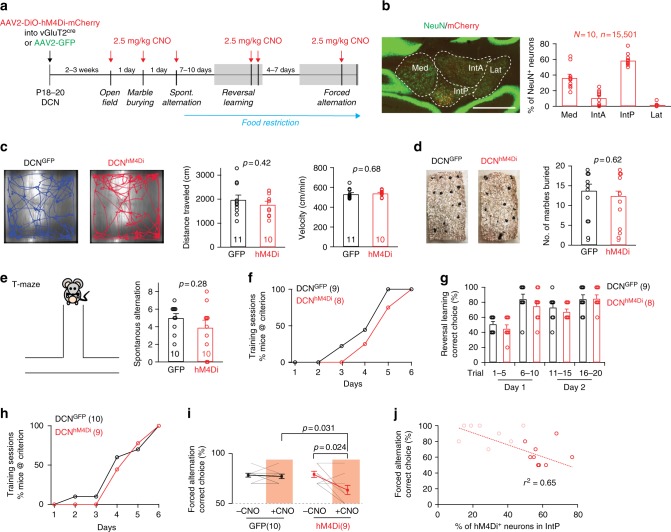
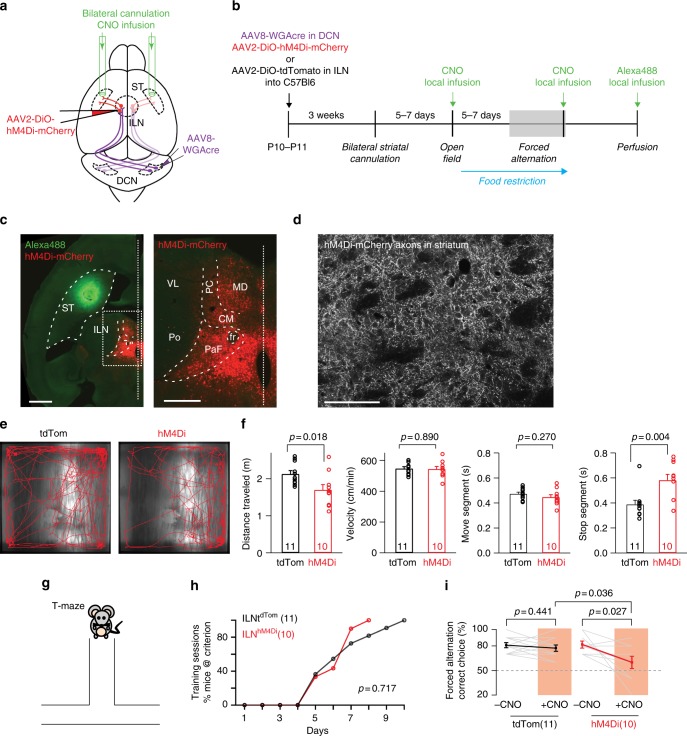
The cerebellum integrates descending motor commands and sensory information to generate predictions and detect errors during ongoing behaviors. Cerebellar computation has been proposed to control motor but also non-motor behaviors, including reward expectation and cognitive flexibility. However, the organization and functional contribution of cerebellar output channels are incompletely understood. Here, we elaborate the cell-type specificity of a broad connectivity matrix from the deep cerebellar nuclei (DCN) to the dorsal striatum in mice. Cerebello-striatal connections arise from all deep cerebellar subnuclei and are relayed through intralaminar thalamic nuclei (ILN). In the dorsal striatum, these connections target medium spiny neurons, but also ChAT-positive interneurons, a class of tonically active interneurons implicated in shifting and updating behavioral strategies. Chemogenetic silencing of cerebello-striatal connectivity modifies function of striatal ChAT-positive interneurons. We propose that cerebello-striatal connections relay cerebellar computation to striatal circuits for goal-directed behaviors.
Overview
The claims and statistics of this paper haven’t been checked yet.
Free: it reads the open-access text and checks the first 5 claims that cite a source we can check. Create a free account to check every claim.
Integrity signals
Registry
Cites
Statistics
Figures
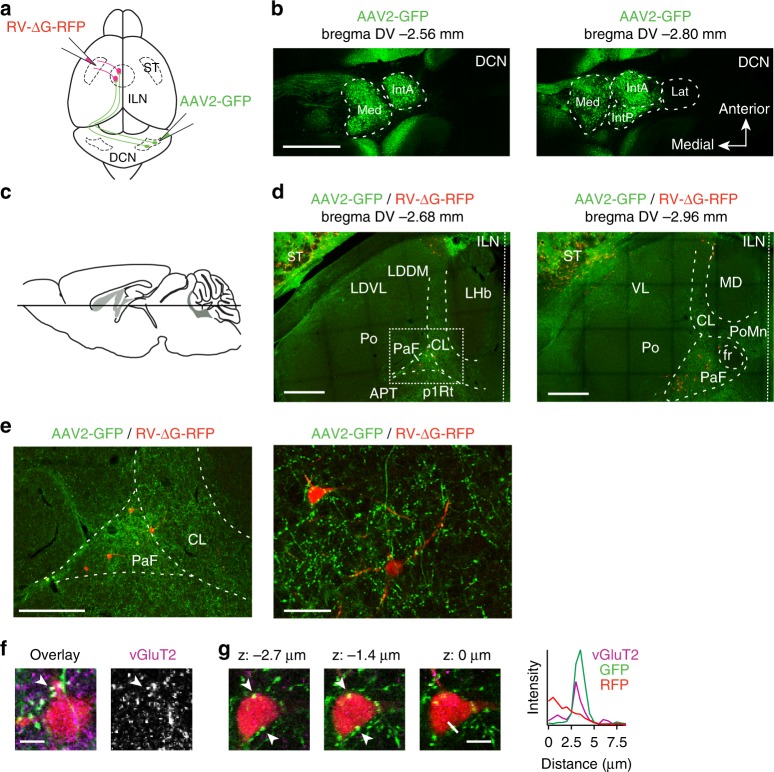
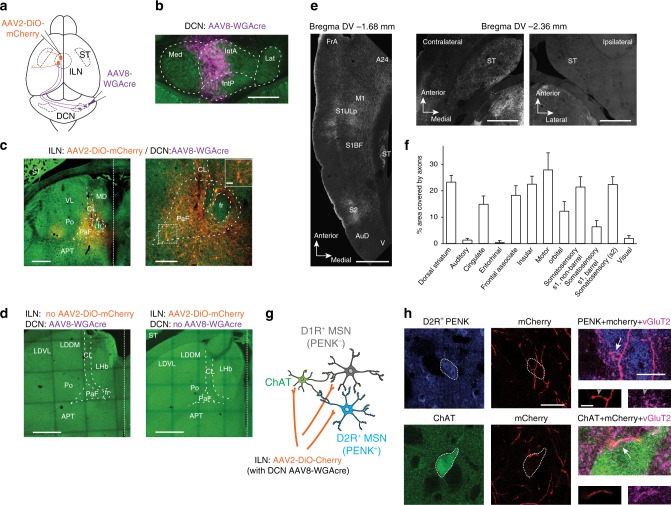
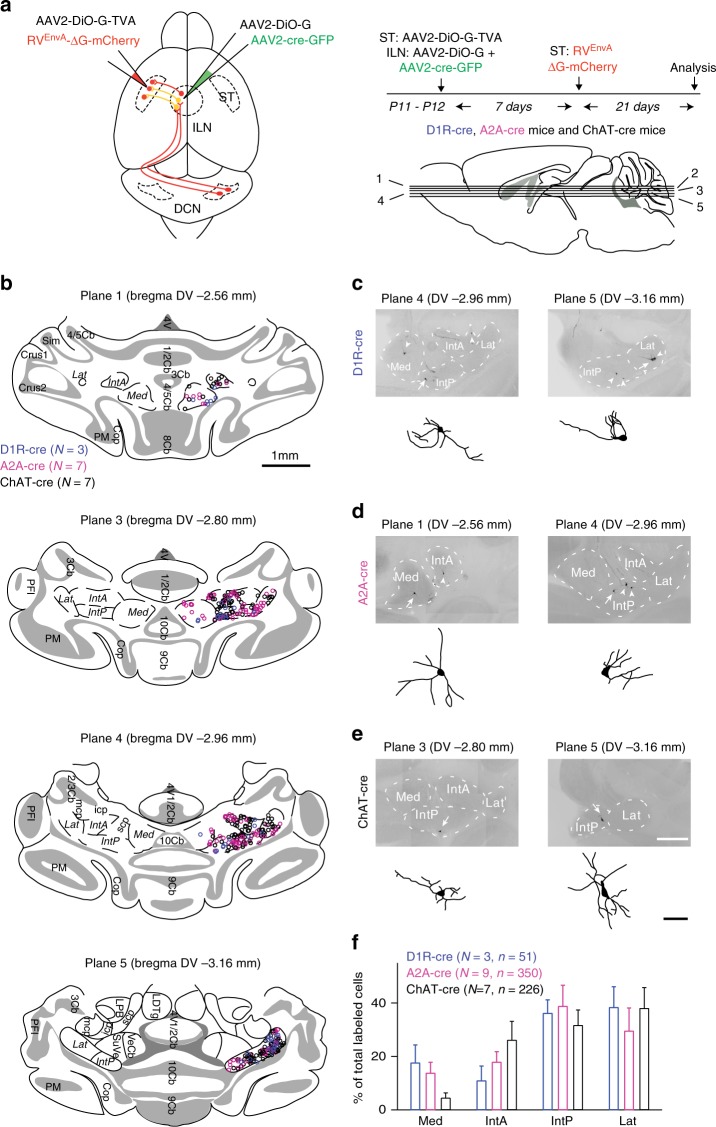
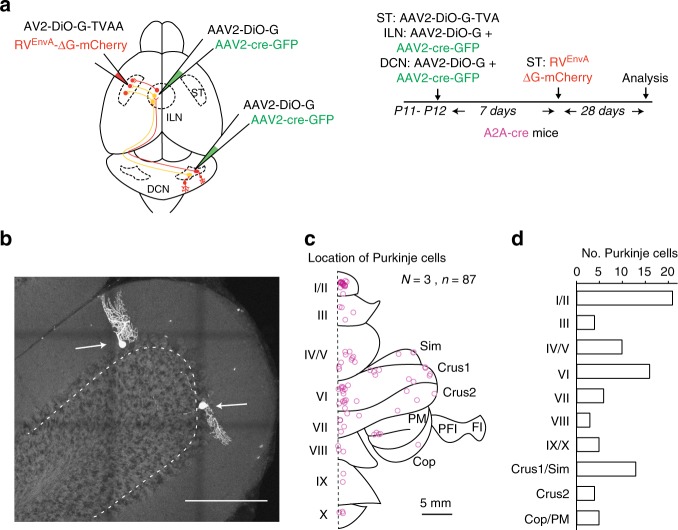
Verification
Claims the paper makes
The claims and statistics of this paper haven’t been checked yet.
Free: it reads the open-access text and checks the first 5 claims that cite a source we can check. Create a free account to check every claim.
Claims other papers make about this one
Each is checked against this paper’s own text: does it say what the citing paper says it does?
The source backs part of the claim, not all of it — or backs it for a different population, condition or comparison.
In the citing paper
“the abnormal functional connections may lead to some cognitive impairment, such as in reward and executive control (58–60)”
From Altered functional connectivity between the cerebellum and the cortico-striato-thalamo-cortical circuit in obsessive-compulsive disorder (2019) · cites this paper as [60]
Experimental — accuracy not yet measured
Self-check
Percentages, sums and reported differences re-computed from the paper’s own numbers.
The self-check needs the paper’s full text.
Citations
Cites
Marr, D. (1969) · The Journal of Physiology · doi:10.1113/jphysiol.1969.sp008820 · Cited by 3,253
The cerebellar cognitive affective syndrome
Schmahmann, J. (1998) · Brain · doi:10.1093/brain/121.4.561 · Cited by 3,230
Armbruster, B. N., Li, X., Pausch, M. H., Herlitze, S., & Roth, B. L. (2007) · Proceedings of the National Academy of Sciences · doi:10.1073/pnas.0700293104 · Cited by 2,046
Cerebellum and nonmotor function
Strick, P. L., Dum, R. P., & Fiez, J. A. (2009) · Annual Review of Neuroscience · doi:10.1146/annurev.neuro.31.060407.125606 · Cited by 1,777
Monosynaptic Restriction of Transsynaptic Tracing from Single, Genetically Targeted Neurons
Wickersham, I. R., Lyon, D. C., Barnard, R. J. O., Mori, T., Finke, S., Conzelmann, K.-K., Young, J. A. T., & Callaway, E. M. (2007) · Neuron · doi:10.1016/j.neuron.2007.01.033 · Cited by 1,187
Distinct cerebellar contributions to intrinsic connectivity networks
Habas, C., Kamdar, N., Nguyen, D., Prater, K., Beckmann, C. F., Menon, V., & Greicius, M. D. (2009) · Journal of Neuroscience · doi:10.1523/jneurosci.1868-09.2009 · Cited by 1,115
Functional topography of the cerebellum for motor and cognitive tasks: An fMRI study
Stoodley, C. J., Valera, E. M., & Schmahmann, J. D. (2012) · NeuroImage · doi:10.1016/j.neuroimage.2011.08.065 · Cited by 1,106
Molecular and Cellular Approaches for Diversifying and Extending Optogenetics
Gradinaru, V., Zhang, F., Ramakrishnan, C., Mattis, J., Prakash, R., Diester, I., Goshen, I., Thompson, K. R., & Deisseroth, K. (2010) · Cell · doi:10.1016/j.cell.2010.02.037 · Cited by 1,018
Striatal Plasticity and Basal Ganglia Circuit Function
Kreitzer, A. C., & Malenka, R. C. (2008) · Neuron · doi:10.1016/j.neuron.2008.11.005 · Cited by 1,017
Chemogenetics revealed: DREADD occupancy and activation via converted clozapine
Gomez, J. L., Bonaventura, J., Lesniak, W., Mathews, W. B., Sysa-Shah, P., Rodriguez, L. A., Ellis, R. J., Richie, C. T., Harvey, B. K., Dannals, R. F., et al. (2017) · Science · doi:10.1126/science.aan2475 · Cited by 980
Cited by
Fujita, H., Kodama, T., & du Lac, S. (2020) · eLife · doi:10.7554/elife.58613 · Cited by 246
“Disynaptic projections from the FN to subcortical forebrain regions were robust in the dorsal striatum (Figures 6C,D,H), consistent with a recent study using rabies virus (Xiao et al., 2018), with a notably dense input to the rostrolateral striatum (Figure 6C).”
InfluentialThe basal ganglia and the cerebellum in human emotion
Pierce, J. E., & Péron, J. (2020) · Social Cognitive and Affective Neuroscience · doi:10.1093/scan/nsaa076 · Cited by 191
Neuronal circuitry for recognition memory of object and place in rodent models
Chao, O. Y.-H., Nikolaus, S., Yang, Y., & Huston, J. P. (2022) · Neuroscience & Biobehavioral Reviews · doi:10.1016/j.neubiorev.2022.104855 · Cited by 188
Reverse-translational identification of a cerebellar satiation network
Low, A. Y. T., Goldstein, N., Gaunt, J. R., Huang, K.-P., Zainolabidin, N., Yip, A. K. K., Carty, J. R. E., Choi, J. Y., Miller, A. M., Ho, H. S. T., et al. (2021) · Nature · doi:10.1038/s41586-021-04143-5 · Cited by 139
Yoshida, J., Oñate, M., Khatami, L., Vera, J. R., Nadim, F., & Khodakhah, K. (2022) · Journal of Neuroscience · doi:10.1523/jneurosci.1535-22.2022 · Cited by 115
Interpreting the role of the striatum during multiple phases of motor learning
Cataldi, S., Stanley, A. T., Miniaci, M. C., & Sulzer, D. (2021) · FEBS Journal · doi:10.1111/febs.15908 · Cited by 92
Novel Cerebello-Amygdala Connections Provide Missing Link Between Cerebellum and Limbic System
Jung, S. J., Vlasov, K. Y., D’Ambra, A. F., Parigi, A. A., Baya, M., Frez, E. P., Villalobos, J., Fernandez-Frentzel, M., Anguiano, M., Ideguchi, Y., et al. (2022) · Frontiers in Systems Neuroscience · doi:10.3389/fnsys.2022.879634 · Cited by 80
AUTS2 Gene: Keys to Understanding the Pathogenesis of Neurodevelopmental Disorders
Hori, K., Shimaoka, K., & Hoshino, M. (2021) · Cells · doi:10.3390/cells11010011 · Cited by 73
Habas, C., Manto, M. U., & Cabaraux, P. (2019) · The Cerebellum · doi:10.1007/s12311-019-01019-3 · Cited by 85
Re-examining the Mysterious Role of the Cerebellum in Pain
Li, C. N., Keay, K. A., Henderson, L. A., & Mychasiuk, R. (2024) · Journal of Neuroscience · doi:10.1523/jneurosci.1538-23.2024 · Cited by 72
Liu, W., Li, J., Yang, M., Ke, X., Dai, Y., Lin, H., Wang, S., Chen, L., & Tao, J. (2022) · Alzheimer s Research & Therapy · doi:10.1186/s13195-022-00994-w · Cited by 66
“has been widely utilized to substantiate the involvement of physiological mechanisms in behavioral outcomes [33, 34].”
Zhang, H., Wang, B., Li, K., Wang, X., Li, X., Zhu, J., Zhao, Q., Yang, Y., Lv, L., Zhang, M., et al. (2019) · Frontiers in Psychiatry · doi:10.3389/fpsyt.2019.00522 · Cited by 55
Recent Advances in the Understanding of Specific Efferent Pathways Emerging From the Cerebellum
Kang, S., Jun, S., Baek, S. J., Park, H., Yamamoto, Y., & Tanaka, K. (2021) · Frontiers in Neuroanatomy · doi:10.3389/fnana.2021.759948 · Cited by 58
Simulation of a Human-Scale Cerebellar Network Model on the K Computer
YAMAURA, H., Igarashi, J., & Yamazaki, T. (2020) · Frontiers in Neuroinformatics · doi:10.3389/fninf.2020.00016 · Cited by 58
“Recent studies have also demonstrated that the cerebellar output influences the neuronal activity of the basal ganglia and basal ganglia-dependent behavior (Chen et al., 2014; Xiao et al., 2018).”
Cerebellum and cognition: Does the rodent cerebellum participate in cognitive functions?
Shipman, M. L., & Green, J. T. (2019) · Neurobiology of Learning and Memory · doi:10.1016/j.nlm.2019.02.006 · Cited by 49
Resting state functional connectivity underlying musical creativity
Bashwiner, D., Bacon, D., Wertz, C. J., Flores, R. A., Chohan, M. O., & Jung, R. E. (2020) · NeuroImage · doi:10.1016/j.neuroimage.2020.116940 · Cited by 33
A FN-MdV pathway and its role in cerebellar multimodular control of sensorimotor behavior
Wang, X., Yu, S., Ren, Z., Zeeuw, C. I. D., & Gao, Z. (2020) · Nature Communications · doi:10.1038/s41467-020-19960-x · Cited by 27
Miquel, M., Gil‐Miravet, I., & Guarque‐Chabrera, J. (2020) · Frontiers in Systems Neuroscience · doi:10.3389/fnsys.2020.586574 · Cited by 33
Synergistic excitability plasticity in cerebellar functioning
Ohtsuki, G., Shishikura, M., & Ozaki, A. (2020) · The FEBS Journal · doi:10.1111/febs.15355 · Cited by 27
Direct evidence for transport of RNA from the mouse brain to the germline and offspring
O’Brien, E. A., Ensbey, K. S., Day, B. W., Baldock, P. A. J., & Barry, G. (2020) · BMC Biology · doi:10.1186/s12915-020-00780-w · Cited by 30
Pang, H., Yu, Z., Yu, H., Chang, M., Cao, J., Li, Y., Guo, M., Liu, Y., Cao, K., & Fan, G. (2022) · CNS Neuroscience & Therapeutics · doi:10.1111/cns.13959 · Cited by 32
Functional abnormalities in the cerebello-thalamic pathways in a mouse model of DYT25 dystonia
Aïssa, H. B., Sala, R. W., Margarint, E. L. G., Frontera, J. L., Varani, A. P., Ménardy, F., Pelosi, A., Hervé, D., Léna, C., & Popa, D. (2022) · eLife · doi:10.7554/elife.79135 · Cited by 25
Basal Ganglia—A Motion Perspective
Grillner, S. E., Robertson, B., & Kotaleski, J. H. (2020) · Comprehensive physiology · doi:10.1002/cphy.c190045 · Cited by 35
Coutant, B., Frontera, J. L., Perrin, E., Combes, A., Tarpin, T., Ménardy, F., Mailhes‐Hamon, C., Siaume‐Perez, S., Degos, B., Venance, L., et al. (2022) · Nature Communications · doi:10.1038/s41467-022-30844-0 · Cited by 31
Pang, W., Yi, X., Li, L., Liu, L., Xiang, W., & Xiao, L. (2021) · Frontiers in Psychiatry · doi:10.3389/fpsyt.2021.580433 · Cited by 26
Self-citationCerebellum Dysfunction in Patients With PRRT2 -Related Paroxysmal Dyskinesia
Ekmen, A., Méneret, A., Valabrègue, R., Béranger, B., Worbe, Y., Lamy, J., Mehdi, S., Hervé, A., Adanyeguh, I. M., Temiz, G., et al. (2022) · Neurology · doi:10.1212/wnl.0000000000200060 · Cited by 22
“Rodents and nonhuman primates have a disynaptic pathway linking cerebellar nuclei to the striatum that is critical for motor control.(42,49,50) We hypothesize that paroxysmal dystonia/dyskinesia is a network disorder characterized mainly by striatal dysfunction that could be either primary or secondary to aberrant cer…”
BackgroundStriatal direct pathway neurons play leading roles in accelerating rotarod motor skill learning
Liang, B., Zhang, L., Zhang, Y., Werner, C. T., Beacher, N. J., Denman, A. J., Li, Y., Chen, R., Gerfen, C. R., Barbera, G., et al. (2022) · iScience · doi:10.1016/j.isci.2022.104245 · Cited by 25
Gil‐Miravet, I., Eixea, I. M., Arias‐Sandoval, E., Vásquez-Celaya, L., Guarque‐Chabrera, J., Olucha-Bordonau, F. E., & Miquel, M. (2019) · Addiction Biology · doi:10.1111/adb.12834 · Cited by 25
“Anatomical and functional studies in rodents and non-human primates have shown extensive pathways that connect the cerebellum to the prefrontal cortex, striatum, amygdala, thalamus, hippocampus, and basal ganglia (10-21).”
BackgroundThalamostriatal System Controls the Acquisition, Performance, and Flexibility of Learning Behavior
Kato, S., Nishizawa, K., & Kobayashi, K. (2021) · Frontiers in Systems Neuroscience · doi:10.3389/fnsys.2021.729389 · Cited by 21
“In addition, by combining genetic and pharmacological manipulation techniques, the roles of the ILN-DS circuit have been investigated for various types of learning behavior (Saund et al., 2017; Li et al., 2018; Melief et al., 2018; Xiao et al., 2018; Cover et al., 2019; Johnson et al., 2020).”
BackgroundResultPutative Role of Pharmacogenetics to Elucidate the Mechanism of Tardive Dyskinesia in Schizophrenia
LOONEN, A. J. M., Wilffert, B., & Ivanova, S. А. (2019) · Pharmacogenomics · doi:10.2217/pgs-2019-0100 · Cited by 22
del Rey, N. L., Trigo‐Damas, I., Obeso, J. A., Cavada, C., & Blesa, J. (2022) · Neuropathology and Applied Neurobiology · doi:10.1111/nan.12812 · Cited by 21
Contreras-López, R., Alatriste-León, H., Díaz-Hernández, E., Ramírez‐Jarquín, J. O., & Tecuapetla, F. (2023) · Cell Reports · doi:10.1016/j.celrep.2023.112000 · Cited by 19
Rapanelli, M., Wang, W., Hurley, E. L., Feltri, M. L., Pittenger, C., Frick, L. R., & Yan, Z. (2023) · Translational Psychiatry · doi:10.1038/s41398-023-02306-8 · Cited by 16
Contributions of the cerebellum for predictive and instructional control of movement
Narayanan, S., & Thirumalai, V. (2019) · Current Opinion in Physiology · doi:10.1016/j.cophys.2019.01.011 · Cited by 15
“Acute chemogenetic silencing of these cerebello-striatal projections led to deficits in reward-driven motor behavior [47].”
BackgroundAn Integrated Neurorobotics Model of the Cerebellar-Basal Ganglia Circuitry
Pimentel, J. M., Moioli, R. C., de Araújo, M. F. P., & Vargas, P. A. (2023) · International Journal of Neural Systems · doi:10.1142/s0129065723500594 · Cited by 11
Inokawa, H., Matsumoto, N., Kimura, M., & Yamada, H. (2020) · Neuroscience · doi:10.1016/j.neuroscience.2020.08.007 · Cited by 10
Zhang, X., Liu, S., & Chen, Z. S. (2021) · iScience · doi:10.1016/j.isci.2021.102919 · Cited by 13
“This important process has been associated with various goal-directed behaviors, including multi-tasking, decision-making (Thea, 2012; Dajani and Uddin, 2015; Le et al., 2018; Pezzulo et al., 2014).”
BackgroundThe cerebellum: the ‘little’ brain and its big role
Melka, N., Pszczolińska, A., Klejbor, I., & Moryś, J. (2024) · Folia Morphologica · doi:10.5603/fm.93251 · Cited by 12
“Today, it is known that there are direct connections between the cerebellum and the basal ganglia, meaning that they jointly shape and adapt both motor and emotional functions [24, 45, 54, 75, 114].”
Zamudio, P. A., Gioia, D. A., Glaser, C. M., & Woodward, J. J. (2023) · eNeuro · doi:10.1523/eneuro.0037-23.2023 · Cited by 15
“…behaviors has been investigated by manipulating neuronal activity, optical and electrophysiological monitoring, and tracing studies in the rodent cerebellum (Miquel et al., 2016; Wagner et al., 2017; Badura et al., 2018; Xiao et al., 2018; Carta et al., 2019; Gil-Miravet et al., 2019).”
BackgroundLee, A. S., Arefin, T. M., Gubanova, A., Stephen, D. N., Liu, Y., Lao, Z., Krishnamurthy, A., García, N. V. D. M., Heck, D. H., Zhang, J., et al. (2025) · Nature Communications · doi:10.1038/s41467-025-57080-6 · Cited by 12
“5 onwards, adding to existing tools to manipulate all eCN or several subregions 38,41 – 47 .”
Overwalle, F. V., Heleven, E., Haihambo, N. P., Li, M., Ma, Q., Pu, M., Baeken, C., Deroost, N., & Baetens, K. (2024) · Human Brain Mapping · doi:10.1002/hbm.70098 · Cited by 12
Zhou, Q., Ye, D., Ren, P., Pang, W. B., Lin, X., Cao, R. H., Ye, X., Xiang, W., & Xiao, L. (2024) · Biomedicine & Pharmacotherapy · doi:10.1016/j.biopha.2024.117145 · Cited by 8
Self-citationShi, W., Tian, Y., Yang, H., Guo, H., Wen, B., Liu, Z., Zhang, Y., Han, S., & Cheng, J. (2025) · Frontiers in Psychiatry · doi:10.3389/fpsyt.2025.1529983 · Cited by 7
Perez‐Pouchoulen, M., Jaiyesimi, A., Bardhi, K., Waddell, J., & Banerjee, A. (2023) · Pediatric Research · doi:10.1038/s41390-023-02535-z · Cited by 5
Dopamine receptors of the rodent fastigial nucleus support skilled reaching for goal-directed action
Caragea, V.-M., Méndez‐Couz, M., & Manahan‐Vaughan, D. (2023) · Brain Structure and Function · doi:10.1007/s00429-023-02685-0 · Cited by 5
“As mentioned earlier, targeting of DCN projections to the striatum modulates goal-directed behavior (Xiao et al. 2018) and it is thinkable that DA acting on its receptors in the FN can alter output to this structure.”
BackgroundInfluentialAhmadi, A., Saadatmand‐Tarzjan, M., & Wallois, F. (2024) · Cerebral Cortex · doi:10.1093/cercor/bhae335 · Cited by 6
Lyle, T. T., & Verpeut, J. L. (2025) · Journal of Neuroscience · doi:10.1523/jneurosci.2182-23.2024 · Cited by 5
Mahani, F. D., Rajabi, S., Alehashem, M. S., Alaei, H., & Ramshini, E. (2025) · Progress in Neuro-Psychopharmacology and Biological Psychiatry · doi:10.1016/j.pnpbp.2025.111479 · Cited by 6
Neonatal hypoxia ischemia redistributes L1 cell adhesion molecule into rat cerebellar lipid rafts
Waddell, J., Rickman, N. C., He, M. Y., Tang, N., & Bearer, C. F. (2022) · Pediatric Research · doi:10.1038/s41390-022-01974-4 · Cited by 4
Lee, A. S., Arefin, T. M., Gubanova, A., Stephen, D. N., Liu, Y., Lao, Z., Krishnamurthy, A., García, N. V. D. M., Heck, D. H., Zhang, J., et al. (2024) · bioRxiv (Cold Spring Harbor Laboratory) · doi:10.1101/2024.07.08.602496 · Cited by 3
Wang, X., Yu, J., Wang, L., Huang, J., Wang, Y., Lui, S. S. Y., & Chan, R. C. K. (2025) · The Cerebellum · doi:10.1007/s12311-025-01902-2 · Cited by 3
“Similarly, another study found that inhibiting the cerebellar deep nuclei in mice altered dorsal striatum signals, affecting goal-directed behavior [21].”
Computational anatomy: the cerebellar microzone computation
Gilbert, M., & Rasmussen, A. (2025) · Oxford Open Neuroscience · doi:10.1093/oons/kvaf001 · Cited by 1
“The action of the cerebellum is dependent on a disynaptic projection to the striatum from the deep cerebellar nuclei [73, 74].”
Pang, Z., Chen, Y., Tong, C., Chen, Y., Lei, G., Cai, Z., Zhu, S., Shen, Y., Liang, Z., Zhang, J., et al. (2025) · Cell Reports · doi:10.1016/j.celrep.2025.116192 · Cited by 3
Cerebellar tDCS and pain modulation: a critical integrative and systematic review
Betancur, D. F. A., Tarragó, M. D. G. L., Louzada, M. E., Peres, S. M., Torres, I. L. D. S., Fregni, F., & Caumo, W. (2025) · Frontiers in Neurology · doi:10.3389/fneur.2025.1681853 · Cited by 1
The cerebellar nuclei take center stage
Cohen, D. (2024) · Current Opinion in Behavioral Sciences · doi:10.1016/j.cobeha.2024.101362 · Cited by 1
The cerebellum shows its stripes
Holloway, A. L., & Lerner, T. N. (2019) · eLife · doi:10.7554/elife.52631 · Cited by 1
The Role Of The Prelimbic, Infralimbic, And Cerebellar Cortices In Operant Behavior
Shipman, M. L. (2019) · ScholarWorks -A service of University of Vermont Libraries (University of Vermont)
Cerebellar stimulations prevent Levodopa-induced dyskinesia in mice and normalize brain activityPreprint
Coutant, B., Frontera, J., Perrin, E., Combes, A., Tarpin, T., Ménardy, F., Mailhes-Hamon, C., Pérez, S., Degos, B., Venance, L., et al. (2021) · bioRxiv · doi:10.1101/2021.09.17.460625
No Neuron Operates in Isolation
LeDoux, M. S. (2022) · Neurology · doi:10.1212/wnl.0000000000200062
“Anatomic studies in primates have detailed robust disynaptic connections between the striatum and cerebellum,(4,5) and the cerebello-thalamo-striatal pathway may relay the results of cerebellar computation to striatal circuits for goal-directed behaviors.(6) Functional brain networks incorporating the cerebellum, thal…”
BackgroundGe, F., Wang, Z., Wang, G., Chen, L., Yang, P., Wen, J., Pan, W., Yu, W., Cai, Q., Fan, Y., et al. (2022) · bioRxiv (Cold Spring Harbor Laboratory) · doi:10.1101/2022.08.04.502761
Kato, S., Sugawara, M., Yamasaki, M., Watanabe, M., Inoue, K., Nakamura, K., Koketsu, D., Chiken, S., Nambu, A., Takada, M., et al. (2024) · bioRxiv (Cold Spring Harbor Laboratory) · doi:10.1101/2024.06.06.597696
Pallidal prototypic neuron and astrocyte activities regulate flexible reward-seeking behaviorsPreprint
Kang, S., Yang, M. A., Bennett, A., Kang, S., Lee, S. W., & Choi, D. (2025) · bioRxiv (Cold Spring Harbor Laboratory) · doi:10.1101/2025.02.10.637554 · Cited by 1
Sarraudy, M., & Popa, D. (2025) · Handbook of behavioral neuroscience · doi:10.1016/b978-0-443-21992-4.00010-5
O’Brien, E. A., Ensbey, K. S., Day, B. W., Baldock, P. A. J., & Barry, G. (2020) · Figshare · doi:10.6084/m9.figshare.12228317
O’Brien, E. A., Ensbey, K. S., Day, B. W., Baldock, P. A. J., & Barry, G. (2020) · Figshare · doi:10.6084/m9.figshare.12228278
O’Brien, E. A., Ensbey, K. S., Day, B. W., Baldock, P. A. J., & Barry, G. (2020) · Figshare · doi:10.6084/m9.figshare.12228323
O’Brien, E. A., Ensbey, K. S., Day, B. W., Baldock, P. A. J., & Barry, G. (2020) · Figshare · doi:10.6084/m9.figshare.12228311
Liu, W., 李建宏, Yang, M., Ke, X., Dai, Y., Lin, H., Wang, S., Chen, L., & Tao, J. (2022) · Figshare · doi:10.6084/m9.figshare.19596201
Liu, W., 李建宏, Yang, M., Ke, X., Dai, Y., Lin, H., Wang, S., Chen, L., & Tao, J. (2022) · Figshare · doi:10.6084/m9.figshare.19596204
O’Brien, E. A., Ensbey, K. S., Day, B. W., Baldock, P. A. J., & Barry, G. (2020) · Figshare · doi:10.6084/m9.figshare.12228299
O’Brien, E. A., Ensbey, K. S., Day, B. W., Baldock, P. A. J., & Barry, G. (2020) · Figshare · doi:10.6084/m9.figshare.12228305
O’Brien, E. A., Ensbey, K. S., Day, B. W., Baldock, P. A. J., & Barry, G. (2020) · Figshare · doi:10.6084/m9.figshare.12228290
O’Brien, E. A., Ensbey, K. S., Day, B. W., Baldock, P. A., & Barry, G. (2020) · Figshare · doi:10.6084/m9.figshare.12228326
O’Brien, E. A., Ensbey, K. S., Day, B. W., Baldock, P. A. J., & Barry, G. (2020) · Figshare · doi:10.6084/m9.figshare.12228287
O’Brien, E. A., Ensbey, K. S., Day, B. W., Baldock, P. A. J., & Barry, G. (2020) · Figshare · doi:10.6084/m9.figshare.12228296
O’Brien, E. A., Ensbey, K. S., Day, B. W., Baldock, P. A., & Barry, G. (2020) · Figshare · doi:10.6084/m9.figshare.12228320
Cerebellar nuclei output pathways regulate motor and non-motor behaviors through forebrain circuits
Lee, A. S., & Joyner, A. L. (2026) · Current topics in developmental biology/Current Topics in Developmental Biology · doi:10.1016/bs.ctdb.2026.01.009
Interactions between the cerebellum and the striatum in PRRT2 and ADCY5 dystonia
Ekmen, A. (2021) · theses.fr (ABES) · doi:10.70675/1290633fz622cz42b1z8953z676e0c712c77
Wu, Y., Deng, J., Hao, S., Hu, N., & Wang, B. (2026) · Brain Research · doi:10.1016/j.brainres.2026.150356
Cerebellar microRNA-206 Tunes Purkinje Neuron Firing Dynamics to Control Sensorimotor GatingPreprint
Heyer, M. P., Ishikawa, M., Wang, J., Evangelista, J. E., Fakira, A. K., Ma’ayan, A., Feng, G., & Kenny, P. J. (2026) · SSRN Electronic Journal · doi:10.64898/2026.06.29.734826
Nencha, U., Pupíková, M., di Natale, M., Maceira-Elvira, P., Gajdoš, M., Beanato, E., Skarvelaki, S., Jones, R., Ericson, I., Lamoš, M., et al. (2026) · JAMA Network Open · doi:10.1001/jamanetworkopen.2026.21756 · Cited by 1
Metadata
- Authors
- Xiao, L., Bornmann, C., Hatstatt-Burklé, L., & Scheiffele, P.
- Affiliations
- University of Basel (CH)
- Corresponding author
- Scheiffele, Peter
- Venue
- Nature Communications
- Published
- 2018-08-07
- Volume
- 9
- Issue
- 1
- Pages
- 3133-3133
- ISSN
- 2041-1723 (ISSN-L)
- PMC
- PMC6081479
- OpenAlex
- W2885361524
- Cited by
- 82
- References
- 62
- Citations by year
- 2026: 4 · 2025: 10 · 2024: 8 · 2023: 6 · 2022: 15 · 2021: 9 · 2020: 22 · 2019: 8
- FWCI
- 5.80
- Type
- journal article
- Language
- en
- Open access
- gold
- doi.org
- Licence
- cc-by
- creativecommons.org/licenses/by/4.0 (tdm)
- creativecommons.org/licenses/by/4.0 (vor)
- Locations
- Nature Communications (publishedVersion, cc-by)
- Europe PMC (PubMed Central) (publishedVersion, cc-by)
- PubMed Central (publishedVersion, cc-by)
- PubMed (publishedVersion)
- RePEc: Research Papers in Economics (submittedVersion)
- DOAJ (DOAJ: Directory of Open Access Journals) (submittedVersion)
- DOAJ (DOAJ: Directory of Open Access Journals) (submittedVersion, cc-by-sa)
- edoc (University of Basel) (submittedVersion)
- Funders
- European Commission (EU-AIMS)
- Schweizerischer Nationalfonds zur Förderung der Wissenschaftlichen Forschung (SYNAPSY)
- Topics
- Life Sciences › Neuroscience › Cognitive Neuroscience › Motor Control and Adaptation
- Life Sciences › Neuroscience › Cognitive Neuroscience › Memory and Neural Mechanisms
- Life Sciences › Neuroscience › Cellular and Molecular Neuroscience › Neuroscience and Neuropharmacology Research
- Keywords
- deep cerebellar nuclei, dorsal striatum, goal-directed behavior, medium spiny neurons, intralaminar nuclei, cerebellar output, cognitive flexibility, reward anticipation, chemogenetic silencing, cell type specificity
- MeSH terms
- Animals, Behavior, Animal, Cerebellum, Corpus Striatum, Female, Gene Expression Regulation, Humans, Interneurons, Male, Mice, Inbred C57BL, Mice, Transgenic, Motivation, Neurons, Phenotype, Synapsins, Maze Learning, Gene Silencing, Mice, Electrophysiological Phenomena
About these checks
Registry, retraction, Cites and statistics results are computed, not judged, with one exception: a printed reference that no index lists is read once by a model before it counts as a citation error. Claims are extracted by a model and kept only when their quote appears verbatim in the text; each cited source is then checked, with a model’s help, for whether it says what the claim relies on. Those verdicts can be wrong — read the claim’s quote and the cited source before relying on one.
Statistics and arithmetic are recomputed, not judged.
Confidence bands are shown only for fields calibrated on our annotated test set. None is calibrated yet, so no band is shown.
What counts as a claim ›How we measure confidence ›How we check this ›
Are you an author, or do you see a problem with this page? Request a review
Data sources
Bibliographic data: Semantic Scholar, OpenAlex, Crossref.
Contains information from the Semantic Scholar Academic Graph Datasets, made available under the ODC Attribution License (ODC-BY 1.0).
Semantic Scholar’s data is described in: Kinney, R., et al. (2023). The Semantic Scholar Open Data Platform. arXiv:2301.10140.
