

Regulation of striatal cells and goal-directed behavior by cerebellar outputs
Open accessThe DOI matches its Crossref record; 62 of the 62 references it cites were found in a registry or an index.
Abstract
The cerebellum integrates descending motor commands and sensory information to generate predictions and detect errors during ongoing behaviors. Cerebellar computation has been proposed to control motor but also non-motor behaviors, including reward expectation and cognitive flexibility. However, the organization and functional contribution of cerebellar output channels are incompletely understood. Here, we elaborate the cell-type specificity of a broad connectivity matrix from the deep cerebellar nuclei (DCN) to the dorsal striatum in mice. Cerebello-striatal connections arise from all deep cerebellar subnuclei and are relayed through intralaminar thalamic nuclei (ILN). In the dorsal striatum, these connections target medium spiny neurons, but also ChAT-positive interneurons, a class of tonically active interneurons implicated in shifting and updating behavioral strategies. Chemogenetic silencing of cerebello-striatal connectivity modifies function of striatal ChAT-positive interneurons. We propose that cerebello-striatal connections relay cerebellar computation to striatal circuits for goal-directed behaviors.
Overview
The claims and statistics of this paper haven’t been checked yet.
Free: it reads the open-access text and checks the first 5 claims that cite a source we can check. Create a free account to check every claim.
Integrity signals
Registry
Cites
Statistics
Figures
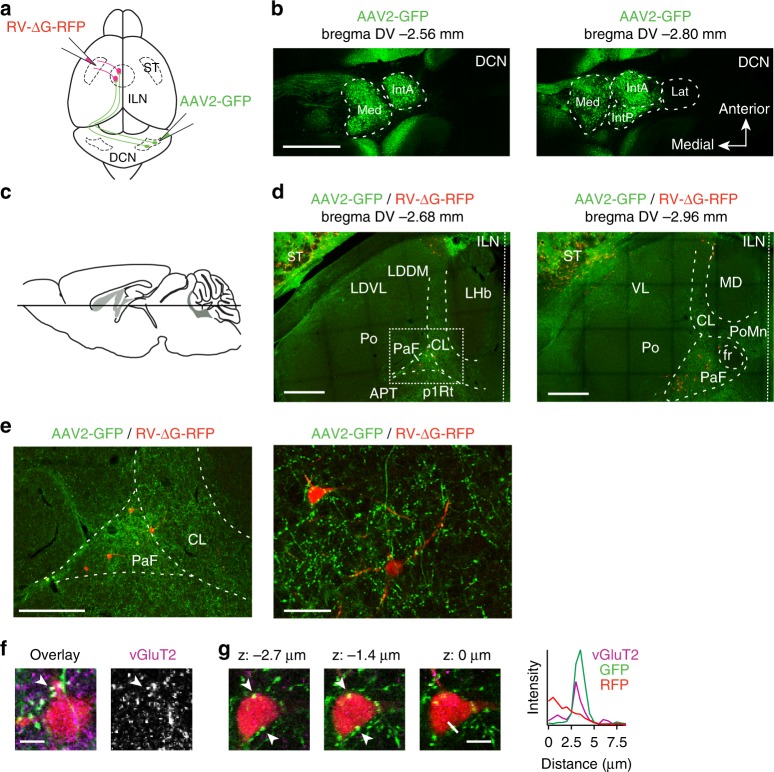
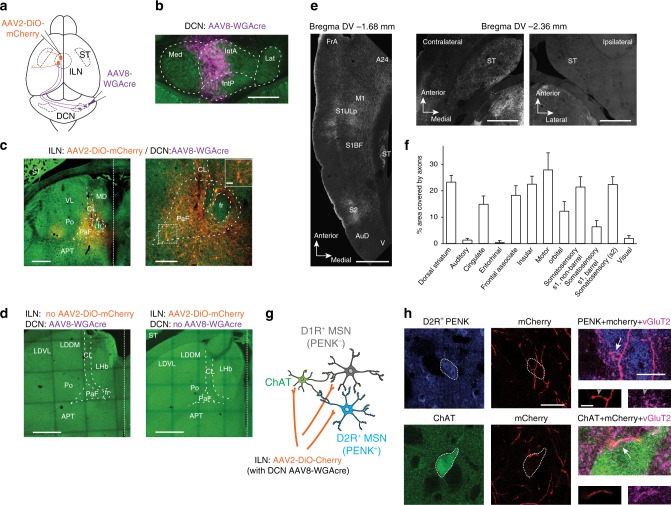
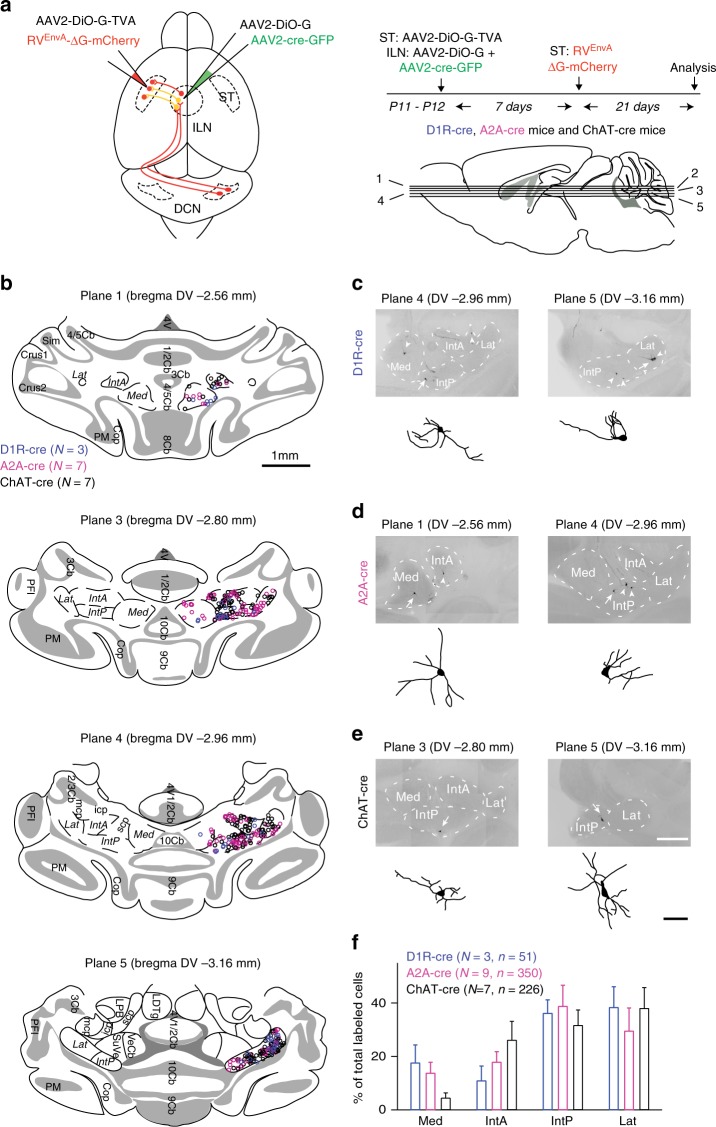
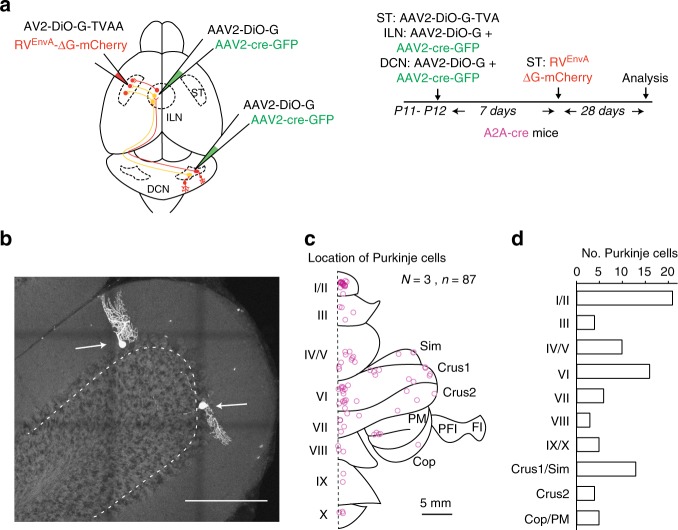
Verification
Claims the paper makes
The claims and statistics of this paper haven’t been checked yet.
Free: it reads the open-access text and checks the first 5 claims that cite a source we can check. Create a free account to check every claim.
Claims other papers make about this one
Each is checked against this paper’s own text: does it say what the citing paper says it does?
The source backs part of the claim, not all of it — or backs it for a different population, condition or comparison.
In the citing paper
“the abnormal functional connections may lead to some cognitive impairment, such as in reward and executive control (58–60)”
From Altered functional connectivity between the cerebellum and the cortico-striato-thalamo-cortical circuit in obsessive-compulsive disorder (2019) · cites this paper as [60]
Experimental — accuracy not yet measured
Self-check
Percentages, sums and reported differences re-computed from the paper’s own numbers.
The self-check needs the paper’s full text.
Citations
Cites
Marr, D. (1969) · The Journal of Physiology · doi:10.1113/jphysiol.1969.sp008820 · Cited by 3,253
The cerebellar cognitive affective syndrome
Schmahmann, J. (1998) · Brain · doi:10.1093/brain/121.4.561 · Cited by 3,230
Armbruster, B. N., Li, X., Pausch, M. H., Herlitze, S., & Roth, B. L. (2007) · Proceedings of the National Academy of Sciences · doi:10.1073/pnas.0700293104 · Cited by 2,046
Cerebellum and nonmotor function
Strick, P. L., Dum, R. P., & Fiez, J. A. (2009) · Annual Review of Neuroscience · doi:10.1146/annurev.neuro.31.060407.125606 · Cited by 1,777
Monosynaptic Restriction of Transsynaptic Tracing from Single, Genetically Targeted Neurons
Wickersham, I. R., Lyon, D. C., Barnard, R. J. O., Mori, T., Finke, S., Conzelmann, K.-K., Young, J. A. T., & Callaway, E. M. (2007) · Neuron · doi:10.1016/j.neuron.2007.01.033 · Cited by 1,187
Distinct cerebellar contributions to intrinsic connectivity networks
Habas, C., Kamdar, N., Nguyen, D., Prater, K., Beckmann, C. F., Menon, V., & Greicius, M. D. (2009) · Journal of Neuroscience · doi:10.1523/jneurosci.1868-09.2009 · Cited by 1,115
Functional topography of the cerebellum for motor and cognitive tasks: An fMRI study
Stoodley, C. J., Valera, E. M., & Schmahmann, J. D. (2012) · NeuroImage · doi:10.1016/j.neuroimage.2011.08.065 · Cited by 1,106
Molecular and Cellular Approaches for Diversifying and Extending Optogenetics
Gradinaru, V., Zhang, F., Ramakrishnan, C., Mattis, J., Prakash, R., Diester, I., Goshen, I., Thompson, K. R., & Deisseroth, K. (2010) · Cell · doi:10.1016/j.cell.2010.02.037 · Cited by 1,018
Striatal Plasticity and Basal Ganglia Circuit Function
Kreitzer, A. C., & Malenka, R. C. (2008) · Neuron · doi:10.1016/j.neuron.2008.11.005 · Cited by 1,017
Chemogenetics revealed: DREADD occupancy and activation via converted clozapine
Gomez, J. L., Bonaventura, J., Lesniak, W., Mathews, W. B., Sysa-Shah, P., Rodriguez, L. A., Ellis, R. J., Richie, C. T., Harvey, B. K., Dannals, R. F., et al. (2017) · Science · doi:10.1126/science.aan2475 · Cited by 980
T-maze alternation in the rodent
Deacon, R. M. J., & Rawlins, J. N. P. (2006) · Nature Protocols · doi:10.1038/nprot.2006.2 · Cited by 897
Autistic-like behaviour and cerebellar dysfunction in Purkinje cell Tsc1 mutant mice
Tsai, P. T., Hull, C., Chu, Y., Greene-Colozzi, E., Sadowski, A. R., Leech, J. M., Steinberg, J., Crawley, J. N., Regehr, W. G., & Sahin, M. (2012) · Nature · doi:10.1038/nature11310 · Cited by 888
Cerebellar circuitry as a neuronal machine
Ito, M. (2006) · Progress in Neurobiology · doi:10.1016/j.pneurobio.2006.02.006 · Cited by 880
The Cerebellum, Sensitive Periods, and Autism
Wang, S. S.-H., Kloth, A. D., & Badura, A. (2014) · Neuron · doi:10.1016/j.neuron.2014.07.016 · Cited by 838
The cerebellum communicates with the basal ganglia
Hoshi, E., Tremblay, L., Féger, J., Carras, P. L., & Strick, P. L. (2005) · Nature Neuroscience · doi:10.1038/nn1544 · Cited by 834
Cerebellar networks with the cerebral cortex and basal ganglia
Bostan, A. C., Dum, R. P., & Strick, P. L. (2013) · Trends in Cognitive Sciences · doi:10.1016/j.tics.2013.03.003 · Cited by 759
The cerebellum: adaptive prediction for movement and cognition
Sokolov, A. A., Miall, R. C., & Ivry, R. B. (2017) · Trends in Cognitive Sciences · doi:10.1016/j.tics.2017.02.005 · Cited by 691
The Cerebellum and Cognition: Evidence from Functional Imaging Studies
Stoodley, C. J. (2012) · The Cerebellum · doi:10.1007/s12311-011-0260-7 · Cited by 686
Retrograde neuronal tracing with a deletion-mutant rabies virus
Wickersham, I. R., Finke, S., Conzelmann, K.-K., & Callaway, E. M. (2007) · Nature Methods · doi:10.1038/nmeth999 · Cited by 682
Gerfen, C. R., & Scott Young, W. (1988) · Brain Research · doi:10.1016/0006-8993(88)91217-6 · Cited by 658
Integration of quanta in cerebellar granule cells during sensory processing
Chadderton, P., Margrie, T. W., & Häusser, M. (2004) · Nature · doi:10.1038/nature02442 · Cited by 653
Start/stop signals emerge in nigrostriatal circuits during sequence learning
Jin, X., & Costa, R. M. (2010) · Nature · doi:10.1038/nature09263 · Cited by 620
Chan-Palay, V. (1977) · Springer eBooks · doi:10.1007/978-3-642-66498-4 · Cited by 574
Cortical representations of olfactory input by trans-synaptic tracing
Miyamichi, K., Amat, F., Moussavi, F., Wang, C., Wickersham, I., Wall, N. R., Taniguchi, H., Tasic, B., Huang, Z. J., He, Z., et al. (2011) · Nature · doi:10.1038/nature09714 · Cited by 545
Cerebellar cortical organization: a one-map hypothesis
Apps, R., & Hawkes, R. (2009) · Nature Reviews Neuroscience · doi:10.1038/nrn2698 · Cited by 525
Differential Innervation of Direct- and Indirect-Pathway Striatal Projection Neurons
Wall, N. R., De La Parra, M., Callaway, E. M., & Kreitzer, A. C. (2013) · Neuron · doi:10.1016/j.neuron.2013.05.014 · Cited by 489
Thalamic Gating of Corticostriatal Signaling by Cholinergic Interneurons
Ding, J. B., Guzman, J. N., Peterson, J. D., Goldberg, J. A., & Surmeier, D. J. (2010) · Neuron · doi:10.1016/j.neuron.2010.06.017 · Cited by 475
Matsumoto, N., Minamimoto, T., Graybiel, A. M., & Kimura, M. (2001) · Journal of Neurophysiology · doi:10.1152/jn.2001.85.2.960 · Cited by 461
Aosaki, T., Graybiel, A. M., & Kimura, M. (1994) · Science · doi:10.1126/science.8023166 · Cited by 427
Caligiore, D., Pezzulo, G., Baldassarre, G., Bostan, A. C., Strick, P. L., Doya, K., Helmich, R. C., Dirkx, M., Houk, J., Jörntell, H., et al. (2017) · The Cerebellum · doi:10.1007/s12311-016-0763-3 · Cited by 421
Thorn, C. A., Atallah, H., Howe, M., & Graybiel, A. M. (2010) · Neuron · doi:10.1016/j.neuron.2010.04.036 · Cited by 412
D'Angelo, E., & Casali, S. (2013) · Frontiers in Neural Circuits · doi:10.3389/fncir.2012.00116 · Cited by 407
Sillitoe, R. V., & Joyner, A. L. (2007) · Annual Review of Cell and Developmental Biology · doi:10.1146/annurev.cellbio.23.090506.123237 · Cited by 400
Stoodley, C. J., D’Mello, A. M., Ellegood, J., Jakkamsetti, V., Liu, P., Nebel, M. B., Gibson, J. M., Kelly, E., Meng, F., Cano, C. A., et al. (2017) · Nature Neuroscience · doi:10.1038/s41593-017-0004-1 · Cited by 387
Purkinje neuron synchrony elicits time-locked spiking in the cerebellar nuclei
Person, A. L., & Raman, I. M. (2012) · Nature · doi:10.1038/nature10732 · Cited by 373
Wall, N. R., Wickersham, I. R., Cetin, A., De La Parra, M., & Callaway, E. M. (2010) · Proceedings of the National Academy of Sciences · doi:10.1073/pnas.1011756107 · Cited by 372
MacLaren, D. A. A., Browne, R. W., Shaw, J. K., Krishnan Radhakrishnan, S., Khare, P., España, R. A., & Clark, S. D. (2016) · eneuro · doi:10.1523/eneuro.0219-16.2016 · Cited by 331
Bradfield, L. A., Bertran-Gonzalez, J., Chieng, B., & Balleine, B. W. (2013) · Neuron · doi:10.1016/j.neuron.2013.04.039 · Cited by 311
Short latency cerebellar modulation of the basal ganglia
Chen, C. H., Fremont, R., Arteaga-Bracho, E. E., & Khodakhah, K. (2014) · Nature Neuroscience · doi:10.1038/nn.3868 · Cited by 286
Cerebellum involvement in cortical sensorimotor circuits for the control of voluntary movements
Proville, R. D., Spolidoro, M., Guyon, N., Dugué, G. P., Selimi, F., Isope, P., Popa, D., & Léna, C. (2014) · Nature Neuroscience · doi:10.1038/nn.3773 · Cited by 268
Striatal Local Circuitry: A New Framework for Lateral Inhibition
Burke, D. A., Rotstein, H. G., & Alvarez, V. A. (2017) · Neuron · doi:10.1016/j.neuron.2017.09.019 · Cited by 268
The cerebellum as a computer: patterns in space and time.
Eccles, J. C. (1973) · The Journal of Physiology · doi:10.1113/jphysiol.1973.sp010123 · Cited by 261
Guo, Q., Wang, D., He, X., Feng, Q., Lin, R., Xu, F., Fu, L., & Luo, M. (2015) · PLOS ONE · doi:10.1371/journal.pone.0123381 · Cited by 188
Leading tonically active neurons of the striatum from reward detection to context recognition
Apicella, P. (2007) · Trends in Neurosciences · doi:10.1016/j.tins.2007.03.011 · Cited by 185
Back to front: cerebellar connections and interactions with the prefrontal cortex
Watson, T. C., Becker, N., Apps, R., & Jones, M. W. (2014) · Frontiers in Systems Neuroscience · doi:10.3389/fnsys.2014.00004 · Cited by 176
Ichinohe, N., Mori, F., & Shoumura, K. (2000) · Brain Research · doi:10.1016/s0006-8993(00)02744-x · Cited by 169
Hart, G., Leung, B. K., & Balleine, B. W. (2014) · Neurobiology of Learning and Memory · doi:10.1016/j.nlm.2013.11.003 · Cited by 166
Development of an in-vivo active reversible butyrylcholinesterase inhibitor
Košak, U., Brus, B., Knez, D., Šink, R., Žakelj, S., Trontelj, J., Pišlar, A., Šlenc, J., Gobec, M., Živin, M., et al. (2016) · Scientific Reports · doi:10.1038/srep39495 · Cited by 163
The cerebro-cerebellum: Could it be loci of forward models?
Ishikawa, T., Tomatsu, S., Izawa, J., & Kakei, S. (2016) · Neuroscience Research · doi:10.1016/j.neures.2015.12.003 · Cited by 144
Kuramoto, E., Fujiyama, F., Nakamura, K. C., Tanaka, Y., Hioki, H., & Kaneko, T. (2011) · European Journal of Neuroscience · doi:10.1111/j.1460-9568.2010.07481.x · Cited by 135
Deschênes, M., Bourassa, J., & Parent, A. (1996) · Neuroscience · doi:10.1016/0306-4522(96)00001-2 · Cited by 100
The role of the anterior, mediodorsal, and parafascicular thalamus in instrumental conditioning
Bradfield, L. A., Hart, G., & Balleine, B. W. (2013) · Frontiers in Systems Neuroscience · doi:10.3389/fnsys.2013.00051 · Cited by 92
Beninger, R. J., Jhamandas, K. H., Boegman, R. J., & El-Defrawy, S. R. (1986) · Pharmacology Biochemistry and Behavior · doi:10.1016/0091-3057(86)90195-4 · Cited by 74
Bradfield, L. A., & Balleine, B. W. (2013) · Journal of Experimental Psychology Animal Behavior Processes · doi:10.1037/a0030941 · Cited by 60
The cerebellum for jocks and nerds alike
Popa, L. S., Hewitt, A. L., & Ebner, T. J. (2014) · Frontiers in Systems Neuroscience · doi:10.3389/fnsys.2014.00113 · Cited by 57
Stemmelin, J., Cassel, J., Will, B. E., & Kelche, C. R. (1998) · Behavioural Brain Research · doi:10.1016/s0166-4328(98)00052-7 · Cited by 54
L7/Pcp-2-specific expression of Cre recombinase using knock-in approach
Saito, H., Tsumura, H., Otake, S., Nishida, A., Furukawa, T., & 昇, 鈴. (2005) · Biochemical and Biophysical Research Communications · doi:10.1016/j.bbrc.2005.04.043 · Cited by 46
Striatal Cholinergic Interneurons Display Activity-Related Phosphorylation of Ribosomal Protein S6
Bertran-Gonzalez, J., Chieng, B. C., Laurent, V., Valjent, E., & Balleine, B. W. (2012) · PLoS ONE · doi:10.1371/journal.pone.0053195 · Cited by 42
Appetitive position discrimination in the T-maze
Deacon, R. M. J. (2006) · Nature Protocols · doi:10.1038/nprot.2006.3 · Cited by 39
Questioning the Cerebellar Doctrine
Galliano, E., & Zeeuw, C. I. D. (2014) · Progress in brain research · doi:10.1016/b978-0-444-63356-9.00003-0 · Cited by 28
How Did the Chicken Cross the Road? With Her Striatal Cholinergic Interneurons, Of Course
Schoenbaum, G. M., Stalnaker, T. A., & Niv, Y. (2013) · Neuron · doi:10.1016/j.neuron.2013.06.033 · Cited by 19
Enhance Your Chance with the TANs: Tonically Active Neurons Support Learning in the Ventral Striatum
Zahar, Y., & Morris, G. (2014) · Neuron · doi:10.1016/j.neuron.2014.05.029 · Cited by 3
Cited by
Fujita, H., Kodama, T., & du Lac, S. (2020) · eLife · doi:10.7554/elife.58613 · Cited by 246
“Disynaptic projections from the FN to subcortical forebrain regions were robust in the dorsal striatum (Figures 6C,D,H), consistent with a recent study using rabies virus (Xiao et al., 2018), with a notably dense input to the rostrolateral striatum (Figure 6C).”
InfluentialThe basal ganglia and the cerebellum in human emotion
Pierce, J. E., & Péron, J. (2020) · Social Cognitive and Affective Neuroscience · doi:10.1093/scan/nsaa076 · Cited by 191
Neuronal circuitry for recognition memory of object and place in rodent models
Chao, O. Y.-H., Nikolaus, S., Yang, Y., & Huston, J. P. (2022) · Neuroscience & Biobehavioral Reviews · doi:10.1016/j.neubiorev.2022.104855 · Cited by 189
Reverse-translational identification of a cerebellar satiation network
Low, A. Y. T., Goldstein, N., Gaunt, J. R., Huang, K.-P., Zainolabidin, N., Yip, A. K. K., Carty, J. R. E., Choi, J. Y., Miller, A. M., Ho, H. S. T., et al. (2021) · Nature · doi:10.1038/s41586-021-04143-5 · Cited by 139
Yoshida, J., Oñate, M., Khatami, L., Vera, J. R., Nadim, F., & Khodakhah, K. (2022) · Journal of Neuroscience · doi:10.1523/jneurosci.1535-22.2022 · Cited by 115
Metadata
- Authors
- Xiao, L., Bornmann, C., Hatstatt-Burklé, L., & Scheiffele, P.
- Affiliations
- University of Basel (CH)
- Corresponding author
- Scheiffele, Peter
- Venue
- Nature Communications
- Published
- 2018-08-07
- Volume
- 9
- Issue
- 1
- Pages
- 3133-3133
- ISSN
- 2041-1723 (ISSN-L)
- PMC
- PMC6081479
- OpenAlex
- W2885361524
- Cited by
- 82
- References
- 62
- Citations by year
- 2026: 4 · 2025: 10 · 2024: 8 · 2023: 6 · 2022: 15 · 2021: 9 · 2020: 22 · 2019: 8
- FWCI
- 5.80
- Type
- journal article
- Language
- en
- Open access
- gold
- doi.org
- Licence
- cc-by
- creativecommons.org/licenses/by/4.0 (tdm)
- creativecommons.org/licenses/by/4.0 (vor)
- Locations
- Nature Communications (publishedVersion, cc-by)
- Europe PMC (PubMed Central) (publishedVersion, cc-by)
- PubMed Central (publishedVersion, cc-by)
- PubMed (publishedVersion)
- RePEc: Research Papers in Economics (submittedVersion)
- DOAJ (DOAJ: Directory of Open Access Journals) (submittedVersion)
- DOAJ (DOAJ: Directory of Open Access Journals) (submittedVersion, cc-by-sa)
- edoc (University of Basel) (submittedVersion)
- Funders
- European Commission (EU-AIMS)
- Schweizerischer Nationalfonds zur Förderung der Wissenschaftlichen Forschung (SYNAPSY)
- Topics
- Life Sciences › Neuroscience › Cognitive Neuroscience › Motor Control and Adaptation
- Life Sciences › Neuroscience › Cognitive Neuroscience › Memory and Neural Mechanisms
- Life Sciences › Neuroscience › Cellular and Molecular Neuroscience › Neuroscience and Neuropharmacology Research
- Keywords
- deep cerebellar nuclei, dorsal striatum, goal-directed behavior, medium spiny neurons, intralaminar nuclei, cerebellar output, cognitive flexibility, reward anticipation, chemogenetic silencing, cell type specificity
- MeSH terms
- Animals, Behavior, Animal, Cerebellum, Corpus Striatum, Female, Gene Expression Regulation, Humans, Interneurons, Male, Mice, Inbred C57BL, Mice, Transgenic, Motivation, Neurons, Phenotype, Synapsins, Maze Learning, Gene Silencing, Mice, Electrophysiological Phenomena
About these checks
Registry, retraction, Cites and statistics results are computed, not judged, with one exception: a printed reference that no index lists is read once by a model before it counts as a citation error. Claims are extracted by a model and kept only when their quote appears verbatim in the text; each cited source is then checked, with a model’s help, for whether it says what the claim relies on. Those verdicts can be wrong — read the claim’s quote and the cited source before relying on one.
Statistics and arithmetic are recomputed, not judged.
Confidence bands are shown only for fields calibrated on our annotated test set. None is calibrated yet, so no band is shown.
What counts as a claim ›How we measure confidence ›How we check this ›
Are you an author, or do you see a problem with this page? Request a review
Data sources
Bibliographic data: Semantic Scholar, OpenAlex, Crossref.
Contains information from the Semantic Scholar Academic Graph Datasets, made available under the ODC Attribution License (ODC-BY 1.0).
Semantic Scholar’s data is described in: Kinney, R., et al. (2023). The Semantic Scholar Open Data Platform. arXiv:2301.10140.
