

Cerebello-thalamo-cortical hyperconnectivity as a state-independent functional neural signature for psychosis prediction and characterization
Open accessThe DOI matches its Crossref record; 70 of the 70 references it cites were found in a registry or an index.
Abstract
Understanding the fundamental alterations in brain functioning that lead to psychotic disorders remains a major challenge in clinical neuroscience. In particular, it is unknown whether any state-independent biomarkers can potentially predict the onset of psychosis and distinguish patients from healthy controls, regardless of paradigm. Here, using multi-paradigm fMRI data from the North American Prodrome Longitudinal Study consortium, we show that individuals at clinical high risk for psychosis display an intrinsic “trait-like” abnormality in brain architecture characterized as increased connectivity in the cerebello–thalamo–cortical circuitry, a pattern that is significantly more pronounced among converters compared with non-converters. This alteration is significantly correlated with disorganization symptoms and predictive of time to conversion to psychosis. Moreover, using an independent clinical sample, we demonstrate that this hyperconnectivity pattern is reliably detected and specifically present in patients with schizophrenia. These findings implicate cerebello–thalamo–cortical hyperconnectivity as a robust state-independent neural signature for psychosis prediction and characterization.
Overview
The claims and statistics of this paper haven’t been checked yet.
Free: it reads the open-access text and checks the first 5 claims that cite a source we can check. Create a free account to check every claim.
Integrity signals
Registry
Cites
Statistics
Figures
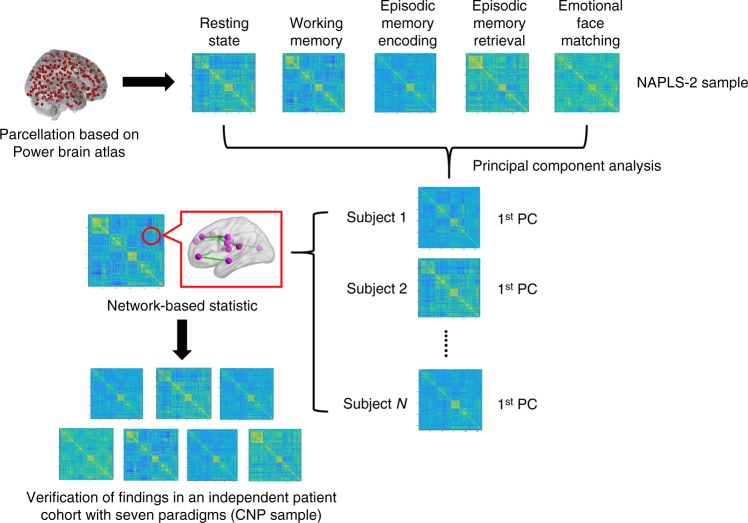
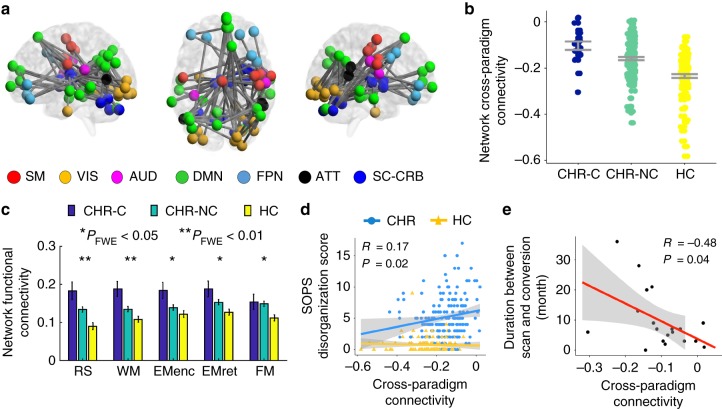
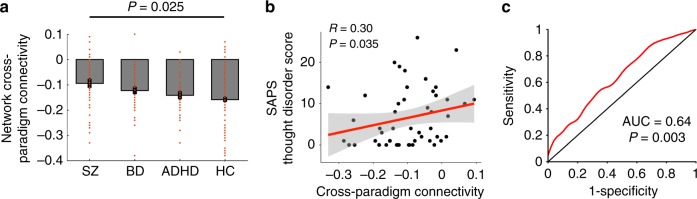
Verification
Claims the paper makes
The claims and statistics of this paper haven’t been checked yet.
Free: it reads the open-access text and checks the first 5 claims that cite a source we can check. Create a free account to check every claim.
Claims other papers make about this one
Each is checked against this paper’s own text: does it say what the citing paper says it does?
In the citing paper
“Cerebral-cerebellum connectivity disruption has been reported in several psychiatric disorders, including psychotic disorders(70), depressive disorder(71), autism(72) and attention-deficit/hyperactivity disorder(73).”
From Functional disruption of cerebello-thalamo-cortical networks in obsessive-compulsive disorder (2020) · cites this paper as [71]
Self-check
Percentages, sums and reported differences re-computed from the paper’s own numbers.
The self-check needs the paper’s full text.
Citations
Cites
Diagnostic and Statistical Manual of Mental Disorders
American Psychiatric Association (2013) · doi:10.1176/appi.books.9780890425596 · Cited by 116,369
Control of goal-directed and stimulus-driven attention in the brain
Corbetta, M., & Shulman, G. L. (2002) · Nature Reviews Neuroscience · doi:10.1038/nrn755 · Cited by 12,881
The Brain's Default Network: Anatomy, Function, and Relevance to Disease
Buckner, R. L., Andrews‐Hanna, J. R., & Schacter, D. L. (2008) · Annals of the New York Academy of Sciences · doi:10.1196/annals.1440.011 · Cited by 9,761
Biological insights from 108 schizophrenia-associated genetic loci
Schizophrenia Working Group of the Psychiatric Genomics Consortium (2014) · Nature · doi:10.1038/nature13595 · Cited by 7,577
Functional Network Organization of the Human Brain
Power, J. D., Cohen, A. L., Nelson, S. M., Wig, G. S., Barnes, K. A., Church, J. A., Vogel, A. C., Laumann, T. O., Miezin, F. M., Schlaggar, B. L., et al. (2011) · Neuron · doi:10.1016/j.neuron.2011.09.006 · Cited by 4,124
The cerebellar cognitive affective syndrome
Schmahmann, J. (1998) · Brain · doi:10.1093/brain/121.4.561 · Cited by 3,230
Network-based statistic: identifying differences in brain networks
Zalesky, A., Fornito, A., & Bullmore, E. T. (2010) · NeuroImage · doi:10.1016/j.neuroimage.2010.06.041 · Cited by 2,750
Scale for the Assessment of Negative Symptoms
Andreasen, N. C. (2014) · PsycTESTS Dataset · doi:10.1037/t12696-000 · Cited by 1,866
Multi-task connectivity reveals flexible hubs for adaptive task control
Cole, M. W., Reynolds, J. R., Power, J. D., Repovs, G., Anticevic, A., & Braver, T. S. (2013) · Nature Neuroscience · doi:10.1038/nn.3470 · Cited by 1,704
Self-citationIntrinsic and task-evoked network architectures of the human brain
Cole, M. W., Bassett, D. S., Power, J. D., Braver, T. S., & Petersen, S. E. (2014) · Neuron · doi:10.1016/j.neuron.2014.05.014 · Cited by 1,564
Cited by
Candidate biomarkers in psychiatric disorders: state of the field
Abi‐Dargham, A., Moeller, S. J., Ali, F., DeLorenzo, C., Domschke, K., Horga, G., Jutla, A., Kotov, R., Paulus, M. P., Rubio, J. M., et al. (2023) · World Psychiatry · doi:10.1002/wps.21078 · Cited by 372
Is it time to put rest to rest?
Finn, E. S. (2021) · Trends in Cognitive Sciences · doi:10.1016/j.tics.2021.09.005 · Cited by 243
“Despite all of this, empirically, it seems that using residualized versus nonresidualized task connectivity often does not substantially alter the pattern of observed results [21,34,120].”
BackgroundLanguage as a biomarker for psychosis: a natural language processing approach
Corcoran, C. M., Mittal, V. A., Bearden, C. E., E. Gur, R., Hitczenko, K., Bilgrami, Z., Savic, A., Cecchi, G. A., & Wolff, P. (2020) · Schizophrenia Research · doi:10.1016/j.schres.2020.04.032 · Cited by 186
“, 2015), and abnormal patterns of resting state functional connectivity (Anticevic et al., 2015; Colibazzi et al., 2017; Cao et al., 2018).”
BackgroundSelf-citationLynch, C. J., Gunning, F. M., & Liston, C. (2020) · Biological Psychiatry · doi:10.1016/j.biopsych.2020.01.012 · Cited by 185
Connectivity profile of thalamic deep brain stimulation to effectively treat essential tremor
Al-Fatly, B., Ewert, S., Kübler, D., Kroneberg, D., Horn, A., & Kühn, A. A. (2019) · Brain · doi:10.1093/brain/awz236 · Cited by 175
Keshavan, M. S., Collin, G., Guimond, S., Kelly, S., Prasad, K. M. R., & Lizano, P. L. (2019) · Neuroimaging Clinics of North America · doi:10.1016/j.nic.2019.09.007 · Cited by 193
Long, Y., Cao, H., Yan, C., Chen, X., Li, L., Castellanos, F. X., Bai, T., Bo, Q., Chen, G., Chen, N., et al. (2020) · NeuroImage Clinical · doi:10.1016/j.nicl.2020.102163 · Cited by 148
Self-citationCompression of Cerebellar Functional Gradients in Schizophrenia
Dong, D., Luo, C., Guell, X., Wang, Y., He, H., Duan, M., Eickhoff, S. B., & Yao, D. (2020) · Schizophrenia Bulletin · doi:10.1093/schbul/sbaa016 · Cited by 108
Potential Roles of Redox Dysregulation in the Development of Schizophrenia
Perkins, D. O., Jeffries, C. D., & Do, K. Q. (2020) · Biological Psychiatry · doi:10.1016/j.biopsych.2020.03.016 · Cited by 103
Self-citationYoshida, J., Oñate, M., Khatami, L., Vera, J. R., Nadim, F., & Khodakhah, K. (2022) · Journal of Neuroscience · doi:10.1523/jneurosci.1535-22.2022 · Cited by 115
Thalamus-related anomalies as candidate mechanism-based biomarkers for psychosis
Steullet, P. (2019) · Schizophrenia Research · doi:10.1016/j.schres.2019.05.027 · Cited by 98
Zeng, J., Yan, J., Cao, H., Su, Y., Song, Y. Y., Luo, Y., & Yang, X. (2022) · Translational Psychiatry · doi:10.1038/s41398-022-02201-8 · Cited by 94
Self-citationPrediction, Psychosis, and the Cerebellum
Moberget, T., & Ivry, R. B. (2019) · Biological Psychiatry Cognitive Neuroscience and Neuroimaging · doi:10.1016/j.bpsc.2019.06.001 · Cited by 100
Coenen, V. A., Schlaepfer, T. E., Sajonz, B., Döbrössy, M., Kaller, C. P., Urbach, H., & Reisert, M. (2020) · NeuroImage: Clinical · doi:10.1016/j.nicl.2020.102165 · Cited by 75
Thalamic Connectivity System Across Psychiatric Disorders: Current Status and Clinical Implications
Hwang, W. J., Kwak, Y. B., Cho, K. I. K., Lee, T. Y., Oh, H., Ha, M., Kim, M., & Kwon, J. S. (2021) · Biological Psychiatry Global Open Science · doi:10.1016/j.bpsgos.2021.09.008 · Cited by 88
“Functionally, it is hyperconnected and is a robust state-independent neural signature for psychosis prediction and characterization (98) and a heritable trait in schizophrenia (99).”
BackgroundFunctional connectome-wide associations of schizophrenia polygenic risk
Cao, H., Zhou, H., & Cannon, T. D. (2020) · Molecular Psychiatry · doi:10.1038/s41380-020-0699-3 · Cited by 85
“The procedures followed our previous publications [4, 15, 24].”
MethodInfluentialSelf-citationVoineskos, A. N., Jacobs, G. R., & Ameis, S. H. (2019) · Biological Psychiatry · doi:10.1016/j.biopsych.2019.09.004 · Cited by 83
“Data from clinical high risk (CHR) patients shows an intrinsic “trait-like” abnormality in cerebellothalamo-cortical circuitry that is associated with symptoms of disorganization, a pattern reliably detected in patients with schizophrenia (23).”
BackgroundSchizophrenia: A Narrative Review of Etiopathogenetic, Diagnostic and Treatment Aspects
Orsolini, L., Pompili, S., & Volpe, U. (2022) · Journal of Clinical Medicine · doi:10.3390/jcm11175040 · Cited by 111
Voineskos, A. N., Hawco, C. S., Neufeld, N. H., Turner, J. A., Ameis, S. H., Anticevic, A., Buchanan, R. W., Cadenhead, K. S., Dazzan, P., Dickie, E. W., et al. (2024) · World Psychiatry · doi:10.1002/wps.21159 · Cited by 94
Self-citationThe roles, challenges, and merits of the p value
Chén, O. Y., Bodelet, J., Saraiva, R. G., Phan, H., Di, J., Nagels, G., Schwantje, T., Cao, H., Gou, J., Reinen, J., et al. (2023) · Patterns · doi:10.1016/j.patter.2023.100878 · Cited by 100
“56, 57 Neither type of out-of-sample test, strictly speaking, examines causation ; an out-of-sample study endorsed by a significant p value, however, reduces the likelihood of model overfitting.”
BackgroundSelf-citationPredictors of Transition to Psychosis in Individuals at Clinical High Risk
Addington, J., Farris, M. S., Stowkowy, J., Santesteban‐Echarri, O., Metzak, P. D., & Kalathil, M. S. (2019) · Current Psychiatry Reports · doi:10.1007/s11920-019-1027-y · Cited by 80
Self-citationAn Activation Likelihood Estimate Meta-analysis of Thalamocortical Dysconnectivity in Psychosis
Ramsay, I. S. (2019) · Biological Psychiatry Cognitive Neuroscience and Neuroimaging · doi:10.1016/j.bpsc.2019.04.007 · Cited by 80
Abnormal Thalamocortical Circuit in Adolescents With Early-Onset Schizophrenia
Zhang, M., Palaniyappan, L. K., Deng, M., Zhang, W., Pan, Y., Fan, Z., Tan, W., Wu, G., Liu, Z., & Pu, W. (2020) · Journal of the American Academy of Child & Adolescent Psychiatry · doi:10.1016/j.jaac.2020.07.903 · Cited by 65
Long, Y., Liu, Z., Chan, C. K. Y., Wu, G., Xue, Z., Pan, Y., Chen, X., Huang, X., Li, D., & Pu, W. (2020) · Frontiers in Psychiatry · doi:10.3389/fpsyt.2020.00422 · Cited by 66
“Note that the thalamus and cerebellum were treated as two independent networks here, given that they were poorly defined into different networks as well as their special roles in the pathophysiologic mechanisms of psychotic disorders (23, 47, 48).”
BackgroundProgress in psychoradiology, the clinical application of psychiatric neuroimaging
Huang, X., Gong, Q., Sweeney, J. A., & Biswal, B. B. (2019) · British Journal of Radiology · doi:10.1259/bjr.20181000 · Cited by 60
Chauhan, P., Garg, S., Tikka, S. K., & Khattri, S. (2021) · The Cerebellum · doi:10.1007/s12311-020-01193-9 · Cited by 57
Progression from being at-risk to psychosis: next steps
Addington, J., Farris, M. S., Devoe, D. J. A., & Metzak, P. D. (2020) · Schizophrenia · doi:10.1038/s41537-020-00117-0 · Cited by 61
Self-citationCao, H., & Cannon, T. D. (2019) · American Journal of Psychiatry · doi:10.1176/appi.ajp.2019.19050480 · Cited by 61
Self-citationResting-state brain information flow predicts cognitive flexibility in humans
Chén, O. Y., Cao, H., Reinen, J., Qian, T., Gou, J., Phan, H., Vos, M. D., & Cannon, T. D. (2019) · Scientific Reports · doi:10.1038/s41598-019-40345-8 · Cited by 58
Self-citationAbram, S. V., Roach, B. J., Fryer, S. L., Calhoun, V. D., Preda, A., van Erp, T. G. M., Bustillo, J., Lim, K. O., Loewy, R. L., Stuart, B. K., et al. (2022) · Molecular Psychiatry · doi:10.1038/s41380-022-01502-0 · Cited by 56
Self-citationFunctional disruption of cerebello-thalamo-cortical networks in obsessive-compulsive disorder
Sha, Z., Edmiston, E. K., Versace, A., Fournier, J. C., Graur, S., Greenberg, T., Lima Santos, J. P., Chase, H. W., Stiffler, R. S., Bonar, L., et al. (2020) · Biological Psychiatry: Cognitive Neuroscience and Neuroimaging · doi:10.1016/j.bpsc.2019.12.002 · Cited by 48
“Cerebral-cerebellum connectivity disruption has been reported in several psychiatric disorders, including psychotic disorders(70), depressive disorder(71), autism(72) and attention-deficit/hyperactivity disorder(73).”
BackgroundCao, H., Xia, W., Hu, N., Zhang, W., Xiao, Y., Zeng, J., Sweeney, J. A., Lencer, R., Lui, S., & Gong, Q. (2021) · Schizophrenia Bulletin · doi:10.1093/schbul/sbab112 · Cited by 59
Self-citationCollin, G., Nieto-Castañón, A., Shenton, M. E., Pasternak, O., Kelly, S., Keshavan, M. S., Seidman, L. J., McCarley, R. W., Niznikiewicz, M. A., Li, H., et al. (2019) · NeuroImage Clinical · doi:10.1016/j.nicl.2019.102108 · Cited by 50
“This analysis showed that while the association between DMN hyperconnectivity and poor outcome is indeed driven by the converter group, the association between FPN hyperconnectivity and poor outcome seems to be driven mainly by the treatment-refractory group, who show significantly higher FPN within-network connectivi…”
InfluentialSelf-citationGhoshal, A., Uygun, D. S., Yang, L., McNally, J. M., López-Huerta, V. G., Arias-García, M. A., Báez-Nieto, D., Allen, A., Fitzgerald, M. L., Choi, S., et al. (2020) · Translational Psychiatry · doi:10.1038/s41398-020-0685-1 · Cited by 47
Mancini, V., Zöller, D., Schneider, M., Schaer, M., & Eliez, S. (2020) · Biological Psychiatry Cognitive Neuroscience and Neuroimaging · doi:10.1016/j.bpsc.2020.04.015 · Cited by 57
Zhu, T., Wang, Z., Zhou, C., Fang, X., Huang, C., Xie, C., Ge, H., Zheng, Y., Zhang, X., & Chen, J. (2022) · Frontiers in Psychiatry · doi:10.3389/fpsyt.2022.957685 · Cited by 53
“Similar findings were also found in patients with schizophrenia through a study of an independent clinical sample (111).”
ResultBridging the Gap? Altered Thalamocortical Connectivity in Psychotic and Psychedelic States
Avram, M., Rogg, H. V., Korda, A. I., Andreou, C., Müller, F., & Borgwardt, S. (2021) · Frontiers in Psychiatry · doi:10.3389/fpsyt.2021.706017 · Cited by 51
Luo, L., Li, Q., Wang, Y., He, N., Wang, Y., You, W., Zhang, Q., Long, F., Chen, L., Zhao, Y., et al. (2023) · Schizophrenia Bulletin · doi:10.1093/schbul/sbad042 · Cited by 44
Grosenick, L., Shi, T. C., Gunning, F. M., Dubin, M. J., Downar, J. H., & Liston, C. M. (2018) · Biological Psychiatry Cognitive Neuroscience and Neuroimaging · doi:10.1016/j.bpsc.2019.04.013 · Cited by 49
The thalamus in psychosis spectrum disorder
Anticevic, A., & Halassa, M. M. (2023) · Frontiers in Neuroscience · doi:10.3389/fnins.2023.1163600 · Cited by 50
“Consistent with this notion, the mediodorsal thalamus appears to drive the main observation of neural dysconnectivity in schizophrenia; recent studies have found reduced connectivity between higher-order thalamus and dorsal striatum, suggesting altered prefrontal corticostriato-thalamo-cortical functional connectivity…”
ResultSelf-citationZhang, W., Yang, C., Cao, Z., Li, Z., Zhuo, L., Tan, Y., He, Y., Yao, L., Zhou, Q. F., Gong, Q., et al. (2023) · EBioMedicine · doi:10.1016/j.ebiom.2023.104541 · Cited by 47
Disrupted Corollary Discharge in Schizophrenia: Evidence From the Oculomotor System
Thakkar, K. N., & Rolfs, M. (2019) · Biological Psychiatry Cognitive Neuroscience and Neuroimaging · doi:10.1016/j.bpsc.2019.03.009 · Cited by 53
“These neural changes are related to clinical symptoms and cognitive functioning (94–96) and are predictive of conversion to the illness in individuals at high risk for developing schizophrenia (97).”
Kim, D., Moussa‐Tooks, A. B., Bolbecker, A. R., Apthorp, D., Newman, S. D., O’Donnell, B. F., & Hetrick, W. P. (2020) · Human Brain Mapping · doi:10.1002/hbm.25002 · Cited by 52
“…direction of resting-state sensorimotor functional connectivity have been observed in the cerebella of individuals with schizophrenia, increased (Cao et al., 2018) or decreased (Anticevic et al., 2015; Berman et al., 2016) hyperconnectivity of the cerebellum to the sensorimotor system has been…”
BackgroundCerebellar circuitry and auditory verbal hallucinations: An integrative synthesis and perspective
Pinheiro, A. P., Schwartze, M., & Kotz, S. A. (2020) · Neuroscience & Biobehavioral Reviews · doi:10.1016/j.neubiorev.2020.08.004 · Cited by 45
Implications of mRNA translation dysregulation for neurological disorders
Jishi, A., Qi, X., & Miranda, H. C. (2020) · Seminars in Cell and Developmental Biology · doi:10.1016/j.semcdb.2020.09.005 · Cited by 49
Cerebellar Functional Dysconnectivity in Drug-Naïve Patients With First-Episode Schizophrenia
Cao, H., Xia, W., Zhang, W., Xiao, Y., Zeng, J., Sweeney, J. A., Gong, Q., & Lui, S. (2022) · Schizophrenia Bulletin · doi:10.1093/schbul/sbac121 · Cited by 40
Self-citationEvidence for cerebello-thalamo-cortical hyperconnectivity as a heritable trait for schizophrenia
Cao, H., Ingvar, M., Hultman, C. M., & Cannon, T. D. (2019) · Translational Psychiatry · doi:10.1038/s41398-019-0531-5 · Cited by 44
Self-citationClinical anatomy of the precuneus and pathogenesis of the schizophrenia
Messina, A., Cuccì, G., Crescimanno, C., & Signorelli, M. S. (2023) · Anatomical Science International · doi:10.1007/s12565-023-00730-w · Cited by 41
Non-rapid eye movement sleep and wake neurophysiology in schizophrenia
Kozhemiako, N., Wang, J., Jiang, C., Wang, L. A., Gai, G., Zou, K., Wang, Z., Yu, X., Zhou, L., Li, S., et al. (2022) · eLife · doi:10.7554/elife.76211 · Cited by 35
Tan, W., Ouyang, X., Huang, D., Wu, Z., Liu, Z., He, Z., & Long, Y. (2022) · Journal of Affective Disorders · doi:10.1016/j.jad.2022.12.019 · Cited by 44
Psychotic disorders as a framework for precision psychiatry
Coutts, F., Koutsouleris, N., & McGuire, P. K. (2023) · Nature Reviews Neurology · doi:10.1038/s41582-023-00779-1 · Cited by 57
Emerging Temporal Lobe Dysfunction in People at Clinical High Risk for Psychosis
Allen, P., Moore, H. M., Corcoran, C. M., Gilleen, J., Kozhuharova, P., Reichenberg, A., & Malaspina, D. (2019) · Frontiers in Psychiatry · doi:10.3389/fpsyt.2019.00298 · Cited by 42
“(88) reports that CHR individuals show an intrinsic abnormality in cerebellar–thalamic–frontal cortical circuitry associated with disorganization symptoms that is significantly more pronounced among converters than nonconverters.”
BackgroundPredictive validity of conversion from the clinical high risk syndrome to frank psychosis
Sykes, L. Y., Ferrara, M., Addington, J., Bearden, C. E., Cadenhead, K. S., Cannon, T. D., Cornblatt, B. A., Perkins, D. O., Mathalon, D. H., Seidman, L. J., et al. (2019) · Schizophrenia Research · doi:10.1016/j.schres.2019.12.002 · Cited by 36
Self-citationLong, Y., Ouyang, X., Yan, C., Wu, Z., Huang, X., Pu, W., Cao, H., Liu, Z., & Palaniyappan, L. K. (2023) · Human Brain Mapping · doi:10.1002/hbm.26202 · Cited by 36
“Both these two atlases have been proved to be valid (Cao et al., 2014) and widely applied in various fMRI studies (Cao et al., 2021, 2018; Long et al., 2019; Tan et al., 2020).”
BackgroundSelf-citationEffectiveness of Cerebellar Circuitry Modulation in Schizophrenia: A Systematic Review
Escelsior, A., Belvederi Murri, M., Calcagno, P., Cervetti, A., Caruso, R., Croce, E., Grassi, L., & Amore, M. (2019) · Journal of Nervous & Mental Disease · doi:10.1097/nmd.0000000000001064 · Cited by 32
Duan, L. F., Dam, N. T. V., Ai, H., & Xu, P. (2020) · Translational Psychiatry · doi:10.1038/s41398-020-01088-7 · Cited by 36
Thalamic dysconnectivity in the psychosis risk syndrome and early illness schizophrenia
Fryer, S. L., Ferri, J. M., Roach, B. J., Loewy, R. L., Stuart, B. K., Anticevic, A., Ford, J. M., & Mathalon, D. H. (2021) · Psychological Medicine · doi:10.1017/s0033291720004882 · Cited by 34
“The analysis revealed distributed hyperconnectivity in PRS that was associated with disorganization symptoms and predictive of time to psychosis transition, which suggests that increased cerebello–thalamo–cortical connectivity may be a trait marker of psychosis risk (Cao et al., 2018).”
BackgroundSelf-citationCao, H., Lencz, T., Gallego, J. A., Rubio, J. M., John, M., Barber, A. D., Birnbaum, M. L., Robinson, D. G., & Malhotra, A. K. (2023) · American Journal of Psychiatry · doi:10.1176/appi.ajp.20220719 · Cited by 34
Self-citationCerebellar gray matter volume changes in patients with schizophrenia: A voxel-based meta-analysis
Li, X., Liu, N., Yang, C., Zhang, W., & Lui, S. (2022) · Frontiers in Psychiatry · doi:10.3389/fpsyt.2022.1083480 · Cited by 32
“Right cerebellum, hemispheric lobule VI, BA 19 (24)”
BackgroundLinking cerebellar functional gradients to transdiagnostic behavioral dimensions of psychopathology
Dong, D., Guell, X., Genon, S., Wang, Y., Ji, C., Eickhoff, S. B., Yao, D., & Luo, C. (2022) · NeuroImage Clinical · doi:10.1016/j.nicl.2022.103176 · Cited by 32
“cerebellar circuits can serve as a state-independent neural signature for psychosis prediction and characterization (25).”
BackgroundReduced GABA/glutamate in the thalamus of individuals at clinical high risk for psychosis
Quiñones, G. M., Mayeli, A., Yushmanov, V. E., Hetherington, H. P., & Ferrarelli, F. (2020) · Neuropsychopharmacology · doi:10.1038/s41386-020-00920-4 · Cited by 28
Alemán‐Gómez, Y., Baumgartner, T., Klauser, P., Cleusix, M., Jenni, R., Hagmann, P., Conus, P., Kim, Q., Cuadra, M. B., Baumann, P., et al. (2022) · Schizophrenia Bulletin · doi:10.1093/schbul/sbac113 · Cited by 24
Jensen, K. M., Calhoun, V. D., Fu, Z., Yang, K., Faria, A. V., Ishizuka, K., Sawa, A., Andrés-Camazón, P., Coffman, B. A., Seebold, D., et al. (2024) · NeuroImage Clinical · doi:10.1016/j.nicl.2024.103584 · Cited by 33
Ellis, J. K., Walker, E. F., & Goldsmith, D. R. (2020) · Frontiers in Psychiatry · doi:10.3389/fpsyt.2020.567534 · Cited by 31
Self-citationMayeli, A., Wilson, J. D., Donati, F. L., LaGoy, A. D., & Ferrarelli, F. (2022) · SLEEP · doi:10.1093/sleep/zsac193 · Cited by 30
Gaebler, A. J., Fakour, N., Stöhr, F., Zweerings, J., Taebi, A., Suslova, M., Dukart, J., Hipp, J. F., Adhikari, B. M., Kochunov, P., et al. (2023) · Translational Psychiatry · doi:10.1038/s41398-023-02344-2 · Cited by 30
Xi, C., Liu, Z., Yang, J., Zhang, W., Deng, M., Pan, Y., Cheng, Y., & Pu, W. (2020) · Schizophrenia Research · doi:10.1016/j.schres.2020.04.033 · Cited by 28
Haas, S. S., Antonucci, L. A., Wenzel, J., Ruef, A., Biagianti, B., Paolini, M., Rauchmann, B., Weiske, J., Kambeitz, J. P., Borgwardt, S., et al. (2020) · Neuropsychopharmacology · doi:10.1038/s41386-020-00877-4 · Cited by 31
Anteraper, S. A., Guell, X., Collin, G., Qi, Z., Ren, J., Nair, A., Seidman, L. J., Keshavan, M. S., Zhang, T., Tang, Y., et al. (2021) · Schizophrenia Bulletin · doi:10.1093/schbul/sbab038 · Cited by 24
Self-citationDigging deeper in the proteome of different regions from schizophrenia brains
Reis‐de‐Oliveira, G., Zuccoli, G. S., Fioramonte, M., Schimitt, A. C. B., Falkai, P., de Almeida, V., & Martins‐de‐Souza, D. (2020) · Journal of Proteomics · doi:10.1016/j.jprot.2020.103814 · Cited by 26
Argyropoulos, G. D., Christidi, F., Karavasilis, E., Velonakis, G., Antoniou, A., Bede, P., Seimenis, I., Kelekis, N., Douzenis, A., Papakonstantinou, O., et al. (2021) · Progress in Neuro-Psychopharmacology and Biological Psychiatry · doi:10.1016/j.pnpbp.2020.110034 · Cited by 24
Romer, A. L., & Pizzagalli, D. A. (2021) · Biological Psychiatry Global Open Science · doi:10.1016/j.bpsgos.2021.06.002 · Cited by 22
Asimakidou, E., Job, X., & Kilteni, K. (2022) · Schizophrenia · doi:10.1038/s41537-022-00264-6 · Cited by 30
González-Vivas, C., Soldevila-Matías, P., Sparano, O., García‐Martí, G., Martí‐Bonmatí, L., Crespo‐Facorro, B., Aleman, A., & Sanjuán, J. (2019) · European Psychiatry · doi:10.1016/j.eurpsy.2019.04.009 · Cited by 23
Wei, Y., Xue, K., Yang, M., Wang, H., Chen, J., Han, S., Wang, X., Li, H., Zhang, Y., Song, X., et al. (2021) · Schizophrenia Bulletin · doi:10.1093/schbul/sbab142 · Cited by 25
Strauss, G. P., Bartolomeo, L. A., & Luther, L. (2021) · Psychological Medicine · doi:10.1017/s003329172100204x · Cited by 27
Jiang, S., Jia, Q., Peng, Z., Zhou, Q., An, Z., Chen, J., & Yi, Q. (2025) · Schizophrenia · doi:10.1038/s41537-025-00583-4 · Cited by 28
“By constructing structural covariance networks at the individual level, researchers can delineate patient-speci fi c variations with greater precision than conventional group-level approaches 58 .”
Park, S. H., Kim, T., Ha, M., Moon, S., Lho, S. K., Kim, M., & Kwon, J. S. (2021) · Schizophrenia · doi:10.1038/s41537-021-00193-w · Cited by 23
Schiavone, S., Tucci, P., Trabace, L., & Morgese, M. G. (2019) · Molecules · doi:10.3390/molecules24213993 · Cited by 21
“The increased oxidative stress observed in this brain region may also be considered a possible trigger of the cerebello-thalamo-cortical network dysfunctions which have been described as predictors of disease progression in individuals at ultra-high risk for psychosis [12,90].”
BackgroundDiscovery and Validation of Prediction Algorithms for Psychosis in Youths at Clinical High Risk
Worthington, M. A., Cao, H., & Cannon, T. D. (2020) · Biological Psychiatry: Cognitive Neuroscience and Neuroimaging · doi:10.1016/j.bpsc.2019.10.006 · Cited by 20
Self-citationNowrangi, M. A., Marano, C. M., Oishi, K., Mori, S., Sair, H. I., Outen, J. D., Leoutsakos, J., Lyketsos, C. G., & Rosenberg, P. B. (2020) · International Psychogeriatrics · doi:10.1017/s1041610220000113 · Cited by 23
“In schizophrenia research using functional neuroimaging such as fMRI, regional hyperconnectivity is thought to be a potential mechanism for psychotic symptom presentation (Bernard et al., 2017; Cao, 2018; Dandash, 2014; Fusar-Poli, 2011).”
BackgroundIsolation of Distinct Networks Driving Action and Cognition in Psychomotor Processes
Moussa‐Tooks, A. B., Beermann, A., Felix, K. M., Coleman, M., Bouix, S., Holt, D. J., Lewandowski, K. E., Öngür, D., Breier, A. F., Shenton, M. E., et al. (2024) · Biological Psychiatry · doi:10.1016/j.biopsych.2024.02.1013 · Cited by 23
Wang, L., Lin, S., Tian, L., Wu, H., Jin, W., Wang, W., Pan, W.-G., Yang, C.-L., Ren, Y., Ma, X., et al. (2024) · Asian Journal of Psychiatry · doi:10.1016/j.ajp.2024.104042 · Cited by 19
Clinical Strategies and Technical Challenges in Psychoradiology
Li, F. Y., Wu, D., Lui, S., Gong, Q., & Sweeney, J. A. (2019) · Neuroimaging Clinics of North America · doi:10.1016/j.nic.2019.09.001 · Cited by 19
Osborne, K. J., Damme, K. S. F., Gupta, T., Dean, D. J., Bernard, J. A., & Mittal, V. A. (2020) · Psychological Medicine · doi:10.1017/s0033291719004161 · Cited by 24
“Although we did not make a priori predictions regarding hypo- or hyperconnectivity in regards to cerebellar resting state connectivity, increased cerebello-striatal connectivity in the CHR group is consistent with past work demonstrating hyperconnectivity in cerebello-striatal connectivity in CHR and schizophrenia pop…”
BackgroundResultWorthington, M., Addington, J., Bearden, C. E., Cadenhead, K. S., Cornblatt, B. A., Keshavan, M. S., Mathalon, D. H., McGlashan, T. H., Perkins, D. O., Stone, W. S., et al. (2021) · Schizophrenia Bulletin · doi:10.1093/schbul/sbab115 · Cited by 19
Self-citationChen, J., Xue, K., Yang, M., Wang, K., Xu, Y., Wen, B., Cheng, J., Han, S., & Wei, Y. (2022) · Frontiers in Neuroscience · doi:10.3389/fnins.2022.821078 · Cited by 21
“Interactions between the posterior lateral cerebellum (e.g., crus I/II) and the prefrontal cortex underlie the engagement of the cerebrum in higher-level functions like cognitive control and processing (Buckner et al., 2011; Carass et al., 2018).”
BackgroundLiu, T., Zhang, J., Dong, X., Li, Z., Shi, X., Tong, Y., Yang, R., Wu, J., Wang, C., & Yan, T. (2019) · Frontiers in Psychiatry · doi:10.3389/fpsyt.2019.00553 · Cited by 29
Zhang, W., Qiu, C., & Lui, S. (2025) · Schizophrenia Bulletin · doi:10.1093/schbul/sbaf002 · Cited by 27
Functional brain connectivity in a rodent seizure model of autistic-like behavior
Mouchati, P. R., Barry, J. M., & Holmes, G. L. (2019) · Epilepsy & Behavior · doi:10.1016/j.yebeh.2019.03.046 · Cited by 17
The Cerebellum Links to Positive Symptoms of Psychosis: A Systematic Review and Meta-analysis
Pinheiro, A. P., Johnson, J. F., Amorim, M., Roberto, M. S., Schwartze, M., Kotz, S. A., & Shenton, M. E. (2021) · Schizophrenia Bulletin Open · doi:10.1093/schizbullopen/sgab039 · Cited by 17
“Accordingly, abnormalities in cerebellar morphology 22 and connectivity 23,24 have been identified as the most significant predictors of psychotic symptoms.”
Kristensen, T. D., Glenthøj, L. B., Ambrosen, K. S., Syeda, W. T., Raghava, J. M., Krakauer, K., Wenneberg, C., Fagerlund, B., Pantelis, C., Glenthoj, B. Y., et al. (2021) · Acta Psychiatrica Scandinavica · doi:10.1111/acps.13355 · Cited by 19
Chan, S. Y., Brady, R. O., Lewandowski, K. E., Higgins, A., Öngür, D., & Hall, M. (2021) · Molecular Psychiatry · doi:10.1038/s41380-021-01319-3 · Cited by 19
Cao, H. (2022) · Psychological Medicine · doi:10.1017/s0033291722001829 · Cited by 17
Self-citationHardikar, S., Mckeown, B., Schaare, H. L., Wallace, R. S., Xu, T., Lauckner, M. E., Valk, S. L., Margulies, D. S., Turnbull, A. G., Bernhardt, B. C., et al. (2024) · eLife · doi:10.7554/elife.93689 · Cited by 22
“…of brain activity at rest have the potential for elucidating the organisation of neural function, different types of psychiatric conditions ( Cao et al., 2018 ; Koban et al., 2021 ), developmental changes including those during adolescence and old age ( Dosenbach et al., 2010 ; Cui et al.,…”
Recent Updates on Predicting Conversion in Youth at Clinical High Risk for Psychosis
Caballero, N., Machiraju, S. N., Diomino, A., Kennedy, L., Kadivar, A., & Cadenhead, K. S. (2023) · Current Psychiatry Reports · doi:10.1007/s11920-023-01456-2 · Cited by 20
“Previous studies using resting-state functional connectivity MRI (rs fMRI) have identified thalamocortical and thalamocerebellar dysconnectivity and hyperconnectivity with sensorimotor cortical areas respectively as potential biomarkers of psychosis risk in CHR-C participants [32, 33].”
BackgroundSelf-citationVargas, T., Damme, K. S. F., Ered, A., Capizzi, R., Frosch, I. R., Ellman, L. M., & Mittal, V. A. (2020) · Biological Psychiatry Cognitive Neuroscience and Neuroimaging · doi:10.1016/j.bpsc.2020.06.002 · Cited by 21
“Cerebello-thalamo-cortical hyperconnectivity (141).”
Cao, H., & Cannon, T. D. (2021) · Human Brain Mapping · doi:10.1002/hbm.25347 · Cited by 14
“…other regions such as cerebellum, has been implicated in a variety of common mental disorders including schizophrenia (Becerril & Barch, 2013; H. Cao et al., 2018; H. Cao et al., 2019), obsessive compulsive disorder (Anticevic et al., 2014; Carlisi et al., 2017; Sha et al., 2020), autism…”
BackgroundSelf-citationRoell, L., Keeser, D., Papazov, B., Lembeck, M., Papazova, I., Greska, D., Muenz, S., Schneider-Axmann, T., Sykorova, E. B., Thieme, C. E., et al. (2023) · Schizophrenia Bulletin · doi:10.1093/schbul/sbad113 · Cited by 18
Association between aerobic fitness and the functional connectome in patients with schizophrenia
Roell, L., Maurus, I., Keeser, D., Karali, T., Papazov, B., Hasan, A., Schmitt, A., Papazova, I., Lembeck, M., Hirjak, D., et al. (2022) · European Archives of Psychiatry and Clinical Neuroscience · doi:10.1007/s00406-022-01411-x · Cited by 15
“Recent evidence proposes a state-independent cerebello-thalamocortical hyperconnectivity compared to healthy controls as a heritable neural signature in schizophrenia related to domains of positive symptomatology, especially disorganized thoughts and behavior [73, 74].”
BackgroundResult
Metadata
- Authors
- Cao, H., Chén, O. Y., Chung, Y., Forsyth, J. K., McEwen, S. C., Gee, D. G., Bearden, C. E., Addington, J., Goodyear, B., Cadenhead, K. S., Mirzakhanian, H., Cornblatt, B. A., Carrión, R. E., Mathalon, D. H., McGlashan, T. H., Perkins, D. O., Belger, A., Seidman, L. J., Thermenos, H., Tsuang, M. T., van Erp, T. G. M., Walker, E. F., Hamann, S., Anticevic, A., Woods, S. W., & Cannon, T. D.
- Affiliations
- Yale University (US)
- University of California, Los Angeles (US)
- University of Calgary (CA)
- University of California San Diego (US)
- Zucker Hillside Hospital (US)
- University of California, San Francisco (US)
- University of North Carolina at Chapel Hill (US)
- Beth Israel Deaconess Medical Center (US)
- Emory University (US)
- Corresponding author
- Cao, Hengyi
- Cannon, Tyrone D.
- ORCID
- Cao, Hengyi
- Chén, Oliver Y.
- Chung, Yoonho
- Forsyth, Jennifer K.
- McEwen, Sarah C.
- Gee, Dylan G.
- Bearden, Carrie E.
- Addington, Jean
- Goodyear, Bradley
- Cadenhead, Kristin S.
- Cornblatt, Barbara A.
- Carrión, Ricardo E.
- Mathalon, Daniel H.
- McGlashan, Thomas H.
- Perkins, Diana O.
- Seidman, Larry J.
- Tsuang, Ming T.
- van Erp, Theo G. M.
- Walker, Elaine F.
- Hamann, Stephan
- Anticevic, Alan
- Woods, Scott W.
- Cannon, Tyrone D.
- Venue
- Nature Communications
- Published
- 2018-09-21
- Volume
- 9
- Issue
- 1
- Pages
- 3836-3836
- ISSN
- 2041-1723 (ISSN-L)
- PMC
- PMC6155100
- OpenAlex
- W2890664143
- Semantic Scholar
- 335caa4a2305cacb35edbf49e4fabdb72b170df8
- Cited by
- 211
- References
- 70
- Citations by year
- 2026: 14 · 2025: 25 · 2024: 35 · 2023: 24 · 2022: 27 · 2021: 22 · 2020: 38 · 2019: 25 · 2018: 1
- FWCI
- 16.92
- Type
- journal article
- Language
- en
- Open access
- gold
- doi.org
- Licence
- cc-by
- creativecommons.org/licenses/by/4.0 (tdm)
- creativecommons.org/licenses/by/4.0 (vor)
- Locations
- Nature Communications (publishedVersion, cc-by)
- Europe PMC (PubMed Central) (publishedVersion, cc-by)
- PubMed Central (publishedVersion, cc-by)
- PubMed (publishedVersion)
- Carolina Digital Repository (University of North Carolina at Chapel Hill) (submittedVersion)
- RePEc: Research Papers in Economics (submittedVersion)
- DOAJ (DOAJ: Directory of Open Access Journals) (submittedVersion, cc-by-sa)
- DOAJ (DOAJ: Directory of Open Access Journals) (submittedVersion)
- eScholarship (California Digital Library) (submittedVersion, cc-by)
- UNC Libraries
- Funders
- Brain and Behavior Research Foundation (27068)
- U.S. Department of Health & Human Services | NIH | National Institute of Mental Health (P50 MH066286, U01 MH066134, U01 MH081944, U01 MH081857, R01 MH076989, R01 U01 MH066069, U01 MH081928, U01 MH081988, U01 MH82022, U01 MH081902)
- Topics
- Health Sciences › Medicine › Psychiatry and Mental health › Schizophrenia research and treatment
- Life Sciences › Neuroscience › Cognitive Neuroscience › Functional Brain Connectivity Studies
- Social Sciences › Psychology › Clinical Psychology › Psychopathy, Forensic Psychiatry, Sexual Offending
- Keywords
- psychosis prediction, clinical high risk for psychosis, schizophrenia, disorganization symptoms, brain network architecture, North American Prodrome Longitudinal Study
- MeSH terms
- Brain, Humans, Magnetic Resonance Imaging, Psychotic Disorders, Schizophrenia, Cohort Studies, Case-Control Studies, Principal Component Analysis, Connectome
About these checks
Registry, retraction, Cites and statistics results are computed, not judged, with one exception: a printed reference that no index lists is read once by a model before it counts as a citation error. Claims are extracted by a model and kept only when their quote appears verbatim in the text; each cited source is then checked, with a model’s help, for whether it says what the claim relies on. Those verdicts can be wrong — read the claim’s quote and the cited source before relying on one.
Statistics and arithmetic are recomputed, not judged.
Confidence bands are shown only for fields calibrated on our annotated test set. None is calibrated yet, so no band is shown.
What counts as a claim ›How we measure confidence ›How we check this ›
Are you an author, or do you see a problem with this page? Request a review
Data sources
Bibliographic data: Semantic Scholar, OpenAlex, Crossref.
Contains information from the Semantic Scholar Academic Graph Datasets, made available under the ODC Attribution License (ODC-BY 1.0).
Semantic Scholar’s data is described in: Kinney, R., et al. (2023). The Semantic Scholar Open Data Platform. arXiv:2301.10140.
