

Cerebello-thalamo-cortical hyperconnectivity as a state-independent functional neural signature for psychosis prediction and characterization
Open accessThe DOI matches its Crossref record; 70 of the 70 references it cites were found in a registry or an index.
Abstract
Understanding the fundamental alterations in brain functioning that lead to psychotic disorders remains a major challenge in clinical neuroscience. In particular, it is unknown whether any state-independent biomarkers can potentially predict the onset of psychosis and distinguish patients from healthy controls, regardless of paradigm. Here, using multi-paradigm fMRI data from the North American Prodrome Longitudinal Study consortium, we show that individuals at clinical high risk for psychosis display an intrinsic “trait-like” abnormality in brain architecture characterized as increased connectivity in the cerebello–thalamo–cortical circuitry, a pattern that is significantly more pronounced among converters compared with non-converters. This alteration is significantly correlated with disorganization symptoms and predictive of time to conversion to psychosis. Moreover, using an independent clinical sample, we demonstrate that this hyperconnectivity pattern is reliably detected and specifically present in patients with schizophrenia. These findings implicate cerebello–thalamo–cortical hyperconnectivity as a robust state-independent neural signature for psychosis prediction and characterization.
Overview
The claims and statistics of this paper haven’t been checked yet.
Free: it reads the open-access text and checks the first 5 claims that cite a source we can check. Create a free account to check every claim.
Integrity signals
Registry
Cites
Statistics
Figures
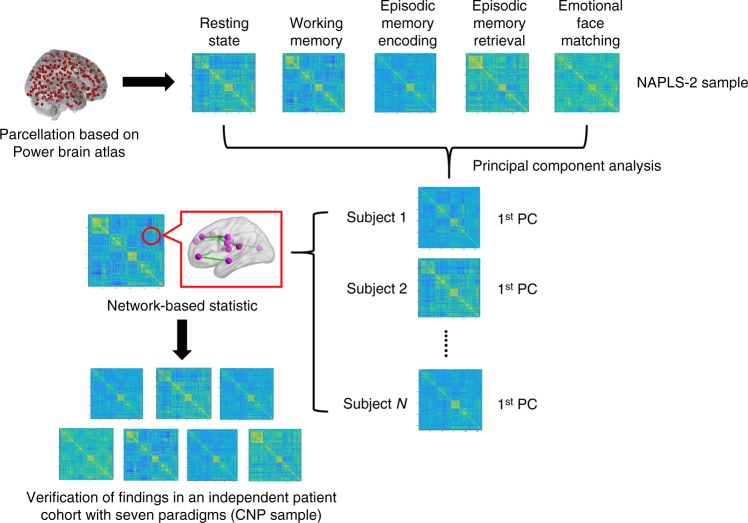
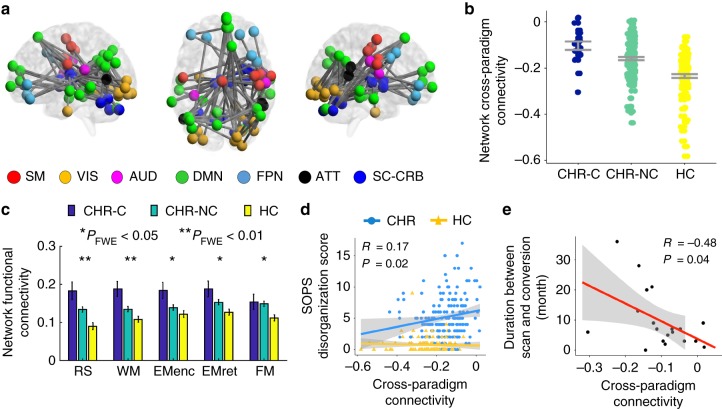
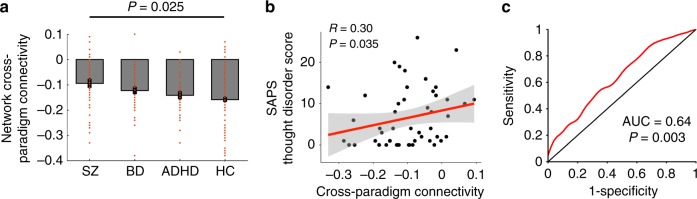
Verification
Claims the paper makes
The claims and statistics of this paper haven’t been checked yet.
Free: it reads the open-access text and checks the first 5 claims that cite a source we can check. Create a free account to check every claim.
Claims other papers make about this one
Each is checked against this paper’s own text: does it say what the citing paper says it does?
In the citing paper
“Cerebral-cerebellum connectivity disruption has been reported in several psychiatric disorders, including psychotic disorders(70), depressive disorder(71), autism(72) and attention-deficit/hyperactivity disorder(73).”
From Functional disruption of cerebello-thalamo-cortical networks in obsessive-compulsive disorder (2020) · cites this paper as [71]
Self-check
Percentages, sums and reported differences re-computed from the paper’s own numbers.
The self-check needs the paper’s full text.
Citations
Cites
Diagnostic and Statistical Manual of Mental Disorders
American Psychiatric Association (2013) · doi:10.1176/appi.books.9780890425596 · Cited by 116,369
Control of goal-directed and stimulus-driven attention in the brain
Corbetta, M., & Shulman, G. L. (2002) · Nature Reviews Neuroscience · doi:10.1038/nrn755 · Cited by 12,881
The Brain's Default Network: Anatomy, Function, and Relevance to Disease
Buckner, R. L., Andrews‐Hanna, J. R., & Schacter, D. L. (2008) · Annals of the New York Academy of Sciences · doi:10.1196/annals.1440.011 · Cited by 9,761
Biological insights from 108 schizophrenia-associated genetic loci
Schizophrenia Working Group of the Psychiatric Genomics Consortium (2014) · Nature · doi:10.1038/nature13595 · Cited by 7,577
Functional Network Organization of the Human Brain
Power, J. D., Cohen, A. L., Nelson, S. M., Wig, G. S., Barnes, K. A., Church, J. A., Vogel, A. C., Laumann, T. O., Miezin, F. M., Schlaggar, B. L., et al. (2011) · Neuron · doi:10.1016/j.neuron.2011.09.006 · Cited by 4,124
The cerebellar cognitive affective syndrome
Schmahmann, J. (1998) · Brain · doi:10.1093/brain/121.4.561 · Cited by 3,230
Network-based statistic: identifying differences in brain networks
Zalesky, A., Fornito, A., & Bullmore, E. T. (2010) · NeuroImage · doi:10.1016/j.neuroimage.2010.06.041 · Cited by 2,750
Scale for the Assessment of Negative Symptoms
Andreasen, N. C. (2014) · PsycTESTS Dataset · doi:10.1037/t12696-000 · Cited by 1,866
Multi-task connectivity reveals flexible hubs for adaptive task control
Cole, M. W., Reynolds, J. R., Power, J. D., Repovs, G., Anticevic, A., & Braver, T. S. (2013) · Nature Neuroscience · doi:10.1038/nn.3470 · Cited by 1,704
Self-citationIntrinsic and task-evoked network architectures of the human brain
Cole, M. W., Bassett, D. S., Power, J. D., Braver, T. S., & Petersen, S. E. (2014) · Neuron · doi:10.1016/j.neuron.2014.05.014 · Cited by 1,564
Cited by
Items 101–200 of 211
Shinn, A. K., Puerto, A. M. H., Roh, Y. S., Ho, V. M., Hwang, M., Cohen, B. M., Öngür, D., & Camprodon, J. A. (2023) · Frontiers in Psychiatry · doi:10.3389/fpsyt.2023.1218321 · Cited by 12
Functional and structural abnormalities of thalamus in individuals at early stage of schizophrenia
Wang, Y., Ouyang, L., Fan, L., Zheng, W., Li, Z., Tang, J., Liu, Y., Li, C., Jin, K., Liu, W., et al. (2024) · Schizophrenia Research · doi:10.1016/j.schres.2024.07.045 · Cited by 13
Zou, W., Song, P., Lu, W., Shao, R., Zhang, R., Yau, S., Yuan, T., Wang, Y., & Lin, K. (2022) · Asian Journal of Psychiatry · doi:10.1016/j.ajp.2022.103307 · Cited by 12
Wei, Q., Zhao, L., Zou, Y., Wang, J., Qiu, Y., Niu, M., Kang, Z., Liu, X., Tang, Y., Li, C., et al. (2020) · Progress in Neuro-Psychopharmacology and Biological Psychiatry · doi:10.1016/j.pnpbp.2020.109917 · Cited by 13
Cross-paradigm connectivity: reliability, stability, and utility
Cao, H., Chén, O. Y., McEwen, S. C., Forsyth, J. K., Gee, D. G., Bearden, C. E., Addington, J., Goodyear, B. G., Cadenhead, K. S., Mirzakhanian, H., et al. (2020) · Brain Imaging and Behavior · doi:10.1007/s11682-020-00272-z · Cited by 15
“…influence our findings, such as preprocessing parameters (Braun et al. 2012), filter frequency (Braun et al. 2012; Deuker et al. 2009a), noise correction strategy (Braun et al. 2012; Cao et al. 2018b; Liao et al. 2013), connectivity metrics (Fiecas et al. 2013; Liang et al. 2012), among others.”
BackgroundMethodResultSelf-citationHwang, M., Roh, Y. S., Talero, J., Cohen, B. M., Baker, J. T., Brady, R. O., Öngür, D., & Shinn, A. K. (2021) · NeuroImage Clinical · doi:10.1016/j.nicl.2021.102893 · Cited by 15
“…et al., 2012) of BD patients, though different rates have been reported (Baethge et al., 2005; Black and Nasrallah, 1989; Braunig et al., 2009; Carlson and Goodwin, 1973; Chaturvedi and Sinha, 1990; Goghari and Harrow, 2016; Hammersley et al., 2003; Keck et al., 2003; Kumari et al., 2013;…”
ResultAbram, S. V., Hua, J. P. Y., Nicholas, S., Roach, B. J., Keedy, S., Sweeney, J. A., Mathalon, D. H., & Ford, J. M. (2024) · Biological Psychiatry Cognitive Neuroscience and Neuroimaging · doi:10.1016/j.bpsc.2024.01.010 · Cited by 15
Self-citationPérez-Rando, M., García‐Martí, G., Escartí, M. J., Salgado‐Pineda, P., McKenna, P. J., Pomarol‐Clotet, E., Grasa, E., Postiguillo, A., Corripio, I., & Nácher, J. (2024) · Progress in Neuro-Psychopharmacology and Biological Psychiatry · doi:10.1016/j.pnpbp.2024.110960 · Cited by 12
Multimodal fusion of brain signals for robust prediction of psychosis transition
Reinen, J., Polosecki, P. I., Castro, E., Corcoran, C. M., Cecchi, G., & Colibazzi, T. (2024) · Schizophrenia · doi:10.1038/s41537-024-00464-2 · Cited by 14
“Finally, hyperactive cerebello-thalamo-cortical circuitry may predict time to diagnosis 21 .”
BackgroundWei, Y., Wang, Z., Xue, K., Niu, X., Ma, L., Han, S., Wen, B., Zhang, Y., Chen, H., & Cheng, J. (2025) · Schizophrenia · doi:10.1038/s41537-025-00558-5 · Cited by 15
“Cao et al. 10 performed the method of principal component analysis and found that hyperconnectivity of CTCC could also be a state-independent functional neural signature for psychosis, especially in SCZ.”
Chén, O. Y., Cao, H., Phan, H., Nagels, G., Reinen, J., Gou, J., Qian, T., Di, J., Prince, J., Cannon, T. D., et al. (2020) · NeuroImage · doi:10.1016/j.neuroimage.2020.117508 · Cited by 16
Self-citationSinha, V., Ukkola‐Vuoti, L., Ortega‐Alonso, A., Torniainen‐Holm, M., Therman, S., Tuulio‐Henriksson, A., Jylhä, P. J., Kaprio, J. A., Hovatta, I., Isometsä, E. T., et al. (2019) · Molecular Psychiatry · doi:10.1038/s41380-019-0429-x · Cited by 12
Self-citationAltered thalamic subregion functional networks in patients with treatment-resistant schizophrenia
Kim, W., Shen, J., Tsogt, U., Odkhuu, S., & Chung, Y. (2022) · World Journal of Psychiatry · doi:10.5498/wjp.v12.i5.693 · Cited by 10
Self-citationMolecular mapping of a core transcriptional signature of microglia-specific genes in schizophrenia
Fiorito, A. M., Fakra, É., Sescousse, G., Ibrahim, E. C., & Rey, R. (2023) · Translational Psychiatry · doi:10.1038/s41398-023-02677-y · Cited by 11
“Interestingly, a recent study investigating the gene expression of four microglia markers found that patients with SZ who demonstrated a high in fl ammatory pro fi le showed a down-regulation of CD68, in comparison to both patients with low in fl ammation and healthy controls [91].”
A Review of Potential Neuroimaging Biomarkers of Schizophrenia-Risk
Mamah, D. T. (2023) · Journal of Psychiatry and Brain Science · doi:10.20900/jpbs.20230005 · Cited by 15
“Others have reported baseline cerebellar dysconnectivity findings including increased cerebellar-DMN connectivity [81] and hyperconnectivity in the cerebello-thalamo-cortical circuitry in a large multicenter study [82].”
BackgroundThe Roles of Statistics in Human Neuroscience
Chén, O. Y. (2019) · Brain Sciences · doi:10.3390/brainsci9080194 · Cited by 14
Self-citationThe Current State of the Clinical High Risk for Psychosis Research Paradigm
Cannon, T. D. (2020) · Biological Psychiatry · doi:10.1016/j.biopsych.2020.06.008 · Cited by 9
Self-citationTokuda, T., Yamashita, O., Sakai, Y., & Yoshimoto, J. (2021) · Frontiers in Psychiatry · doi:10.3389/fpsyt.2021.683280 · Cited by 11
“A recent study (48) using two independent datasets showed that the abnormality of this circuit for SCZ is trait-dependent rather than state-dependent, which implies the underlying dysfunction of the circuit for SCZ.”
BackgroundCerebello-limbic functional connectivity patterns in youth at clinical high risk for psychosis
Nogovitsyn, N., Metzak, P. D., Casseb, R. F., de Souza, R. M., Harris, J. K., Prati, L. M., Zamyadi, M., Bray, S., Lebel, C. A., Hassel, S., et al. (2022) · Schizophrenia Research · doi:10.1016/j.schres.2021.12.041 · Cited by 10
Self-citationSu, W., Zhao, Z., Li, G., Tang, X., Xu, L., Tang, Y., Wei, Y., Cui, H., Zhang, T., Zhang, J., et al. (2022) · Journal of Psychiatric Research · doi:10.1016/j.jpsychires.2022.05.013 · Cited by 10
Keane, B. P., Abrham, Y. T., Cole, M. W., Johnson, B. A., Hu, B., & Cocuzza, C. V. (2024) · Molecular Psychiatry · doi:10.1038/s41380-024-02767-3 · Cited by 11
Forlim, C. G., Klock, L., Baechle, J., Stoll, L., Giemsa, P., Fuchs, M., Schoofs, N., Montag, C., Gallinat, J., & Kühn, S. (2024) · Scientific Reports · doi:10.1038/s41598-024-78297-3 · Cited by 15
“Interestingly, a similar yet much larger hyperconnected thalamo-cortico-cerebellar network was observed in a clinical population with high risk of psychosis when using multi-paradigm fMRI data 19 , however, it was not uncovered using only resting-state whole brain FC data.”
MethodZhou, J., Guo, X., Liu, X., Luo, Y., Chang, X., He, H., Duan, M., Li, S., Li, Q., Tan, Y. H. V., et al. (2023) · Life · doi:10.3390/life13010144 · Cited by 10
“Connectivity deficits between cerebellum and medial prefrontal cortex could predict conversion time and psychosis severity of clinical high-risk subjects and be associated with symptom severity of patients with schizophrenia [26,54,64,65].”
BackgroundYao, C., Hu, N., Cao, H., Tang, B., Zhang, W., Xiao, Y., Zhao, Y., Gong, Q., & Lui, S. (2021) · Frontiers in Psychiatry · doi:10.3389/fpsyt.2021.737179 · Cited by 9
Self-citationEditorial: The Centrality of Both Hyper- and Hypo-thalamocortical Connectivity in Psychosis
Barch, D. M. (2021) · Journal of the American Academy of Child & Adolescent Psychiatry · doi:10.1016/j.jaac.2021.01.018 · Cited by 9
Unique Functional Neuroimaging Signatures of Genetic Versus Clinical High Risk for Psychosis
Schleifer, C. H., Chang, S. E., Amir, C., O’Hora, K., Fung, H., Kang, J. W. D., Kushan, L., Daly, E., Fabio, F. D., Frascarelli, M., et al. (2024) · Biological Psychiatry · doi:10.1016/j.biopsych.2024.08.010 · Cited by 8
Self-citationYao, C., Zhao, Y., Zhang, Q. Y., Zhao, Z., Ai, K., Zhang, B., & Lui, S. (2025) · Schizophrenia · doi:10.1038/s41537-025-00563-8 · Cited by 9
Ilzarbe, D., Baeza, I., de la Serna, E., Fortea, A., Valli, I., Puig, O., Masias, M., Borràs, R., Pariente, J. C., Dolz, M., et al. (2021) · Developmental Cognitive Neuroscience · doi:10.1016/j.dcn.2021.100940 · Cited by 13
“14 seed-based-analysis or a ROI-to-ROI analysis, respectively, has been hypothesized to explain the discrepancies between studies (Cao et al., 2018).”
InfluentialCerebellar–Basal Ganglia Dysconnectivity in Schizophrenia: Insights into Motivational Deficits
Wang, X., Guo, X., Cai, X., Huang, B., Wang, Y., Pu, C., Yu, X., Lui, S. S. Y., & Chan, R. C. K. (2025) · Schizophrenia Bulletin · doi:10.1093/schbul/sbaf087 · Cited by 9
“28 For example, a network of 84 nodes of CCTC circuit was identified in SCZ, which may serve as a state-independent neural signature that could distinguish SCZ patients from healthy individuals across different illness states, 29–31 and even predict the development of symptoms.”
Chang, X., Jia, X., Wang, Y., & Dong, D. (2022) · Frontiers in Psychiatry · doi:10.3389/fpsyt.2022.993866 · Cited by 7
“Collectively, the present study provided precise location for the changes of cerebellar WM in SZ and observed changes of WM integrity in MCP and ICP provided a further structural basis for the well-documented abnormal cerebellar-cerebral functional connectivity in SZ (9, 47, 48).”
BackgroundDickie, E. W., Shahab, S., Hawco, C. S., Miranda, D., Herman, G., Árgyelán, M., Ji, J. L., Jeyachandra, J., Anticevic, A., Malhotra, A. K., et al. (2023) · Human Brain Mapping · doi:10.1002/hbm.26453 · Cited by 8
Self-citationBang, M., Park, K. S., Choi, S., Ahn, S. S., Kim, J., Lee, S., Park, Y. W., & Lee, S. (2024) · Psychiatry and Clinical Neurosciences · doi:10.1111/pcn.13707 · Cited by 9
Cao, H., Árgyelán, M., Yan, J., Velioğlu, H. A., Fang, F., Joanlanne, A., Kang, S., Prizgint, L., Schugart, J., Brown, K., et al. (2025) · Biological Psychiatry · doi:10.1016/j.biopsych.2025.06.023 · Cited by 13
Self-citationNew Evidence Supporting a Role of Hippocampus in the Development of Psychosis
Cao, H., & Cannon, T. D. (2020) · Biological Psychiatry · doi:10.1016/j.biopsych.2019.10.017 · Cited by 6
Self-citationPsychomotor slowing in schizophrenia is associated with aberrant postural control
Nuoffer, M. G., Schindel, A., Lefebvre, S., Wüthrich, F., Nadesalingam, N., Kyrou, A., Kerkeni, H., Kalla, R., Bernard, J. A., & Walther, S. (2024) · Schizophrenia · doi:10.1038/s41537-024-00534-5 · Cited by 6
Yao, C., Shan, Y., Cui, B., Chen, Z., Bi, S., Wang, T., Yan, S., & Lu, J. (2025) · The Cerebellum · doi:10.1007/s12311-025-01792-4 · Cited by 7
“From these connectivity matrices, we extracted the con - nectivity strength of the previously reported CTC circuitry, which comprised 84 edges, primarily located in the thala - mus and cerebellum [24, 29 ].”
Liu, S., Wang, M., Han, W., Chen, A., Liu, X., Liu, K., Li, X., Chen, Y., Zhang, L., Liu, Q. L., et al. (2025) · Translational Psychiatry · doi:10.1038/s41398-025-03355-x · Cited by 7
Functional Connectivity Biomarkers in Schizophrenia
Howell, A. M., & Anticevic, A. (2024) · Advances in neurobiology · doi:10.1007/978-3-031-69491-2_10 · Cited by 5
Self-citationAwada, J., Delavari, F., Bolton, T. A. W., Alouf, F., Carruzzo, F., Kuenzi, N., Kaliuzhna, M., Geffen, T., Katthagen, T., Schlagenhauf, F., et al. (2025) · Biological Psychiatry · doi:10.1016/j.biopsych.2025.06.009 · Cited by 9
Liu, W., Qin, J., Tang, Q., Han, Y., Fang, T., Zhang, Z., Wang, C., Lin, X., Tian, H., Zhuo, C., et al. (2020) · Psychiatry Research · doi:10.1016/j.psychres.2020.113436 · Cited by 5
Hardikar, S., Mckeown, B., Schaare, H. L., Wallace, R. S., Xu, T., Lauckner, M. E., Valk, S. L., Margulies, D. S., Turnbull, A. G., Bernhardt, B. C., et al. (2024) · eLife · doi:10.1101/2022.10.11.511591 · Cited by 8
Big contributions of the little brain for precision psychiatry
Anteraper, S. A., Guell, X., & Whitfield, S. (2022) · Frontiers in Psychiatry · doi:10.3389/fpsyt.2022.1021873 · Cited by 6
“Extensive disruptions in CTC connectivity has been linked to “cognitive dysmetria” (1, 2) and increased risks for psychosis conversion (6, 7).”
BackgroundSefik, E., Guest, R. M., Aberizk, K., España, R., Goines, K., Novacek, D. M., Murphy, M. M., Goldman-Yassen, A. E., Cubells, J. F., Ousley, O., et al. (2024) · Psychiatry Research · doi:10.1016/j.psychres.2024.115867 · Cited by 5
Self-citationZhang, W., Wang, L., Wu, X., Li, Y., Zhang, Y., Yin, H. J., Zhang, L., Lui, S., & Gong, Q. (2024) · Neuropsychopharmacology · doi:10.1038/s41386-024-02021-y · Cited by 4
Garcés, M. S., Goena, J., Alústiza, I., Molero, P., Alegre, M., & Ortuño, F. (2025) · Schizophrenia · doi:10.1038/s41537-025-00580-7 · Cited by 4
“For instance, the cortico-cerebellar-thalamic loop has been identi fi ed as central to processing timing tasks in healthy individuals, with studies suggesting that these circuits are engaged during tasks involving both motor and cognitive components 19,39,40 .”
Hudgins, S. N., Curtin, A., Tracy, J. I., & Ayaz, H. (2025) · Brain Imaging and Behavior · doi:10.1007/s11682-025-01006-9 · Cited by 6
“Studies have robustly detected hyperconnectivity in cerebellar-thalamic-cortical (CTC) circuitry across SCHZ patients in ways which associate with their symptoms (Cao et al., 2018).”
Neuroimaging alterations and relapse in early-stage psychosis
Mihaljevic, M. M., Nagpal, A., Etyemez, S., Narita, Z. C., Ross, A., Schaub, R., Cascella, N. G., Coughlin, J. M., Nestadt, G., Nucifora, F. C., et al. (2024) · Journal of Psychiatry and Neuroscience · doi:10.1503/jpn.230115 · Cited by 4
van der Heijden, H. C., Hamoda, H. M., Ray, A., Goldman, M., Golden, M. J., Graber, K. M., Duffy, F. H., D’Angelo, E. J., Gagoski, B. A., Yekedüz, M. K., et al. (2025) · The Cerebellum · doi:10.1007/s12311-025-01822-1 · Cited by 3
“…fMRI data from the North American Prodrome Longitudinal Study consortium, individuals at clinical high risk for psychosis (CHR) exhibit a distinctive “trait-like” abnormality in brain architecture, characterized by heightened connectivity within cerebello-thalamo-corti-cal circuitry [5].”
Silverstein, S. M., Zolnik, T. A., Larkum, M. E., & Thompson, J. L. (2026) · Current Research in Neurobiology · doi:10.1016/j.crneur.2026.100165 · Cited by 6
“Another study demonstrated hyperconnectivity in cerebello-thalamo-cortical circuitry in people at clinical high risk for psychosis that was related to severity of disorganized (but not other) symptoms and predictive of later development of a psychotic disorder (Cao et al., 2018).”
Xia, W., Cao, H., Luo, C., Zhao, Q., Xia, C., Li, Z., Liu, Z., Zhang, W., Gong, Q., & Lui, S. (2024) · Psychiatry and Clinical Neurosciences · doi:10.1111/pcn.13715 · Cited by 3
Self-citationZhang, L., Wang, W., Ruan, Y., Li, Z., Yanjun, Yanjun, Tian, Y., & Wang, K. (2024) · Psychiatry Research Neuroimaging · doi:10.1016/j.pscychresns.2024.111881 · Cited by 3
Cerebellar correlates of social dysfunction among individuals at clinical high risk for psychosis
Frosch, I. R., Damme, K. S. F., Bernard, J. A., & Mittal, V. A. (2022) · Frontiers in Psychiatry · doi:10.3389/fpsyt.2022.1027470 · Cited by 4
“Altered cerebrocerebellar connectivity has been widely observed in both schizophrenia populations and clinical high risks groups (36, 40, 72).”
BackgroundYang, Q., Pan, X., Yang, J., Wang, Y., Tang, T., Guo, W., & Sun, N. (2024) · Schizophrenia Bulletin · doi:10.1093/schbul/sbae175 · Cited by 3
Roy, N., Ithal, D., Mehta, U. M., Basavaraju, R., Bharath, R. D., Bolo, N. R., Thirthalli, J., Gangadhar, B. N., & Keshavan, M. S. (2025) · Biological Psychiatry Global Open Science · doi:10.1016/j.bpsgos.2025.100494 · Cited by 3
Velioğlu, H. A., Moehringer, J., Lencz, T., Gallego, J. A., Cholewa, J., Kats, Y., Barber, A. D., Birnbaum, M. L., Robinson, D. G., Cao, H., et al. (2025) · Schizophrenia Bulletin · doi:10.1093/schbul/sbaf021 · Cited by 4
Self-citationLányi, O., Zahemszky, D., Wenning, A. S., Engh, M. A., Molnár, Z., Horvath, A. A., Hegyi, P., & Csukly, G. (2025) · Biological Psychiatry Cognitive Neuroscience and Neuroimaging · doi:10.1016/j.bpsc.2025.05.017 · Cited by 8
Ku, B. S., Arrant, E. J., Addington, J., Bearden, C. E., Cadenhead, K. S., Cannon, T. D., Carrión, R. E., Keshavan, M. S., Mathalon, D. H., Stone, W. S., et al. (2026) · Brain and Environment · doi:10.1016/j.braen.2026.100016 · Cited by 3
Self-citationNiemann-Pick Type C Disease: At the Nexus of Neurodegenerative and Neurodevelopmental Disorders
(2020) · Journal of Parkinson’s Disease and Alzheimer’s Disease · doi:10.13188/2376-922x.1000029 · Cited by 2
“Both NPC disease and schizophrenia are associated with cerebellar impairment [133-135].”
BackgroundSpoov, J. (2022) · Pharmacopsychiatry · doi:10.1055/a-1978-8348 · Cited by 2
Study Protocol: Global Research Initiative on the Neurophysiology of Schizophrenia (GRINS) project
Wang, J., Jiang, C., Guo, Z., Chapman, S. B., Kozhemiako, N., Mylonas, D., Su, Y., Zhou, L., Shen, L., Sun, Y., et al. (2024) · BMC Psychiatry · doi:10.1186/s12888-024-05882-1 · Cited by 3
“The emerging critical role of the thalamus in sensory processing and cognition, coupled with abnormal thalamocortical structure and functional connectivity, points to abnormal thalamocortical connectivity as key neurobiological deficits in SCZ [15–17].”
Possible compensatory role of cerebellum in bipolar disorder. A cortical thickness study
Inuggi, A., Marenco, G., Bode, J., Bovio, A., Versaggi, S., Favilla, L., da Silva, B. P., Picci, R. L., Amore, M., Serafini, G., et al. (2024) · European Archives of Psychiatry and Clinical Neuroscience · doi:10.1007/s00406-024-01952-3 · Cited by 3
“4 Whole-brain regions whose CT was negatively correlated with mood stabilizers dosage from the cerebral cortex, potentially aiding those with psychosis, or at risk, in managing behavior and cognition [12, 13, 50].”
Postural sway and neurocognition in individuals meeting criteria for a clinical high-risk syndrome
Osborne, K. J., & Mittal, V. A. (2021) · European Archives of Psychiatry and Clinical Neuroscience · doi:10.1007/s00406-021-01234-2 · Cited by 2
“1 3 to conversion [13], we predicted greater postural sway would be associated with a higher risk for psychosis.”
BackgroundTowards the understanding of state-independent neural traits underlying psychiatric disorders
Cao, H. (2021) · Neuroscience & Biobehavioral Reviews · doi:10.1016/j.neubiorev.2021.104515 · Cited by 3
Self-citationOn Statistical Analysis of Brain VariabilityPreprint
Chén, O. Y., Phan, H., Nagels, G., & Vos, M. D. (2020) · Preprints.org · doi:10.20944/preprints202008.0428.v1 · Cited by 1
Self-citationHardikar, S., Mckeown, B., Schaare, H. L., Wallace, R. S., Xu, T., Lauckner, M. E., Valk, S. L., Margulies, D. S., Turnbull, A. G., Bernhardt, B. C., et al. (2024) · eLife · doi:10.7554/elife.93689.2 · Cited by 5
Лебедева, И. С., Panikratova, Y. R., Абдуллина, Е. Г., Мигалина, В. В., Tikhonov, D. V., Omelchenko, M. A., & Каледа, В. Г. (2023) · Журнал высшей нервной деятельности им И П Павлова · doi:10.31857/s0044467723030097 · Cited by 2
Saito, Y., Pantelis, C., Cropley, V., Laskaris, L., Wannan, C., & Syeda, W. T. (2025) · NeuroImage Clinical · doi:10.1016/j.nicl.2025.103824 · Cited by 1
“…associations reflecting network-mediated pathways in schizophrenia-spectrum disorders — conditions characterised by distributed network disruptions involving the cortex, thalamus, striatum, and cerebellum (Andreasen et al., 1998; Anticevic et al., 2014; Bernard et al., 2017; Cao et al., 2018).”
Sinanaj, L., Pallis, K., Dehkordi, A. F., Huguelet, P., Kaiser, S., & Bègue, I. (2025) · Molecular Psychiatry · doi:10.1038/s41380-025-03238-z · Cited by 8
Fitzgerald, J., Molloy, C. J., Dinneen, T. J., Feerick, N., O’Sullivan, M., O’Conaill, R., Al-Shehhi, M., Reilly, R. B., Lynch, S. A., Heron, E. A., et al. (2025) · Journal of Neurodevelopmental Disorders · doi:10.1186/s11689-025-09625-5 · Cited by 1
“Increased functional connectivity across nodes within the cerebellum, thalamus, and cerebral cortex have also been proposed as a precursor to the onset of psychosis and a feature present in schizophrenia [14].”
Rodriguez-Sanchez, J., Hauke, D. J., Pinotsis, D. A., Berndt, L. C. S., Oloye, H., Nicholas, S., Hamilton, H., Roach, B. J., Bachman, P., Belger, A., et al. (2026) · Biological Psychiatry · doi:10.1016/j.biopsych.2026.04.007 · Cited by 6
Self-citationMolecular signatures of aberrant dynamic structure-function coupling in major depressive disorder
Zhang, J., Li, J., Sun, H., Li, W., Chen, J., Zhang, H., Shang, W., Wang, L., Wu, Z., & Wang, J. (2026) · Journal of Affective Disorders · doi:10.1016/j.jad.2026.121984 · Cited by 1
Neuropsychiatry in Late Onset Tay-Sachs Disease: Key Features and Possible Etiology of Psychosis
Gadoth, N. (2020) · Advances in medical technologies and clinical practice book series · doi:10.4018/978-1-7998-2088-8.ch009 · Cited by 1
The Statistical Analysis of the Varying Brain
Chén, O. Y., Vũ, D. T., Greub, G., Cao, H., He, X., Müller, Y. D., Petrovas, C., Shou, H., Nguyen, V.-D., Zhi, B., et al. (2023) · IEEE Statistical Signal Processing Workshop (SSP) · doi:10.1109/ssp53291.2023.10208029 · Cited by 1
“Meanwhile, linking (co)varying neural features with cognitive, behavioural, and disease outputs has revealed plausible neural origins of cognition and attention [12], [13] and potential markers predictive of brain disorders [14], [15].”
BackgroundSelf-citationSalgado, J. V., Cruz, B. F., Mantovani, L. M., & Massuda, R. (2023) · Springer eBooks · doi:10.1007/978-3-031-43356-6_13 · Cited by 1
Лебедева, И. С., Panikratova, Y. R., Абдуллина, Е. Г., Мигалина, В. В., Tikhonov, D. V., Omelchenko, M. A., & Каледа, В. Г. (2023) · Neuroscience and Behavioral Physiology · doi:10.1007/s11055-023-01538-x · Cited by 1
“A similar pattern, i.e., maximum magnitude in CHR(+) and an intermediate result in CHR(–), was also observed in investigations using both resting-state and task-based fMRI – the authors of this study focused on increased connectivity in the cerebellar-thalamo-cortical network [Cao et al., 2018].”
King, L. B., Walum, H., Xiao, Y., Caslin, A. Y., Haddad, F. C., Young, L. J., & Johnson, Z. V. (2025) · Hormones and Behavior · doi:10.1016/j.yhbeh.2025.105761 · Cited by 2
Adult ADHD in Schizophrenia Spectrum and Other Psychotic Disorders
Pallanti, S., & Salerno, L. (2020) · Springer eBooks · doi:10.1007/978-3-030-39051-8_8 · Cited by 1
Editorial: Cerebellar structure and function in psychotic disorders: from mechanisms to clinics
Cao, H., Shinn, A. K., & Guo, W. (2023) · Frontiers in Psychiatry · doi:10.3389/fpsyt.2023.1344882 · Cited by 1
Self-citationHardikar, S., Mckeown, B., Schaare, H. L., Xu, T., Lauckner, M. E., Valk, S. L., Margulies, D. S., Turnbull, A. G., Bernhardt, B. C., de Wael, R. V., et al. (2024) · doi:10.7554/elife.93689.1 · Cited by 2
Chan, D. C. Y., Kim, C., Kang, R. Y., Kuhn, M. K., Cramer, S., Ünsal, H., Beidler, L. M., Turner, K. L., Neuberger, T., Zhang, N., et al. (2024) · bioRxiv (Cold Spring Harbor Laboratory) · doi:10.1101/2024.03.17.585383 · Cited by 1
Thou Shalt Not Reject the P-valuePreprint
Chén, O. Y., Saraiva, R. G., Nagels, G., Phan, H. P., Schwantje, T., Cao, H., Gou, J., Reinen, J., Xiong, B., & Vos, M. D. (2020) · arXiv (Cornell University) · doi:10.13140/rg.2.2.18014.59206/1
“Additionally, the P-value can be used to test12 whether model trained (and results obtained) from one study (including within-study training and testing) can be extrapolated to or reproduced in another dataset or study (Cao et al., 2018).”
MethodSelf-citationBernard, J. A. (2022) · Biological Psychiatry Global Open Science · doi:10.1016/j.bpsgos.2022.01.005
Dysmodulation of Synapse Formation and Pruning Hypothesis of SchizophreniaPreprint
Esen, E. (2022) · PsyArXiv (OSF Preprints) · doi:10.31234/osf.io/6mkx7
Grohs, G., Hengerer, B., & Cruces-Solís, H. (2022) · bioRxiv (Cold Spring Harbor Laboratory) · doi:10.1101/2022.10.24.513480
Cerebellar Pathology in Schizophrenia, Bipolar Disorder, and Major Depression
Fatemi, S. H., & Aman, J. W. (2023) · Springer eBooks · doi:10.1007/978-3-031-15070-8_82
The prospect of an intrinsic antipsychotic defense within the human brain
Palaniyappan, L. K., & Park, M. T. M. (2023) · Psychiatry Research Communications · doi:10.1016/j.psycom.2023.100151
Diao, H., Ma, J., Jia, Y., Jia, H., & Wei, K. (2024) · Schizophrenia Research · doi:10.1016/j.schres.2024.03.051
Hardikar, S., Mckeown, B., Schaare, H. L., et al. (2024) · eLife · doi:10.7554/elife.93689.2.sa1
Hardikar, S., Mckeown, B., Schaare, H. L., et al. (2024) · eLife · doi:10.7554/elife.93689.2.sa0
Hardikar, S., Mckeown, B., Schaare, H. L., Wallace, R. S., Xu, T., Lauckner, M. E., Valk, S. L., Margulies, D. S., Turnbull, A. G., Bernhardt, B. C., et al. (2024) · eLife · doi:10.7554/elife.93689.2.sa3
Delavari, F., Awada, J., Bolton, T. A. W., Alouf, F., Carruzzo, F., Kuenzi, N., Kaliuzhna, M., Geffen, T., Katthagen, T., Schlagenhauf, F., et al. (2024) · medRxiv · doi:10.1101/2024.07.11.24310281
Goena, J., Vidal-Adroher, C., Solis-Barquero, S., Jiménez-Mesa, C., Garcés, M. S., Fernandez, M. A. R., García-Eulate, R., Molero, P., Catalán, A., Alústiza, I., et al. (2025) · Journal of Psychiatric Research · doi:10.1016/j.jpsychires.2025.01.042 · Cited by 1
Mapping the Brain’s Role in Osteoarthritis: New Evidence for Prevention
Di, J., Xi, Y., Liu, Y., Qi, L., Chen, S., Qin, Y., & Xiang, C. (2025) · Journal of Multidisciplinary Healthcare · doi:10.2147/jmdh.s522952
Decoding Psychosis Risk: Neuroanatomical Correlates of the NAPLS-2 Calculator in the PRONIA Cohort
Neuner, L., Weyer, C., Kambeitz‐Ilankovic, L., Korda, A. I., Dwyer, D., Antonucci, L. A., Kambeitz, J. P., Upthegrove, R., Salokangas, R. K. R., Hietala, J. A., et al. (2025) · Schizophrenia Bulletin · doi:10.1093/schbul/sbaf135 · Cited by 1
Self-citationLiermann-Koch, C., Thielen, J.-W., Chang, D., Krieger-Strásky, R., Kraff, O., Scherbaum, N., Sprooten, E., & Müller, B. W. (2025) · PLoS ONE · doi:10.1371/journal.pone.0336046
Chihoub, L., Wiers, C. E., Gelernter, J. E., Zhao, B., Davis, C. N., & Kranzler, H. R. (2025) · medRxiv · doi:10.64898/2025.12.16.25342202 · Cited by 1
The effect of sex on sleep EEG in typical and altered neurodevelopmentPreprint
Kozhemiako, N., Gong, N. N., & Purcell, S. (2025) · bioRxiv (Cold Spring Harbor Laboratory) · doi:10.64898/2025.12.11.693746
Metadata
- Authors
- Cao, H., Chén, O. Y., Chung, Y., Forsyth, J. K., McEwen, S. C., Gee, D. G., Bearden, C. E., Addington, J., Goodyear, B., Cadenhead, K. S., Mirzakhanian, H., Cornblatt, B. A., Carrión, R. E., Mathalon, D. H., McGlashan, T. H., Perkins, D. O., Belger, A., Seidman, L. J., Thermenos, H., Tsuang, M. T., van Erp, T. G. M., Walker, E. F., Hamann, S., Anticevic, A., Woods, S. W., & Cannon, T. D.
- Affiliations
- Yale University (US)
- University of California, Los Angeles (US)
- University of Calgary (CA)
- University of California San Diego (US)
- Zucker Hillside Hospital (US)
- University of California, San Francisco (US)
- University of North Carolina at Chapel Hill (US)
- Beth Israel Deaconess Medical Center (US)
- Emory University (US)
- Corresponding author
- Cao, Hengyi
- Cannon, Tyrone D.
- ORCID
- Cao, Hengyi
- Chén, Oliver Y.
- Chung, Yoonho
- Forsyth, Jennifer K.
- McEwen, Sarah C.
- Gee, Dylan G.
- Bearden, Carrie E.
- Addington, Jean
- Goodyear, Bradley
- Cadenhead, Kristin S.
- Cornblatt, Barbara A.
- Carrión, Ricardo E.
- Mathalon, Daniel H.
- McGlashan, Thomas H.
- Perkins, Diana O.
- Seidman, Larry J.
- Tsuang, Ming T.
- van Erp, Theo G. M.
- Walker, Elaine F.
- Hamann, Stephan
- Anticevic, Alan
- Woods, Scott W.
- Cannon, Tyrone D.
- Venue
- Nature Communications
- Published
- 2018-09-21
- Volume
- 9
- Issue
- 1
- Pages
- 3836-3836
- ISSN
- 2041-1723 (ISSN-L)
- PMC
- PMC6155100
- OpenAlex
- W2890664143
- Semantic Scholar
- 335caa4a2305cacb35edbf49e4fabdb72b170df8
- Cited by
- 211
- References
- 70
- Citations by year
- 2026: 14 · 2025: 25 · 2024: 35 · 2023: 24 · 2022: 27 · 2021: 22 · 2020: 38 · 2019: 25 · 2018: 1
- FWCI
- 16.92
- Type
- journal article
- Language
- en
- Open access
- gold
- doi.org
- Licence
- cc-by
- creativecommons.org/licenses/by/4.0 (tdm)
- creativecommons.org/licenses/by/4.0 (vor)
- Locations
- Nature Communications (publishedVersion, cc-by)
- Europe PMC (PubMed Central) (publishedVersion, cc-by)
- PubMed Central (publishedVersion, cc-by)
- PubMed (publishedVersion)
- Carolina Digital Repository (University of North Carolina at Chapel Hill) (submittedVersion)
- RePEc: Research Papers in Economics (submittedVersion)
- DOAJ (DOAJ: Directory of Open Access Journals) (submittedVersion, cc-by-sa)
- DOAJ (DOAJ: Directory of Open Access Journals) (submittedVersion)
- eScholarship (California Digital Library) (submittedVersion, cc-by)
- UNC Libraries
- Funders
- Brain and Behavior Research Foundation (27068)
- U.S. Department of Health & Human Services | NIH | National Institute of Mental Health (P50 MH066286, U01 MH066134, U01 MH081944, U01 MH081857, R01 MH076989, R01 U01 MH066069, U01 MH081928, U01 MH081988, U01 MH82022, U01 MH081902)
- Topics
- Health Sciences › Medicine › Psychiatry and Mental health › Schizophrenia research and treatment
- Life Sciences › Neuroscience › Cognitive Neuroscience › Functional Brain Connectivity Studies
- Social Sciences › Psychology › Clinical Psychology › Psychopathy, Forensic Psychiatry, Sexual Offending
- Keywords
- psychosis prediction, clinical high risk for psychosis, schizophrenia, disorganization symptoms, brain network architecture, North American Prodrome Longitudinal Study
- MeSH terms
- Brain, Humans, Magnetic Resonance Imaging, Psychotic Disorders, Schizophrenia, Cohort Studies, Case-Control Studies, Principal Component Analysis, Connectome
About these checks
Registry, retraction, Cites and statistics results are computed, not judged, with one exception: a printed reference that no index lists is read once by a model before it counts as a citation error. Claims are extracted by a model and kept only when their quote appears verbatim in the text; each cited source is then checked, with a model’s help, for whether it says what the claim relies on. Those verdicts can be wrong — read the claim’s quote and the cited source before relying on one.
Statistics and arithmetic are recomputed, not judged.
Confidence bands are shown only for fields calibrated on our annotated test set. None is calibrated yet, so no band is shown.
What counts as a claim ›How we measure confidence ›How we check this ›
Are you an author, or do you see a problem with this page? Request a review
Data sources
Bibliographic data: Semantic Scholar, OpenAlex, Crossref.
Contains information from the Semantic Scholar Academic Graph Datasets, made available under the ODC Attribution License (ODC-BY 1.0).
Semantic Scholar’s data is described in: Kinney, R., et al. (2023). The Semantic Scholar Open Data Platform. arXiv:2301.10140.
