

Stepwise oxygenation of the Paleozoic atmosphere
Open accessThe DOI matches its Crossref record; 79 of the 81 references it cites were found in a registry or an index.
Abstract
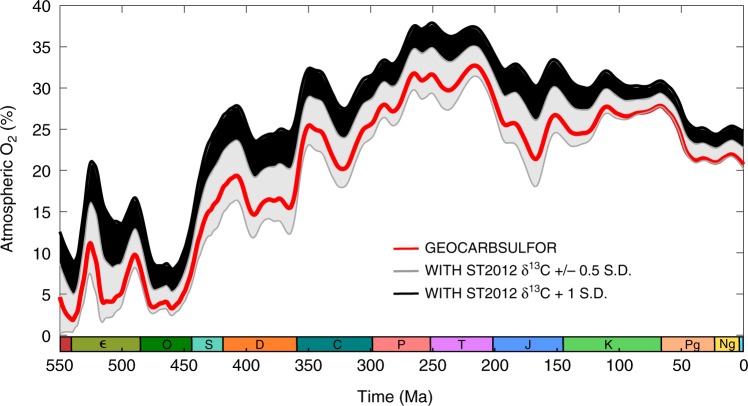
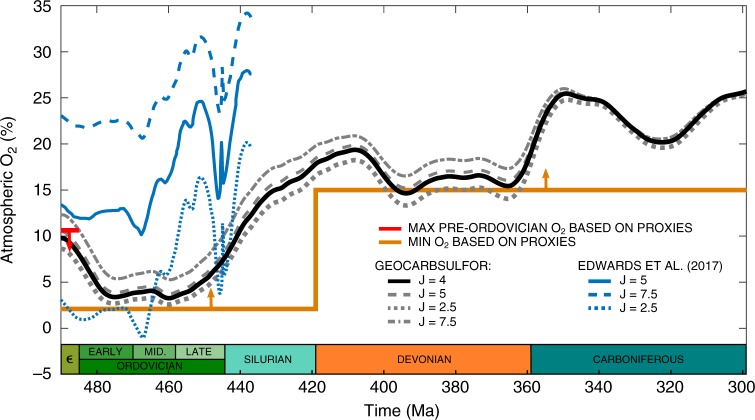
Oxygen is essential for animal life, and while geochemical proxies have been instrumental in determining the broad evolutionary history of oxygen on Earth, much of our insight into Phanerozoic oxygen comes from biogeochemical modelling. The GEOCARBSULF model utilizes carbon and sulphur isotope records to produce the most detailed history of Phanerozoic atmospheric O 2 currently available. However, its predictions for the Paleozoic disagree with geochemical proxies, and with non-isotope modelling. Here we show that GEOCARBSULF oversimplifies the geochemistry of sulphur isotope fractionation, returning unrealistic values for the O 2 sourced from pyrite burial when oxygen is low. We rebuild the model from first principles, utilizing an improved numerical scheme, the latest carbon isotope data, and we replace the sulphur cycle equations in line with forwards modelling approaches. Our new model, GEOCARBSULFOR, produces a revised, highly-detailed prediction for Phanerozoic O 2 that is consistent with available proxy data, and independently supports a Paleozoic Oxygenation Event, which likely contributed to the observed radiation of complex, diverse fauna at this time.
Overview
The claims and statistics of this paper haven’t been checked yet.
Free: it reads the open-access text and checks the first 5 claims that cite a source we can check. Create a free account to check every claim.
Integrity signals
Registry
Cites
Statistics
Figures
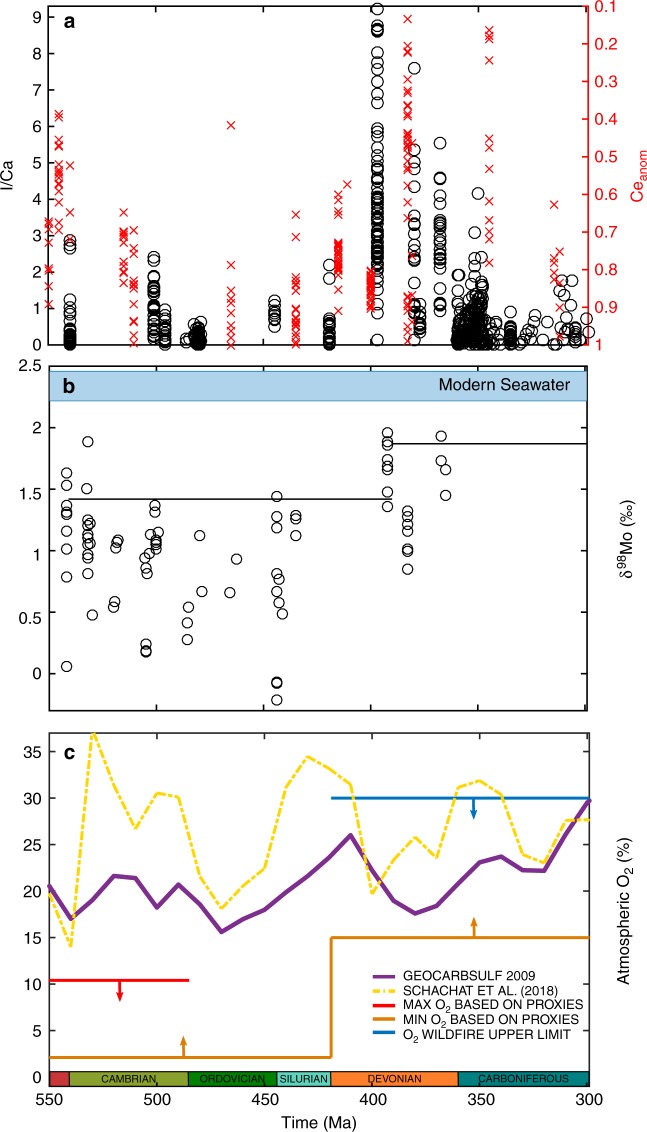
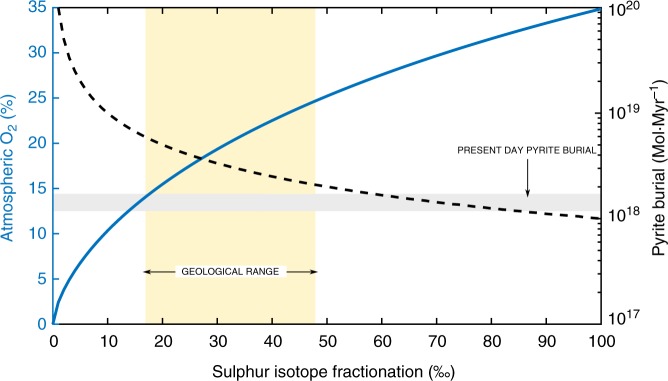
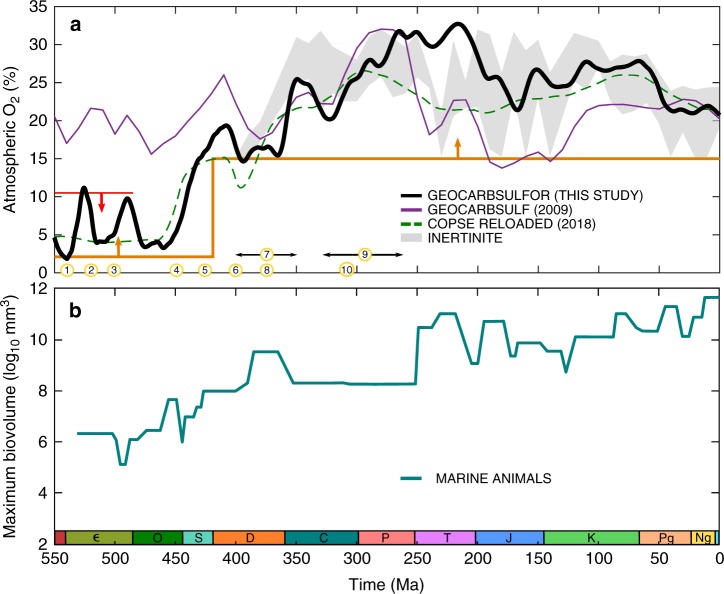
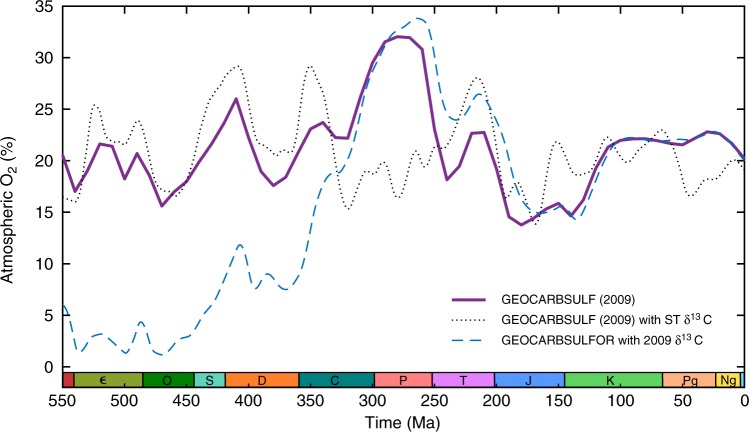
Verification
Claims the paper makes
The claims and statistics of this paper haven’t been checked yet.
Free: it reads the open-access text and checks the first 5 claims that cite a source we can check. Create a free account to check every claim.
Claims other papers make about this one
Each is checked against this paper’s own text: does it say what the citing paper says it does?
The source backs part of the claim, not all of it — or backs it for a different population, condition or comparison.
In the citing paper
“Environmental stress caused by the persistent development of oxygen-deficient conditions in shallow marine realms due to low net atmospheric oxygen production 57 is likely to have been a major contributing factor.”
From Possible links between extreme oxygen perturbations and the Cambrian radiation of animals (2019) · cites this paper as [57]
Experimental — accuracy not yet measured
Self-check
Percentages, sums and reported differences re-computed from the paper’s own numbers.
The self-check needs the paper’s full text.
Citations
Cites
Structural absorption by barbule microstructures of super black bird of paradise feathers
McCoy, D. E., Feo, T., Harvey, T. A., & Prum, R. O. (2018) · Nature Communications · doi:10.1038/s41467-017-02088-w · Cited by 7,424
Shampine, L. F., & Reichelt, M. W. (1997) · SIAM Journal on Scientific Computing · doi:10.1137/s1064827594276424 · Cited by 3,599
The rise of oxygen in Earth's early ocean and atmosphere
Lyons, T. W., Reinhard, C. T., & Planavsky, N. J. (2014) · Nature · doi:10.1038/nature13068 · Cited by 2,810
Self-citationControl of yellow and purple nutsedge in elevated CO2 environments with glyphosate and halosulfuron
Marble, S. C., Prior, S. A., Runion, G. B., & Torbert, H. A. (2015) · Frontiers in Plant Science · doi:10.3389/fpls.2015.00001 · Cited by 1,940
Atmospheric Influence of Earth's Earliest Sulfur Cycle
Farquhar, J., Bao, H., & Thiemens, M. (2000) · Science · doi:10.1126/science.289.5480.756 · Cited by 1,805
Burdige, D. J. (2007) · Chemical Reviews · doi:10.1021/cr050347q · Cited by 1,310
A new model for Proterozoic ocean chemistry
Canfield, D. E. (1998) · Nature · doi:10.1038/24839 · Cited by 1,243
Berner, R. A. (1982) · American Journal of Science · doi:10.2475/ajs.282.4.451 · Cited by 1,200
GEOCARBSULF: A combined model for Phanerozoic atmospheric O2 and CO2
Berner, R. A. (2006) · Geochimica et Cosmochimica Acta · doi:10.1016/j.gca.2005.11.032 · Cited by 1,120 · cited 1×
“Berner, R. A. Addendum to ‘Inclusion of the Weathering of Volcanic Rocks in the GEOCARBSULF Model’: (R. A. Berner, 2006, V. 306, p. 295-302).”
Tracing the stepwise oxygenation of the Proterozoic ocean
Scott, C., Lyons, T. W., Bekker, A., Shen, Y., Poulton, S. W., Chu, X., & Anbar, A. D. (2008) · Nature · doi:10.1038/nature06811 · Cited by 1,098
Self-citation
Research works printed but not linked: 1
- Zopfi J Ferdelman TG Fossing H Thiosulfate, and elemental sulfur in marine sediments Geol. Soc. Am. Spec. Pap. 2004 379 97 116
Cited by
Items 101–200 of 255
Effects of ozone levels on climate through Earth history
Deitrick, R., & Goldblatt, C. (2023) · Climate of the past · doi:10.5194/cp-19-1201-2023 · Cited by 23
“Finally, recent work suggests an additional Paleozoic oxidation event that brought oxygen to approximately modern levels, around 20 % (Krause et al., 2018; Alcott et al., 2019).”
BackgroundWan, M., Yang, W., Wan, S., & Wang, J. (2021) · Palaeoworld · doi:10.1016/j.palwor.2021.07.002 · Cited by 18
Dynamic deep marine oxygenation during the Early and Middle Paleozoic
Ostrander, C. M., Clemente, J. N. R., Stockey, R., Strauss, J. V., Fraser, T. A., Nielsen, S. G., & Sperling, E. A. (2025) · Science Advances · doi:10.1126/sciadv.adw5878 · Cited by 17
“Classically, it was thought that full oxygenation of the Earth system occurred in the Late Neo-proterozoic, while more recently, it has been recognized that this likely occurred closer to the Devonian ( 4 , 18 , 90 ).”
Kozik, N. P., Young, S. A., Lindskog, A., Ahlberg, P., & Owens, J. D. (2023) · Geobiology · doi:10.1111/gbi.12545 · Cited by 16
“…and marine oxygen models, and thus these models commonly disagree in terms of oxygenation trends through this interval (Edwards et al., 2017; Krause et al., 2018; Lenton et al., 2018); however, all recent atmospheric oxygen models generally show an increasing trend within the Late…”
BackgroundMethodWhat Models Tell Us About the Evolution of Carbon Sources and Sinks over the Phanerozoic
Goddéris, Y., Donnadieu, Y., & Mills, B. J. W. (2023) · Annual Review of Earth and Planetary Sciences · doi:10.1146/annurev-earth-032320-092701 · Cited by 18
Self-citationStepwise deforestation during the Permian-Triassic boundary crisis linked to rising temperatures
Wu, J., Chu, D., Luo, G., Wignall, P. B., Algeo, T. J., & Xie, S. (2023) · Earth and Planetary Science Letters · doi:10.1016/j.epsl.2023.118350 · Cited by 18
Mancini, A. M., Lozar, F., Gennari, R., Capozzi, R., Morigi, C., & Negri, A. (2023) · Earth-Science Reviews · doi:10.1016/j.earscirev.2023.104664 · Cited by 21
“These events occurred in a vastly different world from the modern one, not only due to different continental configurations and oceanic current regimes, but also distinct atmospheric oxygen concentrations (Lenton and Daines, 2017; Krause et al., 2018; Reershemius and Planavsky, 2021).”
The early Cretaceous was cold but punctuated by warm snaps resulting from episodic volcanism
Nordt, L. C., Breecker, D. O., & White, J. D. (2024) · Communications Earth & Environment · doi:10.1038/s43247-024-01389-5 · Cited by 17
“Another factor that in fl uences the atmospheric CO 2 output from the C 3 plant proxy is atmospheric oxygen concentration, because it was estimated at ~ 26% during the Aptian 62 .”
Mechanisms of inertinite enrichment in Jurassic coals: Insights from a Big Data-driven review
Zhou, J., Shao, L., Jones, T. P., Huang, Y., Chen, M., Hou, H., Lu, J., & Hilton, J. M. (2024) · Earth-Science Reviews · doi:10.1016/j.earscirev.2024.104889 · Cited by 16
Ding, W., Nie, T., Peng, Y., Sun, Y., Xue, J., & Shen, B. (2021) · Acta Geochimica · doi:10.1007/s11631-021-00467-1 · Cited by 17
Marine oxygenation, deoxygenation, and life during the Early Paleozoic: An overview
Zhang, J., Edwards, C. T., Diamond, C., Lyons, T. W., & Zhang, Y. (2021) · Palaeogeography Palaeoclimatology Palaeoecology · doi:10.1016/j.palaeo.2021.110715 · Cited by 20
Revisiting marine redox conditions during the Ediacaran Shuram carbon isotope excursion
Gong, Z., Wei, G., Fakhraee, M., Alcott, L., Jiang, L., Zhao, M., & Planavsky, N. J. (2023) · Geobiology · doi:10.1111/gbi.12547 · Cited by 17
“Since the amount of sulfate in the weatherable shell throughout the Ediacaran is not well constrained (Krause et al., 2018; Zhang et al., 2018), we explored sulfate burial rates ranging from 0.5 to 1.5 Tmol/yr, which are reasonable values compared with the modern sulfur input flux (1.3 Tmol/yr;…”
BackgroundSelf-citationBian, L., Chappaz, A., Schovsbo, N. H., Wang, X., Zhao, W., & Sanei, H. (2023) · Earth and Planetary Science Letters · doi:10.1016/j.epsl.2023.118170 · Cited by 16
Modelling sulfate concentrations in the global ocean through Phanerozoic time
Krause, A. J., Shields, G., Newton, R. J., & Mills, B. J. W. (2024) · Journal of the Geological Society · doi:10.1144/jgs2023-184 · Cited by 16
“…through time, from an Earth system perspective, is multifaceted, but principally lies with its influence on atmospheric and marine oxygen levels (e.g. Krause et al. 2018; Shields et al. 2019; Shi et al. 2022), although there is a growing interest in how sulfur can affect atmospheric carbon dioxide…”
InfluentialSelf-citationOcean oxygenation and ecological restructuring caused by the late Paleozoic evolution of land plants
Stacey, J., Wallace, M. W., Hood, A. V. S., Shuster, A., Corlett, H., Reed, C. P., & Moynihan, C. (2024) · Geology · doi:10.1130/g52502.1 · Cited by 15
Eta-Earth Revisited II: Deriving a Maximum Number of Earth-Like Habitats in the Galactic Disk
Scherf, M., Lammer, H., & Sproß, L. (2024) · Astrobiology · doi:10.1089/ast.2023.0076 · Cited by 19
He, W., Shi, G. R., Zhang, K., Suzuki, N., Wang, H., Yang, F., Xiao, Y., Yang, T., Huang, Y., Wu, C., et al. (2024) · Earth-Science Reviews · doi:10.1016/j.earscirev.2024.104971 · Cited by 20
Rosa, D., Leach, D., Guarnieri, P., & Bekker, A. (2022) · Mineralium Deposita · doi:10.1007/s00126-022-01125-z · Cited by 17
“Oxidation state of the atmosphere and ocean finally reached modern levels in the early Paleozoic (Dahl et al. 2010; Lenton et al. 2016; Wallace et al. 2017; Lu et al. 2018; Krause et al. 2018).”
BackgroundCannell, A., Blamey, N. J. F., Brand, U., Escapa, I. H., & Large, R. R. (2022) · Earth-Science Reviews · doi:10.1016/j.earscirev.2022.104062 · Cited by 18
Fluctuating oxygenation and dynamic iron cycling in the late Paleoproterozoic ocean
Yang, X., Mao, J., Li, R., Huang, F., He, C., Zhao, C., Wei, W., Yang, G., Xiong, Y., & Poulton, S. W. (2023) · Earth and Planetary Science Letters · doi:10.1016/j.epsl.2023.118554 · Cited by 17
Self-citationTrends in estuarine pyrite formation point to an alternative model for Paleozoic pyrite burial
Hantsoo, K., Gomes, M. L., Brenner, D. C., Cornwell, J. C., Palinkas, C. M., & Malkin, S. Y. (2024) · Geochimica et Cosmochimica Acta · doi:10.1016/j.gca.2024.04.018 · Cited by 14
Authigenic uranium isotopes of late Proterozoic black shale
Dang, D. H., Wang, W., Gibson, T. M., Kunzmann, M., Andersen, M. B., Halverson, G. P., & Evans, R. D. (2021) · Chemical Geology · doi:10.1016/j.chemgeo.2021.120644 · Cited by 13
Evolution of iron and oxygen biogeochemical cycles during the Precambrian
Watanabe, Y., Tajika, E., & Ozaki, K. (2023) · Geobiology · doi:10.1111/gbi.12571 · Cited by 16
“The weathering rate of pyrite on the continental crust is calculated as follows (Krause et al., 2018; Lenton et al., 2018): The effect of pyrite burial on the global redox budget is evaluated S2).”
BackgroundCopper and its Isotopes in Organic-Rich Sediments: From the Modern Peru Margin to Archean Shales
Ciscato, E. R., Bontognali, T. R. R., Poulton, S. W., & Vance, D. (2019) · Geosciences · doi:10.3390/geosciences9080325 · Cited by 14
Self-citationThe Ordovician ocean circulation: a modern synthesis based on data and models
Pohl, A., Nardin, É., Vandenbroucke, T. R. A., & Donnadieu, Y. (2022) · Geological Society London Special Publications · doi:10.1144/sp532-2022-1 · Cited by 14
Regional synthesis of the Ordovician geology and stratigraphy of China
Zhang, Y., Zhan, R., Zhen, Y. Y., Wang, W., Liang, Y., Fang, X. M., Wu, R., Yan, K., Zhang, J., & Li, W. (2023) · Geological Society London Special Publications · doi:10.1144/sp533-2022-128 · Cited by 13
Pauly, D. F., Amarasinghe, U. S., Chu, E., Freire, K. M. F., Vázquez, E., & Butler, M. J. (2022) · Journal of Crustacean Biology · doi:10.1093/jcbiol/ruac059 · Cited by 16
Nežerka, V., Holeček, P., Somr, M., Tichá, P., Domonkos, M., & Stiborová, H. (2023) · Reviews in Environmental Science and Bio/Technology · doi:10.1007/s11157-023-09654-3 · Cited by 15
“Strains capable of ammonification, such as Myxococcus xanthus or Alcanivorax borkumensis, are abundant in all environments and use amino acids as their sole source of energy (Omar et al. 1995; Gerth et al. 2003; Krause et al. 2018).”
BackgroundThe dynamic ocean redox evolution during the late Cambrian SPICE: Evidence from the I/Ca proxy
He, R., Pohl, A., Prow‐Fleischer, A. N., Jiang, G., Huan, C. C., Saltzman, M. R., & Lu, Z. (2024) · Global and Planetary Change · doi:10.1016/j.gloplacha.2024.104354 · Cited by 14
Yu, X., Liu, X., Wei, G., Li, A., & Lin, M. (2024) · Marine and Petroleum Geology · doi:10.1016/j.marpetgeo.2023.106687 · Cited by 14
Gong, F., Luan, X., Calner, M., Lehnert, O., Zhang, Y., Yan, G., Wei, X., & Wu, R. (2024) · Global and Planetary Change · doi:10.1016/j.gloplacha.2024.104523 · Cited by 12
Organic geochemistry evidence for wildfire and elevated pO2 at the Frasnian–Famennian boundary
Liu, Z., Tian, H., Selby, D. S., Hu, J., & Over, D. J. (2022) · Global and Planetary Change · doi:10.1016/j.gloplacha.2022.103904 · Cited by 15
Nature of Devonian anoxic events based on multiproxy records from Panthalassa, NW Canada
Kabanov, P., Gouwy, S. A., van der Boon, A., & Grasby, S. E. (2023) · Global and Planetary Change · doi:10.1016/j.gloplacha.2023.104176 · Cited by 13
Did high temperature rather than low O2 hinder the evolution of eukaryotes in the Precambrian?
Zhang, F., Wang, H., Ye, Y., Liu, Y., Lyu, Y., Deng, Y., Lyu, D., Wang, X., Wu, H., Deng, S., et al. (2022) · Precambrian Research · doi:10.1016/j.precamres.2022.106755 · Cited by 11
Self-citationExploring Neoproterozoic climate and biogeochemical evolution in the SCION model
Mills, B. J. W., Hir, G. L., Merdith, A., Gurung, K., Bowyer, F. T., Krause, A. J., Sánchez‐Baracaldo, P., Hunter, S. J., & Zhang, Y. (2025) · Global and Planetary Change · doi:10.1016/j.gloplacha.2025.104791 · Cited by 14
“They have also been used to test the hypothesis that early Paleozoic oxygen levels were lower than present (Lenton et al., 2016; Krause et al., 2018), and that Permo-Carboniferous oxygen levels were higher (Berner, 2006; Bergman et al., 2004) and they have been used to reconstruct marine sulfate…”
Self-citationDiversification to extinction: oceanic and climatic context of the Ordovician
Liu, M., Bao, X., Harper, D. A. T., Algeo, T. J., Zhao, M., Saltzman, M. R., Wang, Z., Chen, D., Yuan, S., Chen, Y., et al. (2025) · Earth-Science Reviews · doi:10.1016/j.earscirev.2025.105194 · Cited by 16
Metal-rich stars are less suitable for the evolution of life on their planets
Shapiro, A. V., Brühl, C., Klingmüller, K., Steil, B., Shapiro, A. I., Witzke, V., Kostogryz, N., Gizon, L., Solanki, S. K., & Lelieveld, J. (2023) · Nature Communications · doi:10.1038/s41467-023-37195-4 · Cited by 9
A Five‐stage Evolution of Earth's Phosphorus Cycle
Jiao, L., Dodd, M. S., Algeo, T. J., & Li, C. (2023) · Acta Geologica Sinica - English Edition · doi:10.1111/1755-6724.15116 · Cited by 9
“Periodic deep-water anoxia may have remained frequent up until the Paleozoic Oxygenation Event (POE) around 450 to 400 Ma, which appears to have elevated atmospheric O 2 to present-day levels and established a dominantly oxygenated deep ocean (Krause et al., 2018; Stolper and Keller, 2018).”
BackgroundScott, A. C. (2021) · Review of Palaeobotany and Palynology · doi:10.1016/j.revpalbo.2021.104540 · Cited by 13
O'Sullivan, E., Nägler, T. F., Turner, E. C., Kamber, B. S., Babechuk, M. G., & O’Hare, S. P. (2022) · Precambrian Research · doi:10.1016/j.precamres.2022.106760 · Cited by 11
“, 2018) that may not have reached modern levels until well into the Palaeozoic (Krause et al., 2018; Tostevin and Mills, 2020).”
BackgroundInfluentialMinimum levels of atmospheric oxygen from fossil tree roots imply new plant−oxygen feedback
Sønderholm, F., & Bjerrum, C. J. (2021) · Geobiology · doi:10.1111/gbi.12435 · Cited by 11
“…between 15 and 17 kPa (grading orange box; Belcher and McElwain, 2008) 0 5 10 15 20 25 30 35 A tm os ph er ic p O 2 ( kP a) Time (Ma) 300350400450 Krause et al (2018) Lenton et al (2018) Glasspool et al (2015) Schachat et al (2018) Fire Minimum Limited Combustion Ordovician M U Ll W Lu…”
BackgroundInfluentialHua, F., Shao, L., Wang, X., Jones, T. P., Zhang, T., Bond, D. P. G., Yan, Z., & Hilton, J. M. (2024) · Palaeogeography Palaeoclimatology Palaeoecology · doi:10.1016/j.palaeo.2024.112129 · Cited by 16
“2) (Krause et al., 2018), with important implications for the increased occurrence and severity of wildfires.”
BackgroundEarth’s atmosphere protects the biosphere from nearby supernovae
Christoudias, T., Kirkby, J., Stolzenburg, D., Pozzer, A., Sommer, E., Brasseur, G. P., Kulmala, M., & Lelieveld, J. (2024) · Communications Earth & Environment · doi:10.1038/s43247-024-01490-9 · Cited by 11
“The emerging vegetation used photosynthesis to assimilate CO 2 andreleaseO 2 ,raisingitsatmosphericfractionfromabout2%to10%and facilitating the evolution of terrestrial animals 35 .”
BackgroundA reassessment of the “hard-steps” model for the evolution of intelligent life
Mills, D. B., Macalady, J. L., Frank, A., & Wright, J. T. (2025) · Science Advances · doi:10.1126/sciadv.ads5698 · Cited by 18
Farrell, T. P., Cothren, H. R., Sundberg, F. A., Schmitz, M. D., Dehler, C. M., Landing, E., Karlstrom, K. E., Crossey, L. J., & Hagadorn, J. W. (2025) · Geological Society of America Bulletin · doi:10.1130/b37919.1 · Cited by 15
Fuchsman, C. A., & Stüeken, E. E. (2020) · Environmental Microbiology · doi:10.1111/1462-2920.15220 · Cited by 10
黄, 建., 刘, 晓., 何, 永., 沈, 树., 侯, 增., 李, 曙., 李, 昶., 姚, 丽., & 黄, 季. (2021) · SCIENTIA SINICA Terrae · doi:10.1360/n072020-0399 · Cited by 9
Oceanic redox conditions during the terminal Cambrian extinction event
Chen, X., Shields, G., Andersen, M. B., Qiu, C., Min, S.-Y., Shao, Q., & Ling, H. (2023) · Chemical Geology · doi:10.1016/j.chemgeo.2023.121456 · Cited by 9
“During the late Cambrian, low atmospheric p O 2 (ca. 50% present atmospheric level, Krause et al., 2018), together with low O 2 water solubility in a typical greenhouse climate (Berner, 1990; Frakes et al., 1992; Trotter et al., 2008; Landing, 2012), would have suppressed the dissolved ‑ oxygen…”
BackgroundLiu, M., Chen, D., Ma, H., & Ding, Y. (2024) · Marine and Petroleum Geology · doi:10.1016/j.marpetgeo.2024.107166 · Cited by 9
Fire in the Carboniferous earth system
Scott, A. C. (2024) · Evolving Earth · doi:10.1016/j.eve.2024.100044 · Cited by 10
Kabanov, P. (2021) · Global and Planetary Change · doi:10.1016/j.gloplacha.2021.103573 · Cited by 8
Geological evidences and mechanisms for oceanic anoxic events during the Early Paleozoic
Zhang, J., Li, C., & Zhang, Y. (2021) · Chinese Science Bulletin (Chinese Version) · doi:10.1360/tb-2021-0535 · Cited by 9
Wang, H., Deng, Q., Cheng, B., Zhang, H., Liao, Z., & Peng, P. (2022) · Palaeogeography Palaeoclimatology Palaeoecology · doi:10.1016/j.palaeo.2022.111160 · Cited by 11
Mechanistic links between intense volcanism and the transient oxygenation of the Archean atmosphere
Watanabe, Y., Ozaki, K., Harada, M., Matsumoto, H., & Tajika, E. (2025) · Communications Earth & Environment · doi:10.1038/s43247-025-02090-x · Cited by 7
Edmonsond, S., & Dyer, B. C. (2025) · Geoscientific model development · doi:10.5194/gmd-18-4759-2025 · Cited by 7
Herbivory and its effect on Phanerozoic oxygen concentrations
Laakso, T. A., Strauss, J. V., & Peterson, K. J. (2020) · Geology · doi:10.1130/g47085.1 · Cited by 6
Evolution of Red Blood Cells in Extant and Extinct Tetrapods
Udroiu, I. (2020) · Paleontological Journal · doi:10.1134/s0031030120120059 · Cited by 7
张, 水., 王, 华., 王, 晓., & 叶, 云. (2021) · SCIENTIA SINICA Terrae · doi:10.1360/sste-2020-0373 · Cited by 11
Paleosalinity of the Nanhua Basin (South China) during the Cambrian Explosion
Zhang, H., Fan, H., Zhang, F., & Wen, H. (2023) · Palaeogeography Palaeoclimatology Palaeoecology · doi:10.1016/j.palaeo.2023.111716 · Cited by 8
Hou, J., Hughes, N. C., Hopkins, M. J., & Shu, D. (2023) · Royal Society Open Science · doi:10.1098/rsos.230341 · Cited by 7
Non-zero I/(Ca + Mg) recorded in Archean and Paleoproterozoic shallow marine Ca-carbonate sediments
Hao, F., Fralick, P. W., Ramsay, B., Tang, D., & Riding, R. (2024) · Precambrian Research · doi:10.1016/j.precamres.2024.107350 · Cited by 7
The origin and distribution of the main oxygen sensing mechanism across metazoans
Song, B., Modjewski, L., Kapust, N., Mizrahi, I., & Martin, W. F. (2022) · Frontiers in Physiology · doi:10.3389/fphys.2022.977391 · Cited by 9
“, 2019); during the Phanerozoic period (541–0 Ma), the atmospheric oxygen content increased constantly to the modern level (Lenton et al., 2016; Krause et al., 2018).”
BackgroundDigging Deeper: Bioturbation increases the preserved sulfur isotope fractionation
Riemer, S., Turchyn, A. V., Pellerin, A., & Antler, G. (2023) · Frontiers in Marine Science · doi:10.3389/fmars.2022.1039193 · Cited by 8
“Specific mechanisms for this increase in D(34)SSO4_sw-H2S_pw are still debated, though it is suspected that the increasing oxygenation of Earth’s surface reservoirs in the Neoproterozoic may have played a role (Canfield and Teske, 1996; Fike et al., 2006; Krause et al., 2018).”
BackgroundThe rise and fall of globins in the amphibia
Queiroz, J. P. F., Lima, N. C. B., & Rocha, B. A. M. (2020) · Comparative Biochemistry and Physiology Part D Genomics and Proteomics · doi:10.1016/j.cbd.2020.100759 · Cited by 7
Cui, J., Zhu, R., Yang, L. I., Zhang, Z., Guanglin, L. I. U., Qi, Y., & Hui, X. (2024) · Petroleum Exploration and Development · doi:10.1016/s1876-3804(25)60554-4 · Cited by 6
Huang, J., Kershaw, S., Liang, K., & Qie, W. (2025) · Earth-Science Reviews · doi:10.1016/j.earscirev.2025.105202 · Cited by 7
Carbon-water cycles during the Late Paleozoic Ice Age: Reviews and prospects
Zhong, Y., Chen, J., Gao, B., Yang, W., Yue, C., Wang, X., & Shen, S. (2022) · Chinese Science Bulletin (Chinese Version) · doi:10.1360/tb-2022-0905 · Cited by 7
Li, Y., Li, F., Kershaw, S., Burne, R. V., Wang, X., Lu, C., Liao, J., Li, Y., Wang, Z., & Li, Y. (2023) · Marine and Petroleum Geology · doi:10.1016/j.marpetgeo.2023.106475 · Cited by 6
Li, J., & Azmy, K. (2023) · Chemical Geology · doi:10.1016/j.chemgeo.2023.121891 · Cited by 7
Steinthorsdottir, M., Montañez, I. P., Royer, D. L., Mills, B. J. W., & Hönisch, B. (2024) · Elsevier eBooks · doi:10.1016/b978-0-323-99762-1.00074-7 · Cited by 18
Self-citationHorne, J. E., & Goldblatt, C. (2024) · Geochemistry Geophysics Geosystems · doi:10.1029/2023gc011252 · Cited by 9
Kuang, W., Kopparapu, R., Krissansen‐Totton, J., & Mills, B. J. W. (2025) · Science Advances · doi:10.1126/sciadv.adu8826 · Cited by 7
“…the abundances of fossilized charcoal in sediments, reflective of the prevalence of wildfire, which is highly sensitive to O 2 concentration ( 43 – 47 ); (ii) the abundance of reduced carbon and sulfur compounds in sediments, reflective of the redox balance of the surface system; (iii) carbon…”
Self-citationChanges in growth and developmental timing in Manduca sexta when exposed to altered oxygen levels
Wilmsen, S. M., & Dzialowski, E. M. (2022) · Arthropod Structure & Development · doi:10.1016/j.asd.2022.101231 · Cited by 7
Astrobiology: resolution of the statistical Drake equation by Maccone's lognormal method in 50 steps
Mieli, E., Valli, A. M. F., & Maccone, C. (2023) · International Journal of Astrobiology · doi:10.1017/s1473550423000113 · Cited by 7
A Subsurface Stepping Stone Hypothesis for the Conquest of Land by Arthropods
Frumkin, A., & Chipman, A. D. (2023) · Diversity · doi:10.3390/d16010006 · Cited by 8
The origin of early-Paleozoic banded iron formations in NW China
Yang, X., Mao, J., Poulton, S. W., Dong, A., Liang, T., Wang, D., & Zhang, X. (2021) · Gondwana Research · doi:10.1016/j.gr.2021.02.008 · Cited by 6
Self-citationZhang, X., Zhou, G., Zhang, P., He, Y., Wei, Z., Wang, G., Zhang, T., He, W., Ma, H., Zhu, C., et al. (2022) · Frontiers in Earth Science · doi:10.3389/feart.2022.865709 · Cited by 8
“Strontium isotope and element constraints on the paleoenvironment of the latest Ediacaran in the Sichuan Basin, southeastern Tibetan Plateau Xiaojun Zhang1,2*, Gang Zhou3, Pengyuan Zhang4*, Yuan He3, Zhifu Wei5, Gen Wang5, Ting Zhang5, Wei He5, He Ma4, Chenxi Zhu6, Jingyi Wei4, Xueyun Ma5, Xiaoli Yu5, Shangkun Li5, Lu…”
BackgroundFamennian inertinite-bearing marine shale facies as indicator of wildfire event in north of Gondwana
Rahiminejad, A. H., Zand-Moghadam, H., Mirshahani, M., & Khajehzadeh, A. (2021) · Historical Biology · doi:10.1080/08912963.2021.1976169 · Cited by 5
“The atmospheric O2 level during the Late Devonian (particularly the Famennian) was in the fire window (between ca15% and 35%) (Scott and Glasspool 2006; Rimmer et al. 2015; Krause et al. 2018; Liu et al. 2020).”
BackgroundHu, R., Tan, J., Wang, W., Song, X., von Strandmann, P. A. E. P., Dick, J. M., & Liu, C. (2024) · Chemical Geology · doi:10.1016/j.chemgeo.2024.121933 · Cited by 6
Intense intrusion of low-oxygen waters into mid-Cambrian surface ocean carbonate factories
Li, Y.-F., Li, F., Webb, G. E., & Chen, J. (2024) · Chemical Geology · doi:10.1016/j.chemgeo.2024.122360 · Cited by 5
He, R., Elrick, M., Day, J. E., Lu, W., & Lu, Z. (2022) · Frontiers in Marine Science · doi:10.3389/fmars.2022.874759 · Cited by 7
Vilović, I., Schulze-Makuch, D., & Heller, R. (2023) · Scientific Reports · doi:10.1038/s41598-023-39716-z · Cited by 5
The Early Earth as an Analogue for Exoplanetary Biogeochemistry
Stüeken, E. E., Olson, S. L., Moore, E. K., & Foley, B. J. (2024) · Reviews in Mineralogy and Geochemistry · doi:10.2138/rmg.2024.90.14 · Cited by 5
Yu, X., Qian, F., Lin, X., Du, L., Bai, J., Lv, D., Liu, Y., Wei, G., & Lin, M. (2025) · Geochimica et Cosmochimica Acta · doi:10.1016/j.gca.2025.10.039 · Cited by 5
Marshall, N. L., Love, G. D., Grytsenko, V. P., & Bekker, A. (2022) · Organic Geochemistry · doi:10.1016/j.orggeochem.2022.104528 · Cited by 5
Zhu, B., Guo, T., Liu, C., Pan, W., Chen, Y. Q., Zhang, Y., & Yang, T. (2023) · Frontiers in Earth Science · doi:10.3389/feart.2023.1321488 · Cited by 5
Mergl, M. (2024) · Bulletin of Geosciences · doi:10.3140/bull.geosci.1897 · Cited by 4
“However, the suggested better oxygen fluctuations in shallow marginal environments of the Palaeozoic oceans and their impact on marine biota are topics of active debate (Krause et al .”
BackgroundBicca, M. M., Kalkreuth, W. D., Silva, T. F., Guerra-Sommer, M., Degani-Schmidt, I., Félix, C. M., Boardman, D. R., & SOUZA, P. A. D. (2025) · International Journal of Coal Geology · doi:10.1016/j.coal.2025.104810 · Cited by 4
Hu, D., Sun, L., Xu, Y., Zhang, X., Zhang, X., & Shen, Y. (2025) · Chemical Geology · doi:10.1016/j.chemgeo.2025.122890 · Cited by 5
Enhanced marine biological pump as a trigger for the onset of the late Paleozoic ice age
Zhang, F., Pohl, A., Elrick, M., Wei, G., Cheng, K., Crockford, P. W., Fakhraee, M., Lin, Y.-B., Li, N., Wang, X., et al. (2025) · Science Advances · doi:10.1126/sciadv.adv2756 · Cited by 8
“We fixed the atmospheric oxygen concentration to the present-day value of 20.95 % in agreement with results obtained with long-term carbon cycle models ( 54 ).”
InfluentialA novel carbon cycle turbulence index identifies environmental and ecological perturbations
Li, Z.-H., Guo, Z., Chen, Z., Poulton, S. W., Bao, Y., Zhao, L., & Zhang, F.-F. (2021) · Geochemical Perspectives Letters · doi:10.7185/geochemlet.2137 · Cited by 4
Self-citationHu, J., Wang, M., Wang, H., Li, S., Santosh, M., Zhao, Y., Li, D., Yan, Q.-H., Dong, R., & Ren, H. (2022) · Ore Geology Reviews · doi:10.1016/j.oregeorev.2022.105165 · Cited by 6
McMahon, S. (2021) · Oxford University Press eBooks · doi:10.1093/acrefore/9780190647926.013.1 · Cited by 5
A new stem-tetrapod fish from the Middle–Late Devonian of central Australia
Choo, B., Holland, T., Clement, A. M., King, B., Challands, T., Young, G. C., & Long, J. A. (2023) · Journal of Vertebrate Paleontology · doi:10.1080/02724634.2023.2285000 · Cited by 4
“…while the estimated paleoatmospheric oxygen levels between models can vary considerably between studies, even more recent re fi nements (notably GEOCARBSULFOR) continue to fi nd that global oxygen levels were well below those of present day until near the end of the Devonian (Krause et al., 2018).”
BackgroundHe, M., Deng, W., Cui, Z., Yang, Q. L., Zhang, Y., & Wei, G. (2025) · Journal of Analytical Atomic Spectrometry · doi:10.1039/d5ja00274e · Cited by 3
Ocean Giants Through Time: Evolution and Ecology Intertwined
Pimiento, C., Cortés, D., & Valenzuela‐Toro, A. M. (2025) · Annual Review of Ecology Evolution and Systematics · doi:10.1146/annurev-ecolsys-102723-054842 · Cited by 3
Li, Z., Li, P., Rosenbaum, G., Cawood, P. A., Wang, Q., Yuan, C., & Shen, J. (2025) · Earth and Planetary Science Letters · doi:10.1016/j.epsl.2025.119687 · Cited by 4
Matsumoto, H., Watanabe, Y., Coccioni, R., Frontalini, F., Yoshimura, T., Kuroda, J., & Suzuki, K. (2026) · Science · doi:10.1126/science.adw8301 · Cited by 3
Holland, F. S. M., Stüeken, E. E., Dan, W., Zhang, W., Zhu, Y., & Mikhail, S. (2026) · Earth and Planetary Science Letters · doi:10.1016/j.epsl.2026.119890 · Cited by 3
Yu, X., Xiang, F., Su, Z., Zhang, D., Lash, G. G., Yang, K., & You, W. (2021) · Palaeogeography Palaeoclimatology Palaeoecology · doi:10.1016/j.palaeo.2021.110514 · Cited by 4
Metadata
- Authors
- Krause, A. J., Mills, B. J. W., Zhang, S., Planavsky, N. J., Lenton, T. M., & Poulton, S. W.
- Affiliations
- University of Leeds (GB)
- Yale University (US)
- University of Exeter (GB)
- Corresponding author
- Krause, Alexander J.
- ORCID
- Venue
- Nature Communications
- Published
- 2018-10-04
- Volume
- 9
- Issue
- 1
- Pages
- 4081-4081
- ISSN
- 2041-1723 (ISSN-L)
- PMC
- PMC6172248
- OpenAlex
- W2890860757
- Semantic Scholar
- 9e34e9399602a3b729745855480b5101550bfe8d
- Cited by
- 255
- References
- 81
- Citations by year
- 2026: 21 · 2025: 37 · 2024: 29 · 2023: 44 · 2022: 43 · 2021: 38 · 2020: 24 · 2019: 17 · 2018: 2
- FWCI
- 14.86
- Type
- journal article
- Language
- en
- Open access
- gold
- doi.org
- Licence
- cc-by
- creativecommons.org/licenses/by/4.0 (tdm)
- creativecommons.org/licenses/by/4.0 (vor)
- Locations
- Nature Communications (publishedVersion, cc-by)
- Europe PMC (PubMed Central) (publishedVersion, other-oa)
- PubMed Central (publishedVersion, cc-by)
- PubMed (publishedVersion)
- White Rose Research Online (University of Leeds, The University of Sheffield, University of York) (acceptedVersion)
- RePEc: Research Papers in Economics (submittedVersion)
- DOAJ (DOAJ: Directory of Open Access Journals) (submittedVersion, cc-by-sa)
- DOAJ (DOAJ: Directory of Open Access Journals) (submittedVersion)
- Figshare (submittedVersion, cc-by)
- ORCA Online Research @Cardiff (Cardiff University) (submittedVersion)
- Open Research Exeter (University of Exeter) (submittedVersion, cc-by)
- Funders
- Natural Environment Research Council (NE/L002574/1)
- Topics
- Physical Sciences › Earth and Planetary Sciences › Paleontology › Paleontology and Stratigraphy of Fossils
- Physical Sciences › Earth and Planetary Sciences › Geochemistry and Petrology › Geological and Geochemical Analysis
- Physical Sciences › Environmental Science › Global and Planetary Change › Earth Systems and Cosmic Evolution
- Keywords
- atmospheric oxygenation, sulfur isotope fractionation, pyrite burial, carbon isotope record, biogeochemical modeling, geochemical proxies
About these checks
Registry, retraction, Cites and statistics results are computed, not judged, with one exception: a printed reference that no index lists is read once by a model before it counts as a citation error. Claims are extracted by a model and kept only when their quote appears verbatim in the text; each cited source is then checked, with a model’s help, for whether it says what the claim relies on. Those verdicts can be wrong — read the claim’s quote and the cited source before relying on one.
Statistics and arithmetic are recomputed, not judged.
Confidence bands are shown only for fields calibrated on our annotated test set. None is calibrated yet, so no band is shown.
What counts as a claim ›How we measure confidence ›How we check this ›
Are you an author, or do you see a problem with this page? Request a review
Data sources
Bibliographic data: Semantic Scholar, OpenAlex, Crossref.
Contains information from the Semantic Scholar Academic Graph Datasets, made available under the ODC Attribution License (ODC-BY 1.0).
Semantic Scholar’s data is described in: Kinney, R., et al. (2023). The Semantic Scholar Open Data Platform. arXiv:2301.10140.
