

DRUG-seq for miniaturized high-throughput transcriptome profiling in drug discovery
Open accessThe DOI matches its Crossref record; 34 of the 35 references it cites were found in a registry or an index.
Abstract
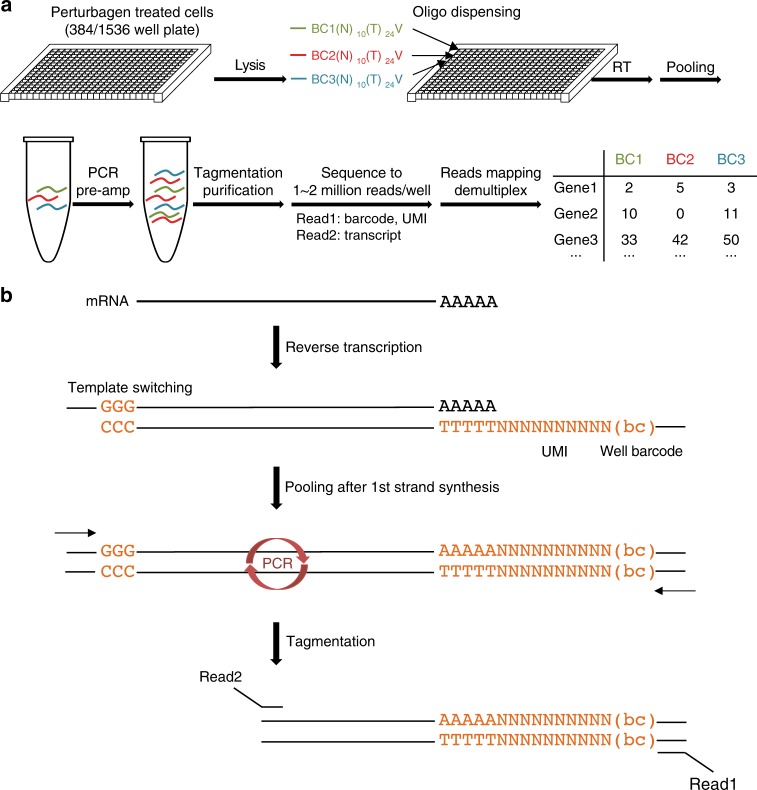
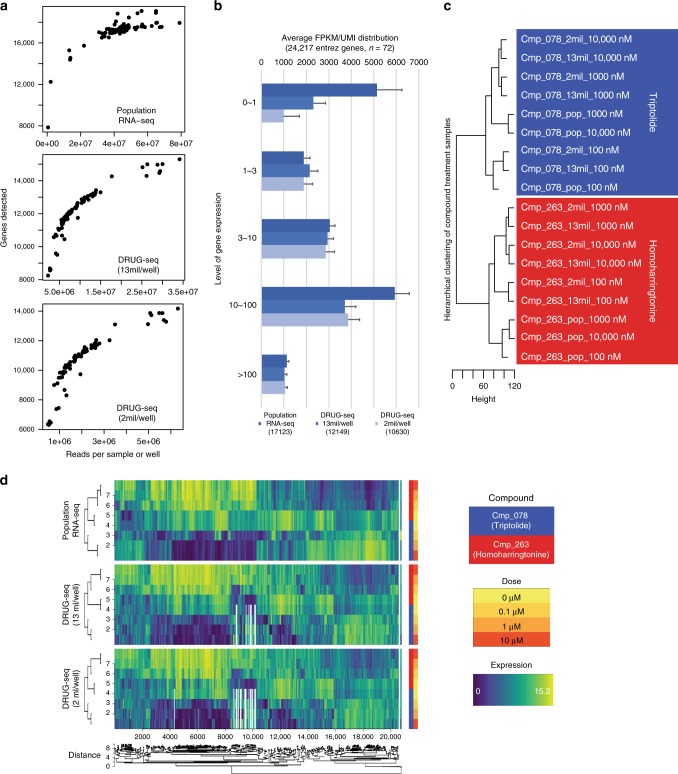
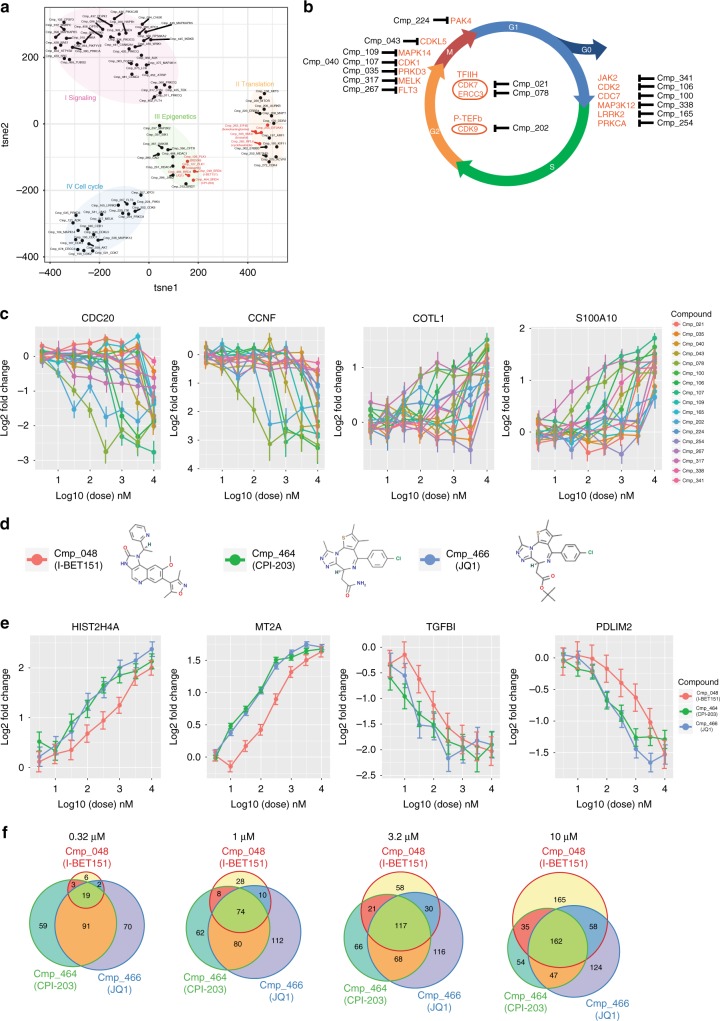
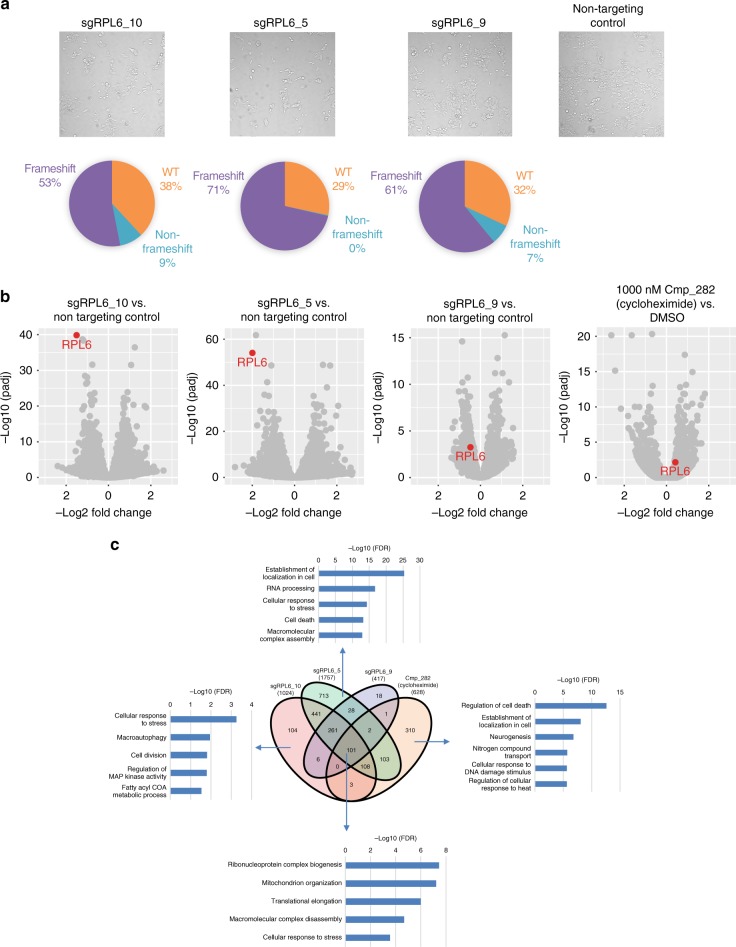
Here we report Digital RNA with pertUrbation of Genes (DRUG-seq), a high-throughput platform for drug discovery. Pharmaceutical discovery relies on high-throughput screening, yet current platforms have limited readouts. RNA-seq is a powerful tool to investigate drug effects using transcriptome changes as a proxy, yet standard library construction is costly. DRUG-seq captures transcriptional changes detected in standard RNA-seq at 1/100 th the cost. In proof-of-concept experiments profiling 433 compounds across 8 doses, transcription profiles generated from DRUG-seq successfully grouped compounds into functional clusters by mechanism of actions (MoAs) based on their intended targets. Perturbation differences reflected in transcriptome changes were detected for compounds engaging the same target, demonstrating the value of using DRUG-seq for understanding on and off-target activities. We demonstrate DRUG-seq captures common mechanisms, as well as differences between compound treatment and CRISPR on the same target. DRUG-seq provides a powerful tool for comprehensive transcriptome readout in a high-throughput screening environment.
Overview
The claims and statistics of this paper haven’t been checked yet.
Free: it reads the open-access text and checks the first 5 claims that cite a source we can check. Create a free account to check every claim.
Integrity signals
Registry
Cites
Statistics
Figures
Verification
Claims the paper makes
The claims and statistics of this paper haven’t been checked yet.
Free: it reads the open-access text and checks the first 5 claims that cite a source we can check. Create a free account to check every claim.
Claims other papers make about this one
Each is checked against this paper’s own text: does it say what the citing paper says it does?
In the citing paper
“Perturbation modelling is underpinned by systematic databases of biological response to treatment (e.g. Connectivity Map [2], L1000, DRUG-seq [3]) and leverages the significant potential of machine learning (ML) to make predictive models, e.g., molecular targets or IC50 values.”
From A mini-review on perturbation modelling across single-cell omic modalities (2024) · cites this paper as [3]
Self-check
Percentages, sums and reported differences re-computed from the paper’s own numbers.
The self-check needs the paper’s full text.
Citations
Cites
Moderated estimation of fold change and dispersion for RNA-seq data with DESeq2
Love, M. I., Huber, W., & Anders, S. (2014) · Genome Biology · doi:10.1186/s13059-014-0550-8 · Cited by 95,106
STAR: ultrafast universal RNA-seq aligner
Dobin, A., Davis, C. A., Schlesinger, F., Drenkow, J., Zaleski, C., Jha, S., Batut, P., Chaisson, M., & Gingeras, T. R. (2013) · Bioinformatics · doi:10.1093/bioinformatics/bts635 · Cited by 51,709
Meta-analysis in clinical trials
DerSimonian, R., & Laird, N. (1986) · Controlled Clinical Trials · doi:10.1016/0197-2456(86)90046-2 · Cited by 39,552
(2008) · Journal of Machine Learning Research · Cited by 33,051
RSEM: accurate transcript quantification from RNA-Seq data with or without a reference genome
Li, B., & Dewey, C. N. (2011) · BMC Bioinformatics · doi:10.1186/1471-2105-12-323 · Cited by 22,179
Lamb, J., Crawford, E. D., Peck, D., Modell, J. W., Blat, I. C., Wrobel, M. J., Lerner, J., Brunet, J.-P., Subramanian, A., Ross, K. N., et al. (2006) · Science · doi:10.1126/science.1132939 · Cited by 5,257
A Next Generation Connectivity Map: L1000 Platform and the First 1,000,000 Profiles
Subramanian, A., Narayan, R., Corsello, S. M., Peck, D. D., Natoli, T. E., Lu, X., Gould, J., Davis, J. F., Tubelli, A. A., Asiedu, J. K., et al. (2017) · Cell · doi:10.1016/j.cell.2017.10.049 · Cited by 3,515
Impact of high-throughput screening in biomedical research
Macarron, R., Banks, M. N., Bojanic, D., Burns, D. J., Cirovic, D. A., Garyantes, T., Green, D. V. S., Hertzberg, R. P., Janzen, W. P., Paslay, J. W., et al. (2011) · Nature Reviews Drug Discovery · doi:10.1038/nrd3368 · Cited by 1,364
Opportunities and challenges in phenotypic drug discovery: an industry perspective
Moffat, J. G., Vincent, F., Lee, J. A., Eder, J., & Prunotto, M. (2017) · Nature Reviews Drug Discovery · doi:10.1038/nrd.2017.111 · Cited by 939
Initiation of a G2/M checkpoint after ultraviolet radiation requires p38 kinase
Bulavin, D. V., Higashimoto, Y., Popoff, I. J., Gaarde, W. A., Basrur, V., Potapova, O., Appella, E., & Fornace, A. J. (2001) · Nature · doi:10.1038/35075107 · Cited by 532
Cited by
MULTI-seq: sample multiplexing for single-cell RNA sequencing using lipid-tagged indices
McGinnis, C. S., Patterson, D. M., Winkler, J., Conrad, D. N., Hein, M. Y., Srivastava, V., Hu, J. L., Murrow, L. M., Weissman, J. S., Werb, Z., et al. (2019) · Nature Methods · doi:10.1038/s41592-019-0433-8 · Cited by 643
Massively multiplex chemical transcriptomics at single-cell resolution
Srivatsan, S. R., McFaline-Figueroa, J. L., Ramani, V., Saunders, L., Cao, J., Packer, J., Pliner, H. A., Jackson, D. L., Daza, R. M., Christiansen, L., et al. (2020) · Science · doi:10.1126/science.aax6234 · Cited by 401
Image-based profiling for drug discovery: due for a machine-learning upgrade?
Chandrasekaran, S. N., Ceulemans, H., Boyd, J. D., & Carpenter, A. E. (2021) · Nature Reviews Drug Discovery · doi:10.1038/s41573-020-00117-w · Cited by 389
Cancer cell heterogeneity and plasticity: A paradigm shift in glioblastoma
Yabo, Y. A., Niclou, S. P., & Golebiewska, A. (2022) · Neuro-Oncology · doi:10.1093/neuonc/noab269 · Cited by 306
Machine learning identifies candidates for drug repurposing in Alzheimer’s disease
Rodriguez, S., Hug, C., Todorov, P., Moret, N., Boswell, S. A., Evans, K., Zhou, G., Johnson, N. T., Hyman, B. T., Sorger, P. K., et al. (2021) · Nature Communications · doi:10.1038/s41467-021-21330-0 · Cited by 299
High-Throughput Transcriptome Profiling in Drug and Biomarker Discovery
Yang, X., Kui, L., Tang, M., Li, D., Wei, K., Chen, W., Miao, J., & Dong, Y. (2020) · Frontiers in Genetics · doi:10.3389/fgene.2020.00019 · Cited by 228
An Overview of Machine Learning and Big Data for Drug Toxicity Evaluation
Vo, A. H., Van Vleet, T. R., Gupta, R. R., Liguori, M. J., & Rao, M. S. (2020) · Chemical Research in Toxicology · doi:10.1021/acs.chemrestox.9b00227 · Cited by 188
McFarland, J. M., Paolella, B. R., Warren, A., Geiger-Schuller, K., Shibue, T., Rothberg, M., Kuksenko, O., Colgan, W. N., Jones, A., Chambers, E., et al. (2020) · Nature Communications · doi:10.1038/s41467-020-17440-w · Cited by 173
Machine learning for perturbational single-cell omics
Ji, Y., Lotfollahi, M., Wolf, F. A., & Theis, F. J. (2021) · Cell Systems · doi:10.1016/j.cels.2021.05.016 · Cited by 137
Small molecule strategies to harness the unfolded protein response: where do we go from here?
Grandjean, J. M. D., & Wiseman, R. L. (2020) · Journal of Biological Chemistry · doi:10.1074/jbc.rev120.010218 · Cited by 146
Swahn, H., Li, K., Duffy, T., Olmer, M., DʼLima, D. D., Mondala, T. S., Natarajan, P., Head, S. R., & Lotz, M. (2022) · Annals of the Rheumatic Diseases · doi:10.1136/ard-2022-223227 · Cited by 145
SigCom LINCS: data and metadata search engine for a million gene expression signatures
Evangelista, J. E., Clarke, D. J. B., Xie, Z., Lachmann, A., Jeon, M., Chen, K., Jagodnik, K. M., Jenkins, S. L., Kuleshov, M. V., Wojciechowicz, M. L., et al. (2022) · Nucleic Acids Research · doi:10.1093/nar/gkac328 · Cited by 128
“It is expected that new assays will produce Connectivity Maps that will complement the LINCS data, for example, DRUG-seq (81) and RASL-seq (82) developed at No-vartis are two new technologies and data collection efforts in this direction.”
Prime-seq, efficient and powerful bulk RNA sequencing
Janjic, A., Wange, L. E., Bagnoli, J., Geuder, J., Nguyen, P., Richter, D., Vieth, B., Vick, B., Jeremias, I., Ziegenhain, C., et al. (2022) · Genome biology · doi:10.1186/s13059-022-02660-8 · Cited by 104
Harnessing endophenotypes and network medicine for Alzheimer's drug repurposing
Fang, J., Pieper, A. A., Nussinov, R., Lee, G., Bekris, L., Leverenz, J. B., Cummings, J., & Cheng, F. (2020) · Medicinal Research Reviews · doi:10.1002/med.21709 · Cited by 94
Seal, S., Carreras-Puigvert, J., Trapotsi, M.-A., Yang, H., Spjuth, O., & Bender, A. (2022) · Communications Biology · doi:10.1038/s42003-022-03763-5 · Cited by 89
Advancing Drug Discovery for Neurological Disorders Using iPSC-Derived Neural Organoids
Costamagna, G., Comi, G. P., & Corti, S. P. (2021) · International Journal of Molecular Sciences · doi:10.3390/ijms22052659 · Cited by 99
ProTargetMiner as a proteome signature library of anticancer molecules for functional discovery
Saei, A. A., Beusch, C. M., Chernobrovkin, A., Sabatier, P., Zhang, B., Tokat, Ü. G., Stergiou, E., Gaetani, M., Végvári, Á., & Zubarev, R. A. (2019) · Nature Communications · doi:10.1038/s41467-019-13582-8 · Cited by 81
Lee, S., Weiß, T., Bühler, M., Mena, J., Lottenbach, Z., Wegmann, R., Sun, M., Bihl, M., Augustynek, B., Baumann, S. P., et al. (2024) · Nature Medicine · doi:10.1038/s41591-024-03224-y · Cited by 99
“High-throughput multiplexed RNA-seq was performed with the DRUG-seq method as described in Ye et al. 43 with a few modifications.”
InfluentialProgress in toxicogenomics to protect human health
Meier, M. J., Harrill, J., Johnson, K. J., Thomas, R. S., Tong, W., Rager, J. E., & Yauk, C. L. (2024) · Nature Reviews Genetics · doi:10.1038/s41576-024-00767-1 · Cited by 90
“Transcriptomics has become central to toxicogenomics by capturing early snapshots of transcriptional responses to stressors, providing quantitative, low-cost, high-throughput data 7–13 that have vastly expanded the scope and depth of toxicological research 14–16 .”
Wang, H., Wang, Y., Li, J., He, Z., Boswell, S. A., Chung, M., You, F., & Han, S. (2023) · BMC Medicine · doi:10.1186/s12916-023-02838-2 · Cited by 76
Grandjean, J. M. D., Plate, L., Morimoto, R. I., Bollong, M. J., Powers, E. T., & Wiseman, R. L. (2019) · ACS Chemical Biology · doi:10.1021/acschembio.9b00134 · Cited by 74
Computational analyses of mechanism of action (MoA): data, methods and integration
Trapotsi, M.-A., Hosseini-Gerami, L., & Bender, A. (2022) · RSC Chemical Biology · doi:10.1039/d1cb00069a · Cited by 71
High-content, targeted RNA-seq screening in organoids for drug discovery in colorectal cancer
Norkin, M., Ordóñez-Morán, P., & Huelsken, J. (2021) · Cell Reports · doi:10.1016/j.celrep.2021.109026 · Cited by 68
“Genome-wide RNA-seq methods require high sequencing depth for many of the weakly expressed genes relevant to our system, which increases assay cost (Ye et al., 2018; Bush et al., 2017).”
MethodIntegrative discovery of treatments for high-risk neuroblastoma
Almstedt, E., Elgendy, R., Hekmati, N., Rosén, E., Wärn, C., Olsen, T. K., Dyberg, C. H., Doroszko, M., Larsson, I., Sundström, A., et al. (2020) · Nature Communications · doi:10.1038/s41467-019-13817-8 · Cited by 72
Cox, M. J., Jaensch, S., de Waeter, J. V., Cougnaud, L., Seynaeve, D., Benalla, S., Koo, S. J., den Wyngaert, I. V., Neefs, J., Malkov, D., et al. (2020) · Scientific Reports · doi:10.1038/s41598-020-69354-8 · Cited by 80
Systematic Chemogenetic Library Assembly
Canham, S. M., Wang, Y., Cornett, A., Auld, D. S., Baeschlin, D. K., Patoor, M., Skaanderup, P. R., Honda, A., Llamas, L., Wendel, G., et al. (2020) · Cell chemical biology · doi:10.1016/j.chembiol.2020.07.004 · Cited by 68
Self-citationHigh-content phenotypic and pathway profiling to advance drug discovery in diseases of unmet need
Hughes, R. E., Elliott, R. J. R., Dawson, J. C., & Carragher, N. O. (2021) · Cell Chemical Biology · doi:10.1016/j.chembiol.2021.02.015 · Cited by 62
Nuisance compounds in cellular assays
Dahlin, J. L., Auld, D. S., Rothenaigner, I., Haney, S., Sexton, J. Z., Nissink, J. W. M., Walsh, J. J., Lee, J. A., Strelow, J. M., Willard, F. S., et al. (2021) · Cell chemical biology · doi:10.1016/j.chembiol.2021.01.021 · Cited by 66
Hit Triage and Validation in Phenotypic Screening: Considerations and Strategies
Vincent, F., Loria, P. M., Weston, A. D., Steppan, C. M., Doyonnas, R., Wang, Y., Rockwell, K. L., & Peakman, M. (2020) · Cell chemical biology · doi:10.1016/j.chembiol.2020.08.009 · Cited by 64
Connectivity Mapping: Methods and Applications
Keenan, A. B., Wojciechowicz, M. L., Wang, Z., Jagodnik, K. M., Jenkins, S. L., Lachmann, A., & Ma’ayan, A. (2019) · Annual Review of Biomedical Data Science · doi:10.1146/annurev-biodatasci-072018-021211 · Cited by 56
Seal, S., Yang, H., Vollmers, L., & Bender, A. (2021) · Chemical Research in Toxicology · doi:10.1021/acs.chemrestox.0c00303 · Cited by 61
Cheng, J., Liao, J., Shao, X., Lu, X., & Fan, X. (2021) · Advanced Science · doi:10.1002/advs.202101229 · Cited by 62
A mini-review on perturbation modelling across single-cell omic modalities
Gavriilidis, G. I., Vasileiou, V., Orfanou, A., Ishaque, N., & Psomopoulos, F. (2024) · Computational and Structural Biotechnology Journal · doi:10.1016/j.csbj.2024.04.058 · Cited by 54
“Perturbation modelling is underpinned by systematic databases of biological response to treatment (e.g. Connectivity Map [2], L1000, DRUG-seq [3]) and leverages the significant potential of machine learning (ML) to make predictive models, e.g., molecular targets or IC50 values.”
MethodUsing chemical and biological data to predict drug toxicity
Liu, A., Seal, S., Yang, H., & Bender, A. (2023) · SLAS Discovery · doi:10.1016/j.slasd.2022.12.003 · Cited by 54
A mass spectrometry-based proteome map of drug action in lung cancer cell lines
Ruprecht, B., Bernardo, J. D., Wang, Z., Mo, X., Ursu, O., Christopher, M., Fernandez, R. B., Zheng, L., Dill, B. D., Wang, H., et al. (2020) · Nature Chemical Biology · doi:10.1038/s41589-020-0572-3 · Cited by 62
Pan, Z., Yao, Q., Kong, W., Ma, X., Tian, L., Zhao, Y., Zhu, S., Chen, S., Sun, M., Liu, J., et al. (2024) · Cell stem cell · doi:10.1016/j.stem.2024.10.015 · Cited by 58
Nguyen, L. D., Wei, Z., Silva, M. C., Barberán-Soler, S., Zhang, J., Rabinovsky, R., Muratore, C. R., Stricker, J. M. S., Hortman, C., Young-Pearse, T. L., et al. (2023) · Nature Communications · doi:10.1038/s41467-023-43293-0 · Cited by 50
“Notably,thepresentstudyisthe fi rstHTS-HTS(High-Throughput Screen coupled with High-Throughput Sequencing) for small RNAs that was enabled by the low-input requirement of RealSeq technology 31 , though HTS-HTS for mRNA has been conducted previously 57 – 59 .”
Advances in Genomics for Drug Development
Spreafico, R., Soriaga, L. B., Grosse, J., Virgin, H. W., & Telenti, A. (2020) · Genes · doi:10.3390/genes11080942 · Cited by 61
“Because traditional RNA-seq protocols are too expensive and laborious for the high-throughput nature of these efforts, cheaper and faster methods have been developed, such as the L1000 assay [29]—which experimentally measures the expression of nearly 1000 landmark genes by Luminex and computationally imputes unobserve…”
MethodKawata, M., Teramura, T., Ordoukhanian, P., Head, S. R., Natarajan, P., Sundaresan, A., Olmer, M., Asahara, H., & Lotz, M. (2022) · Annals of the Rheumatic Diseases · doi:10.1136/annrheumdis-2021-221867 · Cited by 47
Identification of potential endocrine disrupting chemicals using gene expression biomarkers
Corton, J. C., Kleinstreuer, N., & Judson, R. (2019) · Toxicology and Applied Pharmacology · doi:10.1016/j.taap.2019.114683 · Cited by 47
Végvári, Á., Murillo, J. R., & Zubarev, R. A. (2022) · Analytical Chemistry · doi:10.1021/acs.analchem.2c00413 · Cited by 43
DRUG-seq Provides Unbiased Biological Activity Readouts for Neuroscience Drug Discovery
Li, J., Ho, D. J., Hénault, M., Yang, C., Neri, M., Ge, R., Renner, S., Mansur, L., Lindeman, A., Kelly, B., et al. (2022) · ACS Chemical Biology · doi:10.1021/acschembio.1c00920 · Cited by 39
Self-citationA multiplex single-cell RNA-Seq pharmacotranscriptomics pipeline for drug discovery
Dini, A., Barker, H. R., Piki, E., Sharma, S., Raivola, J., Murumägi, A., & Ungureanu, D. (2024) · Nature Chemical Biology · doi:10.1038/s41589-024-01761-8 · Cited by 44
Nguyen, L. D., Chau, R. K., & Krichevsky, A. M. (2021) · Genes · doi:10.3390/genes12122005 · Cited by 37
Expanding the search for small-molecule antibacterials by multidimensional profiling
Ortmayr, K., de la Cruz, R., & Zampieri, M. (2022) · Nature Chemical Biology · doi:10.1038/s41589-022-01040-4 · Cited by 38
He, H., Duo, H., Hao, Y., Zhang, X., Zhou, X., Zeng, Y., Li, Y., & Li, B. (2023) · Computers in Biology and Medicine · doi:10.1016/j.compbiomed.2023.106671 · Cited by 37
Advances in single-cell omics: Transformative applications in basic and clinical research
Inayatullah, M., Dwivedi, A. K., & Tiwari, V. K. (2025) · Current Opinion in Cell Biology · doi:10.1016/j.ceb.2025.102548 · Cited by 48
Inhibition of pyrimidine biosynthesis targets protein translation in acute myeloid leukemia
So, J., Lewis, A. C., Smith, L. K., Stanley, K. L., Franich, R. L., Yoannidis, D., Pijpers, L., Domínguez, P. M., Hogg, S. J., Vervoort, S. J., et al. (2022) · EMBO Molecular Medicine · doi:10.15252/emmm.202115203 · Cited by 32
“To explore how the loss of CDK5 altered the response of AML cells to AG636 we performed RNAseq in MOLM13 CDK5 knockout and control cells using a modified DRUG-seq protocol (Ye et al, 2018).”
MethodWu, Y., Li, K., Li, Y., Sun, T., Liu, C., Dong, C., Zhao, T., Tang, D., Chen, X., Chen, X., et al. (2021) · Nucleic Acids Research · doi:10.1093/nar/gkab1201 · Cited by 32
Computational estimation of quality and clinical relevance of cancer cell lines
Trastulla, L., Noorbakhsh, J., Vazquez, F., McFarland, J., & Iorio, F. (2022) · Molecular Systems Biology · doi:10.15252/msb.202211017 · Cited by 31
“In addition, CCL-based post-perturbational transcriptomic data sets such as the Connectivity Map (Lamb, 2007; Bush et al , 2017; Ye et al , 2018) and related Web resources (Stathias et al , 2020) have been pivotal for computational drug discovery and repositioning (Pushpakom et al , 2018), and are…”
MethodBell, C. C., Balic, J. J., Talarmain, L., Gillespie, A., Scolamiero, L., Lam, E. Y. N., Ang, C.-S., Faulkner, G. J., Gilan, O., & Dawson, M. A. (2024) · Nature Genetics · doi:10.1038/s41588-024-01749-z · Cited by 30
“Libraries were prepared using a plate-based in-house library prep method based on DRUG-seq 83 .”
Principles of digital sequencing using unique molecular identifiers
Andersson, D., Kebede, F. T., Escobar, M., Österlund, T., & Ståhlberg, A. (2024) · Molecular Aspects of Medicine · doi:10.1016/j.mam.2024.101253 · Cited by 32
Methods to identify and optimize small molecules interacting with RNA (SMIRNAs)
Ursu, A., Vézina‐Dawod, S., & Disney, M. D. (2019) · Drug Discovery Today · doi:10.1016/j.drudis.2019.06.019 · Cited by 33
Mathur, L., Szalai, B., Du, N. H., Utharala, R., Ballinger, M., Landry, J. J. M., Ryckelynck, M., Beneš, V., Sáez-Rodríguez, J., & Merten, C. A. (2022) · Nature Communications · doi:10.1038/s41467-022-32197-0 · Cited by 31
The promise of toxicogenomics for genetic toxicology: past, present and future
David, R. M. (2020) · Mutagenesis · doi:10.1093/mutage/geaa007 · Cited by 30
Validating Small Molecule Chemical Probes for Biological Discovery
Vu, V., Szewczyk, M. M., Nie, D. Y., Arrowsmith, C. H., & Baršytė-Lovejoy, D. (2022) · Annual Review of Biochemistry · doi:10.1146/annurev-biochem-032620-105344 · Cited by 29
Feng, Z., McLamb, F., Vu, J. P., Gong, S., Gersberg, R. M., & Bozinovic, G. (2022) · Ecotoxicology and Environmental Safety · doi:10.1016/j.ecoenv.2022.114047 · Cited by 26
Gong, S., McLamb, F., Shea, D., Vu, J. P., Vasquez, M. F., Feng, Z., Bozinovic, K., Hirata, K. K., Gersberg, R. M., & Bozinovic, G. (2022) · Environmental Science and Pollution Research · doi:10.1007/s11356-022-24542-z · Cited by 25
Chen, S., Qi, H., Zhu, C., Zhao, Y., Jiao, B., Tan, Y., Yuexin, Y., Wang, T., Hou, Y., Dai, B., et al. (2025) · Pharmacological Research · doi:10.1016/j.phrs.2025.107650 · Cited by 23
Illendula, A., Fultang, N., & Peethambaran, B. (2020) · Oncology Reports · doi:10.3892/or.2020.7681 · Cited by 30
“Whole transcriptome analysis was performed via DRUG-Seq (29).”
MethodZhang, J., Li, C., Wang, H., Yang, Z., Hu, C., Wu, K., Hao, J., & Liu, Z. (2023) · Analytical Chemistry · doi:10.1021/acs.analchem.3c05178 · Cited by 25
High-throughput profiling of chemical-induced gene expression across 93,644 perturbations
Xiang, L., Wang, Y., Shao, W., Li, Q., Yu, X., Wei, M., Gui, Y., Li, S., Qin, P., Hu, C., et al. (2025) · Nature Methods · doi:10.1038/s41592-025-02781-5 · Cited by 26
Multiscale modelling of drug mechanism and safety
Zhang, J. D., Sach-Peltason, L., Krämer, C., Wang, K., & Ebeling, M. (2019) · Drug Discovery Today · doi:10.1016/j.drudis.2019.12.009 · Cited by 22
Kaitoh, K., & Yamanishi, Y. (2021) · Journal of Chemical Information and Modeling · doi:10.1021/acs.jcim.1c00967 · Cited by 33
Using Transcriptomics and Cell Morphology Data in Drug Discovery: The Long Road to Practice
Pruteanu, L.-L., & Bender, A. (2023) · ACS Medicinal Chemistry Letters · doi:10.1021/acsmedchemlett.3c00015 · Cited by 26
Szalai, B., & Veres, D. V. (2023) · Frontiers in Systems Biology · doi:10.3389/fsysb.2023.1126044 · Cited by 27
“, 2017) and DRUG-Seq (Ye et al., 2018) reached comparable costs to the L1000 assay and allowed the production of large scale drug perturbation screens like PANACEA (Douglass et al.”
MethodTaylor, I. R., Assimon, V. A., Kuo, S. Y., Rinaldi, S., Li, X., Young, Z. T., Morra, G., Green, K. D., Nguyen, D. N., Shao, H., et al. (2020) · Chemical Science · doi:10.1039/c9sc04284a · Cited by 22
Gene Modulation with CRISPR-based Tools in Human iPSC-Cardiomyocytes
Han, J., & Entcheva, E. G. (2023) · Stem Cell Reviews and Reports · doi:10.1007/s12015-023-10506-4 · Cited by 25
Kaitoh, K., & Yamanishi, Y. (2022) · Journal of Chemical Information and Modeling · doi:10.1021/acs.jcim.1c01130 · Cited by 20
In silico biological discovery with large perturbation models
Miladinovic, D., Höppe, T., Chevalley, M., Georgiou, A., Stuart, L., Mehrjou, A., Bantscheff, M., Schölkopf, B., & Schwab, P. (2025) · Nature Computational Science · doi:10.1038/s43588-025-00870-1 · Cited by 36
“Moreover, certain experimental measurement technologies, such as DRUG-seq [66] may contain missing values.”
Navigating Transcriptomic Connectivity Mapping Workflows to Link Chemicals with Bioactivities
Shah, I., Bundy, J., Chambers, B., Everett, L. J., Haggard, D., Harrill, J., Judson, R. S., Nyffeler, J., & Patlewicz, G. (2022) · Chemical Research in Toxicology · doi:10.1021/acs.chemrestox.2c00245 · Cited by 19
Combinatorial perturbation sequencing on single cells using microwell-based droplet random pairing
Xie, R., Liu, Y., Wang, S., Shi, X., Zhao, Z., Liu, Y., Li, Z., & Li, Z. (2022) · Biosensors and Bioelectronics · doi:10.1016/j.bios.2022.114913 · Cited by 19
Li, J., Bai, Y., Liu, Y., Song, Z., Yang, Y., & Zhao, Y. (2023) · Cell Reports · doi:10.1016/j.celrep.2023.112566 · Cited by 23
Multiparametric Assays for Accelerating Early Drug Discovery
Herholt, A., Galinski, S., Geyer, P. E., Rossner, M. J., & Wehr, M. C. (2020) · Trends in Pharmacological Sciences · doi:10.1016/j.tips.2020.02.005 · Cited by 21
Umarov, R. K., Li, Y., & Arner, E. (2021) · PLoS Computational Biology · doi:10.1371/journal.pcbi.1009465 · Cited by 21
Sholder, G., Lanz, T. A., Moccia, R., Quan, J., Aparicio-Prat, E., Stanton, R. V., & Xi, H. S. (2020) · BMC Genomics · doi:10.1186/s12864-020-6478-3 · Cited by 16
“Recent studies have attempted to utilize 3’RNA-seq technology for platebased transcriptomics profiling of bulk RNA [18, 19], but they require custom sequencing reagents and expensive instrumentation, and thorough benchmarking against standard RNA-seq protocols is either lacking or is shown to be suboptimal (see discus…”
BackgroundChen, H., Shi, Y., Yuan, M., Li, H., & Liu, X. (2025) · Biotechnology Advances · doi:10.1016/j.biotechadv.2025.108785 · Cited by 21
Aishwarya, S., Gunasekaran, K., & Margret, A. A. (2020) · Journal of Biomolecular Structure and Dynamics · doi:10.1080/07391102.2020.1850360 · Cited by 17
A human metabolic map of pharmacological perturbations reveals drug modes of action
Schuhknecht, L., Ortmayr, K., Jänes, J., Bläsi, M., Panoussis, E., Bors, S., Dorčaková, T., Fuhrer, T., Beltrão, P., & Zampieri, M. (2025) · Nature Biotechnology · doi:10.1038/s41587-024-02524-5 · Cited by 22
“…multiple molecular profiling technologies with at least an order of magnitude more rapid analysis of metabolites, proteins and transcripts 7,10,27,54 are now paving the way toward true high-throughput and multiplexed profiling of small-molecule effects, opening opportunities in systems…”
Vu, J. P., McLamb, F., Feng, Z., Griffin, L., Gong, S., Shea, D., Szuch, M. A., Scott, S. J., Gersberg, R. M., & Bozinovic, G. (2023) · NeuroToxicology · doi:10.1016/j.neuro.2023.05.005 · Cited by 16
Bioinformatics and machine learning to support nanomaterial grouping
Bahl, A., Halappanavar, S. S., Wohlleben, W., Nymark, P. E. H., Kohonen, P. J., Wallin, H., Vogel, U. B., & Haase, A. (2024) · Nanotoxicology · doi:10.1080/17435390.2024.2368005 · Cited by 19
“…are ideally suited for Ml and grouping applications as the available technologies reduce the cost of transcriptome profiling by up to 10-to 20-fold (ye et al. 2018). coupling together omics and high-throughput screening technologies in a tiered approach increases the granularity and…”
Wang, A. C., Pham, H. T., Lipps, J., Brittain, S. M., Harrington, E. M., Wang, Y., King, F., Russ, C., Pan, X., Hoepfner, D., et al. (2018) · ACS Chemical Biology · doi:10.1021/acschembio.8b00656 · Cited by 17
EFMC: Trends in Medicinal Chemistry and Chemical Biology
Auberson, Y. P., Arimondo, P. B., Duca, M., Essig, S., Grether, U., Rufer, A. C., Sbardella, G., Schopfer, U., Torrens, A., van der Stelt, M., et al. (2023) · ChemBioChem · doi:10.1002/cbic.202200690 · Cited by 18
Cheng, J., Chen, J., Liao, J., Wang, T., Shao, X., Long, J., Yang, P., Li, A., Wang, Z., Lu, X., et al. (2023) · Journal of Pharmaceutical Analysis · doi:10.1016/j.jpha.2023.02.009 · Cited by 13
Matsukiyo, Y., Yamanaka, C., & Yamanishi, Y. (2023) · Journal of Chemical Information and Modeling · doi:10.1021/acs.jcim.3c00824 · Cited by 17
Molecular and functional landscape of malignant serous effusions for precision oncology
Wegmann, R., Bankel, L., Festl, Y., Lau, K., Lee, S., Arnold, F. M., Cappelletti, V., Fehr, A., Picotti, P., Dedes, K. J., et al. (2024) · Nature Communications · doi:10.1038/s41467-024-52694-8 · Cited by 17
Xiao, N., Liu, H., Zhang, C., Chen, H., Li, Y., Li, Y., Liu, H., & Wan, J. (2024) · Journal of Advanced Research · doi:10.1016/j.jare.2024.10.008 · Cited by 14
“…RNA sequencing, sequencing library preparation, data analysis and data set integration [26]. mcSCRB-seq [20], CEL-seq [21], BRB-Seq [22], DRUG-Seq [23] and PLATE-Seq [24] have also been developed to stably and sensitively analyze RNAs from a single cell and have obtained convincing sequencing…”
Personalized Medicine Using Cutting Edge Technologies for Genetic Epilepsies
Garcia-Rosa, S., Brenha, B. D. F., da Rocha, V. F., Goulart, E., & Araújo, B. H. S. (2020) · Current Neuropharmacology · doi:10.2174/1570159x18666200915151909 · Cited by 14
Epigenetic modulators of B cell fate identified through coupled phenotype-transcriptome analysis
Kong, I. Y., Trezise, S., Light, A., Todorovski, I., Arnau, G. M., Gadipally, S., Yoannidis, D., Simpson, K. J., Dong, X., Whitehead, L. W., et al. (2022) · Cell Death and Differentiation · doi:10.1038/s41418-022-01037-5 · Cited by 14
Veeranagouda, Y., Rémaury, A., Guillemot, J.-C., & Didier, M. (2019) · Current Protocols in Molecular Biology · doi:10.1002/cpmb.109 · Cited by 11
“Thus, pooled enrichment and Nextera-based tagmentation preclude individual handling and quantification (Alpern et al., 2019; Ye et al., 2018).”
MethodInfluentialUncovering Pharmacological Opportunities for Cancer Stem Cells—A Systems Biology View
Correia, C., Weisskittel, T., Ung, C. Y., Villasboas, J. C., Billadeau, D. D., Kaufmann, S. H., & Li, H. (2022) · Frontiers in Cell and Developmental Biology · doi:10.3389/fcell.2022.752326 · Cited by 11
Advances in high-throughput drug screening based on pharmacotranscriptomics
Qiao, L., Huo, X., Huang, W., Wang, Z., Ren, Y., Liu, Y., Li, Q., & Zhang, Y. (2025) · Journal of Advanced Research · doi:10.1016/j.jare.2025.09.006 · Cited by 20
“Pooled library amplification for transcriptome expression detection (PLATE-seq) [ 32] and digital RNA with perturbation of genes (DRUG-seq) [33] are drug screening methods based on the whole transcriptom e, which can detect the entire transcriptome data of the samples.”
Whole-genome mapping of small-molecule targets for cancer medicine
Solier, S., Müller, S., & Rodriguez, R. (2020) · Current Opinion in Chemical Biology · doi:10.1016/j.cbpa.2019.12.005 · Cited by 10
Cai, Y., Zhang, X., Yang, C., Jiang, Y., & Chen, Y. (2024) · iScience · doi:10.1016/j.isci.2024.110367 · Cited by 10
Self-citationCODEX: COunterfactual Deep learning for the in silico EXploration of cancer cell line perturbations
Schrod, S., Zacharias, H. U., Beißbarth, T., Hauschild, A.-C., & Altenbuchinger, M. (2024) · Bioinformatics · doi:10.1093/bioinformatics/btae261 · Cited by 10
“Advances in barcoding strategies enabled bulk RNA sequencing at comparatively low costs (Bush et al. 2017, Ye et al. 2018) and allowed the generation of perturbation profiles without restricting the gene space [see, e.g. PANACEA (Douglass et al. 2022)].”
BackgroundTranscriptionally Conditional Recurrent Neural Network for De Novo Drug Design
Matsukiyo, Y., Tengeiji, A., Li, C., & Yamanishi, Y. (2024) · Journal of Chemical Information and Modeling · doi:10.1021/acs.jcim.4c00531 · Cited by 14
Zhang, C., Saurat, N. G., Cornacchia, D., Chung, S. Y., Sikder, T., Nemchik, A., Minotti, A. P., Studer, L., & Betel, D. (2025) · Aging Cell · doi:10.1111/acel.70075 · Cited by 16
“…strategy could be used to probe any other pharmacological perturbation dataset with transcriptomic readouts such as Drug-Seq (Li et al. 2022; Ye et al. 2018) or PLATE-Seq (Bush et al. 2017) or genetic perturbation data including possibly single cell-based strategies such as Perturb-Seq…”
Liu, M., Huang, K., Zhang, J., Li, Q., Wang, X., Gu, B.-M., Tang, H., Du, Z., Hu, L., Qi, S., et al. (2025) · Nature Biotechnology · doi:10.1038/s41587-025-02887-3 · Cited by 16
Global FDR control across multiple RNAseq experiments
Liou, L., Hornburg, M., & Robertson, D. S. (2022) · Bioinformatics · doi:10.1093/bioinformatics/btac718 · Cited by 11
“As high-throughput transcriptome profiling following compound screens becomes more prevalent (Ye et al., 2018), it will be easier to obtain the necessary data to further explore this context.”
Li, X., Yoannidis, D., Ramm, S., Luu, J., Arnau, G. M., Semple, T. J., & Simpson, K. J. (2023) · Methods in molecular biology · doi:10.1007/978-1-0716-3331-1_22 · Cited by 11
Metadata
- Authors
- Ye, C., Ho, D. J., Neri, M., Yang, C., Kulkarni, T., Randhawa, R., Henault, M., Mostacci, N., Farmer, P., Renner, S., Ihry, R., Mansur, L., Keller, C. G., McAllister, G., Hild, M., Jenkins, J., & Kaykas, A.
- Affiliations
- Blueprint Medicines (United States) (US)
- Novartis Institutes for BioMedical Research (CH)
- Corresponding author
- Kaykas, Ajamete
- ORCID
- Venue
- Nature Communications
- Published
- 2018-10-17
- Volume
- 9
- Issue
- 1
- Pages
- 4307-4307
- ISSN
- 2041-1723 (ISSN-L)
- PMC
- PMC6192987
- OpenAlex
- W2896822135
- Cited by
- 222
- References
- 35
- Citations by year
- 2026: 26 · 2025: 47 · 2024: 29 · 2023: 31 · 2022: 33 · 2021: 19 · 2020: 24 · 2019: 12 · 2018: 1
- FWCI
- 4.98
- Type
- journal article
- Language
- en
- Open access
- gold
- doi.org
- Licence
- cc-by
- creativecommons.org/licenses/by/4.0 (tdm)
- creativecommons.org/licenses/by/4.0 (vor)
- Locations
- Nature Communications (publishedVersion, cc-by)
- Europe PMC (PubMed Central) (publishedVersion, cc-by)
- PubMed Central (publishedVersion, cc-by)
- PubMed (publishedVersion)
- RePEc: Research Papers in Economics (submittedVersion)
- DOAJ (DOAJ: Directory of Open Access Journals) (submittedVersion)
- DOAJ (DOAJ: Directory of Open Access Journals) (submittedVersion, cc-by-sa)
- Topics
- Life Sciences › Biochemistry, Genetics and Molecular Biology › Molecular Biology › Single-cell and spatial transcriptomics
- Life Sciences › Pharmacology, Toxicology and Pharmaceutics › Drug Discovery › Computational Drug Discovery Methods
- Life Sciences › Biochemistry, Genetics and Molecular Biology › Molecular Biology › Genomics and Phylogenetic Studies
- Keywords
- gene expression profiling, high-throughput screening, drug discovery, gene perturbation, off-target effects
- MeSH terms
- Cell Line, Humans, Sequence Analysis, RNA, Gene Expression Profiling, Drug Discovery, High-Throughput Screening Assays, Clustered Regularly Interspaced Short Palindromic Repeats
About these checks
Registry, retraction, Cites and statistics results are computed, not judged, with one exception: a printed reference that no index lists is read once by a model before it counts as a citation error. Claims are extracted by a model and kept only when their quote appears verbatim in the text; each cited source is then checked, with a model’s help, for whether it says what the claim relies on. Those verdicts can be wrong — read the claim’s quote and the cited source before relying on one.
Statistics and arithmetic are recomputed, not judged.
Confidence bands are shown only for fields calibrated on our annotated test set. None is calibrated yet, so no band is shown.
What counts as a claim ›How we measure confidence ›How we check this ›
Are you an author, or do you see a problem with this page? Request a review
Data sources
Bibliographic data: Semantic Scholar, OpenAlex, Crossref.
Contains information from the Semantic Scholar Academic Graph Datasets, made available under the ODC Attribution License (ODC-BY 1.0).
Semantic Scholar’s data is described in: Kinney, R., et al. (2023). The Semantic Scholar Open Data Platform. arXiv:2301.10140.
