

DRUG-seq for miniaturized high-throughput transcriptome profiling in drug discovery
Open accessThe DOI matches its Crossref record; 34 of the 35 references it cites were found in a registry or an index.
Abstract
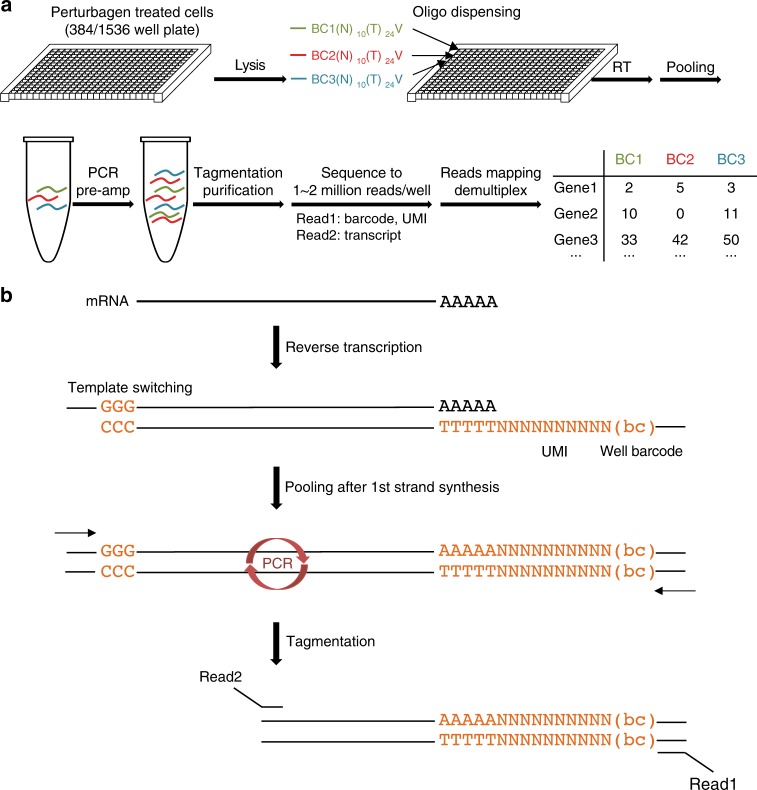
Here we report Digital RNA with pertUrbation of Genes (DRUG-seq), a high-throughput platform for drug discovery. Pharmaceutical discovery relies on high-throughput screening, yet current platforms have limited readouts. RNA-seq is a powerful tool to investigate drug effects using transcriptome changes as a proxy, yet standard library construction is costly. DRUG-seq captures transcriptional changes detected in standard RNA-seq at 1/100 th the cost. In proof-of-concept experiments profiling 433 compounds across 8 doses, transcription profiles generated from DRUG-seq successfully grouped compounds into functional clusters by mechanism of actions (MoAs) based on their intended targets. Perturbation differences reflected in transcriptome changes were detected for compounds engaging the same target, demonstrating the value of using DRUG-seq for understanding on and off-target activities. We demonstrate DRUG-seq captures common mechanisms, as well as differences between compound treatment and CRISPR on the same target. DRUG-seq provides a powerful tool for comprehensive transcriptome readout in a high-throughput screening environment.
Overview
The claims and statistics of this paper haven’t been checked yet.
Free: it reads the open-access text and checks the first 5 claims that cite a source we can check. Create a free account to check every claim.
Integrity signals
Registry
Cites
Statistics
Figures
Verification
Claims the paper makes
The claims and statistics of this paper haven’t been checked yet.
Free: it reads the open-access text and checks the first 5 claims that cite a source we can check. Create a free account to check every claim.
Claims other papers make about this one
Each is checked against this paper’s own text: does it say what the citing paper says it does?
In the citing paper
“Perturbation modelling is underpinned by systematic databases of biological response to treatment (e.g. Connectivity Map [2], L1000, DRUG-seq [3]) and leverages the significant potential of machine learning (ML) to make predictive models, e.g., molecular targets or IC50 values.”
From A mini-review on perturbation modelling across single-cell omic modalities (2024) · cites this paper as [3]
Self-check
Percentages, sums and reported differences re-computed from the paper’s own numbers.
The self-check needs the paper’s full text.
Citations
Cites
Moderated estimation of fold change and dispersion for RNA-seq data with DESeq2
Love, M. I., Huber, W., & Anders, S. (2014) · Genome Biology · doi:10.1186/s13059-014-0550-8 · Cited by 95,106
STAR: ultrafast universal RNA-seq aligner
Dobin, A., Davis, C. A., Schlesinger, F., Drenkow, J., Zaleski, C., Jha, S., Batut, P., Chaisson, M., & Gingeras, T. R. (2013) · Bioinformatics · doi:10.1093/bioinformatics/bts635 · Cited by 51,709
Meta-analysis in clinical trials
DerSimonian, R., & Laird, N. (1986) · Controlled Clinical Trials · doi:10.1016/0197-2456(86)90046-2 · Cited by 39,552
(2008) · Journal of Machine Learning Research · Cited by 33,051
RSEM: accurate transcript quantification from RNA-Seq data with or without a reference genome
Li, B., & Dewey, C. N. (2011) · BMC Bioinformatics · doi:10.1186/1471-2105-12-323 · Cited by 22,179
Lamb, J., Crawford, E. D., Peck, D., Modell, J. W., Blat, I. C., Wrobel, M. J., Lerner, J., Brunet, J.-P., Subramanian, A., Ross, K. N., et al. (2006) · Science · doi:10.1126/science.1132939 · Cited by 5,257
A Next Generation Connectivity Map: L1000 Platform and the First 1,000,000 Profiles
Subramanian, A., Narayan, R., Corsello, S. M., Peck, D. D., Natoli, T. E., Lu, X., Gould, J., Davis, J. F., Tubelli, A. A., Asiedu, J. K., et al. (2017) · Cell · doi:10.1016/j.cell.2017.10.049 · Cited by 3,515
Impact of high-throughput screening in biomedical research
Macarron, R., Banks, M. N., Bojanic, D., Burns, D. J., Cirovic, D. A., Garyantes, T., Green, D. V. S., Hertzberg, R. P., Janzen, W. P., Paslay, J. W., et al. (2011) · Nature Reviews Drug Discovery · doi:10.1038/nrd3368 · Cited by 1,364
Opportunities and challenges in phenotypic drug discovery: an industry perspective
Moffat, J. G., Vincent, F., Lee, J. A., Eder, J., & Prunotto, M. (2017) · Nature Reviews Drug Discovery · doi:10.1038/nrd.2017.111 · Cited by 939
Initiation of a G2/M checkpoint after ultraviolet radiation requires p38 kinase
Bulavin, D. V., Higashimoto, Y., Popoff, I. J., Gaarde, W. A., Basrur, V., Potapova, O., Appella, E., & Fornace, A. J. (2001) · Nature · doi:10.1038/35075107 · Cited by 532
Cited by
Items 101–200 of 224
Carraro, C., Bonaguro, L., Schulte-Schrepping, J., Horne, A., Oestreich, M., Warnat‐Herresthal, S., Helbing, T., Franco, M. D., Händler, K., Mukherjee, S., et al. (2022) · eLife · doi:10.7554/elife.78012 · Cited by 12
“…the process of drug discovery from the initial identification of candidate lead compounds up to their preclinical and clinical development ( Kagohara et al., 2020 ; Li et al., 2014 ; McFarland et al., 2020 ; Rendeiro et al., 2020 ; Shaheen et al., 2018 ; Srivatsan et al., 2020 ; Ye et al., 2018 ).”
Carraro, C., Helbing, T., Francke, A., Zuravka, I., Sosic, A., Franco, M. D., Gandin, V., Gatto, B., & Göttlich, R. (2020) · ChemMedChem · doi:10.1002/cmdc.202000814 · Cited by 9
Improved ClickTags enable live-cell barcoding for highly multiplexed single cell sequencing
Zhao, X., Sun, S., Yu, W., Zhu, W., Zhao, Z., Zhou, Y., Ding, X., Fang, N., Yang, R., & Li, J. P. (2022) · RSC Chemical Biology · doi:10.1039/d2cb00046f · Cited by 8
Zhu, X.-Z., Zhang, H.-Y.-L., Zhou, Y.-F., Chen, Y.-Y., Fu, T., Jin, M.-L., Zhao, Y.-X., Xie, Y.-F., Zeng, X., Jin, X., et al. (2025) · Cancer Research · doi:10.1158/0008-5472.can-24-5002 · Cited by 11
AI-powered programmable virtual humans toward human physiologically-based drug discovery
Wu, Y., Bourne, P. E., & Xie, L. (2025) · Drug Discovery Today · doi:10.1016/j.drudis.2025.104497 · Cited by 12
Nie, X., Fan, J., Wang, Y., Xie, R., Chen, C., Li, H., & Wang, D. W. (2024) · Frontiers of Medicine · doi:10.1007/s11684-023-1036-4 · Cited by 8
Target identification of hepatic fibrosis using Pien Tze Huang based on mRNA and lncRNA
Zhu, J., Zhang, D., Wang, T., Chen, Z., Chen, L., Wu, H., Huai, C., Sun, J. P., Zhang, N., Wei, M., et al. (2021) · Scientific Reports · doi:10.1038/s41598-021-96459-5 · Cited by 12
Zhu, Y., Yang, H., Han, L., Mervin, L., Hosseini-Gerami, L., Li, P., Wright, P. S. R., Trapotsi, M., Liu, K., Fan, T., et al. (2023) · Frontiers in Pharmacology · doi:10.3389/fphar.2023.1116081 · Cited by 11
“In addition, more recent methods such as DRUG-Seq (Ye et al., 2018) and RASL-Seq (Simon et al.”
Compound Activity Prediction with Dose-Dependent Transcriptomic Profiles and Deep Learning
Godinez, W. J., Trifonov, V., Fang, B., Kuzu, G., Pei, L., Guiguemde, W. A., Martin, E. J., King, F. J., Jenkins, J. L., & Skewes-Cox, P. (2024) · Journal of Chemical Information and Modeling · doi:10.1021/acs.jcim.3c01855 · Cited by 7
Self-citationMcCrea, L. T., Batorsky, R., Bowen, J. J., Yeh, H., Thanos, J. M., Fu, T., Perlis, R. H., & Sheridan, S. D. (2025) · Neuropsychopharmacology · doi:10.1038/s41386-025-02123-1 · Cited by 8
Thomas, J. R., Shelton, C., Murphy, J., Brittain, S. M., Bray, M., Aspesi, P., Concannon, J. B., King, F. J., Ihry, R. J., Ho, D. J., et al. (2024) · ACS Chemical Biology · doi:10.1021/acschembio.3c00737 · Cited by 7
Self-citationCompound activity prediction with dose-dependent transcriptomic profiles and deep learning
Godinez, W. J., Trifonov, V., Fang, B., Kuzu, G., Pei, L., Guiguemde, W. A., Martin, E. J., King, F. J., Jenkins, J. L., & Skewes-Cox, P. (2023) · doi:10.1101/2023.08.03.551883 · Cited by 7
Self-citationThe limitations of small molecule and genetic screening in phenotypic drug discovery
Vincent, F., & Gianni, D. (2025) · Cell chemical biology · doi:10.1016/j.chembiol.2025.10.008 · Cited by 8
Stability of non-canonical nucleic acid structure as a potential modulator of cell fate
Takahashi, S., Tateishi‐Karimata, H., & Sugimoto, N. (2026) · Nucleic Acids Research · doi:10.1093/nar/gkaf1486 · Cited by 8
“To investigate these cellular morphological changes, transcriptomic analyses have traditionally been the corner-stone of assay technologies, evolving from Sanger sequencing and microarray analysis to more recent advancements, such as RNA-seq and its derivatives [ 3 ].”
Coordinated regulation by lncRNAs results in tight lncRNA-target couplings
Chiu, H., Somvanshi, S., Chang, C.-T., de Lavergne, E. J. D. B., Wei, Z., Hsieh, C.-H., Trypsteen, W., Scorsone, K. A., Patel, E., Tang, T. T., et al. (2025) · Cell Genomics · doi:10.1016/j.xgen.2025.100927 · Cited by 12
High-capacity sample multiplexing for single cell chromatin accessibility profiling
Booth, G. T., Daza, R. M., Srivatsan, S. R., McFaline‐Figueroa, J. L., Gladden, R. G., Mullen, A. C., Furlan, S. N., Shendure, J., & Trapnell, C. (2023) · BMC Genomics · doi:10.1186/s12864-023-09832-1 · Cited by 7
“Pairing HTSs with measurements of global gene expression in bulk [11, 12], or single cells [13–17], has improved the resolution at which one can evaluate therapeutic responses.”
BackgroundMachine Learning in Drug Design
Engkvist, O., Mervin, L., Chen, H., & Ran, T. (2023) · Royal Society of Chemistry eBooks · doi:10.1039/9781788018982-00231 · Cited by 7
Renner, S., Bergsdorf, C., Bouhelal, R., Koziczak‐Holbro, M., Amati, A. M., Techer-Etienne, V., Flotte, L., Reymann, N., Kapur, K., Hoersch, S., et al. (2020) · Scientific Reports · doi:10.1038/s41598-020-66533-5 · Cited by 6
Self-citationSingle-cell multiomics: a new frontier in drug research and development
Ma, J., Dong, C. F., He, A., & Xiong, H. (2024) · Frontiers in Drug Discovery · doi:10.3389/fddsv.2024.1474331 · Cited by 5
“Notable technical advancements such as DRUG-seq have proven effective in classifying compounds based on their mechanisms of action (Ye et al., 2018).”
Application of Machine Learning in Predicting Osteogenic Differentiation of Mesenchymal Stem Cells
Mao, H., Zhou, Z. O., Yang, Y., Lin, K., Zhou, C., & Wang, X. (2025) · Bioengineering · doi:10.3390/bioengineering12101089 · Cited by 5
Ha, S. V., Jaensch, S., Kańduła, M. M., Herman, D., Czodrowski, P., & Ceulemans, H. (2025) · Scientific Reports · doi:10.1038/s41598-025-05914-0 · Cited by 10
Single-cell multiomics reveals a gene regulatory circuit driving leukemia cell differentiation
Tian, X., Zhang, L., Tang, Y., Xiang, G., Wang, Z., Zhu, P., Yu, S., Jiang, F., Wang, S., Wang, J., et al. (2025) · Oncogene · doi:10.1038/s41388-025-03309-z · Cited by 7
I-LIFT (image-based laser-induced forward transfer) platform for manipulating encoded microparticles
Lee, S., Lee, W., Lee, A. C., Nam, J., Lee, J., Kim, H., Jeong, Y., Yeom, H., Kim, N., Song, S. W., et al. (2022) · Biomicrofluidics · doi:10.1063/5.0131733 · Cited by 5
Tanabe, S., Quader, S., Ono, R., Cabral, H., Aoyagi, K., Hirose, A., Perkins, E. J., Yokozaki, H., & Sasaki, H. (2023) · Onco · doi:10.3390/onco3010002 · Cited by 6
“The modeling of the cellular phenotype transition in EMT and diseases will be studied in the near future.”
BackgroundIntegrating gene expression biomarker predictions into networks of adverse outcome pathways
Corton, J. C. (2019) · Current Opinion in Toxicology · doi:10.1016/j.cotox.2019.05.006 · Cited by 5
Hicks, M. B., Mattern, K. A., Fine, J. A., Grosser, S. T., Patel, D., Weisel, L., & Aggarwal, P. (2023) · Journal of Separation Science · doi:10.1002/jssc.202300300 · Cited by 6
Identification of NUV-244 as a PNPLA3 I148M degrading small molecule
Steigemann, P., Braeuer, N., Puetter, V., Zablowsky, N., Juenemann, K., von Nussbaum, F., Lesche, R., Dittmar, N., Schaller, D., Makowska, Z., et al. (2025) · iScience · doi:10.1016/j.isci.2025.112384 · Cited by 4
“…acts in adipocytes, we generated mouse OP-9 cells stably expressing PNPLA3 I148M-tagRFP and differentiated these into adipocytes 39 (DRUG-seq 40,41 data for effective differentiation in Figures S7A and S7B, PNPLA3 I148M-tag-RFP on the surface of large lipid droplets in adipocytes in Figure…”
InfluentialZhao, Y., Ma, Y., Li, H., Chen, M., Yang, S., Xu, Y., Zhang, Q., Jiao, B., & Tan, Y. (2025) · Scientific Reports · doi:10.1038/s41598-025-98781-8 · Cited by 6
“This is why DRUG-seq serves as an ideal strategy for metabolite screening 14 .”
Perspectives on phenotypic screening−Screen Design and Assay Technology Special Interest Group
Pak, C., Simpson, K. J., Weston, A. D., Cvijic, M. E., Evans, K., & Napper, A. D. (2024) · SLAS DISCOVERY · doi:10.1016/j.slasd.2024.02.001 · Cited by 5
Ghimire, S., Stewart, C. G., Thurman, A. L., & Pezzulo, A. A. (2021) · Scientific Reports · doi:10.1038/s41598-021-98912-x · Cited by 6
Li, J., Chi, J., Yang, Y., Song, Z., Yang, Y., Zhou, X., Liu, Y., & Zhao, Y. (2023) · Cell Regeneration · doi:10.1186/s13619-023-00164-9 · Cited by 4
“In recent years, high-throughput sequencing platforms have enabled several revolutionary advances in phenotypic and functional screening, such as DRUG-seq and PLATE-seq, which use genome-wide transcriptional profiling with hierarchical clustering and MOA analysis to screen out effective compounds (Bush et al. 2017; Ye…”
BackgroundInfluentialThe Molecular Circadian Clock Is a Target of Anti-cancer Translation Inhibitors
Berthier, A., Gheeraert, C., Johanns, M., Vinod, M., Staels, B., Eeckhoute, J., & Lefèbvre, P. (2023) · Journal of Biological Rhythms · doi:10.1177/07487304231202561 · Cited by 6
“Targeting the clock is also an entry point for the development of novel, more efficient, and less toxic therapeutic strategies (Sulli et al., 2018; Tamai et al., 2018; Ye et al., 2018).”
BackgroundContemporary Techniques for Target Deconvolution and Mode of Action Elucidation
Schirle, M., & Jenkins, J. L. (2020) · Royal Society of Chemistry eBooks · doi:10.1039/9781839160721-00083 · Cited by 4
Self-citationBoosting the power of transcriptomics by developing an efficient gene expression profiling approach
Wang, J., Xu, J., Yang, X., Xu, S., Zhang, M., & Lü, F. (2021) · Plant Biotechnology Journal · doi:10.1111/pbi.13706 · Cited by 3
Identifying novel drug targets with computational precision
Dave, R., Giordano, P., Roy, S., & Imran, H. (2025) · Advances in pharmacology · doi:10.1016/bs.apha.2025.01.003 · Cited by 9
Bao, F., Li, L., Hammerlindl, H., Shen, S. Q., Hammerlindl, S., Altschuler, S. J., & Wu, L. F. (2025) · Nature Biotechnology · doi:10.1038/s41587-025-02729-2 · Cited by 6
“To test the integration with other HCS datasets, we manually aligned compound labels with previous drug categories and selected the categories that overlapped with those from the six cancer cell line datasets in Project V.”
The applications of single-cell multiomics in drug screening
Xue, Q., Hu, H. F., Wang, R., Wu, F., & Xiong, H. (2025) · Pharmaceutical Science Advances · doi:10.1016/j.pscia.2025.100090 · Cited by 3
“For example, DRUG-seq was developed for rapid and cost-effective drug screening [31].”
Expanding research and care for Leigh syndrome: efforts of a patient-led advocacy organization
Zilber, S., Burnworth, M., Afolabi, T. M., Brestoff, J. R., Minczuk, M. A., Luis, A. R., Ling, Q., Prigione, A., Tolle, I., Elsharkawi, I., et al. (2025) · Research Involvement and Engagement · doi:10.1186/s40900-025-00808-x · Cited by 5
“Another collaborative venture of Cure Mito Foundation resulted in the screening of thousands of small-molecule drugs to measure transcriptomic changes that could potentially ameliorate mitochondrial deficits in Leigh syndrome patient induced pluripotent stem cell (iPSC)-derived neurons [38, 39, 56].”
An expanded role for single-cell chemical genomics profiling in drug discovery
Wyatt, A., Hoffer-Hawlik, K., Giglio, R. M., Azizi, E., & McFaline‐Figueroa, J. L. (2026) · Biochemical Journal · doi:10.1042/bcj20253273 · Cited by 4
“Landmark studies, PLATE-seq [4] and later DRUG-seq [46], established multi-well plate-based bulk RNA-seq protocols to measure genome-wide expression changes in response to chemical or genetic perturbation by leveraging well-specific reverse transcription barcodes.”
Liao, J., Yi, H., Wang, H., Yang, S., Jiang, D., Huang, X., Zhang, M., Shen, J., Lu, H., & Niu, Y. (2024) · Briefings in Bioinformatics · doi:10.1093/bib/bbae659 · Cited by 4
Choi, J., Hyun, J., Hyun, J., Kim, J.-H., Lee, J. H., & Bang, D. (2024) · Experimental & Molecular Medicine · doi:10.1038/s12276-024-01164-8 · Cited by 5
Veeranagouda, Y., Zachayus, J., Guillemot, J.-C., Venier, O., & Didier, M. (2020) · Current Protocols in Molecular Biology · doi:10.1002/cpmb.123 · Cited by 3
“In these methods, in order to reduce labor and cost, samples are pooled after cDNA synthesis and processed as a single sample in enrichment PCR (Alpern et al., 2019; Bush et al., 2017; Ye et al., 2018).”
BackgroundMethodInfluentialUsing Artificial Intelligence for Drug Repurposing
Bender, A. (2022) · Royal Society of Chemistry eBooks · doi:10.1039/9781839163401-00147 · Cited by 4
Zhang, C., Saurat, N. G., Cornacchia, D., Chung, S. Y., Sikder, T., Minotti, A. P., Studer, L., & Betel, D. (2023) · bioRxiv (Cold Spring Harbor Laboratory) · doi:10.1101/2023.07.03.547539 · Cited by 3
“…dataset, a similar strategy could be used to probe any other pharmacological perturbation dataset with transcriptomic readouts such as Drug-Seq 38,39 or PLATE-Seq 40 or genetic perturbation data including possibly single cell-based strategies such as Perturb-Seq 41,42 , CRISPR-Seq 43 or CROP-Seq…”
BackgroundBaugh, L. M., Vigneau, S., Sridhar, S., Boswell, S. A., Pilitsis, G., Bradley, J., Allen, O., Rand, L. M., Riccardi, A., Roach, K., et al. (2025) · bioRxiv (Cold Spring Harbor Laboratory) · doi:10.1101/2025.06.03.657593 · Cited by 3
Wu, M., Li, S., Liu, W., Guo, Z., Guo, Z., & Zhang, D. (2026) · Microvascular Research · doi:10.1016/j.mvr.2026.104979 · Cited by 2
Natarajan, S., Nguyen, K. D. P., Li, H., Saputra, E. C., Li, C., Kim, G., Liu, Y., Sun, H., Ramli, M. N., Li, L., et al. (2025) · Molecular Cancer Therapeutics · doi:10.1158/1535-7163.mct-24-1121 · Cited by 2
Zhao, J., He, J., Guan, P., Bao, H., Zhao, X., Zhao, C., Qin, W., Lu, X., & Xu, G. (2025) · Analytical Chemistry · doi:10.1021/acs.analchem.5c03611 · Cited by 3
Functional genomic profiling of schizophrenia-associated genes reveals key microglial regulators
Horng, J. E., McCrea, L. T., Batorsky, R., Bowen, J. J., Boschian, C., Song, Y., Perlis, R. H., & Sheridan, S. D. (2026) · Neuropsychopharmacology · doi:10.1038/s41386-026-02406-1 · Cited by 2
Igwezeke, F., & Nnadi, C. O. (2026) · International Electronic Conference on Applied Sciences (ASEC) · doi:10.3390/engproc2026124037 · Cited by 3
Drug repurposing using transcriptomics: principles and unmet needs in cardiovascular disease
Leung, S., Miller, C. L., Singh, A., & Wang, Y. (2026) · American Journal of Physiology-Heart and Circulatory Physiology · doi:10.1152/ajpheart.00899.2025 · Cited by 2
He, X., Wang, X., Wang, H., Wang, T., Yang, F., Chen, Y., Pei, Z., Bai, Y., Li, W., Wu, Z., et al. (2024) · Aging and Disease · doi:10.14336/ad.2023.1213 · Cited by 6
“50000 endothelial cells collect from three mice were labeled by Barcode, PCR, library construction, and sequencing were performed at Epibiotek Co. LD (Guangzhou, China) as previously reported [23].”
PerturbSeq.db: An Integrated Repository for Comprehensive Analysis of Single-cell Perturbation Data
He, T., Yang, X., Tong, Y., Liu, X., Wei, Y., Wang, W., Yuan, J., Wang, Y., & Yang, Y. (2025) · Journal of Molecular Biology · doi:10.1016/j.jmb.2025.169209 · Cited by 5
Gene Signature-Based Drug Repositioning
Jia, Z., Song, X., Shi, J., Wang, W., & He, K. (2022) · IntechOpen eBooks · doi:10.5772/intechopen.101377 · Cited by 4
A 3′‐end capture sequencing method for high‐throughput targeted gene expression profiling
de Bony, E. J., Gysens, F., Yigit, N., Anckaert, J., Everaert, C., Eynde, E. V., Verniers, K., van Snippenberg, W., Trypsteen, W., & Mestdagh, P. (2022) · Biotechnology Journal · doi:10.1002/biot.202100660 · Cited by 3
Shin, D., Choi, J., Lee, J. H., & Bang, D. (2022) · Nucleic Acids Research · doi:10.1093/nar/gkac665 · Cited by 2
ICBS 2021: Looking Toward the Next Decade of Chemical Biology
Veale, C. G. L., Talukdar, A., & Vauzeilles, B. (2022) · ACS Chemical Biology · doi:10.1021/acschembio.2c00209 · Cited by 2
Targeting tumour-intrinsic neural vulnerabilities of glioblastomaPreprint
Lee, S., Weiß, T., Bühler, M., Mena, J., Lottenbach, Z., Wegmann, R., Sun, M., Bihl, M., Augustynek, B., Baumann, S., et al. (2022) · bioRxiv (Cold Spring Harbor Laboratory) · doi:10.1101/2022.10.07.511321 · Cited by 3
Nguyen, L. D., Wei, Z., Silva, M. C., Barberán-Soler, S., Rabinovsky, R., Muratore, C., Stricker, J. M. S., Hortman, C., Young‐Pearse, T. L., Haggarty, S. J., et al. (2022) · bioRxiv (Cold Spring Harbor Laboratory) · doi:10.1101/2022.11.01.514550 · Cited by 3
Single-cell multiomics reveals a gene regulatory circuit promoting leukemia cell differentiationPreprint
Tian, X., Zhang, L., Tang, Y., Xiang, G., Wang, Z., Zhu, P., Yu, S., Jiang, F., Wang, S., Wang, J., et al. (2024) · bioRxiv (Cold Spring Harbor Laboratory) · doi:10.1101/2024.02.29.582681 · Cited by 2
From bench to babies – drug development for male subfertility
Khaw, S. C., & da Silva, S. M. (2024) · Reproduction and Fertility · doi:10.1530/raf-24-0022 · Cited by 2
Liu, L., Ha, S., Cao, D., Li, M., & Li, Z. (2025) · Molecular Medicine · doi:10.1186/s10020-025-01143-3 · Cited by 1
Wu, F., Liu, Z., Huang, J. L., Gao, Y., Yang, L., & Du, F. (2025) · Scientific Reports · doi:10.1038/s41598-025-12427-3 · Cited by 2
“Total RNA was isolated from mESCs using TRIzol reagent, and RNA integrity was precisely quantified with the Agilent 2100 RNA 6000 Nano Kit. cDNA synthesis and library preparation were performed using the EpiTMDRUG-seq methodology (Digital mRNA with pertUrbation of Genes) 48 .”
InfluentialLi, S., Kan, F., Ji, S., Cao, D., Liu, H., & Wu, J. (2025) · Adipocyte · doi:10.1080/21623945.2025.2548787 · Cited by 2
“To systematically elucidate the impact of vascularization on adipose organoids, we performed transcriptome profiling using DRUG-seq (each group with three biological replicates) [27].”
Lin, A., Mai, Y., Lai, G., Li, Z., Shen, J., Wong, H. Z. H., Zhang, N., Zhang, J., Li, K., Cheng, Q., et al. (2025) · Molecular Psychiatry · doi:10.1038/s41380-025-03252-1 · Cited by 2
“Total RNA was extracted using TRIzol ® reagent, and samples meeting quality control thresholds via NanoDrop and Agilent 2100 were used for cDNA library construction, which was subsequently subjected to high-throughput RNA sequencing [41, 42].”
Vlasveld, M., van den Berk, L., Piñero, J., Helmke, P. S., Ecker, G. F., Rossom, R. V., Schmidt, B. Z., Verfaillie, C. M., Tassis, K., Callegaro, G., et al. (2025) · Archives of Toxicology · doi:10.1007/s00204-025-04226-6 · Cited by 1
“Novel cost-effective high throughput transcriptomics approaches including TempO-Seq or DRUG-seq (Ye et al. 2018) could facilitate additional orthogonal mechanisms underpinning the effects of the KIs on TNFα signaling, as well as other pathways that we did not cover in the current study.”
Guide to liquid volume measurements: A review of methods and technologies
Hentz, N. G., & Bradshaw, J. T. (2025) · SLAS TECHNOLOGY · doi:10.1016/j.slast.2025.100382 · Cited by 3
Byrne, A., Felton, C., & Stephenson, W. (2026) · Frontiers in Oncology · doi:10.3389/fonc.2026.1800370 · Cited by 2
PC3T: a signature-driven predictor of chemical compounds for cellular transition
Han, L., Song, B., Zhang, P., Zhong, Z., Zhang, Y., Bo, X., Wang, H., Zhang, Y., Cui, X., & Zhou, W. (2023) · Communications Biology · doi:10.1038/s42003-023-05225-y · Cited by 1
“Fortunately, cost-effective sequencing methods have been developed, such as DRUG-seq 42 and sci-Plex 43 , which enable researchers to derive massive chemical transcriptomics at a very low cost.”
TORNADO-seq: A Protocol for High-Throughput Targeted RNA-seq-Based Drug Screening in Organoids
Norkin, M. N., & Huelsken, J. (2023) · Methods in molecular biology · doi:10.1007/978-1-0716-3076-1_6 · Cited by 1
Umarov, R., Li, Y., & Arner, E. (2020) · bioRxiv (Cold Spring Harbor Laboratory) · doi:10.1101/2020.12.14.422792 · Cited by 1
Performance of a scalable extraction-free RNA-seq methodPreprint
Ghimire, S., Stewart, C. G., Thurman, A. L., & Pezzulo, A. A. (2021) · bioRxiv (Cold Spring Harbor Laboratory) · doi:10.1101/2021.01.22.427817 · Cited by 1
“Luminex L1000, used for the Connectivity Map (4) is a costeffective platform for transcriptional profiling; however, it only allows the measurement of approximately 1000 genes making this approach less efficient and more susceptible to signalnoise problems (18).”
MethodGovindan, S., Alpern, D., Stoppini, L., Deplancke, B., & Roux, A. (2022) · bioRxiv (Cold Spring Harbor Laboratory) · doi:10.1101/2022.01.21.477206 · Cited by 2
“Recently, several library preparation protocols aiming at reducing the time and cost of RNA-sequencing have emerged ((Bush et al., 2017; Ye et al., 2018; Alpern et al., 2019)).”
BackgroundThomas, J. R., Shelton, C., Murphy, J., Brittain, S. M., Bray, M., Aspesi, P., Concannon, J. B., King, F. J., Ihry, R. J., Ho, D. J., et al. (2023) · ChemRxiv · doi:10.26434/chemrxiv-2023-tlj9z
Self-citationThomas, J. R., Shelton, C., Murphy, J., Brittain, S. M., Bray, M., Aspesi, P., Concannon, J. B., King, F. J., Ihry, R. J., Ho, D. J., et al. (2023) · ChemRxiv · doi:10.26434/chemrxiv-2023-tlj9z-v2
Self-citationIshii, R., Sakura, T., Hong, J. H., Yasuo, K., Hattori, K., Willis, P. A., Kato, T., & Inaoka, D. K. (2025) · bioRxiv (Cold Spring Harbor Laboratory) · doi:10.1101/2025.02.27.640686 · Cited by 1
Lack of mRNA Methylation in Schwann Cells Results in Demyelination and Regenerative FailurePreprint
Sari, M. C., Johnson, A. E., Yu, A. T., Mi, R., Chen, W., Hu, X., Harris, T., TUFFAHA, S. H., Swarup, V., Kawaguchi, R., et al. (2025) · bioRxiv (Cold Spring Harbor Laboratory) · doi:10.1101/2025.06.03.657089 · Cited by 1
Improving RNA-seq protocolsPreprint
Pförtner, F., Briem, E., Enard, W., & Richter, D. (2025) · bioRxiv (Cold Spring Harbor Laboratory) · doi:10.1101/2025.08.20.671269 · Cited by 1
Gene-signatures predict biologically relevant dose-response potencies in phenotypic assaysPreprint
Renner, S., Bergsdorf, C., Bouhelal, R., Koziczak‐Holbro, M., Amati, A. M., Techer-Etienne, V., Flotte, L., Reymann, N., Kapur, K., Hoersch, S., et al. (2019) · bioRxiv (Cold Spring Harbor Laboratory) · doi:10.1101/799106
Self-citationGianni, D., & Escudero‐Ibarz, L. (2022) · Wiley eBooks · doi:10.1002/9781119671404.ch9
RNA decay defines the response to transcriptional perturbation in leukaemiaPreprint
Todorovski, I., Feran, B., Fan, Z., Gadipally, S., Yoannidis, D., Kong, I. Y., Bjelosevic, S., Zethoven, M., Hawkins, E. D., Simpson, K. J., et al. (2022) · bioRxiv (Cold Spring Harbor Laboratory) · doi:10.1101/2022.04.06.487057
Liu, D. (2022) · MOspace Institutional Repository (University of Missouri) · doi:10.32469/10355/91677
Pasche, S., Demir, M., Heub, S., Garzuel, M., Ischer, R., Migliozzi, D., Graf, S., Schmid, N., Atakan, H. B., Gudkova, D., et al. (2024) · Biomedical Microdevices · doi:10.1007/s10544-024-00702-5
“Recently, several RNA-seq protocols have been published (e.g., PLATE-seq (Bush et al. 2017), DRUG-seq (Ye et al. 2018), and BRB-seq (Alpern et al. 2019)), which allow a substantial increase in the throughput and cost-efficiency of this NGS application.”
BackgroundMethodBarraza, S. J., & Woll, M. G. (2024) · Methods and principles in medicinal chemistry · doi:10.1002/9783527840458.ch7
Zhang, H., Cai, Y., Ge, F., Zhang, W., Li, J., Chen, S., Chen, C., & Wang, L. (2024) · Lecture notes in computer science · doi:10.1007/978-981-97-5692-6_4
A diffusion model conditioned on compound bioactivity profiles for predicting high-content imagesPreprint
Cook, S., Chyba, J., Gresoro, L., Quackenbush, D., Qiu, M., Kutchukian, P. S., Martin, É., Skewes-Cox, P., & Godinez, W. J. (2024) · bioRxiv (Cold Spring Harbor Laboratory) · doi:10.1101/2024.10.10.616543
“…for the profiles themselves as a precondition for pDIFF training. pDIFF could also be trained on other profiles such as gene expression signatures (Ye et al, 2018; Li et al, 2012; Subramanian et al, 2017) or alternative chem-informatic fingerprints (Hert et al, 2004; Riniker and Landrum, 2013).”
BackgroundChakraborty, S., Nair, J. M., & Bharadwaj, D. (2024) · RNA technologies · doi:10.1007/978-3-031-62178-9_14
Sievers, S., Waldmann, H., & Ziegler, S. (2025) · Elsevier eBooks · doi:10.1016/b978-0-443-29808-0.00009-1
Siminea, N., Anand, P., Păun, A., Chiosis, G., Freeman, A., & Petre, I. (2025) · Elsevier eBooks · doi:10.1016/b978-0-443-29808-0.00021-2
DRAGoN: a robust pipeline for analyzing DRUG-seq datasets
Norton, S., & Gaspar, J. M. (2024) · Bioinformatics Advances · doi:10.1093/bioadv/vbaf214 · Cited by 1
“Digital RNA with pertUrbation of Genes (DRUG-seq) is a recent technique for enabling high-throughput whole transcriptome expression profiling of cultured cells in multiwell plates (Ye et al. 2018).”
Catalyzing computational biology research at an academic institute through an interest network
Žák, J., Newman, I. A., Garcia, D. J. M., Parisi, D., Joy, J., Head, S. R., Ducom, J.-C., Natarajan, P., Cui, H., & Ul-Hasan, S. (2025) · PLoS Computational Biology · doi:10.1371/journal.pcbi.1013453 · Cited by 1
“…RNA-seq decreased from a peak of 60% in 2015 to 24% in 2021, and new techniques such as 10× Chromium single-cell RNA-sequencing (scRNA-seq), CRISPR experiments, and high-throughput screening RNA-seq (such as Digital RNA with pertUrbation of Genes-seq [27]) were introduced (Fig 1B and S1 Table).”
Chen, Y., Delgado, R. N., Xu, E., Cepko, C. L., & Fan, H. B. (2025) · bioRxiv (Cold Spring Harbor Laboratory) · doi:10.1101/2025.09.22.672701
“25 distinct RNAs, ranging from low to high expression levels, were selected based on bulk RNA sequencing of U2OS cells 40 .”
Xiong, M., Miosge, L. A., Correa-Ospina, C., Yan, C. M. Y., Cripps, T., Bauernfried, S., Wang, Y., Crow, M., Morris, L. X., Andrews, T. D., et al. (2025) · Journal of Neuroinflammation · doi:10.1186/s12974-025-03556-7
Sculpting the future: harnessing artificial intelligence for revolutionary drug discovery
Lavecchia, A. (2025) · Elsevier eBooks · doi:10.1016/b978-0-443-33885-4.00003-2
macpie: Scalable workflow for high-throughput transcriptomic profiling
Bartoniček, N., Liu, X., Twomey, L., Meier, M., Lupat, R., Craig, S., Yoannidis, D., Li, J., Semple, T. J., Simpson, K. J., et al. (2025) · Computational and Structural Biotechnology Journal · doi:10.1016/j.csbj.2025.11.002 · Cited by 1
“Several technologies support HTTr, including DRUG-seq [9], TempO-seq [10], L1000 [6], PLATE-seq [11], and commercial platforms such as InSphero ’ s Organoid DRUG-seq [12].”
Ogawa, M., Crawford, C. W., Ishigaki, A., Baran, I. S., Ordinario, D. D., & Miyashita, T. (2025) · Scientia Pharmaceutica · doi:10.3390/scipharm93040056
Guin, D., Haditsch, U., Bellucci, J. J., Topka, S., Dyer, K. E., Toro, G. A. R. D., Blanco, M. R., Downs, N. F., Perfito, N., Mahadevan, A., et al. (2025) · Scientific Reports · doi:10.1038/s41598-025-26015-y · Cited by 2
“Libraries were prepared using a customized version of the DRUG-seq protocol 11,12 .”
Cancer pathway connectivity resolved by drug perturbation and RNA sequencingPreprint
Do, T. H. L., Lohoff, C., Jung, F., Kummer, S., Pohly, M. F., Scheinost, S., Hüellein, J., Beneš, V., Huber, W. K., Lu, J., et al. (2025) · bioRxiv (Cold Spring Harbor Laboratory) · doi:10.64898/2025.12.11.692401
Wang, H., Wang, Y., Li, J., He, Z., Boswell, S. A., Chung, M., You, F., & Han, S. (2023) · Figshare · doi:10.6084/m9.figshare.22649456
Wang, H., Wang, Y., Li, J., He, Z., Boswell, S. A., Chung, M., You, F., & Han, S. (2023) · Figshare · doi:10.6084/m9.figshare.22649462
Metadata
- Authors
- Ye, C., Ho, D. J., Neri, M., Yang, C., Kulkarni, T., Randhawa, R., Henault, M., Mostacci, N., Farmer, P., Renner, S., Ihry, R., Mansur, L., Keller, C. G., McAllister, G., Hild, M., Jenkins, J., & Kaykas, A.
- Affiliations
- Blueprint Medicines (United States) (US)
- Novartis Institutes for BioMedical Research (CH)
- Corresponding author
- Kaykas, Ajamete
- ORCID
- Venue
- Nature Communications
- Published
- 2018-10-17
- Volume
- 9
- Issue
- 1
- Pages
- 4307-4307
- ISSN
- 2041-1723 (ISSN-L)
- PMC
- PMC6192987
- OpenAlex
- W2896822135
- Semantic Scholar
- 0dfff3656c0d92d63f3a85cc4583507930585e13
- Cited by
- 222
- References
- 35
- Citations by year
- 2026: 26 · 2025: 47 · 2024: 29 · 2023: 31 · 2022: 33 · 2021: 19 · 2020: 24 · 2019: 12 · 2018: 1
- FWCI
- 4.98
- Type
- journal article
- Language
- en
- Open access
- gold
- doi.org
- Licence
- cc-by
- creativecommons.org/licenses/by/4.0 (tdm)
- creativecommons.org/licenses/by/4.0 (vor)
- Locations
- Nature Communications (publishedVersion, cc-by)
- Europe PMC (PubMed Central) (publishedVersion, cc-by)
- PubMed Central (publishedVersion, cc-by)
- PubMed (publishedVersion)
- RePEc: Research Papers in Economics (submittedVersion)
- DOAJ (DOAJ: Directory of Open Access Journals) (submittedVersion)
- DOAJ (DOAJ: Directory of Open Access Journals) (submittedVersion, cc-by-sa)
- Topics
- Life Sciences › Biochemistry, Genetics and Molecular Biology › Molecular Biology › Single-cell and spatial transcriptomics
- Life Sciences › Pharmacology, Toxicology and Pharmaceutics › Drug Discovery › Computational Drug Discovery Methods
- Life Sciences › Biochemistry, Genetics and Molecular Biology › Molecular Biology › Genomics and Phylogenetic Studies
- Keywords
- gene expression profiling, high-throughput screening, drug discovery, gene perturbation, off-target effects
- MeSH terms
- Cell Line, Humans, Sequence Analysis, RNA, Gene Expression Profiling, Drug Discovery, High-Throughput Screening Assays, Clustered Regularly Interspaced Short Palindromic Repeats
About these checks
Registry, retraction, Cites and statistics results are computed, not judged, with one exception: a printed reference that no index lists is read once by a model before it counts as a citation error. Claims are extracted by a model and kept only when their quote appears verbatim in the text; each cited source is then checked, with a model’s help, for whether it says what the claim relies on. Those verdicts can be wrong — read the claim’s quote and the cited source before relying on one.
Statistics and arithmetic are recomputed, not judged.
Confidence bands are shown only for fields calibrated on our annotated test set. None is calibrated yet, so no band is shown.
What counts as a claim ›How we measure confidence ›How we check this ›
Are you an author, or do you see a problem with this page? Request a review
Data sources
Bibliographic data: Semantic Scholar, OpenAlex, Crossref.
Contains information from the Semantic Scholar Academic Graph Datasets, made available under the ODC Attribution License (ODC-BY 1.0).
Semantic Scholar’s data is described in: Kinney, R., et al. (2023). The Semantic Scholar Open Data Platform. arXiv:2301.10140.
