

Electrophysiological mechanisms of human memory consolidation
Open accessThe DOI matches its Crossref record; 49 of the 49 references it cites were found in a registry or an index.
Abstract
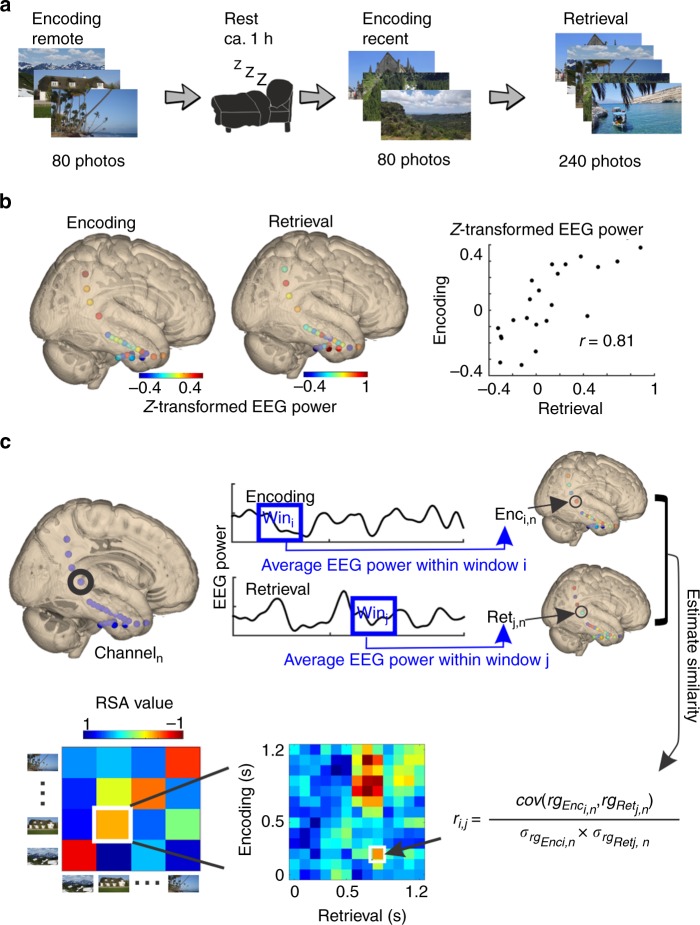
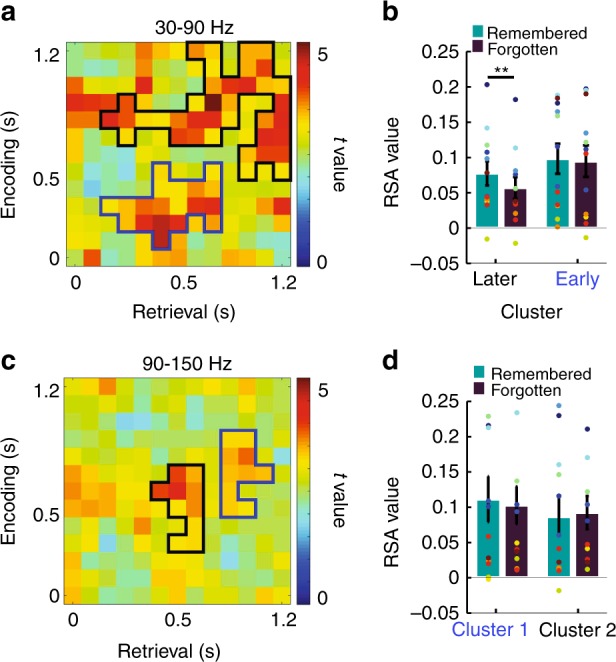
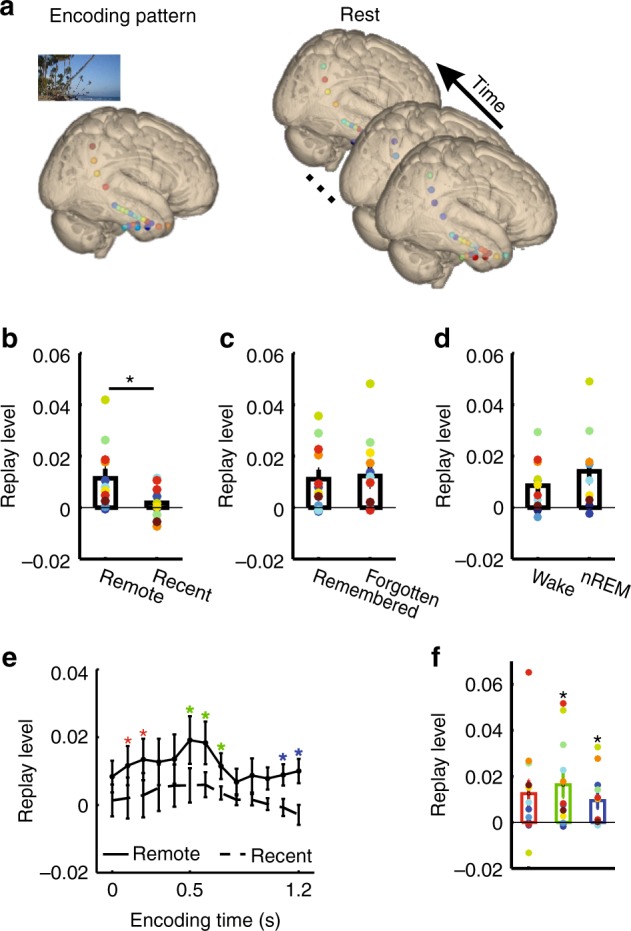
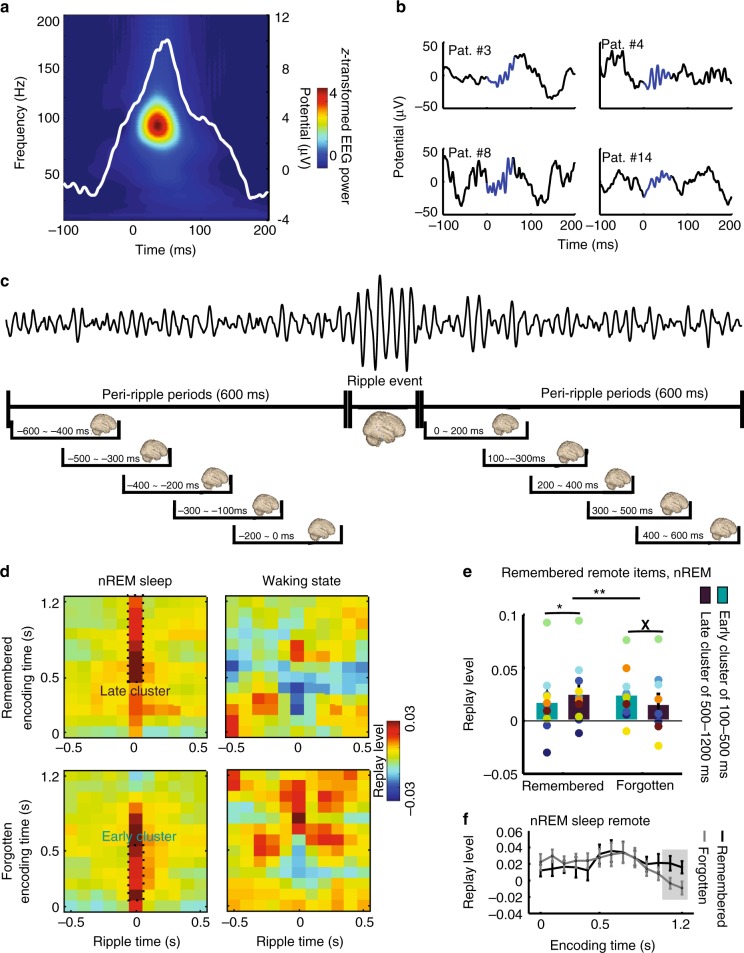
Consolidation stabilizes memory traces after initial encoding. Rodent studies suggest that memory consolidation depends on replay of stimulus-specific activity patterns during fast hippocampal “ripple” oscillations. Here, we measured replay in intracranial electroencephalography recordings in human epilepsy patients, and related replay to ripples. Stimulus-specific activity was identified using representational similarity analysis and then tracked during waking rest and sleep after encoding. Stimulus-specific gamma (30–90 Hz) activity during early (100–500 ms) and late (500–1200 ms) encoding is spontaneously reactivated during waking state and sleep, independent of later memory. Ripples during nREM sleep, but not during waking state, trigger replay of activity from the late time window specifically for remembered items. Ripple-triggered replay of activity from the early time window during nREM sleep is enhanced for forgotten items. These results provide the first electrophysiological evidence for replay related to memory consolidation in humans, and point to a prominent role of nREM ripple-triggered replay in consolidation processes.
Overview
The claims and statistics of this paper haven’t been checked yet.
Free: it reads the open-access text and checks the first 5 claims that cite a source we can check. Create a free account to check every claim.
Integrity signals
Registry
Cites
Statistics
Figures
Verification
Claims the paper makes
The claims and statistics of this paper haven’t been checked yet.
Free: it reads the open-access text and checks the first 5 claims that cite a source we can check. Create a free account to check every claim.
Claims other papers make about this one
Each is checked against this paper’s own text: does it say what the citing paper says it does?
The source backs part of the claim, not all of it — or backs it for a different population, condition or comparison.
In the citing paper
“According to contemporary models and backed by a growing body of research,5,6,7,8 covert reactivation of mnemonic content underlies sleep-dependent memory consolidation by propagating information from hippocampal to neocortical regions via a synchronized interplay of hippocampal sharp-wave ripples, thalamic spindles, and neocortical slow waves.9,10”
From Random auditory stimulation during sleep disturbs traveling slow waves and declarative memory (2026) · cites this paper as [8]
Experimental — accuracy not yet measuredIn the citing paper
“For example, hippocampal theta oscillations do not just represent behavioral information but also exist as traveling waves,30,31 with their propagation dynamics relating to behavioral task performance.8”
From Random auditory stimulation during sleep disturbs traveling slow waves and declarative memory (2026) · cites this paper as [8]
Self-check
Percentages, sums and reported differences re-computed from the paper’s own numbers.
The self-check needs the paper’s full text.
Citations
Cites
Oostenveld, R., Fries, P., Maris, E., & Schoffelen, J.-M. (2011) · Computational Intelligence and Neuroscience · doi:10.1155/2011/156869 · Cited by 10,323
Levels of processing: A framework for memory research
Craik, F. I. M., & Lockhart, R. S. (1972) · Journal of Verbal Learning and Verbal Behavior · doi:10.1016/s0022-5371(72)80001-x · Cited by 9,566
Nonparametric statistical testing of EEG- and MEG-data
Maris, E., & Oostenveld, R. (2007) · Journal of Neuroscience Methods · doi:10.1016/j.jneumeth.2007.03.024 · Cited by 8,496
Distributed hierarchical processing in the primate cerebral cortex
Felleman, D. J., & Van Essen, D. C. (1991) · Cerebral Cortex · doi:10.1093/cercor/1.1.1 · Cited by 7,783
Neuronal Oscillations in Cortical Networks
Buzsáki, G., & Draguhn, A. (2004) · Science · doi:10.1126/science.1099745 · Cited by 6,576
Neurophysiological investigation of the basis of the fMRI signal
Logothetis, N. K., Pauls, J., Augath, M., Trinath, T., & Oeltermann, A. (2001) · Nature · doi:10.1038/35084005 · Cited by 6,551
(2007) · Cited by 6,530
Separate visual pathways for perception and action
Goodale, M. A., & Milner, A. D. (1992) · Trends in Neurosciences · doi:10.1016/0166-2236(92)90344-8 · Cited by 6,519
Preface: Cerebral Cortex Has Come of Age
Goldman-Rakic, P. S., & Rakic, P. (1991) · Cerebral Cortex · doi:10.1093/cercor/1.1.1-a · Cited by 3,393
Representational similarity analysis-connecting the branches of systems neuroscience
Kriegeskorte, N. (2008) · Frontiers in Systems Neuroscience · doi:10.3389/neuro.06.004.2008 · Cited by 3,355
Cited by
Mechanisms of systems memory consolidation during sleep
Klinzing, J. G., Niethard, N., & Born, J. (2019) · Nature Neuroscience · doi:10.1038/s41593-019-0467-3 · Cited by 1,176
Sleep—A brain-state serving systems memory consolidation
Brodt, S., Inostroza, M., Niethard, N., & Born, J. (2023) · Neuron · doi:10.1016/j.neuron.2023.03.005 · Cited by 343
Hippocampal sharp-wave ripples linked to visual episodic recollection in humans
Norman, Y., Yeagle, E. M., Khuvis, S., Harel, M., Mehta, A. D., & Malach, R. (2019) · Science · doi:10.1126/science.aax1030 · Cited by 270
Bidirectional prefrontal-hippocampal dynamics organize information transfer during sleep in humans
Helfrich, R. F., Lendner, J. D., Mander, B. A., Guillen, H., Paff, M., Mnatsakanyan, L., Vadera, S., Walker, M. P., Lin, J. J., & Knight, R. T. (2019) · Nature Communications · doi:10.1038/s41467-019-11444-x · Cited by 222
Remote Memory and the Hippocampus: A Constructive Critique
Barry, D. N., & Maguire, E. A. (2019) · Trends in Cognitive Sciences · doi:10.1016/j.tics.2018.11.005 · Cited by 208
Replay of cortical spiking sequences during human memory retrieval
Vaz, A. P., Wittig, J. H., Inati, S. K., & Zaghloul, K. A. (2020) · Science · doi:10.1126/science.aba0672 · Cited by 189
Norman, Y., Raccah, O., Liu, S., Parvizi, J., & Malach, R. (2021) · Neuron · doi:10.1016/j.neuron.2021.06.020 · Cited by 144
“Using this approach, it is possible to reliably detect and study hippocampal ripples in the human brain (Axmacher et al., 2008; Helfrich et al., 2019; Norman et al., 2019; Staresina et al., 2015; Vaz et al., 2019, 2020; Zhang et al., 2018).”
BackgroundMethodResultInfluentialSlow oscillation-spindle coupling predicts enhanced memory formation from childhood to adolescence
Hahn, M. A., Heib, D., Schabus, M., Hoedlmoser, K., & Helfrich, R. F. (2020) · eLife · doi:10.7554/elife.53730 · Cited by 140
“, 2015): (1) Hippocampal sharp-wave ripples represent the neuronal substrate of memory reactivation (Vaz et al., 2019; Wilson and McNaughton, 1994; Zhang et al., 2018), (2) thalamo-cortical sleep spindles are thought to promote long-term potentiation (Antony et al.”
BackgroundIndicators and criteria of consciousness in animals and intelligent machines: an inside-out approach
Pennartz, C. M. A., Farisco, M., & Evers, K. (2019) · Frontiers in Systems Neuroscience · doi:10.3389/fnsys.2019.00025 · Cited by 121
“…in the correlations between, on the one hand, wakefulness, REM sleep and desynchronized thalamocortical states, and on the other hand, non-REM sleep and slow-waves, spindles and hippocampal ripples, is striking (e.g., Pennartz et al., 2002; Cantero et al., 2003; Steriade, 2006; Zhang et al., 2018).”
Sleep spindles preferentially consolidate weakly encoded memories
Denis, D., Mylonas, D., Poskanzer, C., Bursal, V., Payne, J. D., & Stickgold, R. (2021) · The Journal of Neuroscience · doi:10.1523/jneurosci.0818-20.2021 · Cited by 112
“It is believed that slow oscillation-spindle (and hippocampalripple) coupling facilitates the reactivation of memory traces in the hippocampus, which promotes the strengthening of memory traces in hippocampal-neocortical circuits (Takashima et al., 2006; Payne and Kensinger, 2011; Latchoumane et al., 2017; Zhang et al…”
BackgroundHow Targeted Memory Reactivation Promotes the Selective Strengthening of Memories in Sleep
Lewis, P. A., & Bendor, D. (2019) · Current Biology · doi:10.1016/j.cub.2019.08.019 · Cited by 91
Understanding the Need for Sleep to Improve Cognition
Leong, R. L. F., & Chee, M. W. L. (2022) · Annual Review of Psychology · doi:10.1146/annurev-psych-032620-034127 · Cited by 110
Coupled sleep rhythms for memory consolidation
Staresina, B. P. (2024) · Trends in Cognitive Sciences · doi:10.1016/j.tics.2024.02.002 · Cited by 113
Ferraris, M., Cassel, J., de Vasconcelos, A. P., Stéphan, A., & Quilichini, P. (2021) · Neuroscience & Biobehavioral Reviews · doi:10.1016/j.neubiorev.2021.02.025 · Cited by 99
“, 2009), and they have been hypothesized to reflect consolidation mechanisms both in animal models and human (Buzsáki, 2015; Liu et al., 2019; Zhang et al., 2018).”
BackgroundReplay of Learned Neural Firing Sequences during Rest in Human Motor Cortex
Eichenlaub, J.-B., Jarosiewicz, B., Saab, J., Franco, B., Kelemen, J., Halgren, E., Hochberg, L. R., & Cash, S. S. (2020) · Cell Reports · doi:10.1016/j.celrep.2020.107581 · Cited by 69
“More recently, two studies took advantage of intracranial macro-electrode recordings (iEEGs) taken during presurgical epilepsy monitoring to reveal the re-occurrence of spatiotemporal gamma activity patterns from waking during subsequent rest and sleep (Jiang et al., 2017; Zhang et al., 2018).”
BackgroundElectrophysiological signatures of memory reactivation in humans
Schreiner, T., & Staudigl, T. (2020) · Philosophical Transactions of the Royal Society B: Biological Sciences · doi:10.1098/rstb.2019.0293 · Cited by 76
“Replay of spatial information during ripples in rodents is time-compressed [13,14,140], while retrieval-related memory reactivation after ripples in humans is not [61,63].”
BackgroundInfluentialWittkuhn, L., & Schuck, N. W. (2021) · Nature Communications · doi:10.1038/s41467-021-21970-2 · Cited by 81
Jiang, X., Gonzalez-Martinez, J., & Halgren, E. (2019) · The Journal of Neuroscience · doi:10.1523/jneurosci.2857-18.2019 · Cited by 76
Stable maintenance of multiple representational formats in human visual short-term memory
Liu, J., Zhang, H., Yu, T., Ni, D., Ren, L., Yang, Q., Lu, B., Wang, D., Heinen, R. M., Axmacher, N., et al. (2020) · Proceedings of the National Academy of Sciences · doi:10.1073/pnas.2006752117 · Cited by 76
“Another recent study demonstrated that stimulus-specific activity from a late encoding stage was reactivated during offline periods and sleep, thereby supporting long-term memory consolidation (57).”
Self-citationThe sleep benefit in episodic memory: An integrative review and a meta-analysis.
Berres, S., & Erdfelder, E. (2021) · Psychological Bulletin · doi:10.1037/bul0000350 · Cited by 74
Transformative neural representations support long-term episodic memory
Liu, J., Zhang, H., Yu, T., Ren, L., Ni, D., Yang, Q., Lu, B., Zhang, L., Axmacher, N., & Xue, G. (2021) · Science Advances · doi:10.1126/sciadv.abg9715 · Cited by 77
“…studies have shown that abstract semantic representations that occur relatively late after the stimulus presentation are more stably maintained during short-term memory maintenance ( 20 ) and more faithfully reinstated during long-term memory ( 46 , 50 ) than lower-level perceptual representations.”
Self-citationAperiodic sleep networks promote memory consolidation
Helfrich, R. F., Lendner, J. D., & Knight, R. T. (2021) · Trends in Cognitive Sciences · doi:10.1016/j.tics.2021.04.009 · Cited by 62
Shanahan, L. K., Gjorgieva, E., Paller, K. A., Kahnt, T., & Gottfried, J. A. (2018) · eLife · doi:10.7554/elife.39681 · Cited by 69
“humans, an indirect measure often termed ‘reactivation’ has also been demonstrated using fMRI, surface EEG, and intracranial EEG techniques (Bergmann et al., 2012; Deuker et al., 2013; Peigneux et al., 2004; Schönauer et al., 2017; Zhang et al., 2018).”
MethodHow our understanding of memory replay evolves
Chen, Z. S., & Wilson, M. A. (2023) · Journal of Neurophysiology · doi:10.1152/jn.00454.2022 · Cited by 109
Contributions of post-learning REM and NREM sleep to memory retrieval
MacDonald, K. J., & Cote, K. A. (2021) · Sleep Medicine Reviews · doi:10.1016/j.smrv.2021.101453 · Cited by 56
Ripple-locked coactivity of stimulus-specific neurons and human associative memory
Kunz, L., Staresina, B. P., Reinacher, P. C., Brandt, A., Guth, T. A., Schulze‐Bonhage, A., & Jacobs, J. (2024) · Nature Neuroscience · doi:10.1038/s41593-023-01550-x · Cited by 65
Learned motor patterns are replayed in human motor cortex during sleep
Rubin, D. B., Hosman, T., Kelemen, J. N., Kapitonava, A., Willett, F. R., Coughlin, B. F., Halgren, E., Kimchi, E. Y., Williams, Z. M., Simeral, J. D., et al. (2022) · The Journal of Neuroscience · doi:10.1523/jneurosci.2074-21.2022 · Cited by 57
“Hippocampal replay during SWS of recently learned neural sequences has been demonstrated with FDG-PET and fMRI and by intracortical recording with electrocorticographic and depth recordings (Peigneux et al., 2004; Deuker et al., 2013; Jiang et al., 2017; Schapiro et al., 2018; Zhang et al., 2018).”
BackgroundResultInfluentialSpindle-locked ripples mediate memory reactivation during human NREM sleep
Schreiner, T., Griffiths, B., Kutlu, M., Vollmar, C., Kaufmann, E., Quach, S., Rémi, J., Noachtar, S., & Staudigl, T. (2024) · Nature Communications · doi:10.1038/s41467-024-49572-8 · Cited by 60
“Ripple events in the medial temporal lobe (MTL) depth recordings (7 patients,14contactsintotal:4hippocampal,7parahippocampal,and3 entorhinal contacts) were detected during artifact-free retrieval and TMRsegmentsusing of fl inealgorithms 18,107 .”
Volitional learning promotes theta phase coding in the human hippocampus
Pacheco, D., Zucca, R., Arsiwalla, X. D., Príncipe, A., Zhang, H., Rocamora, R., Axmacher, N., & Verschure, P. F. M. J. (2021) · Proceedings of the National Academy of Sciences · doi:10.1073/pnas.2021238118 · Cited by 62
“These findings add to studies that recently tracked the frequency profile of reinstatement in the human brain, reporting beta and gamma power decreases (34, 35), together with increased high gamma (36) and “ripple” activity (33), as markers of the fidelity of stimulus-specific memory representations.”
Self-citationA neural network account of memory replay and knowledge consolidation
Barry, D. N., & Love, B. C. (2022) · Cerebral Cortex · doi:10.1093/cercor/bhac054 · Cited by 49
“68 The occurrence of replay in humans is associated with subsequent memory [8].”
BackgroundInfluentialBuckley, R. (2022) · Sustainability · doi:10.3390/su14084460 · Cited by 54
From remembering to reconstruction: The transformative neural representation of episodic memory.
Xue, G. (2022) · Progress in Neurobiology · doi:10.1016/j.pneurobio.2022.102351 · Cited by 49
Wittkuhn, L., Chien, S., Hall-McMaster, S., & Schuck, N. W. (2021) · Neuroscience & Biobehavioral Reviews · doi:10.1016/j.neubiorev.2021.08.002 · Cited by 61
Sleep’s contribution to memory formation
Lutz, N. D., Harkotte, M., & Born, J. (2025) · Physiological Reviews · doi:10.1152/physrev.00054.2024 · Cited by 60
Picard‐Deland, C., Aumont, T., Samson-Richer, A., Paquette, T., & Nielsen, T. (2021) · Neurobiology of Learning and Memory · doi:10.1016/j.nlm.2021.107460 · Cited by 43
Engram mechanisms of memory linking and identity
Choucry, A., Nomoto, M., & Inokuchi, K. (2024) · Nature reviews. Neuroscience · doi:10.1038/s41583-024-00814-0 · Cited by 47
“For example, in both humans and rodents offline reinstatement of learning patterns for consolidation 11,189–194 , the need for memory reconsolidation following retrieval 195,196 , the existence of a gradient for spatial information coding along the hippocampal axis 197,198 and the presence of time…”
Hahn, M. A., Bothe, K., Heib, D. P. J., Schabus, M., Helfrich, R. F., & Hoedlmoser, K. (2022) · eLife · doi:10.7554/elife.66761 · Cited by 46
“Memories acquired during wakefulness are reactivated in the hippocampus during sharp-wave ripple events in sleep (Wilson & McNaughton, 1994; Zhang et al., 2018).”
BackgroundSakakura, K., Kuroda, N., Sonoda, M., Mitsuhashi, T., Firestone, E., Luat, A. F., Marupudi, N. I., Sood, S., & Asano, E. (2023) · Nature Communications · doi:10.1038/s41467-023-42091-y · Cited by 39
“A study of 12 patients through invasive EEG sampling predominantly from the temporal lobe regions reported that gamma activity 30-90 Hz in the temporal lobe, when replayed during sleep, was associated with successful recall upon awakening 46 .”
Phase-based coordination of hippocampal and neocortical oscillations during human sleep
Cox, R., Rüber, T., Staresina, B. P., & Fell, J. (2020) · Communications Biology · doi:10.1038/s42003-020-0913-5 · Cited by 41
Self-citationMemory reactivations during sleep: a neural basis of dream experiences?
Picard‐Deland, C., Bernardi, G., Genzel, L., Dresler, M., & Schoch, S. F. (2023) · Trends in Cognitive Sciences · doi:10.1016/j.tics.2023.02.006 · Cited by 40
Targeting targeted memory reactivation: Characteristics of cued reactivation in sleep
Abdellahi, M. E. A., Koopman, A. C. M., Treder, M. S., & Lewis, P. A. (2022) · NeuroImage · doi:10.1016/j.neuroimage.2022.119820 · Cited by 35
Heterogeneous profiles of coupled sleep oscillations in human hippocampus
Cox, R., Rüber, T., Staresina, B. P., & Fell, J. (2019) · NeuroImage · doi:10.1016/j.neuroimage.2019.116178 · Cited by 38
“…spindles, and 80–100 Hz hippocampal ripples (frequency ranges in humans), all of which have been associated with human memory reactivation and consolidation processes (Axmacher et al., 2008; Cairney et al., 2018; R. Cox et al., 2014; Huber et al., 2004; Schönauer et al., 2017; Zhang et al., 2018).”
BackgroundInfluentialSelf-citationBuckley, R., Cooper, M., Chauvenet, A. L. M., & Zhong, L. S. (2022) · Journal of Destination Marketing & Management · doi:10.1016/j.jdmm.2022.100744 · Cited by 41
Spindle-dependent memory consolidation in healthy adults: a meta-analysis
Kumral, D., Matzerath, A., Leonhart, R., & Schönauer, M. (2023) · Neuropsychologia · doi:10.1016/j.neuropsychologia.2023.108661 · Cited by 32
Spindle-dependent memory consolidation in healthy adults: A meta-analysis
(2022) · doi:10.1101/2022.07.18.500433 · Cited by 32
Awake ripples enhance emotional memory encoding in the human brain
Zhang, H., Skelin, I., Ma, S., Paff, M. R., Mnatsakanyan, L., Yassa, M. A., Knight, R. T., & Lin, J. J. (2024) · Nature Communications · doi:10.1038/s41467-023-44295-8 · Cited by 35
“The representational similarity was quanti fi ed as the Spearman correlation between the HFA power spectral vectors (PSVs), for each combination of the encoding-response time bins from the same trial 21,46,60,61 (Supplementary Fig.”
Self-citationTargeted memory reactivation in human REM sleep elicits detectable reactivation
Abdellahi, M. E. A., Koopman, A. C. M., Treder, M. S., & Lewis, P. A. (2023) · eLife · doi:10.7554/elife.84324 · Cited by 34
“However, null behavioural findings from human REM TMR studies Rasch and Born, 2013; Rasch et al., 2007 have led to scepticism amongst sleep researchers.”
InfluentialAltered Sleep Microarchitecture and Cognitive Impairment in Patients With Temporal Lobe Epilepsy
Bender, A. C., Jaleel, A., Pellerin, K. R., Moguilner, S., Sarkis, R. A., Cash, S. S., & Lam, A. D. (2023) · Neurology · doi:10.1212/wnl.0000000000207942 · Cited by 33
“We speculate that hIEDs may have a greater e ff ect on sleep signals localized to the hippocampus, raising the question of whether ripples or ripple content, in the form of replay events, 40,41 would be altered by colocalized and coincident hIED activity.”
BackgroundThe differing roles of NREM and REM sleep in the slow enhancement of skills and schemas
Pereira, S. I. R., & Lewis, P. A. (2019) · Current Opinion in Physiology · doi:10.1016/j.cophys.2019.12.005 · Cited by 31
The role of slow-wave sleep rhythms in the cortical-hippocampal loop for memory consolidation
Navarrete, M., Valderrama, M., & Lewis, P. A. (2020) · Current Opinion in Behavioral Sciences · doi:10.1016/j.cobeha.2020.02.006 · Cited by 30
“These attributes were further linked to memory performance and coupled to HC-ripples[21].”
BackgroundAn engram of intentionally forgotten information
ten Oever, S., Sack, A. T., Oehrn, C. R., & Axmacher, N. (2021) · Nature Communications · doi:10.1038/s41467-021-26713-x · Cited by 28
Self-citationMeier, K., Merseburg, A., Isbrandt, D., Marguet, S. L., & Morellini, F. (2020) · Journal of Neuroscience · doi:10.1523/jneurosci.2275-19.2020 · Cited by 32
“Several studies in rodents and humans suggest that new memories are reactivated and consolidated during SWRs (Wilson and McNaughton, 1994; Girardeau et al., 2009; Zhang et al., 2018).”
BackgroundBaena, D., Cantero, J. L., Fuentemilla, L., & Atienza, M. (2020) · Scientific Reports · doi:10.1038/s41598-020-58496-4 · Cited by 30
McCrimmon, C. M., Riba, A., Garner, C., Maser, A. L., Phillips, D. J., Steenari, M., Shrey, D. W., & Lopour, B. A. (2021) · Journal of Neural Engineering · doi:10.1088/1741-2552/abcc7e · Cited by 28
Neural reactivation during human sleep
Denis, D., & Cairney, S. A. (2023) · Emerging Topics in Life Sciences · doi:10.1042/etls20230109 · Cited by 26
Sharp Wave-Ripples in Human Amygdala and Their Coordination with Hippocampus during NREM Sleep
Cox, R., Rüber, T., Staresina, B. P., & Fell, J. (2020) · Cerebral Cortex Communications · doi:10.1093/texcom/tgaa051 · Cited by 26
“On the other hand, ripples have been described in human NC regions both close and distant to HPC (Clemens et al. 2007; Axmacher et al. 2008; Zhang et al. 2018; Vaz et al. 2019).”
Self-citationJiang, X., Gonzalez-Martinez, J. A., Cash, S. S., Chauvel, P., Gale, J. T., & Halgren, E. (2019) · Hippocampus · doi:10.1002/hipo.23183 · Cited by 27
“More recent human intracranial EEG studies (Jiang et al., 2017; Zhang et al., 2018) found during NREM a significant co-occurrence of human HC-SWR with replay of widespread cortical spatiotemporal gamma/high gamma patterns from the preceding waking period.”
BackgroundItem-specific neural representations during human sleep support long-term memory
Liu, J., Xia, T., Chen, D., Yao, Z., Zhu, M., Antony, J. W., Lee, T. M. C., & Hu, X. (2023) · PLoS Biology · doi:10.1371/journal.pbio.3002399 · Cited by 25
Active and effective replay: systems consolidation reconsidered again
Antony, J. W., & Schapiro, A. C. (2019) · Nature reviews. Neuroscience · doi:10.1038/s41583-019-0191-8 · Cited by 26
PEDOT/CNT Flexible MEAs Reveal New Insights into the Clock Gene's Role in Dopamine Dynamics
Wu, B., Castagnola, E., McClung, C. A., & Cui, X. T. (2024) · Advanced Science · doi:10.1002/advs.202308212 · Cited by 28
Inhibition and oscillations in the human brain tissue in vitro
de la Prida, L. M., & Huberfeld, G. (2019) · Neurobiology of Disease · doi:10.1016/j.nbd.2019.02.006 · Cited by 22
“Faster oscillations (>150 Hz) are locally restrained in the hippocampus and neocortical regions serving memory consolidation processes (Kucewicz et al., 2014; Zhang et al., 2018).”
BackgroundCampo-Vera, R. M. D., Tang, A. M., Gogia, A. S., Chen, K.-H., Sebastian, R., Gilbert, Z. D., Nune, G. C., Liu, C. Y., Kellis, S., & Lee, B. (2021) · Neuromodulation Technology at the Neural Interface · doi:10.1111/ner.13486 · Cited by 22
Slow Oscillation–Spindle Coupling Predicts Sequence-Based Language Learning
Cross, Z. R., Helfrich, R. F., Corcoran, A. W., Dede, A. J. O., Kohler, M. J., Coussens, S. W., Zou-Williams, L., Schlesewsky, M., Gaskell, M. G., Knight, R. T., et al. (2024) · Journal of Neuroscience · doi:10.1523/jneurosci.2193-23.2024 · Cited by 23
Wang, J., Meng, F., Xu, C., Zhang, Y., Liang, K., Han, C., Gao, Y., Yu, X., Li, Z., Zeng, X., et al. (2024) · Nature Neuroscience · doi:10.1038/s41593-024-01824-y · Cited by 20
Awake or Sleeping? Maybe Both… A Review of Sleep-Related Dissociative States
Sodré, M. E. J., Wießner, I., Irfan, M., Schenck, C. H., & Mota-Rolim, S. A. (2023) · Journal of Clinical Medicine · doi:10.3390/jcm12123876 · Cited by 23
“replay is connected to a hippocampal sharp-wave ripple (80–120 Hz), which is nested in thalamocortical spindles (12–16 Hz) and cortical slow waves (~1 Hz) [149].”
BackgroundZhang, J., Ou, J., & Liu, Y. (2025) · Annual Review of Neuroscience · doi:10.1146/annurev-neuro-112723-024516 · Cited by 21
Electrophysiological signatures underlying variability in human memory consolidation
Duan, W., Xu, Z., Chen, D., Wang, J., Liu, J., Tan, Z., Xiao, X., Lv, P., Wang, M., Paller, K. A., et al. (2025) · Nature Communications · doi:10.1038/s41467-025-57766-x · Cited by 16
“Similar to a previous study 3 , we re-referenced all iEEG data (except for hippocampal contacts) by the average activity across all contacts, to optimize the speci fi city of representational patterns at individual contacts.”
InfluentialSelf-citationGolabchi, A., Wu, B., Du, Z. J., & Cui, X. T. (2025) · Advanced NanoBiomed Research · doi:10.1002/anbr.202400114 · Cited by 18
Human cortical networking by probabilistic and frequency-specific coupling
Yan, Y., Qian, T., Xu, X., Han, H., Ling, Z., Zhou, W., Liu, H., & Hong, B. (2019) · NeuroImage · doi:10.1016/j.neuroimage.2019.116363 · Cited by 17
“The electrical stimulation was generated by an Ojemann Cortical Stimulator 278 (Integra Life-Sciences), and delivered to 2 adjacent ECoG electrodes by bipolar square 279 waveform (pulse width: 0.3ms, frequency: 60 Hz, duration: 2-5 s, current intensity: 2-15 mA, 280 Qian, 2013; Zhang, 2018).”
Coughlan, G., Bouffard, N. R., Golestani, A., Thakral, P. P., Schacter, D. L., Grady, C. L., & Moscovitch, M. (2022) · Cerebral Cortex · doi:10.1093/cercor/bhac273 · Cited by 17
Sleep spectral power correlates of prospective memory maintenance
Cunningham, T. J., Bottary, R. M., Denis, D., & Payne, J. D. (2021) · Learning & Memory · doi:10.1101/lm.053412.121 · Cited by 16
“are theorized to be repeatedly reactivated in the hippocampus during SWS and consolidation occurs by enhanced hippocampal–neocortical dialog (Zhang et al. 2018; Klinzing et al. 2019).”
BackgroundFast network oscillations during non-REM sleep support memory consolidation
Mizuseki, K., & Miyawaki, H. (2022) · Neuroscience Research · doi:10.1016/j.neures.2022.12.019 · Cited by 14
“This replay is time-locked to the hippocampal SWRs and correlated with remembered and forgotten items, indicating a prominent role of SWR-triggered cortical replay in memory consolidation (Zhang et al., 2018).”
BackgroundShared structure facilitates working memory of multiple sequences
Huang, Q., & Luo, H. (2024) · eLife · doi:10.7554/elife.93158 · Cited by 17
“…hippocampus and mainly for spatial navigation ( Wilson and McNaughton, 1994 ), but has recently been found in many higher-level non-spatial tasks in human brains ( Kurth-Nelson et al., 2016 ; Liu et al., 2019 ; Liu et al., 2021b ; Schapiro et al., 2018 ; Schuck and Niv, 2019 ; Zhang et al., 2018 ).”
BackgroundElectrophysiological Mechanisms of Memory Consolidation in Human Non-rapid Eye Movement Sleep
Denis, D., & Cairney, S. A. (2024) · Current Sleep Medicine Reports · doi:10.1007/s40675-024-00291-y · Cited by 15
“Although reactivation occurred continuously throughout both quiet rest and sleep, only reactivation that was tied to hippocampal ripples during sleep was beneficial to memory retention [134].”
Braun, W., & Memmesheimer, R.-M. (2022) · PLoS Computational Biology · doi:10.1371/journal.pcbi.1009891 · Cited by 16
Spatiotemporal patterns of sleep spindle activity in human anterior thalamus and cortex
Bernhard, H., Schaper, F. L. W. V. J., Janssen, M. L. F., Gommer, E. D., Jansma, B. M., van Kranen-Mastenbroek, V. H. J. M., Rouhl, R. P. W., Weerd, P. D., Reithler, J., Roberts, M. J., et al. (2022) · NeuroImage · doi:10.1016/j.neuroimage.2022.119625 · Cited by 16
Inverse forgetting in unconscious episodic memory
Pacozzi, L., Knüsel, L., Ruch, S., & Henke, K. (2022) · Scientific Reports · doi:10.1038/s41598-022-25100-w · Cited by 13
Study-phase reinstatement predicts subsequent recall
Halpern, D. J., Lega, B. C., Gross, R. E., Wu, C., Sperling, M. R., Aronson, J. P., Jobst, B. C., & Kahana, M. J. (2025) · Nature Neuroscience · doi:10.1038/s41593-025-01884-8 · Cited by 15
“Recent evidence from functional magnetic resonance imaging (fMRI) and intracranial EEG suggests that spontaneous neural reactivation of specific previously encoded content during sleep or awake rest predicts subsequent item recognition 1 , cued recall 2,3 and reconstruction 4 of that content.”
Sleep-dependent memory consolidation in the light of rapid neocortical plasticity
Pöhlchen, D., & Schönauer, M. (2020) · Current Opinion in Behavioral Sciences · doi:10.1016/j.cobeha.2020.02.001 · Cited by 13
Mishra, A., Akkol, S., Espinal, E., Markowitz, N., Tostaeva, G., Freund, E., Mehta, A. D., & Bickel, S. (2025) · iScience · doi:10.1016/j.isci.2025.112171 · Cited by 12
Quantifying and Analyzing Brainwave Electroencephalography with Welch’s Method
Chiu, C.-A., Lu, M.-C., Zhong, Y.-L., Tsai, T.-Y., Liu, C., & Ho, M. (2023) · Sensors and Materials · doi:10.18494/sam4065 · Cited by 19
Costa, M., Pacheco, D., Gil‐Nagel, A., Toledano, R., Imbach, L., Sarnthein, J., & Strange, B. A. (2025) · Nature Communications · doi:10.1038/s41467-025-61928-2 · Cited by 10
“First, we repeated thesetests but increasing the minimum inter peakdistance from 0.1 to 0.3 stoaccountfortheautocorrelationofthegammabandactivity 34 in the amygdala and replicated our original results (ERS in the hippocampus: emotion by memory interaction, summed t-value= 61.18, P =0.0058; second…”
InfluentialSleep deprivation-induced memory impairment: exploring potential interventions
Fan, Y., Li, J., & Qiao, S. (2024) · Frontiers in Psychiatry · doi:10.3389/fpsyt.2024.1470976 · Cited by 6
Zeng, Q.-G., Dai, J., Jalaludin, B. B., Wei, J., Zhao, B., Lv, Y., Oudin, A., Jalava, P., Dong, G.-H., & Zeng, X.-W. (2025) · Journal of Hazardous Materials · doi:10.1016/j.jhazmat.2025.138254 · Cited by 10
Baena, D., Cantero, J. L., & Atienza, M. (2021) · Neurobiology of Learning and Memory · doi:10.1016/j.nlm.2021.107529 · Cited by 9
“This finding is consistent with previous studies showing an association between greater stability of activation patterns across repeated study and successful memory encoding (LaRocque et al., 2013; Lu et al., 2015; Visser et al., 2013; Xiao et al., 2016; Xue et al., 2010; Zheng et al., 2018).”
ResultNeural Reinstatement of Overlapping Memories in Young and Older Adults
Lee, K., Mirjalili, S., Quadri, A., Corbett, B., & Duarte, A. (2022) · Journal of Cognitive Neuroscience · doi:10.1162/jocn_a_01871 · Cited by 9
“Consistent with this neurobiological mechanisms, several EEG-based RSA (Zhang et al., 2018; Lu et al., 2015) and classification ( Johnson et al., 2015; Jafarpour et al., 2014) studies showed stimulus-specific reinstatement effects sensitive to memory accuracy, particularly recollection, in late time points.”
BackgroundMethodInfluentialSleep Research in the Era of AI
Göktepe-Kavis, P., Aellen, F. M., Alnes, S. L., & Tzovara, A. (2024) · Clinical and Translational Neuroscience · doi:10.3390/ctn8010013 · Cited by 10
“The study showed that for items that were later remembered, a late period of their encoding was replayed, and that for items that were forgotten, an early period of their encoding was replayed [48](Zhang, Fell, and Axmacher 2018).”
BackgroundMethodDenis, D., & Payne, J. D. (2024) · eNeuro · doi:10.1523/eneuro.0285-23.2024 · Cited by 8
“…clocked by the temporal coupling of hippocampal sharp-wave ripples ( ∼ 80 – 150 Hz), thalamocortical sleep spindles ( ∼ 12 – 15 Hz), and neocortical slow oscillations (SOs, ∼ 1 Hz; Latchoumane et al., 2017; Cairney et al., 2018; Zhang et al., 2018; Schreiner et al., 2021; Denis and Cairney, 2023).”
BackgroundReactivation of Motor-Related Gamma Activity in Human NREM Sleep
Eichenlaub, J., Biswal, S., Peled, N., Rivilis, N., Golby, A. J., Lee, J. W., Westover, M. B., Halgren, E., & Cash, S. S. (2020) · Frontiers in Neuroscience · doi:10.3389/fnins.2020.00449 · Cited by 9
Sun, S., Annaka, H., & Nomura, T. (2025) · Experimental Brain Research · doi:10.1007/s00221-025-07009-8 · Cited by 8
“This reactivation is closely associated with the process of memory consolidation (Zhang H et al. 2018).”
Guran, C.-N. A., Deuker, L., Göttlich, M., Axmacher, N., & Bunzeck, N. (2022) · Cerebral Cortex Communications · doi:10.1093/texcom/tgac009 · Cited by 8
“Furthermore, we conducted an analysis subdividing the frontal cortex into dorsolateral prefrontal cortex (dlPFC), inferior frontal gyrus (IFG), orbitofrontal cortex (OFC), and caudal anterior cingulate (caudal ACC), to further investigate the role of the frontal cortex in retrieval practice.”
InfluentialSelf-citationPre-sleep experiences shape neural activity and dream content in the sleeping brain
Kumral, D., Palmieri, J., Gais, S., & Schönauer, M. (2025) · iScience · doi:10.1016/j.isci.2025.113032 · Cited by 8
“Similarly, spontaneous human brain activity in both REM 15 and NREM sleep 6,9,16 reflects previously encoded information and benefits later memory performance.”
Sharp wave-ripples in human amygdala and their coordination with hippocampus during NREM sleepPreprint
Cox, R., Rüber, T., Staresina, B. P., & Fell, J. (2020) · bioRxiv (Cold Spring Harbor Laboratory) · doi:10.1101/2020.01.07.897413 · Cited by 8
Self-citationRandom auditory stimulation disturbs traveling slow waves and declarative memoryPreprint
Roüast, N. M., Kumral, D., Gais, S., & Schönauer, M. (2025) · bioRxiv (Cold Spring Harbor Laboratory) · doi:10.1101/2025.02.06.636865 · Cited by 8
Task-relevant representational spaces in human memory traces
Heinen, R. M., Rau, E. M. B., Herweg, N. A., & Axmacher, N. (2025) · PLoS Computational Biology · doi:10.1371/journal.pcbi.1013476 · Cited by 6
Self-citationQuantitative analysis of high-frequency activity in neonatal EEG
Lundy, C., Boylan, G. B., Mathieson, S., Proietti, J., & O’Toole, J. M. (2023) · Computers in Biology and Medicine · doi:10.1016/j.compbiomed.2023.107468 · Cited by 8
What Is the Contribution of iEEG as Compared to Other Methods to Cognitive Neuroscience?
Liu, J., & Xue, G. (2023) · Studies in neuroscience, psychology and behavioral economics · doi:10.1007/978-3-031-20910-9_8 · Cited by 6
Multi-region processing during sleep for memory and cognition
Said, S. E., & Miyamoto, D. (2025) · Proceedings of the Japan Academy Series B · doi:10.2183/pjab.101.008 · Cited by 6
“103) A few reports have demonstrated replays during REM sleep, including the investigation by Louie and Wilson, 104) where these replays were independent of the SWRs and exhibited no temporal compression; rather they were reproduced at an equivalent behavioral timescale.”
The default network and social cognition: new insights and future directions
Geisler, D., & Meyer, M. L. (2025) · Current Opinion in Behavioral Sciences · doi:10.1016/j.cobeha.2025.101585 · Cited by 5
Lv, P., Chen, D., Zhang, C., Duan, W., Lu, P., Zhang, K., & Wang, L. (2025) · PLoS Biology · doi:10.1371/journal.pbio.3003398 · Cited by 5
“In the previous studies, object representations are usually characterized by spectral patterns distributed widely across cortical electrodes, lacking precise localization [15,30,31].”
Metadata
- Authors
- Zhang, H., Fell, J., & Axmacher, N.
- Affiliations
- Ruhr University Bochum (DE)
- University of Bonn (DE)
- Corresponding author
- Zhang, Hui
- Axmacher, Nikolai
- Venue
- Nature Communications
- Published
- 2018-10-05
- Volume
- 9
- Issue
- 1
- Pages
- 4103-4103
- ISSN
- 2041-1723 (ISSN-L)
- PMC
- PMC6173724
- OpenAlex
- W2894915550
- Semantic Scholar
- 568b3c4d9a456a012108ffb1e0226da2afe528cf
- Cited by
- 164
- References
- 49
- Citations by year
- 2026: 15 · 2025: 22 · 2024: 25 · 2023: 27 · 2022: 21 · 2021: 17 · 2020: 21 · 2019: 13 · 2018: 3
- FWCI
- 8.04
- Type
- journal article
- Language
- en
- Open access
- gold
- doi.org
- Licence
- cc-by
- creativecommons.org/licenses/by/4.0 (tdm)
- creativecommons.org/licenses/by/4.0 (vor)
- Locations
- Nature Communications (publishedVersion, cc-by)
- Europe PMC (PubMed Central) (publishedVersion, other-oa)
- PubMed Central (publishedVersion, cc-by)
- PubMed (publishedVersion)
- RePEc: Research Papers in Economics (submittedVersion)
- Universitätsbibliographie, Universität Duisburg-Essen (submittedVersion)
- DOAJ (DOAJ: Directory of Open Access Journals) (submittedVersion)
- DOAJ (DOAJ: Directory of Open Access Journals) (submittedVersion, cc-by-sa)
- Funders
- Deutsche Forschungsgemeinschaft (FE366/9-1, SFB1089, SFB 1280, SFB 874, AX82/3, SFB 1280/A02)
- Topics
- Life Sciences › Neuroscience › Cognitive Neuroscience › Memory and Neural Mechanisms
- Life Sciences › Neuroscience › Cognitive Neuroscience › Sleep and Wakefulness Research
- Life Sciences › Neuroscience › Cognitive Neuroscience › Memory Processes and Influences
- Keywords
- memory consolidation, neural replay, hippocampal ripples, NREM sleep, gamma oscillations, representational similarity analysis, intracranial EEG, forgetting, hippocampus
- MeSH terms
- Memory Consolidation, Adult, Electroencephalography, Female, Hippocampus, Humans, Male, Middle Aged, Sleep, REM
About these checks
Registry, retraction, Cites and statistics results are computed, not judged, with one exception: a printed reference that no index lists is read once by a model before it counts as a citation error. Claims are extracted by a model and kept only when their quote appears verbatim in the text; each cited source is then checked, with a model’s help, for whether it says what the claim relies on. Those verdicts can be wrong — read the claim’s quote and the cited source before relying on one.
Statistics and arithmetic are recomputed, not judged.
Confidence bands are shown only for fields calibrated on our annotated test set. None is calibrated yet, so no band is shown.
What counts as a claim ›How we measure confidence ›How we check this ›
Are you an author, or do you see a problem with this page? Request a review
Data sources
Bibliographic data: Semantic Scholar, OpenAlex, Crossref.
Contains information from the Semantic Scholar Academic Graph Datasets, made available under the ODC Attribution License (ODC-BY 1.0).
Semantic Scholar’s data is described in: Kinney, R., et al. (2023). The Semantic Scholar Open Data Platform. arXiv:2301.10140.
