

Action sharpens sensory representations of expected outcomes
Open accessThe DOI matches its Crossref record; 35 of the 35 references it cites were found in a registry or an index.
Abstract
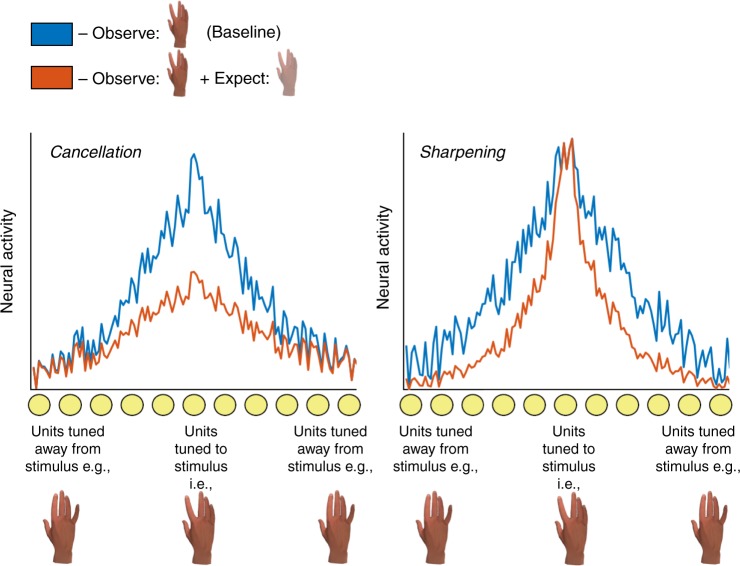
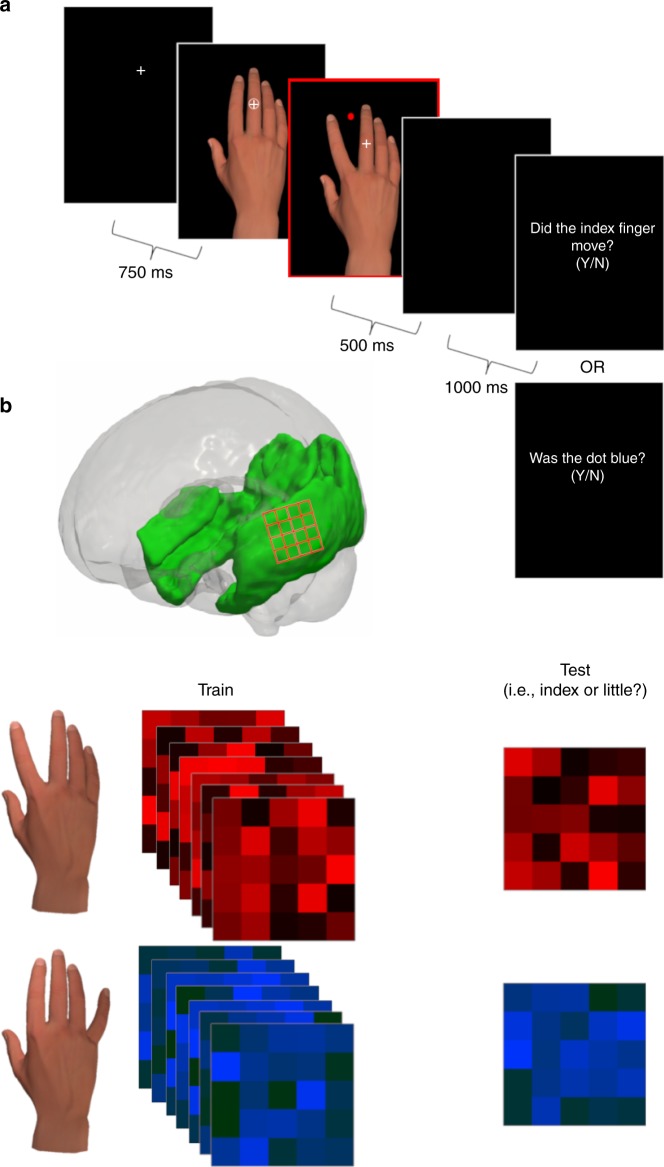
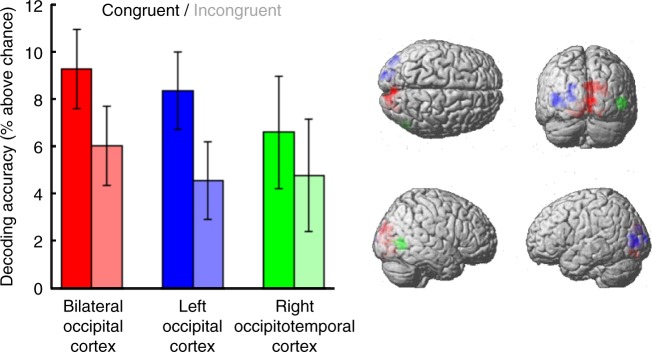
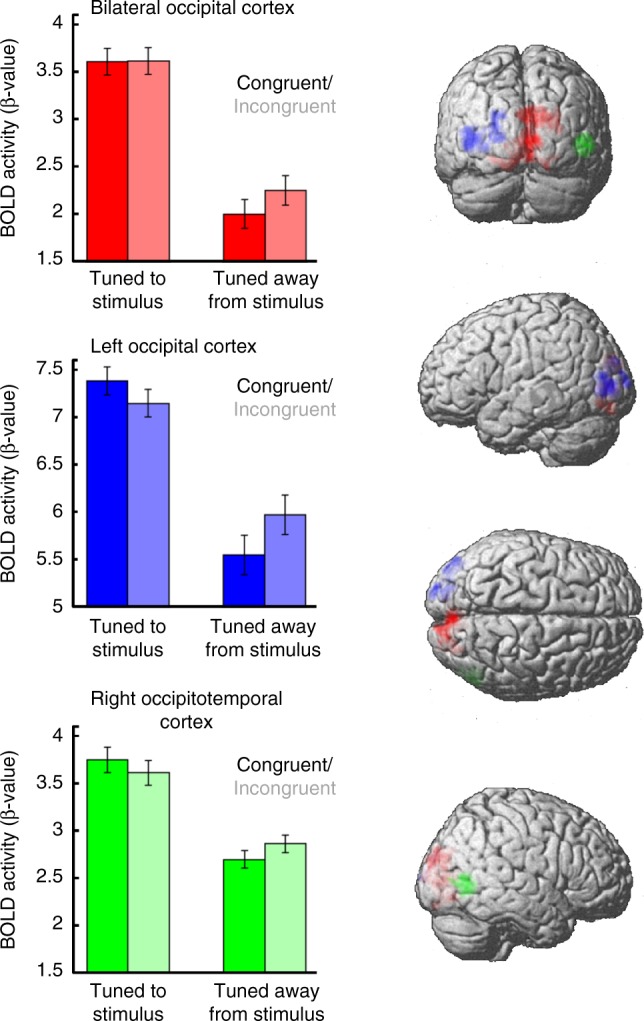
When we produce actions we predict their likely consequences. Dominant models of action control suggest that these predictions are used to ‘cancel’ perceptual processing of expected outcomes. However, normative Bayesian models of sensory cognition developed outside of action propose that rather than being cancelled, expected sensory signals are represented with greater fidelity (sharpened). Here, we distinguished between these models in an fMRI experiment where participants executed hand actions (index vs little finger movement) while observing movements of an avatar hand. Consistent with the sharpening account, visual representations of hand movements (index vs little finger) could be read out more accurately when they were congruent with action and these decoding enhancements were accompanied by suppressed activity in voxels tuned away from, not towards, the expected stimulus. Therefore, inconsistent with dominant action control models, these data show that sensorimotor prediction sharpens expected sensory representations, facilitating veridical perception of action outcomes.
Overview
The claims and statistics of this paper haven’t been checked yet.
Free: it reads the open-access text and checks the first 5 claims that cite a source we can check. Create a free account to check every claim.
Integrity signals
Registry
Cites
Statistics
Figures
Verification
Claims the paper makes
The claims and statistics of this paper haven’t been checked yet.
Free: it reads the open-access text and checks the first 5 claims that cite a source we can check. Create a free account to check every claim.
Claims other papers make about this one
Each is checked against this paper’s own text: does it say what the citing paper says it does?
The source backs part of the claim, not all of it — or backs it for a different population, condition or comparison.
In the citing paper
“others have found that this global suppression is attributable to the suppression of neurons tuned away from the expected stimulus feature, while the representation of the expected stimulus is actually sharpened”
From Evaluating the neurophysiological evidence for predictive processing as a model of perception (2020) · cites this paper as [112]
Experimental — accuracy not yet measured
Self-check
Percentages, sums and reported differences re-computed from the paper’s own numbers.
The self-check needs the paper’s full text.
Citations
Cites
James, W. (1913) · Henry Holt and Company eBooks · doi:10.1037/11059-000 · Cited by 25,226
A theory of cortical responses.
Friston, K. (2005) · Philosophical Transactions of the Royal Society B: Biological Sciences · doi:10.1098/rstb.2005.1622 · Cited by 4,578
The principles of psychology, Vol I.
James, W. (1890) · doi:10.1037/10538-000 · Cited by 4,514
An internal model for sensorimotor integration
Wolpert, D. M., Ghahramani, Z., & Jordan, M. I. (1995) · Science · doi:10.1126/science.7569931 · Cited by 3,553
Cluster failure: why fMRI inferences for spatial extent have inflated false-positive rates
Eklund, A., Nichols, T. E., & Knutsson, H. (2016) · Proceedings of the National Academy of Sciences · doi:10.1073/pnas.1602413113 · Cited by 3,487
The Theory of Event Coding (TEC): A framework for perception and action planning
Hommel, B., Müsseler, J., Aschersleben, G., & Prinz, W. (2001) · Behavioral and Brain Sciences · doi:10.1017/s0140525x01000103 · Cited by 3,091
Using confidence intervals in within-subject designs
Loftus, G. R., & Masson, M. E. J. (1994) · Psychonomic Bulletin & Review · doi:10.3758/bf03210951 · Cited by 2,448
Information-based functional brain mapping
Kriegeskorte, N., Goebel, R., & Bandettini, P. (2006) · Proceedings of the National Academy of Sciences · doi:10.1073/pnas.0600244103 · Cited by 2,113
Bar, M. (2004) · Nature Reviews Neuroscience · doi:10.1038/nrn1476 · Cited by 1,613
Central cancellation of self-produced tickle sensation
Blakemore, S.-J., Wolpert, D. M., & Frith, C. D. (1998) · Nature Neuroscience · doi:10.1038/2870 · Cited by 1,467
Cited by
Evaluating the neurophysiological evidence for predictive processing as a model of perception
Walsh, K. S., McGovern, D. P., Clark, A., & O'Connell, R. G. (2020) · Annals of the New York Academy of Sciences · doi:10.1111/nyas.14321 · Cited by 333
The Perceptual Prediction Paradox
Press, C., Kok, P., & Yon, D. (2020) · Trends in Cognitive Sciences · doi:10.1016/j.tics.2019.11.003 · Cited by 246
Self-citationPredictive processing as a systematic basis for identifying the neural correlates of consciousness
Hohwy, J., & Seth, A. (2020) · Philosophy and the Mind Sciences · doi:10.33735/phimisci.2020.ii.64 · Cited by 170
Prior expectations evoke stimulus-specific activity in the deep layers of the primary visual cortex
Aitken, F., Menelaou, G., Warrington, O., Koolschijn, R. S., Corbin, N., Callaghan, M. F., & Kok, P. (2020) · PLOS Biology · doi:10.1371/journal.pbio.3001023 · Cited by 138
Precision control for a flexible body representation
Limanowski, J. (2021) · Neuroscience & Biobehavioral Reviews · doi:10.1016/j.neubiorev.2021.10.023 · Cited by 119
Moving Forward: On the Limits of Motor-Based Forward Models
Dogge, M., Custers, R., & Aarts, H. (2019) · Trends in Cognitive Sciences · doi:10.1016/j.tics.2019.06.008 · Cited by 102
How movements shape the perception of time
Kock, R. D., Gladhill, K. A., Ali, M. N., Joiner, W. M., & Wiener, M. (2021) · Trends in Cognitive Sciences · doi:10.1016/j.tics.2021.08.002 · Cited by 103
Evaluating the evidence for expectation suppression in the visual system
Feuerriegel, D., Vogels, R., & Kovács, G. (2021) · Neuroscience & Biobehavioral Reviews · doi:10.1016/j.neubiorev.2021.04.002 · Cited by 98
The Influence of Auditory Cues on Bodily and Movement Perception
Stanton, T. R., & Spence, C. J. (2020) · Frontiers in Psychology · doi:10.3389/fpsyg.2019.03001 · Cited by 85
“Importantly, action can sharpen the fidelity with which sensory signals (such as audition) are represented (Yon et al., 2018) thus suggesting that online, recursive modulation of audio-motor interactions (and therefore performance) can occur.”
BackgroundPredictions and errors are distinctly represented across V1 layers
Thomas, E. R., Haarsma, J., Nicholson, J. L., Yon, D., Kok, P., & Press, C. (2024) · Current Biology · doi:10.1016/j.cub.2024.04.036 · Cited by 71
Self-citationTasks and their role in visual neuroscience
Kay, K., Bonnen, K., Denison, R. N., Arcaro, M. J., & Barack, D. L. (2023) · Neuron · doi:10.1016/j.neuron.2023.03.022 · Cited by 61
Action biases perceptual decisions toward expected outcomes.
Yon, D., Zainzinger, V., de Lange, F. P., Eimer, M., & Press, C. (2021) · Journal of Experimental Psychology General · doi:10.1037/xge0000826 · Cited by 55
“In a recent neuroimaging study (Yon et al., 2018) we found representations in visual brain areas were reshaped toward expected action outcomes, which is more in line with domain-general ideas in the broader sensory cognition literature than the cancellation models in action.”
BackgroundSelf-citationInteracting with volatile environments stabilizes hidden-state inference and its brain signatures
Weiss, A., Chambon, V., Lee, J. K., Drugowitsch, J., & Wyart, V. (2021) · Nature Communications · doi:10.1038/s41467-021-22396-6 · Cited by 49
Action Enhances Predicted Touch
Thomas, E. R., Yon, D., de Lange, F. P., & Press, C. (2021) · Psychological Science · doi:10.1177/09567976211017505 · Cited by 50
“…and veridicality regardless of how predictions are formed (Press et al., 2020b), and some evidence from the visual domain suggests that predictive influences on perception do not exhibit the qualitative differences assumed in the literature (Yon et al., 2018, 2020; Yon & Press, 2017).”
InfluentialSelf-citationCancelling cancellation? Sensorimotor control, agency, and prediction
Press, C., Thomas, E. R., & Yon, D. (2022) · Neuroscience & Biobehavioral Reviews · doi:10.1016/j.neubiorev.2022.105012 · Cited by 46
“…– expected action outcomes can be perceptually (and neurally) enhanced (Dogge et al., 2019a, 2019b; Guo and Song, 2019; Paraskevoudi and SanMiguel, 2021; Reznik et al., 2014, 2021; Reznik and Mukamel, 2019; Thomas et al., 2022; Yon et al., 2018, 2021, 2022; see also Hudson et al., 2015, 2018).”
Self-citationPyasik, M. M., Ronga, I., Burin, D., Salatino, A., Sarasso, P., Garbarini, F., Ricci, R., & Pia, L. (2021) · NeuroImage · doi:10.1016/j.neuroimage.2021.117727 · Cited by 47
Causal Evidence for Expression of Perceptual Expectations in Category-Selective Extrastriate Regions
Gandolfo, M., & Downing, P. E. (2019) · Current Biology · doi:10.1016/j.cub.2019.06.024 · Cited by 46
“This hypothetical selection process can be construed as a form of internal attention [30] or as a form of neural sharpening, as described in previous studies of expectancy effects in vision and action [31,32].”
Lenc, T., Keller, P. E., Varlet, M., & Nozaradan, S. (2020) · Cerebral Cortex Communications · doi:10.1093/texcom/tgaa037 · Cited by 44
Cortical beta oscillations reflect the contextual gating of visual action feedback
Limanowski, J., Litvak, V., & Friston, K. J. (2020) · NeuroImage · doi:10.1016/j.neuroimage.2020.117267 · Cited by 42
Cerebellar patients have intact feedback control that can be leveraged to improve reaching
Zimmet, A. M., Cao, D., Bastian, A. J., & Cowan, N. J. (2020) · eLife · doi:10.7554/elife.53246 · Cited by 39
Dampened sensory representations for expected input across the ventral visual stream
Richter, D., Heilbron, M., & de Lange, F. P. (2022) · Oxford Open Neuroscience · doi:10.1093/oons/kvac013 · Cited by 44
“In brief, we utilized seven different outcome metrics, based on analyses used in previous studies (e.g. [9, 10, 14, 15, 17, 19]).”
BackgroundMethodResultInfluentialHigh-level visual prediction errors in early visual cortex
Richter, D., Kietzmann, T. C., & de Lange, F. P. (2024) · PLoS Biology · doi:10.1371/journal.pbio.3002829 · Cited by 39
Perceptual Prediction: Rapidly Making Sense of a Noisy World
Press, C., & Yon, D. (2019) · Current Biology · doi:10.1016/j.cub.2019.06.054 · Cited by 35
“Specifically, visual predictions made on the basis of action sharpened visual brain activity just like when the predictions are furnished by arbitrary sensory cues [12].”
BackgroundSelf-citationLubinus, C., Einhäuser, W., Schiller, F., Kircher, T. T. J., Straube, B., & van Kemenade, B. M. (2022) · NeuroImage · doi:10.1016/j.neuroimage.2022.119601 · Cited by 34
Garlichs, A., & Blank, H. (2024) · Nature Communications · doi:10.1038/s41467-024-47749-9 · Cited by 37
“Consequently, weaker univariate activity might re fl ect a “ sharper ” neural population response for expected sensory events and suppression of unexpected noise rather than a suppression of the expected signals 32 – 35 .”
BackgroundAction does not enhance but attenuates predicted touch
Job, X., & Kilteni, K. (2023) · eLife · doi:10.7554/elife.90912 · Cited by 32
Evaluation of an action’s effectiveness by the motor system in a dynamic environment.
Hemed, E., Bakbani-Elkayam, S., Teodorescu, A. R., Yona, L., & Eitam, B. (2020) · Journal of Experimental Psychology General · doi:10.1037/xge0000692 · Cited by 26
Rossel, P., Peyrin, C., Roux-Sibilon, A., & Kauffmann, L. (2022) · Journal of Experimental Psychology Human Perception & Performance · doi:10.1037/xhp0000993 · Cited by 28
“This results in a sharper representation of expected stimuli in these areas which would in turn lead to a sharper percept (de Lange et al., 2018; Han & VanRullen, 2016; Kok et al., 2012; Teufel et al., 2018; Yon et al., 2018).”
BackgroundResultAffordance matching predictively shapes the perceptual representation of others’ ongoing actions.
McDonough, K. L., Costantini, M., Hudson, M., Ward, E., & Bach, P. (2020) · Journal of Experimental Psychology Human Perception & Performance · doi:10.1037/xhp0000745 · Cited by 28
“For example, in Bayesian-perception views, predictions primarily serve to “sharpen” ambiguous social perception (e.g., Yon, Gilbert, de Lange & Press, 2018; Kok, Jehee, de Lange, 2012) or to “fill in” missing or ambiguous stimulus aspects (e.g. during occlusion or when saccading away).”
BackgroundElectrophysiological evidence for action-effect prediction.
Dignath, D., Kiesel, A., Frings, C., & Pastötter, B. (2020) · Journal of Experimental Psychology General · doi:10.1037/xge0000707 · Cited by 24
Learning to Perceive and Perceiving to Learn
Press, C., Kok, P., & Yon, D. (2020) · Trends in Cognitive Sciences · doi:10.1016/j.tics.2020.01.002 · Cited by 24
Self-citationSchmitter, C. V., Steinsträter, O., Kircher, T. T. J., van Kemenade, B. M., & Straube, B. (2021) · NeuroImage · doi:10.1016/j.neuroimage.2021.117745 · Cited by 22
“Here, sensory signals that are in line with prior expectations, such as those generated by own actions, are assumed to be perceptually enhanced rather than attenuated (de Lange et al., 2018; Kok et al., 2012; Press et al., 2020; Yon et al., 2018).”
Movement Planning Determines Sensory Suppression: An Event-related Potential Study
Jack, B. N., Chilver, M. R., Vickery, R. M., Birznieks, I., Krstanoska-Blazeska, K., Whitford, T. J., & Griffiths, O. (2021) · Journal of Cognitive Neuroscience · doi:10.1162/jocn_a_01747 · Cited by 23
“…not the result of an internal forward model; instead, it is the result of predictive signals that enhance responses from neurons tuned for the sensory consequences of our actions and suppress responses from neurons that are tuned away (Press et al., 2020; Reznik & Mukamel, 2019; Yon et al., 2018).”
BackgroundVisuomotor prediction during action planning in the human frontoparietal cortex and cerebellum
Quirmbach, F., & Limanowski, J. (2024) · Cerebral Cortex · doi:10.1093/cercor/bhae382 · Cited by 21
Korka, B., Schröger, E., & Widmann, A. (2020) · European Journal of Neuroscience · doi:10.1111/ejn.14899 · Cited by 21
Stubborn Predictions in Primary Visual Cortex
Yon, D., Thomas, E. R., Gilbert, S. J., de Lange, F. P., Kok, P., & Press, C. (2023) · Journal of Cognitive Neuroscience · doi:10.1162/jocn_a_01997 · Cited by 21
Self-citationOdy, E., Kircher, T. T. J., Straube, B., & He, Y. (2023) · Human Brain Mapping · doi:10.1002/hbm.26506 · Cited by 20
“While previous studies (Yon et al., 2018, 2023) have shown enhanced decoding for expected action outcomes, our results suggest that the sharpening also occurs before the action outcome has been presented.”
BackgroundResultInfluentialAction-specific feature processing in the human cortex: An fMRI study
Monaco, S., Chen, Y., Menghi, N., & Crawford, J. D. (2023) · Neuropsychologia · doi:10.1016/j.neuropsychologia.2023.108773 · Cited by 19
“Overall, our results are consistent with the notions that motor systems modulate attention to relevant sensory details and/or modulate sensory inputs to predict for the consequences of impending actions (Gilbert and Li, 2013; Yon et al., 2018; Monaco et al., 2019, 2020).”
The encoding of stochastic regularities is facilitated by action-effect predictions
Korka, B., Schröger, E., & Widmann, A. (2021) · Scientific Reports · doi:10.1038/s41598-021-86095-4 · Cited by 17
Imagery adds stimulus-specific sensory evidence to perceptual detection
Dijkstra, N., Kok, P., & Fleming, S. M. (2022) · Journal of Vision · doi:10.1167/jov.22.2.11 · Cited by 26
“…studies have found evidence for enhancement rather than suppression of self-generated, expected sensory consequences of actions (Dogge et al., 2018; Yon et al., 2018, 2020), raising doubts about whether sensory attenuation is necessary to distinguish self-generated from externally generated…”
BackgroundFrom neural noise to co-adaptability: Rethinking the multifaceted architecture of motor variability
Casartelli, L., Maronati, C., & Cavallo, A. (2023) · Physics of Life Reviews · doi:10.1016/j.plrev.2023.10.036 · Cited by 19
The role of consciously timed movements in shaping and improving auditory timing
Kock, R. D., Zhou, W., Datta, P., Joiner, W. M., & Wiener, M. (2023) · Proceedings of the Royal Society B Biological Sciences · doi:10.1098/rspb.2022.2060 · Cited by 17
“There are also several examples tying motor activity to changes in visual processing ((Yon et al., 2018); (Tomassini et al., 2020); (Saleem et al., 2013); (Niell & Stryker, 2010); (Cao & Händel, 2019)).”
BackgroundBlank, H., Alink, A., & Büchel, C. (2023) · Communications Biology · doi:10.1038/s42003-023-04508-8 · Cited by 16
The perceptual prediction paradoxPreprint
Press, C., Kok, P., & Yon, D. (2019) · PsyArXiv (OSF Preprints) · doi:10.31234/osf.io/hdsmz · Cited by 16
Self-citationSkora, L. I., Seth, A. K., & Scott, R. B. Y. (2021) · Neuroscience of Consciousness · doi:10.1093/nc/niab003 · Cited by 17
Being active over one’s own motion: Considering predictive mechanisms in self-motion perception
Rineau, A.-L., Bringoux, L., Sarrazin, J.-C., & Berberian, B. (2023) · Neuroscience & Biobehavioral Reviews · doi:10.1016/j.neubiorev.2023.105051 · Cited by 15
Top-down specific preparatory activations for selective attention and perceptual expectations
Peñalver, J. M. G., López-García, D., González‐García, C., Aguado-López, B., Górriz, J. M., & Ruz, M. (2023) · NeuroImage · doi:10.1016/j.neuroimage.2023.119960 · Cited by 15
“2012) and a lack of interactions in others (e.g. Ekman et al., 2017; Yon et al., 2018).”
BackgroundHarrison, A. W., Hughes, G., Rudman, G., Christensen, B. K., & Whitford, T. J. (2023) · Cerebral Cortex · doi:10.1093/cercor/bhad189 · Cited by 15
“Several studies have even provided evidence of an enhanced response to predictable self-generated stimuli, including with respect to neurophysiological activity (Reznik et al. 2014; Yon et al. 2018; Reznik et al. 2021) and perceptual sensitivity (Reznik et al.”
BackgroundEvaluating cognitive penetrability of perception across the senses
Vetter, P., Badde, S., Ferrè, E. R., Seubert, J., & Shinn‐Cunningham, B. G. (2024) · Nature Reviews Psychology · doi:10.1038/s44159-024-00382-1 · Cited by 16
“These include active mental imagery 62 , visual expectations 63,64 , memory retrieval 65 , learned conceptual associations 66 , working memory content 67,68 , action execution and action preparation 69,70 , haptic shape exploration 71 , and listening to complex natural sounds 72,73 .”
den Ouden, C., Kashyap, M., Kikkawa, M., & Feuerriegel, D. (2025) · Psychophysiology · doi:10.1111/psyp.70076 · Cited by 14
“The opposite would be predicted by an alternative class of sharpening accounts of stimulus expectation effects (Kok et al. 2012; Yon et al. 2018; Press et al. 2020).”
The bodily self from psychosis to psychedelics
Harduf, A., Panishev, G., Harel, E. V., Stern, Y., & Salomon, R. (2023) · Scientific Reports · doi:10.1038/s41598-023-47600-z · Cited by 14
“However, there are documented instances where actions have led to sharpened sensory information 73–75 .”
BackgroundStructure Learning in Predictive Processing Needs Revision
Rutar, D., de Wolff, E., van Rooij, I., & Kwisthout, J. (2022) · Computational Brain & Behavior · doi:10.1007/s42113-022-00131-8 · Cited by 19
“The account’s explanatory and modelling successes— spanning domains like perception (Den Ouden et al., 2012; Kok et al., 2013), action (Yon et al., 2018), planning (Kaplan & Friston, 2018), communication (Friston & Penny, 2011) and learning (Da Costa et al., 2020; Friston et al., 2017; Smith et…”
BackgroundSchmitter, C. V., & Straube, B. (2022) · Frontiers in Human Neuroscience · doi:10.3389/fnhum.2022.998843 · Cited by 12
“It has been shown that this can result in sensory stimuli generated by self-induced actions being perceptually enhanced and leading to sharper neural representations compared to passively elicited sensory events (Yon et al., 2018).”
BackgroundSensory Attenuation in Sport and Rehabilitation: Perspective from Research in Parkinson’s Disease
Kearney, J., & Brittain, J. (2021) · Brain Sciences · doi:10.3390/brainsci11050580 · Cited by 12
“Whilst predictive processing accounts are flexible enough to incorporate various signals from the current context, a “generalised and multi-modal suppression of sensory input from the effector to enable movement” [67] does not lend itself to the differential attenuation or augmentation of sensory gain, nor do models a…”
BackgroundMariano, M., Rossetti, I., Maravita, A., Paulesu, E., & Zapparoli, L. (2024) · Biological Psychiatry · doi:10.1016/j.biopsych.2023.12.026 · Cited by 10
Prediction and Learning: Understanding Uncertainty
Yon, D. (2021) · Current Biology · doi:10.1016/j.cub.2020.10.052 · Cited by 11
“By selectively ‘sharpening’ expected sensory representations 4,5 we can generate perceptions that are — on average — more veridical, because the events that we expect are (by definition) more likely to occur 6,7 .”
Self-citationA dissociation between the effects of expectations and attention in selective visual processing
Zivony, A., & Eimer, M. (2024) · Cognition · doi:10.1016/j.cognition.2024.105864 · Cited by 9
“Empirically, there are some studies that showed expectation effects emerging independently from the relevance manipulation (Wyart et al., 2012; Yon et al., 2018; Zuanazzi & Noppe-ney, 2019).”
Schliephake, L., Trempler, I., Roehe, M. A., Heins, N., & Schubotz, R. I. (2021) · NeuroImage · doi:10.1016/j.neuroimage.2021.118028 · Cited by 9
Temporal adaptation of sensory attenuation for self-touch
Fritz, C., & Zimmermann, E. (2023) · Experimental Brain Research · doi:10.1007/s00221-023-06688-5 · Cited by 8
Haarsma, J., Kaltenmaier, A., Fleming, S. M., & Kok, P. (2024) · Cognition · doi:10.1016/j.cognition.2024.105961 · Cited by 9
Expectation-driven sensory adaptations support enhanced acuity during categorical perception
Sainburg, T., McPherson, T., Arneodo, E. M., Rudraraju, S., Turvey, M., Theilman, B. H., Tostado-Marcos, P., Thielk, M., & Gentner, T. Q. (2025) · Nature Neuroscience · doi:10.1038/s41593-025-01899-1 · Cited by 9
“By contrast, prior expectations also play a pivotal role in enhancing sensory acuity by refocusing attention toward expected regions of stimulus space 10–12 ; this ability of priors to bias our sensory systems enables more accurate discrimination of closely related signals 13–15 .”
Hu, Z., Tran, D. M. D., & Rideaux, R. (2025) · Imaging Neuroscience · doi:10.1162/imag.a.152 · Cited by 9
Bars, S. L., Chokron, S., Balp, R., Douibi, K., & Waszak, F. (2021) · Frontiers in Human Neuroscience · doi:10.3389/fnhum.2021.732764 · Cited by 9
“…due to the lack of a unified theory regarding the neural patterns underlying action-effect prediction, which could for instance correspond to a cancelation (Wolpert et al., 1995), a preactivation (Waszak et al., 2012), or a sharpening (Yon et al., 2018) of activity in the perceptual units concerned.”
BackgroundMethodSubjective visibility report is facilitated by conscious predictions only
Alilović, J., Slagter, H. A., & van Gaal, S. (2020) · Consciousness and Cognition · doi:10.1016/j.concog.2020.103048 · Cited by 10
Context expectation influences the gait pattern biomechanics
Ciceri, T., Malerba, G., Gatti, A., Diella, E., Peruzzo, D., Biffi, E., & Casartelli, L. (2023) · Scientific Reports · doi:10.1038/s41598-023-32665-7 · Cited by 9
Fixed and flexible perceptual rhythms
Kaltenmaier, A., Davis, M. H., & Press, C. (2025) · Trends in Cognitive Sciences · doi:10.1016/j.tics.2025.05.011 · Cited by 7
Self-citationBaseline dependent differences in the perception of changes in visuomotor delay
Vigh, G., & Limanowski, J. (2025) · Frontiers in Human Neuroscience · doi:10.3389/fnhum.2024.1495592 · Cited by 7
Odermatt, I., Schulthess-Lutz, M., Mihelj, E., Howell, P., Heimhofer, C., McMackin, R., Ruddy, K. L., Freund, P., Kikkert, S., & Wenderoth, N. (2025) · Journal of Neuroscience · doi:10.1523/jneurosci.2189-24.2025 · Cited by 8
“This might re fl ect more e ffi cient or more targeted activation of fi nger representations, in line with previous research showing that accentuated sensory representations are associated with lower activity levels (Yon et al., 2018).”
From representations in predictive processing to degrees of representational features
Rutar, D., Wiese, W., & Kwisthout, J. (2022) · Minds and Machines · doi:10.1007/s11023-022-09599-6 · Cited by 11
“…2010).1 As a consequence, various cognitive domains have been explored through the lens of PP such as perception (den Ouden et al., 2012), action (Yon et al., 2018), planning (Kaplan & Friston, 2018), communication (Friston & Penny, 2011), learning (da Costa et al., 2020) and mentalizing…”
BackgroundDissociable dynamic effects of expectation during statistical learningPreprint
McDermott, H. H., Martino, F. D., Schwiedrzik, C. M., & Auksztulewicz, R. (2026) · eLife · doi:10.7554/elife.103689 · Cited by 9
Anticipating multisensory environments: Evidence for a supra-modal predictive system
Sabio‐Albert, M., Fuentemilla, L., & Pérez-Bellido, A. (2024) · Cognition · doi:10.1016/j.cognition.2024.105970 · Cited by 6
“…mechanism would be more evident in probability cueing paradigms in which due to the low number of stimuli contingencies, is easier to assimilate the probabilistic structure of the task explicitly, in consistency with previous studies (Bell et al., 2016; Kok et al., 2012, 2019; Yon et al., 2018).”
Statistical learning dynamically shapes auditory perception
Luthra, S., Luor, A., Tierney, A. T., Dick, F., & Holt, L. L. (2025) · npj Science of Learning · doi:10.1038/s41539-025-00328-z · Cited by 6
“Neuroimaging studies have revealed 12,13 .”
Updating perceptual expectations as certainty diminishes
Thomas, E. R., Rittershofer, K., & Press, C. (2022) · Cognition · doi:10.1016/j.cognition.2022.105356 · Cited by 6
“…relationship between actions and outcomes, predictions that have been previously formed based upon a perfectly correlated training phase (Press, Thomas, et al., 2020) or through a lifetime of experience (Yon et al., 2018, 2021; Yon & Press, 2017, 2018) continue to influence perceptual processing.”
InfluentialSelf-citationHysteresis in the selective synchronization of brain activity to musical rhythmPreprint
Lenc, T., Keller, P. E., Varlet, M., & Nozaradan, S. (2019) · bioRxiv (Cold Spring Harbor Laboratory) · doi:10.1101/696914 · Cited by 6
“However, synchronized movement can directly (Nozaradan et al., 2013, 2016b; Morillon and Baillet, 2017; Yon et al., 2018) and prospectively (Lahav et al., 2007; Chemin et al., 2014) affect sound processing in the brain.”
BackgroundActive self-motion control and the role of agency under ambiguity
Rineau, A.-L., Berberian, B., Sarrazin, J.-C., & Bringoux, L. (2023) · Frontiers in Psychology · doi:10.3389/fpsyg.2023.1148793 · Cited by 5
“Besides, it has recently been suggested that action may help sharpen sensory integration of relevant sensory outcomes (Schroeder et al., 2010; Yon et al., 2018).”
BackgroundMagami, K., Bianco, R., Hall, E. T. R., Pearce, M. T., & Chait, M. (2025) · European Journal of Neuroscience · doi:10.1111/ejn.70300 · Cited by 4
“…which allows the brain to optimize behavior by efficient allocation of cognitive and neural resources, supporting adaptive responses to incoming events (Bendixen et al. 2012; Boubenec et al. 2017; Bouwkamp et al. 2025; Kok et al. 2012; Nobre et al. 2007; Southwell and Chait 2018; Yon et al. 2018).”
Cortical candidates for self-other distinction based on visual and action cues: where do we stand?
Limanowski, J. (2026) · Brain Structure and Function · doi:10.1007/s00429-025-03065-6 · Cited by 4
“A possible rec-onciliation is offered by “sharpening” accounts suggesting increased neuronal activity, but only in a small proportion of neurons tuned to the self-generated sensory data (Yon et al. 2018 ; Reznik and Mukamel 2019 ).”
Communicated priors tune the perception of control
Blackburne, G., Frith, C., & Yon, D. (2024) · Cognition · doi:10.1016/j.cognition.2024.105969 · Cited by 5
Self-citationVisual predictions, neural oscillations and naïve physics
Saurels, B. W., Hohaia, W., Yarrow, K., Johnston, A., & Arnold, D. H. (2021) · Scientific Reports · doi:10.1038/s41598-021-95295-x · Cited by 4
Motor engagement enhances incidental memory for task-irrelevant items
Shimane, D., Tanaka, T., Watanabe, K., & Tanaka, K. (2022) · Frontiers in Psychology · doi:10.3389/fpsyg.2022.914877 · Cited by 4
Tactile shape discrimination for moving stimuli
Pélegrin, N., Konishi, M., & Sarrazin, J.-C. (2024) · Scientific Reports · doi:10.1038/s41598-024-58509-6 · Cited by 4
“In other words, our nervous system appears to interpret ambiguous sensory information based on expectations and predictions 28,29 .”
BackgroundActive inference and speech motor control: a review and theoryPreprint
Bradshaw, A. R., Press, C., & Davis, M. H. (2024) · PsyArXiv (OSF Preprints) · doi:10.31234/osf.io/eq4kh · Cited by 5
Self-citationDissociable dynamic effects of expectation during statistical learning
McDermott, H. H., Martino, F. D., Schwiedrzik, C. M., & Auksztulewicz, R. (2026) · eLife · doi:10.1101/2024.09.05.611380 · Cited by 3
“Sharpening models propose that expectations suppress neurons that are not tuned to the expected stimulus, thus inhibiting information inconsistent with the expectation (13,14).”
Temporal predictions as motor readouts of sensory predictions
Kaltenmaier, A., Gehmacher, Q., Kok, P., Davis, M. H., & Press, C. (2026) · Current Biology · doi:10.1016/j.cub.2026.02.005 · Cited by 3
Self-citationFaster But Less Precise: Expectation Enhances Response Speed While Reducing Sensory Fidelity
Hu, Z., Tran, D. M. D., & Rideaux, R. (2026) · Journal of Neuroscience · doi:10.1523/jneurosci.0154-26.2026 · Cited by 3
Kiepe, F., & Hesselmann, G. (2025) · Quarterly Journal of Experimental Psychology · doi:10.1177/17470218251330237 · Cited by 3
“Indeed, various studies across different domains have observed enhancement, as well (visual: Dogge et al., 2019b; Yon et al., 2018; somatosensory: Press et al., 2020; Thomas et al., 2022; Yon et al., 2021; auditory: Hsu et al., 2014; Paraskevoudi & SanMiguel, 2021; Reznik et al., 2015).”
Neural Mechanisms for Prediction: From Action to Higher-Order Cognition
D’Mello, A. M., & Rozenkrantz, L. (2020) · Journal of Neuroscience · doi:10.1523/jneurosci.0732-20.2020 · Cited by 3
“Future investigations should also assess whether domain-specific mechanisms differentiate prediction in action from cognition (Yon et al., 2018), and whether the brain enhances or attenuates predictable information in domains outside of action (Press et al.”
BackgroundAre self-caused distractors easier to ignore? Experiments with the flanker task
Gao, C., & Gozli, D. G. (2020) · Attention Perception & Psychophysics · doi:10.3758/s13414-020-02170-4 · Cited by 3
Same but different: how agency modulates pain perception
Wiech, K. (2023) · Trends in Cognitive Sciences · doi:10.1016/j.tics.2023.04.011 · Cited by 4
“However, this explanation has been challenged by several observations, including sharpened rather than suppressed sensory representations of the expected outcome [5,6].”
BackgroundSubjective visibility report is facilitated by conscious predictions onlyPreprint
Alilović, J., Slagter, H. A., & van Gaal, S. (2020) · bioRxiv (Cold Spring Harbor Laboratory) · doi:10.1101/2020.07.08.193037 · Cited by 3
“, 2018) and sharpen neural representations in sensory brain regions (Kok, Jehee et al., 2012; Yon et al., 2018).”
Ody, E., Kircher, T. T. J., Straube, B., & He, Y. (2024) · bioRxiv (Cold Spring Harbor Laboratory) · doi:10.1101/2024.12.03.626576 · Cited by 3
Dissociable dynamic effects of expectation during statistical learningPreprint
McDermott, H. H., Martino, F. D., Schwiedrzik, C. M., & Auksztulewicz, R. (2024) · eLife · doi:10.7554/elife.103689.1 · Cited by 4
Dynamic context–based updating of object representations in the visual cortex
Aldegheri, G., Gayet, S., & Peelen, M. V. (2026) · Science Advances · doi:10.1126/sciadv.adw6726 · Cited by 2
Active inference and speech motor control
Bradshaw, A. R., Press, C., & Davis, M. H. (2026) · Psychonomic Bulletin & Review · doi:10.3758/s13423-026-02871-1 · Cited by 2
“So far, these accounts have been extensively discussed and researched in relation to the domains of manual action and visual sensory feedback, and continue to be debated (Friston 2011; Friston et al., 2011; Limanowski & Friston, 2020; Yon et al., 2018).”
Self-citationSalgado, C., Sturm, S., Via, M., & SanMiguel, I. (2026) · Hearing Research · doi:10.1016/j.heares.2026.109675 · Cited by 2
Prediction in action: Toward an empirical science of active inference
Lageman, J., Fahrenfort, J. J., & Slagter, H. A. (2026) · Neuroscience & Biobehavioral Reviews · doi:10.1016/j.neubiorev.2026.106817 · Cited by 2
Auerbach-Asch, C. R., Vishne, G., Wertheimer, O., & Deouell, L. Y. (2026) · Journal of Vision · doi:10.1167/jov.26.10.11 · Cited by 2
“Some studies have shown that motor or perceptual expectations lead to higher stimulus decoding accuracies (Brandman & Peelen, 2017; Yon, Gilbert, de Lange, & Press, 2018).”
Dissociable effects of attention and expectation on perceptual sensitivity to action-outcomes
George, N., & Sunny, M. M. (2022) · Consciousness and Cognition · doi:10.1016/j.concog.2022.103374 · Cited by 2
Perceptual formant discrimination during speech movement planning
Wang, H., Ali, Y., & Max, L. (2024) · PLoS ONE · doi:10.1371/journal.pone.0301514 · Cited by 2
Serial dependencies for externally and self-generated stimuli
Fritz, C., Pomè, A., & Zimmermann, E. (2024) · Journal of Vision · doi:10.1167/jov.24.11.1 · Cited by 2
“Current research suggests other mechanisms, such as perceptual upweighting (Thomas, Yon, de Lange, & Press, 2022) and prediction errors (Yon, Gilbert, de Lange, & Press, 2018), may also contribute to attenuation.”
Background
Metadata
- Authors
- Yon, D., Gilbert, S. J., de Lange, F. P., & Press, C.
- Affiliations
- University of London (GB)
- University College London (GB)
- Corresponding author
- Yon, Daniel
- Venue
- Nature Communications
- Published
- 2018-10-16
- Volume
- 9
- Issue
- 1
- Pages
- 4288-4288
- ISSN
- 2041-1723 (ISSN-L)
- PMC
- PMC6191413
- OpenAlex
- W2895865647
- Cited by
- 145
- References
- 35
- Citations by year
- 2026: 25 · 2025: 22 · 2024: 22 · 2023: 20 · 2022: 13 · 2021: 15 · 2020: 18 · 2019: 10
- FWCI
- 14.55
- Type
- journal article
- Language
- en
- Open access
- gold
- doi.org
- Licence
- cc-by
- creativecommons.org/licenses/by/4.0 (tdm)
- creativecommons.org/licenses/by/4.0 (vor)
- Locations
- Nature Communications (publishedVersion, cc-by)
- Europe PMC (PubMed Central) (publishedVersion, cc-by)
- PubMed Central (publishedVersion, cc-by)
- PubMed (publishedVersion)
- BIROn (Birkbeck, University of London) (acceptedVersion)
- Goldsmiths (University of London) (acceptedVersion)
- RePEc: Research Papers in Economics (submittedVersion)
- DOAJ (DOAJ: Directory of Open Access Journals) (submittedVersion)
- DOAJ (DOAJ: Directory of Open Access Journals) (submittedVersion, cc-by-sa)
- UCL Discovery (University College London) (submittedVersion)
- Radboud Repository (Radboud University) (submittedVersion)
- Radboud Repository (Radboud University) (submittedVersion, other-oa)
- Funders
- James S. McDonnell Foundation
- Wellcome Trust
- Leverhulme Trust (RPG‐2016‐105)
- Nederlandse Organisatie voor Wetenschappelijk Onderzoek
- Economic and Social Research Council (1368177)
- H2020 European Research Council (678286)
- Topics
- Social Sciences › Psychology › Social Psychology › Action Observation and Synchronization
- Life Sciences › Neuroscience › Cognitive Neuroscience › Motor Control and Adaptation
- Life Sciences › Neuroscience › Cognitive Neuroscience › Embodied and Extended Cognition
- Keywords
- sensorimotor prediction, Bayesian models of perception, action control, sensorimotor integration
- MeSH terms
- Adult, Brain, Female, Fingers, Humans, Magnetic Resonance Imaging, Male, Models, Neurological, Movement, Perception, Photic Stimulation, Nontherapeutic Human Experimentation, Support Vector Machine
About these checks
Registry, retraction, Cites and statistics results are computed, not judged, with one exception: a printed reference that no index lists is read once by a model before it counts as a citation error. Claims are extracted by a model and kept only when their quote appears verbatim in the text; each cited source is then checked, with a model’s help, for whether it says what the claim relies on. Those verdicts can be wrong — read the claim’s quote and the cited source before relying on one.
Statistics and arithmetic are recomputed, not judged.
Confidence bands are shown only for fields calibrated on our annotated test set. None is calibrated yet, so no band is shown.
What counts as a claim ›How we measure confidence ›How we check this ›
Are you an author, or do you see a problem with this page? Request a review
Data sources
Bibliographic data: Semantic Scholar, OpenAlex, Crossref.
Contains information from the Semantic Scholar Academic Graph Datasets, made available under the ODC Attribution License (ODC-BY 1.0).
Semantic Scholar’s data is described in: Kinney, R., et al. (2023). The Semantic Scholar Open Data Platform. arXiv:2301.10140.
