

Macrophage cells secrete factors including LRP1 that orchestrate the rejuvenation of bone repair in mice
Open accessThe DOI matches its Crossref record; 65 of the 65 references it cites were found in a registry or an index.
Abstract
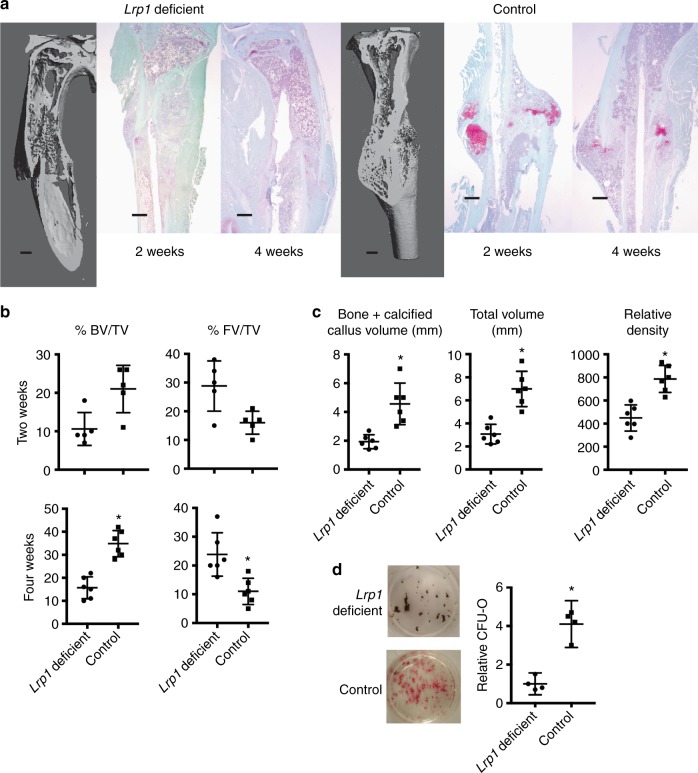
The pace of repair declines with age and, while exposure to a young circulation can rejuvenate fracture repair, the cell types and factors responsible for rejuvenation are unknown. Here we report that young macrophage cells produce factors that promote osteoblast differentiation of old bone marrow stromal cells. Heterochronic parabiosis exploiting young mice in which macrophages can be depleted and fractionated bone marrow transplantation experiments show that young macrophages rejuvenate fracture repair, and old macrophage cells slow healing in young mice. Proteomic analysis of the secretomes identify differential proteins secreted between old and young macrophages, such as low-density lipoprotein receptor-related protein 1 (Lrp1). Lrp1 is produced by young cells, and depleting Lrp1 abrogates the ability to rejuvenate fracture repair, while treating old mice with recombinant Lrp1 improves fracture healing. Macrophages and proteins they secrete orchestrate the fracture repair process, and young cells produce proteins that rejuvenate fracture repair in mice.
Overview
The claims and statistics of this paper haven’t been checked yet.
Free: it reads the open-access text and checks the first 5 claims that cite a source we can check. Create a free account to check every claim.
Integrity signals
Registry
Cites
Statistics
Figures
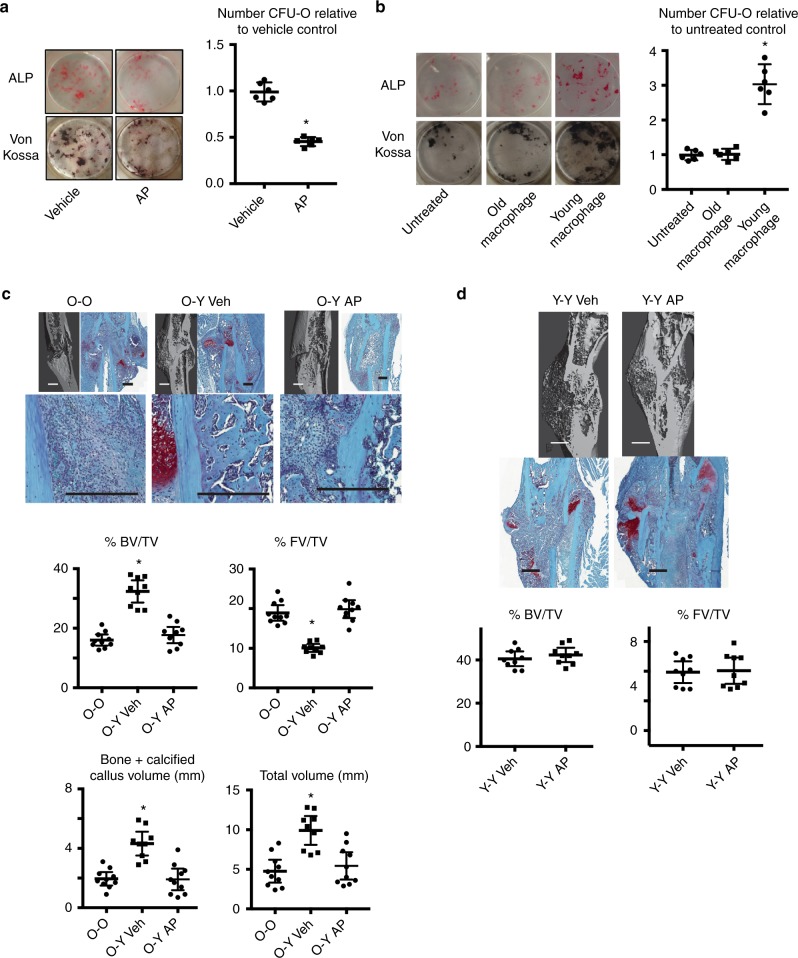
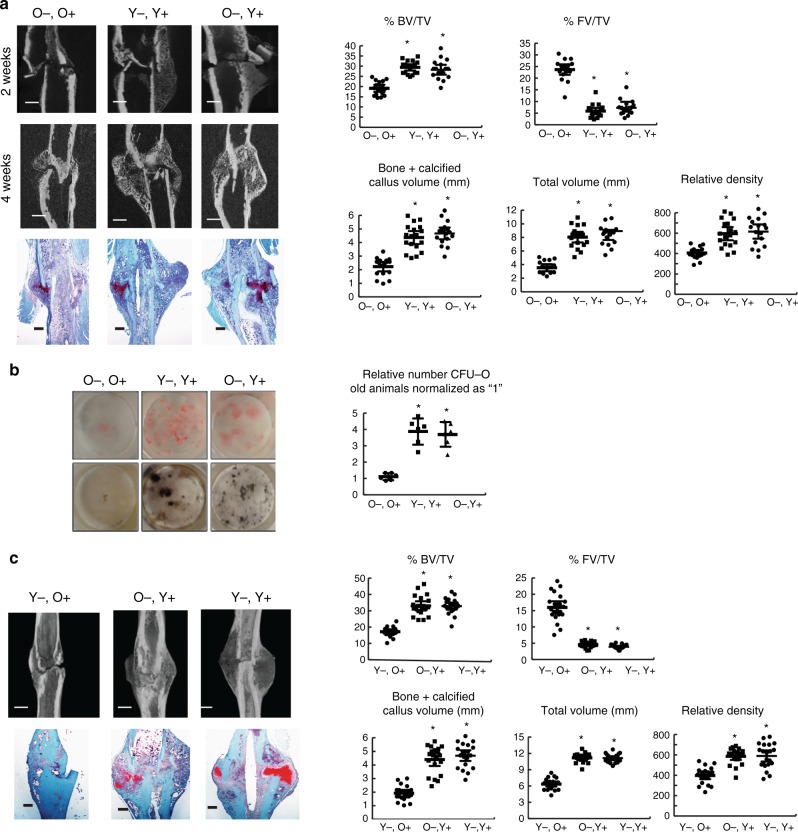
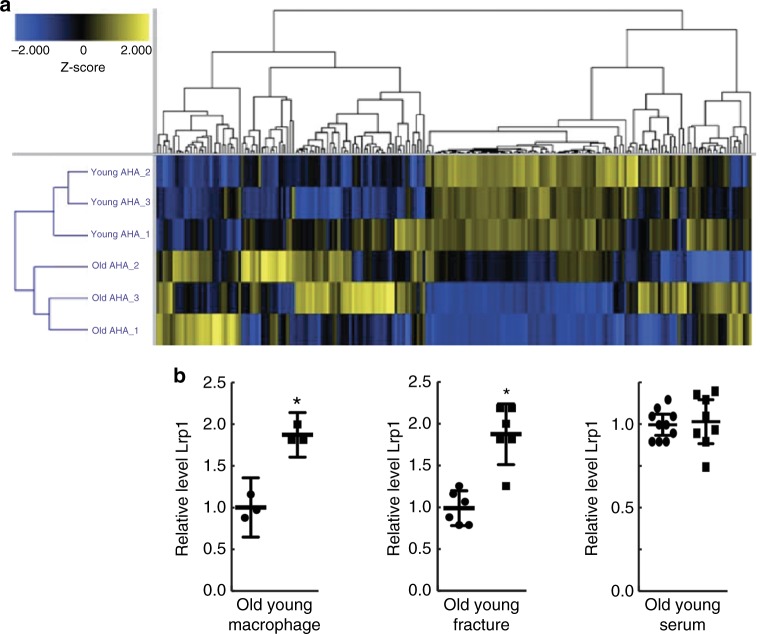
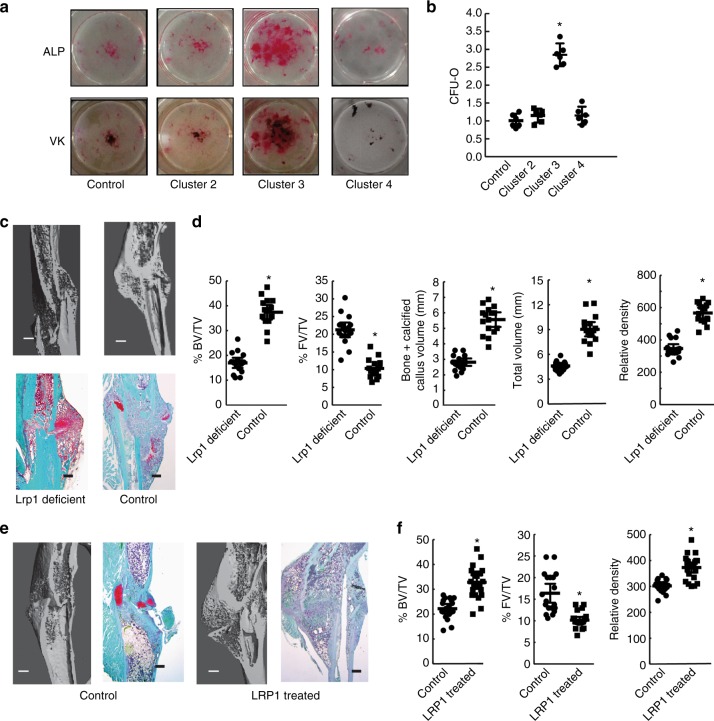
Verification
Claims the paper makes
The claims and statistics of this paper haven’t been checked yet.
Free: it reads the open-access text and checks the first 5 claims that cite a source we can check. Create a free account to check every claim.
Claims other papers make about this one
Each is checked against this paper’s own text: does it say what the citing paper says it does?
The check wasn’t confident either way, so it gives no verdict — never disputed.
In the citing paper
“Conversely, M2 macrophages secrete IL-10 to inhibit osteoclast function during later stages of healing [21, 22].”
From Osteoimmunology of Fracture Healing. (2024) · cites this paper as [22]
Experimental — accuracy not yet measuredThe check wasn’t confident either way, so it gives no verdict — never disputed.
In the citing paper
“Prior to this switch, M1 macrophages induce RANKL expression by osteoblasts and T cells causing osteoclastogenesis that is necessary for remodeling of the healing fracture callus.”
From Osteoimmunology of Fracture Healing. (2024) · cites this paper as [22]
Experimental — accuracy not yet measured
Self-check
Percentages, sums and reported differences re-computed from the paper’s own numbers.
The self-check needs the paper’s full text.
Citations
Cites
Macrophages in Tissue Repair, Regeneration, and Fibrosis
Wynn, T. A., & Vannella, K. M. (2016) · Immunity · doi:10.1016/j.immuni.2016.02.015 · Cited by 4,481
The role of senescent cells in ageing
van Deursen, J. M. (2014) · Nature · doi:10.1038/nature13193 · Cited by 2,623
Rejuvenation of aged progenitor cells by exposure to a young systemic environment
Conboy, I. M., Conboy, M. J., Wagers, A. J., Girma, E. R., Weissman, I. L., & Rando, T. A. (2005) · Nature · doi:10.1038/nature03260 · Cited by 2,287
Tissue-Resident Macrophage Enhancer Landscapes Are Shaped by the Local Microenvironment
Lavin, Y., Winter, D., Blecher-Gonen, R., David, E., Keren-Shaul, H., Merad, M., Jung, S., & Amit, I. (2014) · Cell · doi:10.1016/j.cell.2014.11.018 · Cited by 2,167
Conditional gene targeting in macrophages and granulocytes using LysMcre mice
Clausen, B. E., Burkhardt, C., Reith, W., Renkawitz, R., & Förster, I. (1999) · Transgenic Research · doi:10.1023/a:1008942828960 · Cited by 2,098
Day, T. F., Guo, X., Garrett-Beal, L., & Yang, Y. (2005) · Developmental Cell · doi:10.1016/j.devcel.2005.03.016 · Cited by 1,616
Increased Wnt signaling during aging alters muscle stem cell fate and increases fibrosis
Brack, A. S., Conboy, M. J., Roy, S., Lee, M., Kuo, C. J., Keller, C., & Rando, T. A. (2007) · Science · doi:10.1126/science.1144090 · Cited by 1,564
Targeting cellular senescence prevents age-related bone loss in mice
Farr, J. N., Xu, M., Weivoda, M. M., Monroe, D. G., Fraser, D. G., Onken, J. L., Negley, B. A., Sfeir, J. G., Ogrodnik, M. B., Hachfeld, C. M., et al. (2017) · Nature Medicine · doi:10.1038/nm.4385 · Cited by 1,182
Brault, V., Moore, R., Kutsch, S., Ishibashi, M., Rowitch, D. H., McMahon, A. P., Sommer, L., Boussadia, O., & Kemler, R. (2001) · Development · doi:10.1242/dev.128.8.1253 · Cited by 1,088
Infiltrating monocytes trigger EAE progression, but do not contribute to the resident microglia pool
Ajami, B., Bennett, J. L., Krieger, C., McNagny, K. M., & Rossi, F. M. V. (2011) · Nature Neuroscience · doi:10.1038/nn.2887 · Cited by 1,061
Cited by
Items 101–140 of 140
Emilin2 marks the target region for mesenchymal cell accumulation in bone regeneration
Qing, Y., Ono, T., Kohara, Y., Watanabe, A., Ogiso, N., Ito, M., Nakashima, T., & Takeshita, S. (2024) · Inflammation and Regeneration · doi:10.1186/s41232-024-00341-6 · Cited by 5
“During the process of bone regeneration, they produce cytokines, promote angiogenesis, and differentiate into osteoclasts [18–21], coupling bone injury and regeneration processes.”
BackgroundEnabling adenosine signaling to promote aged fracture healing
Newman, H., Shih, Y.-R. V., Hoque, J., Zeng, Y., Natesh, N. R., Gonzales, G., Guo, W., Puviindran, V., Wu, C., Alman, B. A., et al. (2025) · npj Regenerative Medicine · doi:10.1038/s41536-025-00406-1 · Cited by 4
“Fracture / oralteredfunctionsofbothosteoprogenitorandimmunecells 17 – 19 .”
Self-citationMacrophages and fibroblasts in cardiac fibrosis: interactions and transformation
Kim, D., & Baek, J.-H. (2025) · Exploration of Immunology · doi:10.37349/ei.2025.1003211 · Cited by 6
Engineering Efferocytosis for Bone Regeneration
Miszuk, J. M., Zhong, L., & Sun, H. (2025) · Macromolecular Bioscience · doi:10.1002/mabi.202500094 · Cited by 5
“…receptor-related protein 1 (Lrp1) levels are significantly reduced in macrophages in aged mice and humans, leading to a reduced rate of fracture repair in old mice [59], where evidence strongly suggests Lrp1 is a critical mediator for macrophage-mediated efferocytosis in various tissues [60, 61].”
Ma, Q., Lan, Z., Yang, Y., Sun, R., Xue, D., Lin, X., Su, Y., Ma, L., Hu, Z., Wu, G., et al. (2025) · International Immunopharmacology · doi:10.1016/j.intimp.2025.115277 · Cited by 4
Parabiosis: Assessing the Effects of Circulating Cells and Factors on the Skeleton
Alman, B. A., & Baht, G. S. (2020) · Methods in molecular biology · doi:10.1007/978-1-0716-1028-2_7 · Cited by 5
Self-citationWhat’s New in Musculoskeletal Basic Science
Leucht, P., & Einhorn, T. A. (2019) · Journal of Bone and Joint Surgery · doi:10.2106/jbjs.19.00922 · Cited by 3
Anticytokine Activity Enhances Osteogenesis of Bioactive Implants
Yang, F., Zhang, X., Huang, H., Wu, G., Lippuner, K., & Hunziker, E. B. (2021) · Tissue Engineering Part A · doi:10.1089/ten.tea.2020.0067 · Cited by 5
“47 This is, however, only one of several possible explanations.”
Li, W., Xu, C., Huang, L., Huang, Z., Zhou, B., Li, Y., Dong, J., & Wang, L. (2021) · Materials & Design · doi:10.1016/j.matdes.2021.110243 · Cited by 3
Decoding the role of LRP1 in cancers: From molecular mechanisms to therapeutic opportunities
Zou, D., Hu, J., Wang, Y., He, P., Gao, L., Ma, H., Yan, Y., LI, Y., Wang, K., Chen, W., et al. (2026) · Critical Reviews in Oncology/Hematology · doi:10.1016/j.critrevonc.2026.105122 · Cited by 4
Larina, V. N., & Сергеевна, Щ. Е. (2024) · Cardiosomatics · doi:10.17816/cs632927 · Cited by 6
Acute hyperlipidemia has transient effects on large-scale bone regeneration in male mice
Almeida, L. Y., Dietrich, C., Duverger, O., & Lee, J. S. (2024) · Scientific Reports · doi:10.1038/s41598-024-76992-9 · Cited by 2
Turajane, K., Ji, G., Chinenov, Y. V., Chao, M., Ayturk, U. M., Greenblatt, M. B., Ivashkiv, L. B., Bostrom, M. P., & Yang, X. (2020) · bioRxiv (Cold Spring Harbor Laboratory) · doi:10.1101/2020.12.27.424462 · Cited by 2
Wang, Y., Zou, X., Liu, Y., Shi, G., Li, X., Han, X., Zhang, P., & Yang, H. (2025) · Stem Cell Research & Therapy · doi:10.1186/s13287-025-04413-3 · Cited by 1
“…have been shown to play a crucial role in various regenerative processes, including mouse neonatal heart regeneration [37], kidney repair [38], digit tip regeneration [39] and bone fracture healing [40, 41], as well as the regeneration of peripheral nerves and adult sensory neurons [42–44].”
Zhao, L., Wu, C., Chen, K., Xu, Z., You, Y., Zhao, P., Zhu, D., Su, M., Luo, J., & Wang, Y. (2025) · Cell Regeneration · doi:10.1186/s13619-025-00263-9 · Cited by 3
Jin, Z., Liu, L., Wang, H., Wei, Y., Zhou, Z., Luo, X., & Liu, D. (2026) · International Immunopharmacology · doi:10.1016/j.intimp.2026.117219 · Cited by 4
Yi, Z., Liu, Y., Wang, J., Hu, C., & Man, Y. (2023) · bioRxiv (Cold Spring Harbor Laboratory) · doi:10.1101/2023.05.23.541910 · Cited by 1
“Characteristics of macrophages in different groups Macrophages have been reported to regulate tissue regeneration and there are close interactions between macrophages and PCs(3, 23).”
BackgroundAlhashmi, M., Gremida, A. M. E., Al-Maslamani, N. A., Liu, K., Sutherland, H., Wilson, P., Clegg, P., Hof, R. V., Bou–Gharios, G., & Yamamoto, K. (2023) · bioRxiv (Cold Spring Harbor Laboratory) · doi:10.1101/2023.07.11.548556 · Cited by 1
“Tissue-specific Lrp1 deletion in mice has revealed various biological roles of LRP1 including lipoprotein metabolism (17, 18), insulin signalling (19), inflammation (20, 21), heart development (22), vascular wall integrity and remodelling (23-26) and bone development and remodelling (27-30).”
Periostin+ macrophages improved long bone regeneration in a mechanosensitive mannerPreprint
Liu, C., Wang, Z., Lin, M., Pan, Y., Liu, Y., Yang, C., Wu, J., Wang, Y., Yan, B., & Zhou, J. (2023) · Research Square · doi:10.21203/rs.3.rs-3374396/v1
Yesin, T. K., Liu, H., Ding, Z., Singh, A., Tian, Q., Zhang, Y., Borah, B., Chen, J., & Kusumbe, A. P. (2024) · bioRxiv (Cold Spring Harbor Laboratory) · doi:10.1101/2024.01.16.575939 · Cited by 1
“…the re-establishment of bone marrow microenvironments after chemotherapy and radiation is crucial for the effective treatment outcome and clinical management of these conditions (Chen et al., 2012; D'Oronzo et al., 2019; Singh et al., 2019; Tsukamoto et al., 2021; Vi et al., 2018; Wu et al., 2018).”
BackgroundHdac3 deficiency limits periosteal reaction associated with Western diet feeding in female mice
Vu, E. K., Karkache, I. Y., Pham, A., Koroth, J., & Bradley, E. W. (2024) · Journal of Cellular and Molecular Medicine · doi:10.1111/jcmm.70081
Macrophages: the maestros of bone repair mechanobiology
Kotsaris, G., & Boerckel, J. D. (2025) · Journal of Bone and Mineral Research · doi:10.1093/jbmr/zjaf024
Almeida, L. Y., Dietrich, C., Hanner, A. S., McTighe, K. M., Martín, D., Core, N. G. A. C. B., Fairbanks, T., Link, T. M., Le, J. M., Curry, N. L., et al. (2025) · Aging Cell · doi:10.1111/acel.70177
“In contrast to the previous effects of young blood improving fracture healing in older mice (Baht et al. 2015; Vi et al. 2018), in vivo μCT analysis showed that, similarly to what was found in mature isochronic controls ( n = 3) (Figure S12a), resected mature mice paired with unresected immature…”
InfluentialWang, T., Liu, Z., Wu, X., Zhang, L., Chen, Y., Chen, Y., Luo, Y., Liu, Y., Zeeshan, M., Zhao, J., et al. (2025) · Advanced Healthcare Materials · doi:10.1002/adhm.202503846 · Cited by 2
Qing, Y., Ono, T., Kohara, Y., Watanabe, A., Ogiso, N., Ito, M., Nakashima, T., & Takeshita, S. (2024) · Figshare · doi:10.6084/m9.figshare.25963230
Qing, Y., Ono, T., Kohara, Y., Watanabe, A., Ogiso, N., Ito, M., Nakashima, T., & Takeshita, S. (2024) · Figshare · doi:10.6084/m9.figshare.25963136
Qing, Y., Ono, T., Kohara, Y., Watanabe, A., Ogiso, N., Ito, M., Nakashima, T., & Takeshita, S. (2024) · Figshare · doi:10.6084/m9.figshare.26728879
Qing, Y., Ono, T., Kohara, Y., Watanabe, A., Ogiso, N., Ito, M., Nakashima, T., & Takeshita, S. (2024) · Figshare · doi:10.6084/m9.figshare.26728876
Qing, Y., Ono, T., Kohara, Y., Watanabe, A., Ogiso, N., Ito, M., Nakashima, T., & Takeshita, S. (2024) · Figshare · doi:10.6084/m9.figshare.26728885
Neutralizing hepatic apolipoprotein E enhances aged bone fracture healing
Huang, M., Balu, A. R., Molitoris, K. H., Bareja, A., & Baht, G. S. (2026) · Bone Research · doi:10.1038/s41413-025-00489-y
“8,9 From this model, we identi fi ed ApoE as an aging factor: circulating ApoE levels increase with age in patients and in mice and ApoE inhibits bone fracture healing.”
Self-citationBridging skeletal stem cell diversity and human skeletal modeling
Tani, S. (2026) · Journal of Bone and Mineral Metabolism · doi:10.1007/s00774-025-01686-9
Schurman, C. A., Chandler, W., Hu, D., Taylor, H. B., Tao, N., Miclau, T., Angel, P. M., Marcucio, R., & Schilling, B. (2026) · bioRxiv (Cold Spring Harbor Laboratory) · doi:10.64898/2026.02.13.705828
“Macrophages may also play a role in age-related changes in fracture healing 31 , and they may have changes in signaling systems that lead to pro-inflammatory states 32 .”
Research Progress on Macrophage-Mediated Immuno-Bone Coupling in Orthodontic Tooth Movement
童, 雪. (2026) · Advances in Clinical Medicine · doi:10.12677/acm.2026.162747
Okamoto, K., & Takayanagi, H. (2026) · Elsevier eBooks · doi:10.1016/b978-0-443-13683-2.00001-3
The role of macrophage senescence in cardiovascular diseases
Sun, Y., 常英新, Lin, H., Fan, G., Li, L., & Ma, C. (2026) · Cellular Signalling · doi:10.1016/j.cellsig.2026.112577 · Cited by 1
Lai, S., Xia, X., & Mu, Y. (2026) · Journal of Translational Medicine · doi:10.1186/s12967-026-08613-0
“In their transgenic mouse model, fractured callus tissue contained excessive collagenous fibrotic tissue and insufficient bone when macrophage-derived signals were absent [84].”
Zhou, Q., Wang, K., Sun, X., Fu, J., Wang, L., Wang, Q., Ma, Y., & Guo, Y. (2026) · Immunity & Ageing · doi:10.1186/s12979-026-00586-4
“…pro-inflammatory cytokines, whereas M2-like macrophages secrete osteogenic and pro-reparative factors that facilitate the differentiation and mineralization of BMSCs and pre-osteoblasts, thereby supporting bone formation macrophages transplanted from older mice hinder the healing process [84].”
Yi, Z., Liu, Y., Wang, J., Deng, C., Jin, Y., Qu, Y., Hu, C., & Man, Y. (2026) · Bone Research · doi:10.1038/s41413-026-00585-7
Metadata
- Authors
- Vi, L., Baht, G. S., Soderblom, E. J., Whetstone, H., Wei, Q., Furman, B., Puviindran, V., Nadesan, P., Foster, M., Poon, R., White, J. P., Yahara, Y., Ng, A., Barrientos, T., Grynpas, M., Mosely, M. A., & Alman, B. A.
- Affiliations
- Duke University (US)
- University of Toronto (CA)
- Mount Sinai Hospital (CA)
- Corresponding author
- Alman, Benjamin A.
- ORCID
- Venue
- Nature Communications
- Published
- 2018-12-05
- Volume
- 9
- Issue
- 1
- Pages
- 5191-5191
- ISSN
- 2041-1723 (ISSN-L)
- PMC
- PMC6281653
- OpenAlex
- W2903080657
- Cited by
- 140
- References
- 65
- Citations by year
- 2026: 11 · 2025: 20 · 2024: 29 · 2023: 18 · 2022: 18 · 2021: 19 · 2020: 13 · 2019: 11 · 2018: 1
- FWCI
- 3.91
- Type
- journal article
- Language
- en
- Open access
- gold
- doi.org
- Licence
- cc-by
- creativecommons.org/licenses/by/4.0 (tdm)
- creativecommons.org/licenses/by/4.0 (vor)
- Locations
- Nature Communications (publishedVersion, cc-by)
- Europe PMC (PubMed Central) (publishedVersion, other-oa)
- PubMed Central (publishedVersion, cc-by)
- PubMed (publishedVersion)
- RePEc: Research Papers in Economics (submittedVersion)
- DOAJ (DOAJ: Directory of Open Access Journals) (submittedVersion)
- DOAJ (DOAJ: Directory of Open Access Journals) (submittedVersion, cc-by-sa)
- Funders
- National Institutes of Health
- Canadian Institutes of Health Research (FRN62788)
- National Institute on Aging (R01AG049745)
- Topics
- Life Sciences › Biochemistry, Genetics and Molecular Biology › Molecular Biology › Bone Metabolism and Diseases
- Health Sciences › Medicine › Orthopedics and Sports Medicine › Bone fractures and treatments
- Life Sciences › Biochemistry, Genetics and Molecular Biology › Cell Biology › Mesenchymal stem cell research
- Keywords
- macrophages, heterochronic parabiosis, mesenchymal stem cells, osteogenic differentiation, fracture healing, aging, LRP1, macrophage secretome, rejuvenation, bone regeneration
- MeSH terms
- Animals, Bone Marrow Cells, Female, Humans, Macrophages, Male, Mice, Inbred C57BL, Osteoblasts, Osteogenesis, Receptors, LDL, Rejuvenation, Bone Marrow Transplantation, Fracture Healing, Stromal Cells, Tumor Suppressor Proteins, Low Density Lipoprotein Receptor-Related Protein-1, Fractures, Bone, Mice
About these checks
Registry, retraction, Cites and statistics results are computed, not judged, with one exception: a printed reference that no index lists is read once by a model before it counts as a citation error. Claims are extracted by a model and kept only when their quote appears verbatim in the text; each cited source is then checked, with a model’s help, for whether it says what the claim relies on. Those verdicts can be wrong — read the claim’s quote and the cited source before relying on one.
Statistics and arithmetic are recomputed, not judged.
Confidence bands are shown only for fields calibrated on our annotated test set. None is calibrated yet, so no band is shown.
What counts as a claim ›How we measure confidence ›How we check this ›
Are you an author, or do you see a problem with this page? Request a review
Data sources
Bibliographic data: Semantic Scholar, OpenAlex, Crossref.
Contains information from the Semantic Scholar Academic Graph Datasets, made available under the ODC Attribution License (ODC-BY 1.0).
Semantic Scholar’s data is described in: Kinney, R., et al. (2023). The Semantic Scholar Open Data Platform. arXiv:2301.10140.
