

The DOI matches its Crossref record; 68 of the 68 references it cites were found in a registry or an index.
Multi-platform discovery of haplotype-resolved structural variation in human genomes
Open accessPublished version of a preprint
Abstract
The incomplete identification of structural variants (SVs) from whole-genome sequencing data limits studies of human genetic diversity and disease association. Here, we apply a suite of long-read, short-read, strand-specific sequencing technologies, optical mapping, and variant discovery algorithms to comprehensively analyze three trios to define the full spectrum of human genetic variation in a haplotype-resolved manner. We identify 818,054 indel variants (<50 bp) and 27,622 SVs (≥50 bp) per genome. We also discover 156 inversions per genome and 58 of the inversions intersect with the critical regions of recurrent microdeletion and microduplication syndromes. Taken together, our SV callsets represent a three to sevenfold increase in SV detection compared to most standard high-throughput sequencing studies, including those from the 1000 Genomes Project. The methods and the dataset presented serve as a gold standard for the scientific community allowing us to make recommendations for maximizing structural variation sensitivity for future genome sequencing studies.
Overview
The claims and statistics of this paper haven’t been checked yet.
Run the check — free, no account needed. It reads the open-access text and checks the sources it cites.
Integrity signals
Registry
Cites
Statistics
Figures
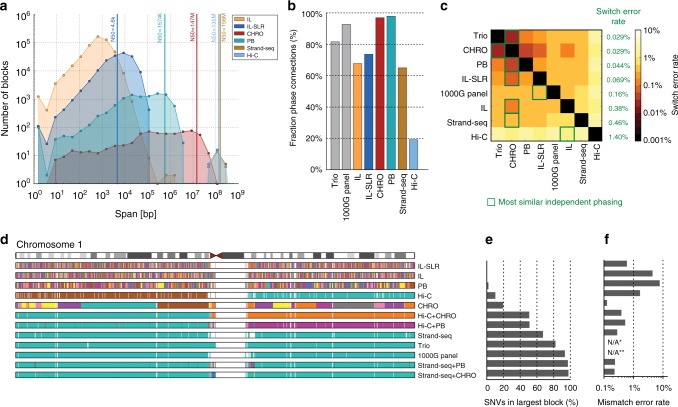
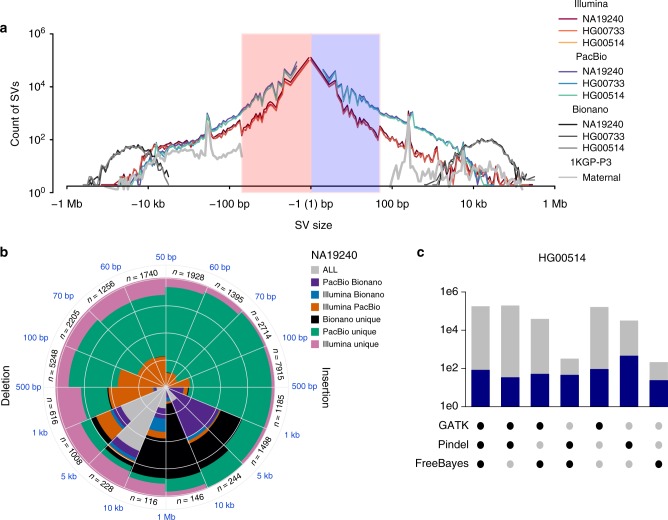
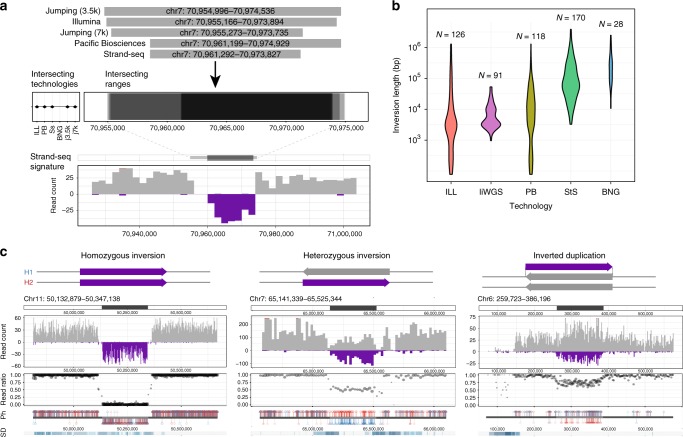
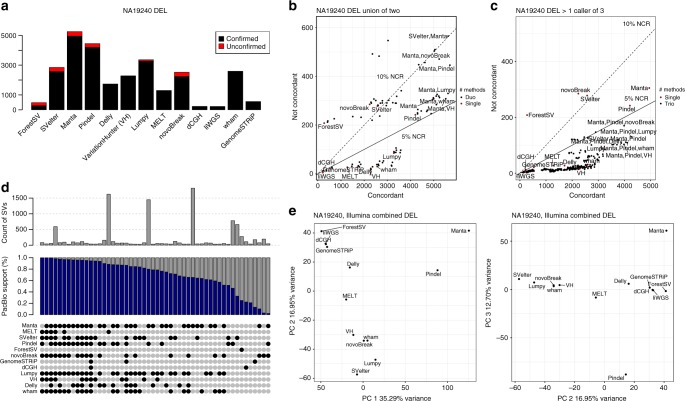
Verification
Claims the paper makes
The claims and statistics of this paper haven’t been checked yet.
Run the check — free, no account needed. It reads the open-access text and checks the sources it cites.
Claims other papers make about this one
Each is checked against this paper’s own text: does it say what the citing paper says it does?
The source backs part of the claim, not all of it — or backs it for a different population, condition or comparison.
In the citing paper
“For example, population-specific genes may provide insights into local adaptation, while structural variants may contribute to disease susceptibility or resistance in ways that were previously invisible to reference-based analyses [112,113].”
From Origin and Evolution of Genes in Eukaryotes: Mechanisms, Dynamics, and Functional Implications (2025) · cites this paper as [112]
Experimental — accuracy not yet measuredThe cited source says what the claim attributes to it.
In the citing paper
“more than two-thirds of SVs have been missed in studies that used short-read data and the human reference assembly6–8”
From A draft human pangenome reference. (2023) · cites this paper as [6]
The cited source says what the claim attributes to it.
In the citing paper
“This result confirms that short-read-based SV discovery relative to a linear reference genome misses a large proportion of SVs5,6,8.”
From A draft human pangenome reference. (2023) · cites this paper as [6]
Self-check
Percentages, sums and reported differences re-computed from the paper’s own numbers.
The self-check needs the paper’s full text.
Citations
Cites
Cutadapt removes adapter sequences from high-throughput sequencing reads
Martin, M. (2011) · EMBnet.journal · doi:10.14806/ej.17.1.200 · Cited by 33,889
A global reference for human genetic variation
The 1000 Genomes Project Consortium, authors, C., Auton, A., Abecasis, G. R., Steering committee, Altshuler, D. M., Durbin, R. M., Abecasis, G. R., Bentley, D. R., Chakravarti, A., et al. (2015) · Nature · doi:10.1038/nature15393 · Cited by 18,247
Self-citationA framework for variation discovery and genotyping using next-generation DNA sequencing data
DePristo, M. A., Banks, E., Poplin, R. E., Garimella, K. V., Maguire, J., Hartl, C., Philippakis, A., del Angel, G., Rivas, M. A., Hanna, M., et al. (2011) · Nature Genetics · doi:10.1038/ng.806 · Cited by 11,508
Analysis of protein-coding genetic variation in 60,706 humans
Exome Aggregation Consortium, Lek, M., Karczewski, K. J., Minikel, E. V., Samocha, K. E., Banks, E., Fennell, T., O’Donnell-Luria, A. H., Ware, J. S., Hill, A. J., et al. (2016) · Nature · doi:10.1038/nature19057 · Cited by 9,587
Self-citationComprehensive Mapping of Long-Range Interactions Reveals Folding Principles of the Human Genome
Lieberman-Aiden, E., van Berkum, N. L., Williams, L., Imakaev, M., Ragoczy, T., Telling, A., Amit, I., Lajoie, B. R., Sabo, P. J., Dorschner, M. O., et al. (2009) · Science · doi:10.1126/science.1181369 · Cited by 8,898
Finding the missing heritability of complex diseases
Manolio, T. A., Collins, F. S., Cox, N. J., Goldstein, D. B., Hindorff, L. A., Hunter, D. J., McCarthy, M. I., Ramos, E. M., Cardon, L. R., Chakravarti, A., et al. (2009) · Nature · doi:10.1038/nature08494 · Cited by 8,336
Self-citationCanu: scalable and accurate long-read assembly via adaptive k -mer weighting and repeat separationPreprint
Koren, S., Walenz, B. P., Berlin, K., Miller, J. R., Bergman, N. H., & Phillippy, A. M. (2017) · Genome Research · doi:10.1101/gr.215087.116 · Cited by 7,260
Nonhybrid, finished microbial genome assemblies from long-read SMRT sequencing data
Chin, C.-S., Alexander, D. H., Marks, P., Klammer, A. A., Drake, J., Heiner, C., Clum, A., Copeland, A., Huddleston, J., Eichler, E. E., et al. (2013) · Nature Methods · doi:10.1038/nmeth.2474 · Cited by 4,029
Self-citationHaplotype-based variant detection from short-read sequencing
Garrison, E., & Marth, G. (2012) · arXiv · doi:10.48550/arxiv.1207.3907 · Cited by 3,700
Self-citationAn integrated map of structural variation in 2,504 human genomes
Sudmant, P. H., Rausch, T., Gardner, E. J., Handsaker, R. E., Abyzov, A., Huddleston, J., Zhang, Y., Ye, K., Jun, G., Hsi-Yang Fritz, M., et al. (2015) · Nature · doi:10.1038/nature15394 · Cited by 2,354
Self-citation
Cited by
Sorted by citations
Items 201–300 of 916
breakpointR: an R/Bioconductor package to localize strand state changes in Strand-seq data
Porubskỳ, D., Sanders, A. D., Taudt, A., Colomé‐Tatché, M., Lansdorp, P. M., & Guryev, V. (2019) · Bioinformatics · doi:10.1093/bioinformatics/btz681 · Cited by 47
Self-citationRaca, G., Astbury, C., Behlmann, A., Castro, M. J. D., Hickey, S. E., Karaca, E., Lowther, C., Riggs, E. R., Seifert, B. A., Thorland, E. C., et al. (2022) · Genetics in Medicine · doi:10.1016/j.gim.2022.09.017 · Cited by 49
The landscape of genomic structural variation in Indigenous Australians
Reis, A. L. M., Rapadas, M., Hammond, J. W., Gamaarachchi, H., Stevanovski, I., Kumaheri, M. A., Chintalaphani, S. R., Dissanayake, D. S. B., Siggs, O. M., Hewitt, A. W., et al. (2023) · Nature · doi:10.1038/s41586-023-06842-7 · Cited by 51
Nakamura, W., Hirata, M., Oda, S., Chiba, K., Okada, A., Mateos, R. N., Sugawa, M., Iida, N., Ushiama, M., Tanabe, N., et al. (2024) · npj Genomic Medicine · doi:10.1038/s41525-024-00394-z · Cited by 48
Spealman, P., Burrell, J., & Gresham, D. (2020) · Nucleic Acids Research · doi:10.1093/nar/gkaa206 · Cited by 48
Valle-Inclán, J. E., Stangl, C., de Jong, A. C., van Dessel, L. F., van Roosmalen, M. J., Helmijr, J., Renkens, I., Janssen, R., de Blank, S., de Witte, C. J., et al. (2021) · Genome Medicine · doi:10.1186/s13073-021-00899-7 · Cited by 45
Challenges in quantifying genome erosion for conservation
Bosse, M., & van Loon, S. (2022) · Frontiers in Genetics · doi:10.3389/fgene.2022.960958 · Cited by 50
de Bruijn, S. E., Rodenburg, K., Corominas, J., Ben‐Yosef, T., Reurink, J., Kremer, H., Whelan, L., Plomp, A. S., Berger, W., Farrar, G. J., et al. (2022) · Genetics in Medicine · doi:10.1016/j.gim.2022.11.013 · Cited by 45
Iqbal, M. A., Broeckel, U., Levy, B., Skinner, S. A., Sahajpal, N., Rodriguez, V., Stence, A. A., Awayda, K. M., Scharer, G. H., Skinner, C. D., et al. (2023) · Journal of Molecular Diagnostics · doi:10.1016/j.jmoldx.2022.12.005 · Cited by 46
Blom, M. P. K. (2021) · Molecular Ecology · doi:10.1111/mec.15909 · Cited by 47
Characterizing mobile element insertions in 5675 genomes
Niu, Y., Teng, X., Zhou, H., Shi, Y., Li, Y., Tang, Y., Zhang, P., Luo, H., Kang, Q., Xu, T., et al. (2022) · Nucleic Acids Research · doi:10.1093/nar/gkac128 · Cited by 46
The additional diagnostic yield of long-read sequencing in undiagnosed rare diseasesPreprint
Gobbo, G. F. D., & Boycott, K. M. (2025) · Genome Research · doi:10.1101/gr.279970.124 · Cited by 44
phasebook: haplotype-aware de novo assembly of diploid genomes from long reads
Luo, X. L., Kang, X., & Schönhuth, A. (2021) · Genome biology · doi:10.1186/s13059-021-02512-x · Cited by 43
Explaining the missing heritability of psychiatric disorders
Owen, M. J., & Williams, N. M. (2021) · World Psychiatry · doi:10.1002/wps.20870 · Cited by 43
Exome Sequencing and Clinical Diagnosis
Friedman, J. M., Jones, K. L., & Carey, J. C. (2020) · JAMA · doi:10.1001/jama.2020.11126 · Cited by 42
A Reference Genome Assembly of American Bison, Bison bison bison
Oppenheimer, J., Rosen, B. D., Heaton, M. P., Ley, B. L. V., Shafer, W. R., Schuetze, F. T., Stroud, B., Kuehn, L. A., McClure, J. C., Barfield, J. P., et al. (2021) · Journal of Heredity · doi:10.1093/jhered/esab003 · Cited by 43
Identification of Somatic Structural Variants in Solid Tumors by Optical Genome Mapping
Goldrich, D. Y., LaBarge, B., Chartrand, S., Zhang, L., Sadowski, H. B., Zhang, Y., Pham, K., Way, H., Lai, C.-Y., Pang, A. W. C., et al. (2021) · Journal of Personalized Medicine · doi:10.3390/jpm11020142 · Cited by 43
Self-citationLocal adaptation and archaic introgression shape global diversity at human structural variant loci
Yan, S. M., Sherman, R. M., Taylor, D. J., Nair, D. R., Bortvin, A. N., Schatz, M. C., & McCoy, R. C. (2021) · eLife · doi:10.7554/elife.67615 · Cited by 47
Lessons learned: next-generation sequencing applied to undiagnosed genetic diseases
Schuler, B. A., Nelson, E. T., Koziura, M. E., Cogan, J. D., Hamid, R., & Phillips, J. A. (2022) · Journal of Clinical Investigation · doi:10.1172/jci154942 · Cited by 41
Grochowski, C. M., Bengtsson, J. D., Du, H., Gandhi, M., Lun, M. Y., Mehaffey, M. G., Park, K., Höps, W., Benito, E., Hasenfeld, P., et al. (2024) · Cell Genomics · doi:10.1016/j.xgen.2024.100590 · Cited by 41
Self-citationContribution of unfixed transposable element insertions to human regulatory variation
Goubert, C., Zevallos, N. A., & Feschotte, C. (2020) · Philosophical Transactions of the Royal Society B Biological Sciences · doi:10.1098/rstb.2019.0331 · Cited by 45
Harvey, W. T., Ebert, P., Ebler, J., Audano, P. A., Munson, K. M., Hoekzema, K., Porubskỳ, D., Beck, C. R., Marschall, T., Garimella, K. V., et al. (2023) · Genome Research · doi:10.1101/gr.278070.123 · Cited by 43
Self-citationvamos: variable-number tandem repeats annotation using efficient motif sets
Ren, J., Gu, B., & Chaisson, M. (2023) · Genome biology · doi:10.1186/s13059-023-03010-y · Cited by 41
Self-citationDiscovery of tandem and interspersed segmental duplications using high-throughput sequencing
Söylev, A., Le, T. M., Amini, H., Alkan, C., & Hormozdiari, F. (2019) · Bioinformatics · doi:10.1093/bioinformatics/btz237 · Cited by 42
Self-citationGenome‐Wide Analysis of Structural Variants in Parkinson Disease
Billingsley, K. J., Ding, J., Jerez, P. Á., Illarionova, A., Levine, K. S., Grenn, F. P., Makarious, M. B., Moore, A. K., Vitale, D., Reed, X., et al. (2023) · Annals of Neurology · doi:10.1002/ana.26608 · Cited by 41
Self-citationUnraveling undiagnosed rare disease cases by HiFi long-read genome sequencingPreprint
Steyaert, W., Sagath, L., Demidov, G. M., Yépez, V. A., Esteve‐Codina, A., Gagneur, J., Ellwanger, K., Derks, R. C., Weiss, M. M., den Ouden, A., et al. (2025) · Genome Research · doi:10.1101/gr.279414.124 · Cited by 42
Jiang, T., Liu, S., Cao, S., Liu, Y., Cui, Z., Wang, Y., & Guo, H. (2021) · BMC Bioinformatics · doi:10.1186/s12859-021-04422-y · Cited by 39
Denti, L., Khorsand, P., Bonizzoni, P., Hormozdiari, F., & Chikhi, R. (2022) · Nature Methods · doi:10.1038/s41592-022-01674-1 · Cited by 42
Self-citationNew whole-genome alignment tools are needed for tapping into plant diversity
Song, B., Buckler, E. S., & Stitzer, M. C. (2023) · Trends in Plant Science · doi:10.1016/j.tplants.2023.08.013 · Cited by 44
Unravelling inversions: Technological advances, challenges, and potential impact on crop breeding
Hu, H., Scheben, A., Wang, J., Li, F., Li, C., Edwards, D., & Zhao, J. (2023) · Plant Biotechnology Journal · doi:10.1111/pbi.14224 · Cited by 38
Computing the Rearrangement Distance of Natural Genomes
Bohnenkämper, L., Braga, M. D. V., Doerr, D., & Stoye, J. (2021) · Journal of Computational Biology · doi:10.1089/cmb.2020.0434 · Cited by 38
Jakubosky, D. A., Smith, E. N., D’Antonio, M., Bonder, M. J., Greenwald, W. W. Y., D’Antonio‐Chronowska, A., Matsui, H., Bonder, M. J., Cai, N., Carcamo‐Orive, I., et al. (2020) · Nature Communications · doi:10.1038/s41467-020-16481-5 · Cited by 39
Long-read sequencing to understand genome biology and cell function
Kraft, F., & Kurth, I. (2020) · The International Journal of Biochemistry & Cell Biology · doi:10.1016/j.biocel.2020.105799 · Cited by 37
Chen, J., Cheng, J., Chen, X., Inoue, M., Liu, Y., & Song, C. (2022) · Nucleic Acids Research · doi:10.1093/nar/gkac612 · Cited by 37
Self-citationRausch, T., Snajder, R., Léger, A., Simovic-Lorenz, M., Giurgiu, M., Villacorta, L., Henssen, A. G., Fröhling, S., Stegle, O., Birney, E., et al. (2023) · Cell Genomics · doi:10.1016/j.xgen.2023.100281 · Cited by 38
Self-citationTigano, A., Jacobs, A., Wilder, A. P., Nand, A., Zhan, Y., Dekker, J., & Therkildsen, N. O. (2021) · Genome Biology and Evolution · doi:10.1093/gbe/evab098 · Cited by 38
SVFX: a machine learning framework to quantify the pathogenicity of structural variants
Kumar, S., Harmanci, A. O., Vytheeswaran, J., & Gerstein, M. (2020) · Genome biology · doi:10.1186/s13059-020-02178-x · Cited by 36
Self-citationGarg, P., Martin-Trujillo, A., Rodriguez, O. L., Gies, S. J., Hadelia, E., Jadhav, B., Jain, M., Paten, B., & Sharp, A. J. (2021) · The American Journal of Human Genetics · doi:10.1016/j.ajhg.2021.03.016 · Cited by 37
Self-citationPangenome-genotyped structural variation improves molecular phenotype mapping in cattlePreprint
Leonard, A. S., Mapel, X. M., & Pausch, H. (2024) · Genome Research · doi:10.1101/gr.278267.123 · Cited by 36
Liu, X., Hu, F., Zhang, D., Li, Z., He, J., Zhang, S., Wang, Z., Zhao, Y., Wu, J., Liu, C., et al. (2024) · npj Genomic Medicine · doi:10.1038/s41525-024-00391-2 · Cited by 36
Stanojević, D., Li, Z., Bakić, S., Foo, R., & Šikić, M. (2024) · Nature Communications · doi:10.1038/s41467-024-49847-0 · Cited by 35
Saunders, C. T., Holt, J., Baker, D. N., Lake, J. A., Belyeu, J. R., Kronenberg, Z. N., Rowell, W. J., & Eberle, M. A. (2025) · Bioinformatics · doi:10.1093/bioinformatics/btaf136 · Cited by 35
Self-citationChen, X., & Li, D. (2019) · Bioinformatics · doi:10.1093/bioinformatics/btz205 · Cited by 38
Self-citationLavrichenko, K., Johansson, S., & Jonassen, I. (2021) · BMC Genomics · doi:10.1186/s12864-021-08082-3 · Cited by 36
Tsai, H., Kao, H., Kuo, M.-W., Lin, C., Chang, C.-M., Chen, Y., Chen, H., Kwok, P., Yu, A. L.-T., & Yu, J. (2023) · Nature Communications · doi:10.1038/s41467-023-40901-x · Cited by 34
Self-citationFrampton, S., Smith, R., Ferson, L., Gibson, J., Hollox, E. J., Cragg, M. S., & Strefford, J. C. (2024) · Immunological Reviews · doi:10.1111/imr.13401 · Cited by 37
Long-read sequencing in human genetics
Kraft, F., & Kurth, I. (2019) · Medizinische Genetik · doi:10.1007/s11825-019-0249-z · Cited by 34
Louden, E. D., Poch, A., Kim, H., Ben‐Mahmoud, A., Kim, S., & Layman, L. C. (2021) · Molecular and Cellular Endocrinology · doi:10.1016/j.mce.2021.111334 · Cited by 34
Harnessing the power of multi‐omics data for predicting climate change response
Layton, K. K. S., & Bradbury, I. (2021) · Journal of Animal Ecology · doi:10.1111/1365-2656.13619 · Cited by 34
Daniš, D., Jacobsen, J. O. B., Balachandran, P., Zhu, Q., Yilmaz, F., Reese, J., Haimel, M., Lyon, G. J., Helbig, I., Mungall, C., et al. (2022) · Genome Medicine · doi:10.1186/s13073-022-01046-6 · Cited by 36
Self-citationNguyen, T. V., Jagt, C. J. V., Wang, J., Daetwyler, H. D., Xiang, R., Goddard, M. E., Nguyen, L. T., Ross, E. M., Hayes, B. J., Chamberlain, A. J., et al. (2023) · Genetics Selection Evolution · doi:10.1186/s12711-023-00783-5 · Cited by 34
Gilpatrick, T., Lee, I., Graham, J. E., Raimondeau, E., Bowen, R., Heron, A., Sedlazeck, F. J., & Timp, W. (2019) · bioRxiv (Cold Spring Harbor Laboratory) · doi:10.1101/604173 · Cited by 34
Goodbye reference, hello genome graphs
Ameur, A. (2019) · Nature Biotechnology · doi:10.1038/s41587-019-0199-7 · Cited by 34
Determining the impact of uncharacterized inversions in the human genome by droplet digital PCRPreprint
Puig, M., Lerga-Jaso, J., Giner-Delgado, C., Pacheco, S., Izquierdo, D., Delprat, A., Gayà‐Vidal, M., Regan, J. F., Karlin-Neumann, G. A., & Cáceres, M. (2020) · Genome Research · doi:10.1101/gr.255273.119 · Cited by 34
The landscape of human SVA retrotransposons
Chu, C., Lin, E. W., Tran, A. V., Jin, H., Ho, N. I., Veit, A. D., Cortés‐Ciriano, I., Burns, K. H., Ting, D. T., & Park, P. J. (2023) · Nucleic Acids Research · doi:10.1093/nar/gkad821 · Cited by 33
Helal, A. A., Saad, B. T., Saad, M. T., Mosaad, G. S., & Aboshanab, K. M. (2024) · Scientific Reports · doi:10.1038/s41598-024-56604-2 · Cited by 35
Hidden biases in germline structural variant detection
Khayat, M. M., Sahraeian, S. M. E., Zarate, S., Carroll, A. W., Hong, H., Pan, B., Shi, L. M., Gibbs, R. A., Mohiyuddin, M., Zheng, Y., et al. (2021) · Genome biology · doi:10.1186/s13059-021-02558-x · Cited by 33
Akbari, V., Hanlon, V. C. T., O’Neill, K., Lefebvre, L., Schrader, K. A., Lansdorp, P. M., & Jones, S. J. M. (2022) · Cell Genomics · doi:10.1016/j.xgen.2022.100233 · Cited by 33
Self-citationGustafson, J. A., Gibson, S. B., Damaraju, N., Zalusky, M. P., Hoekzema, K., Twesigomwe, D., Yang, L., Snead, A. A., Richmond, P. A., Coster, W. D., et al. (2024) · medRxiv · doi:10.1101/2024.03.05.24303792 · Cited by 34
Self-citationPokrovac, I., & Pezer, Ž. (2022) · Frontiers in Genetics · doi:10.3389/fgene.2022.1060898 · Cited by 34
Inversion polymorphism in a complete human genome assembly
Porubskỳ, D., Harvey, W. T., Rozanski, A. N., Ebler, J., Höps, W., Ashraf, H., Hasenfeld, P., Paten, B., Sanders, A. D., Marschall, T., et al. (2023) · Genome biology · doi:10.1186/s13059-023-02919-8 · Cited by 34
Self-citationCook, G. W., Benton, M. G., Akerley, W., Mayhew, G. F., Moehlenkamp, C. A., Raterman, D., Burgess, D. L., Rowell, W. J., Lambert, C. C., Eng, K., et al. (2020) · PLoS ONE · doi:10.1371/journal.pone.0226340 · Cited by 32
Self-citationThe effects of common structural variants on 3D chromatin structure
Shanta, O., Noor, A., & Sebat, J. L. (2020) · BMC Genomics · doi:10.1186/s12864-020-6516-1 · Cited by 31
Self-citationcuteFC: regenotyping structural variants through an accurate and efficient force-calling method
Jiang, T., Cao, S., Liu, Y., Zhang, Z., Liu, B., Luo, R., Wang, G., & Wang, Y. (2025) · Genome biology · doi:10.1186/s13059-025-03642-2 · Cited by 30
Structural variant identification and characterization
Balachandran, P., & Beck, C. R. (2020) · Chromosome Research · doi:10.1007/s10577-019-09623-z · Cited by 37
Efficient dynamic variation graphs
Eizenga, J. M., Novak, A. M., Kobayashi, E., Villani, F., Cisar, C., Heumos, S., Hickey, G., Colonna, V., Paten, B., & Garrison, E. P. (2020) · Bioinformatics · doi:10.1093/bioinformatics/btaa640 · Cited by 30
Nakatochi, M., Kushima, I., & Ozaki, N. (2020) · Journal of Human Genetics · doi:10.1038/s10038-020-00838-1 · Cited by 35
Abbasi, W., French, C. E., Rockowitz, S., Kenna, M. A., & Shearer, A. E. (2021) · Human Genetics · doi:10.1007/s00439-021-02365-1 · Cited by 30
Structural variants identified by Oxford Nanopore PromethION sequencing of the human genomePreprint
Coster, W. D., Roeck, A. D., Pooter, T. D., D’Hert, S., Rijk, P. D., Stražišar, M., Sleegers, K., & Broeckhoven, C. V. (2018) · bioRxiv (Cold Spring Harbor Laboratory) · doi:10.1101/434118 · Cited by 31
CaBagE: A Cas9-based Background Elimination strategy for targeted, long-read DNA sequencing
Wallace, A. D., Sasani, T. A., Swanier, J., Gates, B. L., Greenland, J., Pedersen, B. S., Varley, K. E., & Quinlan, A. R. (2021) · PLoS ONE · doi:10.1371/journal.pone.0241253 · Cited by 29
Chemoenzymatic labeling of DNA methylation patterns for single-molecule epigenetic mapping
Gabrieli, T., Michaeli, Y., Avraham, S., Torchinsky, D., Margalit, S., Schütz, L., Juhasz, M., Çoruh, C., Arbib, N., Zhou, Z. S., et al. (2022) · Nucleic Acids Research · doi:10.1093/nar/gkac460 · Cited by 29
van Bree, E. J., Guimarães, R. L. F. P., Lundberg, M., Blujdea, E. R., Rosenkrantz, J. L., White, F. T. G., Poppinga, J., Ferrer‐Raventós, P., Schneider, A.-F. E., Clayton, I., et al. (2022) · Genome Research · doi:10.1101/gr.275515.121 · Cited by 30
Nebula: ultra-efficient mapping-free structural variant genotyper
Khorsand, P., & Hormozdiari, F. (2021) · Nucleic Acids Research · doi:10.1093/nar/gkab025 · Cited by 30
Self-citationHyder, Z., Calpena, E., Pei, Y., Tooze, R. S., Brittain, H. K., Twigg, S. R. F., Cilliers, D. D., Morton, J. E. V., McCann, E., Weber, A. P., et al. (2021) · Genetics in Medicine · doi:10.1038/s41436-021-01297-5 · Cited by 28
Reurink, J., Weisschuh, N., Garanto, A., Dockery, A., van den Born, L. I., Fajardy, I., Haer‐Wigman, L., Kohl, S., Wissinger, B., Farrar, G. J., et al. (2023) · Human Genetics and Genomics Advances · doi:10.1016/j.xhgg.2023.100181 · Cited by 28
Lecomte, L., Árnyasi, M., Ferchaud, A., Kent, M., Lien, S., Stenløkk, K., Sylvestre, F., Mérot, C., & Bernatchez, L. (2024) · Evolutionary Applications · doi:10.1111/eva.13653 · Cited by 29
Optical genome mapping unveils hidden structural variants in neurodevelopmental disorders
Schrauwen, I., Rajendran, Y., Acharya, A., Öhman, S., Arvio, M., Paetau, R., Sirén, A., Avela, K., Granvik, J., Leal, S. M., et al. (2024) · Scientific Reports · doi:10.1038/s41598-024-62009-y · Cited by 27
Mortazavi, M., Ren, Y., Saini, S., Antaki, D., Pierre, C. L. S., Williams, A. E., Sohni, A., Wilkinson, M., Gymrek, M., Sebat, J. L., et al. (2022) · Cell Genomics · doi:10.1016/j.xgen.2022.100102 · Cited by 28
Self-citationDing, H., & Luo, J. (2022) · Briefings in Bioinformatics · doi:10.1093/bib/bbac195 · Cited by 28
Dynamic Interplay between Structural Variations and 3D Genome Organization in Pancreatic Cancer
Du, Y., Gu, Z., Li, Z., Yuan, Z., Zhao, Y., Zheng, X., Bo, X., Chen, H., & Wang, C. (2022) · Advanced Science · doi:10.1002/advs.202200818 · Cited by 28
A survey of current methods to detect and genotype inversions
Hanlon, V. C. T., Lansdorp, P. M., & Guryev, V. (2022) · Human Mutation · doi:10.1002/humu.24458 · Cited by 29
Self-citationAdvances in sequencing technologies for amyotrophic lateral sclerosis research
Udine, E., Jain, A., & van Blitterswijk, M. (2023) · Molecular Neurodegeneration · doi:10.1186/s13024-022-00593-1 · Cited by 27
Advances in the discovery and analyses of human tandem repeats
Chaisson, M., Sulovari, A., Valdmanis, P. N., Miller, D. E., & Eichler, E. E. (2023) · Emerging Topics in Life Sciences · doi:10.1042/etls20230074 · Cited by 29
Self-citationRen, L., Duan, X., Dong, L., Zhang, R., Yang, J., Gao, Y., Peng, R., Hou, W., Liu, Y., Li, J., et al. (2023) · Genome biology · doi:10.1186/s13059-023-03109-2 · Cited by 27
Self-citationTRiCoLOR: tandem repeat profiling using whole-genome long-read sequencing data
Bolognini, D., Magi, A., Beneš, V., Korbel, J. O., & Rausch, T. (2020) · GigaScience · doi:10.1093/gigascience/giaa101 · Cited by 27
Self-citationLocal read haplotagging enables accurate long-read small variant calling
Kolesnikov, A., Cook, D. E., Nattestad, M., Brambrink, L., McNulty, B., Gorzynski, J. E., Goenka, S. D., Ashley, E. A., Jain, M., Miga, K. H., et al. (2024) · Nature Communications · doi:10.1038/s41467-024-50079-5 · Cited by 28
Cytogenetically visible inversions are formed by multiple molecular mechanisms
Pettersson, M., Grochowski, C. M., Wincent, J., Eisfeldt, J., Breman, A. M., Cheung, S. W., Krepischi, A. C. V., Rosenberg, C., Lupski, J. R., Ottosson, J., et al. (2020) · Human Mutation · doi:10.1002/humu.24106 · Cited by 26
Yang, B. Z., Xie, P., Luo, Q., Li, Z., Zhou, C. Y., Yin, Y. H., Liu, X., Li, Y. S., & Wu, Z. P. (2021) · Advanced Functional Materials · doi:10.1002/adfm.202110665 · Cited by 26
Comprehensive evaluation of structural variant genotyping methods based on long-read sequencing data
Duan, X., Pan, M., & Fan, S. (2022) · BMC Genomics · doi:10.1186/s12864-022-08548-y · Cited by 26
Strand-seq enables reliable separation of long reads by chromosome via expectation maximization
Ghareghani, M., Porubskỳ, D., Sanders, A. D., Meiers, S., Eichler, E. E., Korbel, J. O., & Marschall, T. (2018) · Bioinformatics · doi:10.1093/bioinformatics/bty290 · Cited by 27
Self-citationA clinically validated whole genome pipeline for structural variant detection and analysis
Neerman, N., Faust, G. G., Meeks, N. J. L., Modai, S., Kalfon, L., Zaccai, T. C. F., & Kaplun, A. (2019) · BMC Genomics · doi:10.1186/s12864-019-5866-z · Cited by 26
Whisker‐Implanted Biomimetic Electronic Skin for Tactile Sensing and Blind Perception
Zarei, M., Jeong, A. W., & Lee, S. G. (2024) · Advanced Science · doi:10.1002/advs.202408162 · Cited by 25
Self-citationResolving Multicopy Duplications de novo Using Polyploid Phasing
Chaisson, M., Mukherjee, S., Kannan, S., & Eichler, E. E. (2017) · Lecture notes in computer science · doi:10.1007/978-3-319-56970-3_8 · Cited by 25
Self-citationLinthorst, J., Meert, W., Hestand, M. S., Korlach, J., Vermeesch, J. R., Reinders, M. J. T., & Holstege, H. H. (2020) · Translational Psychiatry · doi:10.1038/s41398-020-01060-5 · Cited by 26
Self-citationAscari, G., Rendtorff, N. D., Bruyne, M. D., Zaeytijd, J. D., Lint, M. V., Bauwens, M., Heetvelde, M. V., Arno, G., Jacob, J. A., Creytens, D., et al. (2021) · Frontiers in Cell and Developmental Biology · doi:10.3389/fcell.2021.664317 · Cited by 25
Evaluation of Germline Structural Variant Calling Methods for Nanopore Sequencing Data
Bolognini, D., & Magi, A. (2021) · Frontiers in Genetics · doi:10.3389/fgene.2021.761791 · Cited by 26
Genomic structural variation: A complex but important driver of human evolution
Soto, D. C., Uribe‐Salazar, J. M., Shew, C. J., Sekar, A., McGinty, S. P., & Dennis, M. Y. (2023) · American Journal of Biological Anthropology · doi:10.1002/ajpa.24713 · Cited by 25
Colin, E., Duffourd, Y., Chevarin, M., Tisserant, É., Verdez, S., Paccaud, J., Bruel, A., Mau‐Them, F. T., Denommé‐Pichon, A., Thévenon, J., et al. (2023) · Frontiers in Cell and Developmental Biology · doi:10.3389/fcell.2023.1021920 · Cited by 27
Resolving complex structural variants via nanopore sequencing
Romagnoli, S., Bartalucci, N., & Vannucchi, A. M. (2023) · Frontiers in Genetics · doi:10.3389/fgene.2023.1213917 · Cited by 28
Prediction and management of CAD risk based on genetic stratification
Roberts, R., Campillo, A., & Schmitt, M. E. (2019) · Trends in Cardiovascular Medicine · doi:10.1016/j.tcm.2019.08.006 · Cited by 26
Metadata
- Authors
- Chaisson, M. J. P., Sanders, A. D., Zhao, X., Malhotra, A., Porubsky, D., Rausch, T., Gardner, E. J., Rodriguez, O. L., Guo, L., Collins, R. L., Fan, X., Wen, J., Handsaker, R. E., Fairley, S., Kronenberg, Z. N., Kong, X., Hormozdiari, F., Lee, D., Wenger, A. M., Hastie, A. R., Antaki, D., Anantharaman, T., Audano, P. A., Brand, H., Cantsilieris, S., Cao, H., Cerveira, E., Chen, C., Chen, X., Chin, C.-S., Chong, Z., Chuang, N. T., Lambert, C. C., Church, D. M., Clarke, L., Farrell, A., Flores, J., Galeev, T., Gorkin, D. U., Gujral, M., Guryev, V., Heaton, W. H., Korlach, J., Kumar, S., Kwon, J. Y., Lam, E. T., Lee, J. E., Lee, J., Lee, W.-P., Lee, S. P., Li, S., Marks, P., Viaud-Martinez, K., Meiers, S., Munson, K. M., Navarro, F. C. P., Nelson, B. J., Nodzak, C., Noor, A., Kyriazopoulou-Panagiotopoulou, S., Pang, A. W. C., Qiu, Y., Rosanio, G., Ryan, M., Stütz, A., Spierings, D. C. J., Ward, A., Welch, A. E., Xiao, M., Xu, W., Zhang, C., Zhu, Q., Zheng-Bradley, X., Lowy, E., Yakneen, S., McCarroll, S., Jun, G., Ding, L., Koh, C. L., Ren, B., Flicek, P., Chen, K., Gerstein, M. B., Kwok, P.-Y., Lansdorp, P. M., Marth, G. T., Sebat, J., Shi, X., Bashir, A., Ye, K., Devine, S. E., Talkowski, M. E., Mills, R. E., Marschall, T., Korbel, J. O., Eichler, E. E., & Lee, C.
- Affiliations
- University of Southern California (US)
- European Molecular Biology Laboratory (DE)
- Harvard University (US)
- The Jackson Laboratory for Genomic Medicine (US)
- University of Maryland, Baltimore (US)
- Icahn School of Medicine at Mount Sinai (US)
- Xi'an Jiaotong University (CN)
- The University of Texas MD Anderson Cancer Center (US)
- University of North Carolina at Charlotte (US)
- Broad Institute (US)
- European Bioinformatics Institute (GB)
- University of Washington (US)
- Yale University (US)
- University of California, Davis (US)
- University of Utah (US)
- Pacific Biosciences (United States) (US)
- BioNano Genomics (United States) (US)
- University of California San Diego (US)
- 10X Genomics (United States) (US)
- Illumina (United States) (US)
- University Medical Center Groningen (NL)
- Ewha Womans University (KR)
- Drexel University (US)
- The University of Texas Health Science Center at Houston (US)
- Washington University in St. Louis (US)
- University of Malaya (MY)
- University of California, San Francisco (US)
- BC Cancer Agency (CA)
- First Affiliated Hospital of Xi'an Jiaotong University (CN)
- University of Michigan (US)
- Max Planck Institute for Informatics (DE)
- Howard Hughes Medical Institute (US)
- Corresponding author
- Korbel, Jan O.
- Eichler, Evan E.
- Lee, Charles
- ORCID
- Chaisson, Mark J. P.
- Sanders, Ashley D.
- Zhao, Xuefang
- Malhotra, Ankit
- Rausch, Tobias
- Gardner, Eugene J.
- Rodriguez, Oscar L.
- Guo, Li
- Collins, Ryan L.
- Wen, Jia
- Handsaker, Robert E.
- Fairley, Susan
- Kronenberg, Zev N.
- Hormozdiari, Fereydoun
- Wenger, Aaron M.
- Hastie, Alex R.
- Antaki, Danny
- Audano, Peter A.
- Brand, Harrison
- Cao, Han
- Cerveira, Eliza
- Chen, Chong
- Chen, Xintong
- Chin, Chen-Shan
- Chong, Zechen
- Chuang, Nelson T.
- Church, Deanna M.
- Clarke, Laura
- Farrell, Andrew
- Galeev, Timur
- Gorkin, David U.
- Gujral, Madhusudan
- Guryev, Victor
- Korlach, Jonas
- Kumar, Sushant
- Kwon, Jee Young
- Lee, Joyce
- Li, Shantao
- Marks, Patrick
- Meiers, Sascha
- Munson, Katherine M.
- Navarro, Fabio C. P.
- Nelson, Bradley J.
- Noor, Amina
- Pang, Andy W. C.
- Qiu, Yunjiang
- Stütz, Adrian
- Spierings, Diana C. J.
- Welch, AnneMarie E.
- Xiao, Ming
- Xu, Wei
- Zhang, Chengsheng
- Zhu, Qihui
- Zheng-Bradley, Xiangqun
- Lowy, Ernesto
- Yakneen, Sergei
- McCarroll, Steven
- Jun, Goo
- Ding, Li
- Koh, Chong Lek
- Ren, Bing
- Flicek, Paul
- Chen, Ken
- Gerstein, Mark B.
- Kwok, Pui-Yan
- Lansdorp, Peter M.
- Sebat, Jonathan
- Shi, Xinghua
- Bashir, Ali
- Ye, Kai
- Devine, Scott E.
- Talkowski, Michael E.
- Mills, Ryan E.
- Marschall, Tobias
- Korbel, Jan O.
- Eichler, Evan E.
- Lee, Charles
- Venue
- Nature Communications
- Published
- 2019-04-16
- Volume
- 10
- Issue
- 1
- Pages
- 1784-1784
- ISSN
- 2041-1723 (ISSN-L)
- PMC
- PMC6467913
- OpenAlex
- W2949062400
- Cited by
- 891
- References
- 68
- Citations by year
- 2026: 48 · 2025: 80 · 2024: 103 · 2023: 119 · 2022: 133 · 2021: 184 · 2020: 126 · 2019: 76
- FWCI
- 80.48
- Type
- journal article
- Language
- en
- Open access
- gold
- doi.org
- Locations
- Nature Communications (publishedVersion, cc-by)
- Europe PMC (PubMed Central) (publishedVersion, cc-by)
- PubMed Central (publishedVersion, cc-by)
- PubMed (publishedVersion)
- eScholarship (California Digital Library) (submittedVersion, cc-by)
- Digital Commons@Becker (Washington University School of Medicine) (submittedVersion, cc-by)
- DOAJ (DOAJ: Directory of Open Access Journals) (submittedVersion, cc-by-sa)
- DOAJ (DOAJ: Directory of Open Access Journals) (submittedVersion)
- University of Groningen research database (University of Groningen / Centre for Information Technology) (submittedVersion, cc-by)
- Funders
- Wellcome Trust (WT104947, WT104947/Z/14/Z, WT085532)
- European Molecular Biology Laboratory
- National Natural Science Foundation of China (2018YFC0910400, 31701739, 2017YFC0907500, 31671372)
- Ewha Womans University
- Universiti Malaya
- National Institutes of Health (1r15hg009565-01, HG005946, MH115957)
- Medical Research Council
- National Health and Medical Research Council (1073726)
- National Institute of Mental Health (R56MH115957, R01MH115957)
- National Human Genome Research Institute (R15 HG009565, U41HG007497, R01HG002898, U01HG006513, R01HG007068, F31HG009223, R01HG005946, R01HG008628, R01HG002385)
- National Cancer Institute (R01CA166661)
- National Institute of Allergy and Infectious Diseases (R21AI117407)
- Eunice Kennedy Shriver National Institute of Child Health and Human Development (R01HD081256)
- Topics
- Life Sciences › Biochemistry, Genetics and Molecular Biology › Genetics › Genomic variations and chromosomal abnormalities
- Life Sciences › Biochemistry, Genetics and Molecular Biology › Molecular Biology › Genomics and Phylogenetic Studies
- Life Sciences › Biochemistry, Genetics and Molecular Biology › Genetics › Genome Rearrangement Algorithms
- Keywords
- structural variants, indels, chromosomal inversions, microdeletion syndromes, microduplication syndromes, long-read sequencing, optical mapping, trios, human genetic variation
- MeSH terms
- Whole Genome Sequencing, Algorithms, Chromosome Mapping, Haplotypes, Humans, Genome, Human, Genomics, Databases, Genetic, INDEL Mutation, Genomic Structural Variation, High-Throughput Nucleotide Sequencing
About these checks
Registry, retraction, Cites and statistics results are computed, not judged, with one exception: a printed reference that no index lists is read once by a model before it counts as a citation error. Claims are extracted by a model and kept only when their quote appears verbatim in the text; each cited source is then checked, with a model’s help, for whether it says what the claim relies on. Those verdicts can be wrong — read the claim’s quote and the cited source before relying on one.
Statistics and arithmetic are recomputed, not judged.
Confidence bands are shown only for fields calibrated on our annotated test set. None is calibrated yet, so no band is shown.
What counts as a claim ›How we measure confidence ›How we check this ›
Are you an author, or do you see a problem with this page? Request a review
