

Targeting bivalency de-represses Indian Hedgehog and inhibits self-renewal of colorectal cancer-initiating cells
Open accessThe DOI matches its Crossref record; 63 of the 63 references it cites were found in a registry or an index.
Abstract
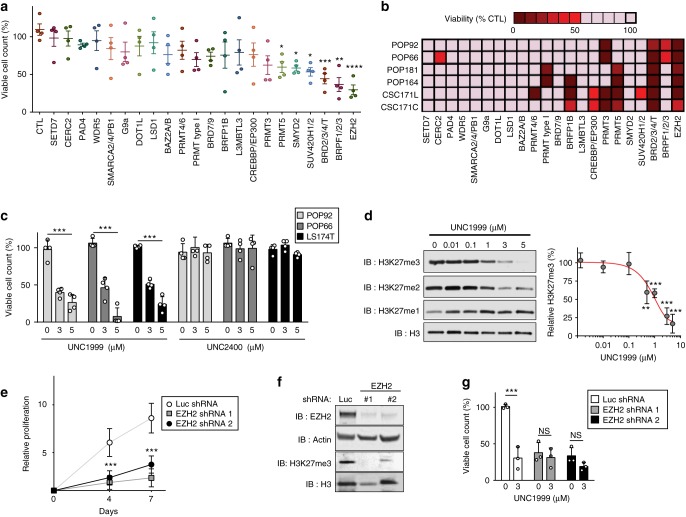
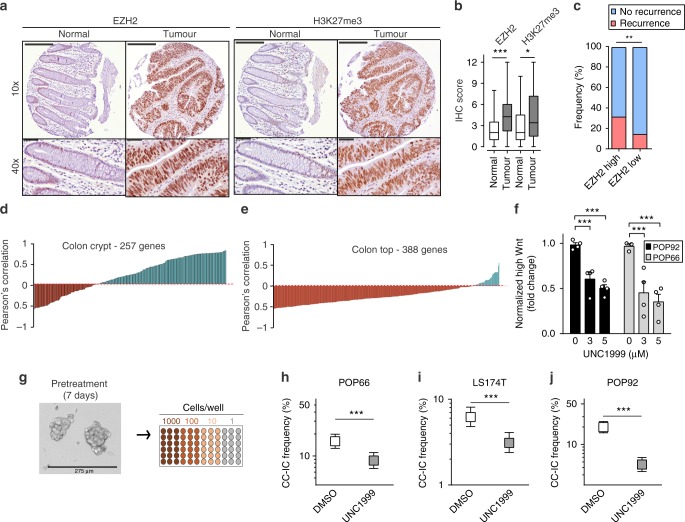
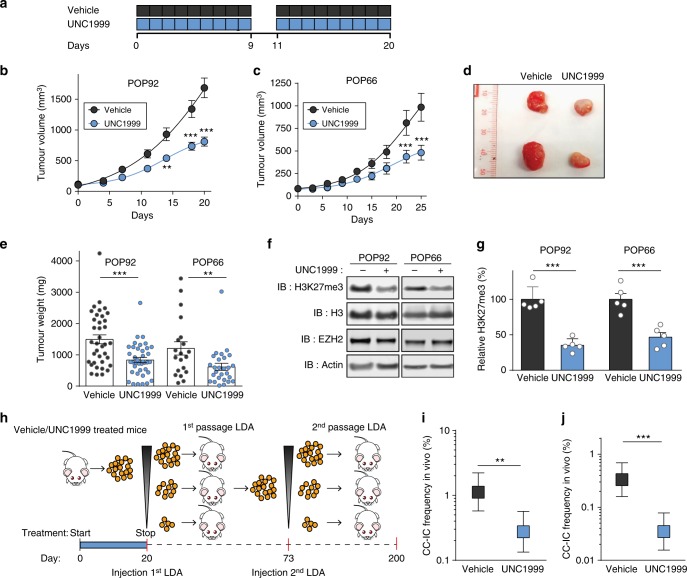
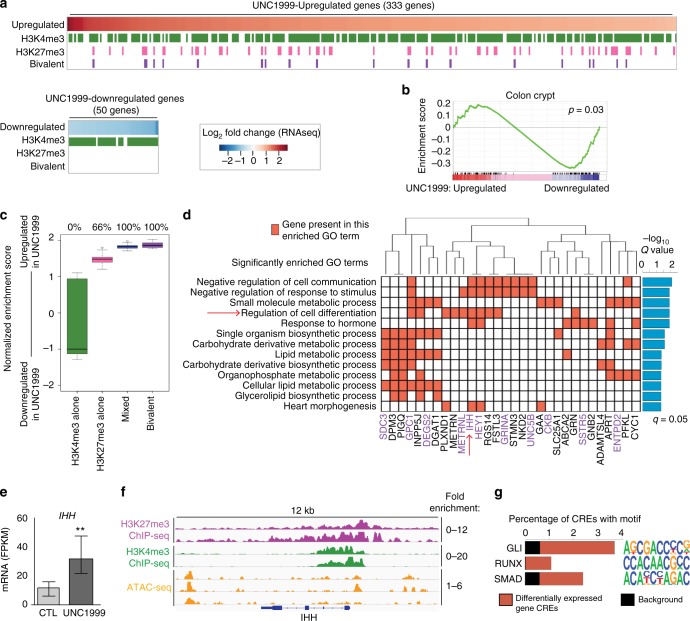
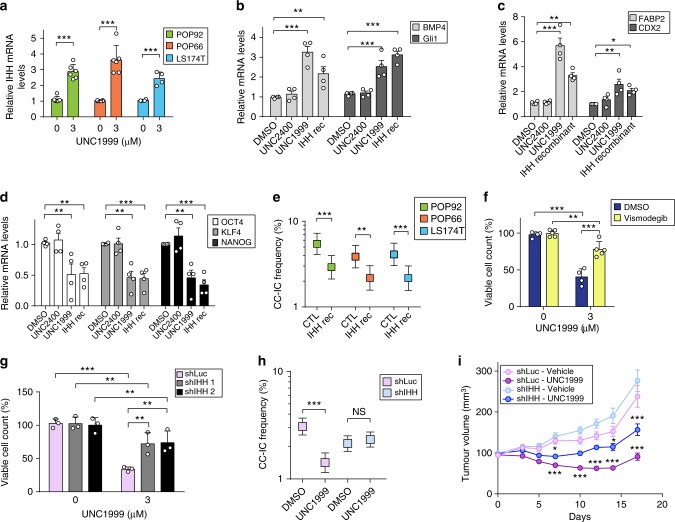
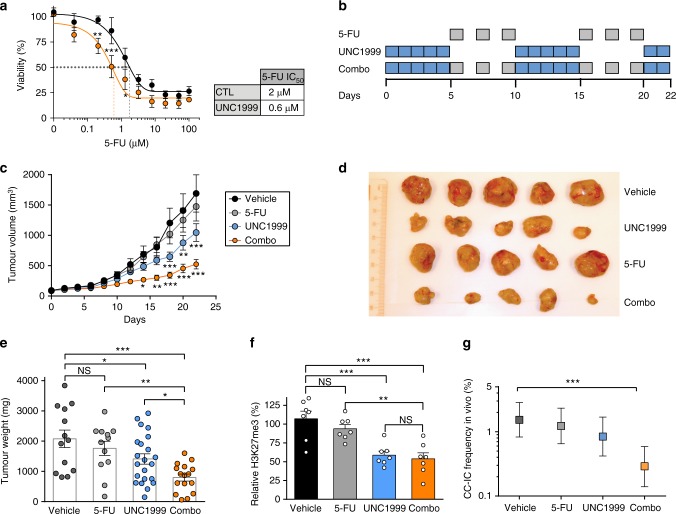
In embryonic stem cells, promoters of key lineage-specific differentiation genes are found in a bivalent state, having both activating H3K4me3 and repressive H3K27me3 histone marks, making them poised for transcription upon loss of H3K27me3. Whether cancer-initiating cells (C-ICs) have similar epigenetic mechanisms that prevent lineage commitment is unknown. Here we show that colorectal C-ICs (CC-ICs) are maintained in a stem-like state through a bivalent epigenetic mechanism. Disruption of the bivalent state through inhibition of the H3K27 methyltransferase EZH2, resulted in decreased self-renewal of patient-derived C-ICs. Epigenomic analyses revealed that the promoter of Indian Hedgehog (IHH), a canonical driver of normal colonocyte differentiation, exists in a bivalent chromatin state. Inhibition of EZH2 resulted in de-repression of IHH, decreased self-renewal, and increased sensitivity to chemotherapy in vivo. Our results reveal an epigenetic block to differentiation in CC-ICs and demonstrate the potential for epigenetic differentiation therapy of a solid tumour through EZH2 inhibition.
Overview
The claims and statistics of this paper haven’t been checked yet.
Free: it reads the open-access text and checks the first 5 claims that cite a source we can check. Create a free account to check every claim.
Integrity signals
Registry
Cites
Statistics
Figures
Verification
Claims the paper makes
The claims and statistics of this paper haven’t been checked yet.
Free: it reads the open-access text and checks the first 5 claims that cite a source we can check. Create a free account to check every claim.
Claims other papers make about this one
Each is checked against this paper’s own text: does it say what the citing paper says it does?
The source backs part of the claim, not all of it — or backs it for a different population, condition or comparison.
In the citing paper
“Furthermore, disrupting the bivalent epigenetic state through EZH2 inhibition was shown to both reduce self-renewal of CRC patient-derived CSCs and upregulate expression of differentiation genes, resulting in increased sensitivity to 5-FU in vivo [171].”
From Mechanisms and Strategies to Overcome Drug Resistance in Colorectal Cancer (2025) · cites this paper as [171]
Experimental — accuracy not yet measuredThe cited source says what the claim attributes to it.
In the citing paper
“Additionally, inhibiting EZH2 reduced tumor growth and CSC self-renewal and increased chemosensitivity to 5-FU in CRC patient-derived xenograft models [171].”
From Mechanisms and Strategies to Overcome Drug Resistance in Colorectal Cancer (2025) · cites this paper as [171]
Self-check
Percentages, sums and reported differences re-computed from the paper’s own numbers.
The self-check needs the paper’s full text.
Citations
Cites
Subramanian, A., Tamayo, P., Mootha, V. K., Mukherjee, S., Ebert, B. L., Gillette, M. A., Paulovich, A., Pomeroy, S. L., Golub, T. R., Lander, E. S., et al. (2005) · Proceedings of the National Academy of Sciences · doi:10.1073/pnas.0506580102 · Cited by 53,625
Ultrafast and memory-efficient alignment of short DNA sequences to the human genome.
Langmead, B., Trapnell, C., Pop, M., & Salzberg, S. L. (2009) · Genome Biology · doi:10.1186/gb-2009-10-3-r25 · Cited by 21,849
Model-based Analysis of ChIP-Seq (MACS)
Zhang, Y., Liu, T., Meyer, C. A., Eeckhoute, J., Johnson, D. S., Bernstein, B. E., Nusbaum, C., Myers, R. M., Brown, M., Li, W., et al. (2008) · Genome Biology · doi:10.1186/gb-2008-9-9-r137 · Cited by 18,386
An integrated encyclopedia of DNA elements in the human genome
The ENCODE Project Consortium (2012) · Nature · doi:10.1038/nature11247 · Cited by 18,072
Trapnell, C., Williams, B. A., Pertea, G., Mortazavi, A., Kwan, G., van Baren, M. J., Salzberg, S. L., Wold, B. J., & Pachter, L. (2010) · Nature Biotechnology · doi:10.1038/nbt.1621 · Cited by 15,556
Heinz, S., Benner, C., Spann, N., Bertolino, E., Lin, Y. C., Laslo, P., Cheng, J. X., Murre, C., Singh, H., & Glass, C. K. (2010) · Molecular Cell · doi:10.1016/j.molcel.2010.05.004 · Cited by 13,382
Kim, D., Pertea, G., Trapnell, C., Pimentel, H., Kelley, R., & Salzberg, S. L. (2013) · Genome Biology · doi:10.1186/gb-2013-14-4-r36 · Cited by 12,668
A bivalent chromatin structure marks key developmental genes in embryonic stem cells
Bernstein, B. E., Mikkelsen, T. S., Xie, X., Kamal, M., Huebert, D. J., Cuff, J., Fry, B., Meissner, A., Wernig, M., Plath, K., et al. (2006) · Cell · doi:10.1016/j.cell.2006.02.041 · Cited by 5,361
A human colon cancer cell capable of initiating tumour growth in immunodeficient mice
O’Brien, C. A., Pollett, A., Gallinger, S., & Dick, J. E. (2007) · Nature · doi:10.1038/nature05372 · Cited by 4,087
Self-citationSato, T., Stange, D. E., Ferrante, M., Vries, R. G. J., van Es, J. H., van den Brink, S., van Houdt, W. J., Pronk, A., van Gorp, J., Siersema, P. D., et al. (2011) · Gastroenterology · doi:10.1053/j.gastro.2011.07.050 · Cited by 3,753
Cited by
Epigenetic therapy induces transcription of inverted SINEs and ADAR1 dependency
Mehdipour, P., Marhon, S. A., Ettayebi, I., Chakravarthy, A., Hosseini, A., Wang, Y., de Castro, F. A., Loo Yau, H., Ishak, C., Abelson, S., et al. (2020) · Nature · doi:10.1038/s41586-020-2844-1 · Cited by 304
Self-citationLarge-Scale Topological Changes Restrain Malignant Progression in Colorectal Cancer
Johnstone, S. E., Reyes, A., Qi, Y., Adriaens, C., Hegazi, E., Pelka, K., Chen, J. H., Zou, L. S., Drier, Y., Hecht, V., et al. (2020) · Cell · doi:10.1016/j.cell.2020.07.030 · Cited by 219
Regulation, functions and transmission of bivalent chromatin during mammalian development
Macrae, T. A., Fothergill-Robinson, J., & Ramalho-Santos, M. (2023) · Nature Reviews Molecular Cell Biology · doi:10.1038/s41580-022-00518-2 · Cited by 186
Wu, B., Shi, X., Jiang, M., & Liu, H. (2023) · Molecular Cancer · doi:10.1186/s12943-023-01748-4 · Cited by 169
“In colorectal cancer, cancer-initiating cells express the indian hedgehog (IHH) gene, which is present in a bivalent state and contributes to the maintenance of colorectal cancer-initiating cells [54, 56].”
BackgroundChen, Y.-H., Ren, B., Yang, J., Wang, H., Yang, G., Xu, R.-Y., You, L., & Zhao, Y.-P. (2020) · Signal Transduction and Targeted Therapy · doi:10.1038/s41392-020-00252-1 · Cited by 128
PRMT inhibition induces a viral mimicry response in triple-negative breast cancer
Wu, Q., Nie, D. Y., Ba-Alawi, W., Ji, Y., Zhang, Z., Cruickshank, J., Haight, J., Ciamponi, F. E., Chen, J., Duan, S., et al. (2022) · Nature Chemical Biology · doi:10.1038/s41589-022-01024-4 · Cited by 141
Self-citationMechanisms and Strategies to Overcome Drug Resistance in Colorectal Cancer
Haynes, J., & Manogaran, P. (2025) · International Journal of Molecular Sciences · doi:10.3390/ijms26051988 · Cited by 82
Self-citationTRIM25 regulates oxaliplatin resistance in colorectal cancer by promoting EZH2 stability
Zhou, S., Peng, J., Xiao, L., Zhou, C., Fang, Y., Ou, Q., Qin, J., Liu, M., Pan, Z., & Hou, Z. (2021) · Cell Death & Disease · doi:10.1038/s41419-021-03734-4 · Cited by 66
Targeting Epigenetic Modifiers of Tumor Plasticity and Cancer Stem Cell Behavior
Kumar, V. E., Nambiar, R., Souza, C. D., Nguyen, A. D., CHIEN, J. R., & Lam, K. S. (2022) · Cells · doi:10.3390/cells11091403 · Cited by 65
“In CSCs, the hedgehog (Hh) signaling pathway is implicated in driving tumor growth, development and regulation of tumors after therapeutic intervention [77,78].”
BackgroundEpigenetic regulation of cancer stemness
Galassi, C., Manic, G., Esteller, M., Galluzzi, L., & Vitale, I. (2025) · Signal Transduction and Targeted Therapy · doi:10.1038/s41392-025-02340-6 · Cited by 69
“103 In GSCs, EZH2 also enhances STAT3 signaling through a mechanism unrelated to its canonical epigenetic functions but rather involves direct methylation and binding of STAT3.”
G9a controls pluripotent-like identity and tumor-initiating function in human colorectal cancer
Bergin, C. J., Zouggar, A., Haebe, J. R., Masibag, A. N., Desrochers, F. M., Reilley, S. Y., Agrawal, G., & Benoit, Y. D. (2020) · Oncogene · doi:10.1038/s41388-020-01591-7 · Cited by 51
“Using a serial organoid formation assay, we tested the potential of G9a inhibition to affect the tumor-initiating capacity of primary CCSCs (Fig.”
BackgroundResultInfluentialExpression of H3K4me3 and H3K9ac in breast cancer
Berger, L., Kolben, T., Meister, S., Kolben, T. M., Schmoeckel, E., Mayr, D. C., Mahner, S., Jeschke, U., Ditsch, N. C., & Beyer, S. (2020) · Journal of Cancer Research and Clinical Oncology · doi:10.1007/s00432-020-03265-z · Cited by 54
Emerging role of G9a in cancer stemness and promises as a therapeutic target
Haebe, J. R., Bergin, C. J., Sandouka, T., & Benoit, Y. D. (2021) · Oncogenesis · doi:10.1038/s41389-021-00370-7 · Cited by 45
“Furthermore, combinatorial inhibition of G9a activity together with other HMTases such as EZH2 yielded enhanced growth inhibition in vitro and suppression of tumorigenesis in preclinical in vivo models [99, 100].”
BackgroundInfluentialPRMT5 regulates ATF4 transcript splicing and oxidative stress response
Szewczyk, M. M., Luciani, G. M., Vu, V., Murison, A., Dilworth, D., Barghout, S. H., Lupien, M., Arrowsmith, C. H., Minden, M. D., & Baršytė-Lovejoy, D. (2022) · Redox Biology · doi:10.1016/j.redox.2022.102282 · Cited by 41
“Lentiviral constructs were packaged and transduced as described before [94].”
MethodSelf-citationLorzadeh, A., Romero-Wolf, M., Goel, A., & Jadhav, U. (2021) · Gastroenterology · doi:10.1053/j.gastro.2021.03.036 · Cited by 41
Zhao, K., Kong, D.-Z., Jin, B., Smolke, C., & Rhee, S. (2021) · eLife · doi:10.7554/elife.69508 · Cited by 34
Epigenetic Signaling and Crosstalk in Regulation of Gene Expression and Disease Progression
Manna, S., Mishra, J., Baral, T., Kirtana, R., Nandi, P., Roy, A., Chakraborty, S., Niharika, N., & Patra, S. K. (2023) · Epigenomics · doi:10.2217/epi-2023-0235 · Cited by 36
The Role of Histone Modification in DNA Replication-Coupled Nucleosome Assembly and Cancer
Zhang, Y., Zhang, Q., Zhang, Y., & Han, J. (2023) · International Journal of Molecular Sciences · doi:10.3390/ijms24054939 · Cited by 41
Zhang, L., Wang, L., Hu, X., Hou, M., Xiao, Y., Xiang, J., Xie, J., Chen, Z., Yang, T., Nie, Q., et al. (2022) · Advanced Science · doi:10.1002/advs.202105539 · Cited by 31
Self-citationChemical biology and pharmacology of histone lysine methylation inhibitors
Barghout, S. H., Machado, R. A. C., & Baršytė-Lovejoy, D. (2022) · Biochimica et Biophysica Acta (BBA) - Gene Regulatory Mechanisms · doi:10.1016/j.bbagrm.2022.194840 · Cited by 34
Jiang, X., Jiang, L., Cheng, J., Chen, F., Ni, J., Yin, C., Wang, Q., Wang, Z., Fang, D. H., Yi, Z., et al. (2021) · Journal of Translational Medicine · doi:10.1186/s12967-021-02789-3 · Cited by 33
Relationship between lipid metabolism and Hedgehog signaling pathway
Gu, Y., Liu, X., Liao, L., Gao, Y., Shi, Y., Ni, J., & He, G. (2021) · The Journal of Steroid Biochemistry and Molecular Biology · doi:10.1016/j.jsbmb.2021.105825 · Cited by 30
Isaev, K., Jiang, L., Wu, S., Lee, C. A., Watters, V., Fort, V., Tsai, R., Coutinho, F. J., Hussein, S. M. I., Zhang, J., et al. (2021) · Cell Reports · doi:10.1016/j.celrep.2021.109873 · Cited by 33
Hedgehog Signaling: Implications in Liver Pathophysiology
Dutta, R. K., Jun, J. H., Du, K., & Diehl, A. M. (2023) · Seminars in Liver Disease · doi:10.1055/a-2187-3382 · Cited by 27
“65,66 Expression of mature hepatocyte genes is repressed in tp53-low/Ptchd4-EZH2high cancers and their pathologic grade is high, suggesting that these liver cancers are also enriched with cancer stem/progenitor-like cells.”
BackgroundBergin, C. J., Zouggar, A., da Silva, A. M., Fenouil, T., Haebe, J. R., Masibag, A. N., Agrawal, G., Shah, M. S., Sandouka, T., Tiberi, M., et al. (2024) · Nature Cancer · doi:10.1038/s43018-024-00727-y · Cited by 22
“For experiments evaluating the impact of immune-checkpoint inhibition on tumor growth, daily injections of 100 μg of an anti-PD-L1 (clone 10 F.9G2, Millipore Sigma) 77 versus control IgG were performed in primary mouse recipients over 4 d between experimental days 14 and 17.”
Basophils as a potential therapeutic target in cancer
Zhang, J., Yin, H., Chen, Q., Zhao, G., Lou, W., Wu, W., & Pu, N. (2021) · Journal of Zhejiang University SCIENCE B · doi:10.1631/jzus.b2100110 · Cited by 18
“Similar to CSCs, cancer-initiating cells (CICs) are characterized by the capacity for promoting tumor growth and chemotherapy resistance (Kreso and Dick, 2014; Lima-Fernandes et al., 2019).”
BackgroundXie, D., Deng, T., Zhai, Z., Qin, T., Song, C., Xu, Y., & Sun, T. (2023) · Biomedicine & Pharmacotherapy · doi:10.1016/j.biopha.2023.114290 · Cited by 15
RetractedPharmacological targeting of Sam68 functions in colorectal cancer stem cells
Masibag, A. N., Bergin, C. J., Haebe, J. R., Zouggar, A., Shah, M. S., Sandouka, T., da Silva, A. M., Desrochers, F. M., Fournier-Morin, A., & Benoit, Y. D. (2021) · iScience · doi:10.1016/j.isci.2021.103442 · Cited by 15
Cho, H. I., Kim, M. S., Lee, J., Yoo, B. C., Kim, K., Choe, K., & Jang, Y. K. (2020) · Cell Death and Differentiation · doi:10.1038/s41418-020-0577-1 · Cited by 15
Bergin, C. J., & Benoit, Y. D. (2022) · STAR Protocols · doi:10.1016/j.xpro.2022.101218 · Cited by 14
TRIM25: A Global Player of Cell Death Pathways and Promising Target of Tumor-Sensitizing Therapies
Eberhardt, W., Nasrullah, U., & Pfeilschifter, J. M. (2025) · Cells · doi:10.3390/cells14020065 · Cited by 12
WANG, Y., Daddi, A. A., Hosseini, A., Kato, K., Khalili, E., Lindholm, H. T., Li, M., WANG, Y., Michael, D. C., O'Brien, C. A., et al. (2026) · Nature Communications · doi:10.1038/s41467-026-73211-z · Cited by 6
“These xenografts were generated by subcutaneous implantationoftumourcellsintothe fl anksof6 – 8-week-oldNOD-SCID mice 65 .”
Self-citationG9a Is SETting the Stage for Colorectal Oncogenesis
Bergin, C. J., & Benoit, Y. D. (2020) · Genes · doi:10.3390/genes11060616 · Cited by 4
“However, direct inhibitors of EZH2 were only confirmed recently as a powerful tool to suppress such a function in vivo [3].”
BackgroundHaynes, J., Palaniappan, B., Crutchley, J. M., & Sundaram, U. (2024) · Cells · doi:10.3390/cells13191623 · Cited by 2
“…MKI67 Fwd: GAGGTGTGCAGAAAATCCAAA, MKI67 Rev: CTGTCCCTATGACTTCTGGTTGT [31]; NHE3 Fwd: GTCTTCCTCAGTGGGCTCAT, NHE3 Rev: ATGAGGCTGCCAAACAGG [16]; SGLT1 Fwd: GCATCGCCTGGGTGCC-CATT, SGLT1 Rev: GCACCGTGCTGCTCTAGCCC [28]; TBP Fwd: GGGCATTATTTGTG-CACTGAGA, TBP Rev: TAGCAGCACGGTATGAGCAACT [32].”
Self-citationZhang, Z., Zhang, S., Guo, L., Pan, Y., Huang, J., Ji, Y., Tao, J., Wei, Y., Wang, X., & Wu, Q. (2025) · Advanced Science · doi:10.1002/advs.202505787 · Cited by 4
Colorectal Cancer Is Borrowing Blueprints from Intestinal Ontogenesis
Billingsley, J. L., Yevdokimova, V., Ayoub, K., & Benoit, Y. D. (2023) · Cancers · doi:10.3390/cancers15204928 · Cited by 2
“The relationship between CSCs and developmental-like reprogramming was previously documented in colorectal cancer, where epigenetic regulators such as histone methyltransferases EZH2 and G9a, which are vital to embryonic patterning, were tied to self-renewal and tumor initiation capacities [11,13].”
BackgroundClinical epigenetics: recent advances and opportunities
Smith, J., Chatterjee, A., & Rodger, E. J. (2025) · Epigenetics Communications · doi:10.1186/s43682-025-00038-y · Cited by 1
“In response to EZH2i, cells underwent loss of H3K27me3 at bivalent promoter regions including the IHH locus, leading to IHH expression, pseudo-differentiation, and growth arrest [32].”
Cancer Stem Cells in Human Gastrointestinal and Hepatic Cancers
Bu, J., Cui, M., Zhang, Y., Yu, L., Zhu, X., Peng, F., & Zhang, H. (2025) · MedComm · doi:10.1002/mco2.70513 · Cited by 3
“IHH inhibition leads to impaired self-renewal capability and increased sensitivity to chemotherapy in gastrointestinal tumors [224].”
Tan, J., Wen, T., Liu, J. S., & Ru, X. (2026) · Journal of Hematology & Oncology · doi:10.1186/s13045-026-01828-0 · Cited by 2
“In patient-derived colorectal cancer-initiating cells, EZH2 inhibition derepressed Indian Hedgehog (IHH) and reduced self-renewal, whereas dual EZH1/2 inhibition promoted cell-cycle entry and differentiation of quiescent LSCs in AML models [55, 56].”
Cole, M., & Schaafsma, E. (2020) · Faculty Opinions – Post-Publication Peer Review of the Biomedical Literature · doi:10.3410/f.738541400.793579087
Tissue-engineered Cancer Models in Drug Screening
Cao, R., Fomina, A., & McGuigan, A. P. (2022) · Royal Society of Chemistry eBooks · doi:10.1039/9781839166013-00415
Ezh2 Inactivation is Essential for the Initiation of Metachondromatosis-Like Lesion in MicePreprint
Zhang, F., Dong, K., Shen, Y., Guo, Z., Wang, Y., Wang, X., Jiang, R., Sun, C., Yang, R., Gao, X., et al. (2023) · SSRN Electronic Journal · doi:10.2139/ssrn.4596450
Self-citationSeven, D. (2024) · Farabi Tıp Dergisi · doi:10.59518/farabimedj.1542765
Molecular Targets of Epigenetic Regulators
Amirmahani, F., Kumar, S., & Muthukrishnan, S. D. (2025) · Springer eBooks · doi:10.1007/978-981-96-7336-0_4 · Cited by 1
Jiang, X., Jiang, L., Cheng, J., Chen, F., Ni, J., Yin, C., Wang, Q., Wang, Z., Fang, D., Yi, Z., et al. (2021) · Figshare · doi:10.6084/m9.figshare.14253947
Jiang, X., Jiang, L., Cheng, J., Chen, F., Ni, J., Yin, C., Wang, Q., Wang, Z., Fang, D., Yi, Z., et al. (2021) · Figshare · doi:10.6084/m9.figshare.14253944
Rôle et détection des enhancers au cours de la différentiation normale et en contexte leucémique
Pioger, L. (2020) · theses.fr (ABES) · doi:10.70675/9c32f63bza75fz4561z8619zaa33713157b5
Nouvelles stratégies thérapeutiques dans le traitement du gliome infiltrant du tronc cérébral
Herrault, G. (2024) · theses.fr (ABES) · doi:10.70675/539ee639z4f77z47b3z903ez909ec614384d
Oh, N., & Trinh, V. N. (2026) · Cells · doi:10.3390/cells15100910
“In addition, CAF-derived ligands activate multiple signaling pathways in CSCs, including Wnt/ β -catenin [199], Notch [200], yes-associated protein (YAP), integrins [201] and Hedgehog [202], collectively reinforcing stem-like phenotypes.”
Al‐Khreisat, M. J., Narzikulov, R., Allela, O. Q. B., Tmkyn, A. F., Nayak, P. P., Rasulov, A., Baxtiyorovna, S. G., & Bainsal, N. (2026) · Gene · doi:10.1016/j.gene.2026.150463
Metadata
- Authors
- Lima-Fernandes, E., Murison, A., da Silva Medina, T., Wang, Y., Ma, A., Leung, C., Luciani, G. M., Haynes, J., Pollett, A., Zeller, C., Duan, S., Kreso, A., Barsyte-Lovejoy, D., Wouters, B. G., Jin, J., Carvalho, D. D. D., Lupien, M., Arrowsmith, C. H., & O’Brien, C. A.
- Affiliations
- University Health Network (CA)
- Tisch Cancer Institute (US)
- University of Toronto (CA)
- Ontario Institute for Cancer Research (CA)
- Corresponding author
- Arrowsmith, Cheryl H.
- ORCID
- Venue
- Nature Communications
- Published
- 2019-03-29
- Volume
- 10
- Issue
- 1
- Pages
- 1436-1436
- ISSN
- 2041-1723 (ISSN-L)
- PMC
- PMC6441108
- OpenAlex
- W2926277490
- Cited by
- 50
- References
- 63
- Citations by year
- 2026: 4 · 2025: 7 · 2024: 4 · 2023: 7 · 2022: 8 · 2021: 11 · 2020: 9
- FWCI
- 2.32
- Type
- journal article
- Language
- en
- Open access
- gold
- doi.org
- Licence
- cc-by
- creativecommons.org/licenses/by/4.0 (tdm)
- creativecommons.org/licenses/by/4.0 (vor)
- Locations
- Nature Communications (publishedVersion, cc-by)
- Europe PMC (PubMed Central) (publishedVersion, cc-by)
- PubMed Central (publishedVersion, cc-by)
- PubMed (publishedVersion)
- RePEc: Research Papers in Economics (submittedVersion)
- DOAJ (DOAJ: Directory of Open Access Journals) (submittedVersion, cc-by-sa)
- DOAJ (DOAJ: Directory of Open Access Journals) (submittedVersion)
- Funders
- Pfizer
- Genome Canada (115766, 1097737, OGI-055)
- Merck KGaA
- Wellcome Trust (1097737)
- Ontario Genomics
- European Federation of Pharmaceutical Industries and Associations (115766)
- Ontario Genomics Institute (OGI-055, 115766)
- European Commission (1097737, FP7‐COFUND, 115766)
- Fundação de Amparo à Pesquisa do Estado de São Paulo (1097737, 115766)
- Fonds National de la Recherche Luxembourg (FP7-COFUND)
- Ontario Ministry of Research, Innovation and Science
- National Institutes of Health (115766, 1097737)
- Novartis Pharma
- Canadian Institutes of Health Research (1097737)
- National Cancer Institute (R01CA230854, R01CA218600)
- National Institute of General Medical Sciences (R01GM122749)
- Eunice Kennedy Shriver National Institute of Child Health and Human Development (R01HD088626)
- Topics
- Life Sciences › Biochemistry, Genetics and Molecular Biology › Molecular Biology › Epigenetics and DNA Methylation
- Health Sciences › Medicine › Oncology › Cancer Cells and Metastasis
- Life Sciences › Biochemistry, Genetics and Molecular Biology › Molecular Biology › Genomics and Chromatin Dynamics
- Keywords
- bivalent chromatin, Indian hedgehog, EZH2, self-renewal, H3K27me3, H3K4me3, epigenetic reprogramming, differentiation therapy, chemosensitivity, histone methyltransferase inhibition
- MeSH terms
- Cell Self Renewal, Enhancer of Zeste Homolog 2 Protein, Animals, Benzamides, Cell Differentiation, Female, Fluorouracil, Humans, Indazoles, Male, Piperazines, Pyridones, Neoplastic Stem Cells, Colorectal Neoplasms, Mice, SCID, Mice, Inbred NOD, Cell Proliferation, Hedgehog Proteins
About these checks
Registry, retraction, Cites and statistics results are computed, not judged, with one exception: a printed reference that no index lists is read once by a model before it counts as a citation error. Claims are extracted by a model and kept only when their quote appears verbatim in the text; each cited source is then checked, with a model’s help, for whether it says what the claim relies on. Those verdicts can be wrong — read the claim’s quote and the cited source before relying on one.
Statistics and arithmetic are recomputed, not judged.
Confidence bands are shown only for fields calibrated on our annotated test set. None is calibrated yet, so no band is shown.
What counts as a claim ›How we measure confidence ›How we check this ›
Are you an author, or do you see a problem with this page? Request a review
Data sources
Bibliographic data: Semantic Scholar, OpenAlex, Crossref.
Contains information from the Semantic Scholar Academic Graph Datasets, made available under the ODC Attribution License (ODC-BY 1.0).
Semantic Scholar’s data is described in: Kinney, R., et al. (2023). The Semantic Scholar Open Data Platform. arXiv:2301.10140.
