

Targeting bivalency de-represses Indian Hedgehog and inhibits self-renewal of colorectal cancer-initiating cells
Open accessThe DOI matches its Crossref record; 63 of the 63 references it cites were found in a registry or an index.
Abstract
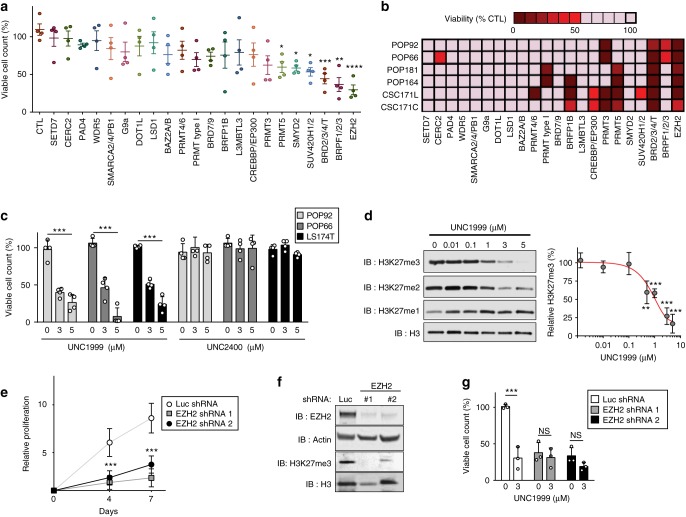
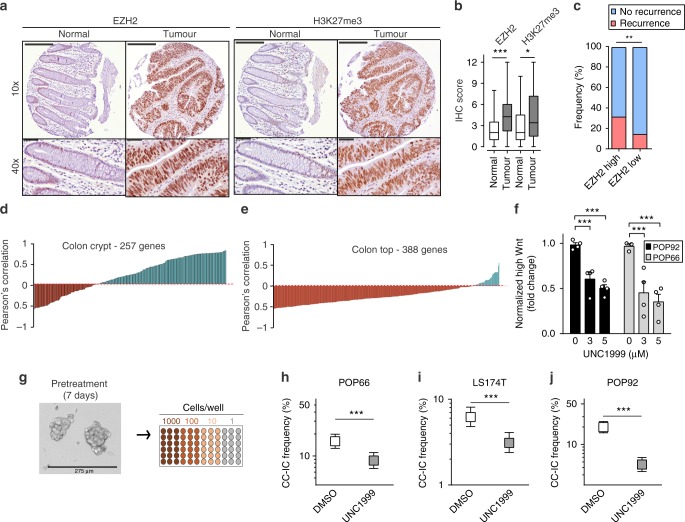
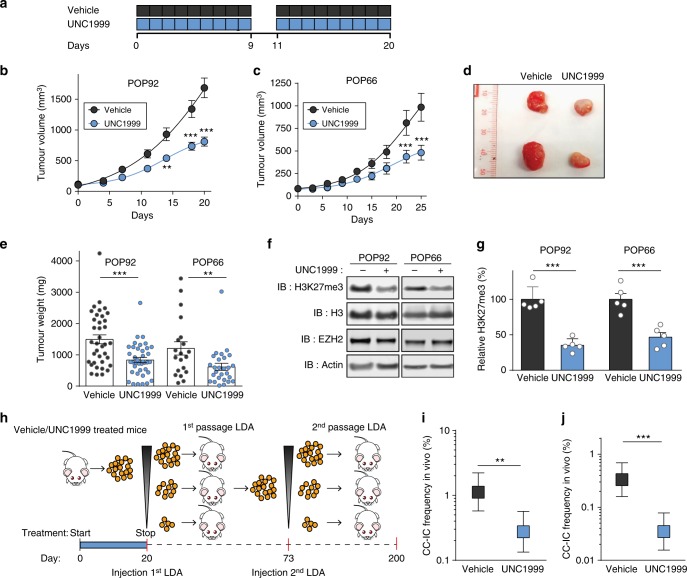
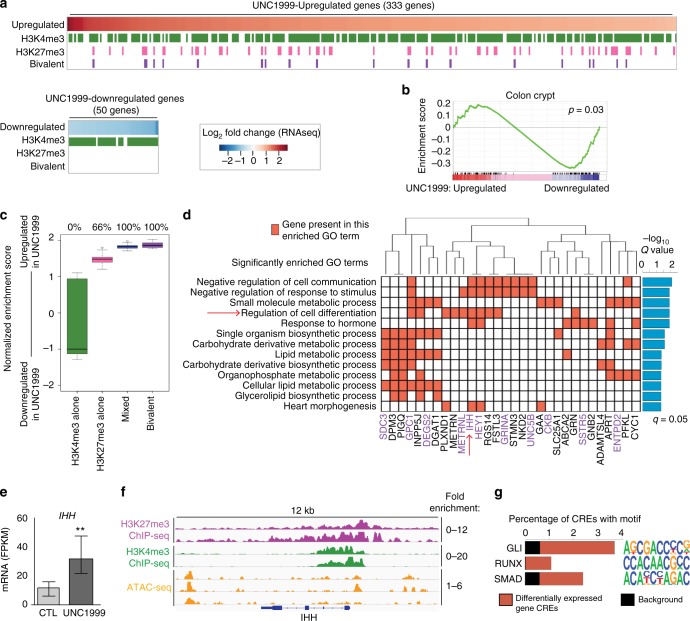
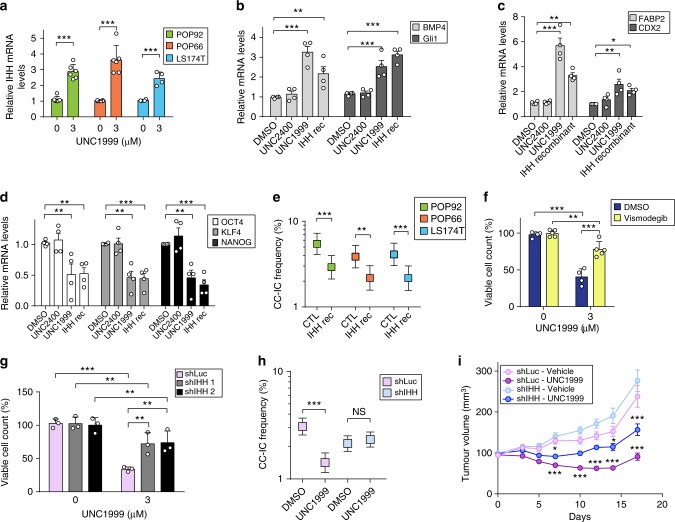
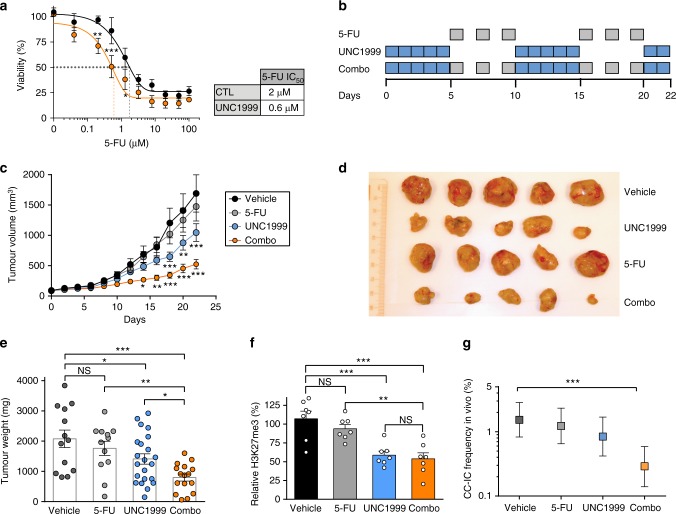
In embryonic stem cells, promoters of key lineage-specific differentiation genes are found in a bivalent state, having both activating H3K4me3 and repressive H3K27me3 histone marks, making them poised for transcription upon loss of H3K27me3. Whether cancer-initiating cells (C-ICs) have similar epigenetic mechanisms that prevent lineage commitment is unknown. Here we show that colorectal C-ICs (CC-ICs) are maintained in a stem-like state through a bivalent epigenetic mechanism. Disruption of the bivalent state through inhibition of the H3K27 methyltransferase EZH2, resulted in decreased self-renewal of patient-derived C-ICs. Epigenomic analyses revealed that the promoter of Indian Hedgehog (IHH), a canonical driver of normal colonocyte differentiation, exists in a bivalent chromatin state. Inhibition of EZH2 resulted in de-repression of IHH, decreased self-renewal, and increased sensitivity to chemotherapy in vivo. Our results reveal an epigenetic block to differentiation in CC-ICs and demonstrate the potential for epigenetic differentiation therapy of a solid tumour through EZH2 inhibition.
Overview
The claims and statistics of this paper haven’t been checked yet.
Free: it reads the open-access text and checks the first 5 claims that cite a source we can check. Create a free account to check every claim.
Integrity signals
Registry
Cites
Statistics
Figures
Verification
Claims the paper makes
The claims and statistics of this paper haven’t been checked yet.
Free: it reads the open-access text and checks the first 5 claims that cite a source we can check. Create a free account to check every claim.
Claims other papers make about this one
Each is checked against this paper’s own text: does it say what the citing paper says it does?
The source backs part of the claim, not all of it — or backs it for a different population, condition or comparison.
In the citing paper
“Furthermore, disrupting the bivalent epigenetic state through EZH2 inhibition was shown to both reduce self-renewal of CRC patient-derived CSCs and upregulate expression of differentiation genes, resulting in increased sensitivity to 5-FU in vivo [171].”
From Mechanisms and Strategies to Overcome Drug Resistance in Colorectal Cancer (2025) · cites this paper as [171]
Experimental — accuracy not yet measuredThe cited source says what the claim attributes to it.
In the citing paper
“Additionally, inhibiting EZH2 reduced tumor growth and CSC self-renewal and increased chemosensitivity to 5-FU in CRC patient-derived xenograft models [171].”
From Mechanisms and Strategies to Overcome Drug Resistance in Colorectal Cancer (2025) · cites this paper as [171]
Self-check
Percentages, sums and reported differences re-computed from the paper’s own numbers.
The self-check needs the paper’s full text.
Citations
Cites
Subramanian, A., Tamayo, P., Mootha, V. K., Mukherjee, S., Ebert, B. L., Gillette, M. A., Paulovich, A., Pomeroy, S. L., Golub, T. R., Lander, E. S., et al. (2005) · Proceedings of the National Academy of Sciences · doi:10.1073/pnas.0506580102 · Cited by 53,625
Ultrafast and memory-efficient alignment of short DNA sequences to the human genome.
Langmead, B., Trapnell, C., Pop, M., & Salzberg, S. L. (2009) · Genome Biology · doi:10.1186/gb-2009-10-3-r25 · Cited by 21,849
Model-based Analysis of ChIP-Seq (MACS)
Zhang, Y., Liu, T., Meyer, C. A., Eeckhoute, J., Johnson, D. S., Bernstein, B. E., Nusbaum, C., Myers, R. M., Brown, M., Li, W., et al. (2008) · Genome Biology · doi:10.1186/gb-2008-9-9-r137 · Cited by 18,386
An integrated encyclopedia of DNA elements in the human genome
The ENCODE Project Consortium (2012) · Nature · doi:10.1038/nature11247 · Cited by 18,072
Trapnell, C., Williams, B. A., Pertea, G., Mortazavi, A., Kwan, G., van Baren, M. J., Salzberg, S. L., Wold, B. J., & Pachter, L. (2010) · Nature Biotechnology · doi:10.1038/nbt.1621 · Cited by 15,556
Heinz, S., Benner, C., Spann, N., Bertolino, E., Lin, Y. C., Laslo, P., Cheng, J. X., Murre, C., Singh, H., & Glass, C. K. (2010) · Molecular Cell · doi:10.1016/j.molcel.2010.05.004 · Cited by 13,382
Kim, D., Pertea, G., Trapnell, C., Pimentel, H., Kelley, R., & Salzberg, S. L. (2013) · Genome Biology · doi:10.1186/gb-2013-14-4-r36 · Cited by 12,668
A bivalent chromatin structure marks key developmental genes in embryonic stem cells
Bernstein, B. E., Mikkelsen, T. S., Xie, X., Kamal, M., Huebert, D. J., Cuff, J., Fry, B., Meissner, A., Wernig, M., Plath, K., et al. (2006) · Cell · doi:10.1016/j.cell.2006.02.041 · Cited by 5,361
A human colon cancer cell capable of initiating tumour growth in immunodeficient mice
O’Brien, C. A., Pollett, A., Gallinger, S., & Dick, J. E. (2007) · Nature · doi:10.1038/nature05372 · Cited by 4,087
Self-citationSato, T., Stange, D. E., Ferrante, M., Vries, R. G. J., van Es, J. H., van den Brink, S., van Houdt, W. J., Pronk, A., van Gorp, J., Siersema, P. D., et al. (2011) · Gastroenterology · doi:10.1053/j.gastro.2011.07.050 · Cited by 3,753
The accessible chromatin landscape of the human genome
Thurman, R. E., Rynes, E., Humbert, R., Vierstra, J., Maurano, M. T., Haugen, E., Sheffield, N. C., Stergachis, A. B., Wang, H., Vernot, B., et al. (2012) · Nature · doi:10.1038/nature11232 · Cited by 2,679
Control of Developmental Regulators by Polycomb in Human Embryonic Stem Cells
Lee, T. I., Jenner, R. G., Boyer, L. A., Guenther, M. G., Levine, S. S., Kumar, R. M., Chevalier, B., Johnstone, S. E., Cole, M. F., Isono, K.-I., et al. (2006) · Cell · doi:10.1016/j.cell.2006.02.043 · Cited by 2,268
Evolution of the Cancer Stem Cell Model
Kreso, A., & Dick, J. E. (2014) · Cell Stem Cell · doi:10.1016/j.stem.2014.02.006 · Cited by 2,224
Self-citationHu, Y., & Smyth, G. K. (2009) · Journal of Immunological Methods · doi:10.1016/j.jim.2009.06.008 · Cited by 2,083
Wnt activity defines colon cancer stem cells and is regulated by the microenvironment
Vermeulen, L., De Sousa E Melo, F., van der Heijden, M., Cameron, K., de Jong, J. H., Borovski, T., Tuynman, J. B., Todaro, M., Merz, C., Rodermond, H., et al. (2010) · Nature Cell Biology · doi:10.1038/ncb2048 · Cited by 1,804
Kim, K. H., & Roberts, C. W. M. (2016) · Nature Medicine · doi:10.1038/nm.4036 · Cited by 1,471
Merlos-Suárez, A., Barriga, F. M., Jung, P., Iglesias, M., Céspedes, M. V., Rossell, D., Sevillano, M., Hernando-Momblona, X., da Silva-Diz, V., Muñoz, P., et al. (2011) · Cell Stem Cell · doi:10.1016/j.stem.2011.02.020 · Cited by 934
Chaffer, C. L., Marjanovic, N. D., Lee, T., Bell, G., Kleer, C. G., Reinhardt, F., D’Alessio, A. C., Young, R. A., & Weinberg, R. A. (2013) · Cell · doi:10.1016/j.cell.2013.06.005 · Cited by 876
EZH2 Oncogenic Activity in Castration-Resistant Prostate Cancer Cells Is Polycomb-Independent
Xu, K., Wu, Z. J., Groner, A. C., He, H. H., Cai, C., Lis, R. T., Wu, X., Stack, E. C., Loda, M., Liu, T., et al. (2012) · Science · doi:10.1126/science.1227604 · Cited by 875
Bachmann, I. M., Halvorsen, O. J., Collett, K., Stefansson, I. M., Straume, O., Haukaas, S. A., Salvesen, H. B., Otte, A. P., & Akslen, L. A. (2006) · Journal of Clinical Oncology · doi:10.1200/jco.2005.01.5180 · Cited by 851
Béguelin, W., Popovic, R., Teater, M., Jiang, Y., Bunting, K. L., Rosen, M., Shen, H., Yang, S. N., Wang, L., Ezponda, T., et al. (2013) · Cancer Cell · doi:10.1016/j.ccr.2013.04.011 · Cited by 846
Kim, E., Kim, M., Woo, D.-H., Shin, Y., Shin, J., Chang, N., Oh, Y. T., Kim, H., Rheey, J., Nakano, I., et al. (2013) · Cancer Cell · doi:10.1016/j.ccr.2013.04.008 · Cited by 806
Zhao, X. D., Han, X., Chew, J. L., Liu, J., Chiu, K. P., Choo, A., Orlov, Y. L., Sung, W.-K., Shahab, A., Kuznetsov, V. A., et al. (2007) · Cell Stem Cell · doi:10.1016/j.stem.2007.08.004 · Cited by 615
Ezh2 Orchestrates Gene Expression for the Stepwise Differentiation of Tissue-Specific Stem Cells
Ezhkova, E., Pasolli, H. A., Parker, J. S., Stokes, N., Su, I.-H., Hannon, G., Tarakhovsky, A., & Fuchs, E. (2009) · Cell · doi:10.1016/j.cell.2008.12.043 · Cited by 604
Mechanisms of Stem Cell Self-Renewal
Shenghui, H., Nakada, D., & Morrison, S. J. (2009) · Annual Review of Cell and Developmental Biology · doi:10.1146/annurev.cellbio.042308.113248 · Cited by 603
Kosinski, C., Li, V. S. W., Chan, A. S. Y., Zhang, J., Ho, C., Tsui, W. Y., Chan, T. L., Mifflin, R. C., Powell, D. W., Yuen, S. T., et al. (2007) · Proceedings of the National Academy of Sciences · doi:10.1073/pnas.0707210104 · Cited by 596
Self-renewal as a therapeutic target in human colorectal cancer
Kreso, A., van Galen, P., Pedley, N. M., Lima-Fernandes, E., Frelin, C., Davis, T., Cao, L., Baiazitov, R., Du, W., Sydorenko, N., et al. (2014) · Nature Medicine · doi:10.1038/nm.3418 · Cited by 500
Self-citationAn Orally Bioavailable Chemical Probe of the Lysine Methyltransferases EZH2 and EZH1
Konze, K. D., Ma, A., Li, F., Barsyte-Lovejoy, D., Parton, T., MacNevin, C. J., Liu, F., Gao, C., Huang, X.-P., Kuznetsova, E., et al. (2013) · ACS Chemical Biology · doi:10.1021/cb400133j · Cited by 452
Self-citationLee, J., Son, M. J., Woolard, K., Donin, N. M., Li, A., Cheng, C. H., Kotliarova, S., Kotliarov, Y., Walling, J., Ahn, S., et al. (2008) · Cancer Cell · doi:10.1016/j.ccr.2007.12.005 · Cited by 429
Context-Specific Regulation of NF-κB Target Gene Expression by EZH2 in Breast Cancers
Lee, S. T., Li, Z., Wu, Z., Aau, M., Guan, P., Karuturi, R. K. M., Liou, Y. C., & Yu, Q. (2011) · Molecular Cell · doi:10.1016/j.molcel.2011.08.011 · Cited by 399
Indian Hedgehog is an antagonist of Wnt signaling in colonic epithelial cell differentiation
van den Brink, G. R., Bleuming, S. A., Hardwick, J. C. H., Schepman, B. L., Offerhaus, G. J., Keller, J. J., Nielsen, C., Gaffield, W., van Deventer, S. J. H., Roberts, D. J., et al. (2004) · Nature Genetics · doi:10.1038/ng1304 · Cited by 385
Frye, S. V. (2010) · Nature Chemical Biology · doi:10.1038/nchembio.296 · Cited by 375
Verma, S. K., Tian, X., LaFrance, L. V., Duquenne, C., Suarez, D. P., Newlander, K. A., Romeril, S. P., Burgess, J. L., Grant, S. W., Brackley, J. A., et al. (2012) · ACS Medicinal Chemistry Letters · doi:10.1021/ml3003346 · Cited by 371
A DNA hypermethylation module for the stem/progenitor cell signature of cancer
Easwaran, H., Johnstone, S. E., Van Neste, L., Ohm, J., Mosbruger, T., Wang, Q., Aryee, M. J., Joyce, P., Ahuja, N., Weisenberger, D., et al. (2012) · Genome Research · doi:10.1101/gr.131169.111 · Cited by 292
Clinicopathological significance of EZH2 mRNA expression in patients with hepatocellular carcinoma
Sudo, T., Utsunomiya, T., Mimori, K., Nagahara, H., Ogawa, K., Inoue, H., Wakiyama, S., Fujita, H., Shirouzu, K., & Mori, M. (2005) · British Journal of Cancer · doi:10.1038/sj.bjc.6602531 · Cited by 243
ID1 and ID3 Regulate the Self-Renewal Capacity of Human Colon Cancer-Initiating Cells through p21
O'Brien, C. A., Kreso, A., Ryan, P., Hermans, K. G., Gibson, L., Wang, Y., Tsatsanis, A., Gallinger, S., & Dick, J. E. (2012) · Cancer Cell · doi:10.1016/j.ccr.2012.04.036 · Cited by 222
Self-citationPAF and EZH2 Induce Wnt/β-Catenin Signaling Hyperactivation
Jung, H.-Y., Jun, S., Lee, M., Kim, H.-C., Wang, X., Ji, H., McCrea, P. D., & Park, J.-I. (2013) · Molecular Cell · doi:10.1016/j.molcel.2013.08.028 · Cited by 184
Berlin, J., Bendell, J. C., Hart, L. L., Firdaus, I., Gore, I., Hermann, R. C., Mulcahy, M. F., Zalupski, M. M., Mackey, H. M., Yauch, R. L., et al. (2013) · Clinical Cancer Research · doi:10.1158/1078-0432.ccr-12-1800 · Cited by 181
Kolterud, Å., Grosse, A. S., Zacharias, W. J., Walton, K. D., Kretovich, K. E., Madison, B. B., Waghray, M., Ferris, J. E., Hu, C., Merchant, J. L., et al. (2009) · Gastroenterology · doi:10.1053/j.gastro.2009.05.002 · Cited by 170
Hedgehog Signaling Drives Cellular Survival in Human Colon Carcinoma Cells
Mazumdar, T., DeVecchio, J., Shi, T., Jones, J., Agyeman, A., & Houghton, J. A. (2011) · Cancer Research · doi:10.1158/0008-5472.can-10-2315 · Cited by 159
Bradley, W. D., Arora, S., Busby, J., Balasubramanian, S., Gehling, V. S., Nasveschuk, C. G., Vaswani, R. G., Yuan, C.-C., Hatton, C., Zhao, F., et al. (2014) · Chemistry & Biology · doi:10.1016/j.chembiol.2014.09.017 · Cited by 159
Kosinski, C., Stange, D. E., Xu, C., Chan, A. S., Ho, C., Yuen, S. T., Mifflin, R. C., Powell, D. W., Clevers, H., Leung, S. Y., et al. (2010) · Gastroenterology · doi:10.1053/j.gastro.2010.06.014 · Cited by 133
Horst, D., Chen, J., Morikawa, T., Ogino, S., Kirchner, T., & Shivdasani, R. A. (2012) · Cancer Research · doi:10.1158/0008-5472.can-11-3222 · Cited by 128
Gerling, M., Büller, N. V. J. A., Kirn, L. M., Joost, S., Frings, O., Englert, B., Bergström, Å., Kuiper, R. V., Blaas, L., Wielenga, M. C. B., et al. (2016) · Nature Communications · doi:10.1038/ncomms12321 · Cited by 127
Changes of bivalent chromatin coincide with increased expression of developmental genes in cancer
Bernhart, S. H., Kretzmer, H., Holdt, L. M., Jühling, F., Ammerpohl, O., Bergmann, A. K., Northoff, B. H., Doose, G., Siebert, R., Stadler, P. F., et al. (2016) · Scientific Reports · doi:10.1038/srep37393 · Cited by 125
EZH2 and STAT6 expression profiles are correlated with colorectal cancer stage and prognosis
Wang, C.-G. (2010) · World Journal of Gastroenterology · doi:10.3748/wjg.v16.i19.2421 · Cited by 114
Mizoshita, T., Inada, K.-I., Tsukamoto, T., Kodera, Y., Yamamura, Y., Hirai, T., Kato, T., Joh, T., Itoh, M., & Tatematsu, M. (2001) · Gastric Cancer · doi:10.1007/pl00011741 · Cited by 106
van Dop, W. A., Heijmans, J., Büller, N. V. J. A., Snoek, S. A., Rosekrans, S. L., Wassenberg, E. A., Weerman, M. A. V. D. B., Lanske, B., Clarke, A. R., Winton, D. J., et al. (2010) · Gastroenterology · doi:10.1053/j.gastro.2010.07.045 · Cited by 101
The GLI genes as the molecular switch in disrupting Hedgehog signaling in colon cancer
Mazumdar, T., DeVecchio, J., Agyeman, A., Shi, T., & Houghton, J. A. (2011) · Oncotarget · doi:10.18632/oncotarget.310 · Cited by 97
Chapman‐Rothe, N., Curry, E. W., Zeller, C., Liber, D., Stronach, E. A., Gabra, H., Ghaem‐Maghami, S., & Brown, R. (2012) · Oncogene · doi:10.1038/onc.2012.477 · Cited by 96
Self-citationExpression and clinicopathological significance of EED, SUZ12 and EZH2 mRNA in colorectal cancer
Liu, Y., Gao, X., Jiang, Y., Zhang, G., Sun, Z., Cui, B., & Yang, Y. (2014) · Journal of Cancer Research and Clinical Oncology · doi:10.1007/s00432-014-1854-5 · Cited by 90
Wilms Tumor Chromatin Profiles Highlight Stem Cell Properties and a Renal Developmental Network
Aiden, A. P., Rivera, M. N., Rheinbay, E., Ku, M., Coffman, E. J., Truong, T. T., Vargas, S. O., Lander, E. S., Haber, D. A., & Bernstein, B. E. (2010) · Cell Stem Cell · doi:10.1016/j.stem.2010.03.016 · Cited by 85
Chen, J.-F., Luo, X., Xiang, L.-S., Li, H.-T., Zha, L., Li, N., He, J.-M., Xie, G.-F., Xie, X., & Liang, H.-J. (2106) · Oncotarget · doi:10.18632/oncotarget.9236 · Cited by 74
Amano, K., Densmore, M., Nishimura, R., & Lanske, B. (2014) · Journal of Biological Chemistry · doi:10.1074/jbc.m114.570507 · Cited by 73
Cancer-Related Epigenome Changes Associated with Reprogramming to Induced Pluripotent Stem Cells
Ohm, J. E., Mali, P., Van Neste, L., Berman, D. M., Liang, L., Pandiyan, K., Briggs, K. J., Zhang, W., Argani, P., Simons, B., et al. (2010) · Cancer Research · doi:10.1158/0008-5472.can-10-1361 · Cited by 73
Huang, Z., Li, S., Song, W., Li, X., Li, Q., Zhang, Z., Han, Y., Zhang, X., Miao, S., Du, R., et al. (2013) · PLoS ONE · doi:10.1371/journal.pone.0070077 · Cited by 70
Kreso, A., & O'Brien, C. A. (2008) · Current Protocols in Stem Cell Biology · doi:10.1002/9780470151808.sc0301s7 · Cited by 63
Self-citationTargeting of cancer stem cells by inhibitors of DNA and histone methylation
Momparler, R. L., & Côté, S. (2015) · Expert Opinion on Investigational Drugs · doi:10.1517/13543784.2015.1051220 · Cited by 45
Stromal Indian Hedgehog Signaling Is Required for Intestinal Adenoma Formation in Mice
Büller, N. V. J. A., Rosekrans, S. L., Metcalfe, C., Heijmans, J., van Dop, W. A., Fessler, E., Jansen, M., Ahn, C. P., Vermeulen, J. L. M., Westendorp, B. F., et al. (2014) · Gastroenterology · doi:10.1053/j.gastro.2014.10.006 · Cited by 42
Cancer Cells Hijack PRC2 to Modify Multiple Cytokine Pathways
Abou El Hassan, M., Huang, K., Eswara, M. B. K., Zhao, M., Song, L., Yu, T., Liu, Y., Liu, J. C., McCurdy, S., Ma, A., et al. (2015) · PLOS ONE · doi:10.1371/journal.pone.0126466 · Cited by 38
Self-citationAlinger, B., Kiesslich, T., Datz, C., Aberger, F., Strasser, F., Berr, F., Dietze, O., Kaserer, K., & Hauser‐Kronberger, C. (2009) · Archiv für Pathologische Anatomie und Physiologie und für Klinische Medicin · doi:10.1007/s00428-009-0753-7 · Cited by 33
Chemical Biology Approaches for Characterization of Epigenetic Regulators
Baršytė-Lovejoy, D., Szewczyk, M., Prinos, P., Lima‐Fernandes, E., Ackloo, S. Z., & Arrowsmith, C. H. (2016) · Methods in enzymology on CD-ROM/Methods in enzymology · doi:10.1016/bs.mie.2016.01.011 · Cited by 7
Self-citationThe Mechanisms of Therapy Resistance in Cancer Stem Cells
Chang, C.-H., & Rosen, J. M. (2016) · Elsevier eBooks · doi:10.1016/b978-0-12-803892-5.00015-2 · Cited by 5
Cited by
Epigenetic therapy induces transcription of inverted SINEs and ADAR1 dependency
Mehdipour, P., Marhon, S. A., Ettayebi, I., Chakravarthy, A., Hosseini, A., Wang, Y., de Castro, F. A., Loo Yau, H., Ishak, C., Abelson, S., et al. (2020) · Nature · doi:10.1038/s41586-020-2844-1 · Cited by 304
Self-citationLarge-Scale Topological Changes Restrain Malignant Progression in Colorectal Cancer
Johnstone, S. E., Reyes, A., Qi, Y., Adriaens, C., Hegazi, E., Pelka, K., Chen, J. H., Zou, L. S., Drier, Y., Hecht, V., et al. (2020) · Cell · doi:10.1016/j.cell.2020.07.030 · Cited by 219
Regulation, functions and transmission of bivalent chromatin during mammalian development
Macrae, T. A., Fothergill-Robinson, J., & Ramalho-Santos, M. (2023) · Nature Reviews Molecular Cell Biology · doi:10.1038/s41580-022-00518-2 · Cited by 186
Wu, B., Shi, X., Jiang, M., & Liu, H. (2023) · Molecular Cancer · doi:10.1186/s12943-023-01748-4 · Cited by 169
“In colorectal cancer, cancer-initiating cells express the indian hedgehog (IHH) gene, which is present in a bivalent state and contributes to the maintenance of colorectal cancer-initiating cells [54, 56].”
BackgroundChen, Y.-H., Ren, B., Yang, J., Wang, H., Yang, G., Xu, R.-Y., You, L., & Zhao, Y.-P. (2020) · Signal Transduction and Targeted Therapy · doi:10.1038/s41392-020-00252-1 · Cited by 128
Metadata
- Authors
- Lima-Fernandes, E., Murison, A., da Silva Medina, T., Wang, Y., Ma, A., Leung, C., Luciani, G. M., Haynes, J., Pollett, A., Zeller, C., Duan, S., Kreso, A., Barsyte-Lovejoy, D., Wouters, B. G., Jin, J., Carvalho, D. D. D., Lupien, M., Arrowsmith, C. H., & O’Brien, C. A.
- Affiliations
- University Health Network (CA)
- Tisch Cancer Institute (US)
- University of Toronto (CA)
- Ontario Institute for Cancer Research (CA)
- Corresponding author
- Arrowsmith, Cheryl H.
- ORCID
- Venue
- Nature Communications
- Published
- 2019-03-29
- Volume
- 10
- Issue
- 1
- Pages
- 1436-1436
- ISSN
- 2041-1723 (ISSN-L)
- PMC
- PMC6441108
- OpenAlex
- W2926277490
- Cited by
- 50
- References
- 63
- Citations by year
- 2026: 4 · 2025: 7 · 2024: 4 · 2023: 7 · 2022: 8 · 2021: 11 · 2020: 9
- FWCI
- 2.32
- Type
- journal article
- Language
- en
- Open access
- gold
- doi.org
- Licence
- cc-by
- creativecommons.org/licenses/by/4.0 (tdm)
- creativecommons.org/licenses/by/4.0 (vor)
- Locations
- Nature Communications (publishedVersion, cc-by)
- Europe PMC (PubMed Central) (publishedVersion, cc-by)
- PubMed Central (publishedVersion, cc-by)
- PubMed (publishedVersion)
- RePEc: Research Papers in Economics (submittedVersion)
- DOAJ (DOAJ: Directory of Open Access Journals) (submittedVersion, cc-by-sa)
- DOAJ (DOAJ: Directory of Open Access Journals) (submittedVersion)
- Funders
- Pfizer
- Genome Canada (115766, 1097737, OGI-055)
- Merck KGaA
- Wellcome Trust (1097737)
- Ontario Genomics
- European Federation of Pharmaceutical Industries and Associations (115766)
- Ontario Genomics Institute (OGI-055, 115766)
- European Commission (1097737, FP7‐COFUND, 115766)
- Fundação de Amparo à Pesquisa do Estado de São Paulo (1097737, 115766)
- Fonds National de la Recherche Luxembourg (FP7-COFUND)
- Ontario Ministry of Research, Innovation and Science
- National Institutes of Health (115766, 1097737)
- Novartis Pharma
- Canadian Institutes of Health Research (1097737)
- National Cancer Institute (R01CA230854, R01CA218600)
- National Institute of General Medical Sciences (R01GM122749)
- Eunice Kennedy Shriver National Institute of Child Health and Human Development (R01HD088626)
- Topics
- Life Sciences › Biochemistry, Genetics and Molecular Biology › Molecular Biology › Epigenetics and DNA Methylation
- Health Sciences › Medicine › Oncology › Cancer Cells and Metastasis
- Life Sciences › Biochemistry, Genetics and Molecular Biology › Molecular Biology › Genomics and Chromatin Dynamics
- Keywords
- bivalent chromatin, Indian hedgehog, EZH2, self-renewal, H3K27me3, H3K4me3, epigenetic reprogramming, differentiation therapy, chemosensitivity, histone methyltransferase inhibition
- MeSH terms
- Cell Self Renewal, Enhancer of Zeste Homolog 2 Protein, Animals, Benzamides, Cell Differentiation, Female, Fluorouracil, Humans, Indazoles, Male, Piperazines, Pyridones, Neoplastic Stem Cells, Colorectal Neoplasms, Mice, SCID, Mice, Inbred NOD, Cell Proliferation, Hedgehog Proteins
About these checks
Registry, retraction, Cites and statistics results are computed, not judged, with one exception: a printed reference that no index lists is read once by a model before it counts as a citation error. Claims are extracted by a model and kept only when their quote appears verbatim in the text; each cited source is then checked, with a model’s help, for whether it says what the claim relies on. Those verdicts can be wrong — read the claim’s quote and the cited source before relying on one.
Statistics and arithmetic are recomputed, not judged.
Confidence bands are shown only for fields calibrated on our annotated test set. None is calibrated yet, so no band is shown.
What counts as a claim ›How we measure confidence ›How we check this ›
Are you an author, or do you see a problem with this page? Request a review
Data sources
Bibliographic data: Semantic Scholar, OpenAlex, Crossref.
Contains information from the Semantic Scholar Academic Graph Datasets, made available under the ODC Attribution License (ODC-BY 1.0).
Semantic Scholar’s data is described in: Kinney, R., et al. (2023). The Semantic Scholar Open Data Platform. arXiv:2301.10140.
