

Crizotinib-induced immunogenic cell death in non-small cell lung cancer
Open accessThe DOI matches its Crossref record; 50 of the 52 references it cites were found in a registry or an index.
Abstract
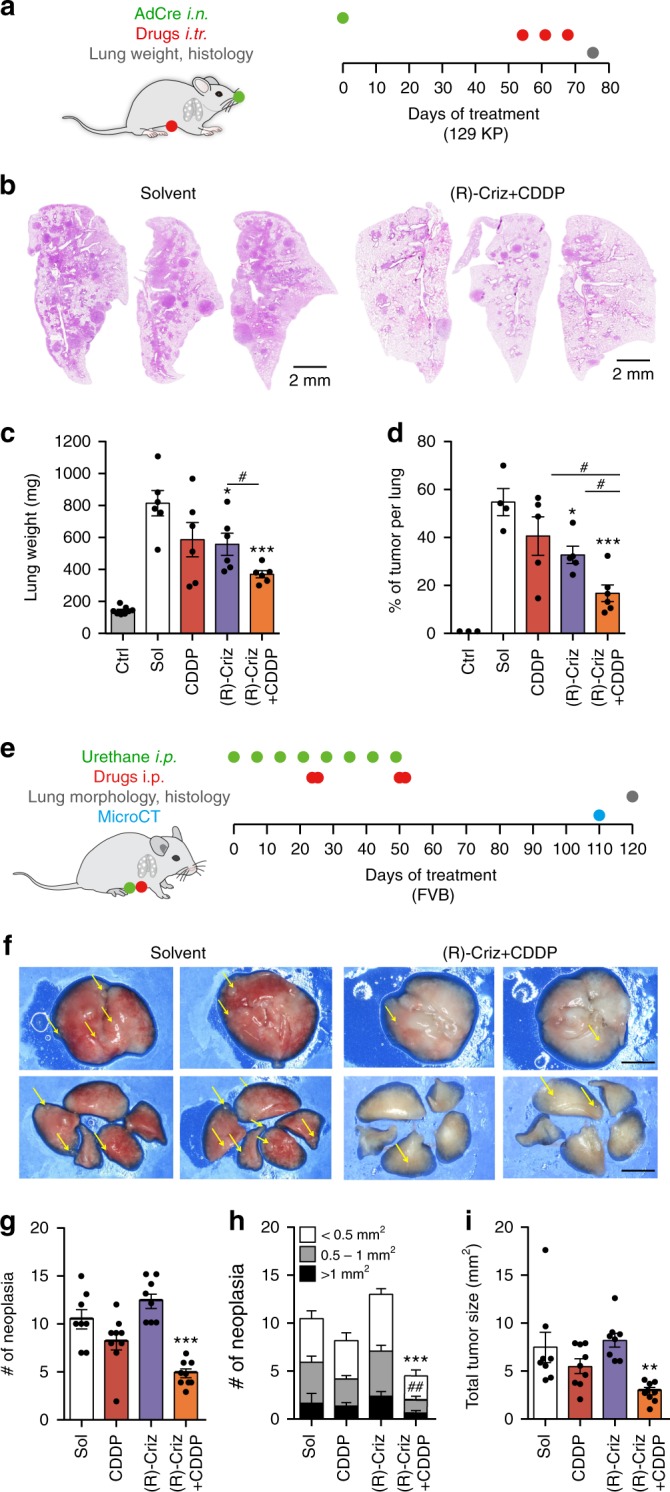
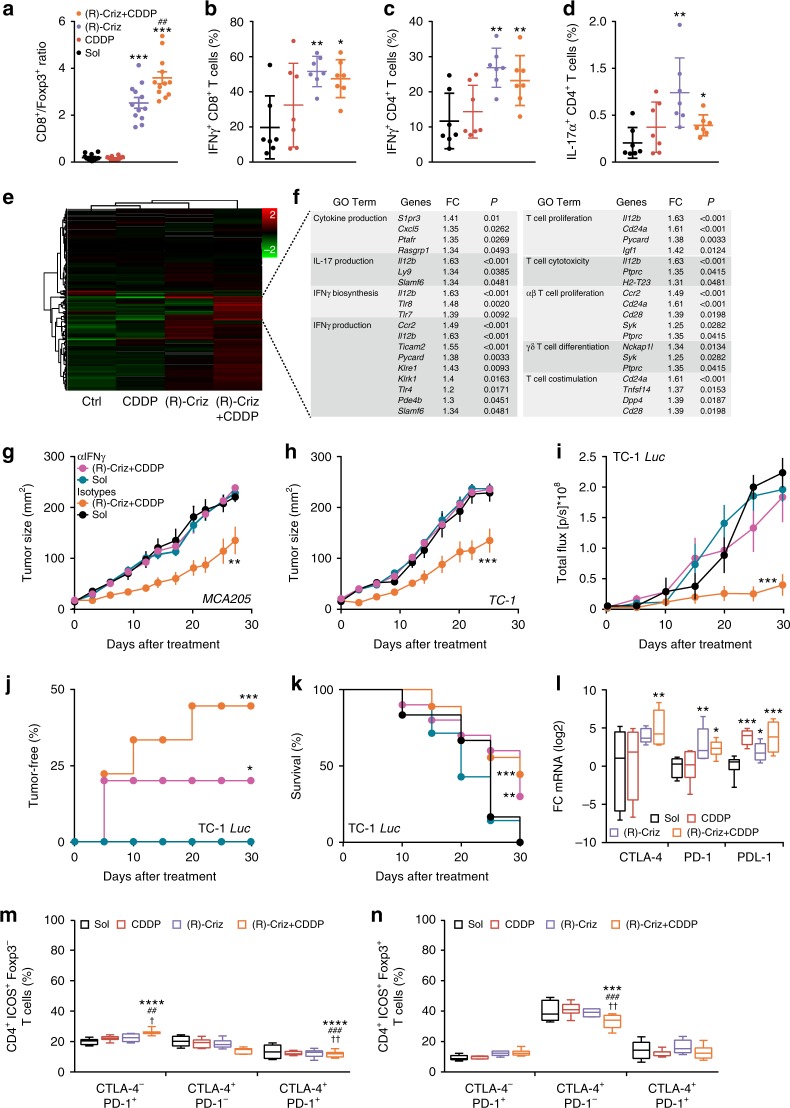
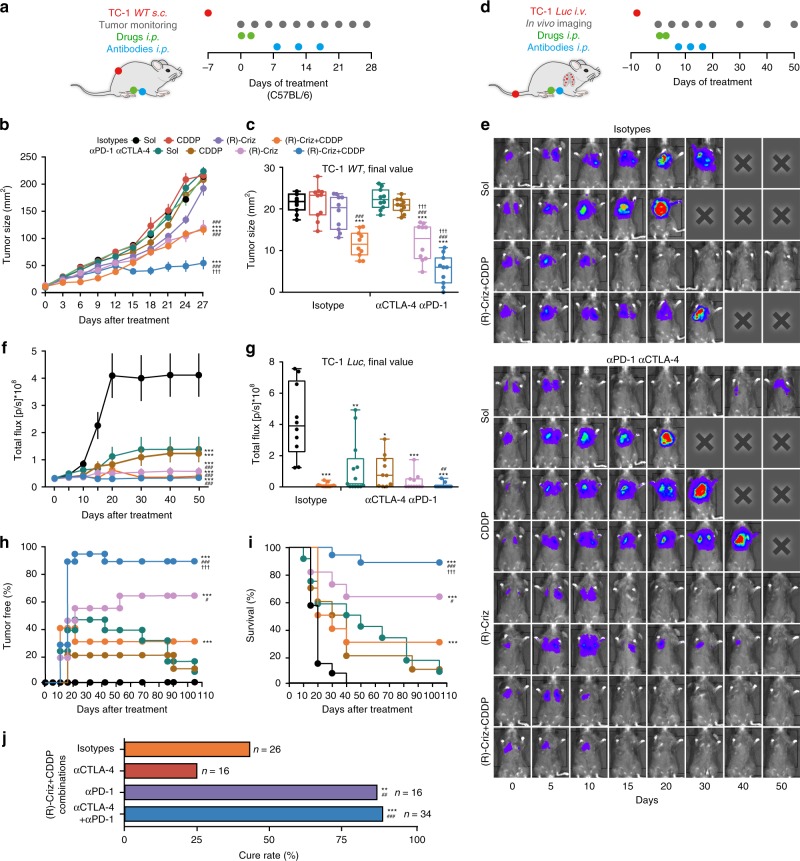
Immunogenic cell death (ICD) converts dying cancer cells into a therapeutic vaccine and stimulates antitumor immune responses. Here we unravel the results of an unbiased screen identifying high-dose (10 µM) crizotinib as an ICD-inducing tyrosine kinase inhibitor that has exceptional antineoplastic activity when combined with non-ICD inducing chemotherapeutics like cisplatin. The combination of cisplatin and high-dose crizotinib induces ICD in non-small cell lung carcinoma (NSCLC) cells and effectively controls the growth of distinct (transplantable, carcinogen- or oncogene induced) orthotopic NSCLC models. These anticancer effects are linked to increased T lymphocyte infiltration and are abolished by T cell depletion or interferon-γ neutralization. Crizotinib plus cisplatin leads to an increase in the expression of PD-1 and PD-L1 in tumors, coupled to a strong sensitization of NSCLC to immunotherapy with PD-1 antibodies. Hence, a sequential combination treatment consisting in conventional chemotherapy together with crizotinib, followed by immune checkpoint blockade may be active against NSCLC.
Overview
The claims and statistics of this paper haven’t been checked yet.
Free: it reads the open-access text and checks the first 5 claims that cite a source we can check. Create a free account to check every claim.
Integrity signals
Registry
Cites
Statistics
Figures
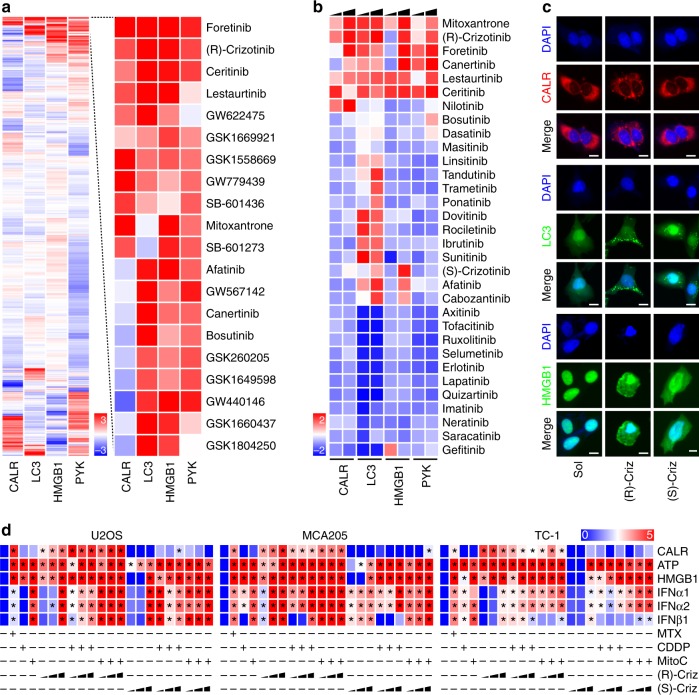
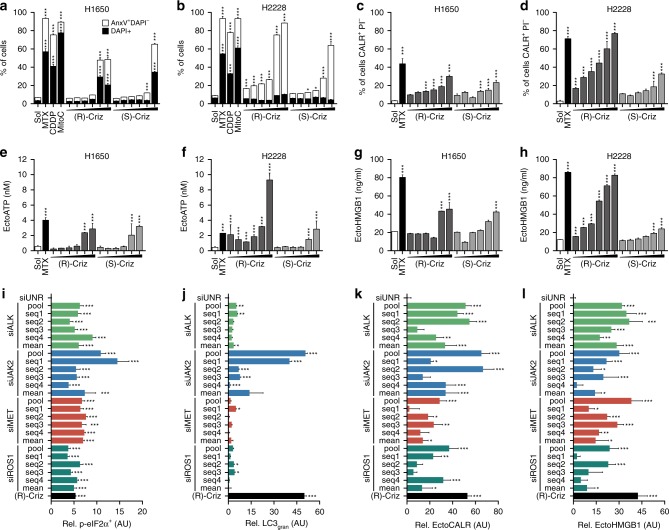
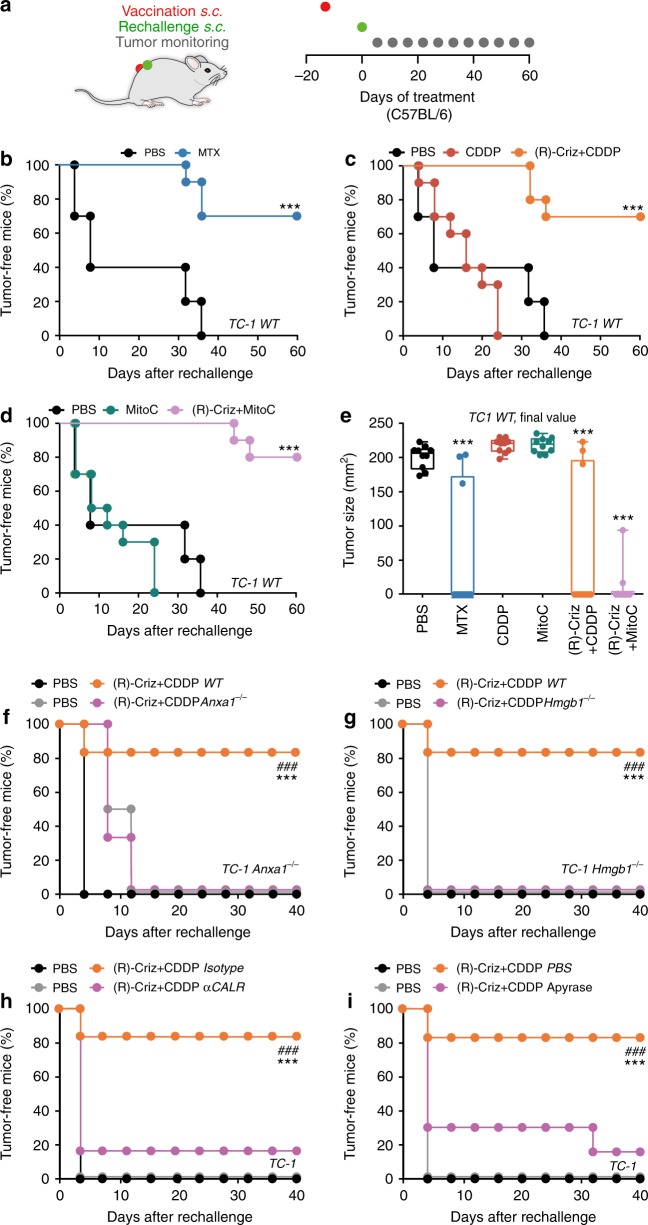
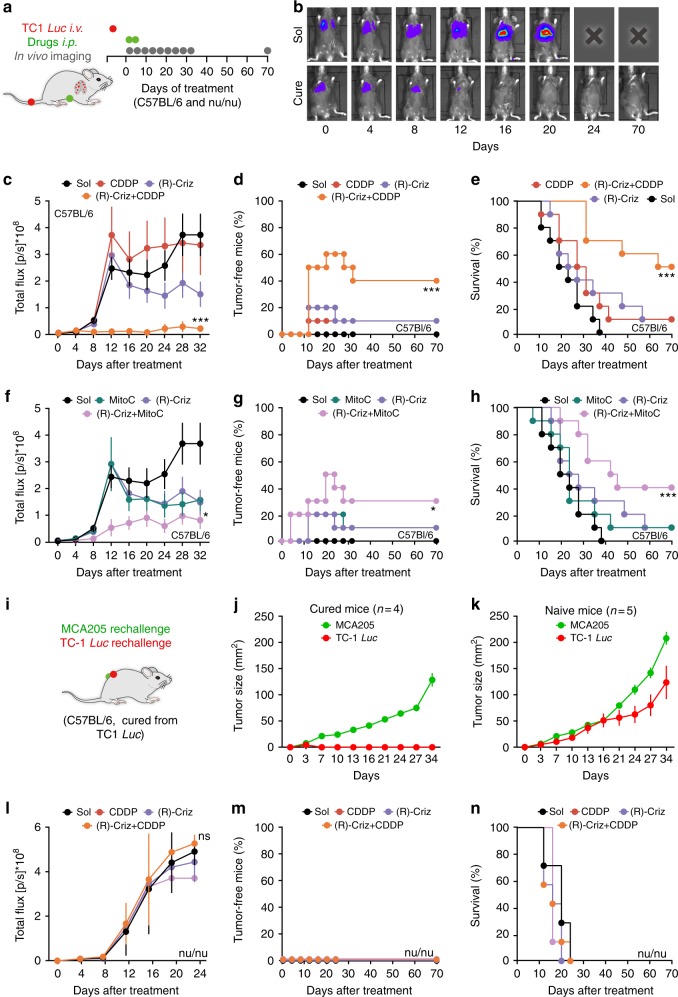
Verification
Claims the paper makes
The claims and statistics of this paper haven’t been checked yet.
Free: it reads the open-access text and checks the first 5 claims that cite a source we can check. Create a free account to check every claim.
Claims other papers make about this one
Each is checked against this paper’s own text: does it say what the citing paper says it does?
In the citing paper
“could be actioned therapeutically with PD-1-targeting mAb”
From Immunomodulation by targeted anticancer agents (2021) · cites this paper as Liu et al., 2019
In the citing paper
“an effect that presumably reflected the ability of crizotinib to robustly drive ICD”
From Immunomodulation by targeted anticancer agents (2021) · cites this paper as Liu et al., 2019
In the citing paper
“The multi-TKI crizotinib has also been associated with increased markers of T-cell exhaustion and PD-L1 upregulation on malignant cells in preclinical NSCLC models”
From Immunomodulation by targeted anticancer agents (2021) · cites this paper as Liu et al., 2019
Self-check
Percentages, sums and reported differences re-computed from the paper’s own numbers.
The self-check needs the paper’s full text.
Citations
Cites
Moderated estimation of fold change and dispersion for RNA-seq data with DESeq2
Love, M. I., Huber, W., & Anders, S. (2014) · Genome Biology · doi:10.1186/s13059-014-0550-8 · Cited by 95,106
STAR: ultrafast universal RNA-seq aligner
Dobin, A., Davis, C. A., Schlesinger, F., Drenkow, J., Zaleski, C., Jha, S., Batut, P., Chaisson, M., & Gingeras, T. R. (2013) · Bioinformatics · doi:10.1093/bioinformatics/bts635 · Cited by 51,709
Pembrolizumab plus chemotherapy in metastatic non–small-cell lung cancer
Gandhi, L., Rodríguez-Abreu, D., Gadgeel, S., Esteban, E., Felip, E., De Angelis, F., Domine, M., Clingan, P., Hochmair, M. J., Powell, S. F., et al. (2018) · New England Journal of Medicine · doi:10.1056/nejmoa1801005 · Cited by 6,607
Sunitinib versus Interferon Alfa in Metastatic Renal-Cell Carcinoma
Motzer, R. J., Hutson, T. E., Tomczak, P., Michaelson, M. D., Bukowski, R. M., Rixe, O., Oudard, S., Negrier, S., Szczylik, C., Kim, S. T., et al. (2007) · New England Journal of Medicine · doi:10.1056/nejmoa065044 · Cited by 5,775
Identification of the transforming EML4–ALK fusion gene in non-small-cell lung cancer
Soda, M., Choi, Y. L., Enomoto, M., Takada, S., Yamashita, Y., Ishikawa, S., Fujiwara, S.-I., Watanabe, H., Kurashina, K., Hatanaka, H., et al. (2007) · Nature · doi:10.1038/nature05945 · Cited by 5,439
Efficacy and safety of imatinib mesylate in advanced gastrointestinal stromal tumors
Demetri, G. D., von Mehren, M., Blanke, C. D., Van den Abbeele, A. D., Eisenberg, B., Roberts, P. J., Heinrich, M. C., Tuveson, D. A., Singer, S., Janicek, M., et al. (2002) · New England Journal of Medicine · doi:10.1056/nejmoa020461 · Cited by 4,389
Atezolizumab for First-Line Treatment of Metastatic Nonsquamous NSCLC
Socinski, M. A., Jotte, R. M., Cappuzzo, F., Orlandi, F., Stroyakovskiy, D., Nogami, N., Rodríguez-Abreu, D., Moro-Sibilot, D., Thomas, C. A., Barlesi, F., et al. (2018) · New England Journal of Medicine · doi:10.1056/nejmoa1716948 · Cited by 3,733
Lapatinib plus Capecitabine for HER2-Positive Advanced Breast Cancer
Geyer, C. E., Forster, J., Lindquist, D., Chan, S., Romieu, C. G., Pienkowski, T., Jagiello-Gruszfeld, A., Crown, J., Chan, A., Kaufman, B., et al. (2006) · New England Journal of Medicine · doi:10.1056/nejmoa064320 · Cited by 3,425
Calreticulin exposure dictates the immunogenicity of cancer cell death
Obeid, M., Tesniere, A., Ghiringhelli, F., Fimia, G. M., Apetoh, L., Perfettini, J.-L., Castedo, M., Mignot, G., Panaretakis, T., Casares, N., et al. (2007) · Nature Medicine · doi:10.1038/nm1523 · Cited by 3,216
Self-citationImmunogenic cell death in cancer and infectious disease
Galluzzi, L., Buqué, A., Kepp, O., Zitvogel, L., & Kroemer, G. (2017) · Nature Reviews Immunology · doi:10.1038/nri.2016.107 · Cited by 3,119 · cited 5×
“There is also evidence that cisplatin (CDDP), mitomycin C (MitoC) or other prominent chemotherapeutics are relatively inef fi cient due to their incapacity to stimulate ICD 7,17 .”
BackgroundInfluentialSelf-citation
Cited by
Items 101–200 of 303
Haberman, Y., Kamer, I., Amir, A., Goldenberg, S., Efroni, G., Daniel‐Meshulam, I., Lobachov, A., Daher, S., Hadar, R., Gantz-Sorotsky, H., et al. (2023) · Scientific Reports · doi:10.1038/s41598-023-29136-4 · Cited by 34
Zhang, Y., Song, X., Feng, Y., Qian, Y., Chen, B., Zhang, T., Wang, H., Chen, Y., Yu, X., Ding, H., et al. (2024) · Cancer Research · doi:10.1158/0008-5472.can-24-1484 · Cited by 35
Liu, J., Jiang, X., Li, Y., Yang, K., Weichselbaum, R. R., & Lin, W. (2024) · ACS Nano · doi:10.1021/acsnano.3c12678 · Cited by 27
Skaličková, M., Vanova, K. H., Uher, O., Fialová, J. L., Petrláková, K., Masařík, M., Kejík, Z., Martasek, P., Pacák, K., & Jakubek, M. (2025) · Frontiers in Immunology · doi:10.3389/fimmu.2024.1479483 · Cited by 29
Kiełbowski, K., Żychowska, J., & Becht, R. (2023) · Frontiers in Pharmacology · doi:10.3389/fphar.2023.1285374 · Cited by 31
“Liu et al. (2019) showed that crizotinib added to a human NSCLC line expressing EML4-ALK, resulted in a signi fi cant increase of calreticulin exposure, together with HMGB1 and ATP release.”
BackgroundPyo, K., Lim, S. M., Park, C.-W., Jo, H.-N., Kim, J. H., Yun, M., Kim, D., Xin, C.-F., Lee, W., Gheorghiu, B.-I., et al. (2020) · Journal for ImmunoTherapy of Cancer · doi:10.1136/jitc-2020-000970 · Cited by 28
“31 Of note, among the core enrichment genes described in figure 6E, genes involved in Treg cell function such as suppressor of cytokine signaling ( SOCS1 ) 32 showed a significant enrichment in ceritinib resistance.”
The spatial distribution of immune cell subpopulations in hepatocellular carcinoma
Wang, P., Hu, Z., Zhou, S., Yu, S., Mao, L., Su, S., Jia, L., Ren, N., & Huang, X. (2021) · Cancer Science · doi:10.1111/cas.15202 · Cited by 27
Zhu, C., Fang, Z., Peng, L., Gao, F., Peng, W., & Song, F. (2022) · Chemotherapy · doi:10.1159/000518121 · Cited by 28
A method for predicting drugs that can boost the efficacy of immune checkpoint blockade
Xia, Y., Li, X., Bie, N., Pan, W., Miao, Y., Yang, M., Gao, Y., Chen, C., Liu, H., Gan, L., et al. (2024) · Nature Immunology · doi:10.1038/s41590-024-01789-x · Cited by 24
The chemical biology of IL-12 production via the non-canonical NFkB pathway
Koch, P. D., Pittet, M. J., & Weissleder, R. (2020) · RSC Chemical Biology · doi:10.1039/d0cb00022a · Cited by 29
Ren, J., Yang, J., Na, S., Wang, Y., Zhang, L., Wang, J., & Liu, J. (2022) · Frontiers in Immunology · doi:10.3389/fimmu.2022.998653 · Cited by 25
“Due to the influence of ICD on survival in many types of tumor including lung (52), ovarian malignancies (22), and head and neck squamous cell carcinoma (53) and cancer therapy (54–56), it is meaningful to explore whether ICD has a significant impact in tumor initiation and progression and whether ICD-related prognost…”
BackgroundLoss of GABARAP mediates resistance to immunogenic chemotherapy in multiple myeloma
Gullà, A., Morelli, E., Johnstone, M. E., Turi, M., Samur, M., Botta, C., Cifrić, S., Folino, P., Vinaixa, D., Barello, F., et al. (2024) · Blood · doi:10.1182/blood.2023022777 · Cited by 26
Liang, Q., Yang, L., Li, Y., Cao, Y., Li, J., & Liu, Y. (2022) · European Journal of Pharmaceutics and Biopharmaceutics · doi:10.1016/j.ejpb.2022.07.006 · Cited by 23
Autophagy activation by dietary piceatannol enhances the efficacy of immunogenic chemotherapy
Wang, S., Wang, G., Wu, W., Xu, Z., Yang, J., Cao, M., Wang, Q., Wang, J., Yang, C., & Zhang, W. (2022) · Frontiers in Immunology · doi:10.3389/fimmu.2022.968686 · Cited by 28
“We transfected U2OS cells with Calreticulin-RFP-KDEL (21) plasmid and performed immunofluorescence staining, which showed that piceatannol in combination with OXAlow significantly enhanced the cell Frontiers in Immunology 06 surface exposure of CALR to a similar level as that of high dose OXA (OXAhigh) treatment (Figu…”
MethodA fluorescent biosensor-based platform for the discovery of immunogenic cancer cell death inducers
Kepp, O., Sauvat, A., Leduc, M., Forveille, S., Liu, P., Zhao, L., Bezu, L., Xie, W., Zitvogel, L., & Kroemer, G. (2019) · OncoImmunology · doi:10.1080/2162402x.2019.1606665 · Cited by 23
“initiation factor 2α (eIF2α) by the ER stress kinase eIF2α kinase 3 (EIF2AK3).(39) As a correlate of these premortem stress responses, crizotinib stimulated the release of ATP from cancer”
BackgroundMethodImmunogenic cell death: A link between gut microbiota and anticancer effects
Chen, W., Wang, S., Wu, Y., Shen, X., Guo, Z., Li, Q., & Xing, D. (2020) · Microbial Pathogenesis · doi:10.1016/j.micpath.2020.103983 · Cited by 22
Zheng, C., Zhang, W., Gong, X., Xiong, F., Jiang, L., Zhou, L., Zhang, Y. E., Zhu, H. H., Wang, H., Li, Y., et al. (2024) · Science Advances · doi:10.1126/sciadv.adk9996 · Cited by 22
Dynamical Boolean Modeling of Immunogenic Cell Death
Checcoli, A., Pol, J. G., Naldi, A., Noel, V., Barillot, E., Kroemer, G., Thieffry, D., Calzone, L., & Stoll, G. (2020) · Frontiers in Physiology · doi:10.3389/fphys.2020.590479 · Cited by 23
Reyes‐Ruiz, A., Calvillo‐Rodríguez, K. M., Martínez‐Torres, A. C., & Rodríguez-Padilla, C. (2021) · British Journal of Cancer · doi:10.1038/s41416-020-01256-y · Cited by 26
Yan, T., Ma, G., Wang, K., Liu, W., Zhong, W., & Du, J. (2021) · Frontiers in Immunology · doi:10.3389/fimmu.2021.547333 · Cited by 25
Yang, Y., Liang, X., Saiding, Q., Lin, J., Li, J., Wang, W., Huang, P., Huang, L., Zeng, W., Huang, J., et al. (2024) · Materials Today · doi:10.1016/j.mattod.2024.07.012 · Cited by 21
Durable responses to alectinib in murine models of EML4-ALK lung cancer requires adaptive immunity
Kleczko, E. K., Hinz, T. K., Nguyen, T. T., Gurule, N. J., Navarro, A., Le, A. T., Johnson, A. M., Kwak, J., Polhac, D. I., Clambey, E. T., et al. (2023) · npj Precision Oncology · doi:10.1038/s41698-023-00355-2 · Cited by 22
Crizotinib and ceritinib trigger immunogenic cell death via on-target effects
Petrazzuolo, A., Pérez-Lanzón, M., Liu, P., Maiuri, M. C., & Kroemer, G. (2021) · OncoImmunology · doi:10.1080/2162402x.2021.1973197 · Cited by 21
“Thus, in preclinical models, high-dose crizotinib can be advantageously combined with chemotherapy and immunotherapy to eradicate established lung cancers.(6) Recently, we examined the possibility that crizotinib might exert “on-target” effects as well, by treating ALCL cell lines, which, by definition, are addicted t…”
BackgroundTargeting micro-environmental pathways by PROTACs as a therapeutic strategy
Liu, J., Peng, Y., Inuzuka, H., & Wei, W. (2022) · Seminars in Cancer Biology · doi:10.1016/j.semcancer.2022.07.001 · Cited by 20
Liraglutide abrogates nephrotoxic effects of chemotherapies
Xu, C., Lu, C., Wang, Z., Hu, X.-F., Li, S., Xie, Y., Qiu, Y., Cao, R., Li, Y., & Yang, J. (2023) · Pharmacological Research · doi:10.1016/j.phrs.2023.106680 · Cited by 20
Wang, X., Wang, J., & Hu, M.-H. (2023) · International Journal of Biological Macromolecules · doi:10.1016/j.ijbiomac.2023.126068 · Cited by 19
Secreted calreticulin mutants subvert anticancer immunosurveillance
Liu, P., Zhao, L., Kroemer, G., & Kepp, O. (2019) · OncoImmunology · doi:10.1080/2162402x.2019.1708126 · Cited by 19
“In therapeutic settings, ICD triggers cytotoxic T-lymphocyte-mediated adaptive anticancer immunity against tumor associated antigens.(9,10) We thus evaluated the effects of systemically elevated soluble CALR on anticancer immunity in the context of ICD.”
BackgroundHuang, J., Shi, J., Ma, N., Li, Y., Jin, W., Zhang, H., Zhang, X., Luo, N., Ding, Y., Xie, Q., et al. (2025) · Phytomedicine · doi:10.1016/j.phymed.2025.156514 · Cited by 23
A novel autophagy activator ginsenoside Rh2 enhances the efficacy of immunogenic chemotherapy
Yang, J., Zhang, W., Jia, L., Shi, F., Cao, M., Sun, J., Xu, C., Li, Z., Cheng, Z., Zhao, S., et al. (2023) · Clinical and Translational Medicine · doi:10.1002/ctm2.1109 · Cited by 20
Xu, Z., Xu, M., Wu, X., Guo, S., Tian, Z., Zhu, D., Yang, J., Fu, J., Li, X., Song, G., et al. (2023) · ChemMedChem · doi:10.1002/cmdc.202300131 · Cited by 19
Microbes mediated immunogenic cell death in cancer immunotherapy
Huang, J., Duan, F., Xie, C., Xu, J., Zhang, Y., Wang, Y., Tang, Y., & Leung, E. L. (2023) · Immunological Reviews · doi:10.1111/imr.13261 · Cited by 20
“4,5 Indeed, several standard cancer therapies, including chemotherapy (e.g., oxaliplatin, cyclophosphamide, and anthracyclines), 6– 9 radiotherapy, 10 as well as targeted anticancer agents (e.g., bortezo-mib and crizotinib) 11– 13 have been shown to trigger ICD of cancer cells.”
BackgroundImmune Cells in the Tumor Microenvironment of Soft Tissue Sarcomas
Jumaniyazova, E. D., Lokhonina, А. V., Dzhalilova, D. S., Kosyreva, A. M., & Fatkhudinov, T. (2023) · Cancers · doi:10.3390/cancers15245760 · Cited by 26
“Reduces the number of Treg cells [97].”
Quinacrine-mediated detection of intracellular ATP
Forveille, S., Humeau, J., Sauvat, A., Bezu, L., Kroemer, G., & Kepp, O. (2019) · Methods in enzymology on CD-ROM/Methods in enzymology · doi:10.1016/bs.mie.2019.05.050 · Cited by 19
Immunogenic chemotherapy effectively inhibits KRAS-Driven lung cancer
Wang, D., Cong, J., Fu, B., Zheng, X., Sun, R., Tian, Z., & Wei, H. (2020) · Cancer Letters · doi:10.1016/j.canlet.2020.07.043 · Cited by 20
Wang, Y., Shen, S., Hu, P., Geng, D., Zheng, R., & Li, X. (2022) · Cancer Medicine · doi:10.1002/cam4.4834 · Cited by 17
Dong, Y., Mu, Z., Wu, Y., Hu, H., Zuo, J., Li, Y., Wang, S., Wang, Z., Bai, L., & Liang, H. (2025) · Journal of the American Chemical Society · doi:10.1021/jacs.5c12835 · Cited by 19
Jie, Y., Yang, X., & Chen, W. (2022) · Cancer Biotherapy and Radiopharmaceuticals · doi:10.1089/cbr.2020.4369 · Cited by 21
“15,20,21 Pulsatilla decoction (PD) is a classical prescription of traditional Chinese medicine (TCM) that is initially described nearly 1800 years ago by Zhang Zhongjing in ‘‘Shang Han Lun.’’”
Zhang, S., Li, Y., Liu, S., Ma, P., Guo, M., Zhou, E., Duan, L., Fan, J., Liao, T., Tan, Q., et al. (2022) · Cell Death and Disease · doi:10.1038/s41419-022-05176-y · Cited by 18
Jiang, W., Zhou, H., Wang, Q., Chen, Z., Dong, W. X., Guo, Z., Li, Y., Zhao, W., Zhan, M., Wang, Y., et al. (2021) · Nano Research · doi:10.1007/s12274-021-3314-2 · Cited by 17
Therapeutic Efficacy of Oncolytic Viruses in Fighting Cancer: Recent Advances and Perspective
Garmaroudi, G. A., Karimi, F., Naeini, L. G., Kokabian, P., & Givtaj, N. (2022) · Oxidative Medicine and Cellular Longevity · doi:10.1155/2022/3142306 · Cited by 21
“OVs have the ability to elicit immunogenic cell death (ICD) in the same way as some standard anticancer therapies, including chemotherapy and radiation therapy, do [61, 62].”
Schenk, E. L. (2023) · Translational Lung Cancer Research · doi:10.21037/tlcr-22-883 · Cited by 22
Yang, H., Wu, C., Chen, J., & Lee, T. H. (2020) · International Journal of Molecular Sciences · doi:10.3390/ijms21238993 · Cited by 15
Huang, Z., & Hu, H. (2021) · Molecules · doi:10.3390/molecules26020511 · Cited by 17
Immunogenic Cell Death Inducers in Cancer Immunotherapy to Turn Cold Tumors into Hot Tumors
Lucarini, V., Melaiu, O., Gragera, P., Król, K., Scaldaferri, V., Damiani, V., Ninno, A. D., Nardozi, D., Businaro, L., Masuelli, L., et al. (2025) · International Journal of Molecular Sciences · doi:10.3390/ijms26041613 · Cited by 14
“…(iv) lurbinectedin, which shows potent anticancer immune responses in preclinical models [25–27]; (v) crizotinib, used in the treatment of metastatic solid tumors; (vi) bortezomib, used primarily in multiple myeloma; and (vii) PT-112, a novel platinum–pyrophosphate conjugate [28–30].”
A genotype-phenotype screening system using conditionally immortalized immature dendritic cells
Zhao, L., Liu, P., Xie, W., Zhang, S., Thieme, S., Zitvogel, L., Kroemer, G., & Kepp, O. (2021) · STAR Protocols · doi:10.1016/j.xpro.2021.100732 · Cited by 17
“Remove supernatant, resuspended each cell pellet with 5 mL DF medium for cell counting, and adjust the MCA205 density to 13106 total cells/mL. Note: In these steps we recommend to detach cells by scrapping instead of trypsinization for two reasons: 1) this allows to maintain the phenotypes of differentiated de-iniDCs…”
BackgroundLiang, T.-L., Li, R., Mai, C.-T., Guan, X., Li, J., Wang, X., Ma, L.-R., Zhang, F., Wang, J., He, F., et al. (2021) · Phytomedicine · doi:10.1016/j.phymed.2021.153831 · Cited by 18
Local anesthetics and immunotherapy: a novel combination to fight cancer
Bezu, L., Kepp, O., & Kroemer, G. (2022) · Seminars in Immunopathology · doi:10.1007/s00281-022-00960-6 · Cited by 17
Low Level FLT3LG is a Novel Poor Prognostic Biomarker for Cervical Cancer with Immune Infiltration
Chen, L., Huang, Y., Dong, B., Gu, Y. L., Li, Y., Cang, W., Sun, P., & Xiang, Y. (2022) · Journal of Inflammation Research · doi:10.2147/jir.s384908 · Cited by 15
Pegylated liposomal mitoxantrone modulates tumor immune landscape to boost PD-L1 blockade therapy
Huang, M., Wang, S., Chen, S., Wang, J., Xu, C., Liu, J., Lian, Z., Du, X., & Wang, J. (2022) · Nano Today · doi:10.1016/j.nantod.2022.101500 · Cited by 15
Small cell lung cancer responds to immunogenic chemotherapy followed by PD-1 blockade
Kroemer, G., & Kepp, O. (2021) · OncoImmunology · doi:10.1080/2162402x.2021.1996686 · Cited by 16
Gao, F., You, X., Yang, L., Zou, X., & Sui, B. (2024) · International Reviews of Immunology · doi:10.1080/08830185.2024.2333275 · Cited by 15
“In lung cancer therapy, different chemotherapy drugs and radiotherapy can be used to trigger ICD [105–107].”
The intracellular metabolome of starving cells
Durand, S., Grajeda‐Iglesias, C., Aprahamian, F., Nirmalathasan, N., Kepp, O., & Kroemer, G. (2021) · Methods in cell biology · doi:10.1016/bs.mcb.2021.04.001 · Cited by 17
Chen, C., Carrillo, N. D., Chen, M., Wen, T., Awasthi, P., Anderson, R. A., & Cryns, V. L. (2025) · Journal of Biological Chemistry · doi:10.1016/j.jbc.2025.110367 · Cited by 22
“NRF2 is activated and translocates to the nucleus in response to cellular stress, especially oxidative stress (21 – 24).”
Wu, Y., Li, K., Liang, S., Lou, X., Li, Y., Xu, D., Wu, Y., Wang, Y., & Cui, W. (2023) · Respiratory Research · doi:10.1186/s12931-023-02443-0 · Cited by 14
Wang, Y., Wang, P., Li, W., Lin, Z., Wang, Y., Chen, Q., Zhang, S., He, Z., Luo, C., & Sun, J. (2024) · Nano Today · doi:10.1016/j.nantod.2024.102305 · Cited by 13
Iron Boosts Antitumor Type 1 T-cell Responses and Anti-PD1 Immunotherapy
Porte, S., Audemard‐Verger, A., Wu, C., Durand, A., Level, T., Giraud, L., Lombès, A., Germain, M., Pierre, R., Saintpierre, B., et al. (2024) · Cancer Immunology Research · doi:10.1158/2326-6066.cir-23-0739 · Cited by 14
Hepatotoxicity of FDA-approved small molecule kinase inhibitors
Jiang, H., Jin, Y., Yan, H., Xu, Z., Yang, B., He, Q., & Luo, P. (2021) · Expert Opinion on Drug Safety · doi:10.1080/14740338.2021.1867104 · Cited by 13
“mediated mechanism was not investigated further [94,95].”
Antoni, D., Burckel, H., & Noël, G. (2021) · Cancers · doi:10.3390/cancers13102394 · Cited by 15
“This phenomenon could lead to a strong sensitization of NSCLC to immunotherapy with PD-1 antibodies [98].”
BackgroundLi, S., Meng, C., Hao, Q., Dai, L., Shi, J., Xu, J., Zhou, X., Zhao, S., Yang, J., Kang, H., et al. (2024) · Advanced Functional Materials · doi:10.1002/adfm.202312595 · Cited by 13
In Vivo Imaging of Orthotopic Lung Cancer Models in Mice
Liu, P., Zhao, L., Senovilla, L., Kepp, O., & Kroemer, G. (2021) · Methods in molecular biology · doi:10.1007/978-1-0716-1278-1_16 · Cited by 18
A novel platinum-based chemotherapeutic inducing immunogenic cell death
Kepp, O., & Kroemer, G. (2020) · OncoImmunology · doi:10.1080/2162402x.2020.1729022 · Cited by 13
Sommer, A., Berndt, S., Lerchen, H.-G., Forveille, S., Sauvat, A., Mumberg, D., Kroemer, G., & Kepp, O. (2022) · OncoImmunology · doi:10.1080/2162402x.2022.2037216 · Cited by 13
Li, X., Gao, Y. M., Liu, X., Hu, X., Li, Y., Sun, J., Wang, P., Wu, H., Kim, H., Ramalingam, M., et al. (2022) · Frontiers in Bioengineering and Biotechnology · doi:10.3389/fbioe.2022.1005520 · Cited by 14
Terrones, M., Deben, C., Fortes, F. R., Schepers, A., de Beeck, K. O., Camp, G. V., & Vandeweyer, G. (2024) · Journal of Translational Medicine · doi:10.1186/s12967-024-04988-0 · Cited by 15
“The blocking of the oncogenic signaling eventually leads to tumor shrinkage [4, 5].”
BackgroundSauvat, A., Cerrato, G., Humeau, J., Leduc, M., Kepp, O., & Kroemer, G. (2021) · Computers in Biology and Medicine · doi:10.1016/j.compbiomed.2021.104371 · Cited by 14
Huang, Y., Yan, H., Zhang, B., Zhu, G., Yu, J., Xiao, X., He, W., Chen, Y., Gao, X., She, Z., et al. (2023) · Marine Drugs · doi:10.3390/md21120600 · Cited by 11
“Recent studies have revealed that certain anticancer drugs, including oxaliplatin [4] and crizotinib [5], foster ICD and induce immune response against tumor growth.”
BackgroundZheng, B., Wang, H., Zhai, S., Li, J., & Lu, K. (2025) · Materials Today Bio · doi:10.1016/j.mtbio.2025.101542 · Cited by 14
“However, the response rate to ICB monotherapy remains low in clinical settings [14].”
Phagocytosis‐Activating Nanocomplex Orchestrates Macrophage‐Mediated Cancer Immunotherapy
Huang, H., Tong, Q., Zhang, J., Miao, W., Yu, H.-H., Wang, J., Shen, S., & Du, J. (2025) · Advanced Materials · doi:10.1002/adma.202500982 · Cited by 13
Matsushita, M., Kashiwazaki, S., Kamiko, S., Kobori, M., Osada, M., Kunieda, H., Hirao, M., Ichikawa, D., & Hattori, Y. (2023) · Pharmaceuticals · doi:10.3390/ph16101367 · Cited by 14
“This phenomenon has primarily been reported in several types of solid cancers including breast cancer or small-cell lung cancer [8–11].”
BackgroundXu, D., Xu, T., Zhang, Y., Su, Y., Hou, X., Cui, Y., Liu, Q., Liu, L., Zhou, X., Xu, H., et al. (2025) · Biomaterials · doi:10.1016/j.biomaterials.2025.123894 · Cited by 16
Kashefizadeh, A., & Kazemizadeh, H. (2022) · Clinical & Translational Oncology · doi:10.1007/s12094-022-02949-x · Cited by 11
“The combination of crizotinib and cisplatin increased the expression of programmed death-ligand 1 (PD-L1) and PD-1 in NSCLC and strongly sensitized NSCLC to immune checkpoint inhibitors [70].”
BackgroundLi, Q., Tang, Y., Wang, T., Zhu, J., Zhou, Y., & Shi, J. (2022) · Journal of Cancer Research and Clinical Oncology · doi:10.1007/s00432-022-04555-4 · Cited by 9
“found that crisotinib can induce ICD to enhance the effect of anti-cancer chemotherapy (Liu et al. 2019).”
BackgroundImmunogenic Cell Stress and Death Sensitize Tumors to Immunotherapy
Kepp, O., & Kroemer, G. (2023) · Cells · doi:10.3390/cells12242843 · Cited by 11
“ICD inducers include conventional chemotherapeutic agents such as anthracyclines, oxaliplatin, and taxanes, as well as more disease-specific targeted agents from the group of tyrosine kinase inhibitors (TKIs) [11,12].”
BackgroundExploiting autophagy in multiple myeloma
Ho, M., Patel, A. S., Hanley, C., Murphy, A., McSweeney, T., Zhang, L., McCann, A. H., O’Gorman, P., & Bianchi, G. (2019) · Journal of Cancer Metastasis and Treatment · doi:10.20517/2394-4722.2019.25 · Cited by 11
“ICD involves the release of soluble mediators along with alterations in the cancer cell surface composition in a way that converts dying cancer cells into therapeutic vaccines that are phagocytosed by antigen presenting cells (APCs) for the cross-priming of CD8+ T-cells to stimulate anti-tumor specific T-cell immune r…”
BackgroundChen, J., Zhang, Y., Su, M., Zhu, Y., & Yang, X. (2024) · Science China Technological Sciences · doi:10.1007/s11431-023-2574-0 · Cited by 10
“Kroemer et al. [34] demonstrated that a chemotherapy drug, doxorubicin (DOX), promoted an ICD effect, and various anticancer therapeutic agents, such as oxaliplatin (OXA) [35] and mitoxantrone [36,37], and tyrosine kinase inhibitors crizotinib [38] were reported to be efficient ICD inducers.”
A modular metalloprotein in situ vaccine for cancer immunotherapy in mouse models of breast cancer
Liu, D., Jing, T., Yu, L., Luo, H., Rong, H., Tong, Y., Gao, X., & Yin, J. (2025) · Science Translational Medicine · doi:10.1126/scitranslmed.adr1777 · Cited by 13
Towards Understanding the Molecular Mechanisms of Immunogenic Cell Death
Xiong, X., Wang, Y., & Zou, T. (2022) · ChemBioChem · doi:10.1002/cbic.202200621 · Cited by 9
Injectable celastrol-loading emulsion hydrogel for immunotherapy of low-immunogenic cancer
Liu, Y., Zhang, J., Lai, C., Wang, W., Huang, Y., Bao, X., Yan, H., Sun, X., Liu, Q., Chen, D., et al. (2025) · Journal of Nanobiotechnology · doi:10.1186/s12951-025-03154-y · Cited by 11
“In addition, Cel, like most ICD inducers, upregulated PD-L1 expression in tumor cells [41, 42].”
Liu, P., Zhao, L., Ferrere, G., Alves-Costa-Silva, C., Ly, P., Wu, Q., Tian, A.-L., Derosa, L., Zitvogel, L., Kepp, O., et al. (2020) · OncoImmunology · doi:10.1080/2162402x.2020.1789284 · Cited by 10
Inoue, T., & Narukawa, M. (2022) · Cancer Control · doi:10.1177/10732748221140694 · Cited by 8
“There is also little evidence available that pleads molecular targeted anticancer agents have shown to induce ICD except for some TKIs such as small molecule anaplastic lymphoma kinase (ALK)/c-ros oncogene 1 (ROS1) inhibitor crizotinib.(44) Thus far, potential involvement of the specific molecular targeted anticancer…”
BackgroundTaurine and proline promote lung tumour growth by co-regulating Azgp1/mTOR signalling pathway
Liang, T.-L., Chen, Y., Zhou, N.-J., Shu, X., Mi, J., Ma, G.-Y., Xiao, Y., Yang, X., Huang, C., Li, J., et al. (2025) · npj Precision Oncology · doi:10.1038/s41698-025-00872-2 · Cited by 8
“Mice were weighed regularly, and tumour growth was monitored in real-time using micro-CT 13,68 .”
Adoptive immune cell therapy for colorectal cancer
Liu, C., Liu, N., Zhang, T., & Tu, Y. (2025) · Frontiers in Immunology · doi:10.3389/fimmu.2025.1557906 · Cited by 13
Wu, D., Zeng, H., Tan, J., Xu, Q., Khan, F. A., Pandupuspitasari, N. S., Yang, S., & Huang, C. (2025) · Drug Design Development and Therapy · doi:10.2147/dddt.s545163 · Cited by 11
Li, H., Zhu, N., Wu, J., Shi, Y., Gu, J., & Li, Q. (2024) · Current Pharmaceutical Design · doi:10.2174/0113816128288970240321073436 · Cited by 11
Li, Y., Ma, P., Li, J., Wu, F., Guo, M., Zhou, E., Song, S., Wang, S., Zhang, S., & Jin, Y. (2024) · Cell & Bioscience · doi:10.1186/s13578-024-01254-0 · Cited by 9
“Notably, the failure of CDDP to induce ICD can be reversed by combining it with agents such as cozotinib, pyridoxine, and cardiac glycosides [5, 18, 37].”
BackgroundDecoding the complex web: cellular and molecular interactions in the lung tumour microenvironment
Issa, B. S., Adhab, A. H., Mahdi, M. S., Kyada, A., Ganesan, S., Bhanot, D., Naidu, K. S., Kaur, S., Mansoor, A. S., Radi, U. K., et al. (2024) · Journal of drug targeting · doi:10.1080/1061186x.2024.2445772 · Cited by 9
“Moreover, emerging therapies such as oncolytic viruses and specific targeted agents such as crizotinib are being investigated for their potential to induce icD in NSclc [263].”
Immunotherapy Combinations for the Treatment of Patients with Solid Tumors
Bluthgen, M. V., Basté, N., & Recondo, G. (2020) · Future Oncology · doi:10.2217/fon-2020-0303 · Cited by 9
Peng, C., Li, Y., Yu, C., Cheng, Z.-H., Liu, J.-R., Hsu, J., Hsin, L., Huang, C.-T., Juan, H., Chern, J., et al. (2021) · Bioorganic Chemistry · doi:10.1016/j.bioorg.2021.104813 · Cited by 9
From targeted therapy to a novel way: Immunogenic cell death in lung cancer
Xu, J., Xiong, Y., Xu, Z., Xing, H., Zhou, L., & Zhang, X. (2022) · Frontiers in Medicine · doi:10.3389/fmed.2022.1102550 · Cited by 11
Walls, M., Walls, G., James, J. A., Crawford, K. T., Abdulkhalek, H., Lynch, T. B., Peace, A. J., McManus, T. E., & Evans, O. R. (2020) · BMC Pulmonary Medicine · doi:10.1186/s12890-020-01249-w · Cited by 9
Katraki-Pavlou, S., Kastana, P., Bousis, D., Ντενέκου, Δ., Varela, A., Davos, C. H., Νίκου, Σ., Papadaki, E., Tsigkas, G., Athanasiadis, E. I., et al. (2021) · American Journal of Physiology-Heart and Circulatory Physiology · doi:10.1152/ajpheart.00400.2021 · Cited by 8
In Situ Cancer Vaccines: Redefining Immune Activation in the Tumor Microenvironment
Giram, P. S., Rahman, K. M. M., Aqel, O., & You, Y. (2025) · ACS Biomaterials Science & Engineering · doi:10.1021/acsbiomaterials.5c00121 · Cited by 10
Mbah, N. E., Sutton, D., Hong, H. S., Singhal, R., Menjivar, R. E., Perricone, M. D., Giza, H., Sajjakulnukit, P., Myers, A. L., Nwosu, Z. C., et al. (2026) · Cancer & Metabolism · doi:10.1186/s40170-026-00428-3 · Cited by 9
Kinase Inhibitors’ Effects on Innate Immunity in Solid Cancers
Peng, C., Rabold, K., Mulder, W. J. M., Jaeger, M., & Netea-Maier, R. T. (2021) · Cancers · doi:10.3390/cancers13225695 · Cited by 7
“More recently, it has been reported that Crizotinib, a multitargeted VEGFR TKI, was able to induce ICD in a NSCLC model [34].”
BackgroundCho, K. J., Cho, Y., & Kim, J. (2022) · Pharmaceutics · doi:10.3390/pharmaceutics14122752 · Cited by 7
Targeting the cMET pathway to enhance immunotherapeutic approaches for mUM patients
Machiraju, D., & Hassel, J. C. (2023) · Frontiers in Oncology · doi:10.3389/fonc.2022.1068029 · Cited by 8
Zhang, J., Shi, X., Wang, M., Zhai, R., Wang, M., Gong, Z., Ni, Z., Xu, T., Zhu, W., & Liu, L. (2024) · Journal of Cancer Research and Clinical Oncology · doi:10.1007/s00432-024-05779-2 · Cited by 7
“7 The ICDGs-related risk score was associated with the immune therapy of HNSCC patients. a – c The Kaplan–Meier curves and immunotherapy response of patients in the high-and low-risk groups from three immunotherapy cohorts (GSE78220, Imvigor-210 and PRJEB23709) were calculated. d The Kaplan–Meier curves showed the ass…”
BackgroundHu, P., Peng, X., Zhao, S., Li, F., Yang, G., Guo, W., Yu, S., Cheng, J., Cen, J., & Shi, J. (2024) · Chemical Engineering Journal · doi:10.1016/j.cej.2024.152033 · Cited by 7
Immune checkpoint inhibitors in driver mutation-positive nonsmall cell lung cancer: is there a role?
Lee, J., & Ahn, M. (2020) · Current Opinion in Oncology · doi:10.1097/cco.0000000000000698 · Cited by 6
“Studies on cell line harboring the EML4-ALK fusion additionally revealed that inhibiting the ALK pathway with crizotinib enhanced the production of IFN-g, suggesting that sensitive TKIs not only induce tumor cell death via inhibiting relevant oncogenic pathways but also enhance the antitumor immunity, which can increa…”
BackgroundGrain-Sized Moxibustion Heightens the AntiTumor Effect of Cyclophosphamide in Hepa1-6 Bearing Mice
Zhu, T., Ma, Y.-Z., Wang, J., Chen, X., Li, J., Meng, L., Hou, Y., & Cheng, Y.-T. (2022) · Evidence-based Complementary and Alternative Medicine · doi:10.1155/2022/3684899 · Cited by 7
“2mL was extracted and inoculated subcutaneously into right armpit of C57BL/6 mice to establish the Hepa1-6bearing mouse model [14].”
Method
Metadata
- Authors
- Liu, P., Zhao, L., Pol, J., Levesque, S., Petrazzuolo, A., Pfirschke, C., Engblom, C., Rickelt, S., Yamazaki, T., Iribarren, K., Senovilla, L., Bezu, L., Vacchelli, E., Sica, V., Melis, A., Martin, T., Xia, L., Yang, H., Li, Q., Chen, J., Durand, S., Aprahamian, F., Lefevre, D., Broutin, S., Paci, A., Bongers, A., Minard-Colin, V., Tartour, E., Zitvogel, L., Apetoh, L., Ma, Y., Pittet, M. J., Kepp, O., & Kroemer, G.
- Affiliations
- Université Paris-Sud (FR)
- Inserm (FR)
- Harvard University (US)
- Massachusetts Institute of Technology (US)
- Weill Cornell Medicine (US)
- Chinese Academy of Medical Sciences & Peking Union Medical College (CN)
- Institut Gustave Roussy (FR)
- Karolinska University Hospital (SE)
- Corresponding author
- Kepp, Oliver
- Kroemer, Guido
- ORCID
- Liu, Peng
- Zhao, Liwei
- Pol, Jonathan
- Petrazzuolo, Adriana
- Pfirschke, Christina
- Engblom, Camilla
- Rickelt, Steffen
- Yamazaki, Takahiro
- Iribarren, Kristina
- Senovilla, Laura
- Bezu, Lucillia
- Vacchelli, Erika
- Sica, Valentina
- Martin, Tiffany
- Xia, Lin
- Yang, Heng
- Li, Qingqing
- Chen, Jinfeng
- Durand, Sylvère
- Aprahamian, Fanny
- Broutin, Sophie
- Tartour, Eric
- Zitvogel, Laurence
- Ma, Yuting
- Kepp, Oliver
- Kroemer, Guido
- Venue
- Nature Communications
- Published
- 2019-04-02
- Volume
- 10
- Issue
- 1
- Pages
- 1486-1486
- ISSN
- 2041-1723 (ISSN-L)
- PMC
- PMC6445096
- OpenAlex
- W2930737113
- Semantic Scholar
- 8f53672d01834d2a94916597e6b823feda57b6c8
- Cited by
- 302
- References
- 52
- Citations by year
- 2026: 23 · 2025: 33 · 2024: 40 · 2023: 53 · 2022: 49 · 2021: 50 · 2020: 37 · 2019: 17
- FWCI
- 16.07
- Type
- journal article
- Language
- en
- Update notices
- correction (2019-04-17)
- Open access
- gold
- doi.org
- Licence
- cc-by
- creativecommons.org/licenses/by/4.0 (tdm)
- creativecommons.org/licenses/by/4.0 (vor)
- Locations
- Nature Communications (publishedVersion, cc-by)
- Europe PMC (PubMed Central) (publishedVersion, cc-by)
- PubMed Central (publishedVersion, cc-by)
- PubMed (publishedVersion)
- Archive ouverte UNIGE (University of Geneva) (publishedVersion, other-oa)
- theses.fr (ABES) (submittedVersion)
- HAL (submittedVersion, other-oa)
- DOAJ (DOAJ: Directory of Open Access Journals) (submittedVersion, cc-by-sa)
- DOAJ (DOAJ: Directory of Open Access Journals) (submittedVersion)
- Archive ouverte UNIGE (University of Geneva) (submittedVersion, cc-by)
- Funders
- Association pour la Recherche sur le Cancer
- Seerave Foundation
- Koch Institute for Integrative Cancer Research, Massachusetts Institute of Technology
- E-Rare
- European Commission (HORIZON2020)
- Agence Nationale de la Recherche (E-Rare-2)
- Fondation Leducq
- Institut National de la Santé et de la Recherche Médicale
- National Natural Science Foundation of China (81671630, CAMS-I2M, 2017YFA0506200, 81722037)
- Fondation pour la Recherche Médicale (677251)
- Government of Jiangsu Province
- Ligue Contre le Cancer
- China Scholarship Council
- Natural Science Foundation of Jiangsu Province (BK20170006, BK20160379)
- Institut Universitaire de France
- Institut National Du Cancer
- Recruitment Program of Global Experts
- National Institutes of Health (2016-I2M-1-005, CA163109)
- Ludwig Center at Harvard
- National Key Research and Development Program of China (2017YFA0506200)
- Labex Immuno-Oncology
- Chinese Academy of Medical Sciences Initiative for Innovative Medicine ((CAMS-I2M), 2016-I2M-1-005, CAMS-I2M, 2016-I2M-1-005)
- National Cancer Institute (U54CA163109)
- Topics
- Health Sciences › Medicine › Oncology › Cancer Immunotherapy and Biomarkers
- Life Sciences › Immunology and Microbiology › Immunology › Immunotherapy and Immune Responses
- Health Sciences › Medicine › Pulmonary and Respiratory Medicine › Lung Cancer Treatments and Mutations
- Keywords
- crizotinib, immunogenic cell death, non-small cell lung cancer, cisplatin, tyrosine kinase inhibitors, combination chemotherapy, T cell infiltration, PD-1, PD-L1, immune checkpoint blockade, antitumor immunity, interferon-gamma
- MeSH terms
- Crizotinib, Animals, Antineoplastic Agents, Carcinoma, Non-Small-Cell Lung, Female, Humans, Interferon-gamma, Lung Neoplasms, Mice, Inbred C57BL, T-Lymphocytes, Cell Death, Cell Line, Tumor, Mice, B7-H1 Antigen, Programmed Cell Death 1 Receptor
About these checks
Registry, retraction, Cites and statistics results are computed, not judged, with one exception: a printed reference that no index lists is read once by a model before it counts as a citation error. Claims are extracted by a model and kept only when their quote appears verbatim in the text; each cited source is then checked, with a model’s help, for whether it says what the claim relies on. Those verdicts can be wrong — read the claim’s quote and the cited source before relying on one.
Statistics and arithmetic are recomputed, not judged.
Confidence bands are shown only for fields calibrated on our annotated test set. None is calibrated yet, so no band is shown.
What counts as a claim ›How we measure confidence ›How we check this ›
Are you an author, or do you see a problem with this page? Request a review
Data sources
Bibliographic data: Semantic Scholar, OpenAlex, Crossref.
Contains information from the Semantic Scholar Academic Graph Datasets, made available under the ODC Attribution License (ODC-BY 1.0).
Semantic Scholar’s data is described in: Kinney, R., et al. (2023). The Semantic Scholar Open Data Platform. arXiv:2301.10140.
