

Crizotinib-induced immunogenic cell death in non-small cell lung cancer
Open accessThe DOI matches its Crossref record; 52 of the 52 references it cites were found in a registry or an index.
Abstract
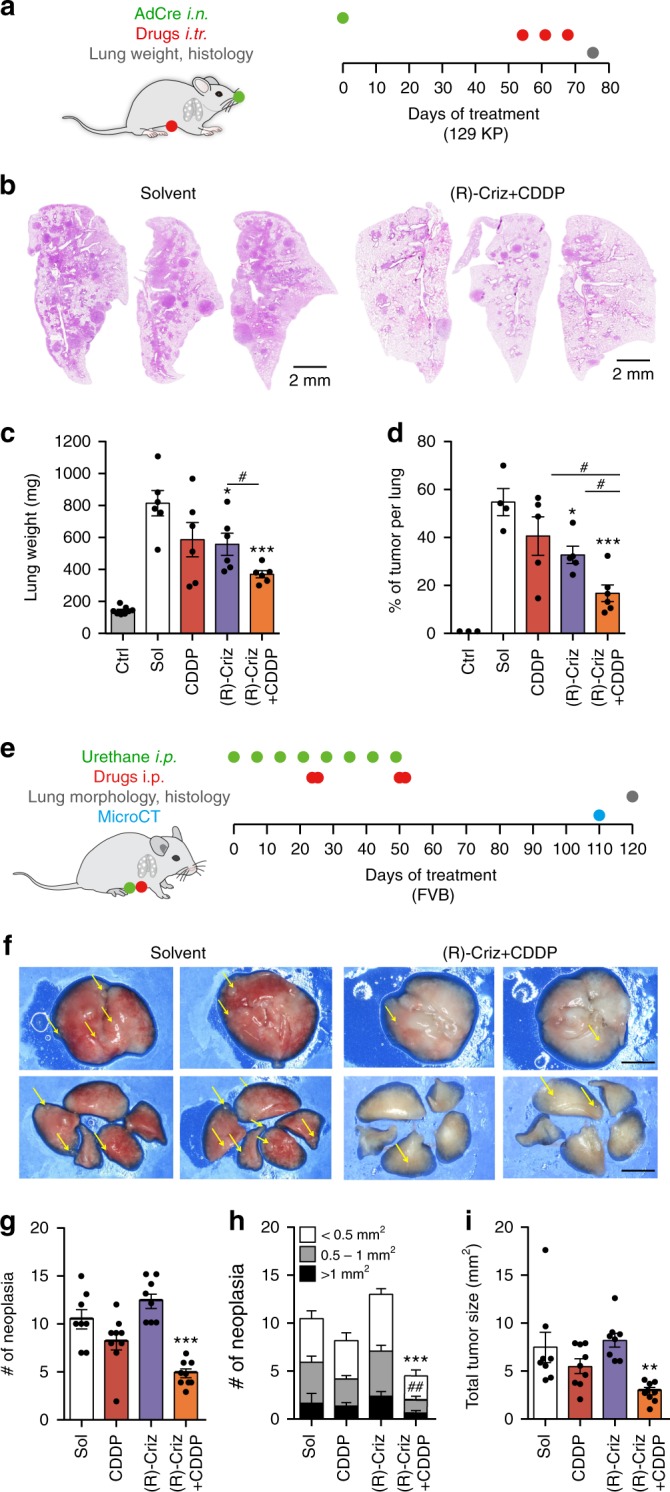
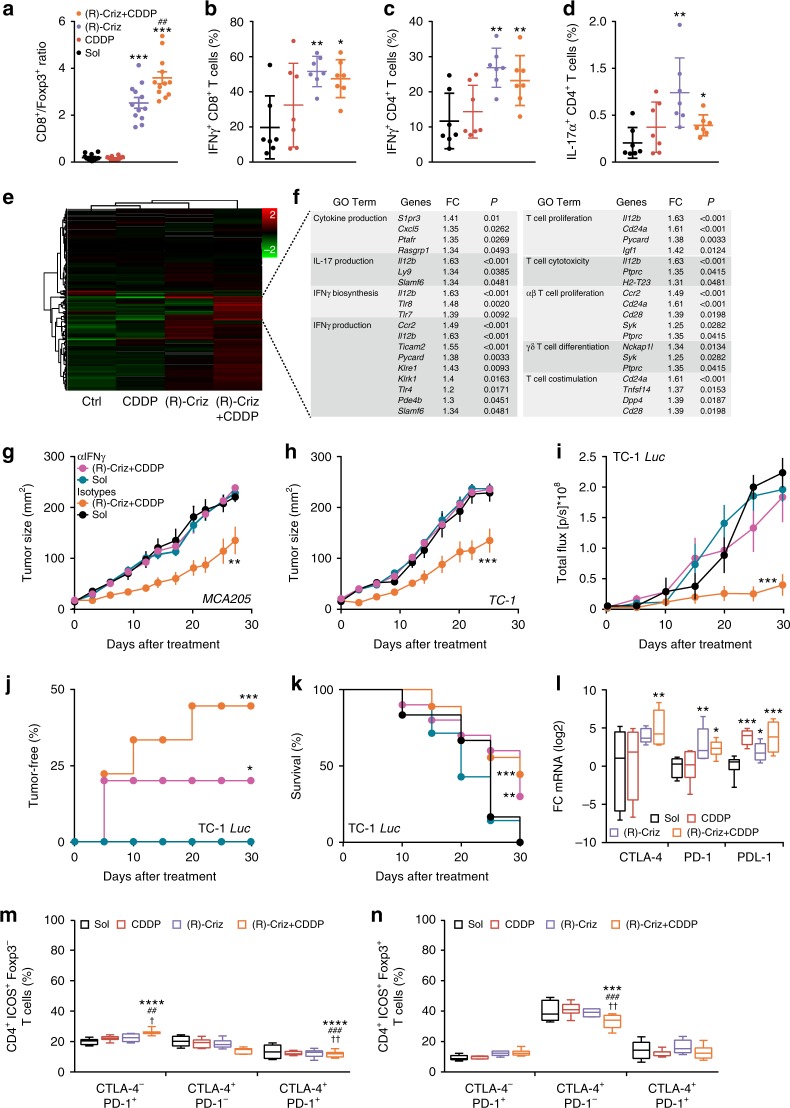
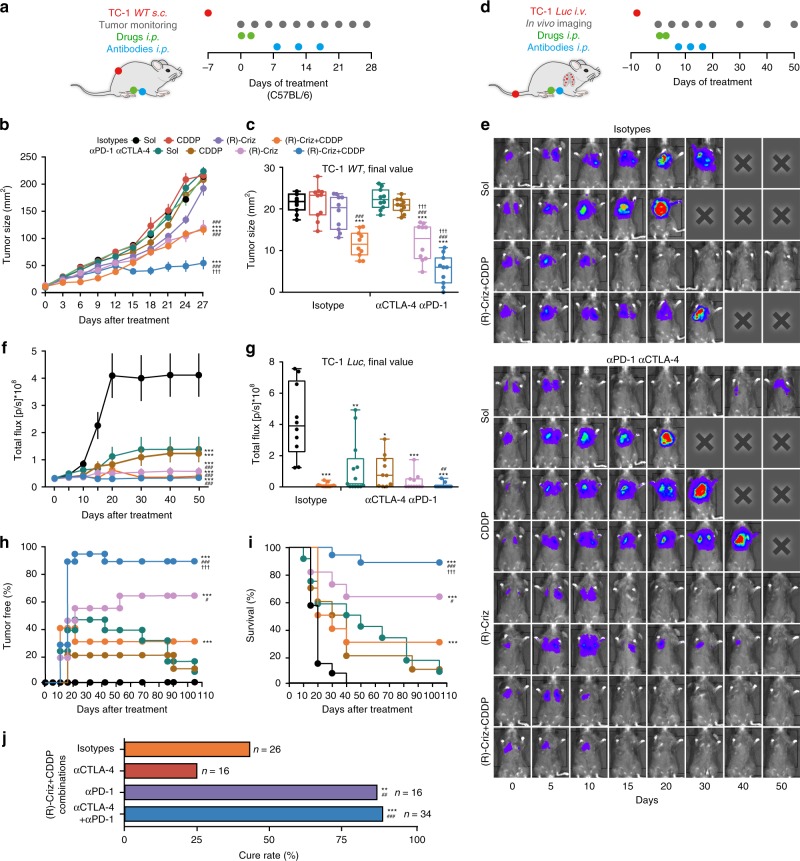
Immunogenic cell death (ICD) converts dying cancer cells into a therapeutic vaccine and stimulates antitumor immune responses. Here we unravel the results of an unbiased screen identifying high-dose (10 µM) crizotinib as an ICD-inducing tyrosine kinase inhibitor that has exceptional antineoplastic activity when combined with non-ICD inducing chemotherapeutics like cisplatin. The combination of cisplatin and high-dose crizotinib induces ICD in non-small cell lung carcinoma (NSCLC) cells and effectively controls the growth of distinct (transplantable, carcinogen- or oncogene induced) orthotopic NSCLC models. These anticancer effects are linked to increased T lymphocyte infiltration and are abolished by T cell depletion or interferon-γ neutralization. Crizotinib plus cisplatin leads to an increase in the expression of PD-1 and PD-L1 in tumors, coupled to a strong sensitization of NSCLC to immunotherapy with PD-1 antibodies. Hence, a sequential combination treatment consisting in conventional chemotherapy together with crizotinib, followed by immune checkpoint blockade may be active against NSCLC.
Overview
The claims and statistics of this paper haven’t been checked yet.
Free: it reads the open-access text and checks the first 5 claims that cite a source we can check. Create a free account to check every claim.
Integrity signals
Registry
Cites
Statistics
Figures
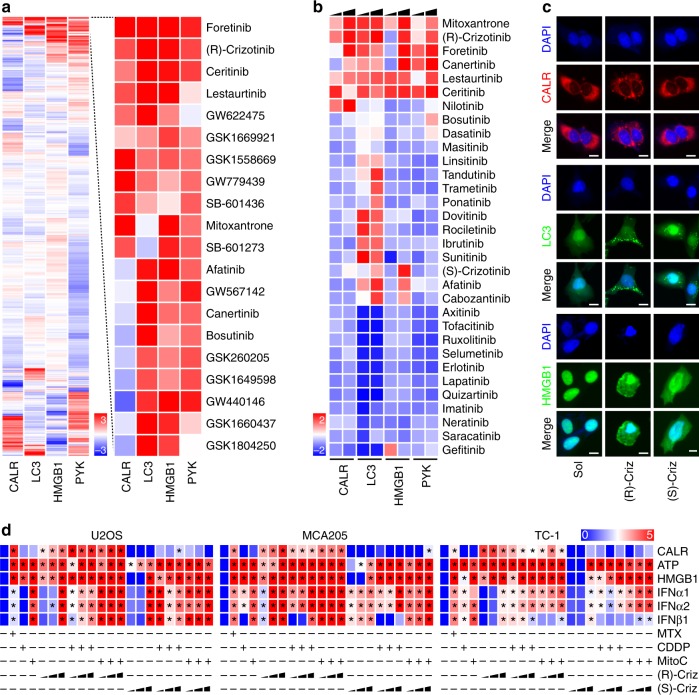
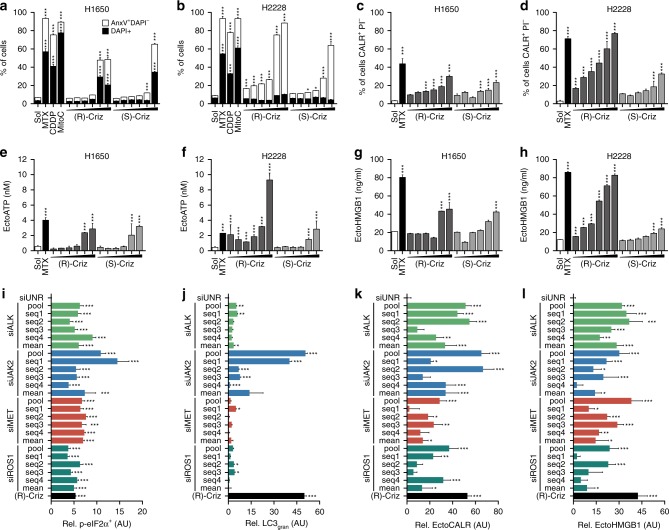
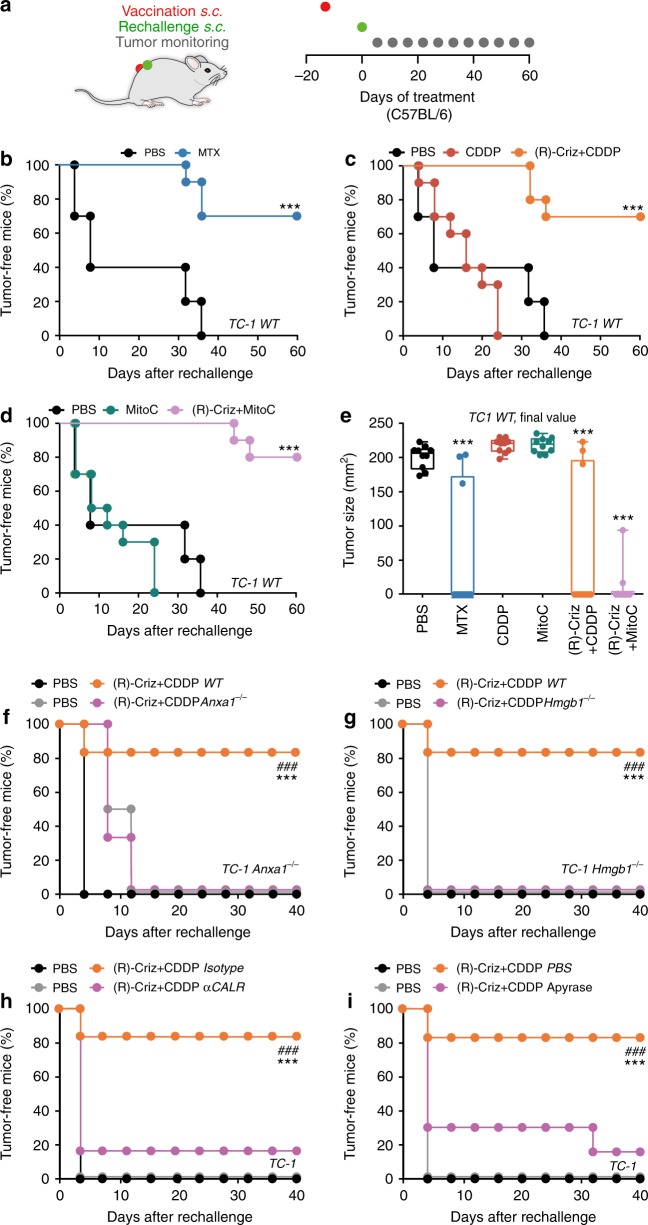
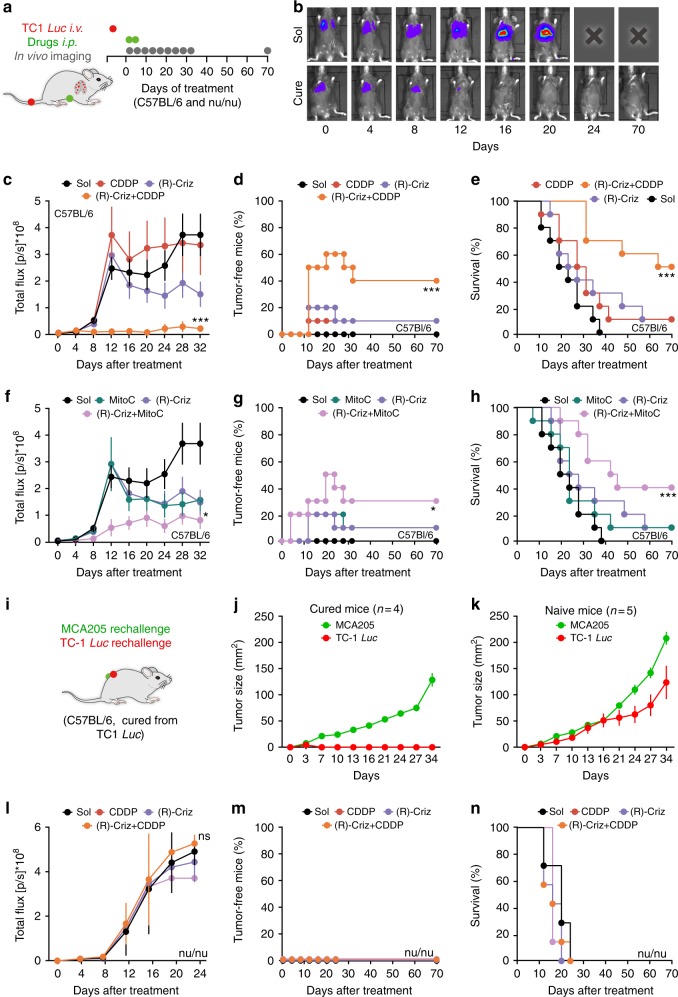
Verification
Claims the paper makes
The claims and statistics of this paper haven’t been checked yet.
Free: it reads the open-access text and checks the first 5 claims that cite a source we can check. Create a free account to check every claim.
Claims other papers make about this one
Each is checked against this paper’s own text: does it say what the citing paper says it does?
In the citing paper
“could be actioned therapeutically with PD-1-targeting mAb”
From Immunomodulation by targeted anticancer agents (2021) · cites this paper as Liu et al., 2019
In the citing paper
“an effect that presumably reflected the ability of crizotinib to robustly drive ICD”
From Immunomodulation by targeted anticancer agents (2021) · cites this paper as Liu et al., 2019
In the citing paper
“The multi-TKI crizotinib has also been associated with increased markers of T-cell exhaustion and PD-L1 upregulation on malignant cells in preclinical NSCLC models”
From Immunomodulation by targeted anticancer agents (2021) · cites this paper as Liu et al., 2019
Self-check
Percentages, sums and reported differences re-computed from the paper’s own numbers.
The self-check needs the paper’s full text.
Citations
Cites
Moderated estimation of fold change and dispersion for RNA-seq data with DESeq2
Love, M. I., Huber, W., & Anders, S. (2014) · Genome Biology · doi:10.1186/s13059-014-0550-8 · Cited by 95,106
STAR: ultrafast universal RNA-seq aligner
Dobin, A., Davis, C. A., Schlesinger, F., Drenkow, J., Zaleski, C., Jha, S., Batut, P., Chaisson, M., & Gingeras, T. R. (2013) · Bioinformatics · doi:10.1093/bioinformatics/bts635 · Cited by 51,709
Pembrolizumab plus chemotherapy in metastatic non–small-cell lung cancer
Gandhi, L., Rodríguez-Abreu, D., Gadgeel, S., Esteban, E., Felip, E., De Angelis, F., Domine, M., Clingan, P., Hochmair, M. J., Powell, S. F., et al. (2018) · New England Journal of Medicine · doi:10.1056/nejmoa1801005 · Cited by 6,607
Sunitinib versus Interferon Alfa in Metastatic Renal-Cell Carcinoma
Motzer, R. J., Hutson, T. E., Tomczak, P., Michaelson, M. D., Bukowski, R. M., Rixe, O., Oudard, S., Negrier, S., Szczylik, C., Kim, S. T., et al. (2007) · New England Journal of Medicine · doi:10.1056/nejmoa065044 · Cited by 5,775
Identification of the transforming EML4–ALK fusion gene in non-small-cell lung cancer
Soda, M., Choi, Y. L., Enomoto, M., Takada, S., Yamashita, Y., Ishikawa, S., Fujiwara, S.-I., Watanabe, H., Kurashina, K., Hatanaka, H., et al. (2007) · Nature · doi:10.1038/nature05945 · Cited by 5,439
Efficacy and safety of imatinib mesylate in advanced gastrointestinal stromal tumors
Demetri, G. D., von Mehren, M., Blanke, C. D., Van den Abbeele, A. D., Eisenberg, B., Roberts, P. J., Heinrich, M. C., Tuveson, D. A., Singer, S., Janicek, M., et al. (2002) · New England Journal of Medicine · doi:10.1056/nejmoa020461 · Cited by 4,389
Atezolizumab for First-Line Treatment of Metastatic Nonsquamous NSCLC
Socinski, M. A., Jotte, R. M., Cappuzzo, F., Orlandi, F., Stroyakovskiy, D., Nogami, N., Rodríguez-Abreu, D., Moro-Sibilot, D., Thomas, C. A., Barlesi, F., et al. (2018) · New England Journal of Medicine · doi:10.1056/nejmoa1716948 · Cited by 3,733
Lapatinib plus Capecitabine for HER2-Positive Advanced Breast Cancer
Geyer, C. E., Forster, J., Lindquist, D., Chan, S., Romieu, C. G., Pienkowski, T., Jagiello-Gruszfeld, A., Crown, J., Chan, A., Kaufman, B., et al. (2006) · New England Journal of Medicine · doi:10.1056/nejmoa064320 · Cited by 3,425
Calreticulin exposure dictates the immunogenicity of cancer cell death
Obeid, M., Tesniere, A., Ghiringhelli, F., Fimia, G. M., Apetoh, L., Perfettini, J.-L., Castedo, M., Mignot, G., Panaretakis, T., Casares, N., et al. (2007) · Nature Medicine · doi:10.1038/nm1523 · Cited by 3,216
Self-citationImmunogenic cell death in cancer and infectious disease
Galluzzi, L., Buqué, A., Kepp, O., Zitvogel, L., & Kroemer, G. (2017) · Nature Reviews Immunology · doi:10.1038/nri.2016.107 · Cited by 3,119 · cited 5×
“There is also evidence that cisplatin (CDDP), mitomycin C (MitoC) or other prominent chemotherapeutics are relatively inef fi cient due to their incapacity to stimulate ICD 7,17 .”
BackgroundInfluentialSelf-citation
Cited by
Immunogenic cell stress and death
Kroemer, G., Galassi, C., Zitvogel, L., & Galluzzi, L. (2022) · Nature Immunology · doi:10.1038/s41590-022-01132-2 · Cited by 1,353
Self-citationImmunostimulation with chemotherapy in the era of immune checkpoint inhibitors
Galluzzi, L., Humeau, J., Buqué, A., Zitvogel, L., & Kroemer, G. (2020) · Nature Reviews Clinical Oncology · doi:10.1038/s41571-020-0413-z · Cited by 1,349
Self-citationConsensus guidelines for the definition, detection and interpretation of immunogenic cell death
Galluzzi, L., Vitale, I., Warren, S., Adjemian, S., Agostinis, P., Martinez, A. B., Chan, T. A., Coukos, G., Demaria, S., Deutsch, E., et al. (2020) · Journal for ImmunoTherapy of Cancer · doi:10.1136/jitc-2019-000337 · Cited by 1,119
Detection of immunogenic cell death and its relevance for cancer therapy
Fucikova, J., Kepp, O., Kasikova, L., Petroni, G., Yamazaki, T., Liu, P., Zhao, L., Spisek, R., Kroemer, G., & Galluzzi, L. (2020) · Cell Death & Disease · doi:10.1038/s41419-020-03221-2 · Cited by 1,138
Self-citationKinase drug discovery 20 years after imatinib: progress and future directions
Cohen, P., Cross, D., & Jänne, P. A. (2021) · Nature Reviews Drug Discovery · doi:10.1038/s41573-021-00195-4 · Cited by 1,024
Turning cold tumors into hot tumors by improving T-cell infiltration
Liu, Y.-T., & Sun, Z.-J. (2021) · Theranostics · doi:10.7150/thno.58390 · Cited by 827
Dendritic cell subsets in cancer immunity and tumor antigen sensing
Del Prete, A., Salvi, V., Soriani, A., Laffranchi, M., Sozio, F., Bosisio, D., & Sozzani, S. (2023) · Cellular & Molecular Immunology · doi:10.1038/s41423-023-00990-6 · Cited by 644
Targeting immunogenic cell stress and death for cancer therapy
Galluzzi, L., Guilbaud, E., Schmidt, D., Kroemer, G., & Marincola, F. M. (2024) · Nature Reviews Drug Discovery · doi:10.1038/s41573-024-00920-9 · Cited by 538
“One example is provided by the combination of cisplatin, which is not an optimal ICD driver as it generally fails to elicit the ISR, with an agent capable of correcting such a signalling defect, such as cardiac glycosides or crizotinib 66,102 .”
Zheng, P., Ding, B., Jiang, Z., Xu, W., Li, G., Ding, J., & Chen, X. (2021) · Nano Letters · doi:10.1021/acs.nanolett.0c04778 · Cited by 359
Heterogeneity of the tumor immune microenvironment and its clinical relevance
Jia, Q., Wang, A., Yuan, Y., Zhu, B., & Long, H. (2022) · Experimental Hematology & Oncology · doi:10.1186/s40164-022-00277-y · Cited by 300
“In addition to oncolytic viruses, various approaches have been introduced to provoke an inflammatory immune microenvironment through a soluble component-mediated mechanism, such as novel pharmaceutical agents [163, 164], tyrosine kinase inhibitors [165], cationic ampholytic peptides [166], microwave [167], and radioth…”
BackgroundThe Great Immune Escape: Understanding the Divergent Immune Response in Breast Cancer Subtypes
Onkar, S. S., Carleton, N. M., Lucas, P. C., Bruno, T. C., Lee, A. V., Vignali, D. A. A., & Oesterreich, S. (2023) · Cancer Discovery · doi:10.1158/2159-8290.cd-22-0475 · Cited by 213
Immunomodulation by targeted anticancer agents
Petroni, G., Buqué, A., Zitvogel, L., Kroemer, G., & Galluzzi, L. (2021) · Cancer Cell · doi:10.1016/j.ccell.2020.11.009 · Cited by 212
Self-citationXu, L., Zou, C., Zhang, S., Chu, T. S. M., Zhang, Y., Chen, W., Zhao, C., Yang, L., Xu, Z., Dong, S., et al. (2022) · Journal of Hematology & Oncology · doi:10.1186/s13045-022-01307-2 · Cited by 209
“It is also noted that chemotherapy agent cisplatin and targeted drugs like crizotinib (ALK and ROS1 inhibitor) can also induce similar immunogenic cell death and both increase CD8+ T cell infiltration [215].”
BackgroundOxidative phosphorylation as a potential therapeutic target for cancer therapy
Sica, V., Bravo‐San Pedro, J. M., Stoll, G., & Kroemer, G. (2020) · International Journal of Cancer · doi:10.1002/ijc.32616 · Cited by 209
Engineering nanomedicines through boosting immunogenic cell death for improved cancer immunotherapy
Gao, J., Wang, W.-Q., Pei, Q., Lord, M. S., & Yu, H.-J. (2020) · Acta Pharmacologica Sinica · doi:10.1038/s41401-020-0400-z · Cited by 203
Ma, S., Song, W., Xu, Y., Si, X., Lv, S., Zhang, Y., Tang, Z., & Chen, X. (2020) · Nano Letters · doi:10.1021/acs.nanolett.9b05265 · Cited by 178
Understanding and overcoming the resistance of cancer to PD-1/PD-L1 blockade
Shergold, A. L., Millar, R., & Nibbs, R. J. B. (2019) · Pharmacological Research · doi:10.1016/j.phrs.2019.104258 · Cited by 174
Targeting oncogene and non-oncogene addiction to inflame the tumour microenvironment
Petroni, G., Buqué, A., Coussens, L. M., & Galluzzi, L. (2022) · Nature Reviews Drug Discovery · doi:10.1038/s41573-022-00415-5 · Cited by 160
Li, J., Chen, Y., Li, Y., Liu, N., & Ma, J. (2021) · Molecular Cancer · doi:10.1186/s12943-021-01317-7 · Cited by 162
“The administration of crizotinib increased CTL accumulation in murine NSCLC and remarkably sensitized the tumor to PD-1 blockade [69].”
BackgroundOncolysis without viruses — inducing systemic anticancer immune responses with local therapies
Kepp, O., Marabelle, A., Zitvogel, L., & Kroemer, G. (2019) · Nature Reviews Clinical Oncology · doi:10.1038/s41571-019-0272-7 · Cited by 156
Is Target-Based Drug Discovery Efficient? Discovery and “Off-Target” Mechanisms of All Drugs
Sadri, A. (2023) · Journal of Medicinal Chemistry · doi:10.1021/acs.jmedchem.2c01737 · Cited by 163
Zhai, J., Gu, X., Liu, Y., Hu, Y., Jiang, Y., & Zhang, Z. (2023) · Frontiers in Pharmacology · doi:10.3389/fphar.2023.1152934 · Cited by 131
“, 2020); 3) targeted anti-cancer drugs (cetuximab, crizotinib, ceritinib, and ibrutinib) (Sagiv-Barfi et al., 2015; Pozzi et al., 2016; Goel et al., 2017; Liu et al., 2019; Petroni et al., 2020; Petrazzuolo et al., 2021); and 4) various physical therapies (radiotherapy, external phototherapy, and photodynamic therapy,…”
BackgroundImmunosuppression by Mutated Calreticulin Released from Malignant Cells
Liu, P., Zhao, L., Loos, F., Marty, C., Xie, W., Martins, I., Lachkar, S., Qu, B., Waeckel-Énée, E., Plo, I., et al. (2020) · Molecular Cell · doi:10.1016/j.molcel.2019.11.004 · Cited by 120
Barnestein, R., Galland, L., Kalfeist, L., Ghiringhelli, F., Ladoire, S., & Limagne, E. (2022) · OncoImmunology · doi:10.1080/2162402x.2022.2120676 · Cited by 124
Clinical evidence that immunogenic cell death sensitizes to PD-1/PD-L1 blockade
Kepp, O., Zitvogel, L., & Kroemer, G. (2019) · OncoImmunology · doi:10.1080/2162402x.2019.1637188 · Cited by 115
Li, J., Fang, Y., Zhang, Y., Wang, H., Yang, Z., & Ding, D. (2021) · Advanced Materials · doi:10.1002/adma.202008518 · Cited by 111
Qiu, N., Liu, Y., Liu, Q., Chen, Y., Shen, L., Hu, M., Zhou, X., Shen, Y., Gao, J., & Huang, L. (2020) · Biomaterials · doi:10.1016/j.biomaterials.2020.120604 · Cited by 112
“However, the ICD-inducers generally upregulate tumor cells’ PD-L1 expression and must combine with PD-1/PD-L1 blockade to gain therapeutic efficacy via either adding [16, 18, 19] or in-situ expression of the antibodies [20].”
BackgroundImmunogenic Cell Death-Based Cancer Vaccines
Jin, M.-Z., & Wang, X.-P. (2021) · Frontiers in Immunology · doi:10.3389/fimmu.2021.697964 · Cited by 99
Zhu, Z., McGray, A. R., Jiang, W., Lu, B., Kaliński, P., & Guo, Z. S. (2022) · Molecular Cancer · doi:10.1186/s12943-022-01664-z · Cited by 117
Zheng, Z., Wieder, T., Mauerer, B., Schäfer, L., Kesselring, R., & Braumüller, H. (2023) · International Journal of Molecular Sciences · doi:10.3390/ijms241411673 · Cited by 133
“Chemotherapy that induces ICD has been demonstrated in various mouse models to convert “cold tumors” into “hot tumors” in response to immune checkpoint inhibitors [246].”
BackgroundImproving antitumor efficacy via combinatorial regimens of oncolytic virotherapy
Zhang, B., & Cheng, P. (2020) · Molecular Cancer · doi:10.1186/s12943-020-01275-6 · Cited by 106
Wang, S., Guo, Y., Zhang, X., Feng, H., Wu, S., Zhu, Y., Jia, H., Duan, Q., Hao, S., & Wu, F. (2023) · Advanced Functional Materials · doi:10.1002/adfm.202303328 · Cited by 107
Inhibition of transcription by dactinomycin reveals a new characteristic of immunogenic cell stress
Humeau, J., Sauvat, A., Cerrato, G., Xie, W., Loos, F., Iannantuoni, F., Bezu, L., Lévesque, S., Paillet, J., Pol, J., et al. (2020) · EMBO Molecular Medicine · doi:10.15252/emmm.201911622 · Cited by 95
“Importantly, ICD induction can synergize with subsequent immune checkpoint blockade targeting PD-1/PD-L1 interaction (Pfirschke et al, 2016; Liu et al, 2019) and hundreds of clinical trials are investigating such combination effects (www.clinicaltrials.gov).”
BackgroundInfluentialNano-enabled colorectal cancer therapy
Pan, Q., Xi, F., Xie, L. W., Wu, D., Liu, R., Gao, W., Luo, K., He, B., & Pu, Y. (2023) · Journal of Controlled Release · doi:10.1016/j.jconrel.2023.09.014 · Cited by 95
Han, N., Yang, Z., Xie, Z.-X., Xu, H., Yu, T., Li, Q., Li, L.-G., Peng, X., Yang, X., Hu, J., et al. (2023) · Phytomedicine · doi:10.1016/j.phymed.2023.154682 · Cited by 104
Spyridopoulou, K., Aindelis, G., Pappa, A., & Chlichlia, K. (2021) · Cancers · doi:10.3390/cancers13215335 · Cited by 101
Mechanisms of resistance to tyrosine kinase inhibitor‐targeted therapy and overcoming strategies
Ou, X., Gao, G., Habaz, I. A., & Wang, Y. (2024) · MedComm · doi:10.1002/mco2.694 · Cited by 116
“320,321 For example, BRAF inhibition enhances melanoma antigen expression and facilitates T-cell cytotoxicity, leading to a more favorable TME.”
BackgroundType I interferons and endoplasmic reticulum stress in health and disease
(2020) · International Review of Cell and Molecular Biology · doi:10.1016/bs.ircmb.2019.10.004 · Cited by 83
“However it is apparent that this function is sometimes contingent on PERK's UPR-related role (in case chemotherapy-induced surfacecalreticulin) but, on other occasions it involves an as-yet-uncharacterized direct role of PERK in regulating the expansion of the secretory apparatus (in case of surface-calreticulin or se…”
Terrisse, S., Goubet, A.-G., Ueda, K., Thomas, A. M., Quiniou, V., Thelemaque, C., Dunsmore, G., Clave, E., Gamat-Huber, M., Yonekura, S., et al. (2022) · Journal for ImmunoTherapy of Cancer · doi:10.1136/jitc-2021-004191 · Cited by 80
Self-citationPlatinum Derivatives Effects on Anticancer Immune Response
Rébé, C., Demontoux, L., Pilot, T., & Ghiringhelli, F. (2019) · Biomolecules · doi:10.3390/biom10010013 · Cited by 79
“It is worth noting that the combination of crizotinib and cisplatin together with anti-PD-1 and anti-CTLA4 immunotherapy has an important vaccine and antitumor effect [90].”
Backgroundda Silva, D. C., Valentão, P., Andrade, P. B., & Pereira, D. M. (2020) · Pharmacological Research · doi:10.1016/j.phrs.2020.104702 · Cited by 83
Harnessing epithelial-mesenchymal plasticity to boost cancer immunotherapy
Gu, Y., Zhang, Z., & ten Dijke, P. (2023) · Cellular and Molecular Immunology · doi:10.1038/s41423-023-00980-8 · Cited by 80
The right Timing, right combination, right sequence, and right delivery for Cancer immunotherapy
Kwon, M., Jung, H., Nam, G., & Kim, I.-S. (2021) · Journal of Controlled Release · doi:10.1016/j.jconrel.2021.01.009 · Cited by 78
Immunogenic cell death and its therapeutic or prognostic potential in high-grade glioma
Decraene, B., Yang, Y., Smet, F. D., Garg, A. D., Agostinis, P., & Vleeschouwer, S. D. (2022) · Genes and Immunity · doi:10.1038/s41435-021-00161-5 · Cited by 80
Fang, Y. V., Wang, Y., Zeng, D., Zhi, S., Shu, T., Huang, N., Zheng, S., Wu, J., Liu, Y., Huang, G., et al. (2021) · OncoImmunology · doi:10.1080/2162402x.2021.1951019 · Cited by 73
Zhang, L., Zhou, C., Zhang, S., Chen, X., Liu, J., Xu, F., & Liang, W. (2022) · Frontiers in Oncology · doi:10.3389/fonc.2022.939249 · Cited by 84
“According to preclinical data, paclitaxel supports the upregulation of co-inhibitory ligands like PD-L1 by tumor-infiltrating myeloid cells or malignant cells as a consequence of type I IFN or IFN-g signaling (126, 127).”
BackgroundResveratrol induces immunogenic cell death of human and murine ovarian carcinoma cells
Zhang, Y., Yang, S., Yang, Y., & Liu, T. (2019) · Infectious Agents and Cancer · doi:10.1186/s13027-019-0247-4 · Cited by 70
Autophagy induction by thiostrepton improves the efficacy of immunogenic chemotherapy
Wang, Y., Xie, W., Humeau, J., Chen, G., Liu, P., Pol, J., Zhang, Z., Kepp, O., & Kroemer, G. (2020) · Journal for ImmunoTherapy of Cancer · doi:10.1136/jitc-2019-000462 · Cited by 63
Liu, P., Chen, J., Zhao, L., Hollebecque, A., Kepp, O., Zitvogel, L., & Kroemer, G. (2022) · OncoImmunology · doi:10.1080/2162402x.2022.2093518 · Cited by 72
Molecular determinants of immunogenic cell death elicited by radiation therapy
Galassi, C., Klapp, V., Yamazaki, T., & Galluzzi, L. (2023) · Immunological Reviews · doi:10.1111/imr.13271 · Cited by 67
Liao, L.-S., Chen, Y., Hou, C., Liu, Y.-H., Su, G., Liang, H., & Chen, Z. (2023) · Journal of Medicinal Chemistry · doi:10.1021/acs.jmedchem.3c00603 · Cited by 62
Luo, R., Onyshchenko, K., Wang, L., Gaedicke, S., Grosu, A., Firat, E., & Niedermann, G. (2022) · Clinical Cancer Research · doi:10.1158/1078-0432.ccr-22-1591 · Cited by 63
Neoadjuvant immunotherapy for resectable esophageal cancer: A review
Li, Q., Liu, T., & Ding, Z. (2022) · Frontiers in Immunology · doi:10.3389/fimmu.2022.1051841 · Cited by 58
Tumor Immunogenic Cell Death as a Mediator of Intratumor CD8 T-Cell Recruitment
Roussot, N., Ghiringhelli, F., & Rébé, C. (2022) · Cells · doi:10.3390/cells11223672 · Cited by 59
“Moreover, crizotinib, an FDA-approved TKI able to allow cisplatin to induce ICD, was also shown to induce Cxcl5 expression within tumors in association with cisplatin [49].”
BackgroundElzoghby, A. O., Samir, O., Emam, H. E., Soliman, A., Abdelgalil, R. M., Elmorshedy, Y. M., Elkhodairy, K. A., & Nasr, M. L. (2024) · Acta Pharmaceutica Sinica B · doi:10.1016/j.apsb.2024.03.022 · Cited by 59
“As a result, the combined use of crizotinib with non-ICD inducer drug cisplatin synergistically suppressed the growth of orthotopic non-small cell lung cancer (NSCLC) mouse model and boosted the efficacy of anti-PD-1 antibody 42 .”
BackgroundManipulating calcium homeostasis with nanoplatforms for enhanced cancer therapy
Feng, Y., Wang, J., Cao, J.-M., Cao, F., & Chen, X. S. (2023) · Exploration · doi:10.1002/exp.20230019 · Cited by 69
Jiang, Q., Zhang, C., Wang, H., Peng, T., Li, Z., Wang, Y., Han, W., & Shi, C. (2019) · Frontiers in Oncology · doi:10.3389/fonc.2019.01196 · Cited by 57
Camptothesome elicits immunogenic cell death to boost colorectal cancer immune checkpoint blockade
Wang, Z., Li, W., Park, J., Gonzalez, K. M., Scott, A. J., & Lu, J. (2022) · Journal of Controlled Release · doi:10.1016/j.jconrel.2022.07.042 · Cited by 57
Jin, X., Jin, W., Tong, L., Zhao, J., Zhang, L., & Lin, N. (2024) · Acta Pharmaceutica Sinica B · doi:10.1016/j.apsb.2024.04.020 · Cited by 64
“( R )-Crizotinib is a TKI that has been found to phosphorylate eIF2 a to induce ER stress, leading to the release of CRT, ATP, and HMGB1 to trigger ICD in multiple tumor cells to improve chemotherapy 435 .”
Regulation of immunogenic cell death and potential applications in cancer therapy
Fang, K., Yuan, S., Zhang, X., Zhang, J., Sun, S., & Li, X. (2025) · Frontiers in Immunology · doi:10.3389/fimmu.2025.1571212 · Cited by 67
“…al. found that human U2OS, HeLa, and HCT-116 cell lines and mouse fi brosarcoma MCA205 cells treated with tyrosine kinase inhibitors, such as crizotinib, could cause CALR exposure on the cell surface and the release of ATP and HMGB1, indicating that crizotinib has potential as an ICD inducer (38).”
Cancer cell death: Cell-autonomous and immunogenic dimensions
Galluzzi, L., Kepp, O., Zitvogel, L., Tang, D., & Kroemer, G. (2025) · Cancer Cell · doi:10.1016/j.ccell.2025.12.005 · Cited by 77
Oxidative Stress in Cancer Immunotherapy: Molecular Mechanisms and Potential Applications
Liu, R., Peng, L., Zhou, L., Huang, Z., Zhou, C., & Huang, C. (2022) · Antioxidants · doi:10.3390/antiox11050853 · Cited by 52
Reinforcing the immunogenic cell death to enhance cancer immunotherapy efficacy
Yu, S., Xiao, H., Ma, L., Zhang, J., & Zhang, J. (2023) · Biochimica et Biophysica Acta (BBA) - Reviews on Cancer · doi:10.1016/j.bbcan.2023.188946 · Cited by 53
Interferon-γ induces cancer cell ferroptosis
Zitvogel, L., & Kroemer, G. (2019) · Cell Research · doi:10.1038/s41422-019-0186-z · Cited by 48
From biomarkers to therapeutic targets: the promise of PD-L1 in thyroid autoimmunity and cancer
D’Andréa, G., Lassalle, S., Guevara, N., Mograbi, B., & Hofman, P. M. (2020) · Theranostics · doi:10.7150/thno.50333 · Cited by 52
“Thus, the recent evidence of the immunogenic cell death due to the tyrosine kinase inhibitor (KI) crizotinib is of particular interest [112].”
BackgroundMoreo, E., Jarit-Cabanillas, A., Robles‐Vera, I., Uranga, S., Guerrero, C., Gómez, A. B., Mata-Martínez, P., Minute, L., Araujo‐Voces, M., Felgueres, M. J., et al. (2023) · Nature Communications · doi:10.1038/s41467-023-41768-8 · Cited by 48
“To extend our fi ndings, we tested IV BCG in another orthotopic NSCLC model using the TC-1 cell line 45,46 .”
Tian, A.-L., Wu, Q., Liu, P., Zhao, L., Martins, I., Kepp, O., Leduc, M., & Kroemer, G. (2021) · Cell Death and Disease · doi:10.1038/s41419-020-03324-w · Cited by 46
New opportunities for immunomodulation of the tumour microenvironment using chemical tools
Su, J., Li, W., & Li, Y. (2022) · Chemical Society Reviews · doi:10.1039/d2cs00486k · Cited by 47
A bright future: Advanced nanotechnology-assisted microwave therapy
Du, Y., Zhou, J., He, F., Zang, P., Gong, H., Liu, C., & Yang, P. (2023) · Nano Today · doi:10.1016/j.nantod.2023.101963 · Cited by 44
Wang, Y., Wu, Y., Li, L., Ma, C., Zhang, S., Lin, S., Zhang, L. W., Wang, Y., & Gao, M. (2023) · ACS Nano · doi:10.1021/acsnano.2c09685 · Cited by 45
Racacho, K. J., Shiau, Y., Villa, R., Mahri, S., Tang, M., Lin, T., & Li, Y. (2025) · Frontiers in Immunology · doi:10.3389/fimmu.2025.1621812 · Cited by 72
Chen, Y., Zeng, L., Zhu, H., Wu, Q., Liu, R., Liang, Q. Y., Chen, B., Dai, H., Tang, K., Liao, C., et al. (2022) · Small Methods · doi:10.1002/smtd.202201086 · Cited by 45
Effect of radiotherapy on T cell and PD-1 / PD-L1 blocking therapy in tumor microenvironment
Chen, C., Liu, Y., & Cui, B. (2021) · Human Vaccines & Immunotherapeutics · doi:10.1080/21645515.2020.1840254 · Cited by 45
Zhou, Z., Mai, Y., Zhang, G., Wang, Y., Sun, P., Jing, Z., Li, Z., Xu, Y., Han, B. R., & Liu, J. (2024) · Cancer Letters · doi:10.1016/j.canlet.2024.217079 · Cited by 46
Overcoming tyrosine kinase inhibitor resistance in lung cancer brain metastasis with CTLA4 blockade
Fu, M., Zhao, J., Zhang, L., Sheng, Z., Li, X., Qiu, F., Feng, Y., You, M., Xu, H., Zhang, J., et al. (2024) · Cancer Cell · doi:10.1016/j.ccell.2024.09.012 · Cited by 58
Immunogenic Cell Death and Immunomodulatory Effects of Cabozantinib
Scirocchi, F., Napoletano, C., Pace, A., Koshkaki, H. R., Filippo, A. D., Zizzari, I. G., Nuti, M., & Rughetti, A. (2021) · Frontiers in Oncology · doi:10.3389/fonc.2021.755433 · Cited by 48
Gedik, M. E., Saatci, Ö., Oberholtzer, N. P., Üner, M., Akbulut, Ö., Çetįn, M., Aras, M., İbiş, K., Çalışkan, B., Banoğlu, E., et al. (2024) · Cancer Research · doi:10.1158/0008-5472.can-23-2812 · Cited by 49
Combination Foretinib and Anti-PD-1 Antibody Immunotherapy for Colorectal Carcinoma
Fu, Y., Peng, Y., Zhao, S., Mou, J., Zeng, L., Jiang, X., Yang, C., Huang, C., Li, Y., Yin, L., et al. (2021) · Frontiers in Cell and Developmental Biology · doi:10.3389/fcell.2021.689727 · Cited by 42
Amplifying Ca2+ overload by engineered biomaterials for synergistic cancer therapy
Liang, J., Cao, Y., Lv, K., Xiao, B., & Sun, J. (2024) · Biomaterials · doi:10.1016/j.biomaterials.2024.123027 · Cited by 41
Genetically Encoded Fluorescent Biosensors for Biomedical Applications
Ovechkina, V. S., Zakian, S. M., Medvedev, S. P., & Valetdinova, K. R. (2021) · Biomedicines · doi:10.3390/biomedicines9111528 · Cited by 49
“This screening demonstrated that some tyrosine kinase inhibitors can induce immunogenic cell death, which was further confirmed in cell cultures and murine xenografts [48].”
BackgroundPetrazzuolo, A., Perez-Lanzon, M., Martins, I., Liu, P., Kepp, O., Minard-Colin, V., Maiuri, M. C., & Kroemer, G. (2021) · Cell Death & Disease · doi:10.1038/s41419-021-03997-x · Cited by 36
Self-citationTrial Watch: combination of tyrosine kinase inhibitors (TKIs) and immunotherapy
Petrazzuolo, A., Maiuri, M. C., Zitvogel, L., Kroemer, G., & Kepp, O. (2022) · OncoImmunology · doi:10.1080/2162402x.2022.2077898 · Cited by 41
Immunogenic cell death (ICD) enhancers—Drugs that enhance the perception of ICD by dendritic cells
Liu, P., Zhao, L., Zitvogel, L., Kepp, O., & Kroemer, G. (2023) · Immunological Reviews · doi:10.1111/imr.13269 · Cited by 45
“…classes of anticancer drugs have been discovered to induce ICD, as described for anthracyclines, 10 tax-anes, 13 some platinum-based compounds such as oxaliplatin, 16 ionizing irradiation, 17,18 photodynamic therapy, 19,20 as well as specific tyrosine kinase inhibitors 21,22 and oncolytic viruses.”
BackgroundZhang, Y., Yuan, T., Li, Z., Luo, C., Wu, Y., Zhang, J., Zhang, X., & Fan, W. (2021) · ACS Biomaterials Science & Engineering · doi:10.1021/acsbiomaterials.1c00081 · Cited by 36
Crizotinib – a tyrosine kinase inhibitor that stimulates immunogenic cell death
Liu, P., Zhao, L., Kepp, O., & Kroemer, G. (2019) · OncoImmunology · doi:10.1080/2162402x.2019.1596652 · Cited by 37
Mechanisms of immunogenic cell death and immune checkpoint blockade therapy
Lin, R. A., Lin, J. K., & Lin, S. (2021) · The Kaohsiung Journal of Medical Sciences · doi:10.1002/kjm2.12375 · Cited by 42
“One method to assess ER chaperone exposure on the cell surface utilizes fluorescence microscopy, where the observed ER chaperone is bound to a fluorescent tag.(84) Autophagy activation is observed by using immunoblotting to assess the lipidation of microtubule-associated protein 1 light chain 3 (LC3) along with the de…”
Jiang, W., Wang, L., Wang, Q., Zhou, H., Ma, Y., Dong, W. X., Xu, H., & Wang, Y. (2021) · Advanced Functional Materials · doi:10.1002/adfm.202100354 · Cited by 35
Immunogenic cell stress and death in the treatment of cancer
Pan, H., Liu, P., Zhao, L., Pan, Y., Mao, M., Kroemer, G., & Kepp, O. (2023) · Seminars in Cell and Developmental Biology · doi:10.1016/j.semcdb.2023.10.007 · Cited by 40
Nanomaterials Enhance the Immunomodulatory Effect of Molecular Targeted Therapy
Li, Z., Liu, Y., Fang, X., & Shu, Z. (2021) · International Journal of Nanomedicine · doi:10.2147/ijn.s290346 · Cited by 35
Alternol triggers immunogenic cell death via reactive oxygen species generation
Li, C., Zhang, Y., Yan, S., Zhang, G., Wei, W., Qi, Z., & Li, B. (2021) · OncoImmunology · doi:10.1080/2162402x.2021.1952539 · Cited by 35
PLK1 Inhibition Induces Immunogenic Cell Death and Enhances Immunity against NSCLC
Zhou, J. H. S., Yang, Q., Lu, L., Tuo, Z., Shou, Z., & Cheng, J. (2021) · International Journal of Medical Sciences · doi:10.7150/ijms.60135 · Cited by 38
Quantitation of calreticulin exposure associated with immunogenic cell death
Liu, P., Zhao, L., Kepp, O., & Kroemer, G. (2019) · Methods in enzymology on CD-ROM/Methods in enzymology · doi:10.1016/bs.mie.2019.05.011 · Cited by 41
Ocadlikova, D., Lecciso, M., Broto, J. M., Scotlandi, K., Cavo, M., Curti, A., & Palmerini, E. (2021) · Frontiers in Immunology · doi:10.3389/fimmu.2021.577766 · Cited by 31
Morais, J. A. V., Almeida, L. R., Rodrigues, M. C., Azevedo, R. B., & Muehlmann, L. A. (2021) · Photodiagnosis and Photodynamic Therapy · doi:10.1016/j.pdpdt.2021.102392 · Cited by 31
FLT3LG - a biomarker reflecting clinical responses to the immunogenic cell death inducer oxaliplatin
Pol, J. G., Naour, J. L., & Kroemer, G. (2020) · OncoImmunology · doi:10.1080/2162402x.2020.1755214 · Cited by 38
You, W., Shang, B., Sun, J., Liu, X., Su, L., & Jiang, S. (2020) · Oncology Reports · doi:10.3892/or.2020.7643 · Cited by 36
“Another study revealed that the combination of cisplatin and high-dose crizotinib induced ICD in NSCLC cells, which synergized with anti-PD-1 to induce a superior cure rate and long-term survival in mouse orthotopic NSCLC models (113).”
BackgroundAutophagy Impairment through Lysosome Dysfunction by Brucine Induces Immunogenic Cell Death (ICD)
Ishimwe, N., Wei, P., Wang, M., Zhang, H., Wang, L., Jing, M., Wen, L., & Zhang, Y. (2020) · The American Journal of Chinese Medicine · doi:10.1142/s0192415x20500962 · Cited by 32
Drug Screening with Genetically Encoded Fluorescent Sensors: Today and Tomorrow
Potekhina, E. S., Bass, D. Y., Kelmanson, I. V., Fetisova, E. S., Ivanenko, A. V., Belousov, V. V., & Bilan, D. S. (2020) · International Journal of Molecular Sciences · doi:10.3390/ijms22010148 · Cited by 31
“This screening demonstrated that some tyrosine kinase inhibitors can induce ICD, which was further confirmed in cell cultures and murine xenografts [45].”
BackgroundLysosomal damage due to cholesterol accumulation triggers immunogenic cell death
Alvarez-Valadez, K., Sauvat, A., Diharce, J., Leduc, M., Stoll, G., Guittat, L., Lambertucci, F., Paillet, J., Motiño, O., Ferret, L., et al. (2024) · Autophagy · doi:10.1080/15548627.2024.2440842 · Cited by 38
“We employed the murine fibrosarcoma cell line MCA205, a well-established cell line that is extensively used in vitro and in vivo to assess the potential of anticancer drugs [37].”
Titmarsh, H. F., O’Connor, R. A., Dhaliwal, K., & Akram, A. R. (2020) · Frontiers in Oncology · doi:10.3389/fonc.2020.00054 · Cited by 34
Metadata
- Authors
- Liu, P., Zhao, L., Pol, J., Levesque, S., Petrazzuolo, A., Pfirschke, C., Engblom, C., Rickelt, S., Yamazaki, T., Iribarren, K., Senovilla, L., Bezu, L., Vacchelli, E., Sica, V., Melis, A., Martin, T., Xia, L., Yang, H., Li, Q., Chen, J., Durand, S., Aprahamian, F., Lefevre, D., Broutin, S., Paci, A., Bongers, A., Minard-Colin, V., Tartour, E., Zitvogel, L., Apetoh, L., Ma, Y., Pittet, M. J., Kepp, O., & Kroemer, G.
- Affiliations
- Université Paris-Sud (FR)
- Inserm (FR)
- Harvard University (US)
- Massachusetts Institute of Technology (US)
- Weill Cornell Medicine (US)
- Chinese Academy of Medical Sciences & Peking Union Medical College (CN)
- Institut Gustave Roussy (FR)
- Karolinska University Hospital (SE)
- Corresponding author
- Kepp, Oliver
- Kroemer, Guido
- ORCID
- Liu, Peng
- Zhao, Liwei
- Pol, Jonathan
- Petrazzuolo, Adriana
- Pfirschke, Christina
- Engblom, Camilla
- Rickelt, Steffen
- Yamazaki, Takahiro
- Iribarren, Kristina
- Senovilla, Laura
- Bezu, Lucillia
- Vacchelli, Erika
- Sica, Valentina
- Martin, Tiffany
- Xia, Lin
- Yang, Heng
- Li, Qingqing
- Chen, Jinfeng
- Durand, Sylvère
- Aprahamian, Fanny
- Broutin, Sophie
- Tartour, Eric
- Zitvogel, Laurence
- Ma, Yuting
- Kepp, Oliver
- Kroemer, Guido
- Venue
- Nature Communications
- Published
- 2019-04-02
- Volume
- 10
- Issue
- 1
- Pages
- 1486-1486
- ISSN
- 2041-1723 (ISSN-L)
- PMC
- PMC6445096
- OpenAlex
- W2930737113
- Cited by
- 302
- References
- 52
- Citations by year
- 2026: 23 · 2025: 33 · 2024: 40 · 2023: 53 · 2022: 49 · 2021: 50 · 2020: 37 · 2019: 17
- FWCI
- 16.07
- Type
- journal article
- Language
- en
- Update notices
- correction (2019-04-17)
- Open access
- gold
- doi.org
- Licence
- cc-by
- creativecommons.org/licenses/by/4.0 (tdm)
- creativecommons.org/licenses/by/4.0 (vor)
- Locations
- Nature Communications (publishedVersion, cc-by)
- Europe PMC (PubMed Central) (publishedVersion, cc-by)
- PubMed Central (publishedVersion, cc-by)
- PubMed (publishedVersion)
- Archive ouverte UNIGE (University of Geneva) (publishedVersion, other-oa)
- theses.fr (ABES) (submittedVersion)
- HAL (submittedVersion, other-oa)
- DOAJ (DOAJ: Directory of Open Access Journals) (submittedVersion, cc-by-sa)
- DOAJ (DOAJ: Directory of Open Access Journals) (submittedVersion)
- Archive ouverte UNIGE (University of Geneva) (submittedVersion, cc-by)
- Funders
- Association pour la Recherche sur le Cancer
- Seerave Foundation
- Koch Institute for Integrative Cancer Research, Massachusetts Institute of Technology
- E-Rare
- European Commission (HORIZON2020)
- Agence Nationale de la Recherche (E-Rare-2)
- Fondation Leducq
- Institut National de la Santé et de la Recherche Médicale
- National Natural Science Foundation of China (81671630, CAMS-I2M, 2017YFA0506200, 81722037)
- Fondation pour la Recherche Médicale (677251)
- Government of Jiangsu Province
- Ligue Contre le Cancer
- China Scholarship Council
- Natural Science Foundation of Jiangsu Province (BK20170006, BK20160379)
- Institut Universitaire de France
- Institut National Du Cancer
- Recruitment Program of Global Experts
- National Institutes of Health (2016-I2M-1-005, CA163109)
- Ludwig Center at Harvard
- National Key Research and Development Program of China (2017YFA0506200)
- Labex Immuno-Oncology
- Chinese Academy of Medical Sciences Initiative for Innovative Medicine ((CAMS-I2M), 2016-I2M-1-005, CAMS-I2M, 2016-I2M-1-005)
- National Cancer Institute (U54CA163109)
- Topics
- Health Sciences › Medicine › Oncology › Cancer Immunotherapy and Biomarkers
- Life Sciences › Immunology and Microbiology › Immunology › Immunotherapy and Immune Responses
- Health Sciences › Medicine › Pulmonary and Respiratory Medicine › Lung Cancer Treatments and Mutations
- Keywords
- crizotinib, immunogenic cell death, non-small cell lung cancer, cisplatin, tyrosine kinase inhibitors, combination chemotherapy, T cell infiltration, PD-1, PD-L1, immune checkpoint blockade, antitumor immunity, interferon-gamma
- MeSH terms
- Crizotinib, Animals, Antineoplastic Agents, Carcinoma, Non-Small-Cell Lung, Female, Humans, Interferon-gamma, Lung Neoplasms, Mice, Inbred C57BL, T-Lymphocytes, Cell Death, Cell Line, Tumor, Mice, B7-H1 Antigen, Programmed Cell Death 1 Receptor
About these checks
Registry, retraction, Cites and statistics results are computed, not judged, with one exception: a printed reference that no index lists is read once by a model before it counts as a citation error. Claims are extracted by a model and kept only when their quote appears verbatim in the text; each cited source is then checked, with a model’s help, for whether it says what the claim relies on. Those verdicts can be wrong — read the claim’s quote and the cited source before relying on one.
Statistics and arithmetic are recomputed, not judged.
Confidence bands are shown only for fields calibrated on our annotated test set. None is calibrated yet, so no band is shown.
What counts as a claim ›How we measure confidence ›How we check this ›
Are you an author, or do you see a problem with this page? Request a review
Data sources
Bibliographic data: Semantic Scholar, OpenAlex, Crossref.
Contains information from the Semantic Scholar Academic Graph Datasets, made available under the ODC Attribution License (ODC-BY 1.0).
Semantic Scholar’s data is described in: Kinney, R., et al. (2023). The Semantic Scholar Open Data Platform. arXiv:2301.10140.
