

The rise in ocean plastics evidenced from a 60-year time series
Open accessThe DOI matches its Crossref record; 33 of the 34 references it cites were found in a registry or an index.
Abstract
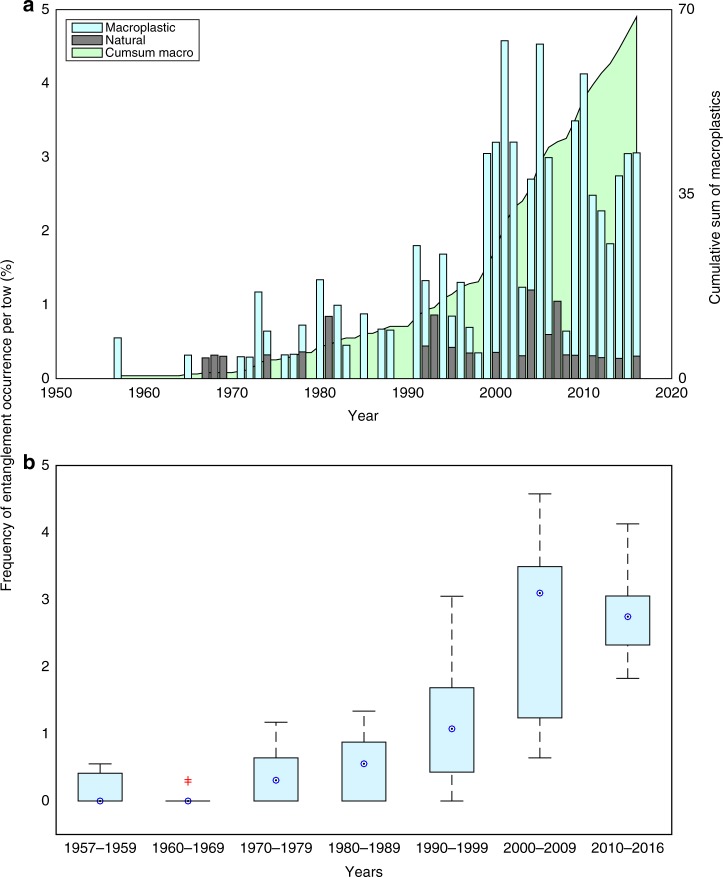
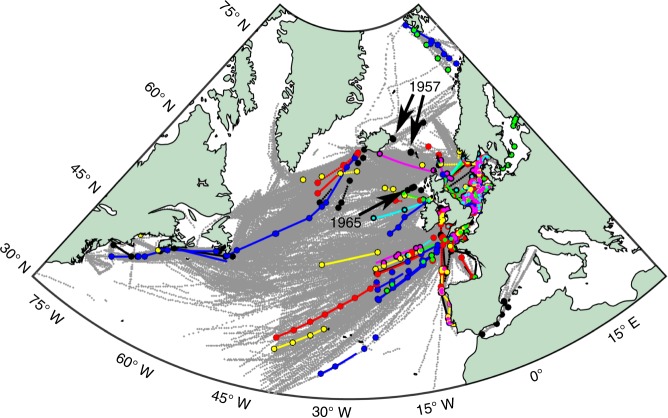
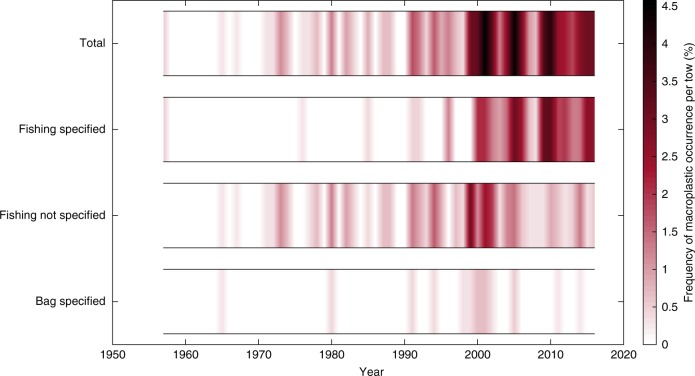
Plastic production has increased exponentially since its use became widespread in the 1950s. This has led to increased concern as plastics have become prevalent in the oceanic environment, and evidence of their impacts on marine organisms and human health has been highlighted. Despite their prevalence, very few long-term (>40 years) records of the distribution and temporal trends of plastics in the world’s oceans exist. Here we present a new time series, from 1957 to 2016 and covering over 6.5 million nautical miles, based on records of when plastics have become entangled on a towed marine sampler. This consistent time series provides some of the earliest records of plastic entanglement, and is the first to confirm a significant increase in open ocean plastics in recent decades.
Overview
The claims and statistics of this paper haven’t been checked yet.
Free: it reads the open-access text and checks the first 5 claims that cite a source we can check. Create a free account to check every claim.
Integrity signals
Registry
Cites
Statistics
Figures
Verification
Claims the paper makes
The claims and statistics of this paper haven’t been checked yet.
Free: it reads the open-access text and checks the first 5 claims that cite a source we can check. Create a free account to check every claim.
Self-check
Percentages, sums and reported differences re-computed from the paper’s own numbers.
The self-check needs the paper’s full text.
Citations
Cites
The Proceedings of the National Academy of Sciences
Richards, J. W. (1915) · Science · doi:10.1126/science.42.1074.161 · Cited by 13,983
Plastic waste inputs from land into the ocean
Jambeck, J. R., Geyer, R., Wilcox, C., Siegler, T. R., Perryman, M., Andrady, A., Narayan, R., & Law, K. L. (2015) · Science · doi:10.1126/science.1260352 · Cited by 13,163 · cited 1×
“As the global population continues to increase, plastic waste will continue to grow 31 .”
BackgroundLost at sea: where is all the plastic?
Thompson, R. C., Olsen, Y., Mitchell, R. P., Davis, A., Rowland, S. J., John, A. W. G., McGonigle, D., & Russell, A. E. (2004) · Science · doi:10.1126/science.1094559 · Cited by 7,765
Self-citation(2015) · Springer eBooks · doi:10.1007/978-3-319-16510-3 · Cited by 3,502
Plastic and Human Health: A Micro Issue?
Wright, S. L., & Kelly, F. J. (2017) · Environmental Science & Technology · doi:10.1021/acs.est.7b00423 · Cited by 3,413 · cited 1×
“Since this period, there has been a rapid increase in plastic production for a wide range of uses, and a number of environmental impacts have been highlighted 3,6 – 8 .”
BackgroundPlastic debris in the open ocean
Cózar, A., Echevarría, F., González-Gordillo, J. I., Irigoien, X., Úbeda, B., Hernández-León, S., Palma, Á. T., Navarro, S., García-de-Lomas, J., Ruiz, A., et al. (2014) · Proceedings of the National Academy of Sciences · doi:10.1073/pnas.1314705111 · Cited by 3,133 · cited 4×
“This dataset presents some of the earliest records of open ocean plastic entanglement, and con fi rms a signi fi cant increase in open ocean plastics since the 1990s 7,14 – 17 .”
BackgroundInfluentialWhat a Waste : A Global Review of Solid Waste Management
Hoornweg, D., & Bhada-Tata, P. (2012) · doi:10.1596/17388 · Cited by 3,129
Plastics, the environment and human health: current consensus and future trends
Thompson, R. C., Moore, C. J., vom Saal, F. S., & Swan, S. H. (2009) · Philosophical Transactions of the Royal Society B: Biological Sciences · doi:10.1098/rstb.2009.0053 · Cited by 3,032
Self-citationPlastic accumulation in the North Atlantic subtropical gyre
Law, K. L., Morét-Ferguson, S., Maximenko, N. A., Proskurowski, G., Peacock, E. E., Hafner, J., & Reddy, C. M. (2010) · Science · doi:10.1126/science.1192321 · Cited by 1,377
Plastics in the Marine Environment
Law, K. L. (2017) · Annual Review of Marine Science · doi:10.1146/annurev-marine-010816-060409 · Cited by 1,059
Research works printed but not linked: 4
- Shomura, R. S. & Yoshida, H. O. Proceedings of the workshop on the fate and impact of marine debris. NOAA Technical Memorandum NMFS (1985).
- Harper P Fowler JA Plastic pellets in New Zealand storm-killed prions (Pachyptila spp). 1958–1977 Notornis 1987 34 65 70
- Balazs, G. Impact of ocean debris on marine turtles: entanglement and ingestion. In Proc. Workshop on the Fate and Impact of Marine Debris, 27–29 November 1984, Honolulu, Hawaii (ed. R. S. Shomura, H. O. Yoshida) 387–429. Technical Memorandum NOAA-TM-NMFS-SWFC-54. (Washington, DC: Natl1985).
- ICES, Fisheries Overviews—Greater North Sea Ecoregion 2016 pp. 1–22 (2016).
Cited by
Items 101–200 of 467
Electrocatalytic upcycling of plastic waste: Progress, challenges, and future
Li, J., Chen, J. T., Zhang, L., Matos, J., Wang, L., & Yang, J. (2024) · Electron · doi:10.1002/elt2.63 · Cited by 64
Mitigation strategies to reverse the rising trend of plastics in Polar Regions
Eriksen, M., Borgogno, F., Villarrubia-Gómez, P., Anderson, E., Box, C., & Trenholm, N. (2020) · Environment International · doi:10.1016/j.envint.2020.105704 · Cited by 62
“the early 1970s (Carpenter and Smith, 1972), with an increasing global trend in the nearly half century since that time (Ostle et al., 2019).”
BackgroundWeight-based pay-as-you-throw pricing model: Encouraging sorting in households through waste fees
Ukkonen, A., & Sahimaa, O. (2021) · Waste Management · doi:10.1016/j.wasman.2021.09.011 · Cited by 75
“Urgent actions are needed to tackle environmental challenges, such as climate change (Edenhofer et al., 2014), resource scarcity (European Commission, 2012), and ocean plastics (Ostle et al., 2019).”
The influence of plastic pollution and ocean change on detrital decomposition
Litchfield, S. G., Schulz, K. G., & Kelaher, B. P. (2020) · Marine Pollution Bulletin · doi:10.1016/j.marpolbul.2020.111354 · Cited by 57
Thrushes (Aves: Passeriformes) as indicators of microplastic pollution in terrestrial environments
Deoniziak, K., Cichowska, A., Niedźwiecki, S., & Pol, W. (2022) · The Science of The Total Environment · doi:10.1016/j.scitotenv.2022.158621 · Cited by 59
“Rather, they undergo disintegration and degradation into microscopic plastic parti-clesknownasmicroplastics(MP; < 5mminonedimension)andfurtherinto nanoplastics ( < 0.1 μ m), gradually accumulating in the environment (Whitacre, 2014; Ostle et al., 2019; Rochman et al., 2019).”
InfluentialMicro- and Nanoplastics’ Effects on Protein Folding and Amyloidosis
Windheim, J., Colombo, L., Battajni, N. C., Russo, L., Cagnotto, A., Diomede, L., Bigini, P., Vismara, E., Fiumara, F., Gabbrielli, S., et al. (2022) · International Journal of Molecular Sciences · doi:10.3390/ijms231810329 · Cited by 61
“In parallel to the increased plastic production, the amount of plastic waste is obviously growing and, due to its slow rate of degradation, the total amount of plastic waste will continue to accumulate in the environment, reaching a projected amount of 12 billion tons by 2050 [2,4].”
BackgroundWang, W., Yao, C., Ge, X., Pu, X., Yuan, J., Sun, W., Chen, W., Feng, X., Qian, G., Duan, X., et al. (2023) · Journal of Materials Chemistry A · doi:10.1039/d3ta01917a · Cited by 56
Major characteristics of microplastics in mussels from the Portuguese coast
Marques, F., Vale, C., Rudnitskaya, A. M., Moreirinha, C., Costa, S. T., & Botelho, M. J. (2021) · Environmental Research · doi:10.1016/j.envres.2021.110993 · Cited by 54
Int-Veen, I., Nogueira, P., Isigkeit, J., Hanel, R., & Kammann, U. (2021) · Marine Pollution Bulletin · doi:10.1016/j.marpolbul.2021.112876 · Cited by 57
An enhanced risk assessment framework for microplastics occurring in the Westerscheldt estuary
Liu, Z., Huang, Q., Wang, H., & Zhang, S. (2022) · The Science of The Total Environment · doi:10.1016/j.scitotenv.2022.153006 · Cited by 57
Temporal Archive of Atmospheric Microplastic Deposition Presented in Ombrotrophic Peat
Allen, D., Allen, S., Roux, G. L., Simonneau, A., Galop, D., & Phoenix, V. R. (2021) · Environmental Science & Technology Letters · doi:10.1021/acs.estlett.1c00697 · Cited by 61
An inclusive trend study of evaluation and scientometric analysis of microplastics
Perumpully, S. J., Kumar, R. P., Gautam, S., Ambade, B., & Gautam, A. S. (2023) · Physics and Chemistry of the Earth Parts A/B/C · doi:10.1016/j.pce.2023.103455 · Cited by 55
Microplastic Contamination Has Limited Effects on Coral Fertilisation and Larvae
Berry, K., Epstein, H. E., Lewis, P. J., Hall, N., & Negri, A. P. (2019) · Diversity · doi:10.3390/d11120228 · Cited by 57
“The amount of plastic pollution entering the marine environment is increasing [1] concurrent to plastic production (384 million Mt in 2017 alone [2,3]) and global microplastic contamination was recently estimated at between five and 51 × 1012 particles [4,5].”
BackgroundCourtene‐Jones, W., Maddalene, T., James, M. K., Smith, N. S., Youngblood, K. M., Jambeck, J., Earthrowl, S., Delvalle-Borrero, D., Penn, E., & Thompson, R. C. (2021) · The Science of The Total Environment · doi:10.1016/j.scitotenv.2021.149098 · Cited by 64
Self-citationChen, H. L., Selvam, S. B., Ting, K., & Gibbins, C. N. (2021) · Environmental Science and Pollution Research · doi:10.1007/s11356-021-15826-x · Cited by 62
“The earliest report of marine plastic waste was in 1957, while the earliest reported ecological impacts (on turtles and seabirds) was in the late 1960s (Ostle et al. 2019).”
BackgroundInfluentialKaviarasan, T., Dhineka, K., Sambandam, M., Sivadas, S. K., Sivyer, D. B., Hoehn, D. P., Pradhan, U., Mishra, P., & Murthy, M. V. R. (2022) · Ocean & Coastal Management · doi:10.1016/j.ocecoaman.2022.106177 · Cited by 54
Ning, J., Pang, S., Arifin, Z., Zhang, Y., Epa, U. P. K., Qu, M., Zhao, J., Zhen, F., Chowdhury, A., Guo, R., et al. (2024) · Journal of Marine Science and Engineering · doi:10.3390/jmse12071181 · Cited by 60
A mechanism for the increased wave-induced drift of floating marine litter
Calvert, R., McAllister, M. L., Whittaker, C., Raby, A. C., Borthwick, A. G. L., & van den Bremer, T. S. (2021) · Journal of Fluid Mechanics · doi:10.1017/jfm.2021.72 · Cited by 51
Fish crimes in the global oceans
Belhabib, D., & Billon, P. L. (2022) · Science Advances · doi:10.1126/sciadv.abj1927 · Cited by 60
“No global study has specifically pointed at the role of illegal fishing in ocean pollution, but considering that illegal fishing accounts for 10% of fishing activities, it could amount to 4.5% of macroplastics at sea ( 59 ).”
InfluentialA modified YOLOv4 detection method for a vision-based underwater garbage cleaning robot
Tian, M., Li, X., Kong, S., Wu, L., & Yu, J. (2022) · Frontiers of Information Technology & Electronic Engineering · doi:10.1631/fitee.2100473 · Cited by 59
“Due to the extremely slow degradation, plastics have become ubiquitous and have been associated with marine health impacts such as entanglement, ingestion, potential dispersal of invasive species and toxicity, and contamination through trophic levels (Ostle et al., 2019).”
BackgroundGambino, G., Falleni, A., Nigro, M., Salvetti, A., Cecchettini, A., Ippolito, C., Guidi, P., & Rossi, L. (2019) · Aquatic Toxicology · doi:10.1016/j.aquatox.2019.105354 · Cited by 50
Tudor, D. T., & Williams, A. T. (2021) · Marine Pollution Bulletin · doi:10.1016/j.marpolbul.2021.112778 · Cited by 52
A near-synoptic survey of ocean microplastic concentration along an around-the-world sailing race
Tanhua, T., Gutekunst, S. B., & Biastoch, A. (2020) · PLoS ONE · doi:10.1371/journal.pone.0243203 · Cited by 51
“[31] found a significant increase in the plastic entanglement of continuous plankton recorder (CPR) tows from 1937 to 2016.”
BackgroundSustainable Polymers: Our Evolving Understanding
Getzler, Y. D. Y. L., & Mathers, R. T. (2022) · Accounts of Chemical Research · doi:10.1021/acs.accounts.2c00194 · Cited by 49
Long, Z., Pan, Z., Jin, X., Zou, Q., He, J., Li, W., Waters, C. N., Turner, S. D., do Sul, J. A. I., Yu, X., et al. (2022) · Water Research · doi:10.1016/j.watres.2022.119215 · Cited by 51
Jamwal, V., & Mittal, A. (2024) · Food Reviews International · doi:10.1080/87559129.2024.2368065 · Cited by 58
“[43] Moreover, their production results in the emission of alarming levels of carbon footprint, exerting deleterious effects on the atmosphere.”
Yap, V. H. S., Chase, Z., Wright, J. T., Hurd, C. L., Lavers, J. L., & Lenz, M. (2020) · Marine Pollution Bulletin · doi:10.1016/j.marpolbul.2020.111703 · Cited by 50
Equilibrium leaching of selected ultraviolet stabilizers from plastic products
Do, A. T. N., Ha, Y., Kang, H.-J., Kim, J. M., & Kwon, J. (2021) · Journal of Hazardous Materials · doi:10.1016/j.jhazmat.2021.128144 · Cited by 46
Justino, A. K. S., Ferreira, G. V. B., Schmidt, N., Eduardo, L. N., Fauvelle, V., Lenoble, V., Sempéré, R., Panagiotopoulos, C., Mincarone, M. M., Frédou, T., et al. (2022) · Environmental Pollution · doi:10.1016/j.envpol.2022.118988 · Cited by 58
Cai, L., Wang, L., Zhao, J., Deng, L., Yu, S., Shi, Z., & Wang, Z. (2021) · Journal of Cleaner Production · doi:10.1016/j.jclepro.2021.127935 · Cited by 56
Chen, Q., Chang, C., & Zhang, L. (2021) · Carbohydrate Polymers · doi:10.1016/j.carbpol.2021.118315 · Cited by 46
Separation of Microplastic Particles from Sewage Sludge Extracts Using Magnetic Seeded Filtration
Rhein, F., Nirschl, H., & Kaegi, R. (2022) · Water Research X · doi:10.1016/j.wroa.2022.100155 · Cited by 57
“…have lead to an enormous increase in the annual production of plastics since the start of the mass production in the late 60-ties and to its accumulation in the environment (Andrady, 2017; Birch et al., 2020; Geyer et al., 2017; Jambeck et al., 2015; MacLeod et al., 2021; Ostle et al., 2019).”
BackgroundEcological risks associated with seaweed cultivation and identifying risk minimization approaches
Bhuyan, M. S. (2023) · Algal Research · doi:10.1016/j.algal.2022.102967 · Cited by 56
Wang, L., & Villa, K. (2021) · Environmental Science Nano · doi:10.1039/d1en00663k · Cited by 45
Tan, P., Gu, W., Zou, Y., Song, X., Huang, Z., Liu, J., & Lei, I. M. (2024) · Progress in Polymer Science · doi:10.1016/j.progpolymsci.2024.101920 · Cited by 45
Micro/nanorobots for efficient removal and degradation of micro/nanoplastics
Li, W., Wang, J., Xiong, Z., & Li, D. (2023) · Cell Reports Physical Science · doi:10.1016/j.xcrp.2023.101639 · Cited by 51
Fishing Gears and Nets as a Source of Microplastic
Sharma, D., Dhanker, R., Bhawna, Tomar, A., Raza, S., & Sharma, A. (2024) · Springer eBooks · doi:10.1007/978-981-99-8357-5_8 · Cited by 73
Plastic pollution – A case study with Enchytraeus crypticus – From micro-to nanoplastics
Amorim, M. J. B., & Scott-Fordsmand, J. J. (2020) · Environmental Pollution · doi:10.1016/j.envpol.2020.116363 · Cited by 46
Thiel, M., Lorca, B. B., Bravo, L., Hinojosa, I. A., & Meneses, H. Z. (2021) · Marine Pollution Bulletin · doi:10.1016/j.marpolbul.2021.112535 · Cited by 46
Halbach, M., Vogel, M., Tammen, J. K., Rüdel, H., Koschorreck, J., & Scholz‐Böttcher, B. M. (2021) · The Science of The Total Environment · doi:10.1016/j.scitotenv.2022.154179 · Cited by 42
Shim, W. J., Kim, S., Lee, J., Eo, S., Kim, J., & Sun, C. (2022) · Environmental Pollution · doi:10.1016/j.envpol.2022.119911 · Cited by 46
Politikos, D. V., Adamopoulou, A., Petasis, G. C., & Galgani, F. (2022) · Ocean & Coastal Management · doi:10.1016/j.ocecoaman.2022.106466 · Cited by 48
Serra, T., & Colomer, J. (2023) · The Science of The Total Environment · doi:10.1016/j.scitotenv.2023.163720 · Cited by 43
Composition, spatial distribution and sources of plastic litter on the East China Sea floor
Zhang, F., Yao, C., Xu, J., Zhu, L., Peng, G., & Li, D. (2020) · The Science of The Total Environment · doi:10.1016/j.scitotenv.2020.140525 · Cited by 42
Microplastic exposure increases predictability of predator avoidance strategies in hermit crabs
Nanninga, G. B., Horswill, C., Lane, S., Manica, A., & Briffa, M. (2020) · Journal of Hazardous Materials Letters · doi:10.1016/j.hazl.2020.100005 · Cited by 44
“The contamination of the world’s ecosystems with plastic debris is a key global environmental issue (Ostle et al., 2019).”
Zhang, F., Xu, J., Zhu, L., Peng, G., Jabeen, K., Wang, X., & Li, D. (2021) · Journal of Hazardous Materials · doi:10.1016/j.jhazmat.2021.126456 · Cited by 44
Yong, M. M. H., Leistenschneider, C., Miranda, J. A., Paler, M. K. O., Legaspi, C. G., Germanov, E. S., Araújo, G., Burkhardt‐Holm, P., & Erni-Cassola, G. (2021) · Microplastics and Nanoplastics · doi:10.1186/s43591-021-00017-9 · Cited by 47
“Given the demonstrated increase of marine plastic abundance over the past 60 years [4], and the well-established global distribution of microplastics (e.”
BackgroundHiggins, C. J., Vanneste, J., & van den Bremer, T. S. (2020) · Geophysical Research Letters · doi:10.1029/2020gl089189 · Cited by 42
“Similarly, the amount of plastics measured at sea over the last few decades (Lebreton et al., 2019; Ostle et al., 2019; Wilcox et al., 2020) has not kept pace with growth in global plastic production (Geyer et al., 2017; Goldstein et al., 2012).”
BackgroundWhat is in our seas? Assessing anthropogenic litter on the seafloor of the central Mediterranean Sea
Garofalo, G., Quattrocchi, F., Bono, G., Lorenzo, M. D., Maio, F. D., Falsone, F., Gancitano, V., Geraci, M. L., Lauria, V., Massi, D., et al. (2020) · Environmental Pollution · doi:10.1016/j.envpol.2020.115213 · Cited by 40
Tan, H., Mong, G. R., Wong, S. L., Wong, K. Y., Sheng, D. D. C. V., Nyakuma, B. B., Othman, M. H. D., Kek, H. Y., Razis, A. F. A., Wahab, N. H. A., et al. (2023) · Environmental Science and Pollution Research · doi:10.1007/s11356-023-31228-7 · Cited by 45
“This revelation is to be expected since the MP pollution in oceans has already occurred for the past 40 years (Ostle et al. 2019).”
Gupta, A., Mohanty, A. K., & Misra, M. (2021) · Composites Part A Applied Science and Manufacturing · doi:10.1016/j.compositesa.2021.106759 · Cited by 39
Liu, Q., Wang, F., Hu, E., Hong, R., Li, T., Yuan, X., Cheng, X.-B., Cai, N., Xiao, R., & Zhang, H. (2022) · iScience · doi:10.1016/j.isci.2022.104855 · Cited by 41
“It is reported that 95% of plastic packaging material value (USD 80–120 billion per year) is wasted only after the first-use cycle (Dogu et al., 2021), and potential health risks caused by waste plastics have been highlighted (Ostle et al., 2019).”
BackgroundBorongan, G., & NaRanong, A. (2022) · Marine Pollution Bulletin · doi:10.1016/j.marpolbul.2022.113920 · Cited by 39
Rong, J., Yuan, C., Xiang, Y., Wu, X., He, F., Wang, Y., Leung, K. S., & Lin, S. (2024) · The Science of The Total Environment · doi:10.1016/j.scitotenv.2024.172681 · Cited by 36
Rummaging through the bin: Modelling marine litter distribution using Artificial Neural Networks
Franceschini, S., Mattei, F., D’Andrea, L., Nardi, A. D., Fiorentino, F., Garofalo, G., Scardi, M., Cataudella, S., & Russo, T. (2019) · Marine Pollution Bulletin · doi:10.1016/j.marpolbul.2019.110580 · Cited by 42
Xiao, R., Yu, Q., Ye, H., Shi, Y., Sheng, Y., Zhang, M., Nourani, P., & Ge, S. (2022) · Journal of Building Engineering · doi:10.1016/j.jobe.2022.105445 · Cited by 41
Yao, M., Li, M., Gao, Z., & Hu, X. (2023) · The Science of The Total Environment · doi:10.1016/j.scitotenv.2023.162853 · Cited by 37
Li, X., Hu, S., Yu, Z., He, F., Zhao, X., & Liu, R. (2025) · Environmental Science & Technology · doi:10.1021/acs.est.5c01254 · Cited by 40
Maaghloud, H., Houssa, R., Bellali, F., Bouqdaoui, K. E., Ouansafi, S., Loulad, S., & Fahde, A. (2021) · Environmental Pollution · doi:10.1016/j.envpol.2021.117781 · Cited by 37
Jamali, A., & Mahdianpari, M. (2021) · Water · doi:10.3390/w13182553 · Cited by 41
Microplastics shape the ecology of the human gastrointestinal intestinal tract
Turroni, S., Wright, S., Rampelli, S., Brigidi, P., Zinzani, P. L., & Candela, M. (2021) · Current Opinion in Toxicology · doi:10.1016/j.cotox.2021.09.006 · Cited by 39
Nanoplastics and Neurodegeneration in ALS
Eisen, A., Pioro, E. P., Goutman, S. A., & Kiernan, M. C. (2024) · Brain Sciences · doi:10.3390/brainsci14050471 · Cited by 42
“Even though plastic production has increased exponentially since the 1950s [17,18], recognition of microplastics as pollutants of risk to humans is only recent [19,20], and their potential as a risk factor in the pathogenesis of neurodegeneration has received very limited attention.”
BackgroundFu, Y., Zhu, L., Liu, B., Zhang, X., & Weng, Y. (2024) · Polymer · doi:10.1016/j.polymer.2024.127295 · Cited by 38
Provencher, J. F., Aliani, S., Bergmann, M., Bourdages, M. P. T., Buhl‐Mortensen, L., Galgani, F., Gomiero, A., Granberg, M., Grøsvik, B. E., Hamilton, B. M., et al. (2022) · Arctic Science · doi:10.1139/as-2022-0011 · Cited by 38
Firmino, V. C., Martins, R. T., Brasil, L. S., Cunha, E. J., Pinedo-Garcia, R. B., Hamada, N., & Juen, L. (2023) · Environmental Pollution · doi:10.1016/j.envpol.2023.121184 · Cited by 35
Characterization of three plastic forms: Plasticoncrete, plastimetal and plastisessiles
Ellrich, J. A., Ehlers, S. M., Furukuma, S., Pogoda, B., & Koop, J. H. E. (2023) · The Science of The Total Environment · doi:10.1016/j.scitotenv.2023.165073 · Cited by 35
Upgrading waste plastics to value-added aromatics
Li, S., Li, Z., Zhang, F., & Chen, J. (2024) · Chem Catalysis · doi:10.1016/j.checat.2024.100928 · Cited by 46
Wang, D., Du, L., Sun, Z., Liu, F., Zhang, D., & Wang, D. (2023) · Carbohydrate Polymers · doi:10.1016/j.carbpol.2023.121143 · Cited by 35
Chen, S., Yang, J.-L., Zhang, Y.-S., Wang, H., Lin, X.-Y., Xue, R.-Y., Li, M., Li, S., Juhasz, A. L., Ma, L. Q., et al. (2023) · Environmental Pollution · doi:10.1016/j.envpol.2023.121376 · Cited by 36
Comprehensive investigation on microplastics from source to sink
Razaviarani, V., Saudagar, A., Gallage, S., Shrinath, S., & Arab, G. (2024) · Clean Technologies and Environmental Policy · doi:10.1007/s10098-024-02738-w · Cited by 43
“…alternatives has emerged as a promising solution since they would provide similar functionality and applications as conventional plastics while being derived from renewable resources and potentially exhibiting better biodegradability or compostability under certain conditions (Ostle et al. 2019).”
Microplastics in the NZ environment: Current status and future directions
Bhowmick, G. D., Sarmah, A. K., & Dubey, B. (2020) · Case Studies in Chemical and Environmental Engineering · doi:10.1016/j.cscee.2020.100076 · Cited by 40
Baseline Marine Litter Surveys along Vietnam Coasts Using Citizen Science Approach
Nguyen, T.-T. T., Ha, N.-H., Bui, T.-K. L., Nguyen, K. L. P., Tran, D.-P. T., Nguyễn, H. Q., El-Arini, A., Schuyler, Q. A., & Nguyen, T. T. L. (2022) · Sustainability · doi:10.3390/su14094919 · Cited by 31
Nakei, M. D., Misinzo, G., Tindwa, H. J., & Semu, E. W. (2022) · Frontiers in Microbiology · doi:10.3389/fmicb.2022.1077588 · Cited by 42
“Hence, plastics are persistent once introduced, after use, into the environment and are one of the sources of environmental pollution (Ostle et al., 2019).”
BackgroundLiang, J., Liu, J., Benfield, M. C., Justić, D., Holstein, D. M., Liu, B., Hetland, R. D., Kobashi, D., Dong, C., & dong, W. (2021) · Ocean Modelling · doi:10.1016/j.ocemod.2021.101879 · Cited by 33
Ye, M., Li, Y., Yang, Z., Yao, C., Sun, W., Zhang, X., Chen, W., Qian, G., Duan, X., Cao, Y., et al. (2023) · Angewandte Chemie · doi:10.1002/ange.202301024 · Cited by 29
Perspectives on the microorganisms with the potentials of PET-degradation
Liu, X.-H., Jin, J.-L., Sun, H.-T., Li, S., Zhang, F., Yu, X., Cao, Q., Song, Y., Li, N., Lü, Z., et al. (2025) · Frontiers in Microbiology · doi:10.3389/fmicb.2025.1541913 · Cited by 41
“…of plastics has led to a growing concern caused by their detrimental impacts on the natural ecosystem, for instance, the proliferation of plastic waste in the oceans (Ostle et al., 2019; Abel et al., 2023) and the emergence of hazardous microplastics (Lee et al., 2022; Arpia et al., 2021).”
Plastics and Microplastics: Impacts in the Marine Environment
Steer, M., & Thompson, R. C. (2020) · Springer eBooks · doi:10.1007/978-3-030-38945-1_3 · Cited by 34
Self-citationSustainable Sewage Sludge Management and Resource Efficiency
Taşeli, B. K. (2020) · IntechOpen eBooks · doi:10.5772/intechopen.80201 · Cited by 30
First long-term evidence of microplastic pollution in the deep subtropical Northeast Atlantic
Reineccius, J., & Waniek, J. J. (2022) · Environmental Pollution · doi:10.1016/j.envpol.2022.119302 · Cited by 33
Marine debris provide long-distance pathways for spreading invasive corals
Soares, M. D. O., Garcia, T. M., Giarrizzo, T., Filho, J. E. M., Tavares, T. C. L., Ziveri, P., Smith, T. B., Bejarano, S., & Teixeira, C. E. P. (2023) · The Science of The Total Environment · doi:10.1016/j.scitotenv.2023.165637 · Cited by 39
Nanoplastics as Gene and Epigenetic Modulators of Endocrine Functions: A Perspective
Aloisi, M., & Poma, A. M. G. (2025) · International Journal of Molecular Sciences · doi:10.3390/ijms26052071 · Cited by 33
“Environmental concentrations are increasing, and they have been found from urban to extreme areas such as glaciers and oceanic floor [1–3].”
Nguyen, X. C., Dao, D. C., Nguyen, T. T., Tran, Q. B., Nguyen, T.-D., Tuấn, T. A., Nguyen, K. L. P., Nguyen, V.-T., Nadda, A. K., Nho, N. T., et al. (2021) · Chemosphere · doi:10.1016/j.chemosphere.2021.133059 · Cited by 40
Alcoholysis of waste PLA-based plastics to methyl lactate over sulfated ZrO2/SiO2 catalyst
Ye, B., Zhou, R., Wang, C., Wang, Z., Zhong, Z., & Hou, Z. (2022) · Applied Catalysis A General · doi:10.1016/j.apcata.2022.118936 · Cited by 28
Ilechukwu, I., Das, R. R., & Reimer, J. D. (2023) · Marine Pollution Bulletin · doi:10.1016/j.marpolbul.2023.114922 · Cited by 32
Microplastics in anaerobic digestion: occurrence, impact, and mitigation strategies
Alimohammadi, M., & Demirer, G. N. (2024) · Journal of Environmental Health Science and Engineering · doi:10.1007/s40201-024-00910-4 · Cited by 32
“Over the past six decades, there has been an observable rise in oceanic MPs concurrent with the surge in global plastic production, with these MPs finding their way into the oceans via multiple routes [53].”
Critical reassessment of microplastic abundances in the marine environment
Reineccius, J., & Waniek, J. J. (2024) · The Science of The Total Environment · doi:10.1016/j.scitotenv.2024.176449 · Cited by 27
Ibrahim, I., Ashour, A. G., Zeiada, W., Salem, N., & Abdallah, M. (2024) · Sustainability · doi:10.3390/su16188247 · Cited by 44
Nanninga, G. B., Pertzelan, A., Kiflawi, M., Holzman, R., Plakolm, I., & Manica, A. (2021) · Journal of Hazardous Materials · doi:10.1016/j.jhazmat.2021.126059 · Cited by 32
“, 2015), which has led to a significant increase of plastic debris in marine ecosystems over recent decades (Ostle et al., 2019).”
BackgroundTakaya, K., Shibata, A., Mizuno, Y., & Ise, T. (2022) · Environmental Research Communications · doi:10.1088/2515-7620/ac473b · Cited by 29
Peñalver, R., Marín, C., Arroyo‐Manzanares, N., Campillo, N., & Viñas, P. (2022) · Chemosphere · doi:10.1016/j.chemosphere.2022.134156 · Cited by 29
Visualizing undyed microplastic particles and fibers with plasmon-enhanced fluorescence
Wei, X., Rindzevicius, T., Wu, K., Bohlén, M., Hedenqvist, M. S., Boisen, A., & Hakonen, A. (2022) · Chemical Engineering Journal · doi:10.1016/j.cej.2022.136117 · Cited by 29
Microplastic pollution in riverine ecosystems: threats posed on macroinvertebrates
Nantege, D., Odong, R., Auta, H. S., Keke, U. N., Ndatimana, G., Assie, F. A. G. J., & Arimoro, F. O. (2023) · Environmental Science and Pollution Research · doi:10.1007/s11356-023-27839-9 · Cited by 29
“Since the start of mass plastic production in the 1950s, MPs have been a global environmental challenge (Ostle et al. 2019; Dumbili and Henderson 2020; Xu et al. 2021).”
BackgroundHerbert, J., Beckett, A. H., & Robson, S. C. (2022) · Sustainability · doi:10.3390/su142315898 · Cited by 32
“These properties have led to global environmental crises, resulting in pollution and threat to the ecosystem such as through the introduction of microplastics into the food chain, being a danger to marine life in particular [4,5].”
BackgroundLee, H., Song, S. J., Kim, C., & Park, B. (2024) · Aquatic Toxicology · doi:10.1016/j.aquatox.2024.107027 · Cited by 28
Vanishing Water: Rescuing the Neglected Food Resource
Knorr, D., & Augustin, M. A. (2023) · Food Engineering Reviews · doi:10.1007/s12393-023-09349-z · Cited by 29
Popa, R., & Tăbăran, F. (2025) · Applied Sciences · doi:10.3390/app15116135 · Cited by 32
A new paradigm for estimating the prevalence of plastic litter in the marine environment
Kylili, K., Artusi, A., & Hadjistassou, C. (2021) · Marine Pollution Bulletin · doi:10.1016/j.marpolbul.2021.113127 · Cited by 28
Liu, Q., Cai, N., Peng, B., Wu, C., Hong, R., Jiang, D., & Zhang, H. (2022) · Fuel Processing Technology · doi:10.1016/j.fuproc.2022.107428 · Cited by 24
Biodegradable trays based on Manihot esculenta Crantz starch and Zea mays husk flour
Aguirre, E., Domínguez, J., Villanueva, E., Ponce-Ramirez, J. A., Arévalo-Oliva, M. D. F., Siché, R., González-Cabeza, J., & Rodríguez, G. (2023) · Food Packaging and Shelf Life · doi:10.1016/j.fpsl.2023.101129 · Cited by 24
Pérez‐Venegas, D., Valenzuela‐Sánchez, A., Montalva, F., Pavés, H. J., Seguel, M., Wilcox, C., & Galbán-Malagón, C. J. (2021) · Environmental Pollution · doi:10.1016/j.envpol.2021.116881 · Cited by 27
Metadata
- Authors
- Ostle, C., Thompson, R. C., Broughton, D., Gregory, L., Wootton, M., & Johns, D. G.
- Affiliations
- Marine Biological Association of the United Kingdom (GB)
- University of Plymouth (GB)
- Corresponding author
- Ostle, Clare
- Venue
- Nature Communications
- Published
- 2019-04-16
- Volume
- 10
- Issue
- 1
- Pages
- 1622-1622
- ISSN
- 2041-1723 (ISSN-L)
- PMC
- PMC6467903
- OpenAlex
- W2939234172
- Semantic Scholar
- f49456e6d0d8281a906dfb50d54f234111126082
- Cited by
- 469
- References
- 34
- Citations by year
- 2026: 36 · 2025: 59 · 2024: 91 · 2023: 61 · 2022: 72 · 2021: 67 · 2020: 70 · 2019: 12
- FWCI
- 16.55
- Type
- journal article
- Language
- en
- Open access
- gold
- doi.org
- Licence
- cc-by
- creativecommons.org/licenses/by/4.0 (tdm)
- creativecommons.org/licenses/by/4.0 (vor)
- Locations
- Nature Communications (publishedVersion, cc-by)
- Europe PMC (PubMed Central) (publishedVersion, cc-by)
- PubMed Central (publishedVersion, cc-by)
- PubMed (publishedVersion)
- Marine Biological Association (acceptedVersion)
- PEARL (University of Plymouth) (submittedVersion)
- RePEc: Research Papers in Economics (submittedVersion)
- DOAJ (DOAJ: Directory of Open Access Journals) (submittedVersion)
- DOAJ (DOAJ: Directory of Open Access Journals) (submittedVersion, cc-by-sa)
- Funders
- National Science Foundation (DFO CA F5955- 150026/001/HAL, 1657887, UK NC-R8/H12/100)
- Department for Environment, Food and Rural Affairs, UK Government (DEFRA UK ME-5308, ME5308)
- Natural Environment Research Council (UK NC-R8/H12/100, NE/R015953/1, SAH01001, NC-R8/H12/100, DEFRA UK ME-5308)
- Topics
- Physical Sciences › Environmental Science › Pollution › Microplastics and Plastic Pollution
- Physical Sciences › Environmental Science › Pollution › Oil Spill Detection and Mitigation
- Physical Sciences › Earth and Planetary Sciences › Oceanography › Marine Plankton and Biogeochemistry
- Keywords
- ocean plastic, plastic entanglement, marine plastic pollution, plastic production, temporal trends, long-term time series, open ocean, marine litter
About these checks
Registry, retraction, Cites and statistics results are computed, not judged, with one exception: a printed reference that no index lists is read once by a model before it counts as a citation error. Claims are extracted by a model and kept only when their quote appears verbatim in the text; each cited source is then checked, with a model’s help, for whether it says what the claim relies on. Those verdicts can be wrong — read the claim’s quote and the cited source before relying on one.
Statistics and arithmetic are recomputed, not judged.
Confidence bands are shown only for fields calibrated on our annotated test set. None is calibrated yet, so no band is shown.
What counts as a claim ›How we measure confidence ›How we check this ›
Are you an author, or do you see a problem with this page? Request a review
Data sources
Bibliographic data: Semantic Scholar, OpenAlex, Crossref.
Contains information from the Semantic Scholar Academic Graph Datasets, made available under the ODC Attribution License (ODC-BY 1.0).
Semantic Scholar’s data is described in: Kinney, R., et al. (2023). The Semantic Scholar Open Data Platform. arXiv:2301.10140.
