

The rise in ocean plastics evidenced from a 60-year time series
Open accessThe DOI matches its Crossref record; 33 of the 34 references it cites were found in a registry or an index.
Abstract
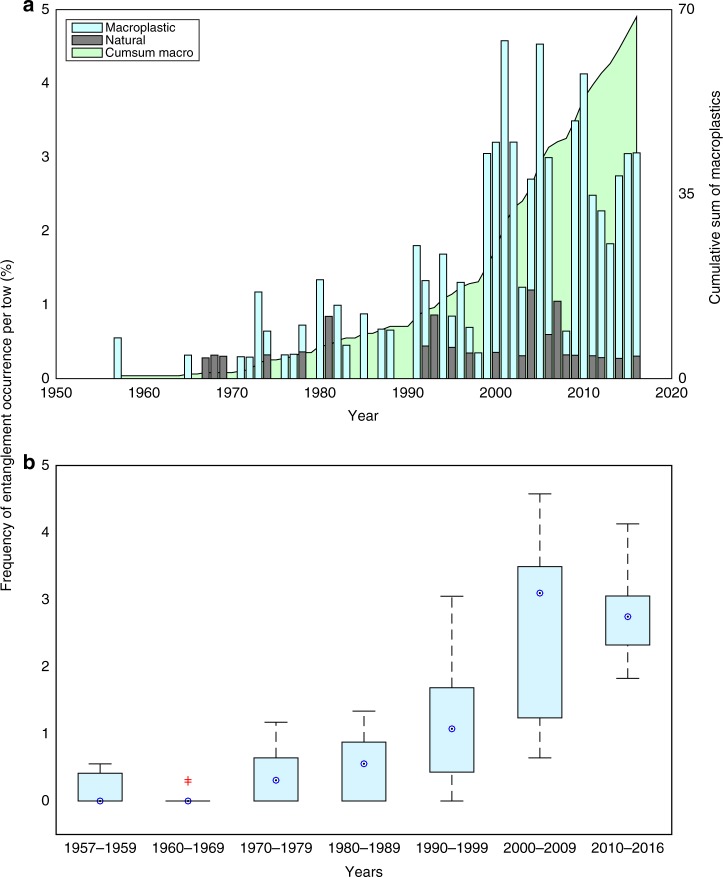
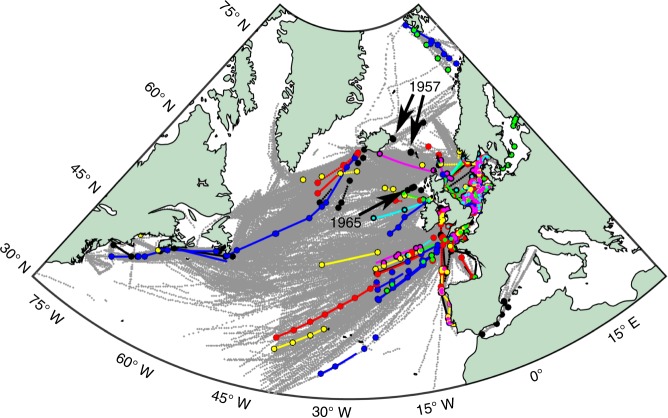
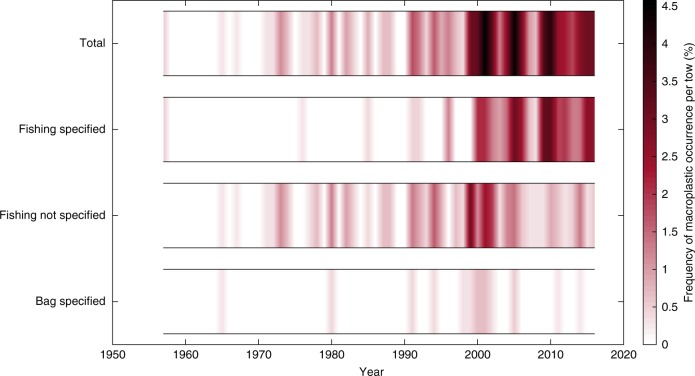
Plastic production has increased exponentially since its use became widespread in the 1950s. This has led to increased concern as plastics have become prevalent in the oceanic environment, and evidence of their impacts on marine organisms and human health has been highlighted. Despite their prevalence, very few long-term (>40 years) records of the distribution and temporal trends of plastics in the world’s oceans exist. Here we present a new time series, from 1957 to 2016 and covering over 6.5 million nautical miles, based on records of when plastics have become entangled on a towed marine sampler. This consistent time series provides some of the earliest records of plastic entanglement, and is the first to confirm a significant increase in open ocean plastics in recent decades.
Overview
The claims and statistics of this paper haven’t been checked yet.
Free: it reads the open-access text and checks the first 5 claims that cite a source we can check. Create a free account to check every claim.
Integrity signals
Registry
Cites
Statistics
Figures
Verification
Claims the paper makes
The claims and statistics of this paper haven’t been checked yet.
Free: it reads the open-access text and checks the first 5 claims that cite a source we can check. Create a free account to check every claim.
Self-check
Percentages, sums and reported differences re-computed from the paper’s own numbers.
The self-check needs the paper’s full text.
Citations
Cites
The Proceedings of the National Academy of Sciences
Richards, J. W. (1915) · Science · doi:10.1126/science.42.1074.161 · Cited by 13,983
Plastic waste inputs from land into the ocean
Jambeck, J. R., Geyer, R., Wilcox, C., Siegler, T. R., Perryman, M., Andrady, A., Narayan, R., & Law, K. L. (2015) · Science · doi:10.1126/science.1260352 · Cited by 13,163 · cited 1×
“As the global population continues to increase, plastic waste will continue to grow 31 .”
BackgroundLost at sea: where is all the plastic?
Thompson, R. C., Olsen, Y., Mitchell, R. P., Davis, A., Rowland, S. J., John, A. W. G., McGonigle, D., & Russell, A. E. (2004) · Science · doi:10.1126/science.1094559 · Cited by 7,765
Self-citation(2015) · Springer eBooks · doi:10.1007/978-3-319-16510-3 · Cited by 3,502
Plastic and Human Health: A Micro Issue?
Wright, S. L., & Kelly, F. J. (2017) · Environmental Science & Technology · doi:10.1021/acs.est.7b00423 · Cited by 3,413 · cited 1×
“Since this period, there has been a rapid increase in plastic production for a wide range of uses, and a number of environmental impacts have been highlighted 3,6 – 8 .”
BackgroundPlastic debris in the open ocean
Cózar, A., Echevarría, F., González-Gordillo, J. I., Irigoien, X., Úbeda, B., Hernández-León, S., Palma, Á. T., Navarro, S., García-de-Lomas, J., Ruiz, A., et al. (2014) · Proceedings of the National Academy of Sciences · doi:10.1073/pnas.1314705111 · Cited by 3,133 · cited 4×
“This dataset presents some of the earliest records of open ocean plastic entanglement, and con fi rms a signi fi cant increase in open ocean plastics since the 1990s 7,14 – 17 .”
BackgroundInfluentialWhat a Waste : A Global Review of Solid Waste Management
Hoornweg, D., & Bhada-Tata, P. (2012) · doi:10.1596/17388 · Cited by 3,129
Plastics, the environment and human health: current consensus and future trends
Thompson, R. C., Moore, C. J., vom Saal, F. S., & Swan, S. H. (2009) · Philosophical Transactions of the Royal Society B: Biological Sciences · doi:10.1098/rstb.2009.0053 · Cited by 3,032
Self-citationPlastic accumulation in the North Atlantic subtropical gyre
Law, K. L., Morét-Ferguson, S., Maximenko, N. A., Proskurowski, G., Peacock, E. E., Hafner, J., & Reddy, C. M. (2010) · Science · doi:10.1126/science.1192321 · Cited by 1,377
Plastics in the Marine Environment
Law, K. L. (2017) · Annual Review of Marine Science · doi:10.1146/annurev-marine-010816-060409 · Cited by 1,059
Research works printed but not linked: 4
- Shomura, R. S. & Yoshida, H. O. Proceedings of the workshop on the fate and impact of marine debris. NOAA Technical Memorandum NMFS (1985).
- Harper P Fowler JA Plastic pellets in New Zealand storm-killed prions (Pachyptila spp). 1958–1977 Notornis 1987 34 65 70
- Balazs, G. Impact of ocean debris on marine turtles: entanglement and ingestion. In Proc. Workshop on the Fate and Impact of Marine Debris, 27–29 November 1984, Honolulu, Hawaii (ed. R. S. Shomura, H. O. Yoshida) 387–429. Technical Memorandum NOAA-TM-NMFS-SWFC-54. (Washington, DC: Natl1985).
- ICES, Fisheries Overviews—Greater North Sea Ecoregion 2016 pp. 1–22 (2016).
Cited by
Items 201–300 of 467
Carrillo-Barragán, P., Fitzsimmons, C., Lloyd-Hartley, H., Tinlin-Mackenzie, A., Scott, C., & Sugden, H. (2024) · Environmental Pollution · doi:10.1016/j.envpol.2023.123060 · Cited by 23
Ahmad, O., Ahmed, S., Khan, F., Upmanyu, K., Saif, M., & Haq, Q. M. R. (2024) · Discover Sustainability · doi:10.1007/s43621-024-00722-4 · Cited by 28
“Microplastics find their way into the ocean through various routes, including wastewater discharge, wind, and littering [12, 32].”
Black, J., Köpke, K., & O’Mahony, C. (2019) · Sustainability · doi:10.3390/su11236834 · Cited by 29
“In particular, the lengthy degradation time of petrochemical plastic polymers, which form about 80% of total global plastic usage, has created a growing waste disposal problem and increases in the accumulation of plastic waste in the global oceans [3,4].”
BackgroundEffects of temperature on caffeine and carbon nanotubes co-exposure in Ruditapes philippinarum
Piscopo, R., Coppola, F., Almeida, Â., Marchi, L. D., Russo, T., Esteves, V. I., Soares, A. M. V. M., Pretti, C., Chiellini, E., Polese, G., et al. (2021) · Chemosphere · doi:10.1016/j.chemosphere.2021.129775 · Cited by 24
β -Diketiminate and β -Ketoiminate Metal Catalysts for Ring-Opening Polymerization of Cyclic Esters
Glöckler, E., Ghosh, S., & Schulz, S. (2023) · Polymer Reviews · doi:10.1080/15583724.2022.2121837 · Cited by 22
“tion of plastics has increased drastically from 200 million tons in 2002 to 358 million tons in 2015,([2]) the excessive consumption of these polymers is causing serious environmental damages at an alarming rate.([3]) Biodegradable polymers produced from renewable raw materials such as polylactide”
BackgroundLee, C. E., Messer, L. F., Holland, S. I., Gutiérrez, T., Quilliam, R. S., & Surget, S. M. (2023) · Critical Reviews in Environmental Science and Technology · doi:10.1080/10643389.2023.2224182 · Cited by 26
“Throughout the last six decades, plastic has accumulated in the world’s oceans to now represent more than 80% of all marine litter (Gewert et al., 2015; Ostle et al., 2019).”
BackgroundHotspots of Floating Plastic Particles across the North Pacific Ocean
Rynek, R., Tekman, M. B., Rummel, C. D., Bergmann, M., Wagner, S., Jahnke, A., & Reemtsma, T. (2024) · Environmental Science & Technology · doi:10.1021/acs.est.3c05039 · Cited by 41
de Fockert, A., Eleveld, M. A., Bakker, W., Felício, J. M., Costa, T. S., Vala, M., Marques, P. A. C., Leonor, N., Moreira, A. A., Costa, J. R., et al. (2024) · Scientific Reports · doi:10.1038/s41598-024-74332-5 · Cited by 30
“Similarly, the amount of plastics measured at sea 2,25,26 has not kept pace with growth in global plastic production 27 .”
BackgroundBiochar applications in microplastic and nanoplastic removal: mechanisms and integrated approaches
Mota, L. S. D. O., de Oliveira, P. C. O., Peixoto, B. S., Bezerra, E. S., & de Moraes, M. C. (2025) · Environmental Science Water Research & Technology · doi:10.1039/d4ew00709c · Cited by 45
Li, S., Feng, Q., Li, Q., Xie, Y., Xu, P., Wang, Z., Sun, Q., Cao, M., Zhang, Q., & Chen, J. (2025) · Angewandte Chemie International Edition · doi:10.1002/anie.202501509 · Cited by 26
Organic Photovoltaic Modules Built on Paper Substrates
Jayaraman, E., & Iyer, S. S. K. (2020) · Advanced Materials Technologies · doi:10.1002/admt.202000664 · Cited by 22
Mesaglio, T., Schilling, H. T., Adler, L., Ahyong, S. T., Maslen, B., & Suthers, I. M. (2021) · Marine Biology · doi:10.1007/s00227-021-03822-1 · Cited by 23
Pietz, O., Augenstein, M., Georgakakos, C. B., Singh, K., McDonald, M., & Walter, M. T. (2021) · Journal of Environmental Management · doi:10.1016/j.jenvman.2021.113524 · Cited by 29
Frequent observations of novel plastic forms in the Ariho River estuary, Honshu, Japan
Furukuma, S., Ellrich, J. A., & Ehlers, S. M. (2022) · The Science of The Total Environment · doi:10.1016/j.scitotenv.2022.157638 · Cited by 25
Li, F., Zhai, X., Yao, M., & Bai, X. (2022) · Environmental Pollution · doi:10.1016/j.envpol.2022.120307 · Cited by 22
Optimal Integrated Plant for Biodegradable Polymer Production
Antonio, J. E. R.-S., & Martín, M. (2023) · ACS Sustainable Chemistry & Engineering · doi:10.1021/acssuschemeng.2c05356 · Cited by 22
Zhang, X., Kong, G., Jiang, Y., Zhou, L., Wang, K., Zhang, X., Ji, G., & Han, L. (2024) · One Earth · doi:10.1016/j.oneear.2024.04.005 · Cited by 23
Bosshart, S., Erni-Cassola, G., & Burkhardt‐Holm, P. (2020) · Environmental Pollution · doi:10.1016/j.envpol.2020.115664 · Cited by 22
Martinez, M., Minetti, R., Marca, E. C. L., Montalto, V., Rinaldi, A., Costa, E., Badalamenti, F., Garaventa, F., Mirto, S., & Ape, F. (2024) · Environmental Pollution · doi:10.1016/j.envpol.2024.123814 · Cited by 22
Nanoplastic Size and Surface Chemistry Dictate Decoration by Human Saliva Proteins
Dorsch, A. D., Förschner, F., Ravandeh, M., Brito, W. A. D. S., Saadati, F., Delcea, M., Wende, K., & Bekeschus, S. (2024) · ACS Applied Materials & Interfaces · doi:10.1021/acsami.4c00014 · Cited by 22
Perli, G., Olazabal, I., Breloy, L., Vollmer, I., López‐Gallego, F., & Sardón, H. (2025) · Langmuir · doi:10.1021/acs.langmuir.4c04015 · Cited by 25
Zhang, L., Wang, W., Wang, F., Wu, D., Su, Y., Zhan, M., Li, K., Shi, H., & Xie, B. (2025) · Environmental Science & Technology · doi:10.1021/acs.est.4c12227 · Cited by 25
Microwave-Assisted Depolymerization of Polymethacrylates
Kumar, M., Michelas, M., & Boyer, C. A. (2025) · ACS Macro Letters · doi:10.1021/acsmacrolett.5c00291 · Cited by 23
Enhancing consumption responsibility to address global plastic pollution
Cai, W., Tremblay, L. A., & An, L. (2022) · Marine Pollution Bulletin · doi:10.1016/j.marpolbul.2022.114089 · Cited by 22
García, M. C., Aguiar‐González, B., Gómez, M., Herrera, A., Martínez, I., Pham, C. K., Pérez, L., & Machín, F. (2023) · Marine Pollution Bulletin · doi:10.1016/j.marpolbul.2023.115908 · Cited by 21
Baes, L., Santiago, C. D., Roman, L., Costa, P. C. D. S., Pugliesi, É., & Reigada, C. (2024) · Marine Pollution Bulletin · doi:10.1016/j.marpolbul.2023.115847 · Cited by 23
Microplastics as an Emerging Potential Threat: Toxicity, Life Cycle Assessment, and Management
Ali, S. S., Alsharbaty, M. H. M., Al-Tohamy, R., Khalil, M. A., Schagerl, M., Al-Zahrani, M., & Sun, J. (2024) · Toxics · doi:10.3390/toxics12120909 · Cited by 25
“These MPs reach the marine environment through a variety of channels [73].”
Microplastic accumulation in various bird species in Turkey
Tatlı, H., Parmaksız, A., UZTEMUR, A., & Altunışık, A. (2025) · Environmental Toxicology and Chemistry · doi:10.1093/etojnl/vgae061 · Cited by 20
“Rather, they break down and degrade into microscopic plastic particles (0.1 μ m–5mm in a single dimension) known as microplastics (MPs; Hafeez et al., 2023; Ostle et al., 2019; Rochman et al., 2019; Whitacre, 2014).”
InfluentialRaguso, C., Grech, D., Becchi, A., Ubaldi, P. G., Lasagni, M., Guala, I., & Saliu, F. (2022) · Marine Pollution Bulletin · doi:10.1016/j.marpolbul.2022.114328 · Cited by 21
Kong, T., Sun, X., Gao, P., Huang, W., Guan, X., Xu, Z., Li, B., & Sun, W. (2025) · Water Research · doi:10.1016/j.watres.2025.124170 · Cited by 22
Manzolli, R. P., & Portz, L. (2024) · Sustainability · doi:10.3390/su16135399 · Cited by 18
Magesh, N. S., & Ajith, K. V. (2024) · Environmental Research · doi:10.1016/j.envres.2024.119711 · Cited by 36
Biological and Ecological Impacts of Plastic Debris in Aquatic Ecosystems
Green, D. S. (2020) · The handbook of environmental chemistry · doi:10.1007/698_2020_509 · Cited by 24
Mason, R. A., Kukulka, T., & Cohen, J. H. (2022) · Estuarine Coastal and Shelf Science · doi:10.1016/j.ecss.2022.107990 · Cited by 23
Olmo-Gilabert, R., Fagiano, V., Alomar, C., Rios-Fuster, B., Compa, M., & Deudero, S. (2024) · The Science of The Total Environment · doi:10.1016/j.scitotenv.2024.170719 · Cited by 21
Optimization of Pressurized Alkaline Hydrolysis for Chemical Recycling of Post-Consumer PET Waste
Amundarain, I., Asueta, A., Leivar, J., Santin, K., & Arnaiz, S. (2024) · Materials · doi:10.3390/ma17112619 · Cited by 16
“Notably, plastic waste generation has outpaced population growth in recent years, highlighting the urgency of addressing this issue [2].”
BackgroundKelly, N. E., Feyrer, L., Gavel, H., Trela, O., Ledwell, W., Breeze, H., Marotte, E. C., McConney, L., & Whitehead, H. (2023) · Environmental Research · doi:10.1016/j.envres.2023.115686 · Cited by 19
Gobbato, J., Becchi, A., Bises, C., Siena, F., Lasagni, M., Saliu, F., Galli, P., & Montano, S. (2024) · Marine Pollution Bulletin · doi:10.1016/j.marpolbul.2024.116078 · Cited by 16
Oliveira, S. D. S. A., Krelling, A. P., & Turra, A. (2024) · Marine Pollution Bulletin · doi:10.1016/j.marpolbul.2024.116380 · Cited by 20
Chen, M., Zhang, Y., Cheng, L.-C., Zhao, F. J., & Wang, P. (2024) · Journal of Hazardous Materials · doi:10.1016/j.jhazmat.2024.134884 · Cited by 17
Zhang, P., Wei, S., Zhang, J., Ou, Z., Yang, Y.-Q., & Wang, M. (2020) · Journal of Marine Science and Engineering · doi:10.3390/jmse8090666 · Cited by 19
Business Transitions: A Path to Sustainability
Fet, A. M. (2023) · Springer eBooks · doi:10.1007/978-3-031-22245-0 · Cited by 25
Liu, B., You, C., & Wang, H. (2024) · Chemical Engineering Journal · doi:10.1016/j.cej.2024.157728 · Cited by 17
Bermúdez, R., Métian, M., Swarzenski, P. W., Bank, M. S., Bjorøy, Ø., Cajas, J., Bucheli, R., González-Muñoz, R., Lynch, J., Piguave-Tarira, E. J., et al. (2025) · Marine Pollution Bulletin · doi:10.1016/j.marpolbul.2025.118437 · Cited by 18
Díaz-Santibañez, I., Clark, B. L., & Zavalaga, C. B. (2023) · Marine Pollution Bulletin · doi:10.1016/j.marpolbul.2023.115104 · Cited by 20
Dorsch, A. D., Brito, W. A. D. S., Delcea, M., Wende, K., & Bekeschus, S. (2023) · Materials · doi:10.3390/ma16145082 · Cited by 14
“Plastic waste pollution in the environment has increased drastically in the past decades [1,2].”
BackgroundDo weathered microplastics impact the planktonic community? A mesocosm approach in the Baltic Sea
Ebbesen, L. G., Strange, M. V., Gunaalan, K., Paulsen, M. L., Herrera, A., Nielsen, T. G., Shashoua, Y., Lindegren, M., & Almeda, R. (2024) · Water Research · doi:10.1016/j.watres.2024.121500 · Cited by 16
One‐pot Hydrogenolysis of Polyethylene Terephthalate (PET) to p– xylene over CuZn/Al 2 O 3 Catalyst
Zhang, M., Huo, Z., Li, L., Ji, Y., Ding, T., Hou, G., Song, S., & Dai, W. (2024) · ChemSusChem · doi:10.1002/cssc.202402013 · Cited by 19
Pollution affects even oceanic marine protected areas in Southwestern Atlantic
Mello, T. J., Longhini, C. M., Wanderley, B. M. S., da Silva, C. A., Lehrback, B. D., Bom, F. C., Neto, R. R., Sá, F., Vieira, E. A., Costa, V. E., et al. (2024) · Environmental Pollution · doi:10.1016/j.envpol.2024.125485 · Cited by 15
Terrazas-López, R., Guzmán, P. G., Sujitha, S. B., Mendoza, L. A., & Ponniah, J. M. (2024) · Sustainability · doi:10.3390/su16145905 · Cited by 21
Auad, G., & Fath, B. D. (2022) · Current Research in Environmental Sustainability · doi:10.1016/j.crsust.2022.100193 · Cited by 25
Barik, S., Swain, M., Mohanty, P. K., Padhi, S. R., Kar, P. K., & Mishra, P. (2024) · Regional Studies in Marine Science · doi:10.1016/j.rsma.2024.103421 · Cited by 19
Plastic-less equipment for sampling marine microplastics
Todd, P. A., Yong, C. L. X., Foo, S. H., Ying, L. S. M., & Ledet, J. (2024) · Frontiers in Marine Science · doi:10.3389/fmars.2024.1345591 · Cited by 14
Quantification of auto-photobleaching effects during Raman measurements for microplastic detection
Seo, D., Lim, D., Seo, J., & Shin, D. (2024) · Sensors and Actuators B Chemical · doi:10.1016/j.snb.2024.136702 · Cited by 13
Long-Term Changes in the Abundance, Size, and Morphotype of Marine Plastics in the North Pacific
Miyazono, K., Tadokoro, K., Thushari, G. G. N., Miyamoto, H., Takasuka, A., Watai, M., Yasuda, T., Sato, T., Yamashita, R., Kodama, T., et al. (2025) · Environmental Science & Technology · doi:10.1021/acs.est.4c09706 · Cited by 17
“The plastic collected in 1952 in the North Pacific predated the earliest record of marine plastic debris collected in the field in 1957 in the North Atlantic Ocean 13 and precisely coincided with the beginning of the Anthropocene, recently defined by Kuwae et al. 30 The data set collated in this study indicated that d…”
Polymer Chain Modification via HAT Chemistry and Its Application in Graft Copolymer Synthesis
Kumar, M., Michelas, M., & Boyer, C. A. (2025) · ACS Macro Letters · doi:10.1021/acsmacrolett.5c00068 · Cited by 13
Desclos‐Dukes, L., Butterworth, A., & Cogan, T. A. (2022) · Veterinary Record · doi:10.1002/vetr.1484 · Cited by 14
Fulke, A. B., Bhanushali, S., & Jadhav, H. S. (2025) · Continental Shelf Research · doi:10.1016/j.csr.2025.105578 · Cited by 25
Cumming, E. E., Matthews, T. G., Sanderson, J. C., Ingram, B. A., & Bellgrove, A. (2020) · Aquaculture · doi:10.1016/j.aquaculture.2020.735216 · Cited by 12
Chen, Q., & Fei, X. (2023) · Resources Conservation and Recycling · doi:10.1016/j.resconrec.2023.107204 · Cited by 14
Zuo, X., Li, X., Wang, C., Ma, L., & Liu, L. (2023) · Infrared Physics & Technology · doi:10.1016/j.infrared.2023.104910 · Cited by 13
Zhu, C., & Kanaya, Y. (2023) · Scientific Reports · doi:10.1038/s41598-023-39754-7 · Cited by 14
Liu, L., Yin, H., Xu, Y., Liu, B., Ma, Y., Feng, J., Cao, Z., Jung, J., Li, P., & Li, Z.-H. (2024) · Environmental Research · doi:10.1016/j.envres.2024.120267 · Cited by 14
Trilla-Prieto, N., Berrojalbiz, N., Iriarte, J., Fuentes‐Lema, A., Sobrino, C., Vila‐Costa, M., Jiménez, B., & Dachs, J. (2025) · Environmental Science & Technology · doi:10.1021/acs.est.4c12555 · Cited by 13
Marine litter pollution along sandy beaches of Can Gio coast, Ho Chi Minh City, Vietnam
Bui, T.-K. L., Pham, Q.-K., Doan, N.-T., Nguyen, T.-B., Nguyen, V.-N., Nguyen, K. L. P., Nguyen, H. H., & Nguyễn, H. Q. (2022) · IOP Conference Series Earth and Environmental Science · doi:10.1088/1755-1315/964/1/012017 · Cited by 42
“For decades, ML is increasingly accumulated in various marine environment, such as sea surface, sea floor, water column, and beaches [2], [3], [4].”
BackgroundBarreto, Â., Santos, J., Almeida, L., Tavares, V., Pinto, E., Celeiro, M., García-Jares, C., & Maria, V. L. (2023) · NanoImpact · doi:10.1016/j.impact.2023.100450 · Cited by 15
Distribution, Sources, and Ecological Risk Assessment of Microplastics in the Lower Minjiang River
Bao, L., Hao, J., & Pan, W. (2025) · Toxics · doi:10.3390/toxics13121033 · Cited by 14
“Since 1950, plastics have been widely produced and used globally due to their inherent advantages, such as light weight, cost-effectiveness, and superior insulating properties [1], with production increasing exponentially [2].”
Suggestions for a Systematic Regulatory Approach to Ocean Plastics
Poto, M. P., Elvevoll, E. O., Sundset, M. A., Eilertsen, K., Morel, M., & Jensen, I. (2021) · Foods · doi:10.3390/foods10092197 · Cited by 13
Ocampo, G. O. D., Goizueta, J. I., Lavarello, F., Churio, M. S., & Mendive, C. B. (2024) · Chemical Physics · doi:10.1016/j.chemphys.2024.112326 · Cited by 14
Material flow analysis of chemical additives in plastics: A critical review
Wang, J., Chan, F. K. S., Johnson, M. F., Chan, H. K., Cui, Y., Chen, J., Zhu, Y., & Chen, W. (2024) · Critical Reviews in Environmental Science and Technology · doi:10.1080/10643389.2024.2354993 · Cited by 13
“…brings challenges to human and planetary health, with growing concerns including the accumulation of plastic marine litter (Law & Thompson, 2014; Ostle et al., 2019), generation of secondary micro-and nano plastics (Borrelle et al., 2020; Wei et al., 2022), over-use of single-use plastics…”
Calvert, R., Peytavin, A., Pham, Y., Duhamel, A., van der Zanden, J., van Essen, S., Sainte-Rose, B., & van den Bremer, T. S. (2024) · Journal of Geophysical Research Oceans · doi:10.1029/2023jc020661 · Cited by 15
Aloisi, M., Grifoni, D., Zarivi, O., Colafarina, S., Morciano, P., & Poma, A. M. G. (2024) · International Journal of Molecular Sciences · doi:10.3390/ijms25147965 · Cited by 16
Barrett, N., Miller, J. R., & Orbock-Miller, S. (2024) · Environments · doi:10.3390/environments11090195 · Cited by 12
“Reports of plastic waste in oceans date back to at least the 1970s [9,10], and the problem has only become worse since these earliest reports [11].”
BackgroundOrigin and intra-annual variability of vertical microplastic fluxes in Fram Strait, Arctic Ocean
Roscher, L., Nöthig, E., Fahl, K., Wekerle, C., Krumpen, T., Hoppmann, M., Knüppel, N., Primpke, S., Gerdts, G., & Bergmann, M. (2024) · The Science of The Total Environment · doi:10.1016/j.scitotenv.2024.178035 · Cited by 12
Rising Concern About the Carcinogenetic Role of Micro-Nanoplastics
Ruggieri, L., Amato, O., Marrazzo, C., Nebuloni, M., Dalu, D., Cona, M. S., Gambaro, A., Rulli, E., & Verde, N. M. L. (2024) · International Journal of Molecular Sciences · doi:10.3390/ijms26010215 · Cited by 14
“Multiple sources of human exposure have been described, as via the inhalation of particulate matter and other airborne particles, via exposure to beauty and human care products and via the consumption of contaminated foods and beverages [6,12,14,21–23].”
Li, X., Wang, J., Jing, M., Hu, S., Zong, W., & Liu, R. (2025) · Chemical Engineering Journal · doi:10.1016/j.cej.2025.162087 · Cited by 11
Lim, Y. K., Lee, M., Hong, S., & Baek, S. H. (2022) · Journal of Applied Phycology · doi:10.1007/s10811-022-02804-0 · Cited by 11
“The PE and PP are buoyant polymers (low density) that make up plastic bags and ropes and are the dominant plastic litter in the aquatic environment (Ostle et al. 2019; Schwarz et al. 2019).”
BackgroundPark, M.-H., Yeo, S., Yang, S.-K., Shin, D., Kim, J., Choi, J.-H., & Lee, W.-J. (2023) · Marine Pollution Bulletin · doi:10.1016/j.marpolbul.2023.114803 · Cited by 13
Kumar, M., Chaudhary, V., Chaudhary, V., Srivastav, A. L., & Madhav, S. (2024) · Environmental Science and Pollution Research · doi:10.1007/s11356-024-35472-3 · Cited by 13
Kumar, A., Sen, S., Sinha, S., Kumar, B., & Nidhi, C. (2025) · Asian Journal of Civil Engineering · doi:10.1007/s42107-025-01280-4 · Cited by 11
“The exponential rise in plastic consumption over the past few decades has resulted in a global environmental crisis (Nielsen et al., 2020; Thompson et al., 2009; Ostle et al., 2019).”
Kong, L., Li, S., Fu, Y., Cai, Q., Zhai, Z., Liang, J., & Ma, T. (2025) · Food and Chemical Toxicology · doi:10.1016/j.fct.2025.115355 · Cited by 14
Size dependent egestion of polyester fibres in the Dublin Bay Prawn (Nephrops norvegicus)
Joyce, H., Nash, R., Kavanagh, F., Power, T. J., White, J., & Frias, J. P. G. L. (2022) · Marine Pollution Bulletin · doi:10.1016/j.marpolbul.2022.113768 · Cited by 12
Bule, K., Miloloža, M., Martinjak, V., Cvetnić, M., Bulatović, V. O., Mandić, V., Bafti, A., Ukić, Š., Grgić, D. K., & Bolanča, T. (2023) · Environments · doi:10.3390/environments10120207 · Cited by 13
“Because plastics decompose very slowly and have a high hazardous potential [4], the presence of plastics in the environment has become a global environmental problem and a serious threat to all organisms on Earth.”
BackgroundCorrea, M. Z., Proietti, M., Tullio, J. C. D., Rodrigues, L. D. S., Oreste, E. Q., Kessler, F., Bassoi, M., & Botta, S. (2024) · Environmental Pollution · doi:10.1016/j.envpol.2024.124659 · Cited by 10
Danish Plastic Mass Flows Analysis
Vingwe, E., Towa, E., & Remmen, A. (2020) · Sustainability · doi:10.3390/su12229639 · Cited by 11
Feng, S., Xue, M., Xie, F., Zhao, H., & Xue, Y. (2024) · Journal of Agricultural and Food Chemistry · doi:10.1021/acs.jafc.4c01973 · Cited by 9
Malthaner, L., Garcia, X., Rios-Mendoza, L. M., Rivera-Hernández, J. R., Cruz, R., & Amezcua, F. (2024) · Fishes · doi:10.3390/fishes9080310 · Cited by 9
“With the accelerating plastic production, the pressure on ecosystems on land and sea is steadily increasing [2], and plastic debris has been reported in virtually all marine and coastal ecosystems [3–5].”
BackgroundIntegrated approaches for plastic waste management
Kherdekar, R. D., & Ade, A. B. (2024) · Frontiers in Microbiology · doi:10.3389/fmicb.2024.1426509 · Cited by 14
Cestari, S. P., Rodrigues, P. V., Ribeiro, A. C., Castro, M. C. R., Cruz, V., Torres, A. R., Ramos, N., & Machado, A. V. (2024) · Polymers · doi:10.3390/polym16233441 · Cited by 9
Rodrigues, F. M. S., Tavares, I., Aroso, R. T., Dias, L. D., Domingos, C. V., de Faria, C. M. G., Piccirillo, G., Maria, T. M. R., Carrilho, R. M. B., Bagnato, V. S., et al. (2023) · Molecules · doi:10.3390/molecules28052209 · Cited by 11
“One of the greatest challenges that polymer science faces today is the design and development of new bio-based polymer plasticizers [1,2] that can help minimize the environmental and public health damage resulting from the long lifetime of plastic materials [3] and also from the use of toxic phthalate-based plasticize…”
BackgroundA Historical Plankton Index: Zooplankton abundance in the North Sea since 800 CE
Scherer, C., Ludlow, F., Matthews, J. A., Hayes, P. W., Klais, R., & Holm, P. (2024) · The Holocene · doi:10.1177/09596836241236332 · Cited by 8
“Moreover, the CPR method has proven valuable in revealing other water column changes, such as the significant increase in ocean plastics since records began (Ostle et al., 2019).”
MethodSustainable synthesis of 1,2,3,4-cyclohexanetetracarboxylate from sugar-derived carboxylic acids
Lu, R., Jiang, H., Si, X., Luo, X., Lü, F., & Xu, J. C. (2020) · Chemical Communications · doi:10.1039/d0cc02163f · Cited by 9
Cement mortars with use of polyethylene tereftalate aggregate: a review on its sustainability
de Lima, N. L. P., Felipe, R. C. T. D. S., & Felipe, R. N. B. (2020) · Research Society and Development · doi:10.33448/rsd-v9i8.5640 · Cited by 9
Quantification of Recycled PET in Commercial Bottles by IR Spectroscopy and Chemometrics
Zappi, A., Biancolillo, A., Kassouf, N., Marassi, V., Morozzi, P., Tositti, L., & Melucci, D. (2024) · Analytica—A Journal of Analytical Chemistry and Chemical Analysis · doi:10.3390/analytica5020014 · Cited by 8
“Plastic waste management is one of the main environmental problems that have arisen in the last few years [1].”
BackgroundMa, Y., Liu, H., Zhou, L., Yu, Y., & Gong, J. (2025) · ACS Applied Polymer Materials · doi:10.1021/acsapm.4c03721 · Cited by 8
Kalonde, P. K., Mwapasa, T., Mthawanji, R., Chidziwisano, K., Morse, T., Torguson, J. S., Jones, C. M., Quilliam, R. S., Feasey, N., Henrion, M., et al. (2025) · Environmental Monitoring and Assessment · doi:10.1007/s10661-025-13675-6 · Cited by 10
“…disposed waste materials are generally transported by rainwater to rivers, lakes, and oceans, where they accumulate and harm natural ecosystems (Ostle et al., 2019; Zhu, 2021), specifically by causing death and physical damage to aquatic fauna through entanglement and ingestion (Gall &…”
Gladwell, L. R., Karthik, J., Packer, L., Venkategowda, S., & Choudhury, M. (2025) · Reproductive Toxicology · doi:10.1016/j.reprotox.2025.109098 · Cited by 11
Governance and Socio-Ecological Aspects of Plastics Pollution in Coastal and Marine Environments
Vince, J., Walker, T. R., Willis, K. A., Stoett, P. J., Komyakova, V., Hardesty, B. D., Schofield, J., van Leeuwen, J., & Townsend, K. A. (2023) · Elsevier eBooks · doi:10.1016/b978-0-323-90798-9.00089-5 · Cited by 15
Juraschek, M., Büth, L., Thiede, S., & Herrmann, C. A. (2020) · Sustainable production, life cycle engineering and management · doi:10.1007/978-3-030-44248-4_8 · Cited by 8
“…developing and emerging countries, where the disposal infrastructure has not been able to keep pace with the development of consumption and waste import, the environment has been severely polluted by large quantities of plastic waste evident also in the rise of ocean plastics (Ostle et al. 2019).”
BackgroundLatkin, C. A., Dayton, L., Yi, G. T., & Balaban, A. (2022) · Sustainability · doi:10.3390/su14159636 · Cited by 10
Metadata
- Authors
- Ostle, C., Thompson, R. C., Broughton, D., Gregory, L., Wootton, M., & Johns, D. G.
- Affiliations
- Marine Biological Association of the United Kingdom (GB)
- University of Plymouth (GB)
- Corresponding author
- Ostle, Clare
- Venue
- Nature Communications
- Published
- 2019-04-16
- Volume
- 10
- Issue
- 1
- Pages
- 1622-1622
- ISSN
- 2041-1723 (ISSN-L)
- PMC
- PMC6467903
- OpenAlex
- W2939234172
- Semantic Scholar
- f49456e6d0d8281a906dfb50d54f234111126082
- Cited by
- 469
- References
- 34
- Citations by year
- 2026: 36 · 2025: 59 · 2024: 91 · 2023: 61 · 2022: 72 · 2021: 67 · 2020: 70 · 2019: 12
- FWCI
- 16.55
- Type
- journal article
- Language
- en
- Open access
- gold
- doi.org
- Licence
- cc-by
- creativecommons.org/licenses/by/4.0 (tdm)
- creativecommons.org/licenses/by/4.0 (vor)
- Locations
- Nature Communications (publishedVersion, cc-by)
- Europe PMC (PubMed Central) (publishedVersion, cc-by)
- PubMed Central (publishedVersion, cc-by)
- PubMed (publishedVersion)
- Marine Biological Association (acceptedVersion)
- PEARL (University of Plymouth) (submittedVersion)
- RePEc: Research Papers in Economics (submittedVersion)
- DOAJ (DOAJ: Directory of Open Access Journals) (submittedVersion)
- DOAJ (DOAJ: Directory of Open Access Journals) (submittedVersion, cc-by-sa)
- Funders
- National Science Foundation (DFO CA F5955- 150026/001/HAL, 1657887, UK NC-R8/H12/100)
- Department for Environment, Food and Rural Affairs, UK Government (DEFRA UK ME-5308, ME5308)
- Natural Environment Research Council (UK NC-R8/H12/100, NE/R015953/1, SAH01001, NC-R8/H12/100, DEFRA UK ME-5308)
- Topics
- Physical Sciences › Environmental Science › Pollution › Microplastics and Plastic Pollution
- Physical Sciences › Environmental Science › Pollution › Oil Spill Detection and Mitigation
- Physical Sciences › Earth and Planetary Sciences › Oceanography › Marine Plankton and Biogeochemistry
- Keywords
- ocean plastic, plastic entanglement, marine plastic pollution, plastic production, temporal trends, long-term time series, open ocean, marine litter
About these checks
Registry, retraction, Cites and statistics results are computed, not judged, with one exception: a printed reference that no index lists is read once by a model before it counts as a citation error. Claims are extracted by a model and kept only when their quote appears verbatim in the text; each cited source is then checked, with a model’s help, for whether it says what the claim relies on. Those verdicts can be wrong — read the claim’s quote and the cited source before relying on one.
Statistics and arithmetic are recomputed, not judged.
Confidence bands are shown only for fields calibrated on our annotated test set. None is calibrated yet, so no band is shown.
What counts as a claim ›How we measure confidence ›How we check this ›
Are you an author, or do you see a problem with this page? Request a review
Data sources
Bibliographic data: Semantic Scholar, OpenAlex, Crossref.
Contains information from the Semantic Scholar Academic Graph Datasets, made available under the ODC Attribution License (ODC-BY 1.0).
Semantic Scholar’s data is described in: Kinney, R., et al. (2023). The Semantic Scholar Open Data Platform. arXiv:2301.10140.
