

The DOI matches its Crossref record; 59 of the 60 references it cites were found in a registry or an index.
Multifunctional CRISPR-Cas9 with engineered immunosilenced human T cell epitopes
Open accessPublished version of a preprint
Abstract
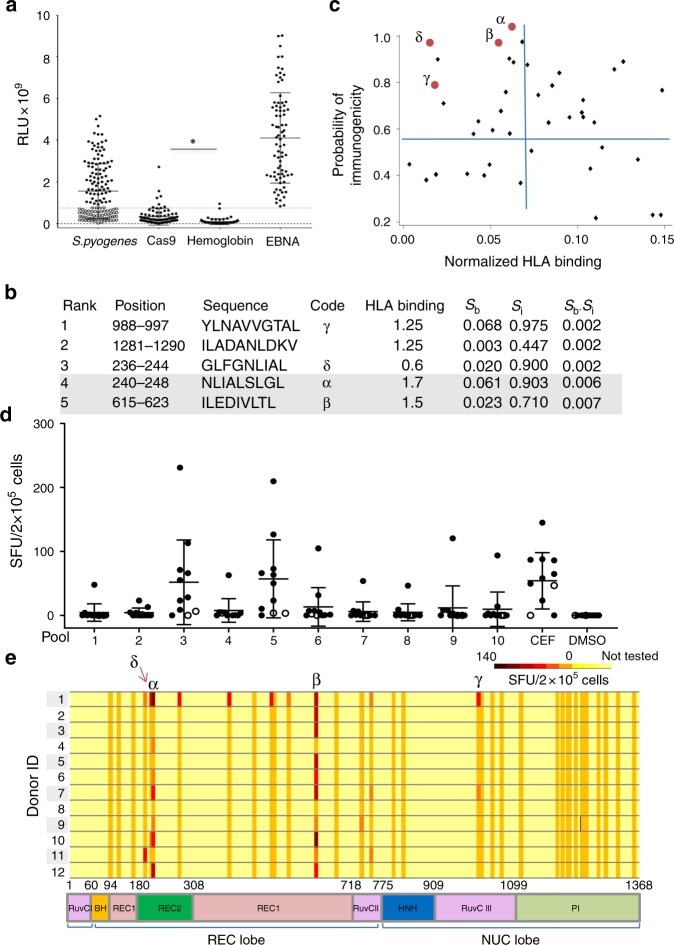
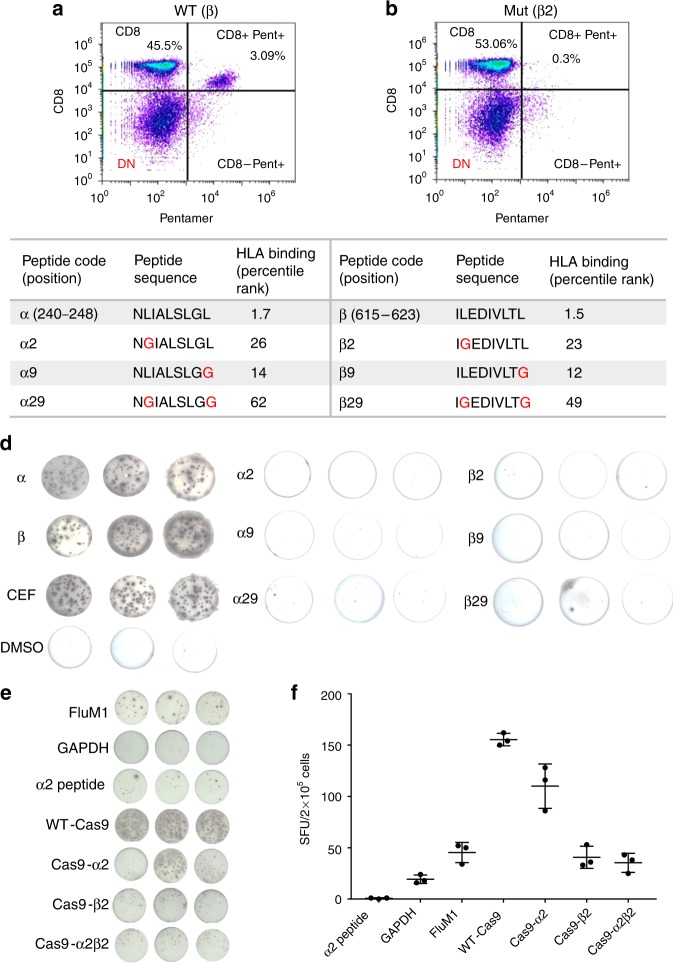
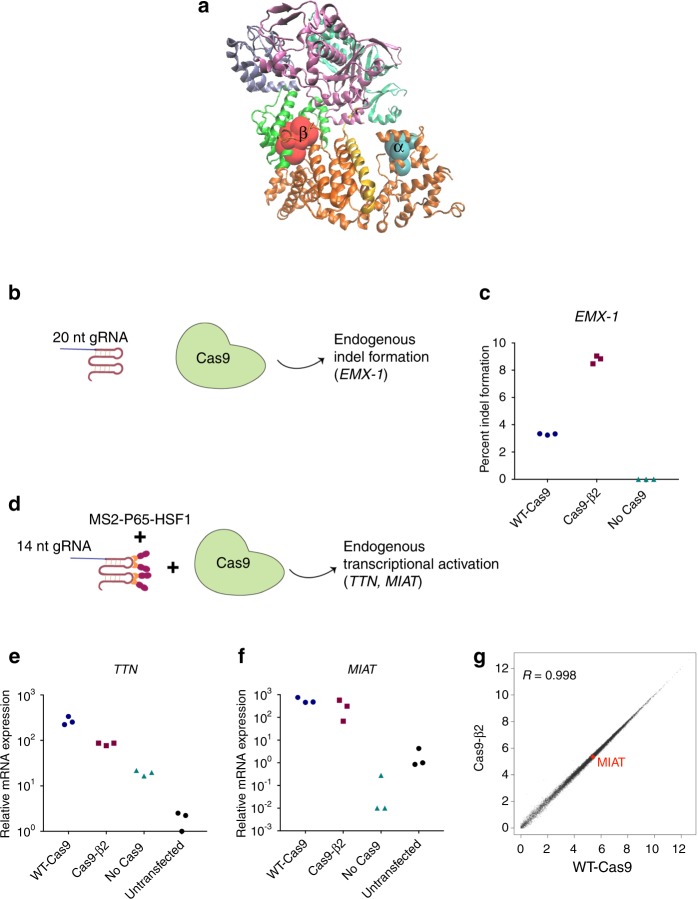
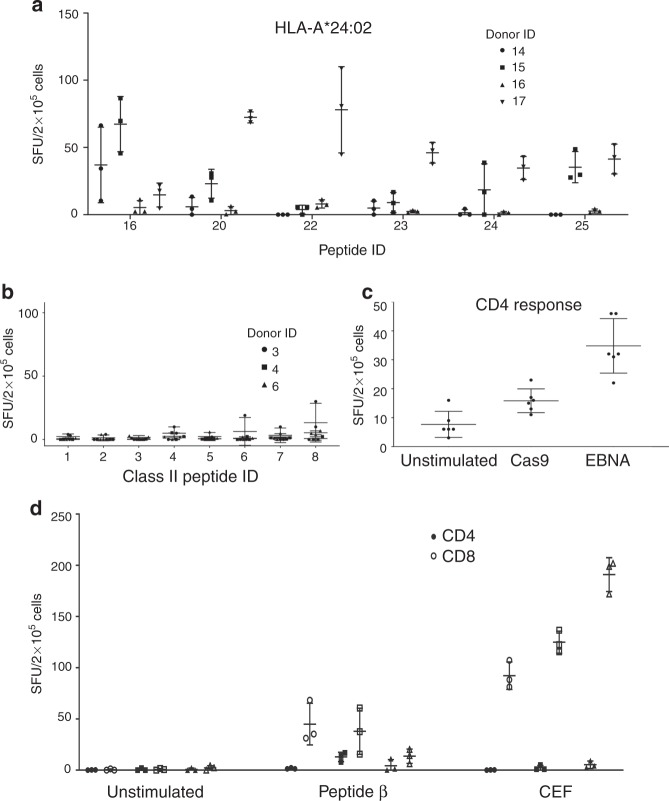
The CRISPR-Cas9 system has raised hopes for developing personalized gene therapies for complex diseases. Its application for genetic and epigenetic therapies in humans raises concerns over immunogenicity of the bacterially derived Cas9 protein. Here we detect antibodies to Streptococcus pyogenes Cas9 (SpCas9) in at least 5% of 143 healthy individuals. We also report pre-existing human CD8+T cell immunity in the majority of healthy individuals screened. We identify two immunodominant SpCas9 T cell epitopes for HLA-A*02:01 using an enhanced prediction algorithm that incorporates T cell receptor contact residue hydrophobicity and HLA binding and evaluated them by T cell assays using healthy donor PBMCs. In a proof-of-principle study, we demonstrate that Cas9 protein can be modified to eliminate immunodominant epitopes through targeted mutation while preserving its function and specificity. Our study highlights the problem of pre-existing immunity against CRISPR-associated nucleases and offers a potential solution to mitigate the T cell immune response.
Overview
The claims and statistics of this paper haven’t been checked yet.
Run the check — free, no account needed. It reads the open-access text and checks the sources it cites.
Integrity signals
Registry
Cites
Statistics
Figures
Verification
Claims the paper makes
The claims and statistics of this paper haven’t been checked yet.
Run the check — free, no account needed. It reads the open-access text and checks the sources it cites.
Claims other papers make about this one
Each is checked against this paper’s own text: does it say what the citing paper says it does?
In the citing paper
“This finding demonstrated that Cas9 proteins can be modified to eliminate immunodominant epitopes through targeted mutations while preserving its function and specificity (Figure 2) [96].”
From Immune responses to gene editing by viral and non-viral delivery vectors used in retinal gene therapy (2022) · cites this paper as [96]
In the citing paper
“When SpCas9 with mutations in the selected epitopes was delivered to healthy donor B-cell APCs, the measured T-cell response had significantly decreased.”
From Immune responses to gene editing by viral and non-viral delivery vectors used in retinal gene therapy (2022) · cites this paper as [96]
In the citing paper
“Furthermore, a high prevalence of preexisting cellular immunity against Cas9 (Cas9-reactive T-cells) has also been identified2–4.”
From Investigation of Cas9 Antibodies in the Human Eye (2022) · cites this paper as [2]
In the citing paper
“some studies have found preexisting serum α-Cas9 to be present in only 2.5–10% of large human cohorts1,2.”
From Investigation of Cas9 Antibodies in the Human Eye (2022) · cites this paper as [2]
In the citing paper
“multiple groups have reported high frequencies (>60% of patients) of Cas9 reactive T-cells in humans2–4.”
From Investigation of Cas9 Antibodies in the Human Eye (2022) · cites this paper as [2]
Self-check
Percentages, sums and reported differences re-computed from the paper’s own numbers.
The self-check needs the paper’s full text.
Citations
Cites
VMD: visual molecular dynamics
Humphrey, W., Dalke, A., & Schulten, K. (1996) · Journal of Molecular Graphics · doi:10.1016/0263-7855(96)00018-5 · Cited by 66,952
STAR: ultrafast universal RNA-seq aligner
Dobin, A., Davis, C. A., Schlesinger, F., Drenkow, J., Zaleski, C., Jha, S., Batut, P., Chaisson, M., & Gingeras, T. R. (2013) · Bioinformatics · doi:10.1093/bioinformatics/bts635 · Cited by 51,709
Robinson, M. D., McCarthy, D. J., & Smyth, G. K. (2010) · Bioinformatics · doi:10.1093/bioinformatics/btp616 · Cited by 41,364
Trapnell, C., Roberts, A., Goff, L. A., Pertea, G. M., Kim, D., Kelley, D. R., Pimentel, H., Salzberg, S. L., Rinn, J. L., & Pachter, L. S. (2012) · Nature Protocols · doi:10.1038/nprot.2012.016 · Cited by 12,145
Non-viral vectors for gene-based therapy
Yin, H., Kanasty, R. L., Eltoukhy, A. A., Vegas, A. J., Dorkin, J. R., & Anderson, D. G. (2014) · Nature Reviews Genetics · doi:10.1038/nrg3763 · Cited by 3,123
The global burden of group A streptococcal diseases
Carapetis, J. R., Steer, A. C., Mulholland, E. K., & Weber, M. (2005) · The Lancet Infectious Diseases · doi:10.1016/s1473-3099(05)70267-x · Cited by 3,001
Gene Therapy of Human Severe Combined Immunodeficiency (SCID)-X1 Disease
Cavazzana, M., Hacein‐Bey‐Abina, S., Basile, G. D. S., Gross, F., Yvon, E. S., Nusbaum, P., Selz, F., Hue, C., Dogniaux, S., Casanova, J., et al. (2000) · Science · doi:10.1126/science.288.5466.669 · Cited by 2,685
SYFPEITHI: database for MHC ligands and peptide motifs
Rammensee, H., Bachmann, J., Emmerich, N., Bachor, O. A., & Stevanović, S. (1999) · Immunogenetics · doi:10.1007/s002510050595 · Cited by 2,316
Crystal structure of Cas9 in complex with guide RNA and target DNA
Nishimasu, H., Ran, F. A., Hsu, P. D., Konermann, S., Shehata, S. I., Dohmae, N., Ishitani, R., Zhang, F., & Nureki, O. (2014) · Cell · doi:10.1016/j.cell.2014.02.001 · Cited by 2,306
Manno, C. S., Pierce, G. F., Arruda, V. R., Glader, B., Ragni, M., Rasko, J. J. E., Ozelo, M. C., Hoots, K., Blatt, P., Konkle, B., et al. (2006) · Nature Medicine · doi:10.1038/nm1358 · Cited by 2,163
Cited by
Sorted by citations
Items 101–200 of 204
Protection is not always a good thing: The immune system’s impact on gene therapy
de Freitas, M. V., Frâncio, L., Haleva, L., & Matte, Ú. D. S. (2022) · Genetics and Molecular Biology · doi:10.1590/1678-4685-gmb-2022-0046 · Cited by 18
Delivery challenges for CRISPR—Cas9 genome editing for Duchenne muscular dystrophy
Padmaswari, M. H., Agrawal, S., Jia, M. S., Ivy, A., Maxenberger, D. A., Burcham, L. A., & Nelson, C. E. (2023) · Biophysics Reviews · doi:10.1063/5.0131452 · Cited by 18
Treating Hearing Loss: From Cochlear Implantation to Gene Therapy
Zeng, F., Qi, J., Wu, C., Shu, Y., & Chai, R. (2025) · Advanced Science · doi:10.1002/advs.202509960 · Cited by 17
CRISPR Takes the Front Seat in CART-Cell Development
Manriquez-Roman, C., Siegler, E. L., & Kenderian, S. S. (2021) · BioDrugs · doi:10.1007/s40259-021-00473-y · Cited by 15
Duan, D., & Herzog, R. W. (2026) · Molecular Therapy · doi:10.1016/j.ymthe.2025.12.067 · Cited by 19
Nieto-Romero, V., García-Torralba, A., Molinos-Vicente, A., Moya, F., Rodríguez, S., García‐Escudero, R., SALIDO, E. C., Segovia, J. C., & Garcı́a-Bravo, M. (2024) · iScience · doi:10.1016/j.isci.2024.109530 · Cited by 13
Orthogonalized human protease control of secreted signals
Aldrete, C. A., Call, C. C., Sant’Anna, L. E., Vlahos, A. E., Pei, J., Cong, Q., & Gao, X. J. (2025) · Nature Chemical Biology · doi:10.1038/s41589-024-01831-x · Cited by 14
Engineering adeno-associated viral vectors for CRISPR/Cas based in vivo therapeutic genome editing
Moyo, B., Brown, L. B. C., Khondaker, I., & Bao, G. (2025) · Biomaterials · doi:10.1016/j.biomaterials.2025.123314 · Cited by 13
Applications of CRISPR technology in cellular immunotherapy
Zhou, X., Renauer, P. A., Zhou, L., Fang, S., & Chen, S. (2023) · Immunological Reviews · doi:10.1111/imr.13241 · Cited by 14
Ren, Z., Zhou, J., Yang, D., Guo, Y., Zhang, J., Xu, J., & Chen, Y. E. (2026) · Cells · doi:10.3390/cells15020134 · Cited by 13
Machine-Guided Dual-Objective Protein Engineering for Deimmunization and Therapeutic Functions
Wolfsberg, E., Paul, J.-S., Tycko, J., Chen, B., Bassik, M. C., Bintu, L., Alizadeh, A. A., & Gao, X. J. (2025) · Cell Systems · doi:10.1016/j.cels.2025.101299 · Cited by 14
Emerging approaches to induce immune tolerance to therapeutic proteins
Noel, J. C., Lagassé, D., Golding, B., & Sauna, Z. E. (2023) · Trends in Pharmacological Sciences · doi:10.1016/j.tips.2023.10.002 · Cited by 13
The history, use, and challenges of therapeutic somatic cell and germline gene editing
Ryu, J., Adashi, E. Y., & Hennebold, J. D. (2023) · Fertility and Sterility · doi:10.1016/j.fertnstert.2023.02.040 · Cited by 12
Advances in Therapeutic Applications of CRISPR Genome Editing for Spinal Pain Management
Kang, C. Y., Been, K. W., Kang, M. R., Choi, M. S., Kang, R. H., Hur, J. W., & Hur, J. K. (2025) · Neurospine · doi:10.14245/ns.2550462.231 · Cited by 15
Chakraborty, S. (2019) · F1000Research · doi:10.12688/f1000research.20744.1 · Cited by 12
Utilization of CRISPR/Cas9 gene editing in cellular therapies for lymphoid malignancies
Mehravar, M., Roshandel, E., Salimi, M., Chegeni, R., Gholizadeh, M., Mohammadi, M. H., & Hajifathali, A. (2020) · Immunology Letters · doi:10.1016/j.imlet.2020.07.003 · Cited by 13
Gene Editing Applications as Future Cardiovascular Therapies
Tadokoro, T., Olson, E. N., & Liu, N. (2025) · Annual Review of Genetics · doi:10.1146/annurev-genet-011725-094039 · Cited by 11
A deep mutational scanning platform to characterize the fitness landscape of anti-CRISPR proteins
Stadelmann, T., Heid, D., Jendrusch, M., Mathony, J., Aschenbrenner, S., Rosset, S., Correia, B. E., & Niopek, D. (2024) · Nucleic Acids Research · doi:10.1093/nar/gkae1052 · Cited by 10
Gene editing and modulation for Duchenne muscular dystrophy
Stephenson, A. A., & Flanigan, K. M. (2021) · Progress in molecular biology and translational science · doi:10.1016/bs.pmbts.2021.01.029 · Cited by 10
Gene Therapy Medicinal Products: Non-clinical Safety Studies
Astapova, O. V., & Berchatova, A. A. (2023) · Safety and Risk of Pharmacotherapy · doi:10.30895/2312-7821-2023-11-1-329 · Cited by 11
Overcoming unintended immunogenicity in immunocompetent mouse models of metastasis: the case of GFP
Schultheiß, C., & Binder, M. (2022) · Signal Transduction and Targeted Therapy · doi:10.1038/s41392-022-00929-9 · Cited by 9
CRISPR-Cas9 Targeting PCSK9: A Promising Therapeutic Approach for Atherosclerosis
Gu, B., Li, M., Li, D., & Huang, K. (2025) · Journal of Cardiovascular Translational Research · doi:10.1007/s12265-024-10587-7 · Cited by 13
Zheng, Q., Wang, W., Zhou, Y., Mo, J., Chang, X., Zha, Z., & Zha, L. (2023) · Biomaterials Science · doi:10.1039/d3bm00788j · Cited by 10
Pache, M. M., Pangavhane, R. R., Nikam, S. V., Rode, R. B., & Darekar, A. B. (2025) · Research Journal of Science and Technology · doi:10.52711/2231-5713.2025.00045 · Cited by 8
Immune responses to CRISPR-Cas protein
Roy, S. (2021) · Progress in molecular biology and translational science · doi:10.1016/bs.pmbts.2020.12.003 · Cited by 8
CRISPR/Cas and Hepatitis B Therapy: Technological Advances and Practical Barriers
Kostyushev, D. S., Kostyusheva, A., Ponomareva, N. I., Brezgin, S., & Chulanov, V. (2021) · Nucleic Acid Therapeutics · doi:10.1089/nat.2021.0075 · Cited by 8
Genes in pediatric pulmonary arterial hypertension and the most promising BMPR2 gene therapy
Dai, L., & Du, L. (2022) · Frontiers in Genetics · doi:10.3389/fgene.2022.961848 · Cited by 8
Luo, M., Ma, J., Cheng, X., Wu, S., Bartels, D., Guay, D. R. P., Engelhardt, J. F., & Liu, X. (2023) · Human Gene Therapy · doi:10.1089/hum.2023.016 · Cited by 8
dCas9 Tells Tales: Probing Gene Function and Transcription Regulation in Cancer
Zamberi, N. N. M., Abuhamad, A. Y., Low, T. Y., Mohtar, M. A., & Syafruddin, S. E. (2024) · The CRISPR Journal · doi:10.1089/crispr.2023.0078 · Cited by 9
Toward Systemic Lipofuscin Removal
Renteln, M. (2024) · Rejuvenation Research · doi:10.1089/rej.2024.0034 · Cited by 8
Advances in CRISPR-Cas systems for epigenetics
Ilyas, M., Shah, Q., Gul, A., Ibrahim, H., Fatima, R., Babar, M. M., & Rajadas, J. (2024) · Progress in molecular biology and translational science · doi:10.1016/bs.pmbts.2024.07.003 · Cited by 8
Chen, J., Su, S., Pickar‐Oliver, A., Chiarella, A. M., Hahn, Q., Goldfarb, D., Cloer, E. W., Small, G. W., Sivashankar, S., Ramsden, D. A., et al. (2024) · Nucleic Acids Research · doi:10.1093/nar/gkae761 · Cited by 8
Najera, S. S., Nicastri, A., Bing, S. J., Sajib, A. M., Ternette, N., & Mazor, R. (2025) · Molecular Therapy — Methods & Clinical Development · doi:10.1016/j.omtm.2025.101506 · Cited by 7
Non-clinical safety considerations on genome editing using the CRISPR/Cas system
Toofan, P., Singh, M., Brööks, A. G., & McLuckie, K. (2025) · Genes & Diseases · doi:10.1016/j.gendis.2025.101785 · Cited by 6
Treating Cardiovascular Disease with Liver Genome Engineering
Hurley, A. E., & Lagor, W. R. (2022) · Current Atherosclerosis Reports · doi:10.1007/s11883-022-00986-z · Cited by 7
CRISPR-Based Gene Editing Techniques in Pediatric Neurologic Disorders
Chrzanowski, S. M., & Batra, R. (2022) · Pediatric Neurology · doi:10.1016/j.pediatrneurol.2024.01.021 · Cited by 7
On RNA-programmable gene modulation as a versatile set of principles targeting muscular dystrophies
Capelletti, S., Soto, S. C. G., & Gonçalves, M. A. F. V. (2024) · Molecular Therapy · doi:10.1016/j.ymthe.2024.08.016 · Cited by 7
CRISPR-Cas9: A Potent Gene-editing Tool for the Treatment of Cancer
Mishra, G., Srivastava, K., Rais, J., Dixit, M., Singh, V. K., & Mishra, L. C. (2023) · Current Molecular Medicine · doi:10.2174/1566524023666230213094308 · Cited by 7
Essawi, K., Hakami, W., Khan, M. B. N., Martin, R., Zeng, J., Chu, R., Uchida, N., Bonifacino, A. C., Krouse, A. E., Linde, N. S., et al. (2023) · Molecular Therapy — Methods & Clinical Development · doi:10.1016/j.omtm.2023.04.004 · Cited by 9
CRISPR Technology: Transforming the Future of Medicine and Diagnostics
Iyer, K. A., Tenchov, R., Diaz, L. M. L., Jain, P., Thite, T., Deng, Y., & Zhou, Q. A. (2025) · Biochemistry · doi:10.1021/acs.biochem.5c00480 · Cited by 9
Thevendran, R., & Solayappan, M. (2023) · Biotechnology Journal · doi:10.1002/biot.202300077 · Cited by 6
Enabling Precision Medicine with CRISPR-Cas Genome Editing Technology: A Translational Perspective
Ilahibaks, N. F., Hulsbos, M. J., Lei, Z., Vader, P., & Sluijter, J. P. G. (2022) · Advances in experimental medicine and biology · doi:10.1007/978-981-19-5642-3_20 · Cited by 7
CRISPR/Cas9 Editing: Sparking Discussion on Safety in Light of the Need for New Therapeutics
Carlaw, T., Zhang, L., & Ross, C. J. (2020) · Human Gene Therapy · doi:10.1089/hum.2020.111 · Cited by 7
Saini, M., Castro-Giner, F., Hotz, A., Sznurkowska, M. K., Nüesch, M., Cuenot, F. M., Budinjas, S., Bilfeld, G., Ildız, E. S., Strittmatter, K., et al. (2025) · Cell · doi:10.1016/j.cell.2025.10.007 · Cited by 6
Perspectives on synthetic protein circuits in mammalian cells
Aldrete, C. A., An, C., Call, C. C., Gao, X. J., & Vlahos, A. E. (2024) · Current Opinion in Biomedical Engineering · doi:10.1016/j.cobme.2024.100555 · Cited by 5
The Synergy between CRISPR and Chemical Engineering
Lau, C., & Tin, C. (2019) · Current Gene Therapy · doi:10.2174/1566523219666190701100556 · Cited by 5
Construction of Lymphoma Organoids and Applications in Tumor Microenvironment Research
Zhu, M., Li, T., Han, S., Zhao, D., Chen, X., Wong, V., Wang, H., & Liu, Y. (2025) · European Journal Of Haematology · doi:10.1111/ejh.14448 · Cited by 4
Early postnatal expression mitigates immune responses to Cas9 in the murine central nervous system
Duba-Kiss, R., & Hampson, D. R. (2025) · Molecular Therapy — Methods & Clinical Development · doi:10.1016/j.omtm.2025.101536 · Cited by 5
Qureshi, A., & Connolly, J. B. (2023) · Malaria Journal · doi:10.1186/s12936-023-04665-5 · Cited by 5
Simhadri, V. L., McGill, J. R., & Sauna, Z. E. (2021) · Gene Therapy · doi:10.1038/s41434-021-00301-6 · Cited by 5
A New Method for Programmable RNA Editing Using CRISPR Effector Cas13X.1
Li, L., Liu, W., Zhang, H., Cai, Q., Wen, D., Du, J., Sun, J., Li, L., Gao, C., Lin, P., et al. (2023) · The Tohoku Journal of Experimental Medicine · doi:10.1620/tjem.2023.j011 · Cited by 4
Sustained efficacy of CRISPR-Cas13b gene therapy for FSHD is challenged by immune response to Cas13bPreprint
Rashnonejad, A., Farea, M., Chermahini, G. A., Coulis, G., Taylor, N. D., Fowler, A. M., Villalta, S. A., King, O. D., & Harper, S. Q. (2025) · bioRxiv (Cold Spring Harbor Laboratory) · doi:10.1101/2024.12.18.629250 · Cited by 4
Detection of pre-existing immunity to bacterial Cas9 proteins in people with cystic fibrosis
Serpa, G., Gong, Q., De, M., Rana, P. S. J. B., Montgomery, C. P., Wozniak, D. J., Long, M. E., & Hemann, E. A. (2025) · ImmunoHorizons · doi:10.1093/immhor/vlaf041 · Cited by 3
Major, R., Mills, C. A., Xing, L., Krantz, J. L., Wolter, J. M., & Zylka, M. J. (2025) · The CRISPR Journal · doi:10.1089/crispr.2024.0074 · Cited by 3
CD4+ T Cells Mediate MHC-Deficient Tumor Rejection and Endothelial Cell Reprogramming
Kim, S. I., Haerr, M. E., Al-Ghezi, M., Chen, C., Zhang, Y., Phipps, J. L., Arora, C., Gribbin, K. P., Kim, G. T., Markosyan, N., et al. (2025) · Cancer Immunology Research · doi:10.1158/2326-6066.cir-24-1342 · Cited by 3
Multiplex engineering and multifunction T cells for precise and effective immunotherapies
Jafarzadeh, L., Smaani, A., & Delisle, J. (2025) · Frontiers in Immunology · doi:10.3389/fimmu.2025.1680410 · Cited by 3
Muscular Dystrophy Therapy Using Viral Vector-based CRISPR/Cas
Choi, E., & Koo, T. (2022) · Springer eBooks · doi:10.1007/978-3-030-93333-3_4 · Cited by 3
Transgenic mice for in vivo epigenome editing with CRISPR-based systemsPreprint
Gemberling, M. P., Siklenka, K., Rodriguez, E., Eisinger, K. R. T., Barrera, A., Liu, F., Kantor, A., Li, L., Cigliola, V., Hazlett, M. F., et al. (2021) · bioRxiv (Cold Spring Harbor Laboratory) · doi:10.1101/2021.03.08.434430 · Cited by 3
Chakraborty, S. (2019) · OSF Preprints (OSF Preprints) · doi:10.31219/osf.io/42rct · Cited by 3
How CRISPR Is Revolutionizing the Generation of New Models for Cancer ResearchPreprint
Rivera, F. J. S., & Dow, L. E. (2023) · Cold Spring Harbor Perspectives in Medicine · doi:10.1101/cshperspect.a041384 · Cited by 4
Expanding the CRISPR/Cas toolkit: applications in proteomics and theranostics
Punde, A., Dey, S., Pandire, R., Bhattacharjee, A., & Patra, C. (2025) · Frontiers in Bioengineering and Biotechnology · doi:10.3389/fbioe.2025.1713700 · Cited by 2
Screening strategy to identify Cas9 variants with higher HDR activity based on diphtheria toxin
Matsumoto, D., Kubota, K., Sato, Y., Kato-Inui, T., Nigorikawa, K., Miyaoka, Y., & Nomura, W. (2025) · Journal of Biomedical Science · doi:10.1186/s12929-025-01197-9 · Cited by 2
A Translational Roadmap for Neurological Nonsense Mutation Disorders
Li, J., Zhu, Z., & Xu, S. (2026) · International Journal of Molecular Sciences · doi:10.3390/ijms27031418 · Cited by 2
Siddika, A., Rousseau, J., Veillette, F., Bouchard, C., Lu, Y., & Tremblay, J. P. (2026) · Cells · doi:10.3390/cells15100852 · Cited by 2
Makhijani, S., Alasiri, G. A., Quadri, M. S. A., & Ingle, R. G. (2026) · Discover Nano · doi:10.1186/s11671-026-04653-z · Cited by 4
CRISPR-based gene editing for antimicrobial resistance control in human medicine
Alvi, A. A., Hussain, M., Noureen, S., Malik, Z. A., Zahoor, S., Jamil, A., Mohsin, M. A., Azeem, A., Javaid, H., & Hassan, Z. (2026) · Archives of Microbiology · doi:10.1007/s00203-026-04988-2 · Cited by 2
She, L., Liang, Z., Zou, Q., & Huo, Y. (2026) · ACS Synthetic Biology · doi:10.1021/acssynbio.6c00386 · Cited by 2
Multicellular systems to translate somatic cell genome editors to human
Hernandez‐Gordillo, V., Casolaro, T. C., Ebrahimkhani, M. R., & Kiani, S. (2020) · Current Opinion in Biomedical Engineering · doi:10.1016/j.cobme.2020.100249 · Cited by 2
Self-citationCRISPR-edited CAR-T cells: Using CRISPR-Cas9 to Improve CAR-T Therapy
Ajavavarakula, T. (2022) · Highlights in Science Engineering and Technology · doi:10.54097/hset.v14i.1846 · Cited by 2
Preclinical development of genome editing to treat Duchenne muscular dystrophy by exon skipping
Padmaswari, M. H., Agrawal, S., & Nelson, C. E. (2025) · Journal of Neuromuscular Diseases · doi:10.1177/22143602251326993 · Cited by 2
Weakly immunogenic CRISPR therapies
Wilson, E., & Anderson, K. S. (2019) · Nature Biomedical Engineering · doi:10.1038/s41551-019-0463-7 · Cited by 2
Self-citationExtensive in vitro and in vivo protein translation via in situ circularized RNAsPreprint
Kumar, A., Palmer, N. D., Miyasaki, K. F., Finburgh, E. N., Xiang, Y., Portell, A. J., Dailamy, A., Suhardjo, A., Chew, W. L., Kwon, E. J., et al. (2022) · bioRxiv (Cold Spring Harbor Laboratory) · doi:10.1101/2022.02.11.480072 · Cited by 1
Shahzaib, M., Brügmann, T., Shakeel, M., Khan, S. H., Azhar, M. T., Atif, R. M., Fladung, M., & Rana, I. A. (2023) · Preprints.org · doi:10.20944/preprints202305.1887.v1 · Cited by 1
CRISPR: On How it'll Change the Future
Aulia, A., Hutapea, R. R., Abdima, P. S., Emawan, A. A., & Edbert, I. S. (2023) · Engineering MAthematics and Computer Science (EMACS) Journal · doi:10.21512/emacsjournal.v5i2.9975 · Cited by 1
CRISPR-based gene therapy for huntington’s disease: current advances and future prospects
Zaheer, A., AboQuella, N. M., Wadan, A. S., Saad, H. A., Kumar, D., Panjwani, S., Rath, S., & Ahmed, S. I. (2025) · Neurogenetics · doi:10.1007/s10048-025-00858-z · Cited by 2
The future of pediatric gene therapy: CRISPR-Cas9, AI, and personalized medicine
Pan, Y., Ding, J., Wang, W., Xu, D., Fan, J., & Zhang, W. (2026) · Pediatric Research · doi:10.1038/s41390-026-05270-3 · Cited by 2
CRISPR: A Promising Tool for Cancer Therapy
Mohammad‐Rafiei, F., Safdarian, E., Adel, B., Vandchali, N. R., Navashenaq, J. G., & Hayat, S. M. G. (2022) · Current Molecular Medicine · doi:10.2174/1566524022666220624111311 · Cited by 1
A CRISPR Odyssey into Cancer Immunotherapy
Delgado, E., & Kiani, S. (2020) · The CRISPR Journal · doi:10.1089/crispr.2020.29090.ede · Cited by 1
Self-citationImmune Responses to Adeno-Associated Virus-Mediated CRISPR Therapy
Keeler, A. M. (2021) · Human Gene Therapy · doi:10.1089/hum.2021.29193.amk · Cited by 1
Opportunities and challenges of gene therapy for retinitis pigmentosa
Luo, X., Liu, Y., FengHua, W. A. N. G., & Sun, X. (2022) · Scientia Sinica Vitae · doi:10.1360/ssv-2020-0012 · Cited by 1
Ahmad, A. (2023) · Diabetes & Obesity International Journal · doi:10.23880/doij-16000278
Therapeutic approaches and development of genomic diagnostic tools for Usher syndrome
García, C. F. (2020) · RiuNet (Universitat Politècnica de València) · doi:10.4995/thesis/10251/137034 · Cited by 1
Detection of Humoral Response to Transgene Protein and Gene Editing Reagents
Buchlis, G., & Gorovits, B. (2024) · Wiley eBooks · doi:10.1002/9781119852810.ch12 · Cited by 1
Microglial Replacement and COURIER or SPIT for Neuronal Gene EditingPreprint
Renteln, M. (2024) · Preprints.org · doi:10.20944/preprints202404.1620.v2
Microglial Replacement and COURIER or SPIT for Neuronal Gene EditingPreprint
Renteln, M. (2024) · Preprints.org · doi:10.20944/preprints202404.1620.v3
Towards best-practice approaches for CRISPR/Cas9 gene engineeringPreprint
Campenhout, C. V., Cabochette, P., Veillard, A.-C., Laczik, M., Zelisko-Schmidt, A., Sabatel, C., Dhainaut, M., Vanhollebeke, B., Gueydan, C., & Kruys, V. (2018) · bioRxiv (Cold Spring Harbor Laboratory) · doi:10.1101/469544
Sintya, E., Wedari, N. L. P. H., Pranata, I. W. A., & Budayanti, N. N. S. (2021) · Journal of Clinical Microbiology and Infectious Diseases · doi:10.51559/jcmid.v1i1.4
Emerging Technologies for Genome Editing
Peterka, M. (2022) · Wiley eBooks · doi:10.1002/9781119671404.ch22
Brief Introduction to CRISPR Cas9
Nestor, M. W., & Wilson, R. L. (2022) · Springer eBooks · doi:10.1007/978-3-030-98368-0_1
Genome Editing with CRISPR‐Cas Systems
Lotfy, P., & Hsu, P. D. (2022) · Wiley eBooks · doi:10.1002/9781683673798.ch11
Sistemas CRISPR-CAS: una perspectiva histórica y estructural
Navarro, C. (2024) · Revista de la Facultad de Farmacia · doi:10.54305/rffucv.2024.87.1-2.2
Challenges in developing gene therapy against Duchenne muscular dystrophy
Kurshakova, E. V., Levchenko, O. A., & Лавров, А. В. (2025) · Genes and Cells · doi:10.17816/gc641931 · Cited by 1
Cacabelos, R., Tellado, I., Cacabelos, N., Martínez-Iglesias, O. A., & Naidoo, V. (2025) · Elsevier eBooks · doi:10.1016/b978-0-443-18722-3.00021-9 · Cited by 1
Bayraktar, C., Ozyildiz, I. S., & Onder, T. B. (2025) · bioRxiv (Cold Spring Harbor Laboratory) · doi:10.1101/2025.08.26.672521
Engineering Cancer with Next-Generation Genome Editing Tools
Roth, J. F., Chen, E., Cevasco, H., & Rivera, F. J. S. (2025) · Annual Review of Cancer Biology · doi:10.1146/annurev-cancerbio-070824-123431
Brown adipocytes from pluripotent stem cells: a promising therapy for obesity
Ha, M., Leng, T., Jiang, J., Ma, X., Chen, Y., Hu, T., Huang, Y., & Rao, C. (2025) · Molecular Biology Reports · doi:10.1007/s11033-025-11281-w
Galdikaitė, E., Krušnauskas, R., Henderson, E., & Bujakowska, K. M. (2026) · Molecular Aspects of Medicine · doi:10.1016/j.mam.2026.101462 · Cited by 1
Transcriptional Regulatory Modulation as a Potential Therapeutic Modality
Matharu, N. K., & Ahituv, N. (2026) · Annual Review of Genomics and Human Genetics · doi:10.1146/annurev-genom-120324-124041
Porenta, D., Benne, N., Sijts, A. J. A. M., Broere, F., & Mastrobattista, E. (2026) · The CRISPR Journal · doi:10.1177/25731599261456887
AI-Designed Synthetic CRISPR Enzymes: Evolving Molecular Scissors Beyond Natural Constraints
Khalid, S. (2026) · Futuristic Biotechnology · doi:10.54393/fbt.v6i2.245
Metadata
- Authors
- Ferdosi, S. R., Ewaisha, R., Moghadam, F., Krishna, S., Park, J. G., Ebrahimkhani, M. R., Kiani, S., & Anderson, K. S.
- Affiliations
- Arizona State University (US)
- Mayo Clinic (US)
- Corresponding author
- Kiani, Samira
- Anderson, Karen S.
- ORCID
- Venue
- Nature Communications
- Published
- 2019-04-23
- Volume
- 10
- Issue
- 1
- Pages
- 1842-1842
- ISSN
- 2041-1723 (ISSN-L)
- PMC
- PMC6478683
- OpenAlex
- W2950183003
- Cited by
- 204
- References
- 60
- Citations by year
- 2026: 17 · 2025: 36 · 2024: 23 · 2023: 31 · 2022: 31 · 2021: 26 · 2020: 27 · 2019: 12
- FWCI
- 7.94
- Type
- journal article
- Language
- en
- Open access
- gold
- doi.org
- Locations
- Nature Communications (publishedVersion, cc-by)
- bioRxiv (Cold Spring Harbor Laboratory) (acceptedVersion, cc-by-nc-nd)
- Europe PMC (PubMed Central) (publishedVersion, cc-by)
- PubMed Central (publishedVersion, cc-by)
- PubMed (publishedVersion)
- RePEc: Research Papers in Economics (submittedVersion)
- DOAJ (DOAJ: Directory of Open Access Journals) (submittedVersion)
- DOAJ (DOAJ: Directory of Open Access Journals) (submittedVersion, cc-by-sa)
- Funders
- Massachusetts General Hospital
- Defense Advanced Research Projects Agency (D16AP00047)
- National Institute of Biomedical Imaging and Bioengineering (R01EB024562)
- Topics
- Life Sciences › Biochemistry, Genetics and Molecular Biology › Molecular Biology › CRISPR and Genetic Engineering
- Life Sciences › Biochemistry, Genetics and Molecular Biology › Molecular Biology › vaccines and immunoinformatics approaches
- Health Sciences › Medicine › Oncology › CAR-T cell therapy research
- Keywords
- CRISPR/Cas9, SpCas9, T cell epitopes, CD8+ T cell immunity, HLA-A*0201, epitope prediction, immunogenicity, gene therapy, personalized gene therapy
- MeSH terms
- CRISPR-Associated Protein 9, Antibodies, Bacterial, Antigen-Presenting Cells, Humans, Lymphocyte Activation, Streptococcus pyogenes, HLA-A Antigens, Genetic Therapy, Mutagenesis, CD8-Positive T-Lymphocytes, Epitope Mapping, Epitopes, T-Lymphocyte, Precision Medicine, HEK293 Cells, Cell Engineering, Healthy Volunteers
About these checks
Registry, retraction, Cites and statistics results are computed, not judged, with one exception: a printed reference that no index lists is read once by a model before it counts as a citation error. Claims are extracted by a model and kept only when their quote appears verbatim in the text; each cited source is then checked, with a model’s help, for whether it says what the claim relies on. Those verdicts can be wrong — read the claim’s quote and the cited source before relying on one.
Statistics and arithmetic are recomputed, not judged.
Confidence bands are shown only for fields calibrated on our annotated test set. None is calibrated yet, so no band is shown.
What counts as a claim ›How we measure confidence ›How we check this ›
Are you an author, or do you see a problem with this page? Request a review
