

Dynamic fibroblast contractions attract remote macrophages in fibrillar collagen matrix
Open accessThe DOI matches its Crossref record; 67 of the 67 references it cites were found in a registry or an index.
Abstract
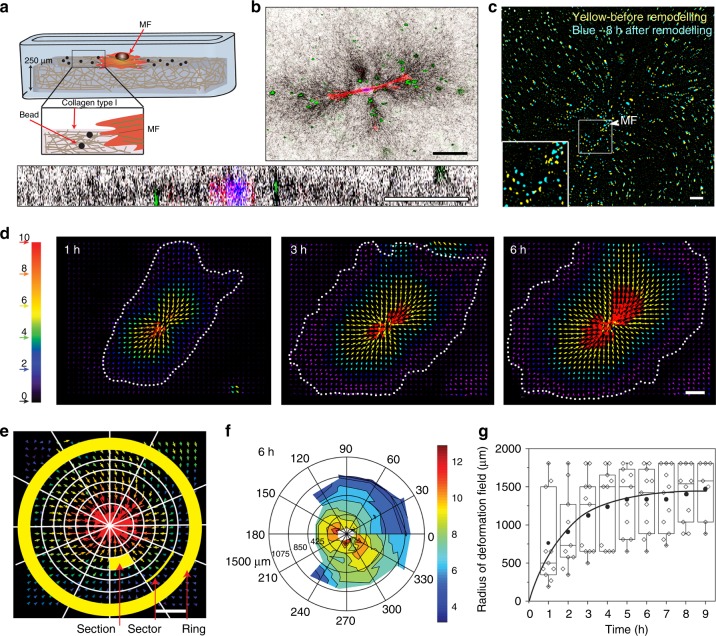
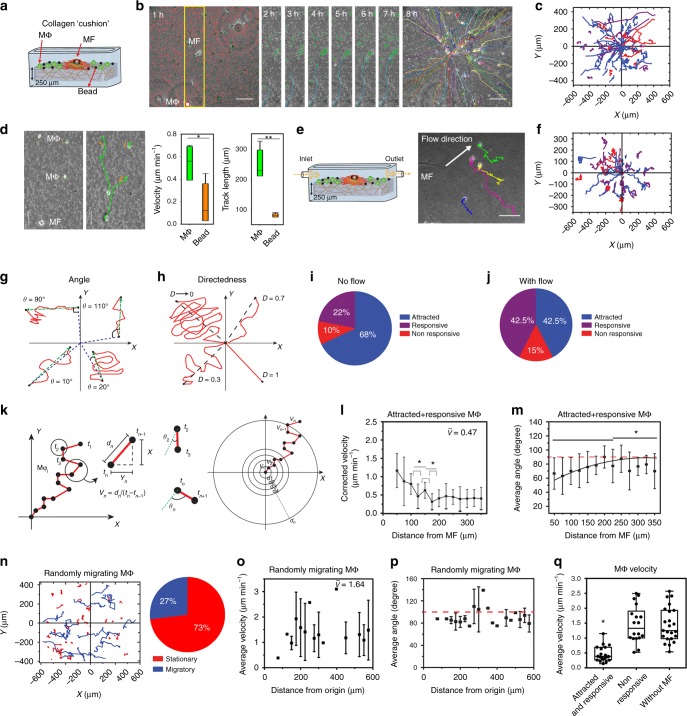
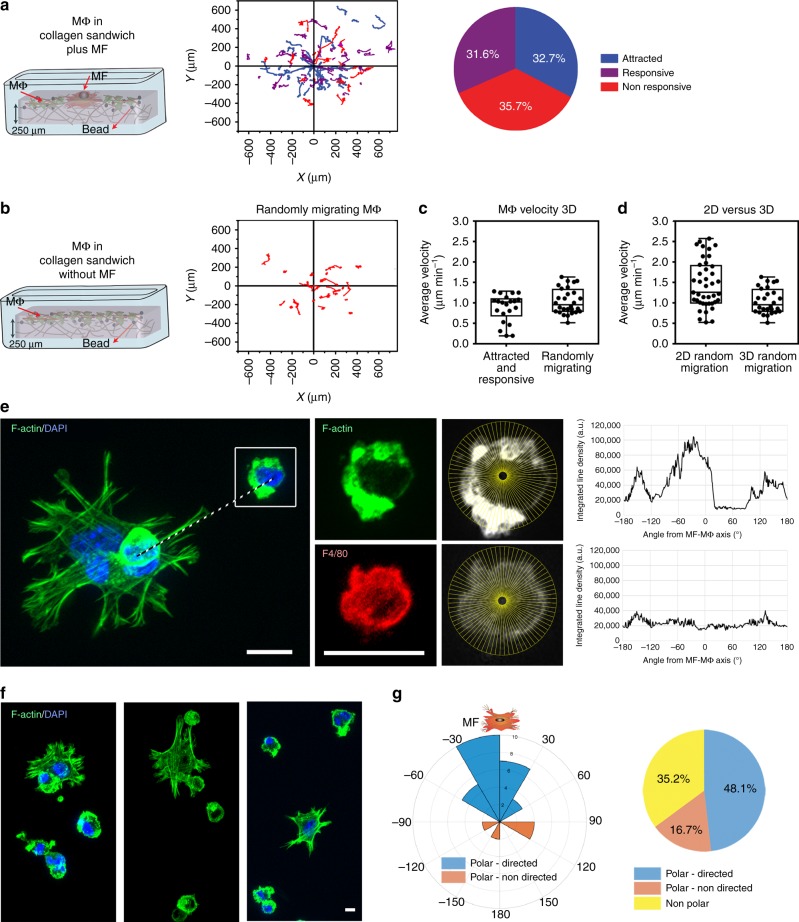
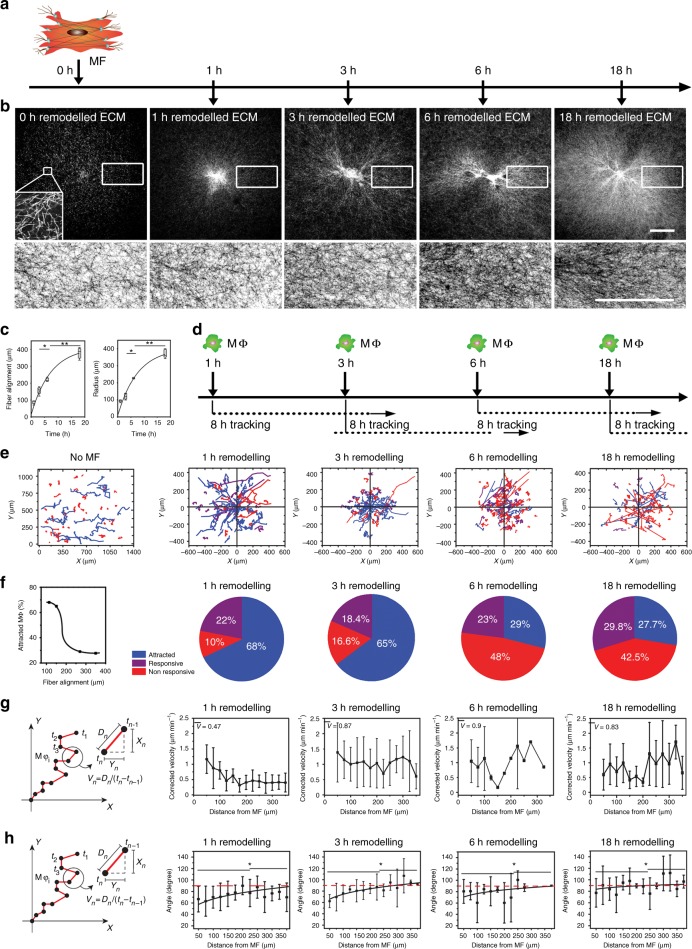
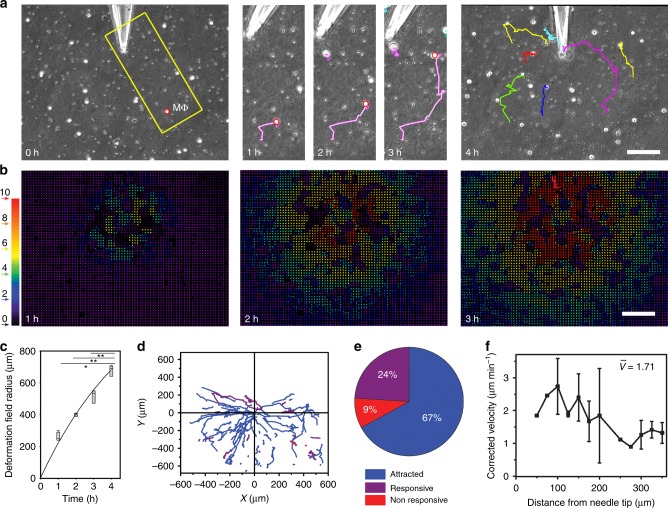
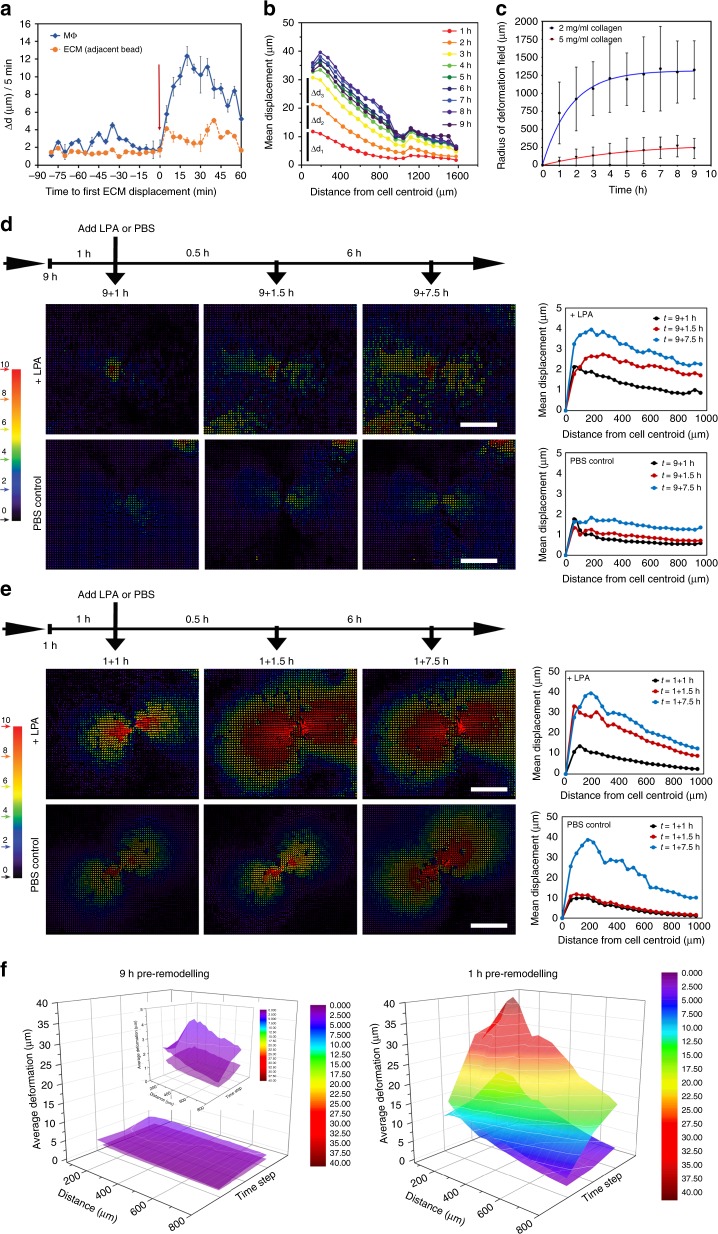
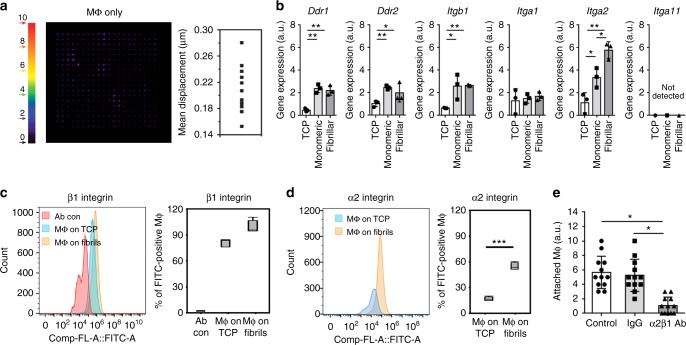
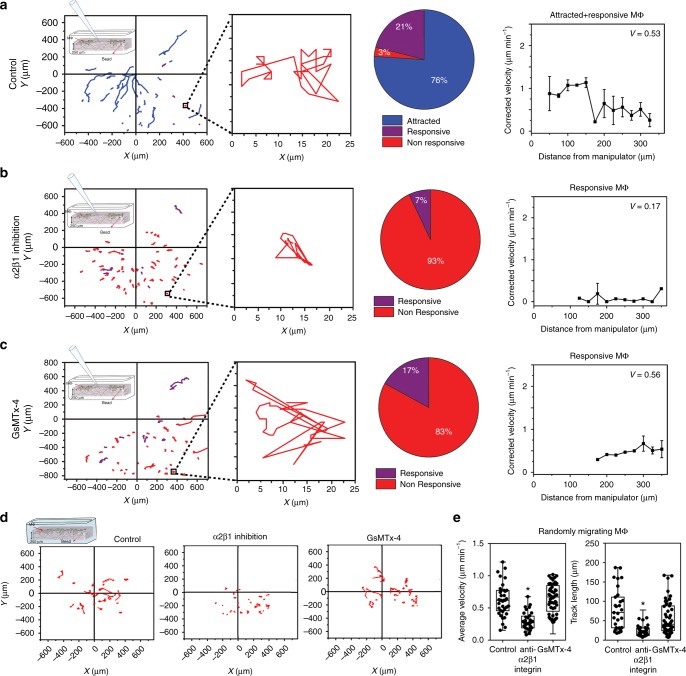
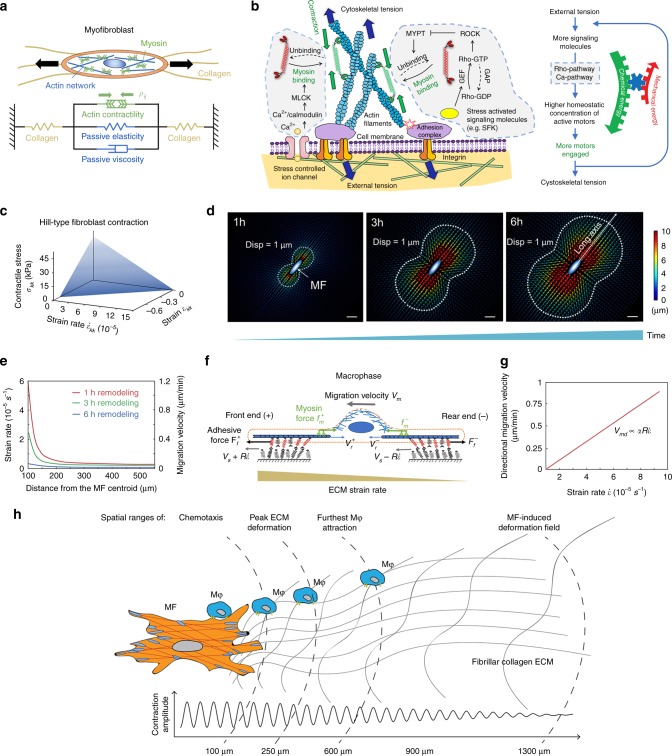
Macrophage (Mϕ)-fibroblast interactions coordinate tissue repair after injury whereas miscommunications can result in pathological healing and fibrosis. We show that contracting fibroblasts generate deformation fields in fibrillar collagen matrix that provide far-reaching physical cues for Mϕ. Within collagen deformation fields created by fibroblasts or actuated microneedles, Mϕ migrate towards the force source from several hundreds of micrometers away. The presence of a dynamic force source in the matrix is critical to initiate and direct Mϕ migration. In contrast, collagen condensation and fiber alignment resulting from fibroblast remodelling activities or chemotactic signals are neither required nor sufficient to guide Mϕ migration. Binding of α2β1 integrin and stretch-activated channels mediate Mϕ migration and mechanosensing in fibrillar collagen ECM. We propose that Mϕ mechanosense the velocity of local displacements of their substrate, allowing contractile fibroblasts to attract Mϕ over distances that exceed the range of chemotactic gradients.
Overview
The claims and statistics of this paper haven’t been checked yet.
Free: it reads the open-access text and checks the first 5 claims that cite a source we can check. Create a free account to check every claim.
Integrity signals
Registry
Cites
Statistics
Figures
Verification
Claims the paper makes
The claims and statistics of this paper haven’t been checked yet.
Free: it reads the open-access text and checks the first 5 claims that cite a source we can check. Create a free account to check every claim.
Claims other papers make about this one
Each is checked against this paper’s own text: does it say what the citing paper says it does?
The source backs part of the claim, not all of it — or backs it for a different population, condition or comparison.
In the citing paper
“macrophages are able to sense and follow changes in the deformation of collagen networks caused by the contracting fibroblasts over millimeter distances (49).”
From Modeling mechanical activation of macrophages during pulmonary fibrogenesis for targeted anti-fibrosis therapy (2024) · cites this paper as [49]
Experimental — accuracy not yet measured
Self-check
Percentages, sums and reported differences re-computed from the paper’s own numbers.
The self-check needs the paper’s full text.
Citations
Cites
Cell Movement Is Guided by the Rigidity of the Substrate
Lo, C.-M., Wang, H.-B., Dembo, M., & Wang, Y.-L. (2000) · Biophysical Journal · doi:10.1016/s0006-3495(00)76279-5 · Cited by 3,289
Macrophages: Obligate Partners for Tumor Cell Migration, Invasion, and Metastasis
Condeelis, J., & Pollard, J. W. (2006) · Cell · doi:10.1016/j.cell.2006.01.007 · Cited by 2,695
Cancer Invasion and the Microenvironment: Plasticity and Reciprocity
Friedl, P., & Alexander, S. (2011) · Cell · doi:10.1016/j.cell.2011.11.016 · Cited by 1,940
Gaggioli, C., Hooper, S., Hidalgo-Carcedo, C., Grosse, R., Marshall, J. F., Harrington, K., & Sahai, E. (2007) · Nature Cell Biology · doi:10.1038/ncb1658 · Cited by 1,589
Methods for Cell and Particle Tracking
Meijering, E., Dzyubachyk, O., & Smal, I. (2012) · Methods in Enzymology · doi:10.1016/b978-0-12-391857-4.00009-4 · Cited by 1,400
Inflammation and metabolism in tissue repair and regeneration
Eming, S. A., Wynn, T. A., & Martin, P. (2017) · Science · doi:10.1126/science.aam7928 · Cited by 1,369
Myofibroblast contraction activates latent TGF-β1 from the extracellular matrix
Wipff, P.-J., Rifkin, D. B., Meister, J.-J., & Hinz, B. (2007) · The Journal of Cell Biology · doi:10.1083/jcb.200704042 · Cited by 1,346
Self-citationDynamic molecular processes mediate cellular mechanotransduction
Hoffman, B. D., Grashoff, C., & Schwartz, M. A. (2011) · Nature · doi:10.1038/nature10316 · Cited by 956
Traction Dynamics of Filopodia on Compliant Substrates
Chan, C. E., & Odde, D. J. (2008) · Science · doi:10.1126/science.1163595 · Cited by 936
Plotnikov, S. V., Pasapera, A. M., Sabass, B., & Waterman, C. M. (2012) · Cell · doi:10.1016/j.cell.2012.11.034 · Cited by 866
Cited by
Items 201–300 of 312
Reciprocal intra- and extra-cellular polarity enables deep mechanosensing through layered matrices
Walter, C., Mathur, J., & Pathak, A. (2023) · Cell Reports · doi:10.1016/j.celrep.2023.112362 · Cited by 7
“Additionally, fibroblast cells can generate deformations hundreds to thousands of micrometers away, 27,43 potentially revealing that the sphere of influence of similar cells extends far beyond the limits of their immediate connection to the ECM.”
Fibrillar biopolymer-based scaffolds to study macrophage-fibroblast crosstalk in wound repair
Ullm, F., & Pompe, W. (2021) · Biological Chemistry · doi:10.1515/hsz-2021-0164 · Cited by 7
The Pertinent Role of Cell and Matrix Mechanics in Cell Adhesion and Migration
Mierke, C. T. (2021) · Frontiers in Cell and Developmental Biology · doi:10.3389/fcell.2021.720494 · Cited by 7
Ouyang, M., Zhu, Y., Wang, J., Zhang, Q., Hu, Y., Bu, B., Guo, J., & Deng, L. (2022) · Frontiers in Cell and Developmental Biology · doi:10.3389/fcell.2022.942058 · Cited by 7
“Two recent studies have shown that integrin signaling mediates intracellular mechanical interactions (Pakshir et al., 2019; Liu et al., 2020).”
InfluentialEngineered Strategies to Interfere with Macrophage Fate in Myocardial Infarction
Zhai, Z., Yang, C., Yin, W., Liu, Y., Li, S., Ye, Z., Xie, M., & Song, X. (2025) · ACS Biomaterials Science & Engineering · doi:10.1021/acsbiomaterials.4c02061 · Cited by 6
Mechanical heterogeneity in a soft biomaterial niche controls BMP2 signaling
Brauer, E., Herrera, A., Fritsche‐Guenther, R., Görlitz, S., Leemhuis, H., Knaus, P. I., Kirwan, J., Duda, G. N., & Petersen, A. (2024) · Biomaterials · doi:10.1016/j.biomaterials.2024.122614 · Cited by 6
“In the context of tissue healing, such paratensile signaling was shown to drive fibrosis through myo-fibroblast activation and mechanical recruitment of macrophages [51,52].”
BackgroundWhy Stress Matters: An Introduction
Tschumperlin, D. J. (2021) · Methods in molecular biology · doi:10.1007/978-1-0716-1382-5_12 · Cited by 6
Extracellular Vesicles and Cellular Ageing
Romero-García, N., Mas‐Bargues, C., Huete-Acevedo, J., & Borrás, C. (2023) · Sub-cellular biochemistry/Subcellular biochemistry · doi:10.1007/978-3-031-21410-3_11 · Cited by 6
Alisafaei, F., Mandal, K., Swoger, M., Yang, H., Guo, M., Janmey, P. A., Patteson, A. E., & Shenoy, V. B. (2022) · bioRxiv (Cold Spring Harbor Laboratory) · doi:10.1101/2022.04.02.486829 · Cited by 6
Self-citationZhou, L.-M., Li, H., Chen, C., Yang, H., Guicheng, Z., Zhang, Q., Wen, M., Shi, L., Xing, T., Fan, M., et al. (2025) · Frontiers in Bioscience-Landmark · doi:10.31083/fbl28062 · Cited by 5
“To compare HDFs with the human foreskin fibroblast cell line HFF-1, we selected several key gene markers. α - SMA an identical marker for fibroblasts [23], facilitates tissue repair and biomechanical remodeling [12].”
Feng, J., Feng, K., Xiong, Z., Yu, M., Hu, Y., Wang, W., Xue, R., Gong, Z., Liu, Z., & Chen, W. (2025) · Proceedings of the National Academy of Sciences · doi:10.1073/pnas.2505941122 · Cited by 5
“To further elucidate how integrin binding frequency and bond lifetime collectively govern cell migration, we developed a one - dimensional (1D) model that incorporates the key components of actomyosin contractility and integrin - mediated adhesion (37, 38) ( SI Appendix , Supplementary Note 1).”
Self-citationSheng, W., Wang, R., Xue, X., Zhao, P., Zhang, J., & Tseng, Y. (2026) · Frontiers in Immunology · doi:10.3389/fimmu.2026.1744045 · Cited by 6
Research progress on tumor extracellular matrix stiffness and immunosuppression
Wu, F., Zhang, P., Wu, W., Tian, H., Jiang, X., & Huang, T. (2026) · Frontiers in Immunology · doi:10.3389/fimmu.2026.1852616 · Cited by 6
Mechanobiology of inflammation: Pulling the strings of innate immunity
Maniak, M. K., Jenkins, S. J., & Hansen, C. G. (2026) · The Journal of Experimental Medicine · doi:10.1084/jem.20252269 · Cited by 5
Using Acoustic Fields to Fabricate ECM-Based Biomaterials for Regenerative Medicine Applications
Norris, E. G., Dalecki, D., & Hocking, D. C. (2020) · Recent Progress in Materials · doi:10.21926/rpm.2003018 · Cited by 5
“Matrix remodeling also acts as a cue for subsequent steps of tissue regeneration, as cell-derived tensile forces and associated changes in the surrounding ECM are key factors in recruitment and function of numerous cell types, including fibroblasts [29, 30], macrophages [31], and vascular cells [32].”
BackgroundClemens, C., Gehring, R., Riedl, P., & Pompe, W. (2025) · Biomaterials Science · doi:10.1039/d4bm01589d · Cited by 5
The Mammary Tumor Microenvironment
Curran, C. S., & Ponik, S. M. (2020) · Advances in experimental medicine and biology · doi:10.1007/978-3-030-59038-3_10 · Cited by 4
Li, X., Jiang, S., Yang, W., Zhu, X., Zhang, F., Li, Z., Guo, X., & Wei, Y. (2025) · JACC Basic to Translational Science · doi:10.1016/j.jacbts.2025.02.014 · Cited by 4
Dondi, C., Tsikritsis, D., Vorng, J., Greenidge, G., Kepiro, I. E., Belsey, N. A., McMahon, G., Gilmore, I. S., Ryadnov, M. G., & Shaw, M. (2025) · Scientific Reports · doi:10.1038/s41598-025-93700-3 · Cited by 4
Fibrillogenesis in collagen hydrogels accelerated by carboxylated microbeads
Rodríguez-Mandujano, L., Pimentel‐Domínguez, R., Tamaríz, E., Campos-Puente, E., Giraldo-Betancur, A. L., & Ávila, R. (2024) · Biomedical Materials · doi:10.1088/1748-605x/ad459a · Cited by 5
“Multiple studies have used fluorescent and non-fluorescent particles embedded in collagen hydrogels to study local remodeling of the ECM or alignment of collagen fibers using particle tracking technique [15–19, 31, 32].”
MethodOsmotic pressure induces unexpected relaxation of contractile 3D microtissue
Cappello, G., Wodrascka, F., Marquez-Vivas, G., Radwan, A. E., Anoop, P., Mascheroni, P., Fouchard, J., Fabry, B., Ambrosi, D., Recho, P., et al. (2025) · The European Physical Journal E · doi:10.1140/epje/s10189-025-00497-0 · Cited by 3
Fan, X., Chen, W., Wang, Y., Liu, F., Zheng, M., Wang, N., Wei, Y., Jiang, Y., Mu, X., Ju, Z., et al. (2025) · Cancer Letters · doi:10.1016/j.canlet.2025.218237 · Cited by 3
Simmerly, C. M., Akins, R. E., & Corbin, E. A. (2026) · Cells · doi:10.3390/cells15090773 · Cited by 3
“Myofibrob-lasts alter collagen network compaction, alignment, and fibril bending, which are sensed by adherent cells as mechanical cues, including strain, stiffness gradients, and topogra-phies [98].”
Targeting cancer-associated fibroblasts in immunotherapy
Kim, D., Wu, Y., & Oh, Y. (2021) · Elsevier eBooks · doi:10.1016/b978-0-323-85781-9.00007-5 · Cited by 3
Fernández-Álvarez, M., Horcajo, P., Jiménez‐Meléndez, A., Lara, P. A., Huertas-López, A., Huertas, F., Ferre, I., Ortega‐Mora, L. M., & Álvarez‐García, G. (2024) · Microorganisms · doi:10.3390/microorganisms12030586 · Cited by 3
“Among other target cells, fibroblasts garner significant attention during B. besnoiti infection due to their diverse functions in tissue repair, remodeling and immune responses [8,9].”
BackgroundStok, K. S., Boos, M. A., Disney, C., Lerdbussakaram, T., & Müller, R. (2025) · Reference series in biomedical engineering · doi:10.1007/978-3-030-85569-7_15-1 · Cited by 3
Matrix mechanics couple contractility to metabolic adaptation in cancer cells
Toth, J. M., Jaganathan, A., Basir, R., Pieuchot, L., Shen, Y., Reinhart‐King, C. A., & Shenoy, V. B. (2026) · Acta Biomaterialia · doi:10.1016/j.actbio.2026.06.056 · Cited by 4
Self-citationCombined Noncoding RNA-mRNA Regulomics Signature in Reprogramming and Pluripotency in iPSCs
Salloum‐Asfar, S., Abdulla, S. A., Taha, R. Z., Thompson, I. R., & Emara, M. M. (2022) · Cells · doi:10.3390/cells11233833 · Cited by 3
Ko, C. S., Chen, R., Magid, N. T., Courtemanche, K., Miller, P. W., Rodrigues, A. R., & Shyer, A. E. (2025) · bioRxiv (Cold Spring Harbor Laboratory) · doi:10.1101/2025.10.24.683925 · Cited by 3
Astrab, L. R., Skelton, M. L., & Caliari, S. R. (2024) · doi:10.1101/2024.10.13.618034 · Cited by 2
Cell-to-Cell Communication in Aging: Mechanisms, Impact and Therapeutic Prospects
Mas‐Bargues, C., Sanz‐Ros, J., Huete-Acevedo, J., & Borrás, C. (2024) · Springer eBooks · doi:10.1007/978-3-031-55022-5_8 · Cited by 2
Chen, S., Rahim, M. I., Mikolai, C., Paasch, D., Winkel, A., Doll‐Nikutta, K., Lachmann, N., Menzel, H., Wirth, D., Häuser, H., et al. (2025) · Materialia · doi:10.1016/j.mtla.2025.102452 · Cited by 2
3D manipulation of cell spheroids using laser-actuated microrobots
Wang, Y., Harder, P., İyisan, N., & Özkale, B. (2026) · Materials Horizons · doi:10.1039/d5mh01861g · Cited by 2
Zanin-Silva, D. C., van Kooten, N. J. T., Papadimitriou, T. I., Dorst, D. N., Walgreen, B., Vitters, E. L., van den Bosch, M. H. J., Koenders, M. I., & van Caam, A. (2026) · Scientific Reports · doi:10.1038/s41598-026-62996-0 · Cited by 2
Immune-stromal interactions at the crossroads of tissue injury, repair, and tumor progression
Ning, D., Tavakol, D. N., Graney, P. L., Lee, E., Hung, C. T., & Vunjak‐Novakovic, G. (2026) · Med · doi:10.1016/j.medj.2026.101222 · Cited by 2
Mosallanejad, K., Hubeau, C., Sterman, A. S., & Tan, Y. (2026) · Cells · doi:10.3390/cells15151412 · Cited by 4
“…that contractile myofibroblasts generate dynamic deformation fields within the fibrillar collagen matrix, which are detected by macrophage mechanosensing machinery and guide macrophage migration toward fibroblasts, thereby establishing the physical proximity required for efficient crosstalk [89].”
Tissue flow acts as a guidance cue for immune cell polarization and directional migration
Le, H. A., Hartmann, J., Alert, R., & Mayor, R. (2026) · Nature Cell Biology · doi:10.1038/s41556-026-02058-9 · Cited by 2
“As mechanical tension could be transmitted through matrix fibres to attract distant macrophages 122 , a similar mechanism could be at play near the wound edge, where the initial damage chemicals attract distant immune cells, while a mechanical tension propagating between cells could act like a…”
Propagation of Contractile-Induced Displacement in Prestressed Fibrous Materials
Hatami-Marbini, H., & Mishra, A. (2025) · Journal of Applied Mechanics · doi:10.1115/1.4068466 · Cited by 2
Decellularized Matrix Hydrogels for In Vitro Disease Modeling
Ferreira, L. P., Monteiro, M. V., Gaspar, V. M., & Mano, J. F. (2021) · Royal Society of Chemistry eBooks · doi:10.1039/9781839161124-00626 · Cited by 2
Antón, I. M., Wandosell, F. G., & Vicente‐Manzanares, M. (2022) · Elsevier eBooks · doi:10.1016/b978-0-323-90195-6.00002-4 · Cited by 2
Cellular and Molecular Mechanisms of Fibrosis in Systemic Sclerosis
Trojanowska, M., Varga, J., & Lagares, D. (2024) · Springer eBooks · doi:10.1007/978-3-031-40658-4_18 · Cited by 2
Xiao, Y., Edelstein‐Keshet, L., Goriely, A., & Isaac, K. V. (2025) · Bulletin of Mathematical Biology · doi:10.1007/s11538-025-01473-7 · Cited by 2
“It has been found that stress due to contracting fibroblasts can recruit remote macrophages [15].”
Cell–matrix interactions, force transmission, and mechanosensation
Walter, C., Zmuda, H. M., Almeida, J. A., & Pathak, A. (2022) · Elsevier eBooks · doi:10.1016/b978-0-323-90195-6.00020-6 · Cited by 2
Szulczewski, J. M., Inman, D. R., Proestaki, M., Notbohm, J., Burkel, B. M., & Ponik, S. M. (2020) · bioRxiv (Cold Spring Harbor Laboratory) · doi:10.1101/2020.08.12.248179 · Cited by 2
“Recently, macrophages were shown to be attracted to the tugging action of myofibroblasts at the wound site to facilitate healing (12).”
BackgroundBaddour, T., Ninh, V. K., Gorashi, R. M., Peña, R., King, K. R., & Aguado, B. A. (2025) · bioRxiv (Cold Spring Harbor Laboratory) · doi:10.1101/2025.08.20.671175 · Cited by 2
“Previous studies have shown that macrophage and fibroblast interaction can drive myofibroblast activation and downstream fibrotic remodeling 22,23 .”
Characterizing Trajectories of Innate Immune Cells in Larval Zebrafish
Amitabh, P., & Parthasarathy, R. (2026) · PRX Life · doi:10.1103/wx8f-b1p9 · Cited by 1
Stok, K. S., Boos, M. A., Disney, C., Lerdbussakaram, T., & Müller, R. (2025) · Reference series in biomedical engineering · doi:10.1007/978-3-031-91544-4_15 · Cited by 1
Ouyang, M., Cao, Y., Sheng, H., Liu, H., Liu, L., Li, C., Bu, B., & Deng, L. (2026) · Scientific Reports · doi:10.1038/s41598-026-39048-8 · Cited by 1
Mohammadalizadeh, Z., Sudi, S. D., Moreno, D. A. B., Estrada, K. B., Almonte, M., Fogg, K. C., & Porras, A. M. (2026) · npj Biomedical Innovations. · doi:10.1038/s44385-026-00079-5 · Cited by 1
Microengineered Gradient Hydrogels for Mechanobiology
Chong, S. W., Ashok, D., Waterhouse, A., Bilek, M., & Vigolo, D. (2026) · Advanced Healthcare Materials · doi:10.1002/adhm.202600004 · Cited by 1
“The forces exerted by cells on the surrounding fiber structures can lead to transient nonlinear strain stiffening of the matrix, which has been implicated in self-generated stiffness gradients [194] and long-range cell communication [195].”
Fibroblast Cyclooxygenase 2 Expression in the Development of Progressive Kidney Fibrosis
Tsai, M., Jiang, M., Pan, Y., Cao, S., Wang, Y., Chen, J., Li, S., Dong, X., Luo, W., Fogo, A. B., et al. (2026) · Journal of the American Society of Nephrology · doi:10.1681/asn.0000001218 · Cited by 1
Biosynthetic solutions to mechanical stress: why do mechanical stresses drive altered metabolism?
Lee, A., Sakowicz, I., Minor, C., Block, A. V., Adebowale, K., & Tharp, K. M. (2026) · Seminars in Cell and Developmental Biology · doi:10.1016/j.semcdb.2026.103694 · Cited by 1
Cell bioinformatics and technology
Gu, N., Wang, F., Li, Y., Tang, T., Cao, C., & Shen, Y. (2022) · Scientia Sinica Chimica · doi:10.1360/ssc-2022-0093 · Cited by 1
Physiopathologie des cardiopathies liées à Nav1.5 : rôle des fibroblastes cardiaques
Castro, C. (2019) · theses.fr (ABES) · doi:10.70675/9d82ef5az8e5dz48b5zafaez5c0c6a51333e · Cited by 1
Targeting Acid Ceramidase to Attenuate Kidney Fibrosis
Ki, S. H. (2022) · TSpace (University of Toronto) · Cited by 1
Lim, D., Zhang, J., Lin, H., Xu, T., Li, Y., Zhang, Z., Hicks, S., Chudinov, I., Nechipurenko, D., Gardiner, E. E., et al. (2022) · bioRxiv (Cold Spring Harbor Laboratory) · doi:10.1101/2022.06.17.496569 · Cited by 1
Reyes, R. A. (2019) · UA Campus Repository (The University of Arizona)
Macrophage-matrix interactions: orchestrating the fibrotic response?
Vasse, G. F. (2021) · University of Groningen research database (University of Groningen / Centre for Information Technology) · doi:10.33612/diss.170746933
Hydrogels Derived from Cellulose Nanocrystals
Alizadehgiashi, M. (2019) · TSpace (University of Toronto)
Self-citationKelly, K., McNeely, C., & Seda, S. (2009) · PubMed Central · doi:10.34917/2143862
Nagalla, R. R., & Liu, W. F. (2021) · Elsevier eBooks · doi:10.1016/b978-0-12-821440-4.00007-4
Matrix Stiffness and Architecture Drive Fibro-adipogenic Progenitors’ Activation into MyofibroblastsPreprint
Loomis, T., Hu, L.-Y., Wohlgemuth, R. P., Chellakudam, R. R., & Smith, L. (2022) · Research Square · doi:10.21203/rs.3.rs-1467095/v1
Circadian Clock Regulated Endocytic Recycling Drives Fibrous Tissue HomeostasisPreprint
Chang, J., Pickard, A., Herrera, J., O’Keefe, S. M., Garva, R., Hoyle, A., Dingle, L., Wong, J. K. F., Reid, A. J., Zeltz, C., et al. (2022) · SSRN Electronic Journal · doi:10.2139/ssrn.4132722
Davidson, C. (2022) · Deep Blue (University of Michigan) · doi:10.7302/4760
The mechanobiology of airway narrowing in asthma
Stasiak, S. E. (2022) · Digital Repository Service (Northeastern University) · doi:10.17760/d20474749
The role of extracellular matrix in zebrafish cardiac development and regeneration
Ramkumar, S. (2023) · Publication Server of Goethe University Frankfurt am Main (Goethe University Frankfurt) · doi:10.21248/gups.73522
The development of a method to target pathological collagen remodeling in asthma
Jamieson, R. (2023) · Digital Repository Service (Northeastern University) · doi:10.17760/d20581980
Tuning non-linear mechanics in collagen hydrogels modulates cellular morphotypes in three dimensionsPreprint
Martinez, M. A. E., Wang, Z., Ju, R. J., Turunen, P., Mata, J. P., Gilbert, E. P., Lauko, J., Stehbens, S. J., & Rowan, A. E. (2024) · bioRxiv (Cold Spring Harbor Laboratory) · doi:10.1101/2024.03.18.585457
Life Phenomena Emerged by Extracellular Matrix as Soft Matter
Sugawara‐Narutaki, A. (2024) · Kobunshi · doi:10.1295/kobunshi.73.3_101
The Design and Manipulation Principles of Immunomodulatory Biomaterials
Gao, R., Zhang, Y., Gao, Y., & Feng, Z. (2025) · Royal Society of Chemistry eBooks · doi:10.1039/9781837675739-00024
da Silva, D. C. Z. (2025) · Digital Library of Theses and Dissertations (Universidade de São Paulo) · doi:10.11606/t.17.2025.tde-14072025-101456
Zhang, L., Abdi, S., Szafraniec, H. M., Provenzano, P. P., Schwertfeger, K. L., & Wood, D. K. (2026) · Biomedical Materials · doi:10.1088/1748-605x/aec07a
Targeting myeloid cell-mediated fibrosis through FAK
Ezzo, M., & Hinz, B. (2025) · Nature Biomedical Engineering · doi:10.1038/s41551-025-01482-w
Self-citationLi, H. (2024) · F1000Research · doi:10.5256/f1000research.157138.r259951
Yip, C. (2023) · Apollo (University of Cambridge) · doi:10.17863/cam.106873
Tan, M. L. (2023) · eCommons (Cornell University) · doi:10.7298/sk6k-2p95
Hypertrophic scars: modern concepts of prevention and treatment
Borzykh, O. B., Karpova, E. I., Petrova, M. М., Shnayder, N. S., & Danilova, S. V. (2026) · Vestnik dermatologii i venerologii · doi:10.25208/vdv16939
Yang, S. (2022) · TSpace (University of Toronto)
Mechanical Characterization and Bio-printability of Synthetic Fibrillar Hydrogels
Zondag, B. (2023) · TSpace (University of Toronto)
Development of In-vitro Skin Models for Screening Bioactive Compounds and Modelling Diseases
Chen, Z. (2024) · TSpace (University of Toronto)
Régulation des interactions entre monocytes et cellules endothéliales après irradiation à forte dose
Ladaigue, S. (2022) · theses.fr (ABES) · doi:10.70675/65fb7a58z7954z4231z9646z88988dc9d692
Optogenetic interrogation of the mechanics of biological tissues
Méry, A. (2022) · theses.fr (ABES) · doi:10.70675/d0a8a3b1zdd04z4950zbc03z5e64843df4c7
Mierke, C. T. (2026) · Elsevier eBooks · doi:10.1016/b978-0-443-30048-6.00002-4
Skelton, M. L., Leonard‐Duke, J., Astrab, L. R., Goedert, J. A., Hannan, R. T., PEIRCE, S. M., Sturek, J. M., & Caliari, S. R. (2026) · bioRxiv (Cold Spring Harbor Laboratory) · doi:10.64898/2026.05.01.722023
“This traction-mediated ECM strain is assumed to be uniform on all interstitial tissue within a radius of 100 µm [74,106,108].”
A stromal-state dichotomy governs recalcitrance or remission in inflammatory bowel diseasePreprint
Tindle, C., Penrose, H. M., Sinha, S., Mullick, M., Carpio-Perkins, K., Hayashi, M., Carpinelli, S., McLaren, E., Hsieh, C.-C., Zablan, K. M., et al. (2026) · bioRxiv (Cold Spring Harbor Laboratory) · doi:10.64898/2026.05.01.720931
Intercellular mechanical communication drives the directional migration of Jurkat T immune cells
刘红洁, Zhang, Q., Guo, J., Chen, L., Li, B., Ouyang, M., & Deng, L. (2026) · Mechanobiology in Medicine · doi:10.1016/j.mbm.2026.100210
“Cell – cell mechanical communication has been shown to direct the migration of adherent macrophages 29 ; however, whether circulating T cells exhibit a similar response to mechanical cues has remained unclear.”
Liu, G., Yang, Y., Guo, Z., Liu, L., Chen, W., & Sun, C. (2026) · International Journal of Biological Sciences · doi:10.7150/ijbs.132476
“This process not only promotes collagen fiber straightening and realignment, but also generates tensile stress along the fibers[80].”
Shared mechanisms of organ fibrosis
Humphreys, B. D. (2026) · JCI Insight · doi:10.1172/jci.insight.200952
“Kuppe and colleagues analyzed human samples and defined a fibrotic zone enriched for fibroblasts and SPP1 + macrophages, consistent with known signaling relationships between these two cell types in fibrosis (55–57).”
Macrophage recruitment is a hallmark of non-syndromic myxomatous mitral valve disease
Vely, B. L., Delwarde, C., Toquet, C. S., Aumond, P., Blank-Stein, N., Charon, E., Remy, S., Anegón, I., Myasoedova, V. A., Valerio, V., et al. (2026) · Cardiovascular Research · doi:10.1093/cvr/cvag132
Mitochondrial DNA deletions and depletion in dermal fibroblasts
Reiter, L. (2026) · Kölner Universitäts PublikationsServer (Universität zu Köln)
(2026) · Elsevier eBooks · doi:10.1016/b978-3-437-55038-6.00004-x
Label-Free Quantification of Microtissue Growth Dynamics Using Optical Flow and Mitosis DetectionPreprint
Fastabend, K. L., von Trotha, T., Wolf, K. M. P., Chatt, R., Benn, M. C., Viola Vogel, B., & Kollmannsberger, P. (2026) · bioRxiv (Cold Spring Harbor Laboratory) · doi:10.64898/2026.08.10.743847
“Previous studies have successfully utilized 5-to 15-minute intervals for these processes (14, 31), confirming the suitability of the ∼ 10 -minute temporal resolution used in our approach.”
Szóstek-Mioduchowska, A. Z., Wójtowicz, A., Sadowska, A., Molcan, T., Słyszewska, M., Piotrowska-Tomala, K. K., Jaworska, J., & Ferreira-Dias, G. M. (2026) · Reproductive Biology · doi:10.1016/j.repbio.2026.101275
Koçak, A., AYDIN, E., Gündüz, M. K., & Kaymak, G. (2026) · In Vitro Cellular & Developmental Biology - Animal · doi:10.1007/s11626-026-01233-4
Keijzer, K. A. E., & Merks, R. M. H. (2026) · arXiv (Cornell University) · doi:10.48550/arxiv.2609.02375
“These trends are consistent with prior observations that strain, whether externally applied or generated by cells, aligns collagen fibers and facilitates long-range force transmission [51, 52].”
LGR5-positive fibroblasts orchestrate skin mechanoadaptation through JAK1 modulation
Fu, Q., Cheng, X., Chen, N., Sun, Y., Xu, L., Cheng, Y., Wang, C., Li, Y., Yu, T., Yan, Y., et al. (2026) · Nature Communications · doi:10.1038/s41467-026-77113-y
Macrophage–Fibroblast Crosstalk in Kidney Injury: A Narrative Review
Qiang, P., Han, L., Lv, R., Dong, Z., Ma, T., Wang, X., & Xu, Q. (2026) · International Journal of Molecular Sciences · doi:10.3390/ijms27188173
“In essence, the physical contact with profibrotic macrophages mechanically kick-starts fibroblast activation in an otherwise nonpermissive soft environment [86].”
Local Strain-Dependent Anisotropy in Fibrous NetworksPreprint
Koren, Y., Goren, S., Tchaicheeyan, O., & Lesman, A. (2026) · SSRN Electronic Journal · doi:10.2139/ssrn.7528847
Metadata
- Authors
- Pakshir, P., Alizadehgiashi, M., Wong, B., Coelho, N. M., Chen, X., Gong, Z., Shenoy, V. B., McCulloch, C. A., & Hinz, B.
- Affiliations
- University of Toronto (CA)
- Western University (CA)
- University of Pennsylvania (US)
- Corresponding author
- Hinz, Boris
- ORCID
- Venue
- Nature Communications
- Published
- 2019-04-23
- Volume
- 10
- Issue
- 1
- Pages
- 1850-1850
- ISSN
- 2041-1723 (ISSN-L)
- PMC
- PMC6478854
- OpenAlex
- W2941184257
- Semantic Scholar
- 9cf92ebf4f25b51ab1d95174707be84eb2f618dd
- Cited by
- 281
- References
- 66
- Citations by year
- 2026: 31 · 2025: 42 · 2024: 43 · 2023: 37 · 2022: 48 · 2021: 45 · 2020: 29 · 2019: 6
- FWCI
- 16.95
- Type
- journal article
- Language
- en
- Update notices
- correction (2019-05-20)
- Open access
- gold
- doi.org
- Licence
- cc-by
- creativecommons.org/licenses/by/4.0 (tdm)
- creativecommons.org/licenses/by/4.0 (vor)
- Locations
- Nature Communications (publishedVersion, cc-by)
- Europe PMC (PubMed Central) (publishedVersion, cc-by)
- PubMed Central (publishedVersion, cc-by)
- PubMed (publishedVersion)
- RePEc: Research Papers in Economics (submittedVersion)
- DOAJ (DOAJ: Directory of Open Access Journals) (submittedVersion)
- DOAJ (DOAJ: Directory of Open Access Journals) (submittedVersion, cc-by-sa)
- Funders
- National Science Foundation (154857)
- E-Rare
- University of Toronto
- Canadian Institutes of Health Research (286720, 375597, #413783, 286920)
- Natural Sciences and Engineering Research Council of Canada (413783)
- National Cancer Institute (U54CA193417, R01CA232256, U01CA202177)
- Division of Civil, Mechanical and Manufacturing Innovation (CMMI-154857)
- Topics
- Life Sciences › Biochemistry, Genetics and Molecular Biology › Cell Biology › Cellular Mechanics and Interactions
- Health Sciences › Medicine › Surgery › Wound Healing and Treatments
- Health Sciences › Medicine › Surgery › Tissue Engineering and Regenerative Medicine
- Keywords
- macrophage migration, fibroblast contraction, mechanotransduction, mechanosensing, deformation field, tissue repair, fibrosis, alpha2beta1 integrin, stretch-activated channels, extracellular matrix mechanics, chemotaxis
- MeSH terms
- Intravital Microscopy, Animals, Cell Adhesion, Cell Movement, Cells, Cultured, Extracellular Matrix, Fibroblasts, Macrophages, Mice, Inbred C57BL, Microscopy, Video, Fibrillar Collagens, Mice, Primary Cell Culture
About these checks
Registry, retraction, Cites and statistics results are computed, not judged, with one exception: a printed reference that no index lists is read once by a model before it counts as a citation error. Claims are extracted by a model and kept only when their quote appears verbatim in the text; each cited source is then checked, with a model’s help, for whether it says what the claim relies on. Those verdicts can be wrong — read the claim’s quote and the cited source before relying on one.
Statistics and arithmetic are recomputed, not judged.
Confidence bands are shown only for fields calibrated on our annotated test set. None is calibrated yet, so no band is shown.
What counts as a claim ›How we measure confidence ›How we check this ›
Are you an author, or do you see a problem with this page? Request a review
Data sources
Bibliographic data: Semantic Scholar, OpenAlex, Crossref.
Contains information from the Semantic Scholar Academic Graph Datasets, made available under the ODC Attribution License (ODC-BY 1.0).
Semantic Scholar’s data is described in: Kinney, R., et al. (2023). The Semantic Scholar Open Data Platform. arXiv:2301.10140.
