

Dynamic fibroblast contractions attract remote macrophages in fibrillar collagen matrix
Open accessThe DOI matches its Crossref record; 67 of the 67 references it cites were found in a registry or an index.
Abstract
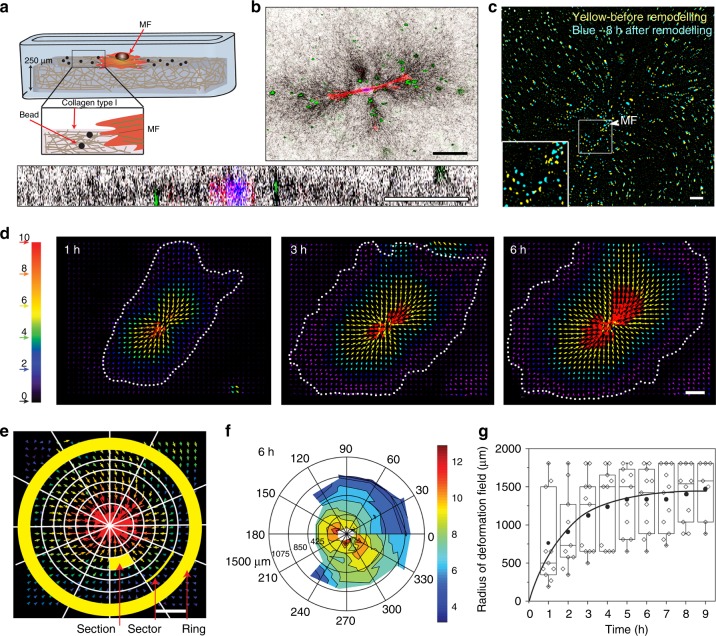
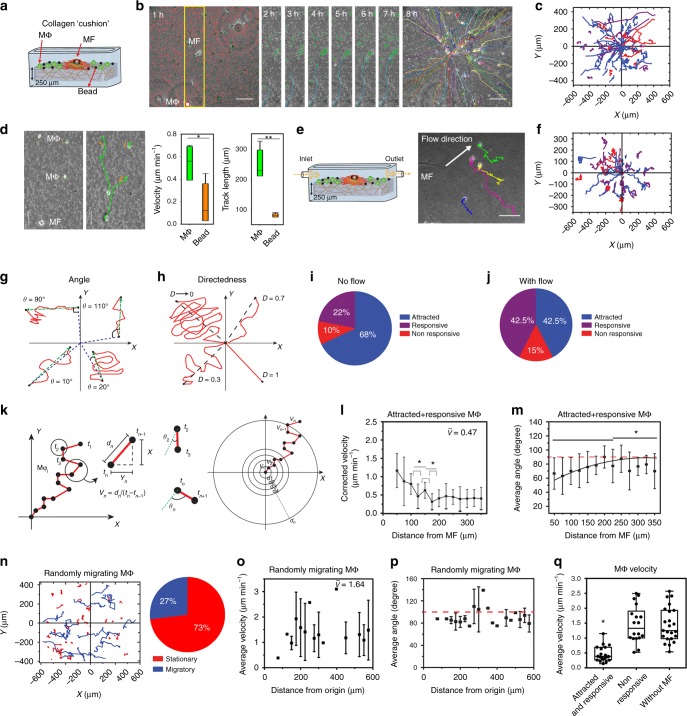
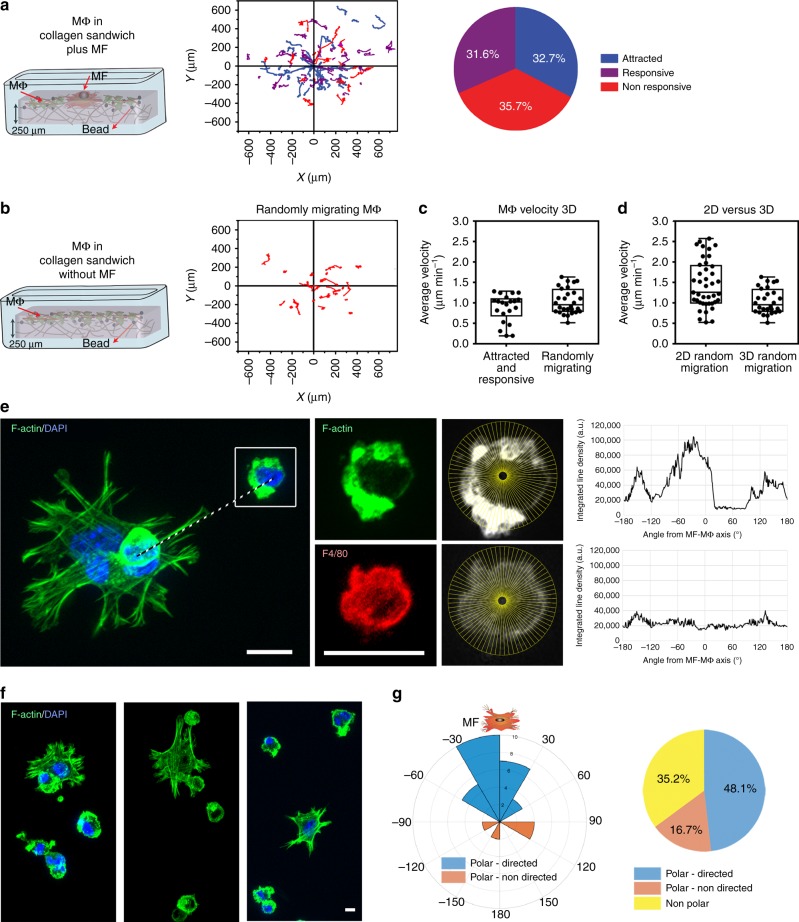
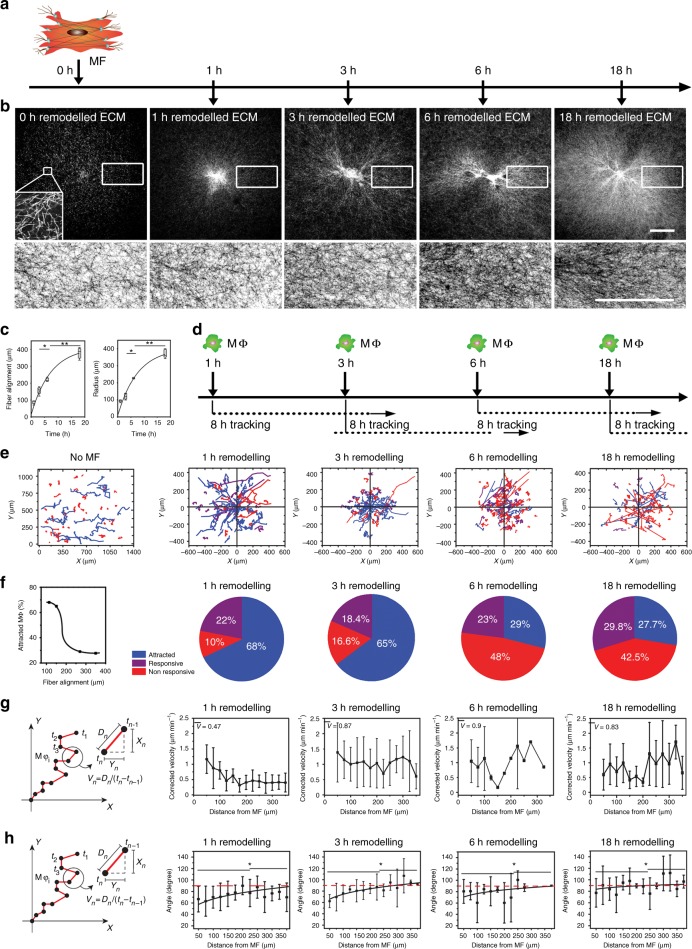
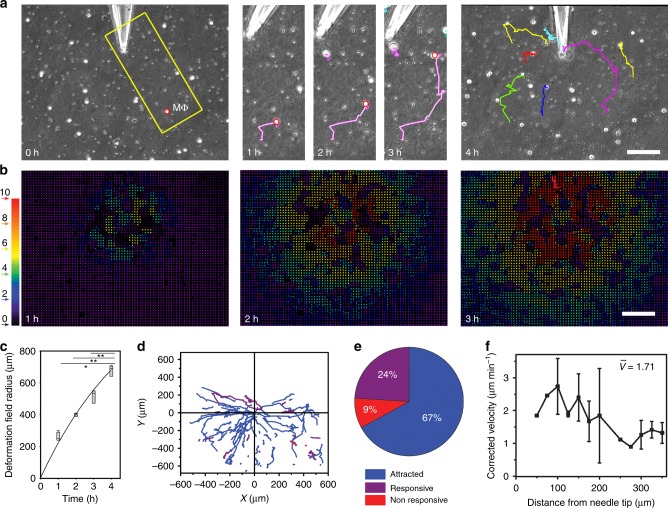
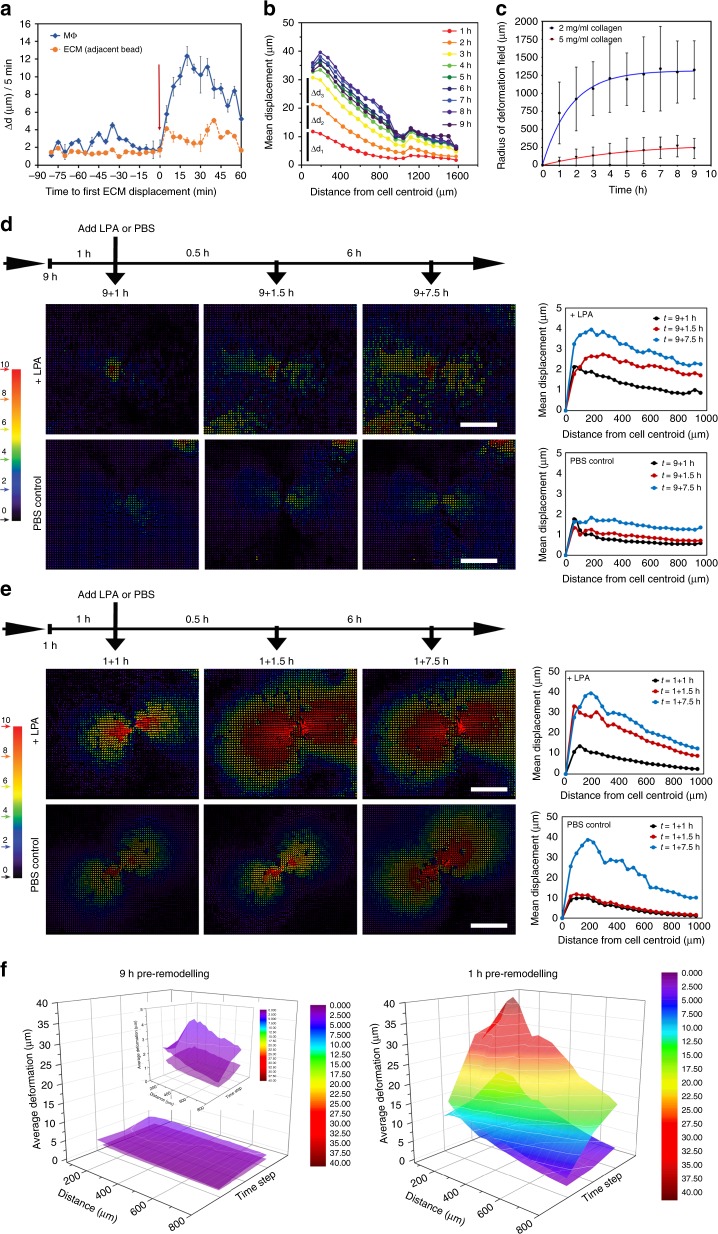
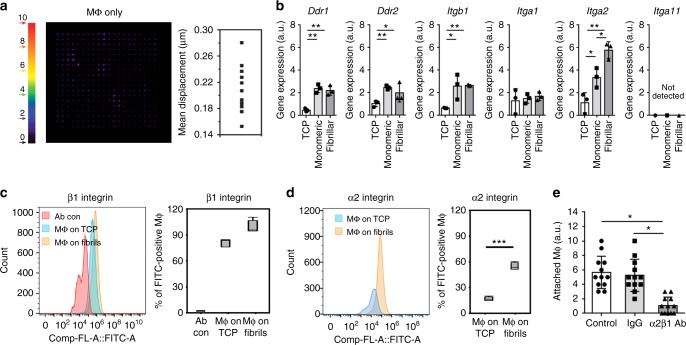
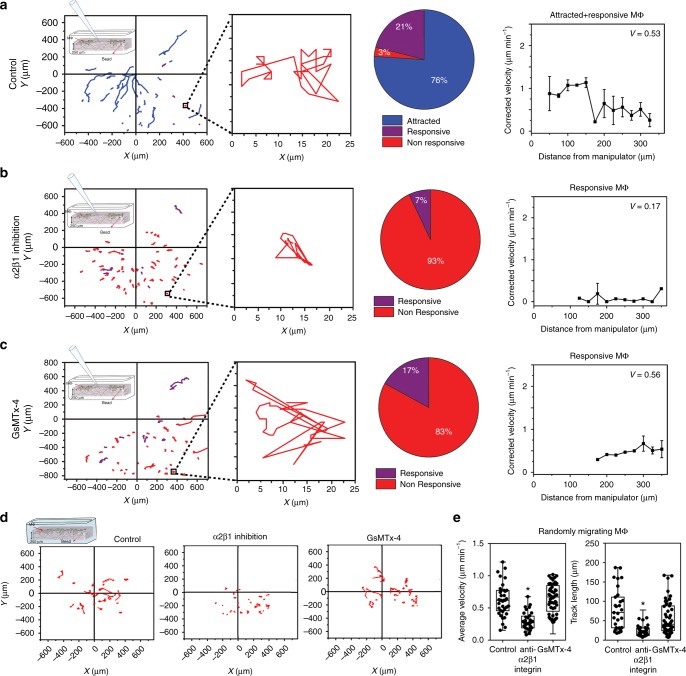
Macrophage (Mϕ)-fibroblast interactions coordinate tissue repair after injury whereas miscommunications can result in pathological healing and fibrosis. We show that contracting fibroblasts generate deformation fields in fibrillar collagen matrix that provide far-reaching physical cues for Mϕ. Within collagen deformation fields created by fibroblasts or actuated microneedles, Mϕ migrate towards the force source from several hundreds of micrometers away. The presence of a dynamic force source in the matrix is critical to initiate and direct Mϕ migration. In contrast, collagen condensation and fiber alignment resulting from fibroblast remodelling activities or chemotactic signals are neither required nor sufficient to guide Mϕ migration. Binding of α2β1 integrin and stretch-activated channels mediate Mϕ migration and mechanosensing in fibrillar collagen ECM. We propose that Mϕ mechanosense the velocity of local displacements of their substrate, allowing contractile fibroblasts to attract Mϕ over distances that exceed the range of chemotactic gradients.
Overview
The claims and statistics of this paper haven’t been checked yet.
Free: it reads the open-access text and checks the first 5 claims that cite a source we can check. Create a free account to check every claim.
Integrity signals
Registry
Cites
Statistics
Figures
Verification
Claims the paper makes
The claims and statistics of this paper haven’t been checked yet.
Free: it reads the open-access text and checks the first 5 claims that cite a source we can check. Create a free account to check every claim.
Claims other papers make about this one
Each is checked against this paper’s own text: does it say what the citing paper says it does?
The source backs part of the claim, not all of it — or backs it for a different population, condition or comparison.
In the citing paper
“macrophages are able to sense and follow changes in the deformation of collagen networks caused by the contracting fibroblasts over millimeter distances (49).”
From Modeling mechanical activation of macrophages during pulmonary fibrogenesis for targeted anti-fibrosis therapy (2024) · cites this paper as [49]
Experimental — accuracy not yet measured
Self-check
Percentages, sums and reported differences re-computed from the paper’s own numbers.
The self-check needs the paper’s full text.
Citations
Cites
Cell Movement Is Guided by the Rigidity of the Substrate
Lo, C.-M., Wang, H.-B., Dembo, M., & Wang, Y.-L. (2000) · Biophysical Journal · doi:10.1016/s0006-3495(00)76279-5 · Cited by 3,289
Macrophages: Obligate Partners for Tumor Cell Migration, Invasion, and Metastasis
Condeelis, J., & Pollard, J. W. (2006) · Cell · doi:10.1016/j.cell.2006.01.007 · Cited by 2,695
Cancer Invasion and the Microenvironment: Plasticity and Reciprocity
Friedl, P., & Alexander, S. (2011) · Cell · doi:10.1016/j.cell.2011.11.016 · Cited by 1,940
Gaggioli, C., Hooper, S., Hidalgo-Carcedo, C., Grosse, R., Marshall, J. F., Harrington, K., & Sahai, E. (2007) · Nature Cell Biology · doi:10.1038/ncb1658 · Cited by 1,589
Methods for Cell and Particle Tracking
Meijering, E., Dzyubachyk, O., & Smal, I. (2012) · Methods in Enzymology · doi:10.1016/b978-0-12-391857-4.00009-4 · Cited by 1,400
Inflammation and metabolism in tissue repair and regeneration
Eming, S. A., Wynn, T. A., & Martin, P. (2017) · Science · doi:10.1126/science.aam7928 · Cited by 1,369
Myofibroblast contraction activates latent TGF-β1 from the extracellular matrix
Wipff, P.-J., Rifkin, D. B., Meister, J.-J., & Hinz, B. (2007) · The Journal of Cell Biology · doi:10.1083/jcb.200704042 · Cited by 1,346
Self-citationDynamic molecular processes mediate cellular mechanotransduction
Hoffman, B. D., Grashoff, C., & Schwartz, M. A. (2011) · Nature · doi:10.1038/nature10316 · Cited by 956
Traction Dynamics of Filopodia on Compliant Substrates
Chan, C. E., & Odde, D. J. (2008) · Science · doi:10.1126/science.1163595 · Cited by 936
Plotnikov, S. V., Pasapera, A. M., Sabass, B., & Waterman, C. M. (2012) · Cell · doi:10.1016/j.cell.2012.11.034 · Cited by 866
Cited by
Fibrosis: from mechanisms to medicines
Henderson, N. C., Rieder, F., & Wynn, T. A. (2020) · Nature · doi:10.1038/s41586-020-2938-9 · Cited by 1,868
Fibroblasts: Origins, definitions, and functions in health and disease
Plikus, M. V., Wang, X., Sinha, S., Forte, E., Thompson, S. M., Herzog, E. L., Driskell, R. R., Rosenthal, N., Biernaskie, J., & Horsley, V. (2021) · Cell · doi:10.1016/j.cell.2021.06.024 · Cited by 1,141
“To facilitate tissue repair, signaling and physical factors induce quiescent fibroblasts to form myofibroblasts, which, through their expression of contractile proteins such as aSMA, orchestrate biomechanical remodeling and contraction via traction force (Pakshir et al., 2019) onto the voluminous amounts of new ECM th…”
BackgroundCox, T. R. (2021) · Nature Reviews Cancer · doi:10.1038/s41568-020-00329-7 · Cited by 976
Spatial multi-omic map of human myocardial infarction
Kuppe, C., Ramirez Flores, R. O., Li, Z., Hayat, S., Levinson, R. T., Liao, X., Hannani, M. T., Tanevski, J., Wünnemann, F., Nagai, J. S., et al. (2022) · Nature · doi:10.1038/s41586-022-05060-x · Cited by 772
Evasion of apoptosis by myofibroblasts: a hallmark of fibrotic diseases
Hinz, B., & Lagares, D. (2020) · Nature Reviews Rheumatology · doi:10.1038/s41584-019-0324-5 · Cited by 614
Self-citationTGF-β1 – A truly transforming growth factor in fibrosis and immunity
Lodyga, M., & Hinz, B. (2020) · Seminars in Cell & Developmental Biology · doi:10.1016/j.semcdb.2019.12.010 · Cited by 458
Self-citationTuning immunity through tissue mechanotransduction
Du, H., Bartleson, J. M., Butenko, S., Alonso, V., Liu, W. F., Winer, D. A., & Butte, M. J. (2023) · Nature Reviews Immunology · doi:10.1038/s41577-022-00761-w · Cited by 427
Activated fibroblasts in cancer: Perspectives and challenges
Caligiuri, G., & Tuveson, D. A. (2023) · Cancer Cell · doi:10.1016/j.ccell.2023.02.015 · Cited by 424
The interplay of fibroblasts, the extracellular matrix, and inflammation in scar formation
Moretti, L., Stalfort, J., Barker, T. H., & Abebayehu, D. (2022) · Journal of Biological Chemistry · doi:10.1016/j.jbc.2021.101530 · Cited by 393
Immunomodulatory Biomaterials for Tissue Repair
Whitaker, R., Hernaez-Estrada, B., Hernandez, R. M., Santos-Vizcaino, E., & Spiller, K. L. (2021) · Chemical Reviews · doi:10.1021/acs.chemrev.0c00895 · Cited by 338
Tharp, K. M., Kersten, K., Maller, O., Timblin, G. A., Stashko, C., Canale, F. P., Menjivar, R. E., Hayward, M.-K., Berestjuk, I., ten Hoeve, J., et al. (2024) · Nature Cancer · doi:10.1038/s43018-024-00775-4 · Cited by 294
“This fibrillar collagen matrix is synthesized and mechanically entrained by neighboring cells (for example, fibroblasts or keratinocytes), and it can dictate the recruitment of immune cells 57 or a programmatic homeostasis between stromal cell types 71 .”
Pakshir, P., Noskovicova, N., Lodyga, M., Son, D. O., Schuster, R., Goodwin, A., Karvonen, H., & Hinz, B. (2020) · Journal of Cell Science · doi:10.1242/jcs.227900 · Cited by 293
Self-citationAlisafaei, F., Jokhun, D. S., Shivashankar, G. V., & Shenoy, V. B. (2019) · Proceedings of the National Academy of Sciences · doi:10.1073/pnas.1902035116 · Cited by 246
Self-citationMechanical communication in fibrosis progression
Long, Y., Niu, Y., Liang, K., & Du, Y. (2022) · Trends in Cell Biology · doi:10.1016/j.tcb.2021.10.002 · Cited by 233
The Role of Myofibroblasts in Physiological and Pathological Tissue Repair
Schuster, R., Younesi, F., Ezzo, M., & Hinz, B. (2023) · Cold Spring Harbor Perspectives in Biology · doi:10.1101/cshperspect.a041231 · Cited by 232
Self-citationImmune Modulatory Properties of Collagen in Cancer
Rømer, A. M. A., Thorseth, M.-L., & Madsen, D. H. (2021) · Frontiers in Immunology · doi:10.3389/fimmu.2021.791453 · Cited by 231
“In a recent study, it was furthermore shown that a2b1integrin mediated the migration and mechanosensing of macrophages cultured on 3D collagen matrices upon deformation by contracting fibroblasts (144).”
BackgroundControl of innate immune response by biomaterial surface topography, energy, and stiffness
Abaricia, J. O., Farzad, N., Heath, T. J., Simmons, J., Morandini, L., & Olivares-Navarrete, R. (2021) · Acta Biomaterialia · doi:10.1016/j.actbio.2021.04.021 · Cited by 199
Collagen microarchitecture mechanically controls myofibroblast differentiation
Seo, B. R., Chen, X., Ling, L., Song, Y. H., Shimpi, A. A., Choi, S., Gonzalez, J., Sapudom, J., Wang, K., Andresen Eguiluz, R. C., et al. (2020) · Proceedings of the National Academy of Sciences · doi:10.1073/pnas.1919394117 · Cited by 197
Self-citationCardiac Mechano-Electric Coupling: Acute Effects of Mechanical Stimulation on Heart Rate and Rhythm
Quinn, T. A., & Kohl, P. (2021) · Physiological Reviews · doi:10.1152/physrev.00036.2019 · Cited by 191
Implant Fibrosis and the Underappreciated Role of Myofibroblasts in the Foreign Body Reaction
Noskovicova, N., Hinz, B., & Pakshir, P. (2021) · Cells · doi:10.3390/cells10071794 · Cited by 184
Self-citationRole of Macrophages in Wound Healing
Willenborg, S., Injarabian, L., & Eming, S. A. (2022) · Cold Spring Harbor Perspectives in Biology · doi:10.1101/cshperspect.a041216 · Cited by 181
Cell–3D matrix interactions: recent advances and opportunities
Yamada, K. M., Doyle, A. D., & Lu, J. (2022) · Trends in Cell Biology · doi:10.1016/j.tcb.2022.03.002 · Cited by 176
The inflammatory speech of fibroblasts
Schuster, R., Rockel, J. S., Kapoor, M., & Hinz, B. (2021) · Immunological Reviews · doi:10.1111/imr.12971 · Cited by 172
Self-citationFibrosis: cross-organ biology and pathways to development of innovative drugs
Rieder, F., Nagy, L. E., Maher, T. M., Distler, J. H. W., Kramann, R., Hinz, B., & Prunotto, M. (2025) · Nature Reviews Drug Discovery · doi:10.1038/s41573-025-01158-9 · Cited by 154
“In vitro studies suggest that fibroblast contractions attract macrophages into their vicinity by displacements in the fibrous collagen ECM, analogous to how flies (fibroblast) trapped in a spider net (collagen) attract the spider (macrophage) 180 .”
Self-citationBhattacharya, M., & Ramachandran, P. (2023) · Nature Immunology · doi:10.1038/s41590-023-01551-9 · Cited by 148
Extracellular Matrix Cues Regulate Mechanosensing and Mechanotransduction of Cancer Cells
Mierke, C. T. (2024) · Cells · doi:10.3390/cells13010096 · Cited by 146
Multiscale mechanical analysis of the elastic modulus of skin
Wahlsten, A., Stracuzzi, A., Lüchtefeld, I., Restivo, G., Lindenblatt, N., Giampietro, C., Ehret, A. E., & Mazza, E. (2023) · Acta Biomaterialia · doi:10.1016/j.actbio.2023.08.030 · Cited by 140
Unravelling cell migration: defining movement from the cell surface
Merino-Casallo, F., Gómez‐Benito, M. J., Hervás-Raluy, S., & García‐Aznar, J. M. (2022) · Cell Adhesion & Migration · doi:10.1080/19336918.2022.2055520 · Cited by 132
“Fiber alignment also enhances the invasion of tumor cells [259].”
BackgroundAdvanced Strategies for Modulation of the Material–Macrophage Interface
Huyer, L. D., Pascual‐Gil, S., Wang, Y., Mandla, S., Yee, B., & Radisic, M. (2020) · Advanced Functional Materials · doi:10.1002/adfm.201909331 · Cited by 127
Cheng, R. Y., Eylert, G., Gariepy, J., He, S., Ahmad, H., Gao, Y., Priore, S., Hakimi, N., Jeschke, M. G., & Günther, A. (2020) · Biofabrication · doi:10.1088/1758-5090/ab6413 · Cited by 124
Dai, Y., Bai, X., Jia, L., Sun, H., Feng, Y., Wang, L., Zhang, C., Chen, Y., Ji, Y., Zhang, D., et al. (2021) · Small · doi:10.1002/smll.202103986 · Cited by 103
Fibroblast activation and heterogeneity in fibrotic disease
Zhang, X., Zhang, Y., & Liu, Y. (2025) · Nature Reviews Nephrology · doi:10.1038/s41581-025-00969-8 · Cited by 101
“Moreover, activated fibroblasts produce abundant ECM proteins such as TNC, attract macrophages and facilitate ECM-mediated cell–cell communication 77,154,166 .”
Engineered Biomaterial Platforms to Study Fibrosis
Davidson, M. D., Burdick, J. A., & Wells, R. G. (2020) · Advanced Healthcare Materials · doi:10.1002/adhm.201901682 · Cited by 89
Rajendran, A. K., Sankar, D., Amirthalingam, S., Kim, H. D., Jayakumar, R., & Hwang, N. S.-Y. (2023) · Biomaterials Research · doi:10.1186/s40824-023-00393-8 · Cited by 97
Pulmonary inflammation and fibroblast immunoregulation: from bench to bedside
Ghonim, M. A., Boyd, D. F., Flerlage, T., & Thomas, P. G. (2023) · Journal of Clinical Investigation · doi:10.1172/jci170499 · Cited by 96
“…subsets, some reports have shown that fibroblasts can efficiently produce regions in the matrix, termed “defor-mation fields,” that generate a dynamic force within the stromal layer, allowing signal transmission to distant immune subsets and facilitating migration to the affected sites (113, 114).”
BackgroundBiological properties and surgical applications of the human amniotic membrane
Muñoz-Torres, J. R., Martínez-González, S. B., Lozano-Luján, A. D., Martínez-Vázquez, M. C., Velasco-Elizondo, P., Veloz, I. G., & Martínez‐Fierro, M. L. (2023) · Frontiers in Bioengineering and Biotechnology · doi:10.3389/fbioe.2022.1067480 · Cited by 92
Engineered Tools to Study Intercellular Communication
Yang, B. A., Westerhof, T. M., Sabin, K., Merajver, S. D., & Aguilar, C. A. (2020) · Advanced Science · doi:10.1002/advs.202002825 · Cited by 88
The spatial and temporal activation of macrophages during fibrosis
Behmoaras, J. V., Mulder, K., Ginhoux, F., & Petretto, E. G. (2025) · Nature reviews. Immunology · doi:10.1038/s41577-025-01186-x · Cited by 86
Ezzo, M., Spindler, K., Wang, J. B., Lee, D., Pecoraro, G., Cowen, J., Pakshir, P., & Hinz, B. (2024) · Science Advances · doi:10.1126/sciadv.adp4726 · Cited by 82
Self-citationMechanical and Immunological Regulation in Wound Healing and Skin Reconstruction
Kimura, S., & Tsuji, T. (2021) · International Journal of Molecular Sciences · doi:10.3390/ijms22115474 · Cited by 79
Bienkowska, K., Hanley, C. J., & Thomas, G. J. (2021) · Frontiers in Oral Health · doi:10.3389/froh.2021.686337 · Cited by 77
Fibroblasts and macrophages: Collaborators in tissue homeostasis
Franklin, R. A. (2021) · Immunological Reviews · doi:10.1111/imr.12989 · Cited by 76
Collagen Fibril Orientation Instructs Fibroblast Differentiation Via Cell Contractility
Sapudom, J., Karaman, S., Quartey, B. C., Mohamed, W. K. E. A., Mahtani, N., Garcia‐Sabaté, A., & Teo, J. C. M. (2023) · Advanced Science · doi:10.1002/advs.202301353 · Cited by 75
Macrophage–stroma interactions in fibrosis: biochemical, biophysical, and cellular perspectives
Vasse, G. F., Nizamoglu, M., Heijink, I. H., Schlepütz, M., van Rijn, P., Thomas, M. J., Burgess, J. K., & Melgert, B. N. (2021) · The Journal of Pathology · doi:10.1002/path.5632 · Cited by 74
“Additionally, more subtle stretch forces can be generated by contractions of other cells such as myofibroblasts in wound healing and fibrosis [111].”
BackgroundBiomechanics of soft biological tissues and organs, mechanobiology, homeostasis and modelling
Holzapfel, G. A., Humphrey, J. D., & Ogden, R. W. (2025) · Journal of The Royal Society Interface · doi:10.1098/rsif.2024.0361 · Cited by 77
Biomechanical Contributions to Macrophage Activation in the Tumor Microenvironment
Hoffmann, E. J., & Ponik, S. M. (2020) · Frontiers in Oncology · doi:10.3389/fonc.2020.00787 · Cited by 73
Lescoat, A., Lecureur, V., & Varga, J. (2021) · Current Opinion in Rheumatology · doi:10.1097/bor.0000000000000835 · Cited by 73
“Macrophages can thus perceive and respond to dynamic changes of the fibrillar collagen matrix induced by myofibroblasts [16].”
BackgroundSun, H., Dong, J., Fu, Z., Lu, X., Chen, X., Lei, H., Xiao, X., Chen, S., Lu, J., Su, D., et al. (2024) · Advanced Materials · doi:10.1002/adma.202308921 · Cited by 74
Self-citationIntracellular signaling dynamics and their role in coordinating tissue repair
Ghilardi, S. J., O’Reilly, B. M., & Sgro, A. E. (2020) · WIREs Systems Biology and Medicine · doi:10.1002/wsbm.1479 · Cited by 74
“Consequentially, the constituent stromal cells exhibit high contractility and sensitivity toward ECM-based signaling cues (Harris, Stopak, & Wild, 1981; Lodyga et al., 2019; Pakshir et al., 2019; Tan et al., 2003).”
BackgroundExtracellular matrix mechanobiology in cancer cell migration
Vasudevan, J., Jiang, K., Fernandez, J. G., & Lim, C. T. (2022) · Acta Biomaterialia · doi:10.1016/j.actbio.2022.10.016 · Cited by 72
Matrix stiffness and architecture drive fibro-adipogenic progenitors’ activation into myofibroblasts
Loomis, T., Hu, L.-Y., Wohlgemuth, R. P., Chellakudam, R. R., Muralidharan, P. D., & Smith, L. (2022) · Scientific Reports · doi:10.1038/s41598-022-17852-2 · Cited by 69
Xu, Y., Ying, L., Lang, J. K., Hinz, B., & Zhao, R. (2024) · Science Advances · doi:10.1126/sciadv.adj9559 · Cited by 67
“Furthermore, macrophages are able to sense and follow changes in the deformation of collagen networks caused by the contracting fibroblasts over millimeter distances ( 49 ).”
BackgroundSelf-citationGeervliet, E., Moreno, S., Baiamonte, L., Booijink, R., Boye, S., Wang, P., Voit, B., Lederer, A., Appelhans, D., & Bansal, R. (2021) · Journal of Controlled Release · doi:10.1016/j.jconrel.2021.03.016 · Cited by 63
Mechanosensitive Regulation of Fibrosis
Yang, S., & Plotnikov, S. V. (2021) · Cells · doi:10.3390/cells10050994 · Cited by 53
Alisafaei, F., Mandal, K., Saldanha, R., Swoger, M., Yang, H., Shi, X., Guo, M., Hehnly, H., Castañeda, C. A., Janmey, P. A., et al. (2024) · Communications Biology · doi:10.1038/s42003-024-06366-4 · Cited by 64
Self-citationLong-range mechanical signaling in biological systems
Alisafaei, F., Chen, X., Leahy, T. P., Janmey, P. A., & Shenoy, V. B. (2020) · Soft Matter · doi:10.1039/d0sm01442g · Cited by 64
Self-citationFaisal, S. M., Comba, A., Varela, M. L., Argento, A. E., Brumley, E. K., Abel, C. C., Castro, M. G., & Lowenstein, P. R. (2022) · Frontiers in Oncology · doi:10.3389/fonc.2022.1005069 · Cited by 62
Kolesnikoff, N., Chen, C.-H., & Samuel, M. S. (2022) · Clinical Science · doi:10.1042/cs20210679 · Cited by 60
de Kort, B. J., Koch, S. E., Wissing, T. B., Krebber, M. M., Bouten, C. V. C., & Smits, A. I. P. M. (2021) · Advanced Drug Delivery Reviews · doi:10.1016/j.addr.2021.113960 · Cited by 63
Cancer associated fibroblast: Mediators of tumorigenesis
Alexander, J. I., & Cukierman, E. (2020) · Matrix Biology · doi:10.1016/j.matbio.2020.05.004 · Cited by 58
Macrophages as determinants and regulators of fibrosis in systemic sclerosis
Al-Adwi, Y., Westra, J., van Goor, H., Burgess, J. K., Denton, C. P., & Mulder, D. J. (2022) · Rheumatology · doi:10.1093/rheumatology/keac410 · Cited by 57
The occurrence and development mechanisms of esophageal stricture: state of the art review
Yang, F., Hu, Y., Shi, Z., Liu, M., Hu, K., Ye, G., Pang, Q., Hou, R., Tang, K., & Zhu, Y. (2024) · Journal of Translational Medicine · doi:10.1186/s12967-024-04932-2 · Cited by 58
“Pakshir et al . found that myofibroblasts promote tissue repair by excessively expressing α-smooth muscle actin (α-SMA) to recruit myofibroblasts onto large amounts of ECM [80].”
BackgroundLi, H., Sun, J., Yang, H., Han, X., Luo, X., Liao, L., Yang, B., Zhu, T., Huo, F., Guo, W., et al. (2020) · Bioactive Materials · doi:10.1016/j.bioactmat.2020.09.029 · Cited by 55
“Recent studies proposed a safe distance between resting macrophage and contractile fibroblasts, since macrophages mechanosense local dynamic force and might migrate towards fibrillar collagen ECM to induce stiff fibrotic ECM-a condition called fibrosis [42].”
BackgroundChen, Z., Ezzo, M., Zondag, B., Rakhshani, F., Ma, Y., Hinz, B., & Kumacheva, E. (2023) · Advanced Materials · doi:10.1002/adma.202305964 · Cited by 56
Self-citationHeaster, T. M., Humayun, M., Yu, J., Beebe, D. J., & Skala, M. C. (2020) · Cancer Research · doi:10.1158/0008-5472.can-20-0831 · Cited by 55
“Therefore, the maximum migration distance for the monoculture condition was used to threshold passive from active macrophage migration at each time point (Fig 5B-D)(32).”
BackgroundMethodInflammation as an orchestrator of cutaneous scar formation: a review of the literature
abnormal, K. A., tumors, R. S. T. D. A. I. T. S. D. S. S. W., disease, A. T. T. T. I. T. A. S. A. E. B. T. I. S. O. I. T. A. N. W. A. E. A. M. O. K., & cells., S. S. O. K. P. A. G. L. T. E. O. T. F. H. P. A. N. O. S. H. E. I. I. K. T. A. T. V. M. H. I. T. K. A. A. W. A. I. I. P.-I. M. A. I. (2020) · Plastic and Aesthetic Research · doi:10.20517/2347-9264.2020.150 · Cited by 54
Wang, J., Hu, H.-Q., Wang, J., Qiu, H., Gao, Y., Xu, Y., Liu, Z.-H., Tang, Y., Song, L., Ramshaw, J., et al. (2022) · Journal of Leather Science and Engineering · doi:10.1186/s42825-022-00103-5 · Cited by 47
Szulczewski, J. M., Inman, D. R., Proestaki, M., Notbohm, J., Burkel, B. M., & Ponik, S. M. (2021) · Acta Biomaterialia · doi:10.1016/j.actbio.2021.04.053 · Cited by 54
Gomez‐Cruz, C., la Torre, M. F.-D., Lachowski, D., Prados‐de‐Haro, M., Hernández, A. E. D. R., Perea, G., Muñoz‐Barrutia, A., & Garcia‐Gonzalez, D. (2024) · Advanced Materials · doi:10.1002/adma.202312497 · Cited by 52
Doryab, A., Taskin, M. B., Stahlhut, P., Gröll, J., & Schmid, O. (2022) · Advanced Materials · doi:10.1002/adma.202205083 · Cited by 48
Novak, C. M., Ballinger, M. N., & Ghadiali, S. N. (2021) · Journal of Biomechanical Engineering · doi:10.1115/1.4051118 · Cited by 48
Di, X., Chen, J., Li, Y., Wang, M., Wei, J., Li, T., Liao, B., & Luo, D. (2024) · Clinical and Translational Medicine · doi:10.1002/ctm2.1545 · Cited by 47
“35 Although the complete mechanism by which macrophages sense deformation gradients remains unclear, this study provides a new perspective on how physical factors regulate immunocyte-fibroblast crosstalk.”
BackgroundCollective Cell Migration on Collagen-I Networks: The Impact of Matrix Viscoelasticity
Pajić‐Lijaković, I., Milivojevic, M. S., & Clark, A. G. (2022) · Frontiers in Cell and Developmental Biology · doi:10.3389/fcell.2022.901026 · Cited by 45
Alveolar macrophages drive lung fibroblast function in cocultures of IPF and normal patient samples
Novak, C. M., Sethuraman, S., Luikart, K. L., Reader, B. F., Wheat, J. S., Whitson, B. A., Ghadiali, S. N., & Ballinger, M. N. (2023) · American Journal of Physiology-Lung Cellular and Molecular Physiology · doi:10.1152/ajplung.00263.2022 · Cited by 45
Recent Development of Fibrous Hydrogels: Properties, Applications and Perspectives
Luo, W., Ren, L., Hu, B., Zhang, H., Yang, Z., Jin, L., & Zhang, D. (2024) · Advanced Science · doi:10.1002/advs.202408657 · Cited by 44
Mechanobiology of the female reproductive system
Matsuzaki, S. (2021) · Reproductive Medicine and Biology · doi:10.1002/rmb2.12404 · Cited by 43
Engineering fiber anisotropy within natural collagen hydrogels
Ahmed, A., Joshi, I. M., Mansouri, M., Ahamed, N. N. N., Hsu, M.-C., Gaborski, T. R., & Abhyankar, V. V. (2021) · American Journal of Physiology-Cell Physiology · doi:10.1152/ajpcell.00036.2021 · Cited by 41
The mechanotransducer Piezo1 coordinates metabolism and inflammation to promote skin growth
Xue, Y., Winnicki, E., Zhang, Z., López, I., Wang, S., Kirby, C. S., Lee, S. S., Li, A., Lee, C., Minsky, H., et al. (2025) · Nature Communications · doi:10.1038/s41467-025-62270-3 · Cited by 42
Implantable Medical Devices, Biomaterials, and the Foreign Body Response: A Surgical Perspective
Kalashnikov, N., Barralet, J. E., & Vorstenbosch, J. (2025) · Journal of Biomedical Materials Research Part A · doi:10.1002/jbm.a.37983 · Cited by 42
Self-assembly of mesoscale collagen architectures and applications in 3D cell migration
Liu, C., Nguyen, R. Y., Pizzurro, G. A., Zhang, X., Gong, X., Rossello‐Martinez, A., & Mak, M. (2022) · Acta Biomaterialia · doi:10.1016/j.actbio.2022.11.011 · Cited by 41
Novel approaches to target fibroblast mechanotransduction in fibroproliferative diseases
Ezzo, M., & Hinz, B. (2023) · Pharmacology & Therapeutics · doi:10.1016/j.pharmthera.2023.108528 · Cited by 41
Self-citationPyroptosis: A spoiler of peaceful coexistence between cells in degenerative bone and joint diseases
Li, Z., Cheng, W., Gao, K., Liang, S., Ke, L., Wang, M., Fan, J., Li, D., Zhang, P., Xu, Z., et al. (2024) · Journal of Advanced Research · doi:10.1016/j.jare.2024.06.010 · Cited by 41
A story of fibers and stress: Matrix‐embedded signals for fibroblast activation in the skin
Sawant, M., Hinz, B., Schönborn, K., Zeinert, I., Eckes, B., Krieg, T., & Schuster, R. (2021) · Wound Repair and Regeneration · doi:10.1111/wrr.12950 · Cited by 40
Self-citationWu, D., Pang, S., Berg, J., Mei, Y., Ali, A. S. M., Röhrs, V., Tolksdorf, B., Hagenbuchner, J., Ausserlechner, M. J., Deubzer, H. E., et al. (2024) · Advanced Functional Materials · doi:10.1002/adfm.202314171 · Cited by 37
Controlling cardiac fibrosis through fibroblast state space modulation
Reichardt, I. M., Robeson, K. Z., Regnier, M., & Davis, J. (2020) · Cellular Signalling · doi:10.1016/j.cellsig.2020.109888 · Cited by 37
“broblasts on a fibrillar collagen matrix showed that macrophages are attracted by the dynamic contraction of activated fibroblasts [39].”
BackgroundNonmyocytes as electrophysiological contributors to cardiac excitation and conduction
Simón-Chica, A., Wülfers, E. M., & Köhl, P. (2023) · American Journal of Physiology-Heart and Circulatory Physiology · doi:10.1152/ajpheart.00184.2023 · Cited by 36
Belliveau, N. M., Footer, M. J., Akdoğan, E., van Loon, A. P., Collins, S. R., & Theriot, J. A. (2023) · Nature Communications · doi:10.1038/s41467-023-41452-x · Cited by 36
Spatiotemporal dynamics of mammalian wound healing
Agramunt, J., Kang, Y., & Rinkevich, Y. (2026) · Cell Discovery · doi:10.1038/s41421-025-00865-2 · Cited by 38
Hu, L.-Y., Mileti, C. J., Loomis, T., Brashear, S. E., Ahmad, S., Chellakudam, R. R., Wohlgemuth, R. P., Gionet‐Gonzales, M., Leach, J. K., & Smith, L. (2021) · American Journal of Physiology-Cell Physiology · doi:10.1152/ajpcell.00065.2021 · Cited by 35
The role of cell–matrix interactions in connective tissue mechanics
Muntz, I., Fenu, M., van Osch, G. J. V. M., & Koenderink, G. H. (2022) · Physical Biology · doi:10.1088/1478-3975/ac42b8 · Cited by 35
F4/80hi Resident Macrophages Contribute to Cisplatin-Induced Renal Fibrosis
Sears, S. M., Vega, A. A., Kurlawala, Z., Oropilla, G. B., Krueger, A. M., Shah, P. P., Doll, M. A., Miller, R., Beverly, L. J., & Siskind, L. J. (2022) · Kidney360 · doi:10.34067/kid.0006442021 · Cited by 34
“Macrophages are also known to be important regulators of myofibroblasts (48,49).”
BackgroundPoulis, N., Martin, M., Hoerstrup, S. P., Emmert, M. Y., & Fioretta, E. S. (2022) · Frontiers in Cardiovascular Medicine · doi:10.3389/fcvm.2022.952178 · Cited by 34
“Finally, in vitro studies showed that macrophage infiltration into collagen-based substrates is impacted by collagen architecture (150).”
BackgroundThiam, F., Phogat, S., Abokor, F. A., & Osei, E. T. (2023) · Respiratory Research · doi:10.1186/s12931-023-02608-x · Cited by 33
“Chemoattraction of macrophages was dependent on the fibroblast’s deformation of the environment which than triggered attraction of macrophages via binding of α2β1 and stretch activated channels in the macrophages [62].”
BackgroundCallaghan, N. I., Rempe, C. N., Froom, Z. S. C. S., Medd, K., & Huyer, L. D. (2024) · Materials Advances · doi:10.1039/d4ma00333k · Cited by 32
Engineering strategies to capture the biological and biophysical tumor microenvironment in vitro
Tan, M. L., Lu, L., & Fischbach, C. (2021) · Advanced Drug Delivery Reviews · doi:10.1016/j.addr.2021.113852 · Cited by 32
Fibroblast and Immune Cell Cross-Talk in Cardiac Fibrosis
Hara, A., & Tallquist, M. D. (2023) · Current Cardiology Reports · doi:10.1007/s11886-023-01877-8 · Cited by 32
Cell-Based Mechanosensation, Epigenetics, and Non-Coding RNAs in Progression of Cardiac Fibrosis
Ferrari, S., & Pesce, M. (2019) · International Journal of Molecular Sciences · doi:10.3390/ijms21010028 · Cited by 31
Molecular mechanisms of COVID-19-induced pulmonary fibrosis and epithelial-mesenchymal transition
Pi, P., Zeng, Z., Zeng, L., Han, B., Bai, X., & Xu, S. (2023) · Frontiers in Pharmacology · doi:10.3389/fphar.2023.1218059 · Cited by 31
Nie, Y., Li, J., Zhai, X., Wang, Z., Wang, J., Wu, Y., Zhao, P., & Yan, G. (2023) · Antioxidants · doi:10.3390/antiox12122022 · Cited by 31
Coelho, N. M., Wang, A. A., & McCulloch, C. A. (2019) · Biochimica et Biophysica Acta (BBA) - Molecular Cell Research · doi:10.1016/j.bbamcr.2019.07.005 · Cited by 31
Self-citation
Metadata
- Authors
- Pakshir, P., Alizadehgiashi, M., Wong, B., Coelho, N. M., Chen, X., Gong, Z., Shenoy, V. B., McCulloch, C. A., & Hinz, B.
- Affiliations
- University of Toronto (CA)
- Western University (CA)
- University of Pennsylvania (US)
- Corresponding author
- Hinz, Boris
- ORCID
- Venue
- Nature Communications
- Published
- 2019-04-23
- Volume
- 10
- Issue
- 1
- Pages
- 1850-1850
- ISSN
- 2041-1723 (ISSN-L)
- PMC
- PMC6478854
- OpenAlex
- W2941184257
- Cited by
- 281
- References
- 66
- Citations by year
- 2026: 31 · 2025: 42 · 2024: 43 · 2023: 37 · 2022: 48 · 2021: 45 · 2020: 29 · 2019: 6
- FWCI
- 16.95
- Type
- journal article
- Language
- en
- Update notices
- correction (2019-05-20)
- Open access
- gold
- doi.org
- Licence
- cc-by
- creativecommons.org/licenses/by/4.0 (tdm)
- creativecommons.org/licenses/by/4.0 (vor)
- Locations
- Nature Communications (publishedVersion, cc-by)
- Europe PMC (PubMed Central) (publishedVersion, cc-by)
- PubMed Central (publishedVersion, cc-by)
- PubMed (publishedVersion)
- RePEc: Research Papers in Economics (submittedVersion)
- DOAJ (DOAJ: Directory of Open Access Journals) (submittedVersion)
- DOAJ (DOAJ: Directory of Open Access Journals) (submittedVersion, cc-by-sa)
- Funders
- National Science Foundation (154857)
- E-Rare
- University of Toronto
- Canadian Institutes of Health Research (286720, 375597, #413783, 286920)
- Natural Sciences and Engineering Research Council of Canada (413783)
- National Cancer Institute (U54CA193417, R01CA232256, U01CA202177)
- Division of Civil, Mechanical and Manufacturing Innovation (CMMI-154857)
- Topics
- Life Sciences › Biochemistry, Genetics and Molecular Biology › Cell Biology › Cellular Mechanics and Interactions
- Health Sciences › Medicine › Surgery › Wound Healing and Treatments
- Health Sciences › Medicine › Surgery › Tissue Engineering and Regenerative Medicine
- Keywords
- macrophage migration, fibroblast contraction, mechanotransduction, mechanosensing, deformation field, tissue repair, fibrosis, alpha2beta1 integrin, stretch-activated channels, extracellular matrix mechanics, chemotaxis
- MeSH terms
- Intravital Microscopy, Animals, Cell Adhesion, Cell Movement, Cells, Cultured, Extracellular Matrix, Fibroblasts, Macrophages, Mice, Inbred C57BL, Microscopy, Video, Fibrillar Collagens, Mice, Primary Cell Culture
About these checks
Registry, retraction, Cites and statistics results are computed, not judged, with one exception: a printed reference that no index lists is read once by a model before it counts as a citation error. Claims are extracted by a model and kept only when their quote appears verbatim in the text; each cited source is then checked, with a model’s help, for whether it says what the claim relies on. Those verdicts can be wrong — read the claim’s quote and the cited source before relying on one.
Statistics and arithmetic are recomputed, not judged.
Confidence bands are shown only for fields calibrated on our annotated test set. None is calibrated yet, so no band is shown.
What counts as a claim ›How we measure confidence ›How we check this ›
Are you an author, or do you see a problem with this page? Request a review
Data sources
Bibliographic data: Semantic Scholar, OpenAlex, Crossref.
Contains information from the Semantic Scholar Academic Graph Datasets, made available under the ODC Attribution License (ODC-BY 1.0).
Semantic Scholar’s data is described in: Kinney, R., et al. (2023). The Semantic Scholar Open Data Platform. arXiv:2301.10140.
