

A comprehensive single cell transcriptional landscape of human hematopoietic progenitors
Open accessThe DOI matches its Crossref record; 60 of the 61 references it cites were found in a registry or an index.
Abstract
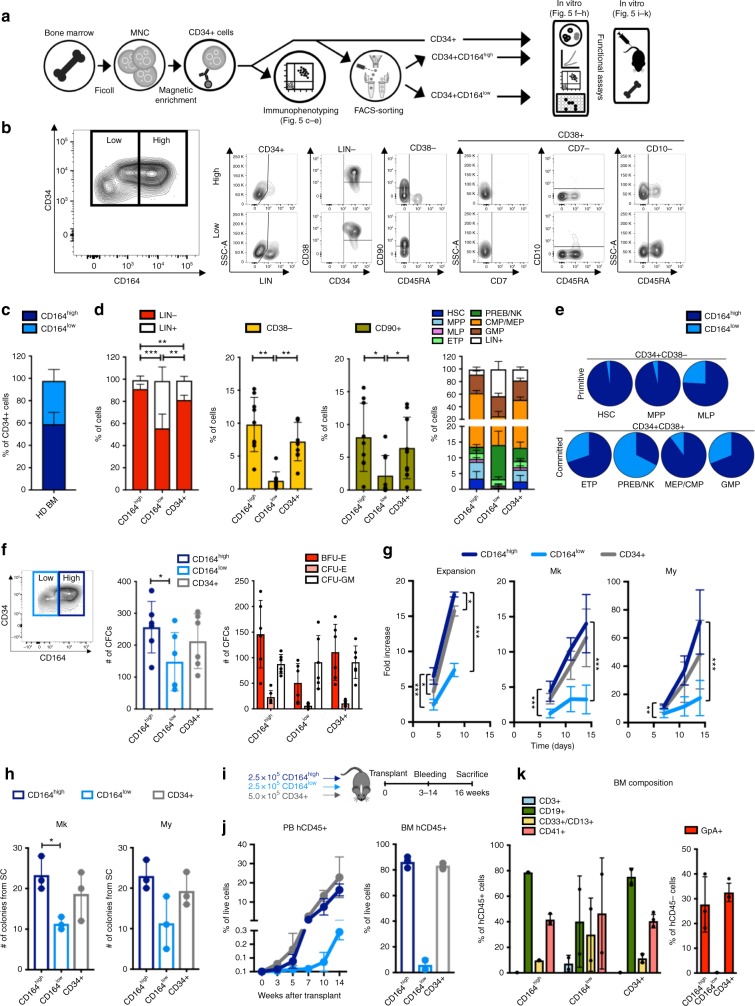
Hematopoietic Stem/Progenitor cells (HSPCs) are endowed with the role of maintaining a diverse pool of blood cells throughout the human life. Despite recent efforts, the nature of the early cell fate decisions remains contentious. Using single-cell RNA-Seq, we show that existing approaches to stratify bone marrow CD34+ cells reveal a hierarchically-structured transcriptional landscape of hematopoietic differentiation. Still, this landscape misses important early fate decisions. We here provide a broader transcriptional profiling of bone marrow lineage negative hematopoietic progenitors that recovers a key missing branchpoint into basophils and expands our understanding of the underlying structure of early adult human haematopoiesis. We also show that this map has strong similarities in topology and gene expression to that found in mouse. Finally, we identify the sialomucin CD164, as a reliable marker for the earliest branches of HSPCs specification and we showed how its use can foster the design of alternative transplantation cell products.
Overview
The claims and statistics of this paper haven’t been checked yet.
Free: it reads the open-access text and checks the first 5 claims that cite a source we can check. Create a free account to check every claim.
Integrity signals
Registry
Cites
Statistics
Figures
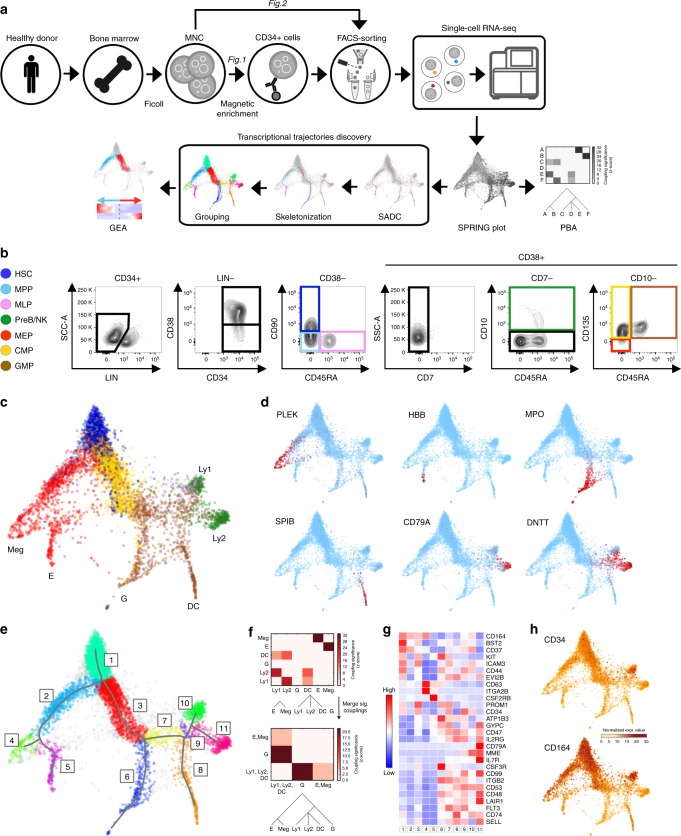
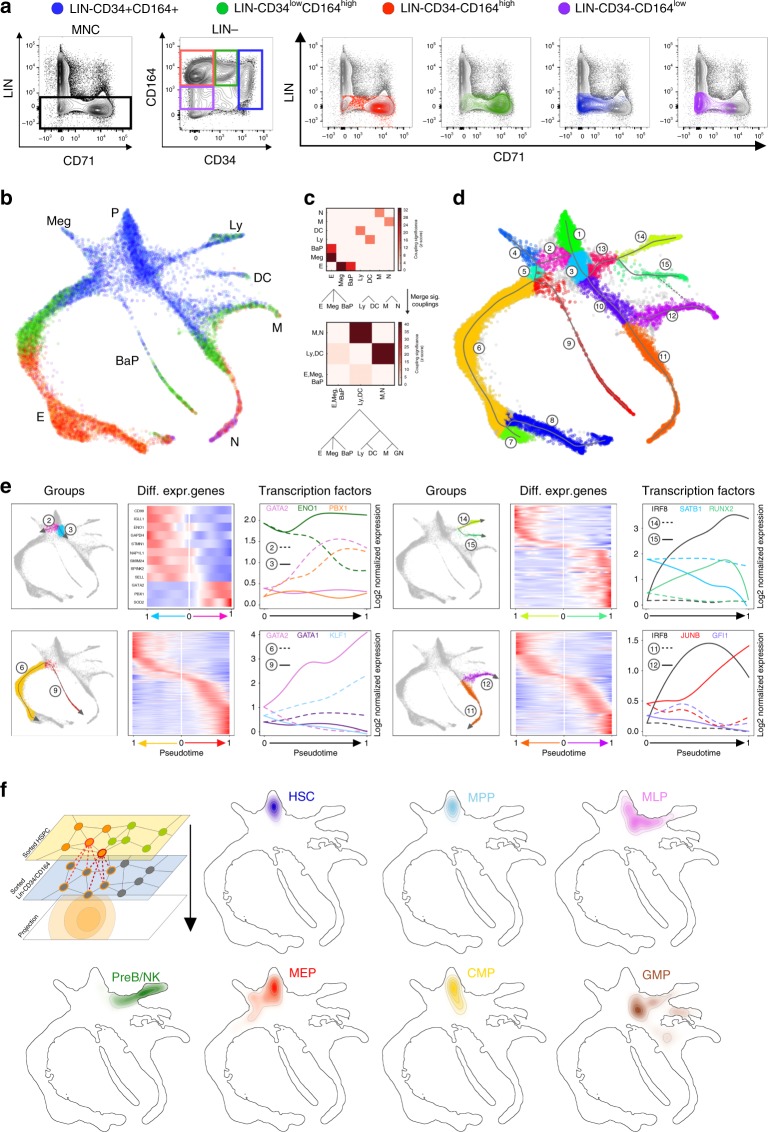
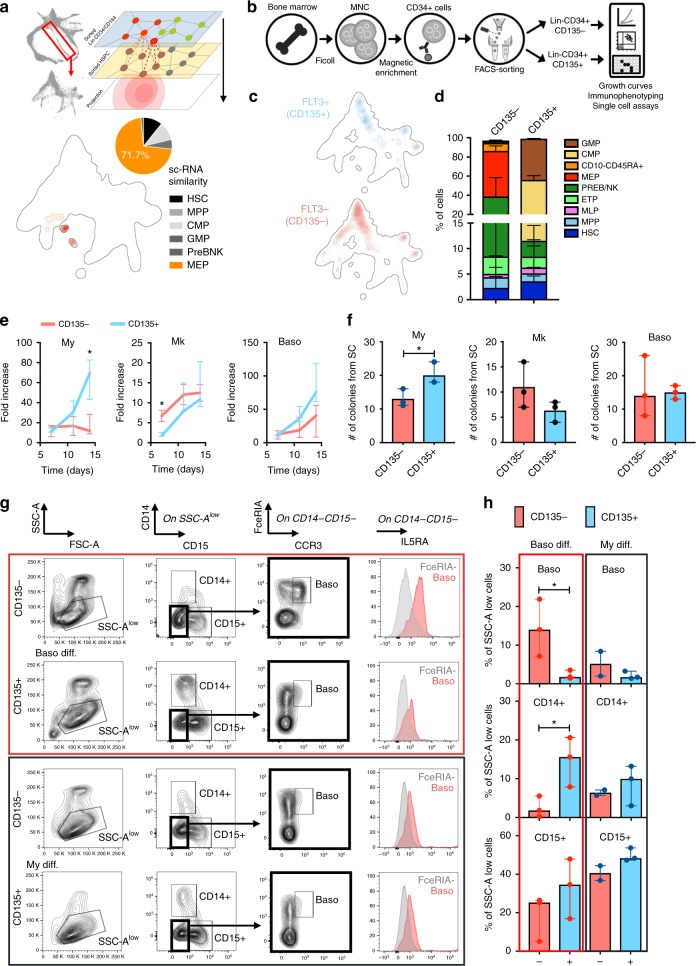
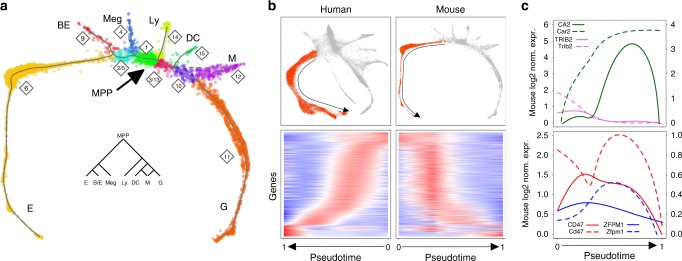
Verification
Claims the paper makes
The claims and statistics of this paper haven’t been checked yet.
Free: it reads the open-access text and checks the first 5 claims that cite a source we can check. Create a free account to check every claim.
Claims other papers make about this one
Each is checked against this paper’s own text: does it say what the citing paper says it does?
The cited source says what the claim attributes to it.
In the citing paper
“The cell fractions or classification groups were based on single-cell RNA-seq from sorted healthy donor bone marrow sample(Pellin et al., 2019).”
From Surface antigen-guided CRISPR screens identify regulators of myeloid leukemia differentiation (2021) · cites this paper as Pellin et al., 2019
Self-check
Percentages, sums and reported differences re-computed from the paper’s own numbers.
The self-check needs the paper’s full text.
Citations
Cites
R: A Language and Environment for Statistical Computing
R Core Team (2025) · doi:10.32614/r.manuals · Cited by 352,181
A Simple Sequentially Rejective Multiple Test Procedure
(1979) · Scandinavian Journal of Statistics · doi:10.2307/4615733 · Cited by 21,526
Trapnell, C., Cacchiarelli, D., Grimsby, J., Pokharel, P., Li, S., Morse, M., Lennon, N. J., Livak, K. J., Mikkelsen, T. S., & Rinn, J. L. (2014) · Nature Biotechnology · doi:10.1038/nbt.2859 · Cited by 7,314
The Reactome pathway Knowledgebase
Fabregat, A., Sidiropoulos, K., Garapati, P., Gillespie, M., Hausmann, K., Haw, R., Jassal, B., Jupe, S., Korninger, F., McKay, S., et al. (2016) · Nucleic Acids Research · doi:10.1093/nar/gkv1351 · Cited by 5,605
Droplet barcoding for single-cell transcriptomics applied to embryonic stem cells
Klein, A. M., Mazutis, L., Akartuna, I., Tallapragada, N., Veres, A., Li, V., Peshkin, L., Weitz, D. A., & Kirschner, M. W. (2015) · Cell · doi:10.1016/j.cell.2015.04.044 · Cited by 3,356
Self-citationHastie, T., & Tibshirani, R. (2014) · Wiley StatsRef: Statistics Reference Online · doi:10.1002/9781118445112.stat03141 · Cited by 3,156
Ancient DNA and the rewriting of human history: be sparing with Occam’s razor
Haber, M., Mezzavilla, M., Xue, Y., & Tyler-Smith, C. (2016) · Genome Biology · doi:10.1186/s13059-015-0866-z · Cited by 1,924
COSMIC: somatic cancer genetics at high-resolution
Forbes, S. A., Beare, D., Boutselakis, H., Bamford, S., Bindal, N., Tate, J., Cole, C. G., Ward, S., Dawson, E., Ponting, L., et al. (2017) · Nucleic Acids Research · doi:10.1093/nar/gkw1121 · Cited by 1,922
The Reactome pathway knowledgebase
Croft, D., Mundo, A. F., Haw, R., Milacic, M., Weiser, J., Wu, G., Caudy, M., Garapati, P., Gillespie, M., Kamdar, M. R., et al. (2014) · Nucleic Acids Research · doi:10.1093/nar/gkt1102 · Cited by 1,889
Civin, C. I., Strauss, L. C., Brovall, C., Fackler, M. J., Schwartz, J. F., & Shaper, J. H. (1984) · The Journal of Immunology · doi:10.4049/jimmunol.133.1.157 · Cited by 1,202
Cited by
Items 101–200 of 360
van den Berk, P. C. M., Lancini, C., Serresi, M., Sánchez-Bailón, M. P., Hulsman, D., Pritchard, C., Song, J., Schmitt, M. J., Tanger, E., Popp, O., et al. (2020) · Cell Reports · doi:10.1016/j.celrep.2020.108533 · Cited by 30
RCA2: a scalable supervised clustering algorithm that reduces batch effects in scRNA-seq data
Schmidt, F., Ranjan, B., Lin, Q. X. X., Krishnan, V., Joanito, I., Honardoost, M. A., Nawaz, Z., Venkatesh, P. N., Tan, J. H. J., Rayan, N. A., et al. (2021) · Nucleic Acids Research · doi:10.1093/nar/gkab632 · Cited by 26
“CD34+ populations within the bone marrow are known to be heterogeneous and lin-CD34+ populations were shown to mainly harbour stem cell activity (43).”
Transcriptional characterization of human megakaryocyte polyploidization and lineage commitment
Choudry, F., Bagger, F. O., Macaulay, I. C., Farrow, S., Burden, F., Kempster, C., McKinney, H., Olsen, L. R., Huang, N., Downes, K., et al. (2021) · Journal of Thrombosis and Haemostasis · doi:10.1111/jth.15271 · Cited by 32
The transcriptomic landscape of normal and ineffective erythropoiesis at single-cell resolution
Doty, R. T., Lausted, C. G., Munday, A. D., Yang, Z., Yan, X. S., Meng, C., Tian, Q., & Abkowitz, J. L. (2023) · Blood Advances · doi:10.1182/bloodadvances.2023010382 · Cited by 23
“Figure 2 (continued) Confirmatory studies evaluated expression levels of individual transcripts.(21,26,27,49,50) (E) Expression of HBB showed steadily increasing expression from BFU-E through basophilic erythroblasts.”
BackgroundMethodResultBorn, G., Nikolova, M. T., Scherberich, A., Treutlein, B., García‐García, A., & Martín, I. (2021) · Journal of Tissue Engineering · doi:10.1177/20417314211044855 · Cited by 24
Sureshchandra, S., Chan, C. N., Robino, J. J., Parmelee, L. K., Nash, M. J., Wesolowski, S. R., Pietras, E. M., Friedman, J. E., Takahashi, D. L., Shen, W., et al. (2022) · Stem Cell Reports · doi:10.1016/j.stemcr.2022.10.003 · Cited by 28
“Nevertheless, the number of biological replicates (n = 2–3 per group) used in our scRNA-seq study is consistent with previous scRNA-seq studies of humanHSPCs using two stem cell donors (Crosse et al., 2020; Pellin et al., 2019; Velten et al., 2017).”
BackgroundResultInfluentialModeling and countering the effects of cosmic radiation using bioengineered human tissues
Tavakol, D. N., Nash, T. R., Kim, Y., He, S., Fleischer, S., Graney, P. L., Brown, J. A., Liberman, M., Tamargo, M. A., Harken, A. D., et al. (2023) · Biomaterials · doi:10.1016/j.biomaterials.2023.122267 · Cited by 26
Ambrosi, T. H., Taheri, S., Chen, K., Sinha, R., Wang, Y., Hunt, E. J., Goodnough, L. H., Murphy, M. P., Steininger, H. M., Hoover, M. Y., et al. (2025) · Cell stem cell · doi:10.1016/j.stem.2025.02.013 · Cited by 32
Rettkowski, J., Romero-Mulero, M. C., Singh, I., Wadle, C., Wrobel, J., Chiang, D., Hoppe, N., Mess, J., Schönberger, K., Lalioti, M., et al. (2025) · Nature Cell Biology · doi:10.1038/s41556-025-01639-4 · Cited by 29
“To annotate the filtered good-quality clusters, enrichment of previously published human BM HSPC markers 86,87 , mouse BM HSPC signatures 88 , human BM monocyte markers 89–91 and mouse heart monocyte markers 92,93 was assessed.”
Weeda, V., Mestrum, S. G. C., & Leers, M. P. G. (2022) · International Journal of Molecular Sciences · doi:10.3390/ijms231810529 · Cited by 28
“Subsequently, the MEPs differentiate to erythrocytes or megakaryocytes [26], while the GMDPs mature into monocyte/dendritic cell progenitors (MDPs), basophils, eosinophils, or neutrophils [27,28].”
BackgroundEngineering Mice to Study Human Immunity
Sefik, E., Xiao, T., Chiorazzi, M., Odell, I. D., Zhang, F., Agrawal, K., Micevic, G., & Flavell, R. A. (2025) · Annual Review of Immunology · doi:10.1146/annurev-immunol-082523-124415 · Cited by 25
Causal modelling of gene effects from regulators to programs to traits
Ota, M., Spence, J. P., Zeng, T., Dann, E., Milind, N., Marson, A., & Pritchard, J. K. (2025) · Nature · doi:10.1038/s41586-025-09866-3 · Cited by 60
“Markers for erythroid progenitors and megakaryocytes were determined from single-cell gene expression data of bone marrow haematopoietic progenitors 95 , where we ranked the genes in each corresponding population based on expression specificity ( Z -score) compared with other populations and…”
New frameworks for hematopoiesis derived from single-cell genomics
Safina, K. R., & van Galen, P. (2024) · Blood · doi:10.1182/blood.2024024006 · Cited by 27
Continuous map of early hematopoietic stem cell differentiation across human lifetime
Komic, H., Schmachtel, T., Simoes, C. P., Külp, M., Yu, W., Jolly, A., Nilsson, M. S., González, C., Prósper, F., Bonig, H. B., et al. (2025) · Nature Communications · doi:10.1038/s41467-025-57096-y · Cited by 26
“These approaches revealed new blood cell subtypes and lineage-speci fi c differentiation stages and identi fi ed markers for the prospective isolation of fi ne-grained progenitor populations 10,11,13 .”
Natural Barcodes for Longitudinal Single Cell Tracking of Leukemic and Immune Cell Dynamics
Penter, L., Gohil, S. H., & Wu, C. J. (2022) · Frontiers in Immunology · doi:10.3389/fimmu.2021.788891 · Cited by 21
“Opportunities for Understanding HSCT With Single-Cell Sequencing As a complex immunotherapy, there are many open questions regarding HSCT than can be divided by the 4 stages of the posttransplant setting: (1) engraftment (134) and immune reconstitution (135) following HSCT, (2) GvL and GvHD when stable engraftment has…”
BackgroundHematopoietic stem cells and betaherpesvirus latency
Crawford, L. B. (2023) · Frontiers in Cellular and Infection Microbiology · doi:10.3389/fcimb.2023.1189805 · Cited by 20
“Yet, the conclusions drawn from these studies have yet to come to a consensus, with some in support of the traditional hierarchical model (Pellin et al., 2019), some supporting a model with a limited number of defined “primed states” (Zheng et al.”
ResultMoiani, A., Letort, G., Lizot, S., Chalumeau, A., Foray, C., Félix, T., Clerre, D. L., Temburni, S., Hong, P. W.-P., Leduc, S., et al. (2024) · Nature Communications · doi:10.1038/s41467-024-49353-3 · Cited by 21
“3b), was validated by looking at the expression of common RNA markers previously described to be associated with primitive HSCs 39 – 45 (Fig.”
Singh, A., Chia, J. J., Rao, D. S., & Hoffmann, A. (2025) · Blood · doi:10.1182/blood.2024025598 · Cited by 25
Single-cell fate decisions of bipotential hematopoietic progenitors
Brand, M., & Morrissey, E. R. (2020) · Current Opinion in Hematology · doi:10.1097/moh.0000000000000592 · Cited by 22
Prioritizing transcriptional factors in gene regulatory networks with PageRank
Ding, H., Yang, Y., Xue, Y., Seninge, L., Gong, H. Z., Safavi, R., Califano, A., & Stuart, J. M. (2020) · iScience · doi:10.1016/j.isci.2020.102017 · Cited by 17
Cheng, X., Liang, H., Li, Q., Wang, J., Liu, J., Zhang, Y., Ru, Y., & Zhou, Y. (2022) · Spectrochimica Acta Part A Molecular and Biomolecular Spectroscopy · doi:10.1016/j.saa.2022.121558 · Cited by 21
Zhao, H., & Deininger, M. W. (2023) · Blood · doi:10.1182/blood.2022017152 · Cited by 23
Extracellular Vesicles in Innate Immune Cell Programming
Akbar, N., Paget, D., & Choudhury, R. P. (2021) · Biomedicines · doi:10.3390/biomedicines9070713 · Cited by 20
Botchkarev, V. V., Harrington, S., Stoppato, M., Justen, A., Kimber, C., Kapuria, A., Gibson, K. M., Chu, C.-S., Xu, Y., Haugh, K. A., et al. (2025) · Nature Biotechnology · doi:10.1038/s41587-025-02915-2 · Cited by 29
Self-citationXin, Z., Zhang, W., Gong, S., Zhu, J., Li, Y., Zhang, Z., & Fang, X. (2021) · Genomics Proteomics & Bioinformatics · doi:10.1016/j.gpb.2021.03.009 · Cited by 18
“In recent years, there have been many single-cell hematopoie-sisstudies in vitro [39,40].”
Khosroabadi, Z., Azaryar, S., Dianat‐Moghadam, H., Amoozgar, Z., & Sharifi, M. (2025) · Molecular Medicine · doi:10.1186/s10020-025-01085-w · Cited by 19
Discrete regulatory modules instruct hematopoietic lineage commitment and differentiation
Georgolopoulos, G., Psatha, N., Iwata, M., Nishida, A., Som, T., Yiangou, M., Stamatoyannopoulos, J. A., & Vierstra, J. D. (2021) · Nature Communications · doi:10.1038/s41467-021-27159-x · Cited by 22
Staupe, R. P., Lodge, K. E., Thambi, N., Toole, D., Tamburino, A. M., Chang, D., Howell, B. J., Hazuda, D. J., Vora, K. A., & Sullivan, N. (2022) · Communications Biology · doi:10.1038/s42003-022-04216-9 · Cited by 14
“3c, d and Supplementary Data 4) identi fi ed hematopoietic progenitor and mature lymphocyte populations consistent with previously identi fi ed hematopoietic cell populations identi fi ed in human and mouse BM 44,49,50 .”
Bigot, T., Gabinaud, E., Hannouche, L., Sbarra, V., Andersen, E., Bastelica, D., Falaise, C., Bernot, D., Ibrahim‐Kosta, M., Morange, P., et al. (2023) · Journal of Thrombosis and Haemostasis · doi:10.1016/j.jtha.2023.04.007 · Cited by 18
Clonal tracking of haematopoietic cells: insights and clinical implications
Cordes, S., Wu, C., & Dunbar, C. E. (2020) · British Journal of Haematology · doi:10.1111/bjh.17175 · Cited by 20
“The recent explosion of methodologies and analytical approaches allowing single-cell gene expression profiling of hundreds to many thousands of individual cells has resulted in revolutionary insights into haematopoiesis and other complex branching biological processes composed of cells existing at multiple points in d…”
BackgroundThe stem cell revolution: on the role of CD164 as a human stem cell marker
Watt, S. M., Bühring, H.-J., Simmons, P. J., & Zannettino, A. C. W. (2021) · npj Regenerative Medicine · doi:10.1038/s41536-021-00143-1 · Cited by 19
Hypoxic, glycolytic metabolism is a vulnerability of B-acute lymphoblastic leukemia-initiating cells
Morris, V., Wang, D., Li, Z., Marion, W., Hughes, T. K., Sousa, P., Harada, T., Sui, S. H., Naumenko, S., Kalfon, J., et al. (2022) · Cell Reports · doi:10.1016/j.celrep.2022.110752 · Cited by 18
“Furthermore, to further define differentiation state, we classified these MLL-r B-ALL cells against known HSPC benchmarks in another published scRNA-seq dataset, finding that cluster 10 showed relatively weak pre-B/NK classification—indicative of a lesser degree of lineage commitment— with strong multi-lymphoid progen…”
ResultOta, M., Spence, J. P., Zeng, T., Dann, E., Marson, A., & Pritchard, J. K. (2025) · bioRxiv (Cold Spring Harbor Laboratory) · doi:10.1101/2025.01.22.634424 · Cited by 16
Inferring cell differentiation maps from lineage tracing data
Sashittal, P., Zhang, R. Y., Law, B. K., Schmidt, H., Strzalkowski, A. J., Bolondi, A., Chan, M. M., & Raphael, B. J. (2025) · Nature Methods · doi:10.1101/2024.09.09.611835 · Cited by 23
Clonal tracking of erythropoiesis in rhesus macaques
Fan, X., Wu, C., Truitt, L. L., Espinoza, D. A., Sellers, S. E., Bonifacino, A. C., Zhou, Y., Cordes, S., Krouse, A. E., Metzger, M. E., et al. (2019) · Haematologica · doi:10.3324/haematol.2019.231811 · Cited by 26
“Recent findings in murine model human cells studied in robust single cell in vitro assays, and pseudotemporal ordering of single cell RNA-Seq gene expression patterns have raised the possibility that the erythroid and megakaryocytic lineages, along with eosinophils and basophils in some studies, may represent the earl…”
BackgroundDifferences in the intrinsic spatial dynamics of the chromatin contribute to cell differentiation
Zhang, S., Chen, F., & Bahar, İ. (2019) · Nucleic Acids Research · doi:10.1093/nar/gkz1102 · Cited by 17
“For visual comparison, we display a single-cell RNA map for hematopoietic progenitors from earlier work (41) and compare with our MST in Supplementary Figure S9.”
BackgroundResultZhang, W., Yang, B., Weng, L., Li, J., Bai, J., Wang, T., Wang, J., Ye, J., Jing, H., Jiao, Y., et al. (2020) · Aging · doi:10.18632/aging.104136 · Cited by 16
“(D) UMAP plot displaying the resultant clusters identified in healthy Lin- bone marrow datasets [15].”
BackgroundMethodSystems analysis of hematopoiesis using single-cell lineage tracing
Rodriguez-Fraticelli, A., & Camargo, F. D. (2020) · Current Opinion in Hematology · doi:10.1097/moh.0000000000000624 · Cited by 17
Papa, L., Djedaini, M., Martin, T. C., Zangui, M., Beaumont, K. G., Sebra, R., Parsons, R. E., Schaniel, C., & Hoffman, R. (2020) · Frontiers in Cell and Developmental Biology · doi:10.3389/fcell.2020.592348 · Cited by 17
“Despite significant progress, the identity of HSCs that confer LT-repopulating potential following ex vivo HSC expansions remains elusive (Psatha et al., 2017; Chen et al., 2019).”
BackgroundInfluentialSingle-cell technologies and analyses in hematopoiesis and hematological malignancies
Campillo‐Marcos, I., Álvarez‐Errico, D., Alandes, R. A., Mereu, E., & Esteller, M. (2021) · Experimental Hematology · doi:10.1016/j.exphem.2021.05.001 · Cited by 16
Single-cell multi-omic velocity infers dynamic and decoupled gene regulationPreprint
Li, C., Virgilio, M., Collins, K. L., & Welch, J. D. (2021) · bioRxiv (Cold Spring Harbor Laboratory) · doi:10.1101/2021.12.13.472472 · Cited by 15
“Several terminal cell-type specific markers show induction-only dynamics with an increase in chromatin accessibility followed by increasing gene expression ( AZU1 in GMP, HBD in erythrocytes, HDC in granulocytes, LYZ in DC progenitors, and PF4 in the megakaryocyte (MK) progenitors direction) 38,36 .”
BackgroundSamii, A., & Razmkhah, F. (2020) · Stem Cell Reviews and Reports · doi:10.1007/s12015-020-09975-8 · Cited by 19
Diversity of human NK cell developmental pathways defined by single-cell analyses
Seo, S., & Mace, E. M. (2021) · Current Opinion in Immunology · doi:10.1016/j.coi.2021.11.001 · Cited by 16
Nagaharu, K., Kojima, Y., Hirose, H., Minoura, K., Hinohara, K., Minami, H., Kageyama, Y., Sugimoto, Y., Masuya, M., Nii, S., et al. (2022) · Cell Reports · doi:10.1016/j.celrep.2022.111260 · Cited by 13
Thakral, D., Singh, V. K., Gupta, R., Jha, N., Khan, A., Kaur, G., Rai, S., Kumar, V., Supriya, M., Bakhshi, S., et al. (2022) · Annals of Hematology · doi:10.1007/s00277-022-05021-4 · Cited by 15
Emerging Insights into Molecular Mechanisms of Inflammation in Myelodysplastic Syndromes
Vallelonga, V., Gandolfi, F., Ficara, F., Porta, M. G. D., & Ghisletti, S. (2023) · Biomedicines · doi:10.3390/biomedicines11102613 · Cited by 15
“More recently, high-throughtput sc-RNAseq has provided the comprehensive profiling of human HSPCs [52], revealing a continuum of cell fate bifurcations and a hierarchical-like structure in hematopoiesis.”
BackgroundTransiently Increased Coordination in Gene Regulation During Cell Phenotypic Transitions
Wang, W., Ni, K., Poe, D., & Xing, J. (2024) · PRX Life · doi:10.1103/prxlife.2.043009 · Cited by 22
Mende, N., Bastos, H. P., Santoro, A., Sham, K., Mahbubani, K. T. A., Curd, A., Takizawa, H., Wilson, N. K., Göttgens, B., Saeb‐Parsy, K., et al. (2020) · bioRxiv (Cold Spring Harbor Laboratory) · doi:10.1101/2020.01.26.919753 · Cited by 17
“Consistent with other single cell studies of human HSPCs (Hay et al., 2018; Pellin et al., 2019; Popescu et al., 2019), we observed grouping of erythroid (Ery) progenitors (marked by high expression of GATA1, FCER1A and CTNNBL1), megakaryocytic (Meg) progenitors (high expression of PLEK and ITGA2B)…”
BackgroundResultInfluentialCurrent knowledge on the early stages of human neutropoiesis
Calzetti, F., Finotti, G., & Cassatella, M. A. (2022) · Immunological Reviews · doi:10.1111/imr.13177 · Cited by 15
Deep learning models will shape the future of stem cell research
Ouyang, J. F., Chothani, S. P., & Rackham, O. J. L. (2023) · Stem Cell Reports · doi:10.1016/j.stemcr.2022.11.007 · Cited by 14
“, 2019), and these models are allowing us to understand the fate choice of stem cells at a resolution far higher than previously possible (Pellin et al., 2019) and even find novel cell states arising during reprogramming (Liu et al.”
BackgroundManso, B. A., y Baena, A. R., & Forsberg, E. C. (2024) · Cells · doi:10.3390/cells13080704 · Cited by 17
“Comparative transcriptomics between human and mouse hematopoietic stem and progenitor cells reveals high levels of similarity with concordance between cell state hierarchies [114].”
BackgroundNew insights into Human Hematopoietic Stem and Progenitor Cells via Single-Cell Omics
Zhang, Y., Huang, Y., Hu, L., & Cheng, T. (2022) · Stem Cell Reviews and Reports · doi:10.1007/s12015-022-10330-2 · Cited by 16
“Using scRNA-seq, several groups constructed the transcriptional landscape of human HSPCs in BM or CB [24, 76, 77].”
MethodSöderlund, S., Boey, D. Z. H., van Midden, W., Kjellander, M., Ax, K., Qian, H., Dahlin, J. S., & Ungerstedt, J. S. (2023) · Journal of Allergy and Clinical Immunology · doi:10.1016/j.jaci.2023.01.033 · Cited by 15
High NESTIN Expression Marks the Endosteal Capillary Network in Human Bone Marrow
Panvini, F. M., Pacini, S., Montali, M., Barachini, S., Mazzoni, S., Morganti, R., Ciancia, E. M., Carnicelli, V., & Petrini, M. (2020) · Frontiers in Cell and Developmental Biology · doi:10.3389/fcell.2020.596452 · Cited by 16
Todisco, G., Creignou, M., Bernard, E., Björklund, A.-C., Moura, P. L., Tesi, B., Blanco, T. M., Sander, B., Jansson, M., Walldin, G., et al. (2023) · Clinical Cancer Research · doi:10.1158/1078-0432.ccr-23-0538 · Cited by 13
“10 6 ) were isolated from the MNCs using AUTO-MACS with double-separation option (Miltenyi Biotec) and submitted for RNA extraction for all cases and controls.”
InfluentialErythrocyte microRNAs: a tiny magic bullet with great potential for sickle cell disease therapy
Verma, H. K., Ratre, Y. K., Bhaskar, L. V., & Colombatti, R. (2021) · Annals of Hematology · doi:10.1007/s00277-020-04390-y · Cited by 13
Porcù, E., Benetton, M., Bisio, V., Ros, A. D., Tregnago, C., Borella, G., Zanon, C., Bordi, M., Germanò, G., Manni, S., et al. (2021) · iScience · doi:10.1016/j.isci.2021.103350 · Cited by 13
Tumor heterogeneity of acute myeloid leukemia: insights from single-cell sequencing
Chen, A., Hu, S., & Wang, Q. (2019) · Blood Science · doi:10.1097/bs9.0000000000000015 · Cited by 13
Deciphering Hematopoiesis at single cell level through the lens of reduced dimensionsPreprint
Singh, P., & Zhai, Y. (2022) · bioRxiv (Cold Spring Harbor Laboratory) · doi:10.1101/2022.06.07.495099 · Cited by 12
Ianevski, A., Giri, A. K., & Aittokallio, T. A. (2022) · RePEc: Research Papers in Economics · Cited by 11
Dissection and integration of bursty transcriptional dynamics for complex systems
Gao, C., Vaikuntanathan, S., & Riesenfeld, S. J. (2024) · Proceedings of the National Academy of Sciences · doi:10.1073/pnas.2306901121 · Cited by 13
“…cells [53], association of IRF8 with monocyte development and dendritic cell function [54]; expression of SELP during megakaryocyte development [55], down-202 regulation of CRHBP in HSCs during differentiation [56], and expression of the chemotactic gene AZU1 in monocytes [57] (Supplementary Fig.”
BackgroundTsuji, N., Hosokawa, K. T., Urushihara, R., Tanabe, M., Zaimoku, Y., Katagiri, T., Ozawa, T., Takamatsu, H., Ishiyama, K., Yamazaki, H., et al. (2022) · Leukemia · doi:10.1038/s41375-022-01549-6 · Cited by 10
“Their subpopulations were characterized as follows; common myeloid progenitors (CMPs) by CD34CD38CD10CD135CD45RA, megakaryocyte erythroid progenitors (MEPs) by CD34CD38CD10CD135CD45RA, granulocyte macrophage progenitors (GMPs) by CD34CD38CD10CD135CD45RA and common lymphoid progenitors (CLPs) by CD34CD38CD10 [29].”
BackgroundFilia, A., Mitroulis, I., Loukogiannaki, C., Grigoriou, M., Banos, A., Sentis, G., Giannouli, S., Karali, V., Athanasiadis, E. I., Kokkinopoulos, I., et al. (2024) · Frontiers in Immunology · doi:10.3389/fimmu.2024.1383358 · Cited by 10
“Clusters were further de fi ned based on the expression of lineage markers (26, 27), differentially expressed genes in each cluster compared with all others (Figure 1C; Supplementary Table 2) as well as annotation against a reference dataset (Supplementary Figure 3).”
ResultNam, A. S., Dusaj, N. N., Izzo, F., Murali, R., Myers, R. M., Mouhieddine, T. H., Sotelo, J., Benbarche, S., Waarts, M. R., Gaiti, F., et al. (2022) · bioRxiv (Cold Spring Harbor Laboratory) · doi:10.1101/2022.01.14.476225 · Cited by 10
Novel insights into the ontogeny of basophils
Miyake, K., Ito, J., & Karasuyama, H. (2024) · Frontiers in Allergy · doi:10.3389/falgy.2024.1402841 · Cited by 10
“This is also true for basophil/mast cell differentiation, and recent studies with scRNA-seq analysis have elucidated continuous gene expression changes during basophil differentiation (Table 3) (16, 40, 41, 54 – 58, 62 – 64).”
BackgroundMethodResultInfluentialWarfvinge, R., Ulfsson, L. G., Dhapola, P., Safi, F., Sommarin, M. N. E., Soneji, S., Hjorth‐Hansen, H., Mustjoki, S. M., Richter, J., Thakur, R. K., et al. (2024) · eLife · doi:10.7554/elife.92074.3 · Cited by 24
Jarczak, J., Bujko, K., Ratajczak, M. Z., & Kucia, M. (2024) · Scientific Reports · doi:10.1038/s41598-024-79810-4 · Cited by 9
Zheng, F. Y., Zhang, W., Yang, B., & Chen, M. (2022) · Annals of Translational Medicine · doi:10.21037/atm-22-5351 · Cited by 12
Deciphering transcriptional and functional heterogeneity in hematopoiesis with single-cell genomics
Martin-Rufino, J. D., & Sankaran, V. G. (2021) · Current Opinion in Hematology · doi:10.1097/moh.0000000000000657 · Cited by 10
Zeng, X., Wang, Y., Dai, M., Li, W., Huang, Q., Qin, L., Li, Y., Yan, Y., Xue, X., Yi, F., et al. (2024) · Journal of Translational Medicine · doi:10.1186/s12967-024-05165-z · Cited by 8
“Recently, the single-cell RNA sequencing (scRNA-seq) technology provides an unprecedented opportunity to deepened our understanding of normal hematopoiesis by identifying the transitional cell states between classical hematopoietic hierarchy stages [16, 17].”
BackgroundHLA-DM and HLA-DO interplay for the peptide editing of HLA class II in healthy tissues and leukemia
Budeus, B., Álvaro‐Benito, M., & Crivello, P. (2024) · Best Practice & Research Clinical Haematology · doi:10.1016/j.beha.2024.101561 · Cited by 10
Cheng, S., Zhu, Y., Gao, Q., Cheng, Y., Yang, S., Zhang, J., Yang, S., Xu, R., Yuan, J., Novakovic, B., et al. (2024) · Cell Reports · doi:10.1016/j.celrep.2024.114850 · Cited by 10
Araki, D., Chen, V., Redekar, N. R., Salisbury-Ruf, C. T., Luo, Y., Liu, P., Li, Y., Smith, R. H., Dagur, P. K., Combs, C. A., et al. (2024) · Cell stem cell · doi:10.1016/j.stem.2024.10.013 · Cited by 11
Chen, L., Bian, Y., Pronk, E., van Dijk, C., van Tienhoven, T. V. D., Hoogenboezem, R. M., Bindels, E. M., Bosch, D. A., Fazeli, S., de Graaf, A. O., et al. (2025) · Nature Communications · doi:10.1038/s41467-025-65802-z · Cited by 13
Fidanza, A., & Forrester, L. M. (2021) · Journal of Immunology and Regenerative Medicine · doi:10.1016/j.regen.2021.100050 · Cited by 11
CLONAL HEMATOPOIESIS: ROLE IN HEMATOLOGIC NON-HEMATOLOGIC
Testa, U., Castelli, G., & Pelosi, E. (2022) · Mediterranean Journal of Hematology and Infectious Diseases · doi:10.4084/mjhid.2022.069 · Cited by 9
“continuum differentiation model of human hematopoiesis.(53)”
Wang, L., Nie, R., Zhang, J., & Cai, J. (2022) · BMC Bioinformatics · doi:10.1186/s12859-022-05098-8 · Cited by 9
Wang, H., Langlais, D., & Nijnik, A. (2023) · The International Journal of Biochemistry & Cell Biology · doi:10.1016/j.biocel.2023.106384 · Cited by 10
Systems biology approaches to unravel lymphocyte subsets and function
Kim, Y., Greenleaf, W. J., & Bendall, S. C. (2023) · Current Opinion in Immunology · doi:10.1016/j.coi.2023.102323 · Cited by 8
“Hence, with the advances in single-cell technologies, multiple groups have investigated human bone marrow hematopoiesis and demonstrated the molecular phenotypic continuum of hematopoietic progenitors in protein [5], RNA [21,22], and chromatin accessibility [23] landscapes.”
Single-Cell RNA Sequencing in Organ and Cell Transplantation
Abedini‐Nassab, R., Taheri, F., Emamgholizadeh, A., & Naderi‐Manesh, H. (2024) · Biosensors · doi:10.3390/bios14040189 · Cited by 9
“Researchers have used scRNA-seq to provide the transcriptional landscape of human hematopoietic progenitors at the single-cell level [133].”
MethodDas, A., Saeki, K., Dell’Orso, S., Wang, X., Mansky, K. C., Stains, J. P., Ozato, K., Deng, H.-W., & Thumbigere‐Math, V. (2025) · Journal of Bone and Mineral Research · doi:10.1093/jbmr/zjaf084 · Cited by 10
Erythroid Cell Research: 3D Chromatin, Transcription Factors and Beyond
Andrieu‐Soler, C., & Soler, É. (2022) · International Journal of Molecular Sciences · doi:10.3390/ijms23116149 · Cited by 8
Dong, G., Xu, X., Li, Y., Ouyang, W., Zhao, W., Gu, Y., Li, J., Liu, T., Zeng, X., Zou, H., et al. (2023) · Clinical and Translational Medicine · doi:10.1002/ctm2.1175 · Cited by 10
“…(FACS) with different antibodies against cell surface markers, and then perform the scRNA-seq in those “characterized” cell populations, respectively (Pellin et al., 2019); another approach is to perform scRNA-seq on unsorted CD34+ cells and then define the sub-cell populations based on…”
MethodKuronuma, K., Yokoi, A., Fukuoka, T., Miyata, M., Maekawa, A., Tanaka, S., Matsubara, L., Goto, C., Matsuo, M., Han, H., et al. (2020) · Heliyon · doi:10.1016/j.heliyon.2020.e03743 · Cited by 8
“5 MGP, if not none [28, 29], indicating a majority of MGP in normal hematopoietic niche is produced by BM stromal cells.”
BackgroundHematopoietic Stem Cells in Health and Disease—Insights from Single-Cell Multi-omic Approaches
Haas, S. F. (2020) · Current Stem Cell Reports · doi:10.1007/s40778-020-00174-2 · Cited by 9
van den Berk, P. C. M., Lancini, C., Carlos Company, Serresi, M., Sánchez-Bailón, M. P., Hulsman, D., Pritchard, C., Song, J.-Y., Schmitt, M., Tanger, E., et al. (2020) · bioRxiv · doi:10.1101/2020.01.23.916627 · Cited by 24
“Importantly, Usp15 expression pattern in the mouse is similarly conserved in humans, as inferred by USP15 expression in CD34 human HSCs and early lineage-committed progenitors at the single-cell level (Figure S2K) (Pellin et al., 2019).”
BackgroundA multi-track landscape of haematopoiesis informed by cellular barcoding and agent-based modellingPreprint
Lin, D. S. Y., Zhang, S., Schreuder, J., Tran, J., Sargeant, T., Metcalf, D., Ng, A. P., Weber, T. S., & Naik, S. H. (2024) · bioRxiv (Cold Spring Harbor Laboratory) · doi:10.1101/2024.03.28.587126 · Cited by 11
“…history (Busch et al., 2015; Kucinski et al., 2024; MacLean et al., 2013; Manesso et al., 2013; Olariu and Peterson, 2019; Peixoto et al., 2011; Pellin et al., 2019a; Perié et al., 2014), yet to our knowledge no existing framework can account for the striking heterogeneity in potency we…”
BackgroundBRD9 regulates normal human hematopoietic stem cell function and lineage differentiation
Garg, S., Wei Min, N. I., Chowdhury, B., Weisberg, E., Sattler, M., & Griffin, J. D. (2024) · Cell Death and Differentiation · doi:10.1038/s41418-024-01306-5 · Cited by 10
Ruoss, S., Nasamran, C. A., Ball, S. T., Chen, J. L., Halter, K., Bruno, K. A., Whisenant, T. C., Parekh, J. N., Dorn, S. N., Esparza, M. C., et al. (2024) · Science Advances · doi:10.1126/sciadv.adn2831 · Cited by 10
“Cells passed adipogenic, osteogenic, and chondrogenic differentiation and presented with the following flow cytometry profile: 100% CD105 + , 96% CD166 + , 100% CD44 + , 100% CD90 + , ( 75 , 76 , 108 ).”
Shen, M., Liu, Y., Shao, L., Qu, M., Song, S., Sun, W., & Zhang, H. (2025) · Frontiers in Immunology · doi:10.3389/fimmu.2025.1612352 · Cited by 11
Single-cell and spatial transcriptomics in endocrine research
Matsumoto, R., & Yamamoto, T. (2024) · Endocrine Journal · doi:10.1507/endocrj.ej23-0457 · Cited by 7
“…data and iden‐ tified a mutational signature present during the aging of pancreatic endocrine cells [45]. scRNA-seq has also been utilized for a wide range of cellular analyses, including hematopoietic stem cells [46, 47], lymphocytes in the thymus [48, 49], and mesenchymal stem cells [50].”
Terminal deoxynucleotidyl transferase and CD84 identify human multi-potent lymphoid progenitors
Kim, Y., Calderon, A. A., Favaro, P. M. B., Glass, D. R., Tsai, A. G., Ho, D., Borges, L., Greenleaf, W. J., & Bendall, S. C. (2024) · Nature Communications · doi:10.1038/s41467-024-49883-w · Cited by 7
“…to de fi ne human HSPC types and 4 additional lineage-associated proteins — CD71, alsoknown as transferrin receptor 1, for erythroid lineage 23 – 25 , SATB1 for early lympho-myeloid progenitors 1,26 – 28 , TdT for lymphoid lineage 1,11,23 , and IRF8 for DC and monocyte lineages 29 – 31 .”
InfluentialShahbaz, S., Rosero, E. P., Syed, H., Hnatiuk, M., Bozorgmehr, N., Rahmati, A., Zia, S., Plemel, J. R., Osman, M. S., & Elahi, S. (2024) · mBio · doi:10.1128/mbio.01599-24 · Cited by 9
“To test this hypothesis, we re-analyzed a scRNAseq data set that was performed on seven different subpopulations of human BM cells (83).”
Targeting the Sodium–Potassium Pump as a Therapeutic Strategy in Acute Myeloid Leukemia
Schneider, C., Spaink, H., Alexe, G., Dharia, N. V., Meyer, A., Merickel, L. A., Khalid, D., Scheich, S., Häupl, B., Staudt, L. M., et al. (2024) · Cancer Research · doi:10.1158/0008-5472.can-23-3560 · Cited by 9
“Data from DMAP(46), HemaExplorer(47), and Rapin(48) and Pellin(49) suggest that ATP1B1 expression decreases with a more differentiated cell state, especially in the NK, T-cell, and B-cell lineage (Figure 4F, Supplemental Table 4, and Supplemental Figure 8B–”
ORIGINS: A protein network-based approach to quantify cell pluripotency from scRNA-seq data
Senra, D., Guisoni, N., & Diambra, L. A. (2022) · MethodsX · doi:10.1016/j.mex.2022.101778 · Cited by 7
“Raw data is available in the GEO database under the accession code GSE117498 [22].”
MethodCho, D. S., Schmitt, R. E., Dasgupta, A., Ducharme, A. M., & Doles, J. D. (2022) · Shock · doi:10.1097/shk.0000000000001951 · Cited by 7
Webb, S., & Haniffa, M. A. (2023) · European Journal of Immunology · doi:10.1002/eji.202250222 · Cited by 7
“Building on a wealth of single-cell research from postnatal mouse BM [35–37], our human fetal BM study revealed the rapid establishment of hematopoiesis in fetal femur within weeks and the complete differentiation of all cellular lineages including granulocytes [15].”
BackgroundEpi-Impute: Single-Cell RNA-seq Imputation via Integration with Single-Cell ATAC-seq
Raevskiy, M., Yanvarev, V., Jung, S., del Sol, A., & Medvedeva, Y. A. (2023) · International Journal of Molecular Sciences · doi:10.3390/ijms24076229 · Cited by 10
A topological look into the evolution of developmental programs
Mani, S., & Tlusty, T. (2021) · Biophysical Journal · doi:10.1016/j.bpj.2021.08.044 · Cited by 8
Warfvinge, R., Ulfsson, L. G., Dhapola, P., Safi, F., Sommarin, M. N. E., Soneji, S., Hjorth‐Hansen, H., Mustjoki, S. M., Richter, J., Thakur, R. K., et al. (2023) · eLife · doi:10.7554/elife.92074 · Cited by 6
“BCR::ABL1 + LSCs in all patients were positioned immediately juxtaposing the downstream progenitor populations forming a continuum of differentiation hierarchy characteristically observed in single-cell analysis of HSPCs ( Pellin et al., 2019 ; Safi et al., 2022 ; Velten et al., 2017 ).”
Background
Metadata
- Authors
- Pellin, D., Loperfido, M., Baricordi, C., Wolock, S. L., Montepeloso, A., Weinberg, O. K., Biffi, A., Klein, A. M., & Biasco, L.
- Affiliations
- Harvard University (US)
- Boston Children's Hospital (US)
- Corresponding author
- Klein, Allon M.
- Biasco, Luca
- ORCID
- Venue
- Nature Communications
- Published
- 2019-06-03
- Volume
- 10
- Issue
- 1
- Pages
- 2395-2395
- ISSN
- 2041-1723 (ISSN-L)
- PMC
- PMC6546699
- OpenAlex
- W2948104182
- Semantic Scholar
- cc464fde19119a320bb7d6c9cdb26bce5c2d3740
- Cited by
- 360
- References
- 61
- Citations by year
- 2026: 29 · 2025: 48 · 2024: 58 · 2023: 48 · 2022: 64 · 2021: 55 · 2020: 46 · 2019: 12
- FWCI
- 31.31
- Type
- journal article
- Language
- en
- Open access
- gold
- doi.org
- Licence
- cc-by
- creativecommons.org/licenses/by/4.0 (tdm)
- creativecommons.org/licenses/by/4.0 (vor)
- Locations
- Nature Communications (publishedVersion, cc-by)
- Europe PMC (PubMed Central) (publishedVersion, cc-by)
- PubMed Central (publishedVersion, cc-by)
- PubMed (publishedVersion)
- RePEc: Research Papers in Economics (submittedVersion)
- DOAJ (DOAJ: Directory of Open Access Journals) (submittedVersion)
- DOAJ (DOAJ: Directory of Open Access Journals) (submittedVersion, cc-by-sa)
- UCL Discovery (University College London) (submittedVersion)
- Padua Research Archive (University of Padova) (submittedVersion, cc-by)
- Funders
- Dana-Farber Cancer Institute
- Wellcome Trust (104807, 104807/Z/14/Z)
- NIHR Biomedical Research Centre, Royal Marsden NHS Foundation Trust/Institute of Cancer Research
- National Institute for Health and Care Research
- Great Ormond Street Hospital for Children
- Harvard Stem Cell Institute
- National Cancer Institute (R33CA212697)
- Topics
- Health Sciences › Medicine › Hematology › Hematopoietic Stem Cell Transplantation
- Life Sciences › Biochemistry, Genetics and Molecular Biology › Molecular Biology › Single-cell and spatial transcriptomics
- Life Sciences › Biochemistry, Genetics and Molecular Biology › Molecular Biology › Genomics and Chromatin Dynamics
- Keywords
- hematopoietic stem and progenitor cells, hematopoiesis, hematopoietic differentiation, single-cell transcriptomics, CD34+ cells, basophils, CD164, sialomucin, cell fate determination, bone marrow, human-mouse comparison
- MeSH terms
- Animals, Bone Marrow Cells, Hematopoiesis, Hematopoietic Stem Cells, Humans, Sequence Analysis, RNA, Antigens, CD34, Cell Lineage, Gene Expression Profiling, Mice, Endolyn, Single-Cell Analysis
About these checks
Registry, retraction, Cites and statistics results are computed, not judged, with one exception: a printed reference that no index lists is read once by a model before it counts as a citation error. Claims are extracted by a model and kept only when their quote appears verbatim in the text; each cited source is then checked, with a model’s help, for whether it says what the claim relies on. Those verdicts can be wrong — read the claim’s quote and the cited source before relying on one.
Statistics and arithmetic are recomputed, not judged.
Confidence bands are shown only for fields calibrated on our annotated test set. None is calibrated yet, so no band is shown.
What counts as a claim ›How we measure confidence ›How we check this ›
Are you an author, or do you see a problem with this page? Request a review
Data sources
Bibliographic data: Semantic Scholar, OpenAlex, Crossref.
Contains information from the Semantic Scholar Academic Graph Datasets, made available under the ODC Attribution License (ODC-BY 1.0).
Semantic Scholar’s data is described in: Kinney, R., et al. (2023). The Semantic Scholar Open Data Platform. arXiv:2301.10140.
