

A comprehensive single cell transcriptional landscape of human hematopoietic progenitors
Open accessThe DOI matches its Crossref record; 60 of the 61 references it cites were found in a registry or an index.
Abstract
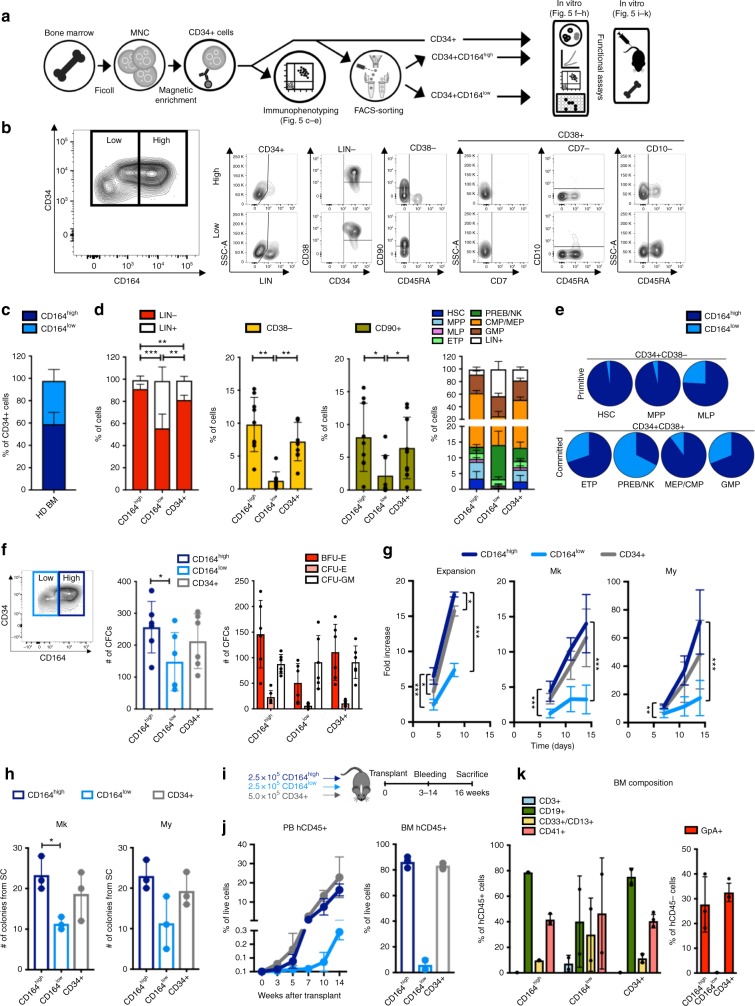
Hematopoietic Stem/Progenitor cells (HSPCs) are endowed with the role of maintaining a diverse pool of blood cells throughout the human life. Despite recent efforts, the nature of the early cell fate decisions remains contentious. Using single-cell RNA-Seq, we show that existing approaches to stratify bone marrow CD34+ cells reveal a hierarchically-structured transcriptional landscape of hematopoietic differentiation. Still, this landscape misses important early fate decisions. We here provide a broader transcriptional profiling of bone marrow lineage negative hematopoietic progenitors that recovers a key missing branchpoint into basophils and expands our understanding of the underlying structure of early adult human haematopoiesis. We also show that this map has strong similarities in topology and gene expression to that found in mouse. Finally, we identify the sialomucin CD164, as a reliable marker for the earliest branches of HSPCs specification and we showed how its use can foster the design of alternative transplantation cell products.
Overview
The claims and statistics of this paper haven’t been checked yet.
Free: it reads the open-access text and checks the first 5 claims that cite a source we can check. Create a free account to check every claim.
Integrity signals
Registry
Cites
Statistics
Figures
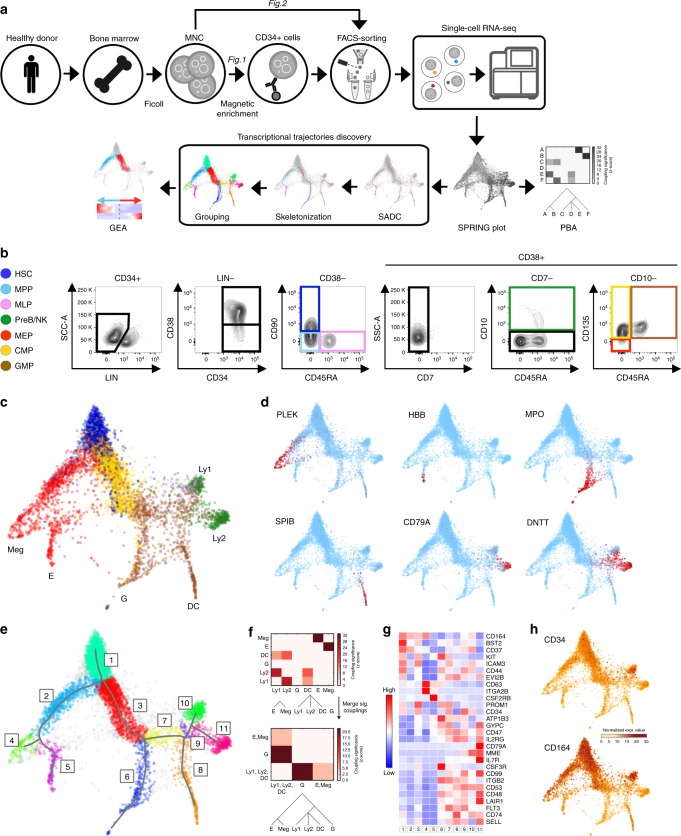
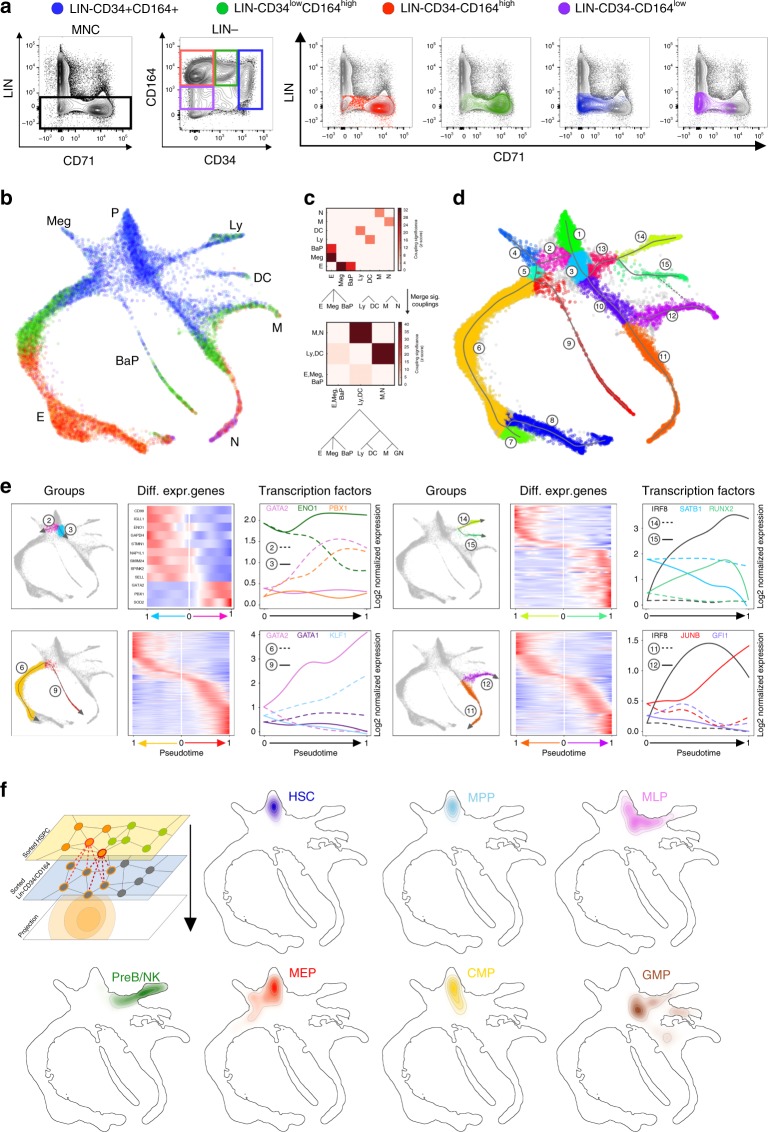
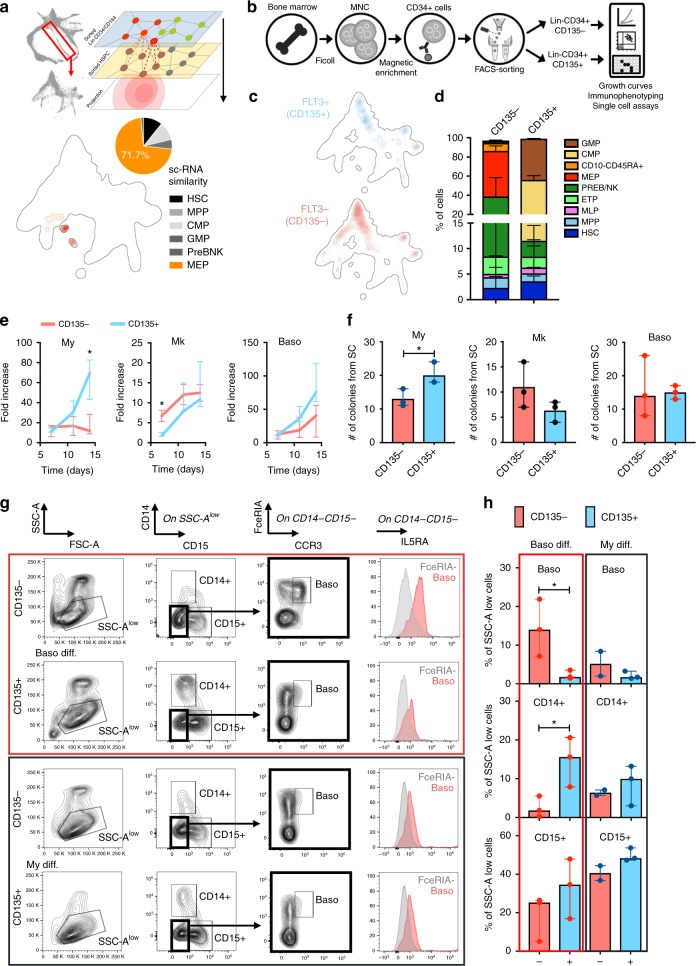
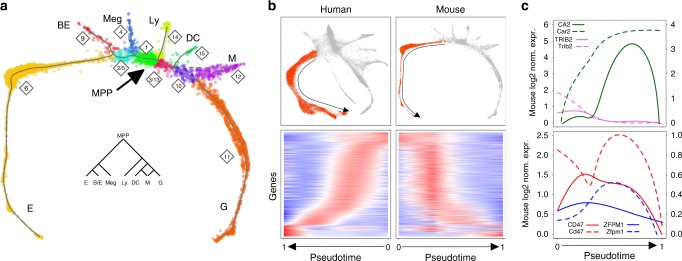
Verification
Claims the paper makes
The claims and statistics of this paper haven’t been checked yet.
Free: it reads the open-access text and checks the first 5 claims that cite a source we can check. Create a free account to check every claim.
Claims other papers make about this one
Each is checked against this paper’s own text: does it say what the citing paper says it does?
The cited source says what the claim attributes to it.
In the citing paper
“The cell fractions or classification groups were based on single-cell RNA-seq from sorted healthy donor bone marrow sample(Pellin et al., 2019).”
From Surface antigen-guided CRISPR screens identify regulators of myeloid leukemia differentiation (2021) · cites this paper as Pellin et al., 2019
Self-check
Percentages, sums and reported differences re-computed from the paper’s own numbers.
The self-check needs the paper’s full text.
Citations
Cites
R: A Language and Environment for Statistical Computing
R Core Team (2025) · doi:10.32614/r.manuals · Cited by 352,181
A Simple Sequentially Rejective Multiple Test Procedure
(1979) · Scandinavian Journal of Statistics · doi:10.2307/4615733 · Cited by 21,526
Trapnell, C., Cacchiarelli, D., Grimsby, J., Pokharel, P., Li, S., Morse, M., Lennon, N. J., Livak, K. J., Mikkelsen, T. S., & Rinn, J. L. (2014) · Nature Biotechnology · doi:10.1038/nbt.2859 · Cited by 7,314
The Reactome pathway Knowledgebase
Fabregat, A., Sidiropoulos, K., Garapati, P., Gillespie, M., Hausmann, K., Haw, R., Jassal, B., Jupe, S., Korninger, F., McKay, S., et al. (2016) · Nucleic Acids Research · doi:10.1093/nar/gkv1351 · Cited by 5,605
Droplet barcoding for single-cell transcriptomics applied to embryonic stem cells
Klein, A. M., Mazutis, L., Akartuna, I., Tallapragada, N., Veres, A., Li, V., Peshkin, L., Weitz, D. A., & Kirschner, M. W. (2015) · Cell · doi:10.1016/j.cell.2015.04.044 · Cited by 3,356
Self-citationHastie, T., & Tibshirani, R. (2014) · Wiley StatsRef: Statistics Reference Online · doi:10.1002/9781118445112.stat03141 · Cited by 3,156
Ancient DNA and the rewriting of human history: be sparing with Occam’s razor
Haber, M., Mezzavilla, M., Xue, Y., & Tyler-Smith, C. (2016) · Genome Biology · doi:10.1186/s13059-015-0866-z · Cited by 1,924
COSMIC: somatic cancer genetics at high-resolution
Forbes, S. A., Beare, D., Boutselakis, H., Bamford, S., Bindal, N., Tate, J., Cole, C. G., Ward, S., Dawson, E., Ponting, L., et al. (2017) · Nucleic Acids Research · doi:10.1093/nar/gkw1121 · Cited by 1,922
The Reactome pathway knowledgebase
Croft, D., Mundo, A. F., Haw, R., Milacic, M., Weiser, J., Wu, G., Caudy, M., Garapati, P., Gillespie, M., Kamdar, M. R., et al. (2014) · Nucleic Acids Research · doi:10.1093/nar/gkt1102 · Cited by 1,889
Civin, C. I., Strauss, L. C., Brovall, C., Fackler, M. J., Schwartz, J. F., & Shaper, J. H. (1984) · The Journal of Immunology · doi:10.4049/jimmunol.133.1.157 · Cited by 1,202
Cited by
Severe COVID-19 Is Marked by a Dysregulated Myeloid Cell Compartment
Schulte-Schrepping, J., Reusch, N., Paclik, D., Baßler, K., Schlickeiser, S., Zhang, B., Krämer, B., Krammer, T., Brumhard, S., Bonaguro, L., et al. (2020) · Cell · doi:10.1016/j.cell.2020.08.001 · Cited by 1,461
“(C) Signature enrichment scores of single-cell data from neutrophil progenitors (Pellin et al., 2019; Popescu et al., 2019) in LDN clusters, plotted as violin plots.”
Ianevski, A., Giri, A. K., & Aittokallio, T. (2022) · Nature Communications · doi:10.1038/s41467-022-28803-w · Cited by 764
“A ccurate identi fi cation of distinct cell types in complex tissue samples is a critical prerequisite for elucidating the roles of cell populations in various biological processes including hematopoiesis, embryonic and intestinal development 1 – 4 .”
BackgroundA human cell atlas of fetal gene expression
Cao, J., O’Day, D. R., Pliner, H. A., Kingsley, P. D., Deng, M., Daza, R. M., Zager, M. A., Aldinger, K. A., Blecher-Gonen, R., Zhang, F., et al. (2020) · Science · doi:10.1126/science.aba7721 · Cited by 764
A cell atlas of human thymic development defines T cell repertoire formation
Park, J.-E., Botting, R. A., Domínguez Conde, C., Popescu, D.-M., Lavaert, M., Kunz, D. J., Goh, I., Stephenson, E., Ragazzini, R., Tuck, E., et al. (2020) · Science · doi:10.1126/science.aay3224 · Cited by 739
Mapping transcriptomic vector fields of single cells
Qiu, X., Zhang, Y., Martin-Rufino, J. D., Weng, C., Hosseinzadeh, S., Yang, D., Pogson, A. N., Hein, M. Y., Hoi (Joseph) Min, K., Wang, L., et al. (2022) · Cell · doi:10.1016/j.cell.2021.12.045 · Cited by 439
“Our dataset, however, suggests that they mostly originated from MEP-like cells (with a minor route from GMP-like cells) (Figures 3B, 5B, and 5C), in line with recent scRNA-seq studies (Drissen et al., 2016; Pellin et al., 2019).”
Kar, S. P., Quiros, P. M., Gu, M., Jiang, T., Mitchell, J., Langdon, R., Iyer, V., Barcena, C., Vijayabaskar, M. S., Fabre, M. A., et al. (2022) · Nature Genetics · doi:10.1038/s41588-022-01121-z · Cited by 377
Mapping the developing human immune system across organs
Suo, C., Dann, E., Goh, I., Jardine, L., Kleshchevnikov, V., Park, J.-E., Botting, R. A., Stephenson, E., Engelbert, J., Tuong, Z. K., et al. (2022) · Science · doi:10.1126/science.abo0510 · Cited by 340
“In keeping with previous single-cell atlases of immune cells of prenatal and adult tissues (3, 11, 13), our data captured the emergence of myeloid and lymphoid lineages, as well as closely linked megakaryocytes and erythroid and non-neutrophilic granulocyte lineages from hematopoietic progenitors (Fig.”
ResultEpigenetic memory of coronavirus infection in innate immune cells and their progenitors
Cheong, J.-G., Ravishankar, A., Sharma, S., Parkhurst, C. N., Grassmann, S. A., Wingert, C. K., Laurent, P., Ma, S., Paddock, L., Miranda, I. C., et al. (2023) · Cell · doi:10.1016/j.cell.2023.07.019 · Cited by 309
Mapping human haematopoietic stem cells from haemogenic endothelium to birth
Calvanese, V., Capellera-Garcia, S., Ma, F., Fares, I., Liebscher, S., Ng, E. S., Ekstrand, S., Aguadé-Gorgorió, J., Vavilina, A., Lefaudeux, D., et al. (2022) · Nature · doi:10.1038/s41586-022-04571-x · Cited by 261
Reusch, N., De Domenico, E., Bonaguro, L., Schulte-Schrepping, J., Baßler, K., Schultze, J. L., & Aschenbrenner, A. C. (2021) · Frontiers in Immunology · doi:10.3389/fimmu.2021.652470 · Cited by 249
“However, hematopoietic structures including progenitor populations in fetal bone marrow and umbilical blood (10) are highly similar between mouse and human (24).”
BackgroundCytlak, U., Resteu, A., Pagan, S., Green, K., Milne, P., Maisuria, S., McDonald, D., Hulme, G., Filby, A., Carpenter, B., et al. (2020) · Immunity · doi:10.1016/j.immuni.2020.07.003 · Cited by 244
Triana, S., Vonficht, D., Jopp-Saile, L., Raffel, S., Lutz, R., Leonce, D., Antes, M., Hernández-Malmierca, P., Ordoñez-Rueda, D., Ramasz, B., et al. (2021) · Nature Immunology · doi:10.1038/s41590-021-01059-0 · Cited by 195
“…to conflicting results between studies that employ scRNA-seq for the definition of progenitor populations (Giladi et al., 2018; Paul et al., 2015; Pellin et al., 2019; Tusi et al., 2018; Velten et al., 2017) and studies that use FACS (Akashi et al., 2000; Kondo et al., 1997; Pei et al., 2017).”
BackgroundResultInfluentialPsaila, B., Wang, G., Rodriguez-Meira, A., Li, R., Heuston, E. F., Murphy, L., Yee, D., Hitchcock, I. S., Sousos, N., O’Sullivan, J., et al. (2020) · Molecular Cell · doi:10.1016/j.molcel.2020.04.008 · Cited by 185
Self-citationWidespread Transcriptional Scanning in the Testis Modulates Gene Evolution Rates
Xia, B., Yan, Y., Baron, M., Wagner, F., Barkley, D., Chiodin, M., Kim, S. Y., Keefe, D. L., Alukal, J. P., Boeke, J. D., et al. (2020) · Cell · doi:10.1016/j.cell.2019.12.015 · Cited by 182
“Human adult bone marrow hematopoietic cell scRNA-seq datasets were downloaded from GEO: GSE117498 which comes with the cell type annotations (Pellin et al., 2019).”
Unraveling Hematopoiesis through the Lens of Genomics
Liggett, L. A., & Sankaran, V. G. (2020) · Cell · doi:10.1016/j.cell.2020.08.030 · Cited by 163
“When computationally reconstructed, single-cell RNA sequencing (scRNA-seq) profiling of the mammalian hematopoietic system typically produces a largely continuous distribution of cells from the earliest HSCs through the characteristic hematopoietic lineages (Nestorowa et al., 2016; Olsson et al., 2016; Paul et al., 20…”
Single-cell transcriptomic landscape of human blood cells
Xie, X., Liu, M., Zhang, Y., Wang, B., Zhu, C., Wang, C., Li, Q., Huo, Y., Guo, J., Xu, C., et al. (2021) · National Science Review · doi:10.1093/nsr/nwaa180 · Cited by 145
“[6]were projected to our atlas of blood cells (ABC); most cell types could be correctly matched.”
BackgroundSynthetic multistability in mammalian cells
Zhu, R., del Rio-Salgado, J. M., Garcia-Ojalvo, J., & Elowitz, M. B. (2022) · Science · doi:10.1126/science.abg9765 · Cited by 144
Synthetic multistability in mammalian cells
(2021) · doi:10.1101/2021.02.10.430659 · Cited by 144
Inherited myeloproliferative neoplasm risk affects haematopoietic stem cells
Bao, E. L., Nandakumar, S. K., Liao, X., Bick, A. G., Karjalainen, J., Tabaka, M., Gan, O. I., Havulinna, A. S., Kiiskinen, T. T. J., Lareau, C. A., et al. (2020) · Nature · doi:10.1038/s41586-020-2786-7 · Cited by 141
TFEB-mediated endolysosomal activity controls human hematopoietic stem cell fate
García-Prat, L., Kaufmann, K. B., Schneiter, F., Voisin, V., Murison, A., Chen, J., Chan-Seng-Yue, M., Gan, O. I., McLeod, J. L., Smith, S. A., et al. (2021) · Cell Stem Cell · doi:10.1016/j.stem.2021.07.003 · Cited by 140
Nam, A. S., Dusaj, N., Izzo, F., Murali, R., Myers, R. M., Mouhieddine, T. H., Sotelo, J., Benbarche, S., Waarts, M., Gaiti, F., et al. (2022) · Nature Genetics · doi:10.1038/s41588-022-01179-9 · Cited by 140
Li, C., Virgilio, M. C., Collins, K. L., & Welch, J. D. (2023) · Nature Biotechnology · doi:10.1038/s41587-022-01476-y · Cited by 130
“…terminal cell-type-specific markers show induction-only dynamics with an increase in chromatin accessibility followed by increasing gene expression ( AZU1 in GMP, HBD in erythrocytes, HDC in granulocytes, LYZ in dendritic cell progenitors and PF4 in the megakaryocyte progenitors direction) 40,42 .”
BackgroundMethodErythropoietin regulation of red blood cell production: from bench to bedside and back
Bhoopalan, S. V., Huang, L. J.-S., & Weiss, M. J. (2020) · F1000Research · doi:10.12688/f1000research.26648.1 · Cited by 147
Zeng, A. G. X., Iacobucci, I., Shah, S., Mitchell, A., Wong, G., Bansal, S., Chen, D., Gao, Q., Kim, H., Kennedy, J. A., et al. (2025) · Blood Cancer Discovery · doi:10.1158/2643-3230.bcd-24-0342 · Cited by 143
Molecular and cellular mechanisms that regulate human erythropoiesis
Caulier, A., & Sankaran, V. G. (2021) · Blood · doi:10.1182/blood.2021011044 · Cited by 128
“Our understanding of erythropoiesis continues to evolve through single-cell genomic and functional assays.(20,142) These newer approaches are beginning to provide fruitful insights into the pathogenesis of a variety of erythroid diseases.”
BackgroundLe, J., Park, J. E., Ha, V. L., Luong, A., Branciamore, S., Rodin, A. S., Gogoshin, G., Li, F., Loh, Y. E., Camacho, V., et al. (2020) · Immunity · doi:10.1016/j.immuni.2020.05.010 · Cited by 103
Megakaryocyte and Platelet Transcriptomics for Discoveries in Human Health and Disease
Davizon‐Castillo, P., Rowley, J. W., & Rondina, M. T. (2020) · Arteriosclerosis Thrombosis and Vascular Biology · doi:10.1161/atvbaha.119.313280 · Cited by 107
Connecting the Dots: Resolving the Bone Marrow Niche Heterogeneity
Dolgalev, I., & Tikhonova, A. N. (2021) · Frontiers in Cell and Developmental Biology · doi:10.3389/fcell.2021.622519 · Cited by 107
Multimodal deep learning approaches for single-cell multi-omics data integration
Athaya, T., Ripan, R. C., Li, X., & Hu, H. (2023) · Briefings in Bioinformatics · doi:10.1093/bib/bbad313 · Cited by 109
“scRNA-seq, scATAC-seq Human hematopoiesis scRNA-seq [121] (GSE117498), scATAC-seq [ 122] (GSE96772) Portal [123] Paired and unpaired”
Single-cell immunology: Past, present, and future
Ginhoux, F., Yalin, A., Dutertre, C., & Amit, I. (2022) · Immunity · doi:10.1016/j.immuni.2022.02.006 · Cited by 108
An immunophenotype-coupled transcriptomic atlas of human hematopoietic progenitors
Zhang, X., Song, B., Carlino, M. J., Li, G., Ferchen, K., Chen, M., Thompson, E. N., Kain, B. N., Schnell, D. J., Thakkar, K., et al. (2024) · Nature Immunology · doi:10.1038/s41590-024-01782-4 · Cited by 112
TooManyCells identifies and visualizes relationships of single-cell clades
Schwartz, G. W., Zhou, Y., Petrovic, J., Fasolino, M., Xu, L., Shaffer, S. M., Pear, W. S., Vahedi, G., & Faryabi, R. B. (2020) · Nature Methods · doi:10.1038/s41592-020-0748-5 · Cited by 90
Khabirova, E., Jardine, L., Coorens, T. H. H., Webb, S., Treger, T. D., Engelbert, J., Porter, T., Prigmore, E., Collord, G., Piapi, A., et al. (2022) · Nature Medicine · doi:10.1038/s41591-022-01720-7 · Cited by 98
Antigen presentation safeguards the integrity of the hematopoietic stem cell pool
Hernández-Malmierca, P., Vonficht, D., Schnell, A., Uckelmann, H. J., Bollhagen, A., Mahmoud, M. A. A., Landua, S.-L., van der Salm, E., Trautmann, C. L., Raffel, S., et al. (2022) · Cell Stem Cell · doi:10.1016/j.stem.2022.04.007 · Cited by 86
Shin, J. J., Schröder, M., Caiado, F., Wyman, S. K., Bray, N., Bordi, M., DeWitt, M. A., Vu, J. T., Kim, W., Hockemeyer, D. F., et al. (2020) · Cell Reports · doi:10.1016/j.celrep.2020.108093 · Cited by 95
“Although mouse HSPCs have been extensively studied using scRNA-seq, there are relatively few studies analyzing human HSPCs (Buenrostro et al., 2018; Kowalczyk et al., 2015; Månsson et al., 2007; Moignard et al., 2013; Pellin et al., 2019; Povinelli et al., 2018; Velten et al., 2017; Wilson et al., 2015).”
BackgroundThe genesis of human hematopoietic stem cells
Calvanese, V., & Mikkola, H. K. A. (2023) · Blood · doi:10.1182/blood.2022017934 · Cited by 104
Basophils and their effector molecules in allergic disorders
Miyake, K., Shibata, S., Yoshikawa, S., & Karasuyama, H. (2020) · Allergy · doi:10.1111/all.14662 · Cited by 99
Crees, Z. D., Rettig, M. P., Jayasinghe, R. G., Stockerl-Goldstein, K. E., Larson, S. M., Árpád, I., Milone, G. A., Martino, M. V., Stiff, P. J., Sborov, D. W., et al. (2023) · Nature Medicine · doi:10.1038/s41591-023-02273-z · Cited by 90
Single‐cell molecular profiling provides a high‐resolution map of basophil and mast cell development
Hamey, F., Lau, W. W. Y., Kuciński, I., Wang, X., Diamanti, E., Wilson, N. K., Göttgens, B., & Dahlin, J. S. (2020) · Allergy · doi:10.1111/all.14633 · Cited by 94
Roy, A., Wang, G., Iskander, D., O’Byrne, S., Elliott, N., O’Sullivan, J., Buck, G., Heuston, E. F., Wen, W. X., Rodríguez-Meira, A., et al. (2021) · Cell Reports · doi:10.1016/j.celrep.2021.109698 · Cited by 87
Zhang, Z., Yang, C., & Zhang, X. (2022) · Genome biology · doi:10.1186/s13059-022-02706-x · Cited by 87
Gañán‐Gómez, I., Yang, H., Ma, F., Bravo, G. M., Thongon, N., Marchica, V., Richard‐Carpentier, G., Chien, K. S., Manyam, G. C., Wang, F., et al. (2022) · Nature Medicine · doi:10.1038/s41591-022-01696-4 · Cited by 87
Atypical 3q26/MECOM rearrangements genocopy inv(3)/t(3;3) in acute myeloid leukemia
Ottema, S., Mulet‐Lazaro, R., Beverloo, H. B., Erpelinck-Verschueren, C. A. J., van Herk, S., van der Helm, R. M., Havermans, M., Grob, T., Valk, P. J. M., Bindels, E. M., et al. (2020) · Blood · doi:10.1182/blood.2019003701 · Cited by 90
The role of CD71+ erythroid cells in the regulation of the immune response
Grzywa, T. M., Nowis, D., & Gołąb, J. (2021) · Pharmacology & Therapeutics · doi:10.1016/j.pharmthera.2021.107927 · Cited by 87
Mende, N., Bastos, H. P., Santoro, A., Mahbubani, K. T. A., Ciaurro, V., Calderbank, E. F., Londoño, M. Q., Sham, K., Mantica, G., Morishima, T., et al. (2022) · Blood · doi:10.1182/blood.2021013450 · Cited by 85
Surface antigen-guided CRISPR screens identify regulators of myeloid leukemia differentiation
Wang, E., Zhou, H., Nadorp, B., Cayanan, G., Chen, X., Yeaton, A. H., Nomikou, S., Witkowski, M. T., Narang, S., Kloetgen, A., et al. (2021) · Cell Stem Cell · doi:10.1016/j.stem.2020.12.005 · Cited by 66
“2d)(Pellin et al., 2019)to determine hematopoietic lineages.”
Wu, Z., Gao, S., Gao, Q., Patel, B. A., Groarke, E. M., Feng, X., Manley, A. L., Li, H., Cardona, D. O., Kajigaya, S., et al. (2023) · Cell Reports Medicine · doi:10.1016/j.xcrm.2023.101160 · Cited by 84
Genetic engineering meets hematopoietic stem cell biology for next-generation gene therapy
Ferrari, S., Valeri, E., Conti, A., Scala, S., Aprile, A., Di Micco, R., Kajaste-Rudnitski, A., Montini, E., Ferrari, G., Aiuti, A., et al. (2023) · Cell Stem Cell · doi:10.1016/j.stem.2023.04.014 · Cited by 70
CD66b−CD64dimCD115− cells in the human bone marrow represent neutrophil-committed progenitors
Calzetti, F., Finotti, G., Tamassia, N., Bianchetto-Aguilera, F. M., Castellucci, M., Canè, S., Lonardi, S., Cavallini, C., Mattè, A., Gasperini, S., et al. (2022) · Nature Immunology · doi:10.1038/s41590-022-01189-z · Cited by 76
Evaluating the Utilities of Foundation Models in Single‐Cell Data Analysis
Liu, T., Li, K., Wang, Y., Li, H., & Zhao, H. (2026) · Advanced Science · doi:10.1002/advs.202514490 · Cited by 61
Evaluating the Utilities of Foundation Models in Single-cell Data Analysis
Liu, T., Li, K., Wang, Y., Li, H., & Zhao, H. (2023) · doi:10.1101/2023.09.08.555192 · Cited by 62
IL-3 in the development and function of basophils
Varricchi, G., Poto, R., Marone, G., & Schroeder, J. T. (2021) · Seminars in Immunology · doi:10.1016/j.smim.2021.101510 · Cited by 65
Anjos‐Afonso, F., Buettner, F., Mian, S. A., Rhys, H. I., Perez-Lloret, J., Albornoz, M. G., Rastogi, N., Ariza‐McNaughton, L., & Bonnet, D. A. (2022) · Nature Communications · doi:10.1038/s41467-022-29675-w · Cited by 75
Acute Myeloid Leukemia iPSCs Reveal a Role for RUNX1 in the Maintenance of Human Leukemia Stem Cells
Wesely, J., Kotini, A. G., Izzo, F., Luo, H., Yuan, H., Sun, J., Georgomanoli, M., Zviran, A., Deslauriers, A. G., Dusaj, N. N., et al. (2020) · Cell Reports · doi:10.1016/j.celrep.2020.107688 · Cited by 57
“Unsupervised clustering revealed 13 distinct clusters (Figures 4A, 4B, and S4G).”
Lu, I., Dobersalske, C., Rauschenbach, L., Teuber‐Hanselmann, S., Steinbach, A., Ullrich, V., Prasad, S., Blau, T., Kebir, S., Siveke, J. T., et al. (2021) · Nature Communications · doi:10.1038/s41467-021-23995-z · Cited by 56
Dynamics of human hematopoietic stem and progenitor cell differentiation to the erythroid lineage
Schippel, N., & Sharma, S. (2023) · Experimental Hematology · doi:10.1016/j.exphem.2023.05.001 · Cited by 63
Hematopoietic Stem Cells and the Immune System in Development and Aging
Shevyrev, D., Tereshchenko, V., Berezina, T. N., & Александрович, Р. С. (2023) · International Journal of Molecular Sciences · doi:10.3390/ijms24065862 · Cited by 66
“Hematopoietic hierarchy inspired by [15] data and updated according to [40,67] as well”
MethodWanet, A., Bassal, M. A., Patel, S. B., Marchi, F., Mariani, S. A., Ahmed, N., Zhang, H., Borchiellini, M., Chen, S., Zhang, J., et al. (2021) · Science Immunology · doi:10.1126/sciimmunol.aba0178 · Cited by 53
hECA: The cell-centric assembly of a cell atlas
Chen, S., Luo, Y., Gao, H., Li, F., Chen, Y., Li, J., You, R., Hao, M., Bian, H., Xi, X., et al. (2022) · iScience · doi:10.1016/j.isci.2022.104318 · Cited by 48
“But the single-cell data from those studies are coving all major adult human organs (e.g., Aizarani et al., 2019; Bayraktar et al., 2020; Guo et al., 2018; Han et al., 2020; Litviňuková et al., 2020; Pellin et al., 2019) and key developmental stages (e.”
BackgroundHall, T., Kim, H., Dabbah, M., Myers, J., Crawford, J. C., Morales‐Hernández, A., Caprio, C., Sriram, P., Kooienga, E., Derecka, M., et al. (2022) · Nature Communications · doi:10.1038/s41467-022-33092-4 · Cited by 54
Vanuytsel, K., Villacorta-Martín, C., Lindstrom-Vautrin, J., Wang, Z., García-Beltrán, W. F., Vrbanac, V. D., Parsons, D., Lam, E. C., Matte, T. M., Dowrey, T. W., et al. (2022) · Nature Communications · doi:10.1038/s41467-022-28616-x · Cited by 59
Hamey, F. K., & Göttgens, B. (2019) · Experimental Hematology · doi:10.1016/j.exphem.2019.08.009 · Cited by 47
“However, newer technologies such as droplet-based scRNA-seq methods [12 − 14] are enabling generation of increasingly large data sets, with multiple studies capturing tens of thousands of cells from the blood system [9,15 − 17].”
MethodThe dynamics of hematopoiesis over the human lifespan
Li, H., Côté, P., Kuoch, M., Ezike, J., Frenis, K., Afanassiev, A., Greenstreet, L., Tanaka-Yano, M., Tarantino, G., Zhang, S., et al. (2024) · Nature Methods · doi:10.1038/s41592-024-02495-0 · Cited by 56
“1c) 8,21,22 .”
InfluentialGenerative modeling of single-cell gene expression for dose-dependent chemical perturbations
Kana, O., Nault, R., Filipovic, D., Marri, D., Zacharewski, T., & Bhattacharya, S. (2023) · Patterns · doi:10.1016/j.patter.2023.100817 · Cited by 44
“2 Much of the effort in scSeq has been made in the realm of cell-type/-state discovery, 3,4 cellular development, 5–8 and disease progression.”
BackgroundEmerging Evidence for Pleiotropism of Eosinophils
Rodrigo-Muñoz, J. M., Gil‐Martínez, M., Sastre, B., & del Pozo, V. (2021) · International Journal of Molecular Sciences · doi:10.3390/ijms22137075 · Cited by 49
Zeng, X., Shi, C., Han, Y., Hu, K., Li, X., Wei, C., Ding, L., Cui, J., Huang, S., Xu, Y., et al. (2024) · Nature Aging · doi:10.1038/s43587-024-00669-1 · Cited by 49
“Finally, recent studies using single-cell RNA sequencing have shown that hemat-opoiesis occurs in a continuum of states, forming a hierarchical-like structure 43,44 , and that intermediate progenitor cells exhibit substantial cellular heterogeneity 45 .”
Comprehensive mapping of the human cytokine gene regulatory network
Santoso, C., Li, Z., Lal, S., Yuan, S., Gan, K. A., Agosto, L. M., Liu, X., Pro, S. C., Sewell, J. A., Henderson, A. J., et al. (2020) · Nucleic Acids Research · doi:10.1093/nar/gkaa1055 · Cited by 44
Yang, L.-X., Zhang, C.-T., Yang, M., Zhang, X., Liu, H.-C., Luo, C., Jiang, Y., Wang, Z.-M., Yang, Z., Shi, Z., et al. (2022) · Blood · doi:10.1182/blood.2022017046 · Cited by 45
Du, C., Liu, C., Yu, K., Zhang, S., Fu, Z., Chen, X., Liao, W., Chen, J., Zhang, Y., Wang, X., et al. (2024) · Cell stem cell · doi:10.1016/j.stem.2024.07.009 · Cited by 50
Basophils beyond allergic and parasitic diseases
Poto, R., Loffredo, S., Marone, G., di Salvatore, A., de Paulis, A., Schroeder, J. T., & Varricchi, G. (2023) · Frontiers in Immunology · doi:10.3389/fimmu.2023.1190034 · Cited by 46
“Likewise, studies of human bone marrow cells using singlecell transcriptome analysis found the basophil trajectory to be more linked with that of the megakaryocyte and erythroid lineages, rather than those of granulocytes/monocytes (52).”
BackgroundNucleotide depletion promotes cell fate transitions by inducing DNA replication stress
Do, B. T., Hsu, P. P., Vermeulen, S. Y., Wang, Z., Hirz, T., Abbott, K. L., Aziz, N., Replogle, J. M., Bjelosevic, S., Paolino, J. D., et al. (2024) · Developmental Cell · doi:10.1016/j.devcel.2024.05.010 · Cited by 49
Understanding Normal and Malignant Human Hematopoiesis Using Next-Generation Humanized Mice
Saito, Y., Shultz, L. D., & Ishikawa, F. (2020) · Trends in Immunology · doi:10.1016/j.it.2020.06.004 · Cited by 41
“The authors also found short-term and long-term engraftment only in CD34+CD164high cells, but not in CD34+CD164low cells concluding that the stem and progenitor activities of CD34+ cells were dependent upon those of the CD164high fraction [89].”
BackgroundMethodMiyake, K., Ito, J., Nakabayashi, J., Shichino, S., Ishiwata, K., & Karasuyama, H. (2023) · Nature Communications · doi:10.1038/s41467-023-38356-1 · Cited by 45
T cells targeted to TdT kill leukemic lymphoblasts while sparing normal lymphocytes
Ali, M., Giannakopoulou, E., Li, Y., Lehander, M., Culleton, S. V., Yang, W., Knetter, C. F., Odabasi, M. C., Bollineni, R. C., Yang, X., et al. (2021) · Nature Biotechnology · doi:10.1038/s41587-021-01089-x · Cited by 41
Single-cell insights into the hematopoietic generation of T-lymphocyte precursors in mouse and human
Rothenberg, E. V. (2021) · Experimental Hematology · doi:10.1016/j.exphem.2020.12.005 · Cited by 40
“The next challenge is to link the origins of the Tcell program more accurately to the diverse span of progenitor states in the bone marrow [11,13,15].”
BackgroundFornerod, M. W. J., Ma, J., Noort, S., Liu, Y., Walsh, M. P., Shi, L., Nance, S., Liu, Y., Wang, Y., Song, G., et al. (2021) · Blood Cancer Discovery · doi:10.1158/2643-3230.bcd-21-0049 · Cited by 38
“3D), suggesting that the differential HOX expression between the two subsets may reflect a stem cell–like state (17).”
InfluentialSingle-cell RNA sequencing to track novel perspectives in HSC heterogeneity
Zhang, P., Li, X., Pan, C., Zheng, X., Hu, B., Xie, R., Hu, J., Shang, X., & Yang, H. (2022) · Stem Cell Research & Therapy · doi:10.1186/s13287-022-02718-1 · Cited by 45
“But the different expression signatures of orthologous genes of ribosome biogenesis along the erythroid branch explained the divergence during the human and mouse erythroid differentiation [60].”
BackgroundLoughran, S. J., Haas, S. F., Wilkinson, A. C., Klein, A. M., & Brand, M. (2020) · Experimental Hematology · doi:10.1016/j.exphem.2020.07.002 · Cited by 40
“In trajectory analyses, early transcriptional lineage priming gradually separates erythroid-megakaryocyte-eosinophil-basophil-primed progenitors from lympho-myeloidprimed progenitors in mouse and human (Pellin et al., 2019; Tusi et al., 2018; Velten et al., 2017; Zheng et al., 2018).”
BackgroundSelf-citationTransplanting rejuvenated blood stem cells extends lifespan of aged immunocompromised mice
Montserrat‐Vazquez, S., Ali, N., Matteini, F., Lozano-Bartolomé, J., Tu, Z., Mejía-Ramírez, E., Marka, G., Vollmer, A., Soller, K., Saçma, M., et al. (2022) · npj Regenerative Medicine · doi:10.1038/s41536-022-00275-y · Cited by 40
Overbeeke, C., Tak, T., & Koenderman, L. (2022) · Blood · doi:10.1182/blood.2021012835 · Cited by 41
Crees, Z. D., Rettig, M. P., & DiPersio, J. F. (2023) · Therapeutic Advances in Hematology · doi:10.1177/20406207231174304 · Cited by 36
Aging and Clonal Behavior of Hematopoietic Stem Cells
Yamashita, M., & Iwama, A. (2022) · International Journal of Molecular Sciences · doi:10.3390/ijms23041948 · Cited by 37
Huo, Y., Wu, L., Pang, A., Li, Q., Hong, F., Zhu, C., Yang, Z., Dai, W., Zheng, Y., Meng, Q., et al. (2023) · Science Immunology · doi:10.1126/sciimmunol.abn6429 · Cited by 40
Chen, L., Pronk, E., van Dijk, C., Bian, Y., Feyen, J., van Tienhoven, T. V. D., Yildirim, M., Pisterzi, P., de Jong, M. M. E., Bastidas, A., et al. (2023) · Blood Cancer Discovery · doi:10.1158/2643-3230.bcd-23-0043 · Cited by 42
Inference of cell state transitions and cell fate plasticity from single-cell with MARGARET
Pandey, K., & Zafar, H. (2022) · Nucleic Acids Research · doi:10.1093/nar/gkac412 · Cited by 36
“Apart from elevated expression of CEBPE and monocyte markers MPO, LYZ and MS4A6A (43), the monocyte clusters also strongly expressed granule genes such as CTSG, PRTN3 and ELANE (Figure 5D), each of which were also highly correlated (>0.”
BackgroundModeling early gastrulation in human blastoids with DNA methylation patterns of natural blastocysts
Xie, H., An, C., Bai, B., Luo, J., Sun, N., Ci, B., Jin, L., Mo, P., Lu, Y., Zhong, K., et al. (2025) · Cell stem cell · doi:10.1016/j.stem.2024.12.010 · Cited by 32
Methylation of dual-specificity phosphatase 4 controls cell differentiation
Su, H., Jiang, M. Z., Senevirathne, C., Aluri, S., Zhang, T., Guo, H., Xavier-Ferrucio, J. M., Jin, S., Tran, N. T., Liu, S., et al. (2021) · Cell Reports · doi:10.1016/j.celrep.2021.109421 · Cited by 32
“Nevertheless, recent single-cell RNA sequencing (scRNA-seq) analysis of human CD34+ cells reveals a heterogeneous nature within surface marker-defined progenitors for gradually evolved transcriptional expression topology during differentiation of hematopoietic stem/progenitor cells (HSPCs) (Pellin et al., 2019; Weinre…”
BackgroundResultInfluentialRole of TET dioxygenases in the regulation of both normal and pathological hematopoiesis
Joshi, K., Zhang, L., Breslin, P., Kini, A. R., & Zhang, J. (2022) · Journal of Experimental & Clinical Cancer Research · doi:10.1186/s13046-022-02496-x · Cited by 33
“Introduction The multiple stagesof lineage commitment and differentiation processes of hematopoietic stem and progenitor cells (HSPCs) during both hematopoietic development and regeneration are tightly controlled by transcriptional machinery that is finely regulated by the stepwise reconfiguration of the DNA methylome…”
BackgroundmTOR Signaling as a Regulator of Hematopoietic Stem Cell Fate
Fernandes, H., Moura, J., & Carvalho, E. (2021) · Stem Cell Reviews and Reports · doi:10.1007/s12015-021-10131-z · Cited by 34
Single-cell transcriptomics reveals the identity and regulators of human mast cell progenitors
Wu, C., Boey, D. Z. H., Bril, O., Grootens, J., Vijayabaskar, M. S., Sorini, C., Ekoff, M., Wilson, N. K., Ungerstedt, J. S., Nilsson, G. P., et al. (2022) · Blood Advances · doi:10.1182/bloodadvances.2022006969 · Cited by 31
Basophils in antihelminth immunity
Jianya, P., & Siracusa, M. C. (2021) · Seminars in Immunology · doi:10.1016/j.smim.2021.101529 · Cited by 32
Hematopoietic differentiation is characterized by a transient peak of entropy at a single-cell level
Dussiau, C., Boussaroque, A., Gaillard, M., Bravetti, C., Zaroili, L., Knosp, C. A., Friedrich, C., Asquier, P., Willems, L., Quint, L., et al. (2022) · BMC Biology · doi:10.1186/s12915-022-01264-9 · Cited by 37
“The specific markers of the sub-populations identified by SingleR were consistent with previous studies of the bone marrow HSPC compartment [24, 26, 34] (Additional file 1: Fig.”
Deconvoluting clonal and cellular architecture in IDH-mutant acute myeloid leukemia
Sirenko, M., Lee, S., Sun, Z., Chaligne, R., Loghavi, S., Asimomitis, G., Brierley, C. K., Bernard, E., Cai, S. F., Myers, R. M., et al. (2025) · Cell Stem Cell · doi:10.1016/j.stem.2025.04.012 · Cited by 28
Shen, J., Xu, Y., Zhang, S., Lyu, S., Huo, Y., Zhu, Y., Tang, K., Mou, J., Li, X., Hoyle, D. L., et al. (2021) · Science Advances · doi:10.1126/sciadv.abi9787 · Cited by 29
PLAG1 dampens protein synthesis to promote human hematopoietic stem cell self-renewal
Chahi, A. K., Belew, M. S., Xu, J., Chen, H. T., Rentas, S., Voisin, V., Krivdova, G., Lechman, E. R., Marhon, S. A., Carvalho, D. D. D., et al. (2022) · Blood · doi:10.1182/blood.2021014698 · Cited by 29
The transformative potential of HSC gene therapy as a genetic medicine
Sagoo, P., & Gaspar, H. B. (2021) · Gene Therapy · doi:10.1038/s41434-021-00261-x · Cited by 28
Current understanding of human megakaryocytic-erythroid progenitors and their fate determinants
Kwon, N., Thompson, E. N., Mayday, M. Y., Scanlon, V. M., Lu, Y.-C., & Krause, D. S. (2020) · Current Opinion in Hematology · doi:10.1097/moh.0000000000000625 · Cited by 28
Zeisig, B. B., Fung, T. K., Zarowiecki, M., Tsai, C. T., Luo, H., Stanojević, B., Lynn, C., Leung, A. Y. H., Zuna, J., Zaliova, M. K., et al. (2021) · Science Translational Medicine · doi:10.1126/scitranslmed.abc4822 · Cited by 25
Wang, L., Zhang, Q., Qin, Q., Trasanidis, N., Vinyard, M. E., Chen, H., & Pinello, L. (2021) · Current Opinion in Systems Biology · doi:10.1016/j.coisb.2021.03.006 · Cited by 33
DRAG in situ barcoding reveals an increased number of HSPCs contributing to myelopoiesis with age
Urbanus, J. H. M., Cosgrove, J., Beltman, J. B., Elhanati, Y., Moral, R. D. A., Conrad, C., van Heijst, J. W. J., Tubeuf, E., Velds, A., Kok, L., et al. (2023) · Nature Communications · doi:10.1038/s41467-023-37167-8 · Cited by 29
Metadata
- Authors
- Pellin, D., Loperfido, M., Baricordi, C., Wolock, S. L., Montepeloso, A., Weinberg, O. K., Biffi, A., Klein, A. M., & Biasco, L.
- Affiliations
- Harvard University (US)
- Boston Children's Hospital (US)
- Corresponding author
- Klein, Allon M.
- Biasco, Luca
- ORCID
- Venue
- Nature Communications
- Published
- 2019-06-03
- Volume
- 10
- Issue
- 1
- Pages
- 2395-2395
- ISSN
- 2041-1723 (ISSN-L)
- PMC
- PMC6546699
- OpenAlex
- W2948104182
- Cited by
- 360
- References
- 61
- Citations by year
- 2026: 29 · 2025: 48 · 2024: 58 · 2023: 48 · 2022: 64 · 2021: 55 · 2020: 46 · 2019: 12
- FWCI
- 31.31
- Type
- journal article
- Language
- en
- Open access
- gold
- doi.org
- Licence
- cc-by
- creativecommons.org/licenses/by/4.0 (tdm)
- creativecommons.org/licenses/by/4.0 (vor)
- Locations
- Nature Communications (publishedVersion, cc-by)
- Europe PMC (PubMed Central) (publishedVersion, cc-by)
- PubMed Central (publishedVersion, cc-by)
- PubMed (publishedVersion)
- RePEc: Research Papers in Economics (submittedVersion)
- DOAJ (DOAJ: Directory of Open Access Journals) (submittedVersion)
- DOAJ (DOAJ: Directory of Open Access Journals) (submittedVersion, cc-by-sa)
- UCL Discovery (University College London) (submittedVersion)
- Padua Research Archive (University of Padova) (submittedVersion, cc-by)
- Funders
- Dana-Farber Cancer Institute
- Wellcome Trust (104807, 104807/Z/14/Z)
- NIHR Biomedical Research Centre, Royal Marsden NHS Foundation Trust/Institute of Cancer Research
- National Institute for Health and Care Research
- Great Ormond Street Hospital for Children
- Harvard Stem Cell Institute
- National Cancer Institute (R33CA212697)
- Topics
- Health Sciences › Medicine › Hematology › Hematopoietic Stem Cell Transplantation
- Life Sciences › Biochemistry, Genetics and Molecular Biology › Molecular Biology › Single-cell and spatial transcriptomics
- Life Sciences › Biochemistry, Genetics and Molecular Biology › Molecular Biology › Genomics and Chromatin Dynamics
- Keywords
- hematopoietic stem and progenitor cells, hematopoiesis, hematopoietic differentiation, single-cell transcriptomics, CD34+ cells, basophils, CD164, sialomucin, cell fate determination, bone marrow, human-mouse comparison
- MeSH terms
- Animals, Bone Marrow Cells, Hematopoiesis, Hematopoietic Stem Cells, Humans, Sequence Analysis, RNA, Antigens, CD34, Cell Lineage, Gene Expression Profiling, Mice, Endolyn, Single-Cell Analysis
About these checks
Registry, retraction, Cites and statistics results are computed, not judged, with one exception: a printed reference that no index lists is read once by a model before it counts as a citation error. Claims are extracted by a model and kept only when their quote appears verbatim in the text; each cited source is then checked, with a model’s help, for whether it says what the claim relies on. Those verdicts can be wrong — read the claim’s quote and the cited source before relying on one.
Statistics and arithmetic are recomputed, not judged.
Confidence bands are shown only for fields calibrated on our annotated test set. None is calibrated yet, so no band is shown.
What counts as a claim ›How we measure confidence ›How we check this ›
Are you an author, or do you see a problem with this page? Request a review
Data sources
Bibliographic data: Semantic Scholar, OpenAlex, Crossref.
Contains information from the Semantic Scholar Academic Graph Datasets, made available under the ODC Attribution License (ODC-BY 1.0).
Semantic Scholar’s data is described in: Kinney, R., et al. (2023). The Semantic Scholar Open Data Platform. arXiv:2301.10140.
