

Factors other than hTau overexpression that contribute to tauopathy-like phenotype in rTg4510 mice
Open accessPublished version of a preprint
The DOI matches its Crossref record; 44 of the 44 references it cites were found in a registry or an index.
Abstract
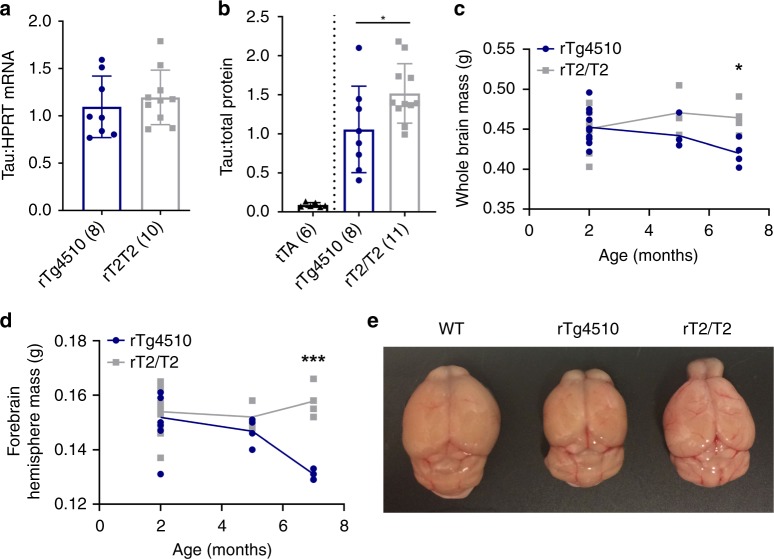
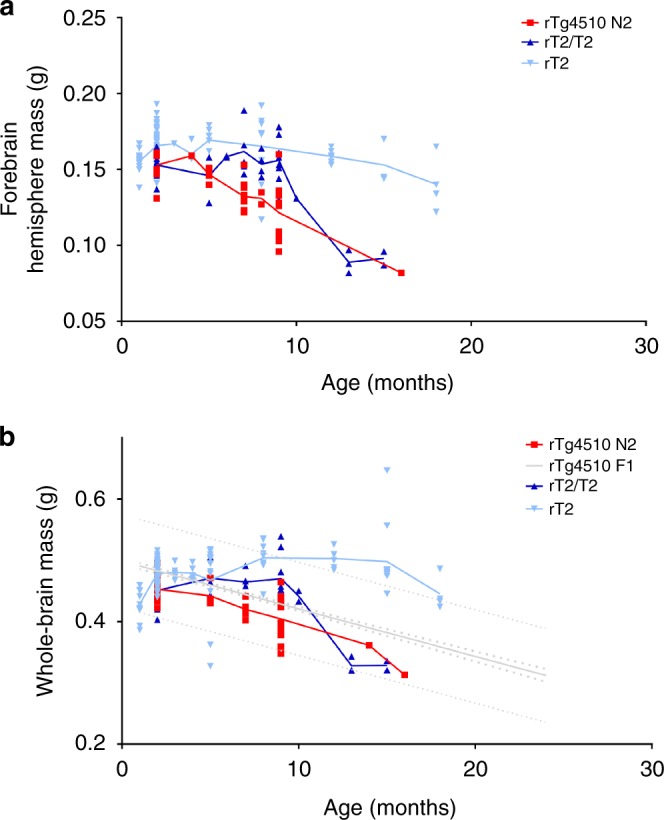
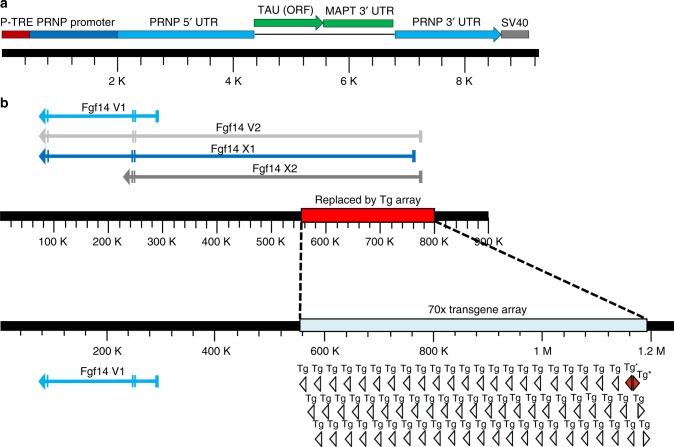
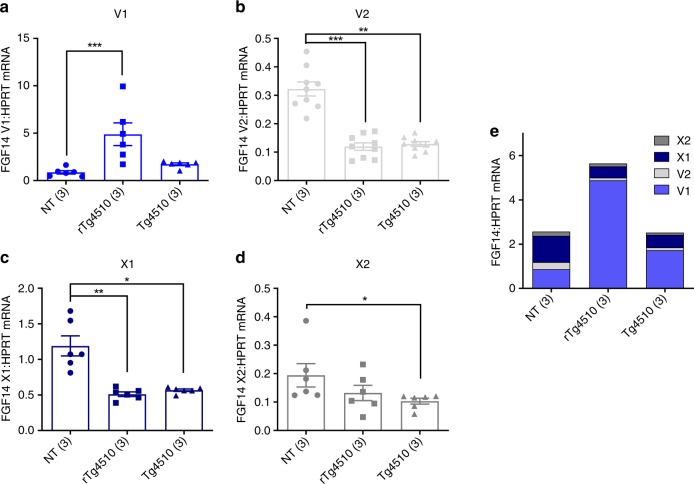
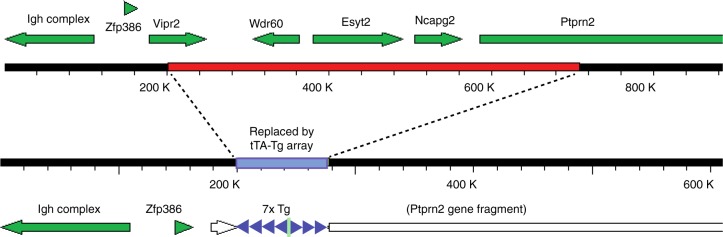
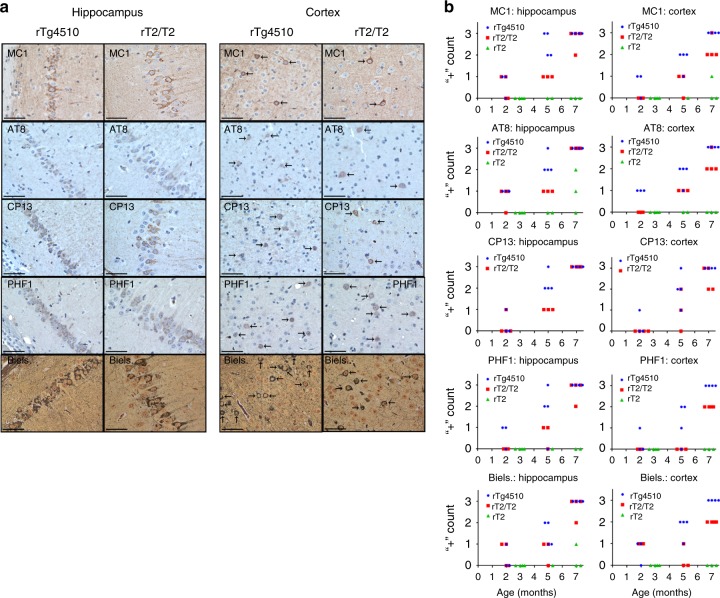
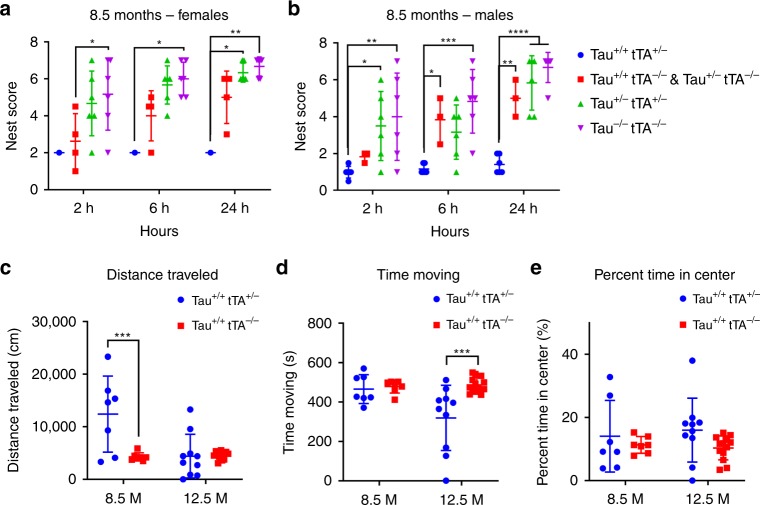
The tauopathy-like phenotype observed in the rTg4510 mouse line, in which human tau P301L expression specifically within the forebrain can be temporally controlled, has largely been attributed to high overexpression of mutant human tau in the forebrain region. Unexpectedly, we found that in a different mouse line with a targeted-insertion of the same transgene driven by the same tetracycline-TransActivator (tTA) allele, but with even higher overexpression of tauP301L than rTg4510, atrophy and tau histopathology are delayed, and a different behavioral profile is observed. This suggests that it is not overexpression of mutant human tau alone that contributes to the phenotype in rTg4510 mice. Furthermore we show that the tauopathy-like phenotype seen in rTg4510 requires a ~70-copy tau-transgene insertion in a 244 kb deletion in Fgf14 , a ~7-copy tTA-transgene insertion in a 508 kb deletion that disrupts another five genes, in addition to high transgene overexpression. We propose that these additional effects need to be accounted for in any studies using rTg4510.
Overview
The claims and statistics of this paper haven’t been checked yet.
Free: it reads the open-access text and checks the first 5 claims that cite a source we can check. Create a free account to check every claim.
Integrity signals
Registry
Cites
Statistics
Figures
Verification
Claims the paper makes
The claims and statistics of this paper haven’t been checked yet.
Free: it reads the open-access text and checks the first 5 claims that cite a source we can check. Create a free account to check every claim.
Claims other papers make about this one
Each is checked against this paper’s own text: does it say what the citing paper says it does?
The source backs part of the claim, not all of it — or backs it for a different population, condition or comparison.
In the citing paper
“Another major drawback of the overexpression paradigm is the inapplicability of genome editing because multiple copies of cDNA(s) are usually inserted into the host genome in a random manner.13”
From Human MAPT knockin mouse models of frontotemporal dementia for the neurodegenerative research community (2025) · cites this paper as [13]
Experimental — accuracy not yet measuredIn the citing paper
“However, the validity of insights resulting from studies with tau Tg mice, especially in relation to the earliest stages of disease pathogenesis, may be affected by transgene-related effects such as overexpression and genome disruption16.”
From In vivo hyperphosphorylation of tau is associated with synaptic loss and behavioral abnormalities in the absence of tau seeds (2025) · cites this paper as [16]
Self-check
Percentages, sums and reported differences re-computed from the paper’s own numbers.
The self-check needs the paper’s full text.
Citations
Cites
Fast gapped-read alignment with Bowtie 2
Langmead, B., & Salzberg, S. L. (2012) · Nature Methods · doi:10.1038/nmeth.1923 · Cited by 56,400
SPAdes: A New Genome Assembly Algorithm and Its Applications to Single-Cell Sequencing
Bankevich, A., Nurk, S., Antipov, D., Gurevich, A. A., Dvorkin, M., Kulikov, A. S., Lesin, V. M., Nikolenko, S. I., Pham, S., Prjibelski, A. D., et al. (2012) · Journal of Computational Biology · doi:10.1089/cmb.2012.0021 · Cited by 25,987
Integrative Genomics Viewer (IGV): high-performance genomics data visualization and exploration
Thorvaldsdottir, H., Robinson, J. T., & Mesirov, J. P. (2013) · Briefings in Bioinformatics · doi:10.1093/bib/bbs017 · Cited by 9,049
<tt>BLAT</tt> —The <tt>BLAST</tt> -Like Alignment Tool
Kent, W. J. (2002) · Genome Research · doi:10.1101/gr.229202 · Cited by 8,480
The Galaxy platform for accessible, reproducible and collaborative biomedical analyses: 2016 update
Afgan, E., Baker, D., van den Beek, M., Blankenberg, D., Bouvier, D., Čech, M., Chilton, J., Clements, D., Coraor, N., Eberhard, C., et al. (2016) · Nucleic Acids Research · doi:10.1093/nar/gkw343 · Cited by 2,148
Tau Suppression in a Neurodegenerative Mouse Model Improves Memory Function
SantaCruz, K., Lewis, J., Spires, T., Paulson, J., Kotilinek, L., Ingelsson, M., Guimaraes, A., DeTure, M., Ramsden, M., McGowan, E., et al. (2005) · Science · doi:10.1126/science.1113694 · Cited by 2,014
Self-citationA comparative encyclopedia of DNA elements in the mouse genome
Yue, F., Cheng, Y., Breschi, A., Vierstra, J., Wu, W., Ryba, T., Sandstrom, R., Ma, Z., Davis, C., Pope, B. D., et al. (2014) · Nature · doi:10.1038/nature13992 · Cited by 1,781
Control of memory formation through regulated expression of a CaMKII transgene
Mayford, M., Bach, M. E., Huang, Y.-Y., Wang, L., Hawkins, R. D., & Kandel, E. R. (1996) · Science · doi:10.1126/science.274.5293.1678 · Cited by 1,550
Lewis, J., McGowan, E., Rockwood, J., Melrose, H., Nacharaju, P., Van Slegtenhorst, M., Gwinn-Hardy, K., Murphy, M. P., Baker, M., Yu, X., et al. (2000) · Nature Genetics · doi:10.1038/78078 · Cited by 1,371
Single App knock-in mouse models of Alzheimer’s disease
Saito, T., Matsuba, Y., Mihira, N., Takano, J., Nilsson, P., Itohara, S., Iwata, N., & Saido, T. C. (2014) · Nature Neuroscience · doi:10.1038/nn.3697 · Cited by 1,366
Cited by
Items 101–186 of 186
Twenty years of therapeutic development in tauopathy mouse models: a scoping review
Langness, V. F., Simmons, D. A., McHugh, T. L. M., Butler, R. R., Zhou, J., Liu, H., Yang, T., Ellerby, L., & Longo, F. M. (2025) · Alzheimer s & Dementia · doi:10.1002/alz.70578 · Cited by 9
Savonenko, A. V., Wong, P. C., & Li, T. (2022) · Elsevier eBooks · doi:10.1016/b978-0-323-85654-6.00022-8 · Cited by 8
Yakout, D. W., Shroff, A., Wei, W., Thaker, V. S., Allen, Z. D., Sajish, M., Nazarko, T. Y., & Mabb, A. M. (2024) · Journal of Biological Chemistry · doi:10.1016/j.jbc.2024.107237 · Cited by 9
Anglada‐Huguet, M., Endepols, H., Sydow, A., Hilgers, R., Neumaier, B., Drzezga, A. E., Kaniyappan, S., Mandelkow�, E., & Mandelkow, E.-M. (2023) · International Journal of Molecular Sciences · doi:10.3390/ijms24119260 · Cited by 8
Humanized rodent models of neurodegenerative diseases and other brain disorders
Zhang, X., Wang, J., Zhang, J., Jiang, C., Liu, X., Wang, S., Zhang, Z., Rastegar‐Kashkooli, Y., Dialameh, F., Peng, Q., et al. (2025) · Neuroscience & Biobehavioral Reviews · doi:10.1016/j.neubiorev.2025.106112 · Cited by 8
Severe neurodegeneration in brains of transgenic rats producing human tau prions
Ayers, J. I., Lopez, T. P., Steele, I. T., Oehler, A., Roman-Albarran, R., Cleveland, E., Chong, A., Carlson, G. A., Condello, C., & Prusiner, S. B. (2024) · Acta Neuropathologica · doi:10.1007/s00401-024-02771-5 · Cited by 8
Reduced Autophagy in Aged Trigeminal Neurons Causes Amyloid β Diffusion
Sonoda, R., Kuramoto, E., Minami, S., Matsumoto, S., Ohyagi, Y., Saito, T., Saido, T., Noguchi, K., & Goto, T. (2023) · Journal of Dental Research · doi:10.1177/00220345231156095 · Cited by 8
Dannert, A., Schulz, N., Klimmt, J., Knez, L., Groschup, B., Gonçalves, C. C., Carraro, C., Schifferer, M., Brendel, M., & Paquet, D. (2026) · Science Translational Medicine · doi:10.1126/scitranslmed.adu9845 · Cited by 8
Differential accumulation of tau pathology between reciprocal F1 hybrids of rTg4510 mice
Yanagisawa, D., Hamezah, H. S., Pahrudin Arrozi, A., & Tooyama, I. (2021) · Scientific Reports · doi:10.1038/s41598-021-89142-2 · Cited by 7
Kloske, C. M., Mahinrad, S., Barnum, C. J., Batista, A. F., Bradshaw, E. M., Butts, B., Carrillo, M. C., Chakrabarty, P., Chen, X., Craft, S., et al. (2024) · Alzheimer s & Dementia · doi:10.1002/alz.14291 · Cited by 6
Tok, S., Maurin, H., Delay, C., Crauwels, D., Manyakov, N. V., der Elst, W. V., Moechars, D., & Drinkenburg, W. H. I. M. (2022) · Scientific Reports · doi:10.1038/s41598-022-11582-1 · Cited by 7
Tau-induced mitochondrial reverse electron transport drives neurodegeneration
Li, W., Rimal, S., Bhurtel, S., Yeung, L., Lu, B. G., Grinberg, L. T., Spina, S., Cobos, I., Seeley, W. W., Guo, S., et al. (2026) · Neuron · doi:10.1016/j.neuron.2026.07.012 · Cited by 7
Altered low-frequency brain rhythms precede changes in gamma power during tauopathy
Rodrigues, F. R., Papanikolaou, A., Holeniewska, J., Phillips, K. G., Saleem, A. B., & Solomon, S. G. (2022) · iScience · doi:10.1016/j.isci.2022.105232 · Cited by 7
Jackson, M. A., Chen, S., Nguyen, T. T., Siedhoff, H. R., Balderrama, A., Zuckerman, A., Li, R., Greenlief, C. M., Cole, G. M., Frautschy, S. A., et al. (2024) · International Journal of Molecular Sciences · doi:10.3390/ijms25063338 · Cited by 7
Fuller, O. K., McLennan, E. D., Egan, C. L., Burrows, E. L., & Febbraio, M. A. (2024) · Behavioural Brain Research · doi:10.1016/j.bbr.2023.114810 · Cited by 6
Lippi, S. L. P., Barkey, R. E., & Rodriguez, M. N. (2023) · Physiology & Behavior · doi:10.1016/j.physbeh.2023.114316 · Cited by 6
Experimental modeling for tauopathies: An isogenic panel of humanized MAPT knock-in mice
Morito, T., & Watamura, N. (2025) · Neuroscience Research · doi:10.1016/j.neures.2025.104986 · Cited by 6
Synaptic alterations associated with disrupted sensory encoding in a mouse model of tauopathy
Meftah, S., Cavallini, A., Murray, T. K., Jankowski, Ł., Bose, S., Ashby, M. C., Brown, J. T., & Witton, J. (2024) · Brain Communications · doi:10.1093/braincomms/fcae134 · Cited by 6
Altered Tau Kinase Activity in rTg4510 Mice after a Single Interfaced CHIMERA Traumatic Brain Injury
Cheng, W. H., Cheung, H., Kang, A., Fan, J., Cooper, J. G., Anwer, M., Barrón, C., Wilkinson, A., Hu, G., Yue, J., et al. (2023) · International Journal of Molecular Sciences · doi:10.3390/ijms24119439 · Cited by 6
Wei, C., Benzow, K., Koob, M. D., Gomez, C. M., & Du, X. (2022) · The Cerebellum · doi:10.1007/s12311-022-01431-2 · Cited by 5
Self-citationHome cage measures of Alzheimer's disease in the rTg4510 mouse model
Barabas, A. J., Robbins, L., & Gaskill, B. N. (2022) · Genes Brain & Behavior · doi:10.1111/gbb.12795 · Cited by 5
Lambracht‐Washington, D., Fu, M., Wight‐Carter, M., Riegel, M. S., Hynan, L. S., & Rosenberg, R. N. (2023) · Journal of the Neurological Sciences · doi:10.1016/j.jns.2023.120564 · Cited by 5
Advancing Alzheimer’s research by improving disease modeling of secondary tauopathy
Roy, E. R., & Cao, W. (2025) · npj Dementia · doi:10.1038/s44400-025-00044-w · Cited by 5
Moretto, E., Masato, A., Panzi, C., Lopes, A. T., Stuart, S., De La-Rocque, S., Caso, M. G., White, I. J., Harris, S. S., Busche, M. A., et al. (2026) · Nature Neuroscience · doi:10.1038/s41593-026-02266-4 · Cited by 4
“In this strain, the expression of FTD-linked human P301L mutant tau is restricted to excitatory neurons 44,45 and reduced by doxycycline treatment; therefore, doxycycline-fed rTg4510 animals allowed us to control for effects of other unrelated genes 46 .”
TAPPing into the potential of inducible tau/APP transgenic mice
Xu, G. M., Ulm, B. S., Howard, J. C., Fromholt, S., Lü, Q., Lee, B. B., Walker, A. P., Borchelt, D., & Lewis, J. M. (2022) · Neuropathology and Applied Neurobiology · doi:10.1111/nan.12791 · Cited by 4
Kohli, S., Andrianova, L., Margetts‐Smith, G., Brady, E. S., & Craig, M. T. (2021) · bioRxiv (Cold Spring Harbor Laboratory) · doi:10.1101/2021.06.30.450500 · Cited by 4
Micheau, J., Catheline, G., Barse, E., Hiba, B., Marcilhac, A., Allard, M., Platt, B., & Riedel, G. (2024) · Brain Research Bulletin · doi:10.1016/j.brainresbull.2024.111161 · Cited by 4
Marciante, A. B., Lurk, C., Mata, L., Lewis, J. M., Reznikov, L. R., & Mitchell, G. S. (2023) · Frontiers in Physiology · doi:10.3389/fphys.2023.1272980 · Cited by 4
Pérez-Rando, M., Dujardin, S., Bennett, R. E., Commins, C., Nibhanupudy, T. J., & Hyman, B. T. (2020) · Acta Neuropathologica Communications · doi:10.1186/s40478-020-01049-7 · Cited by 4
D'Adamio, L. (2023) · EMBO Molecular Medicine · doi:10.15252/emmm.202318479 · Cited by 4
In Vitro Amplification of Pathogenic Tau Seeds from Neurodegenerative Disease Patient Brains
Xu, H. W., & Lee, V. M. Y. (2022) · Methods in molecular biology · doi:10.1007/978-1-0716-2655-9_15 · Cited by 4
Visual Evoked Potentials as an Early-Stage Biomarker in the rTg4510 Tauopathy Mouse Model
Parka, A., Volbracht, C., Hall, B. J., Bastlund, J. F., Nedergaard, M., Laursen, B., Botta, P., & Sotty, F. (2023) · Journal of Alzheimer s Disease · doi:10.3233/jad-220964 · Cited by 4
Characterization of locus coeruleus neuronal properties with aging in two mouse models of tauopathy
Potts, Y., Daykin, H. J., Bossche, M. J. A. V. D., McDougall, S. J., & Jacobson, L. H. (2025) · Journal of Alzheimer s Disease · doi:10.1177/13872877251393515 · Cited by 4
Zhang, H., Pan, M., Ming-Tian, P., Yu-Xuan, L., Xiao-Jiang, L., Xiang-Yu, G., Da-Jian, H., 南方科技大学生命科学学院神经生物学系脑科学研究中心, 广. 深. 5., 临港实验室, 上. 2., & 暨南大学粤港澳中枢神经系统再生研究院, 中. (2025) · 动物学研究 · doi:10.24272/j.issn.2095-8137.2025.077 · Cited by 4
Distinct mechanistic pathways of early tauopathy revealed by MAPT mutationsPreprint
Foiani, M. S., Nirujogi, R. S., Watamura, N., Bez, S., Tsefou, E., Santambrogio, A., Patel, S., Hannah, D., Goulbourne, C. N., Fatima, N., et al. (2026) · bioRxiv (Cold Spring Harbor Laboratory) · doi:10.64898/2026.02.14.705716 · Cited by 3
Abnormal behaviors and glial responses in an animal model of tau pathology
Liu, Y., Sobue, A., Sahara, N., Isobe, M., Tanaka, R., Zhu, Y., Zhu, W., Matsuzaki, T., Yamanaka, K., Yamada, K., et al. (2025) · Molecular Brain · doi:10.1186/s13041-025-01252-4 · Cited by 3
Cell Population Effects in a Mouse Tauopathy Model Identified by Single Cell SequencingPreprint
Lisi, V., Luna, G., Apostolaki, A., Giroux, M., & Kosik, K. S. (2019) · bioRxiv (Cold Spring Harbor Laboratory) · doi:10.1101/771501 · Cited by 2
A novel tauopathy model mimicking molecular and spatial aspects of human tau pathology
Yanai, R., Mitani, T. T., Susaki, E. A., Minamihisamatsu, T., Shimojo, M., Saito, Y., Mizuma, H., Nitta, N., Kaneda, D., Hashizume, Y., et al. (2024) · Brain Communications · doi:10.1093/braincomms/fcae326 · Cited by 2
Endepols, H., Anglada‐Huguet, M., Mandelkow�, E., Neumaier, B., Mandelkow, E., & Drzezga, A. E. (2023) · Experimental Neurology · doi:10.1016/j.expneurol.2023.114632 · Cited by 2
Altered low frequency brain rhythms precede changes in gamma power during tauopathyPreprint
Rodrigues, F. R., Papanikolaou, A., Holeniewska, J., Phillips, K. G., Saleem, A. B., & Solomon, S. G. (2021) · bioRxiv (Cold Spring Harbor Laboratory) · doi:10.1101/2021.08.03.454865 · Cited by 2
Modeling Alzheimer’s disease: considerations for a better translational and replicable mouse model
Santa‐María, I., Cho, J., & Yang, M. (2022) · Neural Regeneration Research · doi:10.4103/1673-5374.335787 · Cited by 2
Altered neuronal activity in the hippocampal CA3 region in an in vitro model of tauopathy
Goncalves, A. (2020) · theses.fr (ABES) · doi:10.70675/b42db6dez88a0z4a14z93eez8f51d19d46f5 · Cited by 1
Animal Models and Ethics in the Testing of Drugs for Alzheimer’s Disease
Roychowdhury, P., Justin, A., Gobinath, M., Karri, V. V. S. R., & Kuppusamy, G. (2024) · Springer eBooks · doi:10.1007/978-981-96-0259-9_17 · Cited by 1
Broad kinase inhibition mitigates early neuronal dysfunction and cognitive deficits in tauopathyPreprint
Koren, S. A., Hamm, M. J., Cloyd, R., Fontaine, S. N., Chishti, E. A., Lanzillotta, C., Rodriguez-Rivera, J., Ingram, A., Bell, M. C., Escobar, S. M. G., et al. (2020) · bioRxiv (Cold Spring Harbor Laboratory) · doi:10.1101/2020.07.31.229583 · Cited by 1
THE ROLE OF MICROTUBULE-ASSOCIATED PROTEIN TAU IN NEURONAL EXCITABILITY AND EPILEPTOGENESIS
Cloyd, R. (2021) · UKnowledge (University of Kentucky) · doi:10.13023/etd.2021.271 · Cited by 1
Boyanova, S., Katsouri, L., Krupic, J., Hair, K., Wang, S., & Wiseman, F. K. (2026) · STAR Protocols · doi:10.1016/j.xpro.2026.104633 · Cited by 1
Analysis of the expression of circulating microRNAs in an animal model of Alzheimer's disease
Aquino, R. (2021) · theses.fr (ABES) · doi:10.70675/4bc5e46bzb35cz4cfcza74ezffcbc0a852d2 · Cited by 1
Zuckerman, A., Siedhoff, H. R., Balderrama, A., Li, R., Sun, G. Y., Cifu, D. X., Černak, I., Cui, J., & Gu, Z. (2024) · Frontiers in Cellular Neuroscience · doi:10.3389/fncel.2024.1397046 · Cited by 1
Daude, N., Kim, C., Kang, S., Eskandari‐Sedighi, G., Haldiman, T., Yang, J., Fleck, S. C., Gomez‐Cardona, E., Han, Z. Z., Borrego‐Écija, S., et al. (2021) · Acta Neuropathologica · doi:10.1007/s00401-021-02262-x · Cited by 1
Aβ-mediated nuclear pore complex dysfunction in a mouse model of alzheimer's disease
Vibhavari, B. (2023) · DR-NTU (Nanyang Technological University) · doi:10.32657/10356/169886 · Cited by 1
Human genetics: Establishment of cause-and-effect relationships
Saido, T. C. (2024) · Elsevier eBooks · doi:10.1016/b978-0-443-28979-8.00013-9
Ikezu, T. (2024) · Springer eBooks · doi:10.1007/978-3-031-68237-7_22
Sala, C. (2020) · Faculty Opinions – Post-Publication Peer Review of the Biomedical Literature · doi:10.3410/f.738482066.793578645
Noninvasive imaging of amyloid‐beta and tau in rodent and nonhuman primate models
Ni, R., & Rominger, A. (2025) · View · doi:10.1002/viw.20250071
Therapeutic and immunomodulatory functions of the translocator protein in Alzheimer's disease
Fairley, L. H. (2022) · DR-NTU (Nanyang Technological University) · doi:10.32657/10356/160865
Izumi, Y., Nakatani, T., Takai, H., Kumai, M., Kamisako, T., Ishizaki, H., & Ono, Y. (2025) · genesis · doi:10.1002/dvg.70025
Koller, E. J., Wood, C. A., Lai, Z., Borgenheimer, E., Hoffman, K. L., & Jankowsky, J. L. (2024) · Figshare · doi:10.6084/m9.figshare.24946505
Pathological Tau as a Cause, and Consequence, of Cellular Dysfunction
Meier, S. E. (2019) · UKnowledge (University of Kentucky) · doi:10.13023/etd.2019.368
Criado‐Marrero, M., Gebru, N. T., Blazier, D. M., Gould, L. A., Baker, J. D., Beaulieu‐Abdelahad, D., & Blair, L. J. (2021) · Figshare · doi:10.6084/m9.figshare.14391487
Fairley, L. H., Sahara, N., Aoki, I., Ji, B., Suhara, T., Higuchi, M., & Barron, A. M. (2021) · Figshare · doi:10.6084/m9.figshare.14252304
Overlapping pathologies in different dementia-causing diseases
Spires‐Jones, T. L. (2026) · Oxford University Press eBooks · doi:10.1093/9780198995296.003.0004
Robust tauopathy and memory deficits in a mouse model constitutively overexpressing human P301L MAPT
Hamm, M. J., McNaught, K., Janus, C., Gazarov, E. A., Strickland, Z., Shubin, J., Reinhardt, J., Park, J., Rayaprolu, S., Antropov, W. V., et al. (2026) · Neurobiology of Disease · doi:10.1016/j.nbd.2026.107496
Doersch, A. (2020) · University of Minnesota Digital Conservancy (University of Minnesota)
Ortiz, C., Pearson, A., McCartan, R., Roche, S., Carothers, N., Browning, M., Perez, S., He, B., Ginsberg, S. D., Mullan, M., et al. (2024) · Figshare · doi:10.6084/m9.figshare.25834283
Ortiz, C., Pearson, A., McCartan, R., Roche, S., Carothers, N., Browning, M., Perez, S., He, B., Ginsberg, S. D., Mullan, M., et al. (2024) · Figshare · doi:10.6084/m9.figshare.25834136
Ortiz, C., Pearson, A., McCartan, R., Roche, S., Carothers, N., Browning, M., Perez, S., He, B., Ginsberg, S. D., Mullan, M., et al. (2024) · Figshare · doi:10.6084/m9.figshare.26721285
Ortiz, C., Pearson, A., McCartan, R., Roche, S., Carothers, N., Browning, M., Perez, S., He, B., Ginsberg, S. D., Mullan, M., et al. (2024) · Figshare · doi:10.6084/m9.figshare.26721288
Altered Low Frequency Brain Rhythms Precede Changes in Gamma Power During TauopathyPreprint
Rodrigues, F. R., Papanikolaou, A., Holeniewska, J., Phillips, K. G., Saleem, A. B., & Solomon, S. G. (2022) · SSRN Electronic Journal · doi:10.2139/ssrn.4112540
Jiao, H., Downie, L. E., Huang, X., Wu, M., Oberrauch, S., Keenan, R. J., Jacobson, L. H., & Chinnery, H. R. (2020) · Figshare · doi:10.6084/m9.figshare.12212003
Jiao, H., Downie, L. E., Huang, X., Wu, M., Oberrauch, S., Keenan, R. J., Jacobson, L. H., & Chinnery, H. R. (2020) · Figshare · doi:10.6084/m9.figshare.12211994
Evaluation of Aging and Genetic Mutation Variants on Tauopathy
Tetlow, A. M. (2020) · Digital Commons - University of South Florida (University of South Florida)
Gao, Y., Wang, Y., Lei, H., Xu, Z., Li, S., Yu, H., Xie, J., Zhang, Z., Liu, G., Zhang, Y., et al. (2023) · Figshare · doi:10.6084/m9.figshare.24546913
Kahriman, A., Bouley, J., Smith, T. W., Bosco, D. A., Woerman, A. L., & Henninger, N. (2021) · Figshare · doi:10.6084/m9.figshare.14880618
Foraging crumbles reduce severe aggression in laboratory mice
Bennett, M. B., Booth, A., Murdoch, E. Q., & Flinn, J. M. (2026) · Physiology & Behavior · doi:10.1016/j.physbeh.2026.115401
Eskandari‐Sedighi, G., & Westaway, D. A. (2021) · Elsevier eBooks · doi:10.1016/b978-0-12-818000-6.00045-7
Current mouse models of Alzheimer’s disease for investigating therapeutic agents
He, J., & Tam, K. Y. (2022) · Elsevier eBooks · doi:10.1016/b978-0-323-89833-1.00015-x
Nickerson, E. W., Pomeroy-Tuck, J., Pratt, S., Rodriguez, C., Zhao, T., Stodola, T., Hoffman, B., Maser, R., & Bloss, E. B. (2026) · bioRxiv (Cold Spring Harbor Laboratory) · doi:10.64898/2026.11.03.763730
Introduction of Genetic Mutations Into Mice by Base Editor and Target-AID
Sasaguri, H. (2023) · Methods in molecular biology · doi:10.1007/978-1-0716-3016-7_9
Characterization of preclinical transgenic rat models for Alzheimer’s disease-like pathology
Emmerson, J. T. (2023) · eScholarship@McGill (McGill) · doi:10.82308/166
Gündoğdu, A. A., Gücüyener, N., Tuncer, N., & Adapınar, D. Ö. (2026) · Frontiers in Neuroscience · doi:10.3389/fnins.2026.2004502
Finneran, D. J., Njoku, I. P., Flores-Pazarin, D., Ranabothu, M. R., Nash, K. R., Morgan, D., & Gordon, M. N. (2021) · doi:10.3389/fneur.2021.685802.s001
Targeting the M1 muscarinic acetylcholine receptor in neurodegeneration
Hesse, S. (2023) · Enlighten: Theses (The University of Glasgow) · doi:10.5525/gla.thesis.83466
Molecular signatures of neuron activation
Bahl, E. (2023) · Iowa Research Online (The University of Iowa) · doi:10.25820/etd.006947
The impact of sleep-wake interventions on neuropathology and cognition in a mouse model of dementia
Oliveira, P. A. (n.d.) · University of Surrey Open Research repository · doi:10.15126/thesis.900077
老化した三叉神経細胞におけるオートファジーの減少がアミロイドβの拡散を引き起こす
Sonoda, R., & Sonoda, R. (2023) · Kagoshima University Repository
Metadata
- Authors
- Gamache, J., Benzow, K., Forster, C., Kemper, L., Hlynialuk, C., Furrow, E., Ashe, K. H., & Koob, M. D.
- Venue
- Nature Communications
- Published
- 2019-06-06
- Volume
- 10
- Issue
- 1
- Pages
- 2479-2479
- ISSN
- 2041-1723 (ISSN-L)
- PMC
- PMC6554306
- OpenAlex
- W2948955942
- Cited by
- 176
- References
- 44
- FWCI
- 14.43
- Type
- journal article
- Language
- en
- Open access
- gold
- Licence
- creativecommons.org/licenses/by/4.0 (tdm)
- creativecommons.org/licenses/by/4.0 (vor)
- Funders
- Alzheimer's Association (Zen-15-320450)
About these checks
Registry, retraction, Cites and statistics results are computed, not judged, with one exception: a printed reference that no index lists is read once by a model before it counts as a citation error. Claims are extracted by a model and kept only when their quote appears verbatim in the text; each cited source is then checked, with a model’s help, for whether it says what the claim relies on. Those verdicts can be wrong — read the claim’s quote and the cited source before relying on one.
Statistics and arithmetic are recomputed, not judged.
Confidence bands are shown only for fields calibrated on our annotated test set. None is calibrated yet, so no band is shown.
What counts as a claim ›How we measure confidence ›How we check this ›
Are you an author, or do you see a problem with this page? Request a review
Data sources
Bibliographic data: Semantic Scholar, OpenAlex, Crossref.
Contains information from the Semantic Scholar Academic Graph Datasets, made available under the ODC Attribution License (ODC-BY 1.0).
Semantic Scholar’s data is described in: Kinney, R., et al. (2023). The Semantic Scholar Open Data Platform. arXiv:2301.10140.
