

Factors other than hTau overexpression that contribute to tauopathy-like phenotype in rTg4510 mice
Open accessPublished version of a preprint
The DOI matches its Crossref record; 44 of the 44 references it cites were found in a registry or an index.
Abstract
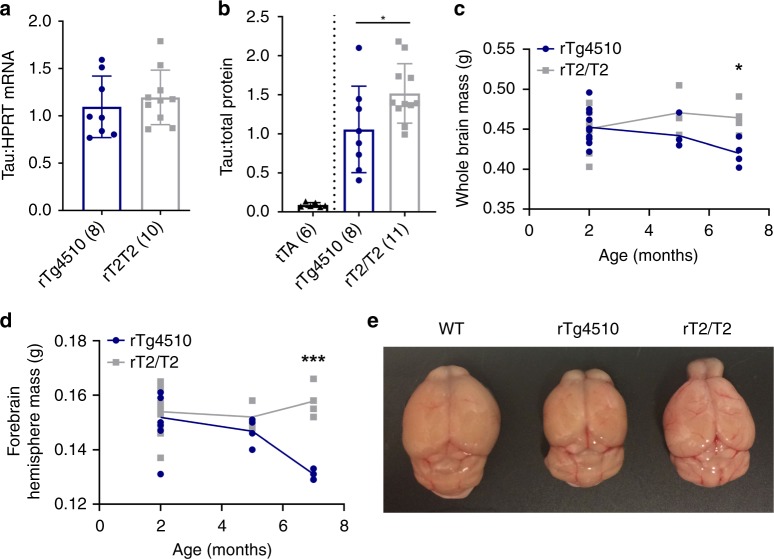
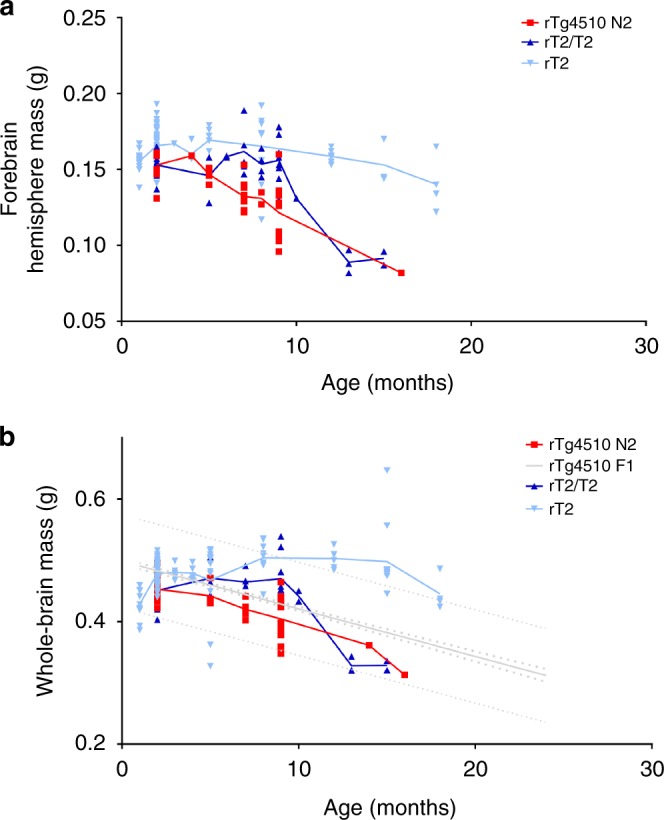
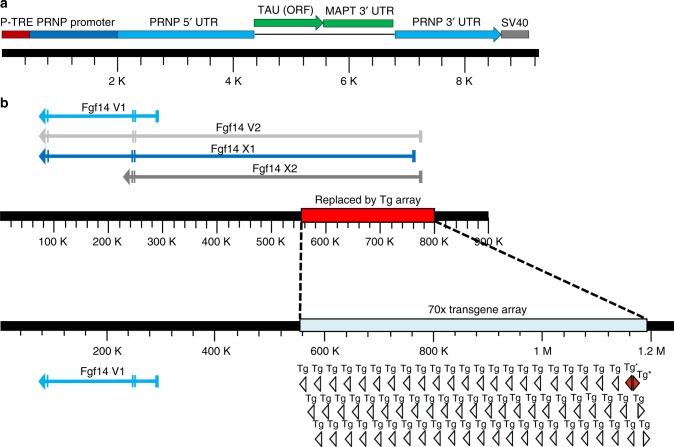
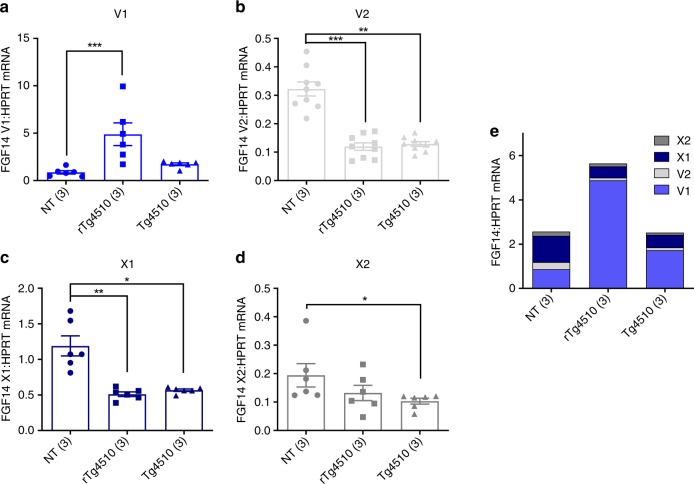
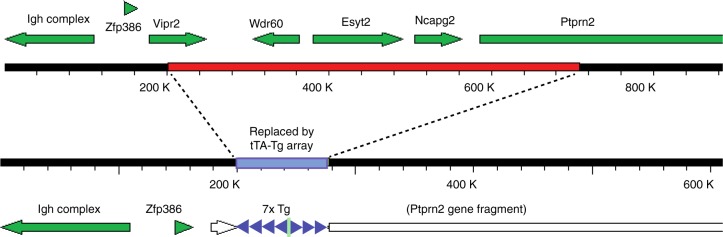
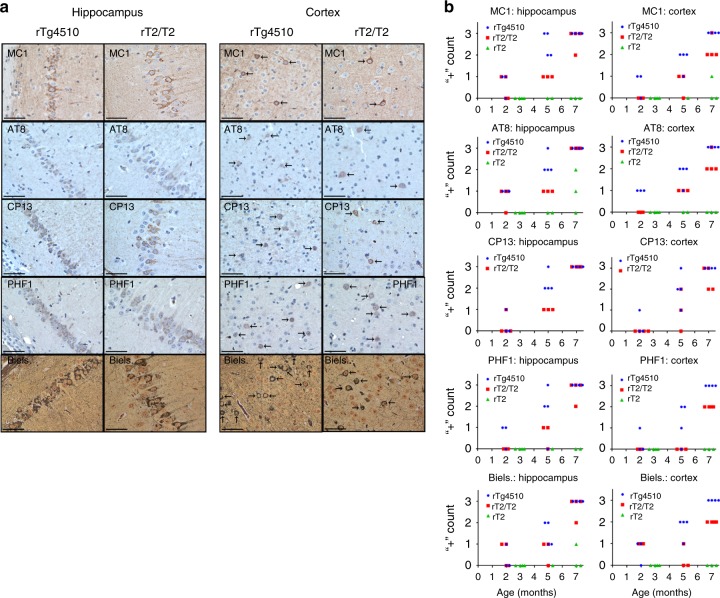
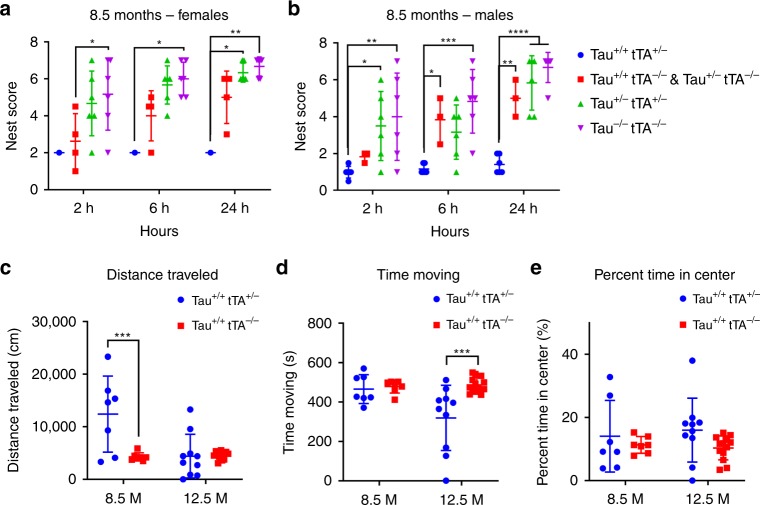
The tauopathy-like phenotype observed in the rTg4510 mouse line, in which human tau P301L expression specifically within the forebrain can be temporally controlled, has largely been attributed to high overexpression of mutant human tau in the forebrain region. Unexpectedly, we found that in a different mouse line with a targeted-insertion of the same transgene driven by the same tetracycline-TransActivator (tTA) allele, but with even higher overexpression of tauP301L than rTg4510, atrophy and tau histopathology are delayed, and a different behavioral profile is observed. This suggests that it is not overexpression of mutant human tau alone that contributes to the phenotype in rTg4510 mice. Furthermore we show that the tauopathy-like phenotype seen in rTg4510 requires a ~70-copy tau-transgene insertion in a 244 kb deletion in Fgf14 , a ~7-copy tTA-transgene insertion in a 508 kb deletion that disrupts another five genes, in addition to high transgene overexpression. We propose that these additional effects need to be accounted for in any studies using rTg4510.
Overview
The claims and statistics of this paper haven’t been checked yet.
Free: it reads the open-access text and checks the first 5 claims that cite a source we can check. Create a free account to check every claim.
Integrity signals
Registry
Cites
Statistics
Figures
Verification
Claims the paper makes
The claims and statistics of this paper haven’t been checked yet.
Free: it reads the open-access text and checks the first 5 claims that cite a source we can check. Create a free account to check every claim.
Claims other papers make about this one
Each is checked against this paper’s own text: does it say what the citing paper says it does?
The source backs part of the claim, not all of it — or backs it for a different population, condition or comparison.
In the citing paper
“Another major drawback of the overexpression paradigm is the inapplicability of genome editing because multiple copies of cDNA(s) are usually inserted into the host genome in a random manner.13”
From Human MAPT knockin mouse models of frontotemporal dementia for the neurodegenerative research community (2025) · cites this paper as [13]
Experimental — accuracy not yet measuredIn the citing paper
“However, the validity of insights resulting from studies with tau Tg mice, especially in relation to the earliest stages of disease pathogenesis, may be affected by transgene-related effects such as overexpression and genome disruption16.”
From In vivo hyperphosphorylation of tau is associated with synaptic loss and behavioral abnormalities in the absence of tau seeds (2025) · cites this paper as [16]
Self-check
Percentages, sums and reported differences re-computed from the paper’s own numbers.
The self-check needs the paper’s full text.
Citations
Cites
Fast gapped-read alignment with Bowtie 2
Langmead, B., & Salzberg, S. L. (2012) · Nature Methods · doi:10.1038/nmeth.1923 · Cited by 56,400
SPAdes: A New Genome Assembly Algorithm and Its Applications to Single-Cell Sequencing
Bankevich, A., Nurk, S., Antipov, D., Gurevich, A. A., Dvorkin, M., Kulikov, A. S., Lesin, V. M., Nikolenko, S. I., Pham, S., Prjibelski, A. D., et al. (2012) · Journal of Computational Biology · doi:10.1089/cmb.2012.0021 · Cited by 25,987
Integrative Genomics Viewer (IGV): high-performance genomics data visualization and exploration
Thorvaldsdottir, H., Robinson, J. T., & Mesirov, J. P. (2013) · Briefings in Bioinformatics · doi:10.1093/bib/bbs017 · Cited by 9,049
<tt>BLAT</tt> —The <tt>BLAST</tt> -Like Alignment Tool
Kent, W. J. (2002) · Genome Research · doi:10.1101/gr.229202 · Cited by 8,480
The Galaxy platform for accessible, reproducible and collaborative biomedical analyses: 2016 update
Afgan, E., Baker, D., van den Beek, M., Blankenberg, D., Bouvier, D., Čech, M., Chilton, J., Clements, D., Coraor, N., Eberhard, C., et al. (2016) · Nucleic Acids Research · doi:10.1093/nar/gkw343 · Cited by 2,148
Tau Suppression in a Neurodegenerative Mouse Model Improves Memory Function
SantaCruz, K., Lewis, J., Spires, T., Paulson, J., Kotilinek, L., Ingelsson, M., Guimaraes, A., DeTure, M., Ramsden, M., McGowan, E., et al. (2005) · Science · doi:10.1126/science.1113694 · Cited by 2,014
Self-citationA comparative encyclopedia of DNA elements in the mouse genome
Yue, F., Cheng, Y., Breschi, A., Vierstra, J., Wu, W., Ryba, T., Sandstrom, R., Ma, Z., Davis, C., Pope, B. D., et al. (2014) · Nature · doi:10.1038/nature13992 · Cited by 1,781
Control of memory formation through regulated expression of a CaMKII transgene
Mayford, M., Bach, M. E., Huang, Y.-Y., Wang, L., Hawkins, R. D., & Kandel, E. R. (1996) · Science · doi:10.1126/science.274.5293.1678 · Cited by 1,550
Lewis, J., McGowan, E., Rockwood, J., Melrose, H., Nacharaju, P., Van Slegtenhorst, M., Gwinn-Hardy, K., Murphy, M. P., Baker, M., Yu, X., et al. (2000) · Nature Genetics · doi:10.1038/78078 · Cited by 1,371
Single App knock-in mouse models of Alzheimer’s disease
Saito, T., Matsuba, Y., Mihira, N., Takano, J., Nilsson, P., Itohara, S., Iwata, N., & Saido, T. C. (2014) · Nature Neuroscience · doi:10.1038/nn.3697 · Cited by 1,366
Cited by
Synergy between amyloid-β and tau in Alzheimer’s disease
Busche, M. A., & Hyman, B. T. (2020) · Nature Neuroscience · doi:10.1038/s41593-020-0687-6 · Cited by 1,242
Nguyen, P. H., Ramamoorthy, A., Sahoo, B. R., Zheng, J., Faller, P., Straub, J. E., Dominguez, L., Shea, J.-E., Dokholyan, N. V., De Simone, A., et al. (2021) · Chemical Reviews · doi:10.1021/acs.chemrev.0c01122 · Cited by 678
Tauopathies: new perspectives and challenges
Zhang, Y., Wu, K.-M., Yang, L., Dong, Q., & Yu, J.-T. (2022) · Molecular Neurodegeneration · doi:10.1186/s13024-022-00533-z · Cited by 323
“In rTg4510 mice, overexpression of tauP301L leads to NFTs accumulation, memory disorders, rapid neuronal loss, and brain atrophy in early stages [103].”
BackgroundTau: Enabler of diverse brain disorders and target of rapidly evolving therapeutic strategies
Chang, C.-W., Shao, E., & Mucke, L. (2021) · Science · doi:10.1126/science.abb8255 · Cited by 263
“Genomic alterations caused by transgene insertions may contribute to tauopathy-like phenotypes (88) but have been excluded in only some of the most widely used animal models in this field (89).”
BackgroundMouse Models of Alzheimer’s Disease
Yokoyama, M., Kobayashi, H., Tatsumi, L., & Tomita, T. (2022) · Frontiers in Molecular Neuroscience · doi:10.3389/fnmol.2022.912995 · Cited by 213
“However, the transgenes disrupt six endogenous mouse genes, including Fibroblast Growth Factor 14 which might affect the neuropathological and neurodegenerative phenotypes observed in rTg4510 mice (Gamache et al., 2019).”
BackgroundUpdates in Alzheimer's disease: from basic research to diagnosis and therapies
Liu, E., Zhang, Y., & Wang, J.-Z. (2024) · Translational Neurodegeneration · doi:10.1186/s40035-024-00432-x · Cited by 199
“These mice also show serious motor impairments, which may disturb the evaluation of cognitive functions in behavioral tests [506].”
BackgroundUpdates on mouse models of Alzheimer’s disease
Zhong, M. Z., Peng, T., Duarte, M. L., Wang, M., & Cai, D. (2024) · Molecular Neurodegeneration · doi:10.1186/s13024-024-00712-0 · Cited by 189
“The CaM-KIIa-tTa and MAPT transgenes were found to disrupt endogenous mouse gene expression such as fibroblast growth factor 14 (Fgf14), which may cause several neurodegenerative phenotypes [57].”
BackgroundDisrupted Place Cell Remapping and Impaired Grid Cells in a Knockin Model of Alzheimer's Disease
Jun, H., Bramian, A., Soma, S., Saito, T., Saido, T. C., & Igarashi, K. M. (2020) · Neuron · doi:10.1016/j.neuron.2020.06.023 · Cited by 167
“Recent studies start to show that, in several transgenic AD models, transgenes were randomly inserted into the loci of endogenous genes, thus disrupting them (Tosh et al., 2017; Gamache et al., 2019).”
BackgroundRecent advances in the modeling of Alzheimer’s disease
Sasaguri, H., Hashimoto, S., Watamura, N., Sato, K., Takamura, R., Nagata, K., Tsubuki, S., Ohshima, T., Yoshiki, A., Sato, K., et al. (2022) · Frontiers in Neuroscience · doi:10.3389/fnins.2022.807473 · Cited by 157
Leveraging preclinical models for the development of Alzheimer disease therapeutics
Scearce-Levie, K. A., Sanchez, P. E., & Lewcock, J. W. (2020) · Nature Reviews Drug Discovery · doi:10.1038/s41573-020-0065-9 · Cited by 129
Park, L., Hochrainer, K., Hattori, Y., Ahn, S. J., Anfray, A., Wang, G., Uekawa, K., Seo, J., Palfini, V., Blanco, I., et al. (2020) · Nature Neuroscience · doi:10.1038/s41593-020-0686-7 · Cited by 120
Disease-Modifying Therapies for Alzheimer’s Disease: More Questions than Answers
Golde, T. E. (2022) · Neurotherapeutics · doi:10.1007/s13311-022-01201-2 · Cited by 119
“Moreover, many widely used transgenic lines show variable phenotypes [143] and more recently tau-induced neurodegeneration in the commonly used Tg4510 line has been shown to be influenced by transgene insertion events [144].”
BackgroundJoly-Amado, A., Hunter, J., Quadri, Z., Zamudio, F., Rocha-Rangel, P. V., Chan, D., Kesarwani, A., Nash, K., Lee, D. C., Morgan, D., et al. (2020) · Frontiers in Immunology · doi:10.3389/fimmu.2020.00997 · Cited by 103
Synucleinopathies: Where we are and where we need to go
Brás, I. C., Dominguez‐Meijide, A., Gerhardt, E., Koss, D., Lázaro, D. F., Santos, P. I., Vasili, E., Xylaki, M., & Outeiro, T. F. (2020) · Journal of Neurochemistry · doi:10.1111/jnc.14965 · Cited by 101
Rexach, J. E., Polioudakis, D., Yin, A., Swarup, V., Chang, T. S., Nguyen, T., Sarkar, A., Chen, L., Huang, J., Lin, L.-C., et al. (2020) · Cell Reports · doi:10.1016/j.celrep.2020.108398 · Cited by 94
O-GlcNAcase Inhibitor ASN90 is a Multimodal Drug Candidate for Tau and α-Synuclein Proteinopathies
Permanne, B., Sand, A., Ousson, S., Nény, M., Hantson, J., Schubert, R., Wiessner, C., Quattropani, A., & Beher, D. (2022) · ACS Chemical Neuroscience · doi:10.1021/acschemneuro.2c00057 · Cited by 82
Fyn Kinase Controls Tau Aggregation In Vivo
Briner, A., Götz, J., & Polanco, J. C. (2020) · Cell Reports · doi:10.1016/j.celrep.2020.108045 · Cited by 82
Watamura, N., Foiani, M. S., Bez, S., Bourdenx, M., Santambrogio, A., Frodsham, C., Camporesi, E., Brinkmalm, G., Zetterberg, H., Patel, S., et al. (2025) · Nature Neuroscience · doi:10.1038/s41593-024-01829-7 · Cited by 79
Serneels, L., T’Syen, D., Perez-Benito, L., Theys, T., Holt, M. G., & De Strooper, B. (2020) · Molecular Neurodegeneration · doi:10.1186/s13024-020-00399-z · Cited by 78
Shimojo, M., Takuwa, H., Takado, Y., Tokunaga, M., Tsukamoto, S., Minatohara, K., Ono, M., Seki, C., Maeda, J., Urushihata, T., et al. (2020) · The Journal of Neuroscience · doi:10.1523/jneurosci.2880-19.2020 · Cited by 77
Friend or Foe? Defining the Role of Glutamate in Aging and Alzheimer’s Disease
Cox, M. F., Hascup, E. R., Bartke, A., & Hascup, K. N. (2022) · Frontiers in Aging · doi:10.3389/fragi.2022.929474 · Cited by 76
Characterization of tau binding by gosuranemab
Sopko, R., Golonzhka, O., Arndt, J., Quan, C., Czerkowicz, J., Cameron, A., Smith, B., Murugesan, Y., Gibbons, G., Kim, S.-J., et al. (2020) · Neurobiology of Disease · doi:10.1016/j.nbd.2020.105120 · Cited by 63
Onishi, T., Maeda, R., Terada, M., Sato, S., Fujii, T., Ito, M., Hashikami, K., Kawamoto, T., & Tanaka, M. (2021) · Scientific Reports · doi:10.1038/s41598-021-94923-w · Cited by 63
Transcriptional signatures of tau and amyloid neuropathology
Castanho, I., Murray, T. K., Hannon, E., Jeffries, A., Walker, E., Laing, E., Baulf, H., Harvey, J., Bradshaw, L., Randall, A., et al. (2020) · Cell Reports · doi:10.1016/j.celrep.2020.01.063 · Cited by 62
Hsp90 co-chaperones, FKBP52 and Aha1, promote tau pathogenesis in aged wild-type mice
Criado‐Marrero, M., Gebru, N. T., Blazier, D. M., Gould, L. A., Baker, J. D., Beaulieu‐Abdelahad, D., & Blair, L. J. (2021) · Acta Neuropathologica Communications · doi:10.1186/s40478-021-01159-w · Cited by 55
α-Synuclein Pathology in Synucleinopathies: Mechanisms, Biomarkers, and Therapeutic Challenges
Arias-Carrión, Ó., Guerra‐Crespo, M., Padilla-Godínez, F. J., Soto-Rojas, L. O., & Manjarrez, E. (2025) · International Journal of Molecular Sciences · doi:10.3390/ijms26115405 · Cited by 58
Sato, H., Takado, Y., Toyoda, S., Tsukamoto‐Yasui, M., Minatohara, K., Takuwa, H., Urushihata, T., Takahashi, M., Shimojo, M., Ono, M., et al. (2021) · Science Advances · doi:10.1126/sciadv.abd5046 · Cited by 54
Kahriman, A., Bouley, J., Smith, T. W., Bosco, D. A., Woerman, A. L., & Henninger, N. (2021) · Acta Neuropathologica Communications · doi:10.1186/s40478-021-01220-8 · Cited by 53
Toward Development of Neuron Specific Transduction After Systemic Delivery of Viral Vectors
Finneran, D. J., Njoku, I. P., Flores-Pazarin, D., Ranabothu, M., Nash, K. R., Morgan, D., & Gordon, M. N. (2021) · Frontiers in Neurology · doi:10.3389/fneur.2021.685802 · Cited by 49
Zwang, T. J., Sastre, E. D., Wolf, N., Ruiz-Uribe, N., Woost, B., Hoglund, Z., Fan, Z., Bailey, J., Nfor, L., Buée, L., et al. (2024) · Cell Reports · doi:10.1016/j.celrep.2024.114574 · Cited by 48
Tok, S., Ahnaou, A., & Drinkenburg, W. H. I. M. (2021) · Journal of Alzheimer s Disease · doi:10.3233/jad-210397 · Cited by 48
Sahara, N., & Yanai, R. (2023) · Frontiers in Neuroscience · doi:10.3389/fnins.2023.1149761 · Cited by 48
Insights on the Use of Transgenic Mice Models in Alzheimer’s Disease Research
Pádua, M. S., Guil-Guerrero, J. L., Prates, J. A. M., & Lopes, P. A. (2024) · International Journal of Molecular Sciences · doi:10.3390/ijms25052805 · Cited by 46
Johnson, N. R., Yuan, P., Castillo, E., Lopez, T. P., Yue, W., Bond, A., Rivera, B. M., Sullivan, M. C., Hirouchi, M., Giles, K., et al. (2023) · Nature Communications · doi:10.1038/s41467-022-35753-w · Cited by 46
Animal models of Alzheimer’s disease: preclinical insights and challenges
Xu, Q., Yang, W., Zhong, M., Lin, Z., Gray, N. E., & Xian, Y. (2023) · Acta Materia Medica · doi:10.15212/amm-2023-0001 · Cited by 46
Wahl, D., Risen, S. J., Osburn, S. C., Emge, T., Sharma, S., Gilberto, V. S., Chatterjee, A., Nagpal, P., Moreno, J. A., & LaRocca, T. J. (2024) · Journal of Neuroinflammation · doi:10.1186/s12974-024-03182-9 · Cited by 44
Donison, N. S., Palik, J., Volkening, K., & Strong, M. J. (2025) · Molecular Neurodegeneration · doi:10.1186/s13024-025-00842-z · Cited by 44
Schaler, A. W., Runyan, A. M., Clelland, C. L., Sydney, E. J., Fowler, S. L., Figueroa, H. Y., Shioda, S., Santa-Maria, I., Duff, K. E., & Myeku, N. (2021) · Science Translational Medicine · doi:10.1126/scitranslmed.aba7394 · Cited by 42
Neuroprotective effect of mitochondrial translocator protein ligand in a mouse model of tauopathy
Fairley, L. H., Sahara, N., Aoki, I., Ji, B., Suhara, T., Higuchi, M., & Barron, A. M. (2021) · Journal of Neuroinflammation · doi:10.1186/s12974-021-02122-1 · Cited by 39
Sato, K., Watamura, N., Fujioka, R., Mihira, N., Sekiguchi, M., Nagata, K., Ohshima, T., Saito, T., Saido, T. C., & Sasaguri, H. (2021) · Journal of Biological Chemistry · doi:10.1016/j.jbc.2021.101004 · Cited by 39
Biotin rescues mitochondrial dysfunction and neurotoxicity in a tauopathy model
Lohr, K. M., Frost, B. E., Scherzer, C. R., & Feany, M. Β. (2020) · Proceedings of the National Academy of Sciences · doi:10.1073/pnas.1922392117 · Cited by 39
Endoplasmic reticulum chaperone genes encode effectors of long-term memory
Chatterjee, S., Bahl, E., Mukherjee, U., Walsh, E. N., Shetty, M. S., Yan, A. L., Vanrobaeys, Y. S., Lederman, J. D., Giese, K.-P., Michaelson, J. J., et al. (2022) · Science Advances · doi:10.1126/sciadv.abm6063 · Cited by 39
Tau Seeding Mouse Models with Patient Brain-Derived Aggregates
Robert, A., Schöll, M., & Vogels, T. (2021) · International Journal of Molecular Sciences · doi:10.3390/ijms22116132 · Cited by 38
Longitudinal changes in EEG power, sleep cycles and behaviour in a tau model of neurodegeneration
Holton, C. M., Hanley, N., Shanks, E., Oxley, P., McCarthy, A. P., Eastwood, B. J., Murray, T. K., Nickerson, A. P., & Wafford, K. A. (2020) · Alzheimer s Research & Therapy · doi:10.1186/s13195-020-00651-0 · Cited by 38
Cerebellar contribution to the cognitive alterations in SCA1: evidence from mouse models
Asher, M. J., Rosa, J. S., Rainwater, O., Duvick, L. A., Bennyworth, M., Lai, R., CRC-SCA, Kuo, S., & Cvetanović, M. (2019) · Human Molecular Genetics · doi:10.1093/hmg/ddz265 · Cited by 38
Plasticity in visual cortex is disrupted in a mouse model of tauopathy
Papanikolaou, A., Rodrigues, F. R., Holeniewska, J., Phillips, K. G., Saleem, A. B., & Solomon, S. G. (2022) · Communications Biology · doi:10.1038/s42003-022-03012-9 · Cited by 36
Potential benefit of manipulating protein quality control systems in neurodegenerative diseases
Luh, L. M., & Bertolotti, A. (2020) · Current Opinion in Neurobiology · doi:10.1016/j.conb.2020.02.009 · Cited by 34
Joly‐Amado, A., Davtyan, H., Serraneau, K. S., Jules, P., Zitnyar, A., Pressman, E., Zagorski, K., Antonyan, T., Hovakimyan, A., Paek, H., et al. (2019) · Neurobiology of Disease · doi:10.1016/j.nbd.2019.104636 · Cited by 33
Clinical relevance of animal models in aging-related dementia research
Padmanabhan, P., & Götz, J. (2023) · Nature Aging · doi:10.1038/s43587-023-00402-4 · Cited by 33
Impaired speed encoding and grid cell periodicity in a mouse model of tauopathy
Ridler, T., Witton, J., Phillips, K. G., Randall, A. D., & Brown, J. T. (2020) · eLife · doi:10.7554/elife.59045 · Cited by 33
Daude, N., Kim, C., Kang, S.-G., Eskandari-Sedighi, G., Haldiman, T., Yang, J., Fleck, S. C., Gómez-Cardona, E. E., Han, Z. Z., Borrego-Écija, S., et al. (2020) · Acta Neuropathologica · doi:10.1007/s00401-020-02148-4 · Cited by 26
Ameen, A. O., Freude, K., & Aldana, B. I. (2022) · Biomedicines · doi:10.3390/biomedicines10112778 · Cited by 29
Jin, M., Wang, S., Gao, X., Zou, Z., Hirotsune, S., & Sun, L. (2023) · Neural Regeneration Research · doi:10.4103/1673-5374.382231 · Cited by 28
Schulz, L., Ramirez, P., Lemieux, A., Gonzalez, E. M., Thomson, T., & Frost, B. E. (2022) · Neuroscience · doi:10.1016/j.neuroscience.2022.04.017 · Cited by 27
Pathogenic Role of RAGE in Tau Transmission and Memory Deficits
Kim, Y., Park, H., Kim, Y., Kim, S., Lee, J., Yang, H., Kim, S. J., Li, C. M., Lee, H., Na, D.-H., et al. (2022) · Biological Psychiatry · doi:10.1016/j.biopsych.2022.10.015 · Cited by 26
SWI and phase imaging reveal intracranial calcifications in the P301L mouse model of human tauopathy
Ni, R., Zarb, Y., Kuhn, G. A., Müller, R., Yundung, Y., Nitsch, R. M., Kulic, L., Keller, A., & Klohs, J. (2020) · Magnetic Resonance Materials in Physics, Biology and Medicine · doi:10.1007/s10334-020-00855-3 · Cited by 24
Sutoko, S., Masuda, A., Kandori, A., Sasaguri, H., Saito, T., Saido, T. C., & Funane, T. (2021) · iScience · doi:10.1016/j.isci.2021.102198 · Cited by 24
Min, Y., Wang, X., İş, Ö., Patel, T., Gao, J., Reddy, J. S., Quicksall, Z., Nguyen, T., Lin, S., Tutor‐New, F. Q., et al. (2023) · Nature Communications · doi:10.1038/s41467-023-42626-3 · Cited by 23
Xia, Y., Prokop, S., Bell, B. M., Gorion, K.-M. M., Croft, C. L., Nasif, L., Xu, G., Riffe, C. J., Manaois, A. N., Strang, K. H., et al. (2022) · Communications Biology · doi:10.1038/s42003-022-03373-1 · Cited by 22
Leung, S. K., Bamford, R. A., Jeffries, A. R., Castanho, I., Chioza, B. A., Flaxman, C. S., Moore, K., Dempster, E. L., Harvey, J., Brown, J. T., et al. (2024) · Nature Communications · doi:10.1038/s41467-024-50486-8 · Cited by 20
Novel alterations in corneal neuroimmune phenotypes in mice with central nervous system tauopathy
Jiao, H., Downie, L. E., Huang, X., Wu, M., Oberrauch, S., Keenan, R. J., Jacobson, L. H., & Chinnery, H. R. (2020) · Journal of Neuroinflammation · doi:10.1186/s12974-020-01803-7 · Cited by 20
Increase in Tau Pathology in P290S Mapt Knock-In Mice Crossed with App NL-G-F Mice
Huang, M., Macdonald, J., Lavenir, I., Chen, R., Craxton, M., Slavik-Smith, E., Davies, S. W., & Goedert, M. (2022) · eneuro · doi:10.1523/eneuro.0247-22.2022 · Cited by 19
“With tau and APP expressed under the control of the endogenous murine promoter, artificial phenotypes, owing to overexpression and random insertion of transgenes, are avoided (Saito et al., 2016; Gamache et al., 2019).”
BackgroundGamache, J., Kemper, L. J., Steuer, E. L., Leinonen-Wright, K., Choquette, J. M., Hlynialuk, C. J. W., Benzow, K. A., Vossel, K. A., Xia, W., Koob, M. D., et al. (2019) · Journal of Neuroscience · doi:10.1523/jneurosci.1256-19.2019 · Cited by 19
Self-citationGene replacement‐Alzheimer's disease (GR‐AD): Modeling the genetics of human dementias in mice
Benzow, K. A., Karanjeet, K. B., Oblak, A. L., Carter, G. W., Sasner, M., & Koob, M. D. (2024) · Alzheimer s & Dementia · doi:10.1002/alz.13730 · Cited by 19
Self-citationMorito, T., Qi, M., Kamano, N., Sasaguri, H., Bez, S., Foiani, M., Duff, K., Benner, S., Endo, T., Hama, H., et al. (2025) · Cell Reports Methods · doi:10.1016/j.crmeth.2025.101024 · Cited by 18
Koller, E. J., Wood, C. A., Lai, Z., Borgenheimer, E., Hoffman, K. L., & Jankowsky, J. L. (2024) · Journal of Neuroinflammation · doi:10.1186/s12974-023-03004-4 · Cited by 18
Mapping SCA1 regional vulnerabilities reveals neural and skeletal muscle contributions to disease
Duvick, L. A., Southern, W. M., Benzow, K. A., Burch, Z. N., Handler, H. P., Mitchell, J. S., Kuivinen, H., Gadiparthi, U. K., Yang, P., Soles, A., et al. (2024) · JCI Insight · doi:10.1172/jci.insight.176057 · Cited by 17
Self-citationRetromer dysfunction at the nexus of tauopathies
Carosi, J. M., Denton, D., Kumar, S., & Sargeant, T. J. (2021) · Cell Death & Differentiation · doi:10.1038/s41418-020-00727-2 · Cited by 16
Kudo, T., Takuwa, H., Takahashi, M., Urushihata, T., Shimojo, M., Sampei, K., Yamanaka, M., Tomita, Y., Sahara, N., Suhara, T., et al. (2023) · iScience · doi:10.1016/j.isci.2023.106342 · Cited by 16
“, fgf14 gene) and disrupted the genome in the rTg4510 mouse line.(79) Therefore, it is possible that phenotypes observed in this study are due not only to the overexpression of MAPT*P301L but also to the dysregulation of other genes.”
BackgroundHole, K. L., Staniaszek, L. E., Balan, G. M., Mason, J. M., Brown, J. T., & Williams, R. J. (2021) · Frontiers in Neuroscience · doi:10.3389/fnins.2021.697319 · Cited by 16
Foster, K., Manca, M., McClure, K. F., Koivula, P. P., Trojanowski, J. Q., Havas, D., Chancellor, S. E., Goldstein, L. E., Brunden, K. R., Kraus, A., et al. (2023) · Alzheimer s & Dementia · doi:10.1002/alz.13028 · Cited by 16
Positron Emission Tomography in Animal Models of Tauopathies
Cao, L., Kong, Y., Ji, B., Ren, Y., Guan, Y., & Ni, R. (2022) · Frontiers in Aging Neuroscience · doi:10.3389/fnagi.2021.761913 · Cited by 15
Lion’s Mane (Hericium erinaceus) Exerts Anxiolytic Effects in the rTg4510 Tau Mouse Model
Rodriguez, M. N., & Lippi, S. L. P. (2022) · Behavioral Sciences · doi:10.3390/bs12070235 · Cited by 16
Neurodegeneration in a dish: advancing human stem-cell-based models of Alzheimer’s disease
Klimmt, J., Dannert, A., & Paquet, D. (2020) · Current Opinion in Neurobiology · doi:10.1016/j.conb.2020.01.008 · Cited by 16
Wu, Q., Bai, Y., Li, W., Congdon, E. E., Liu, W., Lin, Y., Ji, C., Gan, W., & Sigurdsson, E. M. (2020) · Neurobiology of Disease · doi:10.1016/j.nbd.2020.105165 · Cited by 16
Gulbranson, D. R., Ho, K., Yu, G.-Q., Yu, X., Das, M. M., Shao, E., Kim, D., Zhang, W. J., Choudhary, K., Thomas, R., et al. (2021) · eNeuro · doi:10.1523/eneuro.0089-21.2021 · Cited by 15
Criado‐Marrero, M., Gebru, N. T., Gould, L. A., Blazier, D. M., Vidal-Aguiar, Y., Smith, T. M., Abdelmaboud, S. S., Shelton, L. B., Wang, X., Dahrendorff, J., et al. (2021) · npj Aging and Mechanisms of Disease · doi:10.1038/s41514-021-00062-x · Cited by 15
Mammalian Models in Alzheimer’s Research: An Update
Sharma, H., Chang, K., Hulme, J., & An, S. S. A. (2023) · Cells · doi:10.3390/cells12202459 · Cited by 14
A decade progress in the phenotyping of App knock-in mouse model of Alzheimer’s disease
Manabe, T., & Saito, T. (2025) · Neuroscience Research · doi:10.1016/j.neures.2025.104959 · Cited by 14
Benskey, M. J., Panoushek, S., Saito, T., Saido, T. C., Grabinski, T., & Kanaan, N. M. (2023) · Frontiers in Aging Neuroscience · doi:10.3389/fnagi.2023.1265151 · Cited by 11
Ortiz, C., Pearson, A., McCartan, R., Roche, S., Carothers, N., Browning, M., Perez, S. E., He, B., Ginsberg, S. D., MULLAN, M. J., et al. (2024) · Journal of Neuroinflammation · doi:10.1186/s12974-024-03117-4 · Cited by 14
Dickson, J. R., Yoon, H., Frosch, M. P., & Hyman, B. T. (2021) · Journal of Neuropathology & Experimental Neurology · doi:10.1093/jnen/nlab040 · Cited by 13
“In the rTg4510 mouse model, the transgene insertion has disrupted Fgf14 and 5 other genes (17), so it is possible these changes could also contribute to this phenotype.”
BackgroundKeenan, R. J., Daykin, H., Chu, J., Cornthwaite‐Duncan, L., Allocca, G., Hoyer, D., & Jacobson, L. H. (2022) · British Journal of Pharmacology · doi:10.1111/bph.15813 · Cited by 13
Broad Kinase Inhibition Mitigates Early Neuronal Dysfunction in Tauopathy
Koren, S. A., Hamm, M. J., Cloyd, R., Fontaine, S. N., Chishti, E. A., Lanzillotta, C., Rodriguez-Rivera, J., Ingram, A., Bell, M. C., Escobar, S. M. G., et al. (2021) · International Journal of Molecular Sciences · doi:10.3390/ijms22031186 · Cited by 13
Gao, Y., Wang, Y., Lei, H., Xu, Z., Li, S., Yu, H., Xie, J., Zhang, Z., Liu, G., Zhang, Y., et al. (2023) · Translational Neurodegeneration · doi:10.1186/s40035-023-00379-5 · Cited by 13
Goyal, P., Baldaniya, L. H., Tyagi, L. K., Joshi, K. K., Ballal, S., Sabarivani, A., Ray, S., Nathiya, D., Chauhan, A. S., Gulati, M., et al. (2026) · Brain Sciences · doi:10.3390/brainsci16020154 · Cited by 13
miR-142-3p regulates cortical oligodendrocyte gene co-expression networks associated with tauopathy
Hinman, J. D., Ngo, K. J., Kim, D., Chen, C.-D., Abraham, C. R., Ghanbari, M., Ikram, M. A., Kushner, S. A., Kawaguchi, R., Coppola, G., et al. (2021) · Human Molecular Genetics · doi:10.1093/hmg/ddaa252 · Cited by 11
Alves, R. L., Gonçalves, A., Voytyuk, I., & Harrison, D. C. (2025) · Experimental Neurology · doi:10.1016/j.expneurol.2025.115234 · Cited by 11
Metabotropic Glutamate Receptors Modulate Exocytotic Tau Release and Propagation
Mazzo, F., Butnaru, I., Grubisha, O., Ficulle, E., Sanger, H., Fitzgerald, G. J., Pan, F., Pasqui, F., Murray, T. K., Monn, J. A., et al. (2022) · Journal of Pharmacology and Experimental Therapeutics · doi:10.1124/jpet.122.001307 · Cited by 11
Magnetic Resonance Imaging in Tauopathy Animal Models
Ni, R. (2022) · Frontiers in Aging Neuroscience · doi:10.3389/fnagi.2021.791679 · Cited by 11
Kindler, D., Maschio, C., Ni, R., Zerbi, V., Razansky, D., & Klohs, J. (2021) · Journal of Cerebral Blood Flow & Metabolism · doi:10.1177/0271678x211062274 · Cited by 11
Siddiqui, T., Çelikkaya, H., Atasavum, Z. T., Popova, S. D., Freudenberg, U., Werner, C., & Kızıl, Ç. (2022) · Methods in molecular biology · doi:10.1007/978-1-0716-2655-9_8 · Cited by 11
An Overview of Transgenic Mouse Models for the Study of Alzheimer’s Disease
Lopes, P. A., Pádua, M. S., & Guil‐Guerrero, J. L. (2025) · Journal of dementia and Alzheimer's disease · doi:10.3390/jdad2010002 · Cited by 10
pS396/pS404 (PHF1) tau vaccine outperforms pS199/pS202 (AT8) in rTg4510 tauopathy model
Hulse, J. P., Maphis, N. M., Peabody, J., Bondu, V., Chackerian, B., & Bhaskar, K. (2025) · npj Vaccines · doi:10.1038/s41541-025-01147-4 · Cited by 10
Jackson, J., Johnson, J. D., Meftah, S., Murray, T. K., Ahmed, Z., Fasiolo, M., Hutton, M. L., Isaac, J. T. R., O’Neill, M. J., & Ashby, M. C. (2020) · bioRxiv (Cold Spring Harbor Laboratory) · doi:10.1101/2020.04.29.067629 · Cited by 10
MSUT2 regulates tau spreading via adenosinergic signaling mediated ASAP1 pathway in neurons
Xu, H. W., Qiu, Q., Hu, P., Hoxha, K., Jang, E., O’Reilly, M., Kim, C., He, Z., Marotta, N. P., Changolkar, L. N., et al. (2024) · Acta Neuropathologica · doi:10.1007/s00401-024-02703-3 · Cited by 10
Differential Effects of Human P301L Tau Expression in Young versus Aged Mice
Hunsberger, H. C., Setti, S. E., Rudy, C. C., Weitzner, D. S., Pfitzer, J. C., McDonald, K. L., Hong, H., Bhattacharya, S., Suppiramaniam, V. D., & Reed, M. N. (2021) · International Journal of Molecular Sciences · doi:10.3390/ijms222111637 · Cited by 10
Hernández, C. M., Barkey, R. E., Craven, K. M., Pedemonte, K. A., Alisantosa, B., Sanchez, J. O., & Flinn, J. M. (2023) · Brain Sciences · doi:10.3390/brainsci13060841 · Cited by 10
Tauopathy induces degeneration and impairs regeneration of sensory nerves in the cornea
Li, S., Shi, S., Luo, B., Xia, F., Ha, Y., Merkley, K. H., Motamedi, M., Zhang, W., & Liu, H. (2021) · Experimental Eye Research · doi:10.1016/j.exer.2021.108900 · Cited by 10
Steuer, E. L., Kemper, L. J., Hlynialuk, C. J. W., Leinonen-Wright, K., Montonye, M. L., Lapcinski, I. P., Forster, C. L., Ashe, K. H., & Liu, P. (2022) · Journal of Neuroscience · doi:10.1523/jneurosci.0543-22.2022 · Cited by 10
Self-citation
Metadata
- Authors
- Gamache, J., Benzow, K., Forster, C., Kemper, L., Hlynialuk, C., Furrow, E., Ashe, K. H., & Koob, M. D.
- Venue
- Nature Communications
- Published
- 2019-06-06
- Volume
- 10
- Issue
- 1
- Pages
- 2479-2479
- ISSN
- 2041-1723 (ISSN-L)
- PMC
- PMC6554306
- OpenAlex
- W2948955942
- Cited by
- 176
- References
- 44
- FWCI
- 14.43
- Type
- journal article
- Language
- en
- Open access
- gold
- Licence
- creativecommons.org/licenses/by/4.0 (tdm)
- creativecommons.org/licenses/by/4.0 (vor)
- Funders
- Alzheimer's Association (Zen-15-320450)
About these checks
Registry, retraction, Cites and statistics results are computed, not judged, with one exception: a printed reference that no index lists is read once by a model before it counts as a citation error. Claims are extracted by a model and kept only when their quote appears verbatim in the text; each cited source is then checked, with a model’s help, for whether it says what the claim relies on. Those verdicts can be wrong — read the claim’s quote and the cited source before relying on one.
Statistics and arithmetic are recomputed, not judged.
Confidence bands are shown only for fields calibrated on our annotated test set. None is calibrated yet, so no band is shown.
What counts as a claim ›How we measure confidence ›How we check this ›
Are you an author, or do you see a problem with this page? Request a review
Data sources
Bibliographic data: Semantic Scholar, OpenAlex, Crossref.
Contains information from the Semantic Scholar Academic Graph Datasets, made available under the ODC Attribution License (ODC-BY 1.0).
Semantic Scholar’s data is described in: Kinney, R., et al. (2023). The Semantic Scholar Open Data Platform. arXiv:2301.10140.
