

Exploiting interconnected synthetic lethal interactions between PARP inhibition and cancer cell reversible senescence
Open accessThe DOI matches its Crossref record; 59 of the 59 references it cites were found in a registry or an index.
Abstract
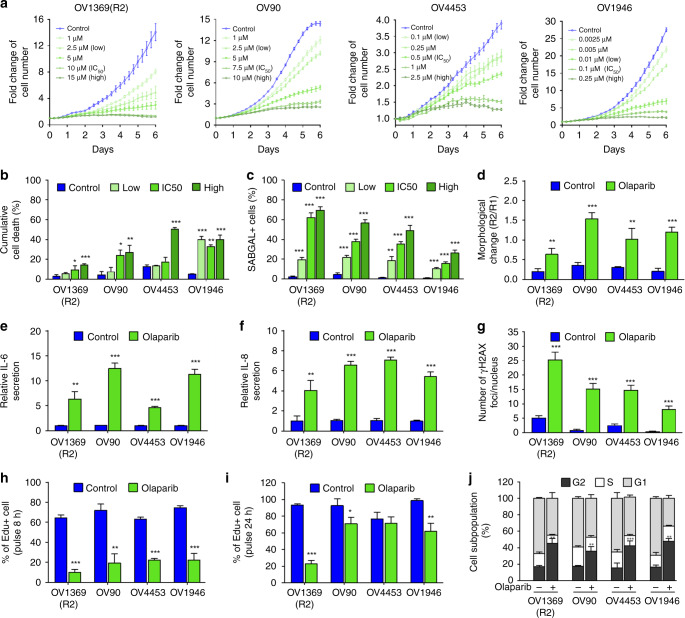
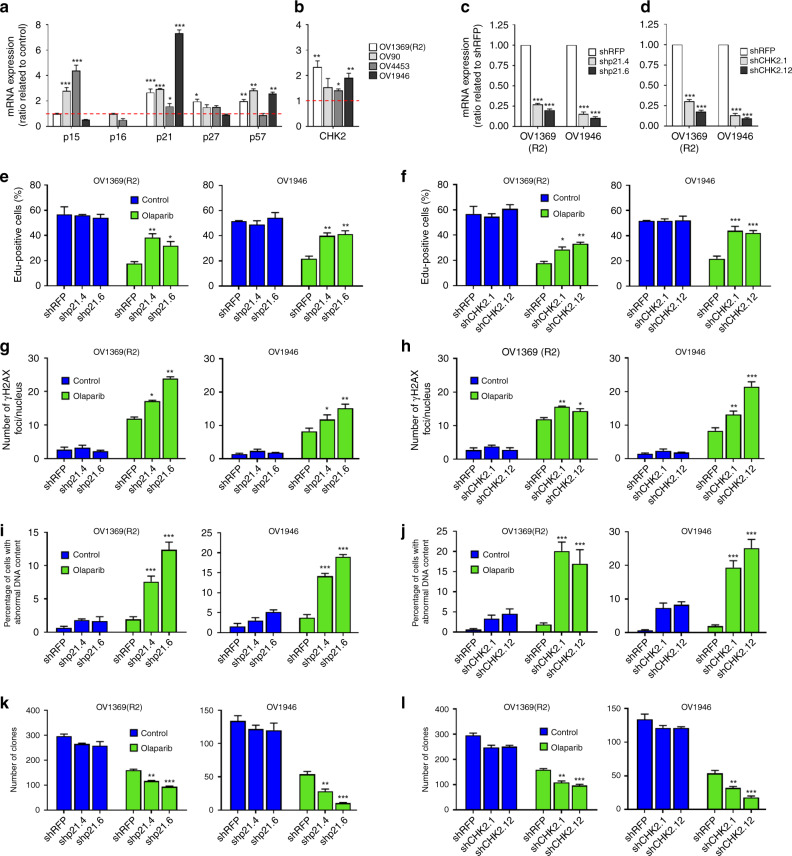
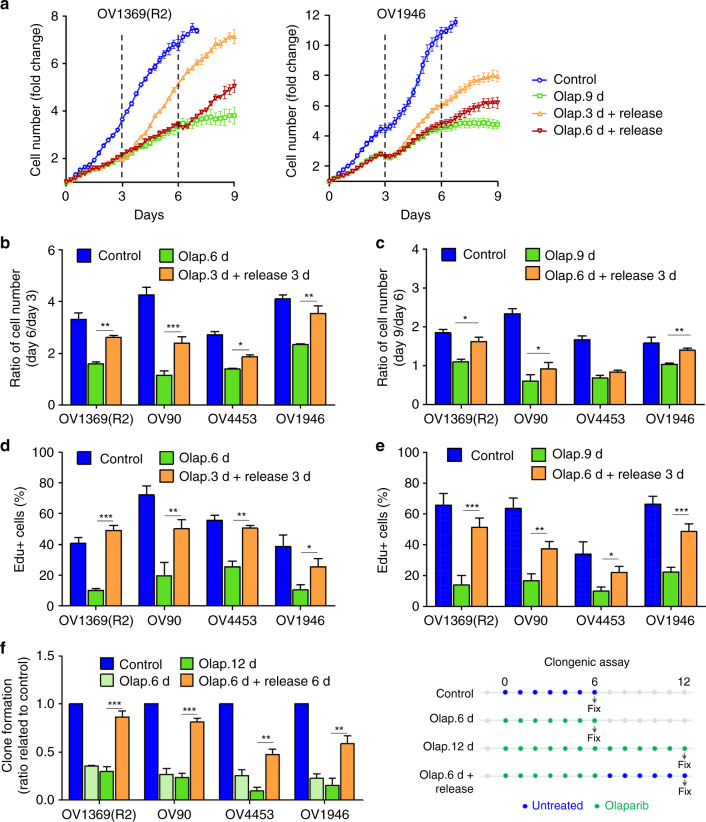
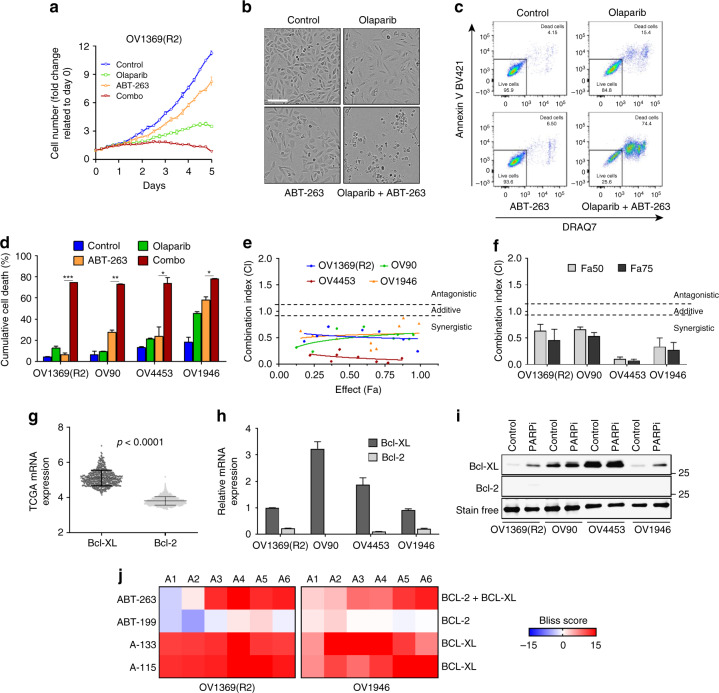
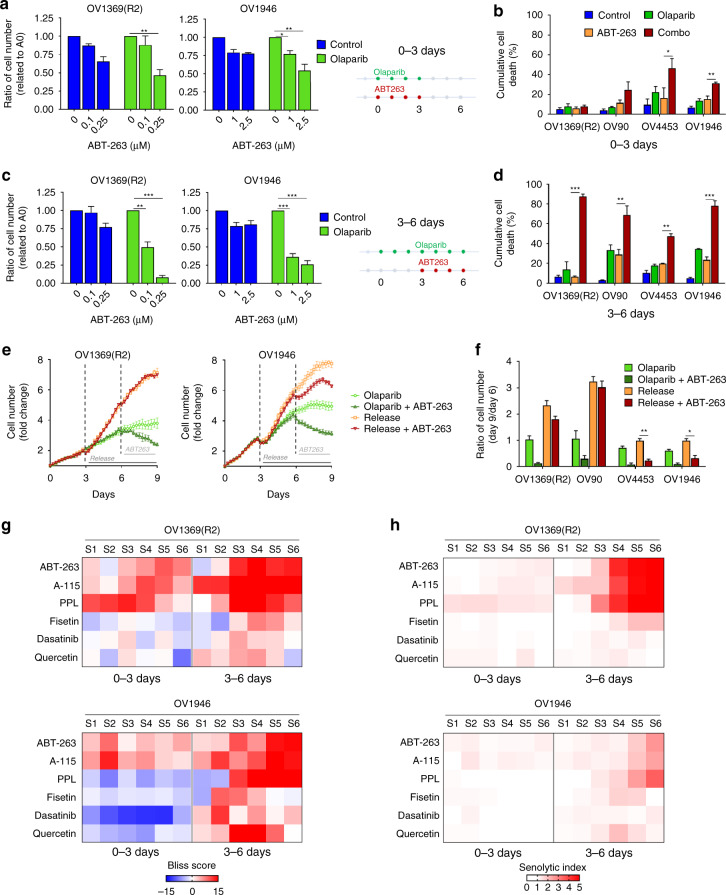
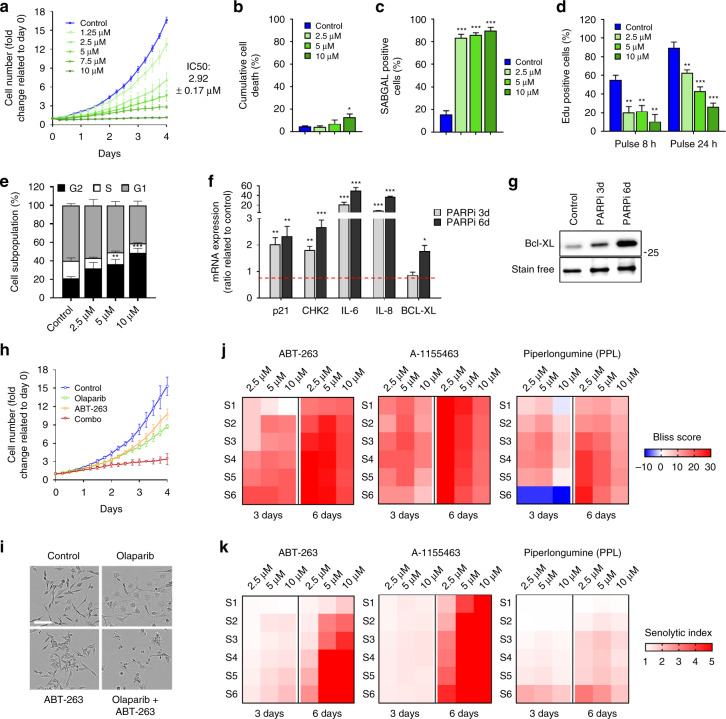
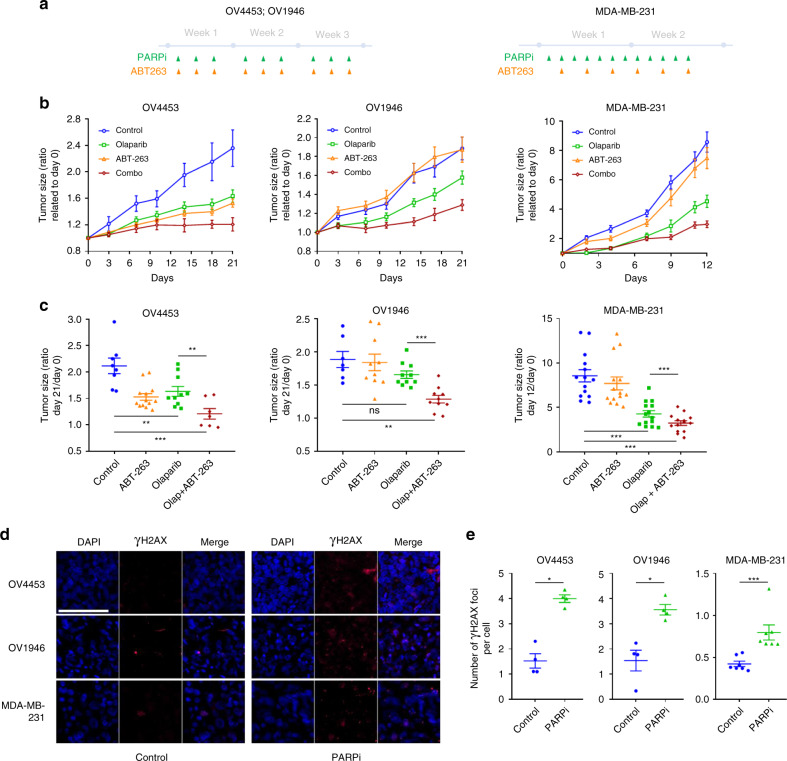
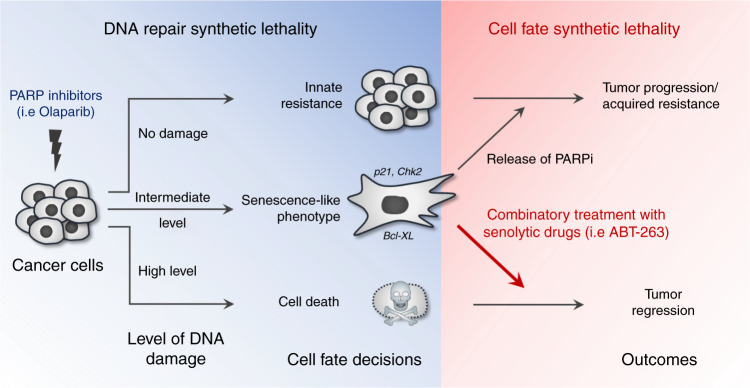
Senescence is a tumor suppression mechanism defined by stable proliferation arrest. Here we demonstrate that the known synthetic lethal interaction between poly(ADP-ribose) polymerase 1 inhibitors (PARPi) and DNA repair triggers p53-independent ovarian cancer cell senescence defined by senescence-associated phenotypic hallmarks including DNA-SCARS, inflammatory secretome, Bcl-XL-mediated apoptosis resistance, and proliferation restriction via Chk2 and p21 (CDKN1A). The concept of senescence as irreversible remains controversial and here we show that PARPi-senescent cells re-initiate proliferation upon drug withdrawal, potentially explaining the requirement for sustained PARPi therapy in the clinic. Importantly, PARPi-induced senescence renders ovarian and breast cancer cells transiently susceptible to second-phase synthetic lethal approaches targeting the senescence state using senolytic drugs. The combination of PARPi and a senolytic is effective in preclinical models of ovarian and breast cancer suggesting that coupling these synthetic lethalities provides a rational approach to their clinical use and may together be more effective in limiting resistance.
Overview
The claims and statistics of this paper haven’t been checked yet.
Free: it reads the open-access text and checks the first 5 claims that cite a source we can check. Create a free account to check every claim.
Integrity signals
Registry
Cites
Statistics
Figures
Verification
Claims the paper makes
The claims and statistics of this paper haven’t been checked yet.
Free: it reads the open-access text and checks the first 5 claims that cite a source we can check. Create a free account to check every claim.
Claims other papers make about this one
Each is checked against this paper’s own text: does it say what the citing paper says it does?
The cited source says what the claim attributes to it.
In the citing paper
“The PARP inhibitor olaparib induced a senescence- like proliferation arrest in ovarian cancer- derived cultured cells that relied on the continuous provision of the drug.”
From Senescence and cancer — role and therapeutic opportunities (2022) · cites this paper as [184]
The cited source says what the claim attributes to it.
In the citing paper
“Navitoclax was also able to efficiently kill ovarian and breast cancer cells that underwent PARP inhibitor- related senescence invitro and in mouse xenografts 184 .”
From Senescence and cancer — role and therapeutic opportunities (2022) · cites this paper as [184]
In the citing paper
“Although it remains unclear whether cancer cell senescence is irreversible, primary cancer therapeutics that trigger a senescence-like phenotype in cancer cells allow further targeting of these cells using a one-two-punch approach (senescence-senolysis) to eliminate surviving cancer cells148,149.”
From Guidelines for minimal information on cellular senescence experimentation in vivo (2024) · cites this paper as [148]
In the citing paper
“Among potential biomarkers, the relevance of pro-survival proteins is that they enable cancer cells to avoid cell death upon acute stress (e.g., during chemotherapy or radiotherapy) and are targetable for cancer senolysis148,149.”
From Guidelines for minimal information on cellular senescence experimentation in vivo (2024) · cites this paper as [148]
In the citing paper
“Senescence is also an important mechanism of efficacy in the treatment of breast cancer with PARP inhibitors [59] and many typical chemotherapy agents used to treat breast cancer, such as epirubicin and cyclophosphamide [60].”
From Senescence and Cancer: A Review of Clinical Implications of Senescence and Senotherapies (2020) · cites this paper as [59]
Self-check
Percentages, sums and reported differences re-computed from the paper’s own numbers.
The self-check needs the paper’s full text.
Citations
Cites
Cerami, E., Gao, J., Dogrusoz, U., Gross, B. E., Sumer, S. O., Aksoy, B. A., Jacobsen, A., Byrne, C. J., Heuer, M. L., Larsson, E., et al. (2012) · Cancer Discovery · doi:10.1158/2159-8290.cd-12-0095 · Cited by 17,455
Integrative Analysis of Complex Cancer Genomics and Clinical Profiles Using the cBioPortal
Gao, J., Aksoy, B. A., Dogrusoz, U., Dresdner, G., Gross, B., Sumer, S. O., Sun, Y., Jacobsen, A., Sinha, R., Larsson, E., et al. (2013) · Science Signaling · doi:10.1126/scisignal.2004088 · Cited by 15,160
Integrated genomic analyses of ovarian carcinoma
Perou, C. M. (2019) · Carolina Digital Repository (University of North Carolina at Chapel Hill) · doi:10.17615/hvp3-wg08 · Cited by 7,925
A biomarker that identifies senescent human cells in culture and in aging skin in vivo.
Dimri, G. P., Lee, X., Basile, G., Acosta, M., Scott, G., Roskelley, C., Medrano, E. E., Linskens, M., Rubelj, I., & Pereira-Smith, O. (1995) · Proceedings of the National Academy of Sciences · doi:10.1073/pnas.92.20.9363 · Cited by 7,477
Drug combination studies and their synergy quantification using the Chou-Talalay method
Chou, T.-C. (2010) · Cancer Research · doi:10.1158/0008-5472.can-09-1947 · Cited by 5,739
The senescence-associated secretory phenotype: the dark side of tumor suppression
Coppé, J.-P., Desprez, P.-Y., Krtolica, A., & Campisi, J. (2010) · Annual Review of Pathology: Mechanisms of Disease · doi:10.1146/annurev-pathol-121808-102144 · Cited by 5,206
Niraparib Maintenance Therapy in Platinum-Sensitive, Recurrent Ovarian Cancer
Mirza, M. R., Monk, B. J., Herrstedt, J., Oza, A. M., Mahner, S., Redondo, A., Fabbro, M., Ledermann, J. A., Lorusso, D., Vergote, I., et al. (2016) · New England Journal of Medicine · doi:10.1056/nejmoa1611310 · Cited by 2,451
Four faces of cellular senescence
Rodier, F., & Campisi, J. (2011) · Journal of Cell Biology · doi:10.1083/jcb.201009094 · Cited by 2,070
Self-citationOlaparib Maintenance Therapy in Platinum-Sensitive Relapsed Ovarian Cancer
Ledermann, J., Harter, P., Gourley, C., Friedlander, M., Vergote, I., Rustin, G., Scott, C., Meier, W., Shapira-Frommer, R., Safra, T., et al. (2012) · New England Journal of Medicine · doi:10.1056/nejmoa1105535 · Cited by 1,883
Clearance of senescent cells by ABT263 rejuvenates aged hematopoietic stem cells in mice
Chang, J., Wang, Y., Shao, L., Laberge, R.-M., Demaria, M., Campisi, J., Janakiraman, K., Sharpless, N. E., Ding, S., Feng, W., et al. (2016) · Nature Medicine · doi:10.1038/nm.4010 · Cited by 1,819
Cited by
Items 201–246 of 246
Promotion of tumor cell senescence by the antibody–drug conjugate, sacituzumab govitecan
Chakraborty, E., Sinanian, M. M., Rahman, A., & Gewirtz, D. A. (2026) · Molecular Pharmacology · doi:10.1016/j.molpha.2026.100142 · Cited by 1
Suriya, S., Jamnongsong, S., Jamyuang, C., Therasakvichya, S., & Sampattavanich, S. (2026) · Biomedicine & Pharmacotherapy · doi:10.1016/j.biopha.2026.119821 · Cited by 1
Jin, X., Liu, H., Gao, L., Liu, L., Liu, J.-B., Jin, X., Wang, M., Liu, D., Feng, L., & Chen, W. (2026) · Advanced Science · doi:10.1002/advs.76962 · Cited by 1
“Accumulated evidence reveals that targeting senescent cells by senescence scavengers represents a new and promising approach in treating various cancers [ 32–34 ].”
Precision targeting of the SASP in cancer therapy
Hassan, S. N., & Ferbeyre, G. (2026) · Nature Aging · doi:10.1038/s43587-025-01052-4 · Cited by 1
Senolytic drug discovery and mechanisms of action in BRAF-V600E oncogene-induced senescence
L’Hôte, V. (2022) · theses.fr (ABES) · doi:10.70675/acd5f426zc1b2z446fz8404z0f8f121081f8 · Cited by 1
Therapy-Induced Senescence In Triple-Negative Breast Cancer: Biomarkers And Reversal Strategies
Roberts, E. (2026) · University of Hertfordshire Research Archive (University of Hertfordshire) · doi:10.18745/00027166 · Cited by 1
Birth and death of cellular senescence
Wang, B. (2020) · University of Groningen research database (University of Groningen / Centre for Information Technology) · doi:10.33612/diss.131223530
Ghoneum, A., Tazzite, A., Bairi, K. E., & Said, N. A. (2021) · Springer eBooks · doi:10.1007/978-981-16-1873-4_7
Improving cancer therapy through unconventional strategies
Neto, J. M. F. (2021) · Utrecht University Repository (Utrecht University) · doi:10.33540/1009
Clearance of senescent cells: potent anti-aging approach
Ferreira, J., & Deamer, A. (2022) · Elsevier eBooks · doi:10.1016/b978-0-323-90235-9.00002-1
Preclinical evaluation of senescence-based strategies to improve cancer therapy
Estepa‐Fernández, A. (2022) · RiuNet (Universitat Politècnica de València) · doi:10.4995/thesis/10251/188845
Senotherapy as a Novel Therapeutic Method in Cancer Treatment: With a Focus on Head and Neck Cancer
Ziaei, H., & Harada, H. (2023) · Interdisciplinary cancer research · doi:10.1007/16833_2022_118
Data from Targeting Senescence as a Therapeutic Opportunity for Triple-Negative Breast Cancer
de Paula, B., Kieran, R., Koh, S. S. Y., Crocamo, S., Abdelhay, E. S. F. W., & Muñoz‐Espín, D. (2023) · doi:10.1158/1535-7163.c.6597340.v1
Epigenetic Iinsights into the Senescence of Porcine Fetal Fibroblasts induced by Passaging
Bi, J., Wang, D., Zhu, F., Lu, X., Xie, Y., Liu, H., Wang, M., He, X., Jiang, Y. Z., Liu, P., et al. (2023) · Cell Cycle · doi:10.1080/15384101.2023.2222521
“PARP not only antagonizes senescence by protecting against genotoxic stress [59] but also promotes NF-κB activation and secretory phenotypes in senescent cells [60].”
BackgroundA senescence-like state is beneficial for ovarian cancer treatmentPreprint
Skulimowski, M., Calvo, L., Cheng, S., Clément, I., Portelance, L., Zhan, Y., Carmona, E., Lafontaine, J., de Ladurantaye, M., Rahimi, K., et al. (2023) · bioRxiv (Cold Spring Harbor Laboratory) · doi:10.1101/2023.09.30.560300
Self-citationSkulimowski, M., Bourbonnais, J., Malaquin, N., Fleury, H., Clément, I., Communal, L., Rahimi, K., Provencher, D. M., Mes‐Masson, A., & Rodier, F. (2023) · bioRxiv (Cold Spring Harbor Laboratory) · doi:10.1101/2023.09.30.560286
Self-citationThe journey from bench to bedside—it takes a science village
Mes‐Masson, A. (2024) · Biochemistry and Cell Biology · doi:10.1139/bcb-2024-0075
Self-citationThe dual role of cellular senescence in tumor occurrence and development
Huang, X., Wang, Z.-R., Wu, B., & Song, W.-W. (2025) · Discover Medicine · doi:10.1007/s44337-025-00502-7
“Navitoclax, a Bcl-2 inhibitor, has demonstrated good therapeutic effects in combination with several senescence-inducing chemotherapies [74–76].”
Uruski, P., Sepetowska, A., Konieczna, C., Pakuła, M., Wyrwa, M., Tussupkaliyev, A., Tykarski, A., Mikuła‐Pietrasik, J., & Książek, K. (2021) · Figshare · doi:10.6084/m9.figshare.16851490
Therapy-induced stromal senescence promotes prostate cancer progression and aggressiveness
Pardella, E. (2021) · Use Siena air (University of Siena) · doi:10.25434/pardella-elisa_phd2021
Wojnicki, K., & Wojnicki, K. (2023) · RCIN (Digital Repository of the Scientifics Institutes) (Institute of Archaeology and Ethnology of the Polish Academy of Sciences)
Targeting Chemotherapy-Induced Senescence Escape to Reduce Breast Cancer Cell Survival
Zeng, D. (2023) · eScholarship@McGill (McGill) · doi:10.82308/39405
Junior, A. M. D. [. A. (2024) · LA Referencia (Red Federada de Repositorios Institucionales de Publicaciones Científicas)
YAP/TEAD drives treatment-induced adaptive immunosuppression in EGFR-mutant lung cancerPreprint
Honkanen, M., Baumgarten, J., Dibus, N., Rannikko, J. H., Gojković, M., Cejas, P., Xie, Y., Ortutay, Z., Merilahti, J. A. M., Tienhaara, M., et al. (2026) · bioRxiv (Cold Spring Harbor Laboratory) · doi:10.64898/2026.01.22.701073
Mucignat, G., Dejnaka, E., Pauletto, M., Lopparelli, R. M., Giantin, M., Pawlak, A., & Dacasto, M. (2026) · Frontiers in Veterinary Science · doi:10.3389/fvets.2026.1725824
Wang, Z. H., Miao, W., Gao, J., & Zhang, X. (2026) · Saudi Journal of Medicine and Medical Sciences · doi:10.4103/sjmms.sjmms_814_25
“Fleury et al. [24] proved that olaparib can induce cellular senescence in breast cancer.”
Blue period - features of senescence 30 years after beta-galactosidase
Kuehnemann, C., & Wiley, C. D. (2026) · Aging · doi:10.18632/aging.206380
“This reversion can extend beyond cell cycle arrest and into other features of senescence [37], but can also result in pro-carcinogenic states [40 – 43].”
Fatty acid synthesis therapy-induced senescence (FASTIS) in cancer cells
Verdura, S., Llop‐Hernández, À., der Steen, T. V., Encinar, J. A., Martín-Castillo, B., Cuyàs, E., Lupu, R., & Menéndez, J. A. (2026) · Cell Death and Disease · doi:10.1038/s41419-026-08992-8
“If clinically validated, this metabolic adaptation to targeted lipogenesis inhibition could be exploited therapeutically through rational “ one-two punch ” senogenic-(immuno)senolytic strategies.”
Ning, N., Wang, C., Gao, T., Ma, J. X., Ding, M., Zhang, F., Liu, Q., Zhang, W., & Gong, L. (2026) · Molecular Carcinogenesis · doi:10.1002/mc.70134
The Emerging Role of mTOR in Shaping the Cancer Cell Secretome and Plasticity
Cooper, T. T., Topisirović, I., & Postovit, L.-M. M. (2026) · Molecular and Cellular Biology · doi:10.1080/10985549.2026.2699146
Paul, B. M., Kannan, G., Arunachalam, K., & Thangaraj, P. (2026) · Inflammopharmacology · doi:10.1007/s10787-026-02346-8
“Its major senotherapeutic role is suppression of inflammatory senescence signalling rather than direct elimination of senescent cells (Fleury et al. 2019; Han and Kim 2023; Imani et al. 2020; Liu et al. 2023a, b).”
Wang, R., Shang, D., Tu, Z., & Liu, H. (2026) · Expert Opinion on Therapeutic Targets · doi:10.1080/14728222.2026.2709798
“…induces a senescence-like state in ovarian cancer cells, and the senolytic ABT-263 (a Bcl-XL/Bcl-2 inhibitor that triggers apoptosis in senescent cells) synergizes with PARP inhibitors to enhance lethality [111]. peritoneal and adipose tissue metastasis of ovarian cancer in mouse models [113].”
The Bidirectional Role of Cellular Senescence in the Treatment of Ovarian Cancer
Yuan, D., Chen, M., Wei, J., Zhang, Y., Li, Y., Tang, N., Han, C., & Zhou, Y. (2026) · Biomedicines · doi:10.3390/biomedicines14081797
“Studies have demonstrated that continuous low-dose olaparib treatment can trigger senescence through p16-or p53-dependent pathways, or through the p21 pathway in a p53-independent manner [16,19,72].”
CD73 inhibition overcomes adaptive immune resistance to PARP inhibition in models of prostate cancer
Xie, P., Ma, R., Zhang, M., Fan, J., Tang, H., Song, L., Wan, Y., Kuzel, T. M., Fang, D., Cui, W., et al. (2026) · Journal of Clinical Investigation · doi:10.1172/jci203785
“…of TGF-β is possibly driven by PARPi-induced DNA damage–associated cellular senescence or a senescence-associated secretory phenotype (47, 48), which could promote TGF-β signaling to drive downstream AKT-SP1– mediated CD73 expression. confirmed a positive correlation between surface CD73…”
Procyanidin C1 combined with olaparib induces senescence in BRCA1-proficient breast cancer cells
Ren, C., Fu, C., Chen, X., Yang, R., He, J., Gao, A., Su, Q., Teng, X., & Xu, J. (2026) · American Journal of Cancer Research · doi:10.62347/lycq1366
Closing the gap in aging science: unlocking the potential of nanoparticles in senescence therapy
Kanbur, E., & Aydin, Ö. F. (2026) · Biogerontology · doi:10.1007/s10522-026-10489-y
“Additionally, navitoclax has been successful in killing senescent ovarian (OV4453 and OV1946) and breast (MDA-MB-231) cancer cells in pre-treated cell cultures with the PARP inhibitor olaparib and xenografts (Fleury et al. 2019).”
BCLXL blockade rewires cell fate to overcome PARP inhibitor resistance in ovarian cancer
Venkatachalam, A., Strathman, A. R., Hou, X., Correia, C., Meng, X. W., McGehee, C. D., Balczewski, E. A., Duffield, L. N., Rossman, O. K., Wong, C., et al. (2026) · Signal Transduction and Targeted Therapy · doi:10.1038/s41392-026-02870-7
“36 In contrast to prior studies, which utilized clinically unsustainable PARPi concentrations such as 100 µM olaparib, 17 we focused on clinically sustainable low concentrations.”
Senolytic Interventions Enhance the Antimetastatic Activity of Chemotherapy in Prostate Cancer
Zhou, L. M., Murphy, K. C., Giwa, H. K., Hu, K., Ma, B., Brassil, M. L., Chang, E. H.-C., DeMarco, K. D., Pradhan, A. J., Sroka, E. M., et al. (2026) · Cancer Research · doi:10.1158/0008-5472.can-26-0493
Zhang, L. J., Salekeen, R., Soto-Palma, C., Wu, Q., He, Y., Elsallabi, O., Bdiri, B., Hughes, B., Nunes, A., Xu, W., et al. (2026) · Aging Cell · doi:10.1111/acel.70736
“PARP inhibitors have been shown to induce a transient “senescence-like” phenotype in cancer cells (Fleury et al. 2019; Kolacz and Robaszkiewicz 2024), which makes them vulnerable to secondary modes of clearance, such as BCL-2 and BCL-xL inhibitors (Fleury et al. 2019; Softah et al. 2023).”
Zhang, Y., Han, Y., Hou, P., Zhang, W., Wu, M., & Deng, M. (2026) · Frontiers in Pharmacology · doi:10.3389/fphar.2026.1972486
“Senescence should therefore be viewed as one possible cellular response to PARP inhibition rather than as the primary or universal mechanism of PARP inhibitor resistance (Cancer Genome Atlas Research Network, 2011; Wu et al., 2024; Fleury et al., 2019; Wang et al., 2019).”
Zhang, Y., Deng, M., & Jiang, J. (2026) · Frontiers in Immunology · doi:10.3389/fimmu.2026.1965539
“PARP inhibitor-treated OC models have demonstrated reversible senescence-associated states (26), raising the possibility that some residual cells can re-enter the cell cycle after treatment withdrawal.”
Influential
Metadata
- Authors
- Fleury, H., Malaquin, N., Tu, V., Gilbert, S., Martinez, A., Olivier, M.-A., Sauriol, S. A., Communal, L., Leclerc-Desaulniers, K., Carmona, E., Provencher, D., Mes-Masson, A.-M., & Rodier, F.
- Affiliations
- Centre Hospitalier de l’Université de Montréal (CA)
- ORCID
- Venue
- Nature Communications
- Published
- 2019-06-11
- Volume
- 10
- Issue
- 1
- Pages
- 2556-2556
- ISSN
- 2041-1723 (ISSN-L)
- PMC
- PMC6560032
- OpenAlex
- W2951114010
- Semantic Scholar
- 0bb7e1b1c54ea765ef733ef9d4a1e0f50d7d65eb
- Cited by
- 228
- References
- 57
- Citations by year
- 2026: 28 · 2025: 29 · 2024: 35 · 2023: 34 · 2022: 27 · 2021: 44 · 2020: 26 · 2019: 5
- FWCI
- 10.64
- Type
- journal article
- Language
- en
- Update notices
- correction (2024-05-13)
- Open access
- gold
- doi.org
- Licence
- cc-by
- creativecommons.org/licenses/by/4.0 (tdm)
- creativecommons.org/licenses/by/4.0 (vor)
- Locations
- Nature Communications (publishedVersion, cc-by)
- Europe PMC (PubMed Central) (publishedVersion, cc-by)
- PubMed Central (publishedVersion, cc-by)
- PubMed (publishedVersion)
- RePEc: Research Papers in Economics (submittedVersion)
- DOAJ (DOAJ: Directory of Open Access Journals) (submittedVersion)
- DOAJ (DOAJ: Directory of Open Access Journals) (submittedVersion, cc-by-sa)
- Funders
- Cancer Research Society (22713, 20087)
- Terry Fox Research Institute
- Institut Du Cancer de Montréal
- Fonds de Recherche du Québec - Santé (33070, 22624)
- Institute of Cancer Research
- Topics
- Health Sciences › Medicine › Oncology › PARP inhibition in cancer therapy
- Life Sciences › Biochemistry, Genetics and Molecular Biology › Cell Biology › Telomeres, Telomerase, and Senescence
- Life Sciences › Biochemistry, Genetics and Molecular Biology › Molecular Biology › Cell death mechanisms and regulation
- Keywords
- synthetic lethality, PARP inhibitors, senescence-associated secretory phenotype, senolytics, ovarian cancer, breast cancer, p53-independent senescence, Bcl-xL, apoptosis resistance, Chk2, p21, DNA repair, drug resistance
- MeSH terms
- Poly(ADP-ribose) Polymerase Inhibitors, Synthetic Lethal Mutations, Antineoplastic Agents, Breast Neoplasms, DNA Repair, Female, Humans, Ovarian Neoplasms, Cellular Senescence, Apoptosis, Drug Resistance, Neoplasm, Cell Line, Tumor, Cell Proliferation
About these checks
Registry, retraction, Cites and statistics results are computed, not judged, with one exception: a printed reference that no index lists is read once by a model before it counts as a citation error. Claims are extracted by a model and kept only when their quote appears verbatim in the text; each cited source is then checked, with a model’s help, for whether it says what the claim relies on. Those verdicts can be wrong — read the claim’s quote and the cited source before relying on one.
Statistics and arithmetic are recomputed, not judged.
Confidence bands are shown only for fields calibrated on our annotated test set. None is calibrated yet, so no band is shown.
What counts as a claim ›How we measure confidence ›How we check this ›
Are you an author, or do you see a problem with this page? Request a review
Data sources
Bibliographic data: Semantic Scholar, OpenAlex, Crossref.
Contains information from the Semantic Scholar Academic Graph Datasets, made available under the ODC Attribution License (ODC-BY 1.0).
Semantic Scholar’s data is described in: Kinney, R., et al. (2023). The Semantic Scholar Open Data Platform. arXiv:2301.10140.
