

Exploiting interconnected synthetic lethal interactions between PARP inhibition and cancer cell reversible senescence
Open accessThe DOI matches its Crossref record; 59 of the 59 references it cites were found in a registry or an index.
Abstract
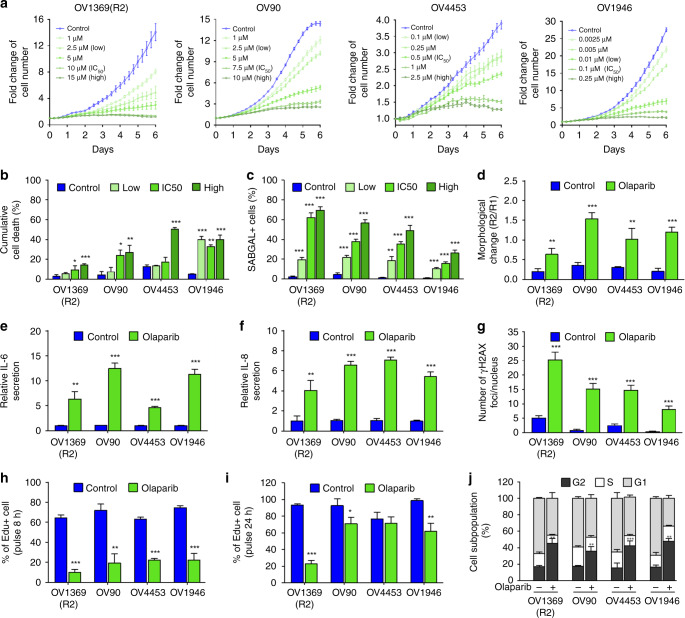
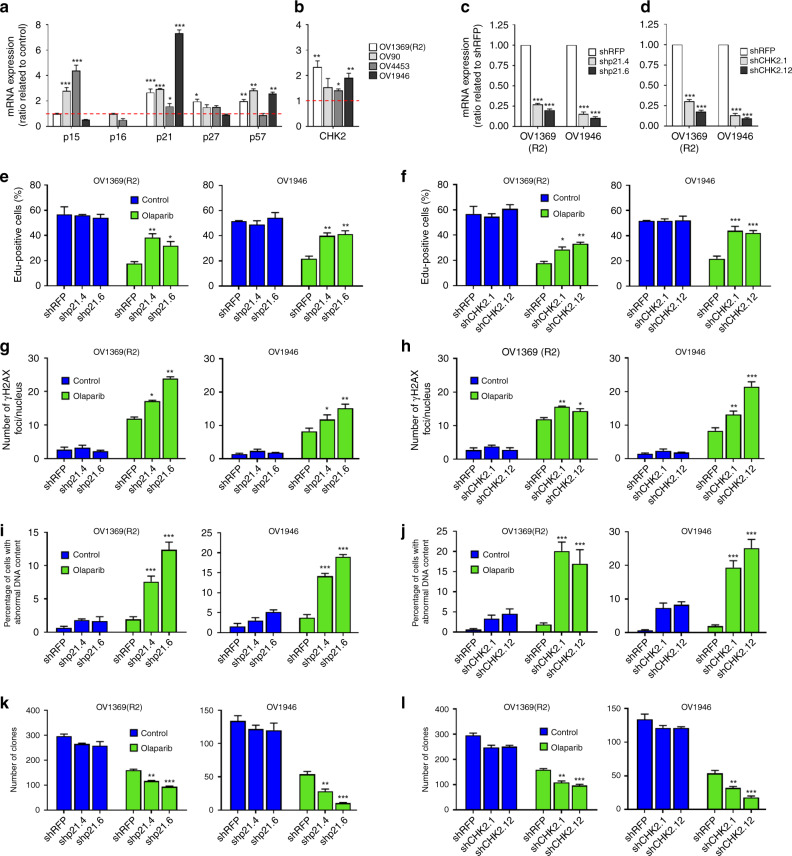
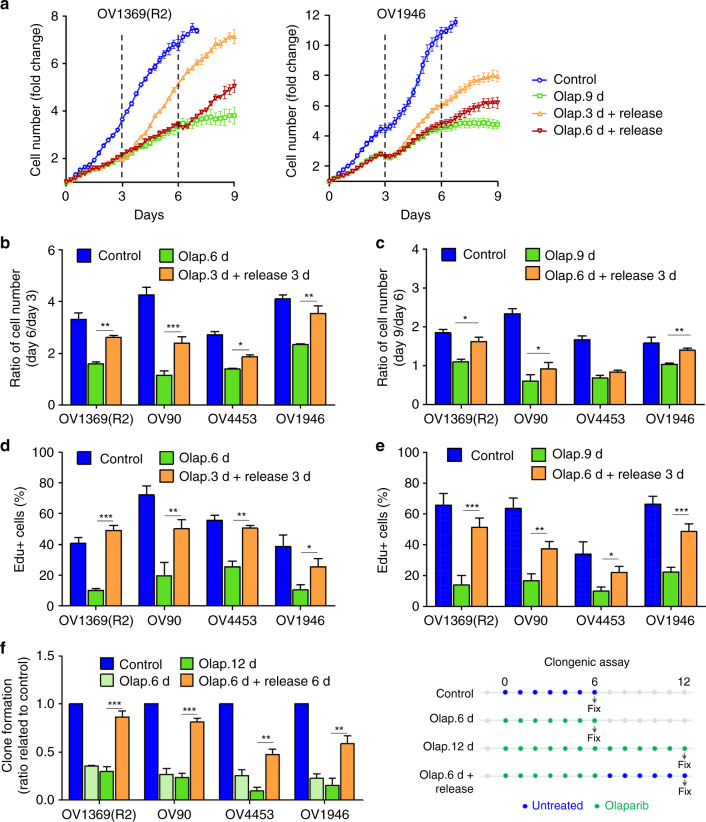
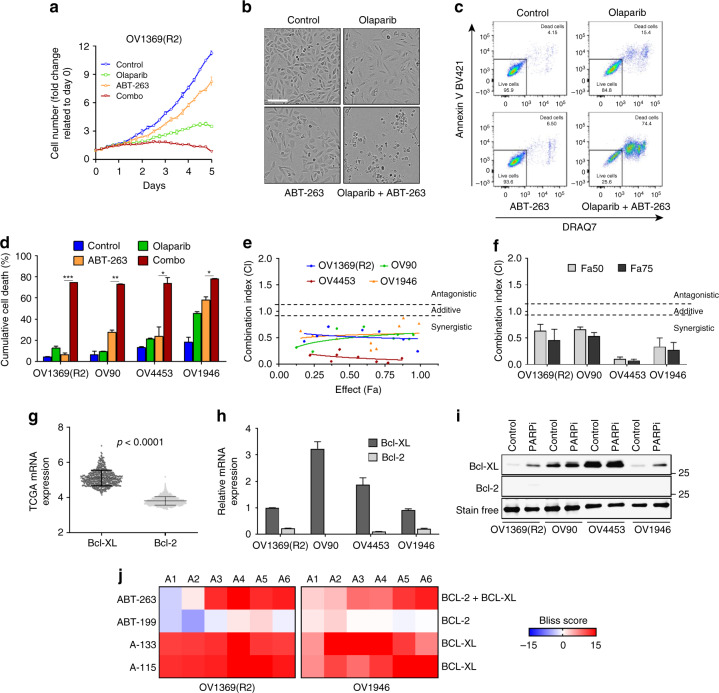
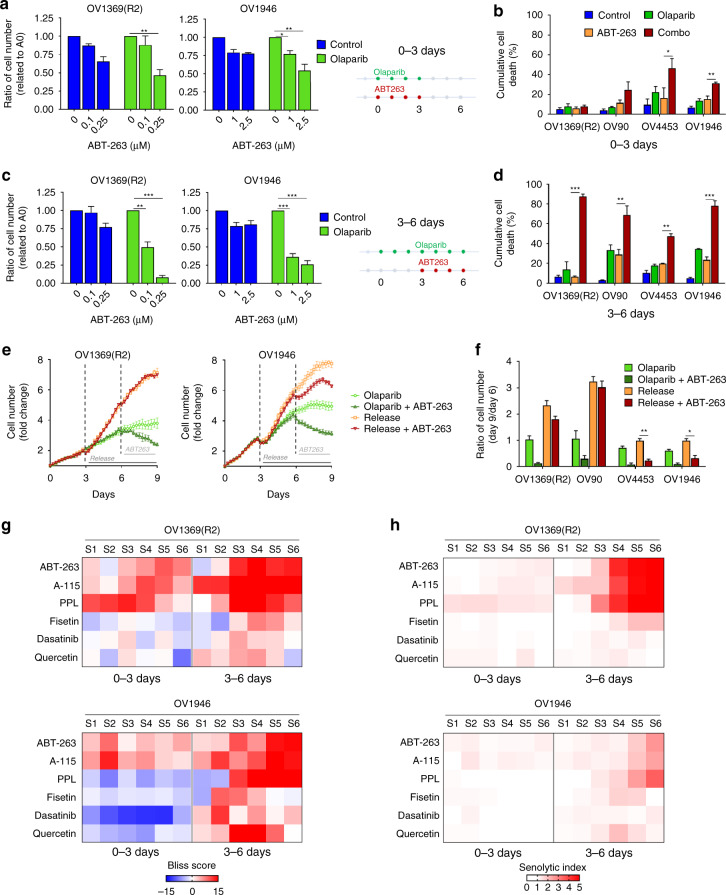
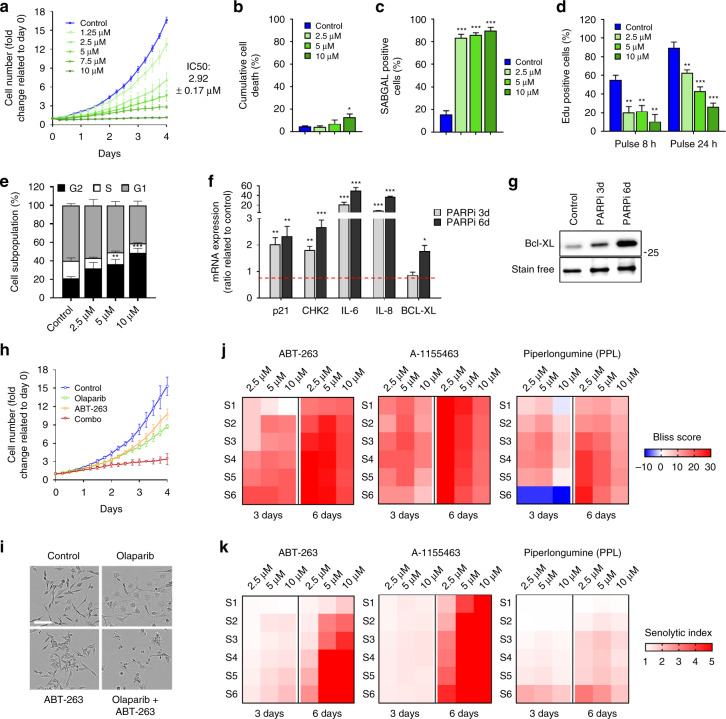
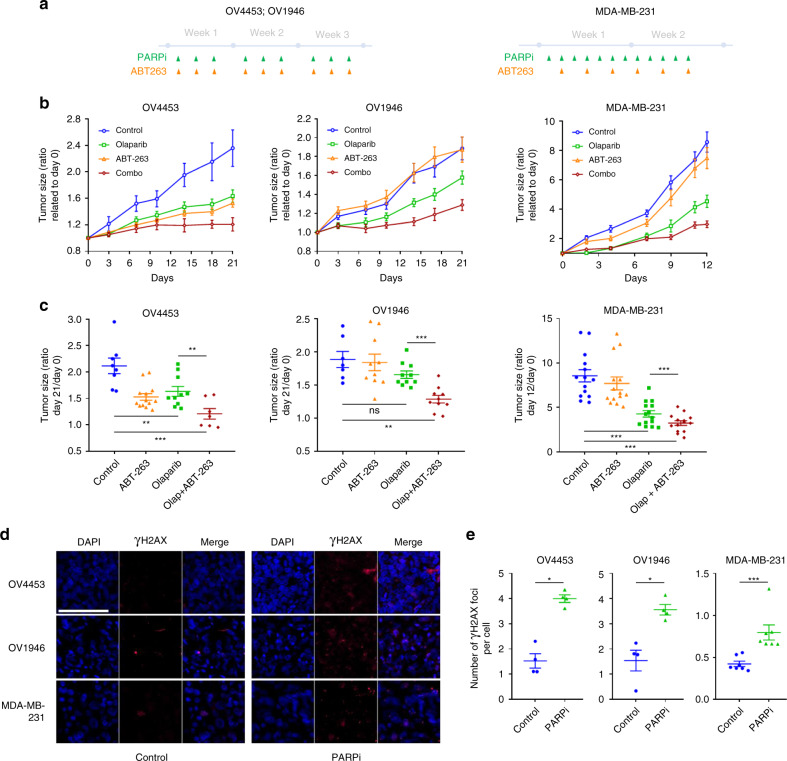
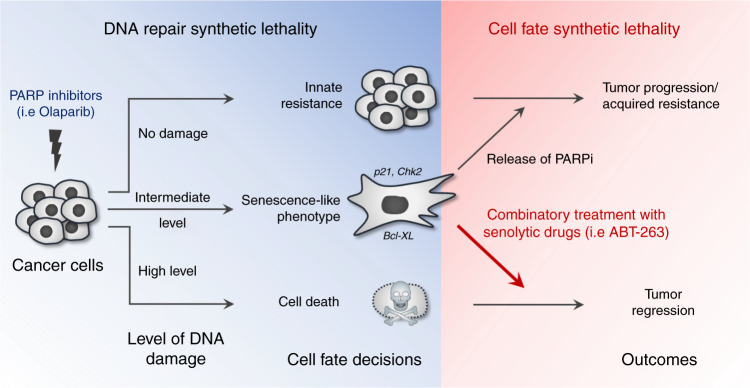
Senescence is a tumor suppression mechanism defined by stable proliferation arrest. Here we demonstrate that the known synthetic lethal interaction between poly(ADP-ribose) polymerase 1 inhibitors (PARPi) and DNA repair triggers p53-independent ovarian cancer cell senescence defined by senescence-associated phenotypic hallmarks including DNA-SCARS, inflammatory secretome, Bcl-XL-mediated apoptosis resistance, and proliferation restriction via Chk2 and p21 (CDKN1A). The concept of senescence as irreversible remains controversial and here we show that PARPi-senescent cells re-initiate proliferation upon drug withdrawal, potentially explaining the requirement for sustained PARPi therapy in the clinic. Importantly, PARPi-induced senescence renders ovarian and breast cancer cells transiently susceptible to second-phase synthetic lethal approaches targeting the senescence state using senolytic drugs. The combination of PARPi and a senolytic is effective in preclinical models of ovarian and breast cancer suggesting that coupling these synthetic lethalities provides a rational approach to their clinical use and may together be more effective in limiting resistance.
Overview
The claims and statistics of this paper haven’t been checked yet.
Free: it reads the open-access text and checks the first 5 claims that cite a source we can check. Create a free account to check every claim.
Integrity signals
Registry
Cites
Statistics
Figures
Verification
Claims the paper makes
The claims and statistics of this paper haven’t been checked yet.
Free: it reads the open-access text and checks the first 5 claims that cite a source we can check. Create a free account to check every claim.
Claims other papers make about this one
Each is checked against this paper’s own text: does it say what the citing paper says it does?
The cited source says what the claim attributes to it.
In the citing paper
“The PARP inhibitor olaparib induced a senescence- like proliferation arrest in ovarian cancer- derived cultured cells that relied on the continuous provision of the drug.”
From Senescence and cancer — role and therapeutic opportunities (2022) · cites this paper as [184]
The cited source says what the claim attributes to it.
In the citing paper
“Navitoclax was also able to efficiently kill ovarian and breast cancer cells that underwent PARP inhibitor- related senescence invitro and in mouse xenografts 184 .”
From Senescence and cancer — role and therapeutic opportunities (2022) · cites this paper as [184]
In the citing paper
“Although it remains unclear whether cancer cell senescence is irreversible, primary cancer therapeutics that trigger a senescence-like phenotype in cancer cells allow further targeting of these cells using a one-two-punch approach (senescence-senolysis) to eliminate surviving cancer cells148,149.”
From Guidelines for minimal information on cellular senescence experimentation in vivo (2024) · cites this paper as [148]
In the citing paper
“Among potential biomarkers, the relevance of pro-survival proteins is that they enable cancer cells to avoid cell death upon acute stress (e.g., during chemotherapy or radiotherapy) and are targetable for cancer senolysis148,149.”
From Guidelines for minimal information on cellular senescence experimentation in vivo (2024) · cites this paper as [148]
In the citing paper
“Senescence is also an important mechanism of efficacy in the treatment of breast cancer with PARP inhibitors [59] and many typical chemotherapy agents used to treat breast cancer, such as epirubicin and cyclophosphamide [60].”
From Senescence and Cancer: A Review of Clinical Implications of Senescence and Senotherapies (2020) · cites this paper as [59]
Self-check
Percentages, sums and reported differences re-computed from the paper’s own numbers.
The self-check needs the paper’s full text.
Citations
Cites
Cerami, E., Gao, J., Dogrusoz, U., Gross, B. E., Sumer, S. O., Aksoy, B. A., Jacobsen, A., Byrne, C. J., Heuer, M. L., Larsson, E., et al. (2012) · Cancer Discovery · doi:10.1158/2159-8290.cd-12-0095 · Cited by 17,455
Integrative Analysis of Complex Cancer Genomics and Clinical Profiles Using the cBioPortal
Gao, J., Aksoy, B. A., Dogrusoz, U., Dresdner, G., Gross, B., Sumer, S. O., Sun, Y., Jacobsen, A., Sinha, R., Larsson, E., et al. (2013) · Science Signaling · doi:10.1126/scisignal.2004088 · Cited by 15,160
Integrated genomic analyses of ovarian carcinoma
Perou, C. M. (2019) · Carolina Digital Repository (University of North Carolina at Chapel Hill) · doi:10.17615/hvp3-wg08 · Cited by 7,925
A biomarker that identifies senescent human cells in culture and in aging skin in vivo.
Dimri, G. P., Lee, X., Basile, G., Acosta, M., Scott, G., Roskelley, C., Medrano, E. E., Linskens, M., Rubelj, I., & Pereira-Smith, O. (1995) · Proceedings of the National Academy of Sciences · doi:10.1073/pnas.92.20.9363 · Cited by 7,477
Drug combination studies and their synergy quantification using the Chou-Talalay method
Chou, T.-C. (2010) · Cancer Research · doi:10.1158/0008-5472.can-09-1947 · Cited by 5,739
The senescence-associated secretory phenotype: the dark side of tumor suppression
Coppé, J.-P., Desprez, P.-Y., Krtolica, A., & Campisi, J. (2010) · Annual Review of Pathology: Mechanisms of Disease · doi:10.1146/annurev-pathol-121808-102144 · Cited by 5,206
Niraparib Maintenance Therapy in Platinum-Sensitive, Recurrent Ovarian Cancer
Mirza, M. R., Monk, B. J., Herrstedt, J., Oza, A. M., Mahner, S., Redondo, A., Fabbro, M., Ledermann, J. A., Lorusso, D., Vergote, I., et al. (2016) · New England Journal of Medicine · doi:10.1056/nejmoa1611310 · Cited by 2,451
Four faces of cellular senescence
Rodier, F., & Campisi, J. (2011) · Journal of Cell Biology · doi:10.1083/jcb.201009094 · Cited by 2,070
Self-citationOlaparib Maintenance Therapy in Platinum-Sensitive Relapsed Ovarian Cancer
Ledermann, J., Harter, P., Gourley, C., Friedlander, M., Vergote, I., Rustin, G., Scott, C., Meier, W., Shapira-Frommer, R., Safra, T., et al. (2012) · New England Journal of Medicine · doi:10.1056/nejmoa1105535 · Cited by 1,883
Clearance of senescent cells by ABT263 rejuvenates aged hematopoietic stem cells in mice
Chang, J., Wang, Y., Shao, L., Laberge, R.-M., Demaria, M., Campisi, J., Janakiraman, K., Sharpless, N. E., Ding, S., Feng, W., et al. (2016) · Nature Medicine · doi:10.1038/nm.4010 · Cited by 1,819
Cited by
Items 101–200 of 246
Mechanisms of cancer stem cell senescence: Current understanding and future perspectives
Zhang, D., Monteiro, M. J., Liu, J., & Gu, W. (2021) · Clinical and Experimental Pharmacology and Physiology · doi:10.1111/1440-1681.13528 · Cited by 27
Softah, A., Alotaibi, M. R., Alhoshani, A., Saleh, T., Alhazzani, K., Almutairi, M. M., AlRowis, R., Alshehri, S., Albekairi, N. A., Harada, H., et al. (2023) · Biomedicines · doi:10.3390/biomedicines11113066 · Cited by 27
“In other work, Fleury et al. demonstrated that the PARPi, olaparib, resulted in TIS in MDA-MB-231 TNBC cells in a concentration-dependent manner [54].”
BackgroundInfluentialThe Dynamic Process and Its Dual Effects on Tumors of Therapy-Induced Senescence
Liao, C., Xiao, Y., & Liu, L. (2020) · Cancer Management and Research · doi:10.2147/cmar.s285083 · Cited by 26
“ABT263 enhanced the limitation of resistance by inducing PARPi-induced senescent apoptosis.(96) Researchers have found that panobinostat could kill persistent senescent cancer cells that arose post-Taxol therapy by decreasing the expression of BCL-XL and increasing acetylated H3.”
BackgroundSenescence: A program in the road to cell elimination and cancer
Moiseeva, O., Guillon, J., & Ferbeyre, G. (2022) · Seminars in Cancer Biology · doi:10.1016/j.semcancer.2020.12.017 · Cited by 25
Cahuzac, M., Péant, B., Mes‐Masson, A., & Saad, F. (2022) · Cancers · doi:10.3390/cancers14163877 · Cited by 25
“Olaparib is already known to induce a senescence-like phenotype in ovarian cancer cells, which can contribute to tumor progression and acquired PARPi resistance [48,49].”
BackgroundSelf-citationSenescence and Aging: Does It Impact Cancer Immunotherapies?
Maggiorani, D., & Beausejour, C. M. (2021) · Cells · doi:10.3390/cells10071568 · Cited by 25
Therapy-induced senescence is finally escapable, what is next?
Saleh, T. (2024) · Cell Cycle · doi:10.1080/15384101.2024.2364579 · Cited by 24
“Finally, and based on an evolving body of evidence, the potential for escaping TIS is gradually being adopted [26–29], but now, the meaning of this new conception needs to be put into perspective.”
BackgroundSaleh, T., Khasawneh, A. I., Himsawi, N. M., Abu-Raideh, J. A., Ejeilat, V., Elshazly, A. M., & Gewirtz, D. A. (2022) · International Journal of Molecular Sciences · doi:10.3390/ijms232415512 · Cited by 24
Franz, A., Coscia, F., Shen, C., Charaoui, L., Mann, M., & Sander, C. (2021) · Journal of Ovarian Research · doi:10.1186/s13048-021-00886-x · Cited by 23
“Based on their function and protein expression changes, annotated protein modules were evaluated to be associated with PARP1i-induced sensitivity or resistance (STable2).”
InfluentialIdentification of Novel Senescent Markers in Small Extracellular Vesicles
Misawa, T., Hitomi, K., Miyata, K., Tanaka, Y., Fujii, R., Chiba, M., Loo, T. M., Hanyu, A., Kawasaki, H., Kato, H., et al. (2023) · International Journal of Molecular Sciences · doi:10.3390/ijms24032421 · Cited by 23
“In addition, senolytic drugs (drugs that target senescent cells) may be used in combination with anticancer agents and other drugs because cellular senescence is not only caused by aging but also occurs in cancer cells following treatment with anticancer agents and other therapeutics [38].”
BackgroundAdvances in Nanotherapy for Targeting Senescent Cells
Shi, Y., Zhang, Y., Zhang, Y., Yao, J., Guo, J., Xu, X., & Wang, L. (2024) · International Journal of Nanomedicine · doi:10.2147/ijn.s469110 · Cited by 23
“45 Moreover, senolytics lack specificity and are unable to differentiate between pathological and physiological senescent cells, posing an additional limitation to their potential use as anti-aging therapeutic agents.”
BackgroundWhere does cellular senescence belong in the pathophysiology of ovarian cancer?
Książek, K. (2020) · Seminars in Cancer Biology · doi:10.1016/j.semcancer.2020.11.021 · Cited by 23
Huart, C., Fransolet, M., Demazy, C., Calvé, B. L., Lucas, S., Michiels, C., & Wéra, A.-C. (2022) · Cancers · doi:10.3390/cancers14061460 · Cited by 23
“The low level of CDKN1A mRNA in KP4 cells 72 h after treatment could indicate an early and transient induction of p21 that is associated with proliferation and not to senescence as proposed in Hsu’s work.”
BackgroundInfluentialTargeting KRAS in pancreatic cancer: Emerging therapeutic strategies
Khan, S. U., Budamagunta, V., & Zhou, D. (2023) · Advances in cancer research · doi:10.1016/bs.acr.2023.02.004 · Cited by 23
PARP Inhibitors Talazoparib and Niraparib Sensitize Melanoma Cells to Ionizing Radiation
Jonuscheit, S., Jost, T., Gajdošová, F., Wrobel, M., Hecht, M., Fietkau, R., & Distel, L. V. (2021) · Genes · doi:10.3390/genes12060849 · Cited by 22
“Senescence is a further important mechanism to remove tumor cells from the proliferation cycle [41].”
BackgroundParshad, B., Baker, A. G., Ahmed, I., Estepa‐Fernández, A., Muñoz‐Espín, D., & Fruk, L. (2024) · Small · doi:10.1002/smll.202405732 · Cited by 21
The senescence-associated secretory phenotype in ovarian cancer dissemination
Veenstra, J. P., Bittencourt, L. F. F., & Aird, K. M. (2022) · American Journal of Physiology-Cell Physiology · doi:10.1152/ajpcell.00049.2022 · Cited by 21
Phosphatidylserine: paving the way for a new era in cancer therapies
Preetam, S., Pandey, A., Mishra, R., Mohapatra, G., Rath, P., Malik, S., Rustagi, S., Dash, A., & Samal, S. K. (2024) · Materials Advances · doi:10.1039/d4ma00511b · Cited by 21
Mitochondrial priming and response to BH3 mimetics in “one-two punch” senogenic-senolytic strategies
López, J., Llop‐Hernández, À., Verdura, S., Serrano‐Hervás, E., Martinez‐Balibrea, E., Bosch‐Barrera, J., Teixidor, E., López‐Bonet, E., Martín-Castillo, B., Sardanyés, J., et al. (2025) · Cell Death Discovery · doi:10.1038/s41420-025-02379-y · Cited by 22
“5B, right ), con fi rming the transient nature of the TIS phenotype induced by olaparib [74].”
InfluentialTargeting cellular senescence to combat cancer and ageing
Wang, C., Hao, X., & Zhang, R. (2022) · Molecular Oncology · doi:10.1002/1878-0261.13266 · Cited by 21
The Potential of Senescence as a Target for Developing Anticancer Therapy
Jo, H., Shim, K., & Jeoung, D. (2023) · International Journal of Molecular Sciences · doi:10.3390/ijms24043436 · Cited by 21
“Olaparib increased the expression of Bcl-XL, inflammatory cytokines, check point kinase 2 (Chk2), and p21 [168].”
BackgroundAging and oral squamous cell carcinoma development: the role of cellular senescence
Niklander, S. E., Aránguiz, P., Faunes, F., & Flores, R. (2023) · Frontiers in Oral Health · doi:10.3389/froh.2023.1285276 · Cited by 20
Pan, C. C., Maeso‐Díaz, R., Lewis, T. R., Xiang, K., Tan, L., Liang, Y., Wang, L., Yang, F., Yin, T., Wang, C., et al. (2023) · Cell Research · doi:10.1038/s41422-023-00820-4 · Cited by 20
The Quest for Eternal Youth: Hallmarks of Aging and Rejuvenating Therapeutic Strategies
Nunkoo, V. S., Cristian, A., Jurcău, A., Diaconu, R. G., & Jurcău, M. C. (2024) · Biomedicines · doi:10.3390/biomedicines12112540 · Cited by 19
Homologous recombination-mediated irreversible genome damage underlies telomere-induced senescence
Ghadaouia, S., Olivier, M., Martinez, A., Kientega, T., Jian, Q., Lambert-Lanteigne, P., Cardin, G. B., Autexier, C., Malaquin, N., & Rodier, F. (2021) · Nucleic Acids Research · doi:10.1093/nar/gkab965 · Cited by 19
“Finally, H2B-GFP from pENTR1A-H2B-GFP (60) was inserted into the W530-1 (pLenti PGK Hygro) destination vector.”
MethodSelf-citationRecent Advances in Senolysis for Age-Related Diseases
Aratani, S., & Nakanishi, M. (2023) · Physiology · doi:10.1152/physiol.00003.2023 · Cited by 19
DNA damage-induced senescence is associated with metabolomic reprogramming in breast cancer cells
George, N., Joshi, M. B., & Satyamoorthy, K. (2023) · Biochimie · doi:10.1016/j.biochi.2023.09.021 · Cited by 18
Wang, Z., Chen, C., Ai, J., Gao, Y., Wang, L., Xia, S., Jia, Y., & Qin, Y. (2025) · MedComm · doi:10.1002/mco2.70048 · Cited by 18
Gralewska, P., Gajek, A., Rybaczek, D., Marczak, A., & Rogalska, A. (2022) · Cells · doi:10.3390/cells11121889 · Cited by 18
“, which demonstrated that olaparib treatment alone was not effective enough to increase the number of γH2AX foci and even MN in HGSOC cell lines [62].”
BackgroundCarpenter, V. J., Patel, B. B., Autorino, R., Smith, S. C., Gewirtz, D. A., & Saleh, T. (2020) · Biochimica et Biophysica Acta (BBA) - Reviews on Cancer · doi:10.1016/j.bbcan.2020.188424 · Cited by 18
Stromal senescence contributes to age-related increases in cancer
Ye, J., Melam, A., & Stewart, S. A. (2025) · Nature reviews. Cancer · doi:10.1038/s41568-025-00840-9 · Cited by 18
“In line with these findings, combining poly-ADP ribose polymerase (PARP) inhibitors with ABT-263 has shown effective responses in preclinical models of ovarian and breast cancer, presumably because PARP inhibitors induce a senescent state 234 .”
The Potent and Paradoxical Biology of Cellular Senescence in Cancer
Romesser, P. B., & Lowe, S. W. (2023) · Annual Review of Cancer Biology · doi:10.1146/annurev-cancerbio-061421-124434 · Cited by 16
Hao, W., Jialong, Z., Jiuzhi, Y., Yang, Y. S., Lv, C., & Jin-cai, L. (2024) · Ageing Research Reviews · doi:10.1016/j.arr.2024.102347 · Cited by 15
“Although ADP-ribosylation functions as a dual-edged sword in aging, PARP inhibition has been shown to triggers cancer cell senescence characterized by hallmarks of senescence-associated phenotypic(Fleury et al., 2019).”
The PARP inhibitor olaparib promotes senescence in murine macrophages
Kieronska‐Rudek, A., Zuhra, K., Ascenção, K., Chłopicki, S., & Szabó, C. (2025) · GeroScience · doi:10.1007/s11357-025-01679-6 · Cited by 15
Role of Senescence in Tumorigenesis and Anticancer Therapy
Stoczyńska-Fidelus, E., Węgierska, M., Kierasińska, A., Ciunowicz, D., & Rieske, P. (2022) · Journal of Oncology · doi:10.1155/2022/5969536 · Cited by 15
“Cancer cells that were able to regain proliferative activity are suspected to have increased tumorigenic and metastatic potential [81, 91].”
BackgroundMethodInfluentialCellular Senescence, a Novel Area of Investigation for Metastatic Diseases
Faggioli, F., Velarde, M. C., & Wiley, C. D. (2023) · Cells · doi:10.3390/cells12060860 · Cited by 16
“Indeed, one strategy that has been successfully employed in animals it to first render cancer cells senescent using chemotherapeutics [83], PARP inhibitors [157] or CDC7 inhibitors [158], followed by the elimination of these induced senescent cells using senolytic compounds.”
BackgroundComparison of Three Radio-Frequency Discharge Modes on the Treatment of Breast Cancer Cells in Vitro
Boisvert, J.-S., Lafontaine, J., Glory, A., Coulombe, S., & Wong, P. (2020) · IEEE Transactions on Radiation and Plasma Medical Sciences · doi:10.1109/trpms.2020.2994870 · Cited by 14
“1) Cell Culture and NTP Treatment: Human breast cancer cell line MDA-MB-231, genetically modified to express H2B-GFP (described elsewhere [11]) was used in this article.”
MethodMulti-omics and single cell characterization of cancer immunosenescence landscape
Wei, Q., Chen, R., He, X., Qu, Y., Yan, C., Liu, X., Liu, J., Luo, J., Yu, Z., Hu, W., et al. (2024) · Scientific Data · doi:10.1038/s41597-024-03562-z · Cited by 14
“In vitro and in mouse xenografts, navitoclax can efficiently kill ovarian and breast cancer cells with PARP inhibitor-related CS 70 .”
Overview of BH3 mimetics in ovarian cancer
Bufalo, D. D., & Damia, G. L. M. (2024) · Cancer Treatment Reviews · doi:10.1016/j.ctrv.2024.102771 · Cited by 13
Kamii, M., Kamata, R., Saitô, H., Yamamoto, G., Mashima, C., Yamauchi, T., Nakao, T., Sakae, Y., Yamamori-Morita, T., Nakai, K., et al. (2025) · Scientific Reports · doi:10.1038/s41598-025-00336-4 · Cited by 13
“” Recent studies have demonstrated that PARP inhibitors induce cellular senescence through the accumulation of DNA damage 30,31 .”
Patel, J. A., Rageul, J., Lo, N., Nandi, A., Zezelic, C., Lee, C., Khan, A., & Kim, H. (2025) · Nucleic Acids Research · doi:10.1093/nar/gkaf573 · Cited by 12
“While “one-two punch” strategies are being implemented clinically to first induce senescence and then to eliminate cancer cells using senolytics, the upstream DNA replication stress signaling that ultimately governs the fate of cells between TIS and death is poorly defined [ 8 , 9 ].”
Exploring the Clinical Impact of Predictive Biomarkers in Serous Ovarian Carcinomas
Page, C. L., Chung, J. W., Rahimi, K., Köbel, M., Provencher, D. M., & Mes‐Masson, A. (2019) · Current Drug Targets · doi:10.2174/1389450120666191016143836 · Cited by 12
Self-citationLemay, S.-E. S., Mougin, M., Sauvaget, M., Kabbout, R. E., Valasarajan, C., Yamamoto, K., Martineau, S., Pelletier, A., Bilodeau, C., Grobs, Y., et al. (2025) · Cell Reports Medicine · doi:10.1016/j.xcrm.2025.101964 · Cited by 11
“53 Consistent with studies carried out in preclinical cancer models, 54,55 we have provided some evidence that the combination of barasertib with an anti-senescent agent is more effective in reducing vascular remodeling than either drug alone.”
Dolan, M., Shi, Y., Mastri, M., Long, M. D., McKenery, A., Hill, J. W., Vaghi, C., Benzekry, S., Barbi, J. J., & Ebos, J. M. L. (2024) · Molecular Cancer Therapeutics · doi:10.1158/1535-7163.mct-24-0139 · Cited by 11
Leveraging PARP-1/2 to Target Distant Metastasis
Frederick, M. I., Abdesselam, D., Clouvel, A., Croteau, L., & Hassan, S. N. (2024) · International Journal of Molecular Sciences · doi:10.3390/ijms25169032 · Cited by 11
Zhao, N., Wang, C., Guo, P., Hou, J., Yang, H. S., Lan, T., Zhou, Y., Li, J., BHAWAL, U. K., & Liu, Y. (2022) · Bioengineered · doi:10.1080/21655979.2022.2066759 · Cited by 11
Senescent cell-derived vaccines: a new concept towards an immune response against cancer and aging?
Pessoa, J., Pereira, S. N., & de Jesus, B. B. (2024) · Aging · doi:10.18632/aging.205975 · Cited by 10
Targeting Senescence in Oncology: An Emerging Therapeutic Avenue for Cancer
Meguro, S., Makabe, S., Yaginuma, K., Onagi, A., Tanji, R., Matsuoka, K., Hoshi, S., Koguchi, T., Kayama, E., Hata, J., et al. (2025) · Current Oncology · doi:10.3390/curroncol32080467 · Cited by 10
“As a senolytic drug, ABT-263 has been shown to inhibit the progression of lung and breast cancers in xenograft mouse models following therapy-induced senescence [107] and ovarian and breast cancers when combined with a PARP inhibitor [108].”
Targeting tumour markers in ovarian cancer treatment
Preetam, S., Mondal, S., Priya, S., Bora, J., Ramniwas, S., Rustagi, S., Qusty, N. F., Alghamdi, S. A., Babalghith, A. O., Siddiqi, A., et al. (2024) · Clinica Chimica Acta · doi:10.1016/j.cca.2024.119687 · Cited by 9
Ge, M., Sun, S., Chen, W. L., Xu, Z., Kang, D., Wang, Z., & Guo, Y. (2026) · Journal of Translational Medicine · doi:10.1186/s12967-025-07636-3 · Cited by 8
“In PARP inhibitor-induced senescent mouse xenograft models, Navitoclax as a senolytic agent effectively eliminated ovarian and breast cancer cells thereby inhibiting tumor growth [17].”
Dynamic and scalable assessment of the senescence-associated secretory phenotype (SASP)
Malaquin, N., & Rodier, F. (2022) · Methods in cell biology · doi:10.1016/bs.mcb.2022.10.005 · Cited by 9
Self-citationTseng, C., KU, M.-H., WU, Y.-C., HUANG, W.-L., WU, W.-M., Pai, C. H., & Chen, C.-W. (2024) · Anticancer Research · doi:10.21873/anticanres.16931 · Cited by 8
“The combined application of PARPi and senolytics induces synthetic lethality in preclinical models of ovarian and breast cancer (20).”
BackgroundTargeting cellular senescence as a therapeutic vulnerability in gastric cancer
Geng, H., Huang, C., Xu, L., Zhou, Y., Dong, Z., Zhong, Y., Li, Q., Yang, C. G., Huang, S., Liao, W., et al. (2024) · Life Sciences · doi:10.1016/j.lfs.2024.122631 · Cited by 8
Targeted radiopharmaceuticals: an underexplored strategy for ovarian cancer
Crabbé, M., Opsomer, T., Vermeulen, K., Ooms, M., & Segers, C. (2024) · Theranostics · doi:10.7150/thno.99782 · Cited by 8
“Another approach might explore the omics landscape of therapy-induced senescence [108].”
BackgroundCellular senescence in the cancer microenvironment
Meguro, S., & Nakanishi, M. (2025) · The Journal of Biochemistry · doi:10.1093/jb/mvaf001 · Cited by 8
Gilbert, S., Péant, B., Malaquin, N., Tu, V., Fleury, H., Leclerc-Desaulniers, K., Rodier, F., Mes‐Masson, A., & Saad, F. (2021) · Molecular Cancer Therapeutics · doi:10.1158/1535-7163.mct-21-0519 · Cited by 8
“Viruses were produced as previously described (17), and titers were adjusted to achieve approximately 90% infectivity.”
Self-citationExploiting dysregulated iron homeostasis to eradicate persistent high-grade serous ovarian cancer
Cerra, C., Tancock, M. R. C., Thio, N., Koo, A., Wong, A., Cowley, K. J., Varshney, S., Willis, M. O., Simpson, K. J., Australian Ovarian Cancer Study Group, et al. (2025) · Cell Death Discovery · doi:10.1038/s41420-025-02716-1 · Cited by 7
“Treatment of HGSOC with Poly-ADP ribose polymerase (PARP) inhibitors was shown to induce a reversible senescence-like phenotype dependent on the cyclin-dependent kinase inhibitor p21 and checkpoint kinase (CHK2) [17].”
Menéndez, J. A., Lupu, R., Martín-Castillo, B., Sardanyés, J., Alarcón, T., Verdura, S., & Cuyàs, E. (2025) · Frontiers in Immunology · doi:10.3389/fimmu.2025.1695244 · Cited by 7
Fueling the fire: metabolic dysfunction and senescence as drivers of lung aging and disease
Kliment, C. R., Gurkar, A. U., Cárdenes, N., Ramonell, R. P., Finkel, T., & Königshoff, M. (2026) · Physiological Reviews · doi:10.1152/physrev.00024.2025 · Cited by 7
Cole, A. R., Buj, R., Uboveja, A., Levasseur, E., Tom, A., Wang, H., Kedziora, K. M., Chatoff, A. G., Huacachino, A. A., Marcinkiewicz, M. M., et al. (2026) · Nature Aging · doi:10.1038/s43587-026-01172-5 · Cited by 7
Escriche‐Navarro, B., Garrido, E., Escudero, A. C., Montoya-Méndez, I., Sancenón, F., García‐Fernández, A., & Martínez‐Máñez, R. (2025) · Biomaterials · doi:10.1016/j.biomaterials.2025.123461 · Cited by 7
Zhao, X., Li, J., Hu, D., Tang, Y., Zhao, G., Du, X., Luo, S., & Tang, W. (2021) · Experimental Cell Research · doi:10.1016/j.yexcr.2021.112614 · Cited by 7
Hamburger, E. C. B., Brigato, P., Rosenzweig, D. H., & Haglund, L. (2026) · BMC Cancer · doi:10.1186/s12885-026-15650-x · Cited by 6
“Five studies [5, 33, 47, 48, 55], met inclusion criteria as in vivo therapeutic investigations and were retained based on their quantitative tumor-outcome data, although they did not report mechanistic endpoints.”
InfluentialDefining melanoma combination therapies that provide senolytic sensitivity in human melanoma cells
Tchelougou, D., Malaquin, N., Cardin, G. B., Desmul, J., Turcotte, S., & Rodier, F. (2024) · Frontiers in Cell and Developmental Biology · doi:10.3389/fcell.2024.1368711 · Cited by 6
“Also, targeting senescent cancer cells using senotherapy (senolytic drugs) have been shown to reduce side effects of senescence-inducing treatments (Fleury et al., 2019; Wang et al., 2019; Jochems et al., 2021).”
BackgroundMethodInfluentialSelf-citationBrandariz, J., de Llobet, L., Esquefa, V., Aguilar, D., Salca, A., Arce-Gallego, S., Cresta Morgado, P., Sole, A., Agundez, L., Mir, G., et al. (2025) · Molecular Cancer Therapeutics · doi:10.1158/1535-7163.mct-24-0903 · Cited by 5
Senescent cancer cells in immune surveillance and evasion: mechanisms and therapeutic implications
De-chang, L., Wang, J., Wei, Y., Wu, H. Y., Yuan, S., Yang, M. J., & Sun, L. (2025) · Journal of Leukocyte Biology · doi:10.1093/jleuko/qiaf125 · Cited by 5
Tomas, E. J., Davis, J., Valdés, Y. R., & Shepherd, T. G. (2026) · Cancer Biology & Therapy · doi:10.1080/15384047.2025.2611602 · Cited by 5
Evaluating the efficacy of PARP inhibitor in ARID1A-deficient colorectal cancer: A ex vivo study
Zong, R., Zhou, P., Qin, S., Li, J., Xu, S., Kang, M., & Zhang, Y. (2025) · Cancer Biomarkers · doi:10.1177/18758592251317873 · Cited by 5
“7 The chromatin remodeling complex plays a crucial role in maintaining genomic stability by modulating DNA repair processes.”
Senescence and oral cancer: From mechanisms to therapeutic opportunities
Yang, Z. R., Guo, L., & Wang, B. (2025) · Translational dental research. · doi:10.1016/j.tdr.2025.100034 · Cited by 5
Kim, S., & Hwang, S. (2021) · Pharmaceuticals · doi:10.3390/ph14121324 · Cited by 5
Xie, J., Shu, X., Xie, Z., Tang, J., & Guo, W. (2025) · European Journal of Pharmacology · doi:10.1016/j.ejphar.2025.177475 · Cited by 6
PARP5B is required for nonhomologous end joining during tumorigenesis in vivo
Wu, J., & Crowe, D. L. (2021) · Molecular Carcinogenesis · doi:10.1002/mc.23363 · Cited by 5
Cellular senescence: A novel mechanism of therapeutic resistance in prostate cancer
Lin, C., Hadfield, M. J., Rathore, A., Pinho-Schwermann, M. P., Zhang, S., Lu, S., den Hollander, P., Mani, S. A., Seyhan, A. A., Santopietro, A., et al. (2025) · Cancer Treatment Reviews · doi:10.1016/j.ctrv.2025.103061 · Cited by 5
Bigdeli, M., Tremblay, E., Provencher, D. M., Mes‐Masson, A., & Rodier, F. (2026) · Molecular Cancer · doi:10.1186/s12943-025-02562-w · Cited by 4
“As mentioned above, by targeting cancer cells that have BRCA mutations, PARPi take advantage of the lack of HR by crippling the key residual DNA repair mechanisms causing additional replication stress and the accumulation of DNA damage provoking cell death or senescence [7, 9, 23, 34].”
InfluentialSelf-citationLiu, J., Li, H., Sun, R., Ying, G., & Liang, Z. (2025) · Cancer Cell International · doi:10.1186/s12935-025-03818-7 · Cited by 4
“Navitoclax also effectively kills ovarian and breast cancer cells undergoing poly (ADP-ribose) polymerase (PARP) inhibitor-related senescence in vitro and in mouse xenografts [52].”
Development of novel flavonoid senolytics through phenotypic drug screening and drug designPreprint
Zhang, L. J., Salekeen, R., Soto-Palma, C., He, Y., Elsallabi, O., Hughes, B., Nunes, A., Xu, W., Zhang, B., Mohamed, A. D., et al. (2024) · bioRxiv (Cold Spring Harbor Laboratory) · doi:10.1101/2024.10.27.620529 · Cited by 4
Chen, S., Cai, W., & Liu, C. (2025) · Frontiers in Immunology · doi:10.3389/fimmu.2025.1745168 · Cited by 3
Saleh, T., Ramadan, M., Alsoud, A., & Shboul, S. A. (2026) · Journal of Clinical Medicine · doi:10.3390/jcm15062194 · Cited by 3
Yang, T., Bu, W., Xue, X., Wu, X., Zhou, Y., Chen, Y., Li, Y. S., Zhang, J., Li, P., Shen, F., et al. (2026) · Redox Biology · doi:10.1016/j.redox.2026.104158 · Cited by 3
“A recent study show that PARP inhibitors can induce reversible cellular senescence in ovarian cancer cells and application of senolytics can have synthetic lethal effects [26].”
InfluentialTilting the balance of life and death: navigating DNA replication stress in cancer therapy
Lo, N., & Kim, H. (2026) · Experimental & Molecular Medicine · doi:10.1038/s12276-026-01745-9 · Cited by 3
“Preclinical studies across various cell lines and breast cancer xenograft mouse models demonstrated that PARP i monotherapy or PARP i combined with radiotherapy induces senescence, and that subsequent treatment with ABT-263 or ABT-199 triggers cell death and suppresses tumor growth 142 – 146 .”
Qin, S., An, J., Qiao, W., Zhichao, X., Siyao, T., Seo, G., Zhao, F., & Kim, W. (2026) · Biomedicine & Pharmacotherapy · doi:10.1016/j.biopha.2026.119670 · Cited by 3
Werner helicase inhibitor for advanced microsatellite instability solid tumors: a phase 1 trial
Yap, T. A., Fontana, E., Cook, N., Fakih, M., Bechter, O. E., Tsang, E. S., Calvo, E., Rohrberg, K. S., Ros, J., Matos, I. G., et al. (2026) · Nature Medicine · doi:10.1038/s41591-026-04657-3 · Cited by 3
Ghorai, A., Singh, B. M., & Dutt, S. (2024) · Journal of Cell Science · doi:10.1242/jcs.261844 · Cited by 3
Zhou, L., Xiang, J., & He, Y. (2021) · Environmental Science and Pollution Research · doi:10.1007/s11356-021-15852-9 · Cited by 3
“and enhance the therapeutic effect (Fleury et al. 2019; Stover et al. 2019).”
BackgroundGilbert, S., Péant, B., Mes‐Masson, A., & Saad, F. (2022) · Cancers · doi:10.3390/cancers14153684 · Cited by 3
Self-citationMaëda, J., Haskins, J. S., & Kato, T. A. (2023) · Mutation research. Fundamental and molecular mechanisms of mutagenesis · doi:10.1016/j.mrfmmm.2023.111815 · Cited by 3
Picallos-Rabina, P., Silva‐Álvarez, S. D., Antelo-Iglesias, L., Triana-Martínez, F., & Collado, M. (2020) · Healthy ageing and longevity · doi:10.1007/978-3-030-44903-2_5 · Cited by 3
Popova, L. V., Garfinkle, E. A. R., Chopyk, D. M., Navarro, J. B., Rivaldi, A., Shu, Y., Lomonosova, E. E., Phay, J. E., Miller, B. S., Sattuwar, S., et al. (2024) · bioRxiv (Cold Spring Harbor Laboratory) · doi:10.1101/2024.09.30.615695 · Cited by 3
“74,75 Together, these data indicate the presence of replication stress and specific sensitivity to ATR inhibition in an ACC cell line.”
BackgroundLi, Y., Jia, Z., Liu, X., Xia, X., Zhang, L., Dai, H., Li, S., Zhou, Y., Ma, L., & Bai, Z. (2026) · APOPTOSIS · doi:10.1007/s10495-025-02251-5 · Cited by 2
“TIS is common in cancer cells treated with PARPis [ 20 ].”
A Platinum‐Aluminum Bimetallic Salen Complex for Pro‐senescence Cancer Therapy
Tang, J., Yang, Y., Yin, H., Ma, B., Zhu, M., Yang, Z., Peng, X., Jia, F., Zhao, Y., Wang, F., et al. (2024) · ChemBioChem · doi:10.1002/cbic.202400105 · Cited by 2
Tatanis, V., Veroutis, D., Pantelis, P., Theocharous, G., Sarlanis, H., Georgiou, A., Mulita, F., Peteinaris, A., Νάτσος, Α., Moulavasilis, N., et al. (2024) · Medicina · doi:10.3390/medicina60071108 · Cited by 2
“The results are very promising, showing the significant perspective of senolytics in the treatment of cancerous diseases [32–35].”
ResultPaparan Pestisida Menginduksi Senesen Dini Pada Mesenchymal Stem Cell In Vitro
Adaninggar, A., Oktavya, G., Putri, R. R. R. A. D., Aprilianti, S. H. U., & Nuriliani, A. (2024) · Journal of Biota · doi:10.24002/biota.v9i1.6340 · Cited by 2
Carboplatin-induced Senescence in Ovarian Cancer Cells Is Reversed Through EGFR and NF-κB SignalingPreprint
Li, Y., Fu, M., Guo, L. C., Sun, X., Chen, Y., Zhang, T., Qin, J., & Shao, X. (2021) · Research Square · doi:10.21203/rs.3.rs-215681/v1 · Cited by 2
“Uncovering the mechanism underlying chemotherapy-induced senescence would lead to the development of a novel treatment to (1) stratify patients who should be treated with caution to reduce therapy-induced senescence and (2) design targetable or combination chemotherapies to eliminate senescent cells[15, 30].”
BackgroundPan-cancer analysis reveals unique molecular patterns associated with age
Shah, Y. (2021) · Zenodo (CERN European Organization for Nuclear Research) · doi:10.5281/zenodo.5586330 · Cited by 2
A one-two punch against cancer: combining CDK4 inhibitors with lysosomotropic agents
Ferbeyre, G. (2025) · The EMBO Journal · doi:10.1038/s44318-025-00396-2 · Cited by 2
“This fi nding aligns with previous studies showing that transient senescence induced by PARP inhibitors in ovarian cancer cells was suf fi cient to sensitize them to the senolytic agent navi-toclax (Fleury et al, 2019).”
DeLuca, V. J., Hansen, N. F., Digumarti, P., Tang, N., Fink, K., Snipes, G. J., Pirrotte, P., & Berens, M. E. (2025) · bioRxiv (Cold Spring Harbor Laboratory) · doi:10.64898/2025.12.12.693499 · Cited by 2
Fatty acid desaturation controls cellular fate decisions between senescence and ferroptosis
Kuehnemann, C., Jezak, S. T., Mogck, B. A., Kura, N., Tariq, R., Che, Y., Vaittinen, M., Siokas, I., Deshpande, S., Guthrie, C., et al. (2026) · Cell · doi:10.1101/2024.10.03.616257 · Cited by 1
“Similarly, these results might present an opportunity for cancer therapy by first inducing senescence in cancer cells and then driving their elimination by ferroptosis – two tumor-suppressive strategies that could be combined, as previously described for apoptosis 67,68 .”
BackgroundThe Three Barriers Senescent Tumor Cells Must Overcome to Relapse
Jackson, J. G. (2025) · Cancer Heterogeneity and Plasticity · doi:10.47248/chp2502030013 · Cited by 1
Kuang, Y., Jia, M., Zhu, Y., & Xiang, Z. (2026) · PeerJ · doi:10.7717/peerj.20476 · Cited by 1
“It could also effectively eliminate PARP inhibitor olaparib-induced senescent ovarian and breast cancer cells ( Fleury et al., 2019 ).”
PARP inhibitors induce a senescence phenotype in non‐small cell lung carcinoma cell lines
Huart, C., den Abbeel, M. V., Schifflers, C., Bouhjar, K., Scarmelotto, A., Khelfi, A., Wéra, A.-C., & Michiels, C. (2026) · FEBS Open Bio · doi:10.1002/2211-5463.70206 · Cited by 1
“PARPi, mainly Olaparib, has been shown to induce cellular senescence, which is regarded as a state of irreversible proliferation arrest maintained by p16/RB and/or p21/p53 [11 – 14].”
Influential
Metadata
- Authors
- Fleury, H., Malaquin, N., Tu, V., Gilbert, S., Martinez, A., Olivier, M.-A., Sauriol, S. A., Communal, L., Leclerc-Desaulniers, K., Carmona, E., Provencher, D., Mes-Masson, A.-M., & Rodier, F.
- Affiliations
- Centre Hospitalier de l’Université de Montréal (CA)
- ORCID
- Venue
- Nature Communications
- Published
- 2019-06-11
- Volume
- 10
- Issue
- 1
- Pages
- 2556-2556
- ISSN
- 2041-1723 (ISSN-L)
- PMC
- PMC6560032
- OpenAlex
- W2951114010
- Semantic Scholar
- 0bb7e1b1c54ea765ef733ef9d4a1e0f50d7d65eb
- Cited by
- 228
- References
- 57
- Citations by year
- 2026: 28 · 2025: 29 · 2024: 35 · 2023: 34 · 2022: 27 · 2021: 44 · 2020: 26 · 2019: 5
- FWCI
- 10.64
- Type
- journal article
- Language
- en
- Update notices
- correction (2024-05-13)
- Open access
- gold
- doi.org
- Licence
- cc-by
- creativecommons.org/licenses/by/4.0 (tdm)
- creativecommons.org/licenses/by/4.0 (vor)
- Locations
- Nature Communications (publishedVersion, cc-by)
- Europe PMC (PubMed Central) (publishedVersion, cc-by)
- PubMed Central (publishedVersion, cc-by)
- PubMed (publishedVersion)
- RePEc: Research Papers in Economics (submittedVersion)
- DOAJ (DOAJ: Directory of Open Access Journals) (submittedVersion)
- DOAJ (DOAJ: Directory of Open Access Journals) (submittedVersion, cc-by-sa)
- Funders
- Cancer Research Society (22713, 20087)
- Terry Fox Research Institute
- Institut Du Cancer de Montréal
- Fonds de Recherche du Québec - Santé (33070, 22624)
- Institute of Cancer Research
- Topics
- Health Sciences › Medicine › Oncology › PARP inhibition in cancer therapy
- Life Sciences › Biochemistry, Genetics and Molecular Biology › Cell Biology › Telomeres, Telomerase, and Senescence
- Life Sciences › Biochemistry, Genetics and Molecular Biology › Molecular Biology › Cell death mechanisms and regulation
- Keywords
- synthetic lethality, PARP inhibitors, senescence-associated secretory phenotype, senolytics, ovarian cancer, breast cancer, p53-independent senescence, Bcl-xL, apoptosis resistance, Chk2, p21, DNA repair, drug resistance
- MeSH terms
- Poly(ADP-ribose) Polymerase Inhibitors, Synthetic Lethal Mutations, Antineoplastic Agents, Breast Neoplasms, DNA Repair, Female, Humans, Ovarian Neoplasms, Cellular Senescence, Apoptosis, Drug Resistance, Neoplasm, Cell Line, Tumor, Cell Proliferation
About these checks
Registry, retraction, Cites and statistics results are computed, not judged, with one exception: a printed reference that no index lists is read once by a model before it counts as a citation error. Claims are extracted by a model and kept only when their quote appears verbatim in the text; each cited source is then checked, with a model’s help, for whether it says what the claim relies on. Those verdicts can be wrong — read the claim’s quote and the cited source before relying on one.
Statistics and arithmetic are recomputed, not judged.
Confidence bands are shown only for fields calibrated on our annotated test set. None is calibrated yet, so no band is shown.
What counts as a claim ›How we measure confidence ›How we check this ›
Are you an author, or do you see a problem with this page? Request a review
Data sources
Bibliographic data: Semantic Scholar, OpenAlex, Crossref.
Contains information from the Semantic Scholar Academic Graph Datasets, made available under the ODC Attribution License (ODC-BY 1.0).
Semantic Scholar’s data is described in: Kinney, R., et al. (2023). The Semantic Scholar Open Data Platform. arXiv:2301.10140.
