

Exploiting interconnected synthetic lethal interactions between PARP inhibition and cancer cell reversible senescence
Open accessThe DOI matches its Crossref record; 59 of the 59 references it cites were found in a registry or an index.
Abstract
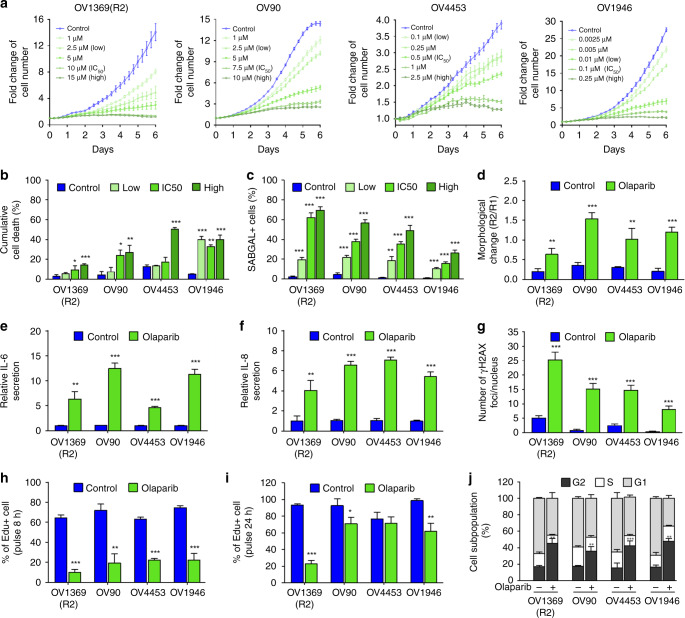
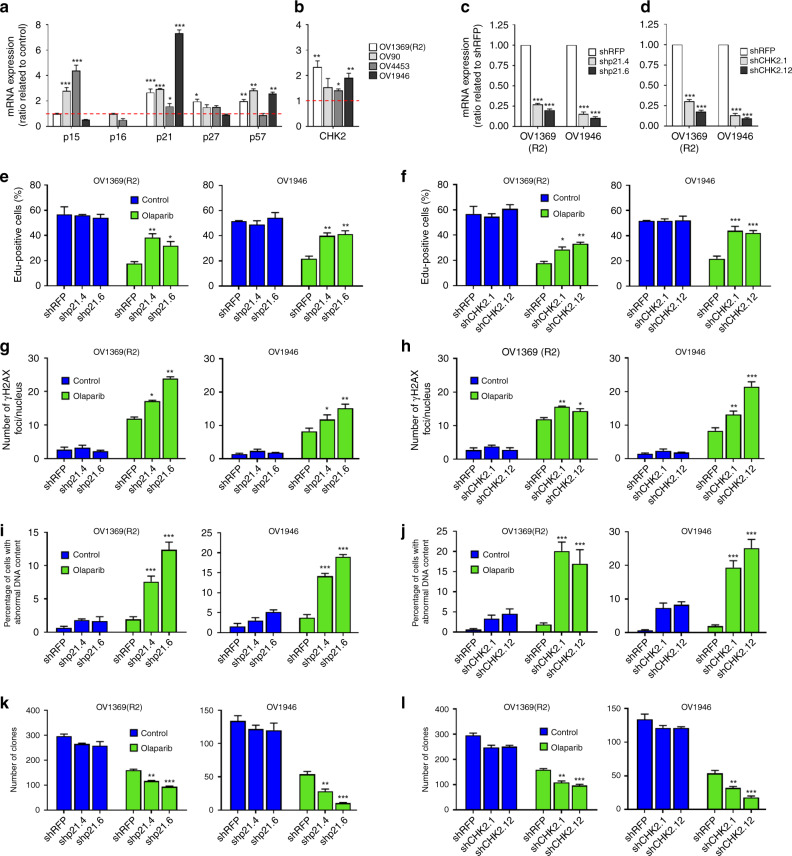
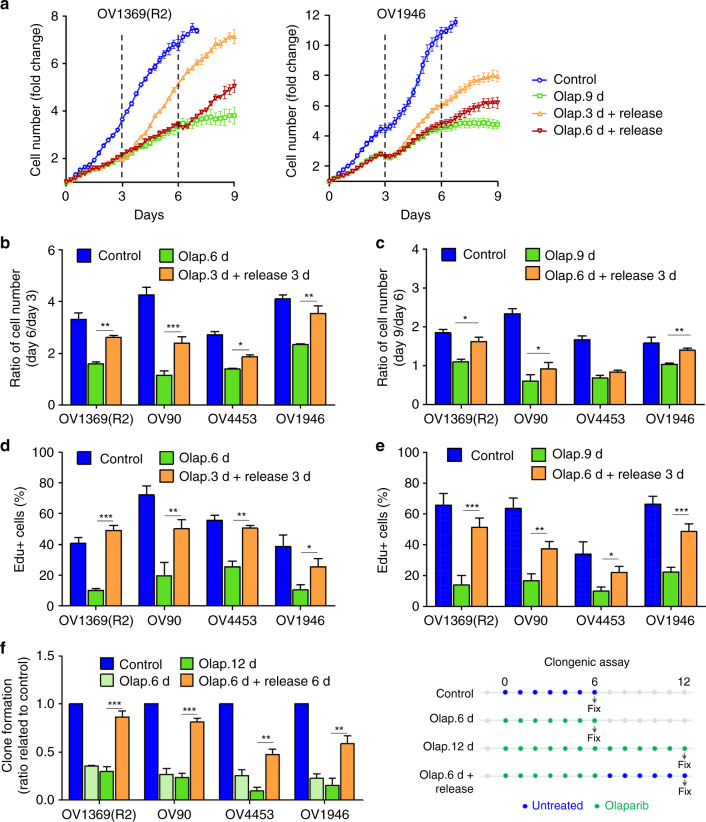
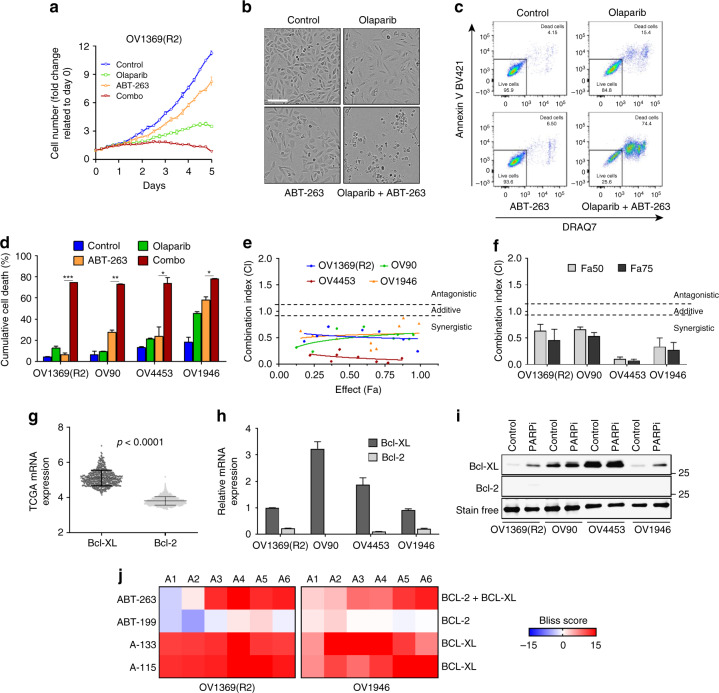
Senescence is a tumor suppression mechanism defined by stable proliferation arrest. Here we demonstrate that the known synthetic lethal interaction between poly(ADP-ribose) polymerase 1 inhibitors (PARPi) and DNA repair triggers p53-independent ovarian cancer cell senescence defined by senescence-associated phenotypic hallmarks including DNA-SCARS, inflammatory secretome, Bcl-XL-mediated apoptosis resistance, and proliferation restriction via Chk2 and p21 (CDKN1A). The concept of senescence as irreversible remains controversial and here we show that PARPi-senescent cells re-initiate proliferation upon drug withdrawal, potentially explaining the requirement for sustained PARPi therapy in the clinic. Importantly, PARPi-induced senescence renders ovarian and breast cancer cells transiently susceptible to second-phase synthetic lethal approaches targeting the senescence state using senolytic drugs. The combination of PARPi and a senolytic is effective in preclinical models of ovarian and breast cancer suggesting that coupling these synthetic lethalities provides a rational approach to their clinical use and may together be more effective in limiting resistance.
Overview
The claims and statistics of this paper haven’t been checked yet.
Free: it reads the open-access text and checks the first 5 claims that cite a source we can check. Create a free account to check every claim.
Integrity signals
Registry
Cites
Statistics
Figures
Verification
Claims the paper makes
The claims and statistics of this paper haven’t been checked yet.
Free: it reads the open-access text and checks the first 5 claims that cite a source we can check. Create a free account to check every claim.
Claims other papers make about this one
Each is checked against this paper’s own text: does it say what the citing paper says it does?
The cited source says what the claim attributes to it.
In the citing paper
“The PARP inhibitor olaparib induced a senescence- like proliferation arrest in ovarian cancer- derived cultured cells that relied on the continuous provision of the drug.”
From Senescence and cancer — role and therapeutic opportunities (2022) · cites this paper as [184]
The cited source says what the claim attributes to it.
In the citing paper
“Navitoclax was also able to efficiently kill ovarian and breast cancer cells that underwent PARP inhibitor- related senescence invitro and in mouse xenografts 184 .”
From Senescence and cancer — role and therapeutic opportunities (2022) · cites this paper as [184]
In the citing paper
“Although it remains unclear whether cancer cell senescence is irreversible, primary cancer therapeutics that trigger a senescence-like phenotype in cancer cells allow further targeting of these cells using a one-two-punch approach (senescence-senolysis) to eliminate surviving cancer cells148,149.”
From Guidelines for minimal information on cellular senescence experimentation in vivo (2024) · cites this paper as [148]
In the citing paper
“Among potential biomarkers, the relevance of pro-survival proteins is that they enable cancer cells to avoid cell death upon acute stress (e.g., during chemotherapy or radiotherapy) and are targetable for cancer senolysis148,149.”
From Guidelines for minimal information on cellular senescence experimentation in vivo (2024) · cites this paper as [148]
In the citing paper
“Senescence is also an important mechanism of efficacy in the treatment of breast cancer with PARP inhibitors [59] and many typical chemotherapy agents used to treat breast cancer, such as epirubicin and cyclophosphamide [60].”
From Senescence and Cancer: A Review of Clinical Implications of Senescence and Senotherapies (2020) · cites this paper as [59]
Self-check
Percentages, sums and reported differences re-computed from the paper’s own numbers.
The self-check needs the paper’s full text.
Citations
Cites
Cerami, E., Gao, J., Dogrusoz, U., Gross, B. E., Sumer, S. O., Aksoy, B. A., Jacobsen, A., Byrne, C. J., Heuer, M. L., Larsson, E., et al. (2012) · Cancer Discovery · doi:10.1158/2159-8290.cd-12-0095 · Cited by 17,455
Integrative Analysis of Complex Cancer Genomics and Clinical Profiles Using the cBioPortal
Gao, J., Aksoy, B. A., Dogrusoz, U., Dresdner, G., Gross, B., Sumer, S. O., Sun, Y., Jacobsen, A., Sinha, R., Larsson, E., et al. (2013) · Science Signaling · doi:10.1126/scisignal.2004088 · Cited by 15,160
Integrated genomic analyses of ovarian carcinoma
Perou, C. M. (2019) · Carolina Digital Repository (University of North Carolina at Chapel Hill) · doi:10.17615/hvp3-wg08 · Cited by 7,925
A biomarker that identifies senescent human cells in culture and in aging skin in vivo.
Dimri, G. P., Lee, X., Basile, G., Acosta, M., Scott, G., Roskelley, C., Medrano, E. E., Linskens, M., Rubelj, I., & Pereira-Smith, O. (1995) · Proceedings of the National Academy of Sciences · doi:10.1073/pnas.92.20.9363 · Cited by 7,477
Drug combination studies and their synergy quantification using the Chou-Talalay method
Chou, T.-C. (2010) · Cancer Research · doi:10.1158/0008-5472.can-09-1947 · Cited by 5,739
The senescence-associated secretory phenotype: the dark side of tumor suppression
Coppé, J.-P., Desprez, P.-Y., Krtolica, A., & Campisi, J. (2010) · Annual Review of Pathology: Mechanisms of Disease · doi:10.1146/annurev-pathol-121808-102144 · Cited by 5,206
Niraparib Maintenance Therapy in Platinum-Sensitive, Recurrent Ovarian Cancer
Mirza, M. R., Monk, B. J., Herrstedt, J., Oza, A. M., Mahner, S., Redondo, A., Fabbro, M., Ledermann, J. A., Lorusso, D., Vergote, I., et al. (2016) · New England Journal of Medicine · doi:10.1056/nejmoa1611310 · Cited by 2,451
Four faces of cellular senescence
Rodier, F., & Campisi, J. (2011) · Journal of Cell Biology · doi:10.1083/jcb.201009094 · Cited by 2,070
Self-citationOlaparib Maintenance Therapy in Platinum-Sensitive Relapsed Ovarian Cancer
Ledermann, J., Harter, P., Gourley, C., Friedlander, M., Vergote, I., Rustin, G., Scott, C., Meier, W., Shapira-Frommer, R., Safra, T., et al. (2012) · New England Journal of Medicine · doi:10.1056/nejmoa1105535 · Cited by 1,883
Clearance of senescent cells by ABT263 rejuvenates aged hematopoietic stem cells in mice
Chang, J., Wang, Y., Shao, L., Laberge, R.-M., Demaria, M., Campisi, J., Janakiraman, K., Sharpless, N. E., Ding, S., Feng, W., et al. (2016) · Nature Medicine · doi:10.1038/nm.4010 · Cited by 1,819
Reversal of human cellular senescence: roles of the p53 and p16 pathways
Beauséjour, C. M., Krtolica, A., Galimi, F., Narita, M., Lowe, S. W., Yaswen, P., & Campisi, J. (2003) · The EMBO Journal · doi:10.1093/emboj/cdg417 · Cited by 1,457
Senescence is a developmental mechanism that contributes to embryonic growth and patterning
Storer, M., Mas, A., Robert-Moreno, A., Pecoraro, M., Ortells, M. C., Di Giacomo, V., Yosef, R., Pilpel, N., Krizhanovsky, V., Sharpe, J., et al. (2013) · Cell · doi:10.1016/j.cell.2013.10.041 · Cited by 1,186
Zhu, Y., Tchkonia, T., Fuhrmann‐Stroissnigg, H., Dai, H. M., Ling, Y. Y., Stout, M. B., Pirtskhalava, T., Giorgadze, N., Johnson, K. O., Giles, C. B., et al. (2016) · Aging Cell · doi:10.1111/acel.12445 · Cited by 1,148
Senescence-associated reprogramming promotes cancer stemness
Milanovic, M., Fan, D. N. Y., Belenki, D., Däbritz, J. H. M., Zhao, Z., Yu, Y., Dörr, J. R., Dimitrova, L., Lenze, D., Monteiro Barbosa, I. A., et al. (2018) · Nature · doi:10.1038/nature25167 · Cited by 1,131
Directed elimination of senescent cells by inhibition of BCL-W and BCL-XL
Yosef, R., Pilpel, N., Tokarsky-Amiel, R., Biran, A., Ovadya, Y., Cohen, S., Vadai, E., Dassa, L., Shahar, E., Condiotti, R., et al. (2016) · Nature Communications · doi:10.1038/ncomms11190 · Cited by 1,032
Seoane, J., Le, H.-V., Shen, L., Anderson, S. A., & Massagué, J. (2004) · Cell · doi:10.1016/s0092-8674(04)00298-3 · Cited by 1,028
Cellular senescence: a translational perspective
Kirkland, J. L., & Tchkonia, T. (2017) · EBioMedicine · doi:10.1016/j.ebiom.2017.04.013 · Cited by 1,013 · cited 3×
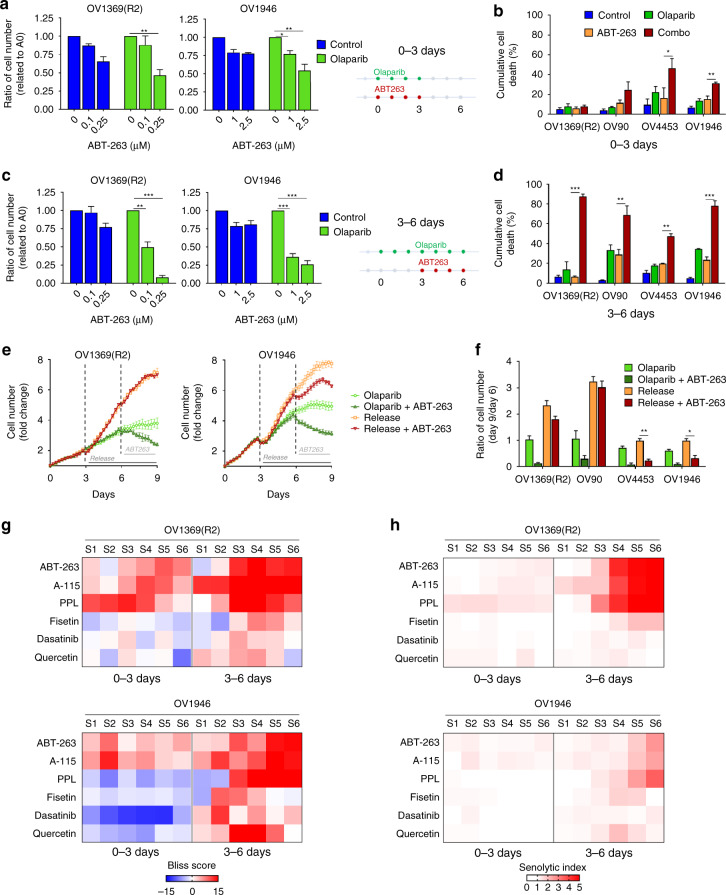
“To further con fi rm that senolytics in general synergize with the senescent-like state induced by Olaparib in HGSOC cells, we tested a senolytic panel consisting of: Dasatinib (D) (Src tyrosine kinase inhibitor), Quercetin (Q) (bio fl avonoid with a broad spectrum of action targeting several pathways, including PI3K/Ak…”
BackgroundInfluentialCensus and evaluation of p53 target genes
Fischer, M. (2017) · Oncogene · doi:10.1038/onc.2016.502 · Cited by 971
A Versatile Viral System for Expression and Depletion of Proteins in Mammalian Cells
Campeau, E., Ruhl, V. E., Rodier, F., Smith, C. L., Rahmberg, B. L., Fuss, J. O., Campisi, J., Yaswen, P., Cooper, P. K., & Kaufman, P. D. (2009) · PLoS ONE · doi:10.1371/journal.pone.0006529 · Cited by 964
Self-citationFrom basic apoptosis discoveries to advanced selective BCL-2 family inhibitors
Ashkenazi, A., Fairbrother, W. J., Leverson, J. D., & Souers, A. J. (2017) · Nature Reviews Drug Discovery · doi:10.1038/nrd.2016.253 · Cited by 903
Zhu, Y., Doornebal, E. J., Pirtskhalava, T., Giorgadze, N., Wentworth, M., Fuhrmann-Stroissnigg, H., Niedernhofer, L. J., Robbins, P. D., Tchkonia, T., & Kirkland, J. L. (2017) · Aging · doi:10.18632/aging.101202 · Cited by 757
Laying a trap to kill cancer cells: PARP inhibitors and their mechanisms of action
Pommier, Y., O’Connor, M. J., & de Bono, J. (2016) · Science Translational Medicine · doi:10.1126/scitranslmed.aaf9246 · Cited by 739
The senescence-associated secretory phenotype induces cellular plasticity and tissue regeneration.
Ritschka, B., Storer, M., Mas, A., Heinzmann, F., Ortells, M. C., Morton, J. P., Sansom, O. J., Zender, L., & Keyes, W. M. (2017) · Genes & Development · doi:10.1101/gad.290635.116 · Cited by 650
Norquist, B., Wurz, K. A., Pennil, C. C., Garcia, R., Gross, J., Sakai, W., Karlan, B. Y., Taniguchi, T., & Swisher, E. M. (2011) · Journal of Clinical Oncology · doi:10.1200/jco.2010.34.2980 · Cited by 577
Rodier, F., Muñoz, D. P., Teachenor, R., Chu, V., Le, O., Bhaumik, D., Coppé, J.-P., Campeau, E., Beauséjour, C. M., Kim, S.-H., et al. (2011) · Journal of Cell Science · doi:10.1242/jcs.071340 · Cited by 535
Self-citationKim, G., Ison, G., McKee, A. E., Zhang, H., Tang, S., Gwise, T., Sridhara, R., Lee, E., Tzou, A., Philip, R., et al. (2015) · Clinical Cancer Research · doi:10.1158/1078-0432.ccr-15-0887 · Cited by 528
CHK2 kinase in the DNA damage response and beyond
Zannini, L., Delia, D., & Buscemi, G. (2014) · Journal of Molecular Cell Biology · doi:10.1093/jmcb/mju045 · Cited by 455
de Bono, J., Ramanathan, R. K., Mina, L., Chugh, R., Glaspy, J., Rafii, S., Kaye, S., Sachdev, J., Heymach, J., Smith, D. C., et al. (2017) · Cancer Discovery · doi:10.1158/2159-8290.cd-16-1250 · Cited by 387
The fate of chemoresistance in triple negative breast cancer (TNBC)
O’Reilly, E. A., Gubbins, L., Sharma, S., Tully, R., Guang, M. H. Z., Weiner-Gorzel, K., McCaffrey, J., Harrison, M., Furlong, F., Kell, M., et al. (2015) · BBA Clinical · doi:10.1016/j.bbacli.2015.03.003 · Cited by 377
A community computational challenge to predict the activity of pairs of compounds
Community, N.-D., Bansal, M., Yang, J., Karan, C., Menden, M. P., Costello, J. C., Tang, H., Xiao, G., Li, Y., Allen, J., et al. (2014) · Nature Biotechnology · doi:10.1038/nbt.3052 · Cited by 321
Coppé, J.-P., Patil, C. K., Rodier, F., Sun, Y., Muñoz, D. P., Goldstein, J., Nelson, P. S., Desprez, P.-Y., & Campisi, J. (2008) · PLoS Biology · doi:10.1371/journal.pbio.0060301 · Cited by 302
Self-citationQuigley, D., Alumkal, J. J., Wyatt, A. W., Kothari, V., Foye, A., Lloyd, P., Aggarwal, R., Kim, W., Lu, E., Schwartzman, J., et al. (2017) · Cancer Discovery · doi:10.1158/2159-8290.cd-17-0146 · Cited by 273
Malaquin, N., Martinez, A., & Rodier, F. (2016) · Experimental Gerontology · doi:10.1016/j.exger.2016.05.010 · Cited by 247
Self-citationWang, Y.-Q., Wang, P.-Y., Wang, Y.-T., Yang, G.-F., Zhang, A., & Miao, Z.-H. (2016) · Journal of Medicinal Chemistry · doi:10.1021/acs.jmedchem.6b00055 · Cited by 235
Wang, L., Leite de Oliveira, R., Wang, C., Fernandes Neto, J. M., Mainardi, S., Evers, B., Lieftink, C., Morris, B., Jochems, F., Willemsen, L., et al. (2017) · Cell Reports · doi:10.1016/j.celrep.2017.09.085 · Cited by 224
p53-independent regulation of p21Waf1/Cip1 expression and senescence by Chk2.
Aliouat-Denis, C.-M., Dendouga, N., Van den Wyngaert, I., Goehlmann, H., Steller, U., van de Weyer, I., Van Slycken, N., Andries, L., Kass, S., Luyten, W., et al. (2005) · Molecular Cancer Research · doi:10.1158/1541-7786.mcr-05-0121 · Cited by 177
CHARACTERIZATION OF FOUR NOVEL EPITHELIAL OVARIAN CANCER CELL LINES
PROVENCHER, D. M., LOUNIS, H., CHAMPOUX, L., TÉTRAULT, M., MANDERSON, E. N., WANG, J. C., EYDOUX, P., SAVOIE, R., TONIN, P. N., & MES-MASSON, A.-M. (2000) · In Vitro Cellular & Developmental Biology - Animal · doi:10.1290/1071-2690(2000)036<0357:cofneo>2.0.co;2 · Cited by 176
Self-citationIntegrated genomic analyses of ovarian carcinoma
The Cancer Genome Atlas Research Network (2011) · Nature · doi:10.1038/nature10166 · Cited by 129
Ryu, S. J., Oh, Y. S., & Park, S. C. (2007) · Cell Death & Differentiation · doi:10.1038/sj.cdd.4402091 · Cited by 114
DDR-mediated crosstalk between DNA-damaged cells and their microenvironment
Malaquin, N., Carrier-Leclerc, A., Dessureault, M., & Rodier, F. (2015) · Frontiers in Genetics · doi:10.3389/fgene.2015.00094 · Cited by 113
Self-citationNew Insights into PARP Inhibitors' Effect on Cell Cycle and Homology-Directed DNA Damage Repair
Jelinic, P., & Levine, D. A. (2014) · Molecular Cancer Therapeutics · doi:10.1158/1535-7163.mct-13-0906-t · Cited by 94
Alotaibi, M., Sharma, K., Saleh, T., Povirk, L. F., Hendrickson, E. A., & Gewirtz, D. A. (2016) · Radiation Research · doi:10.1667/rr14202.1 · Cited by 90
Premature aging/senescence in cancer cells facing therapy: good or bad?
Calvo, L., Ghadaouia, S., Martinez, A., & Rodier, F. (2015) · Biogerontology · doi:10.1007/s10522-015-9593-9 · Cited by 82
Self-citationChitikova, Z. V., Gordeev, S. A., Bykova, T. V., Zubova, S. G., Pospelov, V. A., & Pospelova, T. V. (2014) · Cell Cycle · doi:10.4161/cc.28402 · Cited by 77
Létourneau, I. J., Quinn, M. C., Wang, L.-L., Portelance, L., Caceres, K. Y., Cyr, L., Delvoye, N., Meunier, L., de Ladurantaye, M., Shen, Z., et al. (2012) · BMC Cancer · doi:10.1186/1471-2407-12-379 · Cited by 72
Self-citationNew Therapeutic Strategies for Triple-Negative Breast Cancer.
Székely, B., Silber, A. L. M., & Pusztai, L. (2017) · PubMed · Cited by 71
Poly(ADP-ribose) polymerase activity and inhibition in cancer
Dulaney, C. R., Marcrom, S., Stanley, J. A., & Yang, E. S.-H. (2017) · Seminars in Cell and Developmental Biology · doi:10.1016/j.semcdb.2017.01.007 · Cited by 70
Characterization of human breast cancer cell lines for the studies on p53 in chemical carcinogenesis
Huovinen, M., Loikkanen, J. J., Myllynen, P. K., & Vähäkangas, K. (2011) · Toxicology in Vitro · doi:10.1016/j.tiv.2011.03.018 · Cited by 67
Regulation of senescence escape by the cdk4–EZH2–AP2M1 pathway in response to chemotherapy
Le Duff, M., Gouju, J., Jonchère, B., Guillon, J., Toutain, B., Boissard, A., Henry, C., Guette, C., Lelièvre, E., & Coqueret, O. (2018) · Cell Death & Disease · doi:10.1038/s41419-017-0209-y · Cited by 64
Tumor suppressive effect of PARP1 and FOXO3A in gastric cancers and its clinical implications
Park, S., Jang, K. Y., Kim, M. J., Yoon, S., Jo, Y., Kwon, S. M., Kim, K. M., Kwon, K. S., Kim, C. Y., & Woo, H. G. (2015) · Oncotarget · doi:10.18632/oncotarget.6264 · Cited by 56
Characterization of three new serous epithelial ovarian cancer cell lines
Ouellet, V., Zietarska, M., Portelance, L., Lafontaine, J., Madore, J., Puiffe, M.-L., Arcand, S. L., Shen, Z., Hébert, J., Tonin, P. N., et al. (2008) · BMC Cancer · doi:10.1186/1471-2407-8-152 · Cited by 56
Self-citationSlominski, A. T., Roloff, B., Zbytek, B., Wei, E. T., Fechner, K., Curry, J. L., & Wortsman, J. (2000) · In Vitro Cellular & Developmental Biology - Animal · doi:10.1290/1071-2690(2000)036<0201:ahsemt>2.0.co;2 · Cited by 56
PARP Inhibitors in Reproductive System Cancers: Current Use and Developments
Coyne, G. O., Chen, A. P., Meehan, R. S., & Doroshow, J. H. (2017) · Drugs · doi:10.1007/s40265-016-0688-7 · Cited by 53
Helleday, T. (2016) · Annals of Oncology · doi:10.1093/annonc/mdw048 · Cited by 50
Fleury, H., Carmona, E., Morin, V. G., Meunier, L., Masson, J., Tonin, P. N., Provencher, D. M., & Mes‐Masson, A. (2016) · Oncotarget · doi:10.18632/oncotarget.10308 · Cited by 48
Self-citationOncogenic senescence: a multi-functional perspective
Baker, D. J., Alimirah, F., van Deursen, J. M., Campisi, J., & Hildesheim, J. (2017) · Oncotarget · doi:10.18632/oncotarget.15742 · Cited by 45
Deciphering the Insights of Poly(ADP-Ribosylation) in Tumor Progression
Rodríguez, M. I., Majuelos‐Melguizo, J., Martí, J. M., de Almodóvar, J. M. R., López‐Rivas, A., & Oliver, F. J. (2015) · Medicinal Research Reviews · doi:10.1002/med.21339 · Cited by 40
Fleury, H., Communal, L., Carmona, E., Portelance, L., Arcand, S. L., Rahimi, K., Tonin, P. N., Provencher, D., & Mes-Masson, A.-M. (2015) · Genes & Cancer · doi:10.18632/genesandcancer.76 · Cited by 36
Self-citationYokoyama, T., Kohn, E. C., Brill, E., & Lee, J. (2017) · International Journal of Oncology · doi:10.3892/ijo.2017.3914 · Cited by 34
Cited by
Exploiting senescence for the treatment of cancer
Wang, L., Lankhorst, L., & Bernards, R. (2022) · Nature Reviews Cancer · doi:10.1038/s41568-022-00450-9 · Cited by 867
Senescence and cancer — role and therapeutic opportunities
Schmitt, C. A., Wang, B., & Demaria, M. (2022) · Nature Reviews Clinical Oncology · doi:10.1038/s41571-022-00668-4 · Cited by 794
The metabolic roots of senescence: mechanisms and opportunities for intervention
Wiley, C. D., & Campisi, J. (2021) · Nature Metabolism · doi:10.1038/s42255-021-00483-8 · Cited by 691
Senescent Cells in Cancer Therapy: Friends or Foes?
Wang, B., Kohli, J., & Demaria, M. (2020) · Trends in Cancer · doi:10.1016/j.trecan.2020.05.004 · Cited by 508
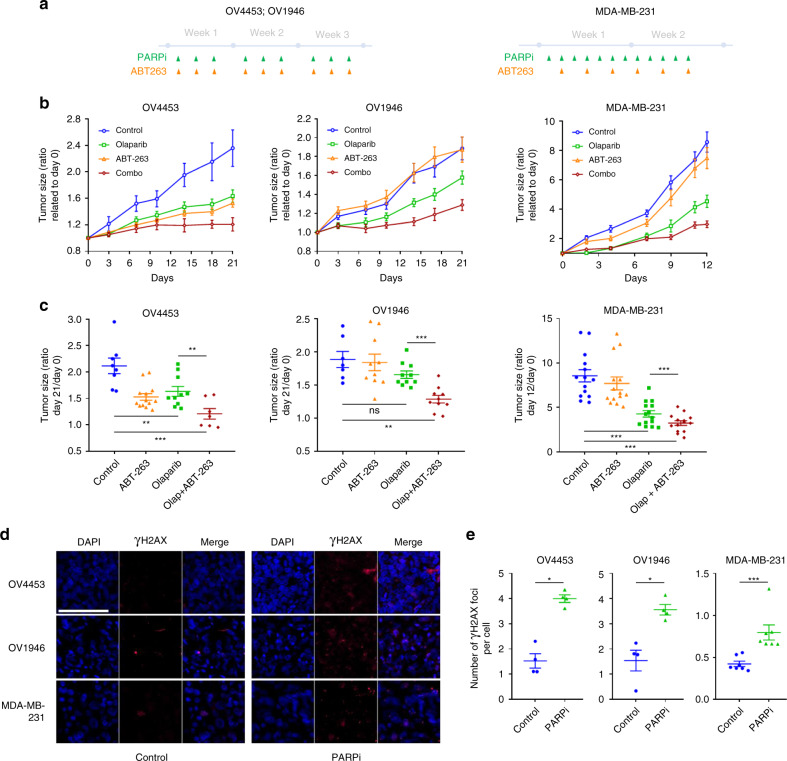
“(OV4453 and OV1946) and breast (MDA-MB-231) cancer cells, in culture and in xenografts, pretreated with the PARP inhibitor olaparib [116].”
BackgroundUnderstanding and overcoming resistance to PARP inhibitors in cancer therapy
Dias, M. P., Moser, S. C., Ganesan, S., & Jonkers, J. (2021) · Nature Reviews Clinical Oncology · doi:10.1038/s41571-021-00532-x · Cited by 505
Metadata
- Authors
- Fleury, H., Malaquin, N., Tu, V., Gilbert, S., Martinez, A., Olivier, M.-A., Sauriol, S. A., Communal, L., Leclerc-Desaulniers, K., Carmona, E., Provencher, D., Mes-Masson, A.-M., & Rodier, F.
- Affiliations
- Centre Hospitalier de l’Université de Montréal (CA)
- ORCID
- Venue
- Nature Communications
- Published
- 2019-06-11
- Volume
- 10
- Issue
- 1
- Pages
- 2556-2556
- ISSN
- 2041-1723 (ISSN-L)
- PMC
- PMC6560032
- OpenAlex
- W2951114010
- Cited by
- 228
- References
- 57
- Citations by year
- 2026: 28 · 2025: 29 · 2024: 35 · 2023: 34 · 2022: 27 · 2021: 44 · 2020: 26 · 2019: 5
- FWCI
- 10.64
- Type
- journal article
- Language
- en
- Update notices
- correction (2024-05-13)
- Open access
- gold
- doi.org
- Licence
- cc-by
- creativecommons.org/licenses/by/4.0 (tdm)
- creativecommons.org/licenses/by/4.0 (vor)
- Locations
- Nature Communications (publishedVersion, cc-by)
- Europe PMC (PubMed Central) (publishedVersion, cc-by)
- PubMed Central (publishedVersion, cc-by)
- PubMed (publishedVersion)
- RePEc: Research Papers in Economics (submittedVersion)
- DOAJ (DOAJ: Directory of Open Access Journals) (submittedVersion)
- DOAJ (DOAJ: Directory of Open Access Journals) (submittedVersion, cc-by-sa)
- Funders
- Cancer Research Society (22713, 20087)
- Terry Fox Research Institute
- Institut Du Cancer de Montréal
- Fonds de Recherche du Québec - Santé (33070, 22624)
- Institute of Cancer Research
- Topics
- Health Sciences › Medicine › Oncology › PARP inhibition in cancer therapy
- Life Sciences › Biochemistry, Genetics and Molecular Biology › Cell Biology › Telomeres, Telomerase, and Senescence
- Life Sciences › Biochemistry, Genetics and Molecular Biology › Molecular Biology › Cell death mechanisms and regulation
- Keywords
- synthetic lethality, PARP inhibitors, senescence-associated secretory phenotype, senolytics, ovarian cancer, breast cancer, p53-independent senescence, Bcl-xL, apoptosis resistance, Chk2, p21, DNA repair, drug resistance
- MeSH terms
- Poly(ADP-ribose) Polymerase Inhibitors, Synthetic Lethal Mutations, Antineoplastic Agents, Breast Neoplasms, DNA Repair, Female, Humans, Ovarian Neoplasms, Cellular Senescence, Apoptosis, Drug Resistance, Neoplasm, Cell Line, Tumor, Cell Proliferation
About these checks
Registry, retraction, Cites and statistics results are computed, not judged, with one exception: a printed reference that no index lists is read once by a model before it counts as a citation error. Claims are extracted by a model and kept only when their quote appears verbatim in the text; each cited source is then checked, with a model’s help, for whether it says what the claim relies on. Those verdicts can be wrong — read the claim’s quote and the cited source before relying on one.
Statistics and arithmetic are recomputed, not judged.
Confidence bands are shown only for fields calibrated on our annotated test set. None is calibrated yet, so no band is shown.
What counts as a claim ›How we measure confidence ›How we check this ›
Are you an author, or do you see a problem with this page? Request a review
Data sources
Bibliographic data: Semantic Scholar, OpenAlex, Crossref.
Contains information from the Semantic Scholar Academic Graph Datasets, made available under the ODC Attribution License (ODC-BY 1.0).
Semantic Scholar’s data is described in: Kinney, R., et al. (2023). The Semantic Scholar Open Data Platform. arXiv:2301.10140.
