

Establishing microbial composition measurement standards with reference frames
Open accessThe DOI matches its Crossref record; 58 of the 58 references it cites were found in a registry or an index.
Abstract
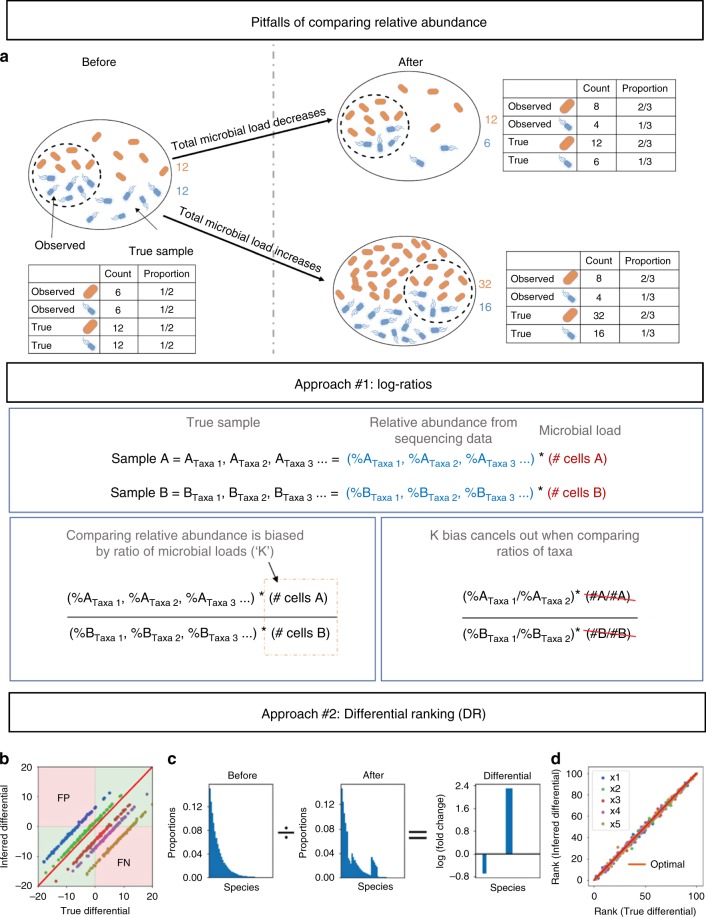
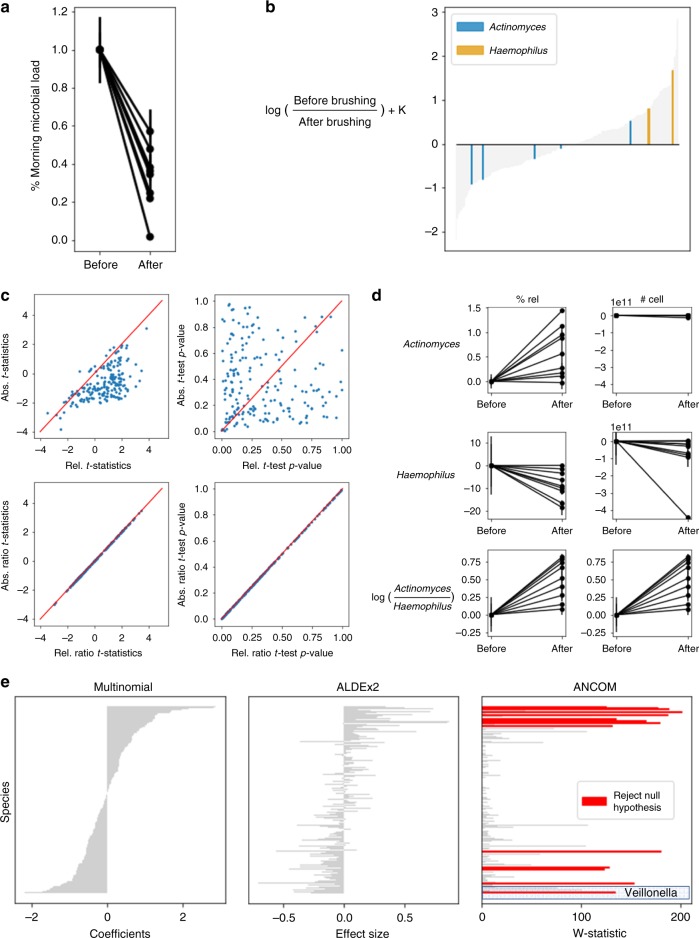
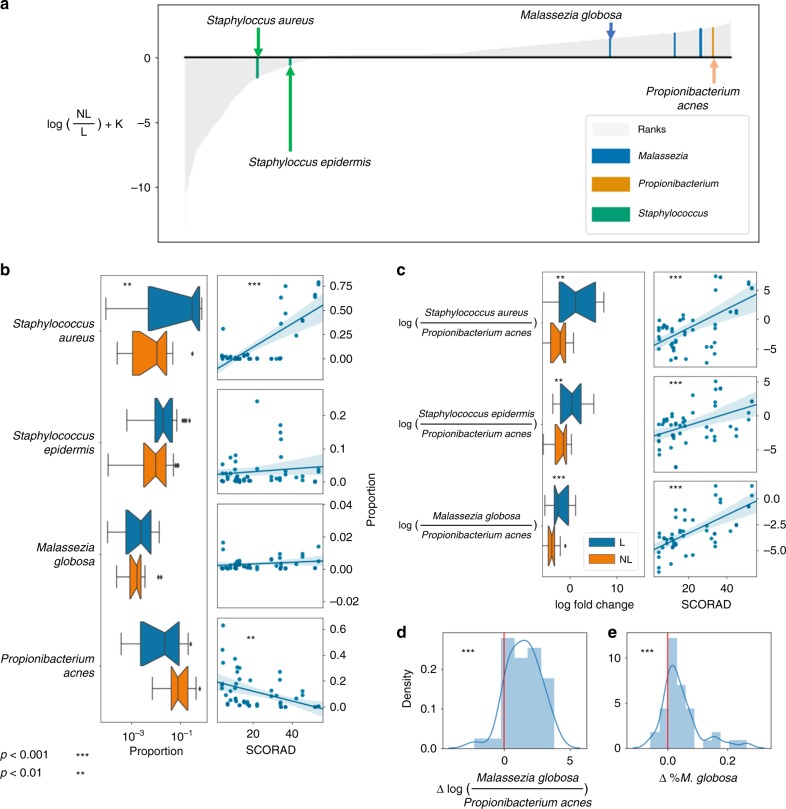
Differential abundance analysis is controversial throughout microbiome research. Gold standard approaches require laborious measurements of total microbial load, or absolute number of microorganisms, to accurately determine taxonomic shifts. Therefore, most studies rely on relative abundance data. Here, we demonstrate common pitfalls in comparing relative abundance across samples and identify two solutions that reveal microbial changes without the need to estimate total microbial load. We define the notion of “reference frames”, which provide deep intuition about the compositional nature of microbiome data. In an oral time series experiment, reference frames alleviate false positives and produce consistent results on both raw and cell-count normalized data. Furthermore, reference frames identify consistent, differentially abundant microbes previously undetected in two independent published datasets from subjects with atopic dermatitis. These methods allow reassessment of published relative abundance data to reveal reproducible microbial changes from standard sequencing output without the need for new assays.
Overview
The claims and statistics of this paper haven’t been checked yet.
Free: it reads the open-access text and checks the first 5 claims that cite a source we can check. Create a free account to check every claim.
Integrity signals
Registry
Cites
Statistics
Figures
Verification
Claims the paper makes
The claims and statistics of this paper haven’t been checked yet.
Free: it reads the open-access text and checks the first 5 claims that cite a source we can check. Create a free account to check every claim.
Claims other papers make about this one
Each is checked against this paper’s own text: does it say what the citing paper says it does?
In the citing paper
“A recent approach called differential ranking is robust to the choice of the alr reference feature, and ranks produced from relative abundances are identical to the ranks of absolute abundances66,67.”
From Longitudinal gut microbiome changes in immune checkpoint blockade-treated advanced melanoma (2024) · cites this paper as [67]
Self-check
Percentages, sums and reported differences re-computed from the paper’s own numbers.
The self-check needs the paper’s full text.
Citations
Cites
Moderated estimation of fold change and dispersion for RNA-seq data with DESeq2
Love, M. I., Huber, W., & Anders, S. (2014) · Genome Biology · doi:10.1186/s13059-014-0550-8 · Cited by 95,106
QIIME allows analysis of high-throughput community sequencing data
Caporaso, J. G., Kuczynski, J., Stombaugh, J., Bittinger, K., Bushman, F. D., Costello, E. K., Fierer, N., Peña, A. G., Goodrich, J. K., Gordon, J. I., et al. (2010) · Nature Methods · doi:10.1038/nmeth.f.303 · Cited by 34,887
Self-citationNaïve Bayesian Classifier for Rapid Assignment of rRNA Sequences into the New Bacterial Taxonomy
Wang, Q., Garrity, G. M., Tiedje, J. M., & Cole, J. R. (2007) · Applied and Environmental Microbiology · doi:10.1128/aem.00062-07 · Cited by 19,885
TensorFlow: A system for large-scale machine learning
Abadi, M., Barham, P., Chen, J., Chen, Z., Davis, A., Dean, J., Devin, M., Ghemawat, S., Irving, G., Isard, M., et al. (2016) · arXiv (Cornell University) · doi:10.48550/arxiv.1605.08695 · Cited by 11,822
Ecological Diversity and Its Measurement
Magurran, A. E. (1988) · Springer eBooks · doi:10.1007/978-94-015-7358-0 · Cited by 10,879
The Statistical Analysis of Compositional Data
Aitchison, J. (1982) · Journal of the Royal Statistical Society Series B: Statistical Methodology · doi:10.1111/j.2517-6161.1982.tb01195.x · Cited by 3,405
Microbiome Datasets Are Compositional: And This Is Not Optional
Gloor, G. B., Macklaim, J. M., Pawlowsky-Glahn, V., & Egozcue, J. J. (2017) · Frontiers in Microbiology · doi:10.3389/fmicb.2017.02224 · Cited by 3,044
Inferring Correlation Networks from Genomic Survey Data
Friedman, J., & Alm, E. J. (2012) · PLoS Computational Biology · doi:10.1371/journal.pcbi.1002687 · Cited by 2,706
Differential abundance analysis for microbial marker-gene surveys
Paulson, J. N., Stine, O. C., Bravo, H. C., & Pop, M. (2013) · Nature Methods · doi:10.1038/nmeth.2658 · Cited by 2,428
Analysis of composition of microbiomes: a novel method for studying microbial composition
Mandal, S., Van Treuren, W., White, R. A., Eggesbø, M., Knight, R., & Peddada, S. D. (2015) · Microbial Ecology in Health & Disease · doi:10.3402/mehd.v26.27663 · Cited by 1,942
Self-citation
Research works printed but not linked: 2
- Lovell D Taylor J Zwart A Helliwell C Caution! compositions! can constraints on omics data lead analyses astray CSIRO 2010 1 44
- Gonzalez A Qiita: rapid, web-enabled microbiome meta-analysis Nat. Methods 2018 15 796 798 10.1038/s41592-018-0141-9 30275573 PMC6235622 · DOI · Paper page
Cited by
Items 201–300 of 668
Martino, C., McDonald, D. T., Cantrell, K., Dilmore, A. H., Vázquez‐Baeza, Y., Shenhav, L., Shaffer, J. P., Rahman, G., Armstrong, G., Allaband, C., et al. (2022) · mSystems · doi:10.1128/msystems.00050-22 · Cited by 31
Self-citationFischer, F., Merino, N., Sugnaux, M., Huguenin, G., & Nealson, K. H. (2022) · Chemical Engineering Journal · doi:10.1016/j.cej.2022.137334 · Cited by 31
Stiernborg, M., Debelius, J. W., Yang, L. L., Skott, E., Millischer, V., Giacobini, M., Melas, P. A., Boulund, F., & Lavebratt, C. (2023) · Brain Behavior and Immunity · doi:10.1016/j.bbi.2023.03.012 · Cited by 32
“…analysis of differential abundance has been challenging, with several studies using statistical methods that are not controlling for the false discovery rate (FDR) in microbiome data, or not considering the differences in microbial load between samples (Lin & Peddada, 2020; Morton et al., 2019).”
MethodBuilding microbial kinetic models for environmental application: A theoretical perspective
Jin, Q. (2023) · Applied Geochemistry · doi:10.1016/j.apgeochem.2023.105782 · Cited by 30
Gressel, G. M., Usyk, M., Frimer, M., Kuo, D. Y.-S., & Burk, R. D. (2021) · PLoS ONE · doi:10.1371/journal.pone.0259188 · Cited by 30
“For more details on this issue and how ANCOM addresses it see the cited reference [30].”
BackgroundNeotropical bee microbiomes point to a fragmented social core and strong species-level effects
Kueneman, J. G., Bonadies, E., Thomas, D., Roubik, D. W., & Wcislo, W. T. (2023) · Microbiome · doi:10.1186/s40168-023-01593-z · Cited by 30
Occlusive membranes for guided regeneration of inflamed tissue defects
Choi, W., Mangal, U., Park, J., Kim, J., Jun, T., Jung, J. W., Choi, M., Jung, S.-W., Lee, M., Na, J.-Y., et al. (2023) · Nature Communications · doi:10.1038/s41467-023-43428-3 · Cited by 32
Wang, X., Zeng, J., Chen, F., Wang, Z., Liu, H., Zhang, Q., Liu, W., Wang, W., Guo, Y., Niu, Y., et al. (2024) · The Science of The Total Environment · doi:10.1016/j.scitotenv.2024.174812 · Cited by 30
Coinfection and infection duration shape how pathogens affect the African buffalo gut microbiota
Sabey, K. A., Song, S. J., Jolles, A. E., Knight, R. D., & Ezenwa, V. O. (2020) · The ISME Journal · doi:10.1038/s41396-020-00855-0 · Cited by 29
Self-citationSommer, A., Peters, A., Rommel, M., Cyrys, J., Grallert, H., Haller, D., Müller, C. L., & Bind, M. (2022) · PLoS Computational Biology · doi:10.1371/journal.pcbi.1010044 · Cited by 29
Effects of different soil organic amendments (OAs) on extracellular polymeric substances (EPS)
Luo, Y., Lopez, J. B. G., van Veelen, H. P. J., Kok, D.-J. D., Postma, R., Thijssen, D., Sechi, V., ter Heijne, A., Bezemer, Т. M., & Buisman, C. J. N. (2024) · European Journal of Soil Biology · doi:10.1016/j.ejsobi.2024.103624 · Cited by 28
Kohn, J. N., Kościółek, T., Marotz, C. A., Aleti, G., Guay-Ross, R. N., Hong, S.-H., Hansen, S., Swafford, A. D.-E., Knight, R. D., & Hong, S. (2020) · Brain Behavior and Immunity · doi:10.1016/j.bbi.2020.02.004 · Cited by 28
Self-citationKueneman, J. G., Gillung, J. P., van Dyke, M., Fordyce, R. F., & Danforth, B. N. (2023) · Frontiers in Microbiology · doi:10.3389/fmicb.2022.1057626 · Cited by 28
Tomassi, A. D., Reiter, A., Reiger, M., Rauer, L., Rohayem, R., CK-CARE Study Group, Traidl‐Hoffmann, C., Neumann, A. U., & Hülpüsch, C. (2023) · Biomolecules · doi:10.3390/biom13071030 · Cited by 28
“The total bacterial load in AD patients was increased 10-fold compared to healthy individuals in our data as well as in previous studies [35,36].”
ResultCausal effects in microbiomes using interventional calculus
Sazal, M. R., Stebliankin, V., Mathee, K., Yoo, C., & Narasimhan, G. (2021) · Scientific Reports · doi:10.1038/s41598-021-84905-3 · Cited by 28
A multiview model for relative and absolute microbial abundances
Williamson, B. D., Hughes, J. P., & Willis, A. D. (2021) · Biometrics · doi:10.1111/biom.13503 · Cited by 28
Nixon, M. P., Gloor, G. B., & Silverman, J. D. (2025) · Genome biology · doi:10.1186/s13059-025-03609-3 · Cited by 27
“Additionally, McGov-ern et al. [7] extended the widely used Songbird model [28] to incorporate scale uncertainty.”
Self-citationTang, G., Carr, A. V., Perez, C., Sarmiento, K. R., Levy, L., Lampe, J. W., Diener, C., & Gibbons, S. M. (2025) · mSystems · doi:10.1128/msystems.00984-25 · Cited by 27
“Specifically, methods have emerged that use log-ratios of different microbiome features to break the underlying compositionality of the data and circumvent the need to estimate total microbial biomass (10, 23).”
Labarta-Bajo, L., Gramalla-Schmitz, A., Gerner, R. R., Kazane, K. R., Humphrey, G., Schwartz, T., Sanders, K., Swafford, A. D.-E., Knight, R. D., Raffatellu, M., et al. (2020) · Proceedings of the National Academy of Sciences · doi:10.1073/pnas.2003656117 · Cited by 27
Self-citationLührmann, A., Ovadenko, K., Hellmich, J., Sudendey, C., Belik, V., Zentek, J., & Vahjen, W. (2021) · PLoS ONE · doi:10.1371/journal.pone.0256112 · Cited by 27
“The recently presented method of differential abundance analysis circumvents associated problems of simple before/after comparison of relative abundance by introducing a reference frame that is used to express quantitative fold changes in microbiota composition [16].”
MethodArbas, S. M., Busi, S. B., Queirós, P., de Nies, L., Herold, M., May, P., Wilmes, P., Muller, E. E. L., & Narayanasamy, S. (2021) · Frontiers in Genetics · doi:10.3389/fgene.2021.666244 · Cited by 28
Lee, J.-G., Lee, S., Jeon, J., Kong, H. G., Cho, H.-J., Kim, J.-H., Kim, S.-Y., Oh, M. J., Lee, D., Seo, N., et al. (2022) · Microbiome · doi:10.1186/s40168-021-01191-x · Cited by 26
“The centered log-ratio transformation (CLR) was used to handle compositional data as previously reported [98].”
Novel municipal sewage-associated bacterial genomes and their potential in source tracking
Lindner, B. G., Suttner, B., Zhu, K., Conrad, R. E., Rodriguez‐R, L. M., Hatt, J. K., Brown, J. M., & Konstantinidis, K. T. (2021) · Water Research · doi:10.1016/j.watres.2021.117993 · Cited by 26
van de Velde, C., Joseph, C., Biclot, A., Huys, G. R. B., Pinheiro, V. B., Bernaerts, K., Raes, J., & Faust, K. (2022) · ISME Communications · doi:10.1038/s43705-022-00123-6 · Cited by 26
“Additional measurements are needed to convert relative abundances to count data (e.g., quantitative PCR, quantitative sequencing spike-ins and fl ow cytometry [16 – 19]).”
MethodMohr, A. E., Jasbi, P., Wyst, K. B. V., van Woerden, I., Shi, X., Gu, H., Whisner, C. M., & Bruening, M. M. (2022) · Scientific Reports · doi:10.1038/s41598-022-18515-y · Cited by 26
The Local Tumor Microbiome Is Associated with Survival in Late-Stage Colorectal Cancer Patients
Debelius, J. W., Engstrand, L. G., Matussek, A., Brusselaers, N., Morton, J. T., Stenmarker, M., & Olsen, R. S. (2023) · Microbiology Spectrum · doi:10.1128/spectrum.05066-22 · Cited by 26
“decreasing the possibility of false positives, especially among the identified taxa (36,54).”
BackgroundMethodSelf-citationBiswas, L., Ibrahim, K. S., Li, X., Zhou, X., Zeng, Z., Craft, J. A., & Shu, X. (2021) · Experimental Eye Research · doi:10.1016/j.exer.2021.108625 · Cited by 26
Liu, Q., Chen, Z., & Yang, Y. (2021) · Cement and Concrete Composites · doi:10.1016/j.cemconcomp.2021.104253 · Cited by 26
Du, B., Shama, A., Zhang, Y., Chen, B., Bu, Y., Chen, P.-A., Lin, C., Liu, J., Zheng, J., Li, Z., et al. (2025) · World Allergy Organization Journal · doi:10.1016/j.waojou.2024.101017 · Cited by 26
Song, F., Kuehl, J. V., Chandran, A., & Arkin, A. P. (2021) · mSystems · doi:10.1128/msystems.00224-21 · Cited by 25
“The recent advances in sequencing-based quantification have extended its ability to obtain relative bacterial abundance to make quantifying the absolute bacterial abundance possible; by adding reference genes (26, 27), measuring total gene load (28), or using new algorithms (29), it provides a unique way to quantify t…”
BackgroundMicrobiome Dynamics During Chemoradiation Therapy for Anal Cancer
Lin, D., Alam, M. B. E., Jaoude, J. A., Kouzy, R., Phan, J. L., Elnaggar, J. H., Resendiz, B., Medrano, A. Y. D., Lynn, E. J., Nguyen, N. D., et al. (2022) · International Journal of Radiation Oncology*Biology*Physics · doi:10.1016/j.ijrobp.2022.04.037 · Cited by 26
Heidrich, V., & Beule, L. (2022) · iMeta · doi:10.1002/imt2.38 · Cited by 25
“This is because the microbial load bias vanishes in ratios [37].”
BackgroundEstaki, M., Langsetmo, L., Shardell, M. D., Mischel, A. K., Jiang, L., Zhong, Y., Kaufmann, C. N., Knight, R. D., Stone, K. L., & Kado, D. M. (2023) · The Journals of Gerontology Series A · doi:10.1093/gerona/glad011 · Cited by 25
Self-citationRahman, G., McDonald, D. T., González, A., Vázquez‐Baeza, Y., Jiang, L., Casals‐Pascual, C., Hakim, D., Dilmore, A. H., Nowinski, B., Peddada, S., et al. (2023) · Genes · doi:10.3390/genes14061239 · Cited by 25
Self-citationRomanowicz, K. J., Crump, B. C., & Kling, G. W. (2023) · ISME Communications · doi:10.1038/s43705-023-00326-5 · Cited by 26
“Differences in ASV abundance by soil layers between all incubation time points were visualized through unconstrained principal coordinate analysis (PCoA) ordination using the “ ggplot2 ” package (v. 3.”
MethodGut-Brain Axis Deregulation and Its Possible Contribution to Neurodegenerative Disorders
Villavicencio-Tejo, F., Olesen, M. A., Navarro, L., Calisto, N., Iribarren, C., GARCÍA, K. P., Corsini, G., & Quintanilla, R. A. (2023) · Neurotoxicity Research · doi:10.1007/s12640-023-00681-0 · Cited by 25
“These findings were consistent with previous studies showing elevated levels of Lachnospiraceae in schizophrenia patients (Langille et al. 2013; Morton et al. 2019).”
Zhang, M., Tang, H., Chen, Y., Chen, Z., Xu, Y., Fu, X., Sun, Y., & Zhao, Z. (2023) · Environmental Research · doi:10.1016/j.envres.2023.116114 · Cited by 25
Gut Microbiome Changes in Anorexia Nervosa: A Comprehensive Review
Zhao, W., Kodancha, P. G., & Das, S. (2024) · Pathophysiology · doi:10.3390/pathophysiology31010006 · Cited by 25
“There is an inherent limitation in the interpretation of bacterial relative abundance for clinical analysis, as compositional data are not independent of each other and different biological scenarios can yield the same proportions of taxa over changes in time [45].”
BackgroundApplications of weighted association networks applied to compositional data in biology
Espinoza, J. L., Shah, N., Singh, S., Nelson, K. E., & Dupont, C. L. (2020) · Environmental Microbiology · doi:10.1111/1462-2920.15091 · Cited by 24
“Since then, Aitchison geometry has recently been adopted by microbial-based data-science and is an effective alternative to address these caveats (Silverman et al. , 2017; Washburne et al. , 2017; Rivera-Pinto et al. , 2018; Morton et al. , 2019).”
BackgroundAssociations between Afrotropical bats, eukaryotic parasites, and microbial symbionts
Lutz, H. L., Gilbert, J. A., & Dick, C. W. (2021) · Molecular Ecology · doi:10.1111/mec.16044 · Cited by 24
“Songbird multinomial regressions were run on nonrarefied data for 100,000 epochs with a batch size of three, minimum feature count of five, a learning rate of 1e-5, and a differential prior of 0.50, with both ectoparasite status and sampling location included in our models to account for site-specific effects on the s…”
InfluentialCullen, J. T., Lawlor, P. G., Cormican, P., Crispie, F., & Gardiner, G. E. (2022) · Animal - Open Space · doi:10.1016/j.anopes.2022.100012 · Cited by 23
Lingasamy, P., Modhukur, V., Mändar, R., & Salumets, A. (2023) · Seminars in Reproductive Medicine · doi:10.1055/s-0043-1778017 · Cited by 23
Dass, M., & Ghai, M. (2024) · Forensic Science International · doi:10.1016/j.forsciint.2024.112147 · Cited by 23
Ioannou, M., Borkent, J., Andreu‐Sánchez, S., Wu, J., Fu, J., Sommer, I. E., & Haarman, B. C. M. (2024) · Brain Behavior and Immunity · doi:10.1016/j.bbi.2024.07.009 · Cited by 23
“Bacteria interact with each other, viruses, and eukaryotes, and compete for space and nutrient availability.”
BackgroundTaylor, B. C., Weldon, K. C., Ellis, R. J., Franklin, D., Groth, T., Gentry, E. C., Tripathi, A., McDonald, D. T., Humphrey, G., Bryant, M., et al. (2020) · mSystems · doi:10.1128/msystems.00465-20 · Cited by 23
“Songbird (83) to identify microbes that were associated with lifetime MDD in the full”
BackgroundSelf-citationMicrobiome and metabolome profiles of high screen time in a cohort of healthy college students
Jasbi, P., Mohr, A. E., Shi, X., Mahmood, T. N., Zhu, Q., Bruening, M. M., Gu, H., & Whisner, C. M. (2022) · Scientific Reports · doi:10.1038/s41598-022-07381-3 · Cited by 23
Sandín, M. M., Romac, S., & Not, F. (2022) · Environmental Microbiology · doi:10.1111/1462-2920.16081 · Cited by 24
“…such as the estimation of the rDNA copy number (Biard et al ., 2017; Gong and Marchetti, 2019), the analysis of differences in relative abundance (Morton et al ., 2019) or even exploring previous steps such as DNA extraction bias, ampli fi cation primers or intracellular architecture, may…”
Examining microbe–metabolite correlations by linear methods
Quinn, T. P., & Erb, I. (2021) · Nature Methods · doi:10.1038/s41592-020-01006-1 · Cited by 24
Jung, C. E., Estaki, M., Chopyk, J., Taylor, B. C., Gonzalez, A., McDonald, D., Shin, J., Ferrante, K., Wasenda, E., Lippmann, Q., et al. (2021) · Urogynecology · doi:10.1097/spv.0000000000001051 · Cited by 22
Self-citationKodera, S. M., Sharma, A., Martino, C., Dsouza, M., Grippo, M. A., Lutz, H. L., Knight, R. D., Gilbert, J. A., Negri, C., & Allard, S. M. (2023) · Environmental Microbiome · doi:10.1186/s40793-023-00470-4 · Cited by 22
“…To identify specific microbial ASVs driving the observed patterns of seasonality in water and effluent samples while accounting for compositionality, we conducted differential abundance analyses on the non-rarefied dataset using Songbird v. 1.0.4 through QIIME2 v. 2021.2 (Morton et al. 2019).”
MethodInfluentialSelf-citationQian, G., & Ho, J. W. K. (2020) · Biophysical Reviews · doi:10.1007/s12551-020-00724-2 · Cited by 23
Bali, P., Coker, J. K. C., Lozano‐Pope, I., Zengler, K., & Obonyo, M. (2021) · Microorganisms · doi:10.3390/microorganisms9010189 · Cited by 22
Self-citationRole of microbes in the pathogenesis of neuropsychiatric disorders
Goswami, A., Wendt, F. R., Pathak, G. A., Tylee, D. S., Angelis, F. D., Lillo, A. D., & Polimanti, R. A. (2021) · Frontiers in Neuroendocrinology · doi:10.1016/j.yfrne.2021.100917 · Cited by 23
Aleti, G., Kohn, J. N., Troyer, E. A., Weldon, K. C., Huang, S. W., Tripathi, A., Dorrestein, P. C., Swafford, A. D.-E., Knight, R. D., & Hong, S. (2022) · BMC Microbiology · doi:10.1186/s12866-022-02483-4 · Cited by 24
Self-citationSunscreens can preserve human skin microbiome upon erythemal UV exposure
Schütz, R., Claypool, J., Sfriso, R., & Vollhardt, J. (2023) · International Journal of Cosmetic Science · doi:10.1111/ics.12910 · Cited by 21
“The differential ranking analysis performed with Songbird is a statistical method to facilitate compositional changes based on relative abundance data [15] and allowed identification of key taxa associated with the application of the sunscreen formulation (Figure 3).”
MethodExtent of Oral–Gut Transmission of Bacterial and Fungal Microbiota in Healthy Chinese Adults
Cheung, M. K., Tong, S. L. Y., Wong, M. C. S., Chan, J. Y. K., Ip, M., Hui, M., Lai, C. K. C., Ng, R. W. Y., Ho, W. C. S., Yeung, A. C. M., et al. (2023) · Microbiology Spectrum · doi:10.1128/spectrum.02814-22 · Cited by 21
“Differentially abundant MetaCyc pathways were identified using the compositionality-aware q2-Songbird plugin (29).”
MethodConsistent Stool Metagenomic Biomarkers Associated with the Response To Melanoma Immunotherapy
Olekhnovich, E. I., Ivanov, A. B., Babkina, A. A., Sokolov, A. A., Игоревич, У. В., Fedorov, D. E., & Ilina, E. N. (2023) · mSystems · doi:10.1128/msystems.01023-22 · Cited by 21
“The log-ratio assessment of the Songbird differential rankings of donor-derived microbial profiles showed a clear, statistically significant difference between the R and NR groups (Fig.”
MethodInfluentialKouete, M. T., Bletz, M. C., LaBumbard, B. C., Woodhams, D. C., & Blackburn, D. C. (2023) · Animal Microbiome · doi:10.1186/s42523-023-00243-x · Cited by 21
Yunusbaeva, M. M., Borodina, L., Terentyeva, D., Bogdanova, A. A., Zakirova, A., Bulatov, S., Altinbaev, R., Bilalov, F. S., & Yunusbayev, B. (2024) · Frontiers in Cellular and Infection Microbiology · doi:10.3389/fcimb.2024.1331521 · Cited by 24
“It remains blind to changes in microbial load (Morton et al., 2019) unless measured with specialized methods (Galazzo et al., 2020).”
MethodPetersen, A. Ø., Jokinen, M., Plichta, D. R., Liebisch, G., Gronwald, W., Dettmer, K., Oefner, P. J., Vlamakis, H. C., Chung, D. C., Ranki, A., et al. (2021) · Journal of Allergy and Clinical Immunology · doi:10.1016/j.jaci.2021.03.025 · Cited by 22
Fagernäs, Z., Salazar‐García, D. C., Uriarte, M. H., Fernández, A. A., Henry, A. G., Maurandi, J. L., Ozga, A. T., Velsko, I. M., & Warinner, C. (2022) · FEMS Microbes · doi:10.1093/femsmc/xtac006 · Cited by 22
Wu, S., Jia, W., Li, J., Luo, Y., Chen, F., Yang, T., Jiang, X., He, F., & Cheng, R. (2025) · npj Biofilms and Microbiomes · doi:10.1038/s41522-025-00790-y · Cited by 21
Wang, X., Wang, Z., Zhang, Z., Yang, Y., Cornell, C. R., Liu, W., Zhang, Q., Liu, H., Zeng, J., Ren, C., et al. (2023) · Journal of Environmental Management · doi:10.1016/j.jenvman.2023.119052 · Cited by 20
Prince, Y., Davison, G. M., Davids, S. F. G., Erasmus, R. T., Kengne, A. P., Raghubeer, S., & Matsha, T. E. (2024) · Heliyon · doi:10.1016/j.heliyon.2024.e31559 · Cited by 20
“Future research should include novel approaches, such as log ratios and differential ranking methodologies to rank differential abundance using multinomial regression analysis, [59].”
MethodReduced Gut Microbiome Diversity in People With HIV Who Have Distal Neuropathic Pain
Ellis, R. J., Heaton, R. K., Gianella, S., Rahman, G., & Knight, R. D. (2021) · Journal of Pain · doi:10.1016/j.jpain.2021.08.006 · Cited by 20
“Multinomial regression was performed through Songbird on the full feature table excluding microbial features present in fewer than 10% of samples.(28) Model construction included DNP, HIV status, & MSM status.”
MethodSelf-citationFu, X., Du, B., Meng, Y., Li, Y., Zhu, X., Ou, Z., Zhang, M., Wen, H., Ma’pol, A., Hashim, J. H., et al. (2023) · Environmental Science Processes & Impacts · doi:10.1039/d2em00480a · Cited by 20
Rahman, G., Morton, J. T., Martino, C., Sepich‐Poore, G. D., Allaband, C., Guccione, C., Chen, Y., Hakim, D., Estaki, M., & Knight, R. D. (2023) · bioRxiv (Cold Spring Harbor Laboratory) · doi:10.1101/2023.01.30.526328 · Cited by 20
Self-citationImproved quantitative microbiome profiling for environmental antibiotic resistance surveillance
Ott, A., Quintela‐Baluja, M., Zealand, A. M., O’Donnell, G., Haniffah, M. R. M., & Graham, D. W. (2021) · Environmental Microbiome · doi:10.1186/s40793-021-00391-0 · Cited by 19
“While compositional approaches are available [16], the gold standard requires cell count estimates to calculate absolute abundances [7, 19].”
BackgroundBunyavanich, S., Becker, P. M., Altman, M. C., Lasky-Su, J. A., Ober, C., Zengler, K., Berdyshev, E. V., Bonneau, R., Chatila, T. A., Chatterjee, N., et al. (2024) · Journal of Allergy and Clinical Immunology · doi:10.1016/j.jaci.2024.01.014 · Cited by 19
Self-citationPatangia, D. V., Grimaud, G. M., O'Shea, C., Ryan, C. A., Dempsey, E. M., Stanton, C., & Ross, R. P. (2024) · Microbiome · doi:10.1186/s40168-023-01732-6 · Cited by 20
“Analysis of which taxa or ARG classes drive the difference between the three groups in the present study was done using MaAsLin2 [48] and Songbird [49].”
MethodMin, K., Glowacki, A. J., Bosma, M. L., McGuire, J. A., Tian, S., McAdoo, K., DelSasso, A., Fourre, T., Gambogi, R. J., Milleman, J. L., et al. (2024) · BMC Oral Health · doi:10.1186/s12903-024-04365-9 · Cited by 19
“For example, the total quantity of bacteria in a sample could be reduced, while their relative abundances can remain unchanged, or substantial changes in the relative abundance of one taxon can artificially inflate or deflate the remaining taxa in that sample [13, 42].”
BackgroundLiu, Z., Sun, Y., Li, Y., Ma, A., Willaims, N. F., Jahanbahkshi, S., Hoyd, R., Wang, X., Zhang, S., Zhu, J., et al. (2024) · Advanced Science · doi:10.1002/advs.202403393 · Cited by 19
Chung, T., Weller, D. L., & Kovač, J. (2020) · Frontiers in Microbiology · doi:10.3389/fmicb.2020.01757 · Cited by 19
Microbial Reference Frames Reveal Distinct Shifts in the Skin Microbiota after Cleansing
Sfriso, R., & Claypool, J. (2020) · Microorganisms · doi:10.3390/microorganisms8111634 · Cited by 19
“Interestingly, besides being a known carotenoid producer, P. marcusii has been reported to be a promising hydrocarbons degrader, especially a degrader of polyaromatic hydrocarbons (PAHs) and a producer of biosurfactants [45,46].”
InfluentialLiu, J., Zhang, X., Chen, T., Wu, T., Lin, T., Jiang, L., Lang, S., Liu, L., Natarajan, L., Tu, J. X., et al. (2021) · Biometrics · doi:10.1111/biom.13487 · Cited by 19
“Given some recent discussions (Morton et al., 2019) regarding the confounding of sequencing depth, one potential issue in most compositional data analysis is the stochastic nature of sampling reads due to technical variation, yielding a potential confounding effect.”
BackgroundSelf-citationEspinoza, J. L., Torralba, M., Leong, P., Saffery, R., Bockmann, M. R., Kuelbs, C., Singh, S., Hughes, T. E., Craig, J. M., Nelson, K. E., et al. (2022) · PNAS Nexus · doi:10.1093/pnasnexus/pgac239 · Cited by 19
“(36) with the establishment of reference frames] and provide no information regarding differences in pairwise interactions; an essential perspective when studying diseases resulting from dysbiosis.”
BackgroundLarke, J. A., Heiss, B. E., Ehrlich, A. M., Taft, D. H., Raybould, H. E., Mills, D. A., & Slupsky, C. M. (2023) · Microbiome · doi:10.1186/s40168-023-01624-9 · Cited by 19
Corbin, K. D., IGUDESMAN, D. A., Smith, S. R., Zengler, K., & Krajmalnik‐Brown, R. (2025) · Nutrition Reviews · doi:10.1093/nutrit/nuaf046 · Cited by 18
Self-citationTinder, E. L., Faustoferri, R. C., Buckley, A. A., Quivey, R. G., & Baker, J. L. (2022) · mSystems · doi:10.1128/msystems.01272-21 · Cited by 18
“Differential rankings (11) were utilized to determine the proteins most associated with acid and oxidative stress.”
MethodNúñez‐Pons, L., Cunning, R., Nelson, C. E., Amend, A. S., Sogin, E. M., Gates, R. D., & Ritson‐Williams, R. (2023) · The Science of The Total Environment · doi:10.1016/j.scitotenv.2023.164040 · Cited by 18
Deng, Y., Yang, S., Zhang, L., Chen, C., Cheng, X., & Hou, C. (2024) · The ISME Journal · doi:10.1093/ismejo/wrae051 · Cited by 18
“The use of multinomial regression allows for the direct estimation of relative differentials [43], particularly in the total gut bacteria, where the core species composition at the relative abundance level exhibited more pronounced changes after CBPV infection (Fig.”
Paclitaxel chemotherapy disrupts microbiota-enterohepatic bile acid metabolism in mice
Loman, B. R., Alzoubi, Z., Lynch, A. J., Jaggers, R. M., Jordan, K. R., Grant, C. V., Rogers, L. K., Pyter, L. M., & Bailey, M. T. (2024) · Gut Microbes · doi:10.1080/19490976.2024.2410475 · Cited by 18
“26 The initial logRatio was chosen to include the top and bottom 1% of features (by model feature rankings constructed in Songbird), and then refined to include all ASVs from genera identified in the initial logRatio that have been associated with BA metabolism.”
MethodWagner, S., Weber, M., Paul, L.-S., Grümpel-Schlüter, A., Kluess, J., Neuhaus, K., & Fuchs, T. M. (2025) · Frontiers in Microbiology · doi:10.3389/fmicb.2025.1481197 · Cited by 18
“The resulting absolute abundances revealed that the increase of Pseudomonadota, detected by RMP, was not an artefact due to limitations of this method (Figure 1C; Supplementary Table 3; Supplementary Figure 2), but indicated an actual bloom of this phylum.”
InfluentialEvaluating the analytical performance of direct-to-consumer gut microbiome testing services
Servetas, S. L., Gierz, K., Hoffmann, D., Ravel, J., & Jackson, S. A. (2026) · Communications Biology · doi:10.1038/s42003-025-09301-3 · Cited by 18
“Wedonotperformthisanalysisfor generathatarenotpresentinallCompanies-generanotbeingfounddoes notnecessarilyimplythattheyarenotpresent,simplythattheyarebelowa certainmeasurementthreshold,andanalyticalcomplicationshavebeen discussed 43 – 45 Consensus value determination .”
Iburg, S., Nybom, I., Bonaglia, S., Karlson, A. M. L., Sobek, A., & Nascimento, F. J. A. (2020) · Frontiers in Environmental Science · doi:10.3389/fenvs.2020.00128 · Cited by 18
Olekhnovich, E. I., Геннадьевна, Б. Е., Yunes, R. А., Анатольевич, К. В., Poluektova, E. U., Veselovsky, V. A., Ilina, E. N., Даниленко, В. Н., & Klimina, K. M. (2021) · Microbial Cell Factories · doi:10.1186/s12934-021-01716-x · Cited by 18
“These rankings inform us of the relative associations of features with a given covariate [27].”
BackgroundMethodInfluentialHill, E. B., Chen, L., Bailey, M. T., Khalsa, A. S., Maltz, R. M., Kelleher, K. J., Spees, C., Zhu, J., & Loman, B. R. (2022) · Gut Microbes · doi:10.1080/19490976.2022.2150502 · Cited by 18
“3 and Qurro (Figure 1b).(85,86) In brief, Songbird produces differentials that describe log-fold changes in relative abundances of microbial taxa (in this case amplicon sequence variants (ASV)) in relation to target metadata values and the effects of the input multinomial regression model.”
BackgroundRobust differential abundance test in compositional data
Wang, S. (2022) · Biometrika · doi:10.1093/biomet/asac029 · Cited by 18
“An essential and fundamental task in these scientific applications is differential abundance testing, aiming to identify a set of differential components across experimental conditions (Robinson et al., 2010; Law et al., 2014; Kharchenko et al., 2014; Fernandes et al., 2014; Love et al., 2014; Mandal et al., 2015; Ris…”
BackgroundMethodInfluentialDNA reference reagents isolate biases in microbiome profiling: a global multi-lab study
Anwar, S., Lamaudière, M. T. F., Hassall, J., Dehinsilu, J., Bhuller, R. K., Hold, G. L., Vázquez-Campos, X., Mahnert, A., Moissl‐Eichinger, C., Gallé, B., et al. (2025) · mSystems · doi:10.1128/msystems.00466-25 · Cited by 18
Microbial Signatures in COVID-19: Distinguishing Mild and Severe Disease via Gut Microbiota
Galeeva, J. S., Fedorov, D. E., Starikova, E. V., Manolov, A. I., Pavlenko, A. V., Selezneva, O. V., Klimina, K. M., Veselovsky, V. A., Morozov, M. D., Yanushevich, O. O., et al. (2024) · Biomedicines · doi:10.3390/biomedicines12050996 · Cited by 17
Thiruppathy, D., Moyne, O., Marotz, C. A., Williams, M. R., Navarro, P., Zaramela, L. S., & Zengler, K. (2025) · Microbiome · doi:10.1186/s40168-025-02063-4 · Cited by 17
“…several methods have been developed to counter this bias (e.g., DNA spike-ins prior to sequencing [22, 23] or differential ranking post-sequencing [24]), microbiome characterization is still susceptible to bias from relic DNA, especially if its proportion in the sample is high compared to…”
Self-citationThe Fecal Microbiome and Metabolome of Pitt Hopkins Syndrome, a Severe Autism Spectrum Disorder
Dilmore, A. H., McDonald, D., Nguyen, T. T., Adams, J. B., Krajmalnik‐Brown, R., Elijah, E., Dorrestein, P. C., & Knight, R. D. (2021) · mSystems · doi:10.1128/msystems.01006-21 · Cited by 18
Self-citationMott, A. C., Schneider, D., Hünerberg, M., Hummel, J., & Tetens, J. (2022) · Ruminants · doi:10.3390/ruminants2010007 · Cited by 17
“A nested data frame approach was then utilised in order to keep the data and test results in the same frame [43].”
MethodKunselman, E., Minich, J. J., Horwith, M., Gilbert, J. A., & Allen, E. E. (2022) · Microbiology Spectrum · doi:10.1128/spectrum.01982-21 · Cited by 17
“Songbird differential abundance analysis was then performed to rank the differentials of every ASV across field sites (66).”
MethodMiller, J. C., Babu, A. K. S., Petersen, C., Wankhade, U. D., Robeson, M. S., Putich, M. N., Mueller, J. E., O'Farrell, A. S., Cho, J. M., Chintapalli, S. V., et al. (2022) · Molecular Nutrition & Food Research · doi:10.1002/mnfr.202200112 · Cited by 17
Hanes, D. A., Nowinski, B., Lamb, J. J., Larson, I. A., McDonald, D. T., Knight, R. D., Song, S. J., & Patno, N. (2022) · Frontiers in Nutrition · doi:10.3389/fnut.2022.987216 · Cited by 17
“PS was done through the Q2 Songbird plugin (51) on the unrarefied data with the following parameters: batch_size = 14, summary_interval = 0.”
BackgroundMethodSelf-citationA primer and discussion on DNA-based microbiome data and related bioinformatics analyses
Douglas, G. M., & Langille, M. G. I. (2021) · Peer Community Journal · doi:10.24072/pcjournal.2 · Cited by 17
Heida, F. H., Kooi, E. M. W., Wagner, J., Nguyen, T.-Y., Hulscher, J. B. F., van Zoonen, A. G. J. F., Bos, A. F., Harmsen, H. J. M., & de Goffau, M. C. (2021) · BMC Microbiology · doi:10.1186/s12866-021-02279-y · Cited by 16
PhyloMed: a phylogeny-based test of mediation effect in microbiome
Hong, Q., Chen, G., & Tang, Z.-Z. (2023) · Genome biology · doi:10.1186/s13059-023-02902-3 · Cited by 16
“Several composition-aware methods compare the ratio of taxa as the bias introduced by unknown microbial load cancels out after taking the ratios between taxa [14, 16].”
Lekbua, A., Thiruppathy, D., Coker, J. K. C., Weng, Y., Askarian, F., Kousha, A., Marotz, C. A., Hauw, A., Nizet, V., & Zengler, K. (2024) · Cell Reports Methods · doi:10.1016/j.crmeth.2024.100832 · Cited by 16
Self-citation
Metadata
- Authors
- Morton, J. T., Marotz, C., Washburne, A., Silverman, J., Zaramela, L. S., Edlund, A., Zengler, K., & Knight, R.
- Affiliations
- University of California San Diego (US)
- Montana State University (US)
- Duke University (US)
- J. Craig Venter Institute (US)
- Corresponding author
- Zengler, Karsten
- Knight, Rob
- ORCID
- Venue
- Nature Communications
- Published
- 2019-06-20
- Volume
- 10
- Issue
- 1
- Pages
- 2719-2719
- ISSN
- 2041-1723 (ISSN-L)
- PMC
- PMC6586903
- OpenAlex
- W2951061751
- Cited by
- 613
- References
- 56
- Citations by year
- 2026: 31 · 2025: 60 · 2024: 83 · 2023: 87 · 2022: 124 · 2021: 122 · 2020: 96 · 2019: 10
- FWCI
- 29.77
- Type
- journal article
- Language
- en
- Open access
- gold
- doi.org
- Licence
- cc-by
- creativecommons.org/licenses/by/4.0 (tdm)
- creativecommons.org/licenses/by/4.0 (vor)
- Locations
- Nature Communications (publishedVersion, cc-by)
- PubMed Central (publishedVersion, cc-by)
- PubMed (publishedVersion)
- eScholarship (California Digital Library) (submittedVersion, cc-by)
- RePEc: Research Papers in Economics (submittedVersion)
- DOAJ (DOAJ: Directory of Open Access Journals) (submittedVersion)
- DOAJ (DOAJ: Directory of Open Access Journals) (submittedVersion, cc-by-sa)
- eScholarship (California Digital Library) (submittedVersion)
- Funders
- National Science Foundation (GRFP DGE-1144086, DBI-1565057)
- U.S. Department of Health & Human Services | NIH | National Institute of Dental and Craniofacial Research (1F31DE028478)
- Alfred P. Sloan Foundation (G-2017-9838)
- Janssen Pharmaceuticals (20175015)
- Topics
- Life Sciences › Biochemistry, Genetics and Molecular Biology › Molecular Biology › Gut microbiota and health
- Health Sciences › Dentistry › Periodontics › Oral microbiology and periodontitis research
- Life Sciences › Biochemistry, Genetics and Molecular Biology › Molecular Biology › Genomics and Phylogenetic Studies
- Keywords
- reference frames, relative abundance, differential abundance, microbiota composition, compositional data, oral microbiota, atopic dermatitis, reproducibility, false positives
- MeSH terms
- Data Analysis, Bacteria, Computer Simulation, Dermatitis, Atopic, Feasibility Studies, Humans, Models, Biological, Reference Standards, RNA, Ribosomal, 16S, Saliva, Soil Microbiology, Metagenome, Bacterial Load, High-Throughput Nucleotide Sequencing, Microbiota, Healthy Volunteers, Datasets as Topic
About these checks
Registry, retraction, Cites and statistics results are computed, not judged, with one exception: a printed reference that no index lists is read once by a model before it counts as a citation error. Claims are extracted by a model and kept only when their quote appears verbatim in the text; each cited source is then checked, with a model’s help, for whether it says what the claim relies on. Those verdicts can be wrong — read the claim’s quote and the cited source before relying on one.
Statistics and arithmetic are recomputed, not judged.
Confidence bands are shown only for fields calibrated on our annotated test set. None is calibrated yet, so no band is shown.
What counts as a claim ›How we measure confidence ›How we check this ›
Are you an author, or do you see a problem with this page? Request a review
Data sources
Bibliographic data: Semantic Scholar, OpenAlex, Crossref.
Contains information from the Semantic Scholar Academic Graph Datasets, made available under the ODC Attribution License (ODC-BY 1.0).
Semantic Scholar’s data is described in: Kinney, R., et al. (2023). The Semantic Scholar Open Data Platform. arXiv:2301.10140.
